

BP Oil Spill Image, May 4, 2010 (NASA Earth Observatory)
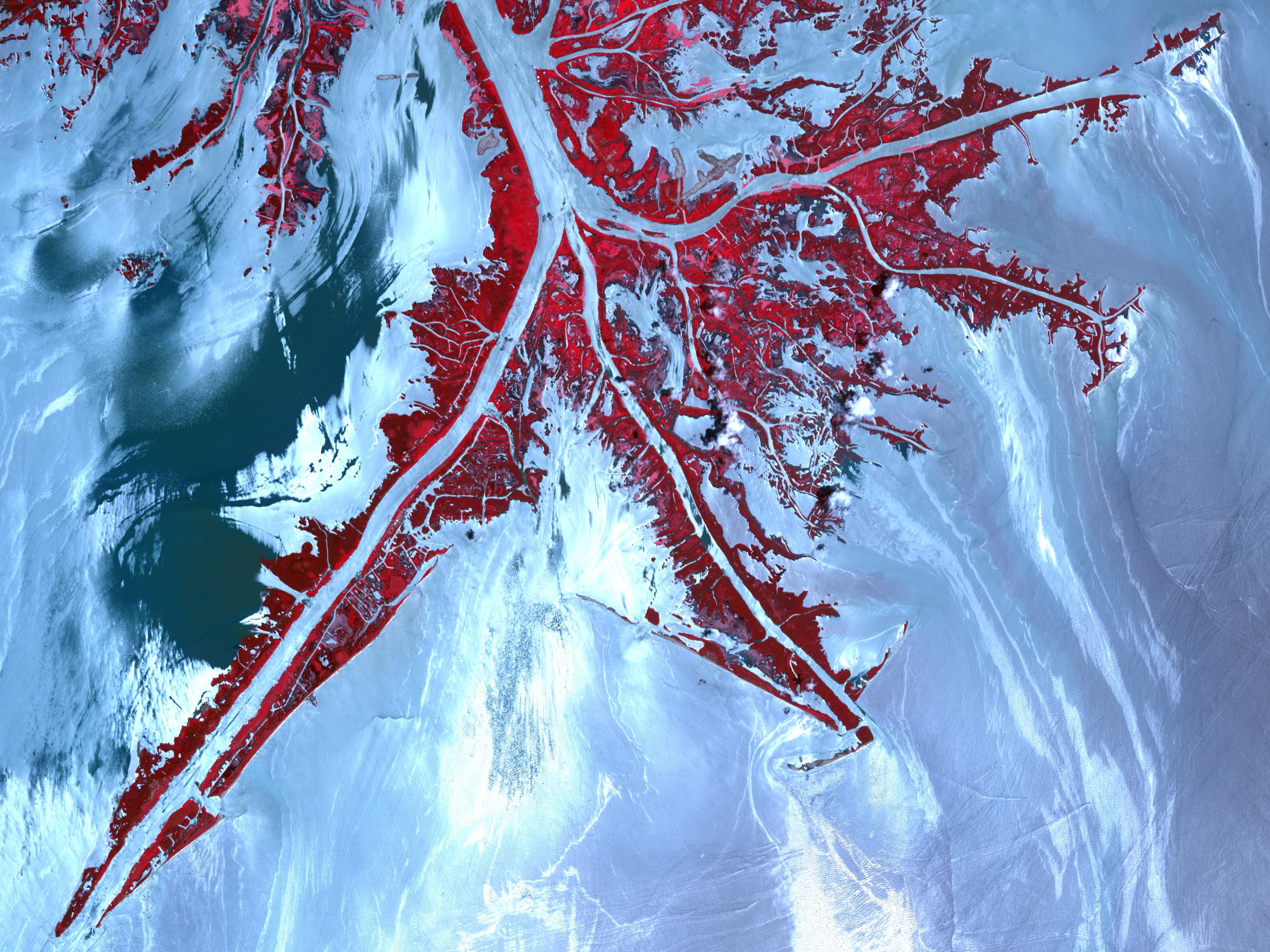
Oil Spill near Mississippi delta. Vegetation, red; Oil, silver. MA 24, 2010. (NASA Earth Observatory photo)
I hope that some effort will be put into an analysis of the merits of using dispersants in general and Corexit in particular. What sparks my comment is the finding that considerable subsurface petroleum has been found. This material is evidently close to neutral buoyancy and is drifting with the currents.
Question 1: Is there a connection between the dispersant use and the presence of this subsurface body of petroleum?
Question 2: What is the desired outcome of dispersant use? Where did the planners think the petroleum would go?
Question 3: Is there any advantage in encouraging petroleum to remain below the surface, if that is even possible?
At some point, a decision was made to use dispersants on this massive discharge. Is there a scientifically supported rationale for this, or was it palliative treatment intended to mask the surface effects of the release?
 Lamentations on Chemistry
1. I believe that there is a connection between the dispersant use and a subsurface body of contamination. I have not heard about actual particles running along the bottom of the ocean before. I know that there is significant contamination in the water column. How deep? I’m not sure. The amount of dispersants we are using is greater than any amount we have ever used. Scientists simply do not know how it will affect the oceans and its ecosystems.
2. The desired outcome of dispersant use is to break up the oil before it hits the land. I don’t think the planners thought about that. At most they probably figured it would be diluted by the ocean on its way.
3. The only advantage to keeping petroleum subsurface would be to protect life in the upper water columns. There are other lifeforms that live deeper and if we moved it lower different creatures would get hurt. Either way creatures get hurt. I don’t think it is possible to make petroleum sink. It would probably take some sort of chemical reaction to take place…sort of like a dispersant.
Hi Jessica,
Thanks for the thoughtful comment.
The use of dispersants will have the effect of turning the release into more of a 3-dimensional problem rather than mostly a surface problem. I’ve not seen any report to indicate that anyone was prepared for what that outcome would entail.
Hydrocarbons tend to have a density less than that of sea water, so they like to float. I have not looked into the mineral components of the heavy fractions of petroleum. I’m sure somebody knows what the details are for the heavies: Amines, sulfides, misc salts, and dispersed inorganic particulates, etc.