In researching a newspaper article on the expansive clay bentonite, I’m reminded of the rich geochemistry and mineralogy of silicates and aluminates. A visit to the Wikipedia page for silicates reveals a taste of the variety of silicate structures. The clays under discussion here are of the sheet silicates also characterized as phyllosilicates. When the word ‘bentonite’ is used, it is understood to mean a clay with at least 70 % montmorillonite.
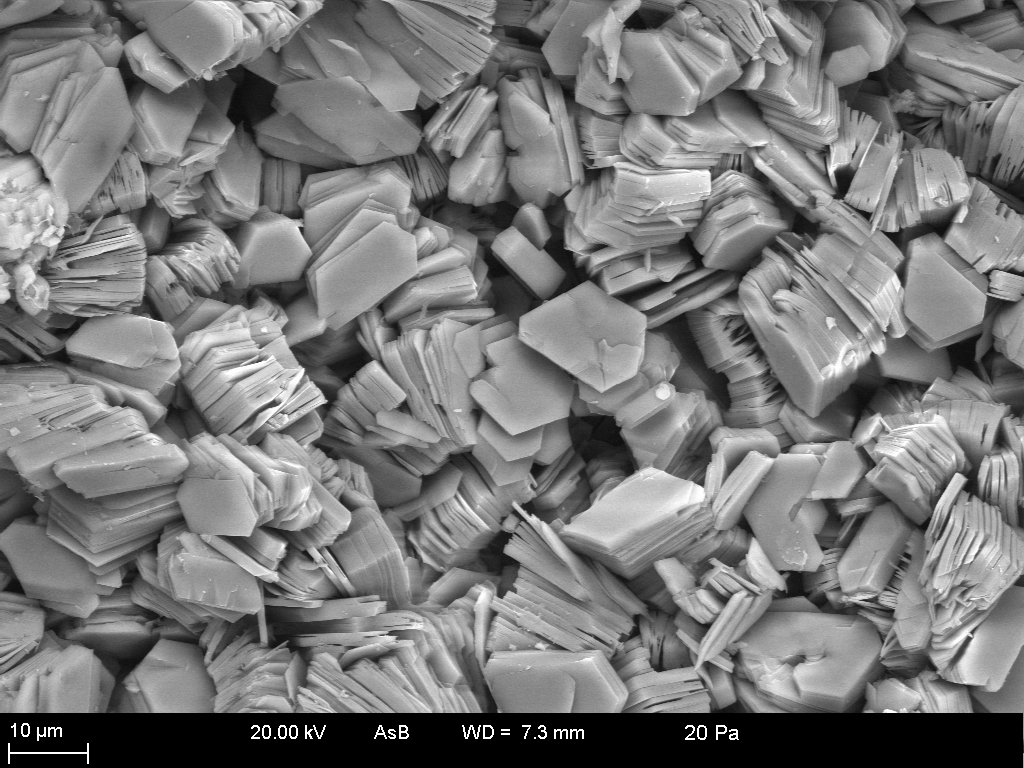
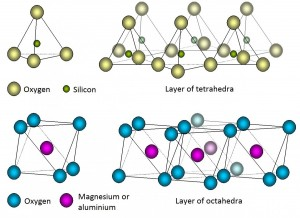
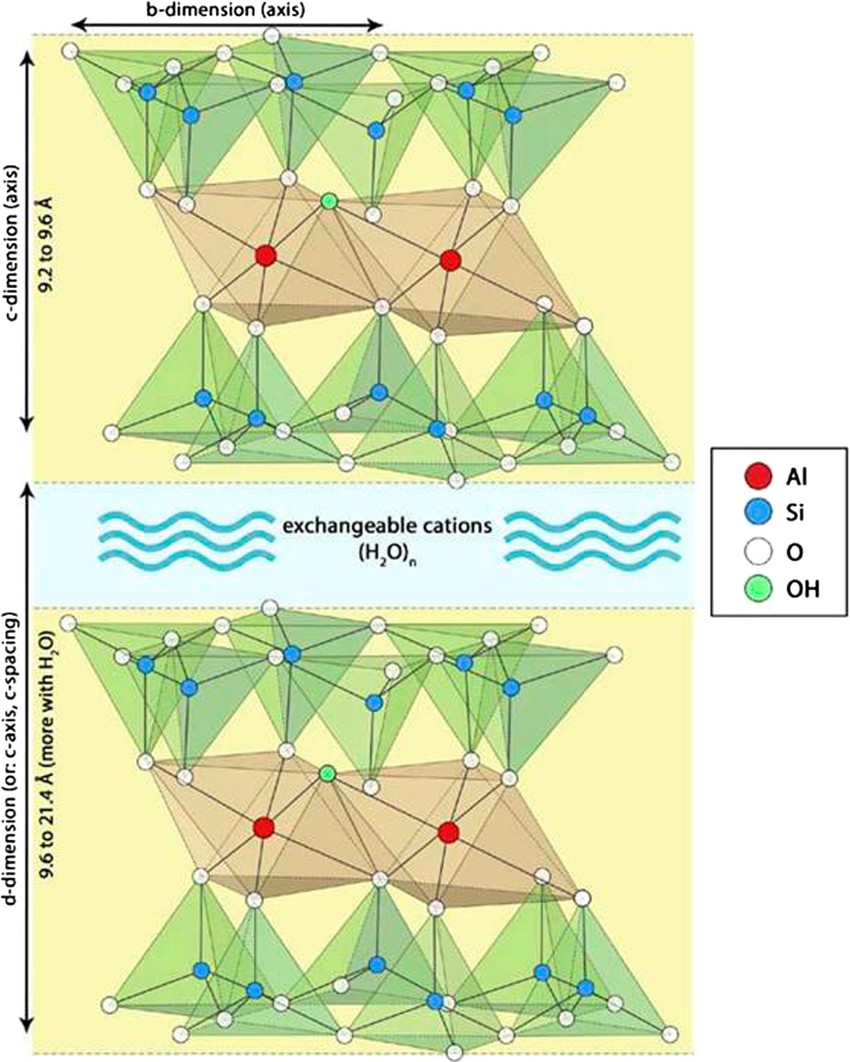
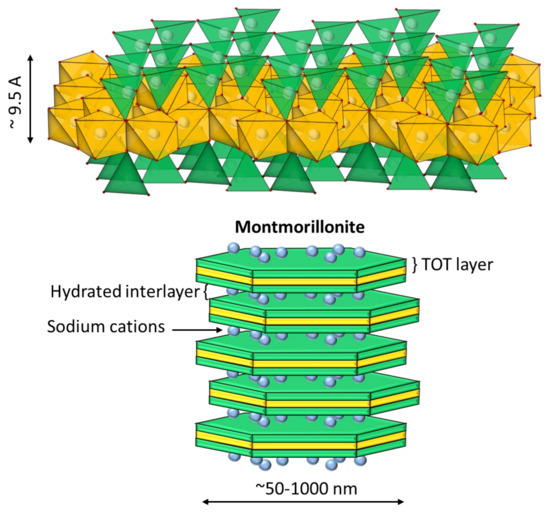
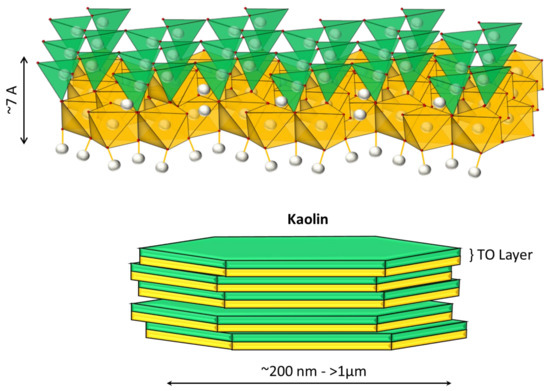
The two clays mentioned here are layered structures comprised of silicate tetrahedra (T) and aluminate octahedra (O). Kaolinite would then be classed as a TO bi-layered structure and montmorillonite is classed as a TOT tri-layered structure. The figure above shows the platy, stacked nature of the phyllosilicates.
Image: Link. Excellent graphics from the European Geosciences Union.
Silicate minerals with a single, isolated SiO44- groups are called orthosilicates. These SiO44- units can be joined at the vertices to form single and double chains, rings, sheets and 3-D networks as in quartz. In the case of chains, etc., the silicon atoms are bridged with oxygen atoms.
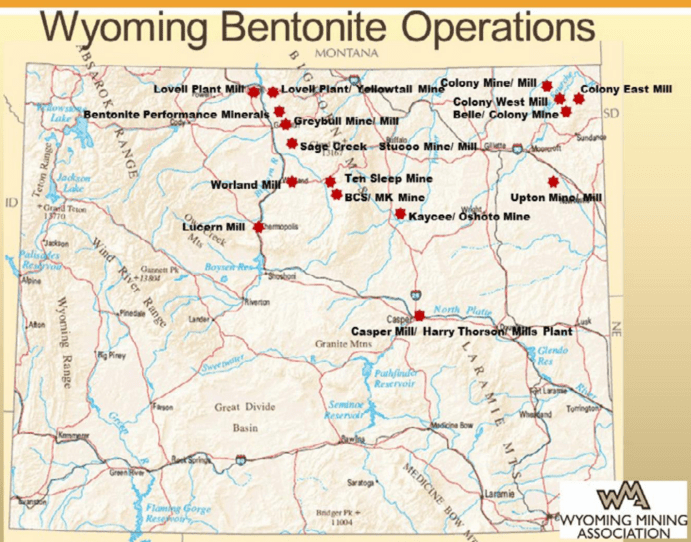
Presently I am writing a piece about the sciency aspects of bentonite, a clay responsible for expansive soil. A local McBurger restaurant has closed temporarily due to structural problems caused by expansive soil which is symptomatic in the region. For geographical context we are in north central Colorado between Cheyenne, Wyoming, and Denver, Colorado. The presence of troublesome bentonite-containing expansive soils in the area is well known. In fact, there are many bentonite mines in Wyoming, one with milling operations in Casper, WY.
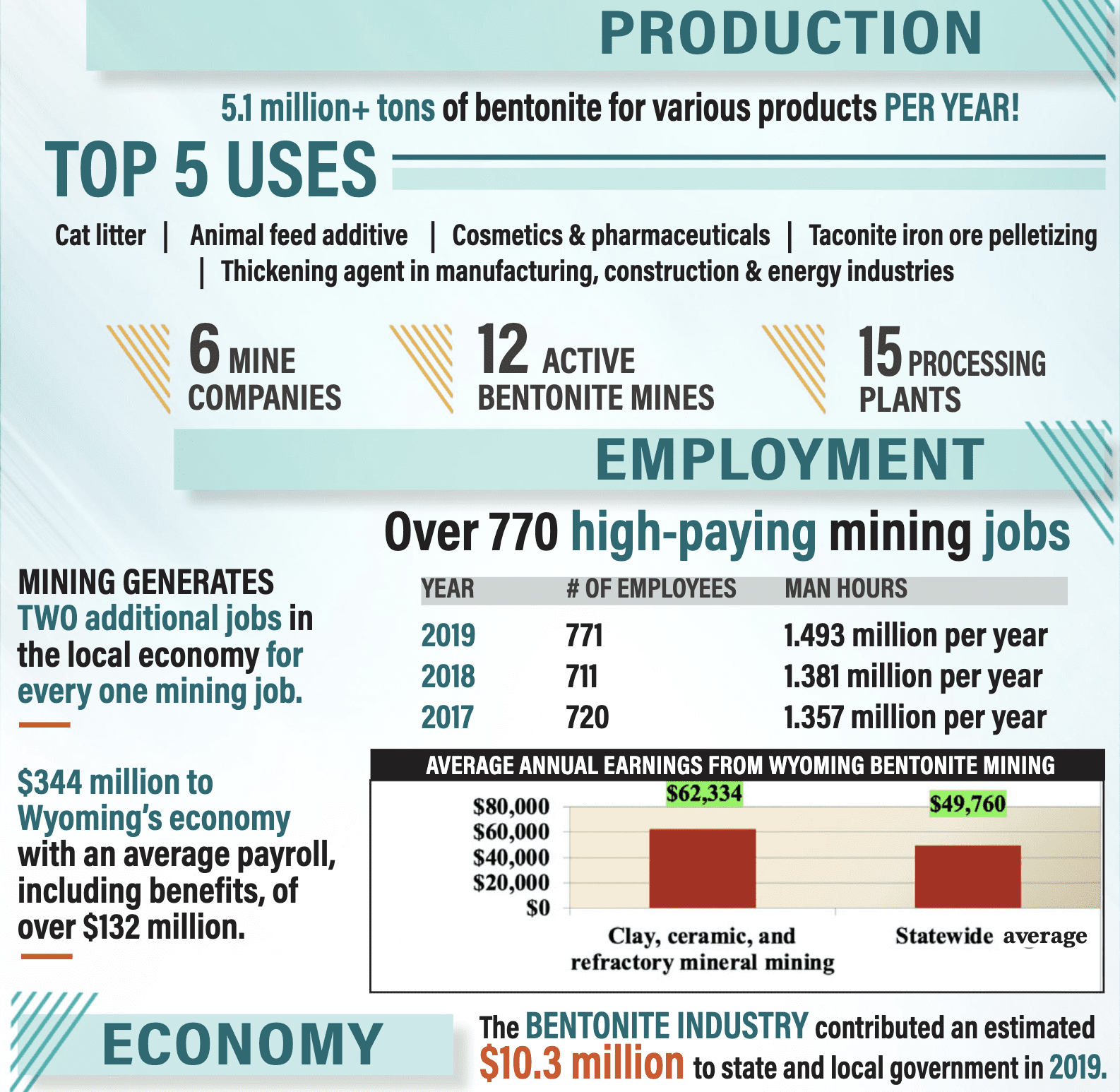
According to the Wyoming Mining Association, Wyoming has 70 % of the world’s and 93 % of the USA’s known bentonite deposits.
Bentonite can be harmful to roads and building foundations but also serves as an important raw material. It is used primarily in drilling muds, cat litter, cosmetics, pharmaceuticals, animal feeds and other applications.
Image: Link. Creative Commons.. DO – 10.1186/1476-511X-13-153
ImaLink. Nieto, S.; Toro, N.; Robles, P.; Gálvez, E.; Gallegos, S.; Jeldres, R.I. Flocculation of Clay-Based Tailings: Differences of Kaolin and Sodium Montmorillonite in Salt Medium. Materials2022, 15, 1156. https://doi.org/10.3390/ma15031156ge:
The class of expansive clays relevant here are the smectites. Bentonite is a smectite and has mineral composition rich in the montmorillonite member of the smectite group. In short, montmorillonite can attract waters of hydration to a great extent depending on the cation sub-type of the montmorillonite. The sub-types include Na+, K+, Ca++, Mg++, Fe++ counter-ions. A common cation in montmorillonite is sodium cation. The high water solubility of sodium salts in general allows for it’s replacement by other cations.
The montmorillonite unit structure consists of 3 layers similar to the stacking of an Oreo cookie. The inside cream layer consists of a sheet of aluminate octahedra. The two sandwiching cookie layers are sheets of silicate tetrahedra. The net effect is that the internal surplus negative charge carries through to the exterior surface of the sandwich. This charge attracts water layers and cations that will coordinate to the cookie surface to balance the charge. This attraction to cations and water leads to expansion of the unit structure the mineral and therefore swelling of the bulk material.
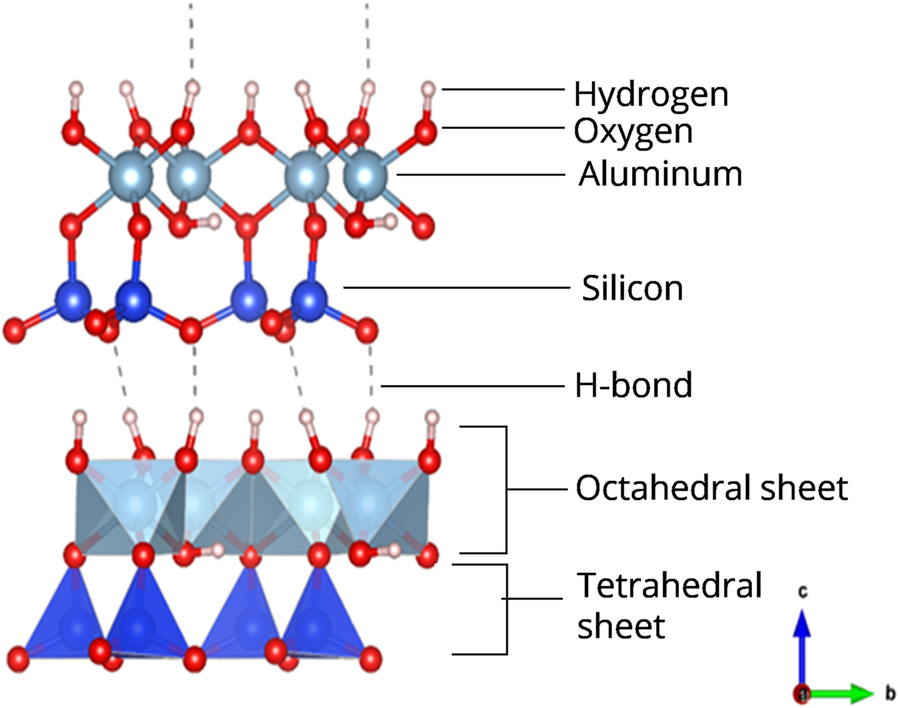
Kaolinite is comprised of bi-layers of a tetrahedral silicate sheet intimately bound to an aluminate sheet with no intervening layer of hydrates. The direct stacking of the kaolinite plates absent the water layer physically prevents water from migrating between plates and leading to swelling. Kaolinite is not an expansive clay.
Image: Cambridge Core (Paywall) , a ball and stick drawing of a Kaolinite silicate layer on top of a octahedral aluminate layer.
The pottery clay familiar to most of us is comprised mostly of kaolinite. While not a smectite, kaolinite (above) has just a single tetrahedral silicate layer connected to an octahedral aluminate layer to make a flat platy structure.
Image: Link. Nieto, S.; Toro, N.; Robles, P.; Gálvez, E.; Gallegos, S.; Jeldres, R.I. Flocculation of Clay-Based Tailings: Differences of Kaolin and Sodium Montmorillonite in Salt Medium. Materials2022, 15, 1156. https://doi.org/10.3390/ma15031156
The methyl methacrylate (MMA) runaway situation in Garden Grove, CA, seems to have plateaued. The aerospace company whose storage tanks are in the news produces what it calls “transparencies”. This is their trade name for plexiglass aircraft canopies, wind shields and windows. The word “plexiglass” is in common usage but derives from the trademark “Plexiglass“. Its not to be confused with “Lexan” which is a polycarbonate.
It dawned on me that the MMA runaway situation will be self-limiting. As the runaway polymerization proceeds, the rate of heat evolution should taper off as the reaction rate slows due to consumption of MMA. Just simple kinetics. The runaway reaction converts liquid MMA to solid poly[methyl methacrylate], or just PMMA. The MMA is turning onto a solid brick of plastic. This slows down the rate of reaction which necessarily slows down the rate of heat release.
The upshot is that if the tanks are kept cool enough to prevent rupture, yet warm enough to allow the reaction to creep forward, the runaway is under control.
The very fact that this runaway happened at all in “normal” storage suggests that the MMA was insufficiently passivated with stabilizer. The usual stabilizers are typically some variety of phenolic additives. This would include BHT, BHA and other catechols and phenols chemically modified for organic solubility.
The polymerization of MMA occurs via a radical chain reaction mechanism. Stabilizers like the phenolics are able to release H-dot, or hydrogen radical, which interferes with the polymerization by terminating the free radicals propagating the reaction. Each H-dot combines with any other radical it comes in contact with and halts MMA participation in the reaction.
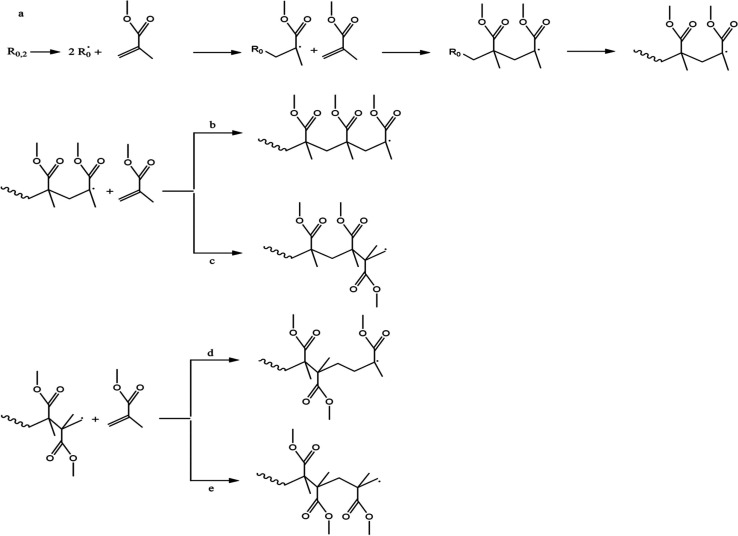
Below is a graphic from an article published on PubMed. Watch the dots, the dots are the radical electron. The upper reaction is chain propagation which is the desired reaction. See how the double line in the MMA structures changes to a single line? One of the two electrons in the second line is taken by an incoming free radical to form a new link in the growing polymer. The other electron is the leftover free radical which awaits a collision with another MMA molecule. This is how the polymer grows.
Image Source: Hint- watch the dots. Ahamad Said MN, Hasbullah NA, Rosdi MRH, Musa MS, Rusli A, Ariffin A, Shafiq MD. Polymerization and Applications of Poly(methyl methacrylate)-Graphene Oxide Nanocomposites: A Review. ACS Omega. 2022 Dec 15;7(51):47490-47503. doi: 10.1021/acsomega.2c04483. PMID: 36591191; PMCID: PMC9798503.
Let’s assume that the first reaction is the desired reaction and I’ll refer to it as “proper”. The critical feature of MMA is the double line. That is the location of the transformations in the polymerization. Each double line in the MMA has two ends- one end is the terminus and the other end is internal. The addition of the next MMA is desired to add its terminus of the growing end of the chain. This transformation leaves a radical at the internal end for further desired polymerization.
The second reaction shows how propagation can run afoul when the double line connects at the wrong position. The shape of this connection error- or kink- is different than that of the intended connection. The result is a polymer backbone linkage of 2 carbon atoms rather than the desired single carbon. This doesn’t happen just once but many times. The cumulative effect is that a chemically distinct polymer is produced that degrades or dilutes the desired physicochemical properties of the intended PMMA.
The third and lower reaction shows the undesired linkage reaction with both “properly” linked MMA and “improperly” linked chains to give a succeeding undesired linkage.
Note: “Desired” and “undesired” refer to intended connectivity and the unintended, kinked, connectivity. In reality, the desirability of any polymerization process is determined by the resulting set of physicochemical properties of the bulk polymer. Knobs are twisted, levers pulled and temperatures set in the plant to give the desired product with its combination of linkages.
I wonder if during the event that if a trickle of stabilizer were added, would it have made an observable difference? I assume that no agitation in the tank is available beyond convection currents, of course. it would be a large scale science experiment on an evolving and novel public emergency situation. Responders and, uh, everyone else, would disapprove.
So, this article shows up in my Google news aggregator titled “Scientists Experimenting With Quantum Effect That Some Fear Could Cause Chain Reaction That Ends Entire Universe“. My goodness, says I. How could that happen? I don’t recall signing off on that experiment. The article links to a Nature abstract by Max Tegmark and Nick Bostrom.
Abstract
The risk of a doomsday scenario in which high-energy physics experiments trigger the destruction of the Earth has been estimated to be minuscule. But this may give a false sense of security: the fact that the Earth has survived for so long does not necessarily mean that such disasters are unlikely, because observers are, by definition, in places that have avoided destruction. Here we derive a new upper bound of one per billion years (99.9% confidence level) for the exogenous terminal-catastrophe rate that is free of such selection bias, using calculations based on the relatively late formation time of Earth. Nature, 2005 Dec 8;438(7069):754. doi: 10.1038/438754a.
So, some scientists in China were fiddle-fartin’ around in the lab and decided to monkey with a theoretical phase of the vacuum. After all, a quantum computer calculation determined that it was possible. “They simulated a false-vacuum decay” to a true vacuum with a table-top experiment. Is it exothermic for spontaneity?
As of this writing they haven’t wrecked the universe. But shit man, these Poindexters presumed that playing fast and loose with the universe was A-Ok, or whatever the word is in Chinese (好的).
Alright, Tegmark and Bostrom calculated that the destruction of the universe had an upper bound of 1 in a billion years at a confidence level of 99.9 %. So, we can all relax and enjoy our lunch and spend a pleasant afternoon strolling in the spring weather and smelling the lilacs.
Before I went to college I spent 2 years as an apprentice electrician in both residential and commercial wiring. This, plus an early and continuous interest in electronics, I thought I had a good grasp of what electricity was. Only in the last few months in the autumn of my years do I learn that my understanding was just the Dr Seuss version taught in high school.
I sat fat and happy thinking electrical current flowed like water through a pipe. Well, it does not. Wires guide an electric field over the surface of the conductor, moving each electron a tiny distance. The field carries the energy.
A similar situation applies to an electron which, by the way, has no measurable size. There is only an electric field. An electron is a localized disturbance or perturbation in that field that can occupy atomic orbitals or propagate through space. But its “movement” is not like that of a ball sailing through space. It is a kind of pulse in the electric field that has charge and behaves with attributes that people can view and both wave-like and particle-like.
One of the annoying pedagogical tools we can’t get past is the description or illustration of wave motion as an undulation or a squiggle smeared over time. Wave behavior is reciprocating behavior. The view of a water wave as an undulation inferring flow is dead wrong. Water wave motion is vertical, like a fishing bobber. Water waves can be standing in place between barriers or on top of an underlying current. The all too common misunderstanding is in viewing an undulating line itself as the wave rather than the reciprocating movement from peak to trough.
But, if we had properly taught kids about wave motion in the past, would the Beach Boys have been able to sing about catching a wave. I. Just. Don’t. Know.
Last week, this blog saw an unusual spike in traffic—roughly 350 visits higher than normal. Each visit appeared to be for a single post, with no clear theme among them. My best guess? An AI platform was scraping my content for something specific.
Suddenly, I feel a renewed sense of accountability for what I’ve written. What if—gasp—a sentence was inaccurate, or a sarcastic remark too obscure for most readers? The responsibility could be enormous! Think of the children!
The content choices lie somewhere between the bookends of accurate and complete fabrication. I’d rather be accused of being boring than being found in an untruth.
How does this mesh with my anonymity? Well, a handful of people know my identity and their respect is important to me. Eventually I will reveal my identity and suddenly the truth and accuracy (and spelling) of my 1700 posts will be forever connected to my real name. Skin in the game.
Howard!! Whatever shall I do??
Disclosure-
Very occasionally I will write some fictional content, and it should be apparent as fiction from both the content itself, and the key words attached to the post. The example would be my posts on the fictional Poltroon University in Guapo, Arizona. I do enjoy the occasional jab at the culture of higher education and the institution of science.
However, as a scientist in matters of physical reality, I am dedicated and eager to describe content as truthfully, accurately and mellifluously as possible. When I’m on one of my political jags, I’ll admit to some amount of enhanced emphasis where others have tread more carefully with the source material.
The reason I write and blog is to help me think ideas through. Somehow the act of scribbling down sentences followed by multiple passes in editing is helpful. At any given time I have 20 to 30 unfinished posts languishing in draft space. The open-air aspect of blogging is to assure that I have done my best lest public humiliation, scorn and derision should come my way. Not just in the present, but more so in the future. Writing is thinking. To put it bluntly, there is a fear of publishing something I would regret forever. Absolutely the worst thing I could do as a blogger and as a scientist would be to post indefensible or phony science. Posts with linked references are direct connections to what I view as credible content on the internet. The reader only has to click a link to verify a factual statement thing I made.
[Note: Formerly named “PhD Chemists are freaks!!,” this essay has been renamed to better match the content.]
Preamble: Yes, yes, yes. Obviously, I’m aware that my experience in no way represents the careers of nearly all chemists. As usual, I drift into adjacent chemistry topics. Get your hands away from the keyboard and just read.
Bud (a pseudonym), a PhD chemist consultant and coworker, claimed that people with the exalted PhD degree were freaks of nature. Bud opined “Just look at us! Who goes to school for as long as we did and then ends up in a place like this?” I didn’t add at that moment that between a BA, PhD, 2-year postdoc and a stint in the professor trade, I was in academics for 16 years and walked away from it. Just then I couldn’t defend how smart it might have been to tread down this path only to end up in an old office trailer where we were sitting at that moment.
Bud used to argue that PhDs in general were freaks in society. Only a small fraction of undergrads will go on to grad school and fewer still complete a PhD program. The fraction is smaller yet in the general population.
In science you need a PhD in order to have even a hope of leading an R&D project, technical C-Suite corporate position, institute or professorship. The degree isn’t intended to resemble a trade, but rather to be a highly educated scholar and a subject matter expert with good communication skills and a sharp mind. If one is investigating for new phenomena, an intimate knowledge of known phenomena is needed to discriminate a finding. No awards for rediscovery.
Bud retired from a career at a big chemical corporation only to jump back into the hairball as a sales consultant for us in his retirement. I was a couple of years into what would be my major career “choice” and was managing the sales & marketing department then. Somehow, I had stumbled into the business side.
Our other sales consultant, the “Great Gondini”, retired from a photocopier company as a PhD chemist developing magnetic media, charge transfer agents and other xerographic-related materials. From his soapbox he advised us to-
Avoid being a chemist in a non-chemical-oriented company.
It’s not that non-chemical-company chemists couldn’t rise up the career ladder, but being in a niche subspecialty at a company that produced photocopiers was not the way to grow your career in chemistry. Often such a chemist may be the only chemistry PhD on site and is likely to suffer from professional isolation. Experience with project execution on time and on budget is a great way to rise in a company. Engineers frequently rise to top level positions because they understand technology AND quantitative economics.
The universe for a chemist is 2-dimensional- space vs time. For an engineer, the universe is 3-dimensional- space vs time vs costs. Who would you appoint to manage construction, install new process equipment or run your business?
I knew 2 BS/BA level chemists and 1 PhD level chemist who obtained MBAs. Their careers leapt into higher gear with their move to the business side. In business it is important for at least someone to understand how finance works in addition to the technology. Even graduating with a business minor might be helpful but not as much as an MBA. I got an A in ECON 101 but only I cared. Education in basic accounting is very helpful on the business side.
As I see it, some realities of being in industrial chemistry R&D.
In my organic-synthesis-oriented research group in grad school, the big dream was to get an R&D job in pharma R&D. Cool medicinal chemistry and a chance to help to cure disease for the benefit of mankind. It is an honorable and, if I may be permitted to say so, prestigious career as a pharmaceutical scientist. At least in the world of chemistry.
Since then, more than a few in my grad school cohort had been laid off by the pharma companies or joined another. A few have been laid off 3 times from what they believed were secure slots. Pharma companies, like most others, aren’t run by chemists for the most part. Quarterly EBITDA is a major driver for the board of directors. The C-Suites are packed with corporate and patent lawyers, retired CEOs, MBAs, Md/PhDs, CPA finance people and perhaps a PhD chemist heading up the R&D operation as a Director or Vice-President.
After all, the most important reaction in all of chemistry is transforming chemicals into money.
After my academic career and my short rotation through the polymer world, I ended up for 6 years in chemical sales and marketing which was limited by my personal geographic requirement of living in the mountainous western US. As my opinion of the pharma business matured, I discovered that, as a raw material vendor, to be ever so careful with pharma customer promises and purchase orders. Not because they are liars, but because many felt free to cancel orders even after bulk raw materials arrived and after our R&D effort to meet specs. Their interest in us was based on using our low bid to leverage another supplier on price. This is common actually and I have done it myself. They waved future business in our faces knowing that, probably, they would never send receive an invoice. Still, not unheard of. But the hassle and our wasted R&D and opportunity costs were especially galling. But we were a spot supplier and susceptible to such disruption. My company didn’t like to sign contracts at that time, so we always took the risk on spot buys. Spot sales gave us manufacturing flexibility as a custom chemical producer, but at the expense of uncertainty. Later, attracted by the same sweet songs of Lorali that led hapless sailors into the rocks, we would repeat this fool’s errand once more.
Off-topic advice
Always be certain that the qualification sample you ship to a potential customer is NOT the purest sample that R&D can produce. It must be representative of what the scaled-up process can deliver. Otherwise, you may be stuck having to reproduce lab results at larger scale which can be very problematic. They will often spec-out your product at the purity of the sample.Then you have to live with it or decline the business.
Back to our regularly scheduled programming
On one occasion a big pharma customer wanted a product delivered across the Atlantic to Ireland. Time and distance weren’t the issue, though. It would equilibrate and precipitate below about 15 oC on the transatlantic voyage, so we bought heated shipping containers and installed them in Ireland on a site that wasn’t afraid of the W (indicating a water-reactive hazard) on the hazard labels or the safety data sheets. Scheduling heated transport could be sketchy in fall, winter and spring because most were booked for shipping fruits and vegetables. So, a month into the campaign and after an encouraging site visit by two of us sales guys (Tipperary isn’t so far after all), I received a call saying that they had changed their process (!?) and that a competing European supplier was chosen to ship directly from the continent on demand and without the (our) expense of staging heated storage. Once a pharma company writes in each raw material into their drug filing, changing suppliers or a change in specifications requires the heavens to open up and thunder “make it so.” In the end, they reimbursed us for raw material costs only. &#$@%*&^!! This would happen again later but with a more difficult product to produce.
My early career path led me away from the fabulous pharma world and into undergraduate teaching, initially. The other group members achieved their goals of a pharma R&D position. While I spent the next 6 years in academia one way or another, my grad school colleagues were drawing big salaries with 401(k)s in well-equipped labs, but in locations on the US East Coast, Gulf Coast or Midwest- regions that I would never consider moving to. In the end, most buoyantly bobbled up the career ladder to become directors and vice-presidents of R&D or technology as their final positions. No disrespect, just envy.
Climbing the Career Ladder
A few talented chemist colleagues from grad school climbed up the corporate ladder without business training, learning what they need on the job. Most others, though, remained in the tech end. The reality of being a scientist in industry is that upward mobility in a large corporation very much depends on your improvements in job performance, profitability, volume or especially the successful execution of a capital project. But capital projects are normally given to engineers because they are trained to deal with the cost of the equipment and in the cost of operation.
In my experience, a BA/BS, MA/MS or PhD chemist can usually retire as a senior bench chemist, analyst or lab project leader managing bench chemists. If you enjoy lab work, this is it. By retirement you’ve already topped out on the salary scale and have put away a fair sum in the 401 (k). It is a good life for a great many. But for myself, my interest in bench work dropped from hot to tepid after my 2-year postdoc. I got into molecular modeling and dynamics as a postdoc and actually answered a vexing question about kinetic vs thermodynamic control in a reaction that gave contradictory results. Even got a JACS paper out of it. It was fascinating stuff, but it made me look away from straight synthetic chemistry long enough to appreciate computational and physical chemistry.
As a postdoc I used AMBER and SPARTAN, I did molecular dynamics and molecular mechanics to make a stab what was possibly the global minimum strain energy. Ring strain calculations were used as a coarse screen for potential comonomers for the ring-opening polymerization (OP) reaction we were hoping to commercialize. The homopolymer was amber colored, brittle and rattled when handled as film. The comonomer idea based on the notion that the homopolymer contained too much crystallinity. The glass transition temperature needed to be at least below room temp. Suppressing the crystallinity and retaining certain key properties along with biodegradability was crucial. Even worse, the proposed comonomer must participate in reactive extrusion with the original monomer and be available in commercial quantities at a low cost. Finally, the copolymer needed to be water white. The color spec was difficult to achieve.
Final Comments:
My comments in this essay are based on personal experiences in my world. Your world is almost certainly quite different.
I haven’t mentioned analytical chemists because their world continues to be overtaken by automated instrumentation that will calculate the results and put together a report for you. Sampling and wet chemistry are still hands-on operations as far as I can tell. But this is taken as a challenge to instrument makers who will try to engineer around the hands-on requirement to provide something that can be automated. In my world I see more employee turnover with BA/BS analytical chemists than with organic R&D chemists.
As far as employee turnover goes, analysts are under continuous pressure to produce results so that production can proceed or to get product out the door. With hundreds of raw mats, intermediates, and final products, each with their own standard test methods and specs, I certainly wouldn’t last long as an analytical chemist.
First let me say that I have never been a smoker, drug user or sun bather. As a chemist I have always been cautious about chemical exposure. I have numerous cancers now with the two serious ones in remission. The new ones- who knows.
I use a university hospital and have been visited by flocks of med students looking at me in wonder, sometimes looking down my throat. I get a kick out of it. I always try to joke with them. All cancer diagnoses go before a faculty tumor board for collective assessment. That in particular drew me to this hospital.
My experience with numerous radiation, medical, ENT, and head & neck oncologists is that they absolutely do not want to discuss end of life issues. Maybe that is because I’m not near the end yet, though. But more likely they have production quotas and need to stick to the timeline. My head and neck oncologist did say that they were trying to keep me above the grass, though. That was cheerful.
Since July 22 of this year, I’ve had a partial glossectomy to remove a tumor resulting in a nickel-sized piece of the left edge of my tongue being removed, my first colonoscopy, a neck dissection looking for more cancer, and tomorrow is a root canal. Sonofabitch!
The glossectomy resulted in giving me slurred speech and then the neck dissection made it much worse with the added joy of serious swallowing difficulty. Liquids must be thickened with carrageenan gum to mostly avoid inhalation of food and drink. I’ve already been hospitalized with pneumonia resulting from inhaled food.
My 68th birthday was last week and while I received my well wishes, not a single person was moved to suggest a gerontologist, elder care facility or even as little as when the word “elderly” is used. I’m left up in the air …
It never occurred to me earlier in life that a piece of my tongue could be sliced out. What part of your body is more intimate in your daily consciousness than your mouth? I’ve had surgeons say “give me control of your tongue”. A fella doesn’t hear that very often.
The colonoscopy revealed 2 polyps suspected of being cancerous. So, to tally up the score, I have stage 4 prostate cancer, stage 4 throat cancer, tongue cancer, basil cell skin cancer, and possible colon cancer. Jesus H. Christ!! What next?.
The radiation of my throat resulted in the loss of about 1/2 of my salivary glands and taste buds. I’ve had dry mouth since radiation treatment in 2013, resulting in the loss of numerous teeth.
I was given radiation treatment of my prostate in 2014 and again last summer when the PSA score breached the 4.0 level. Since the 2014 treatment the thinking has changed on radiation dosage. Previously I was given about 1.8 Gray per dose. This time it was 5.0 Gray per dose over fewer doses. The thinking is that it is better to try to break the cancer cell DNA in 2 places at once rather than in just one place. In two rounds of x-radiation treatment of my prostate, I have experienced no pain or discomfort. I’ve had two rounds of 18F-Glucose injections for PET/CT scans.
The throat radiation was a different story. It gave me the world’s worst sore throat. I was fed through a stomach tube and was on opioids for an extended period. Let me say that I detest opioids and the constipation they bring. How do opioid addicts deal with this??
The throat cancer was from the HPV virus and that form is quite treatable, fortunately for me. The tongue cancer was also a squamous cell carcinoma but not of HPV origin.
Life on our lonely pale blue dot is strange. I’ll never get a full grasp of it. I’ll be on the top side of the grass for a while yet and until that changes, I’ll still be a student of the sciences and will continue to write about it.
The United States Geological Survey, USGS, has released an interactive geological map that includes 4 layers of stratigraphy- Surface, Quaternary, Pre-Quaternary and Precambrian layers with color coded rock units displayed. A click of the cursor on the map reveals the type of rock unit chosen. The website is called The Cooperative National Geologic Map.
What can a chemist possibly have to say that could be even marginally interesting about extraterrestrial life or evolution? Well, as far as extraterrestrial life and the search for it goes, I would say that all of the metallurgy, semiconductor fabrication, liquid hydrocarbon fuels, chemicals, transportation technology or polymers exploited in radio or optical astronomy, have some element of chemistry in their manufacture.
………………..
The quest to discover life beyond Earth captivates many in the broad field of space science. The Search for Extraterrestrial Intelligence (SETI) has played a significant role in astronomy and space science communities. However, the search extends beyond intelligent life; any form of life or even the essential components and conditions conducive to life, are of keen interest.
It is widely accepted that the physics governing our planet and solar system likely applies universally. While this is a hypothesis, it is a reasonable one. If the physics are consistent, then the chemistry should be as well. Consequently, the behavior and limitations associated with matter would be uniform across the cosmos. This reasoning suggests that life elsewhere in the universe would be governed by the same chemical and quantum mechanical principles familiar to us.
The “Anthropic Principle” has caused much debate, with Wikipedia noting that “Anthropic reasoning is often employed to address the notion that the universe appears to be precisely calibrated for life.” The mystery of why numerous physical constants and their ratios needed to be exactly as they are for life to emerge on Earth has intrigued many.
To say the Big Bang’s initial pressure and temperature were high is an understatement. As the universe expanded and cooled, energy barriers emerged that shaped the interactions of matter and of photons, placing boundaries on the spontaneous transformation behavior of matter. Pathways of interaction emerged, steering transformations towards increasingly specific outcomes. Essentially, it’s basic kinetics: the quickest transformations and their stable products start to prevail and fill the universe.
If physical constants are emergent at the moment of the Big Bang and become manifest down the timeline, could it be that another Big Bang could happen that is not conducive to life? There would be nobody there to ponder these questions. Life is here because it was possible and maybe even likely here and there.
The phrase “finely tuned for the existence of life” seems to leave open a crack for a creationist view. Absent the many spooky bronze and iron-age theories still in practice today, naturally a sentient being can look at her/his/its existence and marvel at how beautifully synchronized and proportioned the machinery of the universe is. Certainly, there must be a hidden message in this, right?
ET? What th’ …?
Animals like mammals, birds, fish, and even some invertebrates like octopi and crabs are considered to be sentient. According to Google, sentient animals are those that can experience feelings and sensations, both positive and negative, like pleasure, pain, joy, and fear. So, while an octopus may have elements of sentience, could distant observers elsewhere in the galaxy detect them from optical or radio astronomy techniques? Try as it might, the ability of an octopus to construct a powerful radio transmitter and beam a message into the cosmos is sorely limited by its physical anatomy. Except for humans, no other sentient life form on Earth is known to construct a radio transmitter that would serve as a beacon of sentient life.
Until recent history, SETI was limited by the lack of technology to light up the universe with our own signals or to detect faint manufactured signals across interstellar space. At such point that metallurgy, electrical engineering and the hundreds of other critical and apex technologies bloomed into a sufficient state of development, no intelligent emanations from Earth found their way into space.
While TV and radio broadcasts began their journey into space, it is important to realize that our signals were encoded onto carrier waves. Amplitude modulation (AM) signals carry their information by simply varying the magnitude of a single frequency in time with the human voice or music. This is most likely to be grasped by alien radio astronomers. Frequency modulation (FM) is a bit more challenging because audio signal is mixed with a carrier signal by a heterodyne circuit. Extracting useful information would require them to pull audio frequency information from the heterodyned signal.
Television is much more difficult. While the alien radio astronomers may have figured out FM encoded radio information, the particular details of the TV raster scan are based how human engineers decided to interlace and sequence scans to produce an image on a screen of a particular aspect ratio. TV designers took advantage of the human’s persistence of vision to seamlessly follow moving pictures to give continuous images yet maintaining a fast enough frame rate to avoid flickering. The television’s electronic timing is based on frame rate, the number of interlaced lines, and the aspect ratio of the screen.
The point of this TV discussion is that a TV signal must be deconvoluted into a signal that properly displays an image and plays the sound on a particular piece of equipment. This could be challenging for an alien radio astronomy research group to decode.
All of this talk about an octopus developing radio astronomy presupposes that its unique octopussian sentience includes such desires.
It could be that the initial energy at t = 0 yielding the primordial plasma constituting the early Big Bang was only capable of producing a specific set of fields producing elementary particles which then give way to a specific set of quantitative relationships and properties. The burst of energy causing the Big Bang must have had constraints driving its transformation into matter, which is also constrained by quantum mechanics, etc. Maybe the present universe is simply what primordial energy naturally does when expanding as a universe. Why do the quantitative values of physical constants need to be variable? An imaginary and feverish conundrum.
As the highly energized primordial plasma of the Big Bang began to cool, matter and energy channeled into particular states. The particle energy states that had the highest barriers coalesced first followed by subsequent lower energy plasma condensing into other particles. I’m drawing a crude analogy to the process where individual minerals form from cooling magma according to their melting points.
There is a notion prevalent among Creationists that the probability of a life form spontaneously forming from individual atoms is 1 in 10large or some other inconceivably miniscule chance. And if that was how life had to form, then the Earth would still be a sterile wet rock. But that is not how chemical transformations work.
Central to the Creationist view is that evolution cannot happen because there is nothing but random chance to guide the molecules of life into a highly complex organism. They start with the assumption that life arose purely from random chance. I hope to show that this assumption is false.
All atoms and molecules have properties that either qualify or disqualify them as a candidate for a given atomic or molecular transformation. All molecules have properties that either qualify or disqualify them to take part in a transformation resulting in a given product. The words “qualify” or “disqualify” could mean that something will or will not happen absolutely. But just as likely, the words could mean that a transformation is just too slow at a given temperature to give the desired effect. As it happens, temperature is critically important to molecular transformations. At a low enough temperature, most transformations will slow to a negligeable rate, shutting down that particular transformation channel. In general, where there are competing transformation channels, the fastest channel will prevail in producing its product.
All molecules have a limited set of reaction channels at a given temperature as a result of their particular reactivity.
What we think of as ‘ordinary’ chemistry is more precisely the electronic behavior of valence electrons. Nuclear chemistry also exists but in the domain of nuclear change.
Valence electrons on earth will behave the same everywhere in comparable conditions. Chemistry happens at the outer, valence level of ions, atoms and molecules. So, we should expect that bond forming and bond breaking mechanisms should be the same throughout. All of this leads to the high likelihood that chemical reaction mechanisms elsewhere in the universe should not be unfamiliar to Earthlings in general.
Life on earth exists as a result of the behavior of particular chemical substances within a range of chemical and thermal environments. The range of chemical environments and substances present during the initiation of life is thought to be quite different than what we find on earth at the present time. For instance, gas phase molecular oxygen was not present until a considerable time after life began. The initiation of life on earth was under anaerobic conditions and was able to start and survive with the materials at hand. Biochemistry is a series of reduction/oxidation events driven by the Gibbs energy of a transformation as is all of chemistry. Even on anoxic earth, diverse oxidizers were present.
Today, anaerobes are known to use the oxidative properties of inorganic species like sulfate (SO42-), nitrate (NO3-), ferric iron (Fe3+), carbon dioxide (CO2) and manganese (Mn 4+). Other anaerobic oxidants include chromate (CrO42-) and arsenate (AsO43-) which may have been present as well. Reductants include nitrite (NO2-), ferrous iron (Fe2+), and sulfide (S2-).
Oxygen is the third most abundant element in the universe and the second most abundant heavy element on earth behind iron. Many elements are strongly attracted to the abundant oxygen so it is no wonder that so many minerals are oxides of one sort or another. Oxyanions like silicates, carbonates, sulfate, nitrate, and oxides like CO2 or any number of metal oxides all contain oxygen that has been bound with another element. The oxygen pulls negative charge away from the central element making it electron deficient. In the case of sulfate and others, the actual oxidizing part is the atom with the oxygens attached, in this case the sulfur.
The presence of life on Earth means that there is a “habitable zone in parameter space“. All of the parameters affecting biochemistry must align in such a way that a zone of allowable chemical and physical conditions will exist. Many things must exist simultaneously such as the many properties and abundances of chemical substances, a suitable atmospheric composition and pressure, a planetary temperature range allowing for the presence of liquid water and the presence of sufficiently reactive organic molecules.
Not every transformation of matter is within reach in a given condition. Chemical reactivity which comprises kinetics and thermodynamics has the effect of channeling matter into a finite number of probable pathways. This bestows the property of selectivity. For any given chemical substance, only a certain limited group of transformations are possible or likely, given the conditions.
Life as we know it exists because our biomolecules were robust enough to survive their chemical and thermal environments, but not so robust that they resist the needed transformations. Life depends on biomolecules being moderately stable but not by too much. Biomolecules can organize into particular structures that are physically robust, like the chitin shells on shellfish. In the chemistry of life, chemical transformations must be tolerant of the aqueous environment in and around an organism, but not so tolerant that the necessary reactions are too slow or too fast within the narrow range of environmental temperatures available.
Organisms on earth are tolerant of water at the level of molecules. The internal apparatus of the cell is an aqueous environment having some amount of viscosity. In order for molecules to interact, they must collide with each other. Life in the solid phase would mean that biomolecules would be immobilized and unable to collide and react. Cell structure for metabolism and reproduction would not be feasible. Life in the gas phase is limited by the vapor pressure of the necessary substances. Many, if not most, biomolecules would not tolerate the heat necessary to volatilize. They would decompose.
A diversion into molecular evolution.
I’ll just blurt it out- ongoing evolution requires heritable change in a genome. A genetic change must be survivable for the parent cell to reproduce and produce viable daughter cells. The inherited mutation must not be deleterious to further reproductions of the subsequent generations. A mutation may randomly result in something that has either a lethal effect, no effect, or produces some biomolecular improvement. The mutation may be as modest as an enzyme alteration causing it to bind either more or less tightly to a ligand resulting in a few percent change in rate of some the enzyme’s function. This could translate into better efficiency in producing some cell structure or better use of energy. It could also be that nothing changes as a result of the efficiency alteration, or that it has an overall negative effect further challenging the survival of the cell line in a nonlethal way.
There are two kinds of changes that can occur with DNA. One is a change in the sequence of the DNA molecule itself. The other kind is “epigenetic” which is heritance not reliant on changes on the DNA sequence.
Creationists like to make a show of the probability of random chance producing even simple ordered sequences as fantastically small. Actually, their superficial analysis of permutations and probability looks plausible. I can’t argue with the low probability of individual atoms coming together randomly to form a living organism all at once. However, the beginning assumptions are wrong. Life did not spontaneously form out of a bunch of loose atoms by simply condensing into a centipede or a human. Change in evolution happens at the molecular level a step at a time. A change in the amino acid sequence of any given enzyme must trace back to a change in the DNA sequence to pass along a heritable mutation. Evolution moves by fits and starts. A mutation may have no effect, advantageous effect or deadly effect.
At the level of molecules, change happens through very definite chemical mechanisms. Molecules are constrained to do certain things and in a particular way. It’s like a channel. Sometimes two or more channels may be possible. In this case, the fastest channel will dominate in output and influence. An evolutionary change might cause a biochemical transformation to stop, speed up, slow down, or be more or less specific in outcome.
Molecular bonds vibrate in the range of 1013 to 1014 Hertz. A hydrogen molecule will reportedly undergo 2.5 x 10¹⁰ collisions per second at 2 bar and 24 oC. If two atoms or molecules are to react, then they must collide. At a given temperature, a collection of hydrogen atoms will be dispersed over a statistical distribution of energies.
Biochemistry on earth has evolved around water and takes advantage of certain properties of water. Its ability to hydrogen-bond is exploited extensively in biomolecule structures. Water has the ability to accommodate charged species or neutral dipolar species. This is called hydrophilicity. It is important not just to keep ions and molecules in solution, but also to stabilize the transition of a reaction if it generates a momentary dipole.
Water is immiscible with substances having a large hydrocarbon protuberances like fatty acids, phospholipids or certain side groups found on a few amino acids. This is called hydrophobicity. Terrestrial biochemistry exploits both hydrophilicity and hydrophobicity.
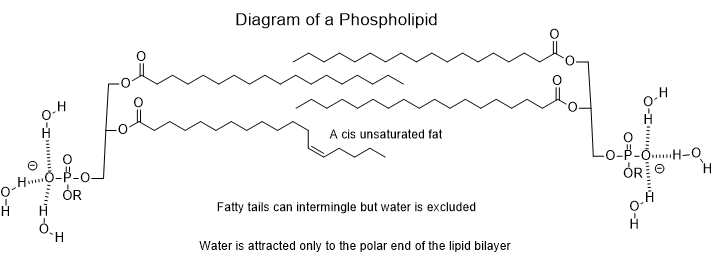
A benefit of hydrophobicity in biochemistry is that fatty substances like phospholipids will spontaneously organize into the lipid bilayer structure. Hydrophobicity in this case leads to the formation of stable compartmental structures. Life takes full advantage of the lipid bilayer in the production of the cell wall. This keeps all of the necessary biomolecules contained and concentrated for effective and timely biochemical transformations to occur. The cell wall excludes a great many deleterious substances as well. However, many protein structures have sections that are sufficiently hydrophobic as to be compatible with the hydrophobic lipid part of the bilayer. This property allows the protein to anchor itself within the bilayer leaving the more hydrophilic portions of the protein jutting out into the extra- and intracellular aqueous media. Many of these proteins penetrating the bilayer- channel proteins- are sufficiently hollow as to allow ions or molecules to pass through. Even better, the ability to pass ions or molecules through can be switched on or off by other biomolecules or with drugs.
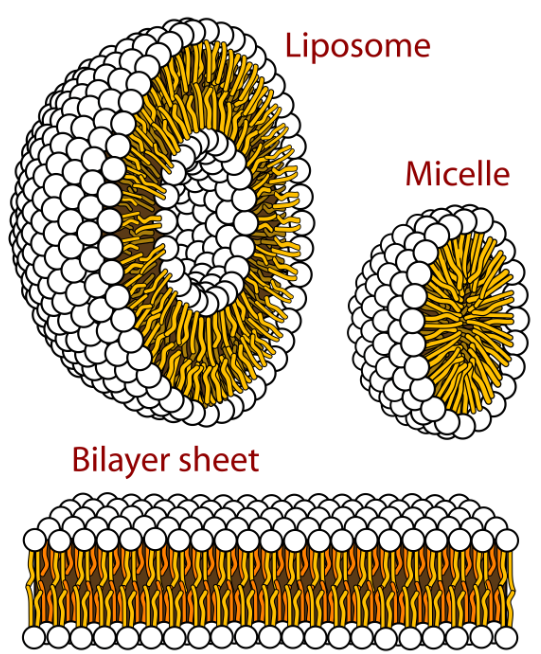
Some larger molecules like the fatty phospholipids above have both hydrophilic and hydrophobic regions. Given the chance, phospholipid molecules will spontaneously orient themselves in a way that when combined the water ‘repellant’ hydrophobic tails will tend do aggregate. This leaves the hydrophilic phosphate features at each end to remain in contact with the water environment.
Cells have compartmentalization and cell walls simply because of the incompatibility of the polar water molecule and nonpolar hydrocarbons. These two incompatible liquids arrange in a way that minimizes the surface area of contact between them. They will form layers when stationary or droplets when one is dispersed in the other. This is the minimum energy condition they spontaneously go to. Micelles will even form spontaneously in your soapy dishwater.
Life on earth presently requires many environmental conditions to be just right. Cells of micellar-like construction take advantage of the hydrophobicity of substances with long chain hydrocarbon parts on one end and charged or polar features on the other side. Micelles are structures that spontaneously form in water. Living cells adopt a bilayer structure based upon the tendency for “likes to dissolve likes.” That is, non-polar hydrocarbon features “prefer” not to be in contact with polarized water, but rather cluster in a way that minimizes water-hydrocarbon surface contact. The effect of carbon chain structures in the biochemistry of earth is the stability of carbon-based structures and the wide variety features it can accommodate. These features include stable carbon-carbon chains as well as carbon bonds to hydrogen (H), nitrogen (N), oxygen (O) and sulfur (S) in particular. Carbon is unique in that it readily allows the formation of stable double bonds with itself or N, O, or S. Carbon also can form triple bonds with itself or N. Cyanide and acetylene are examples. The ease and stability of carbon bonded to C, N, O and S, along with the stability of multiple bonds on carbon all point to it as an excellent candidate for as the ideal building block for biomolecules.
It is often mentioned that since silicon has certain similarities to carbon why isn’t life based on it? Silicon-silicon bonds are prone to oxidation and not found in nature. Silicon is almost always found in nature as silicate in its various forms in minerals and very often in variety of silicate oligomers and polymers. Silicon-nitrogen and silicon-sulfur substances are not easy energetically. Furthermore, silicon does not form double bonds with itself or other elements. So, the variety of structural motifs silicon can form isn’t as broad as carbon. Silicon vastly prefers to be silicate in nature. Silicon is not found in biomolecules despite its high abundance in the nature.
Conclusion
I’m trying to make the point that extraterrestrial life will surely be different from life on earth at the macroscopic scale but maybe not so much at the level of molecular transformations. Every living species today trails behind it a unique evolutionary history, some of which remains in their genomes. Despite the huge variety of life forms on earth and all of the attendant structural variability that goes with it, we all share the use of DNA/RNA, proteins, carbohydrates, phosphates, lipids, calcium, magnesium, potassium, sodium, etc. All life forms on earth are able to capture and use energy as well as reproduce.
The history of life reveals an obstacle course through which organisms struggled to stay alive. Those that did survive had no way to anticipate the future and no way to prepare for it even if they were able to “anticipate” at all. The history of life is the history of challenges to survival.
Humans exist today because our ancestors going back into deep time were able to survive both anaerobic and oxygenated earth, snowball earth, competitive pressures from other life forms, vulcanism, cometary impact, solar UV radiation, chemical toxicity from the environment, disease and climate.
Today we can add stupidity to the list of survival challenges. Can we survive the results of our behavior? Humans have a brilliant streak in developing weapons- explosives, guns, nuclear, biological and chemical weapons. If all else fails, there will always be the sharp stick and club.
Humans are the way we are because of the way that natural history unfolded. A planet with the same makeup and conditions 3 billion years ago would evolve life in a different way than we went. Evolution happens because of the ability of our genetic material to be just a bit unstable and to be passed on in reproduction. But this change is a random process in both features and time. A genetic change can be fatal or helpful. The manner and schedule in which random genetic alterations happen is impossible to predict. Evolution is blind going forward. Another try at evolution is highly unlikely to produce Homo sapiens again.
Any given “intelligent” species may or may not invent or use radio technology. Therefore, they may or may not emit or receive radio transmissions. Such creatures would be undetectable using radio astronomy. Although two patents for wireless telegraphy came out in 1872, humans have only had useable wireless telegraphy since 1895 (Marconi). As of this writing, only 128 years have elapsed since Marconi sent his first long distance (1.5 mile) radio communication.
We have only had radio communications for 128 years in the entire history of our species. In order to have this invention in 1895, the European enlightenment had to happen leading to the idea of scientific inquiry and a minimum understanding of physics and chemistry. The voltaic pile had to be invented which gave way to further refinement of electricity. At minimum, the metallurgy of iron, copper and zinc (for brass) had to be in place for the for the discovery and use of electricity. The path to broadcasting and receiving radio waves required a fair degree of curiosity and industrialization.
There are more than a few definitions of science out there. Every scientist you ask will give their favorite variation on a common theme. The whole business of science is built ideally around the concept of the scientific method. One of the better broad definitions of the scientific method is this-
The scientific method – the method wherein inquiry regards itself as fallible and purposely tests itself and criticizes, corrects, and improves itself.
Wikipedia as a Source of Authoritative Information
First, a homily on Wikipedia as a resource. It’s been my observation that in areas that I am familiar with, i.e., chemistry, aviation, the history of science and a few others, the content I’ve encountered comports well with my general knowledge. The more links and references, the better. And, more often than not, the links actually reflect the content that referenced it. What’s more, Wikipedia encourages input and corrections by the broader community and if you go into edit mode, you can see the list of edits over time. I’ve contributed to a few edits myself. Are there errors or just simple BS in Wikipedia? Well, of course. It’s been said that a camel is a horse designed by committee. While Wikipedia may reveal some of this camel design in places, basically most everything we read or hear is subject to this shortcoming. The freedom to edit a Wikipedia entry is a type of “peer review” but the qualifications of the peers is unknown. Believe me, in science publishing, anonymous peer reviewing is populated with more than a few sanctimonious jerks whose motivations may not be pure.
I’ve spent my career diving into the primary chemical literature via Chemical Abstracts. Primary literature is crucial, but it is usually very narrow in scope and often subject to later revision. This is why review articles, books and monographs are so important. Someone has combed through the primary literature and brought together some structure in an area of study. Wikipedia has become a third tier of scientific information and access for anyone. While it seems quite accurate, we should always be using our best judgement as we read the content. Do the links support the statements? Are there enough links, etc.?
A great deal has been written about the scientific method by those more capable than I so I won’t attempt to blather through it. Instead, I will share an example of how asking a very basic question led me to a treasure trove of information expanding my understanding of the universe.
Back to the definition of science. From a Google search of “Science”: ”Science is the pursuit and application of knowledge and understanding of the natural and social world following a systematic methodology based on evidence.” I’ve quoted it because I can’t improve on it.
Science is frequently regarded with excessive reverence, suggesting that it is solely the realm of “proper scientists” and embodies the ultimate truth. However, in reality, it is open to anyone armed with curiosity and resolve. Curiosity drives inquiry, but it is also enhanced by a prepared mind. Some questions illuminate, while others can deceive. A well-posed question can propel one towards the heart of a matter. A ready mind can recognize false trails early on and steer clear of them.
How or Why?
I favor “how” questions over “why” questions because they foster a more mechanistic inquiry into nature and adhere to established physical principles. “Why” questions often carry philosophical or religious connotations and can be laden with presupposed motives or assumptions. This doesn’t render “why” questions invalid; however, they may veer away from the realm of observable natural phenomena, the foundation of scientific inquiry. Asking “How did Stella move the lamp?” may differ from “Why did Stella move the lamp?”. The interchangeable use of ‘why’ and ‘how’ in everyday language can result in imprecise thinking and sloppy conclusions.
Obviously both how and why questions are useful is answering a question. Judicious use of ‘how’ and ‘why’ can lead to more focused thinking about either a mechanistic or motivational question. ‘How’ gets to physical causality whereas ‘why’ often seeks mechanist details but may also leave room for psychological motivation. Either entry into a question is valid depending on what a person wants to know: Physics or psychology.
Sharply pointed scientific inquiry requires the meticulous use of language to convey exact meanings. This scrupulous attention to language demands a precise vocabulary that narrows the scope of interpretation. While this may seem tedious, the benefit lies in getting quickly to the heart of a question. Similarly, lawyers have developed their specialized legalese for this very reason.
Being more precise in one’s use of language is very useful if you’re plagued with complex situations, incomplete information or the need to focus on a mechanistic pathway. ‘How‘ thinking helps with this.
>>>The best questions lead more directlyto the best answers. <<<
As one accumulates a greater vocabulary over time, the ability to apply nuances into your thinking and communication increases as well since even synonyms can differ a bit in their meaning. As you spend more time in scientific pursuits, you start to realize the value of having good questions to ask. In fact, the skill with which you formulate questions can drive your research further into the unknown, which is where everyone wants to go.