Category Archives: History

The Unseen Lever

1.1       Consider the stick.

Without a doubt, shortly after the first early human picked up a stick, the value of leveraging, nudging or hitting has been appreciated.  In the hands of a sentient being, most advantageously one with an opposable thumb, a stick or tree branch can be brought down on the skull of an animal or foe to provide food or protection. A sharp stick is just one jab away from being a spear. It can be used to poke and prod campfires and dig for roots or burrowing animals. Not all uses of a stick are in the realm of hunting or combat.

With the barest minimum of manipulation, the end of a stick can be wedged under a heavy object. With upward force on the other end of the stick, the object may be moved. By bringing the middle part of the stick down on a fulcrum, further downward motion may be used to raise the object.

A stick contains in its structure the means for which mechanical advantage of leverage may be taken. What is missing is only the motivation to do so.

1.2       Tools

The advance of human civilization is substantially the story of mankind’s ability to master the material world around them. The development of agriculture and the domestication of animals allowed for permanent settlements and away from the nomadic life.  The development of settlements led to the beginning of specialty occupations by people and food surplus. Food surplus allowed for time and resources for specialists to develop tools to increase labor efficiency.

Many tools have the elements of simple machines[1]. Simple machines are devices used singly or in combination to turn one kind of motion into another. For example, a screw converts rotational motion into translational motion. A wedge turns translational motion into diverging motion on an object as with the splitting of wood. A shovel uses the spade of the shovel as a wedge and the handle as a lever to raise soil from the ground. Likewise with an adze or hoe.

More important than motion conversion is the matter of mechanical advantage. Force can be amplified by the use of one or more machine elements.

In the world of bulk matter, material objects are subject to alteration by nature or by human engineering. Rock at the surface of the earth is prone to chemical weathering and mechanical attrition by the forces of nature.  In the hands of engineers, rock may be fractured, cut, or milled into desired shapes.  Some kinds of rock are easier to work than others. Limestone or sandstone, by virtue of their cementitious nature, is easier to hammer or chisel into desirable shapes than many harder igneous or metamorphic forms of rock.

Throughout recorded history and by observation of archeological evidence dated well before recorded history began, humans have been exploiting material objects around them. This advantage taken of materials has involved physical and chemical alteration. 

1.3       Energy

Living organisms have been external exploiting energy from the very beginning of life. The second-by-second machination of life requires that molecular mechanisms be in place to assemble or disassemble molecules. This is done by making and breaking chemical bonds. Forming a chemical bond- the arrangement of charges by which molecules are held together- commonly releases energy into the surroundings. This is called exothermicity. The opposite process, breaking a chemical bond, commonly absorbs energy from the surrounding environment. This is called endothermicity.

Mankind has been exploiting energy from the earliest times simply by eating food and using the derived energy to hunt, gather, farm, reproduce, and make fire. Food energy is capable of some very dramatic things. Before steam power, food energy used by animals or humans along with the clever use of elementary machines built the pyramids of Egypt and Meso-America. Food energy powered the construction of Stonehenge, the Great Wall of China, Rome and architecture all over the world.

Food energy had its limits, however. For humans, food energy could not light up the darkness of night, make steam, smelt iron or calcine clay into pottery.

Fire is an energy releasing phenomenon that has long been exploited by nature in the form of forest and prairie fires. Although initially highly destructive, fires are useful for the rapid recycling of life giving minerals back to the soil. The loss of prairie grass or forest canopy by fire provides opportunity for new and diverse species to invade and thrive.   

Fire in the hands of early human beings allowed them to stay warm and see in the dark of night. Fire allowed early humans to handle and direct a large magnitude of concentrated energy. But unlike the kinetic energy of a swinging hammer or a sharp axe, fire gave man thermal energy. Thermal or heat energy from fire was fundamentally different in its utility to mankind.

A knife or a hammer could cut or smash matter and a lever could move it. A sharp axe could fell a tree or an enemy. But fire, like the metabolism of food, could change the fundamental nature of materials. Fire gave mankind the ability to advance from altering the shape or size of a material to changing its composition. Foods could be made more palatable by cooking. Clay could be fired to yield stronger and more durable objects. Eventually, humans would discover that fire could be used to reduce metal ores to purified metal. From the hearths of industrious people came the bronze and iron ages.

On the darker side villages could be burnt to the ground and witches could be dispatched by burning at the stake. Bronze and iron would find use in armaments. With benefits come inevitable hazards.

1.4 Mechanization

One particular metric of mankind’s progress over the millennia has been the mechanization of our use of tools. Tools of the past were made of stone, wood or metal and were operated by the input of muscle energy.  Tools are contrivances that enhance the user’s ability to apply force to objects in order to do something useful.  A rock can be lifted to store potential energy and then be brought down on a prey animal for a kinetic kill or to expose the brain or bone marrow for rich nutrients. The bow or atlatl was used to accelerate flesh penetrating kinetic energy weapons in hunting or in battle. Some early weapons allowed for the storage of potential energy for release at the command of the user. The bow or catapult are examples of devices that allowed for the accumulation and short term storage of potential energy.

Over time, the screw, the lever & fulcrum, the pulley, numerous gearing mechanisms, the water wheel, the wagon wheel, springs, grinding wheels, and other devices were developed to store or aid in the application of force to a work piece or material. 

Until the invention of gunpowder, the application of energy was largely in the form of fire or through the agency of an axe, bow, hammer or spear.  Fire could be used to heat, melt, calcine, or cook materials in a reliable way. Fire was a phenomenon that could be used to apply intense thermal energy to objects. Fire was an early chemical tool.

The advance of technology is often the concentration or intensification of force. The spear or the arrow are tools that concentrate force by providing a cutting edge with a relatively small surface area.

1.5 AI

The invention of the transistor has evolved to into complex semiconductor devices converting computers from mere word processing engines to devices that can simulate human analysis and cognition. Presently, we are only part way through this step change. Just like the invention of the bow and arrow, the spear and gunpowder allows humans to apply lethal force at a distance, what will artificially intelligent (AI) machines allow us to do from a safe distance? Within 50 years or so of the discovery of compositions capable of deflagration i.e., what we now call gunpowder, it was weaponized for the purposes of war. We see the latest step change now with autonomous “smart” weapons like drones and robots in the Putin-Ukraine war. Can we resist the temptation to use AI not for more efficient inhumanity but for the betterment of mankind? I wish I could be more positive, but restraint seems unlikely.


[1] Simple machines have been listed as the lever, wheel and axel, pulley, inclined plane, wedge, and the screw.
Eastern European History

In an effort to understand just what the hell is the deal with Russia, I enrolled in a university extension school spring semester course to study Eastern European history as it relates to capitalism and communism. It concerns the interwar period between WWI and WWII and why Eastern Europe adopted Soviet-style communism. Being from central USA, I’m familiar with much of the two world wars but only to the extent focused on histories written from the western allies’ viewpoint. This is the normal condition for most Americans.

Western European history, arbitrarily dating back to the Romans, is highly complex in the sense that the entire western Eurasian land mass has been repeatedly settled, conquered, and partitioned into empires, kingdoms, and duchies. The inevitable intermingling of cultures, languages, trade, and military might has combined to paint the map of today. Coastal nations had the advantage of access to fisheries and trade across long distances. On the downside, however, coasts were subject to easy invasion and wars of conquest.

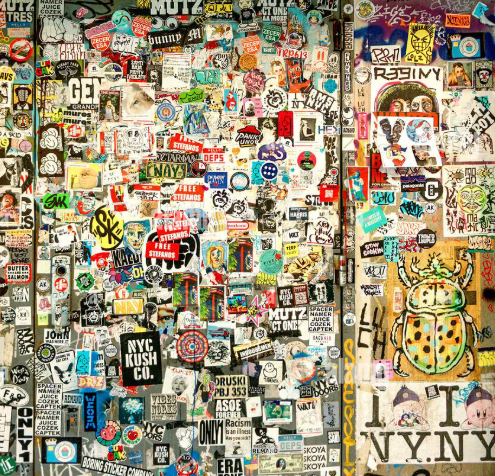
This wall is covered and overprinted with diverse messages. So too is the Eurasian landmass overprinted with fragmented, missing and overlapping cultural and political domains over the last several millennia.

Much of Eastern Europe retains a strong Slavic ethnic identity. Along with the Roman Catholic Church, the Eastern Orthodox Church still holds a strong position in many regions, including Russia. Putin even has the cooperation of the Eastern Orthodox Church in his effort to promote his agenda and propaganda at all levels in Russia.

In addition to Slavic and other ethnic identities, Eastern Europe and Russia have been isolated from much of the world by distance, economics, and the high level of modernism that Western Europe embraced. Tsar Peter the Great was aware of the more advanced nature of Western Europe and spent time there in order to gather ideas for modernizing Russia, particularly in the area of naval ships.

The landlocked or nearly landlocked nations of Eastern Europe lacked ice-free, warm water ports, not just limiting trade and shipbuilding but also economic exchange with more distant parts of the world. The Netherlands, Belgium, France, Germany, England, Rome, Portugal, and Spain in particular, established distant colonies and trade, generating wealth and power. With wealth, a kingdom acquires military strength and the ability to project power and conquest in resource-rich territories within just months or weeks of sailing time.

Conquest and the material wealth it brought was critical not only for an empire or monarchy to maintain or expand its holdings but also for self-defense from marauding armies looking for their own conquest. The various kingdoms, duchies, and empires were not entirely independent entities. The custom of the royal families to intermarry across empires and kingdoms assured continuity of the ruling families and wealth in the royal houses. This familial connection led to many alliances and specific choices in dividing up land.

The question of “what’s the deal with Russia” is about how it came to be that Russia is remote and standoffish to the point of being endlessly hostile and paranoid about the West. To American eyes like mine, the attitude Russia has about the West is peculiar and originates from … what? Even if Russia did not suffer overland invasions by Napoleon and Hitler, would they be any less paranoid? They would have less historical invasion baggage to drag along in some ways, but would other tragedies have befallen them? Impossible to say. It is fair to say that the Bolsheviks were keen on global-scale revolution and widespread implementation of Soviet socialism. They were not without imperialistic enthusiasm themselves.

President Putin continues to press the rhetorical but incendive argument about how the West is desirous of their resources. It is pitched as a clear and present danger to Russia. The West, he intimates, is crawling with greedy and perverted imperialists who want nothing more than to steal Mother Russia’s oil & gas, minerals, uranium, and timber. Any leader in any country could get mileage from this argument, and Vladdy-buck is pumping this handle with gusto.

The main thesis of my history class is that had Hitler not invaded the Soviet Union, the spread of Soviet conquest to its western frontier would not have happened. I’ll write more as this topic unfolds in class.

Where does Russia go next?

[Edited and Rewritten post.]

Many Western observers often imagine a future in which, after Putin’s departure, Russia evolves into a more open and cooperative nation. Wouldn’t it be appealing if Russia joined the global community of states that embrace free trade and safe tourism? This vision reflects our own ideals, making it easy to assume that Russia might share them—but history suggests the reality may be far more complex.

A review of Russian history from Tsar Nicholas II to the present reveals a persistent pattern of authoritarian governance. Although Tsar Alexander II abolished serfdom in 1861 and introduced several liberal reforms, these changes faced strong resistance. Many reforms were ultimately reversed, as they diminished the power of the nobility, provoking significant opposition despite their positive perception in the West.

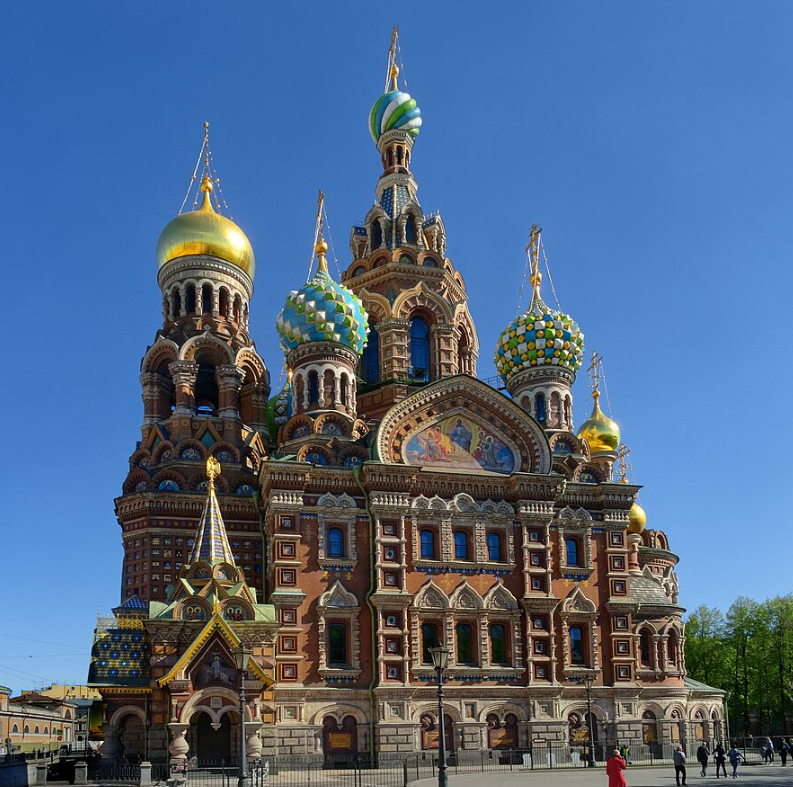
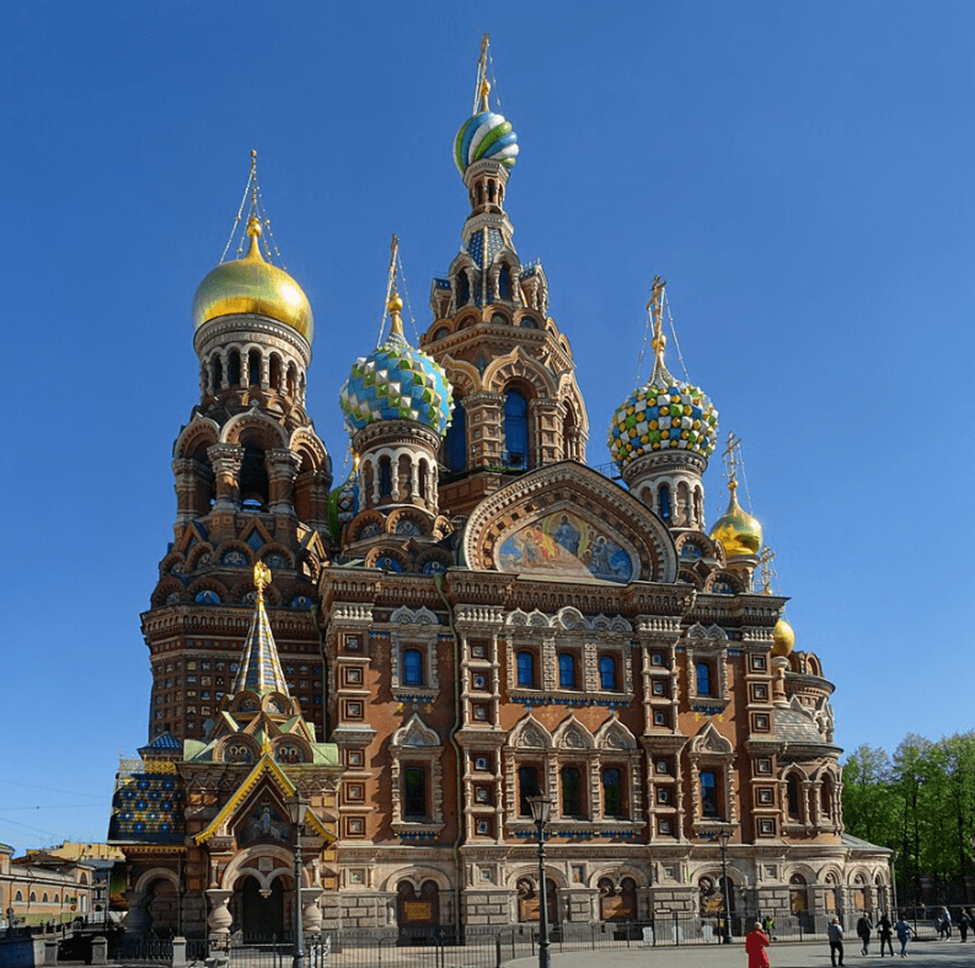
On March 31, 1881, Tsar Alexander II was assassinated in St Petersburg, Russia. His habit was to ride his carriage to a military roll call that day of the week. The route was along the Catherine Canal. An assassin threw a bomb under the horses and it exploded as the carriage rolled over it. The emperor’s carriage was bullet proof, a gift from Napolean III. Alexander exited the damaged carriage uninjured and paused to survey the scene. As he was doing this, a second assassin tossed another bomb at his feet which exploded, later killing him and killing and injuring many others in the vicinity. Afterwards a beautiful cathedral was built on this site called the Cathedral of the Savior on Blood.

Cathedral of the Savior on Blood. Included here only because it is a beautiful image. Image from Wikipedia.

Cathedral of the Savior on Blood. Included here only because it is a beautiful image. Image from Wikipedia. I was awestruck when I visited.

If you end up in Saint Petersburg, which I whole heartedly recommend, this cathedral is well worth a visit. It’s newer and, in my opinion, perhaps even more beautiful than the famous Saint Basil’s Cathedral in Moscow along Red Square,

Following Tsar Nicholas II’s abdication in 1917, a provisional government briefly assumed power before being overthrown by the Bolsheviks during the October Revolution. The ensuing civil war ended with Bolshevik victory, elevating leaders such as Lenin, Trotsky, and Molotov. In November 1917, the Russian Socialist Federative Soviet Republic (RSFSR), the Russian Soviet State declared itself a sovereign state.

The revolution triggered widespread unrest, with numerous factions pursuing divergent objectives. The Bolsheviks relied on the Red Army, while the White Army comprised former imperial officers and Ukrainian anarchists opposed Bolshevik control as well. Additionally, thirteen foreign powers—including Austria-Hungary, Germany, and the Ottoman Empire—intervened against the Bolsheviks.

In 1922, the Russian Socialist Federative Soviet Republic ratified a constitution and formally established the Union of Soviet Socialist Republics (USSR), written in Cyrillic as CCCP.

Amid the turmoil of the Bolshevik Revolution, Russia ceded territories previously seized by Germany during World War I. The collapse of the Russian Empire sparked a protracted struggle among various ethnic groups and factions to reclaim land and assert authority. By 1923, the Russian Civil War had concluded.

Let me say that although the western block vigorously opposed the Soviet communism later in the Cold War, the break from monarchy by popular uprising to form the Federative Soviet Republic and later the Union of Soviet Socialist Republics was a remarkable achievement for that part of the world. To transition from a monarchy with serfdom to the USSR in ~60 years was a world-class achievement. The sad part was the rise of Stalinism and cementing in state authoritarianism as well as revolutionary expansion to global communism. Global socialism was an early goal of the Bolshevik leadership. Socialism was interpreted as a precursor to true communism.

So, why can’t they be like us? Because their history and cultural development never included exposure to free markets, private ownership, foreign travel and individual freedoms we in the west are accustomed to today. No Magna Carta setting limits on the power of the monarch and no parliament sharing power with the monarch. Russia did not participate in global travel as western European nations did which led to colonization and the extraction of wealth from their colonies producing gold, silver, spices, salt peter, slaves, etc. The wealth accumulation and theft of colonial resources set the pace for producing vibrant and wealthy countries in Europe, but not in many of the colonies. The American colonies are a famous exception.

Summary-

This summary only scratches the surface of the October Revolution and the subsequent civil war. For further detail, readers are encouraged to consult additional sources. The period was marked by extreme complexity and violence, resulting in an estimated 7–12 million deaths.

Given this history of conflict, authoritarianism, and systemic repression, it is unsurprising that Russia continues to exhibit traits of a closed and deeply security-conscious state,

Plum-Bummin in Leadville, Colorado, Director’s Cut

This is an encore release of a much earlier post. –gaussling

After an insane week in the lab a road trip to the cool meadows of the nearby mountain range was just what the doctor called for. It was the last weekend before the family- one teacher and one kid-  return to school. Summer break 2009 is history.

We piled in the car and pointed it uphill towards Leadville, Colorado. The planetary atmosphere thinly blankets this insanely high mountain city. It was just what I needed to clear my scrambled mind. Nothing like blinding sunshine and mild oxygen starvation to reset a brain in chronic spasm from sensory overload.

Leadville sits at 10,152 feet above sea level.  If you doubt the effect on your stamina, just take a short sprint in any direction. Or just plod up the stairs of your hotel. Lordy.  All of those business dinners- all that lovely Cabernet and Crème Brûlée- and years of driving a desk have caught up with me.

Leadville is located in the Colorado mineral belt and began to populate with fortune seekers about the time of the Colorado gold rush in 1859. Some placer gold was found in the streams, particularly in what was then called California Gulch, but for the most part Leadville became a silver camp.

In 1874, two investors with metallurgical training, Alvinius B. Woods and William H. Stevens arrived in Leadville and analyzed the muds found in the local sluicing operations. According to A Companion to the American West, edited by William Francis Deverell, (2004, Blackwell Publishing, ISBN 0-631-21357-0, p. 319)  Woods and Stevens found the heavy black mud so problematic for gold sluicing was in fact composed of lead carbonate with high levels of silver.  Woods and Stevens invested $50,000, quietly buying as many claims as they could and began hydraulic mining operations immediately.

By 1890 there were nearly 90 mines in operation employing 6000 miners. At its peak there were 14 smelter operations supporting the mines. Leadville was a genuine boom town with the expected mix of characters.

A mine is a hole in the ground with a liar standing at the top.

All mining towns have characters who go on to dominate local legends and stories. Among the well-known-for-being-famous rags to riches to rags players in Leadville are Horace and Agusta Tabor, along with Horace’s mistress and 2nd wife, Elizabeth “Baby Doe”.

To make a long story short, Horace was a struggling shop keeper who invested in a mine east of Leadville. Though it was salted by the previous owner to entice buyers, Tabor dug 25 ft further down the shaft and struck a rich and extensive vein of silver ore.  The operation was called the Matchless Mine, after Tabor’s favorite brand of chewing tobacco.

According to the tour operators, Tabor operated the Matchless Mine 24/7 for 13 years, pulling an average of $2000/day of silver out of it. At its peak, the mine is said to have employed 100 people. Miners were paid the common rate of $3.00 per day to climb 365 ft to the bottom of the shaft for 12 hour shifts.

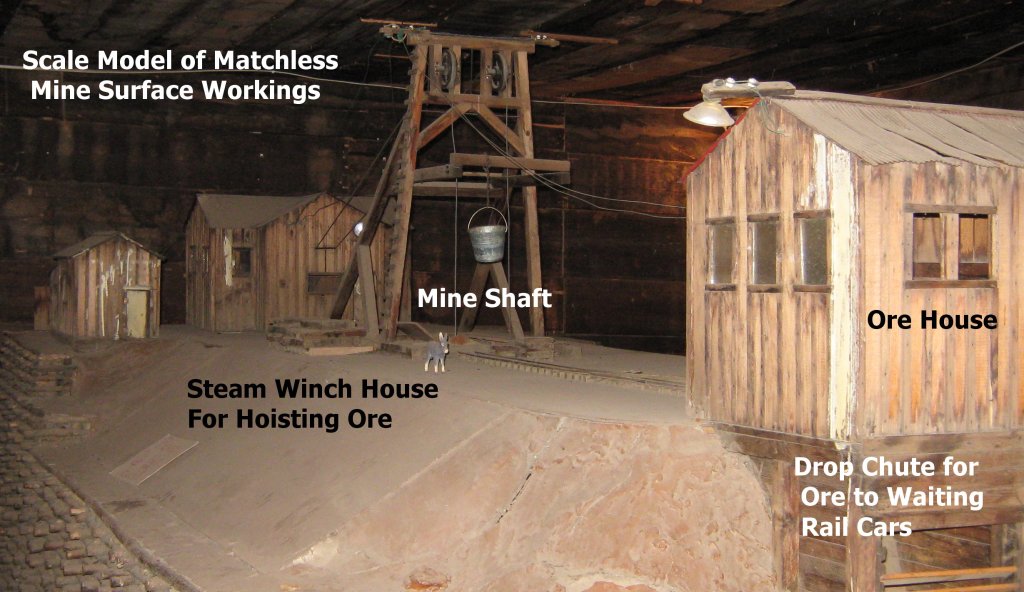
Matchless Mine Surface Workings
Gangue Dump Detail
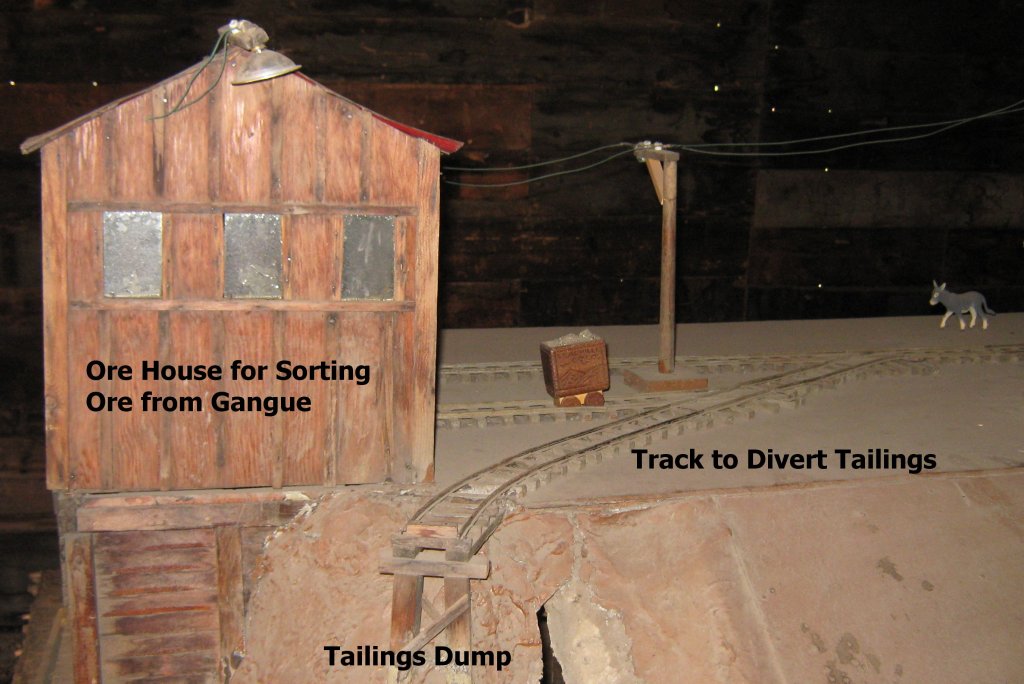
Tailings Dump Detail

The underground workings of the mine followed the vein structure and focused on sending concentrated ore to the surface. Buckets carrying approximately one ton of ore per load (my estimate) were tipped into ore carts and rolled into the ore house for hand sorting. The most highly concentrated and valuable ore was dumped down a chute for loading into a rail car and the gangue (or tailings) was dumped into the gulch.

An assay building (not shown) was on site to provide a continuous assay and accounting of silver sent to the smelter in Pueblo, Colorado. Unlike many other mine operators, Tabor owned a rail operation and had a spur at the mine for pickup and delivery of ore. Many mine operators had to employ mule-skinners to cart wagon loads of ore to a rail siding for transport to the nearest smelter.

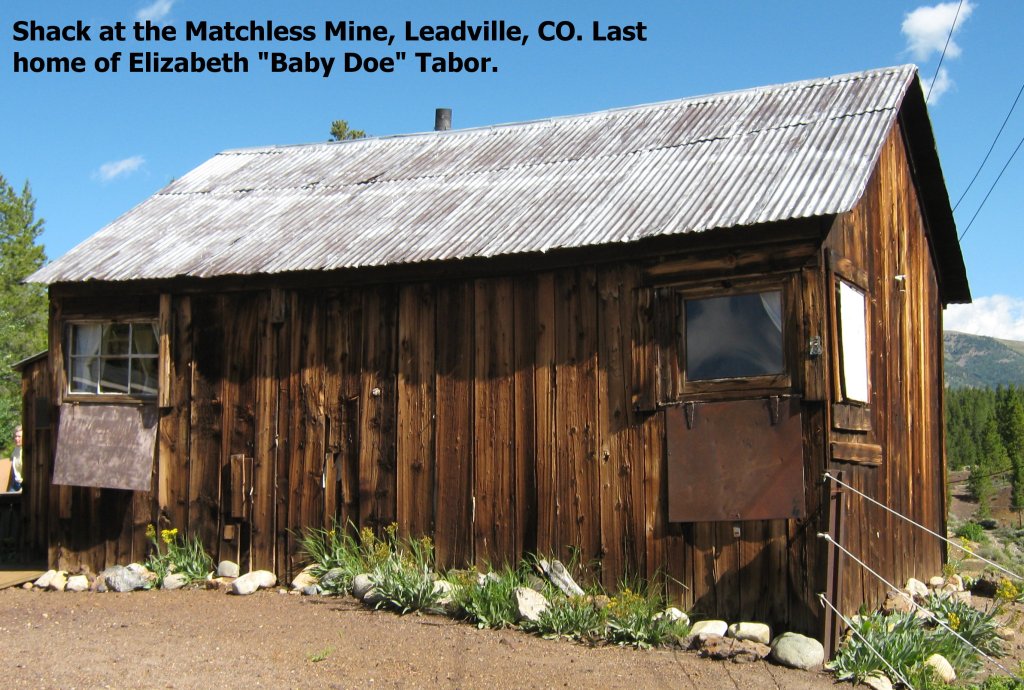
In 1893 the repeal of the Sherman Silver Purchase Act and the collapse of the railroad industry bubble were part of a panic that lead to a crash in silver prices. Tabor lost everything and, as a respected public figure, was appointed postmaster of Denver for a short time. Eventually Tabor died at age 69 in 1899. Ex-wife Agusta had invested her divorce settlement wisely in Denver and lived comfortably. Widow Baby Doe Tabor was found frozen stiff in her shack at the Matchless Mine in 1935.

Matchless Mine Shack

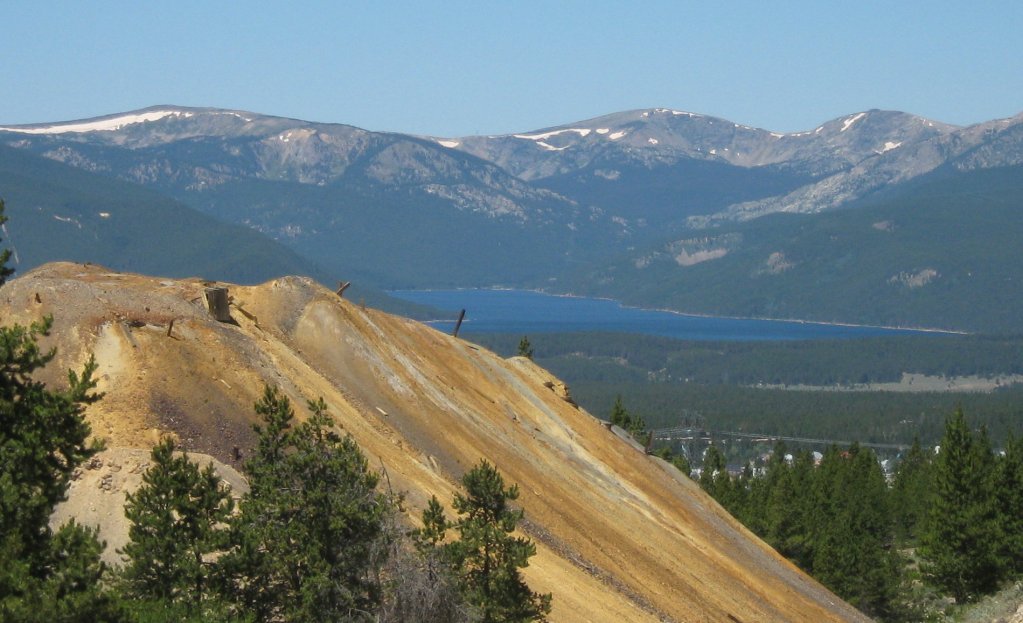
All of the digging from the boom time of Leadville has left an enduring legacy for those who live in the watershed. Much of the mining activity occurred uphill, east of the city and as a result, that area is pock marked with many large colorful tailings heaps. While the colors are interesting to ponder and sample, the ground and surface waters are greatly affected by aqueous extraction of metals from these piles.

If you stand next to one of these heaps, you can’t help but notice the smell of sulfur. The ore and tailings are enriched in sulfides and once exposed to air and water, oxidation occurs to make corrosive runoff. This is a kind of heap leaching phenomenon that will eventually exhaust itself, but only at the cost of water quality.

Boomtown Legacy
Boomtown Legacy (Copyright 2009 All rights reserved)

Update: Huo Yao (Fire-Drug)- Predecessor to Gunpowder.

[Note: This is an updated version of an earlier post.]

Recently I spent some time tracing the very early history of gunpowder or Huo Yao (China, ca 850 AD). It turns out that the earliest clear description of a gunpowder-like composition was described in a document produced during the Tang Dynasty. A document titled “Classified Essentials of the Mysterious Tao of the True Origins of Things” contained a list of particularly dangerous elixirs. A comprehensive history of Chinese science can be found in “Science and Civilisation in China, Volume 5: Chemistry and Chemical Technology, Part 4, Spagyrical Discovery and Invention: Apparatus, Theories and Gifts” by Joseph Needham. Within this list of hazardous compositions, a warning was offered citing the dangers of mixing and heating together realgar, salt peter, sulfur, and honey.  The document tells of alchemists mixing this combination and heating it, resulting in a deflagration leading to burnt beards, faces, and hands as well as the loss of the structure to fire. This mixture has been translated as “fire-drug”.

There are earlier references to admixtures that could produce a violent effect, but the compositions are not disclosed. The information in the 850 AD document clearly describes the components of classic gunpowder- a nitrate oxidizer, sulfur or sulfide for low ignition temperature, and a carbohydrate reducing agent- honey. What is notable about gunpowder is that is a self-contained redox system containing two sides of the fire triangle– fuel and oxidizer in intimate contact. All that is needed for an exothermic reaction is initiation with some kind of energy stimulus.

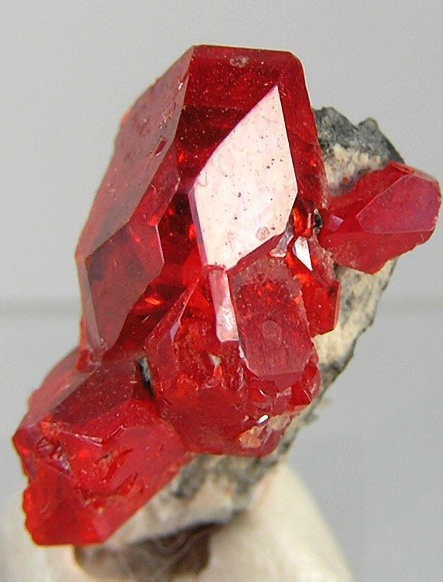
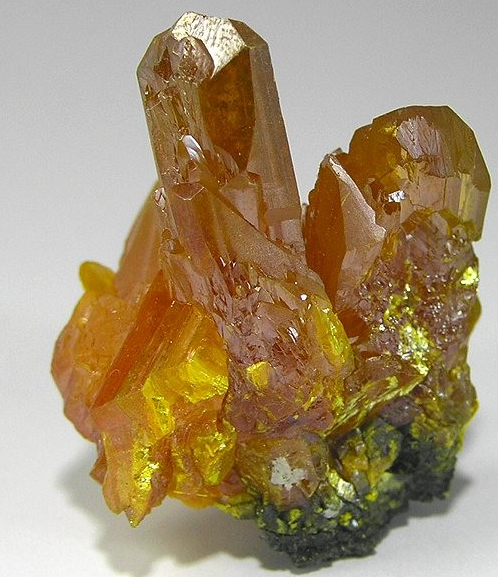
A couple of thoughts on the realgar present in the mix. First, alchemists were commonly in the apothecary trade and made their living preparing medicaments, not so much searching for the philosopher’s stone. It is not unreasonable to suppose that the composition was intended for some medicinal effect. Realgar is red tetraarsenic tetrasulfide (As4S4), possibly with some amount of yellow Orpiment (As2S3), and may have been a common apothecary ingredient of the time. Crystalline realgar is a ruby-like, eye-catching substance and it is not surprising that it captured the fancy of alchemists.

Source: Wikipedia. Crystalline realgar, As4S4.
Source: Wikipedia. Crystalline orpiment, As2S3.

Second, realgar and orpiment are found in hydrothermal deposits as are copper, gold, silver, and mercury sulfides (metal sulfides as a group were referred to then by the obsolete term sulphuret). Back when roasting ore was widely practiced (and legal), it was common for miners in American lode gold districts to heap sulphuretted ores onto a wood pile and set it alight directly or air oxidize it in a reverberatory furnace. This process would actually ignite the sulphureted ore and in the case of gold and mercury, release the native metal. The point is that sulphuretted arsenic would be expected to contribute to the combustion process as a reducer of nitrate or just as a spectator fuel.

In medieval times, before blasting with gunpowder was available, it was common in hard rock mining to fracture rock by creating a large fire adjacent to a rock face to get it hot, then water was splashed on it in an attempt to fracture the hot rock by thermal shock. [In my lonely voice squeaking out from under my rock along the riverbank, I would offer that this activity might have presented the opportunity to discover that some (sulphuretted) minerals were combustible. Alternatively, building a ring of sulfuretted rock around a campfire may have led to the same discovery.]

Russian Death-Tanks

Numerous YouTube videos depict the widespread destruction of Russian tanks in the invasion of Ukraine, giving the impression that these tanks are more lethal to Russian soldiers than their opponents. Despite being equipped with Explosive Reactive Armor (ERA), their ability to withstand artillery, mines, and drone attacks seems minimal. Moreover, when the armor is breached, the cannon gun propellant tends to ignite violently, causing the warheads to explode and instantly killing the crew. Occasionally, the force of ammunition blasts is so strong that it hurls the turret with gun barrel into the air, a stark illustration of the power of such explosions. Consequently, videos frequently capture Russian tank crews abandoning their crippled vehicles and fleeing for safety. Instead of offering protection, tanks have become conspicuous and cumbersome targets, prone to devastating attacks.

One might question the practical value of reactive armor. The landscapes of eastern Ukraine are strewn with thousands of destroyed Russian tanks, their ERA blocks still intact. Perhaps its practical value lies in bolstering the confidence of tank crews to engage in battle, trusting in the ERA’s protective capabilities. However, it is now challenging to believe that ERA instills a sense of safety in tank crew members. The effectiveness of reactive armor seems negated by potent penetrator warhead countermeasures capable of breaching the ERA. The pertinent question remains: does the ERA diminish the impact of an incoming shell sufficiently to be considered effective?

The conflict between Putin and Ukraine will eventually conclude, and the victors will promptly seek to repurpose the battlefields for peacetime activities. However, they must first contend with numerous challenges, including the presence of unexploded ordnance. Thousands of mines may remain hidden, posing a threat for decades unless they are securely disposed of or neutralized.

The landscape of the battle zones is marred by bomb craters, charred vehicles—many with unexploded ammunition—minefields, unexploded ordnance scattered about, live explosive reactive armor on destroyed armored vehicles, and soil polluted with shrapnel and residues from countless detonated artillery shells.

Numerous cities and villages, particularly those near the Russian border, have been completely obliterated by Putin’s military, resulting in tens of thousands of civilian casualties and leaving most without homes. The remnants of homes, businesses, and infrastructure stand as a testament to the survivors. For them, social and economic frameworks are now just distant memories. Civilization has been set back by at least a generation due to Putin’s distorted ambitions for an imperial legacy. The man is not insane or unintelligent; he is quite astute and fully aware of his actions—he is simply a terrible person. Currently, the US is facing its own challenge with a figure of ill repute seeking control of the government, backed by a significant number of misguided followers.

The conflict has been a catastrophic event for the region’s flora and fauna, significantly hindering the biosphere in numerous areas. Ukraine, until recently, was a significant grain producer and exporter, essential for the sustenance of millions. In the early stages of the conflict, Russia targeted and destroyed much of Ukraine’s grain distribution infrastructure, aiming to debilitate the economy and hasten a surrender. The bombings of civilian residences, hospitals, and other infrastructures will tarnish Putin’s reputation, marking him as a tyrant and a fundamentally flawed individual. Additionally, the reported abduction of thousands of Ukrainian children by Russia for forced assimilation and adoption raises serious legal and humanitarian questions. These actions are meticulously recorded for potential future war crimes proceedings and historical record.

Navalny and Trump: Brothers in Sacrifice. Seriously??

Recently Trump has compared his troubles to that of Alexei Navalny, the recently deceased political opponent of Putin. Fox News aired a Trump interview with Laura Ingram where she asked how he is going to pay his enormous legal costs. He described his troubles as “a form of Navalny” and quickly pivoted to his large-scale legal woes. He stated that “We are turning into a communist country in many ways.”

First, 4 grand juries of fellow citizens in 4 jurisdictions indicted him on 91 felony counts. He has been given due process. For, Navalny, not so much. He was poisoned with nerve agent in 2020 (a particularly Russian trick) but managed to survive. Following treatment abroad, he returned to Russia where he was quickly apprehended, convicted and sentenced to 19 years in a maximum security prison for recidivists and those with life sentences for violence.

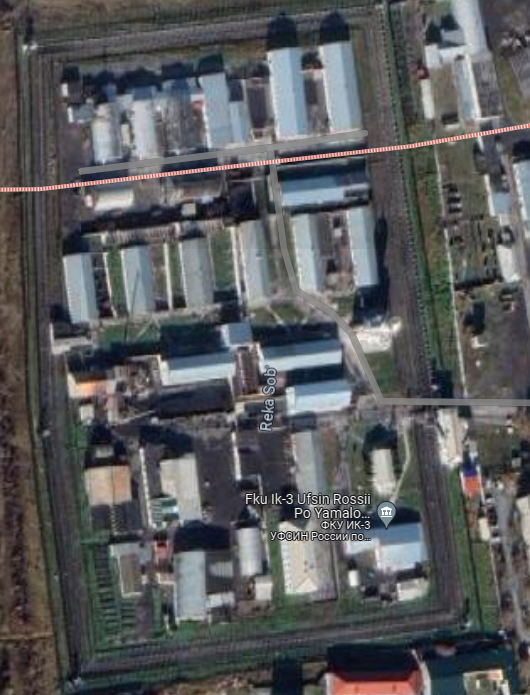
Source: Google Maps. The Fku-Ik3 facility in Kharp, Russia, Yamalo-Nenets Autonomous Okrug.

He was sent to penal colony number 3, a distant arctic prison in the Yamalo-Nenets Autonomous Okrug. According to Hugh Williamson of Human Rights Watch, “The Russian authorities have abandoned any pretense of justice in dealing with dissenters, and with Navalny they have thrown a litany of charges against him, each more brazenly absurd than the next.

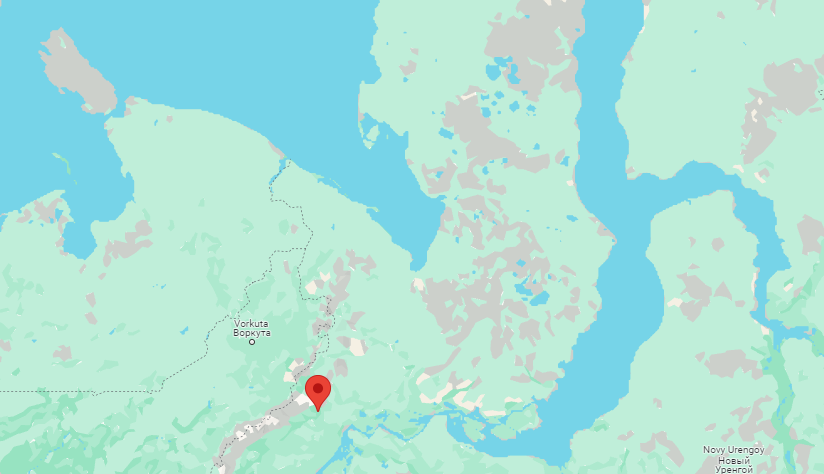
Source: Google maps. Navalny’s Polar Wolf penal colony was in the town of Kharp in north central Russia, as indicated on the map. The town was built by Gulag prisoners in the Stalin era.

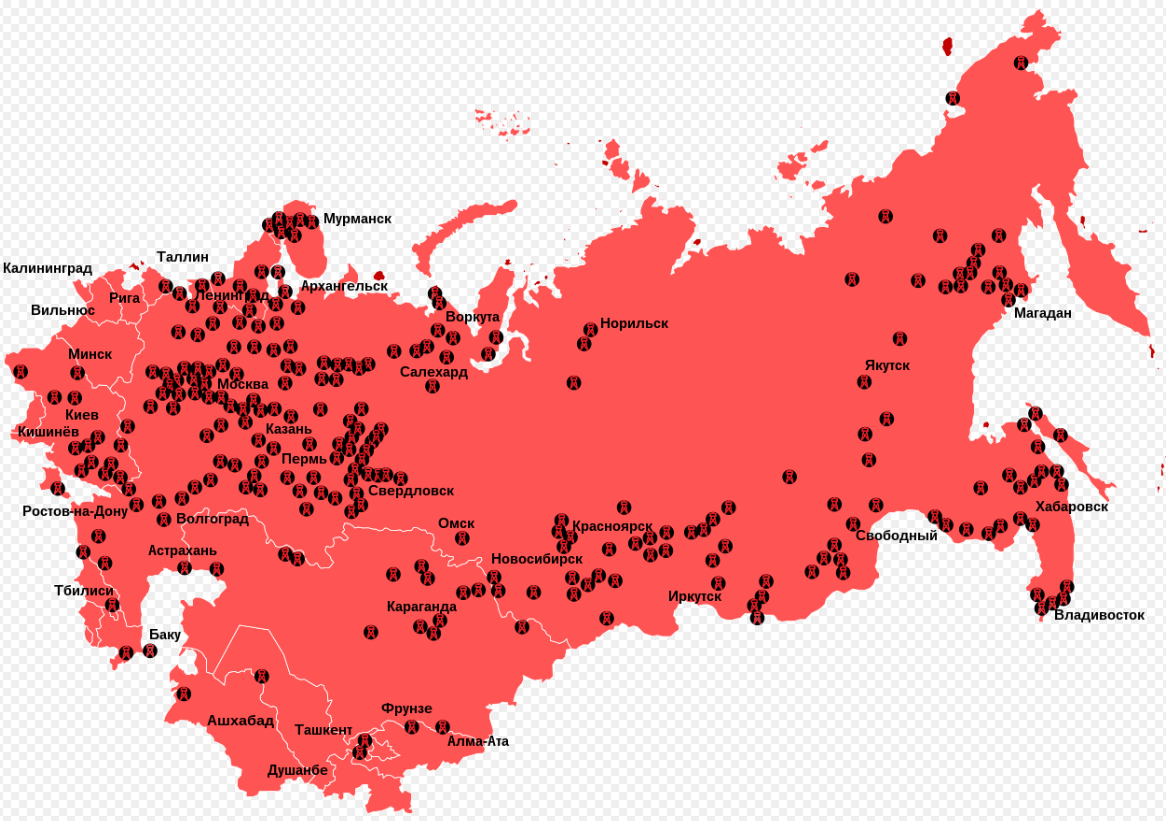
The Soviet Union had a large number of Gulags prior to its collapse. The map below shows the locations of the camps. During Operation Barbarossa in WWII, Hitlers army and Himmler’s SS were under orders to kill all Jews encountered and they did. Many non-Jewish Poles, Ukrainians and Belarusians were murdered during Hitler’s advance to Moscow and subsequent retreat. Poland in particular suffered greatly during this time. Some fraction of Jews were sent to various concentration camps but a great many were collected into groups and shot en masse just outside of their villages. As the Red Army moved into Poland killing and pushing the Germans west, Stalin gave orders to take over control of the country and establish a communist government. The participants of the weak non-communist provisional government of Poland were captured and killed by the Soviets and the Polish government was taken over under communist control. Many, many Poles were captured and sent into forced labor in the Gulag system. Poland was savaged by both the Soviets and Germans.

Source: Wikipedia, Gulag. According to Wikipedia, the Soviets had 423 labor camps as of March, 1940. It is said that 18 million people passed through the camps and 1.6 million died due to detention.

As an American, I have been exposed to the history of both the western European and Pacific theaters of WWII. However, the history of Central and Eastern Europe, especially from WWI through WWII has largely been absent in my experience. I just finished reading the 2010 Bloodlands by Timothy Snyder. Snyder is a Yale historian and writes in detail on the period in the Central and Eastern European regions between the times of the Bolshevik revolution and the end of WWII.

The period of 1932 to 1933 (the Holodomor) in Ukraine is particularly interesting and sheds light on the fear and revulsion Ukrainians must feel at the prospect of once again coming under Russian rule. During this time the Soviets, on orders from the Kremlin in Moscow, blocked any exit from Ukrainian territory and starved the Ukrainians in an effort to speed collectivization. Their agricultural products were stolen leaving Ukrainians to starve. Many tens of thousands were killed or sent to the gulags. Being sent to the gulags entailed being packed into rail cars and shipped off without food or warmth. Sometimes when they arrived, they found that they would be forced to build the prison camp they would be imprisoned in.

Some critics complained that the book presents nothing new. It is after all heavily referenced to extensive existing literature. Nonetheless, it is a very compelling read for we non-scholars. For Americans in general, this bit of history is probably unheard of.

For Trump to compare his “treatment” by the American Justice system to that of Navalny betrays great ignorance of the history and contemporary politics of Russia. His lack of compassion for Ukraine is only a small slice of his overall absence of compassion.

Handing over the presidency of the USA again to Trump would be a tragic mistake that might not be recoverable.

The Illuminating History of Producing Brighter Flames

This is a reprint of an October 25, 2010, piece that I wrote about illumination with flames. I did tweak the title a bit for the sake of accuracy. -Th’ Gaussling

Until the invention of the electric lamp, the illumination of living and working space was very much the result of sunlight or of combustion.  Since the development of fire making skills in prehistoric times, the combustion of plant matter, fossil fuels, or animal fat was the only source of lighting available to those who wanted to illuminate the dark spaces in their lives.

From ancient times people had to rely on flames to throw heat and an agreeable yellowish light over reasonable distances. A good deal of technology evolved here and there to optimally capture the heat of combustion to do useful work (stoves, furnaces, and boilers) from readily available fuels. 

Lighting technology also evolved to maximally produce illumination from flame.  High energy density fuels that offered a measure of convenience for lamp users evolved as well. Liquid fuels like vegetable oils, various nut oils, whale oil and kerosene could flow to the site of combustion and were in some measure controllable for variable output. The simple wick is just such a  “conveyance and metering device” for the control of a lamp flame. Liquid fuels flow along the length of a wick by capillary action to a combustion zone whose size was variable by simple manipulation of the exposed wick surface area.

The first reported claim of the destructive distillation of coal was in 1726 by Dr Stephen Hales in England. Hales records that a substantial quantity of “air” was obtained from the distillation of Newcastle coal. It is possible that condensable components were generated, but Hales did not make arrangements to collect them.  Sixty years earlier an account of a coal mine fire from flammable coal gases (firedamp) highlighted the dangerous association of coal with volatiles. So, flammable “air’ was associated with coal for some time.

By 1826 a few chemists and engineers were examining the use of combustable gases for illumination. The historical record reveals two types of flammable gas that were derived from coal- coal gas and water-gas. Both gases came from the heating of coal, but under different conditions. Coal gas was the result of high temperature treatment of coal in reducing conditions. It is a form of destructive distillation where available volatiles are released.  Depending on the temperature, there was the possibility of pyrolytic cracking of heavies to lights as well. 

Water-gas was the result of the contact of steam with red hot coal or coke. The water dissociates into H2 and CO. Water gas is a mixture of hydrogen and carbon monoxide, both of which are combustible. The formation of water-gas is reported to have been discovered by Felice Fontana in 1780. 

One of the properties of burning coal gas or water-gas was the notably meager output of light from the flame. Workers like Michael Faraday and others noted that these new coal derived gases provided feeble illumination, but if other carbonaceous materials could be entrained, then a brighter flame could result. It was during the course of investigations on illumination with carburized water-gas that Faraday discovered bicarburet of hydrogen, or benzene.

About this time, an engineer named Donovan also noted that if other carbonaceous materials were to be entrained into water-gas, then the light output was enhanced. So, in 1830, engineer Donovan installed a “carburetted” water-gas lighting system for a short run in Dublin.

Coal gas was first exploited for lighting by the Scottish engineer William Murdoch.  Murdoch began his experiments in 1792 while working for Watt and Boulton in England. By the late 1790’s, Murdoch was commercially producing coal gas lighting systems. His home was the first to be lit with coal gas.

The carburization of water gas eventually became an established industry in America in the second half of the 19th century. The treatment of gases, especially with the discovery of natural gas in Ohio, increased the commercial viability of lighting with gas. Carburization of water gas was aided by the discovery of hydrocarbon cracking to afford light components that could be used for this purpose.

Thorium is frequently found in the ores of rare earth elements (REE) and the connection of REE’s to the issue of illumination begins in the laboratories of Berzelius in about 1825. Berzelius had observed that when thoria and zirconia were heated in non-luminous flames, the metal oxides glowed intensely.  But this was not a new phenomenon. Substances like lime, magnesia, alumina, and zinc oxide were known to produce a similar effect. Goldsworthy Gurney had developed the mechanism of the Limelight a few years before. In the limelight, a hydrogen-oxygen flame played on a piece of lime (calcium oxide) to produce a brilliant white glow.  This effect was soon developed by Drummond to produce a working lamp for surveying.

The work of Berzelius was an important step in the development of enhanced flame illumination. He had extended the range of known incandescent oxides to include those that would eventually form the basis of the incandescent mantle industry.  Thoria (mp 3300 C) and zirconia (mp 2715 C) are refractory metal oxides that retain mechanical integrity at very high temperature. This is a key attribute for commercial feasibility.

Numerous forms of incandescent illumination enhancements were tried in the middle 19th century. Platinum wire had the property of glowing intensely in non-luminous flames. But platinum was not robust enough for extended use and was quite rare and consequently very expensive. By 1885, a PhD chemist named Carl Auer von Welsbach patented an incandescent mantle which was to take the gas light industry to a new level of performance. Welsbach studied under professor Robert Bunsen at the University of Heidelberg. 

Welsbach fashioned the incandescent mantle into the form that is familiar to anyone today who has used a Coleman lantern. The original mantle was comprised of a small cellulose nitrate bag that had been impregnated with magnesium oxide, lanthanum oxide, and yttrium oxide in the ratio of 60:20:20.  The mantle gave off a greenish light and was not very popular.

By 1890, Welsbach produced an improved incandescent mantle containing thoria and ceria in a ratio of 99:1. This mantle emitted a much whiter light and was very successful. Many combinations of zirconia, thoria, and REE metal oxides were tried owing to their refractory nature, but the combination of thoria-ceria at the ratio of 99:1 was enduring.

Welsbach made another contribution to the commercialization of REEs. Welsbach had experimented with mischmetal and was interested in its pyrophoric nature. He had determined that a mixture of mischmetal and iron, called ferrocerium, when struck or pulled across a rough surface, afforded sparks. In 1903 Welsbach patented what we now call the flint.  In 1907 he founded Treibacher Chemische Werke GesmbH. Today Treibacher is one of the leading REE suppliers in the world.

See the earlier post on REE’s.

REE’s in Greenland.

REE Bubble?

REE’s in Defense.

REE’s at Duke.

Junior RFK and Thimerosal

My, my, my. Rober F. Kennedy Jr. really screwed the pooch with his comments on ethnically targeted COVID-19. Reportedly, he said “there is an argument that (COVID-19) is ethnically targeted”, adding “Covid-19 is targeted to attack Caucasians and Black people. The people who are most immune are Ashkenazi Jews and Chinese …. we don’t know whether it’s deliberately targeted or not.” If this quote is correct, he did not actually say that COVID-19 was ethnically targeted, but rather that “there is an argument …”. It is much like saying “is Bob still beating his wife? I just don’t know …” Whether he endorses the targeting theory or not isn’t clear, but he was willing to trot out this provocative statement to make his point. There was much blowback. Given the racial undertones, it was a large blunder.

RFK Jr. is well known as an advocate for conspiracy theories, some of which are whoppers. The online news magazine Slate has an article that compiles them. I find that his portfolio of mania is exhausting. The thought of pushing back against such seems like a fool’s errand. It reminds of a line in the movie True Grit: “What have you done when you have bested a fool?” What is the point in debating him?

RFK Jr. is a Harvard grad and went the University of Virginia School of Law to get his JD degree. He had a few slip ups early in his career but recovered. He spent most of his career as an environmental lawyer and has fought many laudable battles for environmental justice. Somewhere along the line he went off the rails and landed in the crackpot ferry to conspiracy land. RFK Jr. is a penetrating anti-vaccine voice who can draw large crowds if for no other reason just to see him.

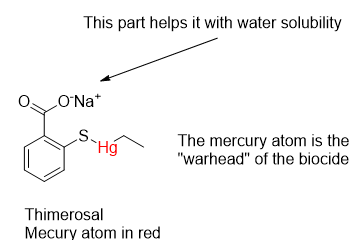
The substance of concern behind much of the anti-vaccine Sturm und Drang is Thimerosal. It is a synthetic organomercurial compound that is effective against bacteria and fungi. Its biocidal properties have been known since the around 1930. Mercurials have been used since the time of the Swiss alchemist Paracelsus (Philippus Aureolus Theophrastus Bombastus von Hohenheim) in the 1500’s. Paracelsus is known for the pronouncement that “only the dose makes the poison.” This remains a fundamental principle of toxicology.

The early mercurial medicaments used by Paracelsus were simple inorganic salts of mercury(II) like mercuric chloride, HgCl2, or mercury(I) like mercurous chloride, Hg2Cl2, also known as the mineral calomel. Mercuric chloride is prepared by treating liquid mercury with sulfuric acid followed by addition of sodium chloride for anion exchange. Mercurous chloride is prepared by heating mercuric chloride with mercury to do the reduction of Hg++ to Hg+.

Thimerosal is sometimes wrongly compared to methylmercury, a known and tragically toxic compound with the formula CH3Hg+X–. The X anion can be chloride, hydroxide or a thiol, depending on the source. It is an easy comparison to make because of the similarity of methyl (CH3) to the ethyl (CH3CH2) hydrocarbon group in Thimerosal, but research has proven it to be a poor comparison. Methylmercury compounds can be produced by aquatic microorganisms in water bodies in the presence of inorganic mercury. The methylation of natural biomolecules is a well-known process.

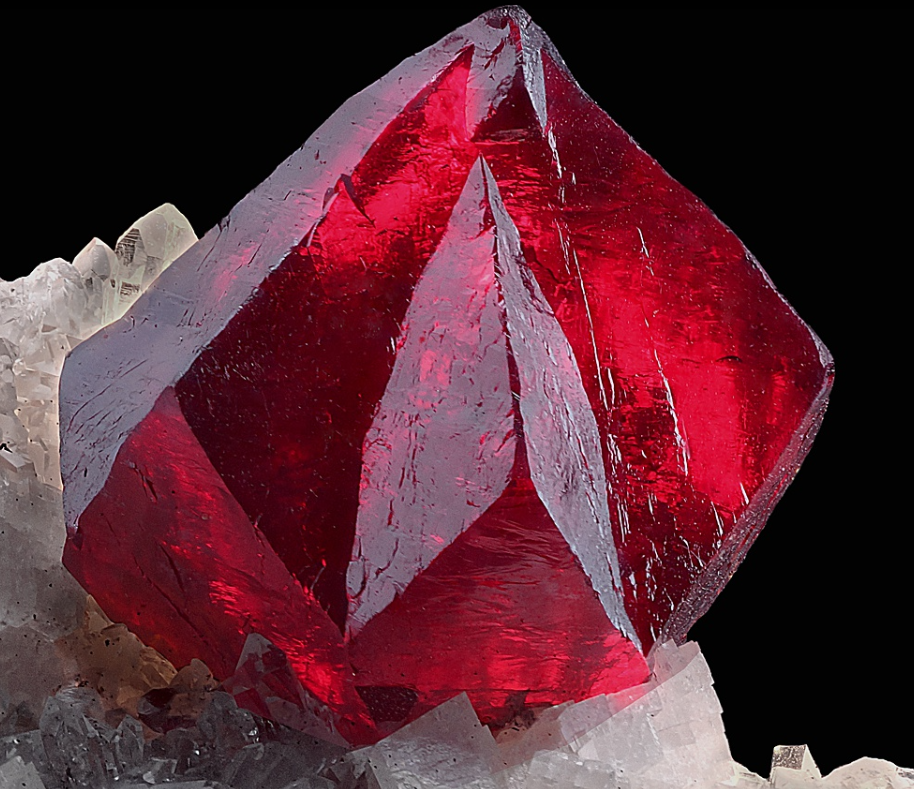
Like many metals, mercury has an affinity for sulfur, occurring naturally as mercury (II) sulfide, HgS, as deposits of Cinnabar or as a minor constituent with other minerals. It also has an affinity for sulfur-containing amino acids such as methionine, cysteine and homocysteine found in proteins. In the bloodstream mercury binds with proteins like albumin to the extent of 95-99 %. While in the body and exposed to water it decomposes to thiosalicylate and ethylmercury. Ethylmercury cation (CH3CH2Hg+) disperses widely and can cross the blood-brain and placental barriers.

Cinnabar crystal, HgS. Source: Mindat.org

According to Doria, Farina, and Rocha (2015) in Applied Toxicology, a comparison of effects between methylmercury and ethylmercury gave essentially the same outcomes in vitro for cardiovascular, neural and immune cells. Under in vivo conditions, however, there was evidence of different toxicokinetic profiles. Ethylmercury showed a shorter half-life, compartmental distribution and elimination compared to methylmercury. Methylmercury and ethylmercury toxicity profiles show different exposure and toxicity risks.

For many years, Thimerosal was sold as an antiseptic under the name Merthiolate as a tincture (an ethanol solution) by Eli Lilly and Co. Like most households in the 1960’s, we had it in the medicine cabinet or its cousin Mercurochrome. They were used for topical application to burns, cuts and scratches. Thimerosal has been used as a preservative in many health-related preparations such as vaccines, eye drops and contact lens disinfecting solutions. While the CDC has cleared it of doing harm, anti-vaccine mania hit the fan well before COVID-19 and RFK Jr. put his credibility and name recognition behind it.

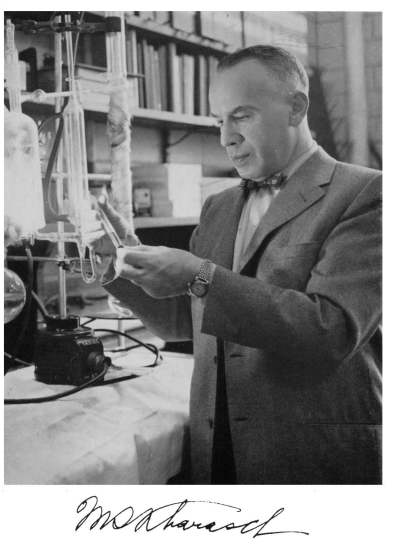
Thimerosal was first prepared by chemist Morris Kharasch at the University of Maryland in 1927. An interesting technical summary of the substance can be found on Drugbank Online.

Morris Selig Kharasch. Photo credit: National Academy of Sciences, 1960.

Kharasch is known for his pioneering work in free radical chemistry in the 1930’s at the University of Chicago but before that began his work with organomercury chemistry during the 1920’s while at the University of Maryland. His development of Thimerosal was a result of his organomercury work. He is also credited with opening the door to organic free radical chemistry leading to improvements in rubber polymer chemistry and manufacture. His work led to the use of peroxides to reliably induce the so-called anti-Markovnikov addition of a protic acid (HX) to olefins. The presence of trace peroxides was behind the unexpected “reverse” Markovnikov addition of seen in work with the addition of hydrogen bromide to bromopropene.

Kharasch’s early work in organomercury chemistry led to the invention (and patenting) of what became known as Merthiolate (thimerosal). Kharasch later worked as a successful consultant for Eli Lilly, the Du Pont Company, US Rubber, the US Army and others. In many cases these companies were the assignees of the patents.

Little mention is made of Morris Kharasch as a prolific and wide-ranging inventor with, by my count, 117 US patents with him as the inventor. So, why did Kharasch bother to patent Thimerosal? Did he anticipate its biocidal and preservative properties?

Kharasch references make mention of a 1931 patent regarding Thimerosal. That patent is STABILIZED BACTERICIDE AND PROCESS OF STABILIZING IT, US 1862896, appln. filed August 22, 1931, assignee: no party disclosed. The patent claims a process for and claims of water-soluble solution compositions. Numerous additives include antioxidants, alkyl amines, ethanolamine and borax. Claim 19 is telling. It claims the composition of sodium ethyl mercurithiosalicylate (Thimerosal), monoethanolamine, borax as a buffer and enough sodium chloride to make the composition sufficiently isotonic with the body fluids. In this patent the Thimerosal composition itself is not claimed, but as a component of a stabilized water solution. Claim 14 claims a water solution composition of sodium ethyl mercurithiosalicylate and an antioxidant which tends to “inhibit the acquisition” (odd choice of words) of burning properties by the solution. This plus the claim of an isotonic composition strongly suggests anticipated medicinal applications.

STABILIZED ORGANO-MERCUR-SULFUR COMPOUNDS, US 2012820, appln. Feb 17, 1934, assignee: Eli Lilly and Company. Claims a stabilized solution of alkyl mercuric sulfur compounds in water with aliphatic 1,2-diamines. Also claims Ethylenediamine ethylmercurithiosalicylate composition. This is similar to the ‘896 patent but specified ethylenediamines.

As mentioned above, the biocidal nature of inorganic mercurials had been known for a long time. There was actually limited success in the treatment of syphilis. But they were long known for being very harsh on the patient and grew out of favor when better treatments came along.

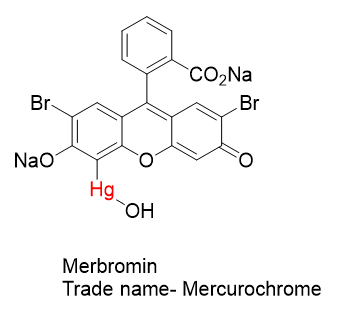
The antiseptic properties of Mercurochrome were discovered in 1918 at Johns Hopkins Hospital by urologist Hugh H. Young. Mercurochrome is essentially a dye molecule with an attached mercury warhead. There are three groups on the organic structure that aid in its solubility in water- NaO, CO2Na, and HgOH. Water solubility is often an important attribute in medicinal substances.

Source: Wikipedia.

Given that antiseptic properties of organomercurials were known, it is perhaps not surprising that an enterprising Ukrainian immigrant with an interest in organomercurials like Morris Kharasch might want to patent his invention.

Interview of Timothy Snyder on the Putin-Ukraine War

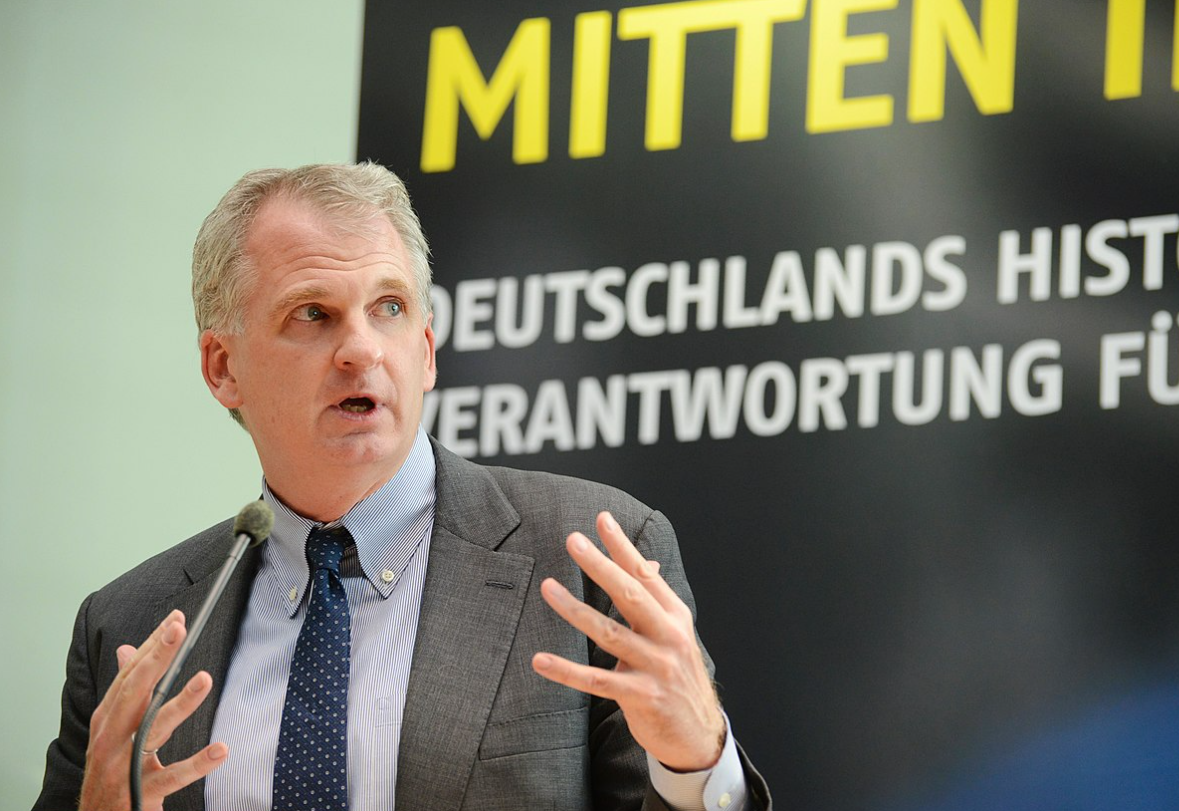
An interview with the historian Timothy Snyder has appeared in the March 9th, 2023, internet issue of Der Spiegel International. The interview was conducted By Ann-Dorit Boy und Eva-Maria Schnurr. Snyder has very strong Euorpean history credentials with a Ph.D. in History from the University of Oxford. He is presently the Richard C. Levin Professor of History at Yale University and a permanent fellow at the Institute for Human Sciences in Vienna.

Photo from Wikipedia, https://en.wikipedia.org/wiki/Timothy_D._Snyder

The interview starts with an important question for Germany-

“As Germans accept the debate on Putin’s terms, they can miss the obvious point: If we care about the comparison, we have to note right away that it is Putin’s Russia that is behaving more like Germany in 1941: Moscow, like Berlin then, claims that a neighboring people and state do not exist; Moscow, like Berlin then, is fighting a war of aggression; Moscow, like Berlin then, is carrying out eugenic, deportation, and mass killing policies. If Russia is behaving as the Germans did in 1941, then the Germans now have a second chance to respond to fascism. Will they take that second chance?“

Snyder makes the point that German reticence to aid Ukraine in the war is what Putin wants.

“In Russia, his [Putin’s] intention is to build a cult of innocence: No matter what we do, it must be justified, because we are always the righteous victim. Of course, this contradicts the actual history of the Second World War, in which Stalin chose to ally with Hitler, and in which Ukrainians actually suffered more than Russians, by any measure. Putin is also seeking to exploit the historical memory of Germans. He wants to trigger the German reflex that Russians must be victims and Germans must be aggressors.“

I will end here because the article needs no explanation from me. It’s worth the read.