Monthly Archives: June 2010

Homestake Mine Visit

The town of Lead, SD, pronounced “leed”, is home to the Homestake gold mine. The mine was purchased and subsequently developed by George Hearst, father of William Randolph Hearst, and partners ca 1876.

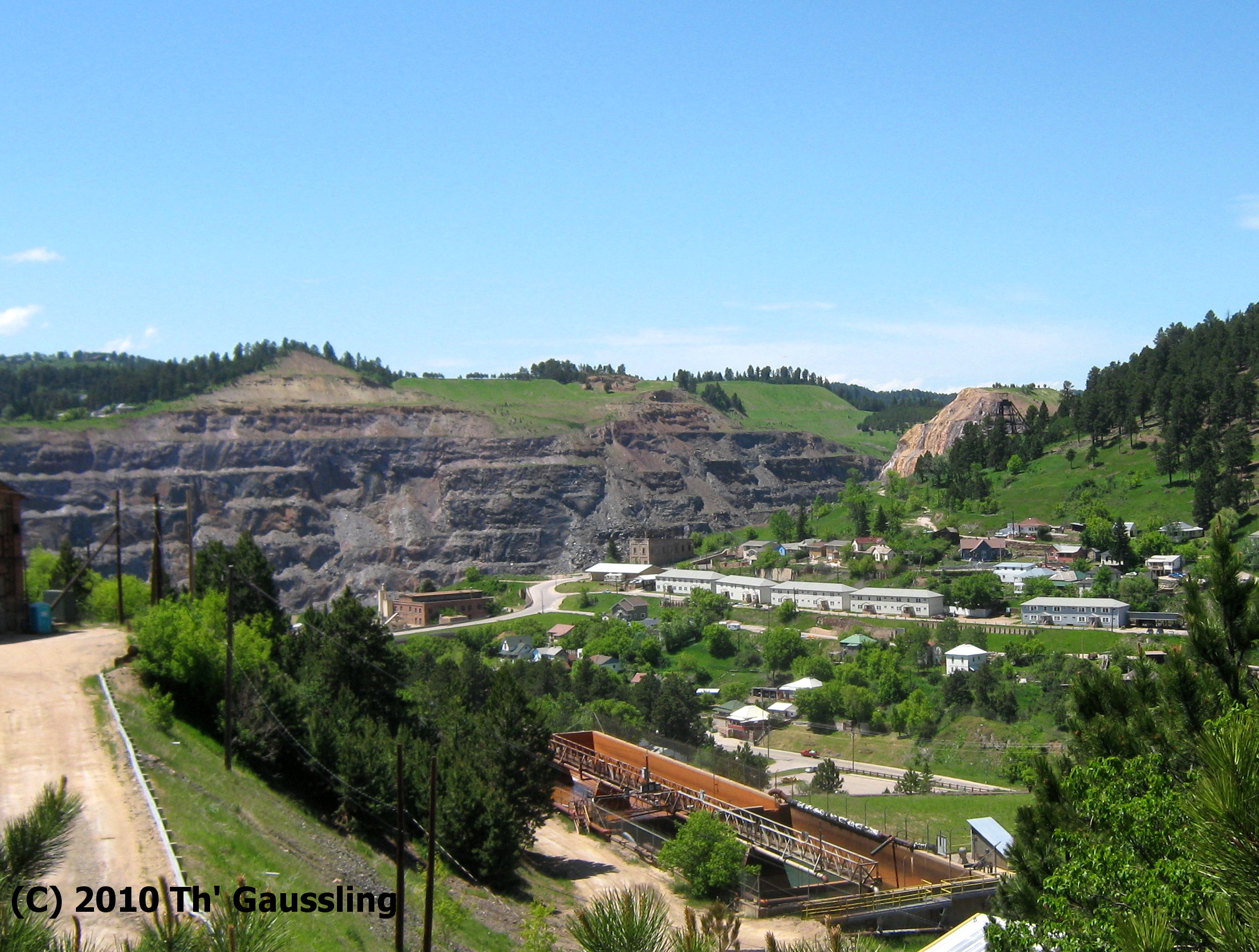
Homestake Open Cut from Yates Hoist House

 The photo above shows one ground view of the large open cut found on the north end of town. The pit is approximately 1/2 mile across and 1200 ft in depth from the highest elevation.

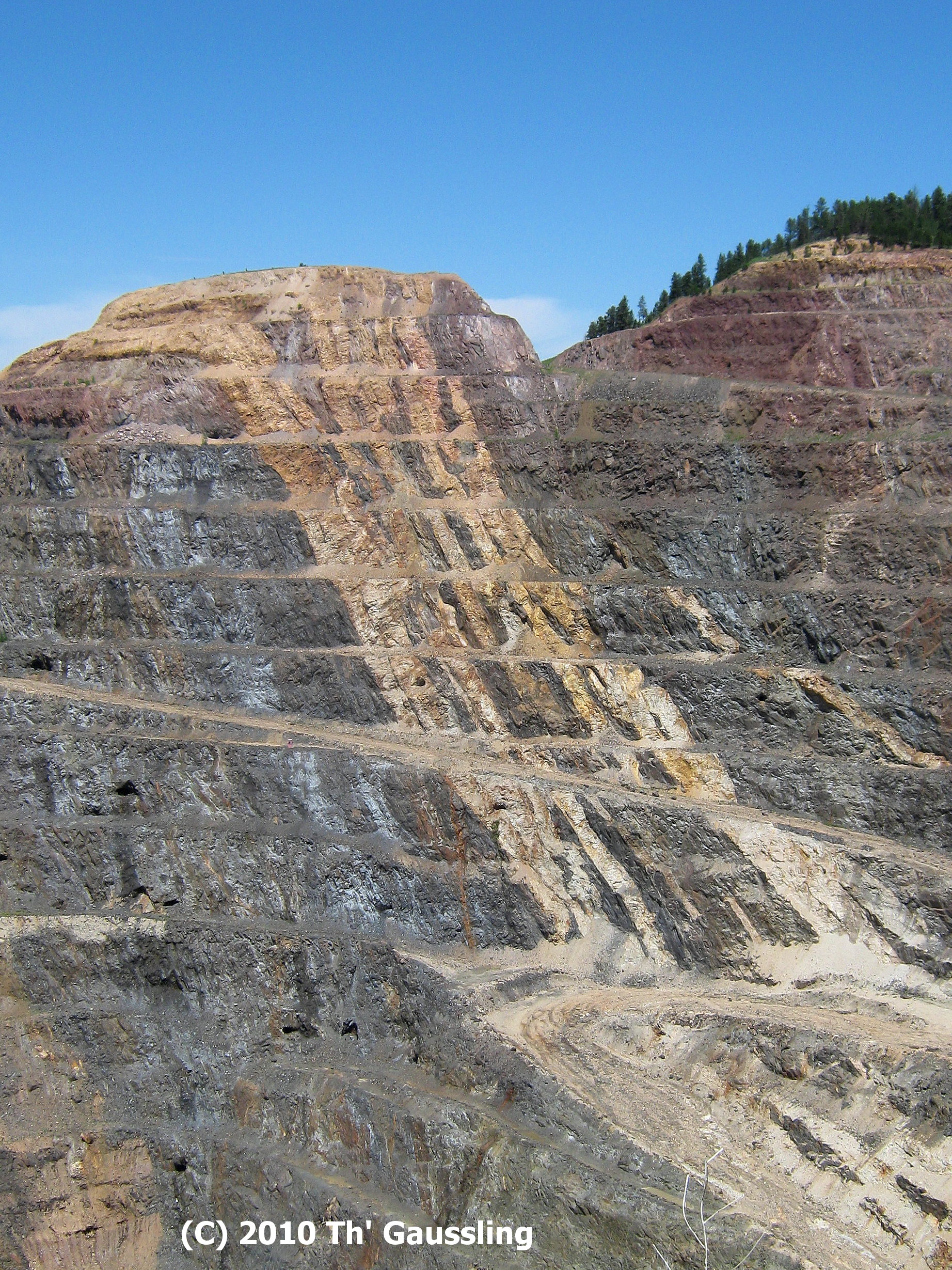
The pit exposes the ore body which is comprised of inhomogeneous igneous rock with gold bearing veins. In the photo below the vein structure can be seen. The buff colored rhyolite bands seen below are not associated with value.

Homestake Open Cut, Lead, SD.

Gold was discovered at a surface exposure, called a “lead”, which became the namesake for the town of Lead. Mining activity was halted in 2002, in part due to the low price of gold at the time. By that time the underground workings had reached a depth of 8000 ft, which puts it at ca 3000 ft below sea level. The rock temperature at the 8000 ft level was reported to be 130 degrees F, requiring substantial air conditioning for the workers and equipment.

Hoist Cable

The (poor quality) photo above shows the hoist equipment in the Yates head works. Of interest is the conical cable spool used to provide lift for hoisting operations at the Homestake mine. The purpose of the variable diameter feature of the hoist was to provide maximum mechanical advantage when the cable was at the end of its reach, presumably when it was ready to lift a heavy load of ore from the bottom of the shaft.

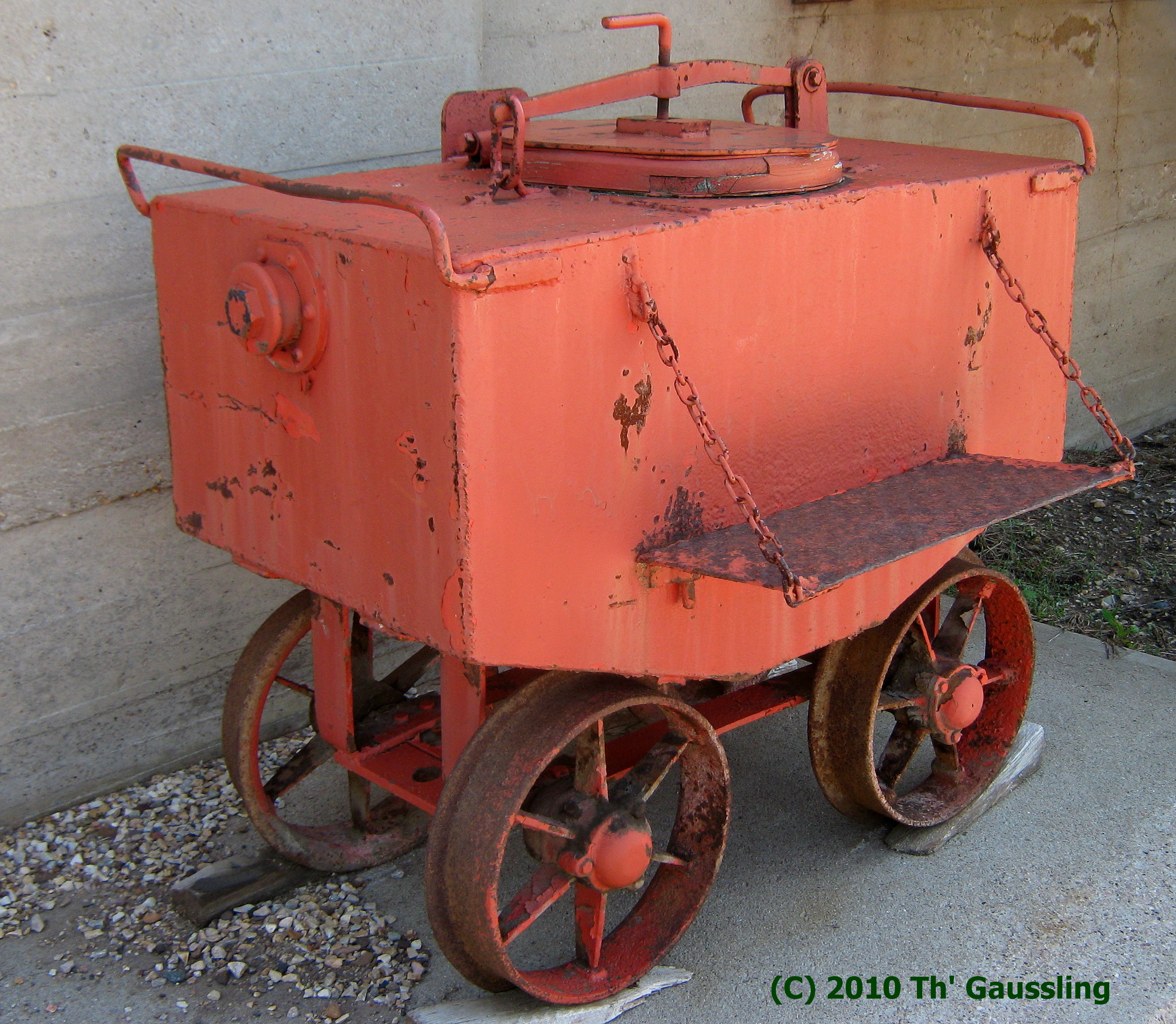
Homestake Honey Wagon

The “ore cart” in the photo above was the toilet facility for the miners. It featured a seat on top which could be sealed, a thoughtfully placed foot platform, and railings so the user could hang on for those rough rides.

The surface tour of the mine consists of a trolly ride around town with a stop at the Yates hoist. Warning: It is quite superficial in content, but is the only type of tour available. Our tour guide was student on summer break with near-zero knowledge of the geology or the engineering. He was accustomed to entertaining the barely interested.  If you are keen on the particulars of Homestake history, I recommend Nuggets to Neutrinos, by Steven T. Mitchell.

Homestake was one of the very richest loads of gold in the western hemisphere. Reportedly, some 40 million oz of gold were extracted from the mine.

Today, the Homestake mine is being converted to an underground nuclear physics lab facility under a program called DUSEL. On a side note, it is interesting to listen to the townsfolk talk about the new labs. I could tell they are trying to be enthusiastic, but the reality of neutrinos is very hard to get your arms around.

The Black Hills- Of Chiselers and the Chiseled.

The Black Hills are a mountain range that stand in the southwest corner of South Dakota and extend a bit into northeastern Wyoming. The area is known for the natural beauty of its forested mountains and green meadows. The relatively low population density along with the dramatic monuments and natural wonders make this a satisfying destination. In rather stark contrast to the panoramic beauty of the area, however, is a geopolitical history that is quite a bit less than pristine.  

After decades of expansive settlement from the US in the east and the corresponding conflicts, a treaty was forged in 1868 between a confederation of northern plains Native tribes and the US government. This treaty deeded the Black Hills region to the Native confederation.

Within a few years the Native American confederation lost possession of the land granted to them by the Treaty of Ft Laramie. It seems to have happened not so much by the US government backing out of its obligations, but by lack of decisive government enforcement of the terms of the treaty.

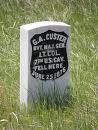
The discovery of gold in 1874 by the Custer expedition and the prompt announcement of this discovery lead to an irreversible economic migration to the area by gold seekers and those who would follow them. Many of the gold seekers were miners and entrepreneurs from other gold fields seeking new opportunity. Custer met his end in battle, hopelessly outnumbered by Indian forces.

Today the Black Hills of South Dakota are a locus of tourism, gambling, and recently, neutrino physics. Native Americans reside on a handful of reservations scattered throughout the eastern plains.

It is a curious contrast to behold. Today automobiles and tour buses disgorge well fed tourists by the hundreds of thousands each year to marvel at the spectacle of Mt Rushmore, buy souvenirs, and to rejoice in nationalistic self satisfaction.

Bikers make the annual sojourn-in-leather to nearby Sturgis in part to celebrate the freedom of motorcycling. All of this celebration of freedom in an area where the lust for gold has trumped the freedom of a hunter-gatherer society by those who had mastery of explosives, metallurgy, and steam energy. I suppose it was inevitable.

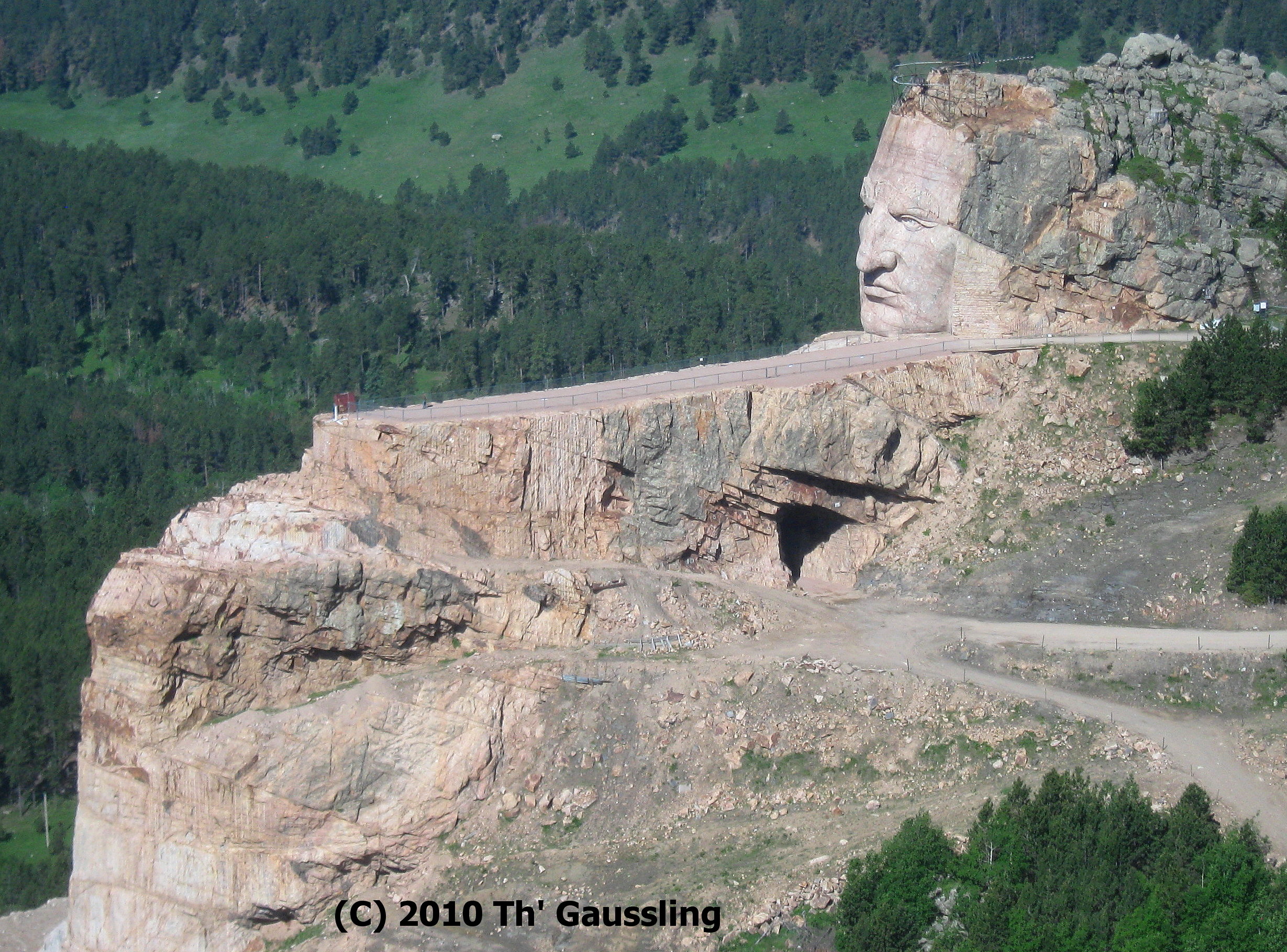
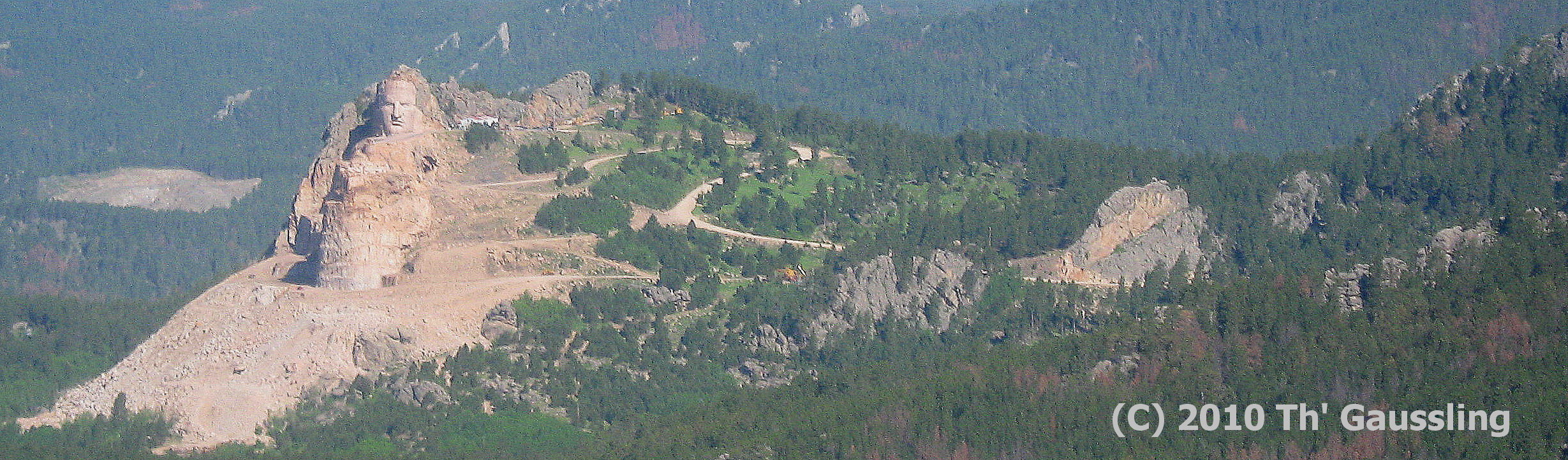
View of Crazy Horse Monument from Helicopter

Th’ Gaussling and family splurged (Yoww!!) on a helicopter tour of the Mt Rushmore and Crazy Horse area. It was just spectacular. The heliport was a mile from the Crazy Horse Monument so we were treated to two visits to the site.

Crazy Horse in Context

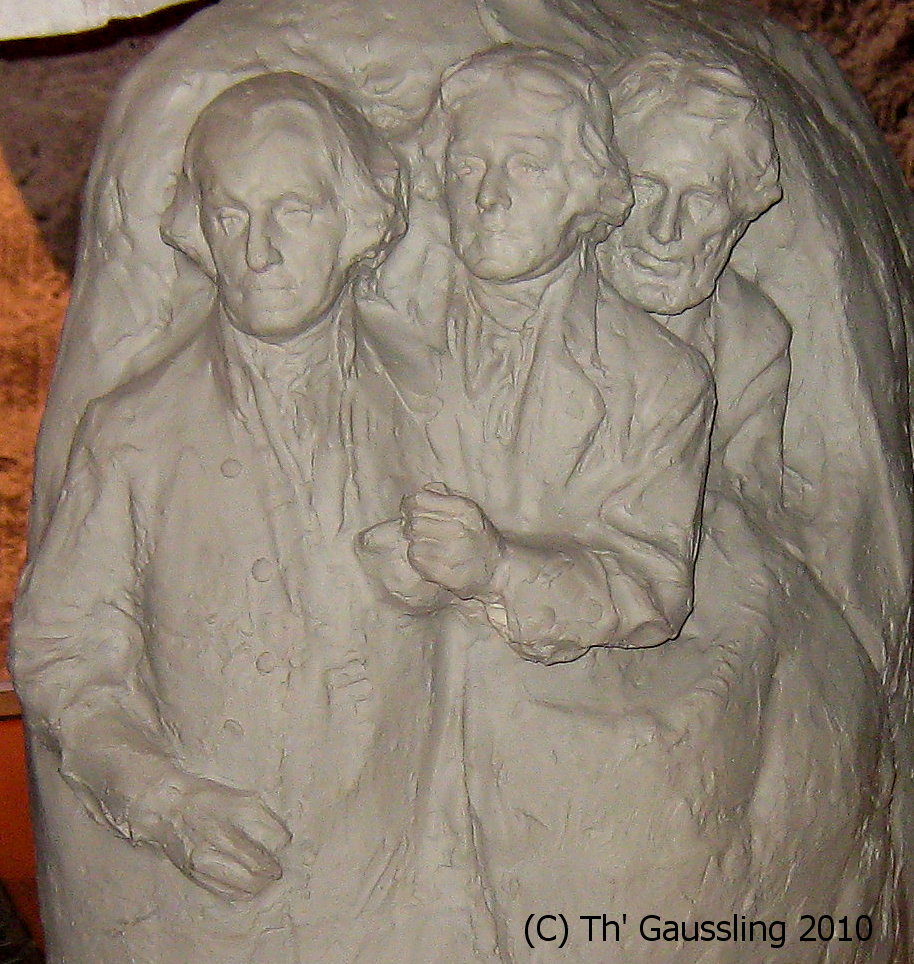
Gutzon Borglum launched his ambitious monument project on a mountain the locals called Mt Rushmore. The final form differed somewhat from early models.

A great deal of resources and effort went into the Mt Rushmore monument. It features a parking garage, gift shops, museum, two indoor theaters, an amphitheatre, cafe, and Borglums studio. The visior is free to simply sit and ponder the monument or dive into the historical details of its construction.

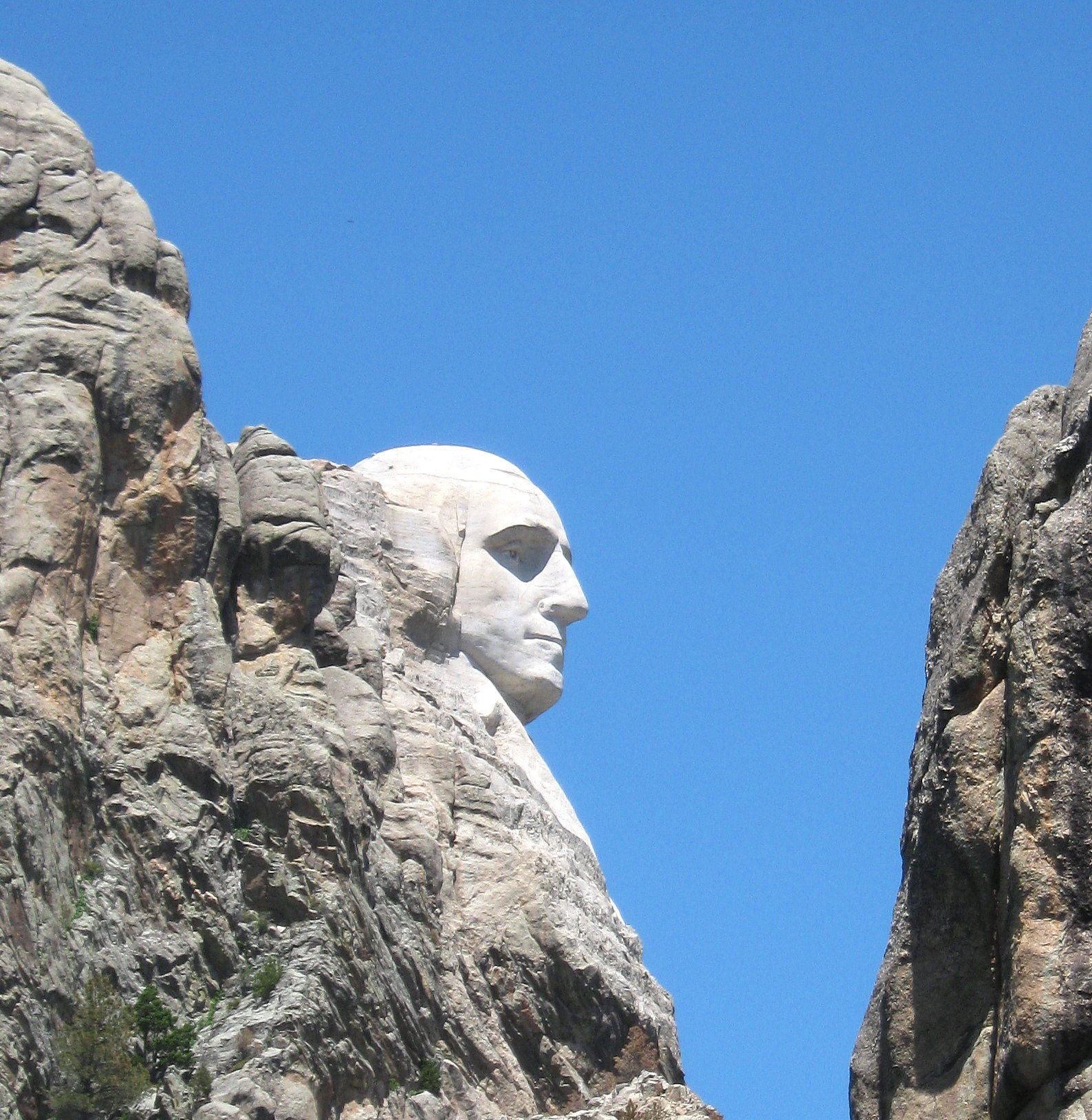
Mt Rushmore Profile View

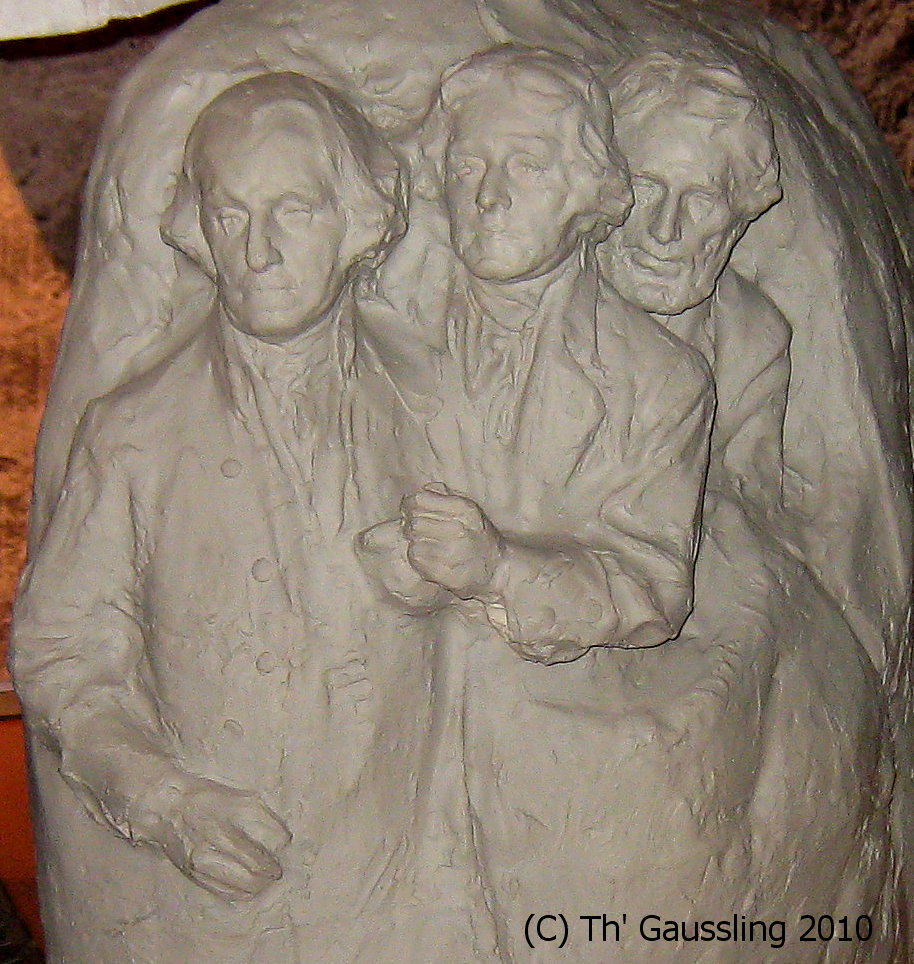
Borglum fabricated scale models of the subject faces in his workshop below the site and used a geometric device to transfer the dimensions to the mountain. A plumb bob hung below a protractor-style device mounted on the model. A rudimentary coordinate system would provide a basis for scale-up.

Scale Model Faces of Mt Rushmore

Borglum died of complications from surgery in March of 1941. Gutzon’s son Lincoln Borglum carried on with the project after his death. However, Lincoln left the project substantially in the form left by his father. The project was officially halted later in 1941 owing to a lack of funding.

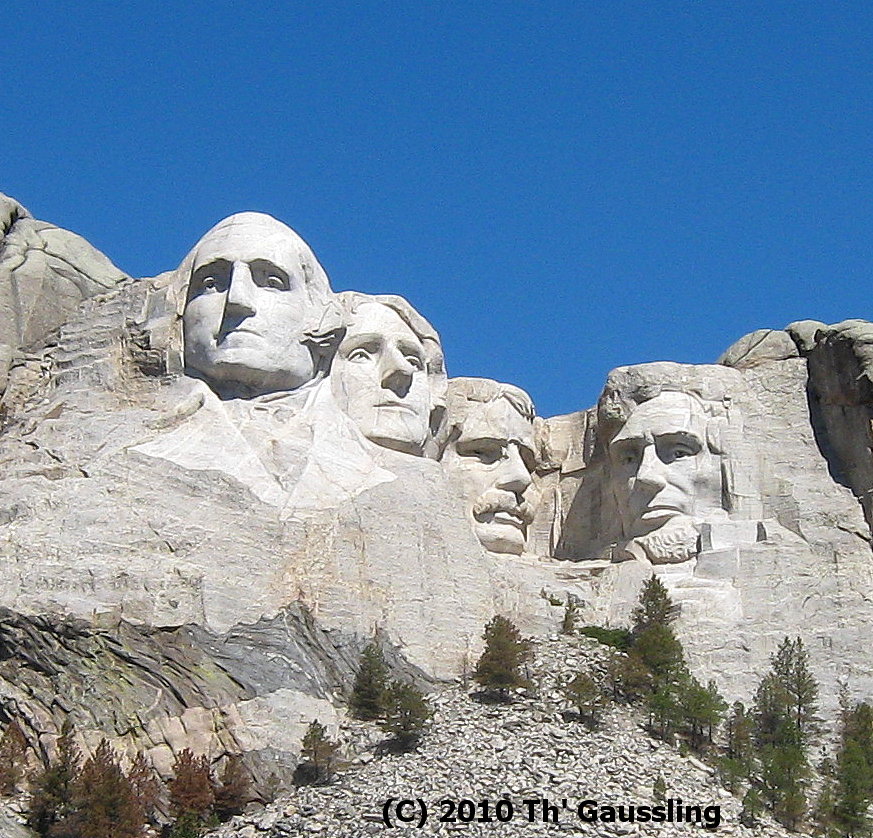
Mt Rushmore

Mt Rushmore is a spectacular thing and everyone should see it. All of the fellows captured in stone had attributes worthy of meditation. The timeline between them and we of the present day is jam packed with fantastic events that they had a hand in initiating. I’m certain that they would say that our technology is different but human nature is the same.

On the road

Th’ Gaussling is off-site for a few days of happy motoring in the mysterious Black Hills of South Dakota, or Paha Sapa in Lakota. 

The discovery of Black Hills gold in 1874 by an expedition led by General Custer and the 7th Cavalry ultimately triggered another bout of  hostilities with the Lakota as the land deeded to them by the Fort Laramie Treaty of 1868 was pushed aside by miners and settler. Government agents were not able to prevent mining and settlment of the Black hills area. 

The blowback to Custer’s discovery of mineral wealth in the Black Hills was in the form of his defeat by Sitting Bull at the Little Bighorn River in Montana in late June of 1876.

The locals now mine tourists rather than gold.  The homestake mine has workings at 8000 ft below the surface! Over 1 billion dollars worth of gold was extracted between 1877 and 2004. Presently in the process of being set up for underground labs, the Homestake Mine in Lead, SD, will reopen in the coming years as a center of particle physics and dark matter research as the Sanford Underground Laboratory. Part of a program known as DUSEL, the new labs will exploit the great depth of the Homestake mine for the inherent radiation shielding at the lower levels of the site.  

Analysis of the Crash of AF 447

Air France Flight 447 crashed in the Atlantic 400-odd miles outbound from Brazil to Paris after its evening departure from Rio de Janeiro on May 31st, 2009. While the flight data recorder has not been recovered, 24 fault messages were relayed to the AF headquarters via satellite. From these messages, and from forensic evidence found floating in the area of the crash site, a picture of the event is beginning to emerge. Spiegel Online has published an analysis of the disaster based on what is presently known.

The evidence collected so far suggests that the aircraft impacted the water on its belly with a 5 degree nose up pitch attitude. The calculated impact force based on certain kinds of material strength data is 36 g.  The aircraft departed just under max gross takeoff weight with 70 tons of kerosene fuel on board.  Abnormalities did not begin to appear until the aircraft was ostensibly at cruising altitude of ca 35,000 ft. There was a suspicious uptick in the OAT reading (outside air temperature) of a few degrees. Investigators believe that this is an indication of icing on the OAT sensor and pitot tube.

The aircraft may have been attempting to penetrate an area of thunderstorms in the inter-tropical convergence zone. This is a band of atmosphere on either side of the equator where northward and southward flows from the respective hemispheres meet and produce vertical air movement. The convergence of these flows can result in moisture laden air being lifted. Together with the natural buoyancy of warm humid air, vigorous convection cells can be kick-started into severe thunderstorms. The cloud tops in this zone can be substantially higher than those at the mid latitudes. At altitude, storm cells commonly produce icing conditions.

Out in the midocean spaces at night, airline pilots have only on-board radar and the moonlight, and perhaps a few pilot reports by others who have just been in the area, to estimate the areas of high storm intensity ahead. Flight through the intertropical convergence zone can produce bumpy rides to the point of violent turbulence. What most passengers don’t understand is that passenger jets are build to absorb considerable abuse before a structural failure occurs due to turbulence.

The upshot of the report is that the pitot tube that senses the airspeed of the aircraft failed due to icing.  This failure basically causes the computerized flight control system to shut down owing to lack of input of this key airspeed data. In flight control, airspeed is one of the very critical pieces of information necessary to sustain controlled flight.

Without airspeed information, and without computer assistance in the control of the various flight control surfaces, the modern passenger jet becomes very difficult to handle manually. The is especially true if the aircraft is under instrument conditions with low/no visibility and in high turbulence.

A complex and aerodynamically clean aircraft being jostled along all three axes at a high mach number presents a large workload for the pilots. At a mach number (o.85 or so) as typically attained in high altitude cruise, a sharp pitch down in the nose can lead to transonic flow over the control surfaces and in the engine inlet. This can lead to engine instability and loss of flight control. Sonic flows over ordinary flight surfaces can lead to flow separation and loss of control. This lesson was learned the hard way in the early days of high speed aviation. Pilots typically throttle back after penetrating turbulent air.

The investigators of AF 447 have all but concluded that the aircraft crashed owing to loss of critical airspeed information and subsequent departure from stable flight.  While the Spiegel article states that investigators are confident in this analysis, recovery of the flight data recorder will undoubtedly provide important details for refinement of the investitgation.

Link-n

Here is a link to a great review of Anthony Bourdains latest book, Medium Raw. If you have the chance, read Kitchen Confidential.

The University of California system is pushing back on price increases by publishers of periodicals. Let’s hope they have some success. Why do researchers just hand over copyright of their work, anyway? The public finances the work and then the public has to pay to read the results.

Think the internet is giving you a short attention span? Steven Pinker doesn’t think so.

Why are the British so rude? Are they naughty by nature? I have my own views on that, thank you.

Looking to upgrade your collection of Soviet Posters?

Snow

June 15th, 2010. Colorado Front Range.  After a week of rain the clouds have parted to reveal severely clear azure skies and a fresh layer of snow above ~ 11,000′.  The grass is growing so fast you can hear it if you listen carefully. The lagomorphs are frolicking in the dewy turf and the adjacent prairie dog colony is overflowing with barking rodentia. The landscaper’s lawnmower releases a refreshing bouquet of terpenes into the air from freshly severed plant tissues. 

As I wave my card in front of the security card reader, the electromagnetic door release mechanism clicks and I leave behind the flora and fauna of the great outdoors and enter the world of mass selective detectors, nmr, and exotic molecules.  It is a transition from the macro to the micro, from the kilo to the nano. The world on the other side of the wall is immediately concerned with turf management and burrows. In this tiny space we’re concerned with nuclephiles and kinetics, exotherms and yields.  Interesting, yes. But in the end, where is it taking us?

Lithium Dreams

A well written article on the supply situation of lithium can be found at the Daily Kos. There is no point in my adding to it except to say that I second the motion. The USA needs to get serious about forging relationships fostering stable lithium supplies.

Update:  Journalists have only now “uncovered” a 2007 USGS report on the mineral resources of Afganistan.  Prospecting for minerals in Afganistan- there is a plum job for a westerner. Imagine doing anything there? Not least of which, poking around in the countryside attracting IED’s and snipers. Even better, imagine trying to work a deal with the authorities (whatever that means) to obtain mineral rights?  I’ll bet the South Africans are working a deal this very moment. 

When is comes to minerals, China has been building relationships in Africa for a while now. I get the sense that China is centrally focused on manufacturing oriented activity rather than just running finance games of chance. China hasn’t forgotten that infrastructure is built upon access to natural resources and is quietly stitching itself into the supply side of the market. America, with its great hordes of MBA’s and strutting bankers, seems to have an unhealthy fetish for financial gymnastics and celebrity.

American CEO’s of public corporations will tell you that they have a fiduciary responsibilty to maximize shareholder value. Based on the way the rules are written, they are right. The corporate masters of the western world will be replaced if they lose sight of this fact. After all, Rome could have been built in a quarter if they had the right consultants and financing, couldn’t it?

This structural shortsightedness predisposes them to focus on financial instrumentalities that operate on the same short time interval as they do.  You can’t build a factory, grow the business, and earn profit over one or a few quarters. But you can put monies into accounts which promise a return on a quarterly basis beginning the day of the transfer. What if that fiduciary argument could be put to rest? What if a CEO didn’t have to emulate Jack Welch?

The USA needs new thinking on how to operate manufacturing businesses profitably within its borders in a manner that they are not so easily subject to obsolescence by competing foreign operations with a lower tax base and lower labor overhead. Existing theories of city planning, zoning, and suburbia must be reconsidered. 

In a previous posting I recalled the experience of walking through the back streets of Bangkok, Thailand. There I saw endless streets lined with shops that served both a mercantile and residential function. The shopkeepers lived in their shops. They could consolidate their assets and labor to serve the need for shelter and for making their living.

American workers have little opportunity to consolidate their assets in this manner. Their wages must cover rent or a mortgage to provide shelter which cannot be put to work. This severely limits entrepreneurial options, rendering the worker subject to the vagaries of  employment by others. If a US worker loses his/her job, they have little in the way of self-help options for survival because of municipal zoning. If one wanted to sell custom furniture or repair cars, they would have to find a properly zoned space. But this takes resources up front along with licenses, tax ID #’s, insurance, etc., and most US workers are poorly prepared for this eventuality.

Lower pay might be tolerable in the USA if employees could have a lower cost of living. One way to do that is to offer company owned housing for employees. Interest payments on a mortgage or residential rents are a large part of an employees lifetime expenses. If an employee had the option of living in housing provided by his/her employer at a reduced interest rate, part of the savings in living costs would be captured by the company in a correspondingly reduced payroll or a rent arrangement. I get the feeling that large groups of hourly workers out there would give this a try if it were available.

This is not part of the current standard model of US business or of US lifestyle. “Company store” models have been used in the past with less than happy results. But it strikes me that if you want to build a viable textile mill or zinc smelter in the US, for example, a factory with a company dormatory will be needed to make the thing fly.

The reindustrialization of the USA will need this kind of change in lifestyle to bring back low and medium skill industrial jobs. High labor overhead is not stable in a world of low labor and tax rates abroad. The metrics of the American Dream have to be recalibrated to account for competition and the loss of the frontier with its endless resources and space.  

What is most worrisome about the current political and economic epoch is the fragmentation of the middle class. Societies become unstable when large swaths of the the middle class become unemployed and begin to adopt ultra-nationalist sentiments. The Tea Party movement is the result of elements of fascist thinking entering into the dialog. Chomsky has pointed out some parallels found earlier in the 20th century. The current extent and intensity of the certitude of patriotic ideals has been seen before in recent history and with terrible effect. Fascist thinking requires pushback from the center of the bell curve or the xenophobic dread that it spreads may become uncontrollable.

Entrenched maladaptive behaviors displayed by US businesses and government are a real barrier to stability over the long term. We in the USA assert superiority in many areas of activity, but show very little ability to actually adapt to the dynamics of global politics. Mindless adherence to threadbare nationalistic doctrine and tired notions of “greatness'” will not get us out of economic trouble. But an imaginative and adaptive marketplace can help.

Dog the Bounty Hunter Sighting

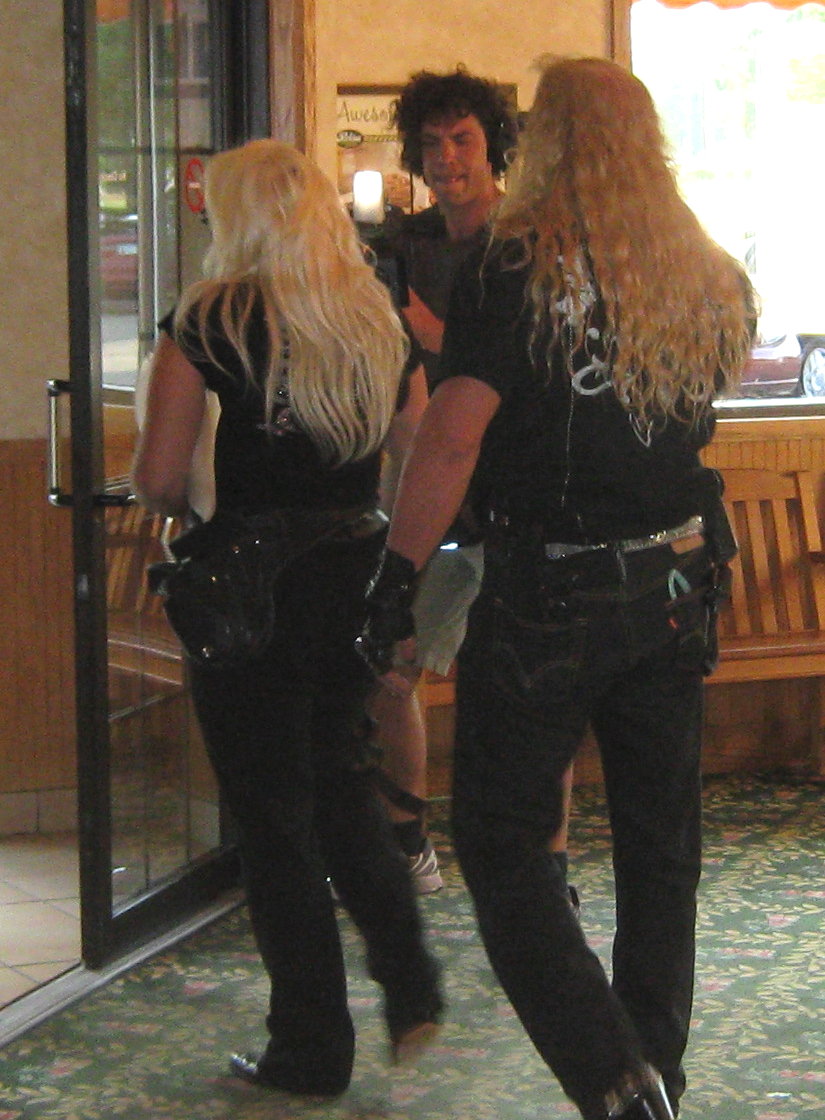
We arrived at a Perkins restaurant to rustle up some grub this evening and had an encounter with reality television.  The characters from the cable television show “Dog the Bounty Hunter” were filming inside the restaurant. Dog is actually named Duane Lee Chapman and has quite a colorful history. He was born in Denver, CO, in 1953. According to Wikipedia he did 18 months of prison in Huntsville, TX.  He belonged to the Devils Diciples at one point and worked as a bail bondsman. Between all of the wives, he has ca 12 kids.

Dog the Bounty Hunter filming at a local Perkins dining establishment. Photo by Th' Gaussling, (C) 2010.

The film crew included two hand-held camera operators, a director chick in tight blue jeans and a western blouse, Dog’s 5th wife, Beth, two subjects to be interviewed by Dog, and a half-dozen other on and off camera crew.

Dog & the Mrs Leaving Perkins. Photo by Th' Gaussling, (C) 2010.

The universe provides surreal experiences on occasion and this was one of those times. This was my second “dog” experience in this restaurant. The first involved a psychotic roughneck called Mad Dog a long time ago. But that is another story.

A bit of sympathy for BP

I can’t help but have some sympathy for the folks at BP just now. They are not the evil empire and despite their poor safety history, say, the recent Texas City refinery explosion, they do in fact rack up a good many safe operating hours doing very hazardous work. They handle and process flammable materials on the gigantic scale.  And, they respond to market pull for petroleum products.

I have been to meetings in their facilities in the UK and discussed new technology platforms that they wanted to bring on stream. I have listen to a few of their scientists describe their technology and marveled at the new things they have found for molecules to do. They are smart, competent, and well meaning people and we should not lose sight of this.

BP helps to provide the petroleum that we use to conduct out busy modern lives.  We gladly consume every bit of their output. In fact, their contribution to the supply picture helps to keep hydrocarbon prices low. The same is true of all the producers.

The now famous spill in the gulf is clearly a bad thing and it happened to them for several reasons.  But consumers have not responded to this in what you might call a philosophical manner. Nobody seems to be jolted into wakefulness by the depth that producers have to drill to find oil or the fact that these guys are resorting to drilling way out on the continental shelf.  We just plug along expecting demanding that they keep producing at the same price.

If the critics of BP can drill better or operate distillation towers or cat crackers better than BP, then they should get off their duffs and do it. Put up or shut up. The chronic condition we are all subject to is the truism that we can do better.  If you think you can be a better driller, then try it. It’s harder than it looks and it doesn’t look easy.

Gaussling’s Nuclear Policy

I’m glad to hear that the US and Russia have decided, in principle anyway, to dial in another notch of reduction in nuclear arms. I think it is hard for people to fathom the magnitude of the effects of nuclear weapons or to estimate how many are really necessary to bring an adversary to submission. You don’t have to knock down every city, crater every underground installation, or bounce every bit of rubble to rattle an enemy state to the point where they sue for peace.

But enough of this heady atomic theatre. I have my own nuclear policy. You see, I’m generally in favor of the extreme reduction of nuclear warheads to maybe less than 100. But I must insist that a few be kept aside for the purposes of bringing the hammer down on those who would devise computer viruses.

Yes, individuals or groups who devise malicious code to infect computers should live in fear that tactical nuclear hellfire could rain down upon their greasy, pointed heads at any moment. People who initiate malicious code should be regarded as international combatants-against-humanity with bounties on their heads.

Microsoft should be required to post a kind of bond for the purposes of reimbursing society for the countless hours of time lost waiting for anti-virus software to come out of scan-mode so your computer can function in the manner it is designed to work.

The dark collusion between Microsoft and the plurality of organizations thriving on the weakness of MS products should be brought to the surface for all to see. Apparently, nobody really wants to see a virus-proof OS dominate the market. It would bring too many vendors to ruin. And, too many 20-somethings holed-up in the dark, fetid recesses of the internet would have to find honest work with their skills.