
The US Energy Information Agency, EIA, released a notice about low water levels from a historic drought in the Panama Canal region is slowing the passage of large ships. In particular, the Very Large Gas Carrier (VLGC) vessels are restricted which affects the transport and price of Liquified Petroleum Gas (LPG). According to the Panama Canal Authority (APC), water levels in the canal are at their lowest levels since 1995 and are expected to stay low if the drought is prolonged.
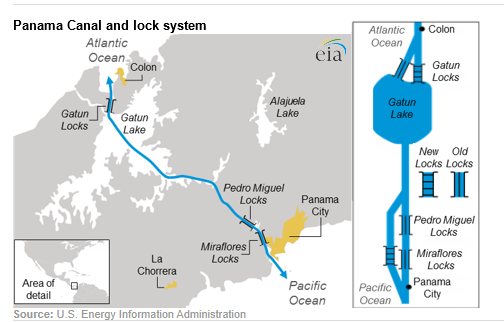
The core of the problem is low water levels at Gatun Lake. This lake is a key part of the system. It is an artificial reservoir that sits between the Atlantic and Pacific oceans providing water and power for the lock system. Due to a prolonged dry season and below normal precipitation, the APC has enacted water saving regulations.
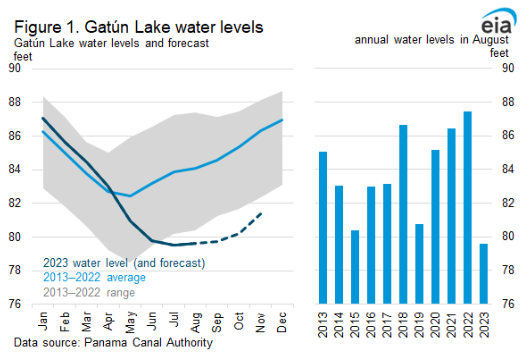
The largest fraction of US-provided hydrocarbons carried through the canal by VLGC vessels is propane which is used for petrochemical applications and highly seasonal heating demand. Increased demand for US propane in East Asia has put pressure on the canal due to increased vessel demand.
The canal has two types of locks- Panamax and Neopanamax. Ships are rated according to their size and draft as seen in the EIA graphic below.
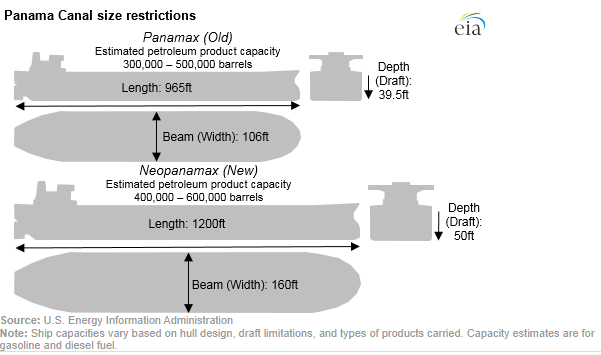
The base cost of transit for Panamax VLGC vessels is $300,000. A smaller gas or chemical carrier using the Panamax locks has a base cost of $60.000. The low water problem has restricted the flow of traffic through the canal to just 32 transits per day- 10 for the Neopanamax and 22 for the Panamax. Other routes to Asia are around the Cape of Good Hope or through the Suez Canal.
Due to low water, restrictions have led to a waiting time of 13 to 17 days to transit the canal during August. According to Reuters 8/22/23, 125 booked and non-booked vessels were waiting to pass. As of this date, restrictions allow vessels with a maximum 44 foot draft. According to EIA a 6 foot decrease in draft can lead to a 40 % reduction in cargo.
 Lamentations on Chemistry