Gaussling is a senior scientist in the chemical business. He occasionally breaks glassware, spreads confusion and has been known to generate new forms of hazardous waste. Gaussling also digs aerospace, geology, and community theatre.
I was born a few weeks before Sputnik was launched. I followed the manned space program through the 1960’s with great enthusiasm and watched the moon landing of Apollo 11 live on a black and white television in 1969. At the time we were inundated with breathless descriptions of the Saturn V launch vehicle in terms of its size. Big, huge and colossal were some of the adjectives. Eventually I got to see the Saturn V rocket lying on its side on static display at the Johnson Space Center in Houston, TX. The first stage engines were quite impressive. Yes, the rocket was (is) pretty big, but it was still small enough to be on the human scale. It’s not that I was disappointed- I wasn’t. But it was a smaller kind of behemoth than I had imagined.
As I grew older I became a Trekkie and watched the reruns and new series religiously. I began to believe in “The Federation” as a model of civilization could be a viable thing us, except for transporters, phasors and warp speed. Flying lessons and a steady diet of sci-fi novels kept my mind on space.
Today I am still interested in all sorts of aerospace technology. Except one. That would be Elon Musk’s plan to settle Mars. It is hard to doubt his sincerity in wanting to do it and SpaceX is making progress in that direction. There are many good reasons for a manned Mars landing and exploration. But, permanent settlement is a very different matter. I’m thinking primarily about mining, metallurgy and agriculture.
A rock is defined as an aggregation of different minerals. Mars has rocks and therefore minerals. No doubt the periodic table is well represented there. On earth there are mechanisms at work that, over long time periods, serve to concentrate many metals. And by concentrate I mean going from average terrestrial abundance to levels that are high enough to economically recover. Hydrothermal fluids, i.e., hot, pressurized water saturated with minerals, that eventually deposit and fill faults (vein formation) in the crust with concentrated deposits. Over time the veins are exposed at the surface and become accessible. This is a very important mechanism for the formation of viable ore deposits of many metals.
Even the very best ore deposits on earth require large amounts of electricity, diesel, and water to concentrate the ore to where smaller scale processes can isolate the metal. Ball milling, extraction, flotation and electrowinning of ore concentrates is needed for efficient recovery and is essential for recovering many metals. Other metals like the platinum group metals precipitate from within a cooling magma formation and settle into narrow layers of enriched rock.
My point is that mining is a tough job in earth with all the supplies you need. That won’t be true on Mars. Production of metal articles from Martian metals will be a tough nut to crack. Shipping of essentials to Mars will be needed for a very long time.
I have not been asked about the long-term colonizing of Mars yet so I thought I’d make it clear that I’m not in favor of it. Just imagine living in a super-isolated pressure can 24/7 on a very cold world with no breathable air. It would be like going to jail with the added risk of asphyxiating and freezing to death all at once. No flora or fauna to cheer things up. Just the same tiresome people with the same tiresome board games to play. No smells beyond that of other people. Over time cliques and romance may form and dissolve into antagonism. No web of life other than just you and your gut flora.
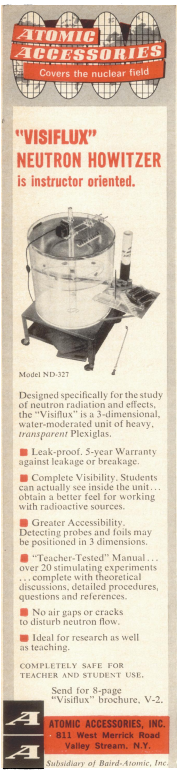
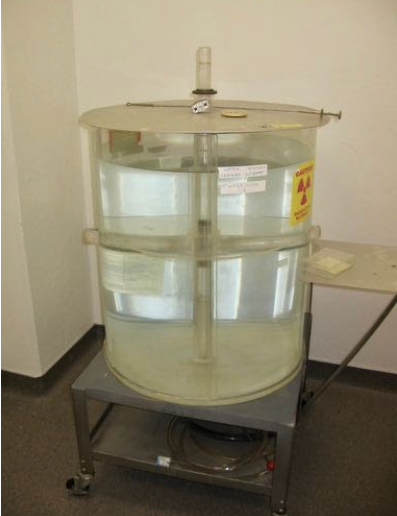
At my undergraduate institution, lo these many years ago, our physics department had a neutron howitzer. The school was a medium sized state land grant institution mostly known for producing teachers and nurses. But it also had a decent chemistry department from which I spring-boarded my chemistry career. This device was an education and research tool from the post WWII atomic age. Recall that it was a period that promised nuclear electric energy too cheap to meter.
I would hazard a guess that the word “howitzer” was used because it’s application involves bombardment of atomic nuclei. In the center of a water tank, a source comprised of one of several highly active alpha emitters like Plutonium, Americium, Radium, or Polonium is exposed to beryllium which produces a neutron. The alpha source activity was typically 1 to 3 Curies in contact with beryllium and located within a small diameter tube penetrating the water tank, producing a “beam” of neutron flux passing through the tube. Materials to be activated are exposed to this flux for a set period of time.
Our neutron howitzer was used for a freshman chemistry lab to measure the half-life of an indium radioisotope. A piece of indium foil would be neutron activated by a timed exposure to a neutron flux and then placed in a radiation counter to collect counts over time from radioactive decay in the indium sample. Indium-115 in the sample would be activated by the absorption of a neutron to form a small amount of Indium-116m1 which emits gammas with a half-life of 54.2 minutes according to this source. This short half-life was ideal for a freshman lab period.
I’m quite sure that the school got rid of the neutron howitzer long ago. Nuclear radiation of any kind scares the beejeebers out of school administrators and assorted folks mucking about on campus. The principle of CYA is always at work in our institutions. CYA refers to Cover Your Actions, wink wink, nod nod.
The nuclear chemistry of neutron production and absorption-
The neutrons generated can impact an Indium-115 nucleus and be absorbed, producing a metastable Indium-116m1 nucleus. Nuclear reactions often produce nuclei in an excited energy state. An excited nucleus can “de-excite” by the release of a gamma photon through an isomeric transition (IT), not unlike atomic fluorescence.
It is interesting to note that the large capture cross section of indium-115 for thermal neutrons has been exploited for the survey of high-energy neutron fluxes. Indium foil is encased in paraffin and placed in a cadmium container. High-energy neutrons entering this composition are cooled to produce thermal neutrons which are then captured by the indium. The thermal neutron flux is proportional to the high-energy flux and the system can be used for the instantaneous detection and counting of neutrons.
In one lab for a class I took in grad school called “Radioisotope Techniques”, we had a cloud chamber up and running. The professor brought in a neutron source on the end of an 8 foot pole. He swung it over by the cloud chamber and there was a sudden burst of trails in the ethanol vapor. Neutrons were colliding with protons in the ethanol vapor creating ion pairs, leading to condensation vapor trails zipping around in the chamber. The neutron source had 1 Curie of plutonium in it. This was in the radiation biology department. The department had a 7,000 Curie cesium-137 gamma source we got to use as well. It turns out that if you expose tomato plants to intense Cs-137 gamma radiation even briefly, it stunts their ability to uptake phosphorus-32 phosphate. Yeah, imagine that.
The internet magazine Spiegel International, January 5, 2023, has an enlightening interview piece with the independent Russian opinion pollster and sociologist Lev Gudkov. His organization is the Levada Center which is described as the only independently operating opinion research institute in Russia.
Let’s cut to the chase. The tone of the interview is quite depressing in a near term if peaceful resolution of the Putin war is your hope. In case you were harboring the view that a groundswell of popular Russian sentiment against their country’s hostilities in Ukraine might lead to a change in policy in the Kremlin anytime soon, you will be disappointed because that is not what the polling suggests.
The polling also suggests that public sympathy for the plight of the Ukrainians is near zero. The idea of Ukraine as a sovereign state is not popular among the public.
When asked about public skepticism of the war effort-
DER SPIEGEL: What reasons do people give for their skepticism?
Gudkov: They say the operation is taking too long, that no progress has been made. People worry almost exclusively about their own country’s military defeat, the chaos in the army, the incompetence of the leadership. For years, they were told that the Russian army was the strongest and had miracle weapons, but that myth has evaporated.
DER SPIEGEL: The war itself isn’t being questioned.
Gudkov: No, the attacks on Ukraine and the massacres play no role. The Russians have little compassion for the Ukrainians. Almost no one here talks about the fact that people are being killed in Ukraine.
When asked about popular response to the war-
DER SPIEGEL: So they avoid it.
Gudkov: The war has exposed mechanisms in society that have existed since Soviet times. Out of habit, people identify with the state and adopt its rhetoric about their fatherland’s struggle against fascism and Nazism, just like they did in Soviet times, to justify the situation. It’s all been present in people’s minds for quite some time, and propaganda has activated these patterns. They block out any compassion and empathy for what is happening in Ukraine. Those feelings only apply their own dead and wounded soldiers, “our men.”
Other points made by Gudkov-
The potential for substantial public civil unrest was low in Soviet times and it remains so today.
Sanctions mostly affect the 20 % urban middle class.
Mobilization lead to decreased support for the war.
Mobilization was seen as a sign of defeat.
People are unwilling to protest because of the police and repression.
Fear of nuclear war has built up since the annexation of Crimea. “Soviet stereotypes were serviced, such as the complex of Russians supposedly living in a besieged fortress, being victims and not being liked by anyone.”
Gudkov says “In my opinion, the “Putinian” person is a continuation of the Soviet person, but the former is deeply cynical, confused and disoriented. The Soviet person knew that life was not rich, that there was a constant lack of something, be it goods or variety. But they believed that things would get better with time“
Russian trust in Ukraine collapsed with the loss of President Viktor Yanukovych who was loyal to the Kremlin.
Television broadcaster Margarita Simonyan famously said that if Russia loses “we will all end up in court in The Hague, from the janitor right up to the leaders.” It sounds laughable but who knows how much hyperbole people will absorb?
Russian state control of the media has been very successful in controlling the views of the population as has isolation from outside media. The challenge a belligerent Kremlin poses to the west and to democracy will be with us for a long time. Capitulating to Putin’s Kremlin would be a very regrettable mistake.
I was surprised to learn today that Colorado has a cricket league. From down in my hole under that flat rock along the riverbank I often miss out on seismic news items like this. Good Lord. What’s waiting for us next? A plate of peas and warm beer?
This is something new to ignore. Well, okay. I do enjoy watching rugby. Unlike NFL football, something is always happening in rugby. Even when a player goes down, they just play around him. Plus, there is the Haka ceremonial dance that the team from NZ performs. Such interesting savagery.
This post is an update of a post I wrote on Mole-Day of 2011. It is a brain dump that summarizes much of what I’ve learned about dealing with potentially explosive chemicals in the manufacturing environment. Very few chemists actually have to deal with explosive chemicals in their work activities. It is actually quite uncommon. No doubt some important considerations have been left out and for that I apologize.
The Prime Directive: If you choose to bring in or make a chemical substance in your facility, you must develop in-house expertise in the safe handling and use of that substance. Do not expect to rely on outside expertise for it’s safe use. Always strive to build in-house expertise in regard to chemical properties and safety- never farm this out to consultants. This includes proper engineering and broad knowledge of reactive chemical hazards.
Safety has a substantial psychological component. You can build into a chemical manufacturing process extensive engineering and administrative controls for safe operation. These layers of control are concrete and definable. What is fuzzy, however, is the matter of how people behave. In particular, I’m thinking of getting people to behave in a particular way over the long haul. Keeping people operating safely over long periods of time where no adverse events happen poses special problems. Especially in regard to low frequency, high consequence events. Cutting corners and improper use of PPE is not uncommon and should be expected. Something expected can be watched for continuously.
In safety training I mention that handling a hazardous material is like handling a rattle snake. You have to exercise the due caution every single time you pick up that snake. You do not accumulate and bank safety credits for previous safe handling. Everybody understands this already at some level. But the possibility of drift in safety practice over time needs to be emphasized.
The best strategy I know of besides complete process automation is recurrent safety training along with vigilant management. Successful safety management requires proper supervision by alert supervisors. Management by walking around helps with this. Well written process instructions that anticipate practical problems are essential. Holding people accountable for following Standard Operating Procedures is critical. Working conditions conducive to focus are always good. Operational rotation with may be helpful.
In chemical safety, the biggest worry is typically the potential for an explosion. What should you do if a raw material or product in a process may be explosive or has explosive features on the molecule? Good question. First, someone in the R&D chain of command should have knowledge of the list of known explosophores. It’s not a big list. PhD chemists in R&D should know this anyway. Explosive molecules have certain chemical bonds that are weakest and are known as “trigger bonds“. It is thought that the rupture of these trigger bonds initiates explosive decomposition of the substance.
Just because a material has explosive properties does not automatically disqualify it for use. Azides and nitro compounds are used safely every day. But, to use a chemical safely you must accumulate some knowledge on the type and magnitude of stimulus that is required to give a hazardous release of energy.
For any given hazard, it is my personal policy to learn as much about the nature of the hazard at the chemical and bulk level as I can. I believe that it is important to know more about something than what is immediately called for. That is the difference between education and training. This is how you build expertise.
Some comments on the release of hazardous energy. Hazardous energy is that energy which, if released in an uncontrolled way, can result in harm to people or equipment. This energy may be stored in a compressed spring, a tank of compressed gas, the stable chemical bonds of a flammable material, the unstable chemical bonds of an explosive material, or as an explosive mixture of air and fuel. A good old fashioned pool fire is a release of hazardous energy as well. Radiant energy heating from a pool fire can easily and rapidly accelerate nearby materials past the ignition point. Good housekeeping goes a long way towards preventing the spread of fires.
Applying and accumulating energy in large quantities is common and actually necessary in many process activities. In chemical processing, heat energy may be applied to chemical reactions. Commonly, heat is released from chemical reactions at some level ranging from minimal to large. The rate of heat evolution in common chemical reactions can be simply and reliably managed by controlling the temperature or rate of addition of reactants where two reactants are necessary. However, reactions do not always evolve significant power output immediately on mixing of the reactants.
Induction periods are potentially dangerous and must be identified prior to scale up. The appearance of an exotherm very early in a feed operation is a good indication that the reaction has begun. However, a thermogram from a reaction calorimeter showing the temperature and power output (watts) versus the feed mass will indicate if the reaction is slow and accumulation of reagent (energy) is occurring. This can be teased out early by adding a small shot of reactant feed (a few %) and watching the power profile. The ideal profile is where the power output starts promptly, peaks and then promptly decays to baseline. This is a good indicator of the absence of accumulation. Generally, the kinetics are most favorable at the beginning of the reagent feed and taper off to zero as reactants are consumed. Some accumulation is usually tolerable from the heat load perspective. This is a good thing because a thermogram showing some accumulation could lead to an unnecessarily long feed time. A reaction calorimeter can give the peak wattage per kilogram of reaction mass. An engineer should be able to estimate the maximum controllable heat flux for a given reactor. Without being too specific, it is in the range of several tens of watts per kg of reaction mass according to one reference I know.
There are explosive materials and there are explosive conditions. If one places the components of the fire triangle into a confined space, what may have been simple flammability in open air is now the makings of an explosion. Explosive materials have two legs of the fire triangle built into the molecule- the oxidizer and the fuel separated by only nanometers. However, the composition of the explosive itself may not produce a balanced reduction/oxidation reaction. The oxygen balance is a easily calculated number that will indicate whether or not there is an excess or deficit of oxygen in an explosive substance. For example, ammonium nitrate has a 20 % excess of oxygen. Fuel oil can be added to bring the fuel/oxidizer ratio into redox balance. This mixture is referred to as ANFO.
In a chemical explosion, heat and increasing pressure can do PV work on the contents and containment. Minimally, the outcome will be an overpressure with perhaps the blowing of a rupture disk on a reactor. In another situation, the equipment may blow apart and send fragments flying away at high speed with an expanding fireball.
There is a particular type of explosive behavior called detonation. Detonation is a variety of explosive behavior that is characterized by the generation and propagation of a high velocity shock through a material. A shock is a high velocity compression wave which begins at the point of initiation and propagates throughout the bulk mass of explosive material. Interestingly, because it is a wave, it can be manipulated somewhat by reflection and refraction. This is the basis for explosive lensing and shaped charges. It is characteristic of detonations to produce shredded metal components. Detonations have a very large rate of pressure rise, dP/dt. The magnitude of dust explosions is commonly performed by a few commercial test labs out there. One of the important test results is the Kst value showing the magnitude of the explosive force.
Detonable materials may be subject to geometry constraints that limit the propagation of the shock. A cylinder of explosive material may or may not propagate a detonation wave depending on the diameter. Some materials are relatively insensitive to the shape and thickness. A film of nitroglycerin will easily propagate as will a slender filling of PETN in detonation cord. But these compounds are for munitions makers, not custom or fine chemical manufacturers. The point is that explosability and detonability is rather more complex than one might realize. Therefore, it is important to do a variety of tests on a material suspected of explosability. The type and magnitude of stimulus necessary to produce an explosion must be understood for safe handling and shipping.
A characteristic of detonable explosives is the ability to propagate a shock through the bulk of the explosive material. However, this ability may depend upon the geometry of the material, the shock velocity, and the purity of the explosive itself. There are other parameters as well. Marginally detonable materials may lose critical energy if the shape of the charge provides enough surface area for loss of energy.
Explosive substances have functional groups that are the locus of their explosibility. A functional group related to the initiation of explosive behavior, called an explosophore, is needed to give a molecule explosability. Obvious explosophores include azide, nitro, nitroesters, nitrate salts, perchlorates, fulminates, diazo compounds, peroxides, picrates and styphnates, and certain hydrazine moieties. Other explosophores include the hydroxylamino group. HOBt, a triazole analog of hydroxyamine, hydroxybenzotriazole, has injured people, destroyed reactors and caused serious damage to facilities. Anhydrous hydroxylamine has been the source of a few plant explosions as well. It is possible to run a process for years and never cross the line to runaway as was the case for these substances.
Let’s go back to the original question of this essay. What do you do if you find that a raw material or a product is explosive? The first thing to do is collect all available information on the properties of the substance. In a business organization, upper management must be engaged immediately since the handling of such materials involves the assumption of risk profiles beyond that expected.
At this point, an evaluation must be made in relation to the value of the product in your business model vs the magnitude of the risk. Dow’s Fire and Explosion Index is one place to start. This methodology attempts to quantify and weight the risks of a particular scenario. A range of numbers are possible and a ranking of risk magnitude can be obtained therein. It is then possible to compare the risk ranking to a risk policy schedule generated beforehand by management. The intent is to quantify the risk against a scale already settled upon for easier decision making. A problem with this approach is that it requires numerical values for risk which might be difficult to come by.
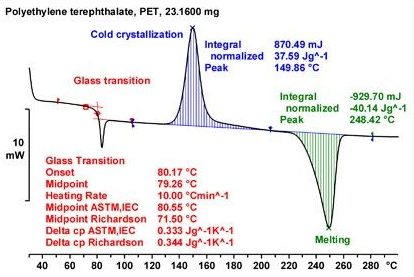
But even before such a risk ranking can be made, it is necessary to understand the type and magnitude of stimulus needed to elicit a release of hazardous energy. A good place to start is with a DSC thermogram and a TGA profile. These are easy and relatively inexpensive. A DSC thermogram will indicate onset temperature at a given temperature ramp rate and energy release data as a first pass. Low onset temperature and high energy release is least desirable. High onset temperature and/or low exothermicity is most desirable.
What is more difficult to come to a decision point on is the scenario where there is relatively high temperature onset and high exothermicity. Inevitably, the argument will be made that operating temperatures will be far below the onset temp and that a hazardous condition may be avoided by simply putting controls on processing temperatures. While there is some value to this, here is where we find that simple DSC data alone may be inadequate for validating safe operating conditions.
Onset temperatures are not inherent physical properties. Onset temperatures are kinetic epiphenomena that are dependent on the sensitivity of the instrument, sample quality, the Cp of both the sample and the crucible, and the rate of temperature rise. What may be needed once an indication of high energy release is indicated by the DSC is a determination of time to maximum rate (TMS). While this can be done with special techniques in the DSC (i.e., AKTS), TMR data may be calculated from 4 DSC scans at different rates, or it may be determined from Accelerated Rate Calorimetry, or ARC testing. Arc testing gives time, temp, and pressure profiles that DSC cannot give. ARC also gives an indication of non-classical liquid/vapour behavior that is useful. ARC testing can indicate the generation of non-condensable gases in the decomposition profile which is good to know.
Time to maximum rate is measured in time at a specified temperature. Many people consider that a TMR of 24 hours at the process temperature is a minimum threshold for operational safety. Others might advise 24 hours 50 or 100 C above the maximum operational temperature. If you contemplate using this parameter, it is critical to get testing from a professional lab for a time at a particular temperature. This kind of test will produce a formula that you can calculate TMR values at a given temperature. Bear in mind, however, that no outside safety consultant will tell you what you must do for liability reasons. You must develop enough in-house expertise to make this decision for yourself.
The standard tiered test protocol for DOT classification is a good place to start for acquiring data on explosive properties. Several companies do this testing and give ratings. There are levels of testing applied based on the result of what the lower series tests show. Series 1 and 2 are minimally what can be done to flesh out the effects of basic stimuli. What you get from the results of Series 1, 2, and 3 are a general indication of explosibilty and detonability, as well as sensitivity to impact and friction. In addition, tests for sensitivity to electric discharge and dust explosion parameters should be performed as well.
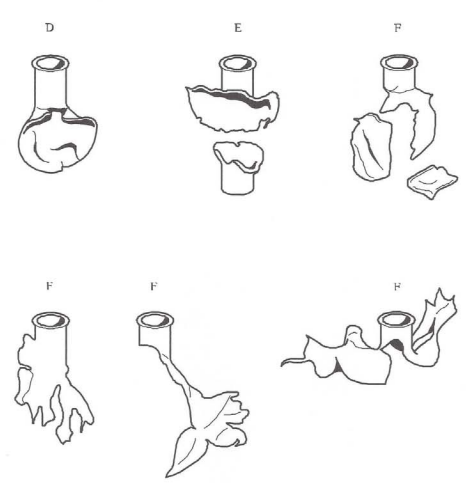
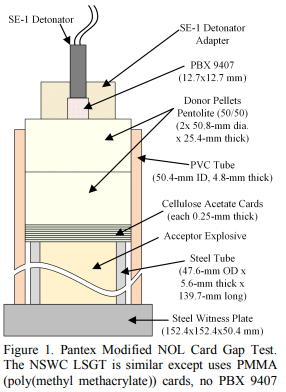
The card gap test, Konen test, and time-pressure test will give a good picture of explosive behavior. The Konen test indicates whether or not extreme heating can cause an explosion sufficient to fragment a container with a small hole in it.
BOM or BAM impact testing will indicate sensitivity to impact stimulus. Friction testing gives threshold data for friction sensitivity.
ESD sensitivity testing gives threshold data for visible effects of static discharge on the test material. Positive results include discoloration, smoking, flame, explosive report, etc.
Once the data is in hand, it is necessary to sift through it and make some business decisions. There is rarely a clear line on the ground to indicate what to do unless there is already a policy on decision making here. What testing results will indicate is what kind of stimulus is necessary to give a positive result with a particular test. It is up to your in-house experts and management to decide the likelihood of exposing the material to a particular stimulus. Will it be possible to engineer away the risk or diminish it to an acceptable level? The real question for the company is whether or not the risk of processing with the material is worth the reward. Everyone will have an opinion.
The key activity is to consider where in the process an unsafe stimulus may be applied to the material. If it is thermally sensitive in the range of heating utilities, then layers of protection guarding against overheating must be put in place. Layers of protection should include multiple engineering and administrative layers. Every layer is like a piece of Swiss cheese. The idea is to prevent the holes in the cheese from aligning.
If the material is impact or friction sensitive, then measures to guard against these stimuli must be put in place. For solids handling, this can be problematic. It might be that preparing the material as a solution is needed for minimum solids handling.
If the material is detonable, then all forms of stimulus must be guarded against unless you have specific knowledge that indicates otherwise. Furthermore, a safety study on storage should be performed. Segregation of explosable or detonable materials in storage will work towards decoupling of energy transfer during an incident. By segregating such materials, it is possible to minimize the adverse effects of fire and explosion to the rest of the facility.
With explosive materials, electrostatic safety is very important. All handling of explosable solids should involve provisions for the suppression of electrostatic charge generation and accumulation. A discharge of static energy in bulk solid material is a good way to initiate runaway decomposition of an energetic material. Unfortunately, some explosive substances may not require the oxygen leg of the fire triangle so, in this case, inerting with nitrogen won’t be preventative.
Safe practices involving energetic materials require an understanding the cause and effect of stimulus on the materials themselves. This is of necessity a data and knowledge driven activity. Handwaving arguments should also be suppressed in favor of data-driven analysis.
I just deleted information from my Twitter account and removed the app from my cell phone. I had the Twitter account for about 4 months. In that time I noticed an elevation in negative thoughts towards MAGA people. Musk’s clumsy takeover of Twitter and increasingly asinine behavior led me to withdraw from the platform. Despite the abundance of interesting and informative chemistry tweets and commentary by insightful people, there was just too much Elon-awareness in my life. He has transitioned from being an interesting character to just another schmuck. Who needs it …
I believe that we in the US must understand that Russia has a history and perspectives that are very different from our own. We have very different languages, alphabets, traditions, folklore and lessons from history. Russia’s land was invaded in WWII by a very capable and violent enemy. Russians suffered and died in great numbers under the dictatorship of Joseph Stalin. Russian civilian and military losses during WWII have been estimated to be as high as 40 million dead. Russians continued to suffer in the suffocating grip of Soviet socialism until the collapse of the USSR. These dreadful experiences are layered over a long history that has never been exposed to the liberal democracy or free market capitalism that Americans have benefitted from immensely and take for granted.
It has been my habit to be circumspect about Russia. I studied a bit of Russian language in college, have a handful of Russian colleagues and have been to Russia on business. I enjoy 18th and 19th century Russian literature. I’m certainly no Russia scholar but I am sympathetic towards ordinary Russians who suffer under government repression and subsistence living, especially outside of Moscow or Saint Petersburg. Repression and poverty have been with Russia throughout history. Russia was an absolute monarchy up to the Bolshevik revolution in 1905-1917. It was a feudal society operating under a manorial system. Serfdom was common in Tsarist Russia from as early as the 12th century until 1861 when it was abolished. The Bolshevik revolution put an end to Tsarist rule with the abdication of Tsar Nicholas II in 1917 and murder of the Tsar and his family in 1918.
Today, President Vladimir Putin and his political machine have fabricated reasons to justify a violent military invasion in order to fulfill his dream of the unification of a greater Russian empire. Putin knows he won’t be stopped by a political uprising in his country. He seems quite confident that he can unleash brutal violence on the Ukrainian people without worry of a significant backlash at home. The people who fled Russia during the recent conscription are not present to protest against the war effort.
It is easy to believe that if anyone is the first to release a nuclear weapon, it is likely to be Putin or a successor. Release of a nuclear weapon will only be a difficult decision the first time. Once unleashed somewhere, reluctance for use will drop across the world.
The mountain of sanctions on Russia has had the side effect of bolstering Putin’s case that Russia is suffering from oppression from its western enemies. Putin’s response has only been to ratchet up the shelling of Ukraine. He will weaponize everything within his grasp and bring his hammer down as powerfully as he can.
My point today is that the EU, USA, and NATO must be extremely cautious with Russia in the present period of conflict yet maintain vigorous support for Ukraine and other border countries. Ukraine must be supplied with as much firepower as possible without direct conflict between NATO and Russia. Fortunately, that seems to be what is happening so far. While there are two opposing uniformed armies, Putin is using civilian collateral damage in Ukraine as a strategy to terrorize the population into submission.
My concern is the uncertainty of long-term political stability in US policy towards Russia, Ukraine and support for NATO. The US must maintain a firm opposition to Putin’s expansionism. Putin (and Xi for that matter) is clearly aiming to topple US hegemony in the world and would like nothing more than to see the US recede in influence. If you are not from the US, maybe this doesn’t sound so bad. But someone will aim for global hegemony and get it. Who is the least unfortunate choice?
Unfortunately, the disastrous presidency of Trump in the US gave the world in general, and Russia and China in particular, the impression that the US was in cultural decline due to moral corruption. We were perceived as a tired superpower rotting from within. A power vacuum will always be filled by some nation either abruptly or a centimeter at a time.
The political situation for Lukashenko in Belarus seems very precarious. It is hard to believe that he is a complete patsy for Putin. Knuckling under to Russia has to chafe at least a little bit. Russia has amassed firepower along the border joining Belarus and Ukraine and seems poised for action. Putin is also threatening Moldova over the safety of Russian troops in Transnistria. Any European state sharing a border with Russia has much cause for alarm. I’m guessing that Poland is worried about Russia capturing land to join the Kaliningrad Oblast to the rest of the country.
Putin will stop his aggression only when he is dead. Even then, a successor like Medvedev would likely continue the autocratic trend begun by Putin. Autocracies are notably difficult to take down. This war can play out in any number of ways.
Former president #45 has announced on his Truth Social platform that he will be offering “Limited Edition” NFT trading cards of himself in various costumes and poses for $99 each. According to the website, with every card you purchase, you’ll be entered into sweepstakes for a bonus offering of prizes- many of which are a chance to bask in the shadow of the impeached man himself. The cards feature images of #45 posing as a western lawman, astronaut, zillionaire, golf great, right-stuff jet pilot, football player, NASCAR driver, and boxing champ. They hit all the stereotypes of the All-American hero.
The Non-Fungible Token form of the card is as weightless and ethereal as his alleged “greatness”. Your NFT will take up residence in the incomprehensible upside-down world of the blockchain.
>>> I would post a picture but I don’t want to soil the interwebs with #45’s picture any more than it already is. <<<
The disclaimer at the bottom of the webpage says that NFT INT LLC is not owned, managed, or controlled by #45 or his companies.
It’s all very funny but also a little sad and maybe cynical. This NFT as an item of commerce rests on the assumption that supporters of #45 function at a level that thinks that buying trading cards featuring a cartoon of a swaggering gas bag is a good “investment” and are willing to pay $99 a pop for a kitschy fantasy image. I guess you could print out an image on your $89 home Agilent printer then tape it to your refrigerator.
As a business model, this has a certain appeal. No production expenses other than some graphic art, a website, setting up an LLC and a bank account in the Cayman Islands. Everything is online and automated. The electronic media are providing free publicity in the form of news segments just like they did during the 2016 presidential election. Word of mouth does the rest. It is a money machine where you put in pennies on one side and dollars come out the other end plus it shouldn’t require very much supervision. Looks like a good online hustle.

 Lamentations on Chemistry