Author Archives: gaussling

About gaussling

Gaussling is a senior scientist in the chemical business. He occasionally breaks glassware, spreads confusion and has been known to generate new forms of hazardous waste. Gaussling also digs aerospace, geology, and community theatre.

Fox Investigates Chem Labs

Good God.  Fox News in Philly is now investigating university chemistry labs for “high risk” chemicals.  The shabby quality of this piece is beyond words. The entire thrust is this- Chemicals as bomb raw materials. An invitation to walk right in and grab all the corrosives and explosives you can.

Note the law enforcement images alluding to sinister threats and the fear mongering.  It’s what these people do. Manufacturing consent.

Rhodochrosite Sample

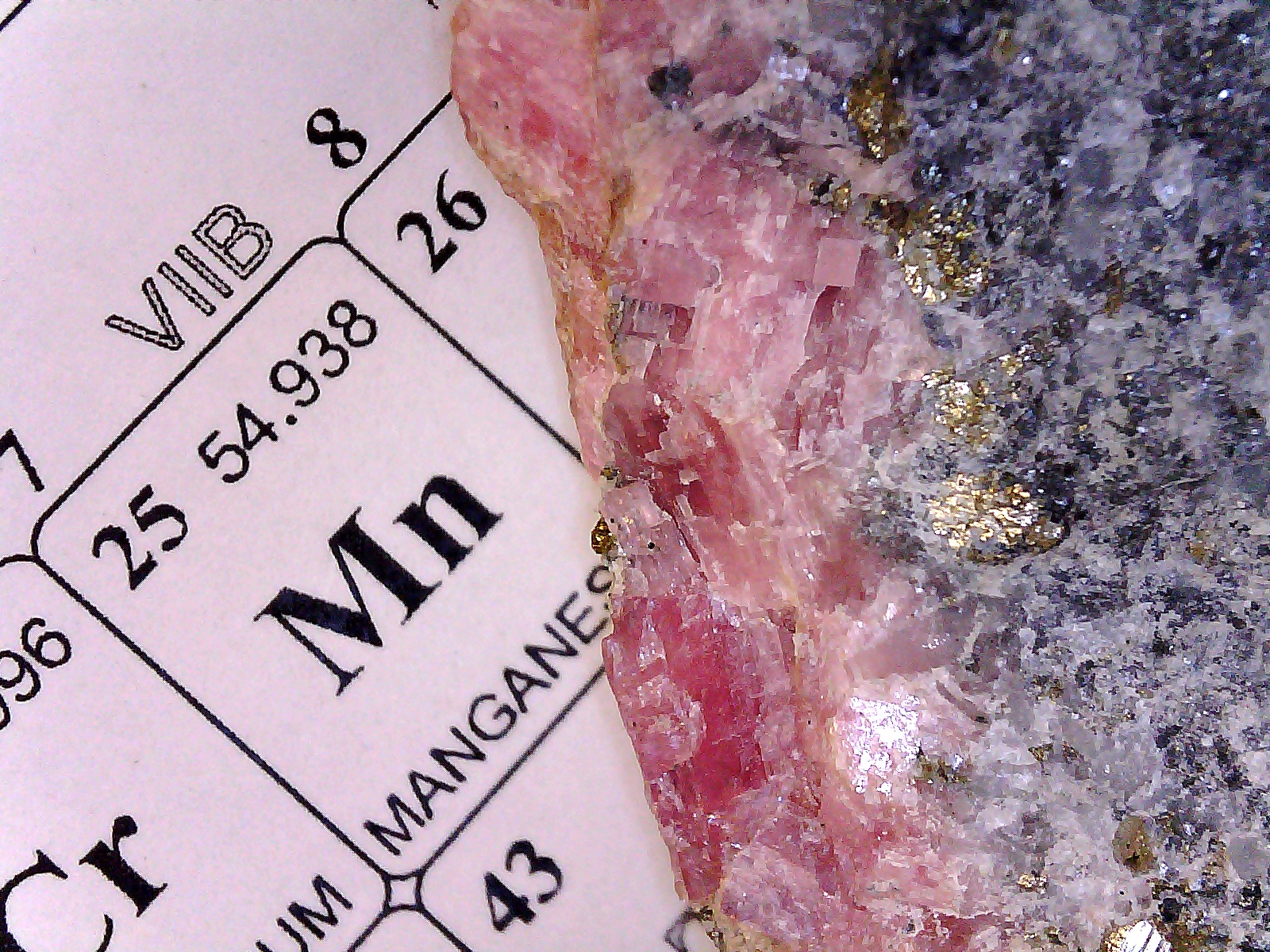
Rhodochrosite Specimen with Galena and Pyrite (Copyright 2012 Th' Gaussling)

Rhodochrosite is a mineral composed of MnCO3. The specimen above is in no way exceptional, other than as a curio. The mass is comprised of rhodochrosite, galena, pyrite, what looks like quartz, and possibly a trace of a gold colored metal.

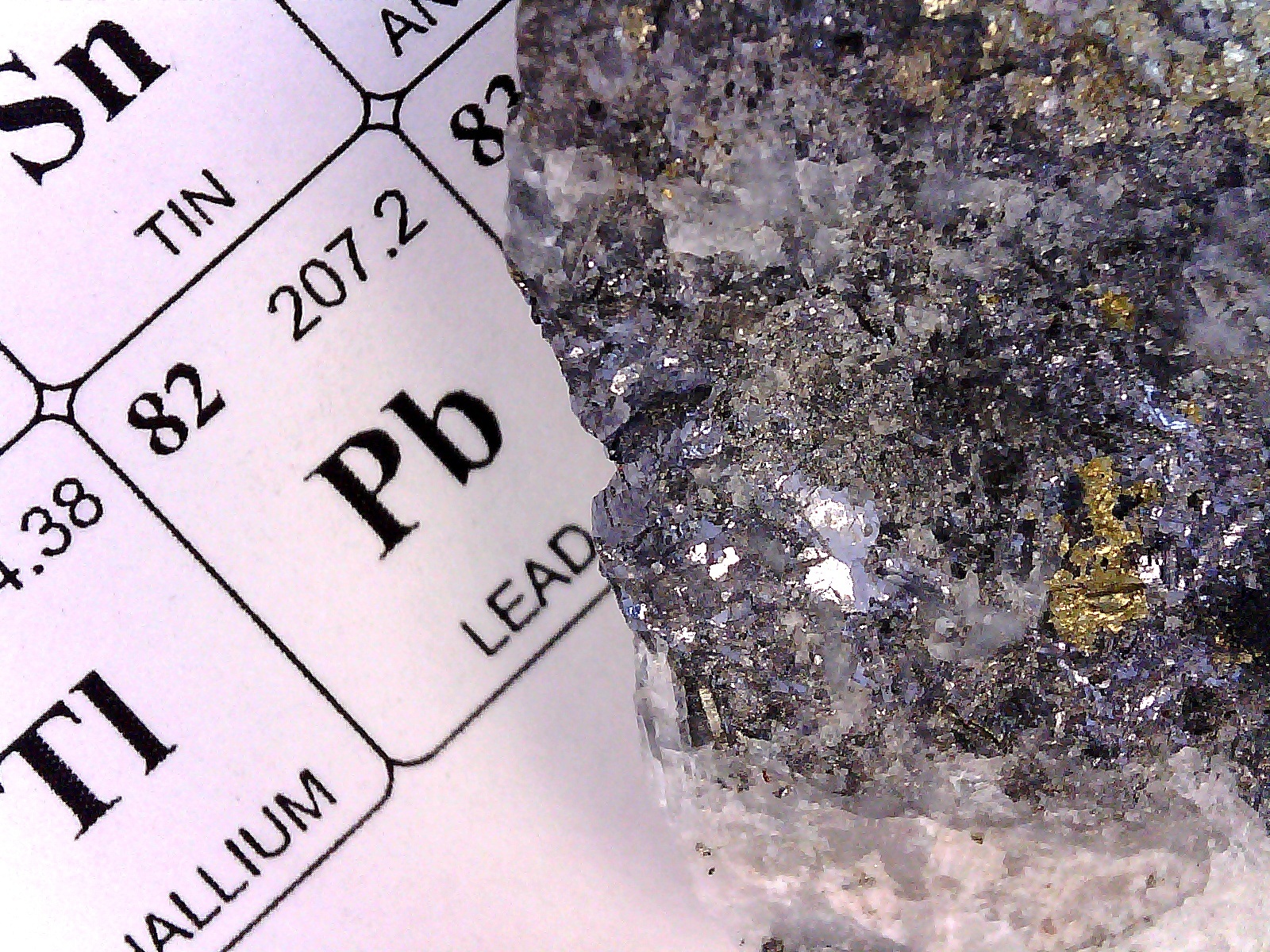
The photo below shows the galena, or PbS.

Same sample as above, showing the galena. (Copyright 2012 Th' Gaussling)

The photos were taken with a USB microscope.

What a Key Supply-Sider Says Now

Here is a link to an interesting interview of Bruce Bartlett, one of Jack Kemp’s architects of supply side economics. Certainly no liberal, Bartlett has many insider views on current republican intentions on taxation and the deconstruction of federal government.

If certain politicians and their backers aren’t more careful, their plan to deconstruct government by intentionally bankrupting it and reconstructing American society is going to precipitate civil unrest unlike anything seen before in this country. These people are playing a very dangerous game capable of outcomes well beyond their control.

Respecting liquid hydrocarbons as a natural wonder

I just had a conversation with a colleague who is somewhat mainstream in his/her thinking. The question came up as to why can’t we be energy independent.  What is taking so long with the electric cars and natural gas powered … everything? When can we break away from middle eastern petroleum?

In the public sphere, all I hear are the questioners seeking reassurance that there are energy forms out there that will allow us to maintain our current level of consumption. They rarely put it exactly that way, but that is the heart of the issue.

I think multiple generations of people have failed to appreciate the natural wonder of liquid hydrocarbons. The C7-C10 fractions of petroleum, whether directly from the ground or from a cat cracker or reformer, are the motive basis for most of our ground transportation. These liquid hydrocarbons are of a reasonably low vapor pressure and high enough boiling point to allow their use in everything from go-carts and lawn mowers to automobiles and caterpillars.  Teenagers and grandmothers can pump hydrocarbons into an inexpensive and simple tank for use at ambient pressure and temperature. This liquid has a melting point low enough to make it flowable under nearly all earthly conditions.

The high energy density and the liquid state of gasoline is what makes it nearly perfect for propulsion. The energy density of gasoline is 34.8 mega-Joules per liter (MJ/L), as opposed to 21.2 MJ/L for ethanol.

Yeah, gasoline is cheaper per liter than the bottled water inside the convenience store. That perversion is just a temporary historical aberration. This will change.

Cosmically, hydrocarbons in the C7-C10 range suitable for automotive use are quite scarce in the local stellar neighborhood.  Some small hydrocarbon molecules like methane have been spotted in the gas giant planets and on Titan. But for the most part, the only supply of hydrocarbons we have are found in porous deposits below the surface of the only place we can get to- Earth.

We should appreciate our hydrocarbon resources for the true natural wonder that it is and be a bit more reluctant to squander it.  I doubt we’ll ever find a source of energy that is as cheap and convenient to use with such a high energy density.  Battery technology may get close, but innovation there is a highly specialized art that is beyond the scope of most shade tree mechanics. Common lead acid batteries require material and energy inputs, like everything else, and have somewhat low energy density and a high weight penalty.

Lithium batteries, with their higher energy density require a variety of manufactured and relatively exotic substances. And, they require lithium which is fairly scarce, both cosmically and on earth. We really should be recycling lithium scrap.  Seriously, we need to have great respect and appreciation for lithium as well. There really isn’t enough lithium to support everyone’s high energy density lifestyle.

Pinch Predicted in the Uranium Market

According to an article in Mineweb, the remaining cold war era uranium will be consumed in the next few years, leaving the nuclear industry with inadequate supply streams from mining.  Thomas Drolet of Drolet & Associates Energy Services, said that in 2010 mining produced 118 million pounds of uranium against a demand of 190 million pounds. Obviously, the balance was made up from decomissioned nuclear weapons stockpiles. The article did not say whether the numbers represented lbs of U or of U3O8. The oxide is commonly cited in relation to uranium mine production.

Drolet suggests that Japan will have to restart ca 30 of its 50 or so reactors in order to meet power demand.

It is my sense that the Fukushima disaster will not be the stake in the heart of nuclear power. The location of the Fukushima plant and a list of easily identifiable design features allowed the initiation and propagation of the incident. While the future of reactor operation in Japan may be stunted, most reactors elsewhere in the world are not located in tsunami flood zones. Regrettably, some are located in fault zones. But the insatiable demand for kilowatt hours will override everything. Commercial fission will continue into the indefinite future.

Return to fundamentals

As we labor away on our extractive metallurgy project, I continue to marvel at how even complex extraction schemes reduce to the application of fundamental chemistry and basic unit operations. It is crucial to have a comprehensive understanding of the composition of your ore and the fate of the components as they are exposed to unit operations. The extraction of desired metals from your ore requires extensive use of analytical resources in order to keep the process economics in line.

Extractive metallurgy also requires an extensive knowledge of descriptive inorganic chemistry- something that was glossed over when I was in college. When I took undergraduate inorganic chemistry the emphasis was on ligand field theory, group theory application to symmetry and vibrational modes, coordination complex chemistry, etc. Lots of content that took many lecture hours to cover. Basic reaction chemistry was neglected in favor of admittedly elegant theory.

The fun for me (an organikker) has been in learning lots of descriptive inorganic chemistry and inorganic synthesis.

Extractive metallurgy in practice comes down to a relatively short list of operations. Roasting or calcining, comminution & classification, extraction, dissolution, flocculation, frothing, dewatering and filtration, redox transformations, precipitation, and drying.  Since most of the solution work is water based, the main handles you have to pull are temperature, selective solubility, and pH.

My undergrad coursework in inorganic qualitative analysis, specifically the separation schemes, has been very valuable both in terms of benchwork as well as descriptive chemistry.

Keep China busy- buy an iPhone.

Thanks to Bill in Michigan for the link on how the US lost out on manufacturing the iPhone. The article is well worth the read. A few of us have been beating this drum for a while. Economics is not a theory of physics. It is entirely about choices people make. But to some, economics has become a mathematical and philosophical validation of greed and a metric of mortal value.

Interestingly, Robert Reich has a parallel and broader editorial on the same general topic.  Reich points out that US corporations are becoming increasingly globalized with “less and less stake in America.”

Reich quotes an Apple executive –

‘An Apple executive says “We don’t have an obligation to solve America’s problems. Our only obligation is making the best product possible.” He might have added “and showing a big enough profits to continually increase our share price.”’

Reich goes on to say that US business investment in R&D is in general decline but…

“… According to the NSF, American firms nearly doubled their R&D investment in Asia over these years, to over $7.5 billion.

GE recently announced a $500 million expansion of its R&D facilities in China. The firm has already invested $2 billion.”

If you read history and understand something of how the industrial revolution has been the deus ex machina of social revolution since the invention of smelting, then unavoidably you must ask what happens if we change the sign of the revolution?  Does the sign of social revolution become negative as well in a nation of negative- or de-industrialization? What happens in a nation when a minority of shareholders absorb value from the stakeholders via tranplantation of the economic engine to another nation? What happens to society when the population grows but the per capita availability of jobs is in decline?  A trip to the Congo or to Gaza might give some useful hints.

Deindustrialization is not nearly the sole culprit. Automation is much to blame for the obsolescence of job descriptions. Automation actually facilitates the export of jobs because the key expertise may be in the design of automated equipment, not its operation.

What made America “great” was not simply its freedom. There was a substantial contribution from a vast continent pregnant with animal, vegetable and mineral resources for the taking. The early allotment of land and mineral resources by the government to settlers, railroads, and mine operators kick started the American economic engine in the mid 19th century.

I am uncomfortable with this strident American exceptionalism viewpoint. Maybe it is the midwesterner in me, but I would prefer to see Americans roll up their sleeves and get busy making things again. Leave the boastful and prideful stuff for the comics. A little more humility and thoughtfulness will get us further and in better condition.

Anti-SOPA Solidarity

In solidarity with yesterdays protest against internet censorship, my porch light remained dark last night. What is normally a shining beacon of hope in the neighborhood was last night a mute and dark void.  This pocket of frigid darkness sat in silent protest to those who would presume to stunt the billion webbed neurons of this nearly-sentient being we refer to as The Internets. So it was and so it shall be.

Thus spake Th’ Gaussling.

Vannoccio Biringuccio. Sixteenth Century Chronicler of Metallurgy.

By the early 16th century in Europe, metallurgy had become an established cottage industry in numerous locales. Artisans were sourcing copper, tin, zinc, antimony and iron ores for reduction, refinement and alloy production for cannon and bells among other products.  While there was no systematic science of chemistry in a form recognizable today, the necessity of constant proportions was understood and exploited to maximize the efficient use of scarce materials. Metallurgists of the 16th century would no doubt share the enthusiasm of developing technology with the same fervor as the technologists of today. 

Unfortunately for these 16th century technologists, the contribution of centuries of alchemy produced a confusing array of occult-based practices. These alchemical practices were based on Aristotelian notions of material “qualities” rather than a system of quantitative relationships of and between substances. It is thought that alchemy began with Grecian metalworker’s practical knowledge of metal preparation. Inevitably, this practical art was overprinted with a thick layer of theological mysticsm by the end of the first millenium. By the end of the alchemical age, any systematic theories of matter were blended into a Mulligan stew of early Roman Catholic mysticism,  incomprehensible nomenclature, and the false choices set forth by Aristotle in his theory of matter.

Fortunately for 16th century practitioners of the metallurgical arts, several encyclopedic works were published detailing the practical art of smelting and casting of metals and what we now know to be alloys.  A prominent early work published in 1540 was the Pirotechnia by Vannoccio Biringuccio (1480-1539). Born in Siena, Italy, over the course of his life Biringuccio traveled extensvely throughout Italy and Germany. His Pirotechnia is a series of books and chapters detailing foundry techniques that he witnessed first hand throughout his travels. He made every attempt to describe methods and techniques in enough detail to accurately capture the technique in question. Above all, he completely drops all the alchemical mysticism and bases his comments on process oriented details such as measured proportions and processing conditions.

Up to this point, what was missing from this very early form of chemistry was a systematic collection of facts and measurements and an accurate chemical model in which to give the facts meaning and predictive value.  Biringuccio, and later Agricola, would begin the disengagement of alchemical mysticism and provide a basis of metallurgical technology upon what might be called science. In a real sense, this helps to set into motion the western industrial revolution. Metallic goods would be produced by very pragmatic artisans who would continue to improve their art through the application of rudimentary measurement.  While it would be four centuries before atomic theory would be developed to make sense of the manner in which definite proportions operated, systematic methods of assay would begin to appear well before atomic theory. The ability to identify value in ores and quantitate it allowed the mass industrialzation of metals.