Author Archives: gaussling

About gaussling

Gaussling is a senior scientist in the chemical business. He occasionally breaks glassware, spreads confusion and has been known to generate new forms of hazardous waste. Gaussling also digs aerospace, geology, and community theatre.

Needlessly invoking clathrates. BP’s underwater ice machine.

In the news reporting on the BP oil spill, there is talk of methane/water forming a special ice composition that defeated the previous attempt to channel oil to the surface.  I think folks are referring to clathrate formation. This ice blocked the flow of petroleum from the concrete structure that was lowered over the well head.

But, here is the deal. Wouldn’t you expect cooling of a compressed gas as it exits the well pipe and into the sea water? Isn’t this just an example of the Joule-Thompson effect?  As the natural gas component of the petroleum discharge exits the pipe, it is going to expand somewhat, even at a one mile depth, and cool the surrounding water. If this occurs in unconfined, open water, the jet of petroleum will entrain water in the flow and be warmed by the continuous flow of heat from the water.

But, if the gas/oil mixture of petroleum is ejected in a confined space that interferes with heat transfer, then one would expect the expansion cooling of the gas phase to predominate and cool the water in the confining space, possibly to the freezing point. Clathrates may be formed, but the simplest explanation is from good old thermodynamics.

Minnesota’s fabulous Cu-Ni-Pt-Pd-Au Nokomis deposit

A world class non-ferrous mineral deposit in Minnesota is on the cusp of opening.  Duluth Metals, a Canadian mining company, has been engaged since at least 2006 in developing its Nokomis property in northern Minnesota along the north shore of Lake Superior. The magnitude of the find is stunning and Minnesota will eventually be synonymous with non-ferrous metals like copper, nickel, platinum group metals, and Norwegian bachelor farmers.  The Duluth complex is part of the second largest mafic intrusion in the world, second only to the Bushveld complex in South Africa.

Mining people are accustomed to looking at these reports and the accompanying prospectus. But it is interesting for we sheltered, begloved, and begoggled chemists to view the birth of a new mining district from the protected confines of our air conditioned laboratories. Perhaps in a few years Minnesota palladium will catalyze your Suzuki coupling.

BP oil spill. What are the merits of using dispersants?

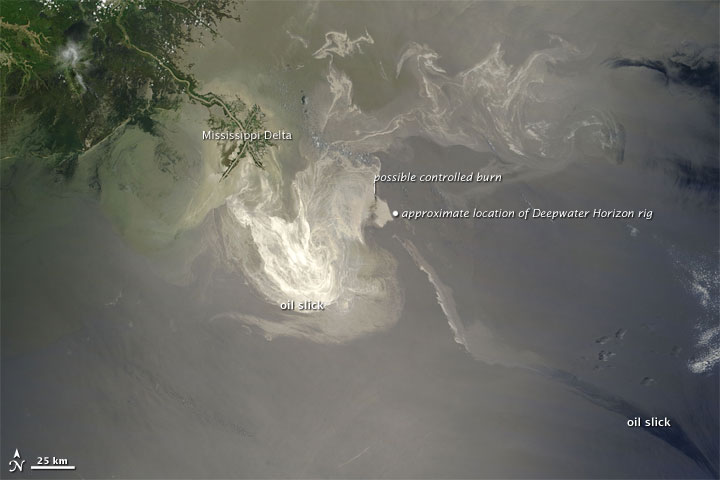
BP Oil Spill Image, May 4, 2010 (NASA Earth Observatory)

Oil Spill near Mississippi delta. Vegetation, red; Oil, silver. MA 24, 2010. (NASA Earth Observatory photo)

Eventually, BP will find a way to block the discharge of petroleum into the Gulf of Mexico.  And, eventually, the effectiveness of how the relevant parties responded to the incident will be analyzed and findings posted.

I hope that some effort will be put into an analysis of the merits of using dispersants in general and Corexit in particular. What sparks my comment is the finding that considerable subsurface petroleum has been found. This material is evidently close to neutral buoyancy and is drifting with the currents.

Question 1: Is there a connection between the dispersant use and the presence of this subsurface body of petroleum?  

Question 2: What is the desired outcome of dispersant use?  Where did the planners think the petroleum would go?

Question 3: Is there any advantage in encouraging petroleum to remain below the surface, if that is even possible?

At some point, a decision was made to use dispersants on this massive discharge. Is there a scientifically supported rationale for this, or was it palliative treatment intended to mask the surface effects of the release?

Field Trip Report. Finding Faults.

Th’ Gaussling, traveling with a 3-van convoy of local geologists, participated in a field trip on May 22, 2010. The purpose of the trip was to get an appreciation of the kinds of faults to be found in and around the IRSZ and get some insight into the phenomena of faulting. The trip was organized by the Colorado Scientific Society, an earth science oriented organization. This was my second field trip with CSS.

GPS coordinates and elevations were acquired with a Garmin eTrex handheld receiver. Waypoints (WP’s) are just the latitude and longitude of physical locations of interest.  Elevations generally aren’t required to find the formations, but are provided as a matter of general interest.  The photographs are my own and if copied, I would appreciate a citation and/or link.

The trip leader was Jonathan S. Caine, a USGS research geologist who has done more than a bit of work relating fault and fracture networks and fluid flow in the earths crust. A feature called the Idaho Springs-Ralston Shear Zone (IRSZ) was part of the topic of this trip. As Caine says in the abstract on the previous link, the IRSZ is thought to be a persistant weakness in the continental crust. There is interest in the relationship between the IRSZ and the Colorado Mineral Belt. 
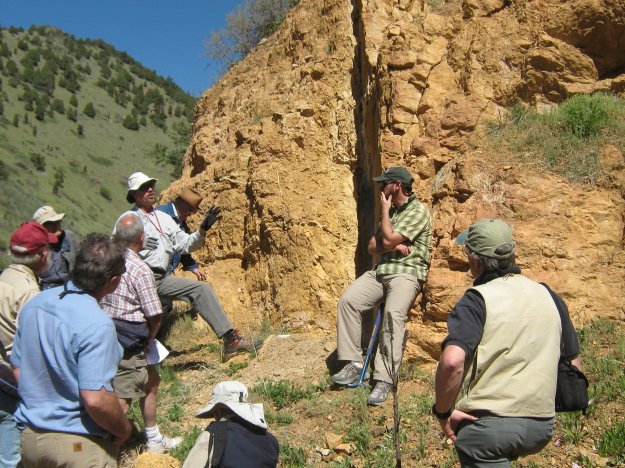
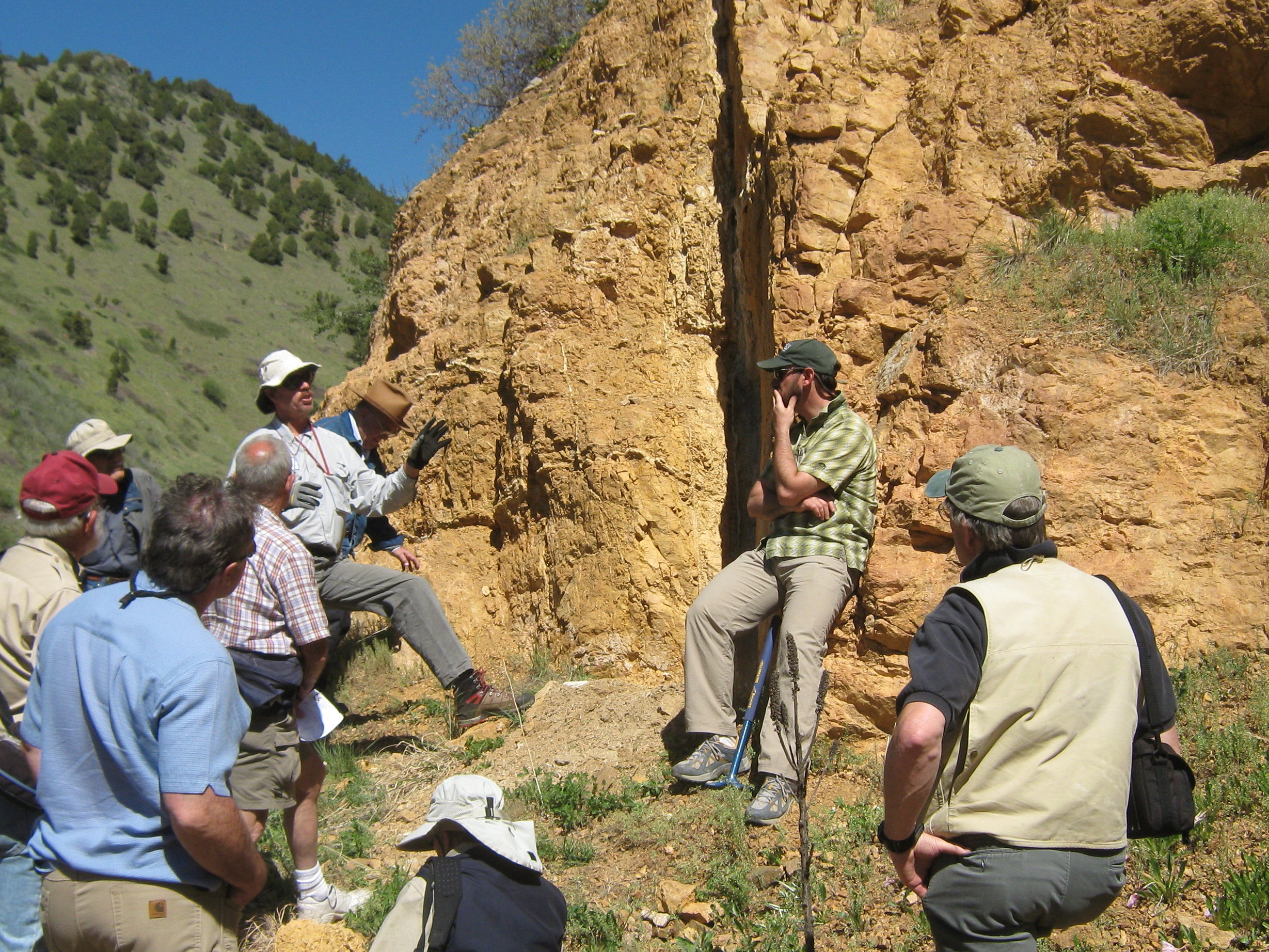
Geologists discuss Junction Ranch fault (WP003)

  WP003-  N 39° 44.700′, W 105° 17.485′ elevation 6266′. 
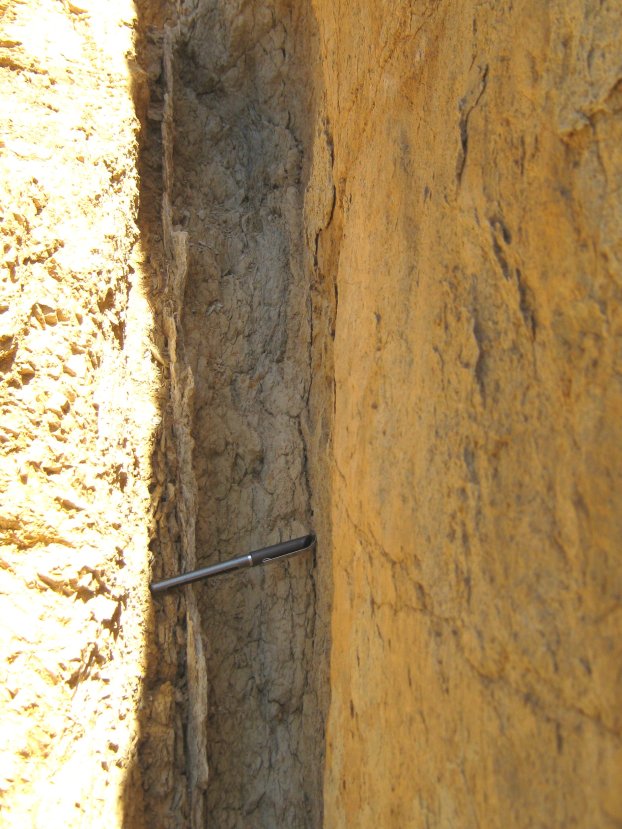
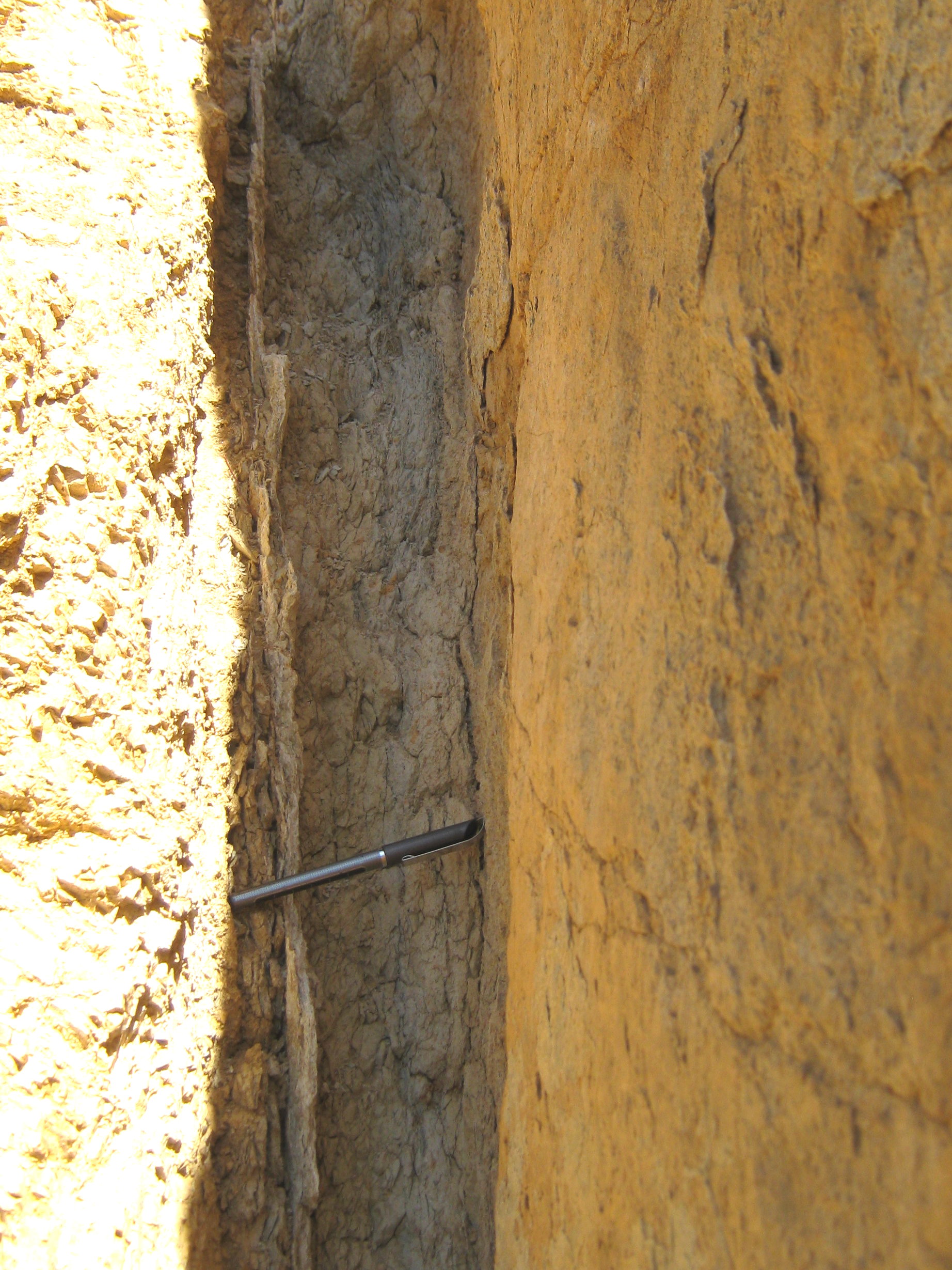
Closeup of Junction Ranch fault. Note white calcite vein (WP003).

 The Junction Ranch fault which had an exposure at waypoint 003 was an example of a fault in a formation that has seen considerable hydrothermal alteration. The orange iron stains on the rock are a clue that fluid transport of minerals has taken place. Calcite veins within the foliated clay filling the fault are an indication that the clay was deposited first. There is no evidence, however, that the fault predates the hydrothermal alteration. 

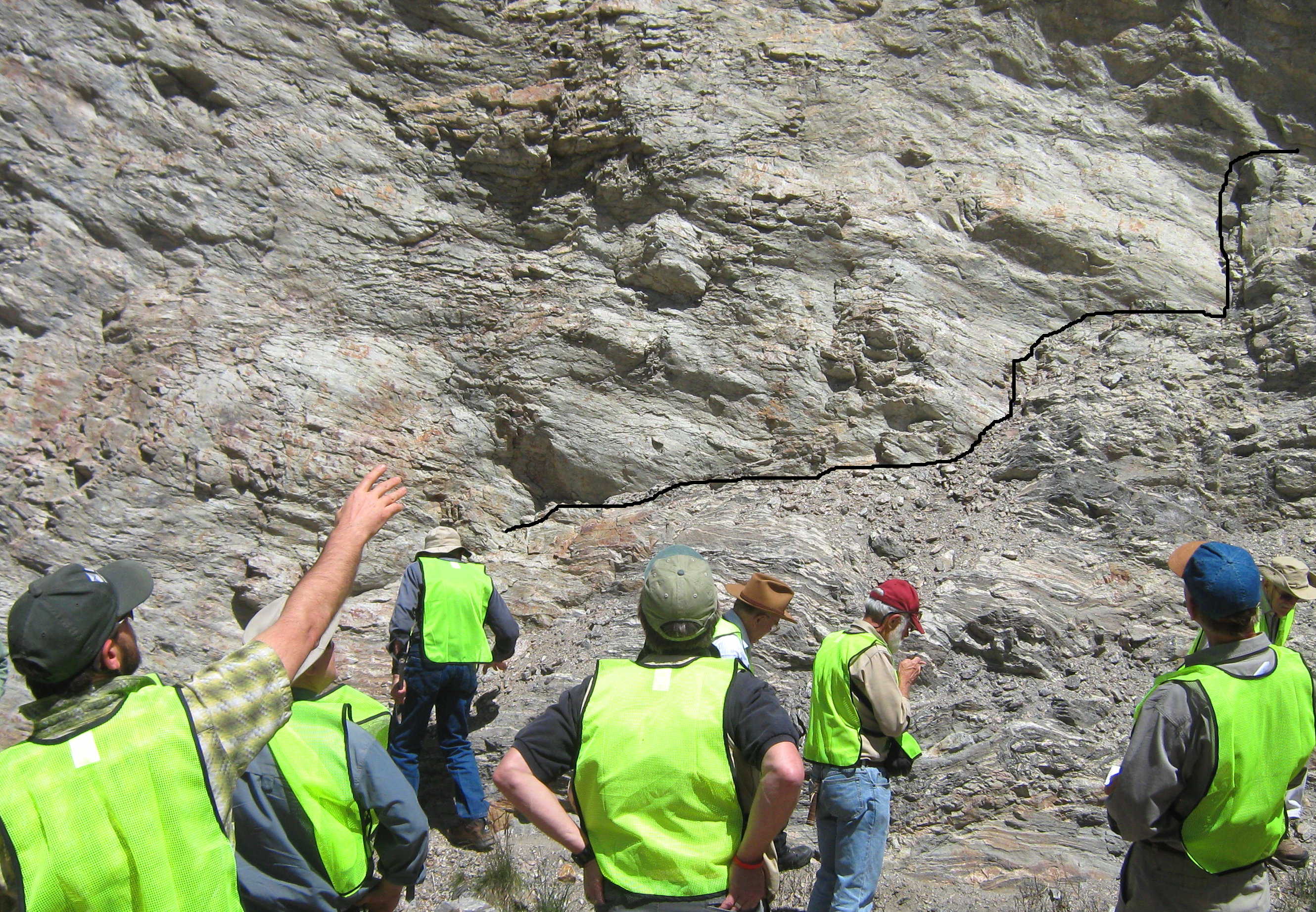
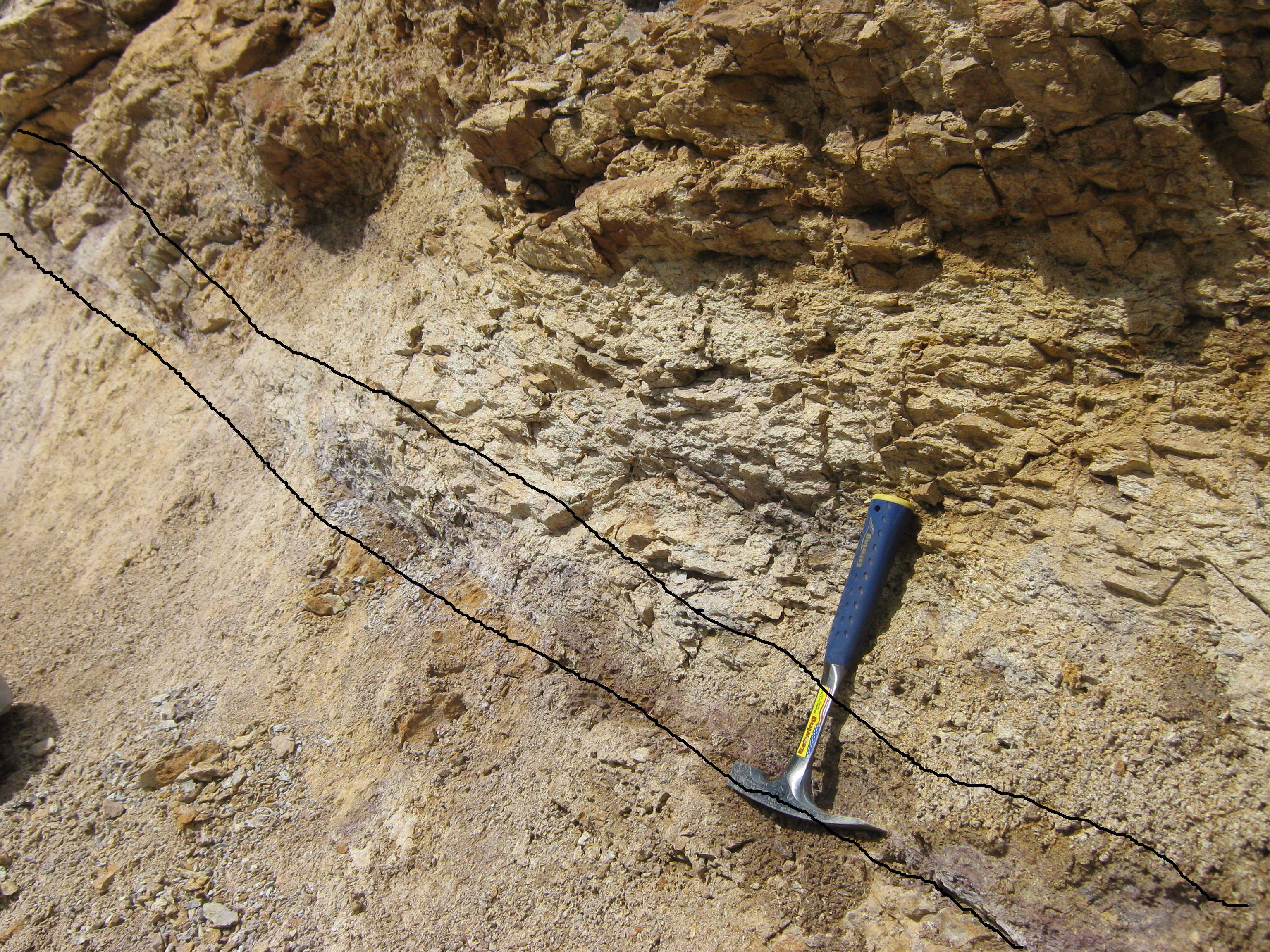
In a roadcut along the Central City Parkway is an exposure of a brittle fault at location WP005-  N 39° 44.990′, W 105° 28.233′, elevation 7571′. 
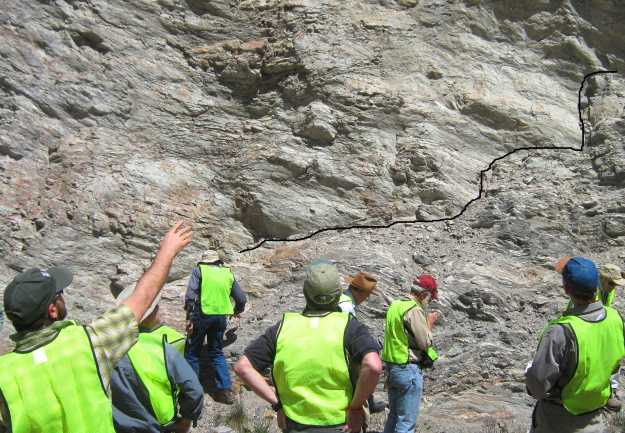
Roadcut exposing a brittle fault along Central City Parkway (WP005).

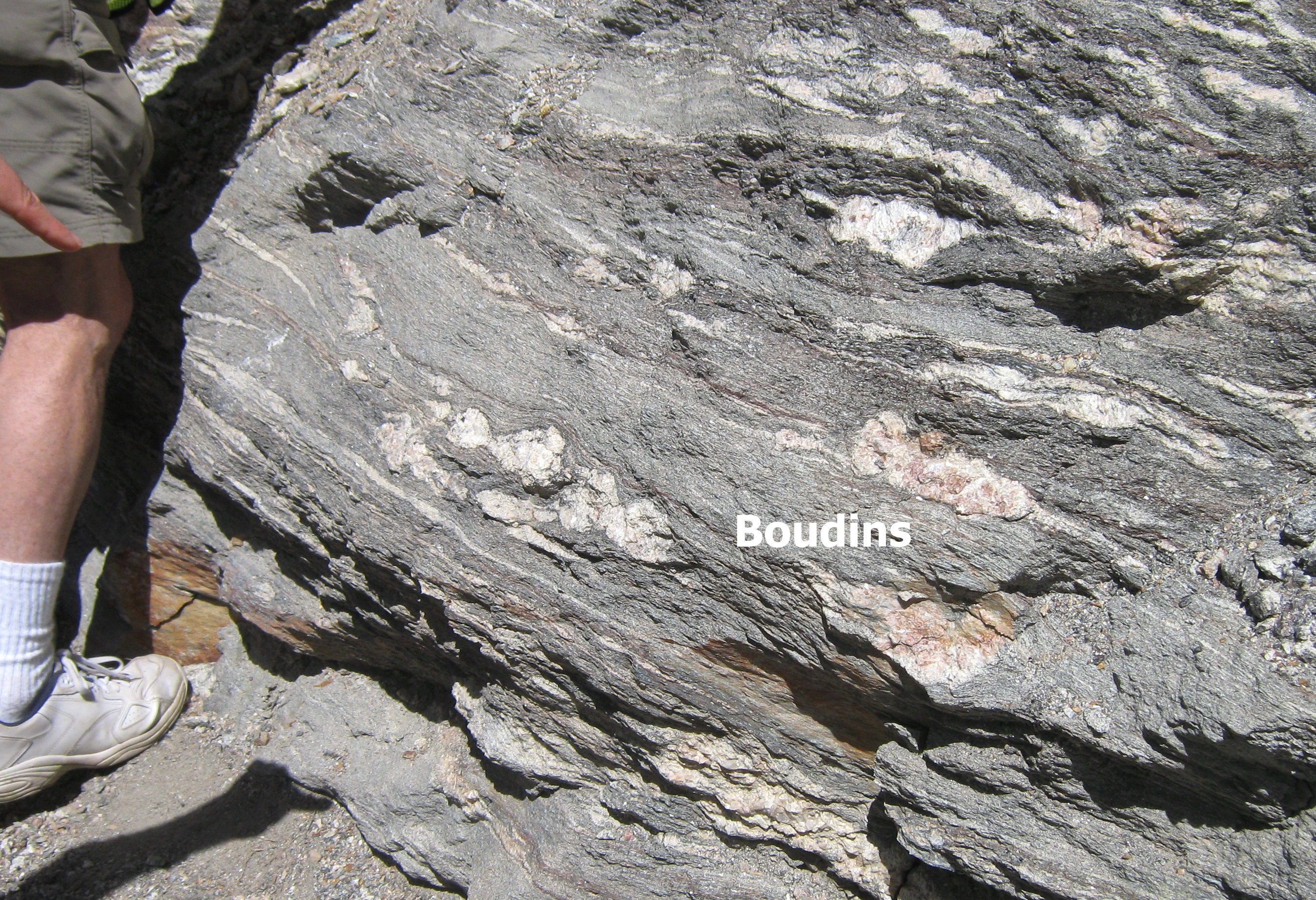
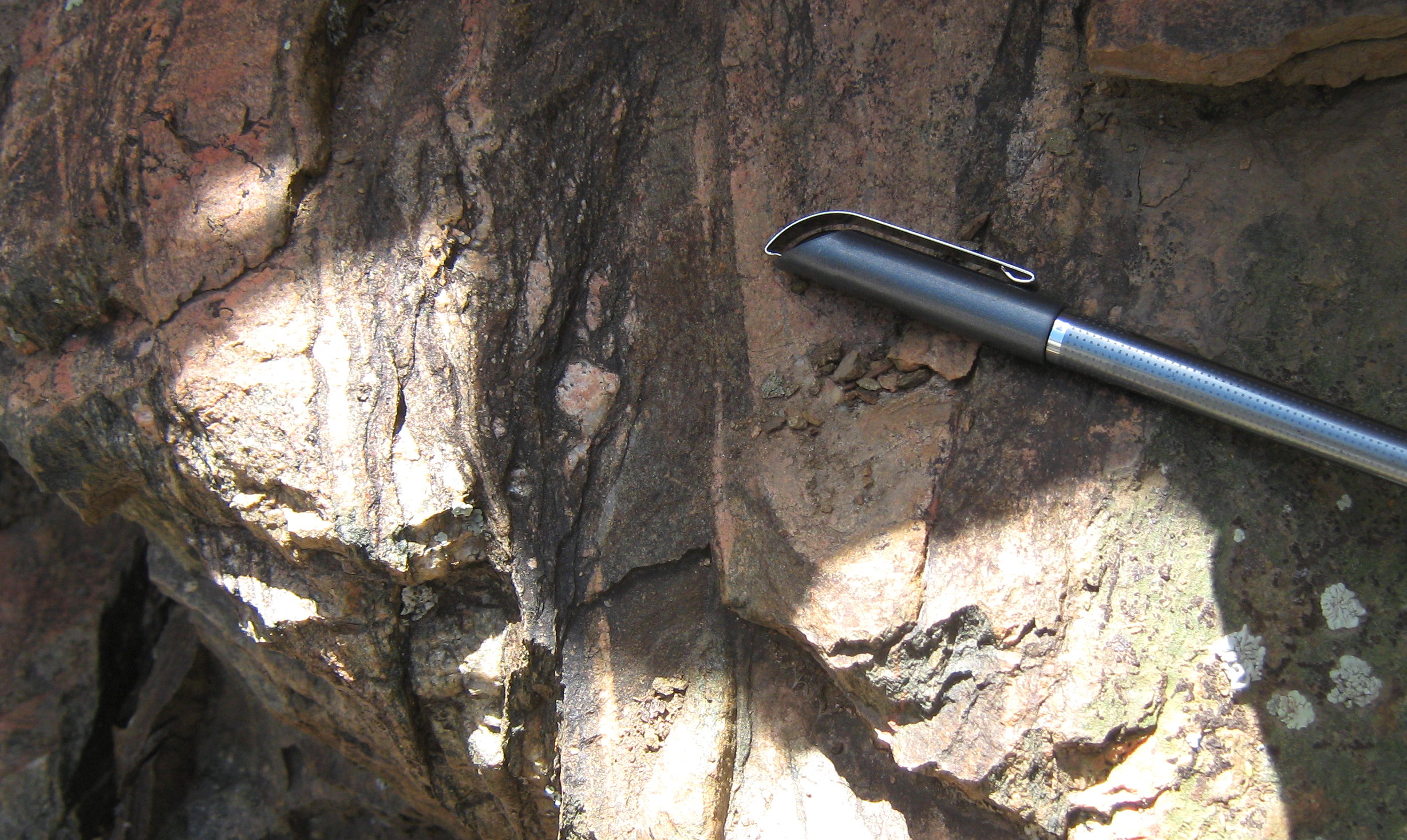
 The formation exposed at WP005 was part of a very old structure with multiple faults and igneous intrusions. In the photo above, the edge of the fault is enhanced with a black line drawn in during editing. The surface above the black line is an example of a slickenside, or one surface of the fault. Some members of the trip said they could see slickenlines, but they are so subtle that it is hard to be certain. A large igneous intrusion 100 m away showed signs of dislocation, presumably due to a fault. Boudins were observed at this location and are shown in the photo below. 
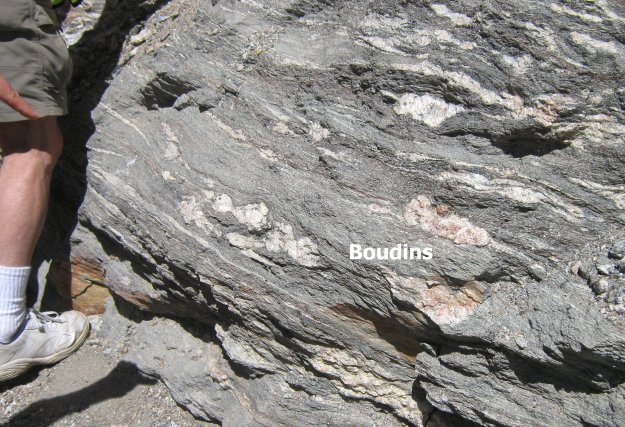
Central City Parkway road cut, boudins visible in foliated rock (WP005).

We visited the location of a fault in Coal Creek Canyon. This is a NNW trending distributed deformation zone which is part of the Boulder Batholith. This location is designated WP008- N 39° 54.268′, N 105° 20.795′, elevation 7771′.  

This fault was discovered filled with clay and dips 35 to 45 degrees. It was further exposed by excavation by Caine and another geologist. Again, the approximate boundary of the fault was enhanced with black lines in editing. There was considerable alteration of the rock on the hanging face side of the fault with iron staining associated with hydrothermal alteration.
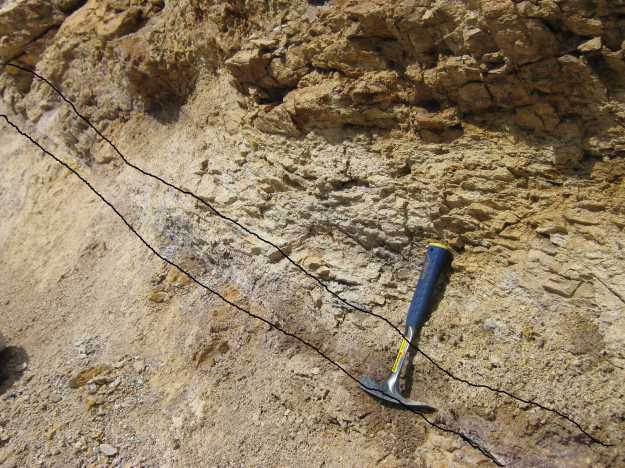
Coal Creek fault at WP008 May 22, 2010.

We visited a ductile shear zone with suspected mylonite features. It was located at WP007- N 39° 51.026′, N 105° 21.155′, elevation 7634.  Mylonite zones are evidence of ductile shear in response to a stress field.  Near the mylonite zone was a fault with exposed slickensides. While faulting and ductile deformation may seem incompatible, it should be remembered that over time many kinds of phenomena can be overprinted on the rock formations. Rock may deform in a ductile manner and sometime later undergo brittle fracture.
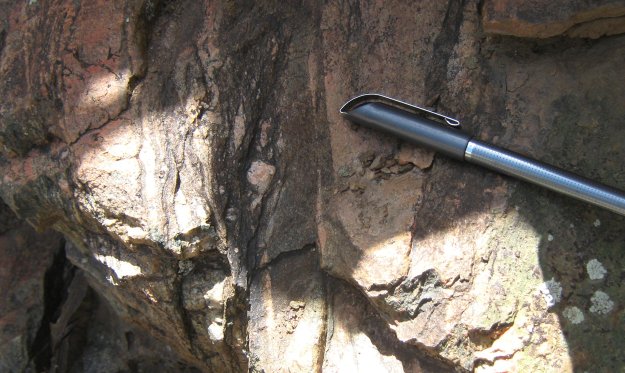
Suspected myolinite feature (WP007).

 The field trip leader was very enthusiastic and because of his background, was able to provide many important insights into the local geology. It was a very worthwhile day in the mountains.

Whither Diethyl Ether?

Diethyl ether seems to be in short supply in North America these days. Suppliers have customers under allocation constraints.  Yes Virginia, people still use Et2O in certain kinds of chemical processing. Sometimes Et2O is prized for its solvent effects and sometimes for its volatility. Sometimes the only way to solubilize some  inorganic compounds is as the metal etherate.  Solvent residues in fine chemicals are often a problem and volatile process solvents can be a big help in ameliorating that issue.  You can purchase 5,000 gallon tanker loads of Et2O if the supplier has qualified you. Another reason not to swerve in front of trucks on the highway. 

Part of the problem with Et2O availability is the considerable reduced demand for it these days.  Many companies have banned the use of Et2O on their site for any purpose. It is easy to understand why. The insane vapor pressure and low autodecomposition temperature are problematic for plant safety. The low boiling point of Et2O means that plant utilities can heat a vessel of ethereal soln rapidly and blow a rupture disk at reasonably low pot temps.  Naturally, the safetly department gets surly about this kind of thing.

Tetrahydrofuran is not always a suitable process stand-in for Et2O. Reactivity behaviors may be quite different from Et2O solns.  THF’s sensitivity to butyllithium, for instance, forces one to keep the processing conditions at low temp with a chiller. Lower pot temperatures increase the thermal margin of safety, but may have a deleterious effect on activation of a transformation once BuLi has done its job. 

I have studied the decomposition of methyl tetrahydrofuran with BuLi and have determined that it decomposes in the low 30’s °C range, somewhat higher than THF. MeTHF is not an exact stand-in for THF or Et2O either.  But it is definitely worth having in the stockroom for development work. It will surprise you in regard to how different it can be from THF.

While MeTHF is touted for its ability to phase separate with water, it will hold appreciable amounts of water.

Does Corexit really correct it?

According to news sources, BP is allegedly using a dispersant called Corexit EC9527A.  According to the EPA this formulation contains water, propylene glycol, and 2-butoxyethanol, as well as an unspecified confidential additive.

I guess the question is, what purpose does this treatment serve? By dispersing the petroleum, I assume that the effect is to spread a given mass of petroleum into a larger volume of sea water by virtue of producing dispersed globules of oil-phase material. Does the increased surface area result in off-gassing of volatiles and subsequent submergence of the now denser oil phase? Or, will the dispersed petroleum simply drift into larger patches of oily water? If it enables an increased dispersion so that the currents can chaotically distribute the petroleum to a greater range of shorelines, is this treatment of any real benefit? Perhaps it is better in the long run to have a heavier coating on fewer beaches? Less acreage to scrape.

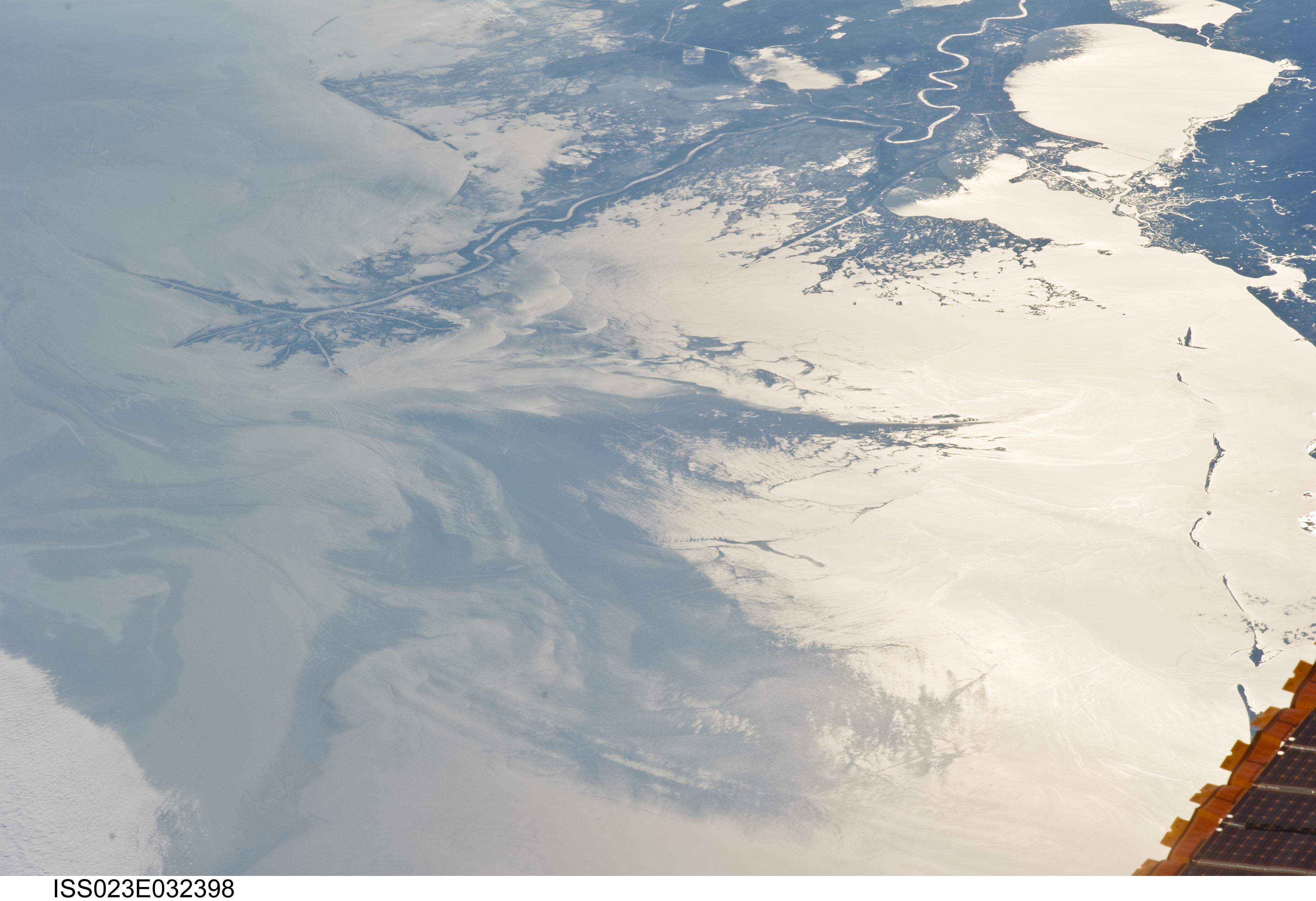
EPA is making noise about BP’s choice of Corexit. Seems to me that butyl cellosolve has been in the market for quite some time. There should be some information on its fate in the watershed. Judging from the map, the oil spill is near the dead zone around the mouth of the Mississippi River. So, until somebody gets some survey data, it’ll be hard to estimate the magnitude of the environmental insult of this event to the open ocean.

I do not understand what government officials were trying to do by saying that they might take over control of this spill. What is the government going to do to a petroleum discharge a mile below the surface? Call the Navy? Or Boots & Coots? As good as these guys may be, they’re land lubbers. 

Let the folks at BP finish the job.

NASA Earth Observatory Photo, May 24, 2010.

Rand, Ron, and Ludwig

Disclaimer: I’m neither an expert on or an enthusiast of orthodox libertarianism. I think it is yet one more narrow utopian social philosophy that a band of economic puritans want to impose on society. To their credit, it is a scholarly economic theory. But it seeks to validate and legitimize the most selfish and materialistic impulses of our primate sensibilities.

I have a comment on the recent public flare up on comments by candidate Rand Paul of Kentucky.

Randal Paul, son of Ron Paul, seems to be very much influenced in his thinking by his father and by Ludwig von Mises. I would characterize father and son as ultra-orthodox libertarians (if only by virtue of their scholarship) along the lines of the Austrian school but lacking the John Birch Society fascist and theocratic elements. I sincerely acknowledge their understanding of economics and history. However, I must differ in regard to their understanding of the non-mathematical aspects of civilization. 

Rand Paul’s recent expression of his views on the civil rights act comes straight from the Austrian view on statism. It is right out of the textbook. The man is not a racist. He just does not approve of the intervention of the state into the affairs of a property owner. I think he would prefer to see market forces solve the problem in the domain of private property.

The problem is that market forces have a substantial element of greed. And greed is what greed does. Social justice is orthogonal to greed forces. American slavery did not end because the market found a way out of it. The slave states were deeply dependent on the economic advantages in labor overhead that slavery provided. The nonmarket forces- government- that are inevitable in civilization intervened and put an end to it.

The impulse to accumulate power is expressed in the market and in government. Power is the ability to allocate resources. The domains of both government and business need to be watched closely because both are subject to the corruption of greed. Both socialism and libertarianism are utopian in their conception. Both tend to fail because adherents must rely on the adoption of their tenets by diverse groups. Both require a kind of homogeneity in thinking that is inherently unstable over large populations. Neither seems willing to accomodate a bell curve of views and behaviors. 

Just read history. You can’t even get large populations to agree on how to enable or even what is meant by the meaning of life, liberty, and the pursuit of happiness.

I fail to understand how people who do not trust big government can somehow trust a business system which can fund methods to override the checks and balances of a natural market. The notion that consumers actually have power through the allocation of their dispersed resources is perhaps partially valid in a village market. It fails in contemporary society because businesses are focused and populations tend to be defocused. 

Advertising works. Consumers are subject to suggestion by advertising influence. Consumers are not perfect, rational economic units. In some ways, we are fish in a barrel.  Businesses can obtain patents or assemble local monopoly and dominate a market in a way that consumers are powerless to respond. Look at how big box stores can move into a local market and dominate. They do provide lower prices, but they also offer a channel for foreign suppliers to cross the border and invade a market for the profit of corporate owners who live elsewhere. They apply instant globalization to local markets that are ill equipped to compete. Economic purists would say that local businesses are unfit in this circumstance.

The proclivity to trend into big-brother influence seems just as certain with business as with government. The purpose of civilization is to buffer the Darwinian forces of nature and make life less brutal and short. Government provides a way to accumulate resources and focus effort on large scale infrastructure and allow access to all. Access to infrastructure facilitates innovation and economic growth and diversity. If you don’t like infrastructure, move to Haiti or Somalia where you’ll be blissfully free of it.

Government can grow to the detriment of all. And, arguably, it is in such a position now. But to abandon this important element of our culture in favor of a more Darwinian approach to everything is a utopian dream that will not come to pass. Libertarians need to develop some pragmatism.

Cripple Creek and Victor Gold Mine Tour

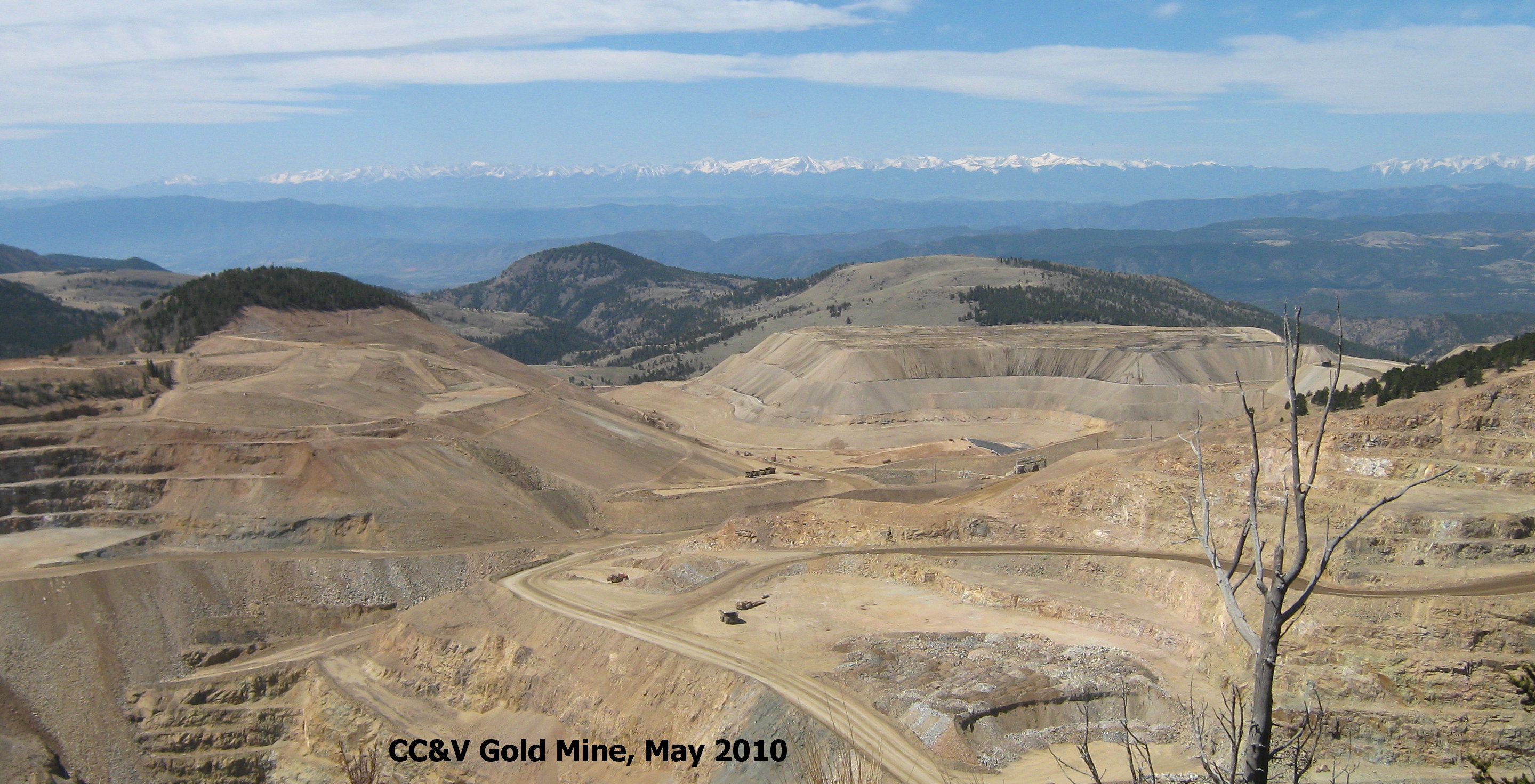
A vanload of members of the ACS, Colorado Section, were treated to an extensive tour of the Cripple Creek and Victor (CC&V) mine last Friday. The photo below shows a view of the mine from the abandoned American Eagle Mine above the CC&V pit operations. The mountains in the background are the Sangre de Cristo range.

View of Cripple Creek & Victor Mining Operations from the American Eagle Mine, May 2010.

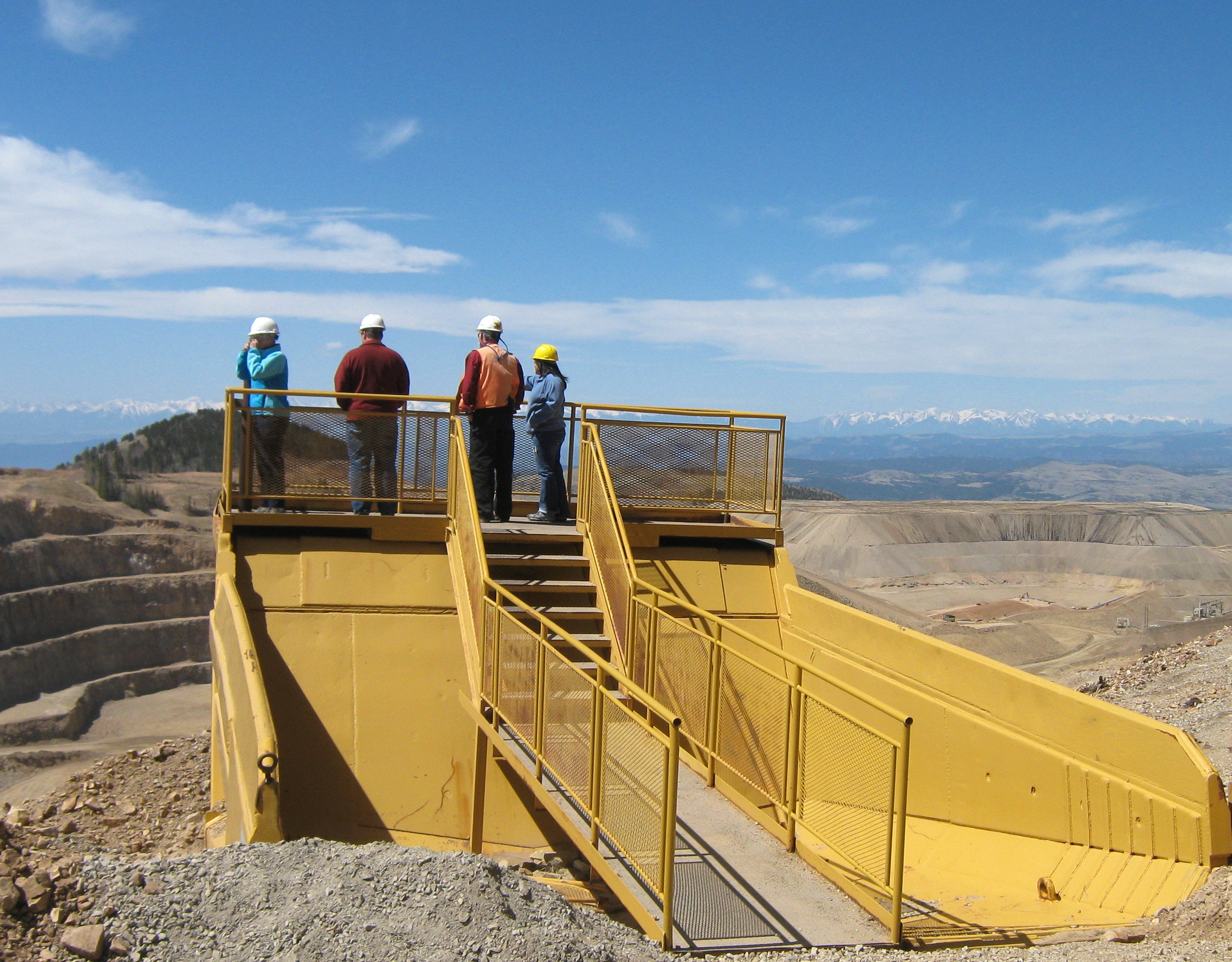
A haul truck bed was converted to a scenic overlook platform (below).  A few section members take in the view.

CC&V Scenic overlook platform

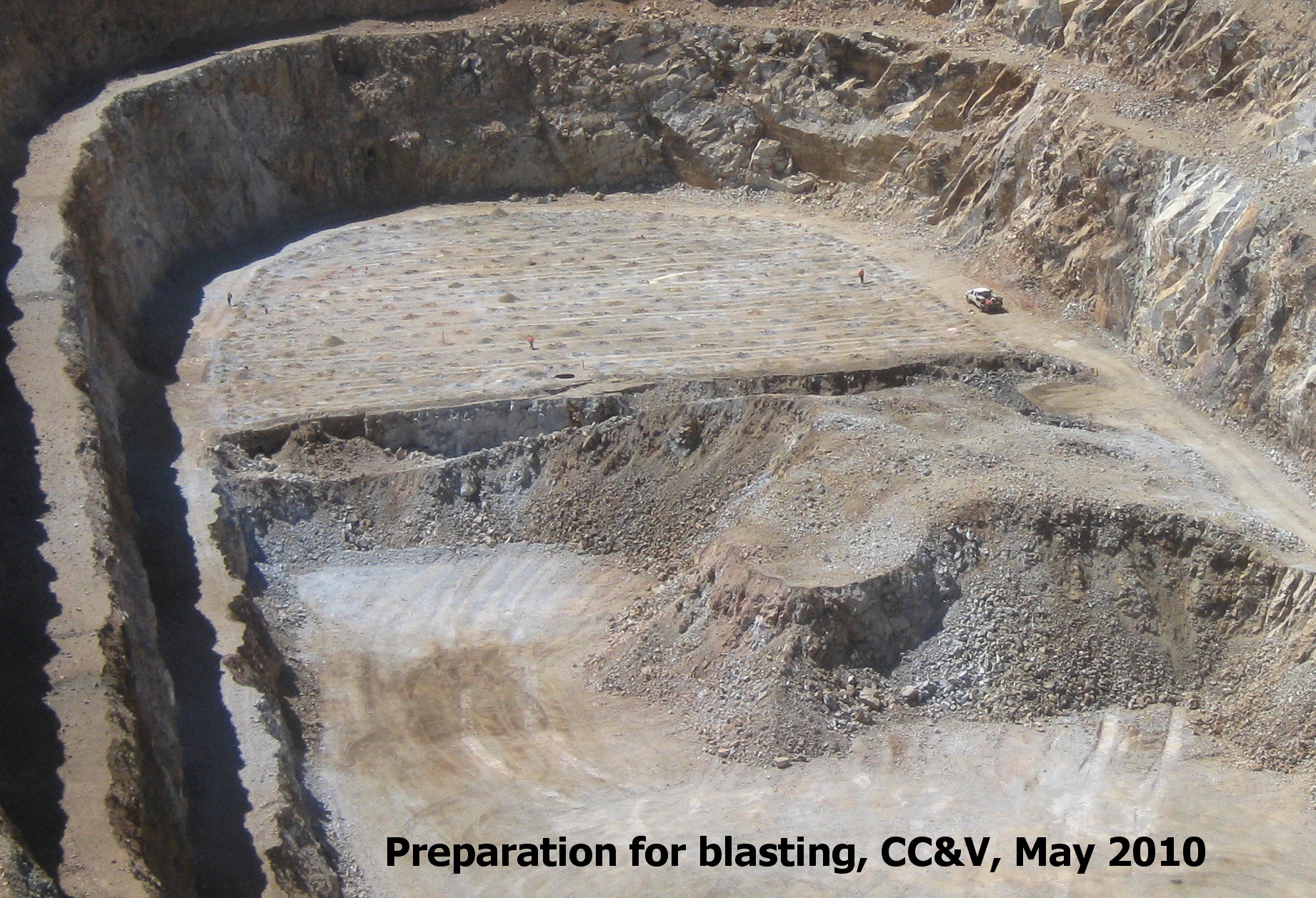
From this high vantage point we could see blasting operations at work. Multiple sites may be prepared simultaneously. Blasting typically occurs at 1:00 pm. Holes are drilled on 20 ft centers for optimum coverage. Every blasting hole is sampled and analyzed by ICP to measure the gold value for that zone.  Zones with low value are hauled to the waste heap and the high value rock is taken to the crusher.

Preparation for blasting, CC&V, May 2010.

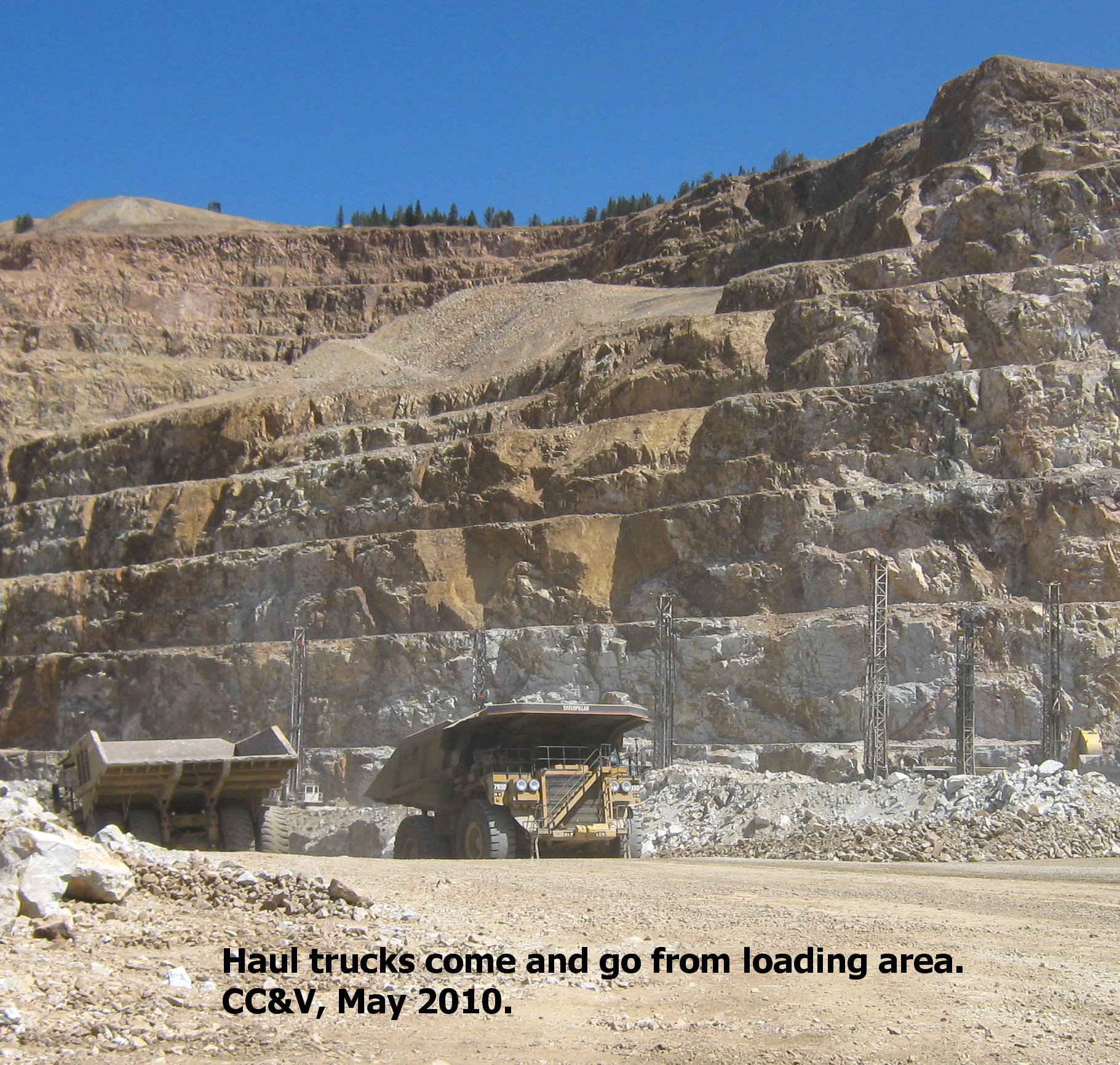
We visited the pit and watched haul trucks get loaded by a gigantic loader. For every one truckload of ore there are two truckloads of unproductive rock that have to be hauled to a separate location on site. The definition of unproductive rock depends entirely on the market price of gold.  In the photo below, drilling rigs for the blasting charges are in operation for the next round of blasting.

Loading area, CC&V Mine.

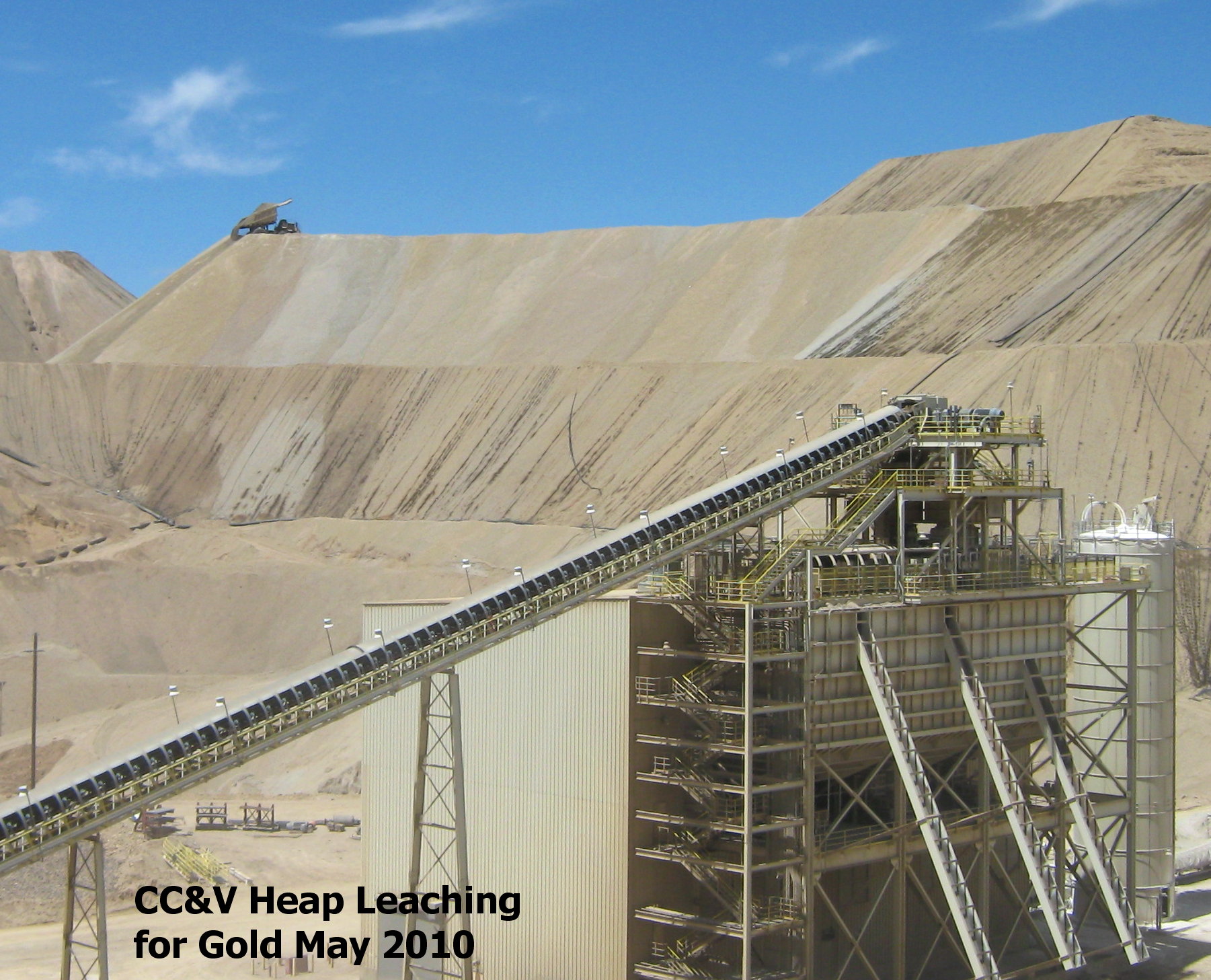
Later we watched the trucks unload into a crusher with a gyrating element that crushed the rock into football sized chunks. The resulting rock is conveyed to a screener and another crusher in order to further reduce the size to 0.75 inches. Every truckload of rock is treated with lime to help maintain a high pH for the aqueous cyanide leaching operation.  In the photo below, the white tank on the lower right contains the lime.

Heap leaching operations, CC&V May 2010.

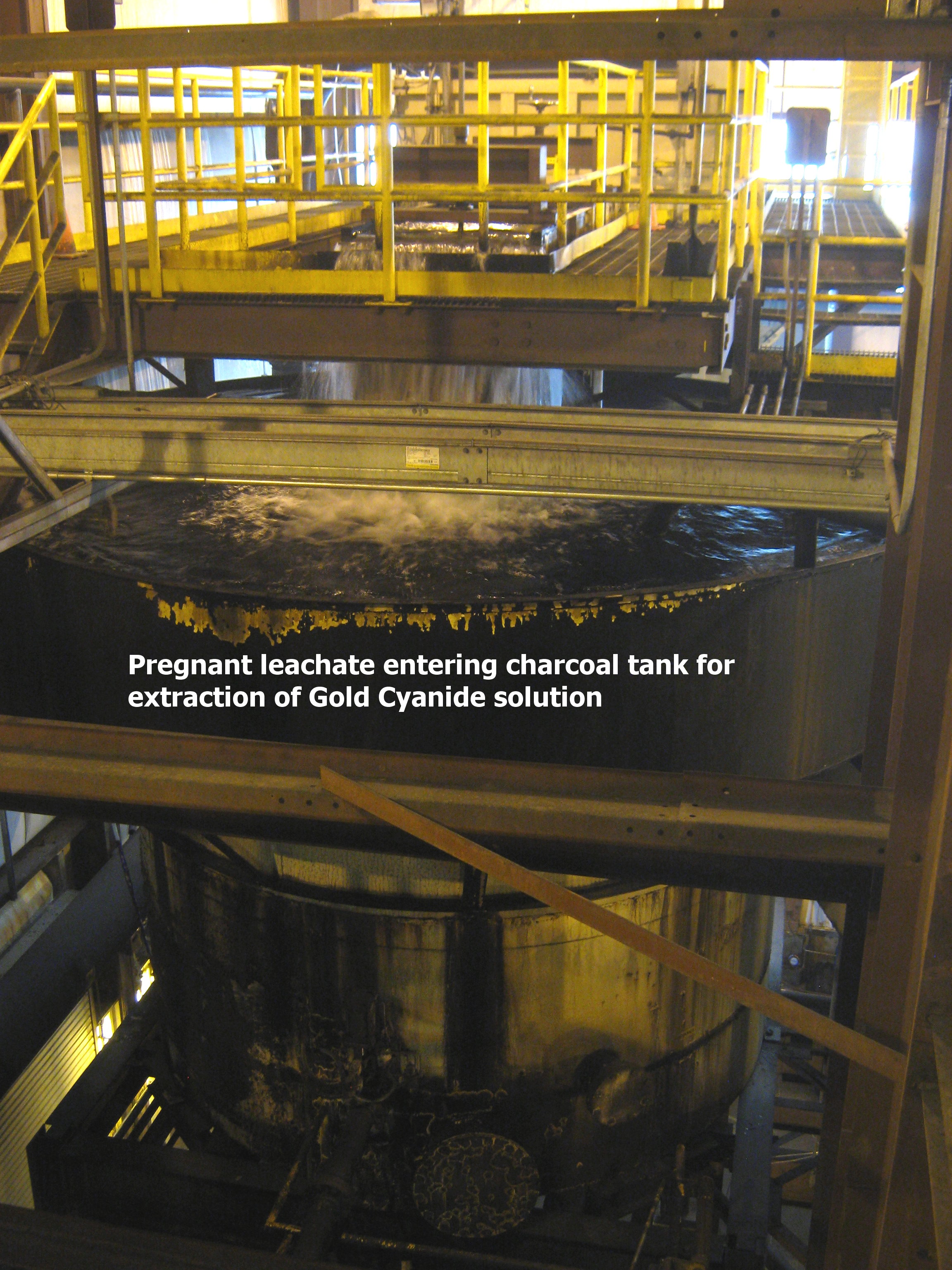
The gold bearing rock is irrigated with a very dilute sodium cyanide solution which percolates to the bottom of the heap and is captured in a basin feature at the bottom of the heap. The “pregnant” solution of gold cyanide extract is pumped out from under the heap at 14,500 gal/min into a cascading series of charcoal filtration tanks in the extraction building (see photo).

Pregnant solution passing over charcoal filter bed. CC&V May 2010.

Once a specified loading of Au is sorbed onto the charcoal, the sorbent is treated with hot concentrated cyanide. This concentrate is then passed over steel wool where the gold precipitates. The precipitated gold is then smelted to produce bulk crude metal which is shipped off-site for further refinement.

Chemistry Field Trip!

So I decided to kick up my interest in the local metalliferous deposits and get more folks involved. As a member of the executive cmte of the ACS local section I’ve organized a seminar at a local university and arranged to have the lead exploration geologist from CC&V come to talk about the their gold mine in Cripple Creek.

The seminar is thursday night. Friday morning a few of us will board a van and drive the 5 h round trip to visit the open pit operation. We’ll stop at the nearby Molly Kathleen mine as well. I’m hoping we’ll be 1000 ft down the hole when the mine next door begins blasting. That’s an unforgettable experience.

Enthusiasm is contagious.  Especially with regard to gold colored precious metals. Unfortunately, bench chemists have few opportunities to take field trips. So the thinking here is that we’ll find a way to get members out and about to look at heavy industry. And gold mining is definitely a chemically related industry. Email blast notifications to rouse attendance are surprisingly ineffective- 1 or 2 % response at most. It is hard to get folks to participate in local section activities because everyone has a life.

The next day I’ll be on a field trip with geologists to visit various sites showing ductile and brittle deformation as well as hydrothermal alteration of formations in the central front range. I’ll be a chemical science interloper, as usual. The key to many of the metalliferous features in the world is hydrothermal transport. Shallow magma intrusions energize a kind of heat engine that pumps water through metal-bearing rock and transports hot, pressurized mineral laden fluids through a large and cooler network of fissures and faults where minerals precipitate according to their solubility.  Hydrothermal alteration is an important feature to look for when prospecting for metals.

Federal regulations. Death by 1000 cuts.

Tea baggers whose lily white faces flare deep red when discussing government regulations should put down their Hitler signs, unstrap their firearms in the garage, and tune into C-Span. What they will witness is a real time picture of how the Code of Federal Regulations (CFR) got so thick.

The House of Representatives has been calling witnesses from the firms involved with the Deepwater Horizon accident to give testimony before congress.  What is presently occuring is the fact finding phase of what will no doubt turn into a series of bills and enforcement actions. Representatives are interested in whether or not regulations were ignored and what kinds of gaps there may be in the regs.

The BP-Transocean oil spill just off the mouth of the Mississippi River has fouled public fisheries and threatened to leave a splash of hydrocarbon “heavies” on vast stretches of beach and estuaries along the Gulf coast. The economic harm to the public and the material insult to the environment is still evolving.

In all likelihood, statutes relating to oil production at sea will be modified as a result of this incident. Good men perished horribly in the fire and sinking of a drilling vessel which was registered in the Marshall Islands and operated by an “American” company based in Switzerland. Changes in safety requirements, if not implemented by the industry, will certainly be mandated by federal law.

This is how most government regulation seems to accumulate. It is by stimulus and response. A bad event happens or somebody games the system for their own gain and people are harmed. Elected representatives respond by writing statutes that cover the circumstance and anticipate related problems.  Eventually, the new regs will be published in the Federal Review and some agency will be required to promulgate the changes.

Federal law accumulates like rime ice on the leading edge of an airplane wing in a storm.  Eventually the accumulation becomes so onerous that the airplane can no longer fly. It’s like death by a thousand cuts.  Unfortunately, the constitution does not mandate a sunset feature or the periodic review and streamlining of regulations. 

I suppose it is more titillating for teabaggers to imagine a cabal of preening liberals sipping Pinot Grigio and pulling the strings of their liberal agenda. You know, manditory spanish language and gay studies in the elementary schools. But for now, everyone is working on this oil problem.