Category Archives: Chemistry

Plum-bummin’ in Leadville

After an insane week in the lab a road trip to the cool meadows of the nearby mountain range was just what the doctor called for. It was the last weekend before the family- one teacher and one kid-  return to school. Summer break 2009 is history.

We piled in the car and pointed it uphill towards Leadville, Colorado. The planetary atmosphere thinly blankets this insanely high mountain city. It was just what I needed to clear my scrambled mind. Nothing like blinding sunshine and mild oxygen starvation to reset a brain in chronic spasm from sensory overload.

Leadville sits at 10,152 feet above sea level.  If you doubt the effect on your stamina, just take a short sprint in any direction. Or just plod up the stairs of your hotel. Lordy.  All of those business dinners- all that lovely Cabernet and creme brulee- and years of driving a desk have caught up with me.

Leadville is located in the Colorado mineral belt and began to populate with fortune seakers about the time of the Colorado gold rush in 1859. Some placer gold was found in the streams, particularly in what was then called California Gulch, but for the most part Leadville became a silver camp.

In 1874, two investors with metallurgical training, Alvinius B. Woods and William H. Stevens arrived in Leadville and analyzed the muds found in the local sluicing operations. According to A Companion to the American West, edited by William Francis Deverell, (2004, Blackwell Publishing, ISBN 0-631-21357-0, p. 319)  Woods and Stevens found the heavy black mud so problematic for gold sluicing was in fact composed of lead carbonate with high levels of silver.  Woods and Stevens invested $50,000, quietly buying as many claims as they could and began hydraulic mining operations immediately.

By 1890 there were nearly 90 mines in operation employing 6000 miners. At its peak there were 14 smelter operations supporting the mines. Leadville was a genuine boom town with the expected mix of characters.

A mine is a hole in the ground with a liar standing at the top.

All mining towns have characters who go on to dominate local legends and stories. Among the well-known-for-being-famous rags to riches to rags players in Leadville are Horace and Agusta Tabor, along with Horace’s mistress and 2nd wife, Elizabeth “Baby Doe”.

To make a long story short, Horace was a struggling shop keeper who invested in a mine east of Leadville. Though it was salted by the previous owner to entice buyers, Tabor dug 25 ft further down the shaft and struck a rich and extensive vein of silver ore.  The operation was called the Matchless Mine, after Tabor’s favorite brand of chewing tobacco.

According to the tour operators, Tabor operated the Matchless Mine 24/7 for 13 years, pulling an average of $2000/day of silver out of it. At its peak, the mine is said to have employed 100 people. Miners were paid the common rate of $3.00 per day to climb 365 ft to the bottom of the shaft for 12 hour shifts.
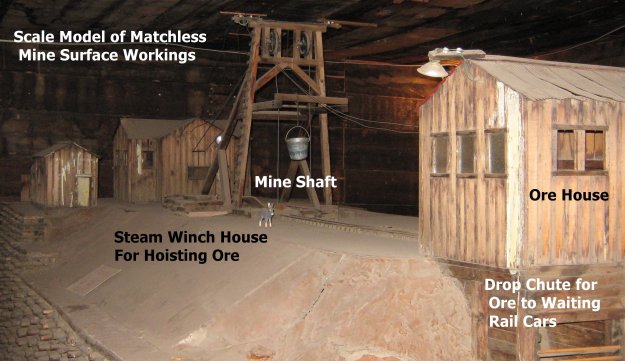
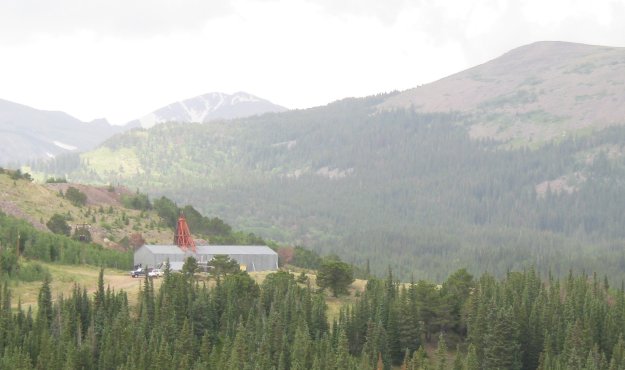
Matchless Mine Surface Workings
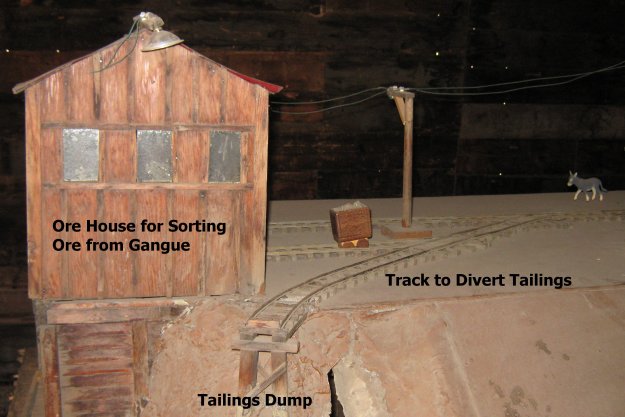
Matchless Mine Surface Workings

Gangue Dump Detail

Tailings Dump Detail

The underground workings of the mine followed the vein structure and focused on sending concentrated ore to the surface. Buckets carrying approximately one ton of ore per load (my estimate) were tipped into ore carts and rolled into the ore house for hand sorting. The most highly concentrated and valuable ore was dumped down a chute for loading into a rail car and the gangue (or tailings) was dumped into the gulch.

An assay building (not shown) was on site to provide a continuous assay and accounting of silver sent to the smelter in Pueblo, Colorado. Unlike many other mine operators, Tabor owned a rail operation and had a spur at the mine for pickup and delivery of ore. Many mine operators had to employ mule-skinners to cart wagon loads of ore to a rail siding for transport to the nearest smelter.

In 1893 the repeal of the Sherman Silver Purchase Act and the collapse of the railroad industry bubble were part of a panic that lead to a crash in silver prices. Tabor lost everything and, as a respected public figure, was appointed postmaster of Denver for a short time. Eventually Tabor died at age 69 in 1899. Ex-wife Agusta had invested her divorce settlement wisely in Denver and lived comfortably. Widow Baby Doe Tabor was found frozen stiff in her shack at the Matchless Mine in 1935.
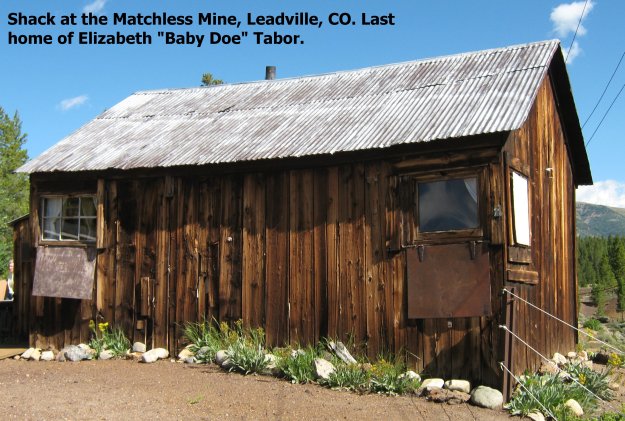
Matchless Mine Shack

Matchless Mine Shack

All of the digging from the boom time of Leadville has left an enduring legacy for those who live in the watershed. Much of the mining activity occurred uphill, east of the city and as a result, that area is pock marked with many large colorful tailings heaps. While the colors are interesting to ponder and sample, the ground and surface waters are greatly affected by aqueous extraction of metals from these piles.

If you stand next to one of these heaps, you can’t help but notice the smell of sulfur. The ore and tailings are enriched in sulfides and once exposed to air and water, oxidation occurs to make corrosive runoff. This is a kind of heap leaching phenomenon that will eventually exhaust itself, but only at the cost of water quality.
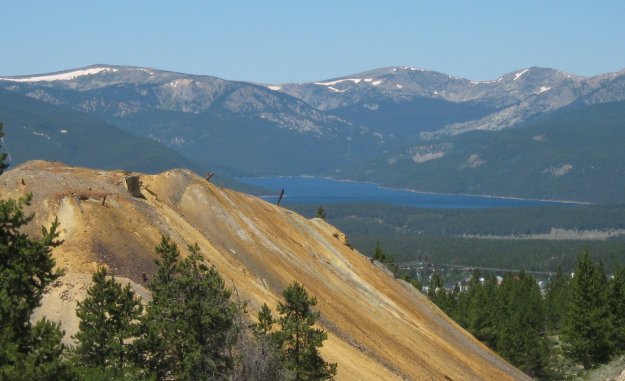
Boomtown Legacy

Boomtown Legacy (Copyright 2009 All rights reserved)
MRI MRI on the Wall

What the world needs is a good $1000 MRI scan. Why can’t we talk about how to bring down the cost of MRI scanners so that one can be parked in a non-magnetic quonset at Wal-Mart?  After all, the next wave of clinical business innovation has to crack the problem of how to provide lower octane health care.   To be sustainable, the system requires a selection of non-premium services that are modern and sensitive, but are robust and inexpensive enough to operate at $1000 a pop.

Health care organizations need to stop sending the message to Siemens, Fujitsu, GE or whomever else makes MRI scanners that they need to offer more premium scanners with expensive features because others are paying for it.  This is an amped up case of creeping featurism. What about moderate resolution with a basic package of options?   Perhaps this is already happening?

Someone needs to offer the “Kia” of MRI scanners- a moderately priced system with enough features to be useful to 80 % of patients. If the 1 kilobuck scan turns up nothing, then the Doc ratchets up the horsepower another notch.  This is the kind of thinking that is needed to keep the cost of treatment in line with inflation.

Mantle of Insanity

Recently I went to a local outfitter of camping gear to look for Coleman Lantern Mantles. As I was scanning the shelves a cherubic faced clerk came up to me and asked if I needed help. I said I was looking for lantern mantles.

When we arrived to the endcap where they were hanging, I asked him if they were still making radioactive mantles. He looked at me as though I were a bit of a loon. When I pressed the question, he balked and summoned his manager.

The manager, another youngster who was much more of an alpha male, scoffed at my question and tried to assure me that such a thing was absurd. Why in the world would mantles be radioactive? I tried to assure the youngster that, yes indeed, mantles were radioactive at one time because they contained thorium. At this point the manager was becoming visibly annoyed at his time lost addressing the questions of an obvious crackpot.

I recognized the patronizing tone he took and turned and left the store. As a child of cold war science, I have witnessed mantles sitting in a cloud chamber with ionized cloud streamers zipping every whichway from the innocent looking woven bag. Today, schools are terrified of chemicals and radiation science. Mr Manager missed out on a real experience by being born into the post-cold war world of bland science education.

So, my GM counter sits in my office clicking from the occasional background radiation piercing the GM tube. Eventually I’ll find a source to give it something more interesting to detect.

Gaussling’s 12th Epistle to the Bohemians. Elements Rock.

Some acquaintances have asked about my new interest in geology. What’s the deal with rocks and mining? 

What interests me is not so much the economic value and extravagant production of certain minerals and precious metals. What is of interest is the question of how it came about that there is such a thing as an ore body.  An ore body is a geological formation which is defined by a localized concentration of certain substances. How does it happen that chemical elements can become concentrated from a more distributed condition?

Celebrity astronomers are often seen on cable channels pedantically nattering on about “Star Stuff”.  OK, Dr. Skippy, what is star stuff and what does it do? What are the particulars about the local star stuff, ie., the earth? This is the realm of cosmochemistry and geochemistry- elective classes the TV glamour boys apparently skipped.

The nucleosynthesis of the heavy elements (C to U) and their subsequent ejection from exploding stars is an inherently dispersive process. Eventually, here and there, some heavy matter will aggregate to form a protoplanetary cloud which can then produce planetary bodies. Inevitably, some of the heavy matter is pulled into massive bodies dominated by the presence of thermonuclear fuels- that is, hydrogen and helium. Sufficiently large accumulations of these two highly abundant elements will compress and initiate a self-sustaining fusion reaction of hydrogen to form the (n+1)th generation of stars. All told, some heavy matter accumulates to form of planetary bodies while some of it siphons into the next generation of stars.

It is within the ability of gravity to concentrate matter into smaller volumes of space as a dense, bulk phase. The geometric shape that allows all of the mass to be as near the center of mass as possible is the sphere.  This is why we don’t see planets shaped like cubes, pyramids, or ponies. 

Once cooled well below incandescence, the matter in a sufficiently constituted and situated planet may begin to self-organize into chemical phases. Along the lines of the Three Bears allegory, Earth is parked in an orbit that is just right for the presence of liquid water. Irrespective of the needs of life, liquid water is critical for the eventual concentration of some elements into ore bodies.

Earth has a gas phase blanketing a liquid phase which wets much of the bulk rocky phase of the planet. A generous portion of water circulates in the maze of fractured recesses of the planetary crust. In the case of Earth, we know that our planet has a fluid core within a solid shell. This molten phase in the core energizes a kind of convective heat engine that will drive the shuffling motion of tectonic plates and episodic volcanic mass transfer on the surface. 

Matter has gravitationally self-organized at the planetary scale on the basis of density. But what is perhaps most interesting to a chemist is the phase composition of the planetary solid matter. On cooling, a body of magma will sequentially produce precipitates representing different chemical substances. Over geological time this igneous rock may experience modification by the hydrothermal action of hot water under high pressure. Depending on its circumstances, parts of the formation may be depleted of soluble constituents or it may receive a deposit of new mineral species.

On the scale of planets, the earth has self-organized into bulk phases of matter- Solid, liquid, and gas. But at a much smaller scale, the earth self-organizes into domains of chemical substances. This is evident by simple inspection of a piece of granite. A piece of pink granite shows macroscopic chemical domains of potassium feldspar, quartz, and mica. While these three mineral components of granite are compounds and not pure elements, they nonetheless represent self-organization of species based on chemical properties.

The forces that drive chemical differentiation in mineral formation are ultimately thermochemical in nature. Large differences in Ksp lead to partitioning and phase separation of distinct substances. Subsurface formations may be approximately adiabatic on a short time scale, but over deep time they can slowly cool and equilibrate to yield a sequence of fractional crystallizations of metal carbonates, oxides, silicates, and aluminates giving rise to a complex bulk composition.

Speaking only for myself, coming to an understanding of how mineral deposits form is a kind of hobby.  If I wanted immediate answers to specific questions, I suppose the most expedient thing would be to consult a geochemist. But where is the adventure in that? The answers are not the fun part. The real adventure is in the struggle to find the best questions. As it often happens, once you can frame the problem sufficiently, the answer falls out in front of you. Whoever dies with the greatest insight wins.

A Day Trip to the Caribou Mining District

The ghost town of Caribou, Colorado, sits a few miles west of Nederland. As a group the mining towns of Caribou, Nederland, and Ward reside at the northeastern extreme of the Colorado Mineral Belt. This mineral rich formation cuts diagonally across the state, terminating near Durango in the southwest part of Colorado.

Every western state  has its mining districts.  The eastern reaches of the USA have hard rock mining districts as well. The Appalachians have a long history of hard rock mining. An example of eastern hard rock mining activity is the Foote spodumene mine in the Kings Mountain district in North Carolina.

The Ghost Town of Caribou, Colorado (Copyright 2009 all rights reserved)

The Ghost Town of Caribou, Colorado (Copyright 2009 all rights reserved)

While the Caribou district was previously known primarily for silver and tungsten, current hard rock mining operations by Calais Resources is targeting silver and gold. A blurb on the Calais website says that they do not use cyanide extraction in Colorado.

Calais Resources Comstock Shaft (Copyright 2009 all rights reserved)

Calais Resources Comstock Shaft (Copyright 2009 all rights reserved)

 This weekend the town of Nederland is celebrating its mining history with a miners festival. There were feats of strength and skill on display.

Hand drilling competition in Nederland July 2009

Hand drilling competition in Nederland July 2009

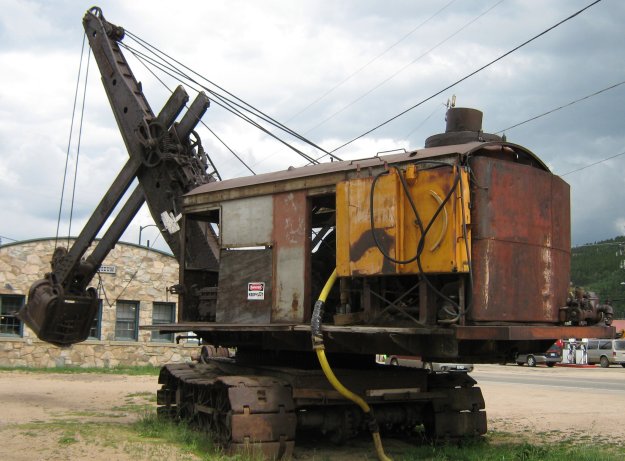
 Across town at the Mining Museum, a 1923 Bucyrus 50-B steam shovel was in operation. This 130,000 lb beast was powered by an antique air compressor this afternoon because the boiler is not servicable. It turns out that this very machine was one of 25 taken to the Panama Canal to move dirt and rock. All were scrapped at the canal but this one. The canal was finished in 1914, so it must have been used for modification of the canal workings.

This machine was in service at the Lump Gulch Placer a few miles south of its present location until 1978.  Bucyrus is still an ongoing concern in the mining equipment business.

Bucyrus 50-B Steam Shovel (Copyright 2009 all rights reserved)

Bucyrus 50-B Steam Shovel (Copyright 2009 all rights reserved)

As one drives into the Ward area from the north, the rock type evident in the road cuts changes. South St. Vrain canyon is largely granitic in nature. As one moves south into the Mineral Belt, the road cuts plainly reveal that a new dominant mineral type is present. Hematite or other iron oxide species are extensively represented in the rock.

My reading indicates that many metal ore bodies are the result of extensive hydrothermal modification of fractured or disturbed formations. Metal sulfide saturated, superheated water penetrates a disturbed formation leaving precipitates forming vein structures. In this way, many metal species are mobilized on the basis of solubility properties and are transported and concentrated leaving deposits enriched in a variety of useful metals.

The superheating of deep ground water and the subsequent partitioning and concentration on the basis of physical properties like solubility and volatility are what make the recovery of many elements possible. Without these concentration mechanisms many scarce elements would be too diluted in the parent formation to be feasibly isolated commercially.

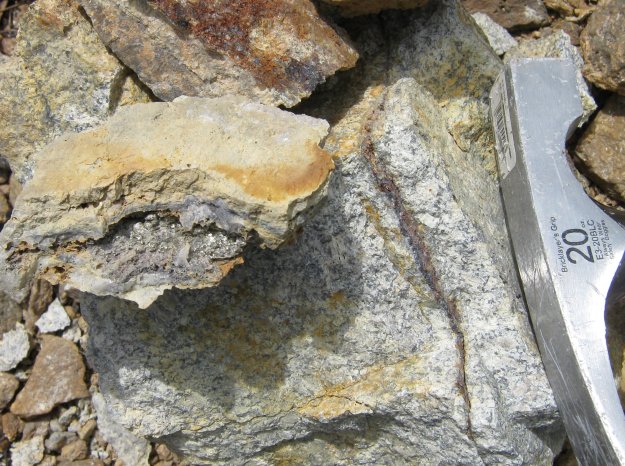
Pyrite vug from a tailings pile (Copyright 2009 all rights reserved)

Pyrite vug from a tailings pile (Copyright 2009 all rights reserved)

What Th’ Gaussling has found is that, while a PhD in Organic Chemistry isn’t entirely useless as a background for understanding rocks, it is closer to useless than I’d like. Edgemicated as I may be in a skinny band of chemistry, I have a lot yet to learn about minerals and petrology.

Hillbilly Engineering- A Homebuilt Kugelrohr

In the mid 1990’s I had the good fortune to do a 1-year sabbatical replacement teaching gig at Ft Lewis College in Durango, Colorado. Of the several colleges in which I was lucky enough to be a faculty member, this school was absolutely the best. The chemistry department had a vitality that I had not experienced elsewhere, and sadly, would not be fortunate enough to repeat.

From my office high up on the mesa next to town I could hear the whistle of the steam locomotives of the Durango-Silverton Narrow Gauge Railroad. On friday afternoons a campus Native American group would sit around a single drum outside of Berndt Hall, each striking a hypnotic beat on the preserved skin while chanting and singing in the Ute language. While they were chanting the steam locomotives in the town below would blow their whistles, announcing their arrival for the tourists. The sound of it was an otherworldly experience I have not forgotten.

A prof I got to know at Ft Lewis, Dr. Irwin “Ike” Klundt, was a retired VP from Aldrich. He was to become a mentor and friend. It turns out that Ike was the inventor of the coffee pot kugelrohr that Aldrich offered in its catalog. West Bend, the appliance company, had a coffee pot manufacturing operation in Milwaukee, WI, where Aldrich was then headquartered. Ike learned that they would always have a few off-spec units coming from their mfg line, so he arranged to snag a few of these units. He recognized that these pots were built to contain heat and would be dandy ovens for his application. The large metal coffee pots were delivered to a one man shop somewhere in Milwaukee where the they would be converted to ovens for the Aldrich kugelrohr still, or “bulb-tube” short path distillation device to be more precise.

To provide agitation around the axis of the distillation train, an automotive pneumatic windshield wiper motor provided the needed reciprocating motion. It had a built-in tube that would serve to couple the bulb tube train to the vacuum line. The reciprocating motion of the motor removed the need for a sealed bearing as in the case of a rotary evaporator.

Aldrich sold a geat many of these units. In later years the kugelrohr was modified to enhance safety and ease of use. Aldrich has never been shy about pricing, so the price went way up as well.

I was thinking about this bit of history yesterday as I was operating my home-built kugelrohr. Sometimes shortpath distillation is needed and yesterday was the day for it. Using Ike as my inspiration, I horizontally configured a Buchi rotovap into a kugelrohr distillation unit with a still pot and a bulb tube receiver.

On a hotplate with a temperature indicator, I placed an 8 inch diameter sheet metal 90 degree elbow from Home Depot. The elbow, modified with a bit of aluminum foil, would serve as my hot air bath. The elbow and hotplate assembly is scooted over to the rotovap so that the still pot bulb is isolated in the “oven”.  A dry ice/acetone cooling bath for the receiver bulb was made from the bottom of a plastic jar. It was notched on opposite ends to accomodate the receiver joints.

The setup works just like a Buchi-brand kugelrohr, but doesn’t carry the price of a luxury ocean cruise. I know that larger companies would not allow this kind of thing. They would frown on a chemist using his time to kludge together a piece of improvised equipment. Their safety people would not allow the operation of a device that was not purpose manufactured. But when you work for a small company this is one of the things you have to do, and I enjoy every minute of it.

Handy Chart for the 2008 Top 200 Drugs

I ran across this handy pdf file from the website of Prof. Njardason at Cornell. It is a graphic compilation of the top selling drugs (in the USA?). Just click on the image and a pdf will download.  The site has compilations for the last several years as well.

A few of the drugs on the list are protected under patents that will expire in the next few years- Lipitor, Crestor, Lexapro, Advair, Singulair, Plavix, etc. Hours after the license to print money expires, the generic barbarians and visigoths will storm the gates and unceremoniously slaughter these cash cows. The horror, the horror.

Bruker’s New 1 Gigahertz NMR Spectrometer

June 1, 2009, Bruker announced the release of the AVANCE 1000 NMR Spectrometer. This 1000 MHz (1 GHz) instrument features a standard 54 mm bore within a 23.5 Tesla superconducting magnet. The magnet technology offers subcooling (below the bp of He) in the magnet, which Bruker claims to be necessary for the stability of the magnetic field. Bruker also offers nitrogen-free magnets that are able to keep the helium boil-off rates to a minimum. While it would be nice to avoid having to manage two cryogenic liquids, I wonder what the pay-back time is for the chiller equipment?

Imagine the hassles, begging, and incredulous stares that the users will have to contend with to to get some 1 GHz NMR time? I wonder if anyone will do 1-D experiments with it?

The AVANCE  1 GHz instrument is priced at a cryogenic ~$16,000,000 per copy with an 18-24 month lead time. I’ll have to stick with Anasazi Instruments for a while at least.

Separately, a link at the Bruker website will take you to the University of York where a site dedicated to one groups NMR work with parahydrogen is detailed. A technique called SABRE, Signal Amplification by Reversable Exchange, is described. The exposure of an NMR sample to parahydrogen (singlet H2) results in the transfer of polarization to the sample and subsequent increase in sensitivity.

The workers describe the operation of a device used for the conversion of triplet orthohydrogen to singlet parahydrogen as a ready source of this peculiar “isomer” of dihydrogen. Parahydrogen is the dominant form at 20 K, but drops to 25 % abundance at room temperature. Exposure of a mixture of ortho and parahydrogen to a paramagnetic catalyst does the conversion to achieve enriched singlet H2.

According to one on-line source, the conversion of ortho- to parahydrogen evolves 527 kJ/kg. I’d watch out.

HR 2868- Good intentions gone sour

There is a fine line between good sense and paranoia and HR 2868 has definitely crossed over into deep paranoia. This resolution, sponsored by Rep. Thompson (Mississippi), Rep. Waxman of CA, Rep. Jackson-Lee of TX, Rep. Markey of CA, and reps Clarke and Pascrell, is an amendment to the Homeland Security Act of 2002.  Its purpose is

“to extend, modify, and recodify the authority of the Secretary of Homeland Security to enhance security and protect against acts of terrorism against chemical facilities, and for other purposes.”

Well, how could anyone be against such a noble sounding piece of code? The sponsors are struggling to protect the homeland against attack on chemical facilities. Facilities whose hazardous material inventories could be maliciously released to cause harm to the surrounding neighborhoods of innocent and helpless citizens.

Sec. 2102 (a) (1) allows the Secretary to designate any chemical substance as a “substance of concern” and establish a threshold quantity for each substance of concern.

There are many goodies and zingers in this bill. Sec. 2115 (a) (1) (A) requires that the Secretary issue regulations for substantial background checks to establish personnel surety in covered chemical facilities. The security check will be deep and will serve as a reservoir of information collected by company on citizen employees and subject to inspection on demand by the Secretary.

Sec. 2116 (a) (1) states that any person may commence a civil suit against any person “who is alleged to be in violation of any standard, regulation, condition, requirement, prohibition, or order which has become effective pursuant to this title; or … “.  This citizen lawsuit provision will open the floodgates to lawsuits on companies running chemical plants and in so doing, under the rules of discovery, break through the IP protection afforded by trade secrecy.

This proposed law also provides for close oversight by the Secretary of Homeland Security as well as civil penalties (Sec. 2107 (b) (1)) of up to $50,000 per day of violation.

OK. Nobody wants acts of terrorism to happen and especially not on the site of a chemical plant. But to legislate the transformation of chemical plants into a “Fort Apache” scenario in the absence of a history of attacks on US plants is to invite needless cost and complication to an industry that is already heavily regulated. This is plainly the result of irrational fearfulness on the part of congressional sponsors. And Congressmen are in a position to convert their fears into law.

Compliance with this law will require considerable effort and expense to be carried by industry. The downside to being out of compliance is too expensive. Over time companies may opt out of processes that use chemicals of concern simply to reduce the risk of noncompliance as determined by government audit.

The chemical industry uses hazardous chemicals of many varieties. Hazardous chemicals are often reactive chemicals. And reactive chemicals are useful chemicals.

The entire chemical industry is built around the exploitation of reactive attributes in order to cause a desired change in chemical composition. The unintended consequence of this legislation is that useful but reactive chemicals may be inherently prone to identification as chemicals of concern. The effect would then be that key substances at the core of a given technology platform would be regulated on the basis of what a terrorist could do with it rather than its value to technology and to civilization.

What constitutes adequate security? Who is to say what security measures are satisfactory? The security industry seems to attract the paranoid who see threats behind every shrub. To have such people deciding what chemical is acceptable for use in manufacturing is unacceptable.

Robustness Challenge Tests

I and my assistant have spent the last month devising experiments that are meant to chart out the stability or robustness of a small set of compounds whose manufacture has been problematic. This has been a kind of a process development activity wherein we are trying to understand what the specific sensitivities of this molecule are and how they might impact process stability.

My job these days is reactive hazards analysis and process safety. We have been trying to dream up experiments that tease out particular weaknesses a compound may have in normal or plausible off-normal conditions. While the compounds in question do not have apparent issues with reactive hazards, the skill set needed to find reactive hazards is useful in finding economic hazards as well.

An economic hazard would be something that threatens the profitability of a process. A production instability is simply a low threshold for a transition to off-normal processing conditions. Sometimes a process instability is physically dangerous and sometimes it is only an economic threat.

I have to say that this has been very enlightening so far.