Category Archives: CounterCurrent

MIRV Talk

Some vocabulary from bad old days of the Cold War has come back to haunt us. Russia has announced that it has deployed its RS-28 Sarmat intercontinental ballistic missile (ICBM) in Belarus. The 112 ft long, 211 ton missile is said to carry 15 Multiple Independent Reentry Vehicles (MIRVs). As new and scary as this sounds, the US first conceived of the MIRV in the early 1960’s and deployed its first MIRV’d ICBM (Minuteman III) in 1970 and the first MIRV’d SLBM (Poseiden Sea Launched Ballistic Missile) in 1971. The USSR followed suit in 1975 and 1978, respectively.

In the early 1960’s it was believed in the US that it was behind the USSR in what was called the “Missile Gap”. It turns out this was incorrect and that, in fact, the US had a large advantage in the number of ICBM strategic delivery vehicles. For a long while we in NATO thought the Soviets were 10 feet tall and that turned out to be an exaggeration. From their performance in conventional battle, they have diminished in stature just a bit. However, their nuclear triad is to be respected.

The initial purpose of the MIRV concept was to compensate for inaccurate delivery. It has evolved to include decoys and multiple target delivery. There is a good deal of non-classified information on MIRV systems on the interwebs.

Putin’s threat of a new MIRV’d missile is just more nuclear bluster to frighten NATO citizens. For the present time his nuclear weapons are more valuable in storage as they have been all along with the Mutual Assured Destruction policy. That said, they have a policy of using nukes if the security of the state itself is under threat. I would guess that Putin sees himself as the state.

I wonder if it has dawned on the Russians that nobody in their right mind would actually make a preemptive attack on Russia or its former Soviet satellites. Who actually wants the place? What benefit is there in trying to subdue 140 million angry Russians and their huge frozen taiga? That’s nuts.

Standing up for what you believe

I’ve long had difficulty with the validity of advice that says “always stand up for what you believe.” Superficially, it is inspirational to those working in a difficult and discouraging situation. It is meant to convey encouragement that a person should strive not to give up on a difficult goal. Keep chipping away at the problem. You can eat an elephant, but only by one bite at a time. There are many aphorisms that tie into this sentiment. A crisp analysis of this is not like a problem in algebra, you know, a problem with a unique solution. If you share the person’s subjectivity, then perhaps there is no problem.

Standing up for what you believe is often used to proclaim a refusal to give up some action or view. It can telegraph moral clarity and devotion to an ideal.

What are we to think when a leader stands up and proclaims that they intend to stand firm on their convictions? Irrespective of whether or not you agree with them, doesn’t their proclamation to stand fast say something about flexibility in the face of contrary evidence or logic? If new thinking comes along, wouldn’t we want a leader who can turn the boat around to a better heading?

We don’t want wishy-washy or indecisive leaders- don’t we really want action based on the best thinking? In a democracy it is our job to put the best thinkers in the important slots.

The weakness of this advice comes into view when you consider whether any given goal is “worthy” or not. Is there objective information or reason supporting going after a goal or maintaining a belief? Even if a belief or goal is objectively valid, is it something worth committing your life to? Will it really lead to the desired end? On the personal level, someone may be convinced that a goal is indeed worthy and is backed with good intentions, tight reasoning or what appears to be justifying evidence.

A person may be genuinely convinced that their goal or belief is worthy irrespective of objective fact or analysis. They would be making a subjective decision to stay on the path for reasons of comfort or aesthetics. As long as your path is not harmful to those around you, why not?

People possessed of divine certitude in their politics or religion, for example, will often claim that a particular hill really is worth dying on. They are willing to defend their beliefs to their last breath, a few in the literal sense but most metaphorically speaking. Righteous though they may seem, are we obliged to stand by and let the firmly held but baseless or insane beliefs of others swerve our democracy into an autocratic swamp of fringe beliefs and looney political theories?

The societal problems are supposed to be addressed by voting based on rational thought and conveyed through freedom of speech. Today in the US, large and well-funded forces are focused on eliminating time-tested elements of democracy based on firmly held beliefs.

The practical difficulty in the US is that monied interests have the cash to buy media time to persuade the masses. Repetition of untruthful assertions and fearmongering are highly effective. Recruiting and inciting people into the dark side of politics is all too easy as the GOP has shown for decades. And yes, I’m taking sides.

This is my theory: From the view at 30,000 feet we can broadly divide thinking into two manifolds- analytical thinking and devotional thinking. Analytical thinking is that in which conclusions or practices are based on consideration of established secular principles, measurable evidence and the science behind cause and effect.

Devotional thinking is rationale based on adherence to doctrine- be it religious or political. A particular doctrine guides a person’s beliefs, emotions and actions or conclusions, maybe even in the face of contrary evidence.

Analytical thinking is my preference but it can go awry. Conclusions may be drawn from faulty evidence or previous thinking that is factually incorrect or poorly conceived. Worse, human thinking is subject to stranding in the cul-de-sac of confirmation bias. Many of us get stuck in this appealing comfort zone indefinitely. Beliefs or opinions are often cherished and difficult to release.

So, what do you say to a person who adheres to a belief that can be objectively contradicted with arguments based on data or rational analysis? How far along are we obliged to indulge a person in a faulty belief? Should we be supportive and encourage them to “stand up for what you believe” knowing full well that they are on a fool’s errand or their belief leads to actions troublesome for others?

This is where politics comes in as useful. In principle, poor thinking can be outvoted. A majority of poor thinkers with bad ideas is a problem as history shows. Assuring the survival of liberal democracy takes continual monitoring. Oh yes, the continuance of liberal democracy is axiomatic in my view.

No doubt this ground has been plowed by philosophers for centuries. But, I don’t call myself a philosopher.

Is it really our place to correct a person’s belief? Who am I to reset an adult’s thinking? If someone is operating on the basis of incorrect information, like a definition or a piece of data, it could be argued that correcting them would be an act of kindness. If someone is just full of harmless baloney, then perhaps they should be left to wander through life as is.

This situation has been part of the human condition forever. Everyone has the right to be an idiot now and then. But what happens when their idiocy becomes a problem for others or too self-destructive to stand by and watch in civil society?

Speaking for myself only, I’m inclined to ignore those who espouse ignorant or magical beliefs. I’ll steer clear of the flat-earthers or Baptists, for instance, as not worth the effort to engage. With homeopathy believers, in a moment of weakness I might engage with some words about basic chemical principles relating to dose/response relationships. With the anti-vaccine crowd … this a tough one. All too frequently I go non-linear and become scornful of those harboring misplaced fear or anger towards vaccination. I’ll start gibbering and sputtering if I don’t quit thinking about it.

Speaking of goofy beliefs, I’ve had a longstanding issue with most religions, the big 3 in particular. To me, standing up for something that derives from magical thinking and no evidence seems foolish. Writings of dubious origin and translated or edited over the millennia could be as source of fiction or a mixture of truth and fiction. Followers of religion operate under the belief that their religious doctrines are set in stone and are the basis for all moral behavior.

Religion finally boils down to being a theory of the universe. The big 3 religions have always struck me as transparently anthropomorphic rationalizations of the universe using iron age thinking. I used to engage with others on this for fun but it’s nothing but aggravation now.

Does science give us the ultimate view of the universe? We only get pieces of it directly. The universe most of us know is substantially based on our what our brains perceive via stimulation of the nervous system. What we can see is limited to a very narrow slice of the electromagnetic spectrum, maybe one octave wide. Light waves exist many octaves distant on either side of the visible range. On the high energy side, there is the gamma ray universe shining brightly from nuclear reactions in stars and other objects. On the low energy side is the radio universe shining away by larger scale mechanisms. Adjacent to the visible spectrum is the x-ray and ultraviolet spectrum. On the opposite side are infrared and microwaves. All can reveal insights based on how they interact with matter. We exploit imaging, spectroscopy and mathematics to understand the universe outside of the solar system.

But maybe the reality we experience is just a type of baseline hallucination that we think of as our “normal” consciousness.

Science is unable to help with the desire to know the supernatural. Science requires observation, quantification, measurement and analysis. I suppose that if you could start classifying and counting miracles per square kilometer, you could begin to understand the effects of location and type of miracle. Anyway …

Gosh. It seems that I’ve painted myself into a corner.

Chinese Espionage From Cuba

This caught me by surprise. I have long suspected that Putin would establish a base in Cuba. Instead, the Chinese are working on it. According to the Financial Times, the Biden administration has disclosed that China has been conducting electronic espionage from Cuba since 2019. (This was reported by the Wall Street Journal 6/8/23, but the article is behind a paywall).

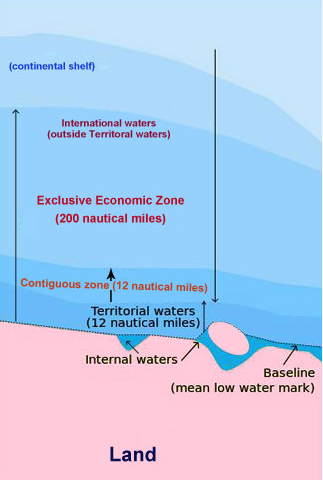
China’s spy balloon overflight of the US recently, if actually planned, was quite bold. They retort that US spy planes frequently fly along their borders. Setting up a spy base in Cuba has invaded what we have normally thought of as our back yard. What if China decides to conduct military training in the Gulf of Mexico? US territorial waters extend 12 nautical miles from shore. How should we react? The US supports Taiwan and has conducted military exercises in the waters between China and Taiwan. What would we have to stand on when we object?

Territorial and economic zone boundaries in the Gulf of Mexico. Credit: NOAA, https://www.ncei.noaa.gov/maps/gulf-data-atlas/atlas.htm?plate=Marine%20Jurisdictions

China has been cooperating with Cuba in terms of increasing trade including telecom and biotech. They are reportedly spending big money in the Port of Mariel.

China continues to aggressively spread its influence across the world while it continues to plead for “mutual trust and regional peace, stability and development.”

Plainly, China is aiming for economic and military hegemony around the world. Putin’s Ukrainian invasion blunder will take many years for Russia to recover from. What a post-Putin Russia looks like isn’t clear. Given the widespread intimidation and apathy of the population, the hope for a non-authoritarian Russia seems remote.

Meanwhile, as America dithers in its toxic pool of domestic politics and fratricide, China is moving to make the 21st century as China’s century. China must believe that we Americans are a bunch of f*ckin’ idiots. Maybe they’re right. Political conflict in the US has become too intoxicating and financially lucrative for rational governance.

Ball Sports. Pfft!

It turns out that I have no aptitude at all for ball sports or dancing. My long suffering spouse has been forced to dance without me. My natural athletic abilities are concentrated on my uncanny ability to jump out of the way or just standing back. This proclivity is rich in survival benefits. For instance, I’ve never torn a ligament sliding into first base or cracked my head on the dance floor. Nor have I ever taken an elbow to the eye in basketball. No abrasions or grass stains from flag football either.

I do rather like to watch rugby though. I admire the pre-game Māori Haka demonstration for its drama and its sincere invitation to rumble. Hockey is another one I can watch at the game. The puck is always in motion. Unlike baseball, with hockey or rugby something is always happening. Even if a rugby player is injured, they continue to play around the body. I admire that.

Baseball games are just too damned long, even with the new rules. Ninety minutes should do it. They just stretch it out for concession sales. Some folks like to guzzle $9 utility beers and gnaw on $14 slices of pizza to the sound of old timey organ music. I can go maybe once a season, but more? Nope.

Watching golf is a colossal snooze fest. I do enjoy watching chess matches though- even that is more exciting than golf. And the muted voices of the announcers as if they have to keep their voices low. Gimme a break. Golf is for idlers. It is a meaningless difficult task. I understand that golf is hard. I just don’t care. My conception of hell involves watching golf in church.

Basketball? If you can dunk the ball, the hoop is just too low. For crying out loud. Enough said.

NFL football? Good gravy. I just watch the last 5 minutes. The manufactured gladiator drama pitting millionaires against each other is just nauseating. And the guys delivering the play-by-play color in the background yammering on about failed strategy as if randomness had no part in it. With all of the rules, it is nearly a technology, not a game.

Soccer? Good grief. Need I say it?

Ok, time to come clean. It isn’t the sports so much as it is the immense crowds at these live events. I truly despise being in a crowd. In fairness, the crowd probably despises me back.

“Make America Florida” WTF??

All around universal genius and gazillionaire Elon Musk will be engaging Florida Governor Ron DeSantis in a conversation that will include DeSantis’ announcement of his bid for the US presidency. The DeSantis krewe is obviously trying to distance themselves from #45, but not so much that they can’t poach his voters. They’re embracing capitalist folk hero and boy wonder Elon Musk’s endorsement in hopes of snagging MAGA voters who have grown weary of #45.

The DeSantis campaign has dreamed up the slogan “Make America Florida.” I’m incredulous at hearing this. Outside of Florida, “Florida Man” is a common reference to someone who is maniacal, irrational, delusional or insane. This is because, extrapolating from the news, Florida has an overabundance of them. More likely, there is more reporting of police notes than other places. Is it slander? Of course! It’s American humor unlikely to amuse outside of the US.

Credit: I don’t know, somewhere in the interwebs.

What remains to be seen is whether or not “Make America Florida” will catch on outside of the state. Especially in northern states outside of the old Confederacy. Some think that there is still a north/south divide in the US by some measures. I’ll leave that for others to expound on.

Applying DeSantis’ penchant for belligerent and punitive state politics, his presidency would surely be a setback for US democracy and a step forward for autocracy along the path the GOP is heading for. The GOP model of the US is not a place I’d care to live.

Baptist Hate-Preacher

A video dropped from the sky showing Christian preacher Jason Graber of the Sure Foundation Baptist Church in Spokane advocating for the execution of the parents of transgender kids by a gunshot to the back of the head. This video is echoing all over the interwebs. It is important to realize that managers who oversee news distribution are duty bound to allow only items that attract the greatest number of eyeballs through the filter. Their job performance is judged on this basis. They curate the news minute-by-minute as it happens.

Graber is a small frog in a very large pond. He and his flock are a small group in Spokane. However, I’m sure that his homophobia and anti-trans speech rhymes with what a great many people believe. You do not have to be explicitly pro-gay or pro-transgender to see that these views are a stage-4 malignancy in our democracy.

However, there is nothing new to this kind of vile speech. This is part of hellfire and brimstone preaching that has been in America since the very beginning. Only today it is amplified and distributed broadly in the Mulligan stew of today’s electronic media. Who would have guessed that the invention of the transistor would lead to this?

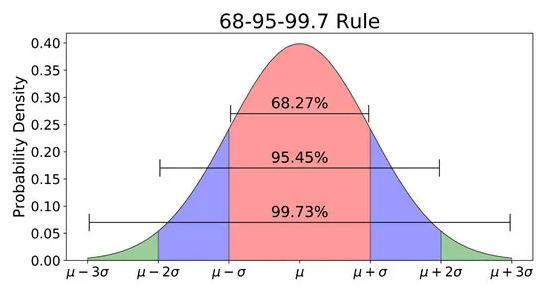
Plainly this preacher-man does not represent the views of all Christians. Population attributes are generally distributed as a normal distribution or sometimes called a bell curve with extremes on each side. Let’s say in this case that on the left extreme are those of Christ-like temperament of love and forgiveness and on the right extreme are those of hellfire and brimstone temperament. This character is obviously on the hellfire and brimstone end of the curve. In a normal distribution the population of extreme members is low and the bulk of the members are midrange. The mathematical ideal is sometimes called a Gaussian distribution after the great mathematician Karl Friedrich Gauss**.

A normal distribution curve showing population percentages vs deviations from the average (Greek letter mu). Source: Simply Psychology, https://www.simplypsychology.org/normal-distribution.html

Brother Graber is very much on the extreme end of the curve, even for a fundamentalist. But the freakshow he puts on causes much rubbernecking on the great interstate highway of life. It makes him look bigger than he really is. Media rewards extremism with large viewership. Look at #45, the Elephant Man of media. You just can’t take your eyes off him.

One weakness of members of the human distribution is that many are liable to believe that his outrageousness is a measure of the purity of his righteous devotion to God. He is devoted alright. To a bronze-age deity who plays favorites and metes out lethal justice to the infidels. Historically, this kind of deity has always held an appeal to people. It so happens that I am not one of them. Tradition can offer great comfort for many. But it can also be unneeded baggage that bogs you down in the muck of obsolete beliefs. It is the imaginary cosmology of Deities, a theory of the universe that sees angels and demons lurking behind every tree. What’s behind every tree? The backside of the tree of course.

==========

**My blog name, Gaussling, is in honor of Gauss and in no way is meant to suggest that my mathematical abilities are anywhere near his. Au contraire.

Gladwell on Power Distance

Malcom Gladwell recently wrote a short essay titled “What I Found at a Mennonite Wedding”. While I don’t hold the iron age theory of the universe that the big religions have, I have always admired groups like the Quakers who practice simplicity and humility. Gladwell relates the idea of “power distance” that he observes at the Mennonite wedding he attended.

Power distance is an anthropological concept developed by psychologist Geert Hofstede. According to Wikipedia, this refers to “inequality and unequal distributions of power between parties“. Somewhat later the term was further refined by the Global Leadership and Organizational Behavior Effectiveness (GLOBE) project. GLOBE defined power distance as “the degree to which members of an organization or society expect and agree that power should be shared unequally”.

Once you see the definition, it’s meaning seems obvious. The phenomenon appears where individuals and groups seek control over others. It relies on the natural inclination of people to go along to get along or to seek affiliation. The recent MAGA love affair with president #45 carries the distinct smell of a public willing to turn more power over to a single person- the extension of power distance. It happened with Putin, Stalin, Hitler, Mussolini, and others.

The connection to the Mennonite wedding is that the wedding party themselves served up lunch to the guests. This is a power distance shortening action meant to recognize and serve the guests as part of the community.

Some people criticize Gladwell for being just a bit shallow in his writings. He seems to write the view from 5,000 ft rather than from an alligator’s viewpoint in the swamp. There is a place for generalization … if you want readers, that is.

Notes on Depression

Oh no! Is this another gush of Too Much Information that no one really wants to hear? I guess it could be. As it happens, I’ve accumulated a lifetime of insights into depression that could be lost if I happen to suddenly fall over dead. It would be a shame to not pass it along, so here goes.

Background

It dawned on me some time ago that much of the emotional agony I experienced as a young child seems to have been early manifestations of what would be a lifetime of struggle with depression. Except for a parental divorce when I was ten, I had a normal rural pre-teen upbringing in the vast corn and soybean fields of Iowa. Summers were hot and sticky and winters were extremely cold. We had vast pastures and river banks to explore and badgers to watch out for. We detassled corn and pulled weeds by hand in the bean fields for a few weeks every summer. Field labor was not my favorite thing.

It was the 1960’s and black-and-white television was full of news about the space race and the crazy hippies and Viet Nam. Hippies were using drugs and rioting, astronauts in cool spacesuits were riding capsules into space and F-4 Phantoms were flying and sometimes crashing in Viet Nam. This was the frame of reference of the time.

I was pretty lucky as the eldest of 5 kids. Despite the divorce of my parents and all the upset that goes along with it, we had wonderful grandparents. They stepped in and provided considerable care and comfort in our lives. While this family upset was an aggravating factor in my depression, it wasn’t at the root of it. There was something more fundamental to it.

Everyone experiences dark periods in their lives that somehow expire and normal emotional being returns. I had episodes of this as well and they would subside. Growing up has its ups and downs, learnings and misunderstandings. What began to happen was that these dark periods would last for weeks and months with no obvious triggers that set it off. Those around me couldn’t understand why the darkness persisted in a kid who outwardly had nothing to be sad about.

Added to this was the fact that I had no natural athletic abilities other than dashing to get out of the way and no interest in sports. My family was in a quandary about what to do with a boy who didn’t like sports. This contributed to social isolation that, frankly, I enjoyed. Solitude was something that I craved but got only too infrequently. I still crave solitude.

Jumping ahead on the timeline

Depression is a state where you lose hope, ambition, social contact, interest, energy and sometimes even the will to live. It is a potentially deadly condition that deserves attention by medical professionals. There is talk therapy, drug therapy and probably a few other things I’m unaware of. Speaking for myself only, talk therapy helped me to get a greater understanding of the condition itself, but really not much else of lasting effect. I still got and remained depressed. I needed drugs.

I have been trying various antidepressants since the late 1970’s with unequal success. I started with imipramine at age 19 but it made me sleepy and inattentive with dry mouth so I eventually decided to quit using it. It is a tricyclic antidepressant introduced in 1957 and was prescribed by a general practice MD. Deciding to discontinue drug therapy is a common problem practiced by many depressed individuals and I did the same numerous times.

I managed to get into college and get a BA in chemistry without antidepressants. However, in grad school I went back to drug therapy with Prozac and Paxil. After some dosage adjustments I found it to be very helpful for a while. Eventually my depression overwhelmed the drug. What I eventually realized was that I was in a situation that was very stressful even without depression. My depression was aggravating my situation which was grad school which was amplifying the depression. There was a feedback loop. I needed to self-actualize. I needed a major achievement giving me more control over my life. I wanted to be a chemistry prof.

I finished grad school and went on to a 2-year postdoc. Unfortunately, my marriage failed a few months into the move to Texas and my postdoc. Suddenly I was alone in a large Texas city with no vehicle and a very low paying job. Texas being Texas, there was no decent public transportation so I spent a good deal of time walking and thinking in the miserable heat and humidity.

One day as I began my morning walk to the university lab where I worked my mood started out … normal. Halfway there my mood began to darken abruptly as though a curtain dropped blocking the light. I had nothing depressing on my mind that might have triggered it. The light of a normal mood state just extinguished.

This continued for many months. I again went to a general practitioner MD and he put me on lithium. I took this for 2 months. It did absolutely nothing other than to make me dizzy. At least I wasn’t manic depressive. I went off it and found a shrink across the city for help. He took a lot of notes over many sessions and never spoke. I talked and he listened. Eventually he said that he wanted to prescribe an MAO inhibitor. He handed me a prescription. Back at the university I did a deep dive on this class of medications to see what they were about. I concluded that, given the many risks and side effects, there was no way I’d take this. Never went back to that shrink again.

Years later, after enduring the depression over a 5 year career in teaching, I got an industry job. The company folded 10 months after I arrived so I went to work in construction to feed the family while searching for another chemistry job. I got the chemistry job and worked for about 10 years while on Prozac and other SSRI’s. But eventually the depression had become unmanageable with the meds I was taking. My family doc gave up and made some suggestions about what to do. It turned out that he had depression too and left medicine.

Eventually I found a shrink who ended up being quite good. This time there was titration involved. We spent a year or two fine tuning a mix of medications. What worked was the combination of bupropion and escitalopram. I eventually figured out that a large part of what I had thought of as “just” depression in fact had an element of uncontrolled anxiety to it. The medications I was taking did nothing for the anxiety. Bupropion has been shown to have beneficial effect on anxiety associated with depression.

But something unexpected happened. My anxiety was suppressed so deeply that I wasn’t worrying about much of anything. A person needs to have enough anxiousness to stay on top of life’s challenges. We made an adjustment in dosage and things are now fine.

Things I’ve noticed that are helpful

  • Get the right help early. Family practice docs can only go a short distance into treating depression. Mine eventually gave up and handed me a list of shrinks. It worked, but only after I was way down the timeline.
  • Well intended folks may suggest alternative medicines or greater religious devotion. I’ve never found these things persuasive or useful.
  • Sometimes talk therapy or attitude changes just do not work. Don’t feel bad if they do not work for you.
  • Exercise can be very helpful.
  • Reclusiveness is an effect of depression. I’m still not over this part.
  • Don’t pay attention to famous scientologists who talk down drugs. They’re idiots.
  • A shrink is a physician who has specialized in psychiatry. Psychiatry today is substantially about medication. These folks have a deep understanding of the pharmacology of the different meds and what constitutes reasonable expectations.
  • Depression meds may not fix basic personality issues. If you’re an asshole while you are depressed, you could still be one when you are better.
  • Finding better help may seem difficult. You have to reach out and contact people which may be undesirable. You might be unduly pessimistic about the benefits of finding a shrink. It’s like digging a tunnel into rock. You have to keep showing up and swinging the pickaxe against the wall. Eventually you’ll get through.
  • The source of your depression and anxiety may be more than just brain chemistry. Your life situation might be genuinely awful as well. Fighting depression may require that you change how you are living and who you are around. Some people are toxic and a greater distance from them may be needed.
  • A course of self-improvement can be helpful as well as a change in living arrangements.
  • Avoid suicide. It might seem like the fastest way out of the pain, but it really is a permanent solution to a temporary problem**. Also, your suicide is likely to be the main thing people will remember about you. You wouldn’t want that.
  • Depression can get worse as we age. Be aware of this.
  • The world is truly a beautiful place full of wonders to discover. Dive in. Be curious.

** The phrase “permanent solution to a temporary problem” is admittedly a bit pollyannish. This would be of no comfort to someone in a death camp or gulag. While not words of universal relevance, I must assume the Dear Reader and a great many others are not in a death camp. While not useful advice to everyone, it still applies to a large number of people.

The West Cannot Slide Into Isolationism

Along with the fact that #45 is running for president again is the sickening prospect of two more years of news coverage of his orange face spewing streams of lies, exaggerations and deflections. Broadcasters and news providers in all media can’t resist the bloviating #45 because he attracts admiring eyeballs and those enchanted by the freakish spectacle of human idiocy at its worst.

As bad as the prospect of #45 returning to the White House is the reality check that a large block of the voting public will vote for him again. After 6 years of shameful behavior and nauseating political drama, it is quite clear that most in the MAGA crowd are not put off by his behavior.

A vote for #45 the isolationist is a vote for instability in Europe. Czar Putin will see to it that recovery of former Soviet states will happen. The US cannot be isolationist as Russia executes its land grab. At this period in history, western isolationism by passive acceptance of Russian expansionism is a one-way ticket to Russian authoritarian hegemony. This is an end state that we in the west should be able to agree on.

The world has learned that Russia’s conventional land forces are not so formidable. This is the unexpected downside of the invasion for Putin. However, Russia has always considered that the use of nuclear weapons is part of a continuum rather that preceded by a firebreak as with the west. The Russian talking heads have been keen to remind us of the power of their nuclear triad. Little mention is made of the US nuclear triad that more than matches it. The presence of nuclear sea launched ballistic missile submarines on both sides alone renders a nuclear conflict as suicide for both sides.

Americans should go to YouTube and find translated video of Russian talking heads spewing the most vile hate speech you can imagine at the Ukrainians and western powers. Polish public television TVP is a good place to start. Many Russian talking heads are speaking in favor of an all out war with the west, including nuclear weapons. Many claim that WWIII has already begun. We have been reduced to non-human beasts deserving of painful death for daring to push back Russian efforts to expand their great empire. Some figures claim that the west is after their oil & gas resources.

The reason I suggest viewing this content is to understand the constant high intensity of their internal propaganda. While there is some open criticism of the military, criticism of Putin himself is religiously avoided. Many say that Putin is surrounded by incompetent people. This is the information environment that the Russian people are subject to on a daily basis. It is difficult to believe that Russian citizens will rise up to overthrow the Putin regime through some kind of a democratic effort. More likely someone around Putin will take over with his blessing.

Russian propaganda is not some side specialty that issues from an office somewhere in Moscow. It is built into the whole governing apparatus and supervised by the GRU. Russia is very effective at not only generating fake news, but also mass confusion about what is happening. A Russian propaganda campaign is actually a layer cake of misdirection through a series of changing stories. People become confused about what is happening and are likely to lose focus.

Here is an interesting link to propaganda.

Cheese Happens

Dislaimer: I am not a food science guy and I have no formal training in dairy science. However, I worked in a dairy processing plant as a lab tech for three years and picked up a few things. This is my perspective from the manufacturing side.

Having worked in a dairy processing plant, I learned that there is no mystery to how cheese was invented/discovered. Just let milk sit unrefrigerated for a few days and it will clabber up. Stray bacteria, yeasts and mold spores are in the air and breath everywhere and many, if not most, are capable of feeding on the milk. In doing so, acids may be produced which will denature and unravel the proteins and bring them out of solution as a solid. Many microorganisms can ferment milk, but that is not to say that the cheese will be desirable or even edible. Before refrigeration, cheese was inevitable. Even with refrigeration cheese will happen, only a bit slower. Be one with the cheese.

As an undergraduate, lo these many years ago, I spent a few years working in the QC lab of a diary processing plant. My job was to perform certain analytical and microbial quality control procedures on the many products the plant manufactured. We produced fluid milk, cottage cheese, sour cream, whipping cream, half-and-half, single serving dairy creamers, a flavored shake product, orange juice, and flavored novelty beverages for kids. We packaged under our brand as well as for other brands.

People are very particular about their milk. Chunky milk sets off alarm bells for most of us. Many people dump their milk at the expiration date. Unless the milk has been allowed to warm up to room temperature or it has been contaminated, it should be good for another week. The expiration date is when the producer’s guarantee of freshness expires, not when it will go bad. Encountering pathogens in milk is comparatively rare these days.

The input of milk to the plant was in the form of raw milk straight from the farms by way of shiny stainless steel tanker trucks. We would receive 2-3 6000 gallon tankers per day. If we rejected a tanker, there always seemed to be another plant nearby that would take it. Rejections, which were few, were usually due to off-flavors picked up from the farm or it was high in coliforms.

Before the milk was unloaded it had to be tested. First, the receiving operator would insert an agitator into the tanker manway and stir the raw milk to mix the cream back into the milk. He would then use a stainless steel dipper and pull out a sample for the first tests. The temperature of the tank load would be taken, then the sample would be thermostatted to a specified temperature. At this point he would take a mouth full and approve it for taste and odor. This is called an organoleptic, or taste, test. He claimed to be able to detect the odor or taste of the cow (cowy), the barn (barny), grass (grassy), and certain weeds (weedy) in the cows diet. I have never been an enthusiastic milk drinker and having an aversion to tasting raw milk, I never took the opportunity to verify these flavors.

A twirl pack. Image from the interwebs.

He would then place a sample in a twirl pack, label it and send it to the lab for approval. There were several tests it had to pass before approval could be made. The % solids had to be above a particular value. To do this test, we would pipette a specified volume of raw milk onto an absorbent fiberglass pad and cover it with another. Then into the microwave it goes. The microwave had a built-in electronic balance so it would readout the % solids directly after drying. This is done to detect shipments that had been diluted with water. Milk was bought and sold by the pound or hundred weight and it was not unknown for farmers in the past to “extend” the weight of their milk production with water.

The pH of the milk was taken as a cross check to be sure that fermentation wasn’t underway. When milk ferments, it gradually becomes more acidic and will keep going until the acid inhibits further growth. In days past it was not unknown for farmers to neutralize fermenting milk with NaOH or some other base. While this could put the pH back where it should be, it would affect the % solids and the flavor. It was a trick of last resort.

The raw milk sample was also tested for beta-lactam antibiotics by two methods before approving the tanker. Cows were prone to getting mastitis from an aggressive milking schedule. Excessive dosing of dairy cattle with antibiotics to get them back into production could lead to antibiotics showing up in the milk. The state regulators watched this closely.

We used a standard disk assay method looking for inhibition in the growth of bacillus stearothermophilus spores suspended in agar growth media (it has been renamed Geobacillus). A small disk of filter paper wetted with a milk sample was placed on a petri dish of B. stearothermophilus spores in agar was warmed for 3-4 hours at 50 to 60 C. A positive result would appear as an inhibition ring around the disk indicating suppressed microbial growth. This was always compared with a disk spiked with a standard. A positive result would be recorded if the inhibition ring around the sample was larger than the ring around the standard. This test took a bit of time so it was used mainly as a cross check for the “Charm” test.

A faster test for beta-lactam antibiotics was the Charm test. This test used a radiolabeled reagent that would indicate the presence of beta-lactam antibiotics in a test sample. The sample was placed on a planchet which was heated to dryness and then put in a radiation counter for a set period of time. The turnaround time was ~15-20 minutes. This allowed for faster approval. From a Google search, it doesn’t appear that this version of a Charm test is now in service. It appears that a test strip can be used instead.

In the dairy business the fat content of milk is very important. It is a milk component that can be isolated and used to produce high margin products like ice cream, novelties, whipping cream, coffee cream and half-and-half. Every day there is a milk fat budget that you must work within. Regular drinking milk, sometimes called fluid milk, is graded into fat content categories. There is 0.5 %, 1 %, 2 %, and what we referred to as “homo”, referring to homogenized, regular 4 %. All of the fluid milk is homogenized.

Babcock bottles for volumetric dairy fat analysis. Weber Scientific, https://www.weberscientific.com/babcock-test-bottles-weber

Once the raw milk is approved, it must be altered in a few ways to make it shelf stable and presentable. The more equipment milk passes through, the more chance there is to give it an off-flavor. It is homogenized to produce a uniform, stable dispersion. This prevents the milk from separating on storage to form a cream layer on top. Many people like having the cream separate from the milk, however.

Early in the processing is the centrifugation step. Our plant had a centrifuge (“separator”) that would separate any solids present in the raw milk The centrifuge consisted of a stack of spinning conical plates that separated the cream as well as any solids present. The solids included cow hair, cellular matter, and dirt- stuff that you don’t want to dwell on. The fat content of milk skimmed in this way could be precisely controlled and operated on a continuous basis.

Graphic from: https://books.lib.uoguelph.ca/dairyscienceandtechnologyebook/chapter/clarification-and-cream-separation/

From the manufacturing point of view, processing and packaging an inhomogeneous mixture is a quality control problem. First, a continuous flow process works better if the composition of the material is uniform. Making sure that every customer gets their fair share of quality, creamy milk is important for making happy customers. Second, if the fluid milk composition is variable over time, it is hard to guarantee that you will recover enough of the valuable cream you want to divert for other products yet produce consistent fluid milk. In milk processing, consistency is everything.

Homogenization of milk can be done in a couple of ways, but they all share the process of shearing a 2-phase liquid. A jet of milk can be aimed at a stationary plate. The shear in the fluid at impact can break up the fat globules into a smaller size to give a stable suspension. The more popular method is to apply shear by forcing the milk through very small openings at high pressure. Shearing a liquid is a stretching action on a parcel of the fat leading to dispersal of the fat globules into smaller droplets and better dispersion.

A single stage homogenizer. Image from- https://www.frontiersin.org/articles/10.3389/fsufs.2020.593259/full

At some point milk producers discovered that there was a market for low fat milk. Producers were happy to expand into this market because it would bring diet-conscious customers back into consuming fluid milk. Milk was commoditized long ago so there are many competitors out there grasping for your dairy dollars. For producers, low fat milk is an opportunity to direct excess dairy fat into more profitable products while keeping the volume in fluid milk sales up. A steady flow of commodity product is always a good thing for a business.

In production, milk fat content is something that has to be carefully managed. X pounds of dairy fat come into the plant every day and X (minus losses) pounds go out as product. You want to produce as much high margin, high-fat product as possible but you must also stay competitive in the fluid milk business. Commodity fluid milk keeps stable cash flow and your valuable shelf space in the supermarkets.

When the tankers come in at 4:00 am you want to get a fat content for the accountants and the plant managers. We paid for raw milk on the basis of fat content and weight. The standard fat test method we used was a volumetric test called the Gerber method. We would combine a standard volume of milk with butanol and fairly concentrated sulfuric acid in a Babcock bottle and heat it. We would then spin it in a centrifuge to separate the fat layer from the acidic layer. The fat would rise into the calibrated neck of the flask where we would directly read off the value using a caliper. The butanol helped to clarify the fat layer.

On occasion the plant’s fat budget would get misaligned and milk fat (cream) would have to be tanked in from elsewhere.

The plant produced about 1 million small dairy creamer cups per month that are for a single portion of coffee. The creamer fat % was determined for the batch, not individually. Samples were, however, individually tested for bacteria and taste and taken every 15 minutes.

We produced sour cream using active cultures for fermentation. We packaged sour cream as well as several flavors of potato chip dip. Chip dip is just sour cream flavored with solid spices. It is interesting to note that active bacterial cultures can become infected and die from a virus called a bacteriophage or just “phage“. Having a phage rampaging through your fermentation and packaging operation is a serious problem. You must shut everything down, maybe dispose of your raw materials and the latest product lots, and then hit everything with bleach and scrubbing and then restart with close attention.

We produced whipping cream and half-and-half. The whipping cream was produced as a heavy whip with about 36 % fat. Half-and-half was around 12 % fat. These two products were sold as sterile products meaning that they were, unlike fluid milk, completely free of bacteria. More on that in a bit.

Pasteurization of milk was an important improvement that dramatically improved the shelf-life of dairy products as well as reducing the incidence of milk-borne infection. In times past, milk-born illness was a serious problem. Today it is only greatly attenuated, not eliminated. Milk is an excellent growth medium for microorganisms like bacteria, yeasts and molds. There is water, fats, proteins and sugars. The udders of a cow are low to the ground and back where the manure comes from. Contamination of the udders is a given. Good sanitation from the udders to the consumer must be in place at all times.

Back then, the word was that it took about 2000 bacteria per milliliter to cause an off-flavor. However I cannot verify this.

The trick to milk processing is to avoid contaminating it during manufacture and packaging. Bacteria, yeasts and mold spores are in the air and everywhere else. We assayed for general microbial contamination and specifically for E. coli. The general assay was for the general hygiene of the plant and raw milk. The E. coli testing was used to gauge the microbial contamination from the operators. Humans harbor coliforms naturally in the gut. We live with them in harmony. They crowd out pathogenic bacteria for us and in turn we feed them. However, if our personal hygiene habits are poor, coliforms will show up in the product. The hands are the usual source of contamination. It must be understood that not all coliforms are pathogenic. Occasionally a pathogenic strain shows up and spreads around, making people very sick or worse. Unfortunately, these bad strains are only discovered after people start getting sick. So, as a kind of canary in the coal mine, coliform tests are used to measure the processing hygiene of the process.

The state health department was always very interested in coliform contamination. They would collect dairy products from the supermarket and test them for coliforms. A bad result would immediately cause the heat to be turned up on the plant managers. It was infrequent but taken very seriously. It usually pertained to cottage cheese. Cutting and collecting the curds was a manual operation, though the operators always wore gloves. The health department could embargo a plant’s output from the market for repeat offenses.

In common use is the HTST, High Temperature Short Time, method of pasteurization. HTST involves a short contact time of fluid milk with a moderately “high” temperature surface. This was done in a “press” which was a horizontal stack of alternating plates through which a heat transfer liquid and fluid milk would pass. The plates were compressed with a screw device holding them together under pressure- a press.

Be sure to understand that pasteurization does not equal sterilization. There is pasteurization and there is ultra-pasteurization. The first is an attenuation of the microbial load. The second refers to sterilization from ultra-high temperature, UHT, processing. In the case of American fluid milk, the kind that requires refrigeration, it is attenuated only. It is not sterile. This milk is usually good for 1 week past the expiration date if it has been constantly refrigerated. If it has been warmed to room temperature, then it is good for about 1 day, give or take. When a bacteria culture grows, the population rises slowly for a short time and then ramps into what is called the log phase (logarithmic growth). The population of bacteria grows via binary fission which is exponential growth. This situation leads to spoilage.

Milk and other dairy products that do not require refrigeration have been ultra-pasteurized by UHT. This is a bit delicate because too much contact time could lead to caramelization of the milk. These products should be sterile and an unopened container should have a long shelf-life at room temperature. Once the container is open and exposed to anything external it is subject to microbial growth.

The automated packaging equipment would spray in a small shot of concentrated hydrogen peroxide (~35 %) into the empty packages in an effort to cut down on microbial contamination just prior to the filling stage. Hydrogen peroxide is unstable in milk and decomposes quickly. Unfortunately, some bacteria have catalase which rapidly decomposes hydrogen peroxide into oxygen and water, thereby making them resistant to the sanitizing effect of the peroxide. Some bacteria, like Pseudomonas aeruginosa, are resistant to hydrogen peroxide.

On one occasion we encountered agar plates from a fluid milk sample that became green after the normal incubation. We had never seen this before. I opened a dish and took a whiff. It was fruity smelling. Since I had taken microbiology as an elective as an undergrad (chem major) I was aware that Pseudomonas aeruginosa was famous for its fruity smell, but cultures of it were blue. I performed a catalase test by pouring some hydrogen peroxide on the plate and the peroxide immediately began to fizz- positive result. This was consistent with P. aeruginosa. But why was the plate green? Well, when you have a bacterium that produces blue colonies in a yellow agar medium, you get green. Presto, we identified it. We dumped the lot and cleaned the equipment and never saw it again.

Our ultra-pasteurized products were sampled by taking packaged milk off the packaging line every 20 minutes and putting it into a 90 F hotbox for 48 hours. After the time was up we opened each container and put a sterilized loop into it and inoculated an agar plate. Then the containers were each tasted by the lab tech (me) for any off flavors. Most samples passed both the microbial and the taste testing. Usually there were several in the 4 or 5 milk crates that were bad. I’ve never been a big fan of milk when even it is cold, so this warm milk at the end of its shelf life was no picnic. We would open a carton, take a swig and hold it long enough to pick up the taste, then spit it into the sink, holding back the gag reflex all the while. We tended to do this rapidly to get it over with, but in doing so we would occasionally get a mouthful of sour milk with chunks or just whey. Both would be carbonated and tangy from fermentation and sometimes show stormy fermentation. It was gross and disgusting. Heavy whip that was clean would sometimes be surreptitiously churned into butter by a certain lab tech who was eventually caught and fired. He was handing it out to folks in his church. Management said it was a case of a dairy product of unknown quality leaving the plant. Yeah, Ok.

Hi temperature short time pasteurization. Source- https://newprairiepress.org/cgi/viewcontent.cgi?article=3212&context=kaesrr

UHT fluid milk stored at room temperature is popular in Europe and a few other countries but not so much in the US. I guess we’re just squeamish about milk here. I know I am.

Our plant also produced cottage cheese. No big mystery here. We filled a rectangular vat with warmed skim milk and added a mixture of weak acids to it. I recall that the curdling acids was a mix of phosphoric and lactic acids. This method was known as “direct set.” After a short time the milk curdled with the white curd floating as a solid mass in the yellowish whey. The operators would use a multibladed knife the cut the curds into cube shaped chunks. Then the whey was discarded into the sanitary sewer and the curds were washed and loaded into a machine for packaging. Most cottage cheese was blended with a salted cream to give it a creamy texture. Some of the curds were packaged as “dry curds”.

For a long time the plant would send the whey from the cottage cheese process down the sanitary sewer. Then one day we were given a very large sewer bill. It had jumped from $2,000 to about $26,000 per month. You could hear a clattering noise from all of the bricks the accountants were shi**ing. The giant invoice was for all of the biological oxygen demand (BOD) that our whey was actually consuming at the sewage treatment plant. The folks at the treatment plant had been noticing that the BOD of the sewage going into the plant had been swinging around but couldn’t figure it out. Then one day they noticed that the problem popped up when they saw cheese curds floating in with the waste. They connected the curds and presented us with a hefty bill for the plant capacity we were consuming by dumping whey down the drain. Soon thereafter we sold the whey to hog farmers. Whey has a few percent of protein content. The farmers were happy but we never heard what the pigs thought.

Finally, we had a juice packaging operation. We produced orange juice and a small portioned flavored beverage that went by some childish name. We bought orange juice concentrate in 55 gallon drums and would just dump it into a mixing vat and dilute it to spec. Easy peasy. It would then go to packaging in the isolated juice room. Same with the other beverage. I think we had more contamination issues with the juice than anything else. The juice was especially prone to going off from yeasts and molds. There was usually gas generated that would bulge the containers. This became a serious shelf-life issue when it happened. Instead of bleach they cleaned the juice room with quaternary ammonium based cleaning agents (“quats”). I think we mistakenly thought that the contamination came from us. It could have been spores riding along with the concentrate. We never tested for that.

We had a large, chilled warehouse held at 38 F for storing product. We also had a cold box at -40 F for warehousing ice cream from another plant. The plant was also a distribution center. The chiller plant used ammonia. When it needed maintenance, it was critical to get a reefer guy who would work on ammonia systems. Not everyone will do this.

I learned a bunch and grew from doing this work. I don’t think I’ll go back though.