Category Archives: Energy

Fear and Loathing with Frac Fluids

There is considerable handwringing over hydraulic fracturing fluids and their potential effects on “the environment”. I use quotes in ironic fashion because I see very little parsing of the issue into relevant components. The chemical insult to the environment is highly dependent on both the substances and the extent of dispersion. But I state the obvious.

There are surface effects at the drill site and there are subsurface effects. A spill on the surface is going to be relatively small due to the limited size of the available tankage on site. I drive by these sites almost daily and can see with my own eyes the scale of the project. A surface spill of materials will be limited in scope.

The subsurface effects are complex, however, and the magnitude of consequences will depend on both the extent of the fluid penetration into aquifers and the nature of the materials in the fluid. Much criticism has been dealt, rightfully I think, over the secrecy claims on the composition of these fluids. The default reply from drillers has rested on trade secrecy. To be sure, the matter of government forcing a company to reveal its art is a serious matter. But the distribution of chemical substances into the environment requires some oversight. Especially when substances are injected into locations where they cannt be readily remediated. The remediation of an aquifer is a serious undertaking which may or may not be effective.

If you want to see what is potentially in frac fluids, go to Google Patents and search “hydraulic fracturing fluid”. A great many patents will be found. This will give the length and breadth of the compositions patented. Of this large list only a few are used in current practice. The potential carrier fluids vary from water to LPG (!). Water is a common component, but brine is said to be preferred. Additives include hydrochloric acid and surfactants. The MSDS documents may be a good source of info. Consider that a substantial threat to ground water may be that it is rendered non-potable rather than outright  toxic.
Why be so hasty to drill and consume?

Gas and oil in the ground is like money in the bank. We know where much of it is and it will only appreciate in value over time. Why are we so hasty to suck it out of the ground and burn it?  Is it because we think we need it now? Extra supply will indeed drive global motor fuel prices down for a time.

A side effect of supporting continued cheap petroleum is that ever more infrastructure will be constructed that is dependent on cheap hydrocarbon energy and less infrastructure constructed for other forms of energy. Inevitably, supply will become scarce and a society constructed on a foundation of cheap petroleum energy will collapse.

This perilous proposition seems pretty simple in concept. What history shows is that a small number of highly dedicated people can swing the mood of a larger population. Many revolutions begin with a dedicated core who exploit some dissatisfaction to effect a desired change.

Right now we see a GOP that is driven by a minority of religious zealots wrapped in the flag and bent on an orgy of fratricide. What drives the Democrats is a mystery to me. They are a herd of cats.

Americans need to find meaning and a place in the world that does not involve urban warfare. We need to throttle back military spending and direct resources towards a sustainable market economy unified by peaceful common purpose. We are at a place in history where the Enlightenment is at risk of ending.

Respecting liquid hydrocarbons as a natural wonder

I just had a conversation with a colleague who is somewhat mainstream in his/her thinking. The question came up as to why can’t we be energy independent.  What is taking so long with the electric cars and natural gas powered … everything? When can we break away from middle eastern petroleum?

In the public sphere, all I hear are the questioners seeking reassurance that there are energy forms out there that will allow us to maintain our current level of consumption. They rarely put it exactly that way, but that is the heart of the issue.

I think multiple generations of people have failed to appreciate the natural wonder of liquid hydrocarbons. The C7-C10 fractions of petroleum, whether directly from the ground or from a cat cracker or reformer, are the motive basis for most of our ground transportation. These liquid hydrocarbons are of a reasonably low vapor pressure and high enough boiling point to allow their use in everything from go-carts and lawn mowers to automobiles and caterpillars.  Teenagers and grandmothers can pump hydrocarbons into an inexpensive and simple tank for use at ambient pressure and temperature. This liquid has a melting point low enough to make it flowable under nearly all earthly conditions.

The high energy density and the liquid state of gasoline is what makes it nearly perfect for propulsion. The energy density of gasoline is 34.8 mega-Joules per liter (MJ/L), as opposed to 21.2 MJ/L for ethanol.

Yeah, gasoline is cheaper per liter than the bottled water inside the convenience store. That perversion is just a temporary historical aberration. This will change.

Cosmically, hydrocarbons in the C7-C10 range suitable for automotive use are quite scarce in the local stellar neighborhood.  Some small hydrocarbon molecules like methane have been spotted in the gas giant planets and on Titan. But for the most part, the only supply of hydrocarbons we have are found in porous deposits below the surface of the only place we can get to- Earth.

We should appreciate our hydrocarbon resources for the true natural wonder that it is and be a bit more reluctant to squander it.  I doubt we’ll ever find a source of energy that is as cheap and convenient to use with such a high energy density.  Battery technology may get close, but innovation there is a highly specialized art that is beyond the scope of most shade tree mechanics. Common lead acid batteries require material and energy inputs, like everything else, and have somewhat low energy density and a high weight penalty.

Lithium batteries, with their higher energy density require a variety of manufactured and relatively exotic substances. And, they require lithium which is fairly scarce, both cosmically and on earth. We really should be recycling lithium scrap.  Seriously, we need to have great respect and appreciation for lithium as well. There really isn’t enough lithium to support everyone’s high energy density lifestyle.

Devon Energy Sells Stakes to SINOPEC in Shale Gas Plays

Devon Energy has raised $900 million in cash from Sinopec Group for a stake in Devon shale gas plays. These gas projects include the Utica, Niobrara, and Tuscaloosa formations. 

What is interesting is not so much that China has bought its way into the extraction of a resource that the USA has in some abundance. What is more troubling is that China has bought its way up the learning curve in horizontal drilling and fracturing. 

According to the article in Bloomburg Businessweek-

China National Petroleum Corp., Sinopec Group and Cnooc Ltd. are seeking to gain technology through partnerships in order to develop China’s shale reserves, estimated to be larger than those in the U.S.

“In these joint ventures, the partner does typically get some education on drilling,” Scott Hanold, a Minneapolis-based analyst for RBC Capital Markets, said today in an interview.

So, the business wizards at Devon in OKC have arranged to sell their drilling magic to the Sinopec for a short term gain on drilling activity. Way to go folks. Gas in the ground is money in the bank. These geniuses have arranged to suck non-renewable energy out of the ground as fast as possible.  Once again US technology (IP, which is national treasure) is piped across the Pacific to people who will eventually use it to beat us in the market.  Score another triumph for our business leaders!!

The market is like a stomach. It has no brain. It only knows that it wants MORE.    Th’ Gaussling.

 It’s a banner day for American Business.

In praise of polyolefins

Being a person nestled in the dark and humid recesses of industry, I find myself boggling at certain things out in the bright and sunny world.  Truly, it boggles my mind how little appreciation people have for polyolefin resins. That is to say, polyethylene, polypropylene and all the myriad copolymers and formulations found thereto.  Ok, let’s throw PVC and polystyrene in the mix as well.

Why do I boggle at this? What makes my head spin in puzzlement? I’m so glad someone asked.  Polyolefin films look innocent enough to be ignored. In their uncompounded state they are clear and colorless or they may be white.  Polyolefin films and extruded components are ubiquitous in packaging and thus are not normally an object of desire. They serve the object of desire. They occupy a lesser state interest in nearly all contexts.   They are made inexpensively enough to be torn asunder from the desired object and tossed wantonly to the side for later clean up.

But if the uneducated user of polyolefins only knew the extent to which modern science and engineering had been carefully applied to the lowly stretch wrap or the roll of 1 mil PE film. If they only knew the scientists and engineers who carefully devised the ethylene crackers to produce high purity ethylene, or if they knew the highly educated people who devise the polymerization process, they might have heard an account of the long march to produce water white films with properties matched to the end use.

Puncture resistance, elongation, fish-eyes, haze, modulus, crystallinity, glass transition temperatures, melt points, low volatiles, melt viscosity and strength- all attributes carefully tended to so that the film appears invisible to the consumer. High gloss, low haze films to make the product look even better.  Low volatiles and residues for food contact use.  Polyolefins engineered for specific densities for the global market.

All of the attributes above to attend to with a continuous polymerization loop that spews 50,000 to 80,000 lbs per hour of pellets into silos and rail cars. Pellets that will eventually go to converters who will blow films and extrude widgets all day long.  All so the consumer product can arrive at its destination wrapped unscuffed and free of dust.

Polyolefin materials are incredibly useful and amazing in their own right. We should have more appreciation for these materials and how they serve our needs.

Does Corexit really correct it?

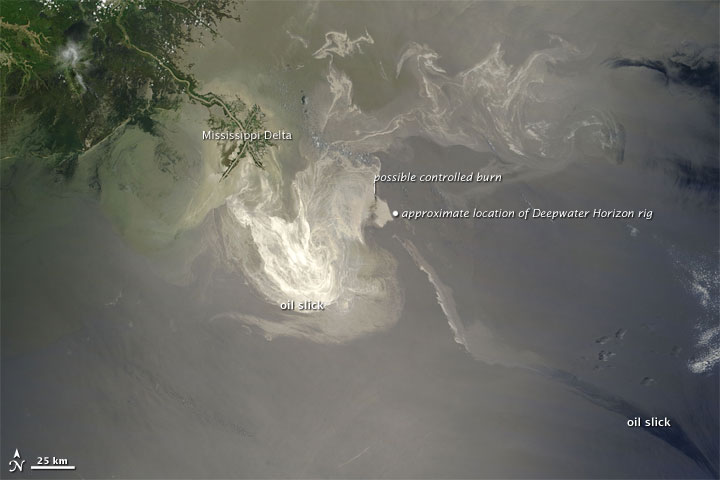
According to news sources, BP is allegedly using a dispersant called Corexit EC9527A.  According to the EPA this formulation contains water, propylene glycol, and 2-butoxyethanol, as well as an unspecified confidential additive.

I guess the question is, what purpose does this treatment serve? By dispersing the petroleum, I assume that the effect is to spread a given mass of petroleum into a larger volume of sea water by virtue of producing dispersed globules of oil-phase material. Does the increased surface area result in off-gassing of volatiles and subsequent submergence of the now denser oil phase? Or, will the dispersed petroleum simply drift into larger patches of oily water? If it enables an increased dispersion so that the currents can chaotically distribute the petroleum to a greater range of shorelines, is this treatment of any real benefit? Perhaps it is better in the long run to have a heavier coating on fewer beaches? Less acreage to scrape.

EPA is making noise about BP’s choice of Corexit. Seems to me that butyl cellosolve has been in the market for quite some time. There should be some information on its fate in the watershed. Judging from the map, the oil spill is near the dead zone around the mouth of the Mississippi River. So, until somebody gets some survey data, it’ll be hard to estimate the magnitude of the environmental insult of this event to the open ocean.

I do not understand what government officials were trying to do by saying that they might take over control of this spill. What is the government going to do to a petroleum discharge a mile below the surface? Call the Navy? Or Boots & Coots? As good as these guys may be, they’re land lubbers. 

Let the folks at BP finish the job.

NASA Earth Observatory Photo, May 24, 2010.

Drill baby dr … what was the question?

I keep seeing video footage of citizens who have been asked to comment on the recent plan to open up offshore oil exploration. President Obama and his crew have read the tea leaves and have concluded that, in addition to advancing alternative fuel technologies and markets, it would be useful to open up offshore drilling, at least a bit. Invariably the people who appear on air seem to concur that we need to find and tap the petroleum resources under the sea floor.

Rarely one hears an interviewee who will openly say that we should reduce petroleum consumption, or at the very least, its growth rate.

Here is my question. Why are we so anxious to tap all of our resources as soon as possible?  Isn’t oil in the ground a little like money in the bank? Oh, I forgot. We are not a savings culture.

Obviously, the new exploration emphasis is to support a decent growth rate in consumption. A high throughput of fossil carbon and energy is needed to sustain the profitability of certain large public corporations.

As I see it, the problem with public corporations is that they are run on behalf of what are essentially absentee landlords. The stockholders demand a good return on their investment or they’ll bail. Can’t blame someone for that. So, management runs the corporation in a way that affords maximum profit rather than maximum sustainability. As a result, in the same manner as absentee landlords, management drifts into the mindset that they can justifiably milk the resource to depletion for fast cash. If cash is king, fast cash is divine.

The market is very much like a stomach. It cannot plan. It only knows that its hungry or not hungry. It seems to me that an organ with a bit more wiring should be in charge of energy resources.

Self-Regulating Nuclear Power Reactor

Hyperion Power Generation (HPG) company has announced the commercial development of their Hyperion Power Module.  While there are numerous reports on the internet, it is more useful for curious and tech savvy folk to read the patent application (US 20040062340) for a detailed description of the device. While the idea has been knocking around for 50 years, it took the inventor, Dr. Otis G. Peterson, to work out the control issues for a safe, self regulating system.

The reactor uses the hydride of a fissile actinide like U-235 (as UH3 powder) at ~5% enrichment in U-238 to serve as a self-moderating nuclear pile. The marvels of chemistry, namely chemical equilibrium, play a large role here because the hydrogen content (as hydride) varies as a function of temperature. An increase in temperature of the UH3 leads to loss of hydrogen from the U to another hydrogen storing metal. Loss of hydrogen moderator leads to loss of reactivity and a downturn in heat generation. But the downturn in heat generation favors the return of hydrogen (as H2) to the uranium to make hydride. This causes the reactivity of the system to increase, so the rate of fission and heat generation rises as a result.

The system eventually reaches a steady state temperature where the rates of hydrogen gain and loss from uranium become equal and the rate of heat evolution reaches a steady output.

According to Table 1 of the appln, at 5 MW thermal the U-235 critical mass is 30 kg and at 50 MW thermal it is 215 kg. The table also discloses that at a loading of 30 kg U-235 the energy content is 78 MW years and at a loading of 215 kg U-235 the energy content is 540 MW years.

Of course, this is a patent and not a peer reviewed publication. But it was developed at Los Alamos so one would suppose it should have some credibility. The patent suggests that the reactor would be buried underground while in service. It is unclear if that is for shielding or security, or both.

X-Ray Emission from Office Supplies

The recent (re-)discovery of x-ray emission from unwinding scotch tape under vacuum makes me wonder how this phenomenon might be used. It would be interesting to see the emission spectrum. No doubt the physics boys at UCLA are pumpin’ out patents like pellets out of the back end of a rabbit.

The researchers report that duct tape does not provide the same effect as 3M Scotch tape. From the International Herald Tribune

The tape phenomenon could also lead to simple medical devices using bursts of electrons to destroy tumors. The scientists are looking to patent their ideas.

And finally, there’s the possibility of nuclear fusion. If the energy from the breaking adhesive could be directed away from the electrons to heavy hydrogen ions implanted in modified tape, the ions would accelerate fast enough so that when they collided, they could fuse together and give off energy — the same process that lights the sun.

Good God. We’re extrapolating this finding into solutions for the energy crisis and cancer already!

The UCLA folks say that the Russians reported x-ray emission from tape in 1953, but nobody believed them. Could be a novelty-buster.  Hmmm. I wonder if my Post-It notes will emit x-rays in vacuo too?

I’ll wager that at this very moment, a group of industrious Poindexters at two or three national weapons labs are trying to weaponize triboelectric x-rays. Project BIG STICKY.

Here is a “Novelty Buster” for the public domain– What would high Z additives in the tape composition do to the x-ray output? Seems to me that the heaviest atom naturally in Scotch tape would be silicon in the release backing layer. What if they grafted some heavy metal bearing monomers (metal chelates with a vinyl or other monomer moiety) into the composition somewhere? Would that affect the output spectrum?

Hanford B Reactor Designated a National Landmark

August 25, 2008.  The Department of the Interior along with the Department of Energy has announced that the Hanford B Reactor has been designated as a National Historic Landmark.

A pdf download details the history of area 100-B.  In this document there is a figure that shows how new fuel elements were pushed in one side and how the spent elements came out the other side into a water basin with the aid of the local (and free) gravitational field.

This seems very clever. I fear that a modern solution would involve 10 years of studies and would result in a half billion dollar high tech solution. Contractors would lock on to the DOE tit and hang there for decades with service contracts and spec’d in consumables.

 Hanford Refueling Process