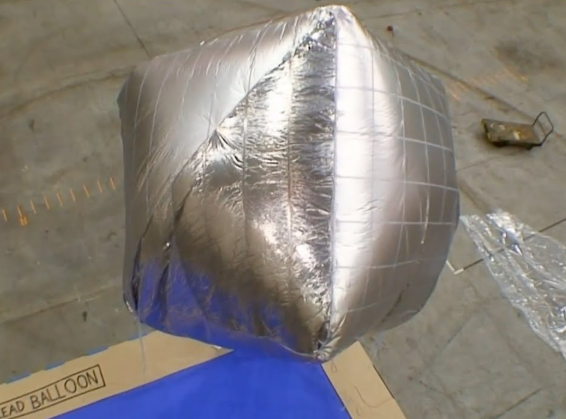
RFK, Jr., and his overlord, the Orange Jesus, have announced a possible link between acetaminophen and ADHD and autism. When they announced it, the trade name Tylenol was used. We can be certain that it went over like a lead balloon in the acetaminophen manufacturer’s world. But, first things first: Myth Busters were able to get a balloon made of lead sheets to actually float.
Lead balloon from Myth Busters episode. Source: Adam Sandler, YouTube.
It was announced that the FDA will be adding language to acetaminophen packaging warning. of the risk of ADHD and autism. To be sure, acetaminophen is capable of causing injury to the liver when an overdose is taken. Snakes in particular are very sensitive to acetaminophen poisoning. The island of Guam embarked on a program to rid the island of the invasive brown tree snake. A total of 2000 mice laced with acetaminophen were air-dropped over Guam in 2013 in an attempt to knock down the population on the island. The linked article did not mention the success rate. In addition to hepatotoxicity, apparently acetaminophen also converts hemoglobin to methemoglobin in just a few hours. Scientific details were behind a paywall which I generously leave to the reader to scale.
Our hospitals and medical staff prescribe acetaminophen because it does not interfere with blood clotting like the NSAIDS do. The makers of acetaminophen would like us to believe that their product is a superior pain reliever or anti-inflammatory to aspirin or ibuprofen. Decide for yourself.
How long will Kennedy continue to make faulty assertions, generally? As long as King Louie continues to keep him in the cabinet.
What is the deal with Russia? Why do the Russian people tolerate the lack of basic freedoms we in the West are accustomed to? Dissatisfaction with their government has been there since the beginning. Hundreds of millions have been deprived of liberty and prosperity following Russian revolution.
The history of early 20th century reveals the Bolshevik Revolution in Russia and the formation of the Union of Soviet Socialist Republic (USSR). Later, after much blood and treasure was spilled after the revolution and then through the cold war, the Soviet Union collapsed after a brief attempt at openness. Many around the world saw the collapse as a positive thing and a sign of better times ahead, especially for the people of the former USSR. There was hope in the West for a transition to some variety of Russian-tinted democracy and for freedoms heretofore absent for the average citizens of the former USSR.
To Russians in power, the very idea of a democratic republic is alien and inconceivable. There is a baseline level of distrust and fear of the infectiousness of the democratic spirit among Russian/Soviet leadership. Even the population has been convinced that the moral collapse of the West would spread to their homeland without an iron-fisted leader.
For a part of the world that has been strangling under autocratic rule and economic stratification since before the time of the Tsars, there has not been a historical Russian-style power sharing agreement between the monarchy and the nobility or the serfs from which to build upon. After generations of polarization by Soviet propaganda focused on Western hegemony and the moral turpitude of the West, there was no likelihood of building upon a Western style democratic model. The Russian propaganda engine continues to this day as strong as ever but with the help of the internet, artificial intelligence and widespread political indifference or gullibility.
The decade of the 1990’s following the collapse of the former USSR was a time of redistribution of wealth for a lucky few. Large Soviet industrial sectors were absorbed by a few private interests, producing fabulously wealthy oligarchs. This did not go unnoticed by the populace, who simmered in anger over it because they expected a freedom and prosperity dividend from the collapse. Amidst the confusion and dissatisfaction with Russian President Yeltsin, there arose a growing sense that Russia needed a strongman leader. Many even spoke admiringly of Stalin.
The collapse of the USSR left an internal power vacuum that would soon be filled by former Soviet citizens. Boris Yeltsin was elected President of Russia in December 1991 and remained as President until 1999 when his selected successor Prime Minister and former FSB director Vlad Putin took over as acting president. Putin was elected president in May of 2000.
I’ve been trying to understand why present-day Russia seems so … belligerent. My focus to start with is Putin. Rather than being a one-of-a-kind freak of nature, Putin is rather ordinary as a dictator except that his regime has a nuclear triad. Until its invasion of Ukraine, Russia also had the benefit of whatever left-over respect it may have had from its Soviet military reputation. But that has changed dramatically.
Putin has long expressed the view that the collapse of the USSR was a tragedy. He wants to rebuild the stature of Russia into a global superpower. Soviet leaders held the view that in order for Moscow to be safe from attack by the West, the Slavic eastern European countries bordering Western Russia had to be under the wing of the Kremlin. It was this deep boundary in combination with the Russian winter that helped to wear down the invasions of Napolean and Hitler. Both armies were substantially weakened by traversing the extensive farmlands and steppes of Ukraine and Poland. It is difficult to believe that this thinking has changed since the collapse.
When the USSR collapsed it left much more than empty senior positions and titles to fill. The Soviet governing apparatus was abandoned when the Kremlin finally conceded that the USSR was economically unsustainable. Even a culture built upon bribery and corruption needs an all-encompassing structural skeleton to manifest its national identity and sustain an economy, security and a global presence. Even a corrupt government needs some sustainability.
Unfortunately for present day Russia, extensive government bribery and corruption in all sectors was already baked in from Soviet times. On a practical level, getting things done involved bribery. Bribes were expected and paid as a matter of routine in the military and all other areas of government. Today there have been show trials with certain high-level officials being tried, convicted and imprisoned on bribery charges. It gives the population bread and circuses to consume and hopefully optimism for a brighter future.
The USSR and later the Russian Federation did not have the benefit of English common law which evolved from the Magna Carta. Born of earlier conquest by the Rus, the Bolsheviks had nothing to build upon for a more democratic legal system like the American colonists had. Overall, Bolsheviks forcibly switched from monarchy to an autocratic socialist empire. Conquest of the tsarist Russian empire by the Bolsheviks was difficult because there were numerous groups vying for power, leading to the Russian civil war following the 1917 revolution.
Although Putin and the cranky Dimitry Medvedev have done a bit of nuclear saber rattling, the West has been concerned about Russian nukes since their very first test in the late 1940’s, so not much new here. Putin’s stern public warnings about nuclear retaliation were not necessary for the Western experts to be on alert. This apparent “virtue signaling” in the form of a public warning by Putin is just a part of Russia’s overall hybrid warfare approach. They’ll use every word and inflection uttered by Russian and Western media as well as the Kremlin to fortify their propaganda with doubt, suspicion and existential threats. They are also actively injecting propaganda into every media stream in the West they can manage. Putin’s dire public warnings about lowering the threshold for a tactical nuclear release were meant to cause a great clenching of public sphincters with the usual fear and loathing leading to internal political pressure for its enemies.
/*begin anecdote/*
Russia’s triad of Soviet-era nuclear weapons have been aging in storage. Are Russian nuclear bomb designs immune to shelf-life issues? By comparison, American-style nuclear weapons have a relatively short shelf-life because of their boosted triggers. According to one source, the entire US nuclear arsenal of nuclear triggers are boosted. American nuclear trigger designs have a short shelf-life stemming from tritium’s 4500 +/- 8 day half-life or 12.32 years (NIST, 2000). US fission triggers have a hollow core which contains a 1 to 1 deuterium-tritium mixture. This booster gas undergoes fusion during ignition in the center of the core and increases the fission yield by the release of abundant 14 MeV neutrons into the surrounding fissile material. With the use of a booster to breed neutrons, the critical mass of fissile explosive is reduced because more neutrons are dispersed to initiate a runaway fission while under intense compression. The reduced mass of fissile material in a bomb is also resistant to unintended ignition by a nearby source of neutrons, like a nearby nuclear explosion.
Tritium is 3H, with 1 proton and 2 neutrons. It undergoes a beta decay where a neutron decays to a proton and an ejected electron, forming 3Helium with 2 protons and a neutron. So, wouldn’t you know, 3Helium is a poison with a very high neutron capture cross section. An aging booster gas loses its tritium potency as well as gaining an effective neutron poison.
But for this application to work, an ongoing supply of tritium is required. Tritium must be produced in a breeder reactor or accelerator. In addition to its short half-life, tritium decay is problematic to monitor because of its low 5.7 keV average beta radiation energy. Tritium atoms or molecules can be detected and measured by mass spectroscopy, but its beta decay radiation requires special equipment to detect. Tritium emits very low energy, low penetrating beta particles which are limited to 6 mm of travel in air and are blocked by the dead layer of skin cells on the surface of the skin. Getting through the window of a Geiger-Muller tube is a problem. So, measurement of tritium activity requires a liquid scintillation detector or an ionization chamber. A sample of radioactive material is dissolved in a vial of scintillation cocktail and run through a scintillation detector which detects faint flashes of light corresponding particle emissions. Perhaps detectors using scintillation crystals like cesium iodide are available for tritium detection.
/*end anecdote/*
A History of Conflict
The lands of Eurasia have, over time, been overprinted with layers upon of layers of conflict over thousands of years. While it may seem reasonable to assume that the current national borders of Europe have finally overcome the urge for military conquest, this seems over-optimistic. The ease with which Putin dashed in to grab large tracts of Ukraine in 2014 show that land-grab invasions are not just left to the past.
The more you learn about the last 4000 years of history of the lands covering the British Isles to Portugal to Mongolia to north Africa and the Levant, the more apparent it is that battles of conquest and defense have overwhelmingly been the norm.
There have been so many armies who have fought bloody battles and died or prevailed on the Eurasian landscape since before Roman times, it is a wonder that there aren’t still great heaps of bones wrapped in rotted battle gear. As always, much remains below the surface in history.
Putin’s Botched War
The Putin-Ukraine war is a war of conquest begun by a dictator who somehow didn’t understand or foresee the accurate weapons made available to Ukraine by the USA and Europe. He misunderstood the willingness of the West to come to Ukraine’s aid, but also and maybe more importantly, the magnitude of the relative sophistication of Western armaments and war materiel. This was a major blunder. While Russian military intelligence should have kept the Kremlin updated on Western weaponry, Putin should have asked more penetating questions. But perhaps most importantly, he underestimated the combative spirit of the Ukrainians and their president.
How did Russia manage to fall so far behind the West in the art of war? A high reliance was placed on its giant fleet of tanks, armored personnel carriers and artillery. Much of this equipment was left over from WWII and the cold war. In contrast to its ground operations, Russia’s use of airpower in the early days of the war was weak and ineffective. Western military strategy has a high reliance on air power.
Russia was completely unprepared for the evolving drone tactics used against them. Drones were able to provide intelligence and pinpoint delivery of relatively small bombs at critical locations on launchers, vehicles, individual soldiers and in trenches. While Russian tanks were covered with reactive armor, the Ukrainian drones could place bombs in weak spots on the vehicles or even drop them through crew hatches to the interior where propellant and warheads could be ignited.
Post-War
To the discredit of both Russia and Ukraine, extensive use of land mines as well as cluster munitions has been made. The immorality of these munitions lies in what happens to the left-over mines and cluster bomblets remaining after the conflict. After the war, the lands are going to be recovered and farmed or rebuilt. Land mines and cluster munitions are well known to remain extremely dangerous for decades. Other conflict zones that have been so mined have left a legacy of death and mutilation for civilians.
At some point, the victor of the Putin-Ukraine war will want to salvage the scrap metal of the many thousands of vehicle carcasses left on the battlefields. One question relates to the explosive reactive armor (ERA) on the exterior of the destroyed tanks. ERA consists of a sandwich of a metal “flyer plate” facing the incoming projectile, a layer of high brisance explosive, and another metal flyer plate facing the tank armor. In order to respond to a high velocity kinetic or shaped charged projectile, a high shock-velocity, highly energetic explosive is needed for fast response to impact by a projectile. The ERA must be insensitive to small arms fire.
A great many videos of the destruction of tanks show that a tank can be destroyed and its crew killed by artillery or drones, but a large fraction of the reactive armor remains. The reactive armor contains enough high explosive to diffuse some of the incoming projectile’s energy release, yet seems to be rather insensitive to the shock of a hit a few feet away. This unexploded reactive armor will need collection and disposal.
Ukrainian farmers will need to level out the thousands of bomb craters in their fields so their equipment can traverse the ground. Obviously, Sappers or bomb disposal crews will need to de-mine the roads and pathways. Extensive trench systems will need to be filled in to recover the croplands. The environmental insult to the bombed-out battlefields is already substantial. The environmental toxicity of explosive residues may need evaluation.
Finally, in victory the brave people of Ukraine face the daunting prospect of rebuilding their homeland. Generations of children have been exposed to serious trauma and violence that no one should have to face. Their childhoods have been stolen from them and their educational prospects badly damaged.
If Russia prevails, the citizens of Ukraine face loss of their national identity and progressive Russification. All of the post-war issues given above will still be present, but the economic and social upheaval resulting from a vengeful Russian takeover will be traumatic. Many Ukrainian fighters and political leaders will no doubt be jailed, sent to gulags or perhaps defenestration.
A Russian victory in Ukraine signals bad times ahead for the rest of eastern Europe and the Baltic states. These countries, Poland in particular, already understand this and are preparing for this eventuality. Putin has previously expressed a kinship with the Slavic peoples of Eurasia and this may be part of his motivation for establishing a Russian empire.
The Fall of the American Empire
As bad luck would have it, this aggressive act of Putin’s Russia coincided with a political catastrophe in the United States. The Republican Party (GOP) in America has adopted the old Tea Party platform including libertarians and ultraconservative evangelical Christians to morph into a party of fanatical fascists, sometimes called Christo-Fascists. This is a reprehensible development that has taken decades to pull off. These Make America Great Again (MAGA) people have decided that American democracy doesn’t work. They favor a weak, authoritarian flavored democracy, similar to what Orban in Hungary has led.
The combination of the election of Donald Trump along with allowance of dark money OK’d by the US Supreme Court, the fanatical support of MAGA voters and a detailed coup strategy penned by the Heritage Foundation and funded by numerous billionaires has turned America around the corner towards an ultra-nationalist dictatorship. Trump ignores the courts, the legal role of the congress, and has lately taken a fancy to sending troops into US cities.
Some knowledgeable scholars have offered that American hegemony, in place since the end of WWII, is all but over. Some estimate that the American empire reached its peak influence perhaps 15 years ago and has been in decline since then but Americans haven’t paid attention. Trump, with his claims on Panama, Canada and Greenland as well as his manic desire to impose tariffs on globally has sent American credibility into the waste bin. The global economic upset caused by Trump has forced former friends to forge new alliances, leaving America behind.
Even if the stars lined up right and Trump and Vance disappeared tomorrow, a return to the previous status quo is unlikely to happen. The rapid trade disengagement by Canada suggests that they have had serious doubts with the USA already and this Trump fiasco was the last straw. There has been grumbling by other nations in the past that the American 4-year presidential cycle leads to excessive and frequent foreign policy changes that cause difficulties for them.
Trump’s “America First” declaration and radical disengagement with previous foreign policy has left an apparent power vacuum in the world. This has not gone unnoticed by anyone. Of course, the BRICS nations (Brazil, China, Egypt, Ethiopia, India, Indonesia, Iran, Russian Federation, South Africa, and United Arab Emirates) are taking advantage of this sea change and are considering moving from the US dollar as the principal reserve currency. America is willingly abandoning its historical global stabilizing ability in exchange for a more libertarian internal structure.
What can a chemist possibly have to say that could be even marginally interesting about extraterrestrial life or evolution? Well, as far as extraterrestrial life and the search for it goes, I would say that all of the metallurgy, semiconductor fabrication, liquid hydrocarbon fuels, chemicals, transportation technology or polymers exploited in radio or optical astronomy, have some element of chemistry in their manufacture.
………………..
The quest to discover life beyond Earth captivates many in the broad field of space science. The Search for Extraterrestrial Intelligence (SETI) has played a significant role in astronomy and space science communities. However, the search extends beyond intelligent life; any form of life or even the essential components and conditions conducive to life, are of keen interest.
It is widely accepted that the physics governing our planet and solar system likely applies universally. While this is a hypothesis, it is a reasonable one. If the physics are consistent, then the chemistry should be as well. Consequently, the behavior and limitations associated with matter would be uniform across the cosmos. This reasoning suggests that life elsewhere in the universe would be governed by the same chemical and quantum mechanical principles familiar to us.
The “Anthropic Principle” has caused much debate, with Wikipedia noting that “Anthropic reasoning is often employed to address the notion that the universe appears to be precisely calibrated for life.” The mystery of why numerous physical constants and their ratios needed to be exactly as they are for life to emerge on Earth has intrigued many.
To say the Big Bang’s initial pressure and temperature were high is an understatement. As the universe expanded and cooled, energy barriers emerged that shaped the interactions of matter and of photons, placing boundaries on the spontaneous transformation behavior of matter. Pathways of interaction emerged, steering transformations towards increasingly specific outcomes. Essentially, it’s basic kinetics: the quickest transformations and their stable products start to prevail and fill the universe.
If physical constants are emergent at the moment of the Big Bang and become manifest down the timeline, could it be that another Big Bang could happen that is not conducive to life? There would be nobody there to ponder these questions. Life is here because it was possible and maybe even likely here and there.
The phrase “finely tuned for the existence of life” seems to leave open a crack for a creationist view. Absent the many spooky bronze and iron-age theories still in practice today, naturally a sentient being can look at her/his/its existence and marvel at how beautifully synchronized and proportioned the machinery of the universe is. Certainly, there must be a hidden message in this, right?
ET? What th’ …?
Animals like mammals, birds, fish, and even some invertebrates like octopi and crabs are considered to be sentient. According to Google, sentient animals are those that can experience feelings and sensations, both positive and negative, like pleasure, pain, joy, and fear. So, while an octopus may have elements of sentience, could distant observers elsewhere in the galaxy detect them from optical or radio astronomy techniques? Try as it might, the ability of an octopus to construct a powerful radio transmitter and beam a message into the cosmos is sorely limited by its physical anatomy. Except for humans, no other sentient life form on Earth is known to construct a radio transmitter that would serve as a beacon of sentient life.
Until recent history, SETI was limited by the lack of technology to light up the universe with our own signals or to detect faint manufactured signals across interstellar space. At such point that metallurgy, electrical engineering and the hundreds of other critical and apex technologies bloomed into a sufficient state of development, no intelligent emanations from Earth found their way into space.
While TV and radio broadcasts began their journey into space, it is important to realize that our signals were encoded onto carrier waves. Amplitude modulation (AM) signals carry their information by simply varying the magnitude of a single frequency in time with the human voice or music. This is most likely to be grasped by alien radio astronomers. Frequency modulation (FM) is a bit more challenging because audio signal is mixed with a carrier signal by a heterodyne circuit. Extracting useful information would require them to pull audio frequency information from the heterodyned signal.
Television is much more difficult. While the alien radio astronomers may have figured out FM encoded radio information, the particular details of the TV raster scan are based how human engineers decided to interlace and sequence scans to produce an image on a screen of a particular aspect ratio. TV designers took advantage of the human’s persistence of vision to seamlessly follow moving pictures to give continuous images yet maintaining a fast enough frame rate to avoid flickering. The television’s electronic timing is based on frame rate, the number of interlaced lines, and the aspect ratio of the screen.
The point of this TV discussion is that a TV signal must be deconvoluted into a signal that properly displays an image and plays the sound on a particular piece of equipment. This could be challenging for an alien radio astronomy research group to decode.
All of this talk about an octopus developing radio astronomy presupposes that its unique octopussian sentience includes such desires.
It could be that the initial energy at t = 0 yielding the primordial plasma constituting the early Big Bang was only capable of producing a specific set of fields producing elementary particles which then give way to a specific set of quantitative relationships and properties. The burst of energy causing the Big Bang must have had constraints driving its transformation into matter, which is also constrained by quantum mechanics, etc. Maybe the present universe is simply what primordial energy naturally does when expanding as a universe. Why do the quantitative values of physical constants need to be variable? An imaginary and feverish conundrum.
As the highly energized primordial plasma of the Big Bang began to cool, matter and energy channeled into particular states. The particle energy states that had the highest barriers coalesced first followed by subsequent lower energy plasma condensing into other particles. I’m drawing a crude analogy to the process where individual minerals form from cooling magma according to their melting points.
There is a notion prevalent among Creationists that the probability of a life form spontaneously forming from individual atoms is 1 in 10large or some other inconceivably miniscule chance. And if that was how life had to form, then the Earth would still be a sterile wet rock. But that is not how chemical transformations work.
Central to the Creationist view is that evolution cannot happen because there is nothing but random chance to guide the molecules of life into a highly complex organism. They start with the assumption that life arose purely from random chance. I hope to show that this assumption is false.
All atoms and molecules have properties that either qualify or disqualify them as a candidate for a given atomic or molecular transformation. All molecules have properties that either qualify or disqualify them to take part in a transformation resulting in a given product. The words “qualify” or “disqualify” could mean that something will or will not happen absolutely. But just as likely, the words could mean that a transformation is just too slow at a given temperature to give the desired effect. As it happens, temperature is critically important to molecular transformations. At a low enough temperature, most transformations will slow to a negligeable rate, shutting down that particular transformation channel. In general, where there are competing transformation channels, the fastest channel will prevail in producing its product.
All molecules have a limited set of reaction channels at a given temperature as a result of their particular reactivity.
What we think of as ‘ordinary’ chemistry is more precisely the electronic behavior of valence electrons. Nuclear chemistry also exists but in the domain of nuclear change.
Valence electrons on earth will behave the same everywhere in comparable conditions. Chemistry happens at the outer, valence level of ions, atoms and molecules. So, we should expect that bond forming and bond breaking mechanisms should be the same throughout. All of this leads to the high likelihood that chemical reaction mechanisms elsewhere in the universe should not be unfamiliar to Earthlings in general.
Life on earth exists as a result of the behavior of particular chemical substances within a range of chemical and thermal environments. The range of chemical environments and substances present during the initiation of life is thought to be quite different than what we find on earth at the present time. For instance, gas phase molecular oxygen was not present until a considerable time after life began. The initiation of life on earth was under anaerobic conditions and was able to start and survive with the materials at hand. Biochemistry is a series of reduction/oxidation events driven by the Gibbs energy of a transformation as is all of chemistry. Even on anoxic earth, diverse oxidizers were present.
Today, anaerobes are known to use the oxidative properties of inorganic species like sulfate (SO42-), nitrate (NO3-), ferric iron (Fe3+), carbon dioxide (CO2) and manganese (Mn 4+). Other anaerobic oxidants include chromate (CrO42-) and arsenate (AsO43-) which may have been present as well. Reductants include nitrite (NO2-), ferrous iron (Fe2+), and sulfide (S2-).
Oxygen is the third most abundant element in the universe and the second most abundant heavy element on earth behind iron. Many elements are strongly attracted to the abundant oxygen so it is no wonder that so many minerals are oxides of one sort or another. Oxyanions like silicates, carbonates, sulfate, nitrate, and oxides like CO2 or any number of metal oxides all contain oxygen that has been bound with another element. The oxygen pulls negative charge away from the central element making it electron deficient. In the case of sulfate and others, the actual oxidizing part is the atom with the oxygens attached, in this case the sulfur.
The presence of life on Earth means that there is a “habitable zone in parameter space“. All of the parameters affecting biochemistry must align in such a way that a zone of allowable chemical and physical conditions will exist. Many things must exist simultaneously such as the many properties and abundances of chemical substances, a suitable atmospheric composition and pressure, a planetary temperature range allowing for the presence of liquid water and the presence of sufficiently reactive organic molecules.
Not every transformation of matter is within reach in a given condition. Chemical reactivity which comprises kinetics and thermodynamics has the effect of channeling matter into a finite number of probable pathways. This bestows the property of selectivity. For any given chemical substance, only a certain limited group of transformations are possible or likely, given the conditions.
Life as we know it exists because our biomolecules were robust enough to survive their chemical and thermal environments, but not so robust that they resist the needed transformations. Life depends on biomolecules being moderately stable but not by too much. Biomolecules can organize into particular structures that are physically robust, like the chitin shells on shellfish. In the chemistry of life, chemical transformations must be tolerant of the aqueous environment in and around an organism, but not so tolerant that the necessary reactions are too slow or too fast within the narrow range of environmental temperatures available.
Organisms on earth are tolerant of water at the level of molecules. The internal apparatus of the cell is an aqueous environment having some amount of viscosity. In order for molecules to interact, they must collide with each other. Life in the solid phase would mean that biomolecules would be immobilized and unable to collide and react. Cell structure for metabolism and reproduction would not be feasible. Life in the gas phase is limited by the vapor pressure of the necessary substances. Many, if not most, biomolecules would not tolerate the heat necessary to volatilize. They would decompose.
A diversion into molecular evolution.
I’ll just blurt it out- ongoing evolution requires heritable change in a genome. A genetic change must be survivable for the parent cell to reproduce and produce viable daughter cells. The inherited mutation must not be deleterious to further reproductions of the subsequent generations. A mutation may randomly result in something that has either a lethal effect, no effect, or produces some biomolecular improvement. The mutation may be as modest as an enzyme alteration causing it to bind either more or less tightly to a ligand resulting in a few percent change in rate of some the enzyme’s function. This could translate into better efficiency in producing some cell structure or better use of energy. It could also be that nothing changes as a result of the efficiency alteration, or that it has an overall negative effect further challenging the survival of the cell line in a nonlethal way.
There are two kinds of changes that can occur with DNA. One is a change in the sequence of the DNA molecule itself. The other kind is “epigenetic” which is heritance not reliant on changes on the DNA sequence.
Creationists like to make a show of the probability of random chance producing even simple ordered sequences as fantastically small. Actually, their superficial analysis of permutations and probability looks plausible. I can’t argue with the low probability of individual atoms coming together randomly to form a living organism all at once. However, the beginning assumptions are wrong. Life did not spontaneously form out of a bunch of loose atoms by simply condensing into a centipede or a human. Change in evolution happens at the molecular level a step at a time. A change in the amino acid sequence of any given enzyme must trace back to a change in the DNA sequence to pass along a heritable mutation. Evolution moves by fits and starts. A mutation may have no effect, advantageous effect or deadly effect.
At the level of molecules, change happens through very definite chemical mechanisms. Molecules are constrained to do certain things and in a particular way. It’s like a channel. Sometimes two or more channels may be possible. In this case, the fastest channel will dominate in output and influence. An evolutionary change might cause a biochemical transformation to stop, speed up, slow down, or be more or less specific in outcome.
Molecular bonds vibrate in the range of 1013 to 1014 Hertz. A hydrogen molecule will reportedly undergo 2.5 x 10¹⁰ collisions per second at 2 bar and 24 oC. If two atoms or molecules are to react, then they must collide. At a given temperature, a collection of hydrogen atoms will be dispersed over a statistical distribution of energies.
Biochemistry on earth has evolved around water and takes advantage of certain properties of water. Its ability to hydrogen-bond is exploited extensively in biomolecule structures. Water has the ability to accommodate charged species or neutral dipolar species. This is called hydrophilicity. It is important not just to keep ions and molecules in solution, but also to stabilize the transition of a reaction if it generates a momentary dipole.
Water is immiscible with substances having a large hydrocarbon protuberances like fatty acids, phospholipids or certain side groups found on a few amino acids. This is called hydrophobicity. Terrestrial biochemistry exploits both hydrophilicity and hydrophobicity.
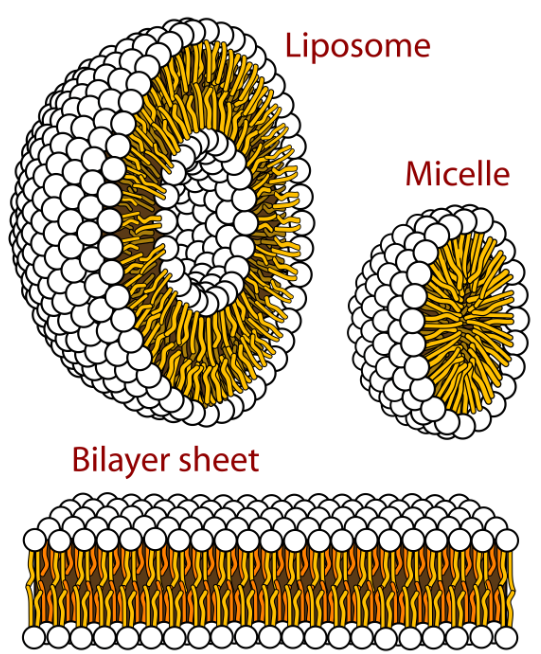
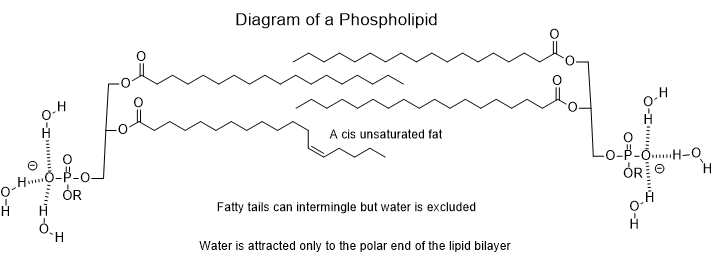
A benefit of hydrophobicity in biochemistry is that fatty substances like phospholipids will spontaneously organize into the lipid bilayer structure. Hydrophobicity in this case leads to the formation of stable compartmental structures. Life takes full advantage of the lipid bilayer in the production of the cell wall. This keeps all of the necessary biomolecules contained and concentrated for effective and timely biochemical transformations to occur. The cell wall excludes a great many deleterious substances as well. However, many protein structures have sections that are sufficiently hydrophobic as to be compatible with the hydrophobic lipid part of the bilayer. This property allows the protein to anchor itself within the bilayer leaving the more hydrophilic portions of the protein jutting out into the extra- and intracellular aqueous media. Many of these proteins penetrating the bilayer- channel proteins- are sufficiently hollow as to allow ions or molecules to pass through. Even better, the ability to pass ions or molecules through can be switched on or off by other biomolecules or with drugs.
Some larger molecules like the fatty phospholipids above have both hydrophilic and hydrophobic regions. Given the chance, phospholipid molecules will spontaneously orient themselves in a way that when combined the water ‘repellant’ hydrophobic tails will tend do aggregate. This leaves the hydrophilic phosphate features at each end to remain in contact with the water environment.
Cells have compartmentalization and cell walls simply because of the incompatibility of the polar water molecule and nonpolar hydrocarbons. These two incompatible liquids arrange in a way that minimizes the surface area of contact between them. They will form layers when stationary or droplets when one is dispersed in the other. This is the minimum energy condition they spontaneously go to. Micelles will even form spontaneously in your soapy dishwater.
Life on earth presently requires many environmental conditions to be just right. Cells of micellar-like construction take advantage of the hydrophobicity of substances with long chain hydrocarbon parts on one end and charged or polar features on the other side. Micelles are structures that spontaneously form in water. Living cells adopt a bilayer structure based upon the tendency for “likes to dissolve likes.” That is, non-polar hydrocarbon features “prefer” not to be in contact with polarized water, but rather cluster in a way that minimizes water-hydrocarbon surface contact. The effect of carbon chain structures in the biochemistry of earth is the stability of carbon-based structures and the wide variety features it can accommodate. These features include stable carbon-carbon chains as well as carbon bonds to hydrogen (H), nitrogen (N), oxygen (O) and sulfur (S) in particular. Carbon is unique in that it readily allows the formation of stable double bonds with itself or N, O, or S. Carbon also can form triple bonds with itself or N. Cyanide and acetylene are examples. The ease and stability of carbon bonded to C, N, O and S, along with the stability of multiple bonds on carbon all point to it as an excellent candidate for as the ideal building block for biomolecules.
It is often mentioned that since silicon has certain similarities to carbon why isn’t life based on it? Silicon-silicon bonds are prone to oxidation and not found in nature. Silicon is almost always found in nature as silicate in its various forms in minerals and very often in variety of silicate oligomers and polymers. Silicon-nitrogen and silicon-sulfur substances are not easy energetically. Furthermore, silicon does not form double bonds with itself or other elements. So, the variety of structural motifs silicon can form isn’t as broad as carbon. Silicon vastly prefers to be silicate in nature. Silicon is not found in biomolecules despite its high abundance in the nature.
Conclusion
I’m trying to make the point that extraterrestrial life will surely be different from life on earth at the macroscopic scale but maybe not so much at the level of molecular transformations. Every living species today trails behind it a unique evolutionary history, some of which remains in their genomes. Despite the huge variety of life forms on earth and all of the attendant structural variability that goes with it, we all share the use of DNA/RNA, proteins, carbohydrates, phosphates, lipids, calcium, magnesium, potassium, sodium, etc. All life forms on earth are able to capture and use energy as well as reproduce.
The history of life reveals an obstacle course through which organisms struggled to stay alive. Those that did survive had no way to anticipate the future and no way to prepare for it even if they were able to “anticipate” at all. The history of life is the history of challenges to survival.
Humans exist today because our ancestors going back into deep time were able to survive both anaerobic and oxygenated earth, snowball earth, competitive pressures from other life forms, vulcanism, cometary impact, solar UV radiation, chemical toxicity from the environment, disease and climate.
Today we can add stupidity to the list of survival challenges. Can we survive the results of our behavior? Humans have a brilliant streak in developing weapons- explosives, guns, nuclear, biological and chemical weapons. If all else fails, there will always be the sharp stick and club.
Humans are the way we are because of the way that natural history unfolded. A planet with the same makeup and conditions 3 billion years ago would evolve life in a different way than we went. Evolution happens because of the ability of our genetic material to be just a bit unstable and to be passed on in reproduction. But this change is a random process in both features and time. A genetic change can be fatal or helpful. The manner and schedule in which random genetic alterations happen is impossible to predict. Evolution is blind going forward. Another try at evolution is highly unlikely to produce Homo sapiens again.
Any given “intelligent” species may or may not invent or use radio technology. Therefore, they may or may not emit or receive radio transmissions. Such creatures would be undetectable using radio astronomy. Although two patents for wireless telegraphy came out in 1872, humans have only had useable wireless telegraphy since 1895 (Marconi). As of this writing, only 128 years have elapsed since Marconi sent his first long distance (1.5 mile) radio communication.
We have only had radio communications for 128 years in the entire history of our species. In order to have this invention in 1895, the European enlightenment had to happen leading to the idea of scientific inquiry and a minimum understanding of physics and chemistry. The voltaic pile had to be invented which gave way to further refinement of electricity. At minimum, the metallurgy of iron, copper and zinc (for brass) had to be in place for the for the discovery and use of electricity. The path to broadcasting and receiving radio waves required a fair degree of curiosity and industrialization.
As I finish my last day at my present company, I found some photos that might be worth sharing.
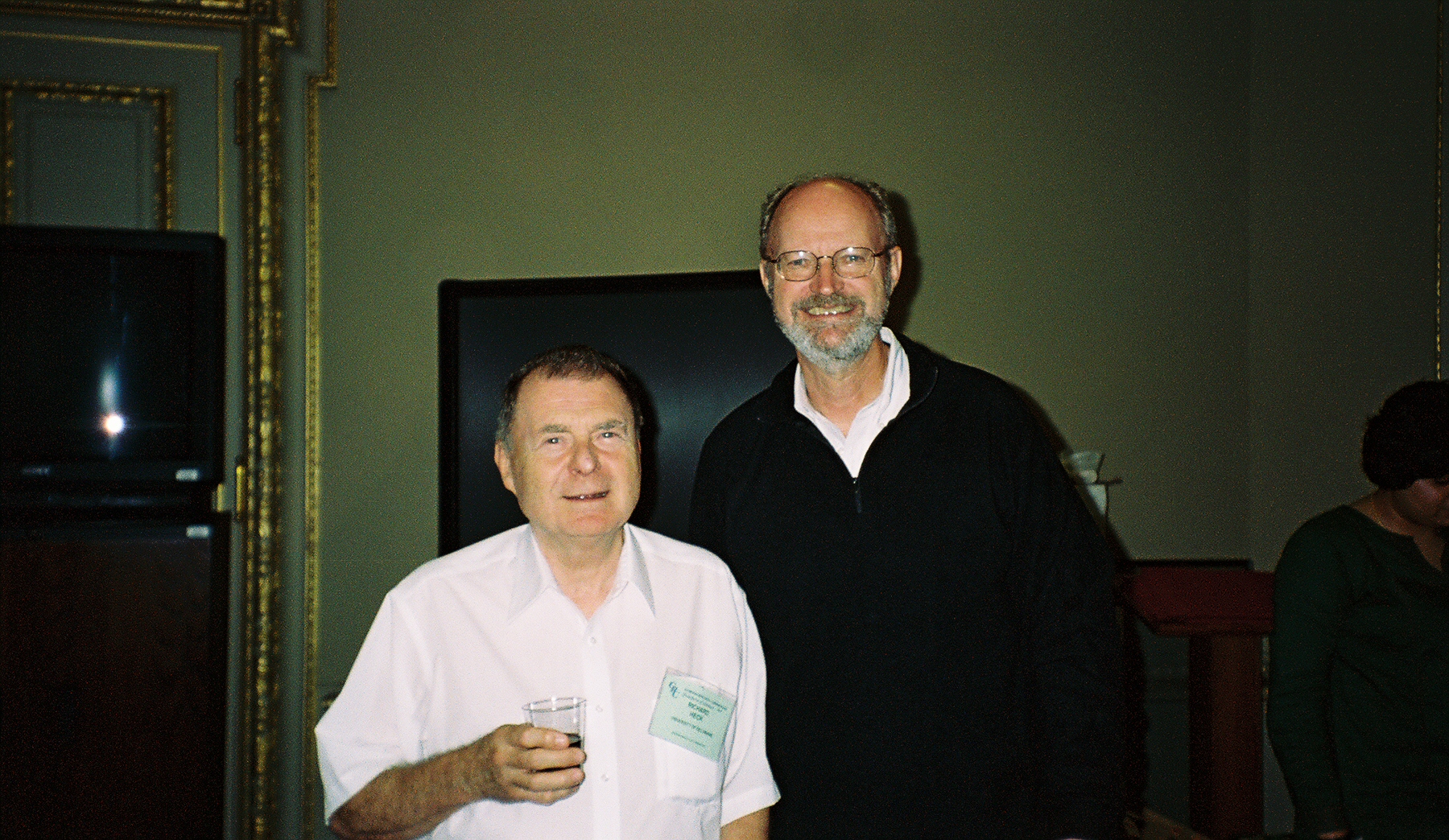
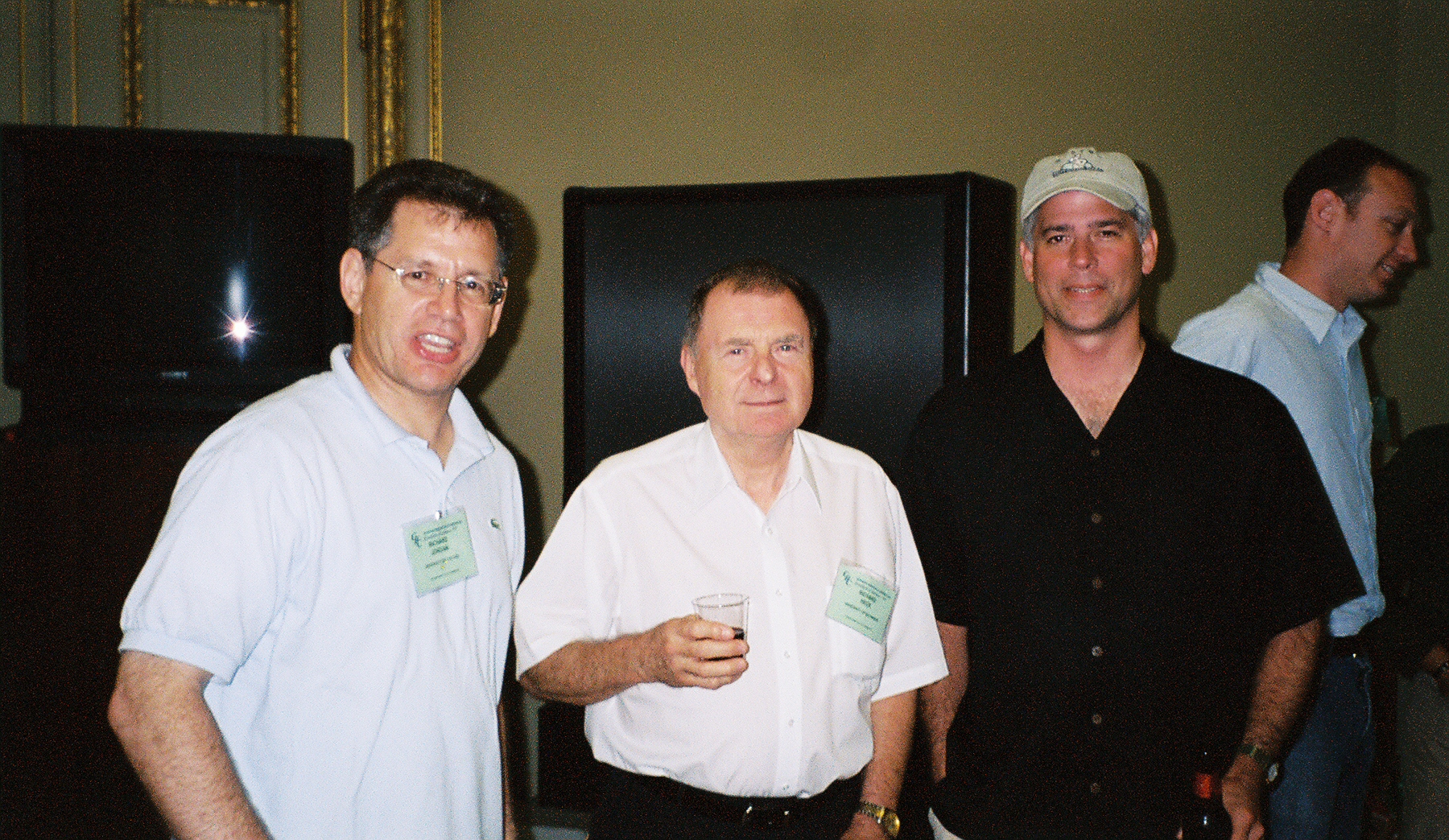
Richard Heck and Bobby Grubbs. Sippin’ wine with the boys. Organometallics Gordon Conference, 2005, Salve Regina University, Newport, RI. Photo credit: Arnold Ziffel.
In addition to the smattering of super-luminaries there were numerous regular luminaries of the organometallic world as below. All great guys, in my experience.
Richard Jordan, Richard Heck, and Larry Sita. Organometallics Gordon Conference, 2005, Salve Regina University, Newport, RI. Photo credit: Arnold Ziffel.
Salve Regina is beautifully situated along the Newport Cliff Walk. The school is a coeducational university founded in 1934 by the Sisters of Mercy.
Here is the definition of ethnic cleansing provided by Wikipedia.
Ethnic cleansing is the systematic forced removal of ethnic, racial, or religious groups from a given area, with the intent of making the society ethnically homogeneous. Along with direct removal such as deportation or population transfer, it also includes indirect methods aimed at forced migration by coercing the victim group to flee and preventing its return, such as murder, rape, and property destruction.[1][2][3][4][5] Both the definition and charge of ethnic cleansing is often disputed, with some researchers including and others excluding coercive assimilation or mass killings as a means of depopulating an area of a particular group.[6][7][8]
Maybe the US is truly concerned about the legality of the millions of illegal aliens within its borders and nothing else. Shipping them out of the country would be an act of law enforcement then. While the GOP members who are spearheading the upcoming mass deportation may be following the letter of the law, the broken laws pertaining to their supreme leader, a felon actually, are easily overlooked. He is more good than bad I suppose.
Given the well-known animus towards those not of European decent, is it just a coincidence that Americans are deporting a very, very large number of them? Certainly, the majority of those to be deported could be identified as coming from a different culture than ours- you know, obese, ignorant and cynical Americans. And, those from Central and South America are likely to be a bit tanner colored than common specimens of the pasty white American couch potato. This alone makes them easier to apprehend.
My guess is that once the Trump manhunt is underway, a place to concentrate them will be necessary. It will have to be a lock-up sort of place because we can’t have them just walking away. A remote location because the NIMBY reflex will not allow them near population centers. I’m thinking the concentrating camps will be along the US-Mexico border.
If we decide to bus them, will Mexico cooperate by allowing the buses into their country? If we fly them, will the Mexican authorities allow the planes to land? And if they do, will they be allowed to deplane and enter passport control? Or will they be denied entry at this point, passport or not? Final question: can they keep the air miles?
If they don’t ship them out right away, how long before the camps become an apartheid situation?
Look at all of the awful words I’ve used- ethnic cleansing, concentrating camp and apartheid. And, all in the context of America, land of the free and home of the brave, and … all men are created equal …
This is not the America I remember going to school in. Half of the electorate has put in place a despicable wannabe dictator and felon plus a republican guard of rabid elected followers. This is a moral disfigurement of the United States of America. Somebody put a drop cloth over the Statue of Liberty until this is over. It’s embarrassing.
This solution of deportation of millions of illegal immigrants certainly has the stink of ethnic cleansing to me. Maybe I’m wrong. I hope so.
“Technological triumphalism” is a term that occasionally surfaces, encapsulating the belief in human capacity to resolve almost any issue through the innovative use of technology. While technological progress has led to pivotal breakthroughs, such as rational pharmaceuticals, aerospace and the transistor, it has also given rise to the means to magnify age-old human tendencies towards destructive behaviors. As our tools and methods evolve with technological advancements, so too do our desires and avarice, often intensified by the fresh opportunities these new technologies bring to the table.
As an example of technology bursting on the scene producing both good and bad consequences, consider the Haber-Bosch process for the industrial manufacture of ammonia, NH3. The Haber-Bosch process has been called the most important chemical process in the world. An industrial product like ammonia can split into several streams. On the plus side, cheap and available liquid or gaseous ammonia for fertilizing crops was a boon for mankind in terms of increased food production. As a chemical feedstock, the combination of ammonia and its oxidation product, nitric acid, led to the economic production of the solid fertilizer ammonium nitrate.
Another and wholly different product stream involving the oxidation of ammonia (Ostwald Process) is nitric acid production. Nitric acid is required for the manufacture of materials including high explosive nitrate esters like nitroglycerine and nitroaromatics like TNT, picric acid and a great many other explosives. Explosives are neither inherently good nor bad- their merits rest on the shoulders of the users. When used for construction or mining, explosives are a positive force in civilization. However, they cast a long, dark shadow when used to destroy and kill.
Fritz Haber: Ammonia and Zyklon
A good example of unanticipated consequences of a technology uptick is in the story of the German chemist Fritz Haber. Haber won the 1918 Nobel Prize for Chemistry for his part in the invention of the Haber-Bosch synthesis of ammonia. It is estimated that 1/3 of global food production relies on the use of ammonia from the Haber-Bosch process or some improved version. Haber has been widely praised for his part in the invention of catalytic ammonia production using atmospheric nitrogen. These are important developments, but … [Wikipedia]
As a German nationalist, Haber was also known for his considerable contributions to German chemical warfare through WWI. Early on, Haber suggested chlorine as an improved chemical weapon over tear gas during WWI and was later involved in the development of Zyklon B as a fumigant, pesticide and later a weapon of mass murder.
There is contradictory information as to who actually developed Zyklon B. One source claims the inventor was Bruno Tesch, Gerhard Peters and Walter Heerdt while another claims Haber developed it. The composition and story of Zyklon B is subject to confusion in a Google search. The actual contributions of Tesch and Heerdt to the production of Zyklon B was to produce sealed cannisters of HCN adsorbed onto a sorbent like diatomaceous earth along with a cautionary eye irritant to signal the presence of the HCN in the air. The early use of Zyklon B was to delouse clothing, ships, warehouses and trains. The Nazis began using Zyklon B to murder human beings in the concentration camps beginning in 1942 as well as delouse their clothing to stop the spread of typhus.
The identification of Zyklon, Zyklon A and Zyklon B is a bit confusing. Zyklon was originally developed as a pesticide. When exposed to moisture it hydrolyzed to form hydrogen cyanide which was the active toxicant. Lachrymatory warning additives were blended in to alert those exposed. Eventually, the Nazis requested that the warning additive be removed since it spooked the prisoners.
Graphic by Sam Hill. The three Zyklons sorted out.
Tesch and Stabenow founded Tesch & Stabenow in Hamburg in 1924. The next year they became the sole distributors of Zyklon, manufactured by its patent holder, Deutsche Gesellschaft für Schädlings-bekämpfung mbH (German Corporation for Pest Control), shortened to Degesch. Tesch & Stabenow was the exclusive reseller of the “Zyklon” which was produced by Degesch (founded 1919) whose director was Fritz Haber.
Tesch & Stabenow was founded in 1919 as a subsidiary of Degussa with its first director, Fritz Haber. Later, in 1936, Degesch was owned by its parent company Degussa along with IG Farben and Th. Goldschmidt AG (now Evonik). The company was said to be extremely profitable from 1938 to 1943 with sales of Zyklon B to the German government and Schutzstaffel (also known as the SS). After the war, Bruno Tesch, co-founder and owner of Tesch & Stabenow, and “director Karl Weinbacher were convicted and sentenced to death by a British tribunal and executed in Hamelin Prison on 16 May 1946.”
The only practical difference between the three Zyklon products was that Zyklon B contained and delivered HCN directly while Zyklon/Zyklon A requires water to decompose it, releasing HCN.
Graphics by Sam Hill. Mander’s Reagent can transfer a methyl carboxylate group selectively to the carbon atom of a lithium enolate. The absence of O-alkylation is very useful. The methyl carboxylate group is in blue.
Cyanide
The history and chemical manufacture of all the various cyanides is rich in diversity. The word ‘cyanide’ is usually reserved for ionic compounds or hydrogen cyanide, HCN, or those that release cyanide anion readily.
The cyanide group, :Carbon-triple bond-Nitrogen:, is a functional group found in many natural sources.
The cyanide group, -CN, on an organic molecule is usually bound more strongly by covalent bonding though not often connected directly to a carbonyl group (C=O) where it is susceptible to loss as with Zyklon/Zyklon A. It is the connection of the cyanide group to an ester carbonyl group that is behind the ability of Zyklon/Zyklon A to release free cyanide. In Zyklon/Zyklon A, the carbonyl group (C=O) is subject to aqueous hydrolysis producing CO2, CH3OH and HCN.
The word ‘cyanide’ is probably best limited to situations where the anion, :CN–, is present as a discrete chemical species. Common cyanides in use today are potassium cyanide, KCN and sodium cyanide, NaCN. KCN in water is commonly used in gold mining to selectively extract gold as a soluble cyanide complex, replacing the hazardous mercury amalgamation method. When covalently bonded to an organic molecule or to a polymer like polyacrylonitrile, the cyanide functional group is strongly bound. When CN is a feature of an organic substance where it is covalently bound to a carbon atom, it is referred to as a ‘cyano’ group, ‘nitrilo’ or ‘nitrile’ group. These words signify that the CN group is not present as a discrete anion but rather is tightly bound to an organic framework. This is less likely to spook the general public.
A swerve into the weeds with acrylates
Graphics by Mr. Peabody.
It is said that neither Fritz Haber nor Carl Bosch were fans of National Socialism in Germany in the 1930’s. Haber claims to have done his WWI gas warfare work for Kaiser Wilhelm as a German patriot. Intimidated by German laws aimed at Jews and Jewish colleagues, Haber (a Jew converted to Catholicism) left Germany in late 1933 for a position as director of what is now the Weizman Institute in what was at that time Mandatory Palestine. He died in the city of Basel, Switzerland, while enroute to Palestine at age 65.
Haber’s work in chemical weaponry included the use of chlorine gas which was chosen for its density and would sink and collect in enemy trenches. Chemical warfare in WWI began with an idea from volunteer driver and physical chemist Walther Nernst (yes, that Nernst) who suggested in 1914 the release of tear gas at the front. This release was observed by Fritz Haber who recommended chlorine instead and later supervised Germany’s first release of chlorine gas at the Second Battle of Ypres in WWI. Well known German scientists involved in the development of chemical weapons included chemist Fritz Haber, chemist Otto Hahn, physicist James Franck and physicist Gustav Herz. Of the 5 scientists, Nernst included, all would receive a Nobel Prize in their lifetimes.
‘Haber defended gas warfare against accusations that it was inhumane, saying that death was death, by whatever means it was inflicted and referred to history: “The disapproval that the knight had for the man with the firearm is repeated in the soldier who shoots with steel bullets towards the man who confronts him with chemical weapons. […] The gas weapons are not at all more cruel than the flying iron pieces; on the contrary, the fraction of fatal gas diseases is comparatively smaller, the mutilations are missing”.’ Source: Wikipedia.
I don’t mean to demonize German scientists specifically since the 20th century was peppered with engineers & scientists from many countries who engaged in weapons of mass destruction research & development, both in the private and government sectors. Naively and from afar to nonscientists it might seem like scientists are a benevolent brotherhood or sisterhood of “do-gooders” bent on the application of science for the benefit of mankind. To be sure, all whom I have known understand the importance of basic science to society at large and are of high moral character, mostly. Note, though, that the phrase “do-gooder” is actually an insult. According to Dictionary.com it means “a well-intentioned but naive and often ineffectual social or political reformer.”
Even Yugoslavia’s Tito had chemical weapons and a nuclear weapons project out of fear of an attack by the Soviets. In the end the project amounted to little more than some research institutes to support the nuclear project. Eventually Tito cancelled the project. Yugoslavia did have its own deposits of uranium ore and developed a method of extracting uranium concentrates from it. In October, 1958, they had a nuclear criticality event within a teaching reactor of their own design.
It is hard for me to grasp that chemical weapons are a notch of evil above other conventional arms. Bullets fired from military-style small arms can kill instantly, slowly or cause survivable mutilation. High explosive charges from artillery, missiles, hand grenades or land mines can kill instantly, slowly or cause survivable mutilation. Is this somehow preferable to a chemical attack? Chemicals too can kill quickly, slowly or cause survivable mutilation. These chemical weapons can be either a gas or an aerosol which can deposit on surfaces and retain toxicity for some period of time. Both gases and aerosols can drift with the wind making them trickier to ‘aim’ and are subject to dilution by cloud or gaseous dispersion. Many have suggested that chemical warfare is more useful for its ability to terrorize a population than to kill.
High explosives are point sources of shock waves followed quickly by sharp flying metal fragments. Like all point sources of dispersing energy, the intensity of the shock falls off as some kind of inverse square law and fragments soon fall to the ground. The bullet or the artillery shell are projectiles that can be aimed, often with great precision, and deliver their kinetic energy or explosive charge to a distant location. This applies equally to cruise missiles, drones, jet fighter ordnance and other flying mayhem.
All of the weaponry mentioned above are the result of the application of chemical energy.
Rest stop along the highway of knowledge
At some point for all of us whose areas of specialty may overlap with weapons technology, we have to decide how we will confront it. We can pitch in to defense R&D and make a contribution or we can contribute to civilization in other ways. For myself, I chose to work on improving life through chemistry. Others can find better ways to destroy things.
For me, military aircraft are a guilty pleasure. I am absolutely in awe of the technology and the people who build and get them into the air. The stratospheric art of aerospace engineering is endlessly fascinating. Still, they are weapons platforms that exist solely for the purpose of killing and serving devastation. I understand the necessity of countries acquiring such deadly flying machinery. The monster Putin has provided the latest reminder of the importance of military readiness.
The DuPont slogan. At some point the words “through chemistry” were omitted.
High explosives as a paradigm shift
The research and development of nitrate esters like nitroglycerine in the 1830’s and later nitroaromatics like nitrobenzene, picric acid and trinitrotoluene (TNT) rapidly led to the sometimes-inadvertent discovery of their detonability. The discovery led to the creation of a new class of explosives, marking a significant shift from the relatively slow burning of gunpowder to the high velocity detonation of “high explosives” such as picric acid or RDX. Unlike gunpowder, which needed to be confined to produce an explosion, the introduction of detonable nitroaromatic and nitrate ester explosives resulted in a large increase in the sudden release of energy. The availability of a relatively safe and easily produced explosive like TNT facilitates the leap of thought to the realm of armaments, especially when the explosive could yield considerable profits.
Having been born, educated and now nearing retirement from a scientific career in the USA, there are things about this country I am proud of and things that I’m ashamed of. I take ‘pride’ to mean that ‘I value my association with’. I take ‘shame’ to mean my negative reaction to and regret with certain instances of moral turpitude.
What shame I may have in my country’s actions and policies over time isn’t necessarily due to uniquely American traits. We’re humans after all with all of the pluses and minuses that go with it. However, the pluses and minuses in conjunction with our burgeoning economic power over time and the rich natural resources we hold allow us to impose our will with in-house treasure. Conveniently, we don’t have to invade another country for oil or iron ore to drive our industry. However, our lust for cheap oil & gas has led to considerable trouble.
American Pride
I’m proud of the founders who disconnected from Great Britain despite the sacrifices in blood and treasure during the late 18th century and founded this unique republic. While the founders wisely developed a founding document to avoid the problems of monarchy and establish a functioning republic, there were significant omissions such as banning slavery or establishing equal rights for women.
I’m proud of our steady progress in all of the various technologies that have removed the sharp edges from what nature has historically imposed on us: Disease, predation, high infant mortality, brief lifespans and primitive life. In many ways the march of technological advancement has been a benefit to all of us and the rest of the world as well.
I’m proud of the advancement of women, albeit too slow, in our civilization. The march forward is not nearly finished, but to have advanced women from chattel to some level of equality is a plus.
I’m proud of our country for the advancements made towards global peace and prosperity since WWII. The years of our liberal democracy since then are unmatched in history.
I’m proud of the positive global interventions for peace we’ve made since the start of WWI.
I’m proud that my country has been a prominent global influence for peace and justice.
I’m proud of my country’s positive moral actions toward feeding the hungry and spreading medical care.
I’m proud of our periods of military restraint and our caution with nuclear weapons after having once used them.
I’m proud of America’s role in restraining Chinese, Japanese, Russian and Soviet imperialism.
American Shame
I am ashamed of our part in the worldwide patriarchy and the lethargic progress towards equal rights for women.
I am ashamed of the horrors that befell the Native Americans throughout the American settlement of North America. The murderous expansion by fortune-seekers and land-grabbers across the continent and the penury and ten thousand privations forced on them is inexcusable and remains a bloody disfigurement on the American character.
I am ashamed of our part in the slavery industry in the Americas and the number of people who had to die in a bloody civil war to end it.
I am ashamed of my country’s covert meddling into the affairs of other nations as in Southeast Asia, South and Central America, Cuba and elsewhere.
I am ashamed of the many wars and conflicts we have participated in over absolutist ideologies and the deep senselessness of our political parties.
I am ashamed of our enthusiastic part in the development of nuclear weapons and our perverse cleverness in optimizing their design.
I am ashamed of the influence of capitalism on internal and foreign policy and the greedy idolatry it brings.
I am ashamed of the neoliberal right turn the country is presently taking and the acceptance of autocratic enthusiasm asserted therein.
I am ashamed of America’s reelection of a felonious man of low moral character and proven dishonesty and especially the large-scale support he enjoys among voters.
After 26 2/3 years on the job, I’m being let go. Actually, my position and director title are being eliminated as of December 24, 2024, and nothing else is there for me. My company is 4 years into the new ownership, a venture capital company, and it’s likely that thoughts of the big payoff are in the air. In preparation for this the CEO, just back from a board meeting, is cutting costs and polishing up the balance sheet for an impending sale. Or so some believe. The mighty and all-knowing overlords of Oz are looking to cash in their chips.
Anecdote
Early after the buyout I had the occasion to speak with one of the board members before their first on-site meeting. This fellow was the retired founder of a chemical company and owned a personal business jet which he flew to the meeting himself. It was an Embraer Phenom 100 which can be flown by a single pilot and under instrument conditions. Both he and his wife were instrument rated and signed off to fly the twin engine jet as a single pilot. As we got to the meeting room, he was greeted by the board chairman whereupon they began to compare notes on their business jets- a Phenom and a Gulfstream. I left since I had no jet of my own to discuss. I was not dejected but merely amused at the different existence these kings of the world occupy.
Back to the story
Having joined the company in 1998 when it was a family operation and coming from a small liberal arts college teaching background, I adapted well to the isolated, almost tribal, company life. Outside influence was scarce. We were inbred and operating on a remote desert island. I got to wear many interesting hats in the organization, and it made for an interesting job despite the lack of structure. Many years later though and with new ownership, the problem became one of wearing too many hats. My job description got overloaded with diverse activities and defied any orthodox job description. My career had become the kitchen junk drawer. I was warned by a friend and boss not to do this. His counsel was to leave and find a more orthodox corporation, but it was just too interesting. In the end he was right. I should have left about 2004.
These days job descriptions are built to exacting standards. None of the cross-disciplinary general chemist stuff that I was used to. I think this is part of what did me in. Early on I had traveled much of the northern hemisphere on sales and sourcing trips. I managed the sales and marketing department for 6 years, did patent analysis and IP due diligence, wrote and submitted a patent application, did some R&D, led accident investigations, conducted R&D on the pyro- and hydrometallurgy of several rare earth minerals, started a process safety department, conducted reaction calorimetry experiments for over 12 years, and finally jumped into TSCA regulatory compliance when we were short staffed. After 3 years I’m still in regulatory compliance.
I have no interest in retirement and halting all chemistry-related activity and doddering into my retirement years because I really dig chemistry. Sitting on the porch whittling a stick and telling stories is not what I want. But a chemist without an organization is hard pressed to continue being involved with actual chemistry. It is true that for everything there is a season. The transition to the next season has begun.
Historically, scientific papers have been not where loud, confident proclamations are made about academic research results. The trend has been a sort of unpretentious modesty to avoid overconfidence and exaggerated claims. A sort of snobismus. Instead, conclusions from research results tend to be more guarded in the interpretation of data. An article in the Scienceinsider section of the AAAS journal Sciencepublished 28 July, 2023, has reported that of 2600 papers published in Science between 1997 and 2021, there was a drop of about 40 % in the use of hedging language. Researchers in the study scanned for about 50 terms including “might,” “probably,” “could,” “approximately,” “appear to” and “seem.” They found that these hedging words dropped from 115.8 per 10,0000 to 67.42 per 10,000.
Analyses of other scientific journals and a 2022 paper that examined nearly the same group of papers from Science have found growing use of a positive, promotional tone—expressed with superlatives such as “groundbreaking” and “unprecedented”—which may lead to exaggerated claims.
The authors suggested that researchers are increasingly unwilling to undersell their work and instead, are using more hyperbolic language such as “groundbreaking” and “unprecedented.”
In an earlier study by C.H. Vinkers et al., published in BMJ, 2015, finished his paper with the following paragraph-
“Currently, most research findings could be false or exaggerated, and research resources are often wasted. Overestimation of research findings directly impairs the ability of science to find true effects and leads to an unnecessary focus on research marketability. This is supported by a recent finding that superlatives are commonly used in news coverage of both approved and non-approved cancer drugs. The consequences of this exaggeration are worrisome since it makes research a survival of the fittest: the person who is best able to sell their results might be the most successful. It is time for a new academic culture that rewards quality over quantity and stimulates researchers to revere nuance and objectivity. Despite the steady increase of superlatives in science, this finding should not detract us from the fact we need bright, unique, innovative, creative, and excellent scientists.”
If you sit through a week of presentation sessions at an American Chemical Society national meeting or walk through a poster session, you’ll see a mix of enthusiastic young chemists standing next to their posters and you’ll sit through talks by more established researchers anxious to emphasize the importance of their work. Giving a talk or a poster at a meeting is inherently a promotional activity. It is getting the word out about you and your work in a particular area in front the scientific community and possibly some influential people. It also is something to add to your resume.
Self-promotion by scientific publishing and participation in meetings, called “ballyhoo” in the movie business, is a great way to expose yourself to greater and more frequent opportunity. Make no mistake, the quality and frequency of publications is a very important metric of your accomplishments and potential. This is a sad reality for some and a fortunate reality for a few, but it is reality.
It is hard to draw much from the above research on the hedging frequency as a metric of … what, the unseemly disappearance of proper modesty? The competitive environment of “big academic science” for funds and exposure to impress colleagues and the rank and tenure committee is inevitable. It has been like that for a very long time, but perhaps hidden under the veil of snobbery.
You never know who you might meet at these venues for academic ballyhoo. I once loaned my laser pointer to Al Cotton (who kept it!) and I met Glenn Seaborg at a poster session at the Disney Hotel in Anaheim, CA. I had too many gin & tonics before I spoke with Seaborg and I’m sure that it showed. At a symposium at Purdue University in honor of H.C. Brown (in attendance), I got to see two prominent scientists get into a rather strong “discussion” during a question-and-answer period about who discovered what first. Professor Suzuki (Suzuki coupling) from Japan said something that got under the skin of prof Negishi (Negishi coupling) from Purdue, so they began with point-counter-point exchange (a type of coupling?) which soon accelerated into an argument. As it got more contentious, they switched to speaking Japanese and continued their argument. After a short time, they realized it was best to just sit down as they were providing a “Clash of the Titans” spectacle. This is not a criticism, just an amusing anecdote. Guys like this should battle it out in public more often.
Self-promotion using exuberant language isn’t inherently bad. It is likely that others have already judged you based on far smaller misperceptions. If someone wants to embarrass themselves, let ’em.
The reader should know that I would much prefer to write about sciency topics like chemistry or mining geochemistry. But I have become aware of a political tsunami that could arrive at our shores in 2025. It is a planned sequence of actions aiming to convert our American civilization, its economy and politics so drastically as to be unrecognizable by the standards of today. It is breathtaking in its sweep and amounts to nothing less than a sociopolitical revolution. I refer to “Project 2025” organized by the Heritage Foundation. Short of a mainland invasion of North America, I am hard pressed to think of something that will so drastically alter the course of American civilization. Republicans are seeking to emplace a permanent conservative state. My view is this- screw ’em.
At present, the US is the global hegemon and has been one since WWII. Many nations resent this, especially China and Russia, and seek to become the major hegemonies themselves. They strongly desire to knock the US off the sandpile and take up residence for themselves. Trump’s America First policy would allow Russia and China to step up as US foreign influence is purposely relaxed. As the unity of the US/EU and NATO collapses, Russia’s influence in Eastern Europe will rise as they move forward to the reestablishment of a Soviet-scale state. China’s dominance along the South China Sea, Southeast Asia, Taiwan, Philippines, Indonesia, Malasia and Australia will grow, as they intend it to.
The expansion of Chinese and Russian influence will come as a result of the loss of global US influence. As technology and the quality of life expands across the world, US hegemony will necessarily diminish somewhat. What we can and should hold onto is our standing as an influential and thriving democracy.
To my many friends, colleagues and readers, all I can say is that now is not the time to shrink back into your shells and wait out the 2024 political season in the US. If your visual acuity takes you past your nose you will see that Project 2025 will strongly alter the function of the federal government. This is a step towards a dictatorial architecture that will directly affect our lives and our standing in the world.
Hyperbole? Visit the link and think it through for yourself.
Project 2025 is nothing less than a coherent plan to deconstruct the administrative function of the federal government, especially under the executive branch. The many designers of this project believe in the so-called “deep state” which, they say, is firmly nested in the ponderous federal bureaucracy. As a story it has the necessary elements of a conspiracy novel. There are protagonists, antagonists, narrators and enough historical detail to make their storyline convincing. In my view, the deep state exists in the form of dark money and the subsequent influence over politicians, mostly the recipients of big conservative money.
The US media will be of little help here and will relegate themselves to documenting the downfall for the infotainment of everyone around the world. Decades hence, dissertations and documentaries will be produced attempting to explain the collapse to authoritarianism to puzzled citizens.
But Project 2025 is more than just a rejiggering of the administrative apparatus of the federal government. Significantly, it aims to intensify the many powers of the federal bureaucracy directly into the hands of the president by aligning the federal workforce job security to be politically accountable to the president.
It represents a transition from a primary emphasis on expertise to that of political reliability for one’s career-sake. The plan will go into effect the first day of the next Republican president’s administration, be it Trump or otherwise. This is what the plan states in clear English.
In our federal government, laws are passed and placed into the Unites States Code, USC. This content is then translated into the Code of Federal Regulations, CFR, for promulgation. The CFR is a structure of regulations based on the USC for practical application and enforcement.
It is easy and quite lazy to claim that the US federal government is completely broken. It seems to be hypersensitive in some areas and intractably slow elsewhere. Nonetheless, much of it functions like it should behind the curtains. Do we really want a government that is incontestably and quickly responsive to the whims of a president? Or should there be checks and balances built into the system? Handing over more power to a morally bankrupt person like Trump is grossly irresponsible, stupid and may not be reversable. Other than a foreign invasion, this could not be more serious.






 Lamentations on Chemistry