Category Archives: Evolution

Let’s Hang Darwin’s Portrait in the Hall of Fame and Move On

Summary: The point of this essay is to remind people that, while the works of Charles Darwin and Jean-Baptiste Lamarck were obviously profound in the understanding of many aspects of the biology of life on earth and its adaptation to the environment, their work is very much a product of the mid-19th century. This was prior to the atomic and molecular theories of matter were developed. Since that time the fields of biochemistry and molecular genetics have grown to a high level of sophistication and provided many mechanistic details on how evolution can occur at the level of molecules. With the advancement of biochemistry and molecular genetics, evolution is recognized as a molecular phenomenon using chemical mechanisms not unfamiliar to chemists. It seems likely that if Darwin, Lamarck and others did not make their early contributions to evolutionary theory, biochemists and biologists of the 20th century would certainly have proposed evolution as an inevitable consequence of the mutability of life.

………………..

The frame of reference in this essay is that of an organic chemist’s mechanistic view of the fundamentals of chemical change in biochemistry or molecular biology. Let’s just call it chemistry.

Of the many features of popular science content, one annoyance to the writer stands out: Articles on evolution remain fixated on Charles Darwin’s mid-19th century opus magnum, “On the Origin of the Species“. Darwin’s survey expeditions on the Beagle from 1831 to 1836 as a gentleman companion and naturalist resulted in sharp observations, sample collection, notes, books and years of scholarly lectures.

The question of biological change from evolution dredged up considerable controversy early on, most prominently from the religious communities and lasting to this very day. Much later, after chemistry based on atomic theory was well established, creationists began to sermonize on the statistical problems with the right atoms coming together is the correct order to produce a person. The mantra was that creation implies Creator. Within the context of the Abrahamic religions, the creation of life was clearly stated in religious texts. To assert otherwise was simple heresy. Eventually, the more literate opponents of evolution latched onto the physical principle of entropy.

Entropy is a concept that creationist’s love to unsheathe and swing around. They will say that the 2nd Law of Thermodynamics opens up an apparent contradiction. The crux of their argument is based on equating entropy with ”disorder’. Life itself is comprised of many kinds of highly ordered matter, but the universe is supposed to be getting more disordered. How can this be?

What doesn’t get mentioned is the considerable disorder produced from the life and growth of organisms.

/*Begin Editorial Comment*/

The term “disorder” is the Disneyland word for entropy. It is a highly over-simplified cartoon word meant to describe entropy, which is a thermodynamic state variable. Entropy has the physical units of energy per degree Kelvin per mole. It refers to irreversibly dispersed energy in a system. In my opinion, the word “disorder” is too loosey goosey a definition for even a loose definition.

/*End Editorial Comment*/

A protein molecule doesn’t appear to be “ordered” to the untrained eye. However, a protein molecule has 3 levels of structure in its final construction. First is the specific sequence of amino acids in the protein chain. Second, this protein chain consists of chemical bonds that are free to rotate and chemical bonds that are not as with the peptide bond. This rotational freedom of motion allows a protein chain to rotate about many of its chemical bonds and come to rest in a place where two features may have a reversable mutual attraction. Or, the protein relaxes in a particular configuration that has the least strain.

A third form of protein structure comes from the attraction of individual proteins with another. Proteins often align with another to from large complexes, frequently imbedded in cell walls. These protein structures can contain a channel where ions may pass from interior to exterior of the cell. The channel can be opened or closed in response to external stimulation.

As a protein chain is assembled, it has amino acid features in it that can form hydrogen bonds which allow particular stretches of the chain to reach around and weakly and reversibly connect with itself. An amino acid that has a thiol (or sulfhydryl, -S-H) group can react with another to form a disulfide linkage (-S-S-). The disulfide linkage is a covalent linkage and thus somewhat stable though is subject to reductive or oxidative cleavage.

A length of protein can form a helical secondary structure, a somewhat flattened secondary structure called a beta-pleated sheet, or an unstructured sequence of amino acids.

A few words about entropy, S

One of the ideas frequently cited in creationism is entropy. It is cited because they take evolution as contrary to entropy and the Second Law of Thermodynamics. According to Google, the thermodynamic definition of entropy is given as-

Unavailable Energy: In thermodynamics, entropy quantifies the portion of a system’s thermal energy that cannot be converted into useful work. The more disordered a system, the less energy is available for work.

A more expanded definition is-

Entropy is fundamentally linked to the second law of thermodynamics, which states that the total entropy of an isolated system always tends to increase over time. This means that systems naturally move towards a state of greater disorder and less available energy for work. 

The usual interpretation is that the total entropy of the universe is always increasing. This gets interpreted as the world becoming more ‘disorderly’. Unfortunately, the word ‘disorderliness’ can be cognitive bias. The natural meter-scale world we reside in provides many examples of orderliness, which is often just a value judgement by people seeking tidiness.

Creationists often portray abiogenesis and evolutionary change as highly improbable, suggesting the ultra-minuscule chance that the necessary atoms could connect perfectly to create life. If this process was truly random, I might concur. However, the formation of molecules from atoms and the subsequent reactions leading to further changes are not entirely random. Any two atoms or molecules colliding are subject to random motions, true enough. However, what happens during and after a collision and subsequent reaction is far from random. At Earth surface temperatures allowing liquid water, atoms and molecules engage in water compatible reactions, yielding a limited array of possible outcomes and sometimes even a sole outcome. Given certain conditions such as temperature and chemical surroundings, each atom or molecule is restricted to a fairly small number of reaction channels or pathways. Life did not spontaneously arise or evolve from a purely haphazard broth of atoms.

Careless assertions about entropy and the order/disorder of matter can lead to specious conclusions.

The better definition of entropy comes from statistical mechanics. Entropy describes how energy is distributed among the microscopic states of a system. It describes how many ways the system can be arranged at the microscopic level while still appearing the same macroscopically. [From ChatGPT]

Entropy as disorder is perhaps a cul-de-sac rather than the road to understanding.

The Creationist’s respect for the 2nd Law is quaint, but it is more a matter of picking up their opponent’s club and beating them with it in error. When finished, they set it back down and walk away satisfied that they have used science to beat science.

Dipoles- Nature’s Sticky Spots

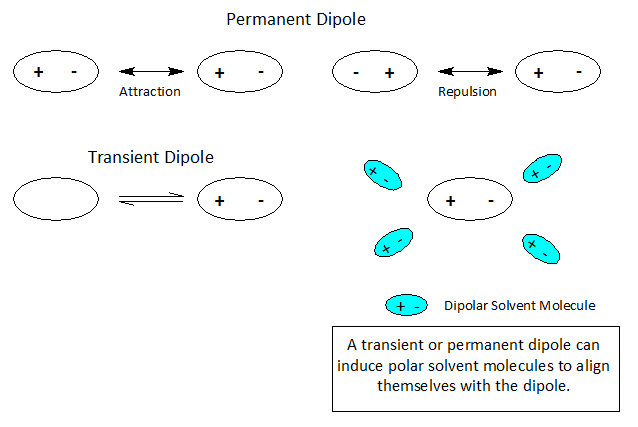
At the atomic level of matter during a reaction, atoms or molecules may undergo a rearrangement of charge leading to +/- ionic species producing a single pole or a dipole.
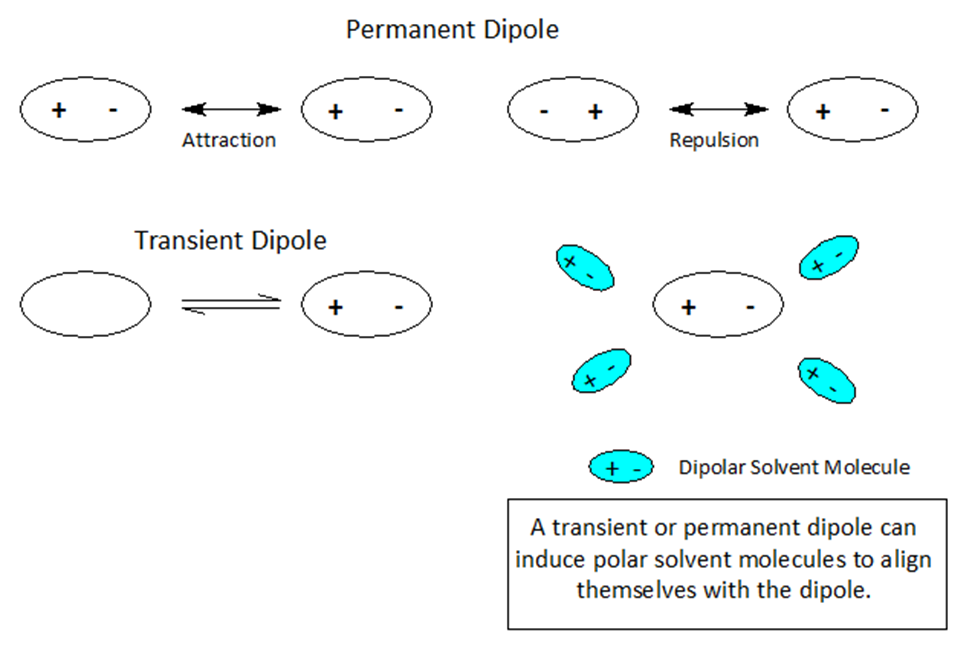
Graphic by Arnold Ziffel.
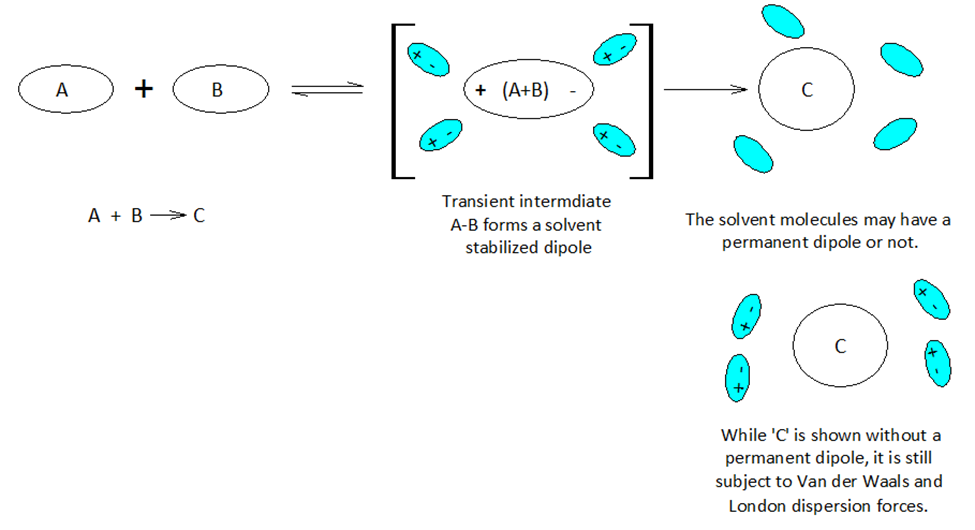
Image by Arnold Ziffel.

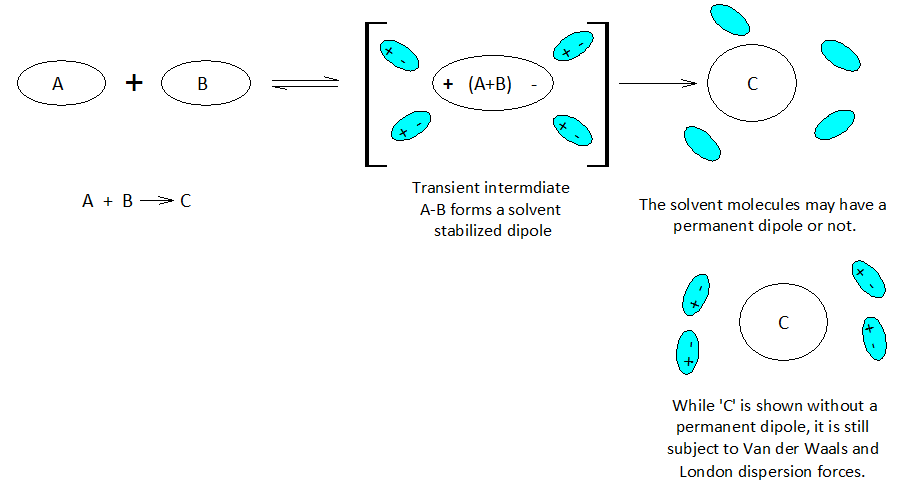
When atoms and molecules undergo electronic change the surrounding solvent environment may help or hinder a given transformation. If during the course of a chemical reaction a transient charge is produced, the solvent ‘bag’ enclosing the reacting molecules can promote or hinder the reaction transformation.

My personal policy is to limit the word ‘entropy’ to subjects related to the atomic scale or to heat engines. A loose pile of bricks should rather be described as in disarray.

Molecules and even neutral noble gas atoms can form transient dipoles, causing small, short lived attractive forces between atoms. These are called Van der Waals forces. Graphics by Arnold Ziffel. Graphics by Arnold Ziffel. The ease with which a reaction mechanism proceeds may be subject to solvation effects. Formation of a dipole requires that negative charge is pulled away from positive charge. This takes the application of work against the natural attractive force between positive and negative charges. It takes energy to electronically alter a molecule to produce charge separation to form a dipole. A shell of dipolar solvent molecules around a reacting dipolar molecule can stabilize accumulating polarity in a molecule sufficient to aid the transformation.

Chemical reactions proceed mechanistically in a stepwise manner, and with over 150 years of extensive and peer reviewed chemical research and development, much chemistry has become quite predictable across a wide range of substances. A crucial aspect of modern organic chemistry is the understanding of reaction mechanisms. Biochemists focus on the mechanisms of reaction in aqueous environments, while classical organic chemists commonly avoid water in lab work. However, the principles of physical chemistry support both fields. Indeed, physical chemistry is the cornerstone of the chemical sciences.

On mutation

My greatest hangup about language commonly used to describe evolution is when someone says “The _______ evolved the ability to _______ in order to survive.” True, but In the minds of many this may suggest that a specific genetic change was purposely triggered to achieve the ‘goal’ of enhanced survivability. If a genetic change occurred that improves survivability, it begins randomly. It’s rightly been said that evolution is blind going forward. The DNA of an organism struggling for survival will not automatically give rise to an offspring that have resistance to a given threat. Rather, with each successive daughter cell there is a chance that a beneficial mutation has occurred. But mutations could happen anywhere in the genome. Some mutations may be beneficial, and others may be problematic in terms of survival. There is a chance that the mutation may never be expressed from dormant genes. In order for a mutation to pass forward, it must happen before or during reproduction. Mutations to the parent organism after it has reproduced end right there, beneficial or not.

Radiation-induced mutations to the DNA are more likely to occur during mitosis in cell division when copied DNA strands are being pulled apart and into the daughter cell. The DNA strands are not yet wound with the histones and are more accessible to external influences like radiation or chemical insult.

/* Anecdote: DNA Breakage */

In my second go-around with radiation for prostate cancer in spring of 2024, I learned that the practice now is to deliver approximately the same overall radiation dose as before, but in fewer and larger doses. The idea is to cause breakage in both DNA strands of the double helix rather than just a single strand in the cancer cells. I had 4 sessions of 8 gray in 2024 as opposed to 21 sessions of ~1.5 gray in 2014. I cannot account for why the total dosages are not equal, but there were specific cancerous tissues like the prostate and the seminal vesicles to hit the first time around.

/* End Anecdote */

Today there is a growing understanding that there are actions with the DNA polymer-histone structure that do not involve changes in the genetic sequences. This is called Epigenetics. The total human DNA double helix stretched out is approximately 2 meters in length yet must be contained within a cell. The way that DNA double helix does this is to wrap around a series of individual proteins called histones for compaction into a smaller structure called chromatin. Finally, the chromatin folds into the familiar chromosome structure.
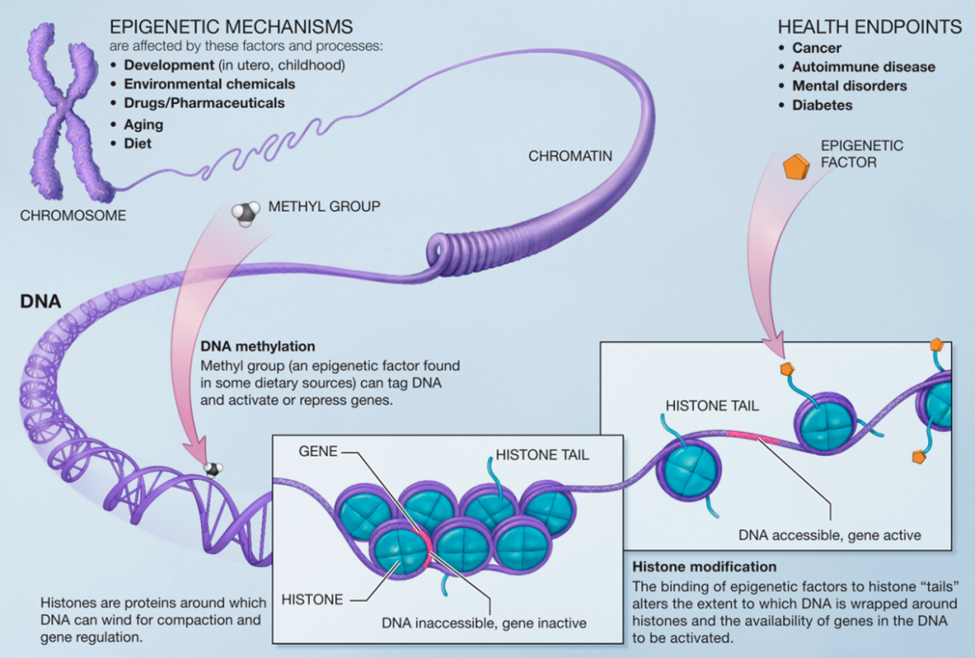
Source: Wikipedia. Public domain image produced by the National Institutes of health.

But is that adaptation by the existing genome composition? Genetic evolution is blind going forward. If a species evolves with a survival advantage of some kind, there can be no “foresight” involved. If it is truly genetic evolution, the end result is because of heritable genetic changes at the level of molecules. If a changing environment causes altered expression of an existing gene in response, say a gene that is otherwise dormant but is suddenly “awakened” by the new environment somehow, then perhaps this is a form of “adaptation within the existing genome” rather than evolution by editing of the genome. This is where epigenetics operates.

Charlie Darwin

The naturalist, geologist and biologist Charles Darwin‘s claim to fame is substantial and well deserved. His book “On the Origin of the Species” is the work that is cited by many but read by few. Over his lifetime he had published considerable work before Origin of the Species. What may be less known is that the notion of evolutionary change wasn’t something that he alone scraped together. Others had previously speculated out loud and in print about changes in species over time. His grandfather, the physician Erasmus Darwin, produced a volume titled Zoonomia that anticipated some of the work of Lamarck which foreshadowed the concept of evolution.
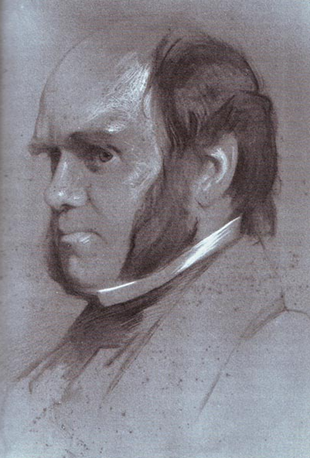
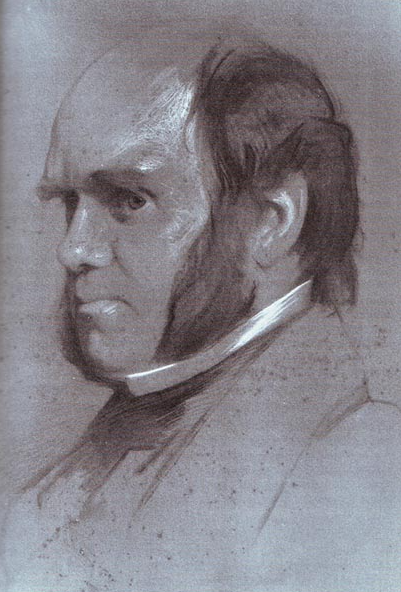
Charles Darwin drawing by Samuel Laurence, 1853. Source: Wikipedia.

In 1831, Charles Darwin embarked on what was originally planned as a two-year voyage of discovery aboard the H.M.S. Beagle, but which ultimately spanned five years. The expedition’s primary goal was exploration, and Darwin, recommended for his scientific interests, joined as a gentleman naturalist with Captain Robert Fitzroy, rather than as a mere specimen collector. Fitzroy, a Vice-Admiral in the Royal Navy and a scientist, led the journey. Darwin, during the voyage, dispatched bones, fossils, seeds, illustrations, and writings back to England, garnering significant interest from geological and natural history circles. Of interest, prior to setting sail Darwin had acquired skills in taxidermy.

After Darwin’s return to England, he spent many years speaking, writing, rewriting and publishing his accounts of the voyage. He is buried in London’s Westminster Abbey just a few meters from the grave of Sir Isaac Newton.

Our acknowledgement of the value of Charles Darwin’s work and methodology is fully legitimate. Darwin’s theory of evolution was a major step change in how we think about biology, speciation and introduced us to natural selection. What is missing from Darwin’s work, however, is the physicochemical mechanism of how evolution works. This is understandable simply because biochemistry was unknown at that time. Inheritance at the molecular level was a mystery until the early-mid 20th century when the molecular biology of the gene began to come together. DNA and RNA had to be isolated and characterized as well as observations made of their x-ray structures. The connection of DNA and RNA polymers to protein formation and composition had to be arduously worked out. Accounts of this are easily found on the internet.

One point of this essay is to argue that while Darwin and others began to coalesce the varied observations of macroscale adaptation and speciation found around the world into a grand theory, the mechanism of evolution lay at the Ångstrom to nanometer scale of the molecule. I find it impossible to deny that if Darwin and others had not come up with evolution at the macroscale, biochemists would have discovered molecular evolution and it would have been used as a basis for the evolution of species.

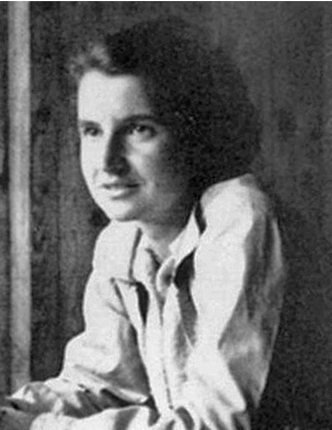
Sidebar. Rosalind Franklin (25 July, 1920 to 16 April, 1958)

Much acrimony has been made over the alleged snubbing of physical chemist Rosalind Franklin in the selection of 1962 Nobel Prize winners in Physiology or Medicine for the discovery of the structure of DNA. A recent paper in the 25 April, 2023, issue of Nature brings together some little-known details of the cold-shoulder given Franklin as a co-discoverer of the double helix structure of DNA.

The disqualifying event for the 1962 Nobel Prize occurred in 1953 with Franklin’s death. At the time, posthumous awards were accepted only if the death occurred between nomination and the award date which was not the case for Franklin.
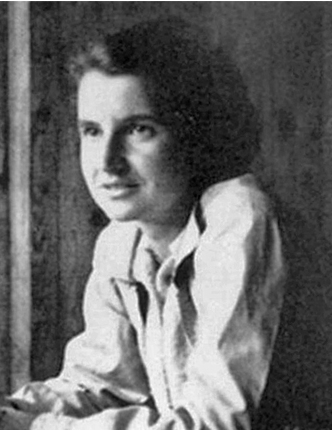
Dr. Rosalind Franklin. Source: Wikipedia.

The story of the discovery of the double helix structure of DNA involves 4 central characters: James Watson and Francis Crick from the University of Cambridge, UK; Rosalind Franklin and Maurice Wilkins at King’s College, London.

Before any of this started, the involvement of deoxyribonucleic acids in heredity had been suggested by Oswald Avery in 1944 (below). Watson and Crick, Franklin and Wilkins did not discover DNA. They did, however, use x-ray diffraction of crystalline DNA fibers and model building to deduce the chemical structure of B DNA.

At King’s College at the time of this story, the biophysics group was led by John Randall whose deputy was the New Zealand-born biophysicist Maurice Wilkins. In 1951 Franklin joined the Department on a 3-year fellowship having come from Paris where she used x-ray diffraction to study the structure of coal. By this time Wilkins had been working on DNA since 1948. A personality clash arose between the more assertive Franklin and the less confrontational Wilkins, so Randall divided certain DNA samples between them. Franklin received a calf’s thymus-derived sample of the highly purified material from the Swiss chemist Rudolf Signer – Wikipedia at the University of Bern and Wilkins received a “poorer sample” from Chargaff at Columbia University in NYC.

Sidebar to the sidebar.

Chargaff had become interested in DNA after Oswald Avery at the Rockefeller Institute published a paper in 1944 concluding “The evidence presented supports the belief that a nucleic acid of the desoxyribose type is the fundamental unit of the transforming principle of Pneumococcus Type III“. Avery and colleagues had developed the first immune serum for a strain of pneumococcus from the blood of horses. Along with colleague Michael Heidelberger they found that polysaccharides associated with this strain of pneumococcus could be isolated from water-soluble spherical capsules around the cocci and are antigens, which later led Heidelberger to discover that antibodies are proteins. These are now fundamental facts in molecular biology and immunology.

Back to the double helix

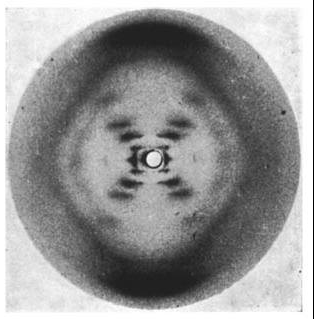
Wilkins had earlier discovered that there were 2 forms of the DNA in solution- the crystalline A form and the paracrystalline B form. Franklin took the A form and Wilkins the B form. Franklin discovered that the A form will convert to the B form in higher humidity and revert back to the A form in lower humidity.
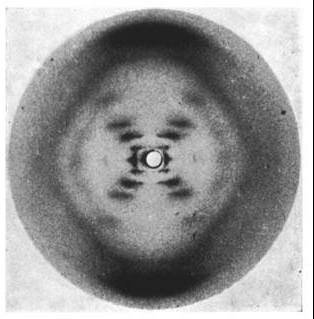
Photo 51. The x-ray diffraction pattern of the “B” form of DNA, taken by Raymond Gosling while working under Wilkins. Source: Wikipedia

Unfortunately for Franklin with the A form, Wilkins’ B form is what is found in the cell.

From a biochemical standpoint, mutation of DNA sequences makes chemical sense and today is routinely observed in DNA assays. An increasing number of diseases or characteristics are linked to distinct mutations in DNA. Deoxyribonucleic (or desoxyribonucleic) acid (DNA) is a chemical substance that, like all chemicals, is susceptible to its chemical environment and whatever particular substances happen to be nearby or to ultraviolet or ionizing radiation or to highly reactive chemical species like free radicals.
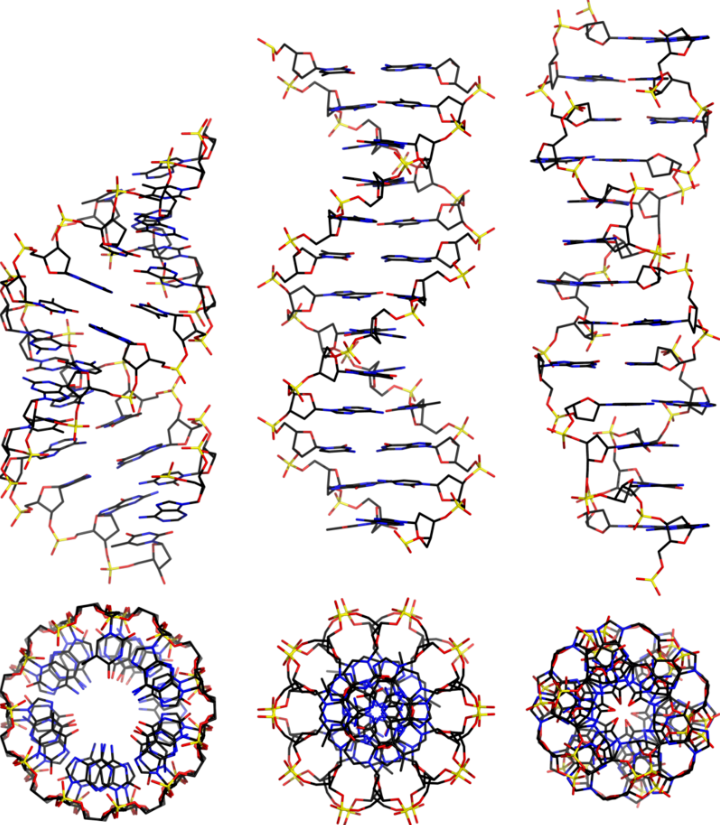
Left to right: A, B and Z DNA structures. Image from Wikipedia. Note the difference between Franklin’s A-DNA vs Wilkin’s B-DNA. They differ by the extent of hydration.

Biochemical Evolution

Charles Darwin is renowned for his well-articulated, evidence-based argument on the evolution of species by natural selection. He courageously introduced a detailed new theory within the conservative British scientific community. His ideas fascinated many leading naturalists of the time, who adopted and furthered the theory. Truly, it marked a considerable progression for that period.

“But but but, it’s just a theory!” This is a common objection by creationists and religious zealots thinking they have found the weak underbelly of evolution. They claim it is “just” a theory as though a theory was merely a fanciful excursion of the imagination where all opinions are of equal validity.

A theory is an overarching explanation or model subject to improvement over time with which arguments are made in support of or against a core concept. This core concept is initially built on a pedestal of clay. As better analysis and experimental data come in, the pedestal is strengthened or weakened. Furthermore, the theory may be unequally affected across its breadth with some aspects perhaps tossed out and others supported. Theories themselves evolve and strengthen with evidence. Scientists are naturally anxious to contribute to sorting out the truth of a theory.

Another objection to evolution is the previously stated notion that “creation implies the existence of a creator.” A common argument is that a watch is such an unlikely collection of highly refined components that there must be a watchmaker behind it. The human hand or eye are the anatomical examples often cited. There is a bit of vocabulary that muddles these arguments. The use of the word “creation” presupposes that the universe is something that was assembled by a creator. If you see the world as something that had to have been created, then the idea of evolution may be difficult to swallow.

The question of life on Earth has two important aspects to it. One is the evolution or change that species undergo over time. The other is the initiation or abiogenesis of life from non-living matter. Of the two areas, the evolution is the most developed concept.

Biochemists and molecular biologists have taken Darwin’s evolution from a mid-19th century macroscopic theory supported by the fossil record, geological observations and the gross anatomy of animal species from around the world to the submicroscopic machinations of molecules. This has been a gigantic leap forward in understanding not just in the chemistry of all life but also the evolutionary physicochemical mechanisms of life. Life is one of the things that chemicals can do given opportunity and time.

Christian and other churches reacted negatively to evolution in Darwin’s time as most do today. Darwin and many geologists concluded that the Earth was far, far older than did scholars withing the church. So, what is this about? Are church leaders skeptical or just stubborn? Is this even a good question?

Types of thinking

I would offer that people can be spread between two bookends in regard to thinking: Devotional thinkers and analytical thinkers. Devotional thinkers have a core doctrine supporting their beliefs and think and behave in a way that their belief guides them. Devotional thinkers study their doctrines in an effort to be in better alignment with it. It is not uncommon for devotional thinkers to limit their exposure to things not aligned with their devotion. Devotional thinkers are sometimes labeled faithful. Their goal is to study supernatural doctrine and align one’s personal behavior.

Analytical thinkers will naturally adopt a baseline worldview that comports with their education, observations and logical sensibilities. But when presented with new data or just a compelling idea, analytical thinkers may be persuaded to open new vistas in their thinking or at least set the idea aside as new thinking under consideration. Analytical thinkers are sometimes labeled as skeptics.

It is impractical to approach each new circumstance one encounters ab initio. In order to explain how an airplane flies it is not presently necessary to first independently derive Newton’s laws of gravity and Prandtl’s fluid dynamics so as to set the stage for lift and drag forces. Everyone has a practical baseline picture of the world that serves as a conceptual starting point for some kind of conclusions on reality. The discipline of science is highly vertical with old knowledge built upon or revised by new knowledge. The requirement for accuracy is practiced by the investigator and checked upon by peer reviewers. Nobody wants to be that scientist who has published a paper with faulty science requiring a retraction in the Retracta Acta.

To be skeptical of the evolution of the species is on one hand to require supporting evidence and compelling arguments. On the other hand, many people dismiss evolution altogether as being contrary to their faith-based notions while posturing as an “evolution skeptic.” However, when physical evidence or collected data are thrown on the table for all to examine and when that evidence is part of a trail of evidence logically or mechanistically interconnected, then to dismiss the logic or measurements is to go beyond skepticism. Apologists would claim that they are keeping their faith against adverse influence or even resisting evil. But standing against evidence could really be considered simple stubbornness for fear of perceived divine consequences or discomfort.

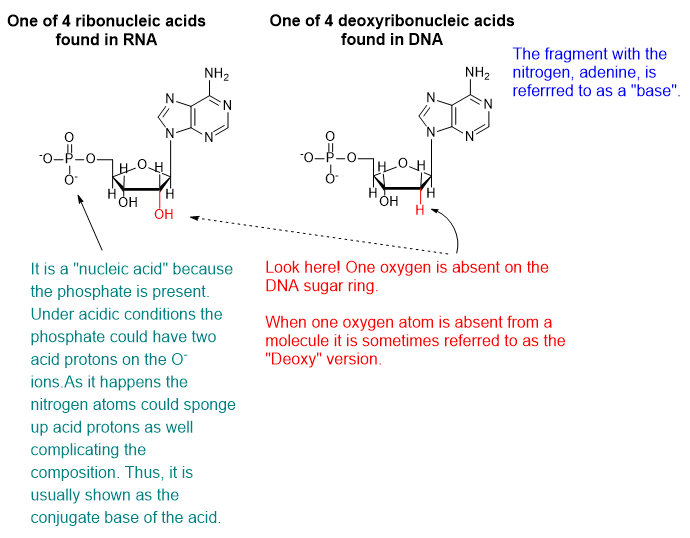
DNA and RNA are polymeric substances comprised of four major subunits. Three of the subunits are shared by both DNA and RNA and the fourth is a different component characteristic to RNA. This determination took some time to arrive at the correct structures and the chemical mechanisms.
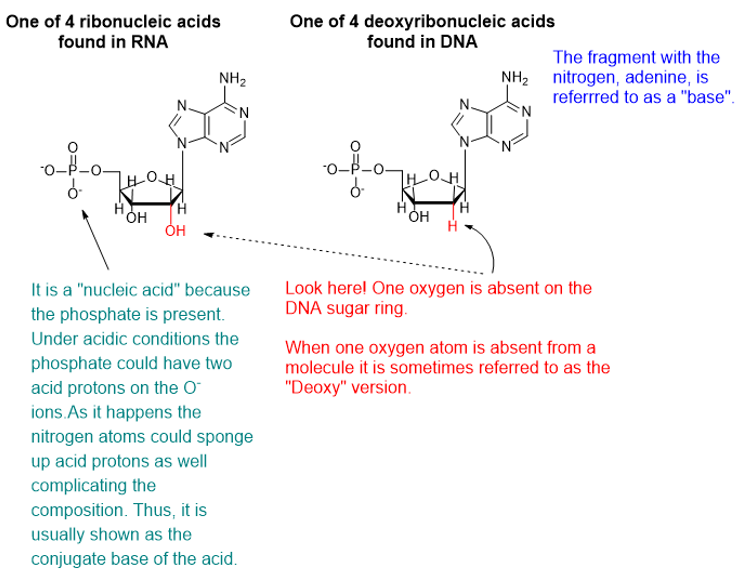
Graphic by Arnold Ziffel.

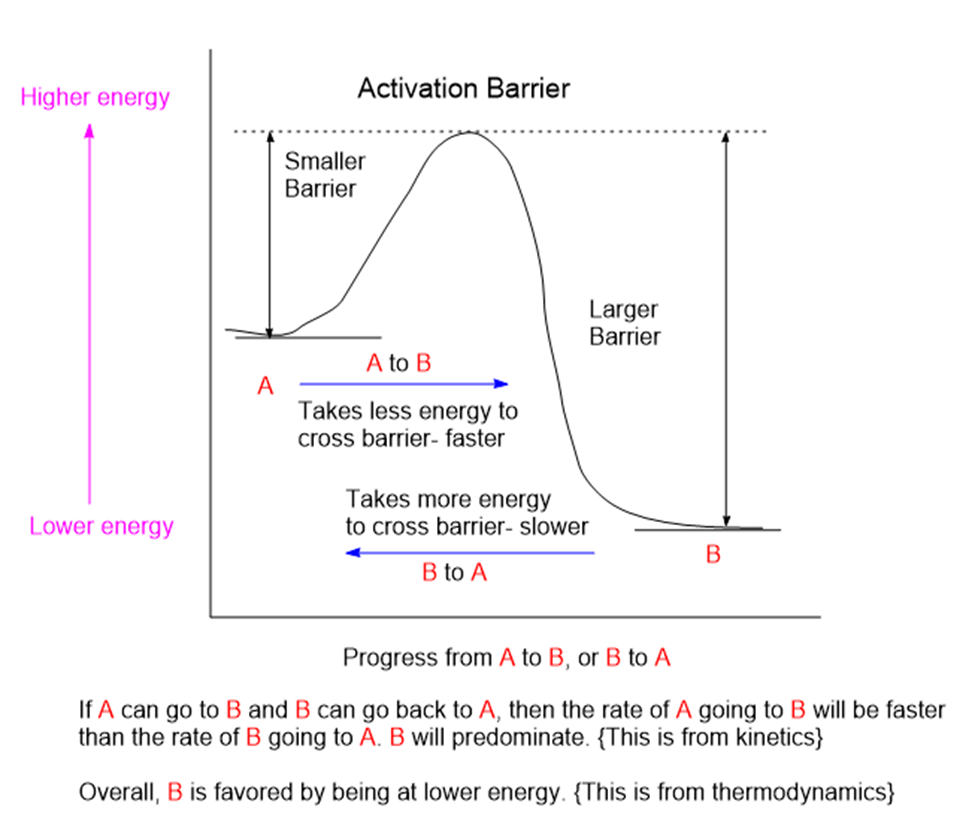
Chemicals interact by particular mechanisms depending on what is present and physical conditions like temperature, pressure or interfering substances. These mechanisms are a built-in, reliable feature of matter in our universe. When multiple mechanisms are possible, the fastest one tends to prevail, channeling matter down that pathway. The fastest channel will have to lowest energy barrier to cross. However, if the reverse mechanism is possible then a balance will be struck between two reservoirs of substances. This is the basis for thermodynamic equilibrium. The reaction direction with the lower energy barrier will be faster, and if the reverse direction isn’t possible, the mechanism will preferentially populate the direction with the lower energy barrier. We would say that the reaction is under kinetic control. If the reaction can go both ways, then a balance will be struck producing substances on both sides of the energy barrier producing thermodynamic control.

One argument offered by Creationists is that the probability of all the atoms in a human coming together to form that human is 1 in 10stupid large. In other words, they say, highly improbable within the age of the universe. And if that was how it works, then I’d agree. But it is definitely not how chemistry and evolution work.

Evolution happens by a biochemical ensemble of mechanisms in solvent water constrained by the boundaries of chemistry and physics and specifically to what is possible in aqueous media. Liquid water is necessary rather than solid or crystalline phase water because for bio- or any chemistry to operate, molecules have to diffuse around and collide in order to react. Biochemistry and therefore evolution occurs at temperatures between roughly -10 oC and 45 oC, plus or minus a bit and at midrange pH levels.

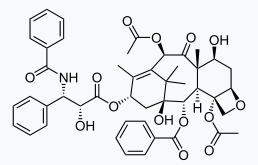
Life is substantially based on carbon because carbon forms stable chemical bonds with nitrogen, oxygen, sulfur, hydrogen and especially with itself. Phosphorus appears as phosphate. Carbon can form chains of indefinite length and 3, 4, 5, 6, 7 and 8-membered rings or larger with 5 and 6 being the most common ring sizes. Tens of millions of different chemicals structures are possible within this group of elements. Nature is crammed with ring systems in natural products.
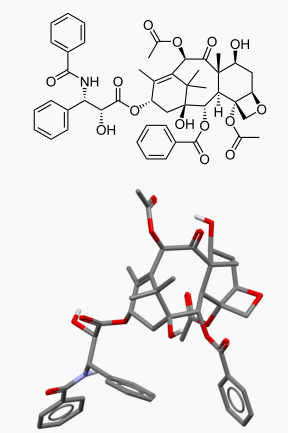
A line drawing and 3D rendering of Taxol or Paclitaxel. Silicon does not do this. Image: Wikipedia.

Biochemistry is not based on silicon, even though silicon  has certain chemical similarities to carbon. Silicon does not easily form chains greater than 2 silicon atoms in length and it has a strong affinity to oxygen. This affinity is very much thermodynamic in nature and is difficult to overcome chemically at biological temperatures and pH. Silicon-nitrogen bonds are hydrolytically unstable at low to moderate pH. All of this adds up to poor utility for silicon in biomolecules.

Each of these carbon-nitrogen, carbon-oxygen, carbon-phosphate, carbon-sulfur, carbon-hydrogen and carbon-carbon bond combinations as well as the various combinations of N, O, P, S, H atoms have their own variations as well. Other atoms like iron, calcium, sodium, potassium, magnesium, chromium, selenium, iodine, and a few others serve purposes other than for molecular skeletons generally.

The point of citing all of these combinations of atoms is to emphasize that each has unique chemical properties and unique reactivities. The slapdash Creationist assertion that evolution merely brings atoms together to form an organism and no consideration of reactivity is mentioned. While molecules in solution are more or less randomly banging around, their entry points for successful chemical interactions are far from completely random. In fact, a given molecule will react only in a few ways depending on what it collides with. A complex molecule like glucose has several reactive sites, but it still has a limited menu of reaction types available at physiological conditions.

Think of each of these limited types of reactions as a channel. Overall, biochemical transformations happen through these particular channels. There may be numerous channels possible on a molecule affording diverse reactive outcomes. Even among the possible transformations, a few channels will react faster and thus dominate. The point is that there are not an infinite number of ways that molecules can exhibit reactivity. This means that evolutionary change through biochemical mechanisms does not have an infinite set of likely chemical pathways. There can be many, to be sure. But the entire ensemble of biochemical mechanisms operating in an organism do not have to change to allow a given evolutionary change.

Evolutionary changes can occur in very subtle ways. A biochemical modification may result from a misreading of the normal genetic code or from some other off-normal situation, but this is not an evolutionary change. A genetic change can result from an alteration in the sequence of the genetic code itself. A change in the sequence of the DNA may lead to a heritable mutation if the change is survivable. A mutation in an unused stretch of DNA may occur and lead to no effect. If the genetic change is fatal to the new cell, cell death can occur, and the mutation will not be passed forward.
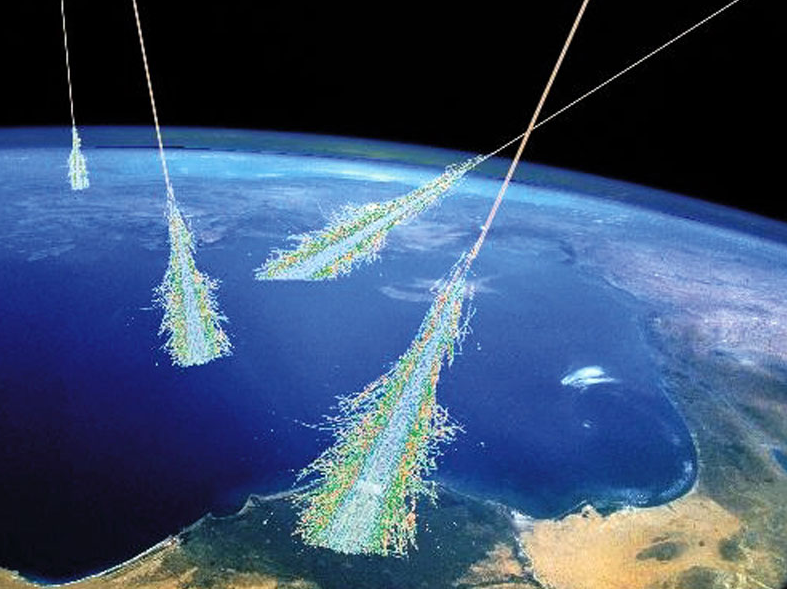
Cosmic ray showers. Image NASA. High energy cosmic rays impinge on the upper atmosphere and collide with air molecules, causing nuclear reactions that result in showers of nuclear particles like muons. Most of us do not realize that we have muons in our lives, but there we are.

Energetic cosmic radiation from outer space and the sun is constantly showering the Earth’s upper atmosphere. When a particle or a photon from space impacts a person, it will penetrate to some depth, dumping kinetic energy into tissues that can break chemical bonds to form ion pairs or radical species. Ion pairs can reconnect as before or with other species to form new substances. Radicals are neutral atoms or molecules where electrons in the form of lone pairs or covalent bonds are evenly split into 2 radical species where each is neutral but have unfilled octets. Radicals tend quench themselves by popping off a hydrogen radical from a nearby molecule or by colliding with the radical that was originally separated.

Radiation exposure of living tissue or other material objects produces ‘stochastic’ damage because the kinetic energy of the radiation particle or photon far exceeds the energy needed to cause bond breakage or general scrambling of biomolecules. Stochastic radiation damage is fairly unselective so, as the radiation passes through materials, the energetic particle dumps some or all of its energy into the material directly along its path of movement.

One measure of the potency of a given particle or photon of radiation is the number of ion pairs produced per inch or centimeter. The three major types of radiation are alpha, beta and gamma. Alpha particles produce the most ion pairs because of its high kinetic energy so it dumps its kinetic energy along a very short distance. Beta particles can travel a bit longer distance (several inches) but require less shielding than gamma rays. While gamma rays are quite penetrating, their ion pair production is very low.

Any given human exposure to radiation can result in no observable effect or tissue damage. Not every exposure to radiation will result in cancer. Because radiation damage to tissues is stochastic, a survivable mutation of DNA is random.

Enzymes are proteins that act as catalysts or enablers of chemical transformations. These protein enzymes have places on them that are clefts, ridges and valleys along their exterior where other molecules or coenzymes can collide and interact called an active site. It is possible for the enzyme to be active continuously and catalyze transformations when the right substrate molecule jostles along. It is also possible for the enzyme to require ‘activation’ in order to function. One means of activation comes from phosphorylation of the substrate to be acted upon, phosphorylation of the enzyme itself, while yet another is where an external molecule binds to a particular spot, resulting in an alteration in the overall shape of the enzyme. This alteration in the enzyme’s shape can open the active site of the enzyme and allow the intimate contact necessary for a particular molecule to diffuse in, bind and undergo a catalyzed transformation. In this way, an enzyme can be deactivated as well.
Much new drug discovery and design is based on toggling an enzyme “off or on” with a suitable substrate. The substrate can be constructed so as to be highly specific, to be detachable or to sacrifice itself by covalently connecting to the enzyme and prevent it from further functioning. This last category is sometimes referred to as a suicide substrate inhibitor. Penicillin is an example of a suicide inhibitor that covalently combines with an enzyme, shutting it down permanently. Penicillin and its many analogs have a strained 4-membered ring in them called a beta lactam ring that can relieve the strain by ring opening to a straight chain by connecting to a feature on the enzyme. This is irreversible though bacteria have developed the ability of reacting with penicillin to eliminate its ability deactivate a target enzyme.

Enzymes can be very sensitive to a change of one amino acid which could lead to little change or it could cause the enzyme to operate a few percent faster or slower. Or it could change the reaction rate or specificity by a great deal. It might even allow different substrates to be acted upon by the enzyme. Let’s say that this change in the operating rate of the mutated enzyme causes a chain of successive biochemical reactions to operate faster, say by increasing the efficiency in the use of energy. If this results in the survival rate of the organism increasing by a bit, it may impart a survival advantage. If the alteration of the enzyme reduces the survival rate, then the organism may continue to survive or not.

But hold on. Evolution is blind going forward. Not all changes register as an advantage or even show an effect. If the mutation happens after reproduction, then it does not get inherited by succeeding generations. If the mutation is fatal, then the cell dies and the genetic change halts. If the process of evolution is so iffy, how does anything happen?

We should reflect on how fast chemical reactions can happen. At room temperature, water is undergoing collisions at a rate of ~1010 per second. Now imagine 1 mole of water, 18 grams, all molecules undergoing ~1010 collisions per second. One mole of water contains 6.02 x 10²³ water molecules. Simple mindedly, that adds up to 6.02 x 1033 collisions per second in those 18 grams, or 1 thirsty swig of water. But that’s not all. These water molecules are also vibrating, rotating and translating at perhaps 1012 vibrations per second. In general, each collision will carry a particular probability of a bond breaking or bond forming event. Water is a boring example, but we can see that a reactive biomolecule is also undergoing a very large number of collisions per second, each with a certain chance of participating in a reaction. Even though a given reaction may be of low probability per collision, a great many collisions raise the odds of fruitful interaction.

Rapid molecular collisions in combination with a limited range of reaction channels means that the molecules will sort themselves out by way of finding the lowest energy-barrier, fastest reaction channel to follow. This is far from completely random. The fastest reaction channel can consume its inputs the fastest and the product from this fast channel will predominate.

Why would there be DNA, protein or other biomolecules that are fragile enough to suffer mutation in the first place? Why hasn’t DNA evolved into a sturdier structure free of mistranslation, mutation and other errors in its functions? There are certainly substances that are more robust than DNA or RNA like hydrocarbon polymers, silicates, urethanes, urea linkers and other polymers that are much more stable to chemical insult. The DNA double helix is, after all, held together by low energy hydrogen bonds.

A key requirement of life as we know it is that something has to prompt DNA to unravel and split strands of deoxyribonucleic acid chains apart. In order to unravel, the structure holding it safely in the double helix form must be capable of assembling and coming apart when prompted. The nucleic acid structure along each chain of the double helix have phosphate linkages. Because phosphoric acid is a weak mineral acid it can lose one, two or three acid protons (mono- di- or tribasic) under physiological conditions.

The phosphate linkage in DNA works very well for life. It allows free rotation about the linkage and is quite polar for good compatibility with water. Phosphate can form bonds between themselves: 1, 2 or3 phosphates can link, leading to short chains of phosphate anhydrides. Because phosphate is relatively stable under physiological conditions yet is able to function, it is nearly ideal for its purpose. Phosphate is phosphorus (V) with 4 oxygens bonded in a tetrahedral fashion. Three of the oxygen atoms have single P-O bonds with one P=O double bond. When connected as anhydrides, mono-, di- and triphosphate anhydrides may form. The linking oxygen atom connecting the two end phosphates can be displaced and added to another substrate. This is called phosphorylation and is critical in biochemistry.

Abiogenesis

Abiogenesis is the big puzzle at this point in history. Evolution is not the same as abiogenesis. How did life begin? As we look around at the Earth today, we see an overprinting of billions of years of planetary, geologic, oceanic, and atmospheric transformations. The present world at the surface is nowhere near that world at the time when life began to flicker into existence. One of the primary differences is the chemistry in play. Before oxygen began to accumulate in the atmosphere, many elements may have been exposed at a reduced oxidation state, that is to say electron rich. The chemistry of an atom greatly depends on the state of its valence electrons. So much so that the atom loses its identity when charged or in molecular form. For instance, +H (protium or hydrogen cation) is chemically different from H (hydride ion) is different from 0H (atomic hydrogen)and all are different from molecular H2. Referring to +H as hydrogen is incorrect. It is properly referred to as “hydrogen ion” or “protium ion”. The ions are distinct chemical species. This range of possibilities in the state of reactive atoms (other than the noble gases) somewhat complicates the chemistry of prebiotic Earth.

At this point I’ll refer the reader to the InterWebs for deeper insight into abiogenesis.
A Few Conclusions and Refutations on Molecular Evolution

Summary:

What can a chemist possibly have to say that could be even marginally interesting about extraterrestrial life or evolution? Well, as far as extraterrestrial life and the search for it goes, I would say that all of the metallurgy, semiconductor fabrication, liquid hydrocarbon fuels, chemicals, transportation technology or polymers exploited in radio or optical astronomy, have some element of chemistry in their manufacture.

………………..

The quest to discover life beyond Earth captivates many in the broad field of space science. The Search for Extraterrestrial Intelligence (SETI) has played a significant role in astronomy and space science communities. However, the search extends beyond intelligent life; any form of life or even the essential components and conditions conducive to life, are of keen interest.

It is widely accepted that the physics governing our planet and solar system likely applies universally. While this is a hypothesis, it is a reasonable one. If the physics are consistent, then the chemistry should be as well. Consequently, the behavior and limitations associated with matter would be uniform across the cosmos. This reasoning suggests that life elsewhere in the universe would be governed by the same chemical and quantum mechanical principles familiar to us.

The “Anthropic Principle” has caused much debate, with Wikipedia noting that “Anthropic reasoning is often employed to address the notion that the universe appears to be precisely calibrated for life.” The mystery of why numerous physical constants and their ratios needed to be exactly as they are for life to emerge on Earth has intrigued many.

To say the Big Bang’s initial pressure and temperature were high is an understatement. As the universe expanded and cooled, energy barriers emerged that shaped the interactions of matter and of photons, placing boundaries on the spontaneous transformation behavior of matter. Pathways of interaction emerged, steering transformations towards increasingly specific outcomes. Essentially, it’s basic kinetics: the quickest transformations and their stable products start to prevail and fill the universe.

If physical constants are emergent at the moment of the Big Bang and become manifest down the timeline, could it be that another Big Bang could happen that is not conducive to life? There would be nobody there to ponder these questions. Life is here because it was possible and maybe even likely here and there.

The phrase “finely tuned for the existence of life” seems to leave open a crack for a creationist view. Absent the many spooky bronze and iron-age theories still in practice today, naturally a sentient being can look at her/his/its existence and marvel at how beautifully synchronized and proportioned the machinery of the universe is. Certainly, there must be a hidden message in this, right?

ET? What th’ …?

Animals like mammals, birds, fish, and even some invertebrates like octopi and crabs are considered to be sentient. According to Google, sentient animals are those that can experience feelings and sensations, both positive and negative, like pleasure, pain, joy, and fear. So, while an octopus may have elements of sentience, could distant observers elsewhere in the galaxy detect them from optical or radio astronomy techniques? Try as it might, the ability of an octopus to construct a powerful radio transmitter and beam a message into the cosmos is sorely limited by its physical anatomy. Except for humans, no other sentient life form on Earth is known to construct a radio transmitter that would serve as a beacon of sentient life.

Until recent history, SETI was limited by the lack of technology to light up the universe with our own signals or to detect faint manufactured signals across interstellar space. At such point that metallurgy, electrical engineering and the hundreds of other critical and apex technologies bloomed into a sufficient state of development, no intelligent emanations from Earth found their way into space.

While TV and radio broadcasts began their journey into space, it is important to realize that our signals were encoded onto carrier waves. Amplitude modulation (AM) signals carry their information by simply varying the magnitude of a single frequency in time with the human voice or music. This is most likely to be grasped by alien radio astronomers. Frequency modulation (FM) is a bit more challenging because audio signal is mixed with a carrier signal by a heterodyne circuit. Extracting useful information would require them to pull audio frequency information from the heterodyned signal.

Television is much more difficult. While the alien radio astronomers may have figured out FM encoded radio information, the particular details of the TV raster scan are based how human engineers decided to interlace and sequence scans to produce an image on a screen of a particular aspect ratio. TV designers took advantage of the human’s persistence of vision to seamlessly follow moving pictures to give continuous images yet maintaining a fast enough frame rate to avoid flickering. The television’s electronic timing is based on frame rate, the number of interlaced lines, and the aspect ratio of the screen.

The point of this TV discussion is that a TV signal must be deconvoluted into a signal that properly displays an image and plays the sound on a particular piece of equipment. This could be challenging for an alien radio astronomy research group to decode.

All of this talk about an octopus developing radio astronomy presupposes that its unique octopussian sentience includes such desires.

It could be that the initial energy at t = 0 yielding the primordial plasma constituting the early Big Bang was only capable of producing a specific set of fields producing elementary particles which then give way to a specific set of quantitative relationships and properties. The burst of energy causing the Big Bang must have had constraints driving its transformation into matter, which is also constrained by quantum mechanics, etc. Maybe the present universe is simply what primordial energy naturally does when expanding as a universe. Why do the quantitative values of physical constants need to be variable? An imaginary and feverish conundrum.

As the highly energized primordial plasma of the Big Bang began to cool, matter and energy channeled into particular states. The particle energy states that had the highest barriers coalesced first followed by subsequent lower energy plasma condensing into other particles. I’m drawing a crude analogy to the process where individual minerals form from cooling magma according to their melting points.

There is a notion prevalent among Creationists that the probability of a life form spontaneously forming from individual atoms is 1 in 10large or some other inconceivably miniscule chance. And if that was how life had to form, then the Earth would still be a sterile wet rock. But that is not how chemical transformations work.

Central to the Creationist view is that evolution cannot happen because there is nothing but random chance to guide the molecules of life into a highly complex organism. They start with the assumption that life arose purely from random chance. I hope to show that this assumption is false.

All atoms and molecules have properties that either qualify or disqualify them as a candidate for a given atomic or molecular transformation. All molecules have properties that either qualify or disqualify them to take part in a transformation resulting in a given product. The words “qualify” or “disqualify” could mean that something will or will not happen absolutely. But just as likely, the words could mean that a transformation is just too slow at a given temperature to give the desired effect. As it happens, temperature is critically important to molecular transformations. At a low enough temperature, most transformations will slow to a negligeable rate, shutting down that particular transformation channel. In general, where there are competing transformation channels, the fastest channel will prevail in producing its product.

All molecules have a limited set of reaction channels at a given temperature as a result of their particular reactivity.

What we think of as ‘ordinary’ chemistry is more precisely the electronic behavior of valence electrons. Nuclear chemistry also exists but in the domain of nuclear change.

Valence electrons on earth will behave the same everywhere in comparable conditions. Chemistry happens at the outer, valence level of ions, atoms and molecules. So, we should expect that bond forming and bond breaking mechanisms should be the same throughout. All of this leads to the high likelihood that chemical reaction mechanisms elsewhere in the universe should not be unfamiliar to Earthlings in general.

Life on earth exists as a result of the behavior of particular chemical substances within a range of chemical and thermal environments. The range of chemical environments and substances present during the initiation of life is thought to be quite different than what we find on earth at the present time. For instance, gas phase molecular oxygen was not present until a considerable time after life began. The initiation of life on earth was under anaerobic conditions and was able to start and survive with the materials at hand. Biochemistry is a series of reduction/oxidation events driven by the Gibbs energy of a transformation as is all of chemistry. Even on anoxic earth, diverse oxidizers were present.

Today, anaerobes are known to use the oxidative properties of inorganic species like sulfate (SO42-), nitrate (NO3-), ferric iron (Fe3+), carbon dioxide (CO2) and manganese (Mn 4+). Other anaerobic oxidants include chromate (CrO42-) and arsenate (AsO43-) which may have been present as well. Reductants include nitrite (NO2-), ferrous iron (Fe2+), and sulfide (S2-).

Oxygen is the third most abundant element in the universe and the second most abundant heavy element on earth behind iron. Many elements are strongly attracted to the abundant oxygen so it is no wonder that so many minerals are oxides of one sort or another. Oxyanions like silicates, carbonates, sulfate, nitrate, and oxides like CO2 or any number of metal oxides all contain oxygen that has been bound with another element. The oxygen pulls negative charge away from the central element making it electron deficient. In the case of sulfate and others, the actual oxidizing part is the atom with the oxygens attached, in this case the sulfur.

Not every transformation of matter is within reach in a given condition. Chemical reactivity which comprises kinetics and thermodynamics has the effect of channeling matter into a finite number of probable pathways. This bestows the property of selectivity. For any given chemical substance, only a certain limited group of transformations are possible or likely, given the conditions.

Life as we know it exists because our biomolecules were robust enough to survive their chemical and thermal environments, but not so robust that they resist the needed transformations. Life depends on biomolecules being moderately stable but not by too much. Biomolecules can organize into particular structures that are physically robust, like the chitin shells on shellfish. In the chemistry of life, chemical transformations must be tolerant of the aqueous environment in and around an organism, but not so tolerant that the necessary reactions are too slow or too fast within the narrow range of environmental temperatures available.

Organisms on earth are tolerant of water at the level of molecules. The internal apparatus of the cell is an aqueous environment having some amount of viscosity. In order for molecules to interact, they must collide with each other. Life in the solid phase would mean that biomolecules would be immobilized and unable to collide and react. Cell structure for metabolism and reproduction would not be feasible. Life in the gas phase is limited by the vapor pressure of the necessary substances. Many, if not most, biomolecules would not tolerate the heat necessary to volatilize. They would decompose.

A diversion into molecular evolution.

I’ll just blurt it out- ongoing evolution requires heritable change in a genome. A genetic change must be survivable for the parent cell to reproduce and produce viable daughter cells. The inherited mutation must not be deleterious to further reproductions of the subsequent generations. A mutation may randomly result in something that has either a lethal effect, no effect, or produces some biomolecular improvement. The mutation may be as modest as an enzyme alteration causing it to bind either more or less tightly to a ligand resulting in a few percent change in rate of some the enzyme’s function. This could translate into better efficiency in producing some cell structure or better use of energy. It could also be that nothing changes as a result of the efficiency alteration, or that it has an overall negative effect further challenging the survival of the cell line in a nonlethal way.

There are two kinds of changes that can occur with DNA. One is a change in the sequence of the DNA molecule itself. The other kind is “epigenetic” which is heritance not reliant on changes on the DNA sequence.

Creationists like to make a show of the probability of random chance producing even simple ordered sequences as fantastically small. Actually, their superficial analysis of permutations and probability looks plausible. I can’t argue with the low probability of individual atoms coming together randomly to form a living organism all at once. However, the beginning assumptions are wrong. Life did not spontaneously form out of a bunch of loose atoms by simply condensing into a centipede or a human. Change in evolution happens at the molecular level a step at a time. A change in the amino acid sequence of any given enzyme must trace back to a change in the DNA sequence to pass along a heritable mutation. Evolution moves by fits and starts. A mutation may have no effect, advantageous effect or deadly effect.

At the level of molecules, change happens through very definite chemical mechanisms. Molecules are constrained to do certain things and in a particular way. It’s like a channel. Sometimes two or more channels may be possible. In this case, the fastest channel will dominate in output and influence. An evolutionary change might cause a biochemical transformation to stop, speed up, slow down, or be more or less specific in outcome.

Molecular bonds vibrate in the range of 1013 to 1014 Hertz. A hydrogen molecule will reportedly undergo 2.5 x 10¹⁰ collisions per second at 2 bar and 24 oC. If two atoms or molecules are to react, then they must collide. At a given temperature, a collection of hydrogen atoms will be dispersed over a statistical distribution of energies.

Biochemistry on earth has evolved around water and takes advantage of certain properties of water. Its ability to hydrogen-bond is exploited extensively in biomolecule structures. Water has the ability to accommodate charged species or neutral dipolar species. This is called hydrophilicity. It is important not just to keep ions and molecules in solution, but also to stabilize the transition of a reaction if it generates a momentary dipole.

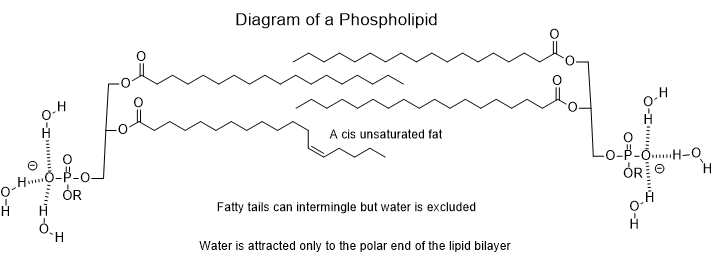
Water is immiscible with substances having a large hydrocarbon protuberances like fatty acids, phospholipids or certain side groups found on a few amino acids. This is called hydrophobicity. Terrestrial biochemistry exploits both hydrophilicity and hydrophobicity.

Source: Wikipedia.
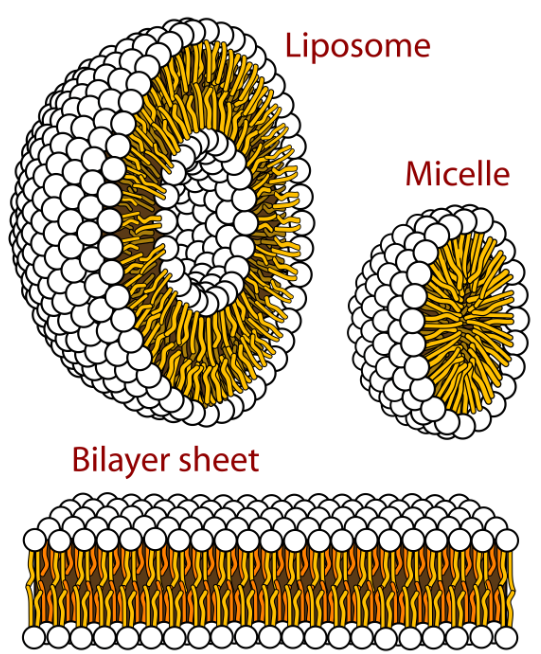
Some larger molecules like the fatty phospholipids above have both hydrophilic and hydrophobic regions. Given the chance, phospholipid molecules will spontaneously orient themselves in a way that when combined the water ‘repellant’ hydrophobic tails will tend do aggregate. This leaves the hydrophilic phosphate features at each end to remain in contact with the water environment.

Cells have compartmentalization and cell walls simply because of the incompatibility of the polar water molecule and nonpolar hydrocarbons. These two incompatible liquids arrange in a way that minimizes the surface area of contact between them. They will form layers when stationary or droplets when one is dispersed in the other. This is the minimum energy condition they spontaneously go to. Micelles will even form spontaneously in your soapy dishwater.

Life on earth presently requires many environmental conditions to be just right. Cells of micellar-like construction take advantage of the hydrophobicity of substances with long chain hydrocarbon parts on one end and charged or polar features on the other side. Micelles are structures that spontaneously form in water. Living cells adopt a bilayer structure based upon the tendency for “likes to dissolve likes.” That is, non-polar hydrocarbon features “prefer” not to be in contact with polarized water, but rather cluster in a way that minimizes water-hydrocarbon surface contact. The effect of carbon chain structures in the biochemistry of earth is the stability of carbon-based structures and the wide variety features it can accommodate. These features include stable carbon-carbon chains as well as carbon bonds to hydrogen (H), nitrogen (N), oxygen (O) and sulfur (S) in particular. Carbon is unique in that it readily allows the formation of stable double bonds with itself or N, O, or S. Carbon also can form triple bonds with itself or N. Cyanide and acetylene are examples. The ease and stability of carbon bonded to C, N, O and S, along with the stability of multiple bonds on carbon all point to it as an excellent candidate for as the ideal building block for biomolecules.

It is often mentioned that since silicon has certain similarities to carbon why isn’t life based on it? Silicon-silicon bonds are prone to oxidation and not found in nature. Silicon is almost always found in nature as silicate in its various forms in minerals and very often in variety of silicate oligomers and polymers. Silicon-nitrogen and silicon-sulfur substances are not easy energetically. Furthermore, silicon does not form double bonds with itself or other elements. So, the variety of structural motifs silicon can form isn’t as broad as carbon. Silicon vastly prefers to be silicate in nature. Silicon is not found in biomolecules despite its high abundance in the nature.

Conclusion

I’m trying to make the point that extraterrestrial life will surely be different from life on earth at the macroscopic scale but maybe not so much at the level of molecular transformations. Every living species today trails behind it a unique evolutionary history, some of which remains in their genomes. Despite the huge variety of life forms on earth and all of the attendant structural variability that goes with it, we all share the use of DNA/RNA, proteins, carbohydrates, phosphates, lipids, calcium, magnesium, potassium, sodium, etc. All life forms on earth are able to capture and use energy as well as reproduce.

The history of life reveals an obstacle course through which organisms struggled to stay alive. Those that did survive had no way to anticipate the future and no way to prepare for it even if they were able to “anticipate” at all. The history of life is the history of challenges to survival.

Humans exist today because our ancestors going back into deep time were able to survive both anaerobic and oxygenated earth, snowball earth, competitive pressures from other life forms, vulcanism, cometary impact, solar UV radiation, chemical toxicity from the environment, disease and climate.

Today we can add stupidity to the list of survival challenges. Can we survive the results of our behavior? Humans have a brilliant streak in developing weapons- explosives, guns, nuclear, biological and chemical weapons. If all else fails, there will always be the sharp stick and club.

Humans are the way we are because of the way that natural history unfolded. A planet with the same makeup and conditions 3 billion years ago would evolve life in a different way than we went. Evolution happens because of the ability of our genetic material to be just a bit unstable and to be passed on in reproduction. But this change is a random process in both features and time. A genetic change can be fatal or helpful. The manner and schedule in which random genetic alterations happen is impossible to predict. Evolution is blind going forward. Another try at evolution is highly unlikely to produce Homo sapiens again.

Any given “intelligent” species may or may not invent or use radio technology. Therefore, they may or may not emit or receive radio transmissions. Such creatures would be undetectable using radio astronomy. Although two patents for wireless telegraphy came out in 1872, humans have only had useable wireless telegraphy since 1895 (Marconi). As of this writing, only 128 years have elapsed since Marconi sent his first long distance (1.5 mile) radio communication.

We have only had radio communications for 128 years in the entire history of our species. In order to have this invention in 1895, the European enlightenment had to happen leading to the idea of scientific inquiry and a minimum understanding of physics and chemistry. The voltaic pile had to be invented which gave way to further refinement of electricity. At minimum, the metallurgy of iron, copper and zinc (for brass) had to be in place for the for the discovery and use of electricity. The path to broadcasting and receiving radio waves required a fair degree of curiosity and industrialization.

An organic chemist looks at evolution*

(Revised 7/28/22) I wrote this essay a few years ago but did not publish it. This is not written for evolutionary biologists. It is written for folks who may struggle with hopeless conversations with creationists and deists.

[I apologize ahead of time for the lack of images. The editing software makes pasting images quite problematic.]

On weekends I check in on C-SPAN 1 and 2 to see what folks are talking about. A couple of weekends ago on Earth Day there was a C-SPAN 1 broadcast of an April 19th, 2017, panel discussion on the ” March for Science and Threats to Science.” The segment was hosted by The Heritage Foundation and featured a number of well-dressed folks who presented themselves as being authoritative and were highly skilled in the rhetorical arts. It was a curious thing that the Heritage Foundation chose this topic to weigh in on.

The discussion followed various lines of conservative analysis of the 4/22/17 March for Science and touched on the New Atheism, Neo-Darwinism, with allusions to a supposed endemic misanthropy of some March for Science participants. One of the panelists was a fellow named Stephen C. Meyer who is a senior Fellow and founder of the Discovery Institute. Meyer is a very articulate and persuasive proponent of creationism. His contribution to the discussion was a recitation of the pro-creationist argument on the weaknesses of Neo-Darwinism. The thrust of his argument centered on the alleged disagreement among scientists in the field of biological evolution and how this delegitimizes the whole concept. This line of argument is a common (dare I say standard?) rhetorical detour used by creationists to cast doubt on the science of evolution.

Creationism adherents have learned that they do not have to prove evolution is incorrect to religious followers. After all, you can’t prove a negative. They need only make a case for disagreement in the scientific community of its veracity or infer scientific misconduct. As a friend once quipped, they stir up a dust cloud and then complain because they can’t see anything.

Darwin and the story of the expedition of the HMS Beagle is a tale of 19th century discovery that is inspirational and iconic. Too often, however, Darwin’s writings on natural selection are not portrayed as a prelude to modern molecular biology. When I hear creationists discuss evolution, the discussion seems to remain with the work of Darwin. It is plain to see that if Darwin and Lamarck had not developed their work on natural selection, modern molecular biologists would have had to postulate evolution themselves.

Public discussion of evolution in the limited context of Darwin is frequently burdened with misinterpretations and half-truths by adherents and deniers alike. It is not unusual for people to become confused by the use of imprecise language when discussing evolution-as-Darwinism. For instance, I’ve heard knowledgeable people assert “… the species evolved (such and so) in order to adapt …”. Well, yes and no. The species may well have over time evolved some adaptation. However, the words “… the species evolved …” may be misinterpreted by some as meaning that a species, when presented with some survival challenge, may have activated some mechanism to rejigger its genetics in a way that would lead to survival of subsequent generations. A more accurate description might be that fortuitous, survivable genetic mutations in the past have allowed the organism to squeeze by challenges presented by a changing environment. Mutations occurring after the possibility of reproduction lead only to an evolutionary dead end. Above all, Evolution is blind going forward. Descriptive language must be built around that concept.

Rather than consuming time and bandwidth reciting the history and elements of Darwinism, the reader is invited to pick this up elsewhere. Instead, I would like to remind folks that chemical mechanisms give rise to evolution and this should be touched on fairly early. Perhaps writers and public figures should deemphasize Darwin’s work a bit and emphasize the mutability of the genome through the mechanisms of organic chemistry. I realize that non-chemists may be uncomfortable with doing this, but surely something can be said.

If we consider that the large scale structural morphologies of organisms are an emergent phenomenon and arise as a result of molecular and cellular scale structures, then we can begin to see evolution much like a performing symphony orchestra is comprised of many instruments, each with characteristic effects. The overall effect is the sum total of all the contributing instruments. Evolution then becomes a matter of changing the score a bit here and there to produce variants. The notion of life as an emergent phenomenon is itself evolving to a high level of theory. See: Pier Luigi Luisi, The Emergence of Life: From Chemical Origins to Synthetic Biology 2nd Edition, 2016, Cambridge University Press.

With 19th century Darwinian theory, we are limited to observing evidence of change at the macroscopic level but with no credible mechanism for the manner of change or a cause for initiating a change. Without a mechanism, the plausibility of evolution is a tough sell. Darwinism is has an appealing story. However, without mention of its mechanism it resembles magic. The evolutionary model at the molecular scale can offer mechanisms with well known chemistry. I would offer that Darwinism could be treated in a historical context, but a transition to the level of molecules appropriate to the intended audience should happen. Evolution rests on the moderate instability of DNA.

More than a few moments of chemistry.

DNA is a long polymer chain molecule that consists of two cross connected strands wrapped in a right-handed double helix like a spiral staircase or threads on a screw. (Note: A helix has handedness, that is, a helix is not superimposable with it’s mirror image, just like a pair of gloves) Each strand consists of a chain of sugar-phosphate-base monomers where phosphate-sugar linkages are the polymer backbone and each sugar has a dangling “base” fragment attached.

The base fragment contains nitrogen atoms that may or may not have hydrogen atoms attached. The base fragment may also have an oxygen atom with no hydrogens attached. Nitrogen (N) atoms with a hydrogen (H) are electrostatically attracted to a nitrogen without a hydrogen and weakly connect as an N-H-N linkage between strands. There also may be an oxygen (O) atom present in the base that is attracted to a nitrogen atom with a hydrogen atom attached and connect as an O-H-N linkage between strands. This electrostatic attraction with weak sharing of a hydrogen atom is called a hydrogen bond. Hydrogen bonds are highly prevalent in biochemistry. Hydrogen bonds are what hold the two DNA strands together. Many, many weak hydrogen bonds along the length of the strands make a securely connected DNA double helix.

The term “sugar” needs a bit of clarification. In chemistry the term “sugar” is more precisely referred to as a saccharide or synonymously, carbohydrate, and has the general formula Cm(H2O)n, where m and n may or may not be the same number. Sugars also classify as polyols meaning that they may have high water solubility. Sugars contain C-O-H (alcohol) groups which gives them the water solubility and the possibility for tremendous diversity in chemical connectivity. Sugars can exist and function as small molecules or in a polymerized form. They may exist on their own or connected to proteins or lipids (fats). The range of connectivities that sugars may form is extremely large. Sugar functions range from an energy source such as glucose or starch, to structural components like cellulose, to binding sites for chemical recognition between substances or life forms. It is hard to overstate the importance of sugars in biochemistry.

Along the length of each strand are phosphate ester bridging groups with each phosphate having two P-O-C linkages connected to a sugar called deoxyribose. It is this deoxyribose sugar fragment that has the dangling base fragments mentioned above. The remaining two atoms connected to phosphorus are a negatively charged oxygen ion and neutral oxygen double bond to phosphorus. Another way to say it is that there is a negative P-O ion and a P=O double bond. This remaining feature of phosphate helps lend water solubility to the polymer and suppresses attack by negative ions like hydroxide that might take apart the ester linkage. All in all, phosphorus has 4 oxygen atoms and 5 phosphorus-oxygen bonds attached to it. The combined withdrawal of negative electron charge from all 5 P-O bonds renders it susceptible to hydrolysis and cleavage, disconnecting the phosphate backbone linkage. It is thought that the P-O feature serves to slow down degradation by deflecting attack by hydroxide, H-O. The phosphate esters of DNA are water stable in the long term under ordinary temperatures and pH. However, in the presence of specific enzymes, phosphate linkages can be broken or assembled.

A quick word about acids and bases in chemistry. The most general category of acids and bases comes from the Lewis acid/base theory. A Lewis acid is an atomic or molecular species that can accept an electron pair. A Lewis base can donate an electron pair. A Lewis acid or base may be charged or neutral. A subset of this is called the Bronsted-Lowry acid/base theory. A Bronsted acid is a donor of H+ (a proton) a Bronsted base is an acceptor of H+.

A sugar connected to a base is called a nucleoside. A nucleoside with a phosphate unit is called a nucleotide. Genetic information in DNA is “stored” as a sequence of nucleotides linked by phosphate ester bonds. It takes three adjacent nucleotides- called a codon– to code for the placement of one specific amino acid in a protein. DNA contains the sequencing pattern for the production of proteins, both structural and enzyme. Addition, loss or misplacement of a nucleotide in the DNA strand will lead to an error in protein assembly. It is called a mutation and may or may not be disruptive to the function of the protein. A mutation in DNA may or may not survive the reproduction cycle of the cell. If the mutated DNA survives, it becomes part of the genetic makeup of the organism and is passed along through subsequent generations.

In a cell, proteins have structural, regulating and transport functions or serve as enzymes to catalyze chemical transformations that might otherwise require harsher conditions or would otherwise be too slow. A mutated protein structure or enzyme could be less effective, more effective or there might be no effect at all in its function. There may or may not be an effect on the survivability of the organism. A mutation could be fatal or it might provide an advantage to survival if not presently, then in the future. It could also be that many mutations are needed to produce a change that affects survival and reproduction. The many factors that cause genetic mutations are the true drivers of evolution. Mutations could arise from DNA interaction with a chemical or by both particle and photon radiation.

Evolution moves forward at the level of molecules.

The balance between too much or too little stability of the phosphate linkages and hydrogen bonds is critical to life as we know it. These linkages are stable enough to resist hydrolysis in the aqueous environment of the cell to afford a safe, though not absolute, long-term repository of genetic information. But the linkages are also weak enough to allow the necessary chemical transformations on DNA in “normal” cellular chemical and thermal environments. There is an excellent paper by F.H. Westheimer, Science, New Series, Vol. 235, No. 4793. (Mar. 6, 1987), pp. 1173-1178, on the properties of phosphate in DNA which can be found at this link.

As described above, the DNA molecule is stable just enough under normal physiological conditions but not overly so. DNA is a molecule that must be able to periodically come apart to discharge its duties and then reconnect for long term storage. A highly stable DNA molecule, one that is highly resistant to change, would be very difficult to use for reproduction or protein building. The DNA molecule must be unstable enough to take apart under positive control, but not so unstable as to decompose and disperse by coming apart easily. If each chain of the double helix were linked by covalent bonds stronger than phosphate ester linkages, then the chemistry of chain disassembly could be a much more energetically costly and slower proposition.

A troublesome aspect of explaining evolution is that inevitably, the question of random change leading to organisms of great complexity comes up. Creationists will go on about how preposterous it is that the human eye or hand could be the result of random change. For them, it is an intellectual cul-de-sac that, in parallel with their religion, only validates “creation implies creator”. To folks firmly affixed in comfortable ignorance or concrete reasoning, the notion of non-living, disorganized matter somehow spontaneously organizing to form elaborate life forms is beyond comprehension. This argument is often brought up as a coup de grace against evolution. The generation of orderly structures within a seemingly random soup of atoms and molecules seems so implausible.

The idea of randomly moving molecules giving rise to ordered organisms from absolute randomness is a dead end. Random collisions between molecules do take place, but only a limited range of consequences can happen between colliding atoms and molecules. This is due to the inherently specific chemical reactivity of atoms, ions, and molecules. Atoms and molecules can only react in a collision so many ways under given conditions to afford a stable chemical change. Helium can bang into virtually any other element on the periodic table all day long at terrestrial conditions and nothing interesting or useful will happen because helium is chemically inert. But when carbon dioxide molecules collide with water, for example, it can form carbonic acid which may lead to a whole collection of stable metal carbonates. In this case, random molecular collisions lead to a limited set of outcomes. Metal carbonates tend to be stable and poorly soluble in water so they precipitate to form solids. Random collision does not mean chemically random outcomes.

Random collisions lead to a finite range of chemical outcomes.

The formation of stable substances results in the evolution of heat. A single molecule having a bond forming chemical reaction will heat its immediate surroundings and the heat will diffuse away into the bulk matter in contact with the reacting molecules. This heat causes nearby molecules to vibrate, rotate and translate, giving rise to an increase in temperature. It might even accelerate nearby chemical reactions. As the heat energy moves away from its source, it is lost to an ever-increasing mass and is thus diluted. When diluted over greater mass, the remaining energy’s ability to raise the temperature of matter diminishes until only the background temperature is measurable. If a large number of molecules undergo a reaction, each contributes to the total energy release, there is less dilution of the energy and the temperature of the bulk material will rise. This is an example of how energy is lost into the random motions of surrounding molecules. The formation of the metal carbonate resulted in the irretrievable loss of energy to the environment.

In the process of life on earth, the act of forming organized structures- such as in metabolism- comes at the great expense of creating disorder elsewhere. An example is the metabolism of glucose. Energy is extracted from glucose to energize the molecular mechanisms of metabolism and forms water and carbon dioxide in the process. Some of thermal energy from the formation of carbon dioxide and water is used to heat the components of the cell and maintain the rate of metabolism through body temperature. The rest is lost to the environment. Structure isn’t popping out of nowhere without a penalty. Life creates great disorder in certain parts of the process.

Perhaps Darwinism is better expressed as only an introduction to the story of molecular evolution.

Standing in the way of a mature understanding of evolution is the perceived plausibility of random influences giving way to greater complexity. What exactly do we mean by random? Does random change imply an infinite range of categories of influence and outcome? Let’s consider some relevant aspects of the world of the molecule.

Axiom 1: The initiation of life may require a quite different set of chemical transformations and chemical environments than the reproduction of life. The origin of life and the evolution of life are different chemical processes. The present physical conditions and available substances amenable to evolution likely diverge from those present when and where life arose.  Origins and subsequent evolution must be pulled apart into separate arguments for the sake of clarity.

Axiom 2: Evolution is a molecular phenomenon. In order to have macroscopic change there must be microscopic change. The DNA molecule is well established as the repository of stable organizational information necessary for the construction and operation of living things. If change characteristics are to be passed along through successive generations, then DNA has to change accordingly. DNA is ordinary matter and subject to the constraints of chemistry and physics. A part of being subject to chemical change is the effect of multiple inputs to contend with in general (bio)chemical synthesis. Biochemistry is largely aqueous organic chemistry with all of the constraints and degrees of freedom that follow: Solubility, Gibbs free energy, transition states, polarity, pH, concentration, catalysis, stability in an aqueous environment, reaction rates, stoichiometry, time, temperature, and reduction/oxidation potential.

All of the parameters listed above represent variables with their own range of values that must be in alignment in order for life to begin and propagate. Rather than be overwhelmed by them, they could be considered as a finite number of channels in which a limited range of inputs can give rise to a limited range of outputs.

Axiom 3: Atoms and molecules must collide in order to react. A generalization in chemistry is that atomic and molecular interactions require the components to collide within some range of favorable energies and trajectories. The mobility necessary for atomic and molecular interactions to occur is much more available in liquids than solids. If molecules are held in place in a bulk solid phase, then they don’t have the opportunity to bump into one another just right and interact.

The most abundant element in the universe is hydrogen. Water, H2O, is comprised of the most cosmically abundant element bonded to oxygen, the most abundant terrestrial heavy element.  A planet that has water with a climate and pressure amenable to the liquid phase is a planet that has a start on supporting life. Life as we know it is substantially a solution phase phenomenon. Solid phase life seems to be fundamentally excluded because of the lack of mobility of molecules giving rise to the process of life. Admittedly, this is a bias of this earthling.

Axiom 4: There is a menu of limitations in the behavior of molecules.
1. The set of atoms necessary for constructing life on earth is of limited number and variety.

2. The behavior and properties of a given atom or molecule is based on the physics of electric charges and how and where the outermost electrons spend their time in a molecule. This is successfully described by quantum mechanics. Atoms, molecules, and chemical reactions can be accurately modeled with computer software using quantum chemical concepts.

3. Because of physics and more to the point, quantum mechanics, the outer electrons which participate in the chemistry are capable of a finite number of allowed states.

4. There is a limited set of ways that a given atom can attach to other atoms to make chemical bonds under ordinary terrestrial conditions.

5. Molecules are made of atoms. These atoms naturally form a limited set of characteristic groupings within a molecule that are energetically accessible and common. The groupings are called moieties or functional groups. Carbon forms a large part of the skeleton of most biomolecules. Carbon’s inherent properties allow for a vast number of stable molecular structures either limited to carbon or connected to other atoms like hydrogen, oxygen, nitrogen, sulfur. The variety of connected atoms in living systems include carbon-oxygen, carbon-carbon, carbon-nitrogen, carbon-sulfur, oxygen-phosphorus, oxygen-hydrogen, carbon-hydrogen, nitrogen-hydrogen, sulfur-hydrogen, and maybe a few more. Atoms can connect or disconnect, but in a finite number of mechanisms. The some atoms that make up biomolecules have certain features that make them amenable to dissolution in water. In particular nitrogen and oxygen have non-bonding electron pairs that electrostatically attract certain hydrogen groups to make a hydrogen bond. This behavior lends reactivity and water solubility to biomolecules.

6. Some groupings of molecules can intimately comingle indefinitely in the liquid state, but other groupings spontaneously partition into separate “phases” or layers to minimize contact. Consider oil and vinegar and how they spontaneously separate for minimum surface contact. Molecules that have a charged end and a long water insoluble tail may form organized structures called micelles in water. It bears a close resemblance to the cell wall. It is an example of spontaneous organization because it is energetically favorable and easily formed.

7. The assembly, behavior, and disassembly of biomolecules follows finite, definable chemical interactions. Synthetic biomolecules are indistinguishable from the biological version, so interactions can be reproduced in the lab.

8. A very limited number of liquids are compatible with and participate in the biochemistry of living systems. Life as we know it requires that molecules are mobile. Living things metabolize and reproduce. This requires changes that are only possible if molecules can move within the system. Movement happens within a fluid system and water fits the bill wonderfully. Water can even facilitate some interactions and inhibit others. Critical chemical events that are only possible in water is another limiting channel to the permutations of non-living matter leading to living matter.

The list above sketches out some limitations that atoms and molecules are subject to. It is useful to note that the atoms and molecules of life are subject to constraints that prevent them from behaving in a completely random fashion. Molecules in general will not form in every conceivable connective permutation under terrestrial conditions. Particular reaction pathways and end-states are energetically preferred. Things that have specific properties are things that will always behave or react in a particular set of ways to give a limited range of products. Molecules that can react along multiple pathways will favor the end-state of the fastest pathway. That means that there is exclusion of some molecular products. This is another loss of randomness overall, but at the expense of energy bleeding off into the environment at some point in the process.

Contrary to your camp counselor’s advice, not just anything is possible. What makes the universe sensible and relatively stable is the fact that objects and events interact or unfold in ways stemming from the characteristics of their building blocks. What follows from the limitations of objects and events is that many forms of behavior or channels of interaction are therefore excluded. That is, there are not an infinite number of ways that a biomolecule can be assembled or behave. The interactions in which a biomolecule can behave is channeled through a limited number of routes due to the nature of the chemical pathways that are energetically favorable. The universe has chaotic aspects, but not entirely so. Recurring forms of biomolecules are the result of the limited number of ways that molecules can interact under terrestrial conditions.

It is a common assertion by creationists that the odds of a hand or eyeball spontaneously forming could result from random interactions is 1 in 10 to some large exponent. The thing is, these biological structures didn’t form spontaneously or over short periods. They are the result of a long series of natural molecular structure-forming collisions, each constrained to a limited range of reaction outcomes over a very, very long period of time. Heat energy moving into a substance is dispersed into translational, vibrational and rotational motion. The number of collisions a molecule suffers per second is a very large number. Consider that a small molecule like hydrogen is having ~10^10 collisions per second or vibrating at a frequency of 10^12 to 10^14 per second. Every collision has some finite chance of causing a chemical change. Scale that up to 1 million years and you have a tremendous number of opportunities to produce complex molecular structures that successfully manifest as a change in macroscopic features in an organism. The arrival of a species to the present time comes at the cost of innumerable dead ends back into the distant past.

Genetic mutation is observable and can be engineered with widely available technology. Genome engineering is now a recognized discipline. The mutation of the COVID virus to it’s many variants is a recent example of molecular change. These mutations resulted from changes in the molecular structure and shape of the viral spike proteins. This is the scale at which the gears of evolution grind forward.

* This is a revised version of a previously released essay.