Category Archives: Geology

Field Trip Report. Finding Faults.

Th’ Gaussling, traveling with a 3-van convoy of local geologists, participated in a field trip on May 22, 2010. The purpose of the trip was to get an appreciation of the kinds of faults to be found in and around the IRSZ and get some insight into the phenomena of faulting. The trip was organized by the Colorado Scientific Society, an earth science oriented organization. This was my second field trip with CSS.

GPS coordinates and elevations were acquired with a Garmin eTrex handheld receiver. Waypoints (WP’s) are just the latitude and longitude of physical locations of interest.  Elevations generally aren’t required to find the formations, but are provided as a matter of general interest.  The photographs are my own and if copied, I would appreciate a citation and/or link.

The trip leader was Jonathan S. Caine, a USGS research geologist who has done more than a bit of work relating fault and fracture networks and fluid flow in the earths crust. A feature called the Idaho Springs-Ralston Shear Zone (IRSZ) was part of the topic of this trip. As Caine says in the abstract on the previous link, the IRSZ is thought to be a persistant weakness in the continental crust. There is interest in the relationship between the IRSZ and the Colorado Mineral Belt. 
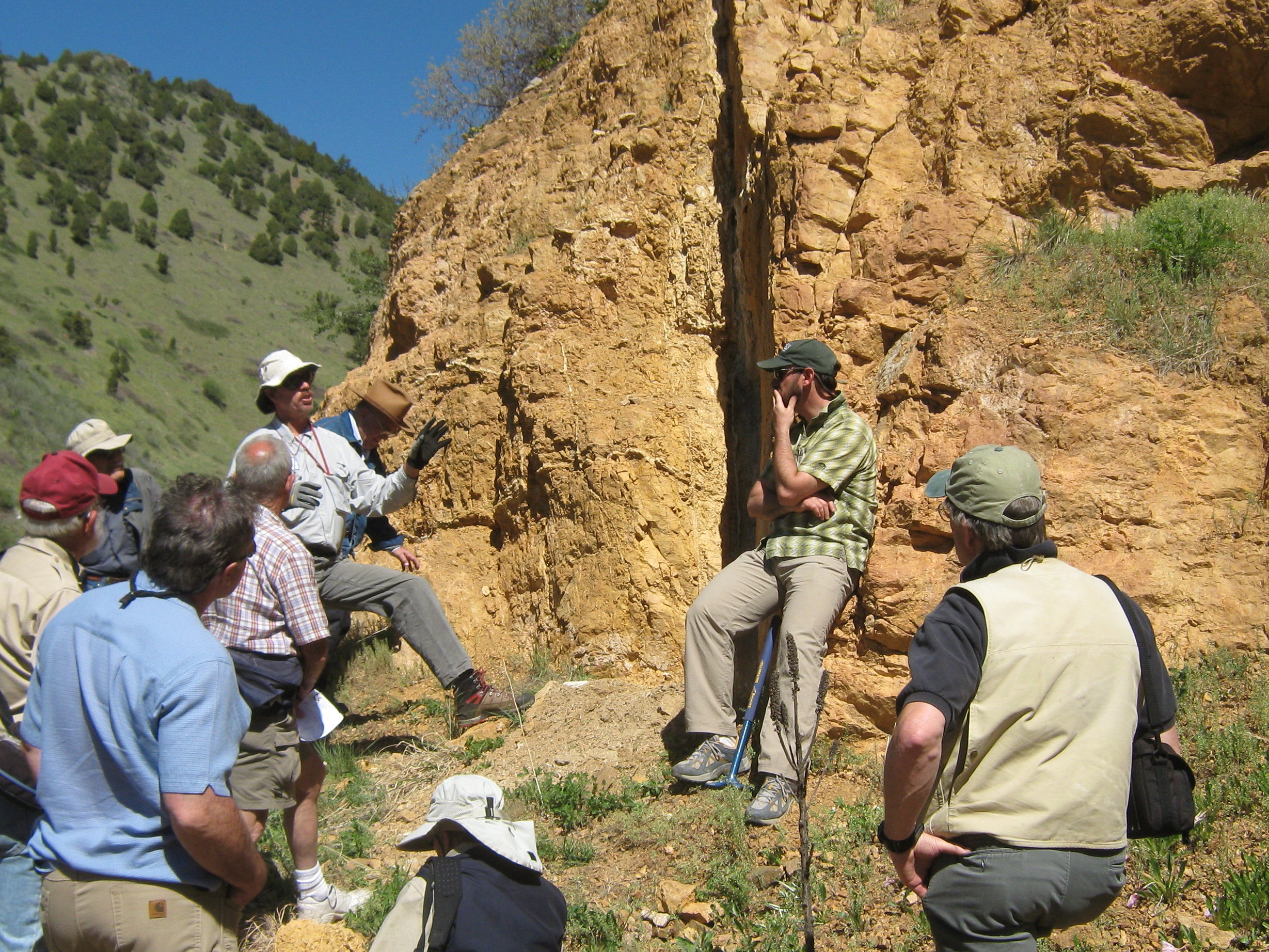
Geologists discuss Junction Ranch fault (WP003)

  WP003-  N 39° 44.700′, W 105° 17.485′ elevation 6266′. 
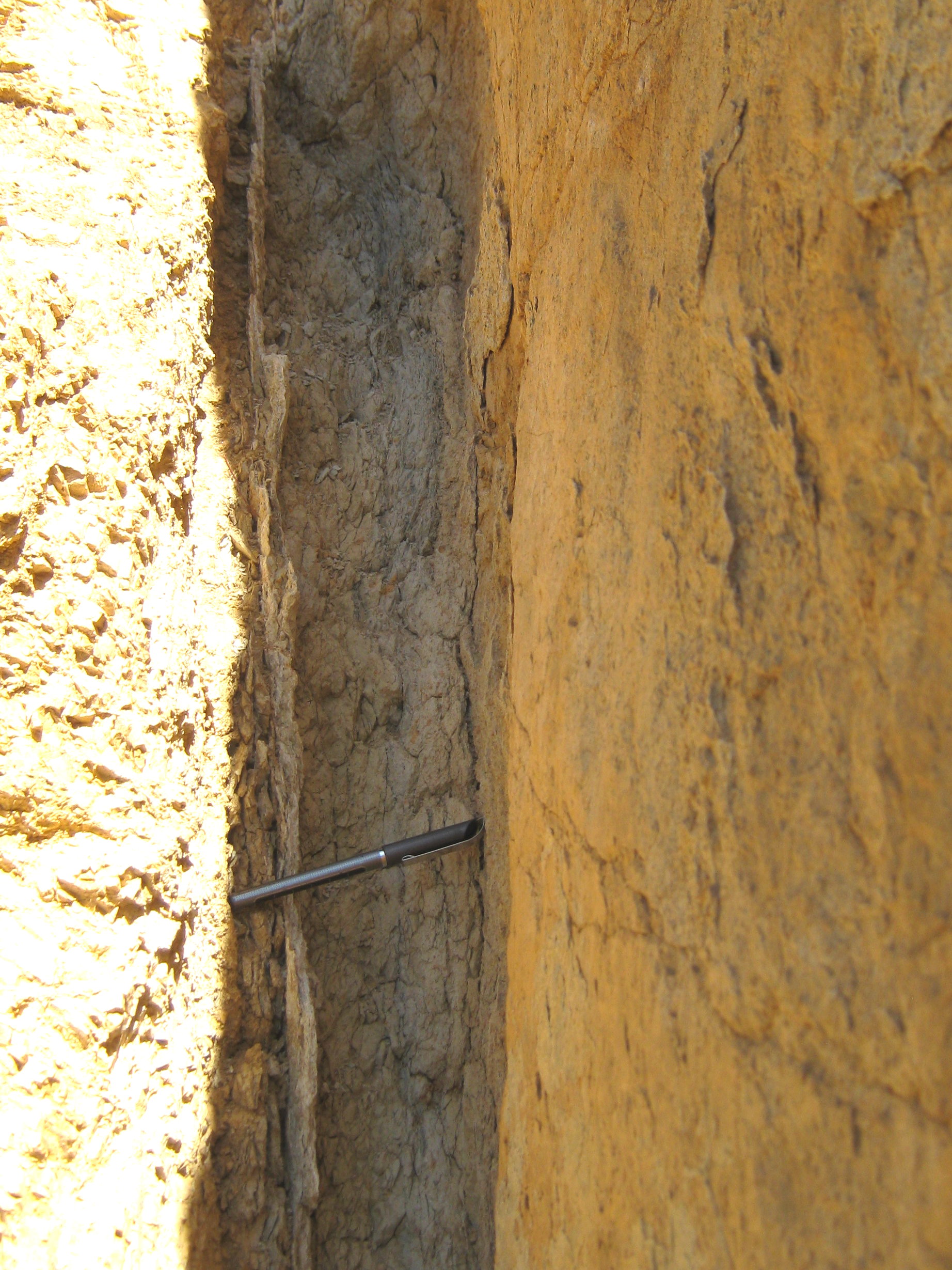
Closeup of Junction Ranch fault. Note white calcite vein (WP003).

 The Junction Ranch fault which had an exposure at waypoint 003 was an example of a fault in a formation that has seen considerable hydrothermal alteration. The orange iron stains on the rock are a clue that fluid transport of minerals has taken place. Calcite veins within the foliated clay filling the fault are an indication that the clay was deposited first. There is no evidence, however, that the fault predates the hydrothermal alteration. 

In a roadcut along the Central City Parkway is an exposure of a brittle fault at location WP005-  N 39° 44.990′, W 105° 28.233′, elevation 7571′. 
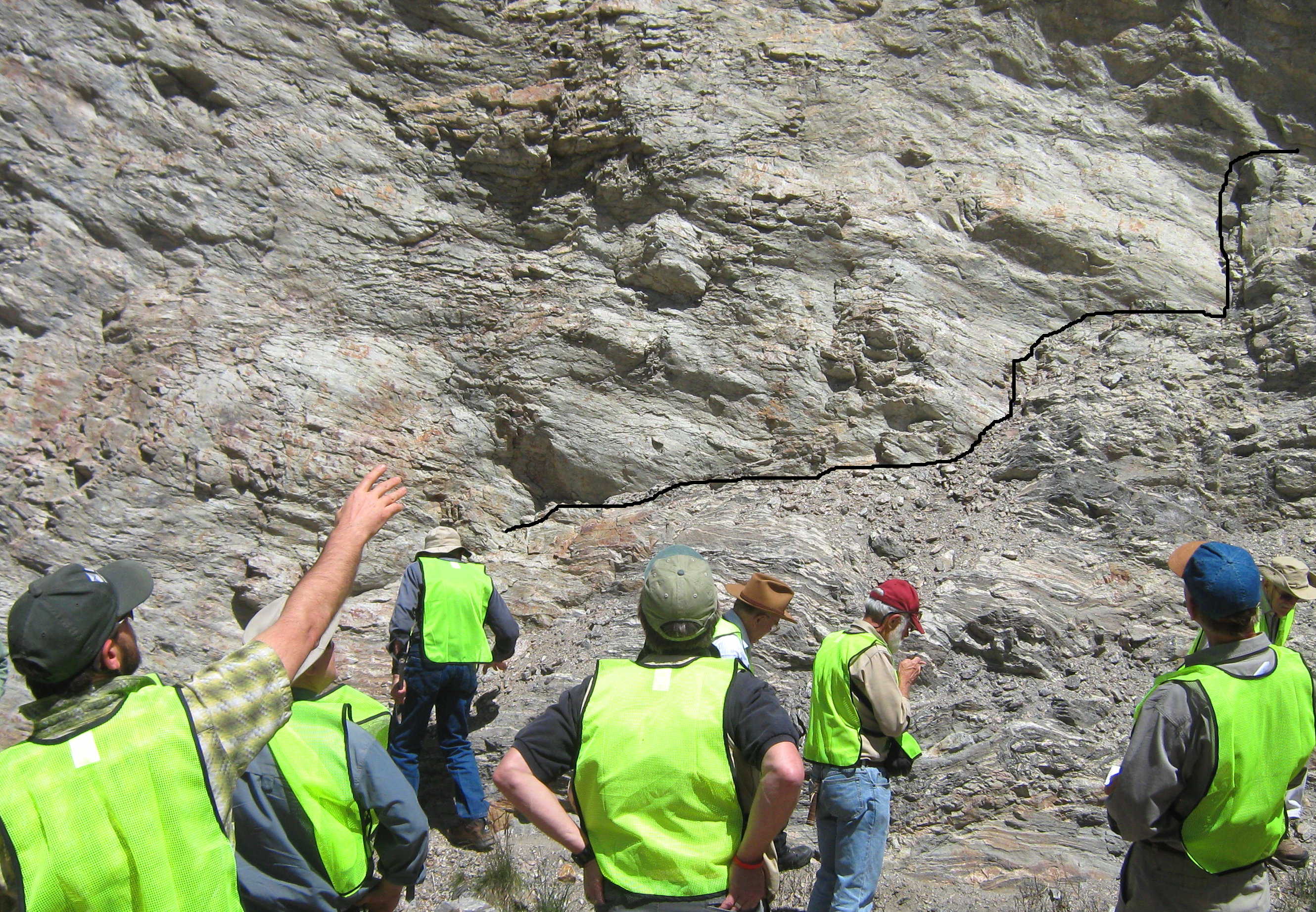
Roadcut exposing a brittle fault along Central City Parkway (WP005).

 The formation exposed at WP005 was part of a very old structure with multiple faults and igneous intrusions. In the photo above, the edge of the fault is enhanced with a black line drawn in during editing. The surface above the black line is an example of a slickenside, or one surface of the fault. Some members of the trip said they could see slickenlines, but they are so subtle that it is hard to be certain. A large igneous intrusion 100 m away showed signs of dislocation, presumably due to a fault. Boudins were observed at this location and are shown in the photo below. 
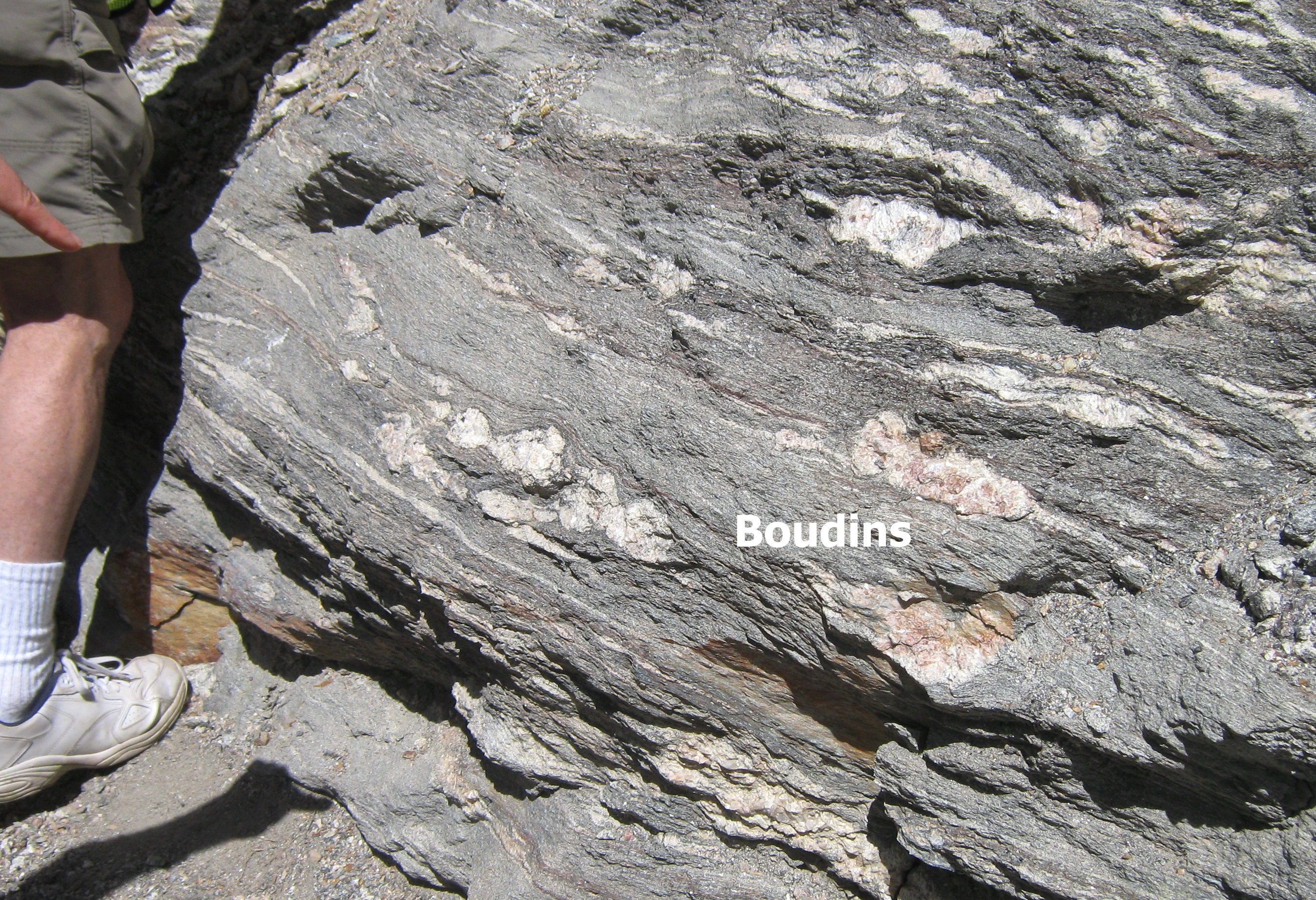
Central City Parkway road cut, boudins visible in foliated rock (WP005).

We visited the location of a fault in Coal Creek Canyon. This is a NNW trending distributed deformation zone which is part of the Boulder Batholith. This location is designated WP008- N 39° 54.268′, N 105° 20.795′, elevation 7771′.  

This fault was discovered filled with clay and dips 35 to 45 degrees. It was further exposed by excavation by Caine and another geologist. Again, the approximate boundary of the fault was enhanced with black lines in editing. There was considerable alteration of the rock on the hanging face side of the fault with iron staining associated with hydrothermal alteration.
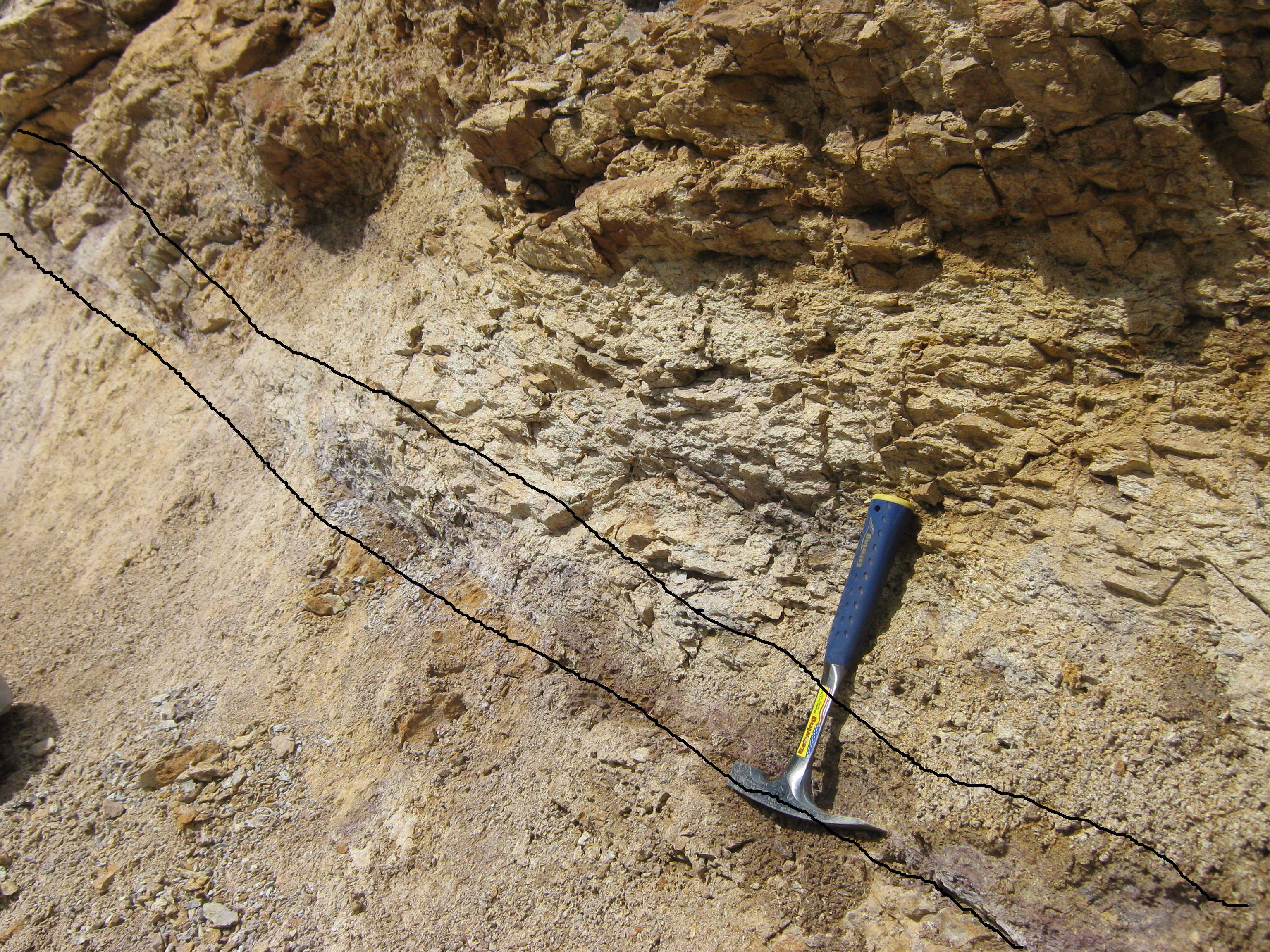
Coal Creek fault at WP008 May 22, 2010.

We visited a ductile shear zone with suspected mylonite features. It was located at WP007- N 39° 51.026′, N 105° 21.155′, elevation 7634.  Mylonite zones are evidence of ductile shear in response to a stress field.  Near the mylonite zone was a fault with exposed slickensides. While faulting and ductile deformation may seem incompatible, it should be remembered that over time many kinds of phenomena can be overprinted on the rock formations. Rock may deform in a ductile manner and sometime later undergo brittle fracture.
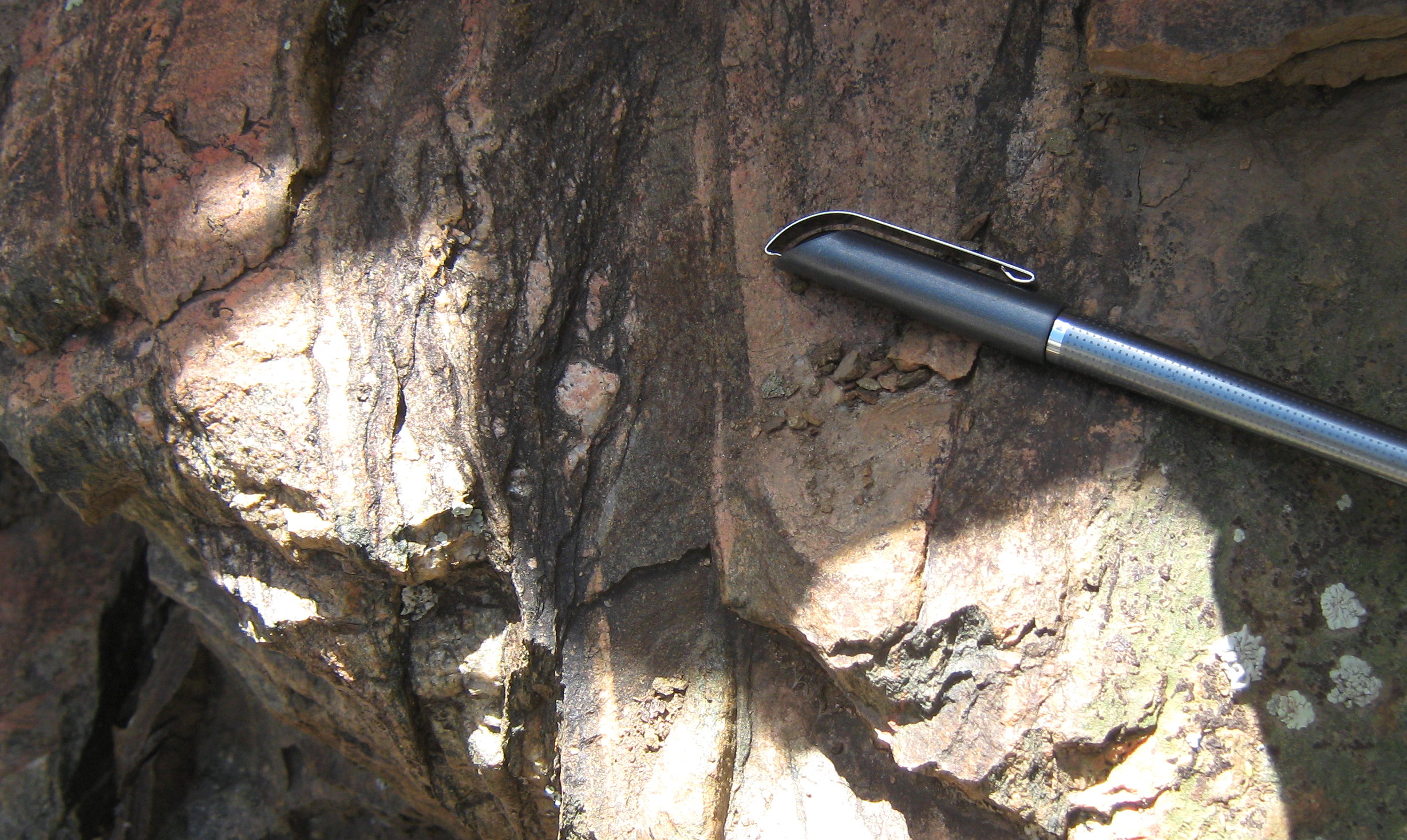
Suspected myolinite feature (WP007).

 The field trip leader was very enthusiastic and because of his background, was able to provide many important insights into the local geology. It was a very worthwhile day in the mountains.
Cripple Creek and Victor Gold Mine Tour

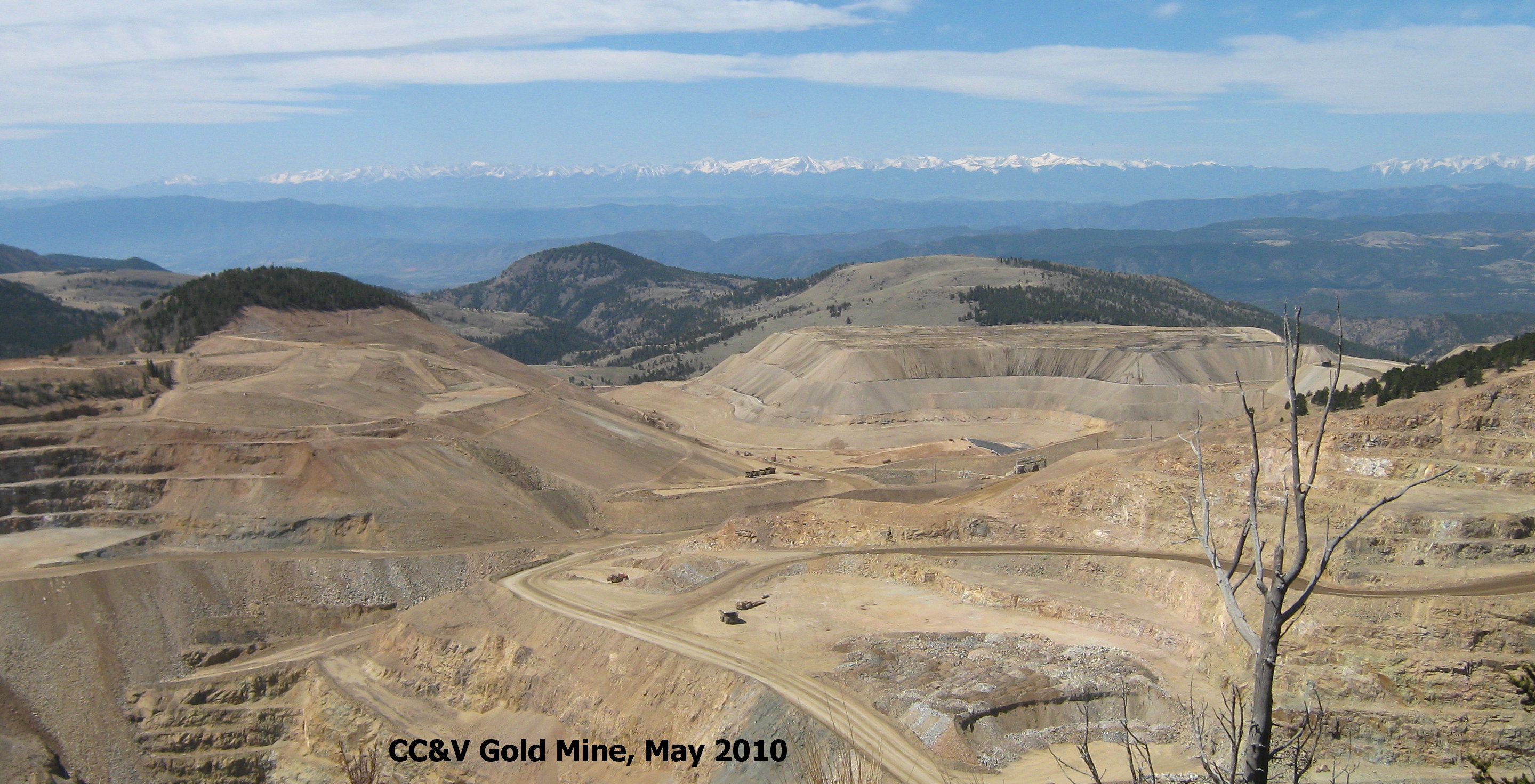
A vanload of members of the ACS, Colorado Section, were treated to an extensive tour of the Cripple Creek and Victor (CC&V) mine last Friday. The photo below shows a view of the mine from the abandoned American Eagle Mine above the CC&V pit operations. The mountains in the background are the Sangre de Cristo range.

View of Cripple Creek & Victor Mining Operations from the American Eagle Mine, May 2010.

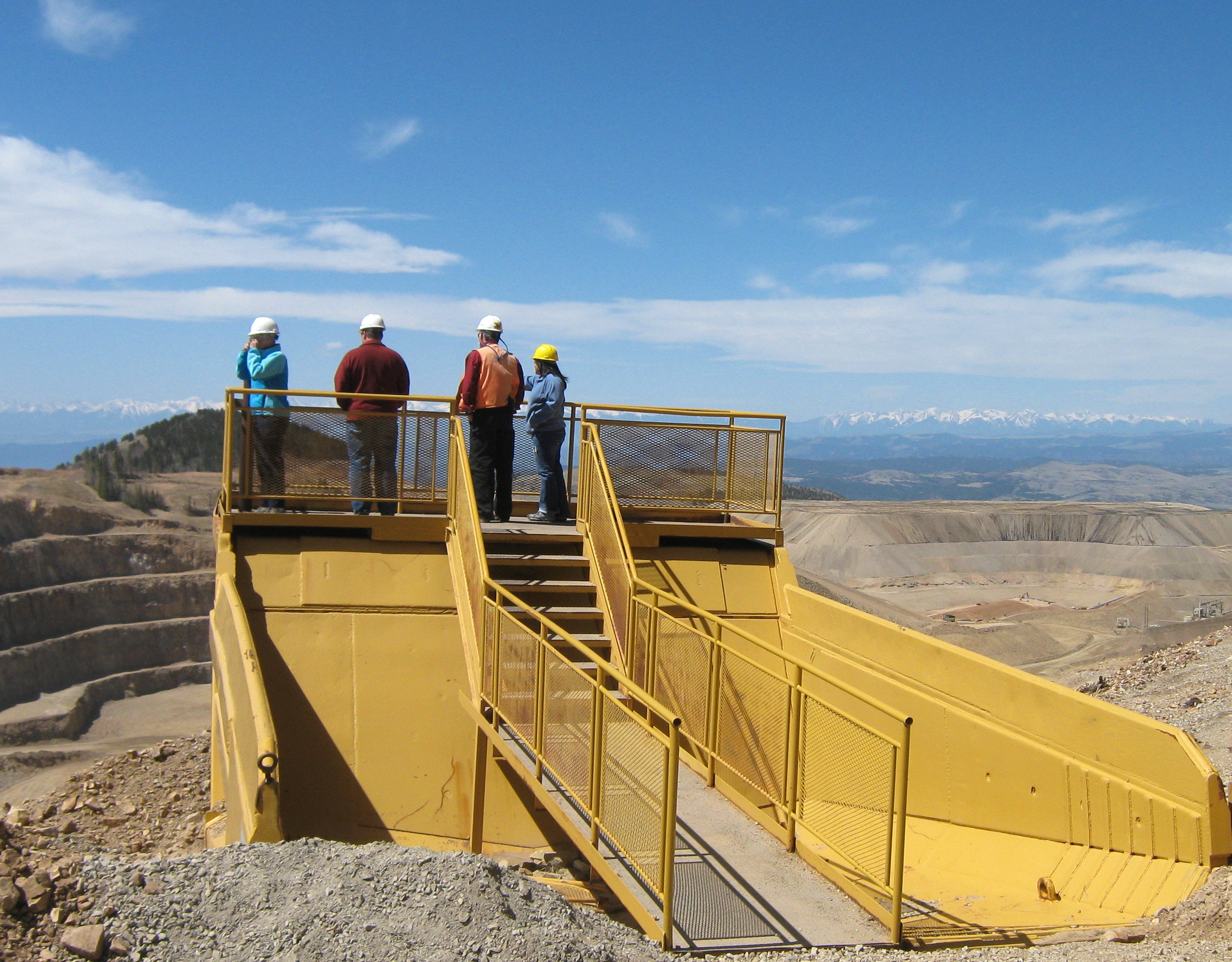
A haul truck bed was converted to a scenic overlook platform (below).  A few section members take in the view.

CC&V Scenic overlook platform

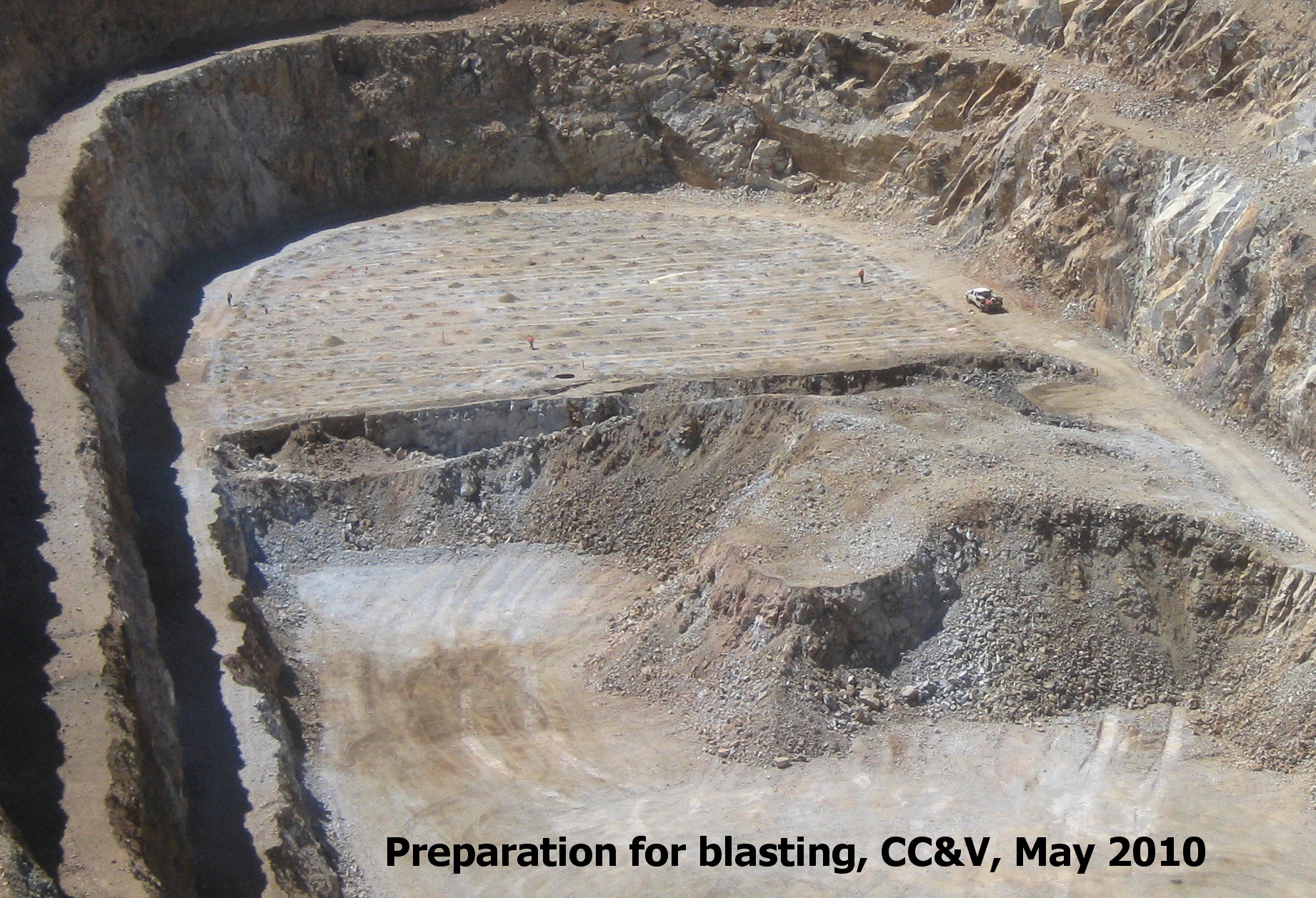
From this high vantage point we could see blasting operations at work. Multiple sites may be prepared simultaneously. Blasting typically occurs at 1:00 pm. Holes are drilled on 20 ft centers for optimum coverage. Every blasting hole is sampled and analyzed by ICP to measure the gold value for that zone.  Zones with low value are hauled to the waste heap and the high value rock is taken to the crusher.

Preparation for blasting, CC&V, May 2010.

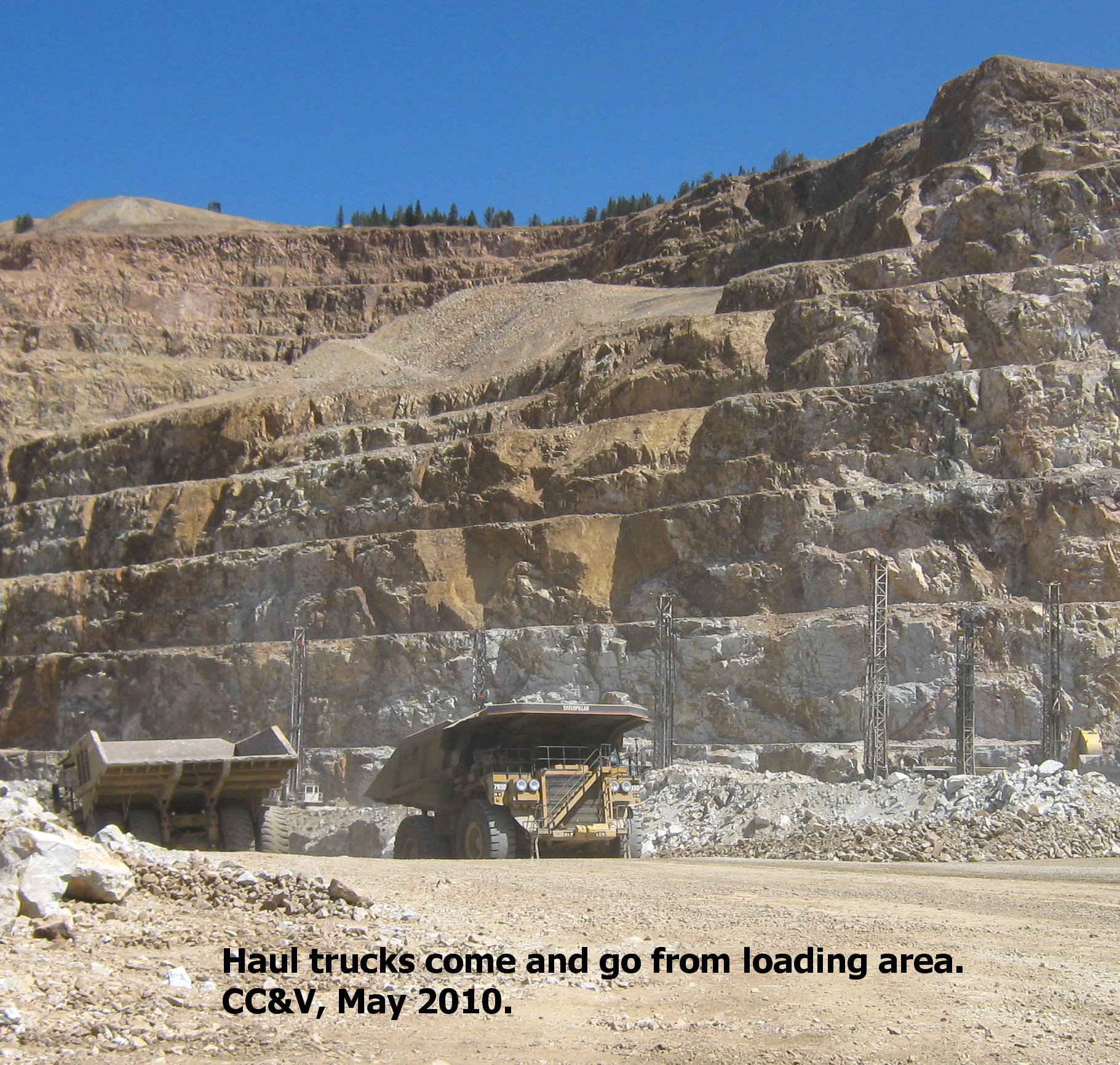
We visited the pit and watched haul trucks get loaded by a gigantic loader. For every one truckload of ore there are two truckloads of unproductive rock that have to be hauled to a separate location on site. The definition of unproductive rock depends entirely on the market price of gold.  In the photo below, drilling rigs for the blasting charges are in operation for the next round of blasting.

Loading area, CC&V Mine.

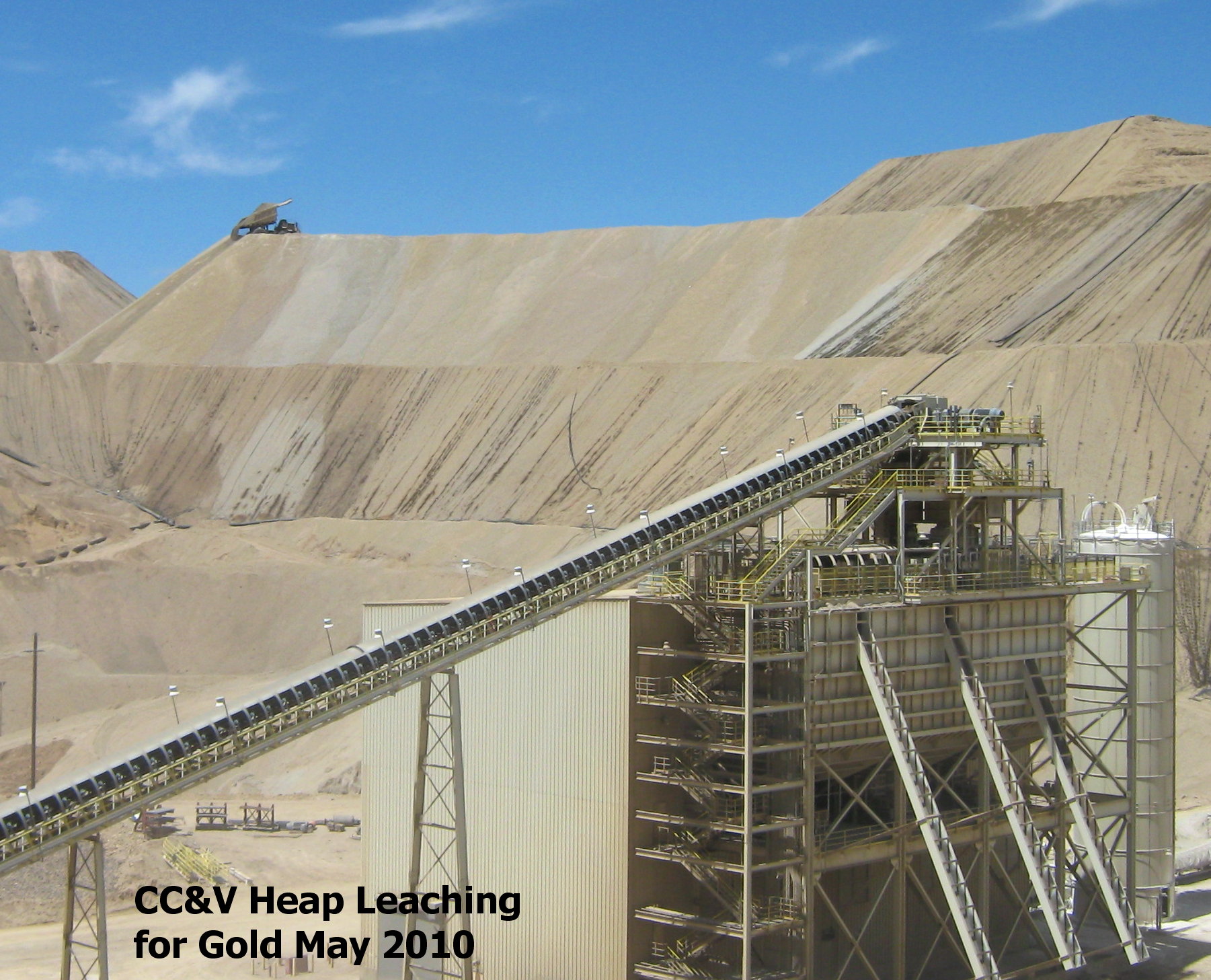
Later we watched the trucks unload into a crusher with a gyrating element that crushed the rock into football sized chunks. The resulting rock is conveyed to a screener and another crusher in order to further reduce the size to 0.75 inches. Every truckload of rock is treated with lime to help maintain a high pH for the aqueous cyanide leaching operation.  In the photo below, the white tank on the lower right contains the lime.

Heap leaching operations, CC&V May 2010.

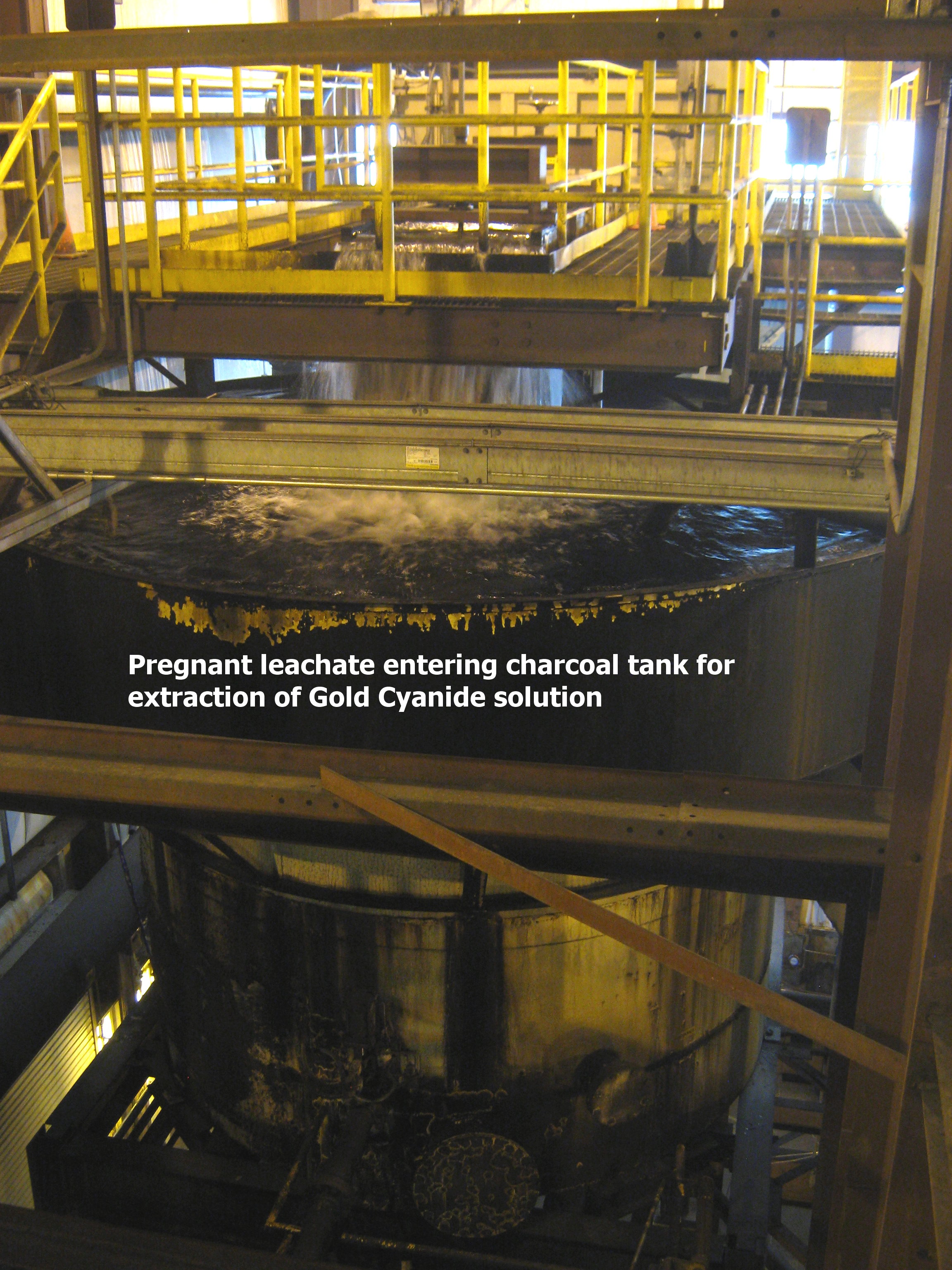
The gold bearing rock is irrigated with a very dilute sodium cyanide solution which percolates to the bottom of the heap and is captured in a basin feature at the bottom of the heap. The “pregnant” solution of gold cyanide extract is pumped out from under the heap at 14,500 gal/min into a cascading series of charcoal filtration tanks in the extraction building (see photo).

Pregnant solution passing over charcoal filter bed. CC&V May 2010.

Once a specified loading of Au is sorbed onto the charcoal, the sorbent is treated with hot concentrated cyanide. This concentrate is then passed over steel wool where the gold precipitates. The precipitated gold is then smelted to produce bulk crude metal which is shipped off-site for further refinement.

Chemistry Field Trip!

So I decided to kick up my interest in the local metalliferous deposits and get more folks involved. As a member of the executive cmte of the ACS local section I’ve organized a seminar at a local university and arranged to have the lead exploration geologist from CC&V come to talk about the their gold mine in Cripple Creek.

The seminar is thursday night. Friday morning a few of us will board a van and drive the 5 h round trip to visit the open pit operation. We’ll stop at the nearby Molly Kathleen mine as well. I’m hoping we’ll be 1000 ft down the hole when the mine next door begins blasting. That’s an unforgettable experience.

Enthusiasm is contagious.  Especially with regard to gold colored precious metals. Unfortunately, bench chemists have few opportunities to take field trips. So the thinking here is that we’ll find a way to get members out and about to look at heavy industry. And gold mining is definitely a chemically related industry. Email blast notifications to rouse attendance are surprisingly ineffective- 1 or 2 % response at most. It is hard to get folks to participate in local section activities because everyone has a life.

The next day I’ll be on a field trip with geologists to visit various sites showing ductile and brittle deformation as well as hydrothermal alteration of formations in the central front range. I’ll be a chemical science interloper, as usual. The key to many of the metalliferous features in the world is hydrothermal transport. Shallow magma intrusions energize a kind of heat engine that pumps water through metal-bearing rock and transports hot, pressurized mineral laden fluids through a large and cooler network of fissures and faults where minerals precipitate according to their solubility.  Hydrothermal alteration is an important feature to look for when prospecting for metals.

Eyjafjallajökull Volcano

A few decent links-

It has been estimated that the magma source for the Eyjafjallajökull Volcano is greater than 20 km below the surface. 

A great source of information is the Icelandic Met Office. This organization issues daily reports on the status of the volcano.

A local Icelandic company providing  webcam coverage of the volcano is Miles Telecommunications.

Eyjafjallajökull Volcano (Nasa Photo)

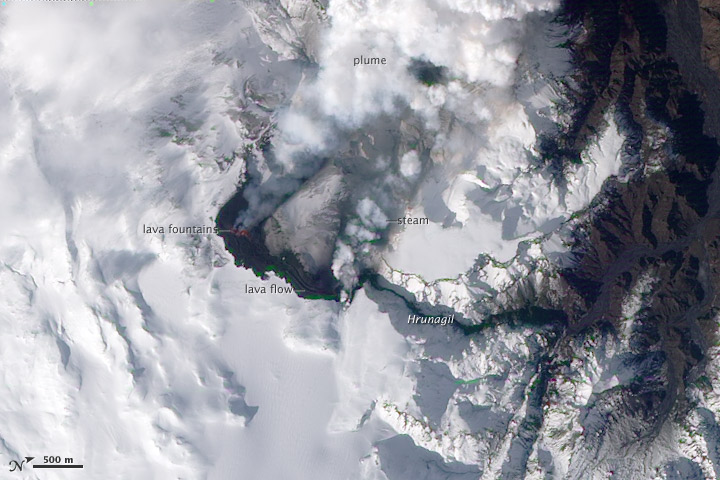
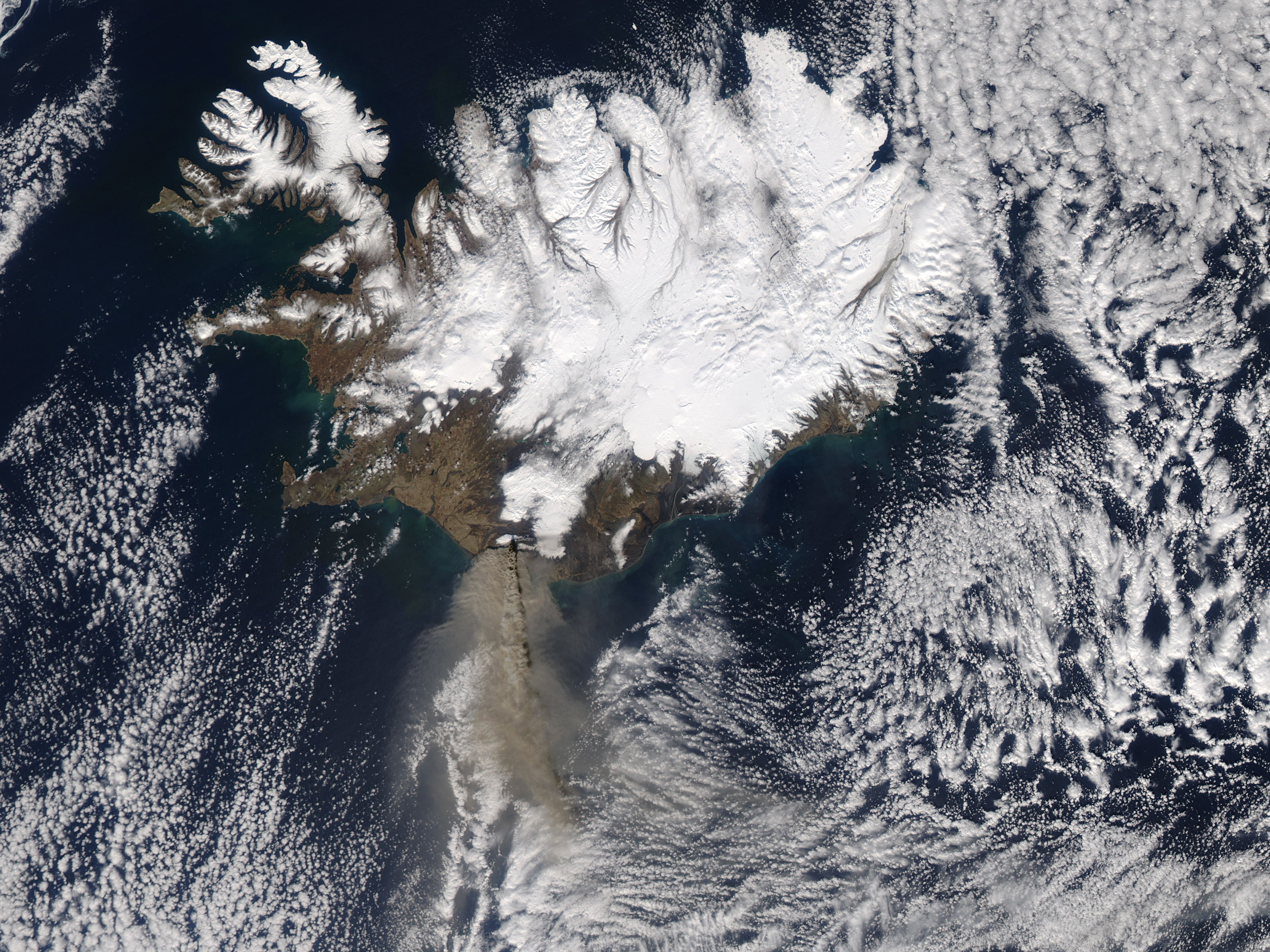
The worlds most unpronounceable volcano, Eyjafjallajökull, located under a glacier on the south central edge of Iceland, continues to erupt with fountains of lava and prodigous volumes of dispersed ash clouds.  The NASA image above shows the lava fountains and steam emanating from the volcano. Others have captured excellent photos as well. 

“The Geology and Geodynamics of Iceland” is the title of a paper by Professor Reidar G. Tronnes, presently at the Natural History Museum at the University of Oslo. The Tronnes paper gives an excellent overview of the tectonic circumstances of Iceland and outlines some of the latest thinking on the basis of Icelands seismic and volcanic activity. 

The Icelandic landmass is the result of some very productive vulcanism stemming from a buoyant plume of magma that drives the vulcanism of Iceland. Figure 1 of the Tronnes paper shows the extensive subsurface ridge system extending from Greenland to Scotland. Figure 3 shows how the line of divergence sits in place while spreading of the sea floor and the Iceland plateau occurs on either side of the rift system. The rifting produces swarms of fissures which are coincident with the siting of the volcanos. The Mid-Atlantic ridge cuts across Iceland and assures that this location is a center of seismic and volcanic actitity.

Eruption of Eyjafjallajökull Volcano, Iceland (Photo Credit: Nasa Earth Observatory)

 NASA Earth Observatory link.

Gravity Anomaly Along the Colorado Mineral Belt

The Colorado mineral belt (CMB) is a swath of metalliferous mineral veins and faults spanning 15 to 30 miles in width and running ~250 miles in length between Dolores and Jamestown, Colorado. This NE trending zone encloses most, but not all, of the significant occurrences of gold and silver deposits found to date in Colorado.

Significant finds like the Cripple Creek district have been found outside the CMB, but these are exceptions to the trend. The large gold/silver/tellurium lode in the Cripple Creek diatreme is the result of a volcanic past that stands somewhat apart from the vein deposition processes that produced the CMB lodes.

What is especially intriguing about the CMB is that it is coincident with a significant gravity anomaly. It turns out that a particularly deep negative gravity anomaly exists in the Colorado Rocky Mountains. A few papers on this effect can be found on the web. In particular, a paper (ref 1) by Mousumi Roy at the University of New Mexico offers some details on the  extent of the gravity anomaly and some possible reasons for the effect.

At first blush it might seem odd that a negative gravity anomaly should coincide with a region known for heavy metal deposits. After all, dense matter has greater mass per unit volume, and if there is a lot of volume, then one might expect the acceleration of gravity to be a tiny bit greater than some reference value.

While this line of reasoning has merit, it turns out that despite the presence of thin metalliferous veins in the region, the overall density of rock below the CMB formation is somewhat low. A density contrast exists in the CMB formation and the surrounding rock. A large, low density formation in the crust and/or upper mantle would cause the local acceleration of gravity to be slightly below that of the reference geoid value.  The structure of the density contrast is the subject of some scrutiny and has been addressed by Roy and others.

A large low density mass below the surface is expected to have some buoyancy. A buoyant mass is one that would exert an upward distortion on the crust. The Colorado Rocky Mountains are part of a region characterized by numerous past episodes of mountain building. Whether mountain building was the result of large scale tectonic interactions or more localized effects of density contrasts, the fact remains that a gravity anomaly exists coincident with the CMB.

The mechanical effect of the upthrust of the lower members of the crust to form the Colorado Rocky Mountains has been that a series of faults and fractures have formed. These void spaces have provided networks for the flow of mineral rich hydrothermal fluids over geological time.

High pressure, high temperature aqueous fluids are prone to cooling and depressuriation as they work their way upwards into cooler and less constricted formations. At some point these fluids throw down their solutes and suspensions in the form of solids that occupy the void network. Eventually the flows become self-sealing and circulation halts leaving veins filled with chemical species that were selectively extracted and transported from other formations.

The earths hydrothermal fluid system is continuously extracting soluble components and transporting them to distant locations where solubility properties force their deposition. But this process does not always produce solid, compacted veins. Void spaces can be left behind at all scales, from microscopic size to large chambers. These spaces are called “vugs”. Rock with a large fraction of void spaces is referred to as “vuggy”. It is possible to walk up to a mine dump in the CMB and find hand samples of vuggy rock. It is not unusual to find crystals of pyrite or other minerals lining the internal spaces of the vugs.

1.  McCoy, A., Roy, M., L. Trevino and R. Keller, Gravity models of the Colorado Mineral Belt, in The Rocky Mountain Region – An Evolving Lithosphere: Tectonics, Geochemistry, and Geophysics: American Geophysical Union Geophysical Monograph 154 (eds. Karlstrom, K.E. and Keller, G.R.), 2005.

[Note to the reader: Th’ Gaussling is just a chemist, not a geophysicist. But like many others, I have the ability to read and learn. When I learn something new and interesting, I like to write about it. It reinforces the learning.]

Mercury Mining

One of the least appreciated aspects of the 19th Century gold mining boom in North America was the necessary and parallel boom in quicksilver, or mercury. Numerous mercury bearing minerals are known, but by far the bulk of historical mercury production has come from cinnabar, or HgS. For clarity, cinnabar is distinct from vermillion which is a pigment derived from cinnabar. 

Recovery of gold can be performed by methods as simple as plucking nuggets from a pan or by gravity separation in the form of sluicing. Unfortunately, in many areas placer gold is quickly exhausted by eager miners. Where there is placer gold there is often a lode formation to be found. Gold in a lode can be much more problematic in its recovery.  

Gold from a lode may be found comingled with quartz in bulk form, partitioned in a vein, or dispersed at high dilution in a host rock at a large scale. Lode gold very often has to be extracted from a problematic matrix. In this circumstance, chemical means are necessary to extract and concentrate the value from the rock.

A chemical solution to gold isolation is limited to only a few economically viable possibilities. Beyond macroscopic placer gold there is amalgamation with mercury, borax, cyanidation with NaCN, and chlorination with Cl2 or NaClO. 

Amalgamation has been attractive historically because of its great simplicity. First, cinnabar is readily coerced to liberate mercury by simple roasting and condensation. Dispersed gold is contacted with mercury and selectively extracted. The resulting solution of Au-Hg is relatively easy to isolate by natural phase separation. Finally, gold is easily recovered from the amalgam by heating in a retort. Chemists would call this a simple distillation.

Some silver will also be amalgamated, but it is separated by roasting to silver oxide followed by amalgamation of the residuals. Unfortunately, gold tellurides are problematic for direct gold amalgamation. Gold tellurides must be roasted first to liberate volatile tellurium oxides and native gold residues. Energy becomes a major cost driver at this stage.

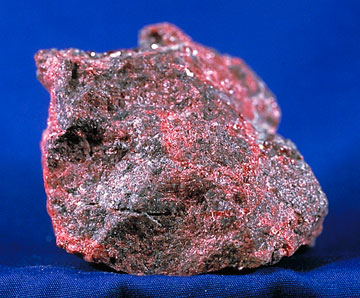
Cinnabar ore (Image from Mineral Information Institute)

US cinnabar ore deposits are found predominantly  in California and to a lesser extent in Nevada, Oregon, Arizona, Texas, and Arkansas. The geology of cinnabar ore bodies share a few general features. Cinnabar ore is found in zones historically associated with volcanic activity and alkaline hydrothermal flows.  Ascending flows of metal sulfide saturated water infiltrated faults and fractures and deposited HgS rich mineral.  This is a common ore forming mechanism and is responsible for diverse metalliferous deposits, including mercury. 

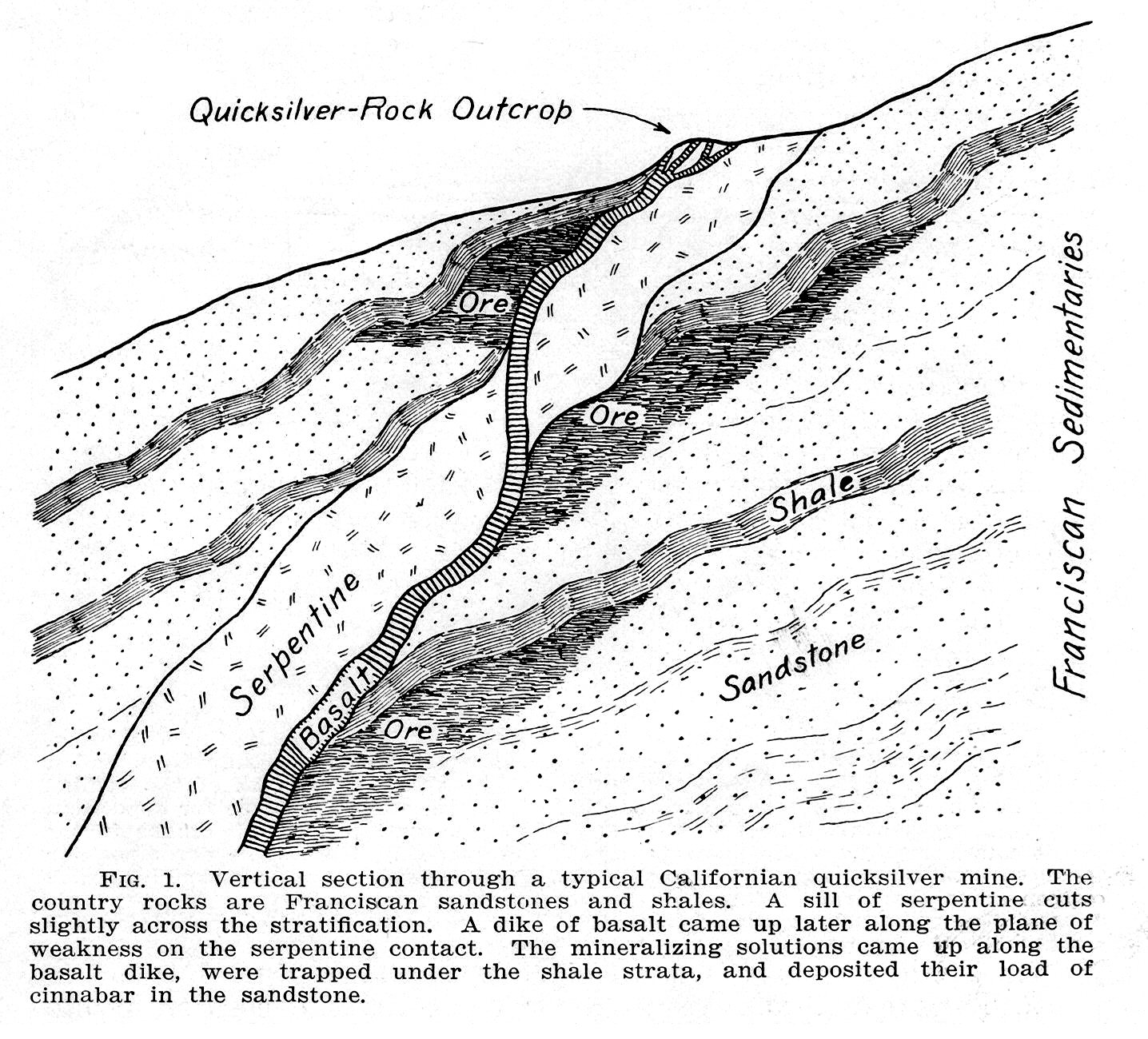
Figure 1. Franciscan Quicksilver Ore Body Structure (C.N. Schuette, The Geology of Quicksilver Ore Deposits, Report XXXIII of the State Mineralogist, January 1937.)

According to Schuette, a common feature to economically viable cinnabar occurrences was the presence of a cap rock formation over the ore body. The infiltration of cinnabar laden hydrothermal fluids into fissures and shrinkage cracks in basalt intrusions as well as deposition in brecciated rock in the fault zones lead to enrichment of the mineral.  An impermeable layer above caused a pooling accumulation of mineral and a barrier to oxidation. 

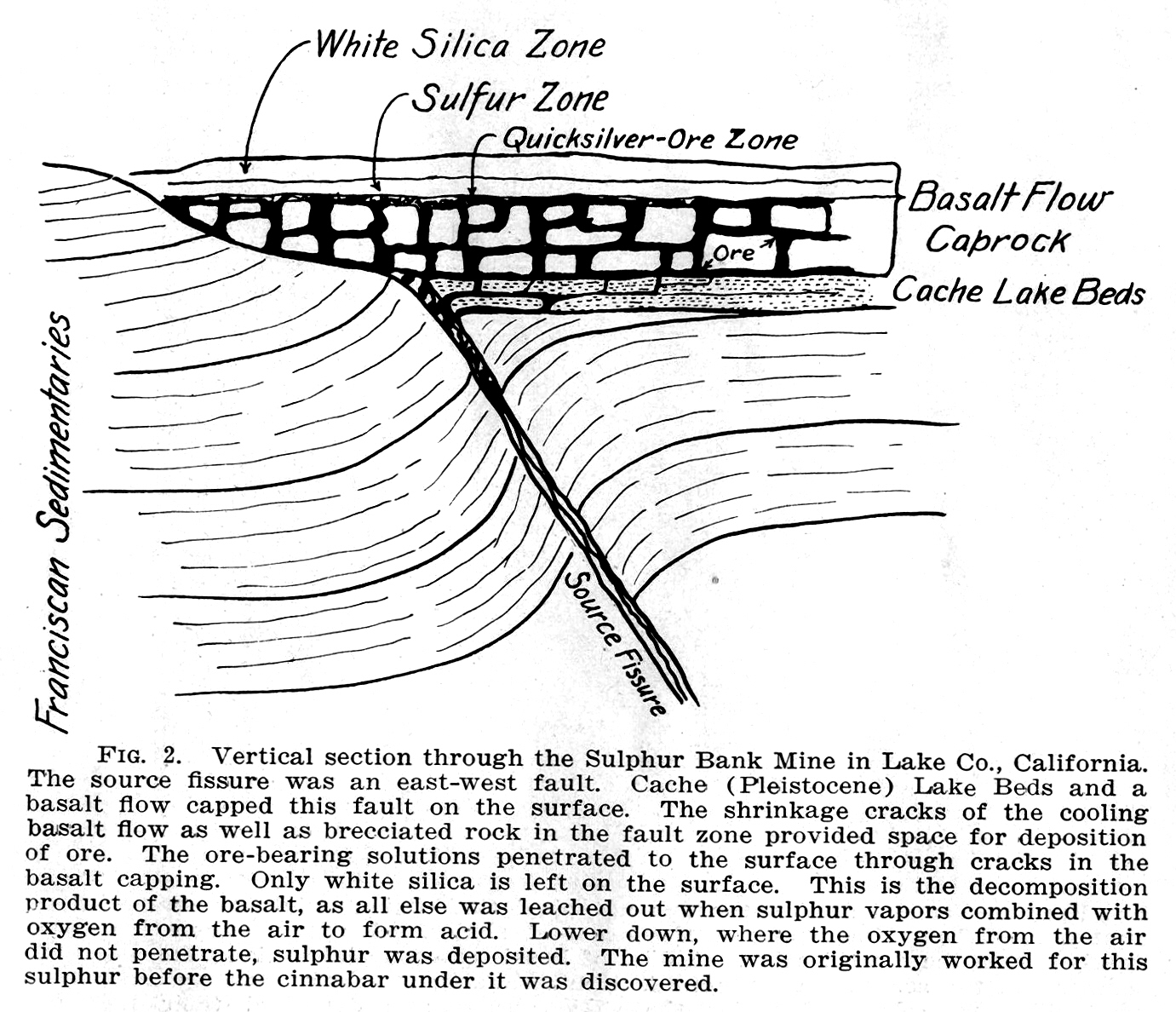
Figure 2. Diagram of Sulphur Bank Mine (C.N. Schuette, The Geology of Quicksilver Ore Deposits, Report XXXIII, of the State Mineralogist, January 1937.)

In these California formations cinnabar is regarded as a primary mineral, meaning that it is the direct result of transfer from deeper source rock. An example of secondary rock would be serpentine (Fig 1) which is formed as a result of aqueous alteration of another mineral. Serpentine is a group of minerals comprised of hydrated silicate which may contain some combination of  Mg, Fe, Al, Mn, Ni, Ca, Li, or Zn. According to Schuette, serpentine is often found associated with cinnabar formations. 

The Sulphur Bank Mine near Clearlake Oaks in Northern California offers an interesting example of cinnabar mineralization. Figure 2 shows a fault that provided a channel for fluid flow to upper level rock formations. Over time oxygen and water caused the oxidation of sulfur to sulfuric acid which aided the decomposition of cinnabar and the host rock. 

Note that the uppermost layer is said to be white silica which resulted from extensive demineralization of solubles from a silicate matrix. Further down, native sulfur was discovered in more reducing conditions and was actually recovered in early mining operations. Cinnabar was located below the layers of oxidized mineral. 

This phenomenon of surface oxidation of an exposed ore body is observed in gold and silver mines as well. Miners often lamented that the nature of the lode changed as the mine operations got deeper. Of course, what was happening was that oxidized formations are encountered near the surface and as the mine gets deeper, progressively greater reducing conditions are found with a corresponding change in mineral species present. 

Air oxidation or infiltration of meteoric water with dissolved air and CO2 would cause the alteration of sulfide minerals to more water soluble H2S and sulfates, leaving native gold behind. But at greater depths, the composition of the ore changes to afford heavier sulfide loading and therefore a requirement for a different kind of milling. 

As it happens, the recovery of mercury from cinnabar is quite simple and has been done since Roman times. Typically, the ore was crushed and roasted in the combustion gases of a reverberatory furnace. This kind of furnace was constructed to isolate the fuel from the ore by a partition and rebound or reflect the hot gases off the ceiling of the furnace onto a heap of ore. Despite the name there is no acoustic aspect to the process. 

The hot gases would produce HgO and sulfides which would oxidize in the gas stream to volatile sulfur oxides. Thermal decomposition of HgO at ca 500 C produced mercury which was condensed out of the exhaust gas stream and collected as the liquid. 

Pitchblende in the Wood Vein, Central City District

Recently I came upon a copy of Geological Survey Circular 186, 1952, F.B. Moore and C.R. Butler, Pitchblende Deposits at the Wood and Calhoun Mines, Central City Mining District, Gilpin County, Colorado. Like many Geological Survey documents, it contains a pocket with neatly folded scale drawings of the mine workings. These drawings chart the location and elevation of the shafts and drifts and give a best estimate as to the extent of the formation.

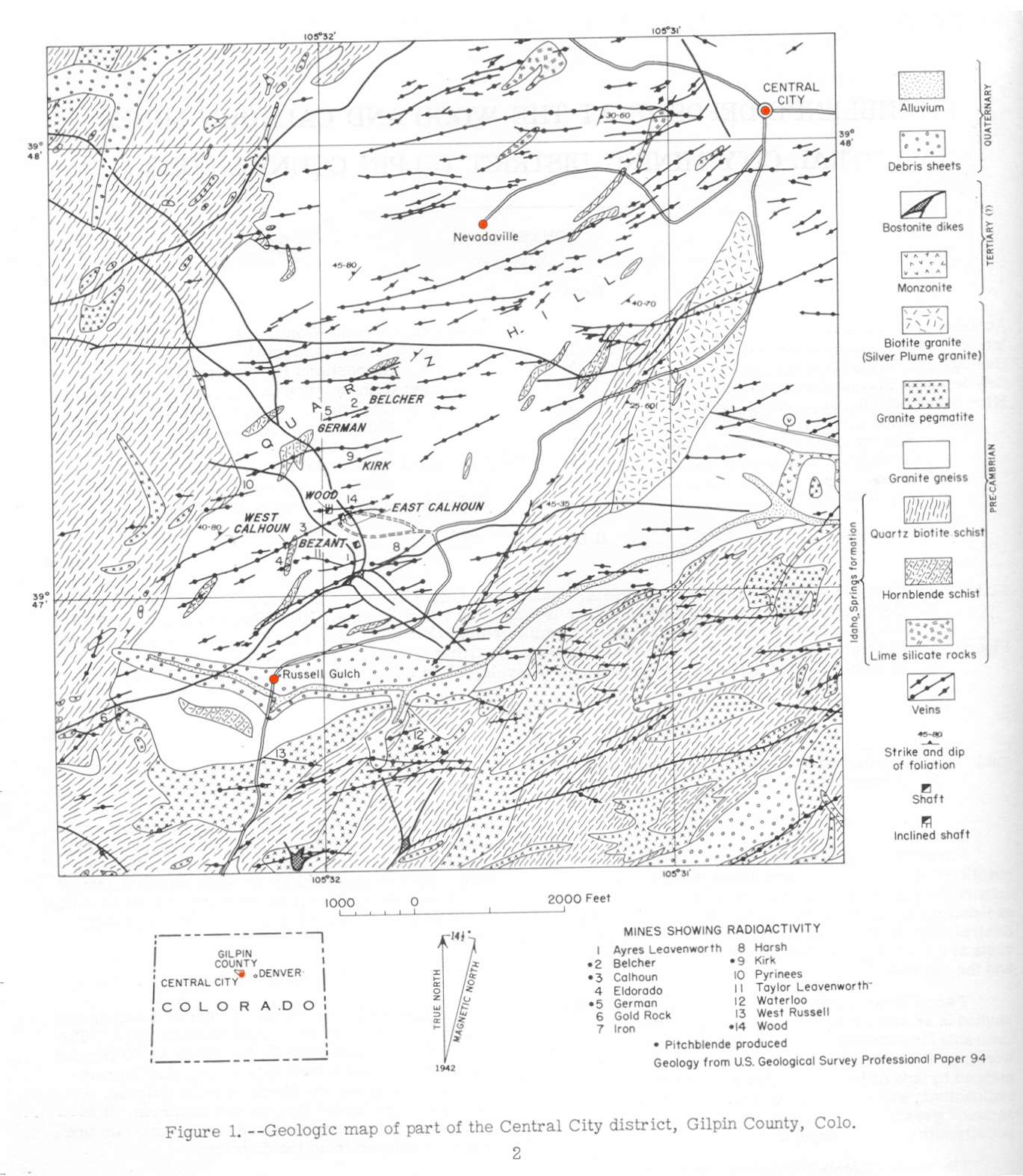
Vein Structure in the Central City District. (From Geologic Survey Circular 186, 1952.)

What is interesting about the map above is not so much the minute detail of the locations, but rather the obvious trend of the veins (solid lines with dots).  They are all east-northeast trending.  The country rock is largely precambrian granite gneiss and quartz biotite schist according to the survey. It doesn’t take long to figure out that the mine locations correlate with the veins.

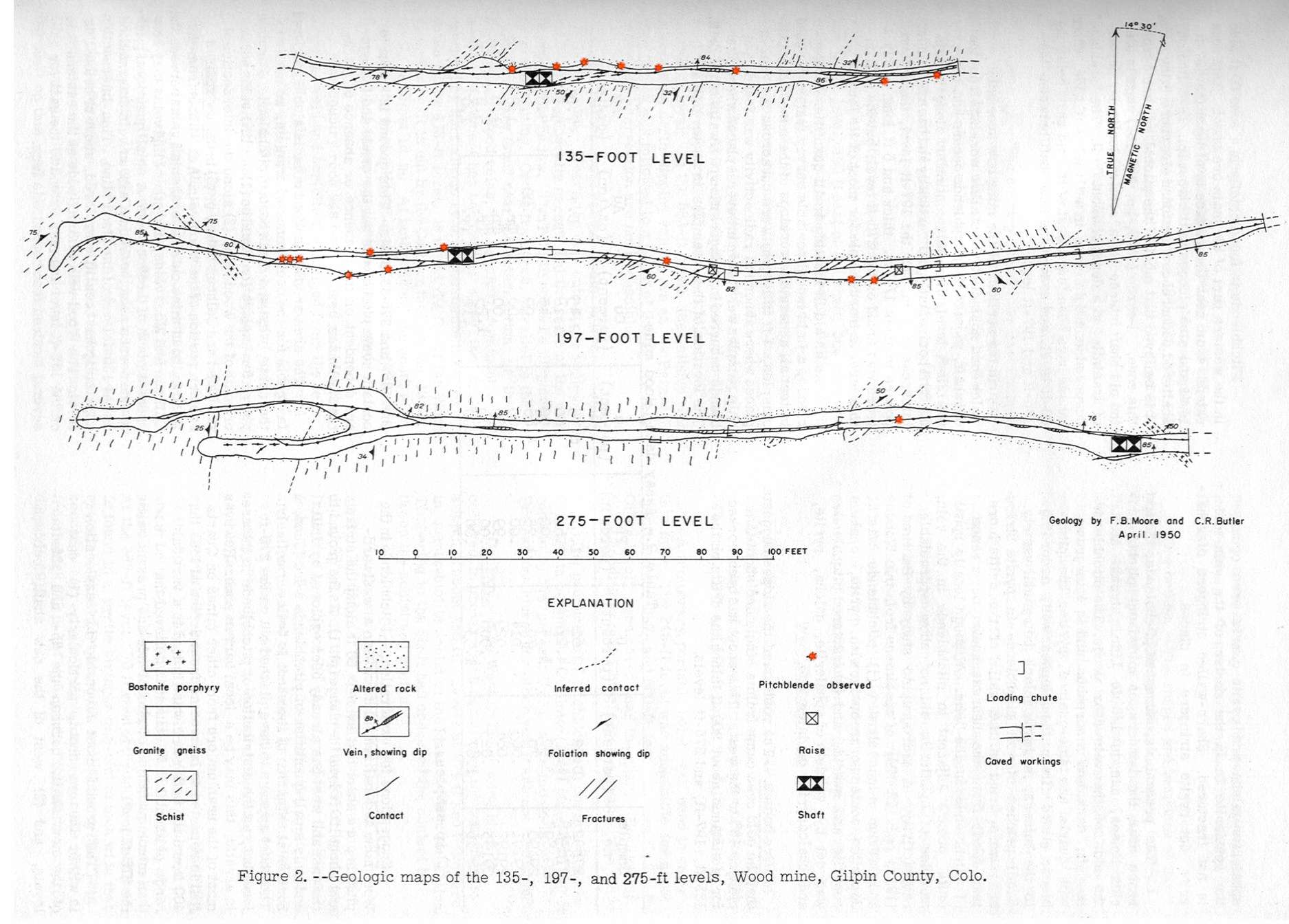
Geological Survey maps of 3 levels of the Wood Mine, Gilpin County, Colorado (Geological Survey Circular 186, 1952).

The second figure was generated by Moore and Butler in 1950 and shows the locations of pitchblende occurrences in three levels of the Wood Mine near Central City, Colorado. The red dots indicate the location of pitchblende along the three drifts at the 135, 197, and 275 foot levels of the mine.

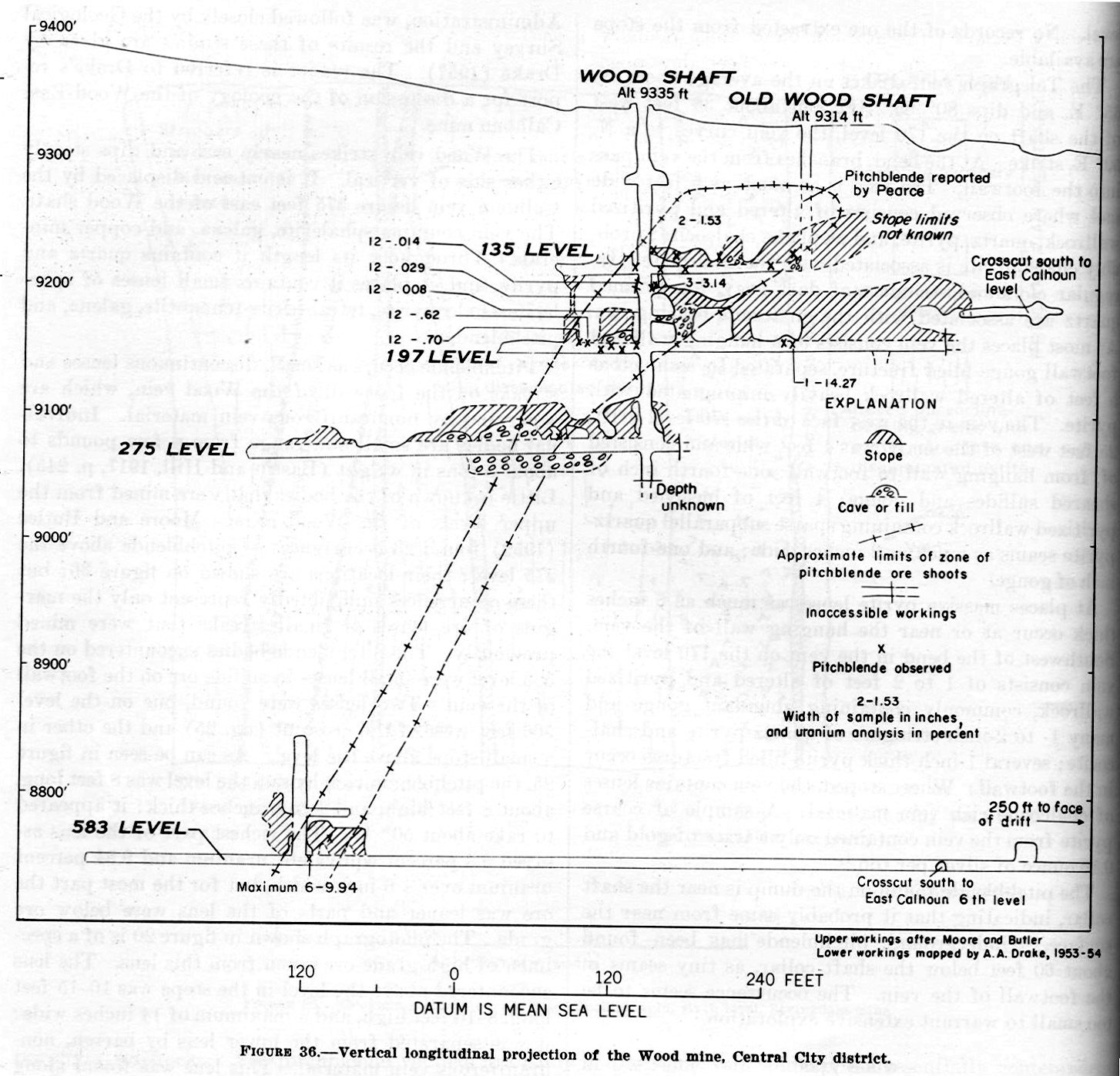
Profile of the Wood Mine, Central City District, Illustration from Geological Survey Professional Paper 371, 1963.

 The Wood Mine was an early and prolific source of pitchblende, though presumably it began as a gold /silver operation. The workings reportedly reached a depth of 600 ft.  The Wood vein is in a fault fissure that shows extensive alteration from hydrothermal action. The width of the vein varies with the type of country rock in which it is found, but ranges from from 1 to 18 inches and has been followed for a lateral distance of nearly 1000 ft.

The productivity of uranium mines is commonly expressed in terms of equivalent weight of U3O8 rather than weight of ore, given the large variety of mineral forms uranium is found to occur in. The figure above is from Geological Survey Professional Paper 371, P.K. Sims and collaborators, Geology of Uranium and associated Ore Deposits, Central Part of the Front Range Mineral Belt, Colorado. Extensive stoping has been done in an attempt to vertically intercept the vein. This was a common practice in hard rock mining- let gravity bring the muck to you.

Pitchblende was discovered on the dump of the old Wood shaft in 1871. Circular 186 reports that by the end of 1872, 6,200 lbs of ore containing 3,720 lbs of U3O8 had been removed. By 1916, 102,600 lbs of ore bearing 30,040 lbs of U3O8 equivalent had been recovered.  The high grade pitchblende was hand sorted and that below ca 10 % was discarded or lost in gold and silver processing.

In Circular 371, Sims observes that “Pitchblende occurs as small, discontinuous lenses and streaks on the footwall of the Wood Vein, which are separated by nonuraniferous vein material.”

What is intriguing is that pitchblende was apparently an item of commerce in the early 1870’s. Radium, extracted from pitchblende, was not discovered until 1898 by the Curies.  A procedure for the preparation of sodium diuranate, Na2U2O7 6H2O, was reported as early as 1849 (Patera, J. pr Chem. 1849, [i] 46, 182. Early uses of uranium yellow were in paints and stains for glass and porcelain. This pigment has also been used for the production of fluorescent uranium glass.

Uranium roll fronts

As a kind of hobby Th’ Gaussling has been surveying the literature on uranium occurrences in North America. Uranium is found in many interesting locations and as a result of several distinct kinds of ore forming processes.

Prospector with Geiger Counter

From Ballard &Conklin, Uranium Prospectors Guide, 1955 Harper & Brothers

For the most part, uranium ore body formation is the result of aqueous transport and deposition.  Uranium is found as a lode in vein formations in precambrian  igneous/metamorphic structures as in the case of the Schwartzwalder mine near Denver. In fact, there are many lode occurrences that contain a variety of uranium minerals in the Colorado mineral belt.

What seemed counterintuitive to me was the extent to which uranium is found in sandstone. Evidently I had developed a bias for connecting heavy metal occurrences with igneous/metamorphic formations.

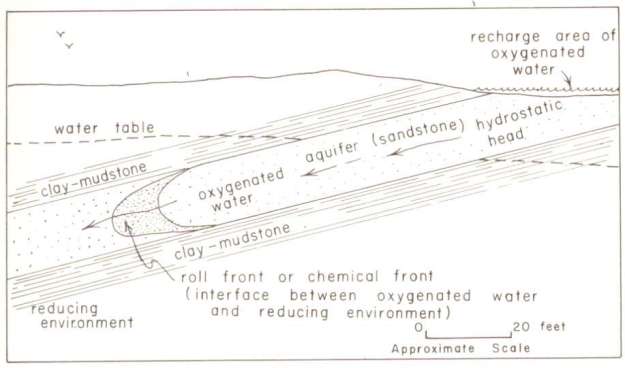
Uranium occurrences in sandstone take on certain characteristics as a result of ore forming processes. Uranium is often found in concentrated bodies called “roll fronts” or “ore rolls”. A roll front is a body of concentrated mineral with a lenticular cross section and is found in confined strata sandwiched between impermeable clays, shales, or mudstones.

Roll Front Cross Section

Adler & Sharp, Guidebook to the Geology of Utah, No. 21, Utah Geological Society, 1967, p. 59.

The action of oxygenated meteoric water (i.e., rain and surface water) migrating through a porous sandstone stratum will selectively mobilize mineral species that are soluble. In the case of uranium, the relatively insoluble U4+ compounds are oxidized to more soluble U6+ species which are then mobilized and flow in the formation.

Eventually, as the water flow encounters reducing conditions, U6+ gets reduced to U4+ and deposition occurs. Sandstone with organic material may be a net reducing environment and provide the necessary carbonaceous reductants to do the deed.

As the U6+ enriched aqueous flows encounter reducing conditions, deposition of U4+ insolubles occurs in a manner determined by fluid mechanical forces. The result is an elongated and tapered ore body confined to a narrow stratum.

Uranium roll fronts are common in many uranium districts. The Uravan uranium belt in the Colorado Plateau is a good example. Uranium is found concentrated in tuffaceous formations as well. An example of this is the uranium occurrence found in the 39 Mile Volcanic Field in the central Colorado mountains.

What is interesting to ponder is the geological effect of plant metabolic byproducts like oxygen. Oxygen directly contributes to a natural process that lead to the concentration of a scarce element like uranium. Plant life facilitating nuclear power. Hmmm.

Placer Gold Mining in the Wilderness

I recently had the occasion to sit and talk to an independent gold miner. This fellow had spend many seasons in the Yukon doing placer mining and had a few useful things to say about it.

In my friends experience the Alaskan placer mining season is very short- just 100 days or 2400 hours per year.  In that time you have to get your operation in place and process enough gravel and sediment through the sluices or centrifuge to isolate enough gold to make the process profitable. Sluicing and centrifugation are just forms of classification and your system must be able to separate gold particles in a manner consistant with the particle size range prevalent in the claim.

It is not uncommon for gold to be heavily represented in the 400 mesh range, or ca 0.037 mm particle size. In the old days, miners recovered fine particulate gold using amalgamation. Some large operations like Ashanti Gold in Cripple Creek use cyanide heap leaching to isolate the fines.

Sluicing operations in Alaska require considerable cash input and preparation. Sluicing generates considerable suspended solid and turbidity in the streams and the EPA, BLM, and wildlife agencies will have to be satisfied that the environmental impact is understood and minimized. Permitting is therefore a major hurdle for potential sluicing operations beyond the small scale.

My friend said that continuous centrifugation was necessary to capture the 400 mesh gold fines in the district he worked. As the capital equipment requirements increase, the volume of sediment to be classified must be scaled up to bring a satisfactory return on investment. Manpower and ancillary equipment requirements increase correspondingly. Soon you have a camp to maintain, payroll, and a crew to feed. In remote locations, air cargo transport is necessary to bring in the machinery and supplies. There is no Home Depot down the road to supply duct tape. Just like on a trip to Mars, you have to anticipate all needs and haul it in ahead of time.

A modest mining effort soon becomes a large logistics and financing problem. It’s a wonder that anybody still does this kind of thing. But, yet, they do.

In pursuit of better slag- Fluorspar

On Saturday morning the kid and I arrived in Jamestown, Colorado, in search of mill sites and mine tailings. It does have a post office, but unlike many mountain towns it has managed to remain free of yuppie development. No Aspenization … yet.

This mining district lies on the northeastern extreme of the Colorado Mineral Belt. Once a hotbed of gold and silver mining, the area also produced considerable U3O8 and separately, fluorspar. Au and Ag ore bodies were enriched in copper, zinc, lead (galena), fluorite (CaF2), gold, silver, arsenic and tellurides.

UraniumCore announced in December of 2006 its purchase of 60 % interest in 88 claims in Colorado, including 46 unpatented claims in the Jamestown area. As seems to be the case in most minerals exploration activity in Colorado that I am aware of, the action is being driven by Canadian, Australian, and South African companies. The prinicpals heading up UraniumCore are Canadian.

While my brother-in-law is Canadian and while I would actually like to retire in BC, I can’t help but say that I would like to see more US companies involved in mineral exploration. There has to be a back story here.

Initially we tried to visit the 11 acre Burlington fluorspar mine site. This site was the focus of some environmental trouble for the locals in Jimtown. Unfortunately, the site was thoroughly fenced off, so interesting photos were not to be had. According to one website, Honeywell has completed remediation of the site.

Driving back towards Jimtown from the Burlington mine the kid spotted some old timbers jutting out of the hillside, so we stopped. Following what could only be a tiny stream of tailings runoff (having orange iron sediment) we found the remains of a mill site along a small creek.

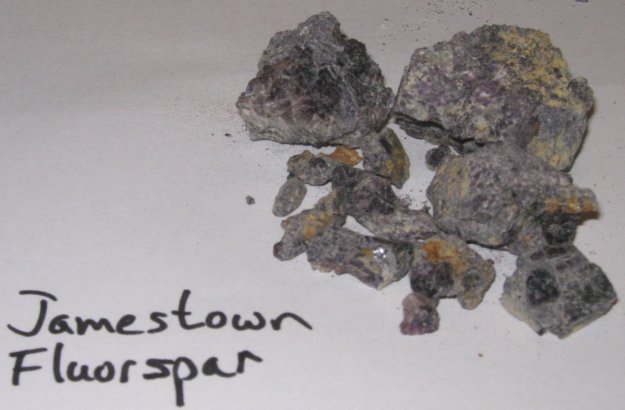
Jamestown Fluorspar 9-26-09 near Burlington Mine

Jamestown Fluorspar 9-26-09 near Burlington Mine

On the tailings pile we found some purple fluorspar and some rocks which under magnification, resemble gold ore I have seen elsewhere. There was the familiar sulfide odor in the area indicating the presence of surfaces of unoxidized sulfide minerals.

Fluorspar is used in iron and steel manufacture in quantities of up to 10 kg/ton of steel. Limestone and dolomite are added to molten iron in the steelmaking process (fluxing) to bring impurities out into a slag phase. We synthetic chemists have an analogous situation with “rag layers” or emulsions. Near as I can tell, slag resembles lava in the sense that it is a molten silicate.

Metallurgists apparently have to provide conditions for extraction and phase separation of unwanted components in a melt. A slag phase may be rich in silicates among other things. According to references I have seen, fluorspar is added to the mix as a fluxing agent to “increase the fluidity” of the slag, which I interpret as causing a decrease the slag viscosity. Whether this is purely a rheological effect or also a sequestering effect is inclear at present to me.