Category Archives: Health

What’s with Product Expiration Dates?

Being a dopamine addict with a persistent Fear of Missing Out (FOMO), I spend far too much time scrolling on social media. Today I ran into a thread about the shelf-life of American distilled liquors in Canada. It seems that the Canucks find themselves heavy with American distilled spirits after the decision to stop their sales in Canada.

The question was about the shelf life of distilled spirits, particularly Kentucky Whiskeys, etc. There is much hand wringing by Canadian liquor store owners in the frozen north. What are they to do with expired liquors which they have or will have in abundance?

Whiskey (or equivalently “Whisky”) is substantially comprised of ethanol and water. Flavor components include esters, aldehydes, ketones, phenols, and other organic molecules. Distilled and concentrated ethanol, such as Everclear, is diluted to the desired proof and then stored in wooded barrels. The much-praised aging process is really about extracting flavor chemicals from the charred wood of the barrel.

Of copper and sulfur

The aggrandized folksy-woodsy wisdom of the distillers of whiskey is a trifle exaggerated. The use of copper stills is often trotted out to convince the public there is closely guarded secret knowledge in the production of whiskey. According to this link, the use of copper in distillation equipment early was largely due to the availability and ease of shaping and forming copper in the fabrication of distillation equipment. Additionally, copper has truly excellent heat conductivity which aids in both heating and cooling. Our friend, Mr Google, says that copper absorbs the sulfur fermentation components from the fermented mash. Well, copper and sulfur do have mutual attraction as evidenced in copper minerals and ores. It is reasonable to expect some amount of contamination of copper surfaces by sulfur containing components. On basic principles, with exposure to heat, air and sulfur, the copper surfaces can also be expected to be passivated eventually, reducing effectiveness in sulfur removal. To date I’ve heard nothing about this.

Back to regularly scheduled programming

The industry I spent most of my career was specialty chemicals. We used organic solvents exclusively. The word “organic” just means carbon-based. The question of shelf-life was rarely a riddle we needed to noodle through because of rapid turnover. We did take storage precautions with ethereal solvents because of the well-known peroxide hazard.

Some bacteria are aerobic, requiring oxygen to survive. Others may be strict anaerobes, growing only in the absence of oxygen. Others may be facultative meaning that they can grow with or without oxygen. Bacteria can be in a vegetative state meaning that they ae actively growing and reproducing cells. Some bacteria are spore forming meaning that they can enter a dormant state, reactivating when environmental conditions are right. In general, vegetative bacteria are active and spores are inactive. Vegetative bacteria can be killed with heat, chemicals or radiation. Spores are partially dehydrated and resistant to heat, chemicals or radiation.

Both the vegetative and spore forms of bacteria can reside in liquids, surfaces, on biological tissues or in suspended droplets in the air. Freshly pasteurized milk can be contaminated with bacteria only to start the growth cycle again. Such contamination can come from packaging equipment, empty packaging containers, or by sloppy handling by workers. In our plant, milk packaging was sanitized with a quick spray of hydrogen peroxide prior to filling. But hydrogen peroxide isn’t a universally potent sterilization food grade chemical. We once had bacterial contamination getting into our fluid milk after packaging. It puzzled everyone but me. At the time I was enrolled in undergraduate microbiology and was familiar with Pseudomonas aeruginosa. This organism forms blue colored colonies and released a fruity, not unpleasant odor.

In the dairy lab, we routinely plated all products in agar petri dishes at 15 process minute intervals and incubated them. Suddenly that day we were finding green colored plates, but with the sweet P. aeruginosa odor. Then I realized that blue bacteria mixed in with yellow agar would appear green. I borrowed some specialized growth media from the university for clinching the identity and we nailed it: P. aeruginosa was only weakly pathogenic, limited to the sick and the elderly. We disposed of the contaminated stretch of the production run and sanitized very aggressively. This solved the problem. Better living through science. However, I quickly received a vigorous tongue lashing from the plant manager for using advice and specific growth media from my micro professor. Still, we solved the problem, haha.

Shelf-life or product expiration depends entirely on the particulars of any given substance. For instance, ethers in general may have a shorter shelf-life than hydrocarbons due to organic peroxide formation. This is especially true if the container has been opened and air exposure has occurred. Remember that peroxide quenching additives like BHT are stoichiometric in their function and may be consumed to exhaustion over time by air infiltration.

There is expiration due to microbial growth including bacteria, yeasts and mold, as well as chemical degradation of substances. Then there is expiration due to liability containment where a producer won’t guarantee quality indefinitely. Instead, the producer may use a tried-and-true in-house approach or SOP defining some arbitrarily chosen, rounded number period like 3 or 6 months, 1 year or longer. The food industry settles on freshness dates based on knowledge of their product aging data. Over time a food item may naturally become inedible or unattractive in appearance for several reasons. This is easier to measure.

Dairy product expiration

For instance, in the dairy processing plant all products had a labeled expiration date. Milk should be safe to drink up to 1-week past code date, but only if it hasn’t been allowed to warm to room temp (rt) by sitting out. The shelf-life dropped to about 1 day if it did warm to rt. Regular homogenized milk (homo) requiring refrigeration is not sterile. The ordinary short time, high temperature pasteurization process does not aim for zero viable bacteria. Milk labeled Ultra Pasteurized is sterile. Our rule of thumb at the time was that once the bacteria loading went past 2000 bacteria per milliliter of milk, an off flavor can be detected and the milk should be discarded, at least for matters of flavor. Bacterial infection and illness from milk is scarce today since pasteurization came into use.

What I learned in the dairy lab analyzing milk products for quality control of products like skim, 1, 2, and 4 % homogenized fluid milk, sour cream, cottage cheese, juices, and novelty dairy-fat items was that making cheese is no great mystery. Cheese is inevitable. Let milk sit around at room temp and it will eventually turn into cheese and whey from naturally occurring microorganisms in the neighborhood. However, it is unlikely to taste good.

Chemical-based expiration

The aging of products by purely chemical transformations is quite different from microbial aging. Microbial aging involves uncontrolled, but self-limiting, growth rates of the microorganisms which follow an s-curve. The s-curve shows that microbial aging begins slowly but soon enters the “log phase” characterized by exponential population growth. The log phase doesn’t last forever, though. Soon population growth levels off as nutrients are consumed and general growth conditions deteriorate. The loss of further nutrients leads to eventual death of the colony.
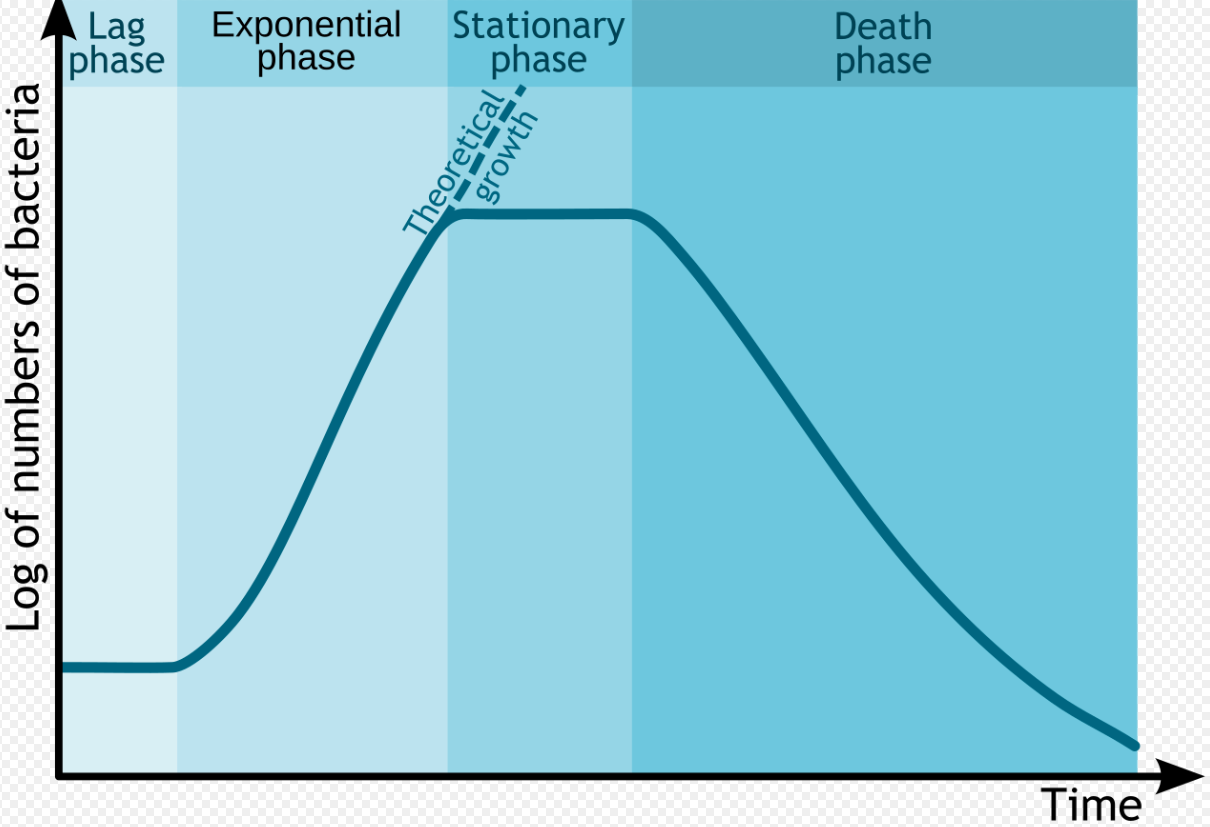
Source: Wikipedia. The microbial growth curve.

Chemical aging is a kinetic phenomenon depending on initial concentrations, temperature, time, and a rate constant This means in principle that the chemical composition of the material can be predicted, extrapolated or interpolated mathematically. Microbial growth is a population change following a logarithmic growth curve leading to a population plateau. Here, the growth rate and the death rate become equivalent. Theoretical growth might approach an asymptote, given sufficient nutrients, removal of deleterious waste products and room to grow.

An asymptotic decay or growth curve means that the slope of the curve over time never flattens exactly to zero– only closer and closer –approaching some limit. It only approaches a maximum or minimum depending on the data being observed. Sometimes the loss of the product is followed by either the product concentration itself or by following the appearance of its decay product. Here, the sensitivity of the measuring equipment may come into play with detection limits. To deal with asymptotic decay or growth, a time constant (tau) is determined. Tau is useful in several contexts including radioactive decay and chemical change or decomposition.

In generalized chemical product decay, decomposition rates will depend on the decay mechanism. Is the decomposition dependent only on the initial concentration and the decay rate of a single component. This is first-order decay with dependence on the concentration of a single component, In regard to the shelf-life of a product, a single component product decays without interaction with other components. This kind of product quality loss would produce an asymptotic decay curve, approaching but never reaching some limit.

Whereas first-order decay depends on external factors like temperature and other product components, the zeroth-order decay of a radioactive source is independent of influences external to the nucleus. Radioactive decay produces beautiful decay curves.

Time constants.

When a substance or product (like a capacitor) produces an exponential decay curve, the line between acceptable quality and unacceptable must be drawn according to the business externality of specifications. In determining the shelf-life by chemical (or biochemical) decay/decomposition, because of the exponential nature of the decay process, the time constant of the property causing decay can be used to decide how long it takes to decompose down to some minimum acceptable level.

The short answer about time constants is the time it takes the quality indicator measurement to fall by 37%. I say quality indicator because the first-order decay of something may not actually be measurable easily and cheaply. The decaying component may have a large influence in some bulk property that determines the overall quality and marketability of the product. Good quality control requires the use of measurable and reliable indicators.
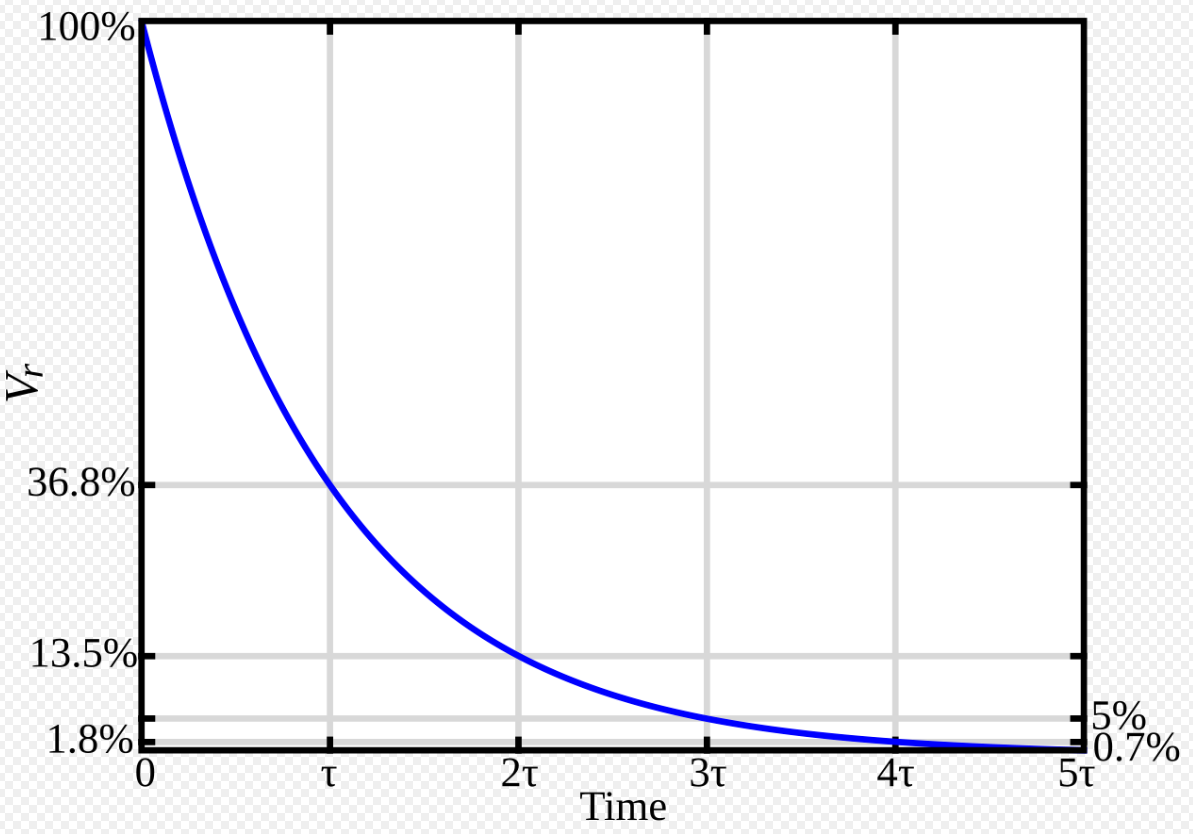
Source: Wikipedia. A decay curve showing time constant numbers vs decaying quantity.

For example, if the time constant of a material is 100 days, the remaining ~63 % after 100 days will decay by 37% in another 100 days and so on until you’ve gotten to some acceptable % levels, where acceptable in the business sense means above the level needed to drop out of specifications.

The decay of an isolated electrostatic charge follows an exponential curve according to a time constant. How many time constant periods must one wait for the static charge to decay to a safe level or near zero? The answer I’ve read for electrostatic charge is 5-time constants, tau τ. As can be seen below, time periods takes you down to within 0.7 % of the theoretical result.

A Google search of a safe number of tau periods gave the numbers below.

  • 1τ: Reaches ~63.2% of final value (or drops to ~37%).
  • 2τ: Reaches ~86.5% of final value (or drops to ~13.5%).
  • 3τ: Reaches ~95% of final value (or drops to ~5%).
  • 4τ: Reaches ~98% of final value (or drops to ~2%).
  • 5τ: Reaches ~99.3% of final value (or drops to ~1%).

General Use: 5τ (99% settled) is a common benchmark for “good enough”.

High Precision (ADCs, etc.): 8τ or more ensures minimal error.

Specific Events: If you just need a quick response, 1-2τ might suffice. 

A Google or other search on the topic of “time constants” will provide a proper mathematical justification of this value.

Determining shelf life with time constants

Following the percentages, barring other factors, a product shelf life of where x is the number taking you to minimum acceptable decay/decomposition. Added on top of this may be company policy or requirements of the customers. If only a single τ takes the product below specs, then a producer may have to rethink the value of x or make better product.

/end/


Personal Notes

The months of August and September of this year, 2025, have been less than fun. I had a tumor removed from my tongue (a partial glossectomy) in August and a neck dissection in September to look for signs of spread. The 15 or so lymph nodes removed were all clear of cancer. As a result, my ability to swallow is impaired and my speech is now slurred. The dissection resulted in nerve damage resulting in malfunction of facial muscles and the ability of my tongue to participate normally in chewing and swallowing. You know that smacking sound you make when you kiss someone? That is now gone.

Combined with a previous problem with balance, I can easily appear as though I’m drunk or stoned. My nightmare is that I’ll end up doing a roadside sobriety test and fail it spectacularly. The copper will be momentarily satisfied that he/she found another drunk driver until I blow a 0.000 % on their handy-dandy blood alcohol meter. Yeah, then we’ll share some laughter together until I say ‘I told you so’ then we’ll part ways.

I disclose this personal information only to ask the broader question of who thinks of having a tumor cut out of your tongue when you’re younger? The inside of your mouth is perhaps the most intimate place on your body. Our consciousness is certainly tied in closely. It began as a small dysplasia which I had removed several years ago. This year it had regrown into a tumor, as dysplasia often does.

I’ve had difficulty choking on food since my throat cancer was heavily irradiated in 2013. But this new problem is more difficult and immediate. Eating and drinking normally causes food to come out my nose with prolonged coughing. Everything I eat must either be normally thick, like soup, or be thickened with carrageenan gum. Low viscosity fluids like water or soft drinks cause choking.

My ENT suggested physical therapy to help with the neck swelling through massage, but I said I just had to find a strip mall with a massage parlor. A moment of whimsy in the exam room.

This afternoon I’ll top off this surgery season with a root canal and crown. Happy happy joy joy. As a side note, Medicare has been surprisingly easy to work with.

Cancer, Cancer Everywhere.

First let me say that I have never been a smoker, drug user or sun bather. As a chemist I have always been cautious about chemical exposure. I have numerous cancers now with the two serious ones in remission. The new ones- who knows.

I use a university hospital and have been visited by flocks of med students looking at me in wonder, sometimes looking down my throat. I get a kick out of it. I always try to joke with them. All cancer diagnoses go before a faculty tumor board for collective assessment. That in particular drew me to this hospital.

My experience with numerous radiation, medical, ENT, and head & neck oncologists is that they absolutely do not want to discuss end of life issues. Maybe that is because I’m not near the end yet, though. But more likely they have production quotas and need to stick to the timeline. My head and neck oncologist did say that they were trying to keep me above the grass, though. That was cheerful.

Since July 22 of this year, I’ve had a partial glossectomy to remove a tumor resulting in a nickel-sized piece of the left edge of my tongue being removed, my first colonoscopy, a neck dissection looking for more cancer, and tomorrow is a root canal. Sonofabitch!

The glossectomy resulted in giving me slurred speech and then the neck dissection made it much worse with the added joy of serious swallowing difficulty. Liquids must be thickened with carrageenan gum to mostly avoid inhalation of food and drink. I’ve already been hospitalized with pneumonia resulting from inhaled food.

My 68th birthday was last week and while I received my well wishes, not a single person was moved to suggest a gerontologist, elder care facility or even as little as when the word “elderly” is used. I’m left up in the air …

It never occurred to me earlier in life that a piece of my tongue could be sliced out. What part of your body is more intimate in your daily consciousness than your mouth? I’ve had surgeons say “give me control of your tongue”. A fella doesn’t hear that very often.

The colonoscopy revealed 2 polyps suspected of being cancerous. So, to tally up the score, I have stage 4 prostate cancer, stage 4 throat cancer, tongue cancer, basil cell skin cancer, and possible colon cancer. Jesus H. Christ!! What next?.

The radiation of my throat resulted in the loss of about 1/2 of my salivary glands and taste buds. I’ve had dry mouth since radiation treatment in 2013, resulting in the loss of numerous teeth.

I was given radiation treatment of my prostate in 2014 and again last summer when the PSA score breached the 4.0 level. Since the 2014 treatment the thinking has changed on radiation dosage. Previously I was given about 1.8 Gray per dose. This time it was 5.0 Gray per dose over fewer doses. The thinking is that it is better to try to break the cancer cell DNA in 2 places at once rather than in just one place. In two rounds of x-radiation treatment of my prostate, I have experienced no pain or discomfort. I’ve had two rounds of 18F-Glucose injections for PET/CT scans.

The throat radiation was a different story. It gave me the world’s worst sore throat. I was fed through a stomach tube and was on opioids for an extended period. Let me say that I detest opioids and the constipation they bring. How do opioid addicts deal with this??

The throat cancer was from the HPV virus and that form is quite treatable, fortunately for me. The tongue cancer was also a squamous cell carcinoma but not of HPV origin.

Life on our lonely pale blue dot is strange. I’ll never get a full grasp of it. I’ll be on the top side of the grass for a while yet and until that changes, I’ll still be a student of the sciences and will continue to write about it.

I Did My Own Research …

I subscribe to “Your Local Epidemiologist” by email. It’s written by a PhD epidemiologist on her substack and is quite informative. Below are some excerpts on people doing their own research-

The beginner’s bubble. In early stages of learning, confidence tends to increase faster than skill, meaning people often overestimate their accuracy when they are first learning something new.

The quest to “do it all on your own” can backfire. “Epistemic superheroes” want to figure out everything on their own and distrust other people’s information. But their task is impossible—nature is too complex for us to solve by ourselves. When the “trust no one” mantra inevitably leads to “I must decide who to trust,” it is easy to gravitate towards other like-minded skeptics. This creates a highly biased information bubble, the exact opposite of the original goal.

Assuming “unbiased” knowledge will contradict consensus. For many, doing their own research began with doubting the consensus view. Challenging consensus is healthy when new data emerges, but assuming “real” truth always opposes the consensus creates bias, undermining the search for unbiased answers.

Study comparing confidence vs accuracy of a beginner learning a new diagnostic task, revealing confidence in diagnostic ability rose faster than diagnostic accuracy. Sanchez et al. Journal of Personality and Psychology, 2018.

Kristen Panthagani, MD, PhD is an emergency medicine physician completing a combined residency and research fellowship focusing on health literacy and communication. She is the creator of the newsletter You Can Know Things and author of YLE’s section on Health (Mis)communication. Views expressed belong to KP, not her employer.

Deconstruction of the USA

The idiot RFK, Jr

The very idea that a person like RFK, Jr, would land in Trump’s cabinet as the Secretary of Health and Human Services seemed so farfetched as to be bad pulp fiction. Yet there he is.

I have no special insights or knowledge on HHS other than what I read. Everything that could be said about the pathetic case of RFK, Jr, and his place in pseudoscientific madness has already been stated by better writers than I.

If you wanted to purposely obliterate certain patches of modern medical developments from the last 120 years, there are few better hatchet-men than RFK, Jr. RFK, Jr., is not without a certain charisma. His strength of conviction is taken as a measure of truth. He is a talented speaker despite his speech impediment and, like most popular speakers, is a performer playing to the entire USA. His compelling position on the stage lends a credibility to his assertions. His slashing of HHS funding and staff is jaw dropping in its extent and coverage.

The University-Government-Industry R&D Complex

Until Trump, the USA had accumulated considerable technological ‘soft power‘ internationally since WWII. An element of that soft power is the American University-Government-Industry research complex. The government funds basic university research across the spectrum of science and the universities provide basic research and training of scientists and engineers. Industry taps into this valuable technology resource for skilled technologists and develops applied science for their projects.

The USA has been a very productive engine of ingenuity, especially since the beginning of WWII. However, our dear leader’s administration has been deconstructing agencies in the name of rooting out the deep state. In reality he is busy putting in place his own deep state.

Project 2025, hosted by the Heritage Foundation, amounts to a libertarian coup backed by libertarian hardliners and supported by conservative protestant evangelical Christians. I’m trying to be fair to the evangelicals, but they have woven Trump into their Christian eschatology. They may still support #47, but many are holding their noses in doing so.

Why not remove the university research funding and leave it to industry? To our neoliberal friends that might sound appealing. Universities could continue to produce scientists and engineers but leave the R&D to industry. After all, letting the open market take care of R&D is one of the goals, right? Let industry produce and pay for their own R&D talent.

The problem will be that new R&D chemists hired into a company at the PhD level would have to be trained on how to execute chemical R&D. Normally this happens in graduate school and in a post doc appointment. But wouldn’t business prefer to hire walking, talking, trained, young and energetic chemistry researchers? I think so.

In #47’s administration, research efforts are being discontinued willy nilly by inexperienced and scientifically untrained actors whose only goal is to rack up dollar savings. Their amateur appraisal of what constitutes valuable scientific activity is cartoonish.

Having been in both academic and industrial R&D, my observation is that basic and commercial science can be quite different activities. Universities have a continuous stream of fresh students and post docs to do the actual work of research at a time period in their lives when they are the most productive and at a far lower labor cost than could industry. Benefits, if any, are quite modest.

The current approach simultaneously trains scientists and engineers while at the same time developing basic science and engineering for the price of a one or more grants. In the process, the advanced instrumentation and the many subject matter experts walking around in the building aid academic research greatly. If a transformation (i.e., a reaction) goes poorly, an academic lab may try to find a mechanism. A commercial R&D lab exists solely for the purpose of supporting profitable production. This means developing the best routes for the fastest conversion and highest yields of chemicals into money. Along the way, commercial chemists may discover new chemistries or have unexpected outcomes. If they are lucky, any given R&D ‘discovery’ may lead to a new product or better control of a reaction. The result of commercial R&D may be more profitable processing but also it may be of scientific interest.

The role of the university is quite different from the role of industry in our society. Universities are funded to provide leading edge research. Here, knowledge is acquired by exploring the boundaries of particular chemical transformations or in the realm of calculation. The driving force in academic R&D is funding and publication. Every scientist wants to be the first person to discover new processes and compositions. It is not uncommon in academics for a research program to finish with a sample of 2 milligrams of product for spectroscopic analysis. For a proof-of-concept result, a sample small enough to analyze and still get a mass for the yield closes the work.

The preferred role of industry is to take up where academia leaves off. If a known composition and/or process is commercially viable, the captains of industry would prefer not to fund enough basic R&D to get a product to market. Thirty minutes on SciFinder should provide an indication of the viability of a process to produce a given chemical substance. They would prefer their chemists work on scaleup to maximize the profit margin of a market pull product rather than wading into the murky waters of technology push.

You learn to do laboratory research by doing laboratory research. Reading about it is necessary but not enough. The success of much research requires broad and deep knowledge and specialized lab and instrument skills.

The industrial end is a bit different from academia. In applied science there are two bookends in business-to-business product development-

In order for a company to allocate resources for an R&D project, sales projections, cost and margin studies must be performed to convince management to proceed. A great starting point is with a known substance and a good public domain procedure for it. This is where academia really shines. Industrial R&D will collect academic research papers on all aspects of the production of a new product.

One serious caveat for industrial R&D is the intellectual property (IP) status of all of the compositions of matter and the processes used therewith. In chemistry, IP is divided between the composition of matter and the method or process. Chemistry patents are often written with Markush claims that use variables to enrobe vast swaths of compositions of matter within patent coverage.

Some academics file for patents as inventors, leaving the ownership costs to the university assignees. The thinking has been that the university may someday collect license fees from the invention. The wild-eyed inventors may honestly believe that industry will beat a path to their door wanting licenses. More chemical patents of all kinds are allowed to quietly expire unlicensed than most realize.

Research IssueUniversityIndustry
Discovery of new chemistryBuilt to excel in itCan do but would much rather avoid the expense and time
Publication of resultsCritical to career growth and scientific progressResearch developments are confidential
Patenting IPMixed views. Some patents may provide revenue to the university. Patents that are contested are very expensive to protect.Patents enforce exclusivity for 20 years and cement competitiveness of the assignees.
R&DMuch time and care can be spent on the research. Research is distributed through publications and seminars.Prefers that existing R&D be applied to scale-up and process improvements
Career growthStudents, post docs and professors can choose academics or industryScientists can take the business path or stay on the R&D path
Safe and smart technologyAcademics have the ability to pursue environmental and safety matters with the chemistry.Industry is a slave to quarterly growth. Changes that will increase the quarterly EBITDA are most favored by the C-suite and the board of directors.
“A patent is only as good as the latest attempt to invalidate it”. -Arnold Ziffel.

Some loose talk about patents

Many in academia view a patent as a publication that they can stuff into their vitae. While being awarded a patent is a validation of an idea, it also means that the examiner was unable to find a reason to deny the patent. Citizens are entitled to patents and the USPTO must find a reason to deny the application. The language in a patent application must be internally consistent, be written in the ‘patent dialect’ and provide a description for others to understand the claimed art enough to avoid infringement. The USPTO does not require that the reality of the claims be proven. (I’ve been involved in 2 technology startups based on patents that were not proven by prototyping because it was not required by the USPTO. Both were business disasters because the claimed art didn’t work well enough).

Patents can induce a high credibility impression that may or may not be valid. Patents are commonly used to impress investors and are found stapled to a business plan. The startup may have an attorney on the board of directors who is supposed to serve as council. The attorney may or may not be a patent attorney. But if they do not possess patent and technical knowledge, they can only help with word smithing documents like NDAs, contracts, and sitting in on meetings to catch the odd procedural misstep. They can bring confidence and comfort to the startup founders with business structure, agreements, and negotiations etc., sorta like a big ole’ teddy bear for the CEO.

Summary

One of the purposes of government is to protect ourselves from each other. Another purpose that has worked well until now is that gov’t has been able to blunt many of the harsh and brutal forces of nature like disease, famine, drought, earthquakes and storms.

The USA has excelled in medical research for decades. The Food and Drug Administration (FDA) was begun to assure that food and drugs were safe for the public to consume. Every new drug developed in the USA has a paper storm trailing behind it. To be compliant with FDA generally, a sizeable amount of operational rigor must be demonstrated and practiced. Food safety in restaurants and in the food supply chain as well as drug development and testing are all subject to complacency or outright evasion without gov’t oversight. People and organizations will always drift away from safe practices if nobody is watching and auditing.

Radiopharmaceuticals with 68-Gallium

Prologue: What follows is a look at the use of 68Gallium as part of a positron emitting radioligand from an organometallic chemist’s point of view. I’m not from nuclear medicine nor am I a radiation oncologist.

It had to happen … the other shoe has dropped. My stage-4 prostate cancer has come charging back for round 2 after 9 years. Again, I’ve taken a personal interest in radiation oncology. Recently, my PSA shot up steeply through the 4.0 ng/dL threshold triggering an appointment with my radiation oncologist who has ordered a PET/CT scan. Back in 2015 I finished 18 months of hormone ablation (chemical castration) and got the PSA from 29 down to 0.01 with Lupron injections and earlier, a large cumulative dose of x-radiation in the lower abdomen. I have to say that while I experienced no discomfort at all in this round of treatment, I did lose body hair and muscle mass.

PET/CT scanning is an important tool in locating prostate cancer cells. Riding the platform in and out of the scanner is expensive but important. Unfortunately for me, the CT contrast agent is a potent emetic so the scanner becomes an expensive vomitorium ride.

The story of PET, Positron Emission Tomography, has evolved over decades of advancement. To begin, tomography, detectors and computers had to be invented. Separately, positron emission as a medically viable radiation source had to be identified and validated. A substrate for selective delivery of the isotope must be found. In the case of 18Fluorine, it is available as an organofluorine molecule like 18F-Glucose. It turns out that the 18F-Glucose concentrates in clinically useful places and K18F does not.

Positron Emitters

Atomic nuclei that are deficient in neutrons can have an instability leading to emission of a positron (anti-electron with a + charge), also called a β+ decay, which lessens the neutron deficiency by ejecting a positive charge from the nucleus. When a positron is ejected from the nucleus it finds itself immediately swarmed by the electron clouds of surrounding atoms and molecules and doesn’t travel very far. When a positron encounters a negatron (regular electron, β), they annihilate one another and emit two gamma photons of 511 keV energy at 180 degrees apart. This is a mass to energy conversion. Loss of one positive charge from the nucleus gives rise to a transmutation of the atom causing a one-unit drop in atomic number, that is it goes from n+ to (n – 1)+, but retains most of its atomic weight. In this case, 6831Gallium undergoes positron decay to 6830Zinc.

Positron emitters include 11Carbon (T12 = 20.4 min), 13nitrogen (T12 = 10 min), 15oxygen (T12 = 2 min), 18fluorine (T12 = 110 min), 64copper, 68gallium, 78bromine, 82rubidium, 86yttrium, 89zirconium, 22sodium, 26aluminium, 40potassium, 83strontium, and 124iodine. This a list given by Wikipedia, but there are many more in more comprehensive tables.

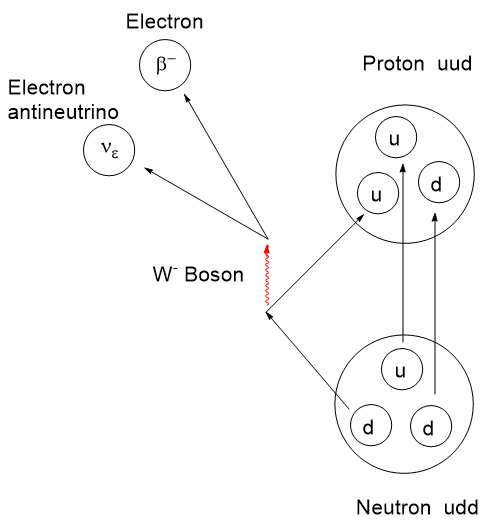
The actual mechanism of β-type emission requires a venture into fundamental particles called quarks. Protons and neutrons are composite particles called hadrons, not fundamental particles. Protons and neutrons are each comprised of 3 quarks, but with a different combination of “up and down flavors” where flavor refers to the species of quark. There are 6 flavors of quarks: up, down, charm, strange, top, and bottom. Interconversion between protons and neutrons can occur if one of the 3 top or bottom quarks changes flavor. By all means, if this interests you, take a dive into it. I shall stop here.

Beta emission diagram at quark level.

Positron emitters tend to have a short radioactive half-life as well as a limited chemical half-life in the body before they are cleared out through the kidneys or other routes. Ideally, the goal is to deliver a high radiation dose selectively to a target tissue as fast as is safe then disappear. Prolonged irradiation to surrounding tissue is undesirable. The optimal radiopharmaceutical will be highly target selective and have a short half-life. A selective radiopharmaceutical is one that will accumulate in a desired cell type or organ. Accumulation can be aided through simple solubility, the ability to undergo transport through a cell wall, affinity to a specific receptor and the ability to function fast enough to resist the various clearance mechanisms.

A short half-life means that the radioactivity per gram of radioisotope, specific activity in Becquerels per gram, will be at its maximum after activation. Though the radioactivity may be intense, the radiation dose can be controlled by the amount of mass administered. With radioisotopes, there are two kinds of purity to consider: Chemical purity referring to the atoms and molecules present; Radiological purity referring to the presence or absence of other radioactive isotopes. To provide maximum safety and effectiveness, the specific radioisotope with the desired decay mode should be the only source present. If your desired source is an alpha emitter, you don’t need spurious quantities of a gamma emitter present because of inadequate purification.

Economical methods of preparing positron emitters had to be addressed. To fully exploit PET for any given situation, tissue selectivity of radioligands had to be determined and selective positron radiopharmaceuticals developed. Due to the short half-life of these radioisotopes, rapid and safe methodologies to produce them by efficient nuclear transformations, isotope isolation followed by chemical synthesis had to be developed. It is important that isotope generation, isolation and attachment to a ligand be done nearby the hospital for the proper activity to reach the patient.

Positron emitter production involves a nuclear reactor for neutron activation or a cyclotron accelerating protons or deuterons in the preparation. Because both of these sources are highly destructive to organic molecules, an inorganic radioisotope is produced separately and chemically modified to produce an inorganic species that can be chelated or otherwise attached to a radiopharmaceutical. This technique evolved from simple radiography in the 1930’s to a large array of techniques and applications today. The reader is invited to take a dive into this topic.

Since my cancer experience began, a few new radiotherapies and imaging agents have landed in oncology space for prostate cancer. Recently I posted on Pluvicto PSMA (Prostate Specific Membrane Antigen) which was before I knew about my current prostate situation. PSMA is a transmembrane protein present in prostatic cells. Pluvicto uses a chelated 177Lutetium beta emitter as the destructive warhead and a peptidomimetic fragment for binding to the PSMA receptor.

A Brief Interlude into Quality Factor

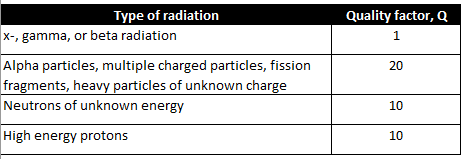
It should be noted that the various forms of particle (alpha, beta, or neutron) or electromagnetic radiation (x-ray or gamma) have differing abilities to penetrate and cause ionization of within matter. There is a factor for this which is used to refine dosage calculations. It is called the Quality factor, Q.

The destructive effects of radiation stem from its ability to ionize matter along its path. Ionization is a disruptive effect that may result in fragmentation of molecules or crystal lattices into reactive positive or negative ions. Single electron radical species may be formed as well. It is possible for some fraction of the disrupted molecules to recombine if the fragments haven’t already diffused away or gone on to further transformations.

The deleterious effects of radiation on living tissue stems from the amount of disruptive energy transferred to tissues along the path of each particle. Charged particles like electrons, protons and alpha particles tend to dump their energy into matter rapidly and along a short path making them less penetrating than neutrons or electromagnetic rays in general.

Quality factor, Q, is a dimensionless coefficient that is multiplied by an absorbed dose to give a more realistic estimation of radiation energy absorption. Interestingly, the Q for neutrons varies with energy and rises to a maximum around 0.5 to 1 MeV of energy and falls off at higher energies.

The larger the Q factor, the larger the corrected radiation effect. X-, gamma, and beta radiation have a Q factor lower than the others by a factor of 10 to 20. The x- and gamma rays will tend to pass through matter leaving a small amount of their energy to disruption. In radiation therapy this is compensated for by just increasing the fluence or the exposure time.

For clarity, x-rays are generated from the electron cloud around an atom via electron transitions. For instance, if an electron is dislodged from an inner, low energy orbital, another electron can occupy that vacancy by the emission of an x-ray. Gamma rays originate from nuclear energy transitions. Often a nuclear decay might result in a new nucleus that is not at its ground state and would be categorized as metastable. This metastable state, which has its own half-life, can collapse to its ground state by the emission of a gamma ray matching the loss of energy by the nucleus.

Neutrons

Free neutrons are special. They undergo beta decay with a short half-life outside the nucleus having t1/2 = ~ 10-15 minutes, depending on the information source. Not having a charge, they tend to be more penetrating than other particles. However, effective shielding can be had with a hydrocarbon like paraffin or water by virtue of the high concentration of hydrogen nuclei present in these substances. Neutrons are not affected by charge repulsion from an atomic nucleus and therefore can collide and interact with the hydrogen nucleus (a proton). They can scatter from hydrogen nuclei, leaving behind some of their kinetic energy with each collision (see “Neutron Lethargy“). This scattering is the basis for using water to moderate the neutrons in a nuclear reactor. Neutrons are cooled by repeated collisions with hydrogens in water to the point where their kinetic energy of 0.025 eV, which from the Maxwell-Boltzmann distribution corresponds to a temperature of 17 oC, thus the term “thermal neutrons“.

Many elements absorb neutrons, increasing the atomic weight and very often altering the stability of the nucleus leading to a radioactive decay cascade. This is what is happening in neutron activation. In the case of water, the ability of free neutrons to collide with hydrogen nuclei allows them to dislodge hydrogen ions or free radicals from organic and biomolecules resulting in ionization and makes them quite hazardous to living things.

Radioligands

Drugs like Pluvicto are referred to as a radioligand. There is a radioisotope connected to an organic “ligand” for selective binding to a specific protein receptor. A radioligand is injected and diffuses its way a particular receptor where it binds. As it turns out, due to the gamma radiation also emitted by 177Lu, Pluvicto is a radioligand that can also be located in the body by the gamma radiation it emits. In general, a radioligand can be used for two endpoints: To find and signal the location of a particular cell type; and to find and vigorously irradiate a particular cell type.

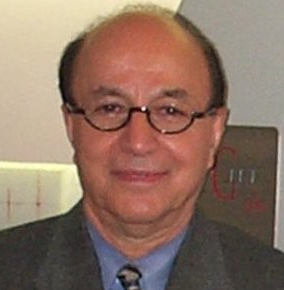
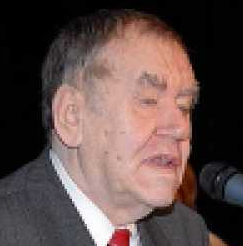
There are recent radioligand compounds that are used as PET (Positron Emission Tomography) diagnostic agents which selectively bind to the PSMA receptor where they can undergo positron emission revealing the site of prostate cancer cells by tomography. 18F-glucose was first synthesized in 1967 in Czechoslovakia at Charles University by Dr. Josef Pacák and was first tested as a radiotracer by Abass Alavi in 1976 at the University of Pennsylvania on volunteers. Positron tomography came along later. Cancer cells consume glucose faster than normal cells so the 18F will tend to accumulate to a slightly greater extent and reveal their position by positron annihilation. The two 511 keV x-rays simultaneously detected at 180o apart are identified by a ring coincidence detector. A single detection event is discarded.

Dr. Abass Alavi, University of Pennsylvania. First use of 18F-Glucose on humans.
Dr. Josef Pacák (1927-2010), of Charles University in Czechoslovakia. First to prepare 18F-Glucose.

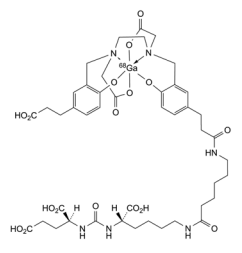
A radioligand that received FDA approval the same day as Pluvicto was Locametz or Gallium (68Ga) gozetotide. This gallium radioligand targets PSMA as does Pluvicto but is only a PET diagnostic agent.

Locametz or Gallium (68Ga) gozetotide. Source: Pharmeuropa.

Locametz has 4 carboxylic acid groups, a urea group and two amide groups aiding water solubility and numerous sites for hydrogen bonding of this radioligand to the receptor. The organic portion of the Locametz is called gozetotide, named “acyclic radiometal chelator N,N’-bis [2-hydroxy-5-(carboxyethyl)-benzyl] ethylenediamine-N,N’-diacetic acid (HBED-CC).” The 68Ga (3+) cation is shown within an octahedral complex with a single hexadentate ligand wrapping around it. The short 68 minute half-life of 68Ga requires that a nuclear pharmacy be nearby to prepare it. The short half-life of 68Ga or other positron emitters as well as the possibility of destructive radiolysis to the ligand prevents preparing a large batch and stocking it. Locametz must be synthesized and transported prior to use. This rules out remote or rural hospitals.

Nuclear Chemistry

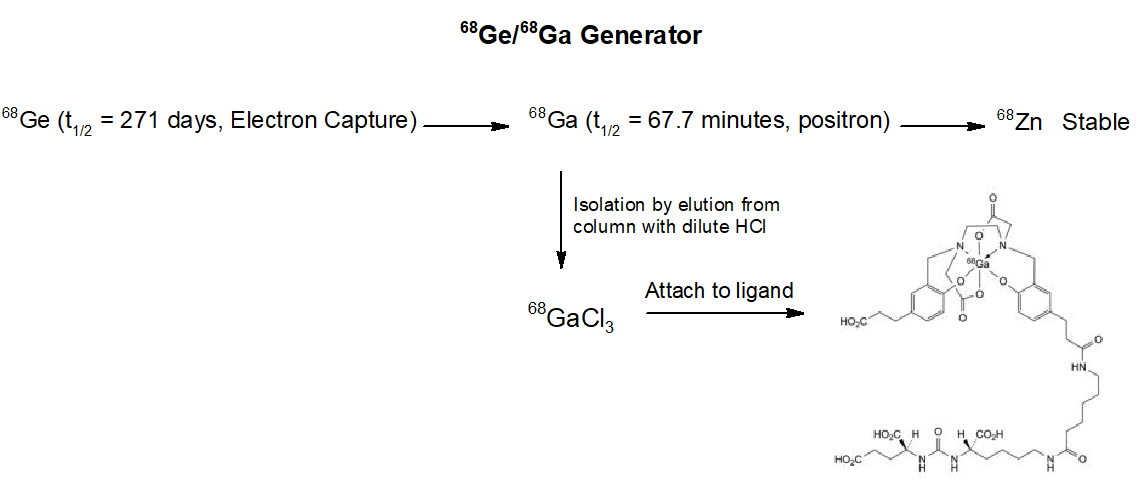
So, where does one obtain 68Gallium? Well, there are several methods out there. 68Ge/68Ga generators are produced commercially. One company is GeGantTM who offers 1-4 GBq of 68Ga. (Note: 1 GBq is 1,000,000,000 disintegrations per second).

Diagram courtesy of Gaussling.

From the scheme above we see the workings of a 68Ga generator. The ligand attachment is performed exterior to the generator. Atomic nuclei that are neutron deficient like 68Germanium can transform a proton to a neutron. There are two ways this can happen. In Electron Capture (EC) an inner “s” electron can be absorbed by a proton converting it to a neutron and emitting a neutrino by the weak nuclear force. This lowers the atomic number by 1, in this case 6832Germanium becomes 6831Gallium. The other mechanism is for the nucleus to emit a positron (anti-electron) and eject 1 positive charge as a positron (and an antineutrino) from the nucleus, resulting in a new neutron. The atomic weight remains constant, but the atomic number drops by one. If available energy in the nucleus is less than about 1 MeV, an electron capture is more favorable than positron emission.

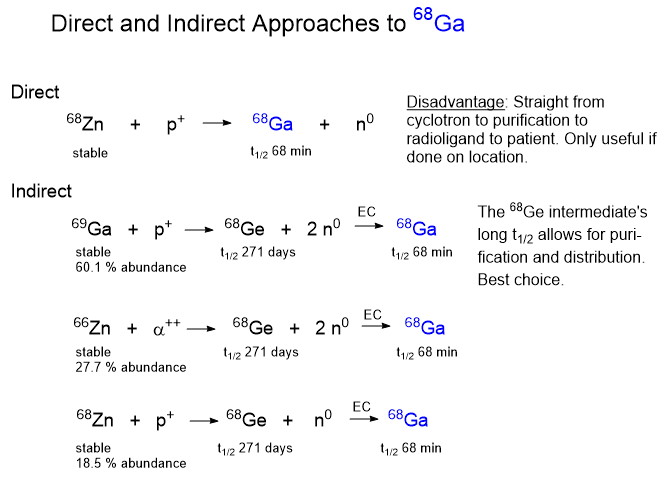
Once you know about the 68Ge electron capture reaction leading to the 68Ga isotope you have to ask, where does the 68Germanium come from? There are a few different ways to make and concentrate 68Ge and the method you use depends on the equipment available to you. One way is to accelerate protons to a high energy in a cyclotron and slam them into atoms heavier than germanium, such as rubidium or molybdenum. The collision with break the target nuclei into pieces by a process called “spallation“.

Diagram courtesy of Gaussling.

Cyclotrons

The first cyclotron was independently invented by Ernest Lawrence 1929-1930 at UC Berkeley. It was the first cyclic particle accelerator built. The idea of the cyclic accelerator was first conceived by German physicist Max Steenbeck in 1927. In 1928-1929 Hungarian physicist Leo Szilard filed patent applications for a linear accelerator, cyclotron, and the betatron for accelerating electrons. Unfortunately for both Steenbeck and Szilard, their ideas were never published or patented so word of the ideas were never made public.

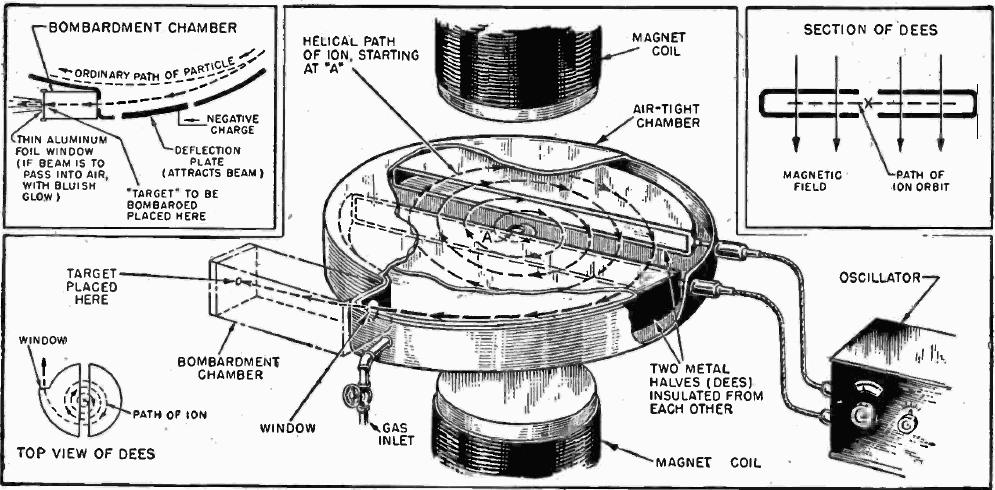
Where does one go to get a cyclotron? One company is Best Cyclotron Systems. If you are not sure of how a cyclotron works, check out the image below from Wikipedia. Note: A cyclotron can only accelerate charged particles like protons, electrons, deuterons and alpha particles which are introduced into the middle of the machine. A key component is the “D” or Dee, so-called because of their D-shape. The cyclotron has two hollow, coplanar Dees which are each connected to a high voltage radiofrequency generator. The Dees are open chamber-shaped electrodes that alternately cycle through positive and negative high voltage attracting and repelling charged particles under the influence of a powerful magnet. Because charged particles change their trajectory under the influence of a magnetic field, the particles follow a curved path of increasing diameter, accelerating until they exit the Dees and careen into the target.

Source: Wikipedia.


Pluvicto (TM) PSMA-targeted radiotherapy: Updated

[Note: This is an updated post from the original posted one year ago.]

March 22, 2022. Swiss drugmaker Novartis has released Pluvicto, “the first FDA-approved targeted radioligand therapy (RLT) for eligible patients with mCRPC that combines a targeting compound (ligand) with a therapeutic radioisotope (a radioactive particle). Pluvicto is expected to be available to physicians and patients within weeks.

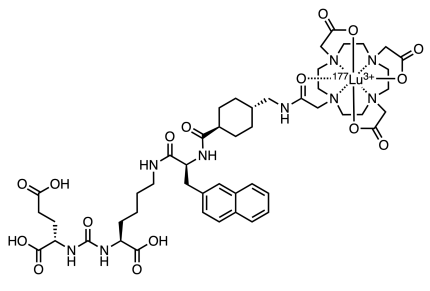
Pluvicto features a chelated 177Lutetium ion (half-life 6.7 days) which is the source of the molecule’s radioactivity. Lutetium is the heaviest of the lanthanide elements and the name comes from the Latin Lutetia Parisiorum which was the predecessor to the city of Paris, France.

Novartis PluvictoTM (177Lutetium vipivotide tetraxetan)

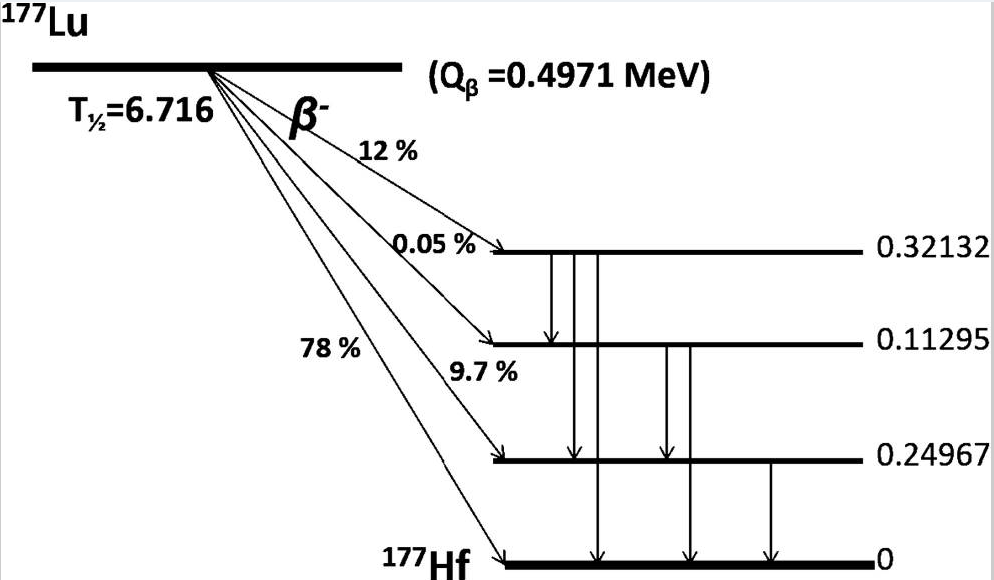
Pluvicto has been approved in the US for the treatment of metastatic prostate cancer. Several things are notable about the Pluvicto molecule. The molecule contains a PSMA-specific peptidomimetic feature with an attached therapeutic radionuclide, where PSMA stands for Prostate Specific Membrane Antigen. Peptidomimetic refers to a small chain that resembles a stretch of protein forming amino acids. This peptidomimetic fragment, which interestingly contains a urea linker, is designed as the tumor targeting piece of the drug. Connected to it is a chelated radioactive 177Lutetium cation (below, upper right). The tumor targeting fragment binds to the cancer cell. While bound to the cell, the short-lived radioisotope undergoes two modes of decay. The 177Lu has two decay modes. One emits a medium energy beta particle (Eβmax = 0.497 MeV) which is limited to a maximum of 0.670 millimeters of travel. This is the kill shot that will damage the attached and nearby target cells. The short path length of the beta ray in vivo limits the extent of surrounding damage by any given decay. Once the 177Lu emits a beta particle it becomes 177Hafnium.

Source: Ashutosh, et al. 177Lu decays to ground state 177hafnium 78 % of the time. In the three other beta decays to three hafnium excited states, each collapses to ground state by 6 possible gamma emissions.

The other mode of 177Lu decay is gamma emission by 177mLu, a nuclear isomer or metastable form of 177Lu. Gamma radiation is much more penetrating than beta radiation. The gammas can be detected from the outside of the patient allowing monitoring of dose and location of the drug. Even though gamma rays are more penetrating than beta rays, they produce many fewer ion pairs per centimeter as they traverse the tissue making them less effective per photon in tissue destruction compared to alpha and beta particles. For instance, alpha particles from therapeutic radionuclides like 223Radium used to treat prostate cancer are much more destructive because they produce many ion pairs per centimeter.

A Small Side-Track into Radon Decay

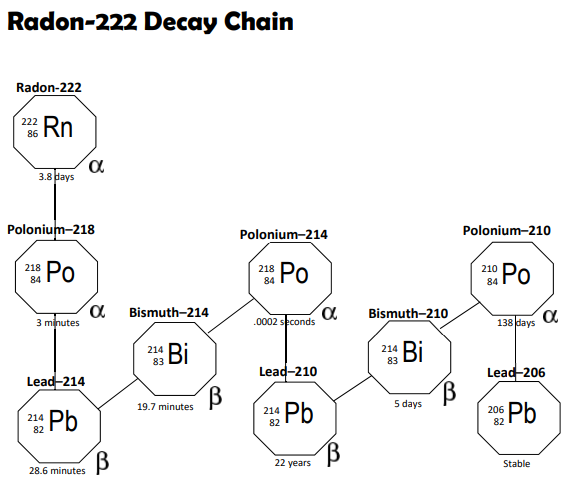
Not all radioactive isotopes are alike. Some, like 177Lu, offer only a single decay event while others are part of a domino series of decays. The decay of naturally occurring 222Radon begins a series of decay events (Radon’s daughters), with some decays being quite rapid, multiplying the radiological effect per initiating atom. Inhaling an alpha emitter like 222Radon is a gamble. Until the 222Rn decays, it is just an inert noble gas. But when it alpha decays in your lungs, it is converted to the 218Polonium which alpha decays to 214Lead which beta decays to 214Bismuth which beta decays to 214 Polonium which alpha decays to 210Lead which beta decays to 210Bismuth which beta decays to 210Polonium which alpha decays to stable 206Lead where the chain stops. Each of the daughter products is a reactive, nonvolatile metal.

Each 222Radon atom gives rise to 8 successive radiation emissions, 4 of which are alpha emissions. These new radioactive elements are called “Radon’s daughters”. This makes radon especially insidious. Note the half-lives in the graphic. Source: EPA.

Neutron Activation of 176Lutetium

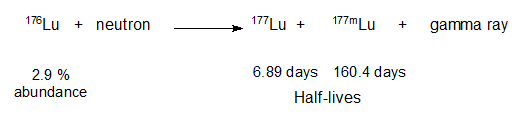
How does one obtain 177Lu? There are two pathways of nuclear chemistry that can be used, each with plus and minus attributes. The easiest pathway to execute would be the absorption of a thermal neutron by the lighter lutetium isotope 176Lu followed by a gamma emission from the new 177Lu. Gamma emissions result from metastable coproduct 177mLu that is in an excited state. It can de-excite by losing the excited state energy by the release of a gamma photon.

An excellent review of this topic is by: Ashutosh, Dash; Maroor, Raghavan; Ambikalmajan, Pillai; and Furn F. Knapp, Jr. Nucl Med Mol Imaging. 2015 Jun; 49(2): 85–107. doi: 10.1007/s13139-014-0315-z.

Where does one get thermal neutrons and what is “thermal” about them? Thermal neutrons are produced in a water-cooled nuclear reactor. It turns out that nature has bestowed a wonderful gift on 176Lu. It has a very large neutron capture cross section of 2090 barns for producing 177Lu. The metastable 177mLu isomer has a cross section of only 2.8 barns.

The unit “barn” is the unit of the effective target area of a nucleus and is equivalent to 10-28 m2, or 100 square femtometers. The capture cross section of a nucleus is dependent on the energy (or temperature) of a neutron and is proportional to the probability of a collision. Here is a brief reference on nuclear cross sections. The colorful etymology of the term “barn” is recalled here.

For comparison, the capture cross section of 239Plutonium is on the order of 750 barns with 0.025 electron volt neutrons. We can see that the capture cross section of the 176Lu is much larger than that of 239Pu. The word “thermal” comes from the kinetic energy corresponding to the most probable speed of a free neutron at a temperature of 290 K (17 °C or 62 °F).

The transmutation [176Lu + 0n —> 177Lu + 177mLu] is clean and direct with no other chemical elements to interfere. With its large capture cross section,176Lu is well suited to absorb a neutron. The down side is that the isotopic abundance of 176Lu is only 2.8 %. The other 97.2 % of Lu can also undergo neutron activation leading to chemical and radiological contamination of the desired 177Lu. Isotopic separation of 176Lu from the other Lu isotopes is difficult and not very scalable. By the way, the lutetium is neutron activated as the refractory oxide, Lu2O3. These lanthanide oxides are simple to prepare and can be dissolved in acid afterwards to produce Lu3+ cation for further chemistry.

Neutron Activation of 176Ytterbium

The other major channel to 177Lutetium is from neutron activation of 176Ytterbium, 176Yb. Generally speaking, the heavy lanthanides like Yb and Lu are less abundant than the light lanthanides on the left side of the series. All of the lanthanides have a 3+ oxidation state and similar ionic radii making them difficult to chemically separate, where “difficult” means that numerous steps are needed in purification often resulting in low yields. A few of the lanthanides have oxidation states other than +3. It turns out that Yb3+ can be selectively reduced by chemistry to Yb2+ in the presence of Lu3+ using sodium amalgam as the reductant. This happy fact allows for plausible chemical separation of Lu from Yb. Furthermore, Yb will amalgamate while Lu does not.

A Google search of Pluvicto or 177Lutetium will produce many good links of a technical and non-technical nature.

Pluvicto, PSMA-targeted radiotherapy
(lutetium 177Lu vipivotide tetraxetan)
for PSMA-positive prostate cancer
7.4 GBq (200 mCi) IV Q6W up to 6 doses

Temple Hollowing

Something new to be neurotic about- temple hollowing. Among facial reconstruction professionals, this is not news. It hardly ranks as a disfigurement, just one of many effects of aging.

Just when I thought I’d heard of everything, along comes the aesthetic condition of temple hollowing. This condition results from the underlying tissues of the temple thinning to produce a hollowed-out effect. The result is an older, more peanut shaped or skeletal appearance to one’s head.

It is a normal consequence of aging or excessive exercise. By injecting a filler, temple hollowing can be filled in to produce a more youthful appearance.

I’ll place this in either the “Who knew?” or the “Who cares?” basket.

Now that I am aware of this aesthetic anomaly, I suppose I will see it everywhere.