Category Archives: Metals

The American gold rush and relativistic electrons

Exactly why do people value gold? Is all of the allure of gold due to its color? What if gold metal did not have the golden color? Instead, what if it had a silver luster like its neighbors on the periodic table of elements? Would we find it quite so appealing?

There are many reasons why people might desire gold.  The motivation to possess gold would surely vary based upon where in the value chain the metal was encountered.  Gold prospectors might value gold because it was an item of trade. Artisans would value gold for more pragmatic reasons relating workability.  Rulers would value gold because it was an asset that could be put in the treasury and later used to buy influence or fund military adventures. Thieves and plunderers valued gold owing its high value per unit volume  and the ability to offer it in trade virtually anywhere.  

Here is what we can say for sure about gold.  It’s high degree of inertness means that it can retain its golden luster indefinitely and bestow an everlasting aspect. Its malleability and ductility means that metalsmithing with fairly primitive tools was feasible. Gold could be hammered into thin sheets that could be cut, punctured, and otherwise worked by artisans to produce impressive art objects. Gold could be worked to produce all manner of ornamentation for the sake of religiosity, as an ostentatious display of wealth and power, or for coinage. Whatever the context, gold leaves an impression on people, aesthetic or otherwise.

Here is where it all gets interesting. You see, one of the consequences of Einstein’s theory of relativity is that as an object approaches the speed of light, c, its mass increases by an amount defined by a fairly simple mathematical relationship. An object’s rest mass is less than its mass appreciably near lightspeed.  The term “relativistic” refers to effects relating to objects traveling near lightspeed.

It turns out that some of the outer electrons around heavy atoms like gold and mercury are moving at an appreciable fraction of the speed of light- they are relativistic electrons.  If these relativistic electrons are at the outer, valence level, then aspects or behaviors affected by relativity may become apparent by how the atom interacts with light or other atoms. 

Chemistry is about the behavior of electrons confined to the space in the immediate vicinity of nuclei, or bound electrons. In particular, the electrons outer, valence, electrons. This is the realm of chemistry.  Chemists go about their business manipulating these electrons for fun and profit. Virtually our entire material experience of life is dictated by the manner in which these electrons interact.

In the case of gold, the 6s electrons are moving at a significant fraction of the speed of light. The magnitude is 58 % of c, according to one internet reference. At this velocity, the electron mass has increased by a factor of 1.22 times its rest mass. This being the case, the Bohr radius of the orbital is contracted by 22 %. 

The implication of this perturbation in orbital size is that an electronic transition between the 5d and 6s orbitals shifts out of the UV range and into the visible band. The molar extinction from the UV cutoff to about 500 nm is high enough that metallic gold takes on its characteristic golden hue from the reflected light.

Gold is not the only element to be affected at the valence level by relativistic effects. Mercury is also affected. The contraction of the 6s orbital results in relative inertness of the 6s^2 lone pair and poor interatomic (metallic) bonding, resulting in the unusually low melting point of mercury.  Indeed it is likely that most of the interatomic attraction is due to van der Waals forces, which is notably weak.

The inertness of the 6s lone pair reveals itself in the oxidation states of bismuth, which has stable oxidation states at +3 and +5. Like other pnictogens, bismuth (III) compounds have a lone pair. But unlike nitrogen and phosphorus lone pairs which are reactive and an important part of their ordinary chemistry, bismuth’s 6s lone pair is rather inert and not significantly hybridized. Triarylbismuth (III) compounds are trigonal planar with the lone pair taking spherical s-orbital symmetry.  UV-Vis experiments will show that for some simple BiAr3 compounds, the n->pi* transition has a very low extinction coefficient, unlike the analogous Ph3P.  Exposure to Pd(II), for instance, will show scant indication of coordination in the UV spectrum, again unlike Ph3P.

This is quantum chemistry stuff that the reader can run down later. What is of interest to me in this post is the fact that, without knowing it, gold prospectors, miners, and mill operators of the 19th century took full advantage of certain relativistic effects in their search for gold.

The first relativistic effect the early miners took advantage of was the simple fact that gold is a colored and relatively inert metal. It could be spotted by simple inspection in streams and quartz veins. The color of gold made it impossible to confuse with other metals. Ofcourse, iron pyrite was always a problem, but there were simple ways to test for pyrite.

The other relativistic tool used by miners was amalgamation of gold (and silver). Mercury, being a metallic liquid by virtue of relativistic valence electrons, could be intimately contacted with gold dust or larger particles to form a solution that would remain liquid up to some modest fraction of gold. Mercury, being quite dense, would naturally seek the low points where the gold would also be found. This dissolution could be affected by simple sloshing or by grinding the mercury with the ore in an arrastra or an amalgamation pan.  After agitation, the mercury would pool and could be easily collected.

Later amalgamation techniques would combine aqueous cyanidation of the ore in the presence of mercury in hopes of better gold and silver  recovery. Reduction of gold or silver chloride occured in-situ to provide amalgam.  Amalgamation of ore that had been chlorinated by roasting in the presence of NaCl was a common solution to the serious problem of sulphuretted auriferous or argentiferous ore.

The miners of the 19th century American gold rush certainly didn’t know that their task of extracting gold would be aided by the effects of high velocity electrons. Most people walking around today don’t know or even care about this more than 55 years after the passing of Albert Einstein.  But it goes to show how subtle effects of nature can affect our lives in unexpected ways. And this is just one of many such nuances of physics.

Daytripping in the Gold Hill and Wall Street Mining Areas

The Gold Hill mining district northwest of Boulder, Colorado, is dotted with many signs of mining activity from an earlier time. This district is adjacent to the towns of Ward and Nederland and situated in the northeastern extreme of the Colorado Mineral Belt (CMB).  The first significant gold lode discovery of the 1859 Colorado Gold Rush occurred in this area. Gold Hill is at the northern end of a particularly rich band of gold lode occurrences within the CMB stretching southward in parallel with the Front Range through Central City, Idaho Springs, and further south to Cripple Creek.

The town of Gold Hill (actually a CDP) is connected to Left Hand Canyon road via Lick Skillet road, reportedly the steepest maintained county road in the USA. I can verify the steepness of this gravel road and would heartily suggest shifting into first gear while driving down this mile-long toboggan run.

While mining has long since halted at the great majority of mines in this district, the Cash Mine east of town is still in operation.

To the south of Gold Hill is a CDP settlement called Wall Street. This was the location of a mine and a mill. Or they called it a mill. It should probably be called a smelter since roasting was used in the process.

No, it’s not a Babylonian fortress. It is part of the Wall Street Mill in Wall Street, Colorado. Copyright 2010 Th’ Gaussling.

The Wall Street Mill today sits on private property and access is not available to the motoring public. The site sits along the road on Four Mile Canyon Drive, a mile from the intersection with Gold Run Road and south of Gold Hill.

The imposing structure along the road is actually a cooling bin for the storage of freshly roasted ore.  A sign posted along the road says that the mill process used roasting, chlorination, and cyanidation to recover the gold values. The sign also indicates that the mine closed after only a few years of operation due to poor management. Poor operating practices were not uncommon.

Roasting was a common step in the metallurgy of sulfur-rich gold and silver ore. The purpose of roasting is to change the chemical composition of the ore by oxidation of metal sulfides to produce metal oxides. The gold and / or silver in the ore was difficult to isolate without this process. The matrix of metal sulfides in the ore interfered with the extraction of distributed and native gold by amalgamation. And without chemical processing, silver was all but impossible to extract from the ore with 19th century technology.

But roasting was only a prelude to further processing. Roasted ore could be crushed in a stamp mill to produce a greater surface area for extractive metallurgy or could release particles of native gold. Reduced, native, gold could then be isolated with shaker tables to partition the dense gold particles into a slurry stream for isolation and further refinement. Alternatively, the pulverized ore could be passed over copper amalgamation tables for dissolution into mercury. A trip to the retort would distill away the mercury (mostly) and afford a button of isolated gold. Gold and silver can be extracted with mercury.

Gold that was highly distributed in microscopic particles could be extracted chemically using several options in the late 19th century.  Selectivity was always a problem and processing trains became relatively complicated in an effort to provide the purest gold and silver possible.

Roasted gold and silver ores could be subjected to chlorination (or chloridation) processes that produced chemically extractable gold or silver. Roasting ore with sodium chloride in a reverberatory furnace, for instance was commonly done to produce gold and silver chlorides that were accessable via aqueous extraction methods. The origin of metallurgical chlorination  traces back to von Patera in the Bohemian silver mining town of Joachimsthal.

Chlorination by generation of Cl2(g) was not uncommon. Wetted ore was exposed to freshly generated chlorine, producing metal chlorides in the roasted ore pulp. A process similar to the method of Scheele in 1774 (MnO2 + 4 HCl-> MnCl2 + 2 H2O + Cl2) was used to generate the chlorine on the spot for chlorination. Manganese dioxide, sometimes referred to as the peroxide of manganese, was treated with sodium chloride and sulfuric acid. Gold chloride could be extracted by water and then reduced to gold powder with zinc, iron scrap, or green vitriol (iron (II) sulfate, a 1-electron reducing agent).

Cyanidation was also used according to the information at the site. I’ll leave this method for another post.

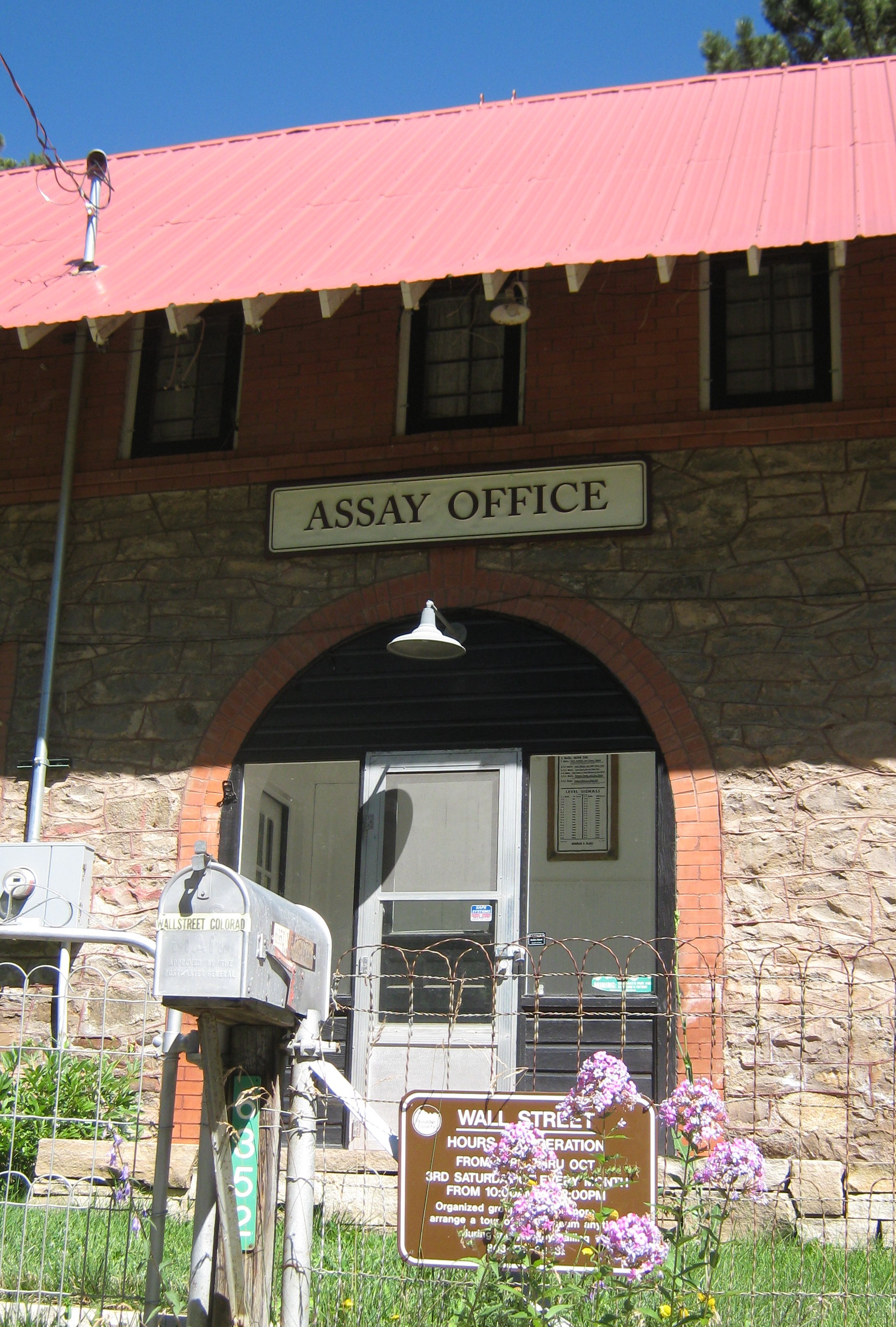
Wall Street Assay Office Copyright 2010 Th’ Gaussling

An assay office sits adjacent the mill. The upper level of the assay office served as a residence and pool hall. At its peak, this site was home to 300 people. The Assay Office is now maintained by Boulder County.

Homestake Mine Visit

The town of Lead, SD, pronounced “leed”, is home to the Homestake gold mine. The mine was purchased and subsequently developed by George Hearst, father of William Randolph Hearst, and partners ca 1876.

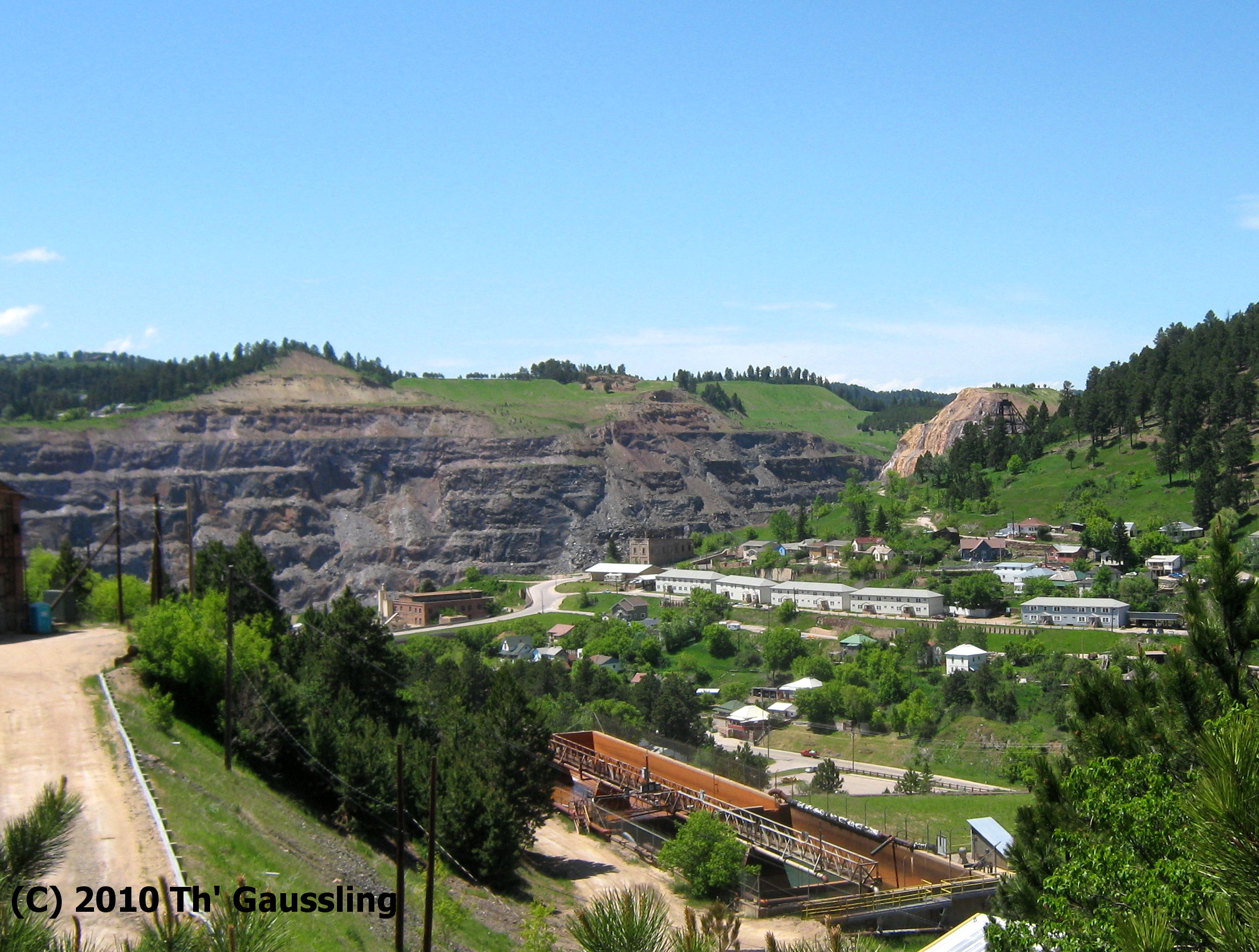
Homestake Open Cut from Yates Hoist House

 The photo above shows one ground view of the large open cut found on the north end of town. The pit is approximately 1/2 mile across and 1200 ft in depth from the highest elevation.

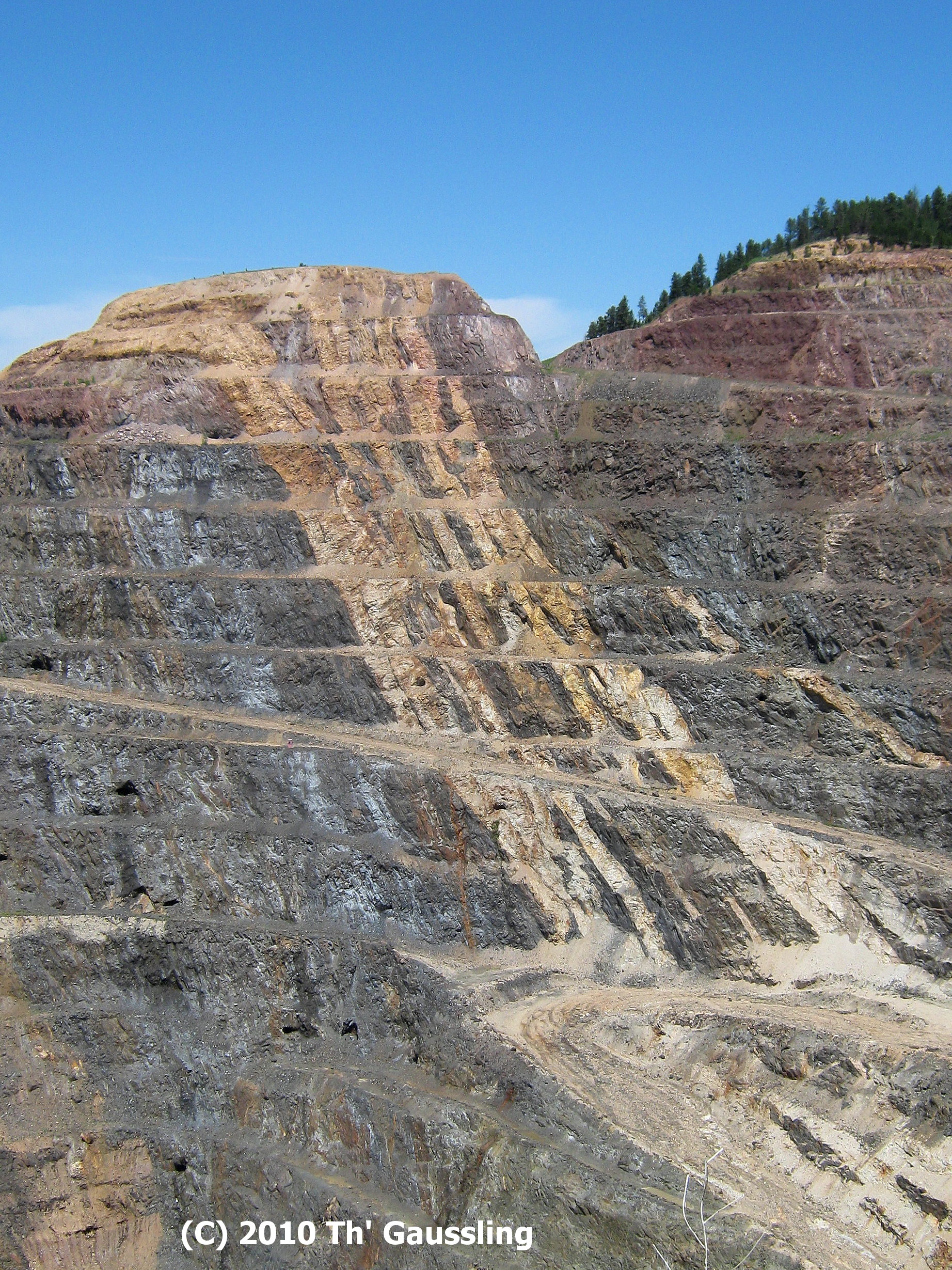
The pit exposes the ore body which is comprised of inhomogeneous igneous rock with gold bearing veins. In the photo below the vein structure can be seen. The buff colored rhyolite bands seen below are not associated with value.

Homestake Open Cut, Lead, SD.

Gold was discovered at a surface exposure, called a “lead”, which became the namesake for the town of Lead. Mining activity was halted in 2002, in part due to the low price of gold at the time. By that time the underground workings had reached a depth of 8000 ft, which puts it at ca 3000 ft below sea level. The rock temperature at the 8000 ft level was reported to be 130 degrees F, requiring substantial air conditioning for the workers and equipment.

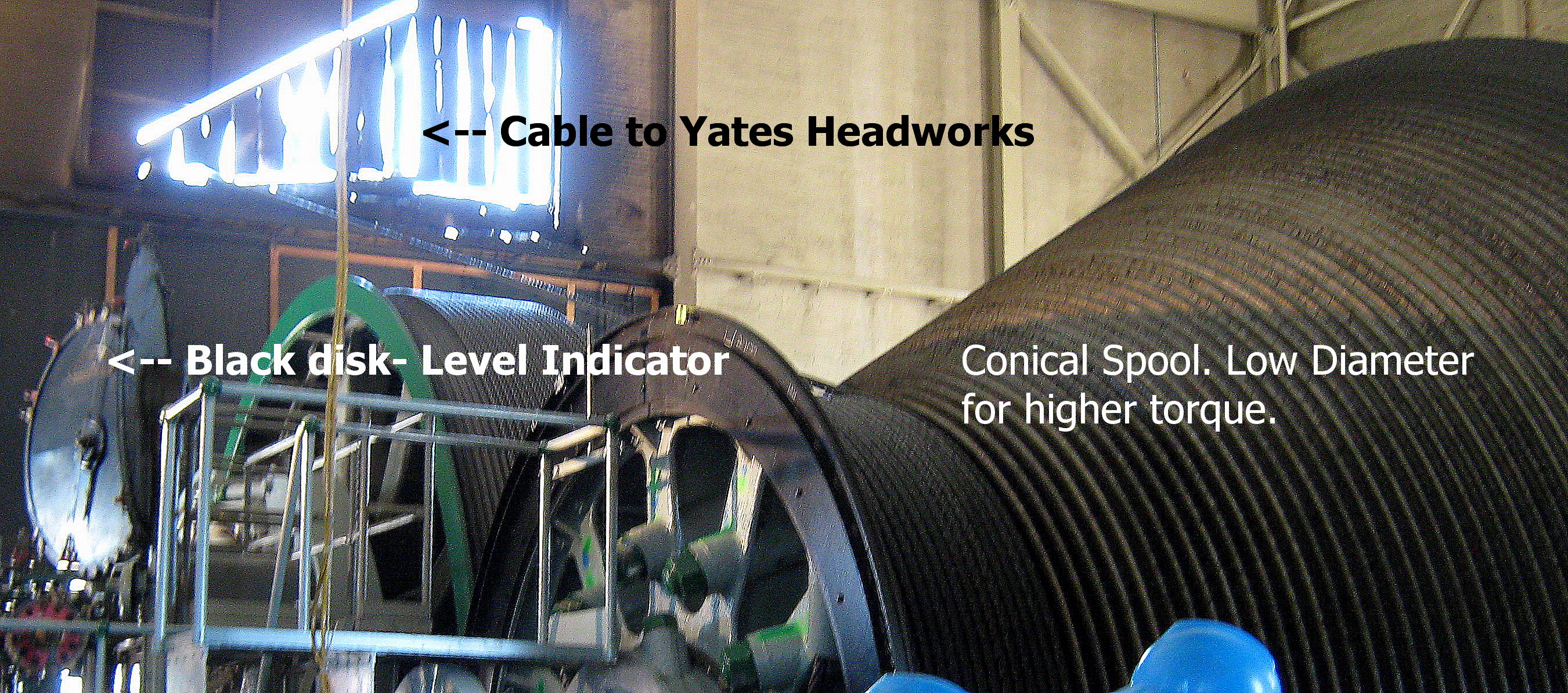
Hoist Cable

The (poor quality) photo above shows the hoist equipment in the Yates head works. Of interest is the conical cable spool used to provide lift for hoisting operations at the Homestake mine. The purpose of the variable diameter feature of the hoist was to provide maximum mechanical advantage when the cable was at the end of its reach, presumably when it was ready to lift a heavy load of ore from the bottom of the shaft.

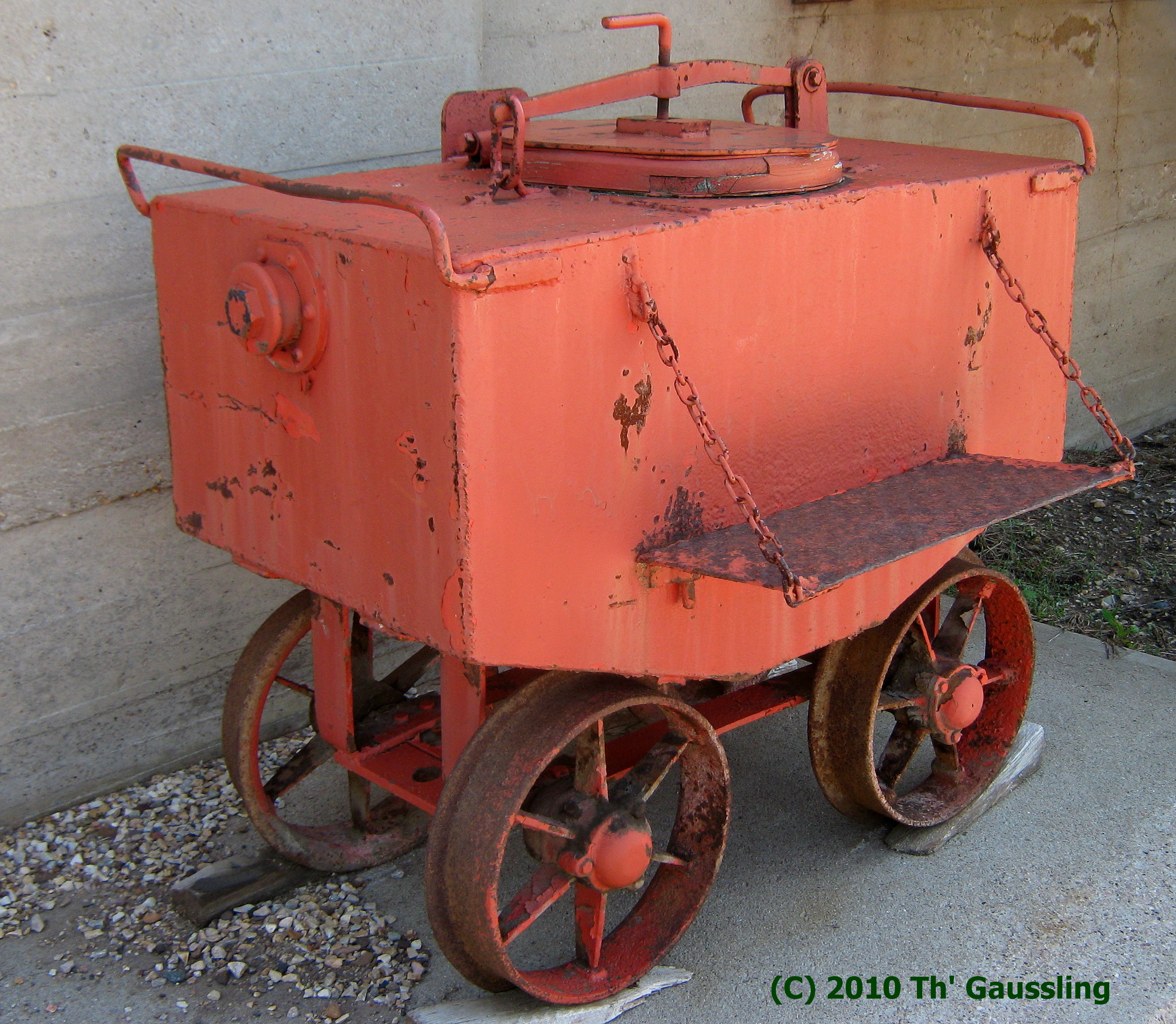
Homestake Honey Wagon

The “ore cart” in the photo above was the toilet facility for the miners. It featured a seat on top which could be sealed, a thoughtfully placed foot platform, and railings so the user could hang on for those rough rides.

The surface tour of the mine consists of a trolly ride around town with a stop at the Yates hoist. Warning: It is quite superficial in content, but is the only type of tour available. Our tour guide was student on summer break with near-zero knowledge of the geology or the engineering. He was accustomed to entertaining the barely interested.  If you are keen on the particulars of Homestake history, I recommend Nuggets to Neutrinos, by Steven T. Mitchell.

Homestake was one of the very richest loads of gold in the western hemisphere. Reportedly, some 40 million oz of gold were extracted from the mine.

Today, the Homestake mine is being converted to an underground nuclear physics lab facility under a program called DUSEL. On a side note, it is interesting to listen to the townsfolk talk about the new labs. I could tell they are trying to be enthusiastic, but the reality of neutrinos is very hard to get your arms around.

Minnesota’s fabulous Cu-Ni-Pt-Pd-Au Nokomis deposit

A world class non-ferrous mineral deposit in Minnesota is on the cusp of opening.  Duluth Metals, a Canadian mining company, has been engaged since at least 2006 in developing its Nokomis property in northern Minnesota along the north shore of Lake Superior. The magnitude of the find is stunning and Minnesota will eventually be synonymous with non-ferrous metals like copper, nickel, platinum group metals, and Norwegian bachelor farmers.  The Duluth complex is part of the second largest mafic intrusion in the world, second only to the Bushveld complex in South Africa.

Mining people are accustomed to looking at these reports and the accompanying prospectus. But it is interesting for we sheltered, begloved, and begoggled chemists to view the birth of a new mining district from the protected confines of our air conditioned laboratories. Perhaps in a few years Minnesota palladium will catalyze your Suzuki coupling.

Cripple Creek and Victor Gold Mine Tour

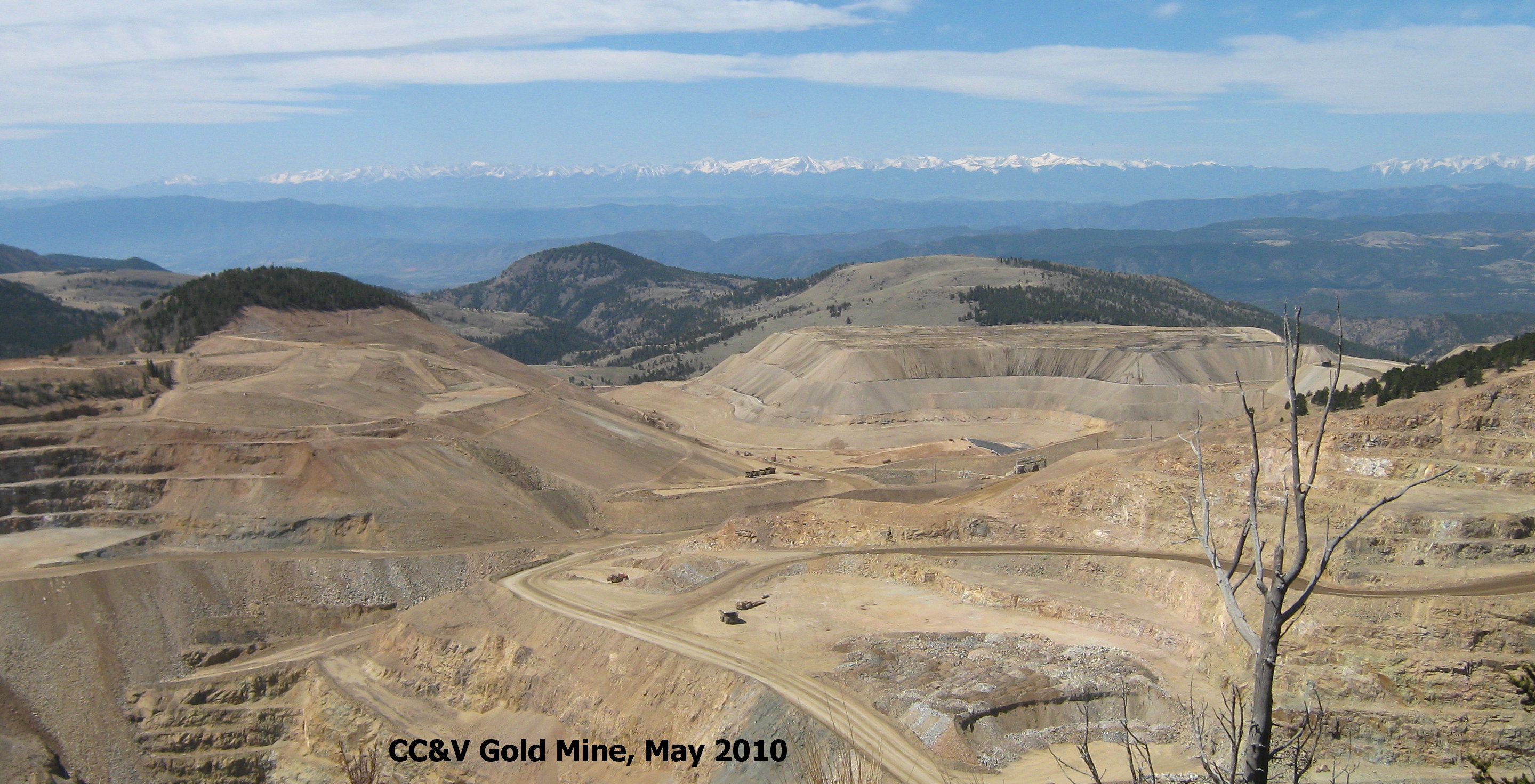
A vanload of members of the ACS, Colorado Section, were treated to an extensive tour of the Cripple Creek and Victor (CC&V) mine last Friday. The photo below shows a view of the mine from the abandoned American Eagle Mine above the CC&V pit operations. The mountains in the background are the Sangre de Cristo range.

View of Cripple Creek & Victor Mining Operations from the American Eagle Mine, May 2010.

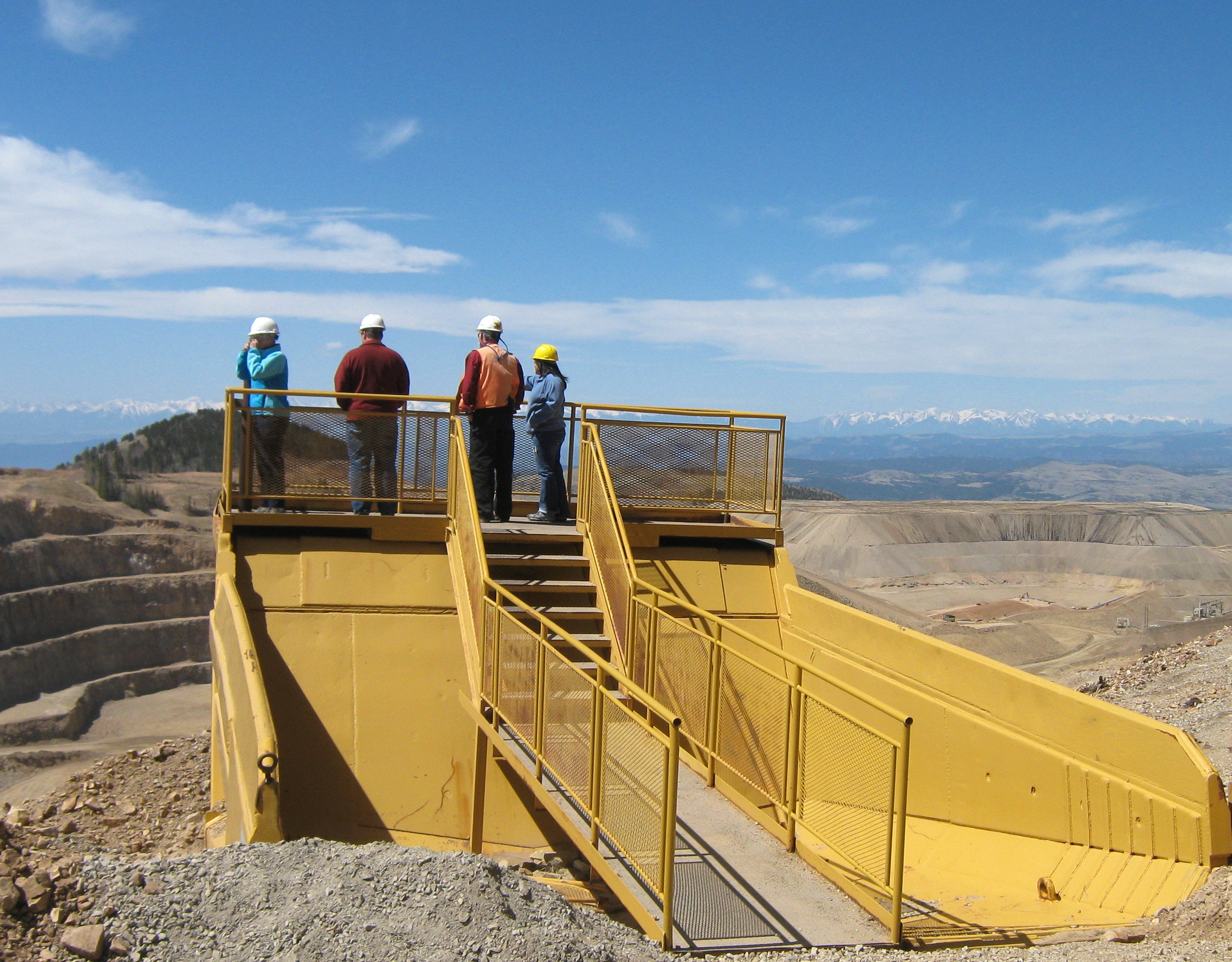
A haul truck bed was converted to a scenic overlook platform (below).  A few section members take in the view.

CC&V Scenic overlook platform

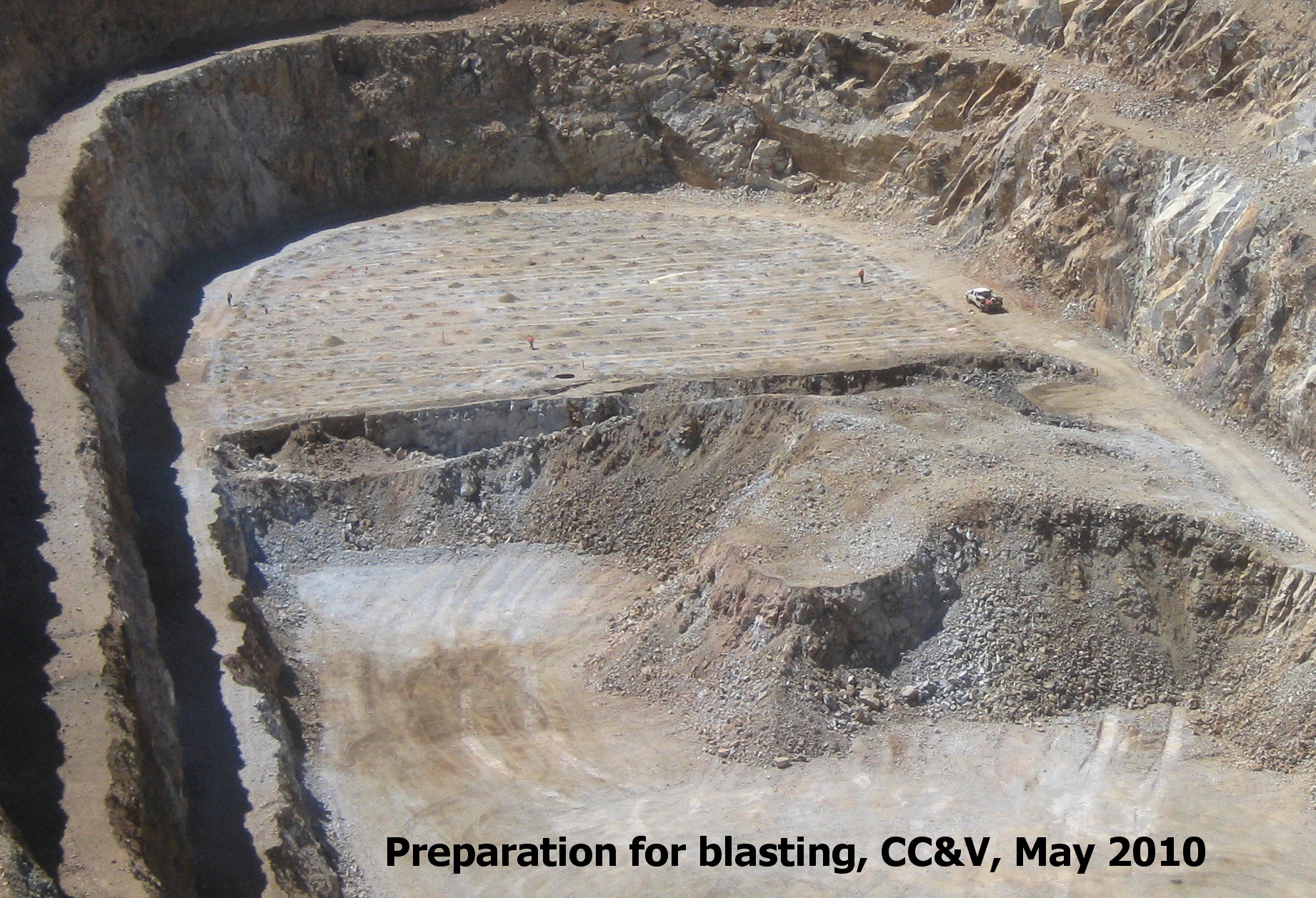
From this high vantage point we could see blasting operations at work. Multiple sites may be prepared simultaneously. Blasting typically occurs at 1:00 pm. Holes are drilled on 20 ft centers for optimum coverage. Every blasting hole is sampled and analyzed by ICP to measure the gold value for that zone.  Zones with low value are hauled to the waste heap and the high value rock is taken to the crusher.

Preparation for blasting, CC&V, May 2010.

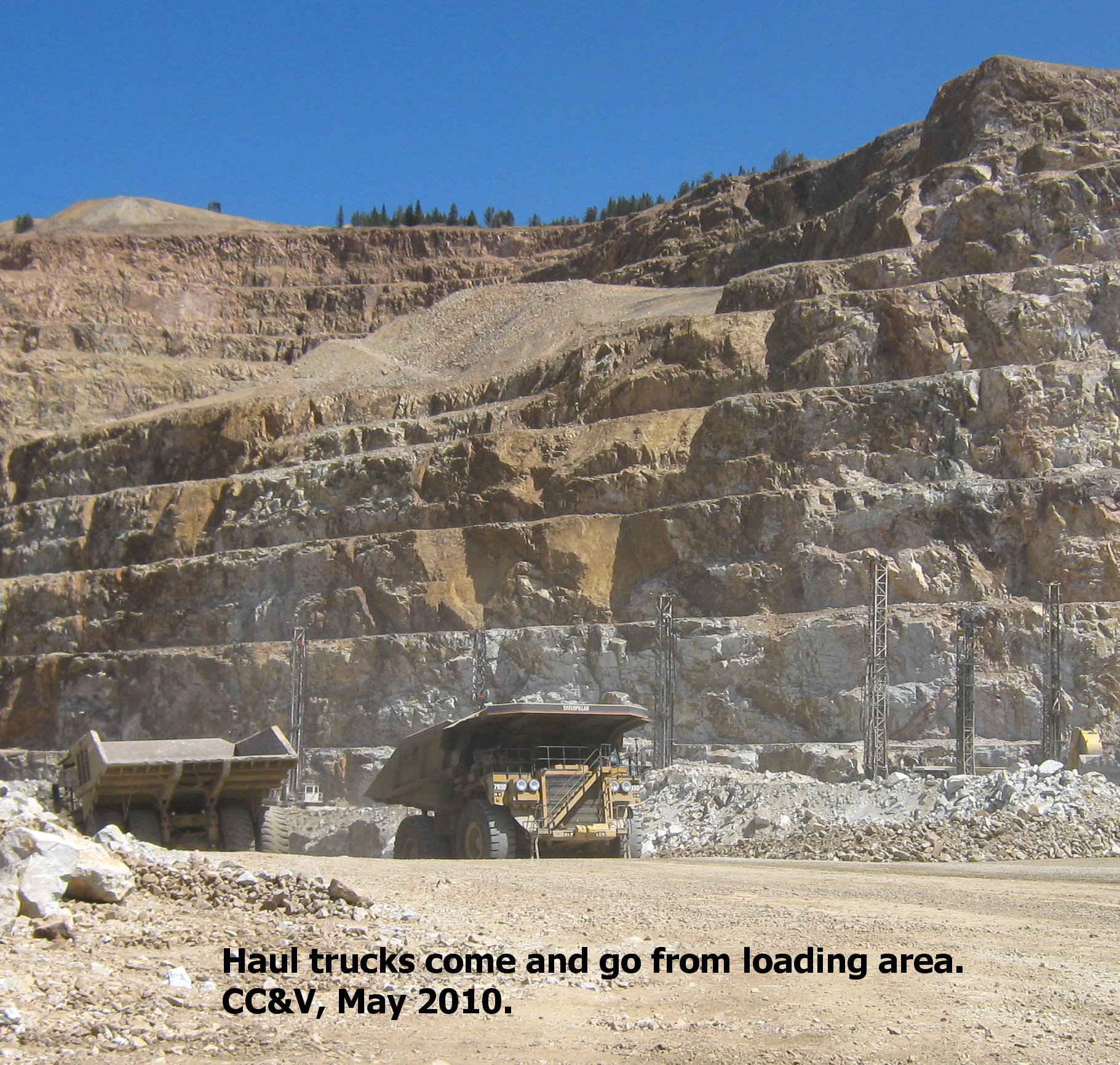
We visited the pit and watched haul trucks get loaded by a gigantic loader. For every one truckload of ore there are two truckloads of unproductive rock that have to be hauled to a separate location on site. The definition of unproductive rock depends entirely on the market price of gold.  In the photo below, drilling rigs for the blasting charges are in operation for the next round of blasting.

Loading area, CC&V Mine.

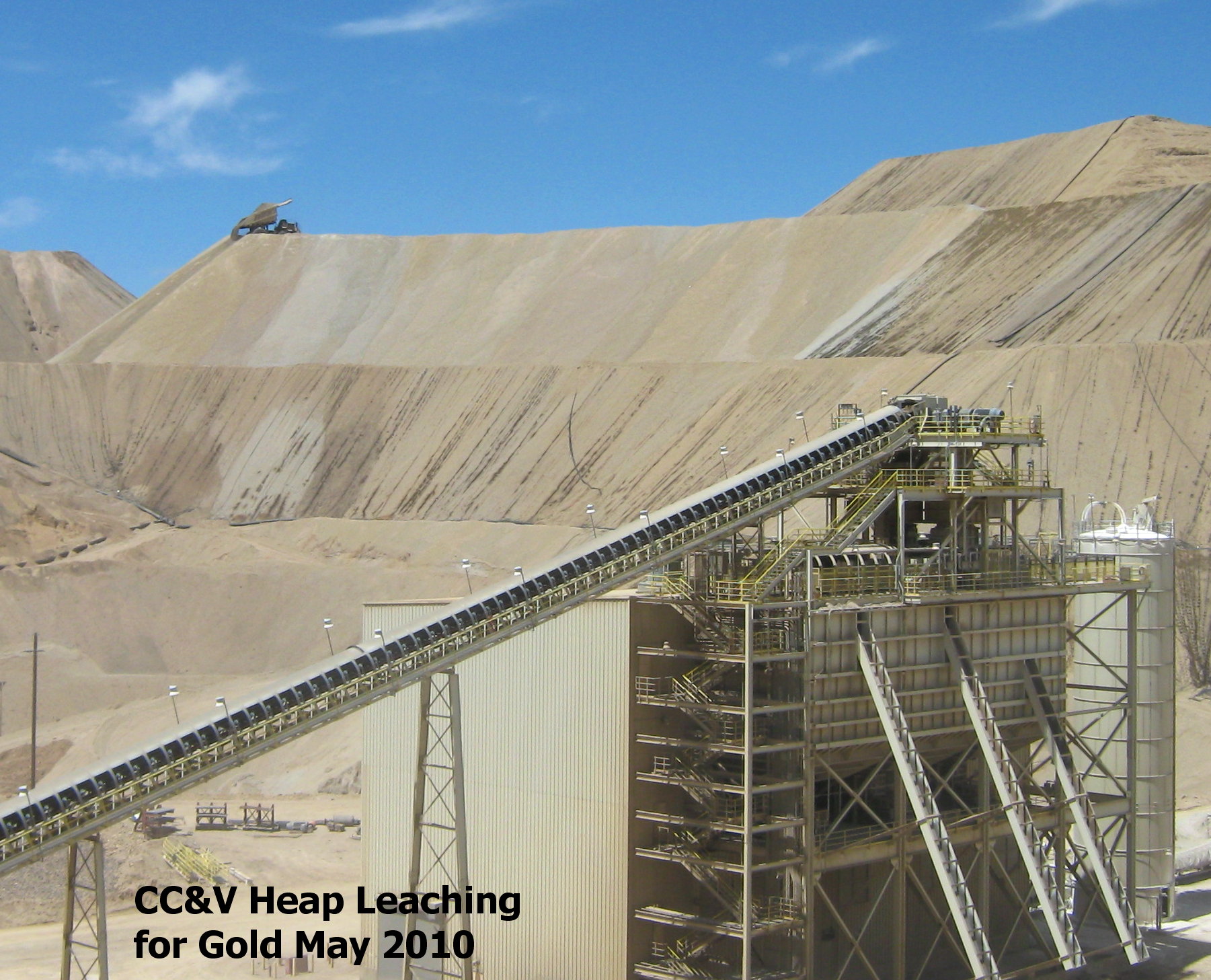
Later we watched the trucks unload into a crusher with a gyrating element that crushed the rock into football sized chunks. The resulting rock is conveyed to a screener and another crusher in order to further reduce the size to 0.75 inches. Every truckload of rock is treated with lime to help maintain a high pH for the aqueous cyanide leaching operation.  In the photo below, the white tank on the lower right contains the lime.

Heap leaching operations, CC&V May 2010.

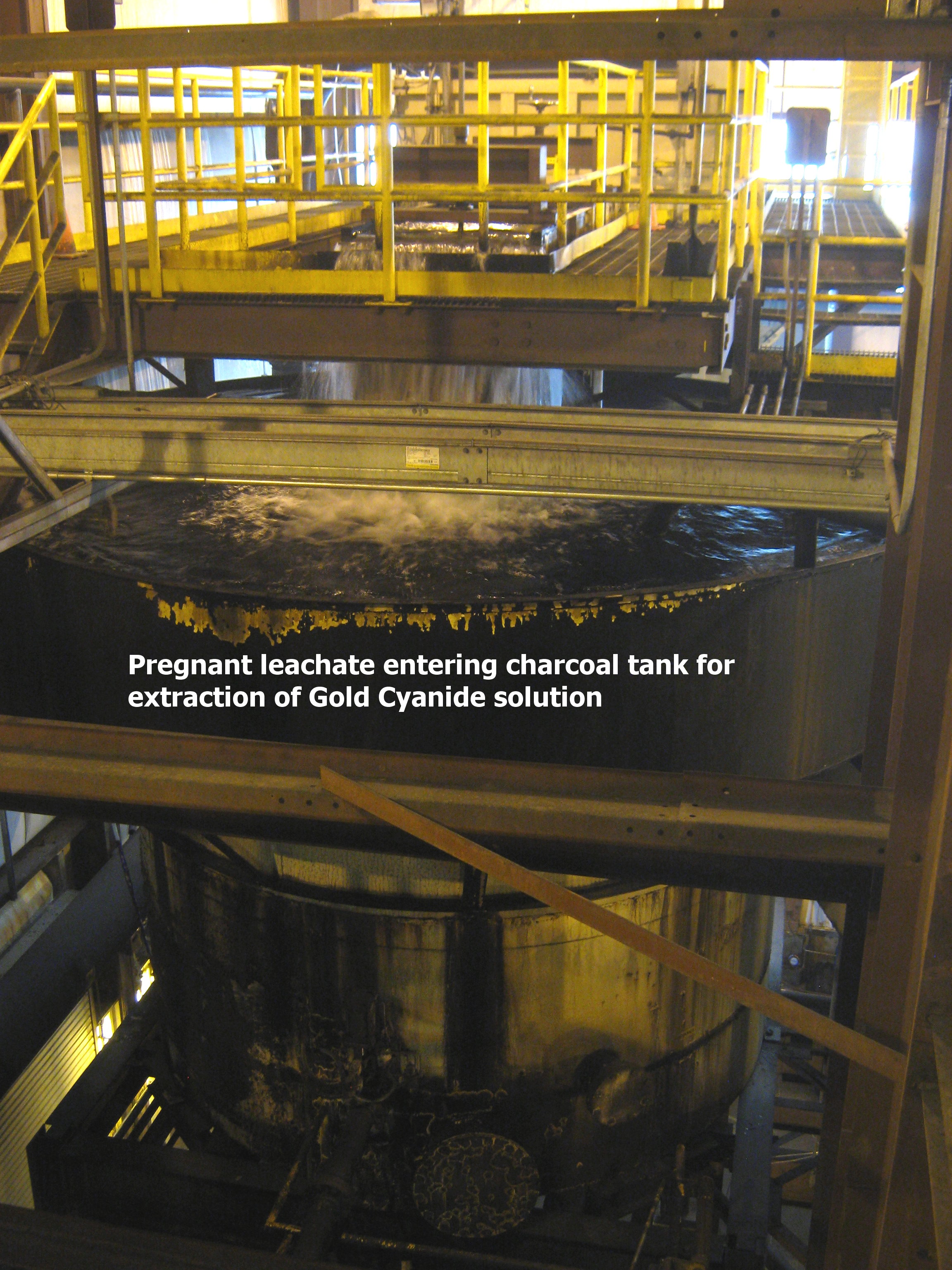
The gold bearing rock is irrigated with a very dilute sodium cyanide solution which percolates to the bottom of the heap and is captured in a basin feature at the bottom of the heap. The “pregnant” solution of gold cyanide extract is pumped out from under the heap at 14,500 gal/min into a cascading series of charcoal filtration tanks in the extraction building (see photo).

Pregnant solution passing over charcoal filter bed. CC&V May 2010.

Once a specified loading of Au is sorbed onto the charcoal, the sorbent is treated with hot concentrated cyanide. This concentrate is then passed over steel wool where the gold precipitates. The precipitated gold is then smelted to produce bulk crude metal which is shipped off-site for further refinement.

Gravity Anomaly Along the Colorado Mineral Belt

The Colorado mineral belt (CMB) is a swath of metalliferous mineral veins and faults spanning 15 to 30 miles in width and running ~250 miles in length between Dolores and Jamestown, Colorado. This NE trending zone encloses most, but not all, of the significant occurrences of gold and silver deposits found to date in Colorado.

Significant finds like the Cripple Creek district have been found outside the CMB, but these are exceptions to the trend. The large gold/silver/tellurium lode in the Cripple Creek diatreme is the result of a volcanic past that stands somewhat apart from the vein deposition processes that produced the CMB lodes.

What is especially intriguing about the CMB is that it is coincident with a significant gravity anomaly. It turns out that a particularly deep negative gravity anomaly exists in the Colorado Rocky Mountains. A few papers on this effect can be found on the web. In particular, a paper (ref 1) by Mousumi Roy at the University of New Mexico offers some details on the  extent of the gravity anomaly and some possible reasons for the effect.

At first blush it might seem odd that a negative gravity anomaly should coincide with a region known for heavy metal deposits. After all, dense matter has greater mass per unit volume, and if there is a lot of volume, then one might expect the acceleration of gravity to be a tiny bit greater than some reference value.

While this line of reasoning has merit, it turns out that despite the presence of thin metalliferous veins in the region, the overall density of rock below the CMB formation is somewhat low. A density contrast exists in the CMB formation and the surrounding rock. A large, low density formation in the crust and/or upper mantle would cause the local acceleration of gravity to be slightly below that of the reference geoid value.  The structure of the density contrast is the subject of some scrutiny and has been addressed by Roy and others.

A large low density mass below the surface is expected to have some buoyancy. A buoyant mass is one that would exert an upward distortion on the crust. The Colorado Rocky Mountains are part of a region characterized by numerous past episodes of mountain building. Whether mountain building was the result of large scale tectonic interactions or more localized effects of density contrasts, the fact remains that a gravity anomaly exists coincident with the CMB.

The mechanical effect of the upthrust of the lower members of the crust to form the Colorado Rocky Mountains has been that a series of faults and fractures have formed. These void spaces have provided networks for the flow of mineral rich hydrothermal fluids over geological time.

High pressure, high temperature aqueous fluids are prone to cooling and depressuriation as they work their way upwards into cooler and less constricted formations. At some point these fluids throw down their solutes and suspensions in the form of solids that occupy the void network. Eventually the flows become self-sealing and circulation halts leaving veins filled with chemical species that were selectively extracted and transported from other formations.

The earths hydrothermal fluid system is continuously extracting soluble components and transporting them to distant locations where solubility properties force their deposition. But this process does not always produce solid, compacted veins. Void spaces can be left behind at all scales, from microscopic size to large chambers. These spaces are called “vugs”. Rock with a large fraction of void spaces is referred to as “vuggy”. It is possible to walk up to a mine dump in the CMB and find hand samples of vuggy rock. It is not unusual to find crystals of pyrite or other minerals lining the internal spaces of the vugs.

1.  McCoy, A., Roy, M., L. Trevino and R. Keller, Gravity models of the Colorado Mineral Belt, in The Rocky Mountain Region – An Evolving Lithosphere: Tectonics, Geochemistry, and Geophysics: American Geophysical Union Geophysical Monograph 154 (eds. Karlstrom, K.E. and Keller, G.R.), 2005.

[Note to the reader: Th’ Gaussling is just a chemist, not a geophysicist. But like many others, I have the ability to read and learn. When I learn something new and interesting, I like to write about it. It reinforces the learning.]

Thorium

A short drive from my office is the Fort St Vrain power plant. The present electrical generating facility is powered by natural gas. But a generation ago it was a nuclear plant powered by a high temperature gas cooled reactor (HTGR). What’s more, the reactor used fissile uranium with fertile thorium.  The output of the plant was ca 330 MW electric and it operated from 1976 to 1989.

The utility eventually decommissioned the helium cooled reactor and converted to natural gas. Today, as before, the plant looks like a planetary humidifier, billowing great clouds of steam condensate into the thin dessicated air of the high plains. The link above outlines the trials and tribulations the utility experienced with some of the auxillary hardware. They had to learn the principle of KISS the hard way.

A thorium-based nuclear reactor uses a fissile element like U-235 to provide a source of neutron flux from which to jumpstart in-situ breeding of U-233. The absorption of a neutron by Th-232 gives Th-233 which beta decays to Pa-233 which decays again to U-233.  Remember, beta decay causes the atomic number to increase by one, but the atomic weight stays the same.  The resulting U-233 is fissile and serves as a fuel.

Thorium as a fuel has pluses and minuses. On the plus side, thorium is more abundant than uranium. And Th-232, the predominant isotope, is the desired fertile material. This is in contrast to natural uranium which offers less than 1 % abundance of fissile isotope U-235. A large part of our nuclear infrastructure involves separation of this isotope to a more concentrated form. After isotopic separation the uranium must then be converted to a suitable chemical form.

The refractory nature of thorium oxide reportedly makes fuel element manufacture somewhat problematic. Interestingly, it is the refractory nature of thorium oxide that makes it valuable for use in thoria lantern mantles. The high melting point of thoria allows a gossamer web of glowing thoria (and ceria) to sit in place in the lantern burner and radiate bright white light.

On the minus side, there is no established fuel supply infrastructure to provide thorium oxide to industry. In fact, there is virtually no thorium trade in the United States today, with the latest annual US sales volume amounting to a paultry $350,000 according to the USGS. Some of the nuclear chemistry is of the thorium cycle is problematic as well.

The natural history of thorium mineral placement is rather different than that of uranium. Uranium migrates fairly readily, depending on its oxidation state and pH of mobilized hydrothermal fluids. As a result, uranium can be found in porous or fractured formations that have a history of water migration.  From what I can tell in the geological literature, thorium concentration results largely from magmatic differentiation in the distant past. There is considerable diversity in the details of each occurrence of thorium, so one should be careful of generalizations.

There is a notable monazite (a common thorium mineral) placer district across the central North and South Carolina border region. These monazite placer deposits sit in ancient stream channels and are the result of alluvial dispersion.

Colorado has two notable thorium mineral deposits. The Wet Mountains SW of Canon City and the Powderhorn district near Gunnison have substantial deposits of thorium as well as lanthanide elements. In fact, rare earths are commonly associated in monazite. Monazite is a phosphate mineral with a variety of thorium and lanthanide cations present. It is useful to recall that the rare earth elements include Sc, Y, the lanthanides, and the actinides. In Colorado, the significant uranium deposits are not coincident with thorium deposits. Uranium is found in sedimentary deposits of the Colorado Plateau, in the tuffaceous sediments of the Thirty-Nine Mile volcanic field, and in vein lodes along parts of the Colorado mineral belt.

There is considerable variability in the elemental associations found in rare earth deposits. Monazite seems to be fairly consistant in regard to the presence of Th and lanthanides. Scandium, however, is often absent or quite scarce in monazites from the assays I have seen in the literature. 

Perhaps the richest thorium district in the lower 48 states is in the Lemhi Pass district along the lower Idaho-Montana border. A company called Thorium Energy reportedly holds substantial claims of thorium rich deposits at Lemhi.

Old Knowledge and New Problems in Chemistry

I’ll admit to having a bit of a book fetish. I love everything about books except moving them. I collect new and old books. I have a professional chemistry library that is consuming quite a bit of wall space. And that doesn’t include the boxes of JOC, Organometallics, and JACS. It’s getting out of control.

My amateur geology library has gone from one book last summer to about 50 books and USGS circulars today, and more are enroute this very minute thanks to Amazon.com, Paleopublications, and many more booksellers.

What I’m beginning to see is that university libraries across the country are withdrawing older chemistry books from their shelves. I do not refer to textbooks. I am referring to the valuable secondary literature that has accumulated descriptive chemistry knowledge.  These books are snatched up by specialty book sellers and are placed on the internets for sale where odd characters such as myself will gratefully buy them.

Recently my fetish for old books is helping me solve a thorny contemporary inorganic analysis/synthesis problem. You see, the older texts are rich in wet chemical methods. While a book like Chemistry of the Elements by Greenwood and Earnshaw is fantastically broad in its scope, it is not meant to transfer the pargmatics of procedure. The older chemistry and ore refining texts are full of practical information that seems to be fading away. While the primary literature may be available on SciFinder, books that cover accumulated descriptive chemistries are becoming scarce.

I can’t reveal the details of my revelation. But I can say that a process development person can learn quite a bit about materials processing from the late 19th and early 20th century literature. Our predecessors couldn’t depend on ICP or GDMS or XRD to help them follow the process. The wet chemical methods they developed also give us insights into the transformations necessary to produce purified products.

The unit operations of calcining, comminution, reduction, oxidation, flotation, dissolution, drying, etc., have not changed much in a fundamental way since the days of Agricola. But they are better quantified by virtue of a century of research.

Our collective drift from wet chemical methods to instrumental and computational approaches to analysis are also taking many of us away from the pragmatics of chemistry. The hyphenated instruments of today are leading large numbers of chemists away from the art of chemical transformation and isolation in favor of chemist-as-software-expert. Certainly this computational intensive investigation is not lost in our university curricula. Our hypnotic embrace of technological triumphalism meshes with the perceived need to minimize hazardous material inventories in the chemistry department stockroom. And with the perceived need to minimize chemistry students to exposure to chemicals.

Chemical industry is centered on the art of making things. In the end, somebody has to figure out how to make chemical substances and somebody else has to do the actual work. We chemists have to make sure that university curricula meets the needs of society and that the librarians of the world understand the importance of older chemistry books.

Mercury Mining

One of the least appreciated aspects of the 19th Century gold mining boom in North America was the necessary and parallel boom in quicksilver, or mercury. Numerous mercury bearing minerals are known, but by far the bulk of historical mercury production has come from cinnabar, or HgS. For clarity, cinnabar is distinct from vermillion which is a pigment derived from cinnabar. 

Recovery of gold can be performed by methods as simple as plucking nuggets from a pan or by gravity separation in the form of sluicing. Unfortunately, in many areas placer gold is quickly exhausted by eager miners. Where there is placer gold there is often a lode formation to be found. Gold in a lode can be much more problematic in its recovery.  

Gold from a lode may be found comingled with quartz in bulk form, partitioned in a vein, or dispersed at high dilution in a host rock at a large scale. Lode gold very often has to be extracted from a problematic matrix. In this circumstance, chemical means are necessary to extract and concentrate the value from the rock.

A chemical solution to gold isolation is limited to only a few economically viable possibilities. Beyond macroscopic placer gold there is amalgamation with mercury, borax, cyanidation with NaCN, and chlorination with Cl2 or NaClO. 

Amalgamation has been attractive historically because of its great simplicity. First, cinnabar is readily coerced to liberate mercury by simple roasting and condensation. Dispersed gold is contacted with mercury and selectively extracted. The resulting solution of Au-Hg is relatively easy to isolate by natural phase separation. Finally, gold is easily recovered from the amalgam by heating in a retort. Chemists would call this a simple distillation.

Some silver will also be amalgamated, but it is separated by roasting to silver oxide followed by amalgamation of the residuals. Unfortunately, gold tellurides are problematic for direct gold amalgamation. Gold tellurides must be roasted first to liberate volatile tellurium oxides and native gold residues. Energy becomes a major cost driver at this stage.

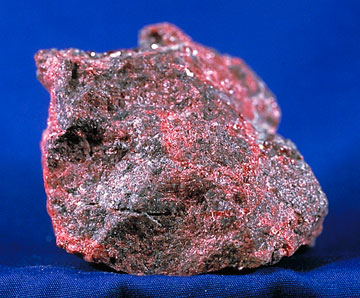
Cinnabar ore (Image from Mineral Information Institute)

US cinnabar ore deposits are found predominantly  in California and to a lesser extent in Nevada, Oregon, Arizona, Texas, and Arkansas. The geology of cinnabar ore bodies share a few general features. Cinnabar ore is found in zones historically associated with volcanic activity and alkaline hydrothermal flows.  Ascending flows of metal sulfide saturated water infiltrated faults and fractures and deposited HgS rich mineral.  This is a common ore forming mechanism and is responsible for diverse metalliferous deposits, including mercury. 

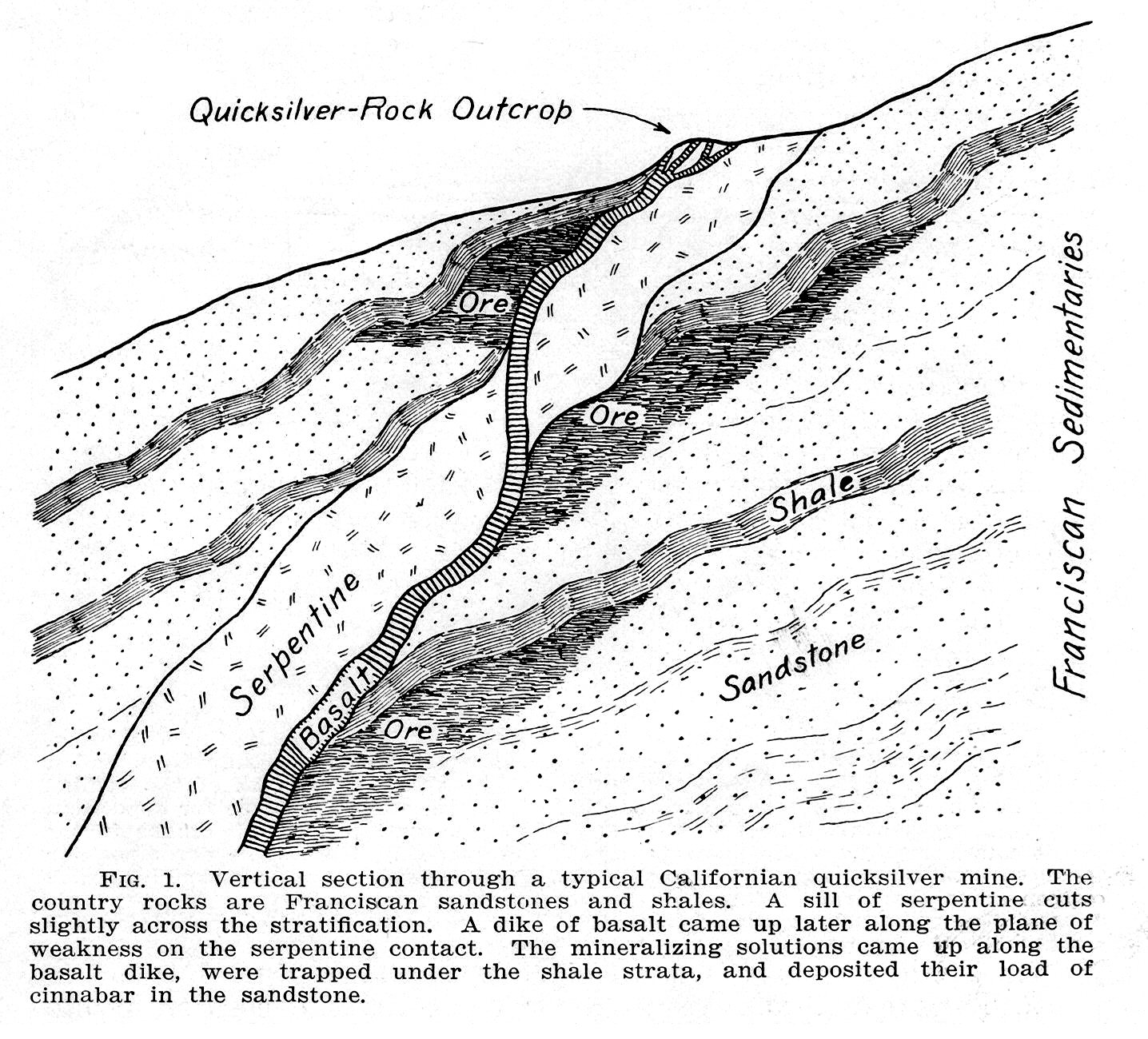
Figure 1. Franciscan Quicksilver Ore Body Structure (C.N. Schuette, The Geology of Quicksilver Ore Deposits, Report XXXIII of the State Mineralogist, January 1937.)

According to Schuette, a common feature to economically viable cinnabar occurrences was the presence of a cap rock formation over the ore body. The infiltration of cinnabar laden hydrothermal fluids into fissures and shrinkage cracks in basalt intrusions as well as deposition in brecciated rock in the fault zones lead to enrichment of the mineral.  An impermeable layer above caused a pooling accumulation of mineral and a barrier to oxidation. 

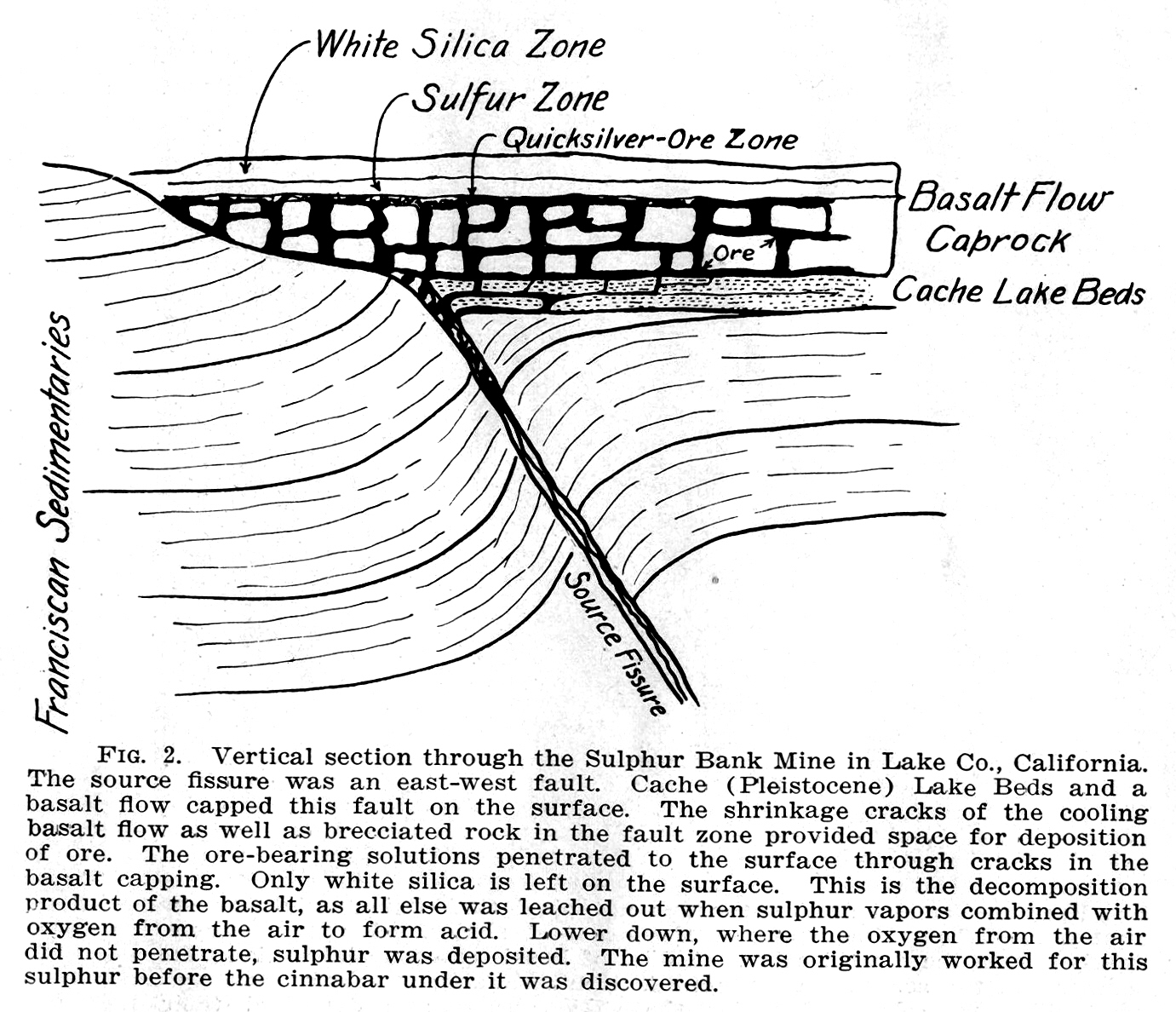
Figure 2. Diagram of Sulphur Bank Mine (C.N. Schuette, The Geology of Quicksilver Ore Deposits, Report XXXIII, of the State Mineralogist, January 1937.)

In these California formations cinnabar is regarded as a primary mineral, meaning that it is the direct result of transfer from deeper source rock. An example of secondary rock would be serpentine (Fig 1) which is formed as a result of aqueous alteration of another mineral. Serpentine is a group of minerals comprised of hydrated silicate which may contain some combination of  Mg, Fe, Al, Mn, Ni, Ca, Li, or Zn. According to Schuette, serpentine is often found associated with cinnabar formations. 

The Sulphur Bank Mine near Clearlake Oaks in Northern California offers an interesting example of cinnabar mineralization. Figure 2 shows a fault that provided a channel for fluid flow to upper level rock formations. Over time oxygen and water caused the oxidation of sulfur to sulfuric acid which aided the decomposition of cinnabar and the host rock. 

Note that the uppermost layer is said to be white silica which resulted from extensive demineralization of solubles from a silicate matrix. Further down, native sulfur was discovered in more reducing conditions and was actually recovered in early mining operations. Cinnabar was located below the layers of oxidized mineral. 

This phenomenon of surface oxidation of an exposed ore body is observed in gold and silver mines as well. Miners often lamented that the nature of the lode changed as the mine operations got deeper. Of course, what was happening was that oxidized formations are encountered near the surface and as the mine gets deeper, progressively greater reducing conditions are found with a corresponding change in mineral species present. 

Air oxidation or infiltration of meteoric water with dissolved air and CO2 would cause the alteration of sulfide minerals to more water soluble H2S and sulfates, leaving native gold behind. But at greater depths, the composition of the ore changes to afford heavier sulfide loading and therefore a requirement for a different kind of milling. 

As it happens, the recovery of mercury from cinnabar is quite simple and has been done since Roman times. Typically, the ore was crushed and roasted in the combustion gases of a reverberatory furnace. This kind of furnace was constructed to isolate the fuel from the ore by a partition and rebound or reflect the hot gases off the ceiling of the furnace onto a heap of ore. Despite the name there is no acoustic aspect to the process. 

The hot gases would produce HgO and sulfides which would oxidize in the gas stream to volatile sulfur oxides. Thermal decomposition of HgO at ca 500 C produced mercury which was condensed out of the exhaust gas stream and collected as the liquid. 

Pitchblende in the Wood Vein, Central City District

Recently I came upon a copy of Geological Survey Circular 186, 1952, F.B. Moore and C.R. Butler, Pitchblende Deposits at the Wood and Calhoun Mines, Central City Mining District, Gilpin County, Colorado. Like many Geological Survey documents, it contains a pocket with neatly folded scale drawings of the mine workings. These drawings chart the location and elevation of the shafts and drifts and give a best estimate as to the extent of the formation.

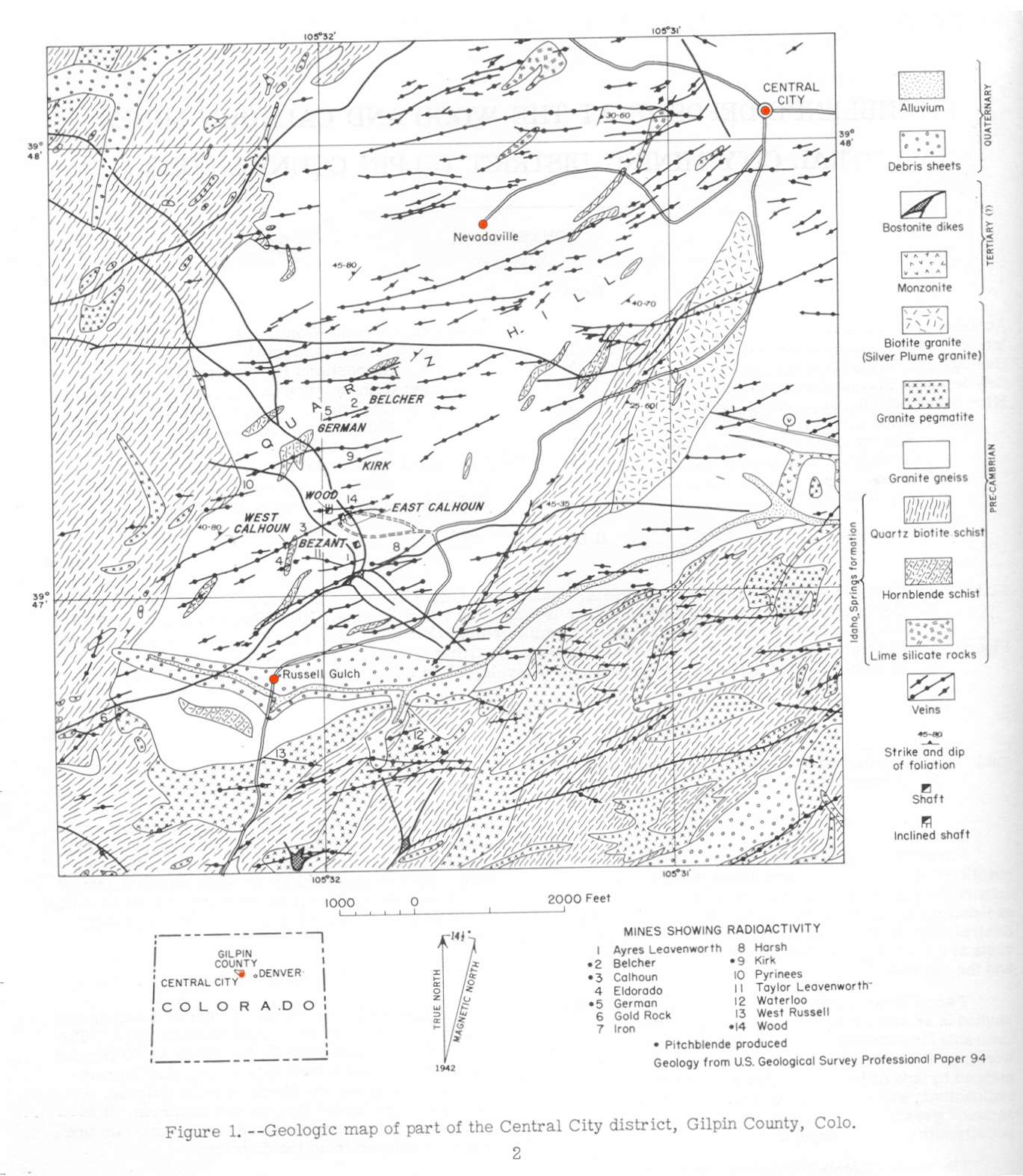
Vein Structure in the Central City District. (From Geologic Survey Circular 186, 1952.)

What is interesting about the map above is not so much the minute detail of the locations, but rather the obvious trend of the veins (solid lines with dots).  They are all east-northeast trending.  The country rock is largely precambrian granite gneiss and quartz biotite schist according to the survey. It doesn’t take long to figure out that the mine locations correlate with the veins.

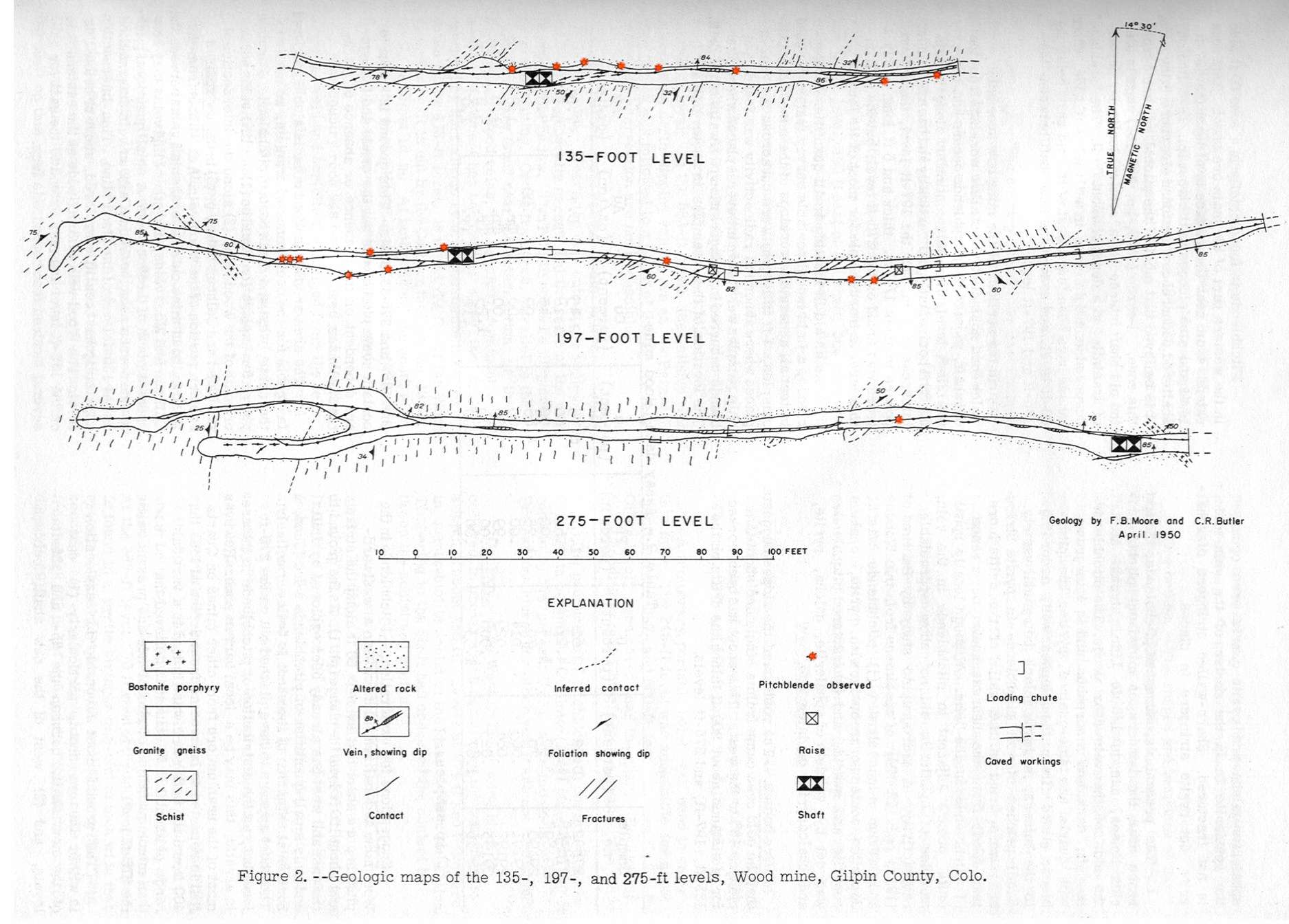
Geological Survey maps of 3 levels of the Wood Mine, Gilpin County, Colorado (Geological Survey Circular 186, 1952).

The second figure was generated by Moore and Butler in 1950 and shows the locations of pitchblende occurrences in three levels of the Wood Mine near Central City, Colorado. The red dots indicate the location of pitchblende along the three drifts at the 135, 197, and 275 foot levels of the mine.

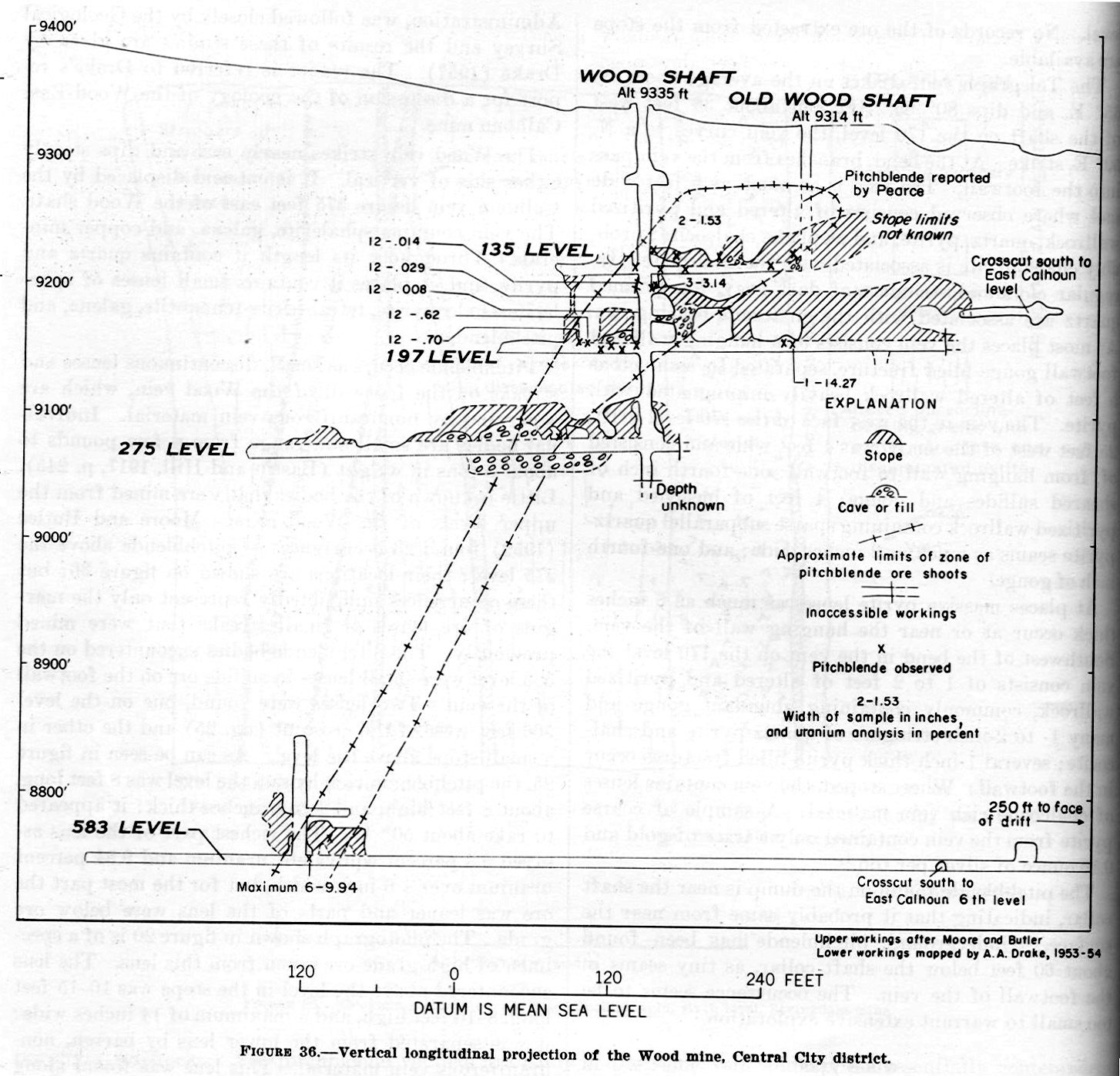
Profile of the Wood Mine, Central City District, Illustration from Geological Survey Professional Paper 371, 1963.

 The Wood Mine was an early and prolific source of pitchblende, though presumably it began as a gold /silver operation. The workings reportedly reached a depth of 600 ft.  The Wood vein is in a fault fissure that shows extensive alteration from hydrothermal action. The width of the vein varies with the type of country rock in which it is found, but ranges from from 1 to 18 inches and has been followed for a lateral distance of nearly 1000 ft.

The productivity of uranium mines is commonly expressed in terms of equivalent weight of U3O8 rather than weight of ore, given the large variety of mineral forms uranium is found to occur in. The figure above is from Geological Survey Professional Paper 371, P.K. Sims and collaborators, Geology of Uranium and associated Ore Deposits, Central Part of the Front Range Mineral Belt, Colorado. Extensive stoping has been done in an attempt to vertically intercept the vein. This was a common practice in hard rock mining- let gravity bring the muck to you.

Pitchblende was discovered on the dump of the old Wood shaft in 1871. Circular 186 reports that by the end of 1872, 6,200 lbs of ore containing 3,720 lbs of U3O8 had been removed. By 1916, 102,600 lbs of ore bearing 30,040 lbs of U3O8 equivalent had been recovered.  The high grade pitchblende was hand sorted and that below ca 10 % was discarded or lost in gold and silver processing.

In Circular 371, Sims observes that “Pitchblende occurs as small, discontinuous lenses and streaks on the footwall of the Wood Vein, which are separated by nonuraniferous vein material.”

What is intriguing is that pitchblende was apparently an item of commerce in the early 1870’s. Radium, extracted from pitchblende, was not discovered until 1898 by the Curies.  A procedure for the preparation of sodium diuranate, Na2U2O7 6H2O, was reported as early as 1849 (Patera, J. pr Chem. 1849, [i] 46, 182. Early uses of uranium yellow were in paints and stains for glass and porcelain. This pigment has also been used for the production of fluorescent uranium glass.