Category Archives: Mining

Octopole and Quadrupole

Busy week learning to use the new ICPMS. Pretty flippin’ amazing instrument. Reaffirms my admiration for Bill and Dave. A lot of nuances and software to learn, but do-able.  Agricola and Biringuccio could’ve used one of these. Of course, they’d have needed 208 VAC single phase power …

Interesting approach to polyatomic ion interferences- run the beam through a He chamber to slow down the large cross section ions and use the octopole to steer the beam into the off-axis chamber exit and into the quadrupole mass filter. Clever monkeys.

Rare Earth Friday

Here is a video from the Molycorp site on Mountain Pass along the CA-NV border. Granted, it is a PR piece, but it is worth seeing regardless. To date, the Mountain Pass mine is the only significant Rare Earth Elements (REE) operation in the US.

There has been a large amount of REE exploration in North America in the past several years. I think the rush at Mountain Pass relates to more than just capturing market share from the Chinese. A large number of REE deposit discoveries could translate to excess capacity on the market in a few years. Especially if the economy recovers. As the cycle proceeds, only a few players will survive in North America.

More Molycorp PR-

Avalon Rare Metals is a Canadian mining company engaged in rare earth extraction. Another Canadian REE company is Stan’s Energy Corp.

Yttrium dreams.

Gold Rush Alaska. Getting the pay out of paydirt.

So I’ll come clean. I am a fan of Gold Rush Alaska on the Discovery Channel. The new season has started with some serious twists. What I like about the show is the technical side. The miners are struggling with serious mechanical problems and difficult issues with unit operations in placer mining. This is what made life precarious for the gold rush miners of the 19th century and is certainly what caused many to return home empty handed. 

Getting to the pay streak, conveying the ore from the pit, moving it to the sluicing equipment, and getting the fines to run over the riffles of the sluice properly require a great deal of energy input. The remoteness of the site, the high cost of heavy equipment, and wrestling with faulty equipment all contribute to the difficulty of getting the pay out of paydirt. The mining season is about 100 days in duration. That is 2400 hours. Every hour must be used to maximum effect.

This season there is a bad guy. This guy, Dakota Fred, tips over the apple cart. So, the boys are heading to the Klondike.  But first they need a claim to work in a time of record gold prices and intense activity in the mines. I love the vicarious life.

Fulminate- Noun or Verb?

I think it is fair to say that most chemists are familiar with the fact that mercury fulminate, Hg(CNO)2, is a pressure sensitive explosive material. But because only a few of us actually handle such materials, myself not included, thankfully, the history and actual boundaries of safe handling practice are probably somewhat indistinct. Mercury, as the fulminate or the metal, has been applied to the extraction of gold and silver from ore. The former as a primary explosive for blasting compositions, and the latter as a solvent (and possibly a reductant).

In the course of my ongoing studies in historical metallurgy, I have been searching the very earliest history of chemicals and processes related to the extraction of gold and silver. The threads between these two metals in history are closely interwoven and include an extensive list of civilizations, scholars, monarchs, banking institutions, viceroys, scientists, engineers, and chemical technology.

One fascinating thread in the metallurgy of gold and silver is the role of quicksilver. The discovery of native mercury occured independently in Asia, the Iberian penninsula, central Europe, and the American CordilleraCinnabar has been used as a pigment by aboriginal peoples for adornment and decorative purposes back into prehistory.  There is no documentation in written or other form of the sudden discovery of native mercury. The earliest references to metallic mercury are from Pliny, who mentions some curious properties of the substance in relation to gold, namely, that gold was the only substance known to sink in quicksilver, leaving behind the mineral components of the ore floating on the surface.

The invention comprising the use of quicksilver in the refinement of silver is usually attributed to Spanish merchant Bartolomé de Medina in the part of New Spain comprising what is now Mexico. According to the story, Medina was approached by a German known only as “Maestro Lorenzo” who described a process by which ore was treated with sodium chloride (sea salt water) and quicksilver. Medina travels to Mexico and develops what will be come to be known as the Patio process.

The Patio process proves to be a substantial improvement over smelting processes known in Europe at the time and this fact leads to a long term demand for quicksilver in the Americas. According to records from New Spain, for every quintal (100 lbs) of silver extracted, two quintales of quicksilver were consumed in the Patio process. The primary quicksilver mines in operation by the close of the 16th century were Almaden in Spain, Idria in Slovenia, and Huancavelica in Peru.

Over time mercury was used to produce explosives, Fahrenheit‘s thermometer, and antimicrobial preparations. The discovery of mercury fulminate was crucial to the production of detonating caps for mining and bullet cartridges. Unlike NI3, mercury fulminate, Hg(NCO)2, could be isolated and handled, albeit with great care.

The shelves of a chemist (or apothecary) of the late 18th century would have certainly have contained sulfuric acid, nitric acid, numerous salts, sulfur, lime, various extracts and elixirs, caustics, etc.  It was inevitable that one day someone would combine nitric acid, ethanol (“hydrated ethylene”), and a metal or its salt.  This particular admixture of nitric acid and ethanol, to which a metal oxide or other compound was added would produce a mixture whose vigorous ebullition with the evolution of vapors and smoke would be referred to as fulmination. A residuum or precipitate recovered from the mixture came to be known as a fulminate.  The treatment of red mercury oxide with nitric acid and ethanol produced a mercury fulminate. 

Mercury fulminate was discovered by Edward Howard around the year 1800. The details of his work were published in Philosophical Transactions of the Royal Society of London, vol 90 (1800), pp. 204-238.  The paper can be found at jstor.org and is worth a read. In it Howard describes an experiment wherein he detonates a small quantity of mercury fulminate in a thick glass vessel and notes the relatively small volume of gas produced in the explosive reaction. He also notes the presence of finely divided mercury on the vessel walls.  The reader will notice that Howard fabricated a rudimentary electrical resistance heater as an initiator to stimulate the fulminate into decomposition.

Howard’s attempts to evaluate this fulminate as a new type of gunpowder are also detailed. Howard’s experiments show that the fulminate reliably burst the breech assemby of all of the guns tried, but strangely did not have the ability to propel a ball with the energy of an equivalent quantity of gunpowder. What he learned was that great sensitivity does not necessarily confer high explosive energy.

As an interesting aside, it was later determined by Gay-Lussac, Liebig, and Wöhler that silver fulminate had the same composition as silver cyanate. After much debate, Berzelius was able to introduce the idea of isomerism to settle the matter.

Oil Well Torpedoes and Grubbin’ Stumps

We tend to think of some things as being relatively new. I’m thinking of the gas and oil extraction technique of fracturing, or fracking.  In the 1884 third edition of The Modern High Explosives, Nitro-glycerine and Dynamite by Manuel Eissler, p 311, there is a mention of the practice of exploding nitroglycerine charges at the bottom of oil and water wells to renew or increase the flow. The author states that this is a popular technique in Pennsylvania at the time of writing.

On p 318 of the same book, Eissler describes the economics of blasting stumps. In general, the process of removing stumps was called “grubbing”. Enterprising fellows knowledgeable with nitroglycerine took little time in applying the explosive power of this oily liquid to clearing the land of stumps.  

Eissler describes the economics of explosive grubbing as follows:  Three pounds of No. 1 dynamite cost $1.50, labor cost 20 cents per hour, 25 ft of fuse cost 1 cent per foot, and 17 percussion caps cost 1 cent each.  Grubbing 17 oak stumps cost $22.52 with 99 man hours for chopping and piling the pieces.  Grubbing with an axe took 142 man hours and cost $28.40.  No. 1 dynamite was comprised of 75 % nitroglycerin and 25 % absorbent.

Bertholet’s discovery of potassium chlorate (oxygenized muriate of potash) happened in 1785. He observed

“that it appears to include the elements of thunder in its particles; and Nature seems to have concentrated all her powers of detonation, fulmination, and inflammation in this terrible compound”. 

Eissler goes on to say that attempts to prepare gunpowder or blasting powder with potassium chlorate lead only to loss of life and limb for the luckless experimenters with this compound.  Two of Bertholet’s artisans employed to do experiments with this material were killed in 1788.  The hazards associated with both manufacture and use of compositions of potassium chlorate were too great to allow this substance to see much commercial application by the 1880’s.

The Quicksilver Monopoly

Hydrargyrum, also known as mercury (Hg) or more colloquially as quicksilver, was in the 19th century the object of monopolistic desire by a large banking concern. In 1835 the Rothschilds acquired the rights from the Spanish monarchy to manage the production of quicksilver in the village of Almaden, located approximately halfway between Seville and Madrid.

The Rothschilds, being ever more interested in controlling their bullion trade, understood that the key to the control of the silver market lay in the disposition of quicksilver. The liquid metal was crucial in the extraction and refining of silver. Silver was purified by amalgamation with quicksilver. Control over the distribution and price of quicksilver in America would put the market in their pocket. They were monopolists- it’s what they do.

Quicksilver has been known for more than 2000 years.  Since Roman times it has been known that everything but gold will float on a pool of quicksilver.  Artisans in Idria, an important old-world reserve of cinnabar in what is now Slovenia, observed quicksilver in its native form in1497.  Quicksilver was mined in earnest in Almaden, Spain, since perhaps the 4th century BC or earlier, according to Pliny. 

Alternating conquests transferred control of Almaden from the Romans to the Visigoths to the Moors and to the crown of Spain, among others.  Having been the seat of mercurial desire for two thousand years, the Almaden cinnabar mines have only recently shut down in the name of public health. Spain’s epic quest for silver and gold in the new world was made feasible through it’s own natural abundance of quicksilver.

Quicksilver was discovered in California in 1845. The New Almaden and subsequently the New Idria mines were quickly pressed into production. The smelting of cinnabar (HgS) into fluid quicksilver is simple in concept and relatively uncomplicated in practice.  A stream of hot flue gases are played over a bed of crushed cinnabar. Oxidation of the sulfide to oxide and subsequent thermal decomposition produces mercury vapor which flows to a condenser surface (brick) where it is knocked down into the liquid state and collected.  Simple technology to perform in undeveloped territory.  Quicksilver was sold in 76 pound lots called a flask. This is thought by some to represent what a laborer (or slave) could reasonably carry.

Within a short time the Californian supply of quicksilver robbed the Rothschilds of their monopoly, resulting in strong price pressure on the European suppliers.  For a few decades, the American quicksilver dominated the Pacific rim. Chinese demand for quicksilver or cinnabar for vermilion was strong.  Silver mining in Mexico and the Andean districts to the south was dependent on quicksilver, most of which was controlled by Spain and later Mexico after its independence. Eventually, the Rothschilds regained control of the market, but at a time when cyanidation and chlorination were playing a larger role in gold extraction. The Rothschilds relenquished their hold on Almaden in 1921.

It is interesting to note that quicksilver, so crucial to the isolation and refinement of gold and silver, was discovered a few years before the discovery of placer gold at Sutters Mill. This happy circumstance surely facilitated the prompt extraction of wealth from the gold and silver mining districts that opened up in the west.

Visit to the Hidee Mine near Central City, Colorado

The Hidee mine is a tourist gold mine in Russel Gulch in the middle of the fabulously rich Central City gold mining district of the Colorado mineral belt. Like most mines in the district, the Hidee is located at an auriferous pyrite deposit which is characterized by oxidized ore near the surface and a pyritic sulfide composition at depth.

The Hidee adit was initially part of the adjacent Pittsburg mine, a mine that produced considerable gold.  An adit and drift was dug to intercept the Pittsburg underground workings, but owing to labor problems was soon left abandoned for many decades. In the early 1980’s the claim was purchased and the mine converted to a tourist mine. A drift was cut to intercept the original shaft and in the course of digging, the Fay vein was discovered.

In the photo below, the Fay vein can be seen in the upper half of the image as a gold colored vertical band of pyrite which contains, according to the operators, 2 to 2.5 ounces of gold per ton. On either side of the vein copper mineral can be seen as the blue/green material.

Fay Vein of the Hidee Mine, Central City Mining District.

Early mining characteristically removed the oxidized ore near the surface first which was more easily extracted by relatively simple means. That is, comminution by ball milling and isolation by shaker table or amalgamation.  The deeper gold deposits, below the level of oxidized ore, were tied up in pyrite.  This ore was much more complex to extract and required resources that many mine operators simply did not have.  In the early days, the absence of rail or even passable roads impeded the sale of ore to mills and smelters.

Sulfide ores are commonly rid of the sulfur by roasting.  This smelting process volatilizes the oxidized sulfur, replacing sulfide with oxide.  Oxide ores may be pulverized and the gold separated by numerous methods. Common techniques applicable to oxide ores produced poor results with sulphuretted ores.

Today, the Hidee is operated as a tourist mine despite its relatively rich lode of gold. This is due to the cost of starting up a mine. Not only are there considerable costs associated with the mining process, the regulatory compliance costs are so substantial to a startup operation that very few people attempt to try it. 

Even if one were able to navigate the regulatory compliance maze on a reasonable budget in a reasonable interval, the matter of smelting the ore to provide a crude bullion is a show stopper all by itself. For all intents and purposes, there is no gold smelting capacity in the US.

All in all, the Hidee Mine is well worth a visit. The guides were quite knowledgeable and very friendly. Many tourist mines dumb down the tour, but these fellows were on the level about technical details of the mine and geology. They especially like people who show an interest and some knowledge on the topic.  They scheduled an extra tour for us at the end of the day and were cheerful about it.

Visit to the Argo Mill

After years of driving by the Argo mill in Idaho Springs, Colorado, we decided to turn off of I-70 and take the tour.  Admittedly my interest in the mining history of the west had something to do with it.  

This is a very unusual historical site and is worth a stop for those with an interest in history and mining. The facility consists of a red mill building built along the slope of the mountainside and, separately, access to the entrance of the Argo tunnel.  Adult tickets cost $15 and in exchange for the fee, you get a movie and a talk on the history of the mill by a staffer, and a pack of sand for your gold panning lesson.  The sample of sand is salted with gold flakes so that everyone has a decent chance of recovering some flakes.

Staff member demonstrating the use of a gold pan.

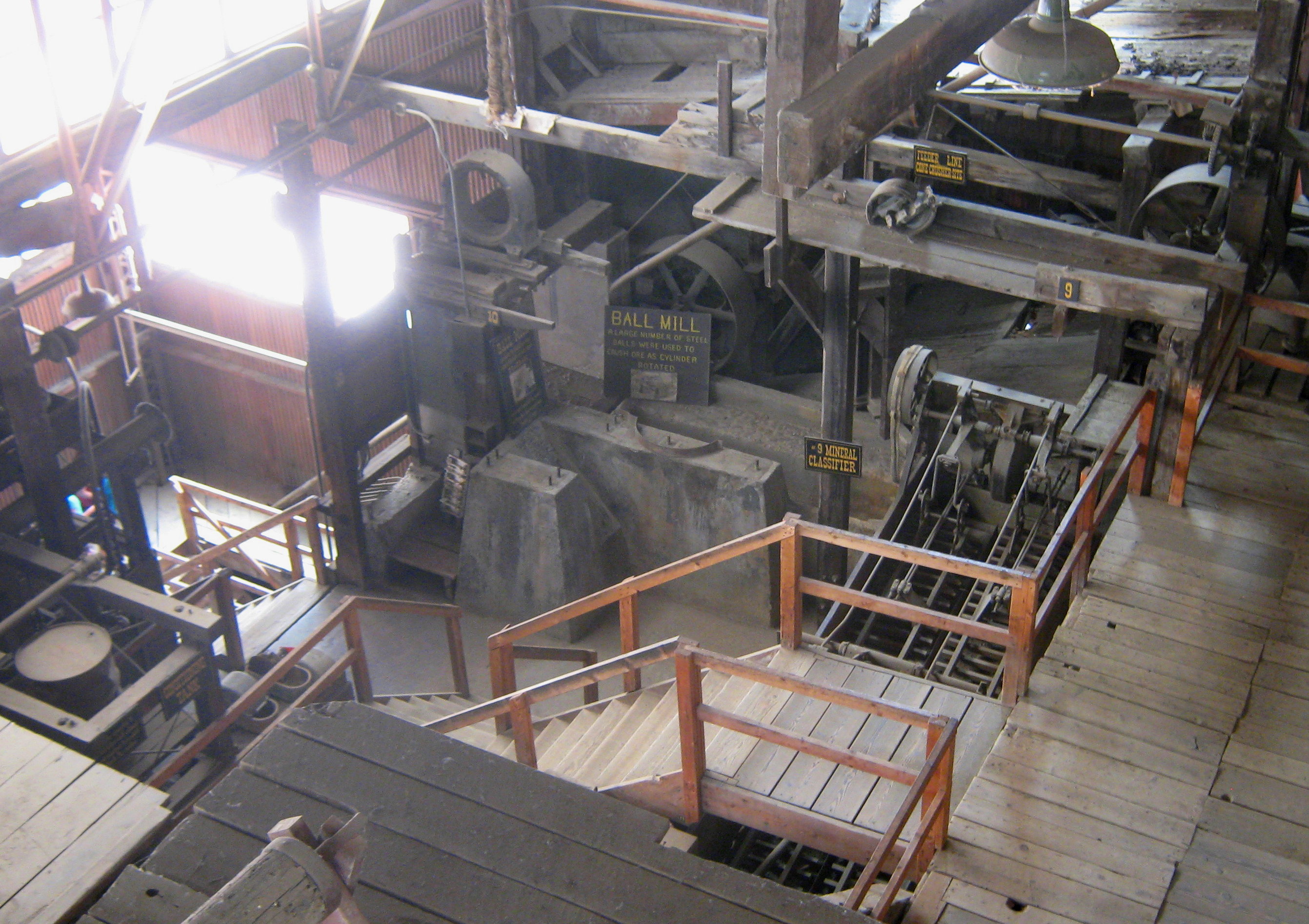
What makes the Argo mill unusual?  Several things. Most obviously, it is a gold mill that is quite well preserved. Most gold-rush era mill sites were in various stages of ruin in the early 2oth century. That this mill has been so well preserved alone makes it worth a visit. Add to that the machinery that is on display and you will get a fairly good idea of what it must have been like to work in such a place.

Interior Spaces of Argo Mill. (Copyright 2011 Th' Gaussling)

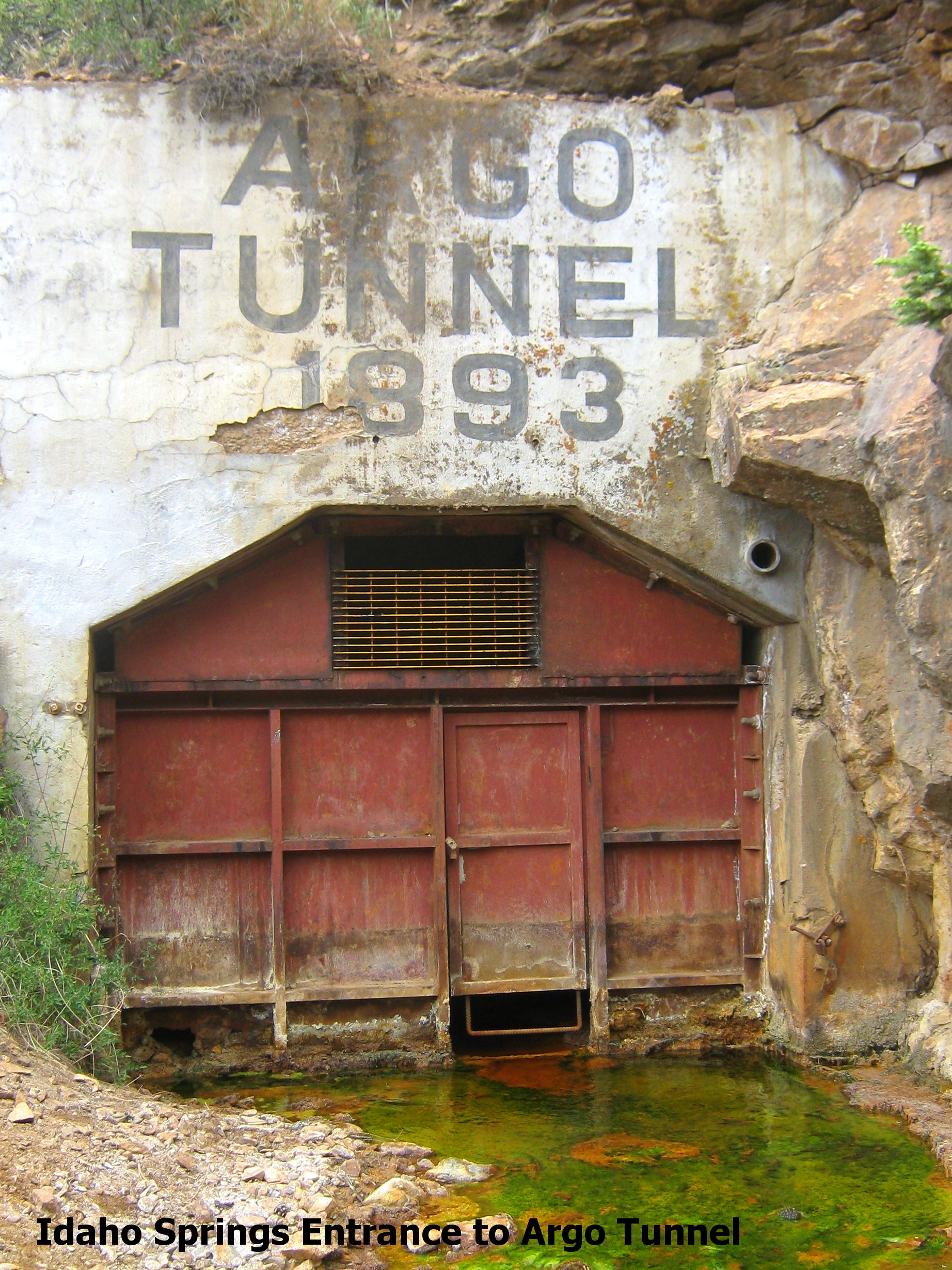
The other major reason for the unique quality of the Argo is it’s association and proximity to the Argo Tunnel.  The 4.16 mile long tunnel was begun in 1893 and completed in 1910. The idea behind the tunnel was both simple and ambitious. In order to provide milling services to the mining districts to the north, a tunnel was constructed below the mines to provide both drainage and easy transportation to a mill.

Entrance to the Argo Tunnel (Copyright 2011 Th' Gaussling)

Idaho Springs sits about 2000 ft below nearby Central City and is well situated for such a tunnel. The Central City gold district was a natural phenomenon at it’s peak. This section of the Colorado mineral belt was fabulously rich in gold and beginning with the 1859 discovery of gold, quickly became densely covered with mining claims from Idaho Springs northward to Central city and beyond. Hauling ore from the north to Idaho Springs was problematic owing to the topography.  A major road was the Virginia Canyon road, also called the Oh-My-God road, and was unsuitable for hauling ore. Ideally, a mill should be below the entrance to the mine in order to make maximum use of gravity in the milling operations.

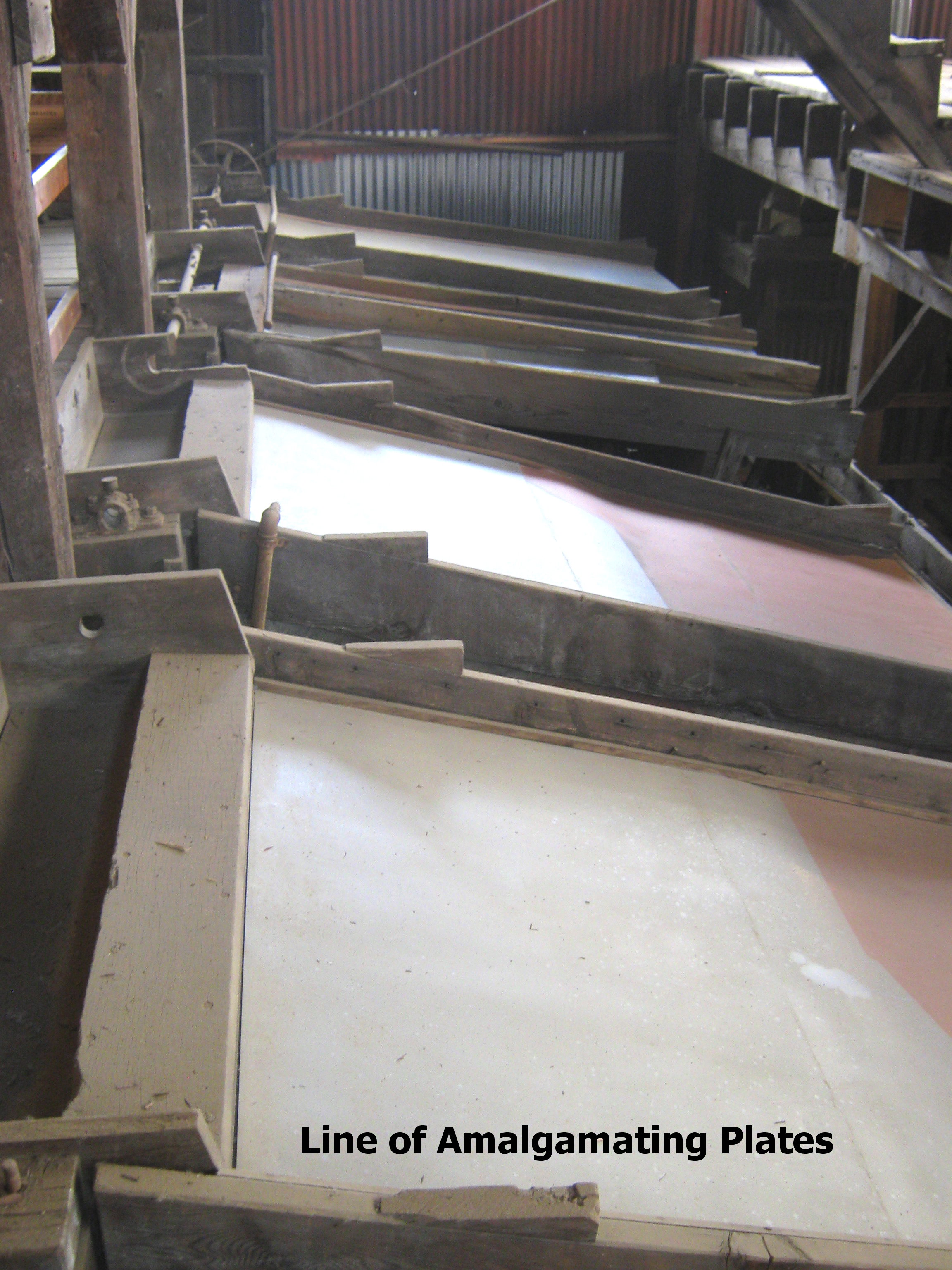
Amalgamation plates. (Copyright 2011 Th' Gaussling)

When completed, ore was moved through the tunnel by ore cart from mines to the north and received at the mill in the tipple house.  The ore delivery was recorded and assayed for gold content.  The business model of the mill was this- ore was purchased from the mines on the basis of assay and extractable gold was recovered.  This model of operation was common. Mills and smelters were customers for the mine operators. Ore was produced at the mine and sold on the basis of assay.

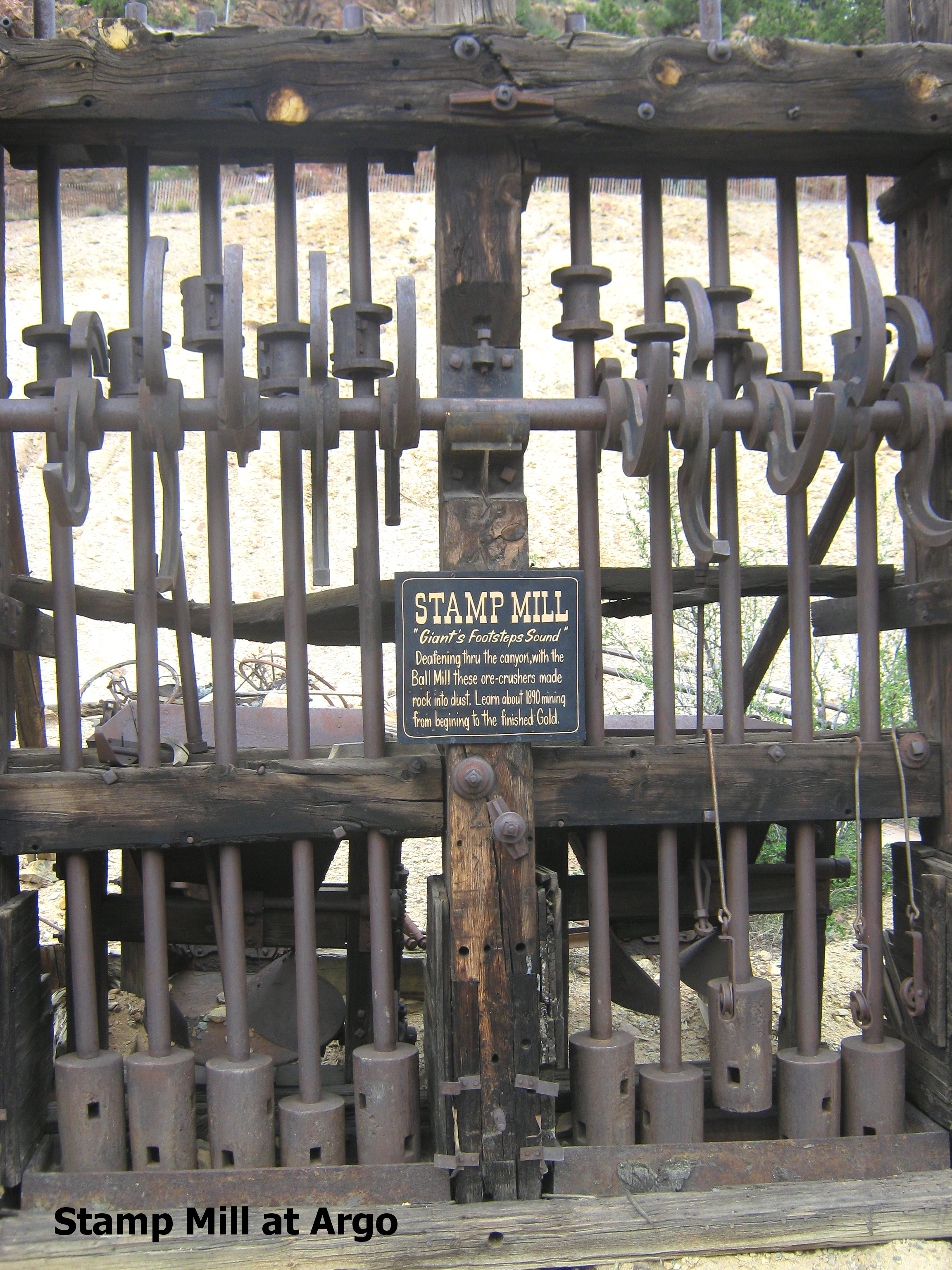
Stamp Mill on display at the Argo. (Copyright 2011 Th' Gaussling)

According to the guide at the mill, amalgamation operations were halted in the 1930’s, allegedly due to health and safety concerns.  The ore was comminuted with a ball mill and subjected to separation of the gold by shaker tables. Maybe the reason cited for ceasing Hg operations is accurate, but I’ll need to see independent verification of that.

Cyanadation was practiced at the mill as well. Not much was disclosed about this process. The guide disclosed that the mill tailings were contaminated with cyanide and mercury. As it happens, cinnabar occurs naturally in the Central City mining district, according to the guide, and can be found in spoils piles. Today this contributes to total package of contaminated leachates which may find their way into the watershed.

All in all, the Argo mill is worth a visit. Like all tourist attractions, however, you have to expect that there will be some dumbing down of the scientific and engineering details. Commonly, the emphasis in a visit to a tourist mine is on the craven details of gold mania and this tour is no different.  However, I am a purist. My interest relates more to the natural history of the chemical elements than the details of blasting and mucking.  So, if you can turn a blind eye to lackluster docent work, such tours are interesting and useful.

Albemarle enters lithium market

Here is one I didn’t see coming.  Albemarle has announced that it will be entering the lithium carbonate market.  In case you didn’t know, Albemarle has been a leader in bromine and brominated flame retardants for some time.  Economically speaking, if you want to be a bromine specialist or brominator at the commodity scale you should probably be basic in bromine. That is, you get your bromine feedstocks from underground or the Dead Sea.

Everybody likes the benefits of flame retardants but nobody likes to pay much for it, so manufacturing has to be large scale to keep the retardant prices down. The way you do that is to pull bromide from the ground, often as a brine, and oxidize the bromide to bromine and isolate it from your process stream. Albemarle has recent US patent applications for the nth iteration of their technology: see US 2010/0047155 A1.

A quick perusal of Albemarle patents failed to turn up any US patents or published applications indicating that they had been working on this. This press release must have been given special consideration in view of anticipated demand for their lithium. 

Since Albemarle is already tooled up for brine work it is not such a stretch to see that they are piloting lithium extraction from their process streams. According to Specialty Chemicals, a chemical trade publication, the Albemarle brines contain 100-300 ppm of Li and sources say that they are using an exchange resin for the isolation. While the brines at it’s Magnolia, Arkansas, facility are a little on the lean side in lithium, the fact is that they are already set up for brine processing. A large chunk of capital costs for recovery have already been put in place for the bromine operation. So, it’s a matter of setting up a Li extraction train to intercept the brine stream somewhere in the Br process.

Setting up ancillary process trains like this to recover other values is not at all uncommon. According to the Specialty Chemicals article, Albemarle expects to be producing lithium carbonate in 2013.

The USGS publishes annual reviews on the global stockpile situation with economically important minerals, lithium included.  A prominent source of lithium in the US is the Tin-Spodumene belt at King’s Mountain District, NC. Spodumene, LiAlSi2O6, is the principal mineral variety at Kings MountainChemetall Foote, a subsidiary of Rockwood Holdings, now operates at Kings Mountain, NC, in Nevada, and  Salar de Atacama in Chile.

According to Virginia Heffernan at the website Mining Markets, the cost of spodumene processing to afford lithium carbonate is quite high, $5500 per tonne of Li2CO3. Acid roasting is used to process the ore to liberate the lithium.

According to the article at Mining Markets the three major players in global lithium are Chile’s Sociedad Quimica y Minera de Chile (30 %), Chemetall (28 %), and FMC (19%).

Lamentations on Metallurgy

Imagine that you have a big chunk of glass that has blended into it some desirable metal compound. It can be a metal aluminate, silicate, or oxide. Now imagine that there are may be a dozen other metal species in there as well. Some of these metals will have the same oxidation state and similar ionic radii so that rather than having discrete domains of entirely specific composition, you have a dogs lunch of compositions and phases. Now lets say that the metal of interest is measured at the tens to hundreds of ppm.

So, Mr./Ms. chemist, how would you set about retrieving the desired metal from the matrix? I specified glass only to set a reference point with regard to reactivity.  Many ores are full of quartz or amphiboles or micaceous silicates or aluminates that are relatively inert and perhaps refractory. So, if you seek metal M which is dispersed in the matrix, dissolution of that matrix to pull out M is going to be challenging.

Ores that are rich in metal sulfides can be roasted in air to liberate the sulfur as volatile SO2, leaving behind a metal oxide. Metal oxides are often rather soluble in strong acid, so recovery of M as a pregnant liquor is messy but straightforward.  Recovery of metals that are not found as sulfides or oxides can be less than straightforward.

A natural consequence of having an inert, refractory matrix is that the whole thing can’t digested into an aqueous solution phase, with the possible exception of HF treatment.  Only the surface can be attacked and extracted. So, the idea is to increase the surface area. This is commonly done by milling and is called comminution. A rule of thumb is that the milling cost varies linearly with the surface area generated. Milling is commonly a multistage process wherein big chunks are crushed and gradually hammered into small chunks. This is very energy intensive.

There are many ways to recover and transform elemental metals from their ionic form, from electro-winning to chemical reduction. Every element is isolated according to it’s unique chemistry.  Rare earth metals are particularly troublesome owing to the fact that they are very often found together in the ore and most of them have a + 3 charge and are of similar ionic radius. A few stand out as exceptions, like cerium which can take a + 4 charge.

Solvent extraction schemes have been developed to take advantage of differential affinity for certain extractants.  Solvent extraction technology was advanced in the post WW2 atomic age.  Since many rare earths are often associated with uranium and thorium, or vice versa, rare earth extraction technology was developed as a result of U and Th beneficiation.