Category Archives: Mining

Significant New Molybdenum-Rhenium Find Announced

A significant new ore deposit of molybdenum and rhenium has been announced by Ivanhoe Australia. The Merlin Mo-Re deposit is located in western Queensland, Australia, south of Cloncurry. The deposit is said to be worth $6 billion Australian. The core sample shown on a download contains 2.25 % Mo and 29 g/t of Re, according to the company.  The principal ore is Molybdenite, or molybdenum sulfide.

Ivanhoe claims the advantages of the ore stem from the high grade and shallow depth. High grade ore requires a smaller refining facility. Ivanhoe says that its rhenium is not a byproduct.

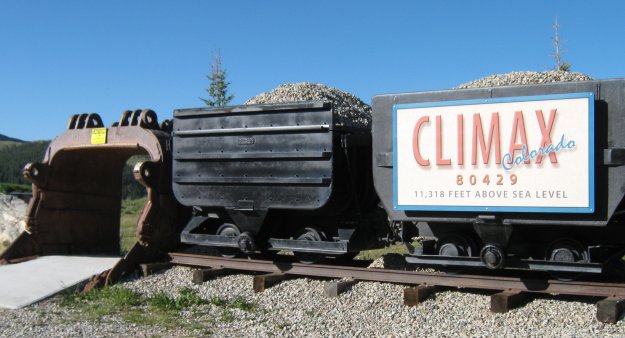
Climax Molybdenum, a Freeport-McMoRan company, is also a producer of rhenium products. Climax Molybdenum operates the Climax mine on Freemont Pass near Leadville, Colorado, and the Henderson Mine near Empire, Colorado.

The geochemical association of Mo and Re is apparently not limited to a unique location. Molybdenum deposits at Ivanhoe, Climax, and Copaquire all have associated rhenium.  Rhenium products such as rhenium pellets and ammonium perrhenate are supplied by Climax Molybdenum in addition to a variety of metallic moly and moly chemicals.

International PBX operates the Copaquire Mo-Re-Cu porphyry project in northern Chile.  The company estimates that 47,000 to 60,000 lbs of indicated rhenium reside in their part of the district. According to PBX announcement, the indicated moly is between 203 and 253 million lbs and indicated copper lies between 364 and 563 millions lbs. The company is quick to point out that 25 % of the deposit is above ground in a mountain.

As of 2005 the three leading producers of rhenium were Chile, Kazakhstan, and the USA, with the USA having the largest known reserves. How the Australian find will alter this distribution is unclear at this time. The estimated rhenium trade in 2005 was $32 million.

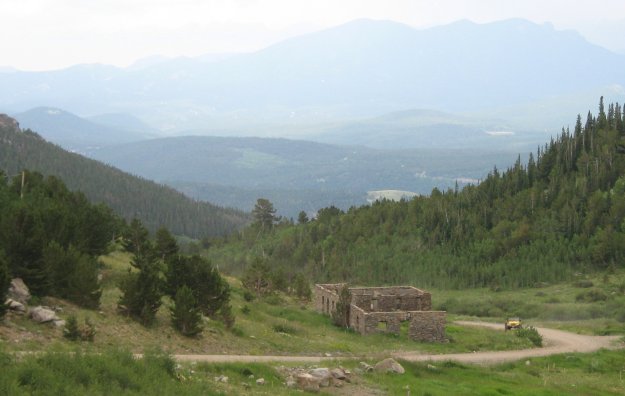
Rest Stop on Freemont Pass at Entrance to Climax Mine

Rest Stop on Freemont Pass at Entrance to the Climax Mine


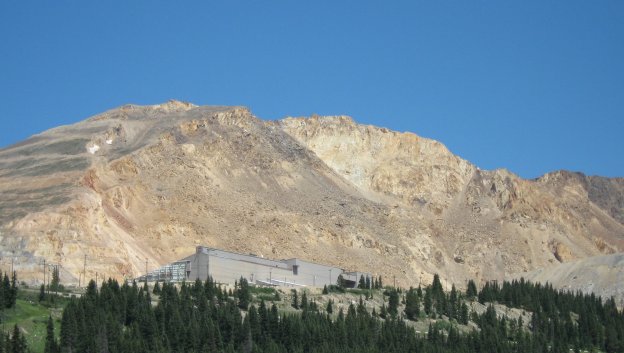
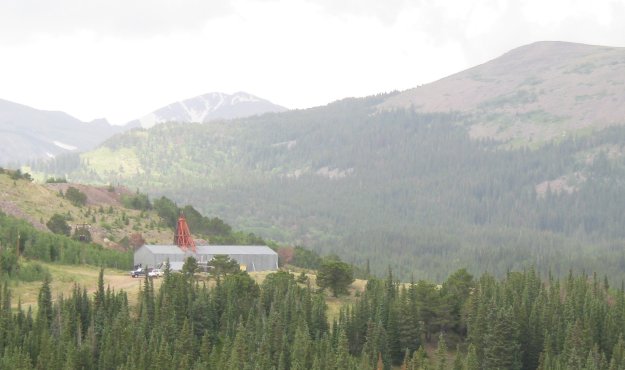
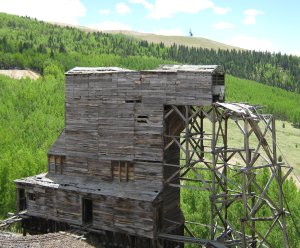
View of Climax Mine (Copyright 2009 All rights reserved)

View of Climax Mine (Copyright 2009 All rights reserved)

The above photo of the Climax mine shows a processing building with what remains of Bartlett Mountain behind it. In fact there is a considerable lode of moly remaining in the mine.

The Gangues of Leadville

The mining history of Leadville, Colorado, is well documented and the details are left to the reader to pry out of the internet. As a process chemist, my interest in mining is more directed to the geochemistry and milling of the ore. How did they get the pay out of the paydirt?

How does it come about that we can get our hands on particular elements like molybdenum, gold, silver, uranium, tungsten, vanadium, etc? How do the elements manage to concentrate into ore bodies that are worth the effort and expense to refine?

When you take the various mine tours around the country, the spiel offered by the guide is usually geared toward the lowest common denominator- our fascination with fabulous wealth. The miners were certainly taken with the possibility of wealth. Gold and silver mines are an easy sell because everybody has greed and everybody yearns to pluck a fat nugget of gold from a pan of gravel.  Other types of mines are a tougher sell entertainment-wise and require a bit more explanation of the relevance of the obscure element that is being extracted.

Mining is an activity with good and bad effects. To sustain modern civilization, if you can’t grow what you need, you have to mine it. Mining is inherently extractive in nature and requires that large volumes of earth be disturbed. Open pit mining requires that overburden be removed and the mineral value be moved to a processing site. Material sidestreams are generated and must be dealt with. 

Underground mines also generate large volumes of material that must be piled somewhere. To ensure responsibility for reclamation costs mining companies are required to put up a surety bond to cover the costs of future reclamation under 43 CFR section 3809.

The inevitable trade-off that a society must make is one of environmental insult for material goods. The balance point is always hard to find, and in fact is usually a moving target on account of politics, employment, and environmentalism.

Mining can have substantial effects on the landscape, the watershed, real estate, and the future tax base. Land that is not available for habitation or sustainable commercial use is fundamentally limited in potential value. An area covered with mine tailings, mine shafts, the occasional blasting cap, and acidic runoff is an area that requires cash infusion on a long timescale.

But if we enjoy the benefits of lead batteries in our cars, or silver jewelry, tungsten elements in our light bulbs, zinc plated wire fences, or the ten thousand other metal products in our lives, we must come to grips with the consequences for having such material goods. At some stretch point, everybody becomes a Luddite. Question: How much technological triumphalism can we take? Answer: Whatever the market says we can take.  

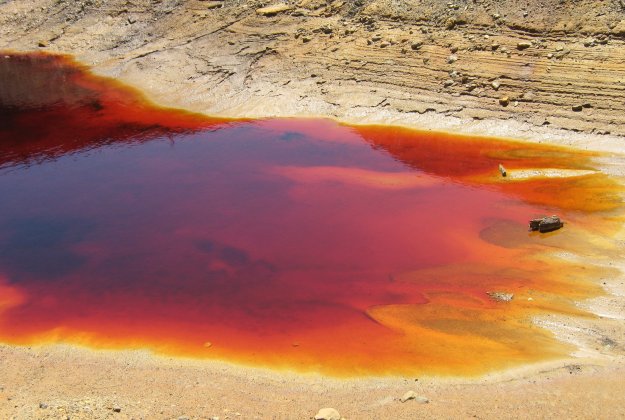
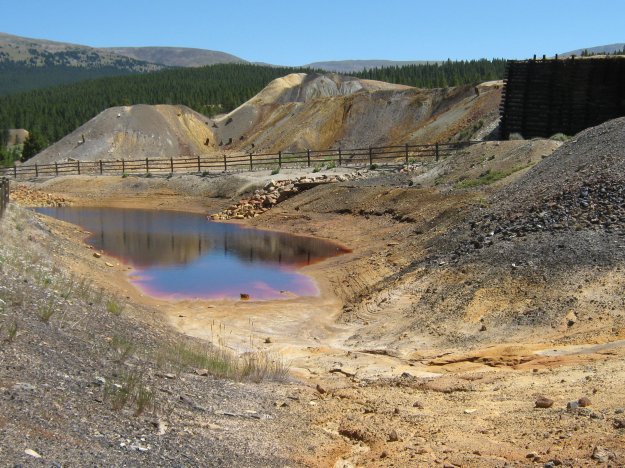
Runoff Collection Pond from Mine Tailings in Leadville Mining District.

Runoff Collection Pond from Mine Tailings in Leadville Mining District.

Our society has benefitted greatly from metallurgy. The compulsion to recover metals from the ground is one of the great economic forces in civilization. No amount of highminded pontification will stop it. Metals enable industry and war which are forever entangled in politics and greed. The goal is to be smart about how we mine elements from the ground so that maximum value of the surrounding land may be enjoyed. The enthusiasms of the time come and go. But metals are forever.

Mine Waste, Leadville Mining District August 2009

Mine Waste, Leadville Mining District August 2009

Plum-bummin’ in Leadville

After an insane week in the lab a road trip to the cool meadows of the nearby mountain range was just what the doctor called for. It was the last weekend before the family- one teacher and one kid-  return to school. Summer break 2009 is history.

We piled in the car and pointed it uphill towards Leadville, Colorado. The planetary atmosphere thinly blankets this insanely high mountain city. It was just what I needed to clear my scrambled mind. Nothing like blinding sunshine and mild oxygen starvation to reset a brain in chronic spasm from sensory overload.

Leadville sits at 10,152 feet above sea level.  If you doubt the effect on your stamina, just take a short sprint in any direction. Or just plod up the stairs of your hotel. Lordy.  All of those business dinners- all that lovely Cabernet and creme brulee- and years of driving a desk have caught up with me.

Leadville is located in the Colorado mineral belt and began to populate with fortune seakers about the time of the Colorado gold rush in 1859. Some placer gold was found in the streams, particularly in what was then called California Gulch, but for the most part Leadville became a silver camp.

In 1874, two investors with metallurgical training, Alvinius B. Woods and William H. Stevens arrived in Leadville and analyzed the muds found in the local sluicing operations. According to A Companion to the American West, edited by William Francis Deverell, (2004, Blackwell Publishing, ISBN 0-631-21357-0, p. 319)  Woods and Stevens found the heavy black mud so problematic for gold sluicing was in fact composed of lead carbonate with high levels of silver.  Woods and Stevens invested $50,000, quietly buying as many claims as they could and began hydraulic mining operations immediately.

By 1890 there were nearly 90 mines in operation employing 6000 miners. At its peak there were 14 smelter operations supporting the mines. Leadville was a genuine boom town with the expected mix of characters.

A mine is a hole in the ground with a liar standing at the top.

All mining towns have characters who go on to dominate local legends and stories. Among the well-known-for-being-famous rags to riches to rags players in Leadville are Horace and Agusta Tabor, along with Horace’s mistress and 2nd wife, Elizabeth “Baby Doe”.

To make a long story short, Horace was a struggling shop keeper who invested in a mine east of Leadville. Though it was salted by the previous owner to entice buyers, Tabor dug 25 ft further down the shaft and struck a rich and extensive vein of silver ore.  The operation was called the Matchless Mine, after Tabor’s favorite brand of chewing tobacco.

According to the tour operators, Tabor operated the Matchless Mine 24/7 for 13 years, pulling an average of $2000/day of silver out of it. At its peak, the mine is said to have employed 100 people. Miners were paid the common rate of $3.00 per day to climb 365 ft to the bottom of the shaft for 12 hour shifts.
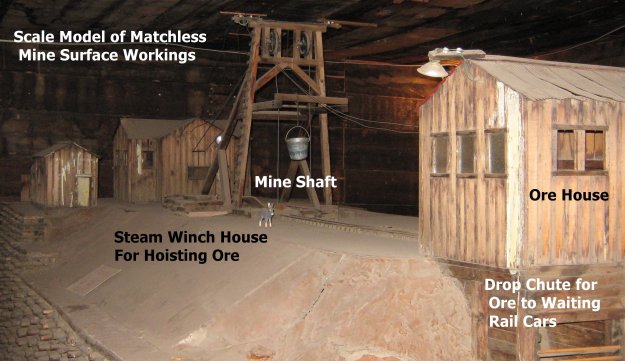
Matchless Mine Surface Workings
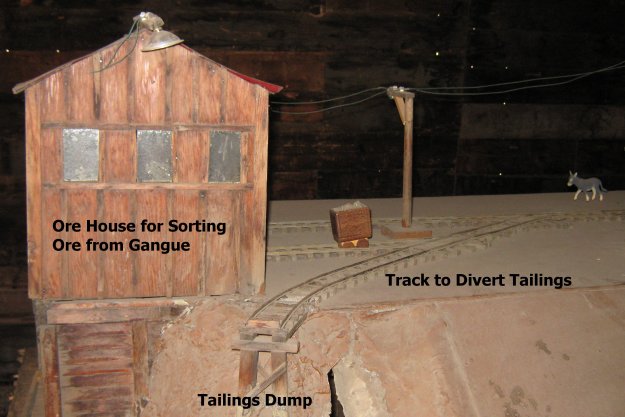
Matchless Mine Surface Workings

Gangue Dump Detail

Tailings Dump Detail

The underground workings of the mine followed the vein structure and focused on sending concentrated ore to the surface. Buckets carrying approximately one ton of ore per load (my estimate) were tipped into ore carts and rolled into the ore house for hand sorting. The most highly concentrated and valuable ore was dumped down a chute for loading into a rail car and the gangue (or tailings) was dumped into the gulch.

An assay building (not shown) was on site to provide a continuous assay and accounting of silver sent to the smelter in Pueblo, Colorado. Unlike many other mine operators, Tabor owned a rail operation and had a spur at the mine for pickup and delivery of ore. Many mine operators had to employ mule-skinners to cart wagon loads of ore to a rail siding for transport to the nearest smelter.

In 1893 the repeal of the Sherman Silver Purchase Act and the collapse of the railroad industry bubble were part of a panic that lead to a crash in silver prices. Tabor lost everything and, as a respected public figure, was appointed postmaster of Denver for a short time. Eventually Tabor died at age 69 in 1899. Ex-wife Agusta had invested her divorce settlement wisely in Denver and lived comfortably. Widow Baby Doe Tabor was found frozen stiff in her shack at the Matchless Mine in 1935.
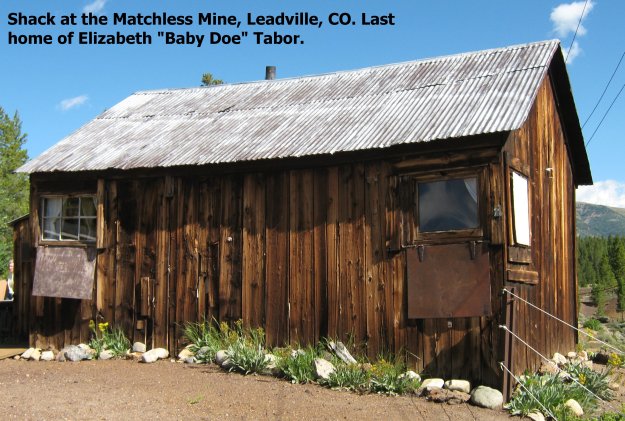
Matchless Mine Shack

Matchless Mine Shack

All of the digging from the boom time of Leadville has left an enduring legacy for those who live in the watershed. Much of the mining activity occurred uphill, east of the city and as a result, that area is pock marked with many large colorful tailings heaps. While the colors are interesting to ponder and sample, the ground and surface waters are greatly affected by aqueous extraction of metals from these piles.

If you stand next to one of these heaps, you can’t help but notice the smell of sulfur. The ore and tailings are enriched in sulfides and once exposed to air and water, oxidation occurs to make corrosive runoff. This is a kind of heap leaching phenomenon that will eventually exhaust itself, but only at the cost of water quality.
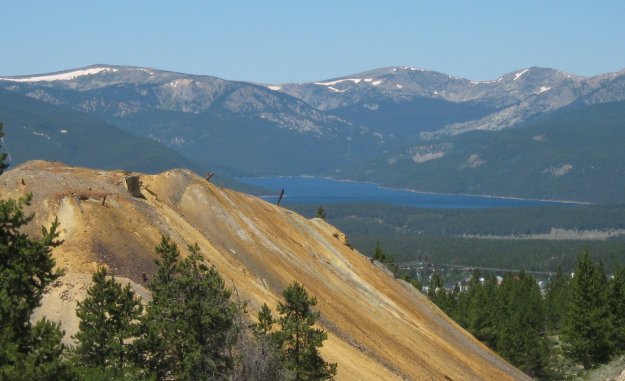
Boomtown Legacy

Boomtown Legacy (Copyright 2009 All rights reserved)

Gaussling’s 12th Epistle to the Bohemians. Elements Rock.

Some acquaintances have asked about my new interest in geology. What’s the deal with rocks and mining? 

What interests me is not so much the economic value and extravagant production of certain minerals and precious metals. What is of interest is the question of how it came about that there is such a thing as an ore body.  An ore body is a geological formation which is defined by a localized concentration of certain substances. How does it happen that chemical elements can become concentrated from a more distributed condition?

Celebrity astronomers are often seen on cable channels pedantically nattering on about “Star Stuff”.  OK, Dr. Skippy, what is star stuff and what does it do? What are the particulars about the local star stuff, ie., the earth? This is the realm of cosmochemistry and geochemistry- elective classes the TV glamour boys apparently skipped.

The nucleosynthesis of the heavy elements (C to U) and their subsequent ejection from exploding stars is an inherently dispersive process. Eventually, here and there, some heavy matter will aggregate to form a protoplanetary cloud which can then produce planetary bodies. Inevitably, some of the heavy matter is pulled into massive bodies dominated by the presence of thermonuclear fuels- that is, hydrogen and helium. Sufficiently large accumulations of these two highly abundant elements will compress and initiate a self-sustaining fusion reaction of hydrogen to form the (n+1)th generation of stars. All told, some heavy matter accumulates to form of planetary bodies while some of it siphons into the next generation of stars.

It is within the ability of gravity to concentrate matter into smaller volumes of space as a dense, bulk phase. The geometric shape that allows all of the mass to be as near the center of mass as possible is the sphere.  This is why we don’t see planets shaped like cubes, pyramids, or ponies. 

Once cooled well below incandescence, the matter in a sufficiently constituted and situated planet may begin to self-organize into chemical phases. Along the lines of the Three Bears allegory, Earth is parked in an orbit that is just right for the presence of liquid water. Irrespective of the needs of life, liquid water is critical for the eventual concentration of some elements into ore bodies.

Earth has a gas phase blanketing a liquid phase which wets much of the bulk rocky phase of the planet. A generous portion of water circulates in the maze of fractured recesses of the planetary crust. In the case of Earth, we know that our planet has a fluid core within a solid shell. This molten phase in the core energizes a kind of convective heat engine that will drive the shuffling motion of tectonic plates and episodic volcanic mass transfer on the surface. 

Matter has gravitationally self-organized at the planetary scale on the basis of density. But what is perhaps most interesting to a chemist is the phase composition of the planetary solid matter. On cooling, a body of magma will sequentially produce precipitates representing different chemical substances. Over geological time this igneous rock may experience modification by the hydrothermal action of hot water under high pressure. Depending on its circumstances, parts of the formation may be depleted of soluble constituents or it may receive a deposit of new mineral species.

On the scale of planets, the earth has self-organized into bulk phases of matter- Solid, liquid, and gas. But at a much smaller scale, the earth self-organizes into domains of chemical substances. This is evident by simple inspection of a piece of granite. A piece of pink granite shows macroscopic chemical domains of potassium feldspar, quartz, and mica. While these three mineral components of granite are compounds and not pure elements, they nonetheless represent self-organization of species based on chemical properties.

The forces that drive chemical differentiation in mineral formation are ultimately thermochemical in nature. Large differences in Ksp lead to partitioning and phase separation of distinct substances. Subsurface formations may be approximately adiabatic on a short time scale, but over deep time they can slowly cool and equilibrate to yield a sequence of fractional crystallizations of metal carbonates, oxides, silicates, and aluminates giving rise to a complex bulk composition.

Speaking only for myself, coming to an understanding of how mineral deposits form is a kind of hobby.  If I wanted immediate answers to specific questions, I suppose the most expedient thing would be to consult a geochemist. But where is the adventure in that? The answers are not the fun part. The real adventure is in the struggle to find the best questions. As it often happens, once you can frame the problem sufficiently, the answer falls out in front of you. Whoever dies with the greatest insight wins.

A Day Trip to the Caribou Mining District

The ghost town of Caribou, Colorado, sits a few miles west of Nederland. As a group the mining towns of Caribou, Nederland, and Ward reside at the northeastern extreme of the Colorado Mineral Belt. This mineral rich formation cuts diagonally across the state, terminating near Durango in the southwest part of Colorado.

Every western state  has its mining districts.  The eastern reaches of the USA have hard rock mining districts as well. The Appalachians have a long history of hard rock mining. An example of eastern hard rock mining activity is the Foote spodumene mine in the Kings Mountain district in North Carolina.

The Ghost Town of Caribou, Colorado (Copyright 2009 all rights reserved)
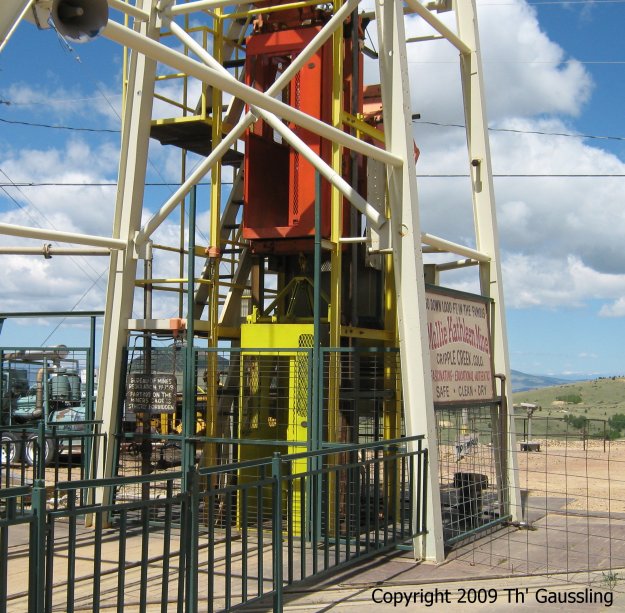
The Ghost Town of Caribou, Colorado (Copyright 2009 all rights reserved)
While the Caribou district was previously known primarily for silver and tungsten, current hard rock mining operations by Calais Resources is targeting silver and gold. A blurb on the Calais website says that they do not use cyanide extraction in Colorado.

Calais Resources Comstock Shaft (Copyright 2009 all rights reserved)
Calais Resources Comstock Shaft (Copyright 2009 all rights reserved)
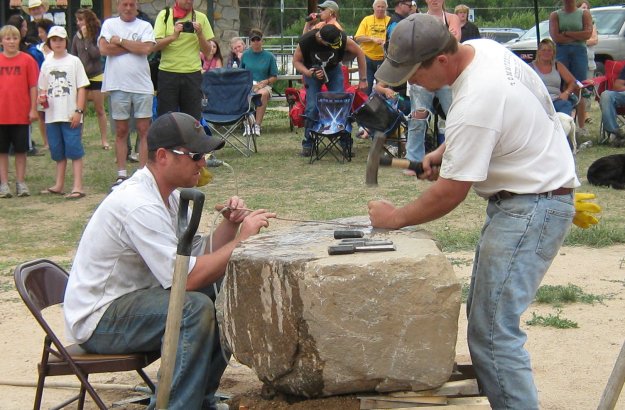
 This weekend the town of Nederland is celebrating its mining history with a miners festival. There were feats of strength and skill on display.

Hand drilling competition in Nederland July 2009

Hand drilling competition in Nederland July 2009

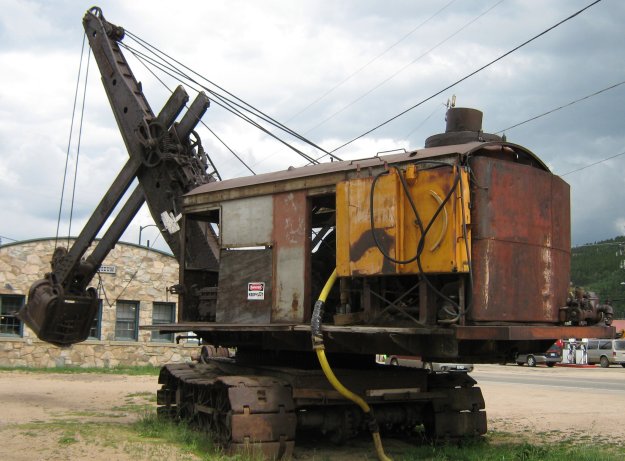
 Across town at the Mining Museum, a 1923 Bucyrus 50-B steam shovel was in operation. This 130,000 lb beast was powered by an antique air compressor this afternoon because the boiler is not servicable. It turns out that this very machine was one of 25 taken to the Panama Canal to move dirt and rock. All were scrapped at the canal but this one. The canal was finished in 1914, so it must have been used for modification of the canal workings.

This machine was in service at the Lump Gulch Placer a few miles south of its present location until 1978.  Bucyrus is still an ongoing concern in the mining equipment business.

Bucyrus 50-B Steam Shovel (Copyright 2009 all rights reserved)
Bucyrus 50-B Steam Shovel (Copyright 2009 all rights reserved)
As one drives into the Ward area from the north, the rock type evident in the road cuts changes. South St. Vrain canyon is largely granitic in nature. As one moves south into the Mineral Belt, the road cuts plainly reveal that a new dominant mineral type is present. Hematite or other iron oxide species are extensively represented in the rock.

My reading indicates that many metal ore bodies are the result of extensive hydrothermal modification of fractured or disturbed formations. Metal sulfide saturated, superheated water penetrates a disturbed formation leaving precipitates forming vein structures. In this way, many metal species are mobilized on the basis of solubility properties and are transported and concentrated leaving deposits enriched in a variety of useful metals.

The superheating of deep ground water and the subsequent partitioning and concentration on the basis of physical properties like solubility and volatility are what make the recovery of many elements possible. Without these concentration mechanisms many scarce elements would be too diluted in the parent formation to be feasibly isolated commercially.

Pyrite vug from a tailings pile (Copyright 2009 all rights reserved)
Pyrite vug from a tailings pile (Copyright 2009 all rights reserved)
What Th’ Gaussling has found is that, while a PhD in Organic Chemistry isn’t entirely useless as a background for understanding rocks, it is closer to useless than I’d like. Edgemicated as I may be in a skinny band of chemistry, I have a lot yet to learn about minerals and petrology.

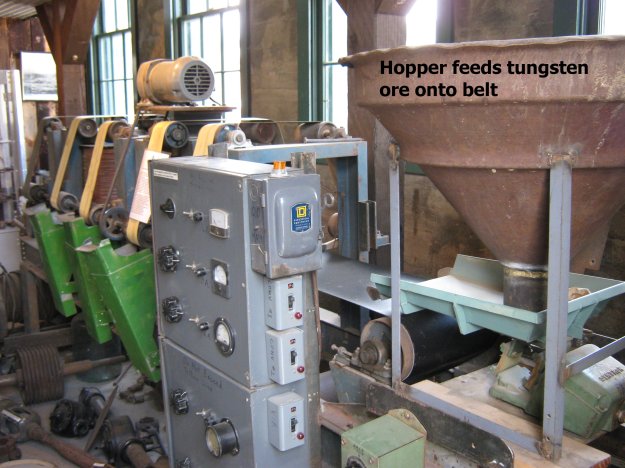
Vintage Magnetic Separator for Tungsten Ore

Th’ Gaussling took a drive through some local mining territory today. I made my way up Left Hand Canyon through Ward and then on to Nederland, Colorado, careful to dodge the high altitude bicyclists.  Either they are unaffected by the low O2 partial pressure, or oxygen starvation has dulled their senses. I do not have the metabolism for it.

While there is a fair amount of mining history in Nederland, it is most recently famous for having a dead guy in a box of dry ice stored in a Tough Shed. Not to be missed is the annual Frozen Dead Guy Days with its charming coffin races. I’m sure there are a few tarpaper homesteads still around. It’s our own little bit of Appalachia.

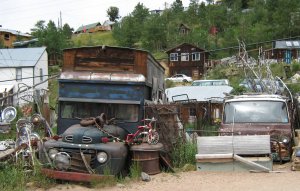
RV Heaven in Ward, Colorado

RV Heaven in Ward, Colorado

Western Boulder County was once a bustling mining district producing  mostly silver with some gold and tungsten. Mines were serviced by smelter and milling operations and were located near available streams. While a great many mines remain, nearly all trace of the mills has been long lost. What tourists and casual observers of mining history may not appreciate is the critical function of the mill. Without crushing and extraction, the mines would have no way to pull the pay out of paydirt.

On a side note, southern Boulder County- between Boulder and Golden- had one of the most significant early uranium mines – the Schwartzwalder Mine.  A geologist who studied the operation told me that the Schwartzwalder mine has been shut down by the owner, Cotter Corp., and is flooded.

Southwest of Ward is the town of Nederland. The town has a modest mining museum with some unique pieces of equipment on display indoors and two steam shovels on static display ouside. It’s worth a stop.

Magnetic Separator for Tungston Ore, Nederland Mining Museum

Magnetic Separator for Tungston Ore, Nederland Mining Museum

Of particular interest is a curious looking machine in the back of the museum. The photo above shows this machine- it is a magnetic separator designed to remove magnetic iron gangue from milled ore and was built by a local miner. The machine was donated by Joe and Joann Chavez. It is believed that Joe built the device in the early to mid 1940’s.

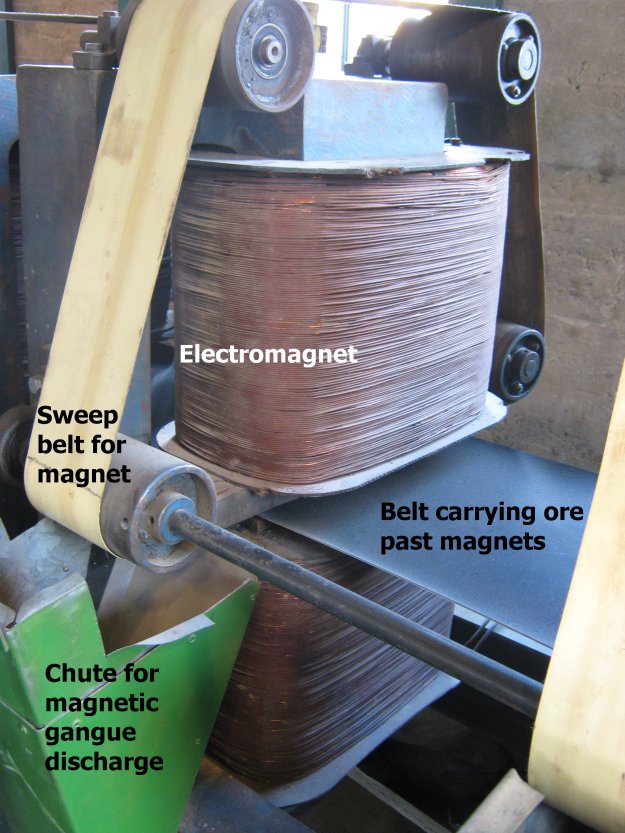
The machine moves milled ore on a main belt underneath the pole faces of 5 successive electromagnets. Around the upper magnets is a sweeping belt that is situated between the magnet pole face and the underlying ore. As the main belt delivers a constant stream of ore to the magnets, the sweeping belt constantly moves accumulated magnetic material away from the magnet and into chutes that discharge the unwanted material to a separate mass stream. The purpose of the lower magnet is a little unclear.

Magnetic Separator Detail

Magnetic Separator Detail

Separating iron minerals from other minerals can be difficult. Iron is more or less ubiquitous in many formations. In any serial refining process it is important to remove unwanted material as early in the stream as possible. The less mass that has to be taken through later-stage energy and chemical intensive processes, the better the economics. Magnetic separation, if it is applicable, is fairly simple. But if considerable comminution is required beforehand, then the energy costs begin to add up.

Three empirical laws describe the cost of comminution or size reduction. Basically, energy consumption (and cost) follows some power law with the surface area generated. If one can cheaply concentrate medium sized grains of solids before further milling has to occur, a cost savings might be had as inferred from Rittinger’s, Bond’s, or Kick’s Laws.

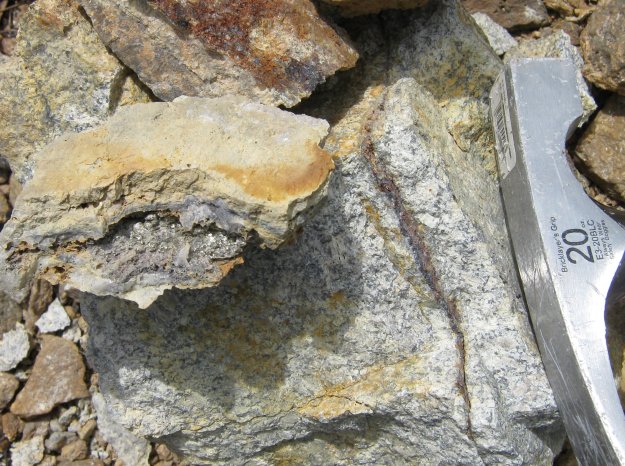
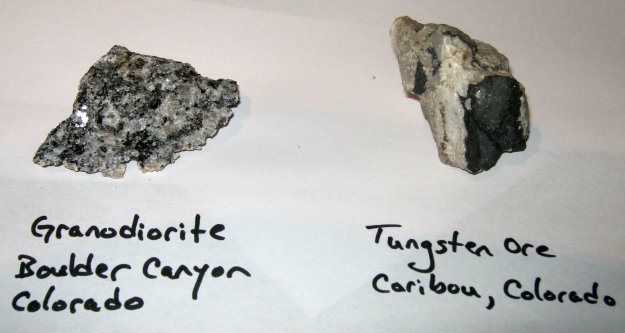
Samples of Granodiorite and Tungsten Ore

Samples of Granodiorite and Tungsten Ore

Along much of the route from Nederland to Boulder the predominant rock seen in the canyon is granodiorite. This mineral is similar to granite but is more mafic in nature, meaning that it contains less potassium feldspar and more plagioclase which is richer in Na and Ca. According to Wikipedia the Rosetta Stone is carved from granodiorite. A softer stone would have been easier to carve- I would have picked sandstone if I were the chisler.

The Rosetta Stone sits at the British Museum in London and is surprisingly large- it’s as big as a section of residential sidewalk.

Mollie Kathleen Mine, Part 2.

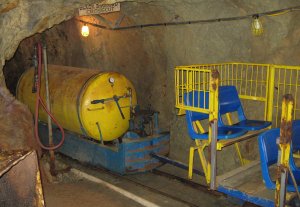
Underground Air Locomotive

Underground Air Locomotive

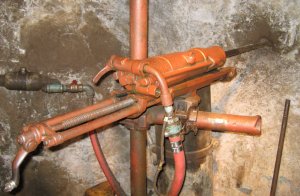
In Part 1 of my post on the Mollie Kathleen Mine in Cripple Creek, Colorado, I described the ride down to the 1000 ft level.  Having been in mines considerably less developed, I was impressed with the quality of the skip lift equipment and the general state of the mine workings above and below ground. The mine make heavy use of pneumatic equipment to minimize ignition sources.  The air locomotive above features a pressure tank which energizes an air motor to drive the contraption. It works quite well.

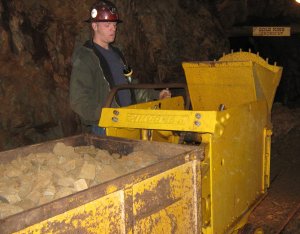
Mechanized Mucking with Pneumatic  Equipment

Mechanized Mucking with Pneumatic Equipment

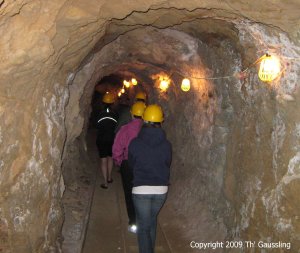
Once at the bottom of the shaft, the mine appears to be little more than a hallway with steel tracks on the floor. In fact, it is a series of hallways, or drifts, and shafts. The goldbearing formation that the Mollie Kathleen mine has penetrated is a volcanic formation called a diatreme and it is composed of highly disturbed rock from ancient volcanic activity. The district contains gold in varying abundances. Certain features of the formation are more enriched than others.

In general, one does underground hardrock mining to exploit a network of veins enriched in value, in this case, gold.  By definition, an ore is a body of rock or mineral that contains commercially exploitable value such as gold. 

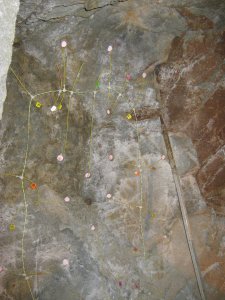
Blasting pattern prior to a shot

Blasting pattern prior to a shot

Solid rock is fragmented with explosives and loaded into ore carts. The rubble accumulated from blasting activity is called “muck”. Muckers were very important workers in a mine and the mines productivity hinged on their ability to load the ore carts as fast as possible. Until carbide lamps arrived, miners toiled in very low light levels in candle or kerosene lamplight.

With the advent of better technology came more effective and safer blasting agents, fuse cord capable of adjusting the timing of a blast sequence, and more efficient ejection of fragmented rock.  Near the center of the photo above is a pattern of holes filled with blasting agent. Well, except for one hole in the center of the pattern. This empty hole is placed specifically to provide for space for expansion relief.  A shot is timed to trigger the charges around the empty hole first, followed by concentric detonation of the blast pattern. Finally, a set of charges low in the pattern lift the muck out of the hole and onto the floor.

Pneumatic hammer for pounding a drilling steel into the rock wall.

Pneumatic hammer for pounding a drilling steel into the rock wall.

According to the tour guide, the Mollie Kathleen mine is fairly rich in gold but lacks access to a milling facility. Without milling and refinement, there is no point in pulling the ore out of the ground. So, until a scheme for beneficiation of the ore comes along, the gold will have to sit in the formation and make money for its owners as a tourist attraction.

As is common in mine tours, the staff is well versed in the history and mechanics of getting ore out of the formation. What seems to be glossed over or wholly ignored is the process of getting purified gold out of the ore. Being a chemist, I was naturally interested in the isolation process. The refining process I was able to “extract” from the mine tour operators was a simple but inefficient method.

Gold ore was pulverized and heated to high temperature in a way that resembles calcination. Diffuse wisps and pieces of elemental gold in the ore would melt and agglomerate so as to produce larger pieces of gold. The roasted ore could then be exposed to a mechanical/slurry agitation process that would dislodge the now larger pieces of gold and classify them by density much like the gold panning process.

The roasting process apparently oxidized the tellurium in the ore, resulting in a purification. The question is, did the roasting process just oxidize the free tellurium or did it free the gold from the gold telluride (Calaverite)?

Another process can be used to extract gold from the ore. It grossly resembles the mercury amalgamation method. Metallic lead is combined with gold ore and heated to some high temperature in a special container. A lead-gold alloy is formed which can be poured away from the gangue. The molten alloy is then exposed to air oxidation, forming litharge (PbO) and metallic gold which phase separate and can be separated mechanically. Assayers use a process called fire assay or cuppelation to extract refined gold for an assay.

Chlorine extraction was used to oxidize metallic gold to the soluble NaAuCl4 salt which could reduced by contact with carbon or by electrolysis. Chlorine water was used prior to the cyanide extraction methodology now in common practice.

Old Headworks by the Mollie Kathleen Mine

Old Headworks by the Mollie Kathleen Mine

Touring the Mollie Kathleen Mine, Part 1.

By way of a prelude to this post let me say that, as a child, I was plagued with nightmares about elevator shafts. A tallish building in a nearby city had an elevator that, in the style of WWI-era buildings, was comprised of an open cage controlled by a matronly operator. On each floor the entrance to the elevator shaft was guarded by a collapsible metal gate that allowed the visitor to see, hear, and smell the greasy workings of the elevator in all its cabled creepyness.

I would stand next to the gate as the elevator went about its single-minded business and peer down into the dark shaft with its writhing black cables, fascinated yet deeply in tune with the prospects of what a fall down this hole would mean.  Like most young boys, I had bitter experience with the unblinking and impersonal side of gravity.

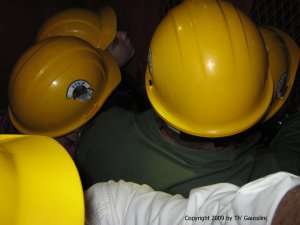
It was this memory that flashed into my mind yesterday as I stood in a manlift the size of a large domestic refrigerator, crammed tightly into the cramped cage with 6 other people. We looked like a can of vienna sausages.  The lift was a double-decker, with an identical cage of sausages below.

Crammed in Manlift

Crammed in Manlift

There we stood- a squashed parcel of humanity and hard hats in the orange lift, dangling above a 1000 ft column of air. Outside I could see the town of Cripple Creek, Colorado, sitting in the valley 400 ft below us. In two minutes, we would be 600 ft below the level of the town. As we began the descent and as daylight fell to darkness, I felt a my autonomic system select “Panic Mode”. But it was too late, we were committed. After 30 seconds, a graveyard calm replaced my momentary panic and all was well.

Double Decker Manlift at Mollie Kathleen Mine

Double Decker Manlift at Mollie Kathleen Mine

This was my first entry into the Mollie Kathleen Mine outside of Cripple Creek, CO. The tour begins in a drift 1000 ft below surface level. A “drift” is just a horizontal tunnel in an underground mine. I have toured a number of mines and caves and the common attribute to all of them is the absolute silence that is found underground. Today’s tour would be different.

The Mollie Kathleen Mine sits on the side of a mountain adjacent to the mammoth Cripple Creek and Victor (CC&V) open pit gold mine. The operators of both mines have independent claims to different parts of the same confined geological formation. The Mollie Kathleen is one of a great many underground mines in the area, of which only a very few are in operation today. It is presently open only for tours.  The CC&V mine is the only large gold mining operation in the area.

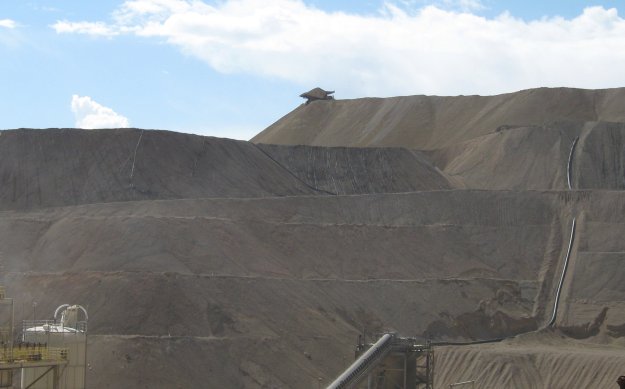
The CC&V mine is an open pit operation. Large hauling trucks carry 300 ton loads of ore rubble from the pit to nearby crushers which reduce the rock to 3/4 inch pebbles in preparation for the cyanide extraction process on the heap.  The rubble is the result of large scale bench blasting with ANFO blasting agent.

The CC&V does blasting on a regular basis. That day, while we were underground about 1-3 miles distant (my estimate), they set off a blast. We were down in the mine when the underground rumble hit. There was no ramp-up to maximum force- it began as a loud, strong rumble seemingly from every direction. We stopped in our tracks and instinctively looked at the ceiling trying to decide if this was a normal or off-normal event and, oh golly, will the the tunnel collapse? After 30 to 40 seconds the rumble subsided and the mine was silent again except for a few heartfelt expressions of relief. Clearly there was no danger for anyone, but the abruptness and the magnitude of the explosion only serves to remind one of the compromises made and the options lost while working underground.

1000 Ft down into the Mollie Kathleen Mine

1000 Ft down into the Mollie Kathleen Mine

The tour guide was a young ex-miner from Montana who explained mining practices and demonstrated the numerous pneumatic tools used by hard rock miners.  In part 2, we will look at some of the mine workings and other features of the Mollie Kathleen Mine.

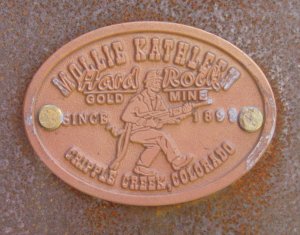
Hard Rock Placard. Photo Copyright 2009 Th' Gaussling.

Hard Rock Placard. Photo Copyright 2009 Th' Gaussling.

Cresson Gold Mine, Part 3.

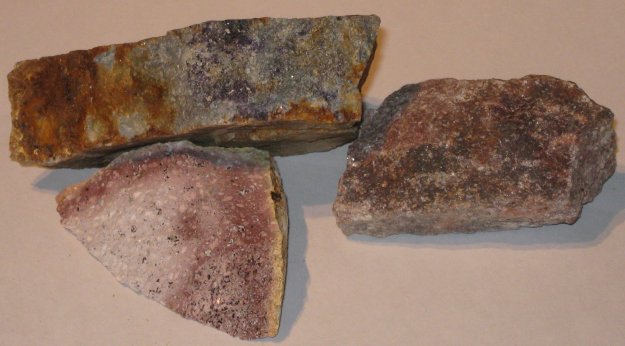
The Cresson Mine in Cripple Creek contains a good deal of fluorite. I was able to casually collect a few samples just lying in the road bed. In the photo below, the rock on the top has the most pronounced blue/purple color indicating CaF2 (fluorite). These specimens are not collectors pieces and are entirely unremarkable other than as indications of fluorite.

Cripple Creek Fluorite Indications (Cresson Mine). Copyright 2009 Gaussling.

Cripple Creek Fluorite Indications (Cresson Mine). Copyright 2009 Gaussling.

The mine business model requires heap leaching as a means of extracting the gold value out of the ore. Given that the ore is peculiar in that it contains gold in the form of gold telluride which cannot be leached out by cyanide, approximately 40 % of the gold remains in the host rock. The cost per toz of gold produced must be kept as low as possible and the way you do that is economy of scale.

The heap sits atop multiple layers of clay barriers and the 14,500 gal per minute of extract that flows out of the heap 24/7 is passed through coconut husk charcoal to trap the gold cyanide and the raffinate is recharged to the desired 100 ppm titer of aq NaCN and pumped back onto the pile. pH adjustment is a constant chore. The crushed rock is mixed with calcuim oxide prior to being dumped on the heap to maintain a high pH.

Building the Heap. Cripple Creek Cresson Mine. Copyright 2009 Gaussling.

Building the Heap. Cripple Creek Cresson Mine. Copyright 2009 Gaussling.

Cresson Gold Mine, Part 2.

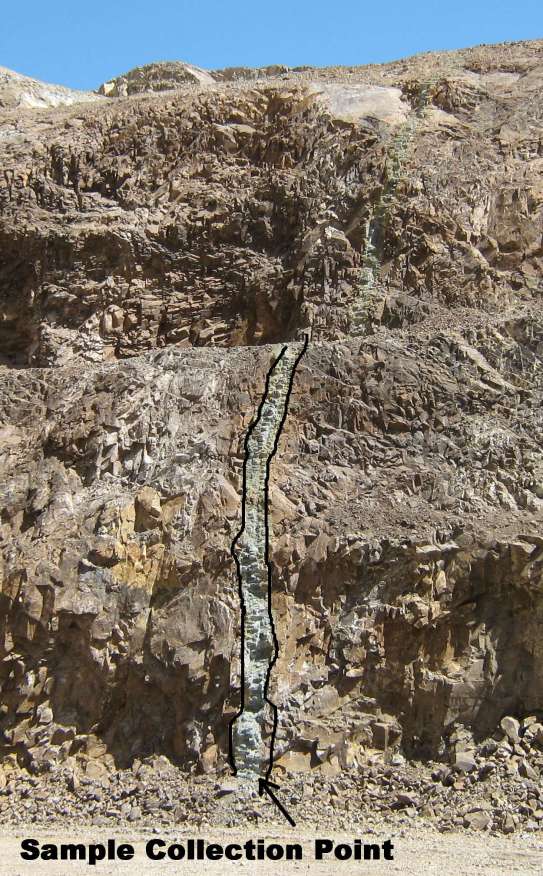
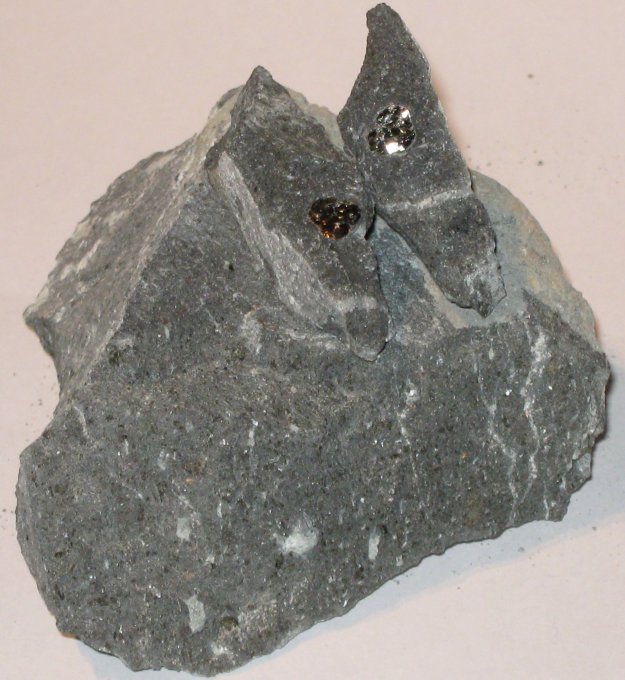
We collected samples of the lamprophyre in the bottom of the pit. The formation appeared whitish green in on the weathered surface owing to oxidation. However, if a fresh surface was exposed, the rock was composed of sugary dark xtals with the occasional biotite phenocryst.

Outlined Lamprophyre at bottom of Cresson open pit mine

Outlined Lamprophyre at bottom of Cresson open pit mine. Copyright 2009 Gaussling.

Cresson Mine Lamprophyre Close-up

Cresson Mine Lamprophyre Close-up. Copyright 2009 Gaussling.

Mafic or ultramafic rocks are low in silicates and enriched in Fe and Mg oxides. The lamprophyre above is mafic in composition with a sugary xtal matrix with biotite and other phenocrysts.

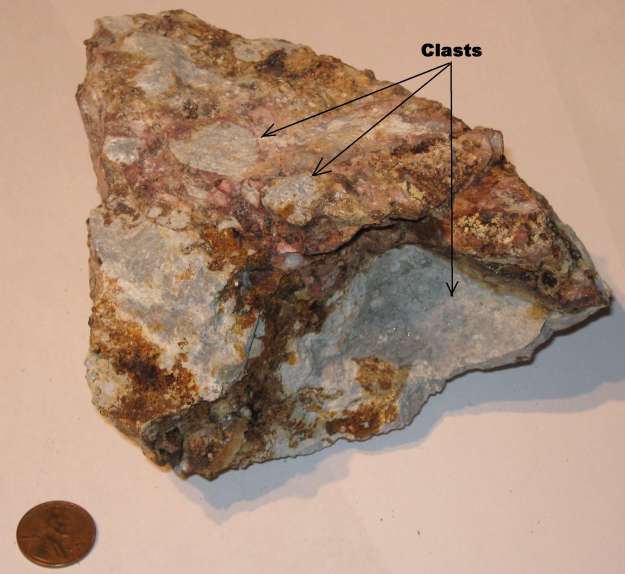
Breccia from Cripple Creek Diatreme

Breccia from Cripple Creek Diatreme. Copyright 2009 Gaussling.

The breccia above is characteristic of the Cripple Creek diatreme. Relatively rounded clasts populate the mass of the aggregate, indicating that the clasts were rounded by some process prior to deposition.

The gold is generally too dispersed to see, however, you can see pyrite with a hand lense in many of the samples. Pyrite often accompanies gold.