Category Archives: Science

2010 Nobel Prize in Chemistry

10/5/10.  Which chemists do you suppose will get the call from Sweden this year? 

I’ll guess Breslow or Whitesides again.

But then, what about some catalyst guys? Heck, Tsuji, Suzuki, Sonogashira, to name a few? (D’oh!! Are they all alive?)  Think about how normal it has become to do an aryl coupling reaction with a boronic acid and a PGM or Ni.  Look at the wide variety of boronates on the market as well as the endless array of catalysts and ligands for coupling transformations.  

This is what happens to industrial chemists mid-career. We lose track of what is hot in the field as a whole. We’re burrowed deep into the hide of one kind of proprietary technology or other and locked into place by the golden shackles of confidentiality. Pretty soon there are entire fields of endeavor that you’ve never heard of and thirty year old rock star professors who sport big grants and hoards of enthusiastic young acolytes.

Extractive metallurgy of the 19th century

The first gold lode discovered in Colorado was found where the town of Gold Hill, Colorado, now sits. Gold Hill is presently at the locus of the Four-Mile Canyon fire west of Boulder. As of  today, more than 170 structures have burned, including a few outhouses.

Today, a single gold mining operation remains active at Gold Hill. The kid and I recently visited the area and I wrote a post about Wall Street, south of Gold Hill.

In the last few years I have been fascinated by what started as a simple question-  How did they get the gold out of the ore in the 19th century?  What has become apparent to me as a chemist is the extent to which reasonably sophisticated multistep extraction schemes were employed by 19th century mills and smelters. Their methods of processing would not be unfamiliar to alchemists who practiced similar arts over 400 years earlier.

The alchemists had techniques of calcination, comminution, lixiviation, and distillation available to them. In using these processes, they were inadvertantly performing reduction and oxidation reactions so as to alter the composition of substances with the hope of improving the prospects for isolation of desirable metals.  The 19th century gold and silver mill operators inherited these techniques and mechanized them. One of the key improvements over their medieval predecessors was that they had reasonably sensitive analytical methods as well as some scientific knowledge of the chemical behavior of materials- we call it chemistry today. As the 19th century American gold rush went forward, there became available new methods of gold and silver extraction involving mercury, chlorine, cyanide, and sodium or potassium sulfide and thiosufate.

Any 21st century chemist will recognize most of the inorganic chemistry of 19th century milling and smelting of metals.  But in those days it was not referred to as chemistry- it was known then as it is today as Extractive Metallurgy.

Much of the technology for extractive metallurgy traces back through European mining engineers who had come to the American gold and silver districts.  Two mining engineers in particular stand out in 19th century Au/Ag metallurgy- Guido Kustel and Philip Argall. More about these fellows at a later date. Suffice it to say that they were prolific problem solvers in a time when mine and mill operators typically had more investor’s money than sense.

Some Milling and Smelting Business Models

Prospectors working alone or with investors backing them would prospect a promising area of ground for gold or silver, looking especially for vein outcroppings. If they has cause for optimism they would file one or more claims for the right to have access to the minerals therein. A patented claim was a claim issued by the federal government as a deed that could be bought or old like a a parcel of land. Most of the land of interest was state or territorial land. Many times a claim was filed based on speculation, and a nearby claim with a vein that might go in the right direction would potentially be valuable.

The miners would begin to develop the claim by digging an adit and drifting horizontally following a vein system, or they might dig a shaft in a promising spot in hopes of intercepting a vein rich in value.  Since they were focused on veins which were visible to the miners, the miners were able to dig along the direction of the vein. In doing so, they could hand sort unproductive rock into a waste pile and collect concentrated ore separately.  But then what?

Some mine operators were wealthy enough to have their own mill or smelter to extract the value. However, the majority of mines would sell their ore to a mill, which might be many miles away. A price based on an assay could be negotiated, and the ore sold outright to the mill. The mill would make its profits by selling the gold or silver it extracted. Sometimes a mine would pay the mill a tolling charge and keep ownership of the gold or silver.

Milling and smelting could be a lucrative business or it could result in a total loss. Mills and smelters were run by companies who had plowed a significant financial investment into+ the operation. They relied on the productivity of the gold or silver district. Not infrequently multiple mills or smelters would appear in a district affording lots of competition for ore.   Milling and smelting was labor and energy intensive. Old photographs often show the mills sitting in a mountainous area clear-cut of trees. Wood was needed for buildings and firewood. Refining operations required many cords of wood to run the furnaces or to generate steam for the stamp mills.  If a mill ran out of fuel, their operations were threatened.

Many mines produced ore that was sold to the mill. Mine operators might be paid for the assayed value per ton of ore delivered, or they might be paid a fraction of what was extracted by the mill. The mill could be just down the hill from the adit or shaft, or it might be many miles away.  As a rule, transportation costs were quite high.  Some districts like Caribou had teamsters who would haul ore by horse drawn wagons to mills some distance away. Other districts had rail transportation.

Naturally, ore samples could be tampered with by miners interested in increasing the apparent value of their ore. Sampling methods were developed to produce representative samples for assay. Mills had assay offices to test for the value in the ore and to measure the fineness of their bullion.  Cuppelation was a standard method of providing a gravimetric determination of the gold content of ore.  More on cuppelation in a later post.

The American gold rush and relativistic electrons

Exactly why do people value gold? Is all of the allure of gold due to its color? What if gold metal did not have the golden color? Instead, what if it had a silver luster like its neighbors on the periodic table of elements? Would we find it quite so appealing?

There are many reasons why people might desire gold.  The motivation to possess gold would surely vary based upon where in the value chain the metal was encountered.  Gold prospectors might value gold because it was an item of trade. Artisans would value gold for more pragmatic reasons relating workability.  Rulers would value gold because it was an asset that could be put in the treasury and later used to buy influence or fund military adventures. Thieves and plunderers valued gold owing its high value per unit volume  and the ability to offer it in trade virtually anywhere.  

Here is what we can say for sure about gold.  It’s high degree of inertness means that it can retain its golden luster indefinitely and bestow an everlasting aspect. Its malleability and ductility means that metalsmithing with fairly primitive tools was feasible. Gold could be hammered into thin sheets that could be cut, punctured, and otherwise worked by artisans to produce impressive art objects. Gold could be worked to produce all manner of ornamentation for the sake of religiosity, as an ostentatious display of wealth and power, or for coinage. Whatever the context, gold leaves an impression on people, aesthetic or otherwise.

Here is where it all gets interesting. You see, one of the consequences of Einstein’s theory of relativity is that as an object approaches the speed of light, c, its mass increases by an amount defined by a fairly simple mathematical relationship. An object’s rest mass is less than its mass appreciably near lightspeed.  The term “relativistic” refers to effects relating to objects traveling near lightspeed.

It turns out that some of the outer electrons around heavy atoms like gold and mercury are moving at an appreciable fraction of the speed of light- they are relativistic electrons.  If these relativistic electrons are at the outer, valence level, then aspects or behaviors affected by relativity may become apparent by how the atom interacts with light or other atoms. 

Chemistry is about the behavior of electrons confined to the space in the immediate vicinity of nuclei, or bound electrons. In particular, the electrons outer, valence, electrons. This is the realm of chemistry.  Chemists go about their business manipulating these electrons for fun and profit. Virtually our entire material experience of life is dictated by the manner in which these electrons interact.

In the case of gold, the 6s electrons are moving at a significant fraction of the speed of light. The magnitude is 58 % of c, according to one internet reference. At this velocity, the electron mass has increased by a factor of 1.22 times its rest mass. This being the case, the Bohr radius of the orbital is contracted by 22 %. 

The implication of this perturbation in orbital size is that an electronic transition between the 5d and 6s orbitals shifts out of the UV range and into the visible band. The molar extinction from the UV cutoff to about 500 nm is high enough that metallic gold takes on its characteristic golden hue from the reflected light.

Gold is not the only element to be affected at the valence level by relativistic effects. Mercury is also affected. The contraction of the 6s orbital results in relative inertness of the 6s^2 lone pair and poor interatomic (metallic) bonding, resulting in the unusually low melting point of mercury.  Indeed it is likely that most of the interatomic attraction is due to van der Waals forces, which is notably weak.

The inertness of the 6s lone pair reveals itself in the oxidation states of bismuth, which has stable oxidation states at +3 and +5. Like other pnictogens, bismuth (III) compounds have a lone pair. But unlike nitrogen and phosphorus lone pairs which are reactive and an important part of their ordinary chemistry, bismuth’s 6s lone pair is rather inert and not significantly hybridized. Triarylbismuth (III) compounds are trigonal planar with the lone pair taking spherical s-orbital symmetry.  UV-Vis experiments will show that for some simple BiAr3 compounds, the n->pi* transition has a very low extinction coefficient, unlike the analogous Ph3P.  Exposure to Pd(II), for instance, will show scant indication of coordination in the UV spectrum, again unlike Ph3P.

This is quantum chemistry stuff that the reader can run down later. What is of interest to me in this post is the fact that, without knowing it, gold prospectors, miners, and mill operators of the 19th century took full advantage of certain relativistic effects in their search for gold.

The first relativistic effect the early miners took advantage of was the simple fact that gold is a colored and relatively inert metal. It could be spotted by simple inspection in streams and quartz veins. The color of gold made it impossible to confuse with other metals. Ofcourse, iron pyrite was always a problem, but there were simple ways to test for pyrite.

The other relativistic tool used by miners was amalgamation of gold (and silver). Mercury, being a metallic liquid by virtue of relativistic valence electrons, could be intimately contacted with gold dust or larger particles to form a solution that would remain liquid up to some modest fraction of gold. Mercury, being quite dense, would naturally seek the low points where the gold would also be found. This dissolution could be affected by simple sloshing or by grinding the mercury with the ore in an arrastra or an amalgamation pan.  After agitation, the mercury would pool and could be easily collected.

Later amalgamation techniques would combine aqueous cyanidation of the ore in the presence of mercury in hopes of better gold and silver  recovery. Reduction of gold or silver chloride occured in-situ to provide amalgam.  Amalgamation of ore that had been chlorinated by roasting in the presence of NaCl was a common solution to the serious problem of sulphuretted auriferous or argentiferous ore.

The miners of the 19th century American gold rush certainly didn’t know that their task of extracting gold would be aided by the effects of high velocity electrons. Most people walking around today don’t know or even care about this more than 55 years after the passing of Albert Einstein.  But it goes to show how subtle effects of nature can affect our lives in unexpected ways. And this is just one of many such nuances of physics.

Cogitations on the sunflower

My morning commute through the countryside takes me past more than a few fields of sunflowers. By late July the flowers are out and without exception, all nodding toward the east where a star appears every day. Many of the local farmers have taken to raising sunflowers rather than the usual corn and sugar beets.  I haven’t a clue as to what kind of machinery is used to harvest these things.

One of the local heliotropes

It is uncanny that the entire crop will lock the flowering body orientation in the direction of the sun.  Somehow the direction of the sun at other times of day does not randomize the orientations. If you stand and look at a field of sunflowers, you’ll see outliers in height, but not direction of flower orientation. Or so my experience has been. There has to be some frequency of orientation outliers.

I wonder if there isn’t some growth step in the stem than occurs over a short time span X days into its growth, removing what stem mobility that might exist and locking the flower in place?

Such things make me wonder if our concepts of consciousness, with human consciousness as the benchmark, aren’t a bit too self serving.

Process development and struggle

One of the hazards of having a degree in chemistry is the appealing idea that you can explain everything and predict everything on the basis of textbook notions on solubility, electronegativity, pKa’s, or molecular orbitals. These are important things to be sure. But in the field, the recall of knowledge isn’t always enough. More often than not you have to collect data and generate new knowledge.

Rationale of a result on the basis of hand waving and a few reference points can seem compelling in a meeting or brainstorming with a colleague to understand a problem. But in the end, nothing can top having solid data from well conceived experiments.

My chemical “intuition” have proven wrong enough times now that I am deeply skeptical of it. After prolonged periods of absence from the lab I find myself resorting to a few cherished rules of thumb in trying to predict the outcome or explain the off-normal result of a process.

In chemical process development there is no substitute for running experiments under well controlled conditions and capturing solid results from trustworthy analytical methods. It is hard work. You may have to prepare calibration standards for chromatographic methods rather than the preferred single-transient nmr spectrum  in deuterochloroform.

We’re all tempted to do the convincing quick and dirty single experiment to finesse the endpoint. Certainly time constraints in the manufacturing environnment produce an inexorable tilt towards shortcuts. But in the end, depth of knowledge is only had by hard work and lots of struggle in the lab. The most important part of science seems to be to frame the most insightful questions.The best questions lead to the best experimental results.

NatGeo King Tut Exhibit- Ho Humtep of the Ballyhoo Dynasty

Th’ Gaussling went on a minor field trip recently to the local art museum in Denvertown to see the marvels of King Tut. And what a marvel it was … of marketing. It is hard to say that the exhibit met expectations. To be sure, there are some fine artifacts on display.  And it is a splendid example of museum-craft. Notable is the exquisite goldsmithing and scuplture on display. There are decorative articles that resemble a form of gold filigree that are quite impressive for the era. My northern European ancestors were sleeping in hollow logs and howeling at the moon when the Egyptians were doing the work on display.

But at the end of the day, the exhibit is yet another recasting of history in a theatrical form suitable for the attention deficit masses. Case in point:  a video short subject portrays DNA work on a mummy where the scientist assures us that such research is a part of the larger effort to cure disease.  Golly, sounds urgent.

Well, maybe there will be useful findings that contribute to the betterment of human health. But if it doesn’t , is the knowledge useless? I think not. This is the same sort of lame apologia used for jusifying space exploration or studying the frogs of Amazonia. If you are not looking around, you are not going to find new things.

Scientists should stand firm with the conviction that exploration is a net benefit for mankind. We should be more careful that claims of a breakthrough are tempered bya realistic warning about the speed of progress.  We should stop leading people along with false expectations about the fabulous things just around the corner. All progress is the result of prolonged hard work by many people.

Travel Tips From the Department of Devil’s Advocacy

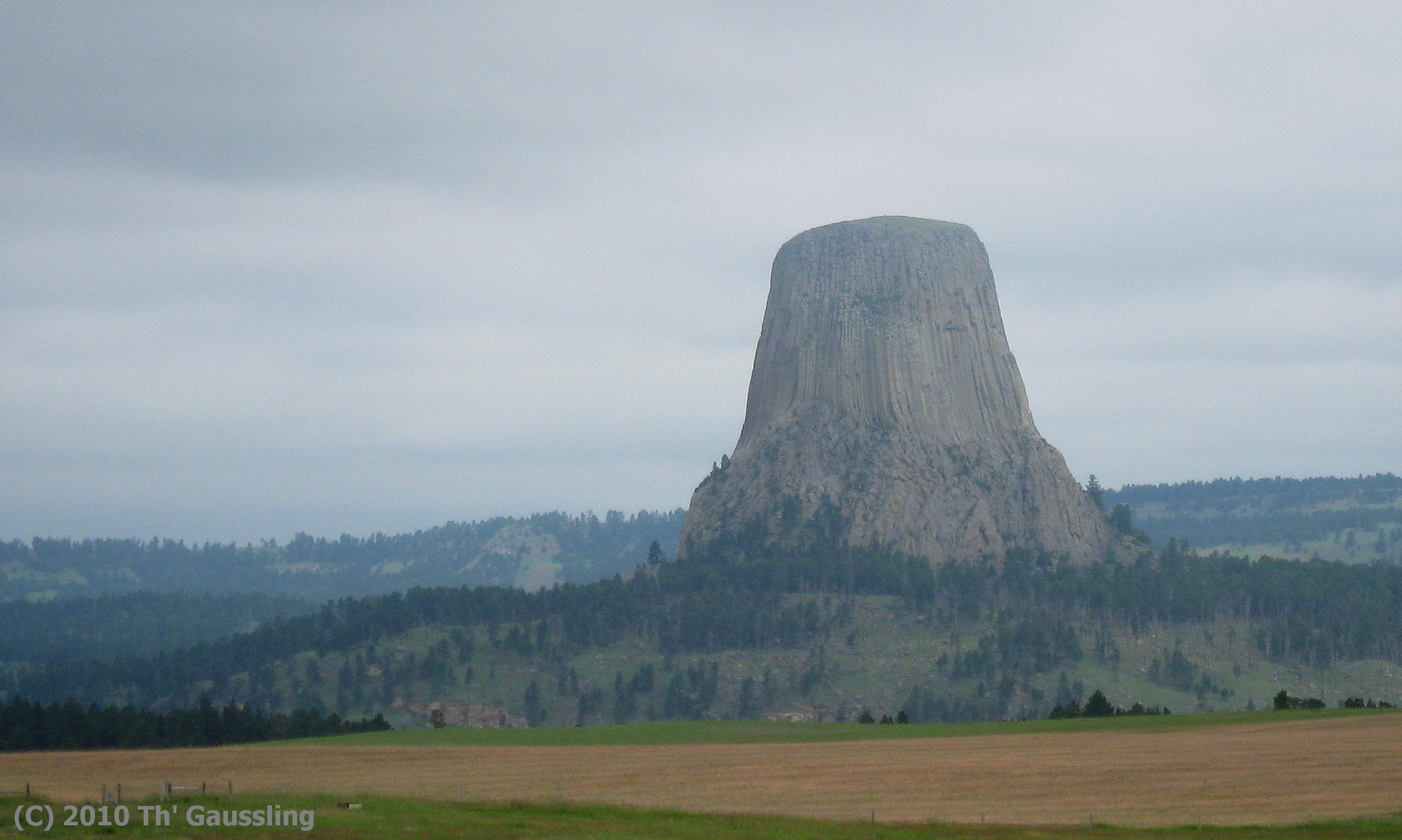
If you’re wandering the country on I-90, say to or from Sturgis, SD, a stop at the Devil’s Tower north of Sundance, WY, is very worthwhile.

Devils Tower

The identity of this geological oddity is the subject of some disagreement. Three theories of its origin are in play: 1) an igneous stock, 2) a volcanic neck, and 3) the remnants of a laccolith. Whatever the case, it is plain that the sedimentary rock surrounding it has long since eroded away to reveal the more weather resistant igneous rock. 

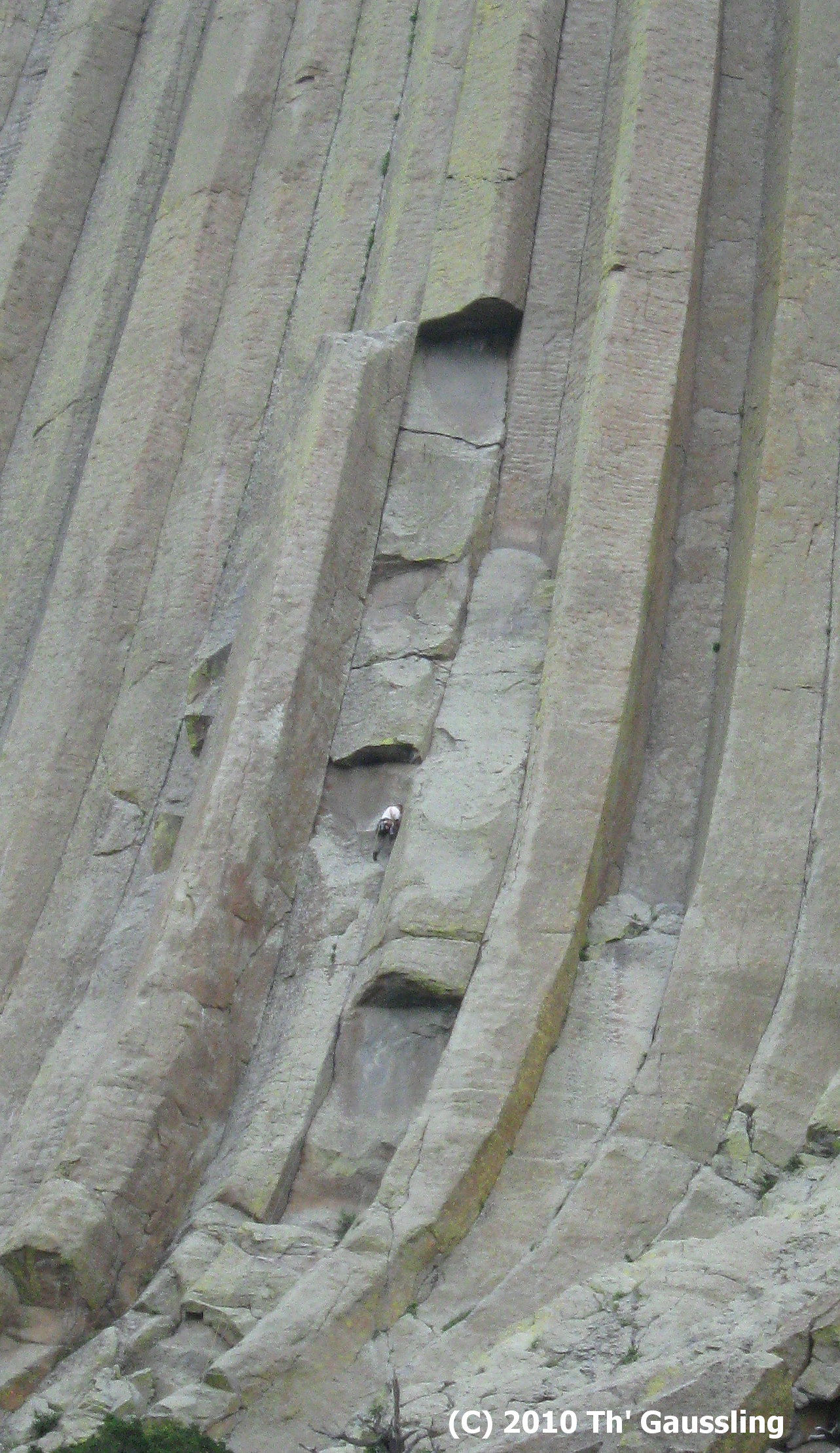
Climber on Devils Tower

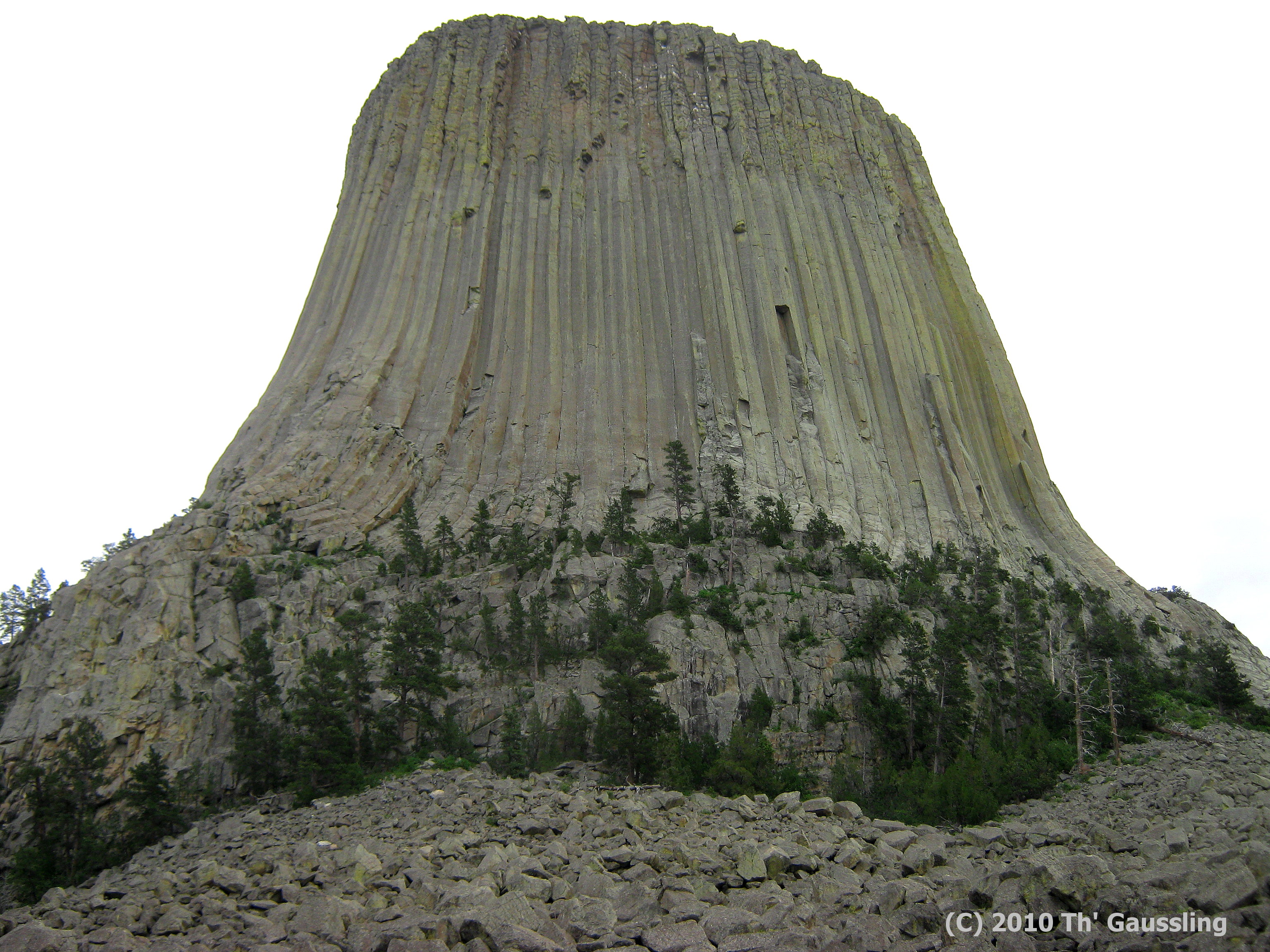
Close up, the columnar structure of the formation is evident. This feature speaks to a slow cooling process, one made possible for a magmatic body deep underground insulated by the surrounding formation.

Devils Tower, Wyoming, June 2010.

Homestake Mine Visit

The town of Lead, SD, pronounced “leed”, is home to the Homestake gold mine. The mine was purchased and subsequently developed by George Hearst, father of William Randolph Hearst, and partners ca 1876.

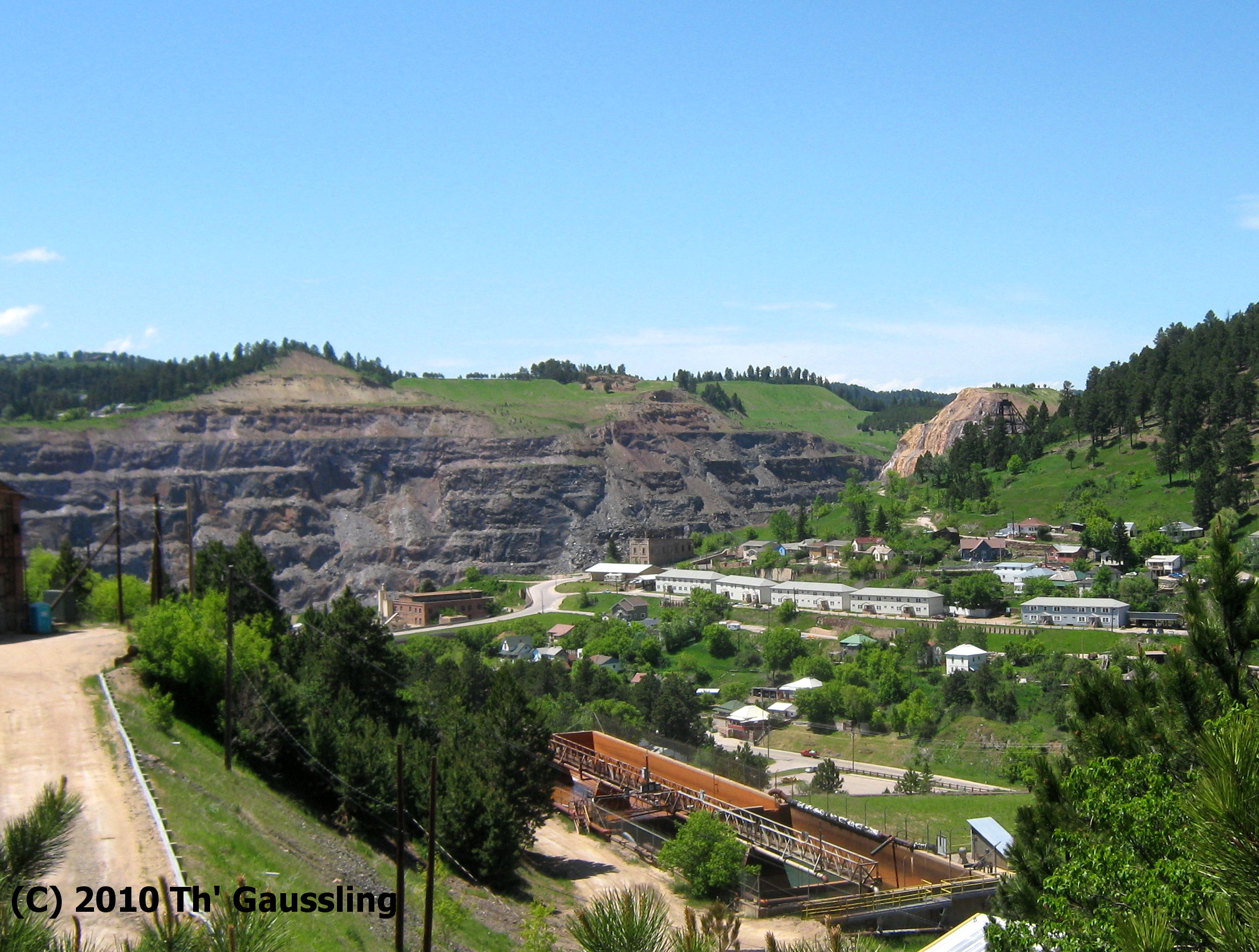
Homestake Open Cut from Yates Hoist House

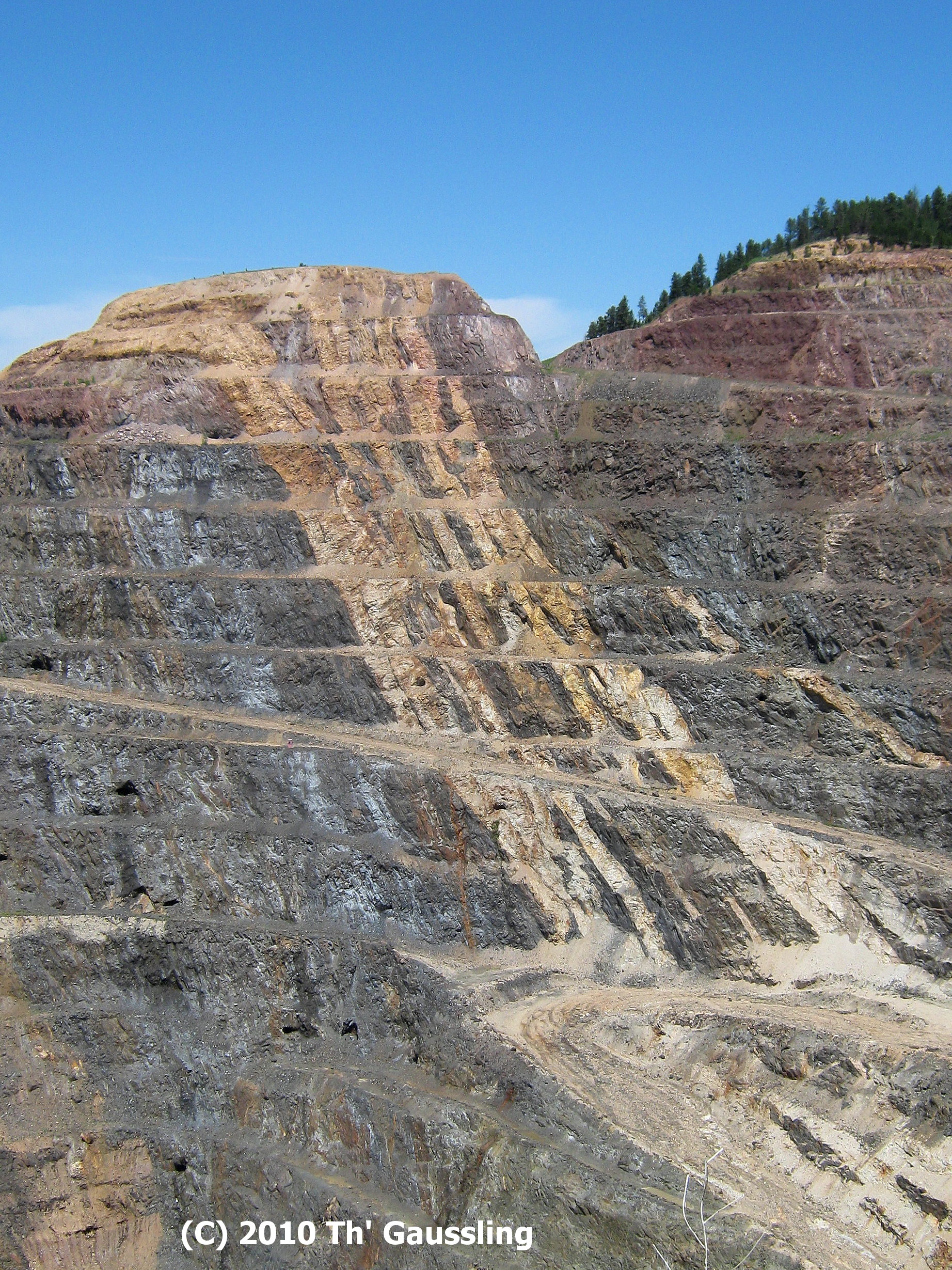
 The photo above shows one ground view of the large open cut found on the north end of town. The pit is approximately 1/2 mile across and 1200 ft in depth from the highest elevation.

The pit exposes the ore body which is comprised of inhomogeneous igneous rock with gold bearing veins. In the photo below the vein structure can be seen. The buff colored rhyolite bands seen below are not associated with value.

Homestake Open Cut, Lead, SD.

Gold was discovered at a surface exposure, called a “lead”, which became the namesake for the town of Lead. Mining activity was halted in 2002, in part due to the low price of gold at the time. By that time the underground workings had reached a depth of 8000 ft, which puts it at ca 3000 ft below sea level. The rock temperature at the 8000 ft level was reported to be 130 degrees F, requiring substantial air conditioning for the workers and equipment.

Hoist Cable

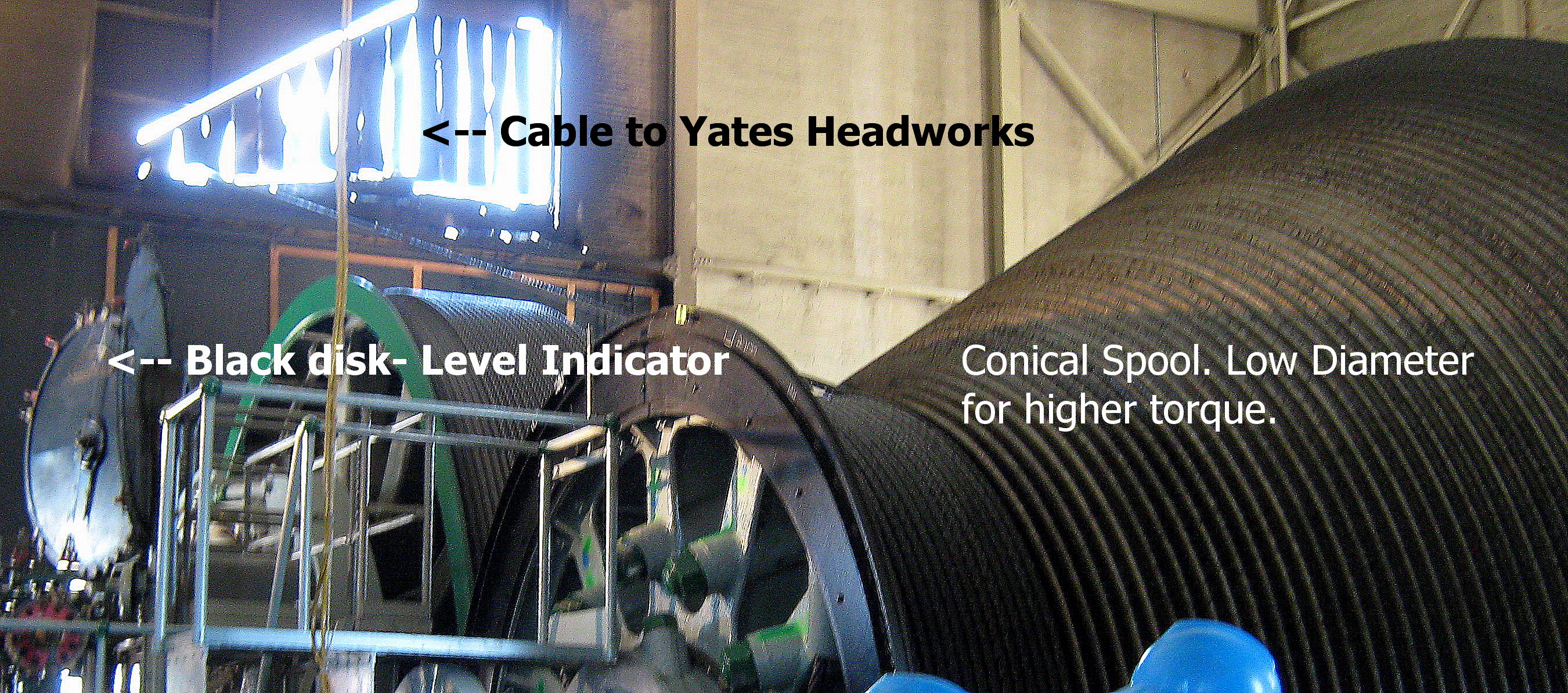
The (poor quality) photo above shows the hoist equipment in the Yates head works. Of interest is the conical cable spool used to provide lift for hoisting operations at the Homestake mine. The purpose of the variable diameter feature of the hoist was to provide maximum mechanical advantage when the cable was at the end of its reach, presumably when it was ready to lift a heavy load of ore from the bottom of the shaft.

Homestake Honey Wagon

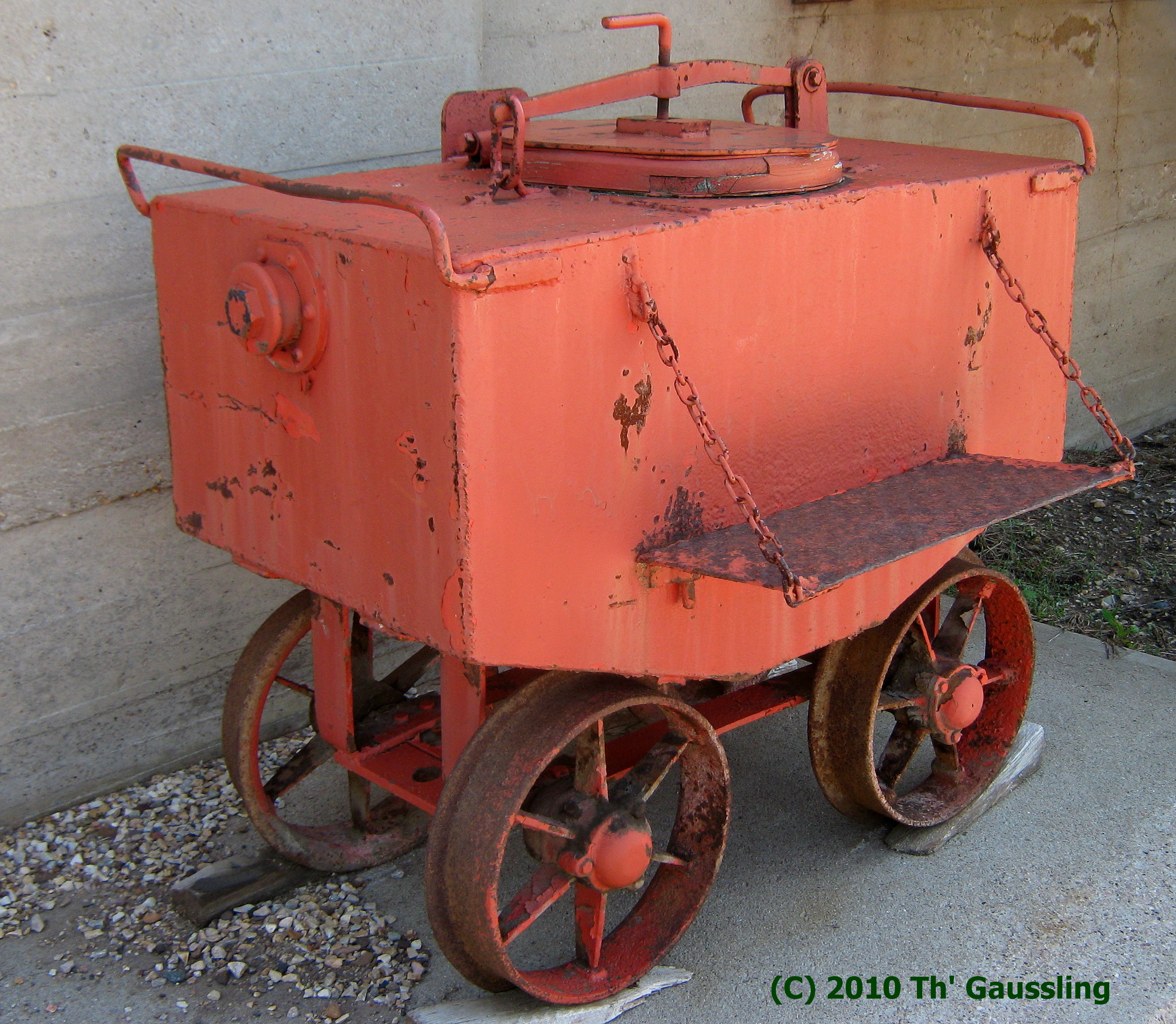
The “ore cart” in the photo above was the toilet facility for the miners. It featured a seat on top which could be sealed, a thoughtfully placed foot platform, and railings so the user could hang on for those rough rides.

The surface tour of the mine consists of a trolly ride around town with a stop at the Yates hoist. Warning: It is quite superficial in content, but is the only type of tour available. Our tour guide was student on summer break with near-zero knowledge of the geology or the engineering. He was accustomed to entertaining the barely interested.  If you are keen on the particulars of Homestake history, I recommend Nuggets to Neutrinos, by Steven T. Mitchell.

Homestake was one of the very richest loads of gold in the western hemisphere. Reportedly, some 40 million oz of gold were extracted from the mine.

Today, the Homestake mine is being converted to an underground nuclear physics lab facility under a program called DUSEL. On a side note, it is interesting to listen to the townsfolk talk about the new labs. I could tell they are trying to be enthusiastic, but the reality of neutrinos is very hard to get your arms around.

On the road

Th’ Gaussling is off-site for a few days of happy motoring in the mysterious Black Hills of South Dakota, or Paha Sapa in Lakota. 

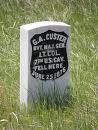
The discovery of Black Hills gold in 1874 by an expedition led by General Custer and the 7th Cavalry ultimately triggered another bout of  hostilities with the Lakota as the land deeded to them by the Fort Laramie Treaty of 1868 was pushed aside by miners and settler. Government agents were not able to prevent mining and settlment of the Black hills area. 

The blowback to Custer’s discovery of mineral wealth in the Black Hills was in the form of his defeat by Sitting Bull at the Little Bighorn River in Montana in late June of 1876.

The locals now mine tourists rather than gold.  The homestake mine has workings at 8000 ft below the surface! Over 1 billion dollars worth of gold was extracted between 1877 and 2004. Presently in the process of being set up for underground labs, the Homestake Mine in Lead, SD, will reopen in the coming years as a center of particle physics and dark matter research as the Sanford Underground Laboratory. Part of a program known as DUSEL, the new labs will exploit the great depth of the Homestake mine for the inherent radiation shielding at the lower levels of the site.  

Snow

June 15th, 2010. Colorado Front Range.  After a week of rain the clouds have parted to reveal severely clear azure skies and a fresh layer of snow above ~ 11,000′.  The grass is growing so fast you can hear it if you listen carefully. The lagomorphs are frolicking in the dewy turf and the adjacent prairie dog colony is overflowing with barking rodentia. The landscaper’s lawnmower releases a refreshing bouquet of terpenes into the air from freshly severed plant tissues. 

As I wave my card in front of the security card reader, the electromagnetic door release mechanism clicks and I leave behind the flora and fauna of the great outdoors and enter the world of mass selective detectors, nmr, and exotic molecules.  It is a transition from the macro to the micro, from the kilo to the nano. The world on the other side of the wall is immediately concerned with turf management and burrows. In this tiny space we’re concerned with nuclephiles and kinetics, exotherms and yields.  Interesting, yes. But in the end, where is it taking us?