Category Archives: Science

Needlessly invoking clathrates. BP’s underwater ice machine.

In the news reporting on the BP oil spill, there is talk of methane/water forming a special ice composition that defeated the previous attempt to channel oil to the surface.  I think folks are referring to clathrate formation. This ice blocked the flow of petroleum from the concrete structure that was lowered over the well head.

But, here is the deal. Wouldn’t you expect cooling of a compressed gas as it exits the well pipe and into the sea water? Isn’t this just an example of the Joule-Thompson effect?  As the natural gas component of the petroleum discharge exits the pipe, it is going to expand somewhat, even at a one mile depth, and cool the surrounding water. If this occurs in unconfined, open water, the jet of petroleum will entrain water in the flow and be warmed by the continuous flow of heat from the water.

But, if the gas/oil mixture of petroleum is ejected in a confined space that interferes with heat transfer, then one would expect the expansion cooling of the gas phase to predominate and cool the water in the confining space, possibly to the freezing point. Clathrates may be formed, but the simplest explanation is from good old thermodynamics.

BP oil spill. What are the merits of using dispersants?

BP Oil Spill Image, May 4, 2010 (NASA Earth Observatory)

Oil Spill near Mississippi delta. Vegetation, red; Oil, silver. MA 24, 2010. (NASA Earth Observatory photo)

Eventually, BP will find a way to block the discharge of petroleum into the Gulf of Mexico.  And, eventually, the effectiveness of how the relevant parties responded to the incident will be analyzed and findings posted.

I hope that some effort will be put into an analysis of the merits of using dispersants in general and Corexit in particular. What sparks my comment is the finding that considerable subsurface petroleum has been found. This material is evidently close to neutral buoyancy and is drifting with the currents.

Question 1: Is there a connection between the dispersant use and the presence of this subsurface body of petroleum?  

Question 2: What is the desired outcome of dispersant use?  Where did the planners think the petroleum would go?

Question 3: Is there any advantage in encouraging petroleum to remain below the surface, if that is even possible?

At some point, a decision was made to use dispersants on this massive discharge. Is there a scientifically supported rationale for this, or was it palliative treatment intended to mask the surface effects of the release?

Field Trip Report. Finding Faults.

Th’ Gaussling, traveling with a 3-van convoy of local geologists, participated in a field trip on May 22, 2010. The purpose of the trip was to get an appreciation of the kinds of faults to be found in and around the IRSZ and get some insight into the phenomena of faulting. The trip was organized by the Colorado Scientific Society, an earth science oriented organization. This was my second field trip with CSS.

GPS coordinates and elevations were acquired with a Garmin eTrex handheld receiver. Waypoints (WP’s) are just the latitude and longitude of physical locations of interest.  Elevations generally aren’t required to find the formations, but are provided as a matter of general interest.  The photographs are my own and if copied, I would appreciate a citation and/or link.

The trip leader was Jonathan S. Caine, a USGS research geologist who has done more than a bit of work relating fault and fracture networks and fluid flow in the earths crust. A feature called the Idaho Springs-Ralston Shear Zone (IRSZ) was part of the topic of this trip. As Caine says in the abstract on the previous link, the IRSZ is thought to be a persistant weakness in the continental crust. There is interest in the relationship between the IRSZ and the Colorado Mineral Belt. 
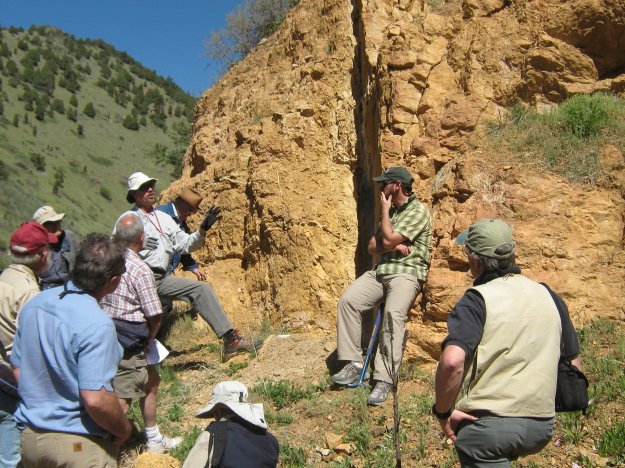
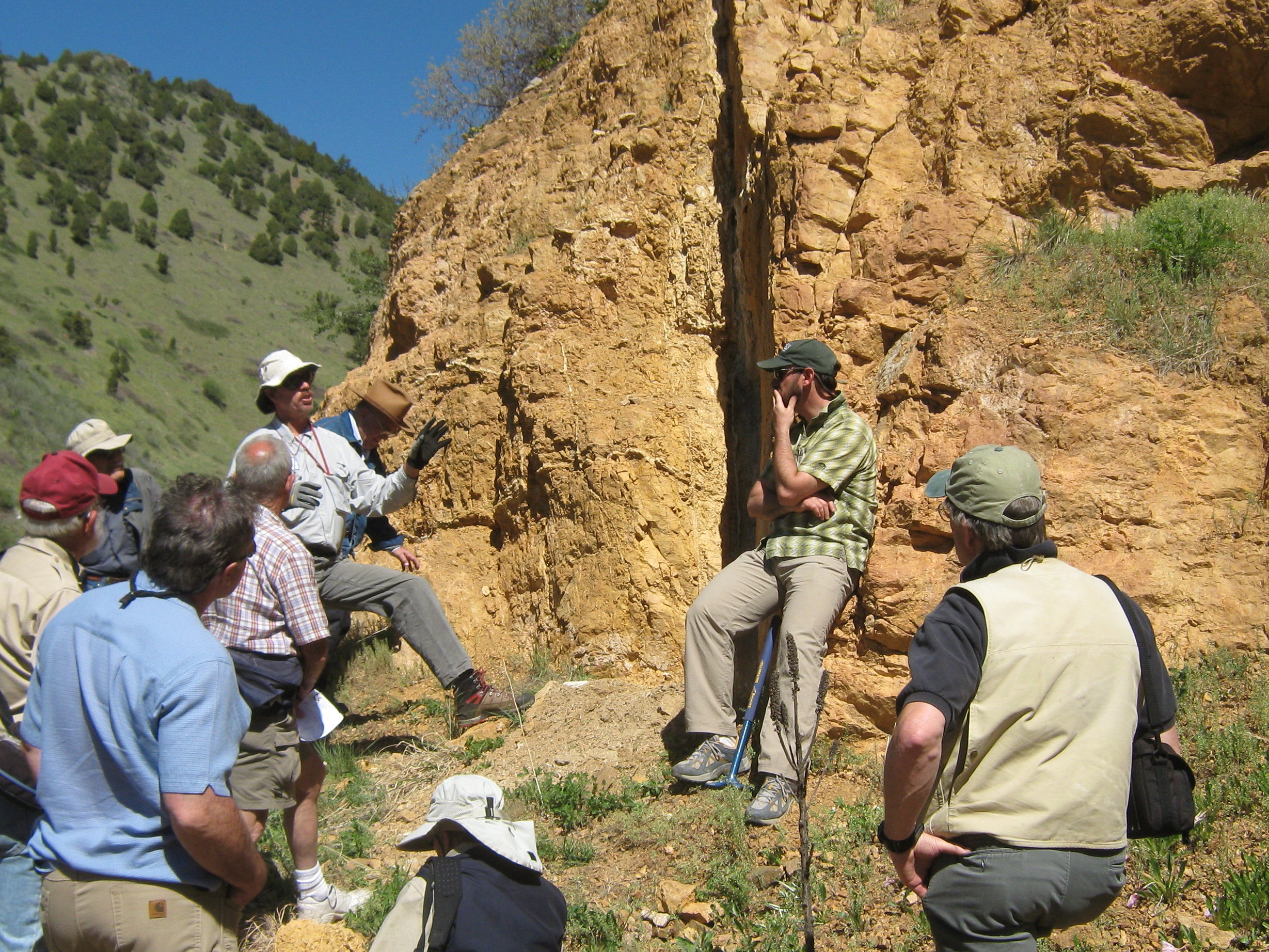
Geologists discuss Junction Ranch fault (WP003)

  WP003-  N 39° 44.700′, W 105° 17.485′ elevation 6266′. 
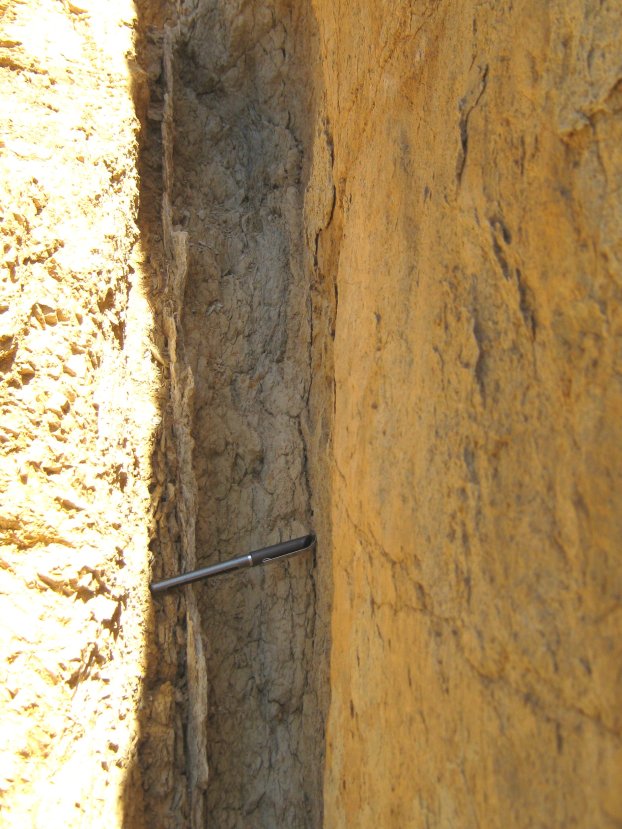
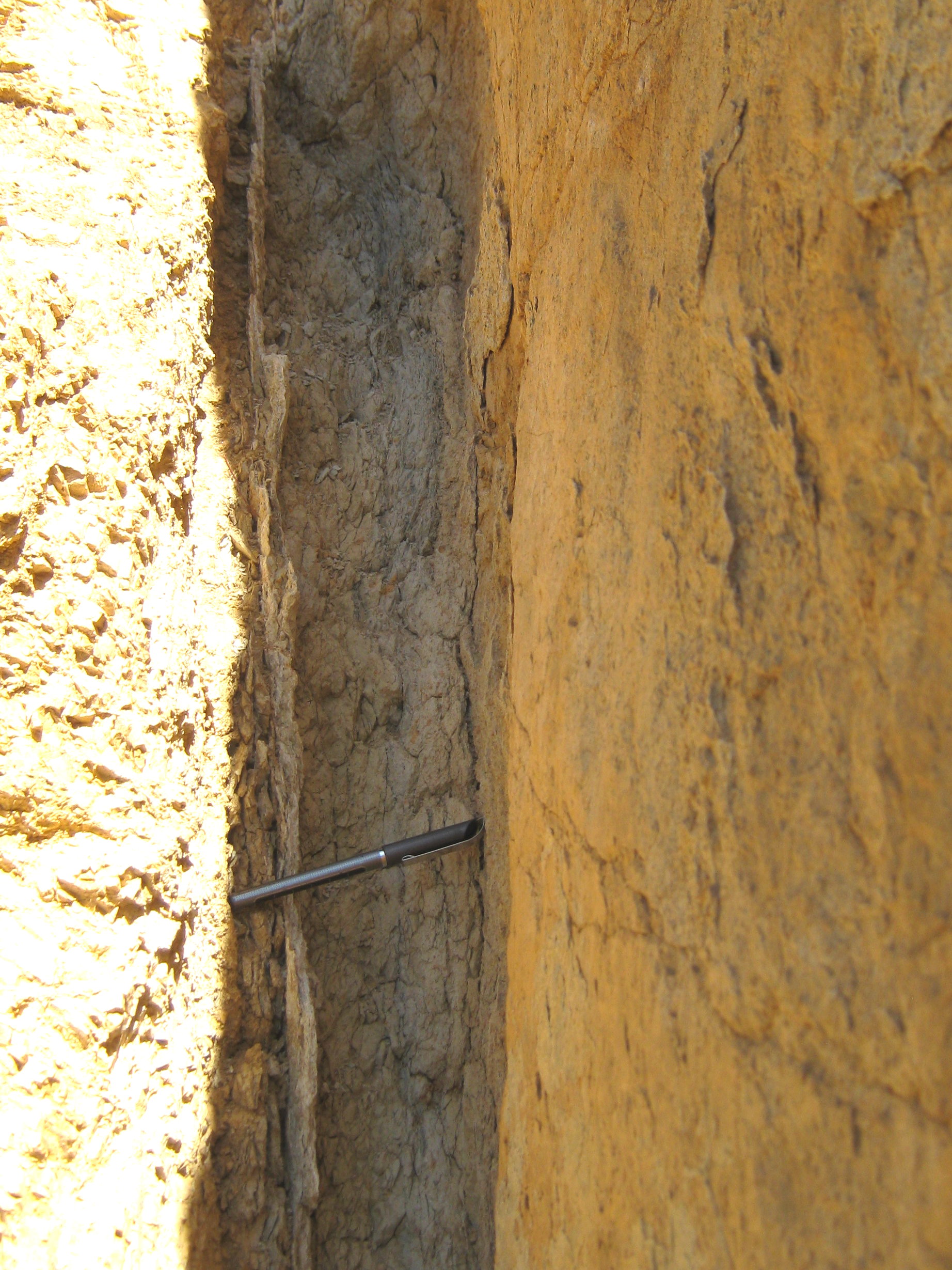
Closeup of Junction Ranch fault. Note white calcite vein (WP003).

 The Junction Ranch fault which had an exposure at waypoint 003 was an example of a fault in a formation that has seen considerable hydrothermal alteration. The orange iron stains on the rock are a clue that fluid transport of minerals has taken place. Calcite veins within the foliated clay filling the fault are an indication that the clay was deposited first. There is no evidence, however, that the fault predates the hydrothermal alteration. 

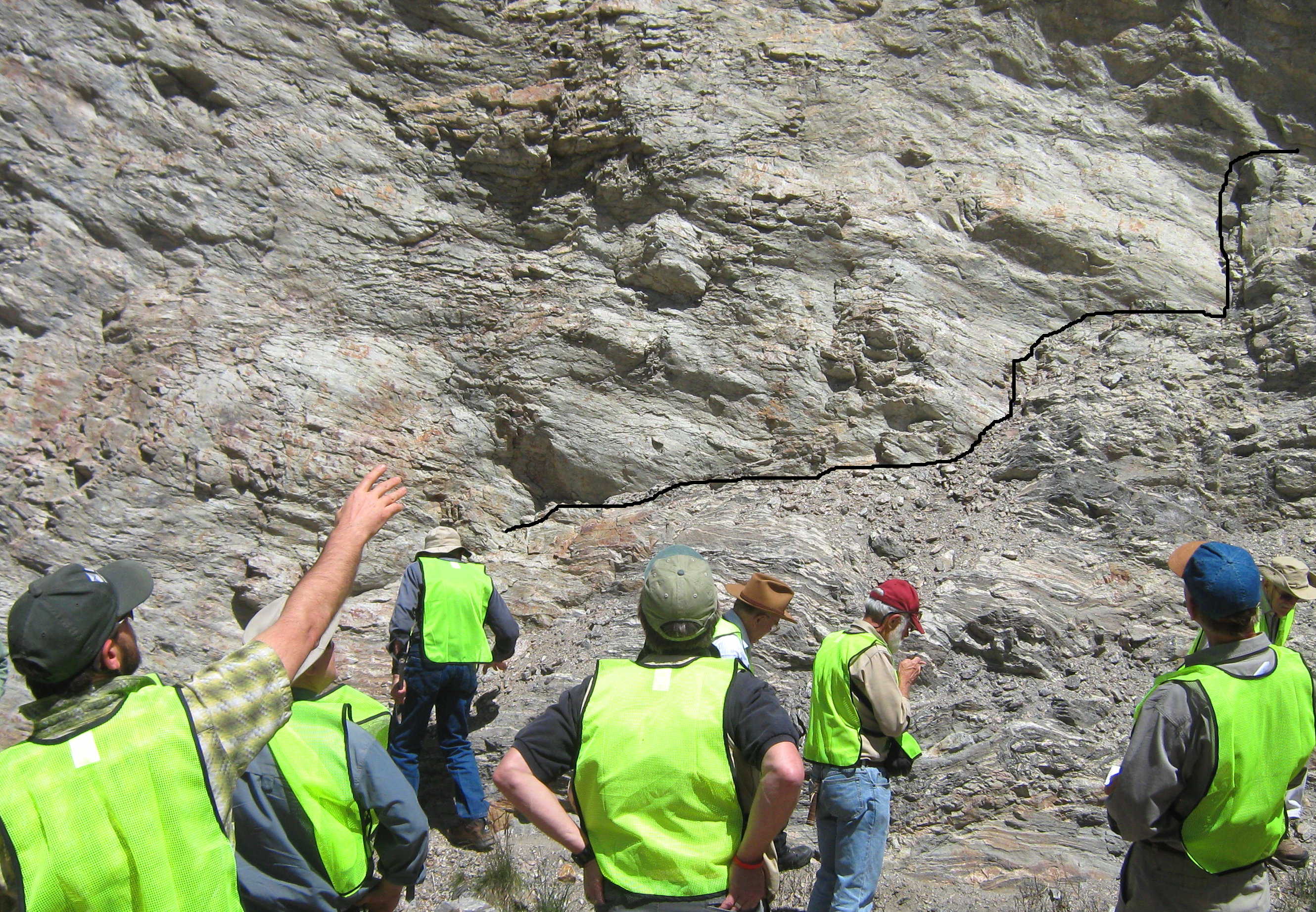
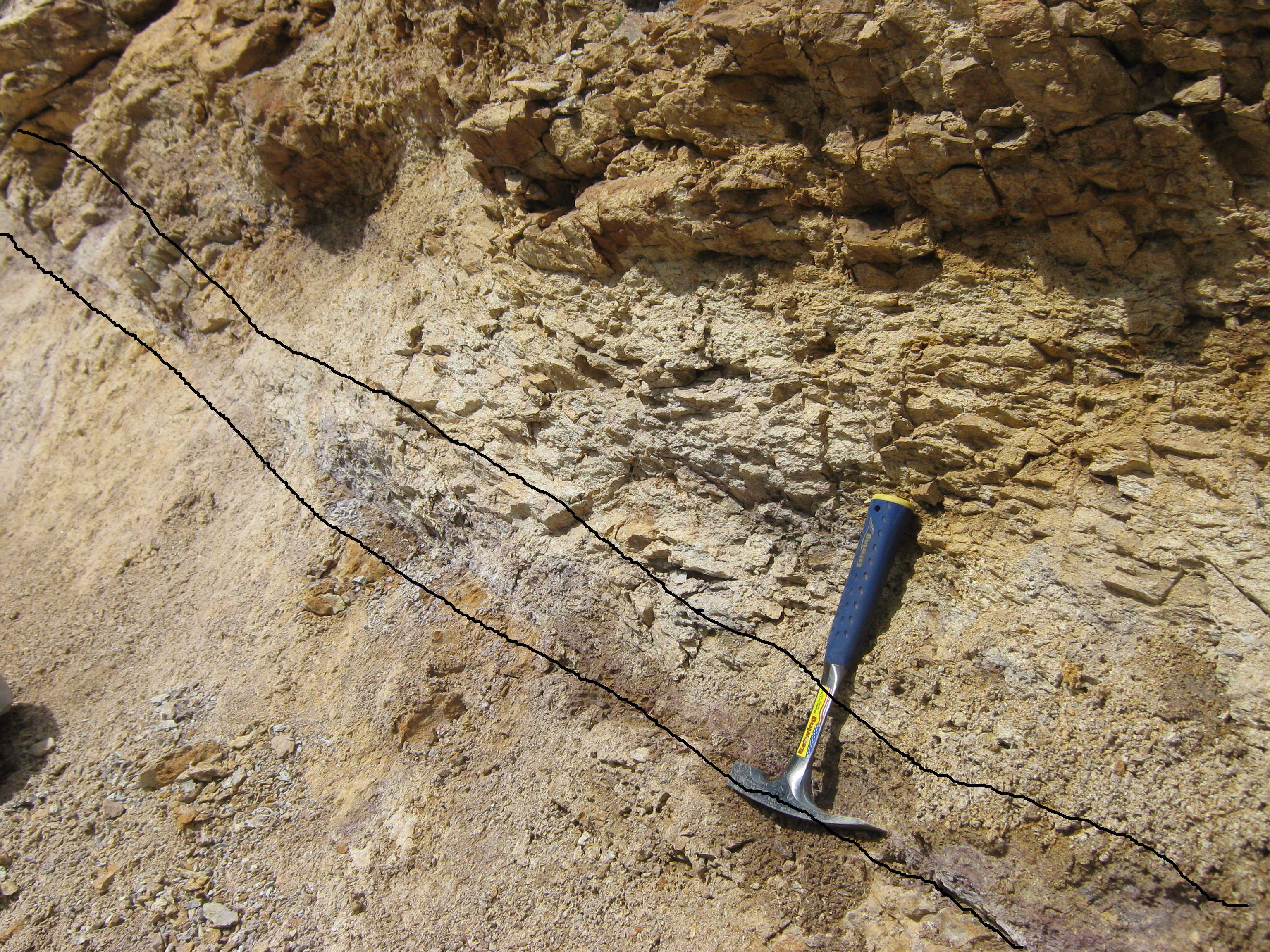
In a roadcut along the Central City Parkway is an exposure of a brittle fault at location WP005-  N 39° 44.990′, W 105° 28.233′, elevation 7571′. 
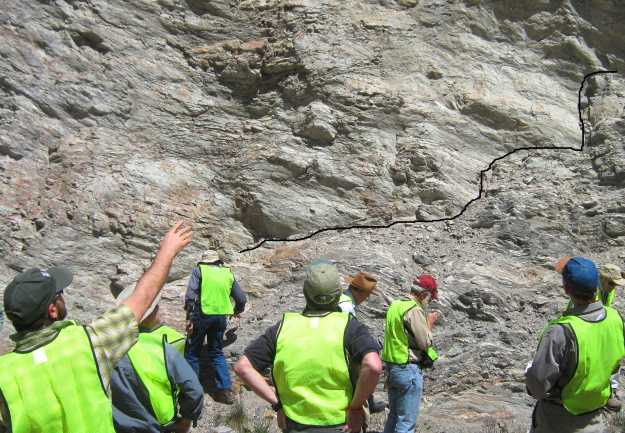
Roadcut exposing a brittle fault along Central City Parkway (WP005).

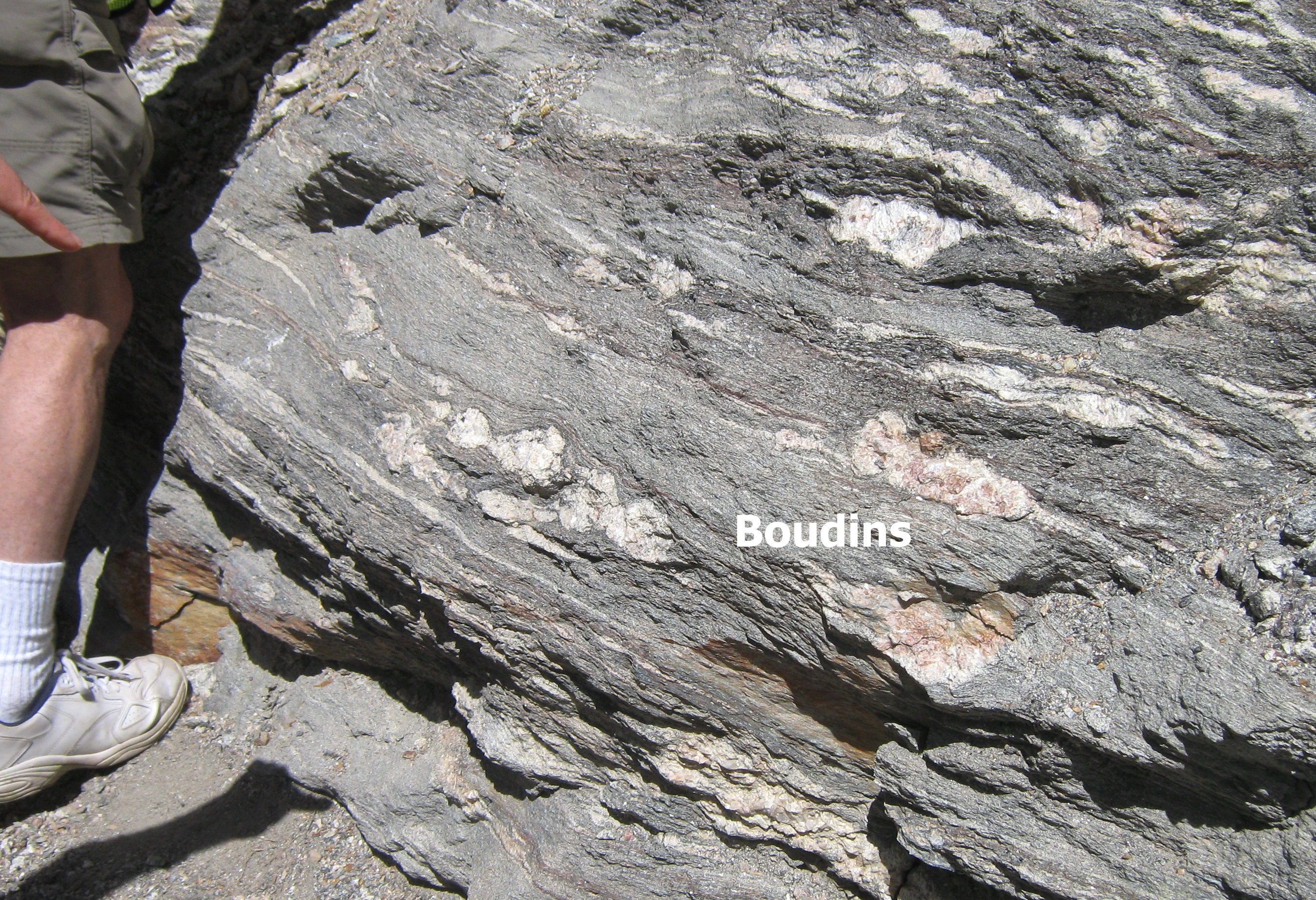
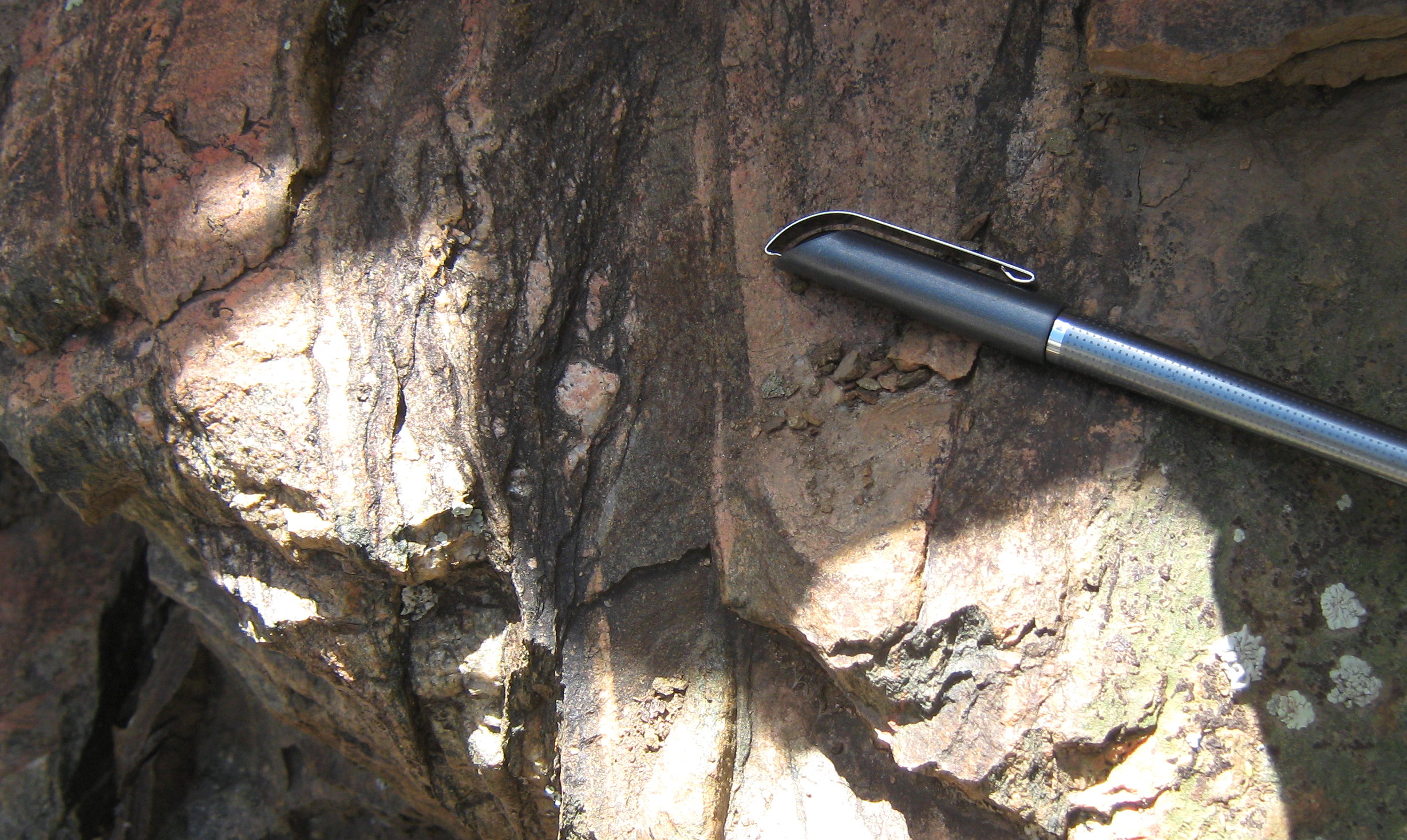
 The formation exposed at WP005 was part of a very old structure with multiple faults and igneous intrusions. In the photo above, the edge of the fault is enhanced with a black line drawn in during editing. The surface above the black line is an example of a slickenside, or one surface of the fault. Some members of the trip said they could see slickenlines, but they are so subtle that it is hard to be certain. A large igneous intrusion 100 m away showed signs of dislocation, presumably due to a fault. Boudins were observed at this location and are shown in the photo below. 
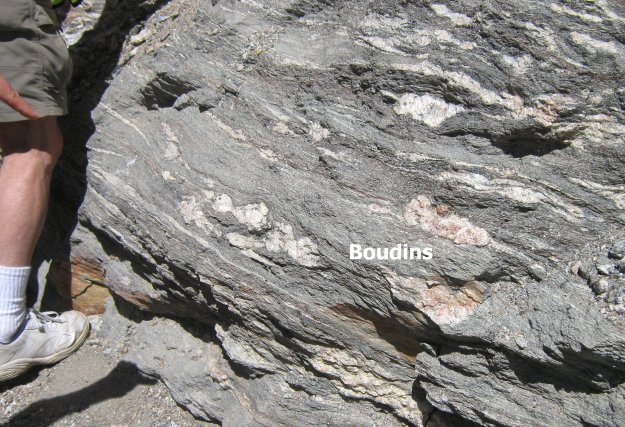
Central City Parkway road cut, boudins visible in foliated rock (WP005).

We visited the location of a fault in Coal Creek Canyon. This is a NNW trending distributed deformation zone which is part of the Boulder Batholith. This location is designated WP008- N 39° 54.268′, N 105° 20.795′, elevation 7771′.  

This fault was discovered filled with clay and dips 35 to 45 degrees. It was further exposed by excavation by Caine and another geologist. Again, the approximate boundary of the fault was enhanced with black lines in editing. There was considerable alteration of the rock on the hanging face side of the fault with iron staining associated with hydrothermal alteration.
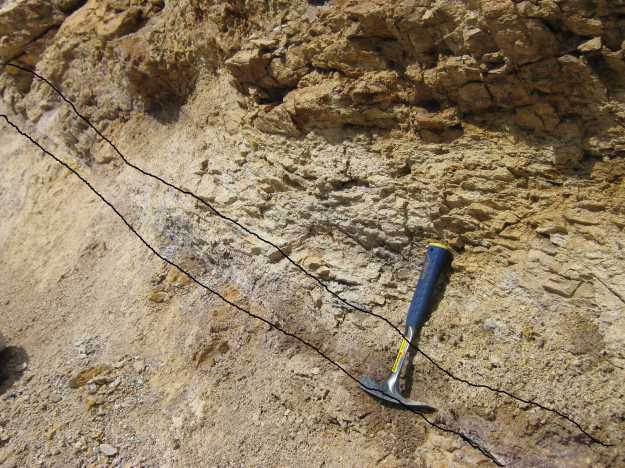
Coal Creek fault at WP008 May 22, 2010.

We visited a ductile shear zone with suspected mylonite features. It was located at WP007- N 39° 51.026′, N 105° 21.155′, elevation 7634.  Mylonite zones are evidence of ductile shear in response to a stress field.  Near the mylonite zone was a fault with exposed slickensides. While faulting and ductile deformation may seem incompatible, it should be remembered that over time many kinds of phenomena can be overprinted on the rock formations. Rock may deform in a ductile manner and sometime later undergo brittle fracture.
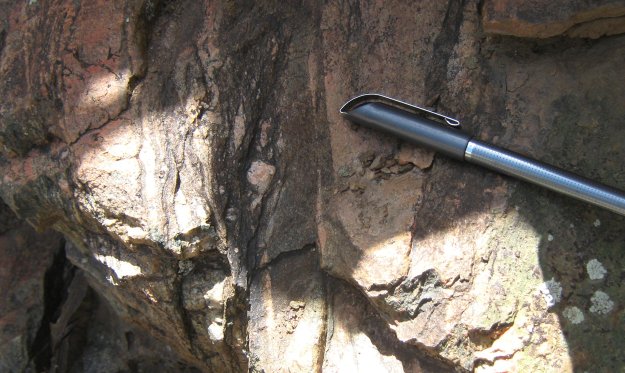
Suspected myolinite feature (WP007).

 The field trip leader was very enthusiastic and because of his background, was able to provide many important insights into the local geology. It was a very worthwhile day in the mountains.


Whither Diethyl Ether?

Diethyl ether seems to be in short supply in North America these days. Suppliers have customers under allocation constraints.  Yes Virginia, people still use Et2O in certain kinds of chemical processing. Sometimes Et2O is prized for its solvent effects and sometimes for its volatility. Sometimes the only way to solubilize some  inorganic compounds is as the metal etherate.  Solvent residues in fine chemicals are often a problem and volatile process solvents can be a big help in ameliorating that issue.  You can purchase 5,000 gallon tanker loads of Et2O if the supplier has qualified you. Another reason not to swerve in front of trucks on the highway. 

Part of the problem with Et2O availability is the considerable reduced demand for it these days.  Many companies have banned the use of Et2O on their site for any purpose. It is easy to understand why. The insane vapor pressure and low autodecomposition temperature are problematic for plant safety. The low boiling point of Et2O means that plant utilities can heat a vessel of ethereal soln rapidly and blow a rupture disk at reasonably low pot temps.  Naturally, the safetly department gets surly about this kind of thing.

Tetrahydrofuran is not always a suitable process stand-in for Et2O. Reactivity behaviors may be quite different from Et2O solns.  THF’s sensitivity to butyllithium, for instance, forces one to keep the processing conditions at low temp with a chiller. Lower pot temperatures increase the thermal margin of safety, but may have a deleterious effect on activation of a transformation once BuLi has done its job. 

I have studied the decomposition of methyl tetrahydrofuran with BuLi and have determined that it decomposes in the low 30’s °C range, somewhat higher than THF. MeTHF is not an exact stand-in for THF or Et2O either.  But it is definitely worth having in the stockroom for development work. It will surprise you in regard to how different it can be from THF.

While MeTHF is touted for its ability to phase separate with water, it will hold appreciable amounts of water.

Chemistry Field Trip!

So I decided to kick up my interest in the local metalliferous deposits and get more folks involved. As a member of the executive cmte of the ACS local section I’ve organized a seminar at a local university and arranged to have the lead exploration geologist from CC&V come to talk about the their gold mine in Cripple Creek.

The seminar is thursday night. Friday morning a few of us will board a van and drive the 5 h round trip to visit the open pit operation. We’ll stop at the nearby Molly Kathleen mine as well. I’m hoping we’ll be 1000 ft down the hole when the mine next door begins blasting. That’s an unforgettable experience.

Enthusiasm is contagious.  Especially with regard to gold colored precious metals. Unfortunately, bench chemists have few opportunities to take field trips. So the thinking here is that we’ll find a way to get members out and about to look at heavy industry. And gold mining is definitely a chemically related industry. Email blast notifications to rouse attendance are surprisingly ineffective- 1 or 2 % response at most. It is hard to get folks to participate in local section activities because everyone has a life.

The next day I’ll be on a field trip with geologists to visit various sites showing ductile and brittle deformation as well as hydrothermal alteration of formations in the central front range. I’ll be a chemical science interloper, as usual. The key to many of the metalliferous features in the world is hydrothermal transport. Shallow magma intrusions energize a kind of heat engine that pumps water through metal-bearing rock and transports hot, pressurized mineral laden fluids through a large and cooler network of fissures and faults where minerals precipitate according to their solubility.  Hydrothermal alteration is an important feature to look for when prospecting for metals.

Phosphate the Wonder Anion

I thought it would be good to start the week by highlighting a particularly praiseworthy anion. That anion is phosphate, sometimes called orthophosphate, (PO4)3-.

So, you ask, what is so bloody interesting about phosphate? Isn’t every atom, ion, and molecule special in some way?  Well, yes, but phosphate is uniquely constituted to provide services in the critical area of genetic information keeping and functional group transformation (without Pd and boronic acids).

Here is the curious thing: Biochemical systems use phosphorylation and hydrolysis as a means of executing molecular transformation. Remember oxidative phosphorylation?  So, how is it that a phosphate moiety that is so useful as a leaving group or activator is also able to hold together DNA with such high fidelity?

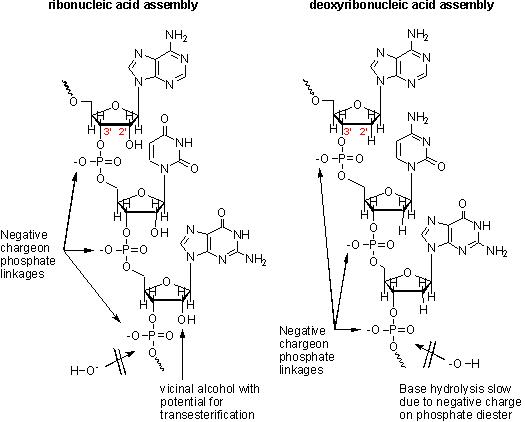
Phosphate Backbone on RNA and DNA

In his much-referenced 1987 paper entitled “Why Nature Chose Phosphates” (1), Frank Westheimer observed that phosphate diesters have a very useful property as a linking group for nucleic acids. The charged oxygen on (RO)2P(=O)O- serves several purposes.  The presence of a charged linker renders DNA and RNA compatible with the hydrophilic environment inside the cell. The charge prevents the nucleic acid polymers from migrating to more hydrophobic environments found inside of cell membranes. And equally important, the monobasic anion serves as a kinetic barrier protecting the millions of phosphate linkages in a DNA strand from cleavage under neutral or basic hydrolytic conditions over the lifetime of the organism.

The hydrolytic stability of phosphate diesters is not to be underestimated. Westheimer points out that dimethylphosphate anion has a half-life of 1 day at 110 C in 1 N base. He cites the rate constants at 35 C for the saponification of (CH3O)2PO2- is 2.0 E-9 (1/mol sec);  (CH3O)3P=O is 3.4 E-4 (1/mol sec); and for ethyl acetate 1.0 E-2 (1/mol sec).

However, the very simplicity and current prevalence of phosphate ion in the environment does not go far in explaining how phosphate might have found its way into metabolic and structural use.  In prebiotic times, the occurence of phosphate is in doubt (2).  But not just the occurrence of phosphate is in doubt. The relative abiotic inertness of phosphate towards esterification and the formation of other metabolically useful species raises the question of the original oxidation state of phosphorus during the onset of early life.

While phosphate is found in certain meteorites, Pasek suggests that a more ubiquitous meteoric phosphide mineral species such as schreibersite, (Fe, Ni)3P, found in iron meteorites may have provided the necessary reactive precursors for metabolic evolution (2). Pasek cites growing evidence of a late meteoric bombardment period at 3.8-3.9 GA.

Schreibersite hydrolyzes to a variety of oxidized species including phosphite. Phosphite has the advantage of being substantially more water soluble than phosphate, providing a larger molar concentration in seawater.  Schreibersite reacts with acetate to form acetylphosphonate. In fact, a variety of organophosphorus compounds may be formed on exposure of schreibersite and its hydrolysis products with organic materials.

Lowly phosphate isn’t sexy like the newer anions triflate and BArF. But its seemingly mundane properties are key to the function of metabolism and genetics.

(1)  F.H. Westheimer, Science, 1987, 235(4793), 1173-1178.  (2) Pasek, M.A. PNAS, January 22, 2008, vol 105, no. 3, 853-858.

Antimatter Storage

We had an ACS local section meeting recently in the clubhouse of the Air Force Academy golf course.  The featured speaker, a DoD chemist, gave an interesting talk on his work on some of the basic issues relating to the storage of positrons or anti-electrons. In the interest of fairness, since I am writing under a pseudonym, I’ll not wave his name about.

The speakers background is P-Chem and in particular, spectroscopy of isolated species in cryogenic matrices. He pointed out that an atom or molecule or cluster in an inert cryogenic matrix is in a dissipative environment and thus isolated from solvent interactions that might otherwise mask other kinds of phenomena.  So it is possible to spectroscopically examine the solid phase environment of the cryo matrix. In other words, an imbedded subject  molecule might find itself in an isotropic or ansiotropic environment, depending on the matrix. Infrared spectroscopy could give clues as to the symmetry of the local environment.

It turns out that ortho-hydrogen is an interesting matrix in which to study an important aspect of antimatter storage technology.  In order to collect positrons, one has to first find a source of them. While they can be supplied by some kind of nucleosynthesis, an easier route experimentally is to find a radioisotope that emits positrons.

It does not take too long for the would-be keeper of antimatter to move to the problem of storage. If you’re going to have anti-matter, you must think carefully about where you’re going to store it.  But there is another issue.  The challenge in collecting positrons from nuclear decay begins with slowing them down. As they are emitted they are travelling at relativistic velocities. Positrons, like “regular” beta particles are emitted in a fairly broad band of energies, so slowing them down via some kind of electromagnetic trap would result in very high losses. Instead, a moderator is envisioned to bleed off speed.

Positrons do not automatically annhilate with the first electron cloud they encounter. In fact, positrons were observed early on by the tracks of ionization they left in bubble and cloud chambers. So positrons can move through matter some distance without annhilation.

Electrons and positrons can pair up to give a transient neutral form of matter called positronium. There are two forms of positronium- singlet and triplet- with the difference being the relative alignment of their spins in either a parallel (triplet) or an antiparallel (singlet) arrangement.  Singlet positronium has the shortest lifetime at 125 picoseconds and triplet at a relatively long lived 145 nanoseconds.

Back to ortho-hydrogen. Positrons can interact with lattice defects in a solid, resulting in early annhilation losses. It turns out that ortho-hydrogen at 2.3 K can be warmed to 5 K and be annealed to a single crystal structure, largely free of defects. Therefore it is possible to prepare a solid moderator free of positron quenching defects.

This is where the speakers research stands at present. The have uncovered a potential positron moderator that would be part of a collection and storage system.  The speaker freely admitted that practical antimatter storage in a container is 100 years in the future. But given the high energy densities available from antimatter, the Air Force is committing modest funds to exploring the issues.

There is work being done to study the positronium Bose-Einstein condensate. It is complicated by the short lifetime of positronium. But fortunately there are ways of storing positrons in storage rings. The annhilation of positronium as a BE condensate would afford coherent 511 keV gamma rays. This would be the basis of a gamma ray laser.

Amine Question of the Day

Here is an interesting question. What fraction of the organic nitrogen in your body is ultimately from the Haber-Bosch Process?  Any guesses?  This question arose during dinner discussion following a rousing seminar on frustrated Lewis pairs. There is no connection to frustrated Lewis pairs, but the speaker raised the question.

Oh, I don’t have an answer. This happens in science.  I’m guessing ~50 %, depending on the extent of protein containing corn products consumed. Any meat science people out there?

8th Grade Science as a Path to Madness

So it happens that my kid is in 8th grade and is studying chemistry for the first time in earnest. As luck would have it, the kid’s teacher is of Haitian extraction and is on some kind of leave of absence either due to illness or possibly because 3 family members perished in the quake. I don’t know. This fellow seems to be a good teacher.

His replacement, however, is not very good. In fact, his replacement is … awful.

For the first time, I had a serious discussion with a principal about a teacher’s performance. The principal is apparently aware of the substitutes classroom foibles and sins of omission. The principal’s own son is a student in that class and so he has a personal interest in the matter.

So, after some time with the kid at the whiteboard in our basement last night, it dawned on me that I had completely forgotten how utterly strange atomic theory and the chemical phenomena that derive from it really are. It is all quite abstract and maybe even a little weird.

The curriculum gives some emphasis to understanding the concept of pH. Alright. But this requires some ideas about logarithms and exponents. Then there is the matter of chemical equilibrium. While kids are wrestling with the math, you are also trying to tell them that only a very small number of water molecules actually come apart into ions. But the kids need to be comfortable with the notion of ions and charge.

But, what makes hydrogen ion different from hydroxide ion, really?  And why does hydroxide ion have the negative charge? How is it that acids corrode iron to form H2, but hydroxide does not? What does it mean to be an acid? What does it mean to be a base?

You can try to use structural models of sulfuric acid rather than line formulae like H2SO4 to appeal to the idea that these are little things with attachments that do things. One could argue that it is a bit more concrete that way- little structures with parts that are detachable. But as soon as you start drawing structures, you run into a rats nest of intermeshed concepts relating to bonds and lone pairs. Then there is the bloody octet rule, covalency, and orbitals!!!

For crying out loud!! How does anybody learn this stuff?? The learner has to absorb 20 abstract concepts almost simultaneously to begin to “get” chemistry.  Even worse, if a chemist/parent teaches the kid about a concept, almost certainly it will not mesh with curriculum, leading to confusion and tears for the teacher and the student.

I taught orgo to college sophomores, but evidently 8th grade chemistry eludes me. I’m just too dense to grasp the level of abstraction they will accept. Oh!  To have an hour with Piaget!

The Passive Aggressive Opera. Act I. Reverse Delegation.

Supervision of people is one of the things that a chemist can look forward to on the way up the ladder. The people who report to you may be called staff or report-to’s. The term “my employee” should be reserved for use by those who sign paychecks. What ever you call them, they’re your group.

I’m not going to write about how to manage people. After many years of doing it I’m not sure I really understand it yet. All I can say is that every day some people show up and expect you to keep them busy.

Okay, I’m just kidding. But I am serious about the mysteries of management of people. I think most would agree that the best way to lead people- the way most of us would prefer to be lead- is by setting a good example. It’s pulling instead of pushing. Inspired leadership by a charismatic and talented individual is preferable but, unfortunately, rather unusual. 

There are many theories of management and more management consultants than you can count out there urgently interested in telling you how to manage your staff.  All you have to do to sample the many management theories is to stroll through the business section of the local bokstore. Every one of the authors will trot out a set of polished anecdotes that outline the path to their own professional enlightenment.

Chemists on the  management track may move in many directions in a business organization. Most obvious is management of a technical activity like R&D. But there is also management opportunity in scale-up, pilot plant, production, QA/QC, and analytical services activity. Management of the production side is sure to include inventory and warehouse control, regulatory affairs, personnel issues, engineering, and maintenance. Itis not uncommon for engineers to head the production unit.

On the less technical side is sales, procurement management, and business development.  While perhaps less technical, the chemical industry needs (requires, really) chemically savvy people to handle purchasing and sales activity. It is not uncommon for sales oriented people to ascend into the upper reaches of management generally and the chemical industry is no different.

What is perhaps different in the chemical industry is that chemists are often disfavored in the track to the CEO’s office by their lack of economic training. The ability to deliver big projects on time and on budget is a key attribute and engineers are especially well positioned to do this very thing. The bigger the scale of operations the greater the likelihood that an engineer will be in charge. Or so my experience has been.

Among those I have observed, managers who have exemplary experience in controlling the big money are often the ones groomed for executive leadership. And the big money is in big projects with lots of sales volume. It is the source of life giving cash. That which makes the corporate world go ’round. The elusive spondulix.

But back to management. One of the most vexing aspects of managing people is that you have to manage people. People are complex and prone to nonlinear behavior. Everybody knows this. But the manager is tasked with using human resources to provide some kind of work product on time and on spec. How do you compel people to do this every day?

The threat of termination is a good though heavy handed tool to compel folks to do their job. But this is a tool that can also backfire. Frequent termination of people is stressful and puts the manager in the position of having to be in a more or less constant training mode. Best to hire hard working people who are self-starters.

I have not found a simple formula for management. All I can do is to support down and fight up. I fight for resources and reasonable expectations. I treat people in the most hospitable manner I can muster and in return I expect the same.

One of the most annoying behaviors is the phenomenon of “reverse delegation”. You ask your report-to to do a particular thing. In reply you are told that they can only do the thing if you first make some arrangements. You have to get this or that ready, or perhaps you have to write an SOP or work instruction, or maybe even they will need to fly to a hotel in Vegas or Orlando to take some training course. It is all push-back: a kind of passive aggressive behavior meant to deflect your attention.

What I have found is that these reverse delegators may be very concrete in their approach to the unfamiliar. They will assert that they must possess a good deal of skill to even begin some new task. Sometimes this is true. But often it is only a matter of time on task to make some good progress.  The hard part for some of us is dealing with the simple truth of the matter. Not everyone desires being collegial and operating on the give and take level of colleague. A lot of folks only respect the brusque barking of orders by a Captain Bly figure and the sight of a**holes and elbows hustling in the plant. I would have been Captain Kangaroo, not Bly. It’s just a fact.