Category Archives: Technology

The Gangues of Leadville

The mining history of Leadville, Colorado, is well documented and the details are left to the reader to pry out of the internet. As a process chemist, my interest in mining is more directed to the geochemistry and milling of the ore. How did they get the pay out of the paydirt?

How does it come about that we can get our hands on particular elements like molybdenum, gold, silver, uranium, tungsten, vanadium, etc? How do the elements manage to concentrate into ore bodies that are worth the effort and expense to refine?

When you take the various mine tours around the country, the spiel offered by the guide is usually geared toward the lowest common denominator- our fascination with fabulous wealth. The miners were certainly taken with the possibility of wealth. Gold and silver mines are an easy sell because everybody has greed and everybody yearns to pluck a fat nugget of gold from a pan of gravel.  Other types of mines are a tougher sell entertainment-wise and require a bit more explanation of the relevance of the obscure element that is being extracted.

Mining is an activity with good and bad effects. To sustain modern civilization, if you can’t grow what you need, you have to mine it. Mining is inherently extractive in nature and requires that large volumes of earth be disturbed. Open pit mining requires that overburden be removed and the mineral value be moved to a processing site. Material sidestreams are generated and must be dealt with. 

Underground mines also generate large volumes of material that must be piled somewhere. To ensure responsibility for reclamation costs mining companies are required to put up a surety bond to cover the costs of future reclamation under 43 CFR section 3809.

The inevitable trade-off that a society must make is one of environmental insult for material goods. The balance point is always hard to find, and in fact is usually a moving target on account of politics, employment, and environmentalism.

Mining can have substantial effects on the landscape, the watershed, real estate, and the future tax base. Land that is not available for habitation or sustainable commercial use is fundamentally limited in potential value. An area covered with mine tailings, mine shafts, the occasional blasting cap, and acidic runoff is an area that requires cash infusion on a long timescale.

But if we enjoy the benefits of lead batteries in our cars, or silver jewelry, tungsten elements in our light bulbs, zinc plated wire fences, or the ten thousand other metal products in our lives, we must come to grips with the consequences for having such material goods. At some stretch point, everybody becomes a Luddite. Question: How much technological triumphalism can we take? Answer: Whatever the market says we can take.  
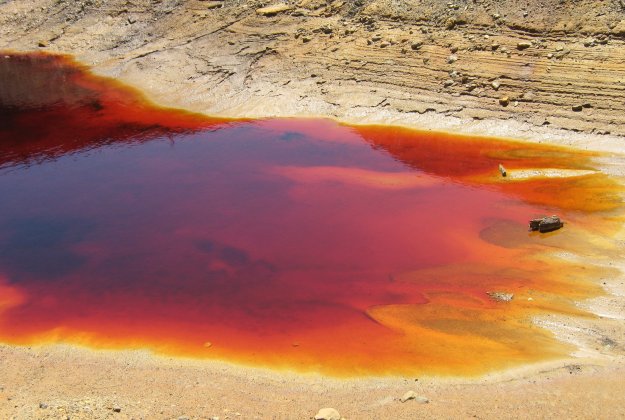
Runoff Collection Pond from Mine Tailings in Leadville Mining District.

Runoff Collection Pond from Mine Tailings in Leadville Mining District.

Our society has benefitted greatly from metallurgy. The compulsion to recover metals from the ground is one of the great economic forces in civilization. No amount of highminded pontification will stop it. Metals enable industry and war which are forever entangled in politics and greed. The goal is to be smart about how we mine elements from the ground so that maximum value of the surrounding land may be enjoyed. The enthusiasms of the time come and go. But metals are forever.
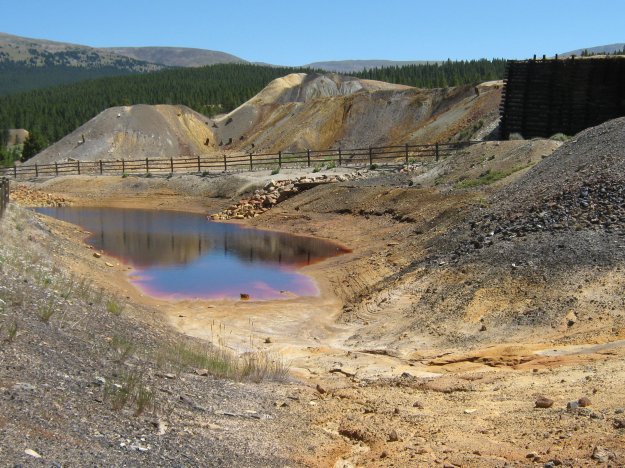
Mine Waste, Leadville Mining District August 2009
Mine Waste, Leadville Mining District August 2009
Flocking Algorithms

A company called Atair Aerospace offers an autonomous parachute system comprised of self-guided chutes that, according to the site, are able to avoid one another in multiple drop scenarios. Thus the need for “flocking algorithms”. The company claims a ~57 m accuracy in some of its parachute dropping systems.  The company also makes an Inertial Measuring Unit that combines input from GPS, inertial, and barometric sensors, all in a package the size of a Buffalo wing.

Interesting quote from the Daily Kos

> For all of our bad-assity—all our guns and nukes and soldiers and cops and black helicopters and warrantless surveillance and militias and tough talk and the fact that our private citizenry is armed to the teeth with every type of firepower imaginable, we sure scare easily. Half the stuff over which we tremble is a figment of our own overactive imaginations. But one thing is as real as it is backwards: we fear our government, but our government does not fear us.

> Our media is so afraid to offend anyone that they go out of their way to give both sides of an issue equal weight, even if one of those sides is either factually incorrect or batshit crazy…thus slowing down our progress as a country even more.

Ah, yeah. Pretty much.

Is Private Sector Buggery Better than Gov’t Incompetence?

Healthcare in the USA is wildly expensive and is growing more so at a rate that exceeds inflation. This is well known. The battle for healthcare reform in DC is bogging down under the weight of private interests and infighting.  Soaring rhetoric from both left and right is mistaken for intellection and reason. It is evident that the fix to the problem was started before there was a clear understanding of the variables.

If you look at healthcare as a manufacturing activity with labor, capital equipment, and materials as input and some sort of health benefit as the output, you can start to see what cost inputs may begin to dominate. Of course this is very simplistic, but hang with me.

A round of health care involves attention by highly trained and expensive labor. A health care worker can only attend to one person at a time, though that worker may have many patients under his/her supervision. If a patient is stabilized, the care worker can also attend to other patients and achieve some sort of parallel production for better cost containment. In the heirarchy of medicine, the docs are managers who provide oversight to nurses who manage the patients. Docs also do consultations, examinations, and perform surgery, so they are not pure people managers- they get their hands dirty. Docs are a unique class of management all by themselves.

To exaggerate the effects of labor costs, imagine if you had a doc or a nurse picking strawberries, how expensive would the strawberries be? Even if Dr. Picker was very fast, the berries would be expensive. To have reasonably priced berries you have to find workers who will do the work at a lower wage. Lower wages derive from an abundance of willing labor.

In the end, medical schools control the scarcity of physicians by controlling enrollment. And the enrollment is defined by the curriculum, faculty size, and the particulars of the coursework- availability of clinical experiences, lab space, equipment, etc. But, you have to wonder what would happen to medical costs if there was less labor scarcity.

The most important resource a medical school has, other than faculty, might be the university hospital. What if more hospitals had medical schools rather than the other way around? I don’t think that the existing medical schools have absorbed all of the bright candidates out there.

Health care is a kind of economic chimera. The recipient of medical treatment is not the person in control of the costs. Physicians prescribe the type and extent of resources and the insurance companies release the funds. The medical establishment receives payment for services irrespective of outcome. Insurance companies profit by denial of services. The patient is left to sort out how to get the best value from available treatment.

American medicine is very much influenced by technological triumphalism.  New and expensive materials and devices hit the market all of the time. The question every potential marketer of medically related items must ask is- will the docs use or prescribe it? The most powerful instrument in medicine is the physician’s pen. The question for drug and equipment makers is, how do you get the docs to use their pens to your advantage?

The view that a disease or an injury is a sales opportunity is what drives for-profit clinics and hospitals. Without chronic disease, accidents, and sporadic outbreaks of mayhem, growth and profit in the healthcare industry might be more static.

So in the end, who do you trust? Do you put your faith in the private sector whose avowed goal is to profit on your illness? Or do you trust the government which, though accountable to its citizens, is prone to profound organizational inertia and a lackluster draw to talented staff?  This is the balance of opposing forces the fools in Washington are trying to sort out. Howard help us all.

HR 2868- Good intentions gone sour

There is a fine line between good sense and paranoia and HR 2868 has definitely crossed over into deep paranoia. This resolution, sponsored by Rep. Thompson (Mississippi), Rep. Waxman of CA, Rep. Jackson-Lee of TX, Rep. Markey of CA, and reps Clarke and Pascrell, is an amendment to the Homeland Security Act of 2002.  Its purpose is

“to extend, modify, and recodify the authority of the Secretary of Homeland Security to enhance security and protect against acts of terrorism against chemical facilities, and for other purposes.”

Well, how could anyone be against such a noble sounding piece of code? The sponsors are struggling to protect the homeland against attack on chemical facilities. Facilities whose hazardous material inventories could be maliciously released to cause harm to the surrounding neighborhoods of innocent and helpless citizens.

Sec. 2102 (a) (1) allows the Secretary to designate any chemical substance as a “substance of concern” and establish a threshold quantity for each substance of concern.

There are many goodies and zingers in this bill. Sec. 2115 (a) (1) (A) requires that the Secretary issue regulations for substantial background checks to establish personnel surety in covered chemical facilities. The security check will be deep and will serve as a reservoir of information collected by company on citizen employees and subject to inspection on demand by the Secretary.

Sec. 2116 (a) (1) states that any person may commence a civil suit against any person “who is alleged to be in violation of any standard, regulation, condition, requirement, prohibition, or order which has become effective pursuant to this title; or … “.  This citizen lawsuit provision will open the floodgates to lawsuits on companies running chemical plants and in so doing, under the rules of discovery, break through the IP protection afforded by trade secrecy.

This proposed law also provides for close oversight by the Secretary of Homeland Security as well as civil penalties (Sec. 2107 (b) (1)) of up to $50,000 per day of violation.

OK. Nobody wants acts of terrorism to happen and especially not on the site of a chemical plant. But to legislate the transformation of chemical plants into a “Fort Apache” scenario in the absence of a history of attacks on US plants is to invite needless cost and complication to an industry that is already heavily regulated. This is plainly the result of irrational fearfulness on the part of congressional sponsors. And Congressmen are in a position to convert their fears into law.

Compliance with this law will require considerable effort and expense to be carried by industry. The downside to being out of compliance is too expensive. Over time companies may opt out of processes that use chemicals of concern simply to reduce the risk of noncompliance as determined by government audit.

The chemical industry uses hazardous chemicals of many varieties. Hazardous chemicals are often reactive chemicals. And reactive chemicals are useful chemicals.

The entire chemical industry is built around the exploitation of reactive attributes in order to cause a desired change in chemical composition. The unintended consequence of this legislation is that useful but reactive chemicals may be inherently prone to identification as chemicals of concern. The effect would then be that key substances at the core of a given technology platform would be regulated on the basis of what a terrorist could do with it rather than its value to technology and to civilization.

What constitutes adequate security? Who is to say what security measures are satisfactory? The security industry seems to attract the paranoid who see threats behind every shrub. To have such people deciding what chemical is acceptable for use in manufacturing is unacceptable.

Touring the Mollie Kathleen Mine, Part 1.

By way of a prelude to this post let me say that, as a child, I was plagued with nightmares about elevator shafts. A tallish building in a nearby city had an elevator that, in the style of WWI-era buildings, was comprised of an open cage controlled by a matronly operator. On each floor the entrance to the elevator shaft was guarded by a collapsible metal gate that allowed the visitor to see, hear, and smell the greasy workings of the elevator in all its cabled creepyness.

I would stand next to the gate as the elevator went about its single-minded business and peer down into the dark shaft with its writhing black cables, fascinated yet deeply in tune with the prospects of what a fall down this hole would mean.  Like most young boys, I had bitter experience with the unblinking and impersonal side of gravity.

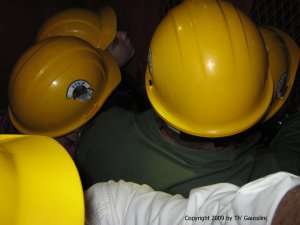
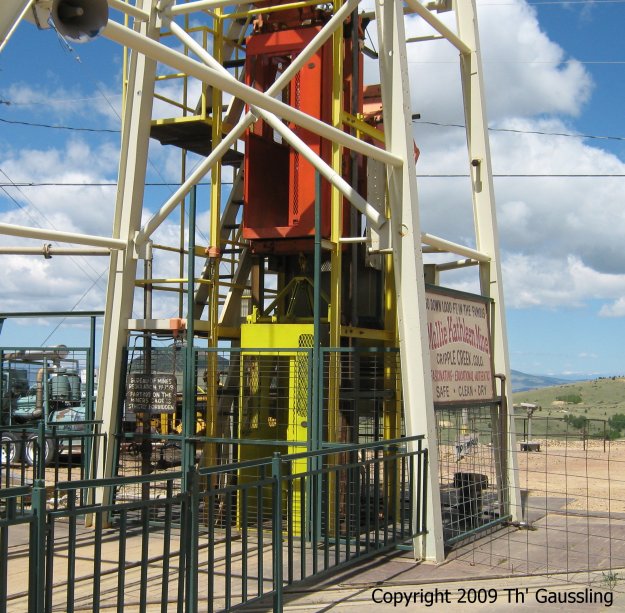
It was this memory that flashed into my mind yesterday as I stood in a manlift the size of a large domestic refrigerator, crammed tightly into the cramped cage with 6 other people. We looked like a can of vienna sausages.  The lift was a double-decker, with an identical cage of sausages below.

Crammed in Manlift

Crammed in Manlift

There we stood- a squashed parcel of humanity and hard hats in the orange lift, dangling above a 1000 ft column of air. Outside I could see the town of Cripple Creek, Colorado, sitting in the valley 400 ft below us. In two minutes, we would be 600 ft below the level of the town. As we began the descent and as daylight fell to darkness, I felt a my autonomic system select “Panic Mode”. But it was too late, we were committed. After 30 seconds, a graveyard calm replaced my momentary panic and all was well.

Double Decker Manlift at Mollie Kathleen Mine

Double Decker Manlift at Mollie Kathleen Mine

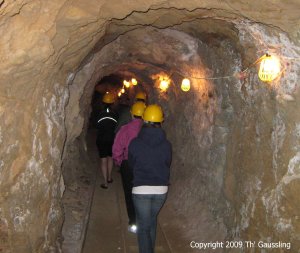
This was my first entry into the Mollie Kathleen Mine outside of Cripple Creek, CO. The tour begins in a drift 1000 ft below surface level. A “drift” is just a horizontal tunnel in an underground mine. I have toured a number of mines and caves and the common attribute to all of them is the absolute silence that is found underground. Today’s tour would be different.

The Mollie Kathleen Mine sits on the side of a mountain adjacent to the mammoth Cripple Creek and Victor (CC&V) open pit gold mine. The operators of both mines have independent claims to different parts of the same confined geological formation. The Mollie Kathleen is one of a great many underground mines in the area, of which only a very few are in operation today. It is presently open only for tours.  The CC&V mine is the only large gold mining operation in the area.

The CC&V mine is an open pit operation. Large hauling trucks carry 300 ton loads of ore rubble from the pit to nearby crushers which reduce the rock to 3/4 inch pebbles in preparation for the cyanide extraction process on the heap.  The rubble is the result of large scale bench blasting with ANFO blasting agent.

The CC&V does blasting on a regular basis. That day, while we were underground about 1-3 miles distant (my estimate), they set off a blast. We were down in the mine when the underground rumble hit. There was no ramp-up to maximum force- it began as a loud, strong rumble seemingly from every direction. We stopped in our tracks and instinctively looked at the ceiling trying to decide if this was a normal or off-normal event and, oh golly, will the the tunnel collapse? After 30 to 40 seconds the rumble subsided and the mine was silent again except for a few heartfelt expressions of relief. Clearly there was no danger for anyone, but the abruptness and the magnitude of the explosion only serves to remind one of the compromises made and the options lost while working underground.

1000 Ft down into the Mollie Kathleen Mine

1000 Ft down into the Mollie Kathleen Mine

The tour guide was a young ex-miner from Montana who explained mining practices and demonstrated the numerous pneumatic tools used by hard rock miners.  In part 2, we will look at some of the mine workings and other features of the Mollie Kathleen Mine.

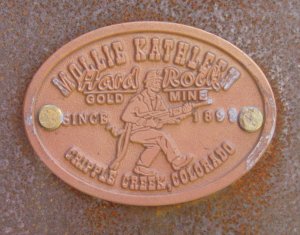
Hard Rock Placard. Photo Copyright 2009 Th' Gaussling.

Hard Rock Placard. Photo Copyright 2009 Th' Gaussling.

Talibanistan

Holy smokes. Who’da thought that Pakistan’s western frontier would fold like a lawn chair to an invasion of jabbering, hairy, religious freaks? Someone has commented that while most countries have an army, Pakistan was really an army that had a country. It is difficult to understand the dynamics of this part of the world and how Pakistan could allow the Taliban warriers such a generous incursion.

North Korea is another army that has a country. As bad as the Pakistan situation is and no matter how belligerent the Iranians are, I suspect it will be North Korea who pops off the first nuclear warshot since Nagasaki. The question is, will it be against Japan, South Korea, or the US Navy? 

Then there is China which is apparently in possession of anti-ship ballistic missile technology (ASBM). This capability basically nullifies US superiority in force projection in the China Sea by our carrier fleet. US surface ships are helpless against attack by smart ballistic missiles raining in at Mach 10 or whatever the particular hypervelocity is.

Biohackers

A recent article in the WSJ solemnly described several amateur biologists who were doing simple molecular biology experiments in their homes. Naturally, this has not escaped the attention of certain authorities and certain deeply conservative establishment news corporations.

What is distressing is the reflexive conclusion that their activity is automatically dangerous and likely to be symptomatic of malevolent intent.  It is common for those in power to look over their ramparts and view the world as a spectrum of threats. And so it is in this case that distrust has arisen and reporters are using the words “weapons of mass destruction” or “ebola virus”. 

Could it not be that some people outside of the heavily in-bred fields of science have a genuine and scholarly interest in molecular biology but no interest in grad school?

The entrance to scientific activity is highly formalized with layers of degree requirements, preferred pedigree, institutional infrastructure, regulatory complications, and a mafia-like oligarchy that disperses the resources and opportunity that is so necessary for buoyancy in science.

How does a creative amateur scientist get to take a jouney of discovery in a field that is institutionally inaccessible to them? And how does an interested individual who is clever enough to conduct experiments deal with a government whose reflex is to see WMD and terrorists behind every lilac bush? There are serious civil liberties problems here that pit the brain stem against the frontal cortex.

It is in the nature of some people to be distrustful and find threats behind every shrub. It has been my observation that people who default into a distrustful posture are very often not trustworthy themselves. The distrustful often invoke slippery slope arguments as rhetorical devices to block their opponents move into new conceptual turf. What the distrustful and paranoid fail to see is that we live every minute of every day on multiple slippery slopes, yet we somehow survive and thrive.

“Don’t Even Taste Like Sewage”

I spent 4 1/2 hours saturday touring our town’s water system from both ends. It was quite a detailed tour and, since it involved chemicals, how could I not tag along?

We began with the sewer reclamation plant first. Lots of interesting details here. Turns out that one of the big problems to running a waste treatment plant has to do with keeping large debris out of the pumps- rags, underwear, shoes, plastic parts, etc.  Once you get past the shock of learning what your fellow citizens can and do flush down the toilet, it is plain to see that a bit of money spent on screening out the the big chunks is returned in the form of reduced down time and pump repair costs.

Our little hamlet of 6,000 souls sends 450,000 gallons of waste water to the reclamation plant on an average day. The flow peaks at about 8 am every day in the form of a sudden 5-6 x increase in flowrate. It takes about 90 minutes for an average volume (i.e., a flush) of wastewater to get to the plant. A lot of groggy citizens hop into the shower at around 6:30 am.

After the incoming stream passes through a grit removing station at the entrance, it is lifted to the first treatment operation for aeration and fermentation. This is the physical high point in the process, meaning that the stream is subsequently transferred by gravity for the remaining process steps.

I won’t go into further process details other than to say that the final step prior to discharge into the stream is a sanitizing step where the effluent is exposed to a large jolt of UV radiation. At this point in our tour, the plant manager dipped a sampler into the flow and withdrew one liter of clear, colorless liquid with a few strings of algae floaters. Only too eager demonstrate his faith that the water was sanitary, he dipped a finger into the effluent, put it into his mouth and exclaimed with a grin as wide as his mullet

“It don’t even taste like sewage!” 

As he passed the sample around so others could share in the experience, I wandered over to the control panel and feigned interest in the LCD display. The UV just renders the wee beasties non-viable. Their little microbial carcasses are still there. Pathogen free it may well be, I didn’t have the stomach to taste it. Yes, I know that microbes are everywhere and that our notions of what constitutes “clean” are merely a fantasy. But I just couldn’t do it.

Mea Culpa

Today I found myself attending a talk on mortar propellants. It was delivered by a shy young woman who looked to be no older than a high school senior- she looked like a babysitter you’d hire to stay at home with the kid while you treated the wife unit to a night out on the town. Yet she was an expert in mortar shell propellants.

Next, I attended a talk on flare compositions delivered by a tiny woman who could barely see above the podium.

I rounded the day off by attending a talk by a woman who presented her results on igniter design and in developing a new explosive propellant manufacturing process. During the Q&A, my questions on ignition mechanisms were answered by yet another woman who was exceedingly knowlegeable in this field.

What I have noticed is that the gun and rocket propellant R&D field is populated with women to a much greater degree than the industrial organic or organometallic chemistry waters in which I normally swim.

Before you fire a rude comment alleging some sexist malfeasance, please understand that I was raised by a single mother as the eldest of 5 kids. That, and having witnessed the birth of my child, I have no doubt whatsoever about the robustness and Ability of women.

That women do this isn’t news. What is noteworthy is the extent to which my ignorance remains so great at age 51. My caveman misconception was that explosives chemistry would not appeal to women. I had mistakenly and foolishly assumed that a career with explosives was largely a male domain and driven by male fascination with power. Holy cats. I was quite mistaken.

I seem to be wrong about  a lot of things these days.