Category Archives: Uncategorized

Fire Fountain

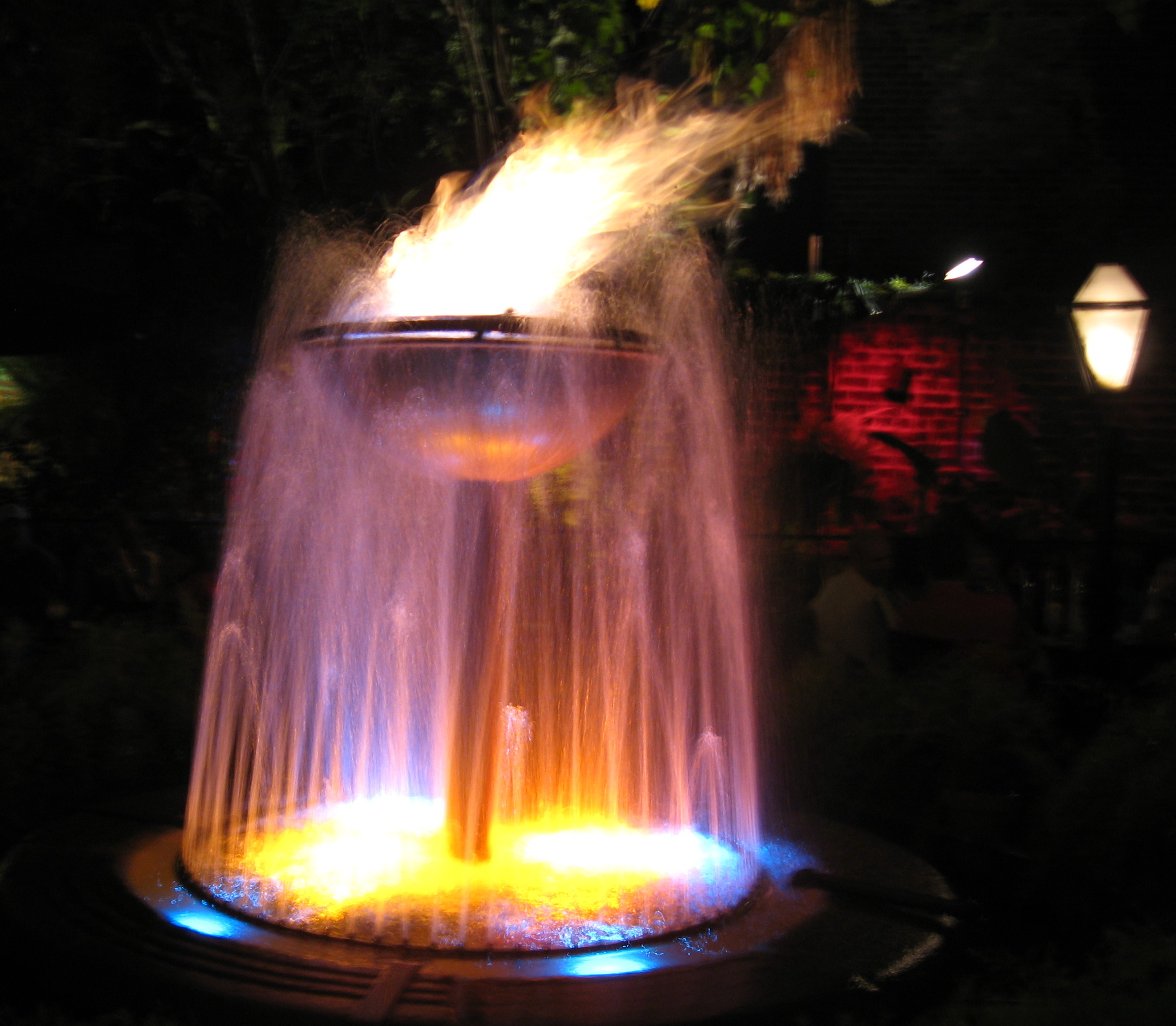
Fire & Water Fountain

This is a fountain at Pat O’Brien’s on Bourbon Street in New Orleans. The more you drink the more appealing is the notion of having one in your back yard. This snapshot was taken with a hand held digital camera with no flash. It’s a wonder that it is as clear as it is.

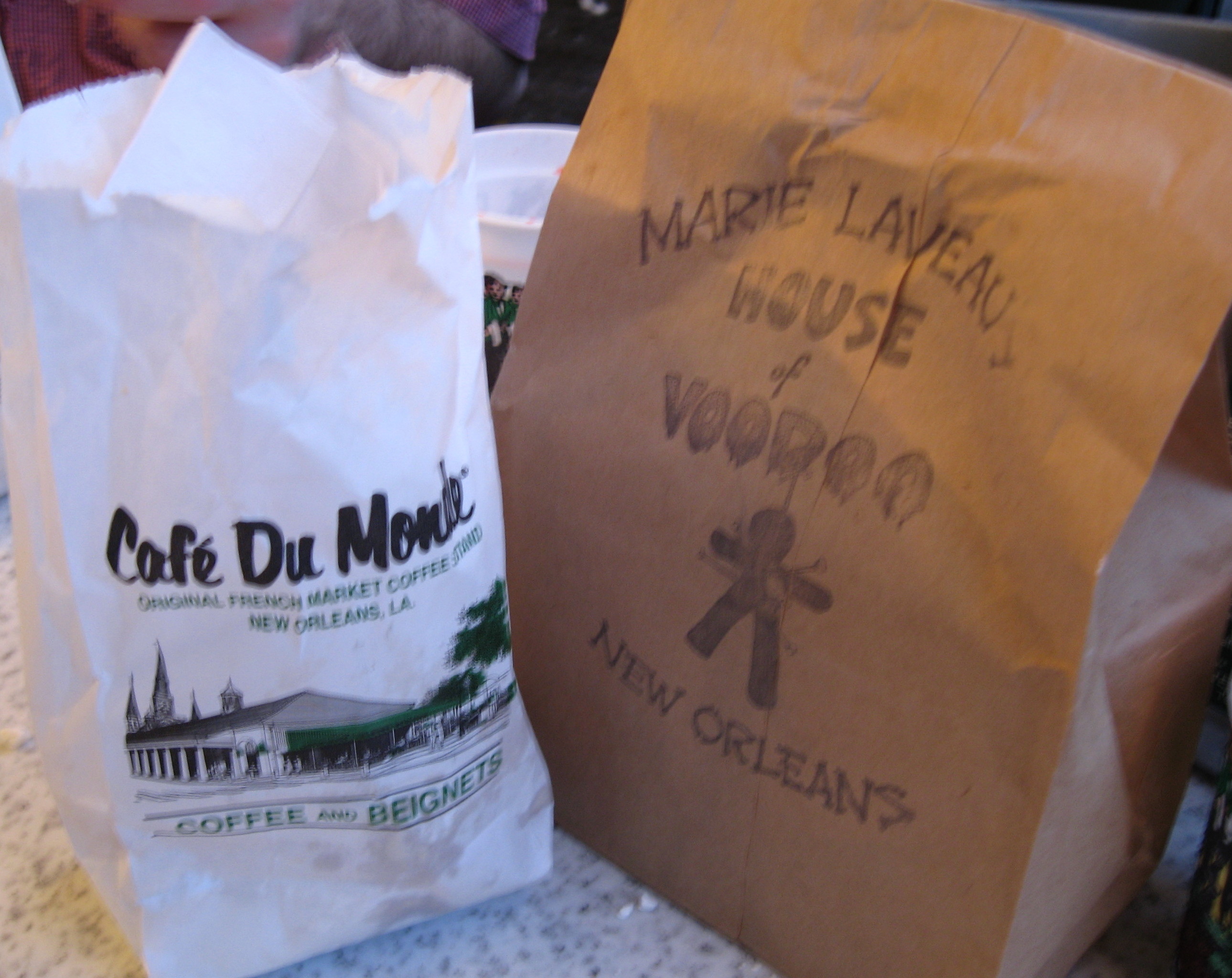
Beignets and VooDoo

If you go to the French Quarter, you have to visit Cafe Du Mond for Beignets and Coffee. I’m sure they have banned trans fats …. \;-)

I have to say that despite the bawdy novelty of Bourbon Street, my main impression of the place is that it’s pretty unhealthy.  Not so much for the tourists, but for the folks who work there. It’s amusing to visit for a few days, but as a lifestyle it is quite corrosive.


Olympic Boycott. Lunacy of the Week.

The talk of an olympic boycott by the US president in the opening ceremony in China is ridiculous.  It would surely have zero effect on Chinese policy toward Tibet.  It is naive beyond description to think that those sitting in power will reverse policy in such matters. To reverse a policy regarding sovereignty that has been defended with violence is to admit a shocking error in judgement and to accept responsibility for a wrong that is possibly criminal.  Autocratic governments never do this. Ever.

China has supported considerable US debt and continues to do so. We’re going to publically humiliate our bankers? We’re going to poke a finger in the eyes of those who have been supporting America’s deficit spending and military adventurism in the sandy spots of the world? I don’t think so. 

Buying fewer goods made in China is one good response. Put the money in the bank. Feed the pig.

NOLA ACS Meeting. Tuesday

Tuesdays meetings included an awards symposium extravaganza in the organic division. F. Dean Toste was the recipient of the Elias J. Corey Award for Original Contribution in Organic Synthesis by a Young Investigator. Illuminati of the likes of Trost, Sarpong, and Grubbs gave their talks in honor of the awardee. Toste’s talk was on his work in the area of Au(I) catalysis. These gold (I) catalysts show an extraordinary propensity for coordination of alkynes and facilitating nucleophilic addition to the triple bond.

The reactivity of Au(I) is attributed to relativistic effects causing contraction of the 6s orbital and destabilization of the 5d orbitals. The result is a large aptitude for pi->M coordination and relatively low M->pi* backbonding.

Relative to Pt and Rh, gold is cheap. 

NOLA ACS Meeting. Monday.

The talk by Frederic Stanley Kipping Awardee T. Don Tilley was worth the time to see. This UC Berkeley chemistry prof has accumulated a substantial list of results on in the organometallic chemistry arena, much of it with the use of silanes.

The ACS Awardee in Organometallic Chemistry, G. Parkin of Columbia University, was equally interesting. Parkin described his work with kinetic isotope effects and had some caveats for those attempting to draw mechanistic conclusions from such studies. The reaction temperature used in the study can give a positive effect, no effect, or a negative effect. Hmmm.

George Whitesides (GW) gave a talk entitled “Questions about questions about the origins of life”.  It was actually a kind of homily summarizing his summaries. Ok. Let’s see if I can do better than that.  GW has been ruminating on the origins of life and has come to the conclusion that neither the physicists or the biologists are equipped to solve the problem. 

The first matter that he paraded before the audience was this- is it enough to say that the world is bifurcated into two domains- alive and not alive? Is it binary or continuous? GW thinks it is continuous.  It just occured to me that prions may be a good present day exception to the assertion that it is binary. But what really matters is the question of whether life was continuous or binary during the peribiotic period while life was forming.

GW suggested that it is important for us to find examples of chemical fossils.  These would be chemical compositions left intact from that era. The problem of the origin of life cannot be answered by simple extrapolation backward from present biology because the peribiotic conditions in which life arose have not been present for several billion years. We are far from understanding the chemical and redox makeup of the peribiotic world.

The origin of life arose from reaction networks that afforded molecular species that could self amplify or self replicate in an anoxic, reductive environment.

The question of the mechanistic origins of life is vastly different from the question of the mechanistic evolution of life.

Both are chemical phenomena and a mechanistic picture of both will ultimately be assembled by chemists of one sort or other.

NOLA ACS Meeting. Sunday.

Spent a good deal of  time in the INORG section talks. The Cotton Symposium talks have brought many friends and alumni of the Cotton Experience. Tobin Marks kicked off the symposium this morning with his usual overwhelming flood of results. Listening to a Marks talk is like trying to sip from a fire hose.  What always impresses me about the talks by Marks, Bergman, et al., is the large amount of kinetic and thermodynamic data presented to support the proposed mechanisms. 

The talk on the functional mobility of ribosomes by Yonath was just amazing. The Yonath group has been able to use heteropolymetallates to aid in the understanding of the conformational changes in the mechanism of transfer RNA mobility across the ribosome. 

My background did not include kinetic studies and I have always regretted this. The path to understanding is with kinetics and thermodynamics experiments, not just a simple report of yields and conditions. Once before they bury me, I want to do this.

The Kipping Symposium Honoring T. Don Tilly offered some interesting talks as well. Gelest  had a sponsoring role in this symposium.

Chemical Insult

I’m not an apologist for the chemical industry. Chemical industry has a checkered past in many ways. The pesticide, petrochemicals, and mining industries have left a deep and abiding foul taste in the mouths of many communities. In a previous era, heavy industry has fouled rivers, lakes, air, and ground water. It has lead to illness, death, and loss of livelihood to many people.

But in the modern era much of this wanton issuance of hazardous industrial material into the air and waters has been halted or greatly diminished. And it is not because industry suddenly found religion. The “regulatory environment” became so compelling a liability cost factor that industry set its mind to engineering plants into compliance. 

I would make the observation that today, the major chemical health issues before us are not so much about bulk environmental pollution by waste products. Rather, I would offer that the most important matter has to do with the chronic exposure of consumers to various levels of manufactured chemical products. High fructose corn sweeteners, veterinary antibiotic residues, endocrine disrupters, smoking, highly potent pharmaceuticals, and volatiles from polymers and adhesives to name a few.

Modern life has come to require the consumption of many things.  A modern nation must have a thriving chemical industry to sustain at least some of its need for manufactured materials. It is quite difficult and isolating to live a life free of paint and plastics or diesel and drugs. Choosing paper over plastic at the supermarket requires a difficult calculation of comparative environmental insults. Pulp manufacture vs polymer manufacture- which is the least evil? I’m not sure.  

The path to a cleaner and safer life in these modern times is surely a life that pursues fewer consumables. Less throw-away stuff.  Less calorie intake and greater calorie expenditure. Reduced consumption of foods engineered by modifiers and additives.

Given the expectation of multitasking in our culture, it is increasingly difficult to arrange to prepare fresh foods. Meal preparation time eats into commuting time.

Now that I think it through, maybe it’s our culture that is killing us? Maybe our adverse exposure to deleterious substances is an artifact of a cultural requirement for increased productivity.

At the outset, I said I was not an apologist for the chemical industry. But I am not a Luddite either. Modern material science (which includes chemistry) has brought aid against a great many of the hazards and inconveniences of life. As we pass through the age of increasing population and peak oil we must adjust our expectations of the benefits of manufactured goods in the betterment of our lives. Linear extrapolations such as “more = better” begin to fail at high levels of consumption. That is the lesson that I’ve taken.

Sugammadex Buzz for Organon

There is a new kind of buzz in the anesthesia community these days. News of a “selective” muscle relaxant binding agent hit the web in a big way. Even Forbes made notice. Sugammadex, a proprietary cyclodextrin available from Organon, has the ability to bring post-operative patients out from under the influence of muscle relaxant drugs rapidly and safely. It does this by host-guest coordination of drug molecules in the blood stream, effectively lowering the blood titer of active drug. The cyclodextrin acts as a kind of sheath or molecular condom to prevent binding of the certain active relaxant drugs to the receptors. The results are apparently startling to the numbing and gas passing community. 

Patents as Publications?

At a conference a few years ago I was discussing chemistry over gin and tonics with an assoc. prof from the University of XYZ. This fellow was one of the solid journeyman chemists in our field with a good eye for projects and opportunity, but like most of us, he is a warm-up band and not a headliner.  Eventually, the prof confided that he was patenting his work partly to extend his publication list- like sawdust in flour.  He had done some interesting work with a late transition metal. As the evening wore on, I could see the fire of gold fever in his eyes.  He believed that his patents would bring a stream of money and notoriety to his program. It’s natural.

Big things can happen with university IP. Some universities have substantial royalty streams filling their coffers. The institutions are able to capture value from the inventiveness of their faculty and students. When it works, it can fund new buildings, institutes, chaired faculty, and a horde of students and post-docs. When it doesn’t work, and most patents do not lead to cash flow, universities have to pay the cost of the patent plus maintanance fees out of strained budgets. Foreign fees can add up to large cash payouts every year.

At a dinner recently, I had the good fortune to dine with one of the rock stars of our field- a true headliner. This fellow had met the King of Sweden and has basked in the accolades of we minor players and roadies ever since.  For good reason- he was exceptionally productive.

After the sixth bottle of wine had been drained at our table, jaws were wagging and bad jokes and war stories were making the rounds. Eventually the rock star lamented that he was tired of writing patents and wanted to get away from intellectual property.  Working with lawyers just took too much time.

Another acquaintance is also a rock star who has met the King of Sweden. He actually is in the licensing business with a company on the side and students who do, or at least used to do, research for their degrees that was also considered to be intellectual property.  He too has a list of patents longer than your arm.

I am betraying no secrets here. Patents are public documents. University patenting is well down the road since the public law changed.

I’ve written about this topic before. The nature of IP and the academy has changed considerably since Bayh-Dole has allowed universities to apply for patents that were funded with public funds.

But the question for today is this:  Of what value are patents on an academic resume? Should a WO patent weigh as much as a JACS paper. Should a US patent weight the same as a JOC paper? What if a candidate has more patents than papers? Should patents lead to tenure? How should this calculation work?

A patent is not trivial or cheap. A patent application has to survive a large amount of a certain type of rigor in the examination process. A patent may have involved a good deal of scholarship. A good patent may teach and claim compositions of matter and processes that are truly ground breaking.

But a bad patent based on work that was never actually done can share the same playing field as one that is genuine and valuable. The rigor of examination is more of a statutory process relating to obviousness, novelty, and utility. A citizen or organization is entitled to a patent under the Constitution, provided that certain conditions are met.

Nobody is entitled to a scientific paper. Scientific societies are in the business of encouraging scholarship by providing a venue for the screening and dissemination of written works by investigators. There is a pecking order in all fields, and chemistry is no different. A layered ordering of prestige and glory definitely exists and few are shy in their opinions about such ranking.

It is hard to argue that the scholarly path is not in the direction of maximum credibility. Patents are not officially peer reviewed by fellow workers in the field. But the patent literature is a vast reservoir of credible technical information that I think may be widely underappreciated.

So while a patent probably shouldn’t carry the same weight as a refereed paper in terms of scholarship, a patent can in principle represent a large amount of successful R&D. I would argue that it can be regarded as a type of commercial accomplishment that is worthy of a place on a resume.

A patent is, after all, a property right that can be bought and sold like a mining claim or mineral rights. It is a type of holding owned by the assignee but not necessarily the inventor. Patents also enjoy the assumption of validity by the courts, so knocking one down requires some determination and money by a challenger. A scholarly work requires only another paper contradicting the results to be brought under the unblinking eye of scrutiny.

In summary, I would offer that a published paper confers a sort of warranty of scholarship, knowledge, and expertise. A patent confers a property right. A patent may teach a good deal about certain arts and may well be bullet-proof in its authenticity. But a patent is not in the same league as a paper and shouldn’t be regarded as equivalent to a scholarly publication. However, a patent does represent a very real type of accomplishment that may be substantial, so discounting them should not be done either. Actually, a patent is one of the few real measures of accomplishment in a secretive industry. Patents are a plus and should figure into the total profile of a candidate.

Fun at Chemical Trade Shows

One of the fun aspects of sales is doing booth duty at a trade show.  It is an opportunity to meet and greet lots of new folks and catch up with trade show buddies.  Watching an exhibition hall transform into a “show” is like magic.  When you show up with your booth at the hall the day before the show, the place is a wreck. Booths are under construction, carpet is going down, fork lifts are zooming all over the place, exhibitors are lined up at the show managers booth, bewildered sales people are trying to get their bearings, and haggard and cranky union workers are trying to get the whole illusion assembled by the approaching deadline.

Trade shows are venues where buyers meet sellers in bulk.  Buyers show up in droves to walk a few acres of floor space crammed with vendors showing their wares. Everyone is in full schmooze configuration. There is an abundance of literature and business bling. Most booths are 10′ x 10′ with rear curtains and some trade show furniture. Smaller companies bring booths that they assemble featuring a display frame, lights, and velcro panels. Larger companies pay to have the union guys assemble an expensive architectural wonder complete with meeting rooms and, in the EU, a bar with bartender.

Lots of wheeling and dealing gets done by those buyers that come to actually buy on the spot. A great many buyers are there to window shop and go back to the office to ruminate on their decision. 

What is less well known outside of this circle is that a good deal of competitive intelligence is being done as well.  Everyone wants to know who the competition is. Lots of browsing and innocent questions.  Competitor pricing is the magic that everyone wants.  But this information can be hard to get. In the specialty chemical world, prices are often given by quotation to qualified parties. Qualified in this context means that the query originates from a party who is actually in need of the material rather than the wiley competitor trying to get an edge in pricing.

Some trade show organizers will have a high paid speaker talk to the show attendees.  I was once on the “A-List” to get tickets to meet the speakers at a small social hour before the show.  I got to have an actual conversation with James Carville, Mary Matlin, Terry Bradshaw, and Robert Reich. It was very exciting and enlightening. 

Another side benefit of being in sales is the chance to dine in some excellent restaurants. When at a tade show, it is always best to get your reservations in early. All of the best seats in town get taken. 

At a trade show in Vegas a few years back, our hall was next to a room being used for auditions for some transvestite series for cable TV. I recall walking down the hall at the Sands past a long line of “ladies” waiting for their turn at audition.  They were dressed to kill. It’s Vegas, baby.  The details of some other events will stay with me to the grave.

A few years ago at a plastics show at the McCormick center in Chicago I counted 6 multilayer extrusion machines blowing film, multiple PET bottle machines running, and numerous die extrusion systems operating. People waited in line for an hour to get a free lawn chair.

Favorite destinations? Paris, London, New Orleans, San Francisco, Milano (beware pick pockets!), Basel, Seattle, Berlin, Bangkok, Las Vegas, San Diego, and Manchester.

In Manchester we had to walk the gauntlet past a mob of angry protestors in front of the trade show- they were pissed about animal testing done by one of the exhibitors. 

Berlin is a fascinating and cosmopolitan city and anyone who enjoys Europe should visit.