Reply from Senator Salazar

Recently, I wrote a letter to Senator Salazar, (D)-Colorado, to voice my dismay at his Yea vote for S. 3930.  Below is the reply.  It took 10-14 days to send the reply, suggesting that perhaps an actual person read it- some staffer, no doubt. It was addressed to my proper name, but for the blog I changed it to Gaussling.

Dear Gaussling[name changed to protect the innocent- Ed.]:

Thank you for contacting me regarding the detainment and treatment of prisoners captured by the U.S. in the war on terror. As you know, the Senate recently dealt with these issues during its consideration of S. 3930, the Military Commissions Act of 2006.

I voted for this legislation because I believe we need to jumpstart the process to determine the guilt or innocence of hundreds of people the Bush Administration has held in captivity and in limbo for years. Some of these individuals are guilty; others may not be. But until now, no process has been in place to move forward with these prisoners.

I fought the Bush Administration’s proposal to abandon the Geneva Convention and allow torture of persons in captivity. I joined with Democratic and Republican Senators to ensure that the final bill preserved the Geneva Convention and barred torture. The final bill also requires evidence to be shared with defendants so they have the ability to defend themselves and bars the use of any evidence obtained by torture.

The final bill has its faults. It does not include the right of habeas corpus for these prisoners. I fought to include the provisions of habeas corpus,and the Bush Administration and Republican leadership resisted these efforts. I will continue to fight so that these prisoners may petition the courts.

Finally, I voted for a Congressional review of the entire system within five years. This effort was defeated by the Republican leadership. Please be assured, though, that I will work with my colleagues to ensure that thorough oversight and a meaningful review of this legislation occurs.

Again, thank you for writing.

Sincerely,

Ken Salazar
United States Senator

Politics is about compromise.  Sen. Salazar’s motivation was to get something moving. I’m not privy to the details, so it is hazardous to second guess.  Still, I wish that the Democrats could have mustered more of a unified vote. Dems today seem to be just a tossed salad of left-leaning ideologies whose unifying trait is that they are not Republicans.

And speaking of Dems, the article in the current Atlantic about Hillary Clinton is very interesting and worth the time to read. 
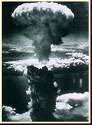
Now, I am become Death, the destroyer of worlds

The news of North Korea’s announcement of the detonation of their first nuclear weapon is reverberating around the world.  It is certainly an unwelcome development if true.  Now the question is, can that junior varsity Stalinist Kim Jong Il resist the temptation to use it in a warshot? Or, sell copies to a growing list of unwholesome groups bent on the delivery of radioactive hellfire to the infidel crusaders?  What may actually be worse than having one go off in the US is our possible response and the cascade of events that follow.  What would we actually do? Whose home soil would we vitrify in our wrath? Whom would we smite? I fear that our reply would have an Old Testament ring to it. 

 I’m reminded of the famous quote by J. Robert Oppenheimer-

We knew the world would not be the same. A few people laughed, a few people cried, most people were silent. I remembered the line from the Hindu scripture, the Bhagavad-Gita. Vishnu is trying to persuade the Prince that he should do his duty and to impress him takes on his multi-armed form and says, “Now, I am become Death, the destroyer of worlds.” I suppose we all thought that one way or another.

I vaguely remember talk of the nuclear genie when I was a skinny Iowa farm boy in the 1960’s.  Knowledgeable people assured that once the nuclear genie was out of the bottle there was no putting him back in.  North Korea and Iran remind us that the nuclear genie is still out of the bottle.  And while we worry less about a barrage of ICBMs flying over the north polar cap towards us, or Warsaw Pact forces storming into western Europe, we are stirred out of our slumber by third or fourth tier states cobbling together a fission apparatus. 

An hour and a half drive from where I am typing this can be found missile silo’s.  Deep underground in undisclosed locations Air Force Missileers monitor the status of their squadron of missiles while maintaining readiness.  Kim Jong Il’s shenanigans have brought back an immediacy to the matter.

 Mushroom Cloud

Kim is aware that the fact of power is the act of power. And swinging around a nuclear bomb is definitely an act of power.  The real danger of a North Korean Bomb isn’t just in the immediate threat to possible victims. The larger threat lies in how the existying nuclear powers respond.  Once a North Korean nuclear bomb is triggered in anger, restraint will fly out the window. It would be a difficult time for the North Koreans and whomever bought their bomb.

Why Teach Science?

Here is the text of a comment I made over at the Volokh Conspiracy. I have pasted it here so I don’t forget it.  OK, so there is a little bit of vanity here. But I do want to build on this theme. The context of this comment pertained to the teaching of science and the influence of proponents of Intelligent Design.

In the end, we who teach want students to be able to use their brains. We want them to be able to construct or use a theory to make predictions about the observable universe and then devise experiments to test their hypotheses. We want them to design positive experiments rather than negative experiments. We want them to use language and math to express what they are thinking. We want students to be comfortable using a working hypothesis while they are working on a problem, just as long as they remember that it is just that- a working model.

We want students to learn to follow the evidence and draw a conclusion rather that start with a conclusion and cherry-pick the data to be consistent with preconceptions. The glory in science is to be able to tip over the established order in favor of new insights and understanding based on data. In the end, scientific methodology is about intellectual honesty and accountability.

All measurement involves error which causes a certain amount of uncertainty in a result. You don’t have to invoke Heisenberg to consider uncertainty. A result is only as good as your worst data. This leads to my final point.

A sign of good training or instinct in science is the ability to be sceptical or at least a bit hesitant about your conclusions. Hesitant in the sense that your conclusion is to be considered within a set boundary conditions.

A scientific outlook has served me well in general. At least so far. The world would be much more complex if I had to invoke a miracle every time something odd happened.

As is common at this site, a cluster of blood-sucking fuss budgets are haggling over minutae.  I’ll bet not a damned one of them ever had to make sense out of a mass spectrum or isolate a new substance and prove it.

Civis Romanus Sum

I am a Roman Citizen- Civis Romanus Sum. A friend sent along a link to a NYTimes article by Robert Harris, drawing certain parallels between the attack on the Roman port of Ostia in 68 BC and the 9/11 attack-

“The incident, dramatic though it was, has not attracted much attention from modern historians. But history is mutable. An event that was merely a footnote five years ago has now, in our post-9/11 world, assumed a fresh and ominous significance. For in the panicky aftermath of the attack, the Roman people made decisions that set them on the path to the destruction of their Constitution, their democracy and their liberty. One cannot help wondering if history is repeating itself.

Consider the parallels. The perpetrators of this spectacular assault were not in the pay of any foreign power: no nation would have dared to attack Rome so provocatively. They were, rather, the disaffected of the earth: “The ruined men of all nations,” in the words of the great 19th-century German historian Theodor Mommsen, “a piratical state with a peculiar esprit de corps.”

The article goes on to detail how 38 year-old Gnaeus Pompeius Magnus (Pompey) contrived to obtain unprecedented and unchecked authority over the military and the treasury.  Harris goes on to describe what happened-

“By the oldest trick in the political book — the whipping up of a panic, in which any dissenting voice could be dismissed as “soft” or even “traitorous” — powers had been ceded by the people that would never be returned. Pompey stayed in the Middle East for six years, establishing puppet regimes throughout the region, and turning himself into the richest man in the empire.”

I don’t want to put too fine a point on the comparison, but the action by Pompey is considered by some to be the end of the Roman republic.  Harris goes on to say- 

“In truth, however, the Lex Gabinia was the beginning of the end of the Roman republic. It set a precedent. Less than a decade later, Julius Caesar — the only man, according to Plutarch, who spoke out in favor of Pompey’s special command during the Senate debate — was awarded similar, extended military sovereignty in Gaul. Previously, the state, through the Senate, largely had direction of its armed forces; now the armed forces began to assume direction of the state.

It also brought a flood of money into an electoral system that had been designed for a simpler, non-imperial era. Caesar, like Pompey, with all the resources of Gaul at his disposal, became immensely wealthy, and used his treasure to fund his own political faction. Henceforth, the result of elections was determined largely by which candidate had the most money to bribe the electorate. In 49 B.C., the system collapsed completely, Caesar crossed the Rubicon — and the rest, as they say, is ancient history.”

History does not repeat itself, but particular scenarios seem to recur.  Power, once granted to a leader, is seldom returned to those who abandoned it.  US Senate bill 3930 sets a bad precedent for our republic. I believe that too much authority is granted to the executive branch in the bill. Something as fundamental as habeas corpus should be treated like national treasure. 

S. 3930, CYA, and the security state

If you visit the blogs of thinking people, you cannot help but notice the repressed political frustration of liberal-minded folk.  Over at Cosmic Variance, Mark comments on the appalling status of S. 3930.  Decide for yourself. Have a look at Section VII of the Military Commissions Act of 2006. 

    (a) In General- Section 2241 of title 28, United States Code, is amended by striking both the subsection (e) added by section 1005(e)(1) of Public Law 109-148 (119 Stat. 2742) and the subsection (e) added by added by section 1405(e)(1) of Public Law 109-163 (119 Stat. 3477) and inserting the following new subsection (e):
    `(e)(1) No court, justice, or judge shall have jurisdiction to hear or consider an application for a writ of habeas corpus filed by or on behalf of an alien detained by the United States who has been determined by the United States to have been properly detained as an enemy combatant or is awaiting such determination. [Bold typeface by Gaussling]
    `(2) Except as provided in paragraphs (2) and (3) of section 1005(e) of the Detainee Treatment Act of 2005 (10 U.S.C. 801 note), no court, justice, or judge shall have jurisdiction to hear or consider any other action against the United States or its agents relating to any aspect of the detention, transfer, treatment, trial, or conditions of confinement of an alien who is or was detained by the United States and has been determined by the United States to have been properly detained as an enemy combatant or is awaiting such determination.’.
    (b) Effective Date- The amendment made by subsection (a) shall take effect on the date of the enactment of this Act, and shall apply to all cases, without exception, pending on or after the date of the enactment of this Act which relate to any aspect of the detention, transfer, treatment, trial, or conditions of detention of an alien detained by the United States since September 11, 2001. [Italics by Gaussling]
    In particular, note the words that I have italicized at the end.  Basically, the sponsors  of Senate Bill S. 3930 are shoveling dirt over what may be a portfolio of sins or crimes committed by the Bush Administration back to September 11, 2001. If you aren’t outraged, you’re not paying attention.
    This is not the America that I have pledged allegance to these many years.  This is some new country that I do not understand.  A corner stone of our American civilization is Habeas Corpus.  A writ of habeas corpus is issued by a judge and requires that the state produce a detained person and justify the detainment of that person.  Look at section in bold, the proposed new subsection (e)(1).  This statute will bar any court or judge from issuing a writ of habeas corpus on behalf of an alien detainee.  The other population barred from habeas corpus in this country are barnyard animals. 

    We hold these truths to be self-evident, that all men are created equal, that they are endowed by their Creator with certain unalienable Rights, that among these are Life, Liberty and the pursuit of Happiness. — That to secure these rights, Governments are instituted among Men, deriving their just powers from the consent of the governed, —

    All right, this is just the declaration of independence. It does not enjoy any statutory weight.  The executive & judicial branches aren’t obligated to promulgate its principles. But Americans do look to this document for guidance in directing the moral rudder of our country. These words do set forth guiding principles for the governance of our country, but they do not provide for statutory bite.
    So we cannot look to the Declaration for any statutory safe harbor in regard to  “inalienable rights”.

    The Privilege of the Writ of Habeas Corpus shall not be suspended, unless when in Cases of Rebellion or Invasion the public Safety may require it.

    However, it pertains to US citizens and contains the “Invasion” exception.  These constraints no doubt serve as the rationale for the acceptability of this bill. Listening on NPR, I have heard an interview of a senator stating that he considers the 9/11 attack to be an invasion and how that meets the constitutional criterion for the denial of habeas corpus to enemy combatants.
    How did the conservative party, a group that makes every effort to venerate themselves as the party of “values”, come to propose statutory backing to the notion that there are people who are unworthy or unqualified to enjoy certain inalienable rights that are ordinary to US citizens? How can the conservatives justify the loss of habeas corpus rights by an individual who is being held by the state?
    One of the rhetorical tools in common use is demonization. A hallmark of conservative mentality is the ability to partition people into the worthy and the unworthy, the saved and the unsaved, the good guys and the bad guys.  George Bush has framed our conflict with terrorists as a battle between good and evil. When your opponent is defined on a moral plane with the dark forces of evil, it is easier to justify all sorts of responses that we would ordinarily shun. Such as locking them up and throwing away the key. 
    Obviously, terrorists are criminals. And obviously they need to be incarcerated when convicted of their crimes.
    If America is to retain its status as the shining example of how to conduct civilization, then we must speak out against the official dehumanizing of any person. Terrorists may be savage, murderous, and reprehensible, but the manner in which we treat such persons ultimately defines who we are.  If the notion is that we Americans are possessing of inalienable rights, then it has to apply to everyone. 

Scathing Diatribe on RTIL’s

The 2006 ACS meeting in SF was interesting. In a much earlier post I lamented the recent trend of boring ORGN section meetings. That was definitely not the case this time around.  Of course, there was the usual assortment of faculty rockstars with their fawning groupies (OK, I’ve done that too). A lot of interesting insights into obscure stuff.  But I have to say that there was more buzz in the air in the ORGN talks.  My favorite profspiels included Toste, Doyle, Knochel, and Trost.

This time I noted a distinct lack of talks on room temperature ionic liquids (RTIL’s). After far too much breathless ballyhoo, the worker bees in this “area” seem to have hunkered down a bit.  Do I sound cynical? I have actually developed a manufacturing process for a commercial RTIL species. I can say that the economics of RTIL manufacture and certain kinds of applications of these expensive solvents can be awful.  At least awful in direct comparison to solvents like THF, toluene, ether, etc. If you’re using an RTIL, say, in a two-phase catalytic extraction process, then the comparison is faulty and the RTIL may be quite efficient to use.  However, if you need batch reactor volumes, i.e., 50 to 1000 gallons, then the batch process costs may require scientific notation.

Even pharma companies with deep pockets extending to the MOHO layer will worry about these economics.  In order to justify an $50-$250/kg solvent (!!), there has to be some whiz-bang process improvent to justify such costs.  In batch processing, RTIL’s are prone to the concentration of ionic species or water from the previous run. The practical consequence of this is that the RTIL may be a different material from one run to the next. It may or may not be an issue. But you’ll have to investigate and qualify it. You may have to polish the solvent (!!!) after each run to qualify the subsequent use of the RTIL. How green can that be?  

I cannot speak from the perspective of a pharma industry chemist. But I can speak as someone who makes specialty products for the pharma business. From bitter experience I can testify that the last thing you want to be is the supplier of the most expensive reagent in the customers process.  It is like a rock in their shoe. They’ll squirm and fitch around until they find a cheaper supplier or engineer a way around the offending reagent. Hell, I’d do the same thing in a heartbeat. Nothing wrong with that. But it is this sort of raw cost pressure that makes the commercial viability of RTIL’s difficult. 

The disposal of bulk RTIL’s may be expensive too.  Since as a group they are resistant to incineration, the natural question is- How do we safely and ethically dispose of bulk RTIL’s?  I’m sure that someone out there in the blogosphere has a comment on this.

<END RANT>
 

PTO Rule Changes

At the recent American Chemical Society meeting there were numerous seminars regarding proposed rule changes in the regulations pertaining to patent prosecution. Some attorneys from major law firms were present and there was considerable hand wringing. Changes affecting the scope of inequitable conduct were of special concern.

It seems to me that the proposed changes, while not trivial and possibly even a net benefit, fail to sum up to a significant re-think of the US patent system. The strategic plan proposed by the PTO seems to address for the most part mechanisms for increasing the velocity of patent examinations. Given the substantial growth in patent applications, the PTO definitely does need to staff-up and streamline the system.

However, inventors and assignees need to have a better idea of how the PTO operates. Currently, only attorneys seem to have a grasp of the system, and barely at that. The quality of patents will increase only when inventors and assignees have a better idea of how to assemble a packet of disclosures for the patent attorneys.

All too often the attorney receives an incomplete and poorly articulated stack of scribblings from an inventor. Since patent attorneys are by nature predisposed to “find a way” to patent the invention, they “find a way” to do it. That is why you hire an attorney. But all too often a sketchy disclosure to the attorney results in poorly executed claim construction and a patent that is too narrow in scope.

In order for the US patent system to work well, the inventing and patenting public needs to become more familiar with the system.

Fly the Friendly Skies

I’m just back from the ACS Meeting in San Francisco. More on that later. Of immediate interest to me is how air travel has changed and how we are blithely accepting the loss of a sort of egalitarianism that has only become apparent as it is lost.

In this age of security theatre, we are being required by Homeland Security to adopt a passive posture as users of airline services. But despite all of the visible security measures, turns out that good old-fashioned police work may be the best approach to terrorism. The Brits defeated IRA terrorism that way.

This afternoon while boarding at Gate 86 at SFO, ticket holders were required to queue up behind two distinct openings that were literally side-by-side and distinguished only by the presence of a short piece of red matting on the floor of one of the two entryways. The strident young male gate attendant (United) was adamant that only First Class passengers and certain other flying gentry were to walk across the red mat. All others were to trod upon the common carpet adjacent to the red mat. He did not come out and vocalize it, but he did demonstrate his intent through the use of crowd control cordons commonly found in airports. It strikes me as tragic yet exquisitely comical that this enthusiastic fellow is forced to perform such an absurd dance at every departure. You pay an extra kilobuck and you get to walk across the red mat.

I pointed this out to other Zone 4 coach passengers and was met with the usual “my-gawd-why-is-this-guy-talking-to-me-why-doesn’t-he-shut-his-cake-hole” look. They looked at their watch or cell phone and found a reason not to talk further. It’s amusing. Most of us are only too happy to adopt a passive stance and tough through it. Humans can adapt to fantastic incursions into their civil liberties and not utter even the most plaintive bleet of protest. Stalin knew this. So did Pol Pot, Hitler, Mao, and others.

Another observation is the recent attention to the seat-belt sign by the flight crew. Flight crews on airlines that I have flown lately, United and Frontier, have been real sticklers for obeying the seat-belt sign and keeping passengers in their ticketed toilets. It doesn’t matter that your bladder is about to discharge a dilute urea solution on their expensive seats. At the slightest indication of turbulence, the pilot switches on the sign and that’s it- gotta sit down pursuant to FAA law.

The facile conclusion is that they are practicing loss avoidance by keeping passengers from being plastered to the ceiling during extreme turbulence. But such events are really scarce. I might suggest that this is a subtle means of keeping passengers in their seats and away from the cockpit or the galley. After all, we need to keep a clear line of fire for the air marshall on board.

<End rant>

Heart of Darkness

In the words of Colonel Kurtz- The horror! The horror!

I spent Labor Day studying patents in order to build an IP map. Everytime I do this I conclude that some people should be spanked for the kinds of patents they submit. No. A whole line of people should be severely beaten spanked- research directors, reseachers, patent attorneys, and examiners. Layers of obfuscation heaped upon a linguistic topography of sinuous channels and ridges. Cures in search of a disease. Water-logged IP rafts wallowing without crew in the statutory safe harbor of Patentstan. 

Bad patents, yes. But they are bestowed with the presumption of validity. Apply a known transformation to a new substrate- Kaboom! A patent! Redefine diethyl ether as a “Lewis Basic dispersant“! Bang! Novelty! Game the system to the (n+1)th degree- swamp the PTO with minutae and obfuscation and get yerself a patent! If gaming the system is possible, then it is obligatory.

A year ago I visited the USPTO in Alexandria with the intent of getting a tour of the place. Maybe get some insight into the process and the people of the institution. I called ahead and was told that we would be met at the gift shop/museum.  When we arrived we were told that 2 people didn’t warrant a tour, but the rep would be glad to show us the cafeteria (!) and the library. So, that is what we did. We saw the cafeteria and the library. Oh, I forgot to mention, we stood in the foyer next to an auditorium downstairs where, gulp, actual examiners met for important meetings. Jeepers.

The patent game on the application side is almost completely run by attorneys and the occasional agent. That’s fine. It is truly a specialty and such specialists are sorely needed. But in a sense society has abandoned it to this league of office action jockeys who naturally fill in the vacuum left by the rest of us. Should we be surprised? Of course not. But given the MM$’s thrown at the development of IP, R&D managers and business leaders should be paying more attention.

And thanks to the Dole-Bayh Act, professors can jump on the IP train and tie up their developments in a 20 year monopoly too. Why pay for university research just once? Pay again to access it in SciFinder or Crossfire. Pay to see it in a journal subscription. And, then pay yet again to get a license to use it! Hey, the folks in accounting just love to be audited by pencil-necked university IP auditors looking to find a stray rupee.

OK. I’m being sarcastic.

Bigger Glass

One of my other interests involves an astronomical observatory. I and many others volunteer at a completely volunteer-based operation. We recently obtained a telescope via Telescopes in Education. The deal is that we have to put the scope to use educating the public, especially K-12 kids. Sounds easy enough. That is what we do with the 18″ Cassegrain we already have. But the catch is that we have bigger plans for this scope than just serving the locals. The idea is to put the scope to use over the internet. Why not make it available to any teacher over the internet who wants to have an astronomy lab session? That is the plan. Fortunately, we have a telescope guidance engineer, an astronomer, an aerospace engineer, as well as several other resourceful folks on the board of directors. I think it’ll work.

Mt. Wilson 100 Inch Telescope24

Gil and Meinte

We drove to Mt. Wilson Observatory in July of 2006 to retrieve the Cole 24″ telescope, which was taken out of service in 2004 due to loss of funding. We estimated it weighed about one ton. We bolted it down to the trailer and drove it back to the front range of Colorado. We estimate that it’ll be up and running in 12-18 months. We’ll install an upgraded drive system and attach a weather station input to allow for automated weather sensing for the dome controls. The ideal configuration is to have a system that can be operated remotely without having a staff member in the dome. 

Putting together a Telescopes in Education equipment installation requires the overlap of some unusual characters. Gil Clark, the founder of TIE, and Meinte Veldhuis, President of the Little Thompson Observatory (see photo) are exactly the sort of people who are able to pull off such a thing. Gil’s (left) background is in computer science and he spent much of his career at JPL in Pasadena. Meinte (right) is a Dutch-born mechanical engineer and develops satellite payloads for an aerospace company. They are both one-in-a-million sort of guys and have the means and the vision to bring this scientific capability to a younger crowd. I tip my hat to them and the dozens of others who quietly go about this business.