I want to call out Canada’s prime minister Carney for his well crafted speech at the 2026 Davos World Economic Forum. Maybe Canada should annex the USA rather than the other way around.
It is painful, embarrassing and sickening to watch the Trump administration methodically driving our great country off the road and into the weeds of blatant unilateralism. Listening to the despicable White House aid Stephen Miller speaking about the need for the USA to exercise its strength by threatening the world with the Trump administration’s aims at conquest is deeply distressing.
The Trump problem in the USA stems from his ring of back room schemers and, most importantly, the voters who put him in power … twice. Many of us were surprised at the magnitude of MAGA discontent and anger at the status quo. The various polls I’ve seen show that of the fraction of voters responding, about 30 % support Trump consistently. The remaining Trump voters seem to think that he is tolerable and, by default, a less terrible choice than the Democratic candidate.
Not being a political scientist, sociologist, economist or anthropologist I must restrain myself from anything more than superficial commentary. That said, what strikes me is the gap between voter confidence and their grasp of the consequences of having Trump in high office. It appears that many voters possess a wildly insufficient education in civics and history. Instead, that knowledge void is packed with bullshit. Before the internet and instant access to news and opinion, the movement of news was through narrower channels that spread poorly. Controversies were more sluggish and mob mentalities perhaps slower to spread. Today there is a hair trigger on personal political opinion for a great many.
Today any individual with half-baked opinions can potentially incite unrest even at a great distance with fake news and recently with AI produced images. And energized with Christian nationalist ideology, people can cite supernatural powers to justify their insane political views. Political ideology justified by supernatural forces is impossible to reason with.
The people who have been complaining about the poor quality of American education were right all along. A third of the US population is unable to discern why Trump is a disaster for America and the huge hit our democracy is facing. This is largely an education problem and those adults so afflicted can be expected to carry their ignorance and poor judgement to their graves.The critical mass (of idiots) for this disaster is smaller than many of us thought. I am unable to fathom how this might be changed for the better.
Microsoft (MS) has gotten too big for its britches. Over time its wildly popular series of Windows upgrades has won over much of the world. For many years they successfully operated under a business model that said If you build it, they will come. The latest upgrade presents improved features that require some customers to get over their thrifty-hump and pay to upgrade their computers to Windows 11. This business model kept sales growth high and led everyone to believe that it would go on forever. After all, founder Bill Gates is a likeable folk hero whose appeal across the business and computing worlds seemed inexhaustible. But he is a tech guy, not a finance or marketing specialist. At some point most tech companies transition from tech driven to finance driven as they are taken over by the finance guys.
Numerous examples exist where a tech company goes from engineering focused to finance focused. Boeing is a recent example of an aerospace engineering culture transitioning to overriding concern for shareholder value in the form of quarterly stock prices. In the unceasing desire of the C-Suite to improve profits by cost cutting, Boeing apparently drifted a bit to far into the MBA’s fever dream of operating a finance engine. The 737 Max fiasco and their botching of the Artemis program is widely regarded as being due to drift of the company culture. Luckily, nobody has been killed in the Artemis program due to Boeing engineering failures … yet.
Another example of this is what Jack Welch did to General Electric Company (GE). His transformation of GE includes implementing a cut-throat culture. I’ll let readers visit the Wikipedia page for more details. Guys like Welch become demigods attracting hungry young business school graduates flocking to their pedestals hoping to glean savvy insights and secrets to become the next generation of masters of the universe. I can’t blame anyone for their enthusiasms and the desire to succeed, but bastardizing technology companies by conversion to finance companies is beyond the pale. When those who inhabit the rarefied air of the C-Suite are more concerned about their golden parachutes than the furtherance of their manufacturing ingenuity and quality, they should move on. When Jack Welch left GE, his severance package was $417 million.
I’m partway through switching to Linux Ubuntu from the home version of Windows 11. I just purchased an Asus laptop preloaded with Linux. Like most people I have a giant collection of pdf files as well as MS Word and Excel files. My understanding is that pdf files are easier to transfer to Linux and one of the better ways to deal with Word documents is to convert them to pdf.
MS Windows and MS Office were loaded with advanced features wildly beyond what any single user would need to use. These features were neatly organized in pull-down menus and manipulated with the click and drag of a mouse. This would allow users from casual to super-users to use a single package across a wide range of applications. No need to offer different versions across business, personal and scientific applications.
MS has been selling excess capacity from early on. It was part of the ballyhoo and razzle dazzle. Think about all of the objects you own that are packed with unneeded applications you’ll never use. I wonder how much of the US economy is spent on tools and widgets that have wasted utility.
The Windows operating system (OS) and MS’s package of office applications have provided a widely adopted template for business activity, games and home computing. The friendly and perhaps even inviting graphic user interface (GUI), facilitated by the mouse, put a buffer between the user and the stark command line input with no visual clues of what to do next. Windows applications were user friendly and forgiving of mistakenly used features.
Many feel that Windows 7 was the high point in this important series of products. It seems Microsoft is a victim of its own success. Once market penetration reached a certain level, the question becomes how to sustain sales, EBITDA and growth. Auto manufacturers solved this problem long ago by offering physically appealing cars that were new and improved each year. They often used successful models as a guide to improved design and performance. While not foolproof, this approach can work very well.
Switching from the Windows OS to the Linux OS is what I’m doing presently. I’ve been saving MS Word and Excel documents since the late 1990’s. The version, or “distro’, of Linux I’m using is Ubuntu. It has a Windows-like GUI except that there is a command-line feature that needs to be dealt with. Windows does too, but I’ve only seen IT folks dip into it to work their dark arts.
My impression is that Linux applications are not initially as feature rich as Windows but realize that the succession of Windows upgrades have been subject to creeping featurism from the beginning. Windows 11 has builtin spyware in addition to increased bloatware running in the background, bogging down computational speed. Allegedly the goal of MS is to apply Co-Pilot to use captured user data for the user’s search purposes. As of this writing Windows 11 market share at 31 %.
The Linux mentality is quite different. Generally, technology tends to improve in succeeding versions in order to stay competitive in the market. That evolution plus a new business model have led to the current Windows 11 fiasco. Older Computers that operated well on Windows 10 are suddenly inadequate for a drop-in replacement to Windows 11. People, businesses and governments are outraged by equipment upgrades needed to do what they did yesterday and consequently are dropping out of MS Windows all together. So alarmed is MS that it has even caused Bill Gates to be recalled from retirement to help brainstorm the sudden migration away from Windows.
MS has implemented artificial intelligence (AI) elements that are unwelcome to many users. MS blurts out that AI promises to improve efficiency for users. Every dog and cat out there is doing the same. AI is an economic bubble that many are trying tap into. Early adopters do the best in these bubbles.
MS has tumbled over the edge ofIf you build it, they will come. Furthermore, the annual subscription now in play is new to most individuals using Windows. Even worse, the sacrosanct space on your hard drive is not even safe from the MS mothership hovering overhead beaming up your information or plowing it into the cloud that you may consider confidential. Should some documents under Windows 11 be air gapped onto a thumb or disconnected external drive? Seems that way.
At a time when the Trump administration is making enemies in the EU with talk of a military adventure in Greenland, Putin has unleashed Oreshnik hypersonic intermediate range missiles at Ukrainian civilians. The targeting of civilians is nothing new for the Russians, but the Oreshnik missiles travel at up to Mach 10 (7610 mph) which makes shooting them down problematic. Russia has held back this missile system until now., though in 2024 it apparently had fired a test shot absent explosive warheads. According to Wikipedia the Oreshnik ballistic missile system is still in the experimental stage.
The Russians have gotten quite peevish lately, claiming that Ukraine targeted the sprawling home of Putin. Targeting civilians in Kyiv as well as Lviv in western Ukraine serves the dual purpose of reminding the NATO and the EU of the threat Russia poses to them. Golly. Imagine a warring state trying to decapitate the leader of its opponent. According to reports Russia has been trying to assassinate Zelinski, so a reciprocal decapitation effort should be expected.
While Russia burns through military resources and personnel, and while the Russian economy teeters on the edge of total collapse, the conventional military threat to Europe should weaken more by the day. They are taking roughly 1000 casualties per day while their recruitment effort is falling short of that number. However, the nuclear threat remains. It is an open question as to whether Putin refrains from releasing nuclear weapons as his tenure becomes endangered. The Oreshnik missile is capable of carrying multiple nuclear warheads- a fact that is lost on nobody.
It’s not in the nature of Putin or his Kremlin to admit even the slightest amount of damage or discomfort caused by Ukraine. One fine day the west will learn that Putin has disappeared and a successor has surfaced. What will Russia do then? A gesture of humanity, perhaps? That would be out of character. A Russian leader could never admit mistakes or defeat. Krushchev did it, but his tenure was cut short by the politburo with Brezhnev taking his place.
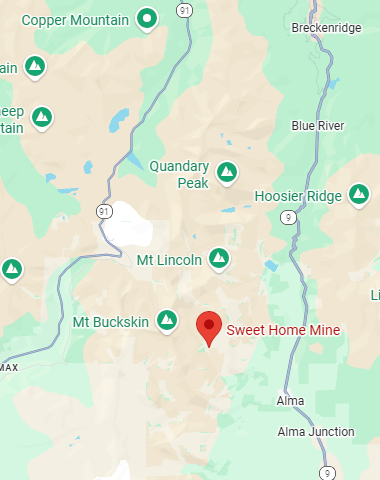
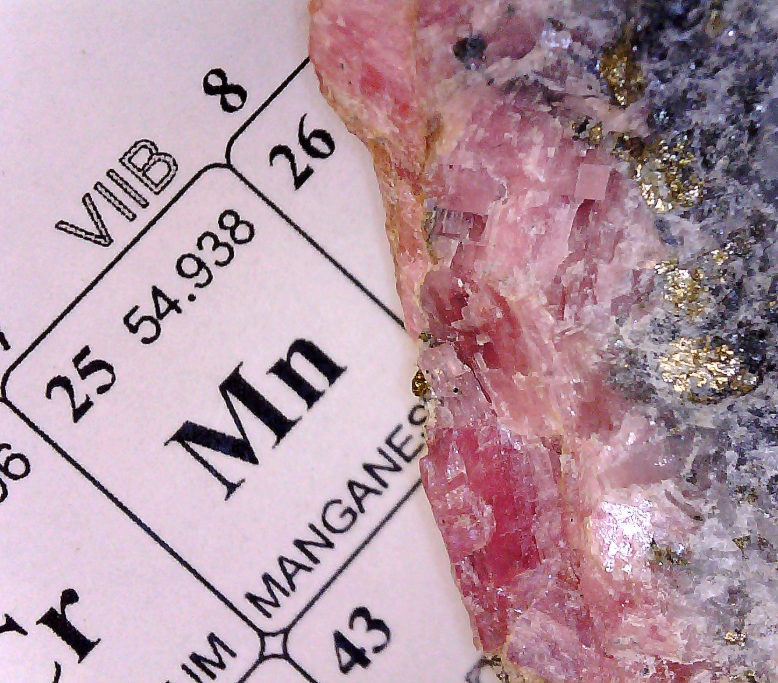
Not a single reader has asked about the photograph in the header of this blog, so I’ll save the many peoples of the world from having to ask. Mineral collecting has been a lifelong weakness of mine so there was no surprise when I bought the pink mineral in a rock shop in Leadville, Colorado. The pinkish mineral in the sample is rhodochrosite, the state mineral of Colorado. Like most samples, it comes from the now-closed Sweet Home Mine, a failed silver mine in Buckskin Gulch outside of Alma, CO, between Breckenridge and Fairplay. If you are ever in Denver with spare time on your hands, the mineral collection at the Denver Museum of Nature & Science has a stunning collection on display of rhodochrosite from the Sweet Home Mine.
Source: Google Maps. Location of Sweet Home Mine outside of Alma, Colorado.
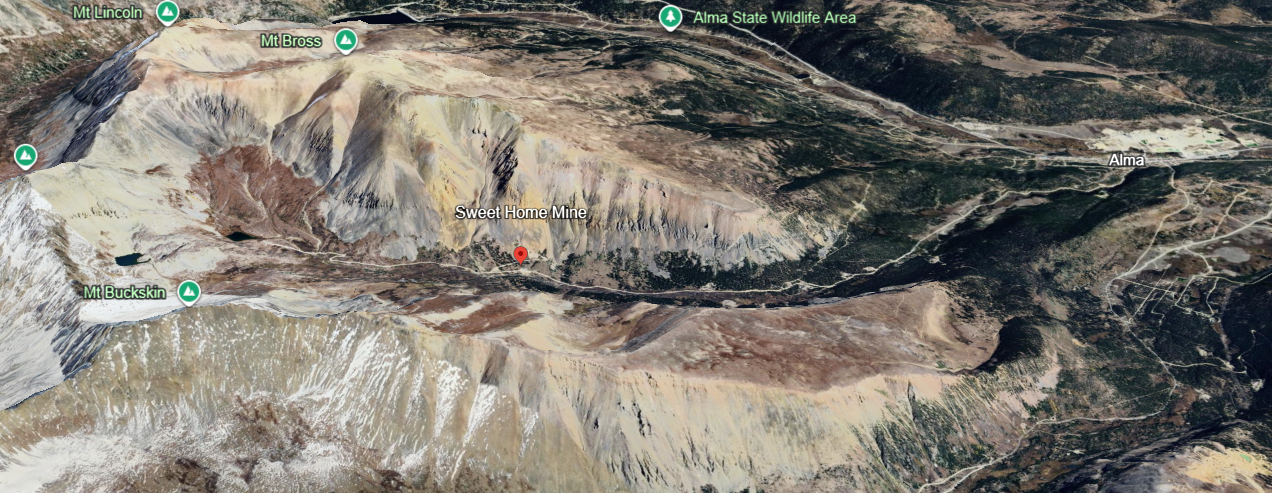
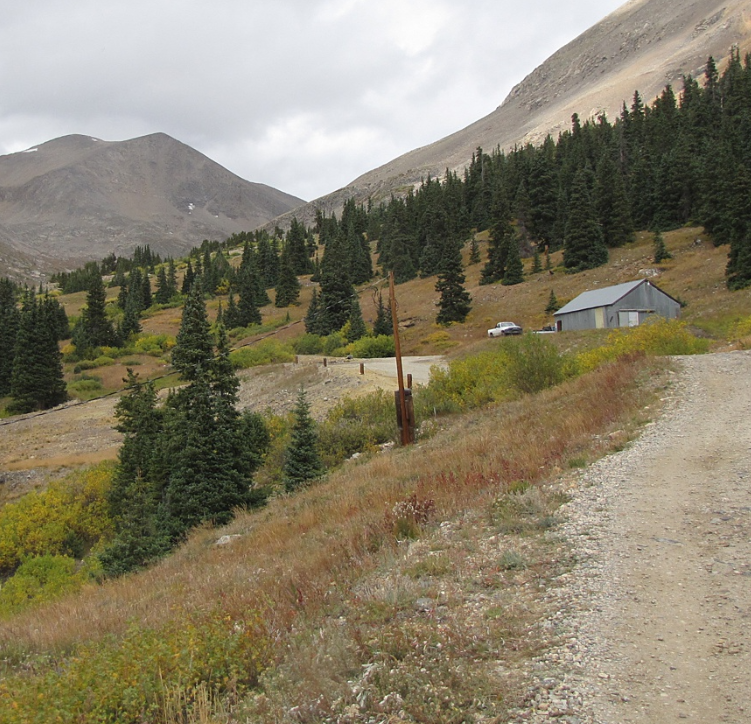
To get to the site take gravel road 8 from Alma up Buckskin Gulch which eventually terminates at a trailhead near the base of several fourteeners in the Mosquito Range. We once tried to find the mine by driving up the gulch above Alma, but there were no signs identifying the mine.
Source: Google earth. Location of Sweet Home Mine in Buckhorn Canyon.
While we did not positively identify the mine on our trip, a photograph (below) was found later of a building associated with the mine. We did see it but sailed right on by. The mine is located on private property so wandering around the site is not permitted.
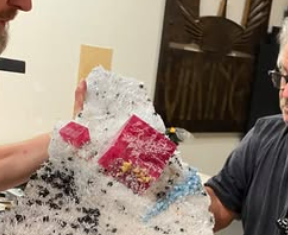
Source: Facebook. The famous Alma King rhodochrosite specimen with museum dudes for scale.
Source: personal specimen purchased at a rock shop in Leadville, CO. The rhodochrosite section is placed next to manganese on the periodic table just because it looked cool. The gold-colored bits on the specimen are likely chalcopyrite.
The mining district was discovered in the usual way- the search for placer metals like gold led miners up Buckskin Creek into the gulch looking for the source of the lode deposit. Originally a silver mining claim was made in 1873. The sporadic silver mining operation was abandoned in 1966. In 1991 the mine was bought out by Collector’s Edge Minerals, a consortium, and modernized. After a period of activity, the Sweet Home Mine was closed in 2004. However, another mine called the Detroit City Portal was begun by Collectors Edge on nearby Mt. Bross in 2016. This new operation, yielding many fine specimens was finally closed in September of 2024.
Source: Mindat.org. Looking north towards the Sweet Home Mine and what appears to be Mt Democrat on horizon.
“Mineralization is generally in base metal-silver-rhodochrosite-fluorite veins predominately hosted by meta-igneous and metamorphic rocks, with minor mineralization in porphyritic dikes and pegmatites. There are five main veins in descending order of production: the Main, Tetrahedrite, Watercourse, Blaine and Blue Mud veins. The Blue Mud Vein is a barren post-mineralization fault-vein, and production from the Blaine Vein was minor. Overall, the planned extent of the mine is small (1000 feet x 400 feet) with about 5,000 feet of workings, and the overall hydrothermal alteration zone small, despite evidence of on-strike continuation of the veins in the collapsed Tanner Boy workings directly across Buckskin Gulch. And even within a vein, rhodochrosite finds were limited.”
“Three conditions were responsible for the formation of vugs: (1) changes in strike and dip of veins, (2) vein intersections, and (3) openings formed by fault bends controlled by host rock foliation. In general, the 2nd condition was responsible for major pockets, and the 3rd for most smaller pockets. Exploration focused on fault/vein intersections. Fluid inclusion studies suggest that the hottest fluid flow produced the gemmiest ruby-red rhodochrosites.” Minedat.org
Deposits found in the mine result from mineral-saturated hydrothermal fluids moving from the mineral source-rock into faults and fractures in the formation that were cooler, leading to precipitation of the minerals. The large size of the rhodochrosite crystals in the museum collection suggests that the precipitation was gradual.
According to Minedat.org, after the buyout of the Sweet Home Mine by Collector’s Edge Minerals and subsequent modernization, ground penetrating radar was used to survey for vugs. According to the AI overview by Google in a search for “vugs”-
Vugs are- “small to medium-sized hollow spaces or cavities within rocks, often lined with beautiful, well-formed crystals like quartz or calcite, formed by mineral-rich fluids filling natural voids left by dissolution, tectonic shifts, or gas bubbles in volcanic rocks, prized by collectors for their exposed crystal formations.”
Only makes sense, right? Liquids within voids in the rock have the opportunity for crystals to grow into. Vugs are associated with faults and fractures which can be filled with hydrothermal fluids within a formation. Lode gold, silver, lead, etc., as well as quartz may line or even fill the vug. This is why some of the best mineral crystals are only found in mines and this certainly applies to rhodochrosite. Rhodochrosite contains manganese (II) which is oxidizable to a higher, more positive oxidation state, so protection from atmospheric oxygen deep within a rock formation prevents decomposition of the mineral.
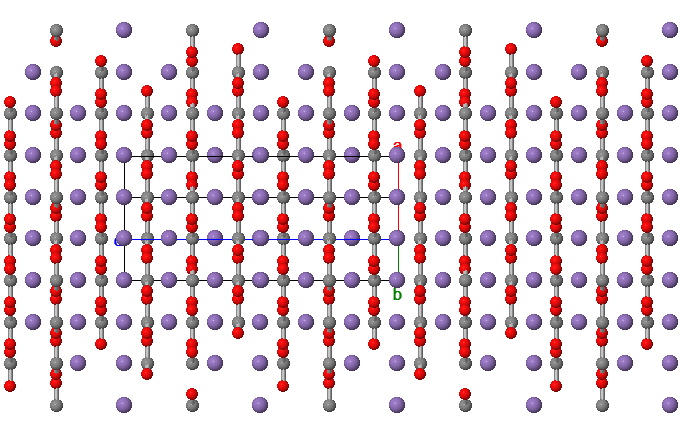
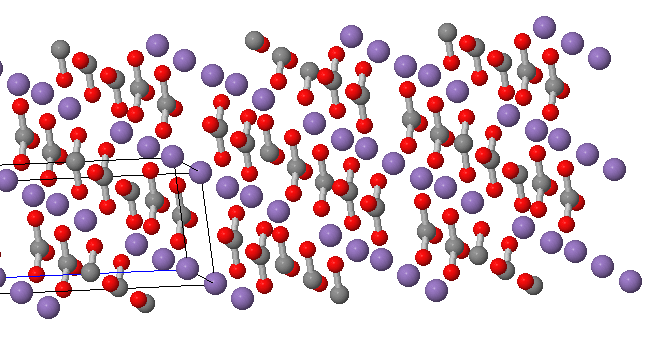
Crystallographic structures of rhodochrosite are shown below-
Source: Mindat.org. A view of the crystal structure rotated to see the planar arrangement of Manganese (2+) in purple and carbonate anions (2-) in grey and red.
Source: Minedat.org. In this view the alternating layers of carbonate anions (CO3 2-) delineating the carbon and oxygen atoms. The trigonal shape of carbonate can be seen.
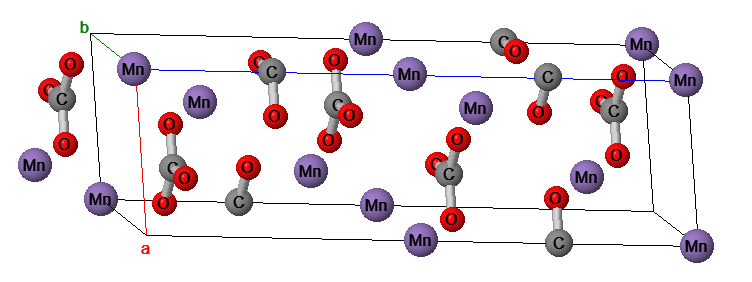
Below is a representation of the unit cell with atom labels. Clear images are tricky with crystal structures. Overlapping features are hard to avoid.
Source: Minesdat.org. The labeled unit cell of rhodochrosite. Partial carbonate structures can be seen contributing to the unit cell.
Rhodochrosite is manganese (II) carbonate, MnCO3, and is insoluble in water but as a metal carbonate it is acid sensitive and therefore subject hydrolysis or chemical or microbial oxidation to Mn(III) or Mn(IV). Like a great many common ionic substances, it is not regarded as suitable for jewelry applications because it is not comprised of silicate or aluminum silicate subunits common in semiprecious and more robust minerals like sapphire, beryl or garnet. The structure is composed of MnO6 octahedra connected by trigonal carbonate units. The large buff-colored balls are manganese atoms and the smaller, bluish-colored balls connected directly to the manganese atoms are oxygen atoms. The middle-sized darker balls not connected directly to the manganese atoms are the carbon atoms of carbonate.
Manganese is not uncommon in the Colorado Rockies. A mining geologist once complained to me that there was so much manganese in their gold mine tailings that it was a regulatory problem for them. For a time pyrolusite, or manganese dioxide (MnO2), was mined in Colorado, near Salida. Never a large operation, pyrolusite could be used in the extraction of gold from its ore.
Crushed pyrolusite was placed below a wooden container along with sodium chloride. To this mixture was added concentrated sulfuric acid. This generated gaseous hydrochloric acid which was then oxidized by the manganese dioxide in the pyrolusite into chlorine gas which flowed up through the container of gold ore combined with the gold ore and generated gold chloride. The water-soluble gold chloride was removed with water, then isolated and into this pregnant solution was dumped scrap iron. The iron reduced the gold chloride and finely divided gold precipitated out. This was a pretty danged clever method for use in the field as it required only water, NaCl, H2SO4 and pyrolusite mineral which could have been mined in Colorado.
Oh, BTW. You might know that a way to generate a stream of fairly dry HCl gas (in a lab fume hood!!!) is to place granular NaCl into a vented flask and slowly drip conc H2SO4 from an addition funnel on it. A stream of nitrogen is used to force a flow of HCl out of the flask and through a sparge tube into your reaction flask.
And, speaking of metals ...
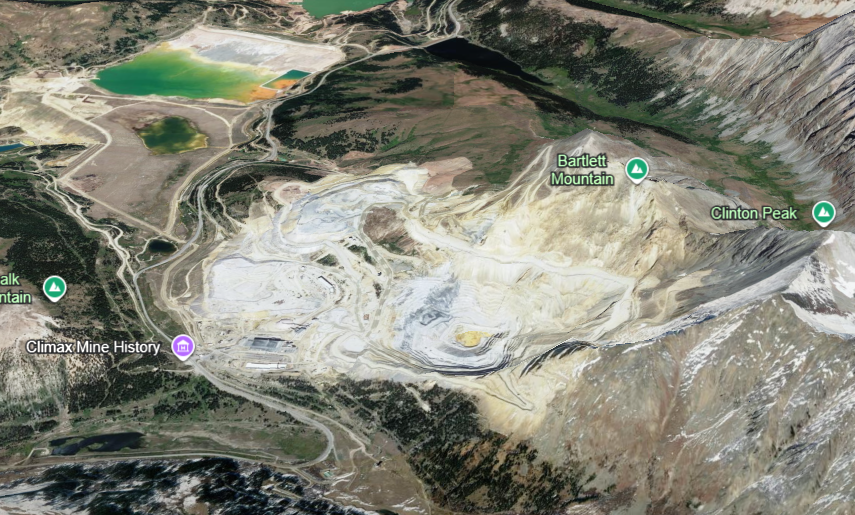
Nearby the Sweet Home Mine, a hop, skip and a jump across the ridge to the NW is the Climax Molybdenum Mine on Fremont Pass just west up the road from the Copper Mountain Ski Resort. This major mining operation is owned and operated by Climax Molybdenum Company, a subsidiary of Freeport-McMoRan. If you look at the image for a minute, perhaps you can see that most of Bartlett Mountain is gone. Just imagine laboring in a frigid mine above the 11,000 ft altitude. I’d be dead by noon the first day …
Source: Google Earth. Just a few miles NNW of the Sweet Home Mine is the Climax Molybdenum Mine on Freemont pass.
The mineral of interest at the Climax is molybdenite, or molybdenum sulfide, MoS2. The deposit was discovered in 1879 by prospector Charles Senter who was actually prospecting for gold or silver. By 1895 Senter found a chemist who determined that the mineral contained molybdenum. At that time, however, there was no market for the moly. In a few years steelmakers discovered that molybdenum had application in steel making and, with the onset of WWI. the mine went into full production after it was discovered that the Germans were using it to strengthen steel in their tanks and weapons.
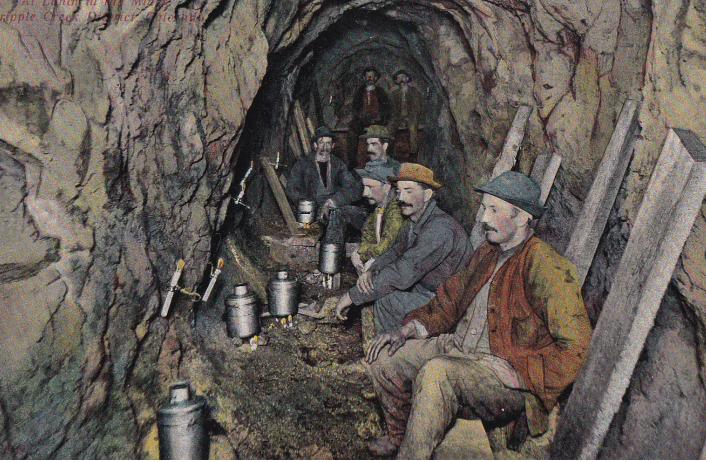
The National Mining Museum and Hall of Fame down the road in Leadville has a large collection of interesting artifacts from early mining efforts at Climax. If you have been in many mines, you’ll know that they are mostly hallways that have been blasted out of solid rock. When mining activity stops, they are eerily quiet.
Image source: National Mining Museum in Leadville, CO. Colorized photo of lunch time in the mine.
Molybdenum sulfide is also valued as a dry lubricant for use in the temperature extremes and vacuum of space. Dry, low vapor pressure lubricants are used to prevent evaporation and contamination of optical surfaces on a satellite.
The president’s lap dog and offensive coordinator, Mr. Stephen Miller, has been yapping about America’s supposed right to annex Greenland. The pathetic swine is going on about our role as a superpower and how we should be pushing America’s weight around. I’m faint with nausea as I write this because that is what this sickening pig does to me. I’ll try to continue.
The prime minister of Denmark, Mette Frederiksen, said recently that Trump’s comments about Greenland and last weekend’s abduction of Nicolás Maduro and his wife will likely lead to the collapse of NATO. NATO, in case half of America was sleeping, was a big part of what kept the world from WWIII during the cold war. But hey, Trump knows better than anyone because he is rich and has nailed down the speaking patterns of an after-dinner speaker in the hotel ballroom. His third-grade intellect is sufficient for his supporters.
There are plenty of sensible people in the USA who absolutely object to what Trump is doing to our beloved homeland and by extension to the world. It appears that his vision for America is in parallel to Putin’s vision of a large and powerful Russian empire. Putin’s ethnic pride pushes him to Russify as much western territory as possible in order to balance the USA and Europe.
Trump is not buggering America by himself. Who are those pathetic souls who grease the fascist machinery behind the scenes? There must be a list of lieutenants who do the planning and conceive of the action plans. Trump is not a detail man. He is the showboat and on-air talent.
The USA elected a mouthy billionaire real estate developer as president- twice -and what is he doing? He is looking for land to develop. He wants to repartition the world to fit his developer’s dream of having the USA pay for his indelible mark on monuments and in future history books. Another one of his businesses is the sale or leasing of his brand- TRUMP. He’ll plaster his brand without fear of recourse because we’ll let him do it. For crying out loud, he is planning to build a triumphal arch. And his supporters continue to tingle in excitement over his feats of strength and disregard for his detractors.
While Trump is casting societal norms into the ditch, we law abiding citizens must tolerate his dishonesty and incompetent mishandling of our historic nation. We tolerate it because we have respect for the constitution and the rule of law. He was twice elected to high office and we have respected his wins. The founders did not anticipate the ultraconservative majority that got elected or appointed to SCOTUS and how the country might be taken down one wall at a time.
Not only does #47 skirt the law but the news media, the fourth estate, who have previously tried to live up to their role in civic life are now conspicuously silent. The founders could not have anticipated the magnitude of trouble electronic media have contributed to a civically immature population.
It is well past time for us by the millions to take to the streets in lengthy and vigorous opposition to the current administration. We must make noise and push back in vast numbers with all of our strength. I know those who would protest with me once but not many who would do it multiple times. Arrest and reprisal must be accepted as untold millions have around the world.
America has been a land of opportunity for anyone who could summon the will power to “make it big.” Now, America is about those who have already made it big and are trying to push closer to trillionaire status. Haul up the ladder, I’m on board. Trump’s wealth has been seen as a sign of business savvy which was thought to transfer seamlessly into governing. So how did that work out?
The downfall of the United States of America is being accelerated by voters too clueless to know otherwise. Democracy is being undone by an idiocrasy from the low side of the bell curve. Citizens too stupid or too lazy to understand America’s place in the world. World history has been heavily documented so there is no excuse for civic ignorance.
Stephen Miller’s psychotic rattling of his stick in the administration’s bucket of shit in front of the White House never ceases to satisfy America’s confederation of fools. What a sad time to be alive.
As an American I want to express my dismay and humiliation at the malignant behavior of the maniac that many, but not a majority of, US voters elected as our president … twice. The words idiot or narcissist fail to capture the magnitude of Trump’s deviant personality. I’m at a loss for a strong enough description of this American bad guy.
It’s bad enough that the USA has to put up with him, he is now taking his diseased fantasy show on the road. The attack on Venezuela and apprehension of the Venezuelan president has rattled cages around the world. Worse yet, he said that America will “run Venezuela for a while.” The noises emanating from his cake hole also suggest that Venezuelan crude oil is on his mind as well. After all, Venezuela has the largest oil reserves in the world. Does he think that American oil company giants will immediately “drill baby drill” and be forever grateful to him?
Does the Trump administration fantasize about placing a democratic republic in place after Maduro? Just like we did in Afghanistan, Iraq, Libya or Viet Nam?
The US snatch & grab of Maduro from his home in Caracas was technically well-executed but strategically very dangerous and diplomatically naive. One can imagine Chinese military planners moving up the date of their invasion of Taiwan now that international norms have ratcheted down a few clicks.
Pro-Trump media in the US are portraying this Venezuelan expedition as a phenomenal success and cause for patriotic chest thumping. There isn’t anyone stating in public that Maduro is a misunderstood saint. He is was a bad actor and should have been toppled years ago. Few are shedding tears.
The drug running crimes of Venezuela’s cartels include cocaine, but not fentanyl according to knowledgeable people. Worse yet, many are saying that the Venezuelan “drug boat” interdictions conducted by the US Navy were primarily of deliveries to Europe. Not that that is acceptable but victories for the America drug war they are not.
The big problem is the unilateral obliteration of another nation’s sovereignty and disregard for rules-based conduct of the USA. Has the Trump administration thoughtfully considered what unanticipated consequences may hatch out of this offense against international norms and the United Nations?
One of the more intriguing ideas is that the next “expedition” might be Cuba which is closely tied to Venezuela. Venezuela supplies oil to Cuba and they provide health care professionals in return. Being a client state of the Soviet Union in the 1960s, Cuba has been a strategic thorn in the side of the USA since the early Fidel Castro days and a locus of embarrassment in foreign US policy. The US Secretary of State and former Florida senator Marco Rubio is of Cuban descent and is known to harbor ill will towards the Cuban government. But, as always, predicting the future is iffy.
Along with the restructuring of global political power is the momentum to remove the US dollar by the BRICS states from the dollar’s dominance in international finance. American global financial dominance and “political stability” is connected to foreign investment in the dollar which sustains American debt and deficit spending.
There is speculation floating around that Putin wants Russia to be the hegemon of the former Soviet states along with Europe. He believes it to be Russia’s destiny, and he will be the emperor who brings it in. Some reckon that he’ll be fine with the USA dominating the western hemisphere. America and Russia with their own spheres of influence.
The very idea that an American president would collude or at least fly in formation with Putin to divide up the world into an American western hemisphere empire and a Russian/European empire as some are suggesting is beyond my comprehension. Trump’s earlier speculation regarding the annexation of Canada and Greenland into the United States seemed odd in isolation, however in the bigger picture of the USA as hegemon of the Americas puts a bit of context to it.
How US strikes in Nigeria will play out in the near term is a mystery. Given that the reason for the strike was that Nigerian Christians were under attack, where will American Christian Nationalists, whom I will assume were behind the strike, drive this conflict next?
Okay, so this is somewhere between wild-assed speculation and Political Science 202. The game of political rugby is in motion and God help us all.
After viewing an alarming report on YouTube concerning the shady situation with Microsoft’s business strategy in general and Microsoft Windows 11 in particular, I’ve decided to cross the Rubicon to Linux Ubuntu. It’s not just about what I’ve learned about Microsoft’s intrusion into my personal computer’s files. My latest update of MS Outlook ab.so.lute.ly stinks. My relearning and expectations of Windows 11 Outlook is contaminated by my prior familiarity with the previous rev. The blurred familiarity of the new version is twisted with years of habit and expectations. I’ve had enough.
I’ve been using Microsoft products since the Jurassic age of home computing, ca 1986. I refer to both “IBM” machines of that age and Apple’s McIntosh. As a result, both my entire professional and personal computer lives are deeply invested in Microsoft products, MS Word especially. I’ve heard that transfer compatibility going from Word documents to whatever Linux app is problematic, except for pdf files.
My plan is to experiment with an inexpensive laptop from Amazon with Linux Ubuntu already installed. The goal is to make a parallel assessment of Ubuntu with my personal and consulting work on MS Windows.
Remember the scene from Saving Private Ryan where a German soldier is killing an American soldier by struggling to push his bayonet into his chest on the upper floor of a building? While the German soldier is pushing the blade closer and closer, all the while he is attempting to quell the American’s panic with soft words, shushing and a pleading for him to stop resisting. It’s very disturbing and reminds me of the banality of evil.
Many companies, including Microsoft, are constructing business models that remind me of this disturbing scene. They are encouraging customers to switch from Windows 10 to Windows 11 by aging out Windows 10 updates. In doing so, Windows has become a subscription service rather than your personal property in the privacy of your hard drive. Instead of buying MS windows once, you are now paying for a subscription and allowing MS to examine your files. What do they do with what they may find? Overall, they want to turn your proclivities and interests into cash through selective advertising and sales of marketing data to third parties.
They are trying to force users to use their cloud storage where they will have access to all of our data. Worse yet, their AI “helper” encourages users to ask for help that reveals what the user is thinking. That help can be in the form of rewriting your text or actually producing content for the user. The AI system resides in one of their data centers and who knows what kind of analysis and business planning that results in.
Why is it that many people seem to believe that government is inherently bad and businesses are inherently good, or at least preferable? Why distrust government yet throw your faith into free market capitalism? At the very least, the US government as it has been operated up to now is often regulated to afford at least some transparency and accountability. Does business have such transparency? Politicians can, in theory, be voted out for corruption and malfeasance. But what about the shitheads who control a great many large corporations? Other than the limp-d**k approach of refusing to buy their products and services, what other leverage is there? For example, recent history is full of examples of corporations badly polluting the environment, but even with proof in hand, citizens must fight for years at high personal cost to force accountability on the polluters. Or, recall the trouble with Purdue Pharmaceuticals and their potent and addictive OxyContin. They knowingly profited from their product for years fully knowing it’s addictive potential. Even widespread addiction and death weren’t trouble enough to cause a prompt regulatory response from the gov’t. Here both Purdue and government officials were painfully reluctant to respond. Finally, there was the battle between Erin Brockovich and Pacific Gas & Electric (PG&E) over hexavalent chromium groundwater contamination in Hinkley, CA. Detection of hexavalent chromium isn’t difficult, but nailing down accountability is, especially when it is a citizen vs a large corporation.
This approach is really about shooting fish in a barrel and is increasingly appearing on social media with advertisers pushing subscriptions rather than outright purchases. Amazon does it as well with certain food stuffs. I understand the business motivation to exchange a single larger sale for monthly payments of smaller dollar amounts over time. This works best when charges are hidden in your credit card statements disguised as lengthy character strings rather than intelligible names. Also, that particular human frailty of losing track of what you are paying for by credit card is a real issue for people. Do we actually think that the C-Suite knobs who oversee their sales operations haven’t thought of this? They know exactly what they are doing.
Ostensibly, the “genius” of the free market is to maximize the efficient use of capital. Obviously, history bears (or bares?) out that there is much evidence for this assertion. The downside of this is that decisions contrary to your personal choice are made by others who decide what efficiencies that you will pay for while they retain their margins.
Economics isn’t a type of physics resting on the space-time continuum. It is a social science that uses some math for persuasion.
Do you want to produce a product that results in a few single-item sales of a dollar each or a product that produces a larger number of nickels over time? Obviously, it depends on the product.
Like hundreds of millions of others, I have helped to keep Microsoft afloat and remain a great investment for their stockholders. We’ve done our part. But now it is time to say “so long and thanks for all of the fish.”
America’s president has applied for a trademark on “Trump” in Feb. 2025. Everywhere he plasters his name, it will serve as a name marker and a brand name. Selling his name and brand or possibly leasing it has been an important business activity for Trump for quite a while.
According to the US Patent and Trademark Office (USPTO), personal names may be trademarked only if-
“Individuals have a right to privacy and a right to control how their name, likeness, and identity is used. If your trademark appears to include the name, signature, or portrait of a particular living individual, your trademark can only be registered with the written consent of that individual. “
There is no doubt that a trademark will be issued since Trump has oversight of the Department of Commerce. So, atop the highest hill in the land, the President’s brand name will stand majestically like old Glory in front of God, the flag and Florida. Any reference to him by name will also serve as brand advertising.
Navy Secretary John Phelan announced that “The future Trump-class battleship – the USS Defiant – will be the largest, deadliest and most versatile and best-looking warship anywhere on the world’s oceans…” So, is the Trump name here his family or brand name? The tell-tale could be a (TM) symbol on the battleship.
Apparently, the recent failure of the Zumwalt Class of destroyers doesn’t dissuade anyone, especially the shipyards. The three Zumwalt-Class ships produced cost $8 billion each. Mike Fredenburg, writing for the National Review said-
The Zumwalt is an unmitigated disaster. Clearly it is not a good fit as a frontline warship. With its guns neutered, its role as a primary anti-submarine-warfare asset in question, its anti-air-warfare capabilities inferior to those of our current workhorse, the Arleigh Burke-class destroyers, and its stealth not nearly as advantageous as advertised, the Zumwalt seems to be a ship without a mission.
The readers can see for themselves what Trump said in his public disclosure of the Trump-Class of “battleships”. He made a point of assuring the public that he will be monitoring the aesthetics of the ship’s design.
Given all of the recent developments in anti-ship missiles and the successful use of drone boats by Ukraine, is commissioning larger targets surface ships such a smart idea? Does anyone think China has been sitting in its hands while drone warfare blossoms in the Putin-Ukraine war? They know full well the capabilities of the US Navy and are arming themselves to sink any ship that interferes with their annexing of Taiwan, the Taiwan strait and the South China Seas. America’s technological edge over China must be paper-thin if it exists at all. Do you remember all of those Chinese students and postdocs educating themselves in the USA during the last 40 years? Guess what they have been busy doing since they returned home with their degrees.
China recently revealed a new type of hypersonic antiship missile called the YJ-21 missile at the Zhuhai Air Show 2024. These missiles are designed to attack carrier groups. This high-speed, 2 stage, solid fuel missile is said to exceed Mach 6 with a ballistic trajectory (!!) and velocity that will challenge US antimissile systems. Its warhead system is said to be tailored for attacking large surface ships with a variety of warhead packages.
By “large ships” they mean aircraft carriers specifically and carrier strike groups generally. I assume that “ballistic trajectory” means near-vertical trajectory to the target. Given that the US Navy relies on the overwhelming threat of its carrier groups, this missile system is obviously designed to be maximally effective against the US Navy. Reportedly the missile can be air, littoral or blue water launched.
The upcoming Trump-Class of “battleships” will reflect Trump’s selection of glamorous naval architecture tastefully appointed with abundant gold leaf. If we’re lucky, Melania will design the uniforms with her dark, minimalist couture. Imagine the Mandarin AI guiding the hypersonic Chinese missiles straight down, penetrating the flight decks of our carriers. Will they document in the remaining milliseconds the tastefully appointed ship and note the shame of it all that such elegance is now nothing but burning and drowning sailors, shredded and twisted metal as well as still-functioning nuclear reactors gliding down to the dark and silent abyss below. Will there be unused nuclear warheads resting on the ocean floor? Possibly.
As with the Hollywood and it’s 80 years of WWII war movies, perhaps China’s film industry will portray the WWIII conflict with their own versions of the Hero’s Journey.
To all the readers of Lamentations on Chemistry, Happy Holidays, Merry Christmas, С Рождеством, 圣诞快乐, عيد ميلاد مجيد, Feliz Navidad, חג מולד שמח, Wesołych Świąt, Krismasi Njema, (کریسمس مبارک), मेरी क्रिसमस, Happy Hanukkah, Gleðileg Jól, Maligayang Pasko, Vrolijk Kerstfeest, and 메리 크리스마스, Wadda Din Mubarak, Happy Kwanzaa, Feliz Natal, Happy New Year, Peace, Love and (fill in the blank).
Be of good cheer! Beneath all of the chaos, turmoil and ill will rests a beautiful world of natural wonder and fascination. Stop occasionally and take in the views of our gorgeous planet, ponder our amazing human consciousness and let your good will wrap around the web of life.
The Fearless Overlord of the American Oligarchy, DJT, has resurfaced the Greenland question again. Louisiana’s Republican governor Jeff Landry has been anointed by Trump to a volunteer position as Special Envoy to Greenland. This move was promptly condemned by both the EU President and Denmark, unsurprisingly.
Resembling the many tragic leaders in history, Trump keeps nattering on about the need to annex Greenland for national security. The claim of national security is a kind of universal excuse that is solemnly expressed but rarely explained. We understand that an explanation might reveal the poker hand we are playing- We get it. But like a when a hammer looks around and sees only nails, what does a property developer see when he pans his orange face across a large, underdeveloped island? Bingo!!
We shouldn’t forget that Trump has been in the business of selling his name as a brand for a long time. He knows the value of an attractive brand and is not the least bit shy about plastering his family name as far and wide as possible. Look at the recently renamed “Trump Kennedy” Center in DC where he is the CEO. His coterie of sycophants are constantly trying to outdo each other with ever increasing levels of ass-kissing. Whatever shame there might have been in self-promotion is long gone.
The thing is that when a businessman who was in the business of promoting his brand begins to label government property with that brand, isn’t that a conflict of interest? His escape must be that others are slapping the brand on buildings, not him. There isn’t a single milligram of shame in him that would request that such naming happen only after he passes.
An interesting thing is that while the Trump administration is officially contemptuous of global climate change, a particular result of climate change must come about. In order to extract mineral wealth from below the ice –whatever that might be– global warming will be needed to melt the Greenland ice cap to expose that mineral wealth.
However, the motivation goes far beyond minerals. Access to the Arctic Ocean and whatever crude oil that may be pumped out from below the ocean floor is up for grabs. A US shoreline on the Arctic Ocean supports arctic military access as well as access to the new Northwest Passage that is opening up to commerce.
A surprise to precisely no one, annexing Greenland is about a new phase of American hegemony and extending the reach of military power. Perhaps Greenland is the new Manifest Destiny in the eyes of the rancid White House clique running American government just now.
I previously mentioned American hegemony. The USA has been a leading world power since the conclusion of WWII. There are presently two other powers who desire this status and are happy to help the USA to topple over as hegemon. The post WWII track record of the American hegemon is spotty at best and since the election of Trump, has begun an abrupt nosedive.
Trump’s slogan “America First” is catchy and patriotic-sounding and appeals to us as citizens of an isolated country bounded by two expansive oceans. Unlike a great many other countries, the USA has a temperate climate, warm deepwater ports, and abundant fertile farmland, minerals and lumber. Importantly, the USA had a capitalistic economic establishment favoring industrialization as a mostly democratic republic. In combination, all of this allowed the USA to rapidly tool-up after Pearl Harbor and back its fighting forces with massive quantities of war materiel and enter WWII cocked and loaded for bear. Fascism was defeated in Europe and the Pacific, and we even helped our defeated enemies get back on their feet.
In my lifetime, I’ve heard many fellow citizens try to explain our victories in WWII as the result of some unique attribute of American clean living and superior moral fiber. Never mentioned are the countries who also had clean living and high moral fiber but were unable to summon the resources to assemble a powerful war machine. American successes in WWII greatly relied on abundant natural resources, an existing industrial base and oceans that prevented tanks and troops from marching across our borders.
Today, the tell-tale voices of fascism are surfacing around the USA. People who had previously voted republican and strutted around claiming to be patriotic citizens are now saying that maybe democracy doesn’t work and an authoritarian government is needed. Let Trump be Trump!
WWII veterans and their offspring have come, passed away or retired by now in 2025. They brought a kind of optimism and energy to the growth of the USA. Technological modernism was the answer to all the ills of society. What was needed was an electrified, push button life of convenience.
If you look deep enough into virtually any peacetime period of American history, you’ll find reports of conflict, malfeasance, criminality and a myriad of dirty political dealings for the time. This represents the true baseline, ground state of America. This is bumpy ground but normal. My point is that before we indulge in self-flagellation and unrealistic expectations of our society, we should have a good think about what “normal” is actually comprised of. The inability to deal with exponential growth, uncertainty and a bit of disorder only cripples us.

 Lamentations on Chemistry