The months of August and September of this year, 2025, have been less than fun. I had a tumor removed from my tongue (a partial glossectomy) in August and a neck dissection in September to look for signs of spread. The 15 or so lymph nodes removed were all clear of cancer. As a result, my ability to swallow is impaired and my speech is now slurred. The dissection resulted in nerve damage resulting in malfunction of facial muscles and the ability of my tongue to participate normally in chewing and swallowing. You know that smacking sound you make when you kiss someone? That is now gone.
Combined with a previous problem with balance, I can easily appear as though I’m drunk or stoned. My nightmare is that I’ll end up doing a roadside sobriety test and fail it spectacularly. The copper will be momentarily satisfied that he/she found another drunk driver until I blow a 0.000 % on their handy-dandy blood alcohol meter. Yeah, then we’ll share some laughter together until I say ‘I told you so’ then we’ll part ways.
I disclose this personal information only to ask the broader question of who thinks of having a tumor cut out of your tongue when you’re younger? The inside of your mouth is perhaps the most intimate place on your body. Our consciousness is certainly tied in closely. It began as a small dysplasia which I had removed several years ago. This year it had regrown into a tumor, as dysplasia often does.
I’ve had difficulty choking on food since my throat cancer was heavily irradiated in 2013. But this new problem is more difficult and immediate. Eating and drinking normally causes food to come out my nose with prolonged coughing. Everything I eat must either be normally thick, like soup, or be thickened with carrageenan gum. Low viscosity fluids like water or soft drinks cause choking.
My ENT suggested physical therapy to help with the neck swelling through massage, but I said I just had to find a strip mall with a massage parlor. A moment of whimsy in the exam room.
This afternoon I’ll top off this surgery season with a root canal and crown. Happy happy joy joy. As a side note, Medicare has been surprisingly easy to work with.
The anti-Trump action in the UK prior to, during and after the American president’s visit has been awe inspiring for many of us in America. The grotesque and nauseating Trump has managed to emotionally unify Britain for a time in shared revulsion. Someone said that Trump speaks English like a dog walks on his hind legs.
Trump’s attempt to offer “elder statesman” advice to members of the EU and the greater collection of attendees at the UN actually blew up in his face, though it isn’t likely that he realized it. That said, he is extremely sensitive to perceived slights and is quite thin skinned even by his own admission. At the UN, Trump’s clown car of staff sycophants and pale underlings immediately assumed the escalator and teleprompter incidents malevolent acts meant to humiliate him. If they were acts of protest, then good on them.
It looks like the majority of Americans can see through his charade as a benevolent billionaire, the all-knowing sage of capitalism. If a general election were held now, it is becoming more likely that MAGA would lose control of the House of Representatives. The outcome of the 2028 general election, if Trump doesn’t interfere with it, is in doubt for the MAGA party.
Prior to Trump’s election in 2016, I don’t think he has ever led a publicly owned company. This means that he has never had to be accountable to the public. His actions are always buried within the board of directors of whom he is either the chairman or in control of some relative or other lackey.
I’ve been noticing more examples on YouTube about what foreigners, especially Brits and Canadians, really think about America: And it ain’t pretty either. The negative feelings expressed have torn through the curtain of polite silence to a full venting of the spleen. The traditionally understated Brits are aghast at the boastful American Orange Jesus. This frustration with the USA didn’t suddenly surface from the Trump era. It has been growing quietly for decades. America presumed it’s hegemony and has acted accordingly. Once the sparkling city on the hill, on close inspection we have a darker side, a grubby and mean-spirited side that persists despite all of our self-aggrandizement.
Aren’t Americans themselves embarrassed at Trump’s behavior? Yes, dammit. But due to the election cycle, MAGA congressional support and an impotent judiciary, there seems to be no way around immediate remedy. We must wait for the 2026 midterm elections and hope that the Congressional MAGA monopoly is toppled.
Even if Trump voluntarily resigns, there is the matter of his vice-president, JD Vance. As president, he would be pressured to carry out Trump’s “policies”, which so far have amounted to vengeance and the Project 2025 plan to drown the federal government by holding its head under water in the bathtub to paraphrase a republican strategist. Vance is an unknown quantity to most Americans. He was very critical of Trump before being chosen as the VP candidate. Somehow, he “saw the light” and became Trump’s VP. How would he really behave as president? Connect his dots and project into the future with a linear extrapolation, to begin with.
Trump has already done irreparable damage to US credibility and leadership in the world. I don’t see how this can be reversed back to pre-2015 days. American hegemony has come and gone now that the barnyard gate is open. New alliances in trade, absent US participation, are being set as in the case of Canada. American military leadership will linger well passed the rejiggering trade situation. America has a true talent for the military arts and sciences. Not because of American exceptionalism, but because of the vast sums that we have spent in the past plus our natural resources.
It is good for Americans to see ourselves through the eyes of foreign nations, painful as it might be. Television has a large impact on how we view ourselves. Ever vigilant for new trends or ways of keeping eyeballs fixed on the tube, broadcasters produce content that satisfies by exaggerating our merits or strengths and by burying certain parts of history. Huge corporate news organizations profit by taking a populist political stance and setting inflammatory political content on repeat cycle. Corporations are like a penis- they have no brain and all they want is more.
RFK, Jr., and his overlord, the Orange Jesus, have announced a possible link between acetaminophen and ADHD and autism. When they announced it, the trade name Tylenol was used. We can be certain that it went over like a lead balloon in the acetaminophen manufacturer’s world. But, first things first: Myth Busters were able to get a balloon made of lead sheets to actually float.
Lead balloon from Myth Busters episode. Source: Adam Sandler, YouTube.
It was announced that the FDA will be adding language to acetaminophen packaging warning. of the risk of ADHD and autism. To be sure, acetaminophen is capable of causing injury to the liver when an overdose is taken. Snakes in particular are very sensitive to acetaminophen poisoning. The island of Guam embarked on a program to rid the island of the invasive brown tree snake. A total of 2000 mice laced with acetaminophen were air-dropped over Guam in 2013 in an attempt to knock down the population on the island. The linked article did not mention the success rate. In addition to hepatotoxicity, apparently acetaminophen also converts hemoglobin to methemoglobin in just a few hours. Scientific details were behind a paywall which I generously leave to the reader to scale.
Our hospitals and medical staff prescribe acetaminophen because it does not interfere with blood clotting like the NSAIDS do. The makers of acetaminophen would like us to believe that their product is a superior pain reliever or anti-inflammatory to aspirin or ibuprofen. Decide for yourself.
How long will Kennedy continue to make faulty assertions, generally? As long as King Louie continues to keep him in the cabinet.
Summary: The point of this essay is to remind people that, while the works of Charles Darwin and Jean-Baptiste Lamarck were obviously profound in the understanding of many aspects of the biology of life on earth and its adaptation to the environment, their work is very much a product of the mid-19th century. This was prior to the atomic and molecular theories of matter were developed. Since that time the fields of biochemistry and molecular genetics have grown to a high level of sophistication and provided many mechanistic details on how evolution can occur at the level of molecules. With the advancement of biochemistry and molecular genetics, evolution is recognized as a molecular phenomenon using chemical mechanisms not unfamiliar to chemists. It seems likely that if Darwin, Lamarck and others did not make their early contributions to evolutionary theory, biochemists and biologists of the 20th century would certainly have proposed evolution as an inevitable consequence of the mutability of life.
………………..
The frame of reference in this essay is that of an organic chemist’s mechanistic view of the fundamentals of chemical change in biochemistry or molecular biology. Let’s just call it chemistry.
Of the many features of popular science content, one annoyance to the writer stands out: Articles on evolution remain fixated on Charles Darwin’s mid-19th century opus magnum, “On the Origin of the Species“. Darwin’s survey expeditions on the Beagle from 1831 to 1836 as a gentleman companion and naturalist resulted in sharp observations, sample collection, notes, books and years of scholarly lectures.
The question of biological change from evolution dredged up considerable controversy early on, most prominently from the religious communities and lasting to this very day. Much later, after chemistry based on atomic theory was well established, creationists began to sermonize on the statistical problems with the right atoms coming together is the correct order to produce a person. The mantra was that creation implies Creator. Within the context of the Abrahamic religions, the creation of life was clearly stated in religious texts. To assert otherwise was simple heresy. Eventually, the more literate opponents of evolution latched onto the physical principle of entropy.
Entropy is a concept that creationist’s love to unsheathe and swing around. They will say that the 2nd Law of Thermodynamics opens up an apparent contradiction. The crux of their argument is based on equating entropy with ”disorder’. Life itself is comprised of many kinds of highly ordered matter, but the universe is supposed to be getting more disordered. How can this be?
What doesn’t get mentioned is the considerable disorder produced from the life and growth of organisms.
/*BeginEditorial Comment*/
The term “disorder” is the Disneyland word for entropy. It is a highly over-simplified cartoon word meant to describe entropy, which is a thermodynamic state variable. Entropy has the physical units of energy per degree Kelvin per mole. It refers to irreversibly dispersed energy in a system. In my opinion, the word “disorder” is too loosey goosey a definition for even a loose definition.
/*End Editorial Comment*/
A protein molecule doesn’t appear to be “ordered” to the untrained eye. However, a protein molecule has 3 levels of structure in its final construction. First is the specific sequence of amino acids in the protein chain. Second, this protein chain consists of chemical bonds that are free to rotate and chemical bonds that are not as with the peptide bond. This rotational freedom of motion allows a protein chain to rotate about many of its chemical bonds and come to rest in a place where two features may have a reversable mutual attraction. Or, the protein relaxes in a particular configuration that has the least strain.
A third form of protein structure comes from the attraction of individual proteins with another. Proteins often align with another to from large complexes, frequently imbedded in cell walls. These protein structures can contain a channel where ions may pass from interior to exterior of the cell. The channel can be opened or closed in response to external stimulation.
As a protein chain is assembled, it has amino acid features in it that can form hydrogen bonds which allow particular stretches of the chain to reach around and weakly and reversibly connect with itself. An amino acid that has a thiol (or sulfhydryl, -S-H) group can react with another to form a disulfide linkage (-S-S-). The disulfide linkage is a covalent linkage and thus somewhat stable though is subject to reductive or oxidative cleavage.
A length of protein can form a helical secondary structure, a somewhat flattened secondary structure called a beta-pleated sheet, or an unstructured sequence of amino acids.
A few words about entropy, S
One of the ideas frequently cited in creationism is entropy. It is cited because they take evolution as contrary to entropy and the Second Law of Thermodynamics. According to Google, the thermodynamic definition of entropy is given as-
Unavailable Energy: In thermodynamics, entropy quantifies the portion of a system’s thermal energy that cannot be converted into useful work. The more disordered a system, the less energy is available for work.
A more expanded definition is-
Entropy is fundamentally linked to the second law of thermodynamics, which states that the total entropy of an isolated system always tends to increase over time. This means that systems naturally move towards a state of greater disorder and less available energy for work.
The usual interpretation is that the total entropy of the universe is always increasing. This gets interpreted as the world becoming more ‘disorderly’. Unfortunately, the word ‘disorderliness’ can be cognitive bias. The natural meter-scale world we reside in provides many examples of orderliness, which is often just a value judgement by people seeking tidiness.
Creationists often portray abiogenesis and evolutionary change as highly improbable, suggesting the ultra-minuscule chance that the necessary atoms could connect perfectly to create life. If this process was truly random, I might concur. However, the formation of molecules from atoms and the subsequent reactions leading to further changes are not entirely random. Any two atoms or molecules colliding are subject to random motions, true enough. However, what happens during and after a collision and subsequent reaction is far from random. At Earth surface temperatures allowing liquid water, atoms and molecules engage in water compatible reactions, yielding a limited array of possible outcomes and sometimes even a sole outcome. Given certain conditions such as temperature and chemical surroundings, each atom or molecule is restricted to a fairly small number of reaction channels or pathways. Life did not spontaneously arise or evolve from a purely haphazard broth of atoms.
Careless assertions about entropy and the order/disorder of matter can lead to specious conclusions.
The better definition of entropy comes from statistical mechanics. Entropy describes how energy is distributed among the microscopic states of a system. It describes how many ways the system can be arranged at the microscopic level while still appearing the same macroscopically. [From ChatGPT]
Entropy as disorder is perhaps a cul-de-sac rather than the road to understanding.
The Creationist’s respect for the 2nd Law is quaint, but it is more a matter of picking up their opponent’s club and beating them with it in error. When finished, they set it back down and walk away satisfied that they have used science to beat science.
Dipoles- Nature’s Sticky Spots
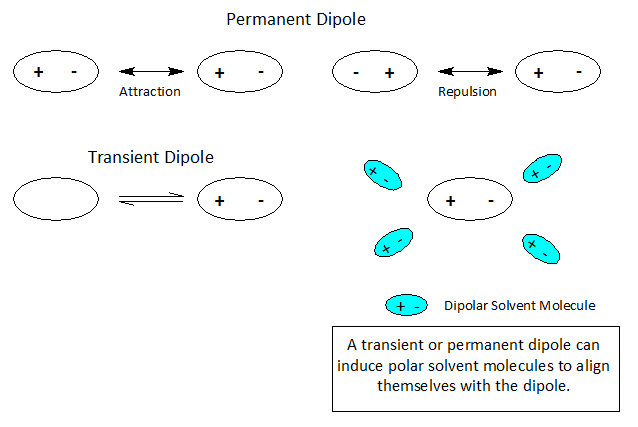
At the atomic level of matter during a reaction, atoms or molecules may undergo a rearrangement of charge leading to +/- ionic species producing a single pole or a dipole.
Graphic by Arnold Ziffel.
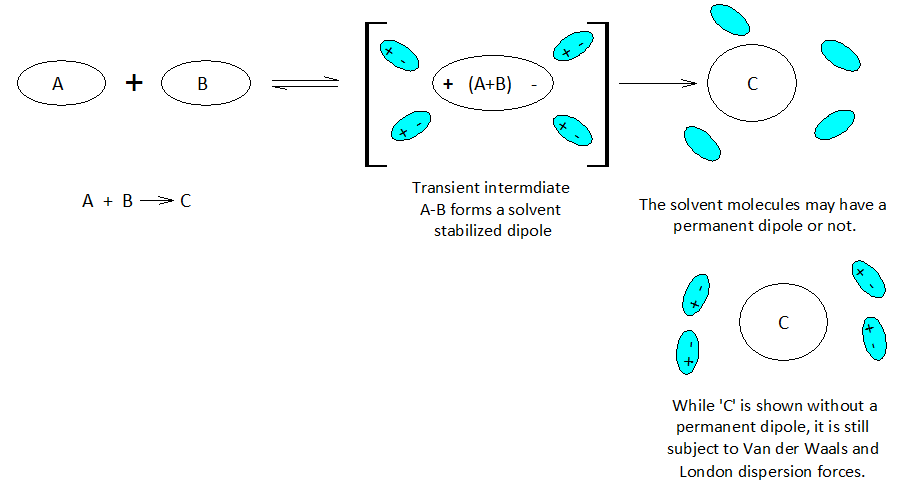
Image by Arnold Ziffel.
When atoms and molecules undergo electronic change the surrounding solvent environment may help or hinder a given transformation. If during the course of a chemical reaction a transient charge is produced, the solvent ‘bag’ enclosing the reacting molecules can promote or hinder the reaction transformation.
My personal policy is to limit the word ‘entropy’ to subjects related to the atomic scale or to heat engines. A loose pile of bricks should rather be described as in disarray.
Molecules and even neutral noble gas atoms can form transient dipoles, causing small, short lived attractive forces between atoms. These are called Van der Waals forces. Graphics by Arnold Ziffel. Graphics by Arnold Ziffel. The ease with which a reaction mechanism proceeds may be subject to solvation effects. Formation of a dipole requires that negative charge is pulled away from positive charge. This takes the application of work against the natural attractive force between positive and negative charges. It takes energy to electronically alter a molecule to produce charge separation to form a dipole. A shell of dipolar solvent molecules around a reacting dipolar molecule can stabilize accumulating polarity in a molecule sufficient to aid the transformation.
Chemical reactions proceed mechanistically in a stepwise manner, and with over 150 years of extensive and peer reviewed chemical research and development, much chemistry has become quite predictable across a wide range of substances. A crucial aspect of modern organic chemistry is the understanding of reaction mechanisms. Biochemists focus on the mechanisms of reaction in aqueous environments, while classical organic chemists commonly avoid water in lab work. However, the principles of physical chemistry support both fields. Indeed, physical chemistry is the cornerstone of the chemical sciences.
On mutation
My greatest hangup about language commonly used to describe evolution is when someone says “The _______ evolved the ability to _______ in order to survive.” True, but In the minds of many this may suggest that a specific genetic change was purposely triggered to achieve the ‘goal’ of enhanced survivability. If a genetic change occurred that improves survivability, it begins randomly. It’s rightly been said that evolution is blind going forward. The DNA of an organism struggling for survival will not automatically give rise to an offspring that have resistance to a given threat. Rather, with each successive daughter cell there is a chance that a beneficial mutation has occurred. But mutations could happen anywhere in the genome. Some mutations may be beneficial, and others may be problematic in terms of survival. There is a chance that the mutation may never be expressed from dormant genes. In order for a mutation to pass forward, it must happen before or during reproduction. Mutations to the parent organism after it has reproduced end right there, beneficial or not.
Radiation-induced mutations to the DNA are more likely to occur during mitosis in cell division when copied DNA strands are being pulled apart and into the daughter cell. The DNA strands are not yet wound with the histones and are more accessible to external influences like radiation or chemical insult.
/* Anecdote: DNA Breakage */
In my second go-around with radiation for prostate cancer in spring of 2024, I learned that the practice now is to deliver approximately the same overall radiation dose as before, but in fewer and larger doses. The idea is to cause breakage in both DNA strands of the double helix rather than just a single strand in the cancer cells. I had 4 sessions of 8 gray in 2024 as opposed to 21 sessions of ~1.5 gray in 2014. I cannot account for why the total dosages are not equal, but there were specific cancerous tissues like the prostate and the seminal vesicles to hit the first time around.
/* End Anecdote */
Today there is a growing understanding that there are actions with the DNA polymer-histone structure that do not involve changes in the genetic sequences. This is called Epigenetics. The total human DNA double helix stretched out is approximately 2 meters in length yet must be contained within a cell. The way that DNA double helix does this is to wrap around a series of individual proteins called histones for compaction into a smaller structure called chromatin. Finally, the chromatin folds into the familiar chromosome structure.
Source: Wikipedia. Public domain image produced by the National Institutes of health.
But is that adaptation by the existing genome composition? Genetic evolution is blind going forward. If a species evolves with a survival advantage of some kind, there can be no “foresight” involved. If it is truly genetic evolution, the end result is because of heritable genetic changes at the level of molecules. If a changing environment causes altered expression of an existing gene in response, say a gene that is otherwise dormant but is suddenly “awakened” by the new environment somehow, then perhaps this is a form of “adaptation within the existing genome” rather than evolution by editing of the genome. This is where epigenetics operates.
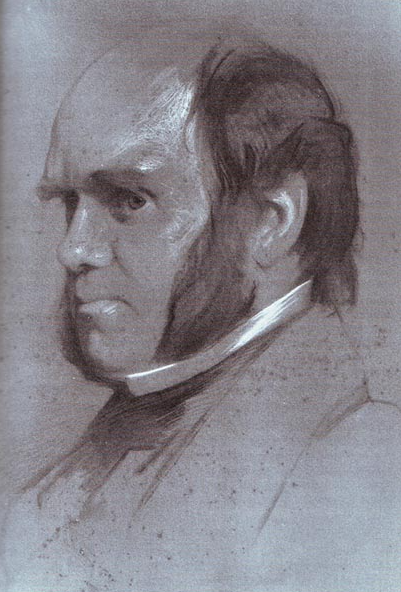
Charlie Darwin
The naturalist, geologist and biologist Charles Darwin‘s claim to fame is substantial and well deserved. His book “On the Origin of the Species” is the work that is cited by many but read by few. Over his lifetime he had published considerable work before Origin of the Species. What may be less known is that the notion of evolutionary change wasn’t something that he alone scraped together. Others had previously speculated out loud and in print about changes in species over time. His grandfather, the physician Erasmus Darwin, produced a volume titled Zoonomia that anticipated some of the work of Lamarck which foreshadowed the concept of evolution.
Charles Darwin drawing by Samuel Laurence, 1853. Source: Wikipedia.
In 1831, Charles Darwin embarked on what was originally planned as a two-year voyage of discovery aboard the H.M.S. Beagle, but which ultimately spanned five years. The expedition’s primary goal was exploration, and Darwin, recommended for his scientific interests, joined as a gentleman naturalist with Captain Robert Fitzroy, rather than as a mere specimen collector. Fitzroy, a Vice-Admiral in the Royal Navy and a scientist, led the journey. Darwin, during the voyage, dispatched bones, fossils, seeds, illustrations, and writings back to England, garnering significant interest from geological and natural history circles. Of interest, prior to setting sail Darwin had acquired skills in taxidermy.
After Darwin’s return to England, he spent many years speaking, writing, rewriting and publishing his accounts of the voyage. He is buried in London’s Westminster Abbey just a few meters from the grave of Sir Isaac Newton.
Our acknowledgement of the value of Charles Darwin’s work and methodology is fully legitimate. Darwin’s theory of evolution was a major step change in how we think about biology, speciation and introduced us to natural selection. What is missing from Darwin’s work, however, is the physicochemical mechanism of how evolution works. This is understandable simply because biochemistry was unknown at that time. Inheritance at the molecular level was a mystery until the early-mid 20th century when the molecular biology of the gene began to come together. DNA and RNA had to be isolated and characterized as well as observations made of their x-ray structures. The connection of DNA and RNA polymers to protein formation and composition had to be arduously worked out. Accounts of this are easily found on the internet.
One point of this essay is to argue that while Darwin and others began to coalesce the varied observations of macroscale adaptation and speciation found around the world into a grand theory, the mechanism of evolution lay at the Ångstrom to nanometer scale of the molecule. I find it impossible to deny that if Darwin and others had not come up with evolution at the macroscale, biochemists would have discovered molecular evolution and it would have been used as a basis for the evolution of species.
Sidebar. Rosalind Franklin (25 July, 1920 to 16 April, 1958)
Much acrimony has been made over the alleged snubbing of physical chemist Rosalind Franklin in the selection of 1962 Nobel Prize winners in Physiology or Medicine for the discovery of the structure of DNA. A recent paper in the 25 April, 2023, issue of Nature brings together some little-known details of the cold-shoulder given Franklin as a co-discoverer of the double helix structure of DNA.
The disqualifying event for the 1962 Nobel Prize occurred in 1953 with Franklin’s death. At the time, posthumous awards were accepted only if the death occurred between nomination and the award date which was not the case for Franklin.
The story of the discovery of the double helix structure of DNA involves 4 central characters: James Watson and Francis Crick from the University of Cambridge, UK; Rosalind Franklin and Maurice Wilkins at King’s College, London.
Before any of this started, the involvement of deoxyribonucleic acids in heredity had been suggested by Oswald Avery in 1944 (below). Watson and Crick, Franklin and Wilkins did not discover DNA. They did, however, use x-ray diffraction of crystalline DNA fibers and model building to deduce the chemical structure of B DNA.
At King’s College at the time of this story, the biophysics group was led by John Randall whose deputy was the New Zealand-born biophysicist Maurice Wilkins. In 1951 Franklin joined the Department on a 3-year fellowship having come from Paris where she used x-ray diffraction to study the structure of coal. By this time Wilkins had been working on DNA since 1948. A personality clash arose between the more assertive Franklin and the less confrontational Wilkins, so Randall divided certain DNA samples between them. Franklin received a calf’s thymus-derived sample of the highly purified material from the Swiss chemist Rudolf Signer – Wikipedia at the University of Bern and Wilkins received a “poorer sample” from Chargaff at Columbia University in NYC.
Sidebar to the sidebar.
Chargaff had become interested in DNA after Oswald Avery at the Rockefeller Institute published a paper in 1944 concluding “The evidence presented supports the belief that a nucleic acid of the desoxyribose type is the fundamental unit of the transforming principle of Pneumococcus Type III“. Avery and colleagues had developed the first immune serum for a strain of pneumococcus from the blood of horses. Along with colleague Michael Heidelberger they found that polysaccharides associated with this strain of pneumococcus could be isolated from water-soluble spherical capsules around the cocci and are antigens, which later led Heidelberger to discover that antibodies are proteins. These are now fundamental facts in molecular biology and immunology.
Back to the double helix
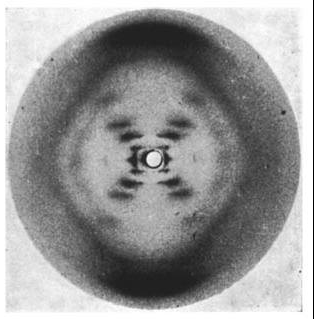
Wilkins had earlier discovered that there were 2 forms of the DNA in solution- the crystalline A form and the paracrystallineB form. Franklin took the A form and Wilkins the B form. Franklin discovered that the A form will convert to the B form in higher humidity and revert back to the A form in lower humidity.
Photo 51. The x-ray diffraction pattern of the “B” form of DNA, taken by Raymond Gosling while working under Wilkins. Source: Wikipedia
Unfortunately for Franklin with the A form, Wilkins’ B form is what is found in the cell.
From a biochemical standpoint, mutation of DNA sequences makes chemical sense and today is routinely observed in DNA assays. An increasing number of diseases or characteristics are linked to distinct mutations in DNA. Deoxyribonucleic (or desoxyribonucleic) acid (DNA) is a chemical substance that, like all chemicals, is susceptible to its chemical environment and whatever particular substances happen to be nearby or to ultraviolet or ionizing radiation or to highly reactive chemical species like free radicals.
Left to right: A, B and Z DNA structures. Image from Wikipedia. Note the difference between Franklin’s A-DNA vs Wilkin’s B-DNA. They differ by the extent of hydration.
Biochemical Evolution
Charles Darwin is renowned for his well-articulated, evidence-based argument on the evolution of species by natural selection. He courageously introduced a detailed new theory within the conservative British scientific community. His ideas fascinated many leading naturalists of the time, who adopted and furthered the theory. Truly, it marked a considerable progression for that period.
“But but but, it’s just a theory!” This is a common objection by creationists and religious zealots thinking they have found the weak underbelly of evolution. They claim it is “just” a theory as though a theory was merely a fanciful excursion of the imagination where all opinions are of equal validity.
A theory is an overarching explanation or model subject to improvement over time with which arguments are made in support of or against a core concept. This core concept is initially built on a pedestal of clay. As better analysis and experimental data come in, the pedestal is strengthened or weakened. Furthermore, the theory may be unequally affected across its breadth with some aspects perhaps tossed out and others supported. Theories themselves evolve and strengthen with evidence. Scientists are naturally anxious to contribute to sorting out the truth of a theory.
Another objection to evolution is the previously stated notion that “creation implies the existence of a creator.” A common argument is that a watch is such an unlikely collection of highly refined components that there must be a watchmaker behind it. The human hand or eye are the anatomical examples often cited. There is a bit of vocabulary that muddles these arguments. The use of the word “creation” presupposes that the universe is something that was assembled by a creator. If you see the world as something that had to have been created, then the idea of evolution may be difficult to swallow.
The question of life on Earth has two important aspects to it. One is the evolution or change that species undergo over time. The other is the initiation or abiogenesis of life from non-living matter. Of the two areas, the evolution is the most developed concept.
Biochemists and molecular biologists have taken Darwin’s evolution from a mid-19th century macroscopic theory supported by the fossil record, geological observations and the gross anatomy of animal species from around the world to the submicroscopic machinations of molecules. This has been a gigantic leap forward in understanding not just in the chemistry of all life but also the evolutionary physicochemical mechanisms of life. Life is one of the things that chemicals can do given opportunity and time.
Christian and other churches reacted negatively to evolution in Darwin’s time as most do today. Darwin and many geologists concluded that the Earth was far, far older than did scholars withing the church. So, what is this about? Are church leaders skeptical or just stubborn? Is this even a good question?
Types of thinking
I would offer that people can be spread between two bookends in regard to thinking: Devotional thinkers and analytical thinkers. Devotional thinkers have a core doctrine supporting their beliefs and think and behave in a way that their belief guides them. Devotional thinkers study their doctrines in an effort to be in better alignment with it. It is not uncommon for devotional thinkers to limit their exposure to things not aligned with their devotion. Devotional thinkers are sometimes labeled faithful. Their goal is to study supernatural doctrine and align one’s personal behavior.
Analytical thinkers will naturally adopt a baseline worldview that comports with their education, observations and logical sensibilities. But when presented with new data or just a compelling idea, analytical thinkers may be persuaded to open new vistas in their thinking or at least set the idea aside as new thinking under consideration. Analytical thinkers are sometimes labeled as skeptics.
It is impractical to approach each new circumstance one encounters ab initio. In order to explain how an airplane flies it is not presently necessary to first independently derive Newton’s laws of gravity and Prandtl’s fluid dynamics so as to set the stage for lift and drag forces. Everyone has a practical baseline picture of the world that serves as a conceptual starting point for some kind of conclusions on reality. The discipline of science is highly vertical with old knowledge built upon or revised by new knowledge. The requirement for accuracy is practiced by the investigator and checked upon by peer reviewers. Nobody wants to be that scientist who has published a paper with faulty science requiring a retraction in the Retracta Acta.
To be skeptical of the evolution of the species is on one hand to require supporting evidence and compelling arguments. On the other hand, many people dismiss evolution altogether as being contrary to their faith-based notions while posturing as an “evolution skeptic.” However, when physical evidence or collected data are thrown on the table for all to examine and when that evidence is part of a trail of evidence logically or mechanistically interconnected, then to dismiss the logic or measurements is to go beyond skepticism. Apologists would claim that they are keeping their faith against adverse influence or even resisting evil. But standing against evidence could really be considered simple stubbornness for fear of perceived divine consequences or discomfort.
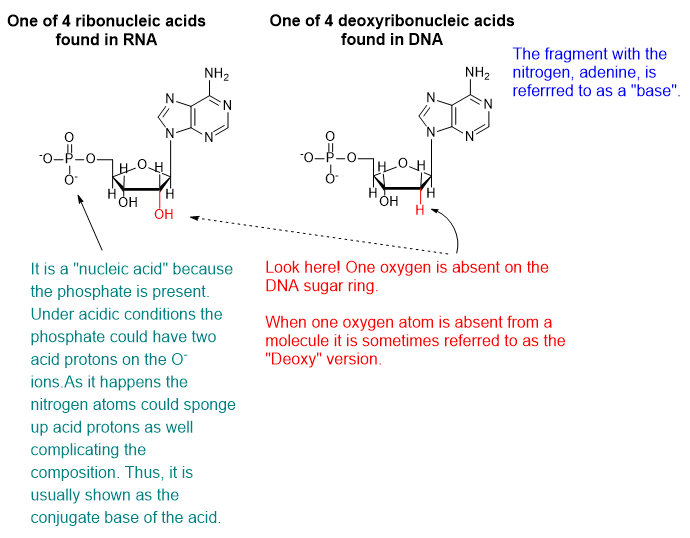
DNA and RNA are polymeric substances comprised of four major subunits. Three of the subunits are shared by both DNA and RNA and the fourth is a different component characteristic to RNA. This determination took some time to arrive at the correct structures and the chemical mechanisms.
Graphic by Arnold Ziffel.
Chemicals interact by particular mechanisms depending on what is present and physical conditions like temperature, pressure or interfering substances. These mechanisms are a built-in, reliable feature of matter in our universe. When multiple mechanisms are possible, the fastest one tends to prevail, channeling matter down that pathway. The fastest channel will have to lowest energy barrier to cross. However, if the reverse mechanism is possible then a balance will be struck between two reservoirs of substances. This is the basis for thermodynamic equilibrium. The reaction direction with the lower energy barrier will be faster, and if the reverse direction isn’t possible, the mechanism will preferentially populate the direction with the lower energy barrier. We would say that the reaction is under kinetic control. If the reaction can go both ways, then a balance will be struck producing substances on both sides of the energy barrier producing thermodynamic control.
One argument offered by Creationists is that the probability of all the atoms in a human coming together to form that human is 1 in 10stupid large. In other words, they say, highly improbable within the age of the universe. And if that was how it works, then I’d agree. But it is definitely not how chemistry and evolution work.
Evolution happens by a biochemical ensemble of mechanisms in solvent water constrained by the boundaries of chemistry and physics and specifically to what is possible in aqueous media. Liquid water is necessary rather than solid or crystalline phase water because for bio- or any chemistry to operate, molecules have to diffuse around and collide in order to react. Biochemistry and therefore evolution occurs at temperatures between roughly -10 oC and 45 oC, plus or minus a bit and at midrange pH levels.
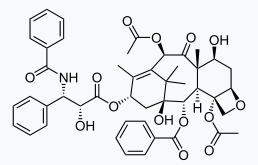
Life is substantially based on carbon because carbon forms stable chemical bonds with nitrogen, oxygen, sulfur, hydrogen and especially with itself. Phosphorus appears as phosphate. Carbon can form chains of indefinite length and 3, 4, 5, 6, 7 and 8-membered rings or larger with 5 and 6 being the most common ring sizes. Tens of millions of different chemicals structures are possible within this group of elements. Nature is crammed with ring systems in natural products.
A line drawing and 3D rendering of Taxol or Paclitaxel. Silicon does not do this. Image: Wikipedia.
Biochemistry is not based on silicon, even though silicon has certain chemical similarities to carbon. Silicon does not easily form chains greater than 2 silicon atoms in length and it has a strong affinity to oxygen. This affinity is very much thermodynamic in nature and is difficult to overcome chemically at biological temperatures and pH. Silicon-nitrogen bonds are hydrolytically unstable at low to moderate pH. All of this adds up to poor utility for silicon in biomolecules.
Each of these carbon-nitrogen, carbon-oxygen, carbon-phosphate, carbon-sulfur, carbon-hydrogen and carbon-carbon bond combinations as well as the various combinations of N, O, P, S, H atoms have their own variations as well. Other atoms like iron, calcium, sodium, potassium, magnesium, chromium, selenium, iodine, and a few others serve purposes other than for molecular skeletons generally.
The point of citing all of these combinations of atoms is to emphasize that each has unique chemical properties and unique reactivities. The slapdash Creationist assertion that evolution merely brings atoms together to form an organism and no consideration of reactivity is mentioned. While molecules in solution are more or less randomly banging around, their entry points for successful chemical interactions are far from completely random. In fact, a given molecule will react only in a few ways depending on what it collides with. A complex molecule like glucose has several reactive sites, but it still has a limited menu of reaction types available at physiological conditions.
Molecules are tiny objects that can have even smaller features where changes can happen. These features can only do certain kinds of chemical reactions. They are called ‘functional groups’ and they are limited to a limited set of reaction mechanisms, often only one mechanism.
Think of each of these limited types of reactions as a channel. Overall, biochemical transformations happen through these particular channels. There may be numerous channels possible on a molecule affording diverse reactive outcomes. Even among the possible transformations, a few channels will react faster and thus dominate. The point is that there are not an infinite number of ways that molecules can exhibit reactivity. This means that evolutionary change through biochemical mechanisms does not have an infinite set of likely chemical pathways. There can be many, to be sure. But the entire ensemble of biochemical mechanisms operating in an organism do not have to change to allow a given evolutionary change.
Evolutionary changes can occur in very subtle ways. A biochemical modification may result from a misreading of the normal genetic code or from some other off-normal situation, but this is not an evolutionary change. A genetic change can result from an alteration in the sequence of the genetic code itself. A change in the sequence of the DNA may lead to a heritable mutation if the change is survivable. A mutation in an unused stretch of DNA may occur and lead to no effect. If the genetic change is fatal to the new cell, cell death can occur, and the mutation will not be passed forward.
Cosmic ray showers. Image NASA. High energy cosmic rays impinge on the upper atmosphere and collide with air molecules, causing nuclear reactions that result in showers of nuclear particles like muons. Most of us do not realize that we have muons in our lives, but there we are.
Energetic cosmic radiation from outer space and the sun is constantly showering the Earth’s upper atmosphere. When a particle or a photon from space impacts a person, it will penetrate to some depth, dumping kinetic energy into tissues that can break chemical bonds to form ion pairs or radical species. Ion pairs can reconnect as before or with other species to form new substances. Radicals are neutral atoms or molecules where electrons in the form of lone pairs or covalent bonds are evenly split into 2 radical species where each is neutral but have unfilled octets. Radicals tend quench themselves by popping off a hydrogen radical from a nearby molecule or by colliding with the radical that was originally separated.
Radiation exposure of living tissue or other material objects produces ‘stochastic’ damage because the kinetic energy of the radiation particle or photon far exceeds the energy needed to cause bond breakage or general scrambling of biomolecules. Stochastic radiation damage is fairly unselective so, as the radiation passes through materials, the energetic particle dumps some or all of its energy into the material directly along its path of movement.
One measure of the potency of a given particle or photon of radiation is the number of ion pairs produced per inch or centimeter. The three major types of radiation are alpha, beta and gamma. Alpha particles produce the most ion pairs because of its high kinetic energy so it dumps its kinetic energy along a very short distance. Beta particles can travel a bit longer distance (several inches) but require less shielding than gamma rays. While gamma rays are quite penetrating, their ion pair production is very low.
Any given human exposure to radiation can result in no observable effect or tissue damage. Not every exposure to radiation will result in cancer. Because radiation damage to tissues is stochastic, a survivable mutation of DNA is random.
Enzymes are proteins that act as catalysts or enablers of chemical transformations. These protein enzymes have places on them that are clefts, ridges and valleys along their exterior where other molecules or coenzymes can collide and interact called an active site. It is possible for the enzyme to be active continuously and catalyze transformations when the right substrate molecule jostles along. It is also possible for the enzyme to require ‘activation’ in order to function. One means of activation comes from phosphorylation of the substrate to be acted upon, phosphorylation of the enzyme itself, while yet another is where an external molecule binds to a particular spot, resulting in an alteration in the overall shape of the enzyme. This alteration in the enzyme’s shape can open the active site of the enzyme and allow the intimate contact necessary for a particular molecule to diffuse in, bind and undergo a catalyzed transformation. In this way, an enzyme can be deactivated as well.
Much new drug discovery and design is based on toggling an enzyme “off or on” with a suitable substrate. The substrate can be constructed so as to be highly specific, to be detachable or to sacrifice itself by covalently connecting to the enzyme and prevent it from further functioning. This last category is sometimes referred to as a suicide substrate inhibitor. Penicillin is an example of a suicide inhibitor that covalently combines with an enzyme, shutting it down permanently. Penicillin and its many analogs have a strained 4-membered ring in them called a beta lactam ring that can relieve the strain by ring opening to a straight chain by connecting to a feature on the enzyme. This is irreversible though bacteria have developed the ability of reacting with penicillin to eliminate its ability deactivate a target enzyme.
Enzymes can be very sensitive to a change of one amino acid which could lead to little change or it could cause the enzyme to operate a few percent faster or slower. Or it could change the reaction rate or specificity by a great deal. It might even allow different substrates to be acted upon by the enzyme. Let’s say that this change in the operating rate of the mutated enzyme causes a chain of successive biochemical reactions to operate faster, say by increasing the efficiency in the use of energy. If this results in the survival rate of the organism increasing by a bit, it may impart a survival advantage. If the alteration of the enzyme reduces the survival rate, then the organism may continue to survive or not.
But hold on. Evolution is blind going forward. Not all changes register as an advantage or even show an effect. If the mutation happens after reproduction, then it does not get inherited by succeeding generations. If the mutation is fatal, then the cell dies and the genetic change halts. If the process of evolution is so iffy, how does anything happen?
We should reflect on how fast chemical reactions can happen. At room temperature, water is undergoing collisions at a rate of ~1010 per second. Now imagine 1 mole of water, 18 grams, all molecules undergoing ~1010 collisions per second. One mole of water contains 6.02 x 10²³ water molecules. Simple mindedly, that adds up to 6.02 x 1033 collisions per second in those 18 grams, or 1 thirsty swig of water. But that’s not all. These water molecules are also vibrating, rotating and translating at perhaps 1012 vibrations per second. In general, each collision will carry a particular probability of a bond breaking or bond forming event. Water is a boring example, but we can see that a reactive biomolecule is also undergoing a very large number of collisions per second, each with a certain chance of participating in a reaction. Even though a given reaction may be of low probability per collision, a great many collisions raise the odds of fruitful interaction.
Rapid molecular collisions in combination with a limited range of reaction channels means that the molecules will sort themselves out by way of finding the lowest energy-barrier, fastest reaction channel to follow. This is far from completely random. The fastest reaction channel can consume its inputs the fastest and the product from this fast channel will predominate.
Why would there be DNA, protein or other biomolecules that are fragile enough to suffer mutation in the first place? Why hasn’t DNA evolved into a sturdier structure free of mistranslation, mutation and other errors in its functions? There are certainly substances that are more robust than DNA or RNA like hydrocarbon polymers, silicates, urethanes, urea linkers and other polymers that are much more stable to chemical insult. The DNA double helix is, after all, held together by low energy hydrogen bonds.
A key requirement of life as we know it is that something has to prompt DNA to unravel and split strands of deoxyribonucleic acid chains apart. In order to unravel, the structure holding it safely in the double helix form must be capable of assembling and coming apart when prompted. The nucleic acid structure along each chain of the double helix have phosphate linkages. Because phosphoric acid is a weak mineral acid it can lose one, two or three acid protons (mono- di- or tribasic) under physiological conditions.
The phosphate linkage in DNA works very well for life. It allows free rotation about the linkage and is quite polar for good compatibility with water. Phosphate can form bonds between themselves: 1, 2 or3 phosphates can link, leading to short chains of phosphate anhydrides. Because phosphate is relatively stable under physiological conditions yet is able to function, it is nearly ideal for its purpose. Phosphate is phosphorus (V) with 4 oxygens bonded in a tetrahedral fashion. Three of the oxygen atoms have single P-O bonds with one P=O double bond. When connected as anhydrides, mono-, di- and triphosphate anhydrides may form. The linking oxygen atom connecting the two end phosphates can be displaced and added to another substrate. This is called phosphorylation and is critical in biochemistry.
Abiogenesis
Abiogenesis is the big puzzle at this point in history. Evolution is not the same as abiogenesis. How did life begin? As we look around at the Earth today, we see an overprinting of billions of years of planetary, geologic, oceanic, and atmospheric transformations. The present world at the surface is nowhere near that world at the time when life began to flicker into existence. One of the primary differences is the chemistry in play. Before oxygen began to accumulate in the atmosphere, many elements may have been exposed at a reduced oxidation state, that is to say electron rich. The chemistry of an atom greatly depends on the state of its valence electrons. So much so that the atom loses its identity when charged or in molecular form. For instance, +H (protium or hydrogen cation) is chemically different from –H (hydride ion) is different from 0H (atomic hydrogen)and all are different from molecular H2. Referring to +H as hydrogen is incorrect. It is properly referred to as “hydrogen ion” or “protium ion”. The ions are distinct chemical species. This range of possibilities in the state of reactive atoms (other than the noble gases) somewhat complicates the chemistry of prebiotic Earth.
At this point I’ll refer the reader to the InterWebs for deeper insight into abiogenesis.
In a YouTube interview recently, Roger Penrose commented that one of his beefs with quantum mechanics (QM) was that it depends on consciousness collapsing a wave function. He said much more, but this struck me deeply. I have been struggling for years trying to verbalize my own brain-stem level suspicions. (To be clear, a Venn diagram with Penrose and myself overlap only insofar as we are both English speaking bipedal mammals.)
He also commented that by “wrong” he means “incomplete” and recalled that both Einstein and Schrodinger agreed on this. He noted that “incomplete” constitutes “wrong”. In another interview he comments that Schrodinger’s Cat was meant to illustrate that the superposition of a cat being both dead and alive was a problem that Schrodinger recognized. A cat cannot really be dead and alive simultaneously.
He said that while QM was about more than the evolution of a quantum state, it is also about measurement, but the measurement problem violates the quantum equation. QM gives the probability of a given state which is a superposition of probabilities.
QM is not my specialty, however, I have coursework in it like all chemists have had. In grad school I had quantum chemistry, again like all chem grad students have had, but it nearly did me in. Not having had a semester of diff eq, I was at a distinct disadvantage. Grad school QM goes well beyond the particle in a 1-dimensional box. The course consisted of mathematical derivations of the theory, but not much about the meaning in English. We were supposed to see the equations in their abstract purity and extrapolate to some kind of comfort level with notions our brains could grasp. It was based on the Copenhagen Interpretation of QM. Philosophically, the notion that the wave function would collapse on inspection by a brain was an idea that even today I cannot get past.
Penrose had a similar beef except that he is Roger Penrose and I’m some lesser ape gawping in from up the holler. Still, though I’m doomed to go to my grave with only very rudimentary understanding of QM, the concept of probability density all by itself as well as the spherical harmonics defining atomic orbitals has been a major benefit for my thinking. And for that I’m grateful.
Below is a cut & paste copy of text from Wikipedia outlining Penrose’s ideas-
Penrose’s idea is a type of objective collapse theory. For these theories, the wavefunction is a physical wave, which experiences wave function collapse as a physical process, with observers not having any special role. Penrose theorises that the wave function cannot be sustained in superposition beyond a certain energy difference between the quantum states. He gives an approximate value for this difference: a Planck mass worth of matter, which he calls the “‘one-graviton’ level”.[1] He then hypothesizes that this energy difference causes the wave function to collapse to a single state, with a probability based on its amplitude in the original wave function, a procedure derived from standard quantum mechanics. Penrose’s “‘one-graviton’ level” criterion forms the basis of his prediction, providing an objective criterion for wave function collapse.[1] Despite the difficulties of specifying this in a rigorous way, he proposes that the basis states into which the collapse takes place are mathematically described by the stationary solutions of the Schrödinger–Newton equation.[4][5] Recent theoretical work indicates an increasingly deep inter-relation between quantum mechanics and gravitation.[6][7]Wikipedia.
I just donated to Wikipedia so I don’t feel too bad about this cut & paste. Please donate to Wikipedia. We want to avoid a paywall being put up in front of it.
Note: This essay is written to explore an idea theoretically. It is not a call to arms.
It’s funny that conservatives in the US have always clung to the Second Amendment to the Constitution as a lifeline against government tyranny. Maybe a liberally inflected approach should be constructed for the left? I own an antique Ruger revolver sitting in storage somewhere. Perhaps it is time to upgrade to a 9 mm pistol? Afterall, if conservatives are free to parade around with firearms as a means of intimidation, why shouldn’t a liberal such as myself.
Rednecks and incels enjoy dressing up in tactical gear with weapons bristling from their portly, scraggly bearded, tattooed torsos, claiming only to be expressing their right to carry guns in a peaceful democratic nation. If they can give a show of force, why couldn’t a liberal militia? A liberal militia would tell the MAGA militias to expect return fire.
The true utility of a firearm is the ability to commit violence accurately from a safe distance. An arrow from the bow of a skilled archer is also capable of this, but at a lower magnitude. Slings and spears can deliver hazardous energy from a distance, but at an even lower magnitude. Body armor and shields were developed to protect the wearer from arrows, spears, axes, clubs, and stones. The lethality of a ball from an early flintlock musket or pistol might be less effective than guns from today, but they still inflicted considerable damage to people. The utility of using gunpowder to propel an object for impact was realized maybe within a century after the invention of gunpowder.
How would MAGA-types respond to a liberal militia? Having known numerous gun totin’ MAGA guys and actually being related to a few, I can say that this would stimulate gales of laughter and howls of derision. So confident are they in their legitimate sense of superiority with weapons that they would automatically reject the notion of a ‘liberal militia’. Many MAGAs are ex-military and have genuine expertise in the military arts. Their abilities are not to be underestimated.
/* Begin Anecdote */
I once had a sales assistant who was ex-army. His hobby was breeding green tree pythons and always kept a plastic shoe box with snake hatchlings in his office desk for show & tell. He would get in these moods where he would ‘joke’ that he could kill me before I even knew it was possible through stealth and excellent marksmanship. All I could say was “for your sake, I hope you don’t miss”. It was inconceivable to him that I, a non-military dude, could be a threat of any kind. Afterall, the US Army had trained him to kill efficiently. He eventually left to manage a Wal-Mart in Oregon.
/* End Anecdote */
A liberal militia. What an idea. It would have to have a secretive cache and be open only to those wiling to hold a concealed weapon permit and agree to training. But instead of hiding deep in the woods up the holler, liberals could limit their activities to the public gun range. I do not believe for a second that a ‘liberal militia’ could out gun a MAGA militia, ever. In fact, the very idea of return fire would stir their juices and make them eager for a fire fight.
But a liberal militia would not initiate a gun battle. There would be a strict policy of no first use. The idea would be that either side would know that bloodletting would happen on both sides. Sort of a mutual assured destruction.
Of greater impact could be the political effect. The presence of two opposing civilian armed forces, both resting on the same 2nd Amendment could have enough of a chilling effect on congress as to cause them to take some sort of legislative action to tamp down hostilities. Or not. The current congress could make hostilities worse.
Let’s say that violence between MAGA and liberal militias happens. it would be interesting to see if the current administration stepped in as a neutral party. My guess today is that favoritism would be shown to the MAGA side.
Why this idea? It has become apparent to me that the current political hostility fulminating in the right wing will not be lessened by expressions of respect by liberals. The Charlie Kirk fiasco has increased magnitude and urgency of right wing hostility, regardless of any empathy from the left. This matter could well take a decade or more of chaos before it quells and settles into some kind of quasi-peaceful equilibrium if left on its own.
The central bad guy in the White House is Stephen Miller, Deputy Chief of Staff. The putrid and fulminating stream of urine issuing from the White House seems to be devised by him. This guy is refractory to anything resembling compromise. He sees non-MAGA thinking as evil- his words. Question is, how to bring him down legally.
First let me say that I have never been a smoker, drug user or sun bather. As a chemist I have always been cautious about chemical exposure. I have numerous cancers now with the two serious ones in remission. The new ones- who knows.
I use a university hospital and have been visited by flocks of med students looking at me in wonder, sometimes looking down my throat. I get a kick out of it. I always try to joke with them. All cancer diagnoses go before a faculty tumor board for collective assessment. That in particular drew me to this hospital.
My experience with numerous radiation, medical, ENT, and head & neck oncologists is that they absolutely do not want to discuss end of life issues. Maybe that is because I’m not near the end yet, though. But more likely they have production quotas and need to stick to the timeline. My head and neck oncologist did say that they were trying to keep me above the grass, though. That was cheerful.
Since July 22 of this year, I’ve had a partial glossectomy to remove a tumor resulting in a nickel-sized piece of the left edge of my tongue being removed, my first colonoscopy, a neck dissection looking for more cancer, and tomorrow is a root canal. Sonofabitch!
The glossectomy resulted in giving me slurred speech and then the neck dissection made it much worse with the added joy of serious swallowing difficulty. Liquids must be thickened with carrageenan gum to mostly avoid inhalation of food and drink. I’ve already been hospitalized with pneumonia resulting from inhaled food.
My 68th birthday was last week and while I received my well wishes, not a single person was moved to suggest a gerontologist, elder care facility or even as little as when the word “elderly” is used. I’m left up in the air …
It never occurred to me earlier in life that a piece of my tongue could be sliced out. What part of your body is more intimate in your daily consciousness than your mouth? I’ve had surgeons say “give me control of your tongue”. A fella doesn’t hear that very often.
The colonoscopy revealed 2 polyps suspected of being cancerous. So, to tally up the score, I have stage 4 prostate cancer, stage 4 throat cancer, tongue cancer, basil cell skin cancer, and possible colon cancer. Jesus H. Christ!! What next?.
The radiation of my throat resulted in the loss of about 1/2 of my salivary glands and taste buds. I’ve had dry mouth since radiation treatment in 2013, resulting in the loss of numerous teeth.
I was given radiation treatment of my prostate in 2014 and again last summer when the PSA score breached the 4.0 level. Since the 2014 treatment the thinking has changed on radiation dosage. Previously I was given about 1.8 Gray per dose. This time it was 5.0 Gray per dose over fewer doses. The thinking is that it is better to try to break the cancer cell DNA in 2 places at once rather than in just one place. In two rounds of x-radiation treatment of my prostate, I have experienced no pain or discomfort. I’ve had two rounds of 18F-Glucose injections for PET/CT scans.
The throat radiation was a different story. It gave me the world’s worst sore throat. I was fed through a stomach tube and was on opioids for an extended period. Let me say that I detest opioids and the constipation they bring. How do opioid addicts deal with this??
The throat cancer was from the HPV virus and that form is quite treatable, fortunately for me. The tongue cancer was also a squamous cell carcinoma but not of HPV origin.
Life on our lonely pale blue dot is strange. I’ll never get a full grasp of it. I’ll be on the top side of the grass for a while yet and until that changes, I’ll still be a student of the sciences and will continue to write about it.
Today I have a slightly different demographic of readers of this blog than in the past, so I’ve been dredging up old posts into the light of day. This is a renamed post from September 3, 2011. I’ve changed some wording to be a bit more mellifluous if that’s even possible.
==========
I’ve had this notion (a conceit, really) that as someone from both academia and industry, I should reach out to my colleagues in academia in order to bring some awareness of how chemistry is conducted off-campus. After many, many conversations, an accumulating pile of work in local ACS section activities, and visits to schools, what I’ve found is not what I expected. I expected a bit more academic curiosity about how large-scale chemical manufacturing and commerce works and perhaps what life is like at a chemical plant. I’d guessed that my academic associates might be intrigued by the marvels of the global chemical manufacturing complex and product process development. Many academics would rather not get all grubby with filthy lucre. Not surprisingly, though, they already have enough to stay on top of.
What I’ve found is more along the lines of polite disinterest. I’ve sensed this all along, but I’d been trying to sustain the hope that if only I could use the right words, I might elicit some interest in how manufacturing works- that I could strike some kind of spark. But what I’ve found is just how insular the magisterium of academia really is. The walls of the fortress are very thick. I’m on a reductionist jsg right now so I’ll declare that chemistry curricula is firmly in place on the three pillars of chemistry- theory, synthesis, and analysis. In truth, textbooks often set the structure of courses. A four-year ACS certified chemistry curriculum spares only a tiny bit of room for applied science. I certainly cannot begrudge departments for structuring around that format. Professors who can include much outside the usual range of academic chemistry seem scarce.
It could easily be argued that the other magisteria of industry and government are the same way. Well, except for one niggling detail. Academia supplies educated people to the other great domains comprising society. We seem to be left with the standard academic image of what a chemical scientist should look like going deeply into the next 50 years. Professors are scholars and they produce what they best understand- more scholars in their own image. This is only natural. I’ve done a bit of it myself.
Here is my sweeping claim (imagine waving hands overhead)- on a number’s basis, chemists apparently aren’t that aware of industrial chemical synthesis as they come out of a BA/BS program. That is my conclusion based on interviewing many fresh chemistry graduates. I’ve interviewed BA/BS chemists who have had undergraduate research experience in nanomaterials and atomic force microscopy but could not draw a reaction scheme for the Fisher esterification to form ethyl acetate, much less identify the peaks on 1HNMR. As a former organic assistant prof, I find it sobering and a little unexpected.
A mechanistic understanding of carbon chemistry is one of the keepsakes of a year of sophomore organic chemistry. It is a window into the Ångstrom-scale machinations of nature. The good news is that the forgetful job candidate usually can be coached into remembering the chemistry. After a year of sophomore Orgo, most students are just glad the ordeal is over and they still may not be out of the running for medical school.
I think the apparent lack of interest in industry is because few have even the slightest idea of what is done in a chemical plant and how chemists are woven into operations.
To a large extent, the chemical industry is concerned with making stuff. So perhaps it is only natural that most academic chemists (in my limited sample set) aren’t that keen on anything greater than a superficial view of the manufacturing world. I understand this and acknowledge reality. But it is a shame that institutional inertia is so large in magnitude in this. Chemical industry needs chemists of all sorts who are willing to help rebuild and sustain manufacturing in North America. We need startups with cutting edge technology, but we also need companies who are able to produce the fine chemical items of commerce. Have you tried to find a company willing and able to do bromination in the USA lately? A great deal of small molecule manufacture has moved offshore.
Offshoring of chemical manufacturing was not led by chemists. It was conceived of by spreadsheeting MBAs, C-suite engineers and boards of directors. It has been a cost saving measure that mathematically made sense on spreadsheets and PowerPoint slide decks. The capital costs of expansion of capacity could be borne by others in exchange for supply contracts. There is nothing mathematically wrong with this idea. Afterall, corporate officers have a fiduciary responsibility to their shareholders. Allowing profit opportunities to pass by is not the way to climb the corporate ladder.
We have become dependent on foreign suppliers in key areas who have control over our raw material supply. Part of control is having manufacturing capacity and closer access to basic feedstocks.
The gap between academia and industry is mainly cultural. But it is a big gap that may not be surmountable, and I’m not sure that the parties want to mix. But, I’ll keep trying.
The United States Geological Survey, USGS, has released an interactive geological map that includes 4 layers of stratigraphy- Surface, Quaternary, Pre-Quaternary and Precambrian layers with color coded rock units displayed. A click of the cursor on the map reveals the type of rock unit chosen. The website is called The Cooperative National Geologic Map.
What is the deal with Russia? Why do the Russian people tolerate the lack of basic freedoms we in the West are accustomed to? Dissatisfaction with their government has been there since the beginning. Hundreds of millions have been deprived of liberty and prosperity following Russian revolution.
The history of early 20th century reveals the Bolshevik Revolution in Russia and the formation of the Union of Soviet Socialist Republic (USSR). Later, after much blood and treasure was spilled after the revolution and then through the cold war, the Soviet Union collapsed after a brief attempt at openness. Many around the world saw the collapse as a positive thing and a sign of better times ahead, especially for the people of the former USSR. There was hope in the West for a transition to some variety of Russian-tinted democracy and for freedoms heretofore absent for the average citizens of the former USSR.
To Russians in power, the very idea of a democratic republic is alien and inconceivable. There is a baseline level of distrust and fear of the infectiousness of the democratic spirit among Russian/Soviet leadership. Even the population has been convinced that the moral collapse of the West would spread to their homeland without an iron-fisted leader.
For a part of the world that has been strangling under autocratic rule and economic stratification since before the time of the Tsars, there has not been a historical Russian-style power sharing agreement between the monarchy and the nobility or the serfs from which to build upon. After generations of polarization by Soviet propaganda focused on Western hegemony and the moral turpitude of the West, there was no likelihood of building upon a Western style democratic model. The Russian propaganda engine continues to this day as strong as ever but with the help of the internet, artificial intelligence and widespread political indifference or gullibility.
The decade of the 1990’s following the collapse of the former USSR was a time of redistribution of wealth for a lucky few. Large Soviet industrial sectors were absorbed by a few private interests, producing fabulously wealthy oligarchs. This did not go unnoticed by the populace, who simmered in anger over it because they expected a freedom and prosperity dividend from the collapse. Amidst the confusion and dissatisfaction with Russian President Yeltsin, there arose a growing sense that Russia needed a strongman leader. Many even spoke admiringly of Stalin.
The collapse of the USSR left an internal power vacuum that would soon be filled by former Soviet citizens. Boris Yeltsin was elected President of Russia in December 1991 and remained as President until 1999 when his selected successor Prime Minister and former FSB director Vlad Putin took over as acting president. Putin was elected president in May of 2000.
I’ve been trying to understand why present-day Russia seems so … belligerent. My focus to start with is Putin. Rather than being a one-of-a-kind freak of nature, Putin is rather ordinary as a dictator except that his regime has a nuclear triad. Until its invasion of Ukraine, Russia also had the benefit of whatever left-over respect it may have had from its Soviet military reputation. But that has changed dramatically.
Putin has long expressed the view that the collapse of the USSR was a tragedy. He wants to rebuild the stature of Russia into a global superpower. Soviet leaders held the view that in order for Moscow to be safe from attack by the West, the Slavic eastern European countries bordering Western Russia had to be under the wing of the Kremlin. It was this deep boundary in combination with the Russian winter that helped to wear down the invasions of Napolean and Hitler. Both armies were substantially weakened by traversing the extensive farmlands and steppes of Ukraine and Poland. It is difficult to believe that this thinking has changed since the collapse.
When the USSR collapsed it left much more than empty senior positions and titles to fill. The Soviet governing apparatus was abandoned when the Kremlin finally conceded that the USSR was economically unsustainable. Even a culture built upon bribery and corruption needs an all-encompassing structural skeleton to manifest its national identity and sustain an economy, security and a global presence. Even a corrupt government needs some sustainability.
Unfortunately for present day Russia, extensive government bribery and corruption in all sectors was already baked in from Soviet times. On a practical level, getting things done involved bribery. Bribes were expected and paid as a matter of routine in the military and all other areas of government. Today there have been show trials with certain high-level officials being tried, convicted and imprisoned on bribery charges. It gives the population bread and circuses to consume and hopefully optimism for a brighter future.
The USSR and later the Russian Federation did not have the benefit of English common law which evolved from the Magna Carta. Born of earlier conquest by the Rus, the Bolsheviks had nothing to build upon for a more democratic legal system like the American colonists had. Overall, Bolsheviks forcibly switched from monarchy to an autocratic socialist empire. Conquest of the tsarist Russian empire by the Bolsheviks was difficult because there were numerous groups vying for power, leading to the Russian civil war following the 1917 revolution.
Although Putin and the cranky Dimitry Medvedev have done a bit of nuclear saber rattling, the West has been concerned about Russian nukes since their very first test in the late 1940’s, so not much new here. Putin’s stern public warnings about nuclear retaliation were not necessary for the Western experts to be on alert. This apparent “virtue signaling” in the form of a public warning by Putin is just a part of Russia’s overall hybrid warfare approach. They’ll use every word and inflection uttered by Russian and Western media as well as the Kremlin to fortify their propaganda with doubt, suspicion and existential threats. They are also actively injecting propaganda into every media stream in the West they can manage. Putin’s dire public warnings about lowering the threshold for a tactical nuclear release were meant to cause a great clenching of public sphincters with the usual fear and loathing leading to internal political pressure for its enemies.
/*begin anecdote/*
Russia’s triad of Soviet-era nuclear weapons have been aging in storage. Are Russian nuclear bomb designs immune to shelf-life issues? By comparison, American-style nuclear weapons have a relatively short shelf-life because of their boosted triggers. According to one source, the entire US nuclear arsenal of nuclear triggers are boosted. American nuclear trigger designs have a short shelf-life stemming from tritium’s 4500 +/- 8 day half-life or 12.32 years (NIST, 2000). US fission triggers have a hollow core which contains a 1 to 1 deuterium-tritium mixture. This booster gas undergoes fusion during ignition in the center of the core and increases the fission yield by the release of abundant 14 MeV neutrons into the surrounding fissile material. With the use of a booster to breed neutrons, the critical mass of fissile explosive is reduced because more neutrons are dispersed to initiate a runaway fission while under intense compression. The reduced mass of fissile material in a bomb is also resistant to unintended ignition by a nearby source of neutrons, like a nearby nuclear explosion.
Tritium is 3H, with 1 proton and 2 neutrons. It undergoes a beta decay where a neutron decays to a proton and an ejected electron, forming 3Helium with 2 protons and a neutron. So, wouldn’t you know, 3Helium is a poison with a very high neutron capture cross section. An aging booster gas loses its tritium potency as well as gaining an effective neutron poison.
But for this application to work, an ongoing supply of tritium is required. Tritium must be produced in a breeder reactor or accelerator. In addition to its short half-life, tritium decay is problematic to monitor because of its low 5.7 keV average beta radiation energy. Tritium atoms or molecules can be detected and measured by mass spectroscopy, but its beta decay radiation requires special equipment to detect. Tritium emits very low energy, low penetrating beta particles which are limited to 6 mm of travel in air and are blocked by the dead layer of skin cells on the surface of the skin. Getting through the window of a Geiger-Muller tube is a problem. So, measurement of tritium activity requires a liquid scintillation detector or an ionization chamber. A sample of radioactive material is dissolved in a vial of scintillation cocktail and run through a scintillation detector which detects faint flashes of light corresponding particle emissions. Perhaps detectors using scintillation crystals like cesium iodide are available for tritium detection.
/*end anecdote/*
A History of Conflict
The lands of Eurasia have, over time, been overprinted with layers upon of layers of conflict over thousands of years. While it may seem reasonable to assume that the current national borders of Europe have finally overcome the urge for military conquest, this seems over-optimistic. The ease with which Putin dashed in to grab large tracts of Ukraine in 2014 show that land-grab invasions are not just left to the past.
The more you learn about the last 4000 years of history of the lands covering the British Isles to Portugal to Mongolia to north Africa and the Levant, the more apparent it is that battles of conquest and defense have overwhelmingly been the norm.
There have been so many armies who have fought bloody battles and died or prevailed on the Eurasian landscape since before Roman times, it is a wonder that there aren’t still great heaps of bones wrapped in rotted battle gear. As always, much remains below the surface in history.
Putin’s Botched War
The Putin-Ukraine war is a war of conquest begun by a dictator who somehow didn’t understand or foresee the accurate weapons made available to Ukraine by the USA and Europe. He misunderstood the willingness of the West to come to Ukraine’s aid, but also and maybe more importantly, the magnitude of the relative sophistication of Western armaments and war materiel. This was a major blunder. While Russian military intelligence should have kept the Kremlin updated on Western weaponry, Putin should have asked more penetating questions. But perhaps most importantly, he underestimated the combative spirit of the Ukrainians and their president.
How did Russia manage to fall so far behind the West in the art of war? A high reliance was placed on its giant fleet of tanks, armored personnel carriers and artillery. Much of this equipment was left over from WWII and the cold war. In contrast to its ground operations, Russia’s use of airpower in the early days of the war was weak and ineffective. Western military strategy has a high reliance on air power.
Russia was completely unprepared for the evolving drone tactics used against them. Drones were able to provide intelligence and pinpoint delivery of relatively small bombs at critical locations on launchers, vehicles, individual soldiers and in trenches. While Russian tanks were covered with reactive armor, the Ukrainian drones could place bombs in weak spots on the vehicles or even drop them through crew hatches to the interior where propellant and warheads could be ignited.
Post-War
To the discredit of both Russia and Ukraine, extensive use of land mines as well as cluster munitions has been made. The immorality of these munitions lies in what happens to the left-over mines and cluster bomblets remaining after the conflict. After the war, the lands are going to be recovered and farmed or rebuilt. Land mines and cluster munitions are well known to remain extremely dangerous for decades. Other conflict zones that have been so mined have left a legacy of death and mutilation for civilians.
At some point, the victor of the Putin-Ukraine war will want to salvage the scrap metal of the many thousands of vehicle carcasses left on the battlefields. One question relates to the explosive reactive armor (ERA) on the exterior of the destroyed tanks. ERA consists of a sandwich of a metal “flyer plate” facing the incoming projectile, a layer of high brisance explosive, and another metal flyer plate facing the tank armor. In order to respond to a high velocity kinetic or shaped charged projectile, a high shock-velocity, highly energetic explosive is needed for fast response to impact by a projectile. The ERA must be insensitive to small arms fire.
A great many videos of the destruction of tanks show that a tank can be destroyed and its crew killed by artillery or drones, but a large fraction of the reactive armor remains. The reactive armor contains enough high explosive to diffuse some of the incoming projectile’s energy release, yet seems to be rather insensitive to the shock of a hit a few feet away. This unexploded reactive armor will need collection and disposal.
Ukrainian farmers will need to level out the thousands of bomb craters in their fields so their equipment can traverse the ground. Obviously, Sappers or bomb disposal crews will need to de-mine the roads and pathways. Extensive trench systems will need to be filled in to recover the croplands. The environmental insult to the bombed-out battlefields is already substantial. The environmental toxicity of explosive residues may need evaluation.
Finally, in victory the brave people of Ukraine face the daunting prospect of rebuilding their homeland. Generations of children have been exposed to serious trauma and violence that no one should have to face. Their childhoods have been stolen from them and their educational prospects badly damaged.
If Russia prevails, the citizens of Ukraine face loss of their national identity and progressive Russification. All of the post-war issues given above will still be present, but the economic and social upheaval resulting from a vengeful Russian takeover will be traumatic. Many Ukrainian fighters and political leaders will no doubt be jailed, sent to gulags or perhaps defenestration.
A Russian victory in Ukraine signals bad times ahead for the rest of eastern Europe and the Baltic states. These countries, Poland in particular, already understand this and are preparing for this eventuality. Putin has previously expressed a kinship with the Slavic peoples of Eurasia and this may be part of his motivation for establishing a Russian empire.
The Fall of the American Empire
As bad luck would have it, this aggressive act of Putin’s Russia coincided with a political catastrophe in the United States. The Republican Party (GOP) in America has adopted the old Tea Party platform including libertarians and ultraconservative evangelical Christians to morph into a party of fanatical fascists, sometimes called Christo-Fascists. This is a reprehensible development that has taken decades to pull off. These Make America Great Again (MAGA) people have decided that American democracy doesn’t work. They favor a weak, authoritarian flavored democracy, similar to what Orban in Hungary has led.
The combination of the election of Donald Trump along with allowance of dark money OK’d by the US Supreme Court, the fanatical support of MAGA voters and a detailed coup strategy penned by the Heritage Foundation and funded by numerous billionaires has turned America around the corner towards an ultra-nationalist dictatorship. Trump ignores the courts, the legal role of the congress, and has lately taken a fancy to sending troops into US cities.
Some knowledgeable scholars have offered that American hegemony, in place since the end of WWII, is all but over. Some estimate that the American empire reached its peak influence perhaps 15 years ago and has been in decline since then but Americans haven’t paid attention. Trump, with his claims on Panama, Canada and Greenland as well as his manic desire to impose tariffs on globally has sent American credibility into the waste bin. The global economic upset caused by Trump has forced former friends to forge new alliances, leaving America behind.
Even if the stars lined up right and Trump and Vance disappeared tomorrow, a return to the previous status quo is unlikely to happen. The rapid trade disengagement by Canada suggests that they have had serious doubts with the USA already and this Trump fiasco was the last straw. There has been grumbling by other nations in the past that the American 4-year presidential cycle leads to excessive and frequent foreign policy changes that cause difficulties for them.
Trump’s “America First” declaration and radical disengagement with previous foreign policy has left an apparent power vacuum in the world. This has not gone unnoticed by anyone. Of course, the BRICS nations (Brazil, China, Egypt, Ethiopia, India, Indonesia, Iran, Russian Federation, South Africa, and United Arab Emirates) are taking advantage of this sea change and are considering moving from the US dollar as the principal reserve currency. America is willingly abandoning its historical global stabilizing ability in exchange for a more libertarian internal structure.

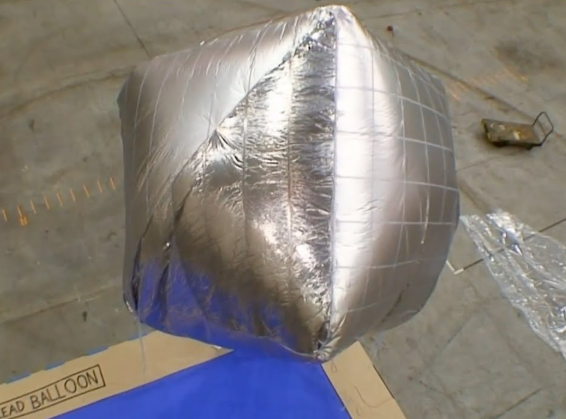

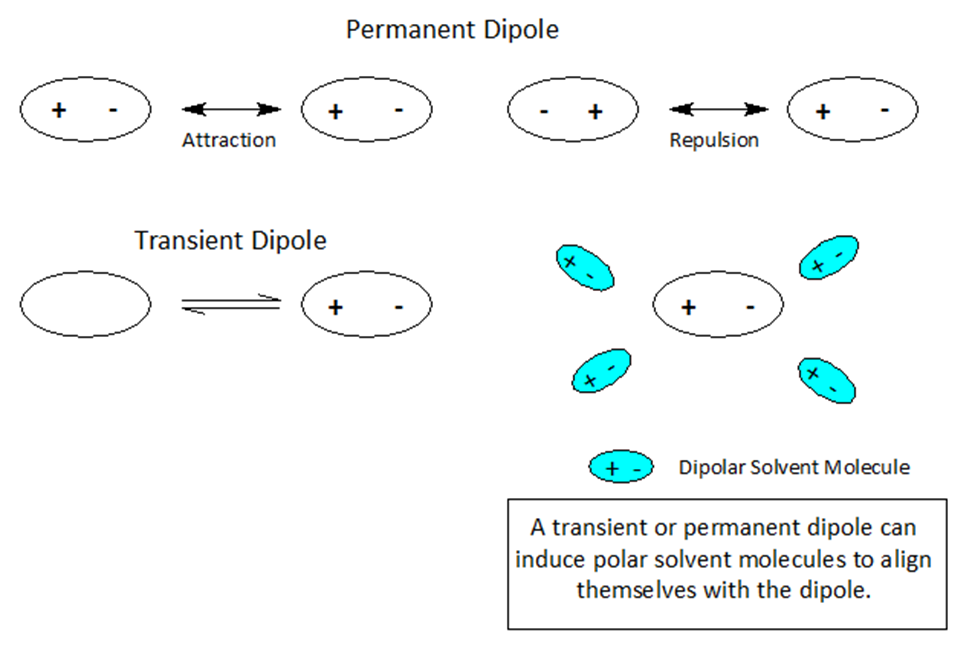
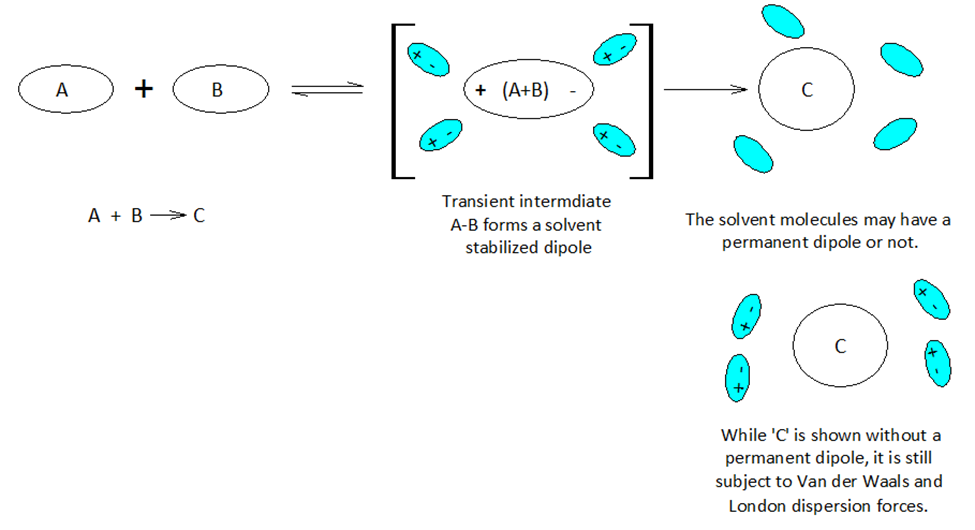
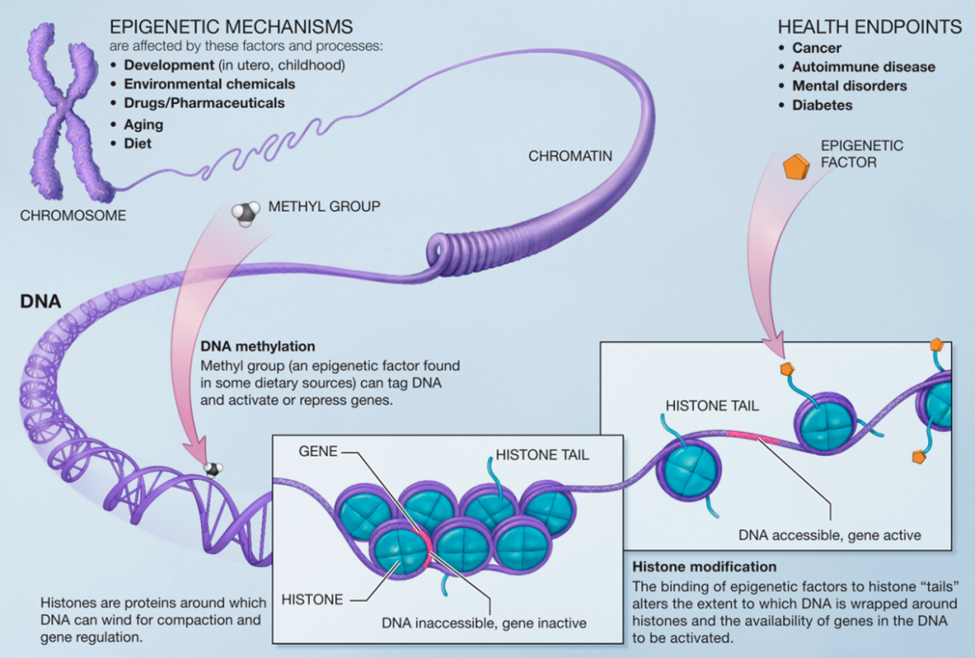
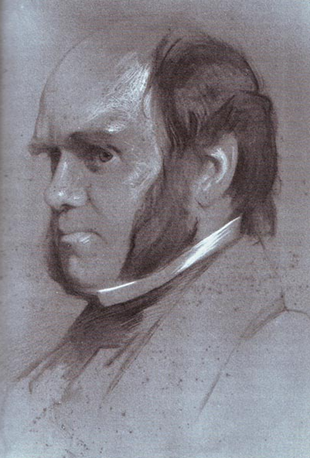

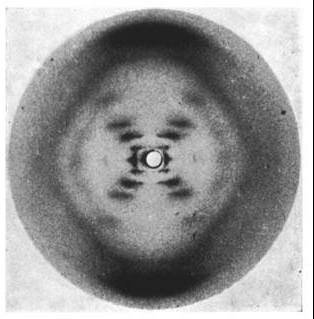
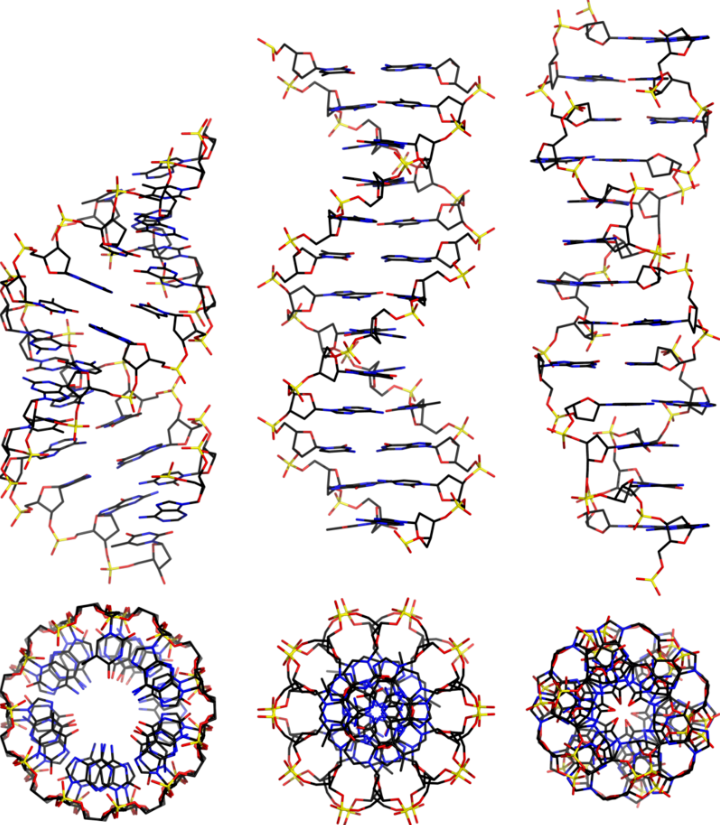
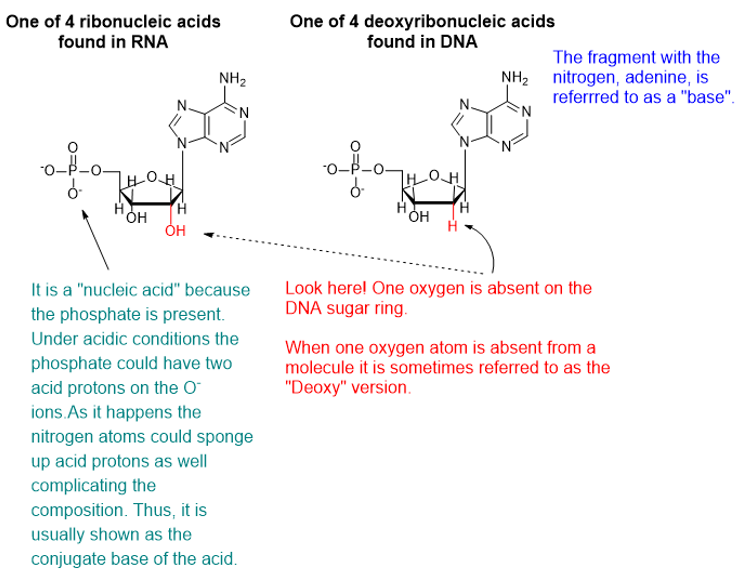
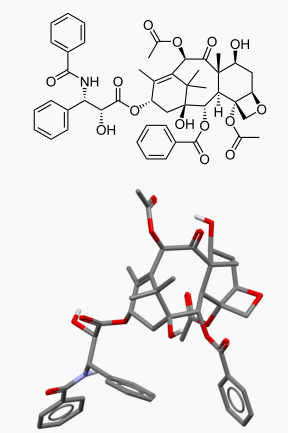
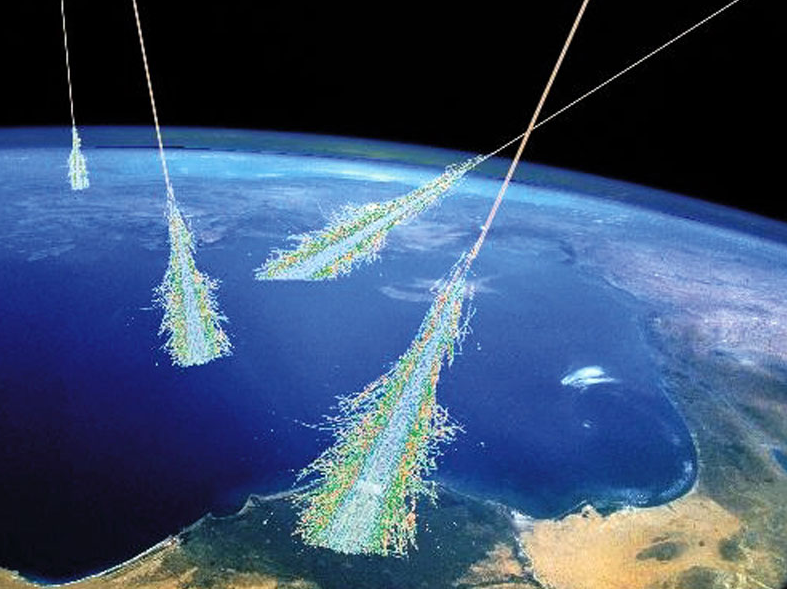
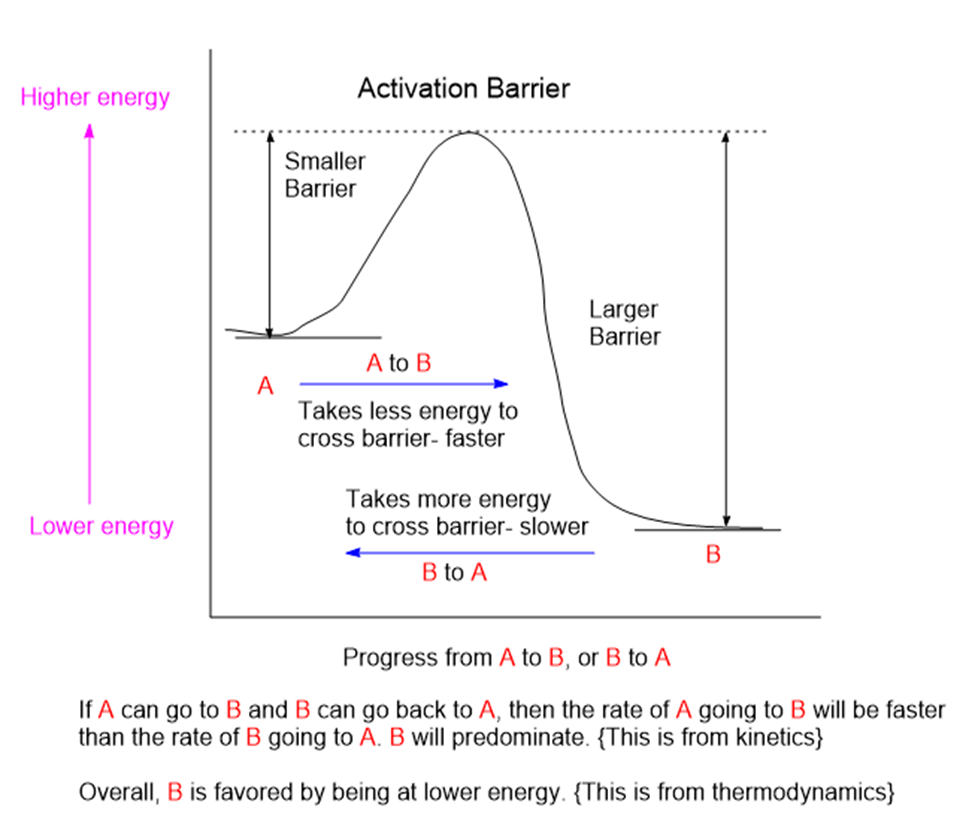

 Lamentations on Chemistry