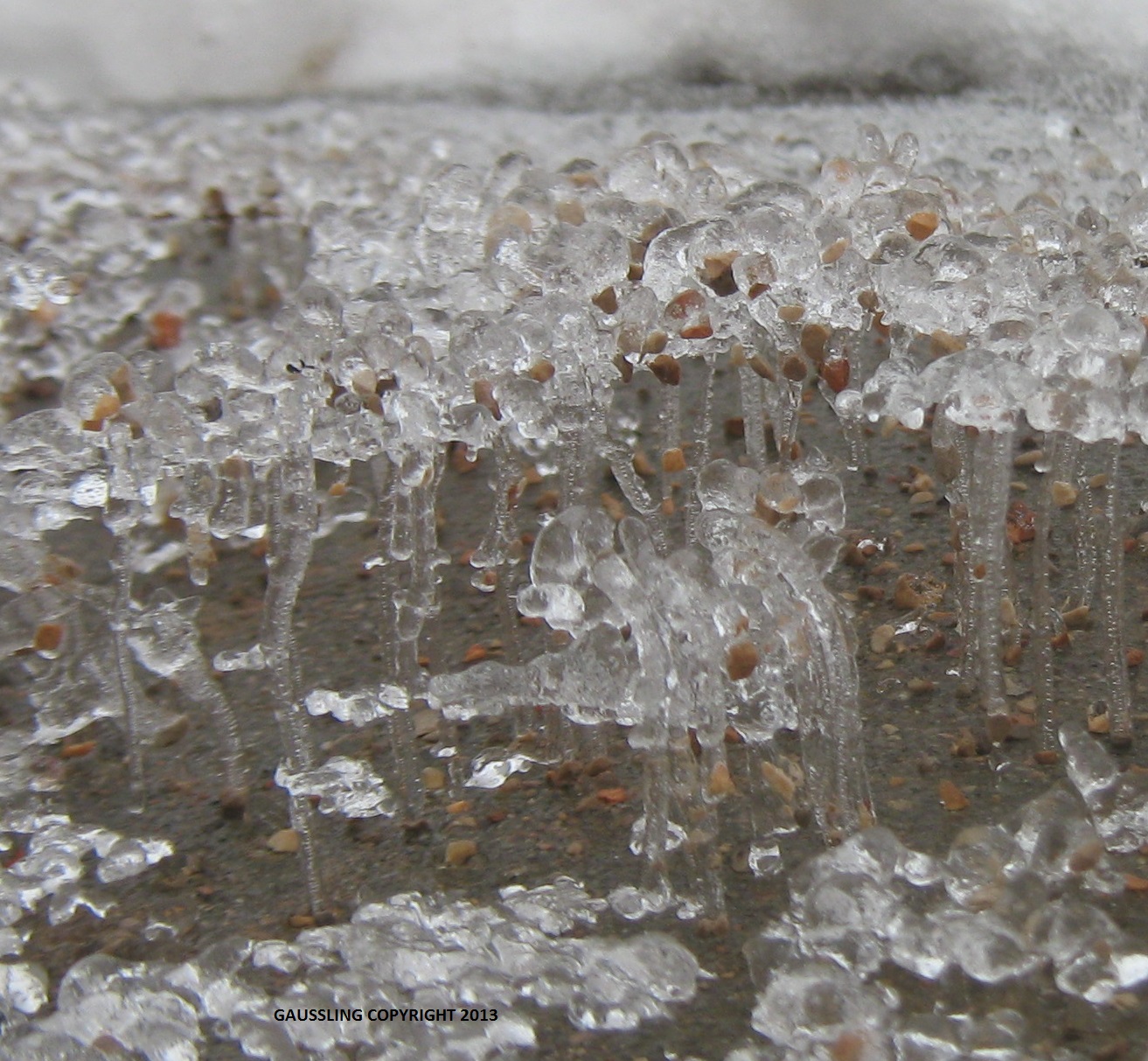
A few sentences relating to Power

Power is as power does, or the fact of power is the act of power.

Just a reminder. In the fable of the emperor’s new clothes, what is important to understand is not that an emperor can be highly delusional. The real lesson directs your attention to the ease with which those around him facilitate his delusion.  This is an insidious condition that creeps in silently like a fog that soon envelops everyone. It takes a child-like innocence of perspective to see through it. Regrettably, child-like innocence is rarely encouraged in organizations.

Power is in the ability to allocate resources. A successful business person must excel at accumulating and centralizing the power of resource allocation.

Business power stems from centralized control by a few. Representative democratic power is granted by voters.  What is behind the fascination with setting up a businessman in a legislative or executive power position? Business is inherently non-democratic.

What a Meth Lab is Not

It is time that someone questions the use of the phrase “meth lab”. Just as a cook would object to the phrase “meth kitchen”,  those of us who spend our careers in the laboratory should push back on the use of the word “lab” in this manner.  The use of this word confers the notion that a workspace is fitted for chemical handling activity and is operated by someone who knows what they are doing. Dubbing a meth operation as laboratory surrenders too much credit to the operator. These people are moonshiners skulking around on the periphery of society.

A meth lab is not a lab. It is the workshop of a criminal enterprise where unscrupulous people manufacture a dangerous substance. Its sole purpose is to profit from the uncontrollable neurological train wreck of methamphetamine addiction. This is not laboratory work. It’s just crime.

Fulminating Belief and the Drake Equation

It seems to me that the character(s) who produced the YouTube video that has caused so much religious fulmination in the sandy parts of the world ought to be parachuted into Cairo to answer for their actions. Surely they can give the best explanation of what their movie represents.

Another thing has occured to me. Perhaps we should make a minor adjustment to the Drake Equation which describes the number of civilizations in our galaxy with which communication might be possible. The equation can be found at this link.  The L factor defines the length of time a civilization releases detectable [radio] signals into space. Given the self destructive behaviours of beings capable of generating radio signals on at least one planet, maybe it is time to define L*.

L* = L(1 – P*/P) where P = average number of intelligent inhabitants of a planet and P* = average number of intelligent inhabitants willing to die/kill for their magical or political beliefs.

Perhaps the reader has a better modification.  Here is the Drake equation copied straight from Wikipedia:

N = R^{\ast} \cdot f_p \cdot n_e \cdot f_{\ell} \cdot f_i \cdot f_c \cdot L

where:

N = the number of civilizations in our galaxy with which communication might be possible;

and

R* = the average rate of star formation per year in our galaxy
fp = the fraction of those stars that have planets
ne = the average number of planets that can potentially support life per star that has planets
f = the fraction of the above that actually go on to develop life at some point
fi = the fraction of the above that actually go on to develop intelligent life
fc = the fraction of civilizations that develop a technology that releases detectable signs of their existence into space
L = the length of time for which such civilizations release detectable signals into space

General remarks

I wish to make a few remarks on current news items of interest.

Country singer Randy Travis was found in a ditch in north Texas allegedly drunk, naked, and belligerent following an apparent one car accident.  Crimony! It’s that awful Nashville music that he sings. If I sang that twangy, mornful, depressing stuff all the time, I guess I’d be sloppy drunk in a ditch too. He should dry out and switch to show tunes or something a bit more cheerful.

It seems that while the televisions and internets of the world are busily dulling enchanting us into the delusion that our ever accelerating consumption of resources and expansion into wild spaces are having no effect on the “natural world”, the global ecosystems are actually in trouble. I emphasize natural world only because so many of us are preoccupied with the on-line world. In fact, many are worried about a “state change” in the global ecosystems.

In Approaching a state-shift in Earth’s biosphere, a paper just published in Nature, the authors, whose expertise spans a multitude of disciplines, suggest our planet’s ecosystems are careening towards an imminent, irreversible collapse.

Earth’s accelerating loss of biodiversity, its climate’s increasingly extreme fluctuations, its ecosystems’ growing connectedness and its radically changing total energy budget are precursors to reaching a planetary state threshold or tipping point. [ The Automatic Earth, August 6, 2012. ]

I know, I know. Sounds like Chicken Little. But we should pay more attention to our small planet. The atmosphere is thinner than most people think, the fisheries are stressed, desertification is happening in Africa, and human population pressures are mounting in many locations.  We can’t keep the extractive industries going forever. We need to find an economic model or culture that allows us to do with less mass. Reduced consumption per capita. Look, it’ll happen anyway as key resources dwindle.

We should be aggressively recycling lithium, gallium, tellurium, indium, and the rare earth elements in particular.  These are key elements in our much beloved electronic devices. There are other materials to watch, including hydrocarbons in general.  A society with infrastructure causing one to hop in the SUV and drive 5 miles from their isolated subdivision to buy cigarettes and beer is a society that is on a rendezvous with destiny.

Thoughts on crystals, symmetry, and perfection

Bismuth crystals on my desk

Nothing too unusual here. Just some bismuth crystals sitting on my desk. A metallurgist friend died recently and his family passed along some of his samples to me. Virg was a great guy. He knew how to conduct himself with decorum like a civilized human being. I don’t confer this praise on everyone.

Bismuth City

I think many people find some kind of solace in the orderliness of crystals. Nature has seemingly betrayed the prevalent trend of disorderliness to produce a latticework of pristine stuff in appealing shapes. Crystals appeal to our innate desire for symmetry and rectilinearity. We subconsciously associate symmetry with goodness and calm. Properly stacked goods in your basement suggest orderliness. Shoes lined up in the closet or socks neatly arranged in the drawer provide a reassurance that something in life is at least predictable.

Crystallinity infers a repetitive array of subunits asssembled under the austere constraints of efficient stacking. It represents subunits held in confinement and subject to limits on motion.

Crystallinity is in a sense sterile and lacking in diversity. Living things are not crystalline for the most part. Crystallinity is static and devoid of the many necessary degrees of freedom needed for life.  Living things often have superficial symmetries, though on closer inspection something inevitably cracks the symmetry. Humans have a bilateral symmetry across a line taken from the head to between the feet, as do butterflies and hippos. Internally, though, the symmetry is less than obvious.  Our genetic polymers of DNA have a gross secondary helical symmetry as do some peptides, but even that yields to partial symmetry when the monomeric units are accounted for.  Sure, there are instances of crystallinity in living things. But living things require a fluid internal environment to allow molecules to collide and react.

If you take crystallinity as an allegory of perfection in the sense of a way of being- that is, orderliness and freedom from defects- then you might conclude that a perfect being would be constrained by symmetry or the attributes of perfection.  It would seem that the attribution of perfection in a being might pose the possibility of limitation.

Instead of getting wrapped around the axel philosophically, perhaps we should gladly rejoice in the lack of perfection in ourselves and the ultimate absurdity of perfection in the fanciful dieties whom we imagine control the vibration of every molecule in the fleas that ride on the tailfeathers of every sparrow.

Curiosity on Mars

Photo of Curiosity during descent phase, taken from orbit. This shot is amazing all by itself.

Curiosity in descent phase. Photo taken by NASA’s Mars Reconnaissance Orbiter. Credit: NASA/JPL-Caltech/Univ. of Arizona.

Curiosity is powered by a Pu-238 oxide thermoelectric generator. The Multi-Mission Radiosiotope Thermoelectric Generator, MMRTG, has an output of 2000 watts thermal and 100-120 watts electric. The MMRTG unit sits in the aft end of the rover enclosed by a finned heat exchanger.

Thoughts on Academia

The blog post by Terran Lane of the University of New Mexico provides a good example of the frustrations in academics today. Much of this is well plowed soil. I link to it because I think he is spot on about more than a few things.

The availability of external funding for the last 30 years has equipped American colleges and universities with a great deal of equipment and facilities. The availability of funding for grad students and post-docs has energized a vast educational complex that has come to depend on external grant money to maintain built up infrastructure. Naturally when an institution expands in good times, it finds itself top heavy in overhead when the good times end.

Ambitious people step forward when presented with the opportunity to grow programs and institutions when times are cash rich.  But when the cash influx begins to taper off, these same people find themselves in the position of having to decomission or dismantle parts of the very organization they helped to build.  It is hard for people in any circumstance to feel like they are moving forward when they have to make do with less.

One response to restricted university resources is to increase competition for teaching positions and tenure. Candidates with the best potential for winning grants are highly prized in any candidate search. The result of this is that professors today are burdened by administrative expectations in the hunt for resources in order to maintain close to what they already have.

Friends at PUI institutions are also feeling the heat, possibly due in part to the rise in undergraduate research programs that took off in the 1980’s.  Undergraduate research in chemistry, at least, has grown into an expectation rather than a plus. This brought the buzz saw of the grant machine into the grassy quads of many quiet institutions.

Certainly no untenured prof is going to throttle down their scholarly activity for the greater good of science funding.  Faculty will continue to struggle with this as long as grants are a major metric in rank and tenure.

Which brings me to my final point. Scientific knowledge as national treasure.  I am sifting through Chemical Abstracts Service data bases searching for something nearly every day. This resource of ours, scholarly and pragmatic knowledge, is one of the crown jewels of human civilization. It is the collective contribution of people and institutions going into the distant past and across the curved surface of our world.  We should cherish it for what it is- an archive of achievement, a repository of knowledge for application to future challenges, and a representation of the best of what we are capable of.

The notion that academia is the apex of the life intellectual has never been entirely true. You do not have to be in industry for very long before it becomes quite clear that there are a great many smart and creative people outside of academia. People who become professors are people who are in love with the very idea of the university and of higher education. We must find a way to allow research active faculty to throttle down the grant cycle just a bit so they may throw their energies into serving their institutions in the traditional manner. By service to  their students, to scholarship, and to the advance of civilization.

That said, it seems embarrassingly obvious to say that our academic institutions are a critical part of our civilization past, present, and future. But today our institutions are in peril of substantial decay if left to antagonistic legislators and fulminating demagogues bent on terminating programs in the name of social reconstruction.

We know how to operate our university/research complex. Absent some of the mania in the horse race for grants, perhaps we can offer a bit more student contact with professors. A BA/BS degree must be understood to mean that a graduate has absorbed knowledge, sharpened reasoning ability, accrued some judgement, and has developed a professional demeanor that can only come from the personal interaction between people. We should expect from our institutions that a professor is a professor, not a shift supervisor.

On the Merry Path of Calorimetry

I enjoy working with our RC1 reaction calorimeter. As we get more experience with thermal profiles of reactions, the utility of this instrument is made more evident. The Mettler-Toledo RC1 can be used to follow the heat evolution of a reaction for safety purposes, and/or it can be used to narrow in on optimum feed rates of reactants.

What is next on the agenda is to determine the heat transfer coefficient(s) and wetted heat transfer surface areas in selected reactors in order to gauge the upper heat load boundary that can be managed safely. There are many variables to contend with.  Inevitably, one has to pick a finite range of operating parameters to evaluate. Agitation rate, fill level, and heat transfer medium are variables to take into account.

So, down the merry path we go, learning more and more about applied thermodynamics and chemical engineering. I can dig it.

In my experience with people in different organizations in the context of training and expertise, I have come to notice that employees can be partitioned into two camps. There are those who wait to be trained and there are those who will not wait to for it.  As a rule, scientists and engineers are driven by curiosity and not a small portion of competitive spirit. This group will engage in self-study to acquire the necessary skills to push back the limits of their abilities.

An instrument like the RC1 requires that the user be familiar with the intimate details of the chemical transformation.  It is possible to alter the experiment profile on the fly, and that is not the work of a pure analyst following SOP’s. A chemist experienced in experimental synthesis with a broad background in material phenomena and descriptive chemistry is one who can steer the instrument and tease out key subtleties.

I recently had a reaction mixture in the RC1 that formed a slush at low temperature. At this temperature the heat flow trace was extremely irregular.  The reaction mass showed little visible sign of mixing.  Addition of reactant was followed by large magnitude, short coupled, exothermic swings. Apparently the heat of reaction was being released on a relatively small top portion of the reaction mass and eventually swirling towards the heat sensor strip with little dilution, giving exaggerated heat flow indications. With a Tr increase of 20 ºC and a higher mixing frequency, the mass began to thin a bit giving a vortex. The wild heat excursions disappeared.

What I take from this experience is that control problems might arise as a result of poor mixing leading to temperature or feed control inputs that are exaggerated as a result of being out of phase with the state of the reaction mass. An economic consequence might arise in the form of overly conservative metering of reactant, adding extra plant hours to the cost.

The concentration effects due to poor mixing can lead to localized enthalpic overheating and potential disturbances in the composition profile.  A reaction mixture with high viscosity or density in a solvent with low tensile strength (i.e., diethyl ether) can lead to cavitation and further exacerbation of mixing problems.

A poorly mixing slurry of reactive components in a low boiling solvent is a bad combination. Especially when the reactor is filled to afford low headspace. A temperature excursion can exceed the boiling point and cause the thick mixture to develop into a foam which can expand into the headspace or beyond.  This is the realm of heterogeneous flow and your emergency venting system may not be designed for such flows.  This is one of the many reasons that some operations define an operating temperature policy relating to the reaction temperature and the boiling point of the reaction solvent.

It is worth pointing out that process intensification is likely to lead to higher power densities (W/kg) in the reaction mass as well as solubility problems that can cause poor mixing and heat transfer. The RC1 can help the process chemist flesh out the merits of process intensification.