Best of luck to Dale who leaves McMurdo Station tomorrow for the Amundson-Scott Station. Second year in a row that a friend is off to the south pole. He is delivering a detector array for a radio telescope.
To the South Pole!
Leave a reply

Best of luck to Dale who leaves McMurdo Station tomorrow for the Amundson-Scott Station. Second year in a row that a friend is off to the south pole. He is delivering a detector array for a radio telescope.
A few Andreas Feninger photos found at the Library of Congress are shown below. The New Idria mine was a productive mine and smelting operation in central California. Note the fellow at the tilted sorting table, physically agitating the mercury from the solid soot and allowing it to run down the table for collection. This is a gravity sorting process. Hard to know what kind of occupational exposure the poor fellow is into.
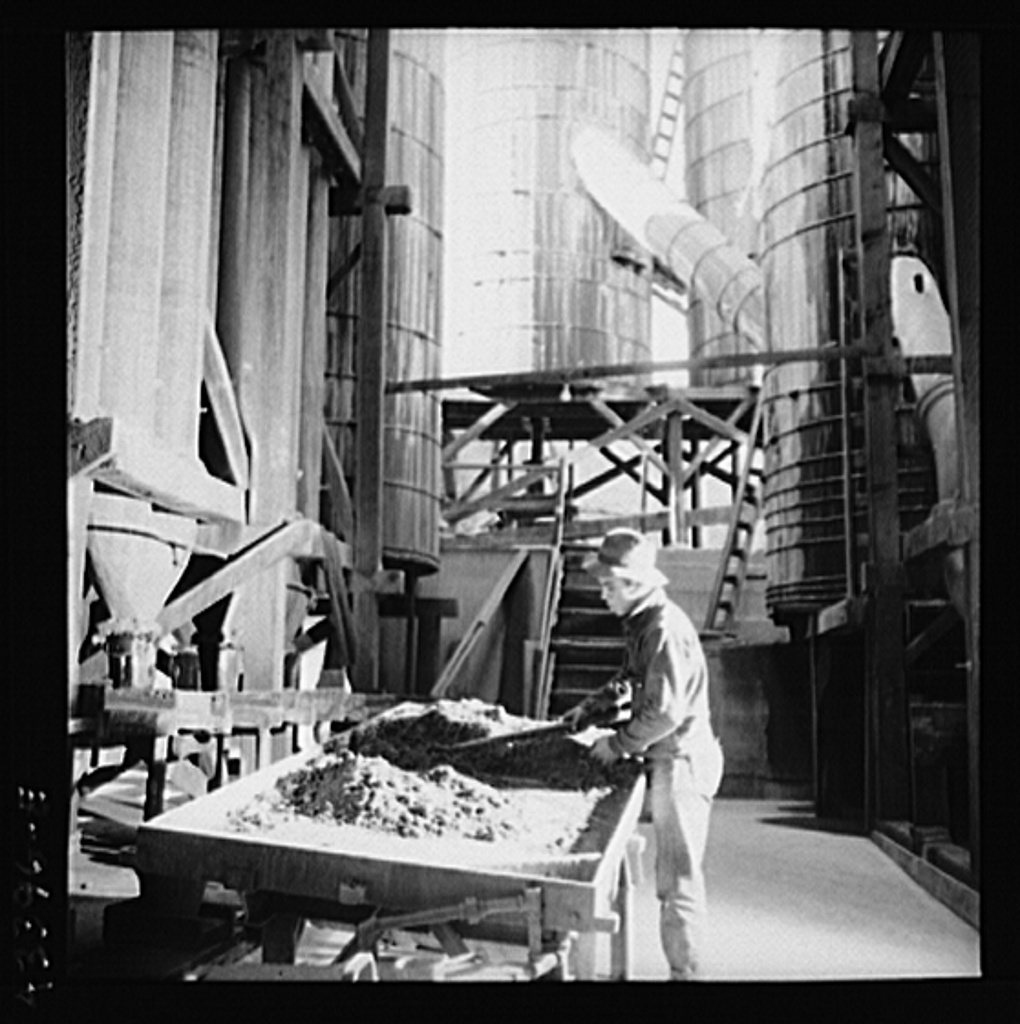
Worker collecting mercury from soot from smelter at New Idria mine, ca 1942. Library of Congress.
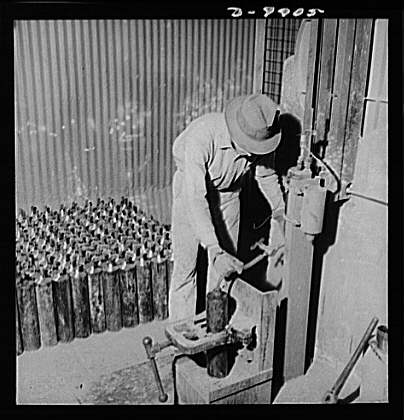
Mercury Filling Station at New Idria Mercury Smelter, 1942. Photo by Andreas Feninger, Library of Congress.
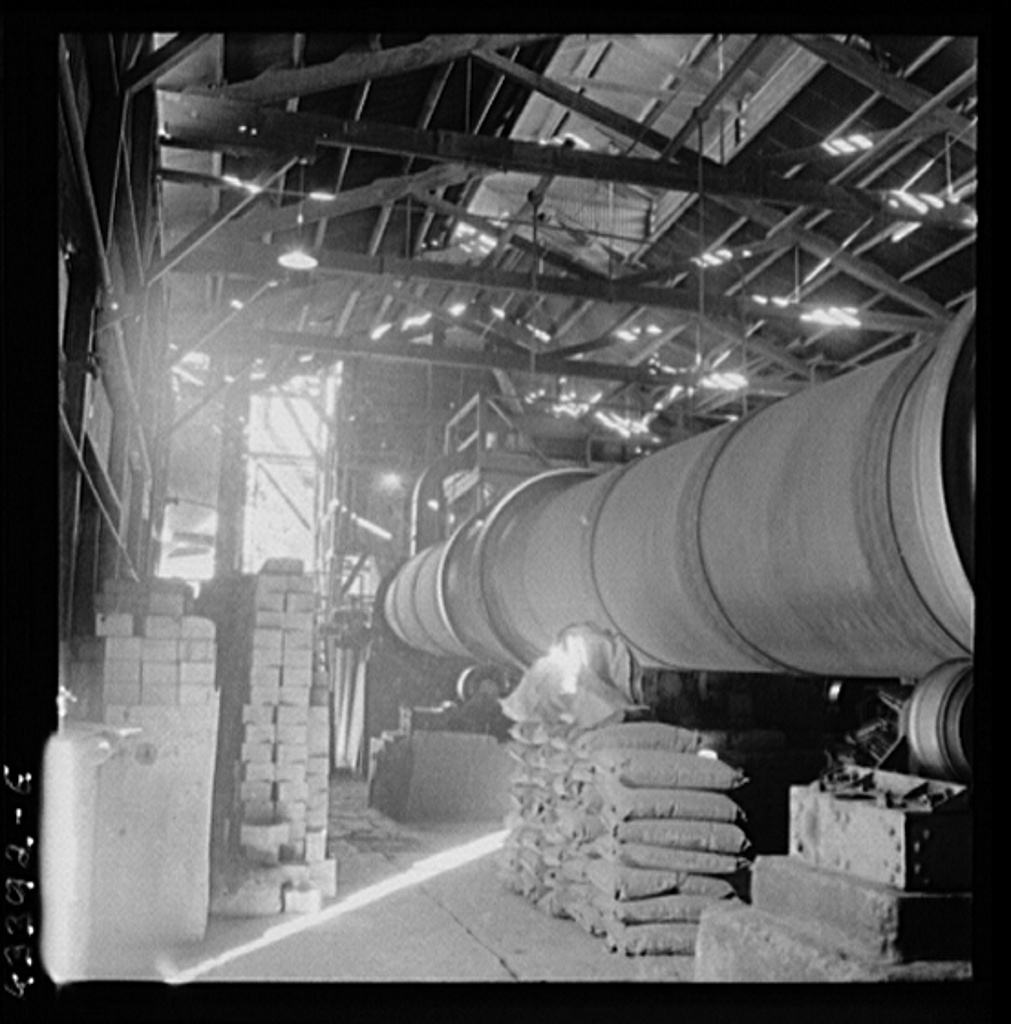
Rotary Kiln at the New Idria Mine and Smelter, 1942. Photo by Andreas Feninger, Library of Congress.
I couldn’t resist posting this map. Just how many myths are there involving cannons? Judging from Mythbusters, there must be quite a few because they are always blasting something. There is a job I’d love to have.
I’ve turned my attention to reaction calorimetry recently. A reaction calorimeter (i.e., Mettler-Toledo RC1) is an apparatus so constructed as to allow the reaction of chemical substances with the benefit of measuring the heat flux evolved. Reaction masses may absorb heat energy from the surroundings (endothermic) or may evolve heat energy into the surroundings (exothermic).
Calorimetry has been around for a very long time. What is relatively recent is the development of instrumentation, sensor, and automation packages that are sufficiently user friendly that RC can be plausibly used by people like me: chemists who are assigned to implement a technique new to the organization. What I mean by “user friendly” is not this: an instrument that requires the full time attention of a specialist to operate and maintain it.
A user friendly instrument is one engineered and automated to the extent that as many adjustments as possible are performed by the automation and that the resulting sysem is robust enough that operational errors and conflicting settings are flagged prior to commencing a run. A dandy graphic user interface is nice too. Click and drag has become a normal expectation of users.
An instrument that can be operated on demand by existing staff is an instrument that nullifies the need for specialists. Not good for the employment of chemists, but normal in the eternal march of progress. My impression is that RC is largely performed by dedicated staff in safety departments. What the MT RC1 facilitates is the possibility for R&D groups to absorb this function and bring the chemists closer to the thermal reality of their processes. Administratively, it might make more sense for an outside group to do focus on process safety, however.
In industrial chemical manufacture the imperative is the same as for other capitalistic ventures- manufacture the goods with minimal cost inputs to provide acceptable quality. Reactions that are highly exothermic or are prone to initiation difficulties are reactions that may pose operational hazards stemming from the release of hazardous energy. A highly exothermic reaction that initiates with difficulty- or at temperatures that shrink the margin of safe control- is a reaction that should be closely studied by RC, ARC, and DSC.
It is generally desirable for a reaction to initiate and propagate under positive administrative and engineeering controls. Obviously, it is desirable for a reaction to be halted by the application of such controls. Halting or slowing a reaction by adjustment of feed rate or temperature is a common approach. For second order reactions, the careful metering of one reactant to the other (semi-batch) is the most common approach to control of heat evolution.
For first order reactions, control of heat evolution is had by control of the concentration of unreacted compound or by brute force management of heating and cooling.
Safe operation of chemical processing is about controlling the accumulated energy in the reactor. The accumulated energy is the result of accumulated unreacted compounds. Some reactions can be safely conducted in batch form, meaning that all of the reactants are charged to the reactor at once. At t=0, the accumulation of energy is 100 %. A reliable and properly designed heat exchange system is required for safe operation (see CSB report on T2). In light of T2, a backup cooling system or properly designed venting is advised.
The issue I take with the designers of the process performed at T2 is this: They chose to concentrate the accumulated energy by running the reaction as a batch process. This is a philosphical choice. The reaction could have been run as a semibatch process by feeding the MeCp to the Na with a condenser on the vessel. Control of the exotherm could have been had by control of the feed rate and clever use of the evaporative endotherm. A properly sized vent with rupture disc should always be used. These are three layers of protection.
Instead, they chose on a batchwise process relying on a now obviously inadequate pressure relief system, and the proper functioning of water to the jacket.
No doubt the operators of the facility were under price and schedule pressure. The MeCp manganese carbonyl compound they were making is an anti-knock additive for automotive fuels and therefore a commodity product. I have no doubt at all that their margins may have been thin and that resources may not have been there to properly engineer the process. This process has “expedient” written all over it in my view.
Reactions that have a latent period prior to noticeable reaction are especially tricky. Often such reactions can be rendered more reliable by operation at higher temperatures. Running exothermic reactions at elevated temperatures is somewhat counter-intuitive, but the issue of accumulation may be solved.
Disclaimer: The opinions expressed by Th’ Gaussling are his own and do not necessarily represent those of employers past or present (or future).
The South Meadow generating station was operated by the Hartford Electric Company in Hartford, CT. The unit described in the 1931 Pop Sci article used 90 tons of mercury in the boiler. The article states that the South Meadow generator produced as much as 143 kWh from 100 lbs of coal, as opposed to an average of 59 kWh from conventional coal fired plants and 112 kWh from exceptionally efficient coal fired plants. The article describes an incident at the plant where a breech of containment from an explosion in the mercury vapor system occurred, releasing mercury and exposing workers to mercury vapor.
The Schiller Mercury Power Station in Portsmouth, NH, is described in this link.
The extraction of silver and mercury in Spanish new world was central to the expansion and upkeep of the empire. Silver provided wealth enabling the crown to project power and pay its debts. In the early years of the conquest the Spanish pilfered and exhausted Inca gold and silver available in stores and caches. Eventually, the Spanish found deposits of gold and silver and developed a form of forced mine labor (mita) wherein indian families were required to provide a worker for one year’s unpaid labor in the mines.
The Viceroyalty of New Spain and the Viceroyalty of Peru during the age of conquest developed many mines, yielding mostly silver. Many deposits, especially Cerro Rico in what is now Potosi, Bolivia, contained silver in the metallic form to some minor extent. The Incas had developed smelting before the Spanish occupation, but the process was inefficient and required fuel for smelting. Wind smelting was developed by the Incas, but was dependent on the winds to drive the fires. The discovery of amalgamation and recovery of silver and gold by retorting solved many problems in production.
After the discovery of the patio amalgamation process in 1554 in what is now Mexico, the importance of mercury was recognized as the key to efficient, large scale silver production. This discovery eventually enabled the large scale enslavement of aboriginal peoples to run the mercury mines and smelters of Huancavelica, Peru, and amalgamation operations in the many silver mines in the region.
The conquistador Mancio Serra de Leguisamo (b. 1512, d. 1589) lamented in a preamble of his will-
We found these kingdoms in such good order, and the said Incas governed them in such wise [manner] that throughout them there was not a thief, nor a vicious man, nor an adulteress, nor was a bad woman admitted among them, nor were there immoral people. The men had honest and useful occupations. The lands, forests, mines, pastures, houses and all kinds of products were regulated and distributed in such sort that each one knew his property without any other person seizing it or occupying it, nor were there law suits respecting it… the motive which obliges me to make this statement is the discharge of my conscience, as I find myself guilty. For we have destroyed by our evil example, the people who had such a government as was enjoyed by these natives. They were so free from the committal of crimes or excesses, as well men as women, that the Indian who had 100,000 pesos worth of gold or silver in his house, left it open merely placing a small stick against the door, as a sign that its master was out. With that, according to their custom, no one could enter or take anything that was there. When they saw that we put locks and keys on our doors, they supposed that it was from fear of them, that they might not kill us, but not because they believed that anyone would steal the property of another. So that when they found that we had thieves among us, and men who sought to make their daughters commit sin, they despised us.
Many Spaniards attempted to speak out for the Inca and other aboriginals. Few were effective. But by the time of the Fifth Viceroy of Peru, Francisco Alvarez de Toledo, it was recognized (by Toledo, at least) that reforms were needed to bring the Inca into Christianity and life in a world of laws. Perhaps it was unfortunate for 16th century Incas that King Phillip II was an especially enthusiastic proponent of the counter-reformation and the Inquisition.
Here is a choice tidbit from the Washington Post. The Chinese, it seems, have been constructing a tunnels which some believe are meant to contain (possibly) strategic nuclear weapons and large numbers of people.
What China is actually up to and what it means for the control of nuclear proliferation is unclear. Generally, when a country builds fortifications like this alleged underground capacity, it is for a reason. They wish to be perceived as an irresistable force or an immovable object.
It is also worth considering that a massive, opaque, underground fortification with ICBM capacity is a step change away from the 20th century-style logic of Mutual Assured Destruction. MAD, as it was called, relied on opponents coming to the conclusion that there would be no winners in a nuclear exchange. If this structure is a fact, then it could mean that China means to survive nuclear war. The logic of MAD was based on holding the respective civilian populations hostage. As crazy as that sounds, it worked.
One of the criticisms of Reagan’s Strategic Defense Initiative (SDI or Star Wars) of the 1980’s was that it undercut the balance imposed by MAD. In the end, the USSR collapsed at a time and circumstance that not even the CIA was able to forecast. The biggest threat that SDI posed to the Soviets was the inevitability of yet another crippling arms buildup.
A hardened and opaque Chinese missile capability will not go unnoticed by hawks in western governments. This development, real or not, may kick the mania for weaponization of space up a notch or two and tip the guns-or-butter equilibrium even further from butter.
To we Americans, like others throughout history, the impulse to devise new weapons is irresistable. We’ll throw hundreds of billions of dollars of national treasure at the arms and aerospace complex to come up with zesty new engines of war and call it just. Yet we are unable to justify upgrading infrastructure or a plan to sustain an egalitarian society.
What the US needs to do at this point is to begin intense high level talks with the Chinese to bring strategic armament issues onto the table, if they have not already begun to do so. China has built a friendly and industrious looking store front. But inside is a tightly wound and ambitious party-controlled military apparatus that is anxious to test its mettle against the US.
If Americans continue to parade around spouting this directionless free market blather instead of devising a more coherent national plan for thriving in the century of China, we will become the next fallen empire. Privatization is decentralization. Even businesses know that market share is not gained by fragmenting command and control. If the Chinese whip us, it will be for this reason.
There is a rare earth exploration boom in progress at the present time. This boom is in response to the policy shift of the Chinese government toward greatly reduced export of crude rare earth feedstocks. This political phenomenon is the result of the grand geological lottery that has deposited mineral wealth around the world.
Billions of years ago the geological processes in play were causing the partitioning of the elements into minerals that afforded local concentrations of groups of elements. Over geological time magma rose and cooled, sequentially crystallizing out minerals that by virtue of the principles of chemistry, laid down zones of enrichment. Recrystallization, extraction, ion metathesis, hydrolysis, melting point depression, attrition, processing of melts, degassing- all processes recognizable to the chemist. These processes are responsible for the formation of mineral species as well as their transport and alteration.
But the earth is never finished processing its mineral horde. Land masses are subject to upheaval and erosion, geochemical synthesis and decomposition. Any given formation at any given time is an overprinting of frozen events separated in time.
Large zones of continent may be subject to forces that cause it to break in networks of fractures. The forces may be in the nature of shear where fracture faces slide past one another. Other forces may lead to an upthrust of rock on the continental scale leading to mountain building. The shear and bending applies forces that exceed the tensile strength of the rock, leading to fracturing. Over time these fractures may serve as channels for hydrothermal flows.
Hot, pressurized water over long periods will dissolve susceptible minerals in the rock faces and transport solutes and suspended solids throughout the fracture network. Established mineral species yield to the solvent effects of water and slough off part or all of their constituents. In doing so, the minerals are taken apart into anions and cations that will eventually reassemble elsewhere into different mineral species. Over time these fracture networks will fill with solids and self-seal. They are called veins.
Water is not innocent in its behavior. Water’s ever eager oxygen atom binds to oxophilic metals and metalloids, taking them down to the energy bargain basement of oxide or oxyanion formation. Water with dissolved acids can digest whole formations leading to cavernous voids in susceptible rock.
Over time, geological processes have left formations of elements in bodies of economically viable concentrations called ore bodies. In the case of rare earth ore bodies, these elements are found concentrated in veins and breccias, pegmatites, or dispersed at more dilute levels in many other kinds of minerals. It is a truism that the lanthanide set of the rare earths are all commonly found in the same formation, but emphasizing the lights (LREE) or heavies (HREE). Scandium and yttrium are the Group III elements grouped with the 15 lanthanides to form the rare earths. While yttrium is often found with the lanthanides, scandium is often scarce in deposits otherwise rich in the other rare earths (REE’s). It is not uncommon for REE deposits to contain significant levels of zirconium, hafnium, tantalum, niobium, thorium, and uranium.
China does not seek to deprive the world of products using REE’s. It has taken the position that the REE exports will be in the form of finished consumer products. The policy of China is that it will manage the output of rare earth-based products in a highly value added good as a means to extract the most value from it. China’s market has a central nervous system that has devised manufacturing policy. It is much like an octopus. In the US, the prevailing wisdom is that the market should seek it’s own equilibrium without government interference. Our system is a distributed in the manner of a coral reef.
Today, mining exploration firms principally from Canada, Australia, and South Africa are exploring Africa, Australia, and the Americas for deposits of REE’s- and finding them. In my survey of the field, it would seem that the US is poorly represented in the roster of rare earth exploration firms.
So, when we invaded Afganistan and Iraq, why didn’t we finance it with a bond drive à la WWII? Civilian citizens could’ve invested in some real sense in the action and much of the US debt might have been owed to … well … us. Instead, national treasure is owed to foreign states and anyone else who buys treasury notes.
Am I wrong here? If we’re going to send young men and women off to fight and die on foreign soil for some shared benefit, why wouldn’t we want to invest in it ourselves? Isn’t that the right thing to do?
Instead, we allowed China and others to invest in our foreign adventures and earn some interest in doing so. Citizens get to pay off the cost plus interest. I guess that the interest would’ve been owed anyway, but the money would be in US circulation.
Instead of paying for our own wars, we borrowed the money and had a real estate mortgage calamity bubble instead.
I recall that someone asked President Bush II about this early on and his recommendation was to “go shopping”. The subtext was that they had it all under control.
I have to be missing some key concept, right?
How can reasonably smart people be- collectively anyway- so wrong? Clearly, their ideas and policies are corrupt or faulty. Parties and their members adopt policies and platforms that are either unsustainable or willfully apply an imbalance of favor.
The party system is corrupt to it’s core and must be taken down. Social networking may be the lightning bolt to do the job.
C&EN recently published an article on the favorite reactions of several bloggers. It was the result of an open call for favorite reactions by the C&EN blog in celebration of IYC. Naturally, I missed this call for submissions.
I would’ve offered the biosynthesis of squalene oxide and cyclization to lanosterol as my favorite reaction. The domino assembly of phosphorylated terpenoid precursors and the penultimate cyclization with the hydride and methide migrations is a thing of beauty. To make a fused hydrocarbon ring system in aqueous media as complex as the steroid nucleus with all of the stereocenters landing in place as they do is a true wonder of nature!

 Lamentations on Chemistry