Fort Calhoun Nuclear Generating Station Alert

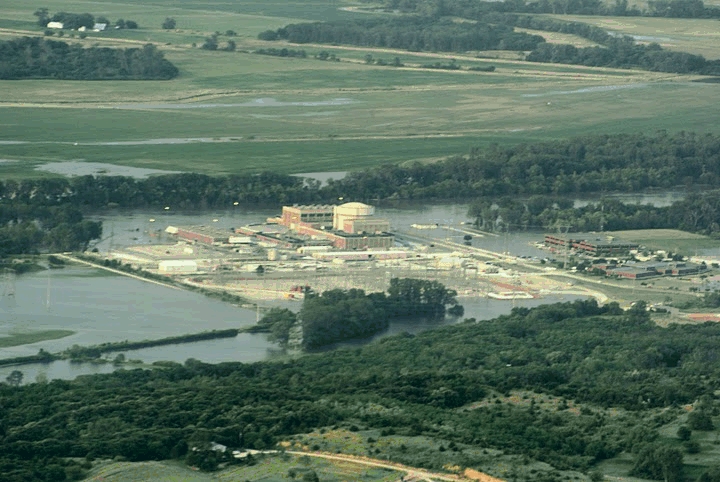
An alert was declared on June 7th, 2011, at the Fort Calhoun nuclear generating plant north of Omaha, NE.  The plant is next to the Missouri River which has been at some level of flood stage recently.  According to the NRC, a fire ocurred briefly affecting some electrical equipment necessary for safe operation of the plant. Within a few hours the plant operators exited the alert when the necessary access to equipment was regained. 

For a short time the plant lost its ability to cool the spent fuel pool cooling water.  While the incident did not result in any unsafe temperature rise in the pool, the licensee was obligated to declare the alert. The plant remained safely shut down during the event, though afterward the plant remained under an Unusual Event Declaration due to the condition of the Missouri River. The FAA issued a temporary flight restriction within two nautical miles of the plant.

Ft Calhoun Nuclear Plant in the Missouri River

Visit to the Argo Mill

After years of driving by the Argo mill in Idaho Springs, Colorado, we decided to turn off of I-70 and take the tour.  Admittedly my interest in the mining history of the west had something to do with it.  

This is a very unusual historical site and is worth a stop for those with an interest in history and mining. The facility consists of a red mill building built along the slope of the mountainside and, separately, access to the entrance of the Argo tunnel.  Adult tickets cost $15 and in exchange for the fee, you get a movie and a talk on the history of the mill by a staffer, and a pack of sand for your gold panning lesson.  The sample of sand is salted with gold flakes so that everyone has a decent chance of recovering some flakes.
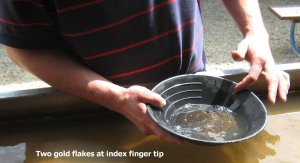
Staff member demonstrating the use of a gold pan.

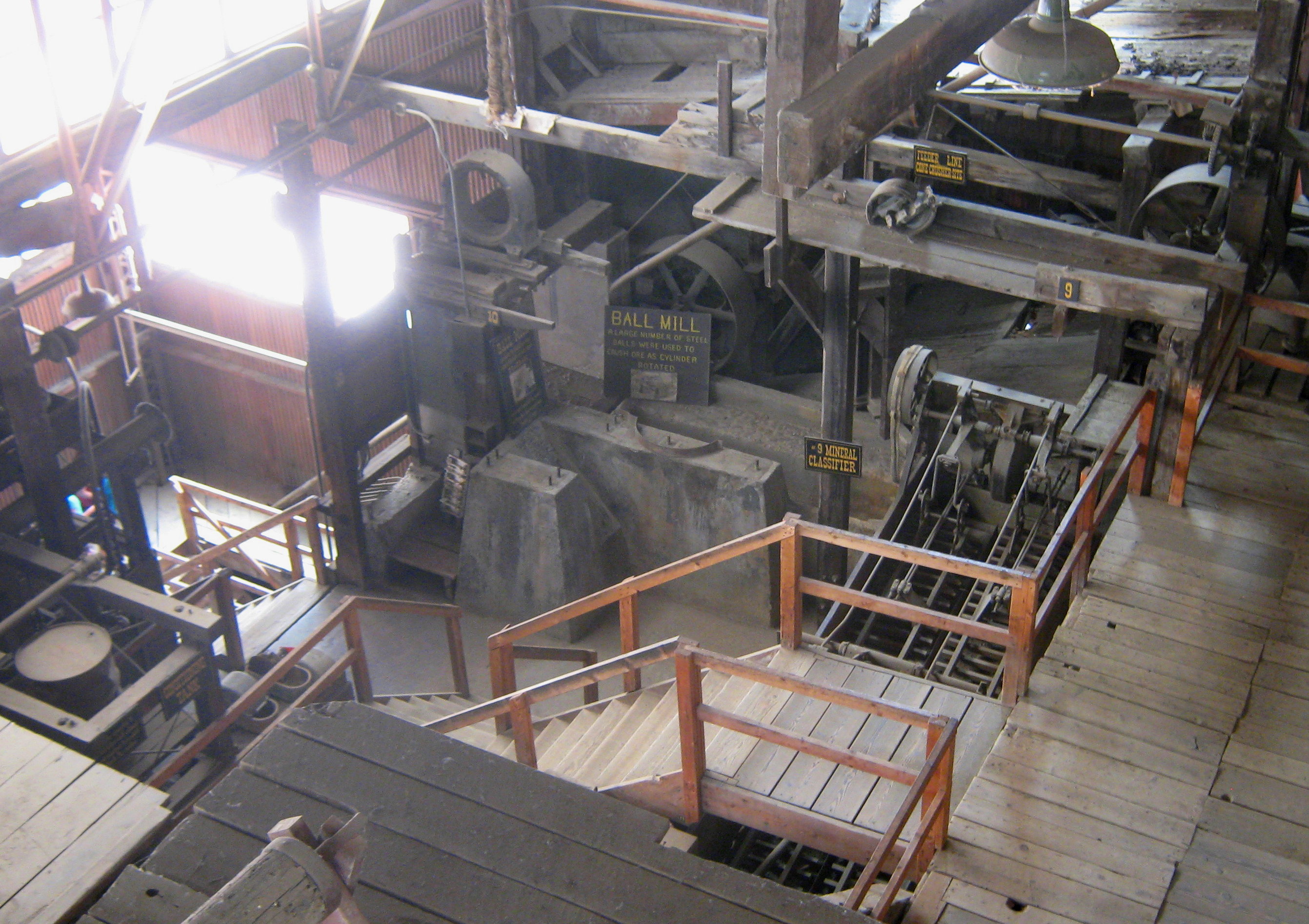
What makes the Argo mill unusual?  Several things. Most obviously, it is a gold mill that is quite well preserved. Most gold-rush era mill sites were in various stages of ruin in the early 2oth century. That this mill has been so well preserved alone makes it worth a visit. Add to that the machinery that is on display and you will get a fairly good idea of what it must have been like to work in such a place.
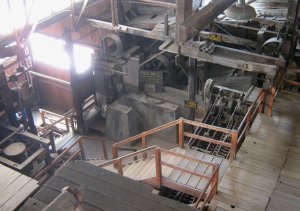
Interior Spaces of Argo Mill. (Copyright 2011 Th' Gaussling)

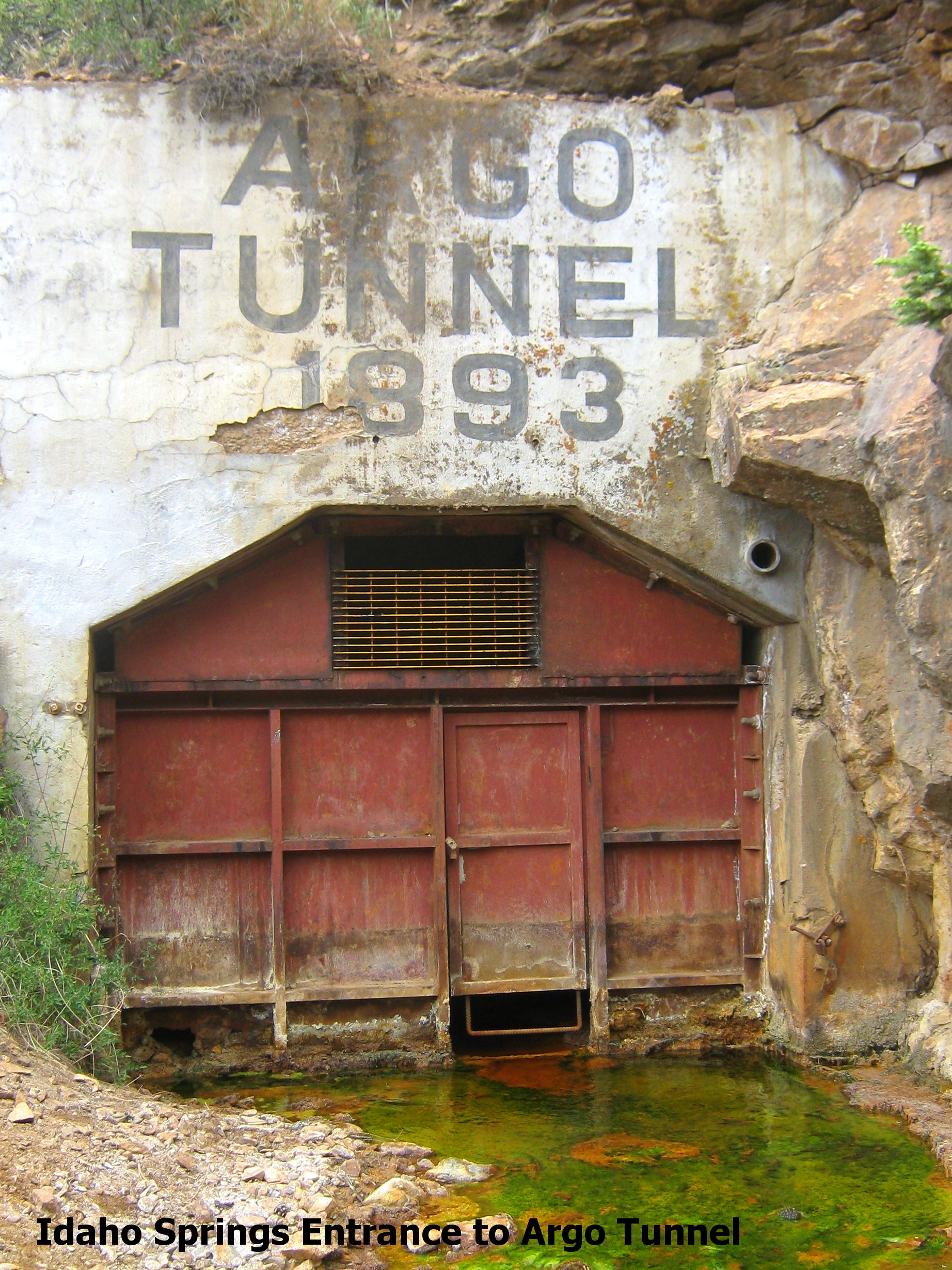
The other major reason for the unique quality of the Argo is it’s association and proximity to the Argo Tunnel.  The 4.16 mile long tunnel was begun in 1893 and completed in 1910. The idea behind the tunnel was both simple and ambitious. In order to provide milling services to the mining districts to the north, a tunnel was constructed below the mines to provide both drainage and easy transportation to a mill.
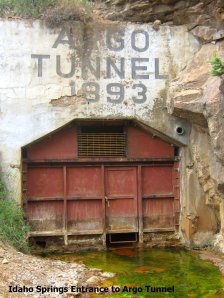
Entrance to the Argo Tunnel (Copyright 2011 Th' Gaussling)

Idaho Springs sits about 2000 ft below nearby Central City and is well situated for such a tunnel. The Central City gold district was a natural phenomenon at it’s peak. This section of the Colorado mineral belt was fabulously rich in gold and beginning with the 1859 discovery of gold, quickly became densely covered with mining claims from Idaho Springs northward to Central city and beyond. Hauling ore from the north to Idaho Springs was problematic owing to the topography.  A major road was the Virginia Canyon road, also called the Oh-My-God road, and was unsuitable for hauling ore. Ideally, a mill should be below the entrance to the mine in order to make maximum use of gravity in the milling operations.
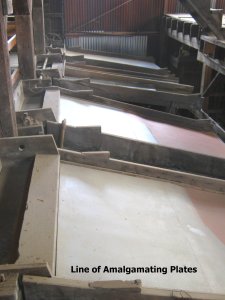
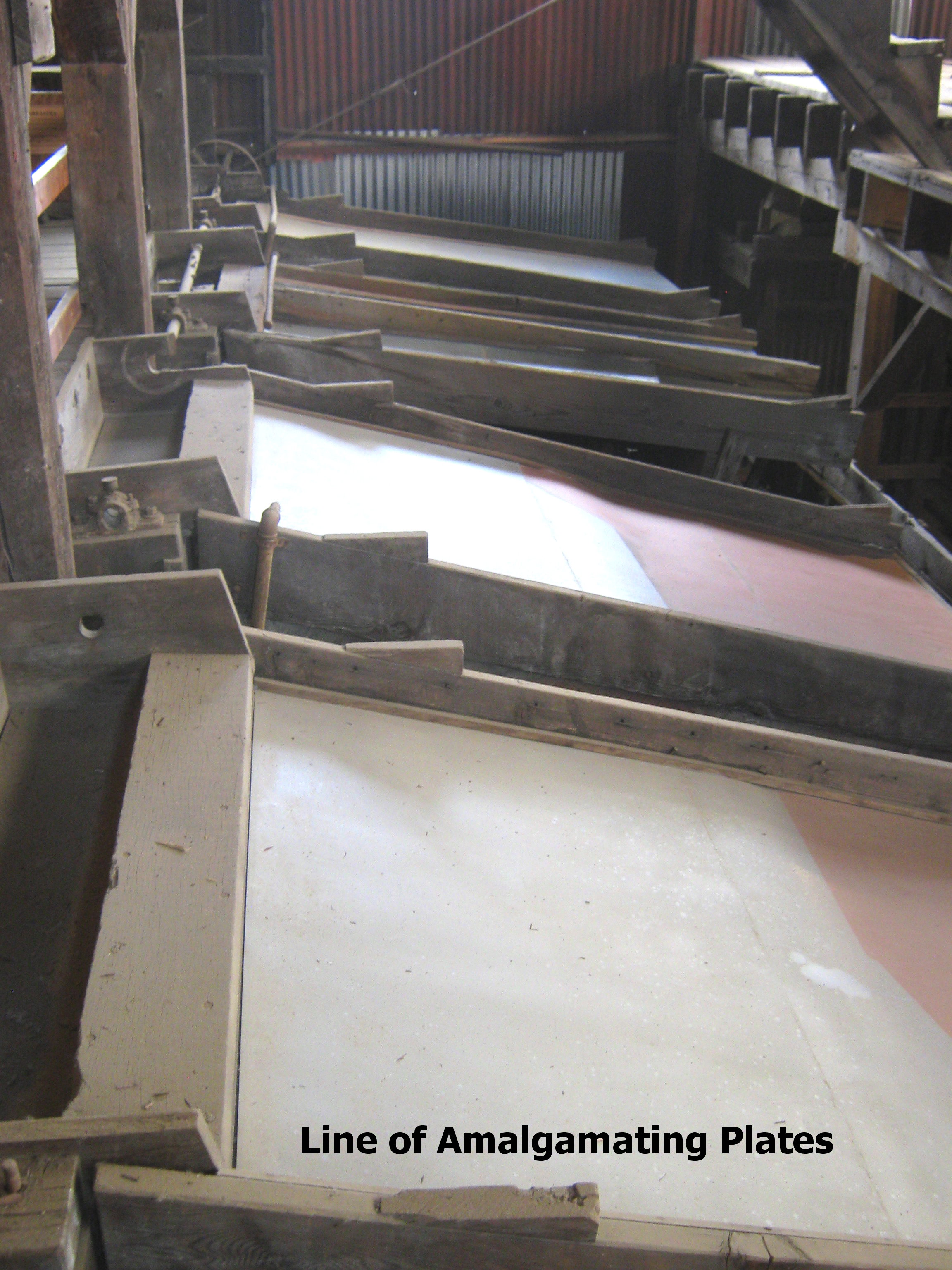
Amalgamation plates. (Copyright 2011 Th' Gaussling)

When completed, ore was moved through the tunnel by ore cart from mines to the north and received at the mill in the tipple house.  The ore delivery was recorded and assayed for gold content.  The business model of the mill was this- ore was purchased from the mines on the basis of assay and extractable gold was recovered.  This model of operation was common. Mills and smelters were customers for the mine operators. Ore was produced at the mine and sold on the basis of assay.
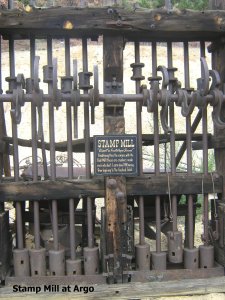
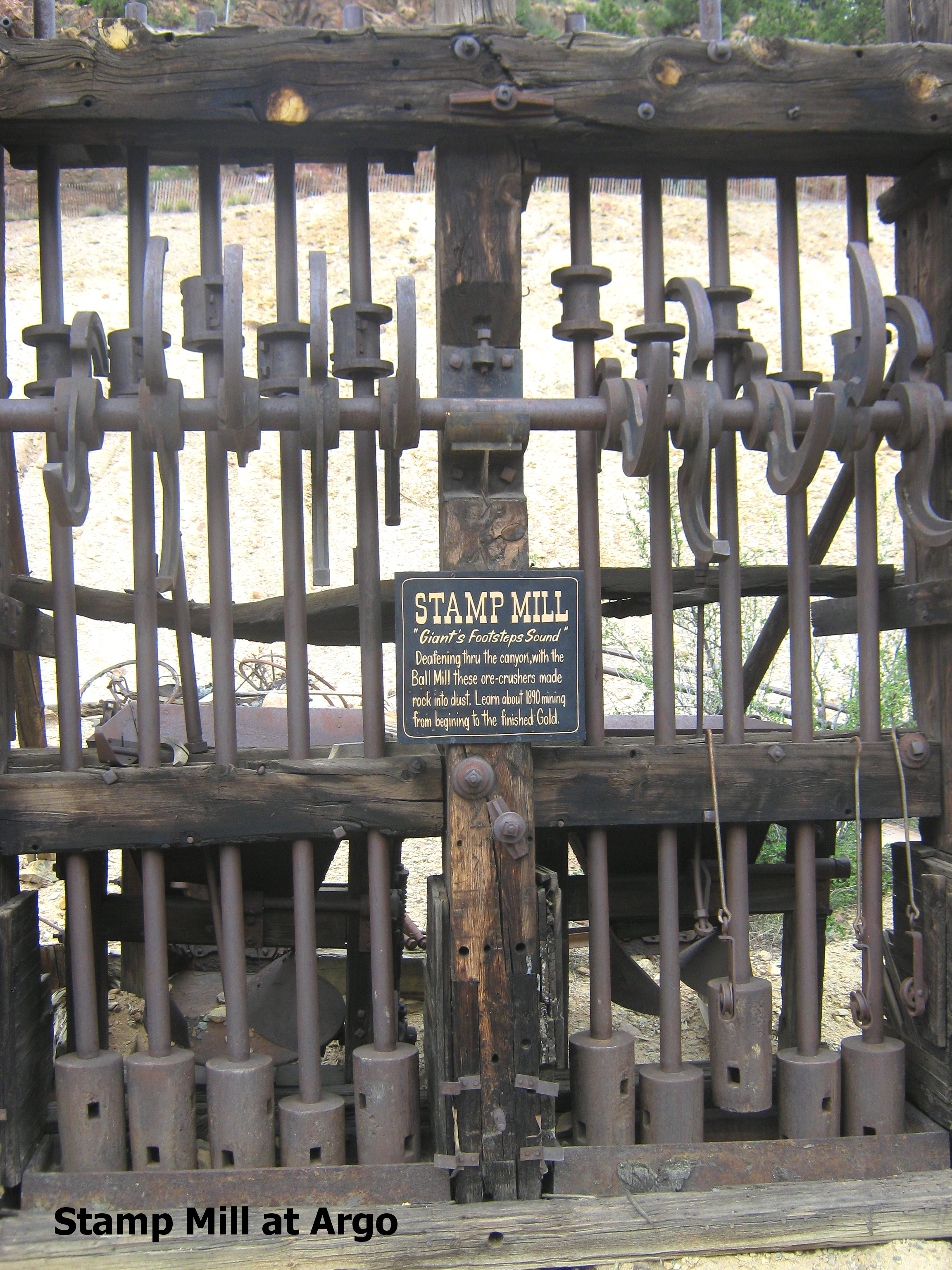
Stamp Mill on display at the Argo. (Copyright 2011 Th' Gaussling)

According to the guide at the mill, amalgamation operations were halted in the 1930’s, allegedly due to health and safety concerns.  The ore was comminuted with a ball mill and subjected to separation of the gold by shaker tables. Maybe the reason cited for ceasing Hg operations is accurate, but I’ll need to see independent verification of that.

Cyanadation was practiced at the mill as well. Not much was disclosed about this process. The guide disclosed that the mill tailings were contaminated with cyanide and mercury. As it happens, cinnabar occurs naturally in the Central City mining district, according to the guide, and can be found in spoils piles. Today this contributes to total package of contaminated leachates which may find their way into the watershed.

All in all, the Argo mill is worth a visit. Like all tourist attractions, however, you have to expect that there will be some dumbing down of the scientific and engineering details. Commonly, the emphasis in a visit to a tourist mine is on the craven details of gold mania and this tour is no different.  However, I am a purist. My interest relates more to the natural history of the chemical elements than the details of blasting and mucking.  So, if you can turn a blind eye to lackluster docent work, such tours are interesting and useful.

The Vowels

Here is a film by Ken Burns. I had failed to appreciate the role of vowels in American History. Better start paying attention, I guess. And who knew about Abigail Adams?

Outlier

Gaussling’s kid, GK, made an interesting point. Last night we were assembling my father’s day gift in the living room. It is a battery powered electric lawn mower. Somewhere in the repartee that always accompanies such activities, my 15-year old pointed out that I was an … outlier.  GK understood what this meant qualitatively and used the term properly. This was very amusing. With kids, sometimes you’ll get a glimpse of yourself that no mirror could ever show. For better or worse, GK’s right.

The Puyehue Volcano

The Puyehue (poo-YAY-way) volcano in Chile is presently in an eruptive phase. This stratovolcano is part of the Puyehue-Cordón Caulle Volcanic Complex (PCCVC). The Andean Cordillera is zoned with isolated volcanic belts along the length of the continent.  As is the case along the rest of the Ring of Fire around the Pacific rim, the vulcanism is due to subduction, in this case of the Nazca and Antarctic plates.
 
Eruption of Puyehue Volcano in Chile (photo AFP)

It was suggested (tongue in cheek) that the volcano be renamed Mount Doom from the Lord of the Rings.

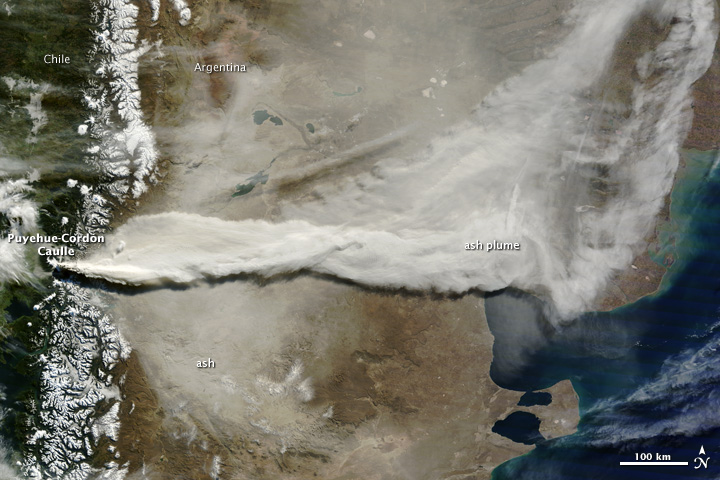
Puyehue Eruption, June 2011. (Earth Observatory)Puyehue Eruption (June 14, 2011, Earth Observatroy)

 Today’s image (below) from the Earth Observatory is telling of the scale of the ash cloud. It has traversed the width of the continent due east- from the Andea’s on the Pacific to the Atlantic and beyond.

Puyehue Eruption 6/14/11 (Earth Observatory photo)

American Pie in Grand Rapids

I have to share this link going around on Facebook.  This video is amazing. Have a look …

Notice the young men in the video? This is what they should be doing- dancing with their girl or playing guitar or just enjoying life.  Not getting their brains scrambled by IED’s in the violent sandy places on earth. We need to produce fewer veterans. And the veterans we do produce need to carry around fewer horrific memories.

The very real injuries to citizen soldiers today have their origins in foreign policy set into motion sometimes generations earlier. Try reading The Prize: The Epic Quest for Oil, Money, and Power, by Daniel Yergin.

A day in the sun

Fun day today. Th’ Gaussling served as a judge in a talent show. We had 11 acts to review. The highlight of the experience was watching two particular vocal performances consisting of a soloist and a duet.  These vocalists were outstanding. Two of the three vocalists had performed in some of our recent plays and we knew that they had talent. But today the show was about them and they were just stunning. It is gratifying to see these folks deliver such great performances. I’m very proud of them and sorry that I have to be so cryptic about their identities.

Challenging the paradigm

Increasingly I am a fan of LinkTV. It is one of the very few alternative content networks around. I try to catch Deutche Wella  and Al Jazeera on Link a few times per week for a different perspective of world events. 

News programming in the US evolved decades ago into a business model which delivers manufactured consent to those who’ll pay for it.   News programmers in the US for the most part seem to have a notion that only they know what we really want to see. So they roll their tape for us.  Who really decides where the beady eye of scrutiny is pointed?

Really now. Why do we have the same tedious group of talking heads making the rounds on the news programs? In a country of 300 million, we can’t find a few others who will say something new or at least unexpected?  It’s just like the stars who appear on Leno.  In exchange for a free “performance”on the show, they get to promote their latest gig. It’s about low cost content.

In the case of news, the network gets “compelling commentary” for free by a guest who is calculated to cause eyeballs to linger a few moments.  News content has the shelflife of squid. It is no good tomorrow.

If you’re not alarmed by this kind of thing then you’re not paying attention.  Knock knock!! I’m talking to the 2/3 of the bell curve who may suspect that Fox, for instance, occasionally makes things up to suit the needs of its backers.  The 1/3 who watch Fox assiduously are perhaps not recoverable from their trance.

Numerous coworkers claim to be independent thinkers, but to a man or woman, will spout the same vocabulary and pre-framed concepts. They get their talking points from Fox, as directed.  I love these people, but their view of the world is a cartoon drawn by a couple of guys in a sound booth. It is sad.

US Chemical Business Innovation. Policy or Culture?

The May 23rd, 2011, issue of C&EN, pp 30-31, printed an article titled “Innovation Policy Urged for U.S.”.  The article addresses more than a few considerations regarding the matter of innovation aspirations in the US. You can read the article for yourself. It details some silliness about government programs meant to stimulate startup’s. 

Startups are always in need of money. Like the salmon’s struggle to swim past the grizzlies to the upstream breeding waters, the struggle for resources is part of the Darwinistic screening process.  The struggle for operating funds is a way of screening out weak management. The trouble is, entrepreneurs are often awful managers so good products and services may die for the wrong reason.  Investor money is always loaded with conditions, as any startup operator knows.

The article quotes Richard Bendis, president and CEO of the consulting firm Innovation America. To quote Bendis, “Major research universities are the primary drivers of the future economy and job growth, mostly through science and technology. Global economic competitiveness requires the confluence of scientific discovery and the enabling resources of government and industry.” 

Well, Ok. It’s hard to take him to task here. But the last sentence is gobbledygook. What government cannot provide is the motivation or gumption on the part of chemists to start a company. Chemists need to be exposed to entrepreneuralism well before the day they set out to hatch a startup.  The current course of study in the bachelors program at virtually any US college or university is proctored by faculty who almost without exception come from a purely academic background. They know nothing about “industry” other than the salaries are probably better.

As Bendis rightly states, “Major research universities are the primary drivers of the future economy and job growth, mostly through science and technology.”  But major research universities, with a few exceptions, are poorly equipped to find and train chemists to be the future captains of of industry. It is a culture problem. The structure of the university chemistry department is not constructed to groom anything but scholarship. The American Chemical Society certification is part of the problem. The ACS recognizes and endorses a particular kind of curriculum. Most all chemistry departments have secured this endorsement long ago.  While the curriculum defines the minimum standards for a degree in chemistry, it also has the effect of freezing out much real innovation or adaptability in the field.

Faculty with business or industrial backgrounds are largely deselected from joining the club, if for no other reason than publication rates. Industrial chemists rarely have the opportunity to publish their work in the normal spread of journals owing to IP restrictions.  I’ve been a part of  a few search committees and I know how it can go.

The main exception to my generalization is MIT. Whatever it is that MIT is doing to stimulate startups, it’s does it very well. They are practically a force of nature by themselves. I would argue that the Mojo that MIT plainly possesses has more to do with culture than policy.

And it’s not just chemistry faculty that have to adapt to a new endgame in the program. The matter of turning a program to applied science must necessarily involve deans and university presidents.  They will all want to have their say. In the end, to most presidents, getting in the top 25 of whatever group of schools they aspire to be in is what matters. And that involves keeping the enrollment numbers and the endowment figures up. That is how they are measured and that is what they will look after.

Putting out applied science oriented majors will involve considerable cultural change in the academy. I’ve seen nothing to indicate that the academy is ready to embrace a real step towards the kind of entrepreneurial spirit in the aspirations expressed in the article in C&EN.  It is very difficult to be heard over the clucking in the academic henhouse.

A Modest Proposal for the Eurozone

Here is what I propose as a solution for the European debt crisis.  Spain, Italy, Greece, Portugal, and Ireland should be given the option of swapping land in exchange for their debt. What land? Take a line of latitude from the southernmost tip northward until an area of land redeemed is equal to (debt (Euro) / 5000 Euro/hectare) which covers the debt. 

It should be pointed out that Napoleon voluntarily swapped the Louisiana territory for cash to raise operating funds for his adventures. After all, he was coming into new property in Europe.

As my consulting fee, I’ll take the Dingle Peninsula in Ireland. It’s a charming spit of land and will be more than suitable.