Does Corexit really correct it?

According to news sources, BP is allegedly using a dispersant called Corexit EC9527A.  According to the EPA this formulation contains water, propylene glycol, and 2-butoxyethanol, as well as an unspecified confidential additive.

I guess the question is, what purpose does this treatment serve? By dispersing the petroleum, I assume that the effect is to spread a given mass of petroleum into a larger volume of sea water by virtue of producing dispersed globules of oil-phase material. Does the increased surface area result in off-gassing of volatiles and subsequent submergence of the now denser oil phase? Or, will the dispersed petroleum simply drift into larger patches of oily water? If it enables an increased dispersion so that the currents can chaotically distribute the petroleum to a greater range of shorelines, is this treatment of any real benefit? Perhaps it is better in the long run to have a heavier coating on fewer beaches? Less acreage to scrape.

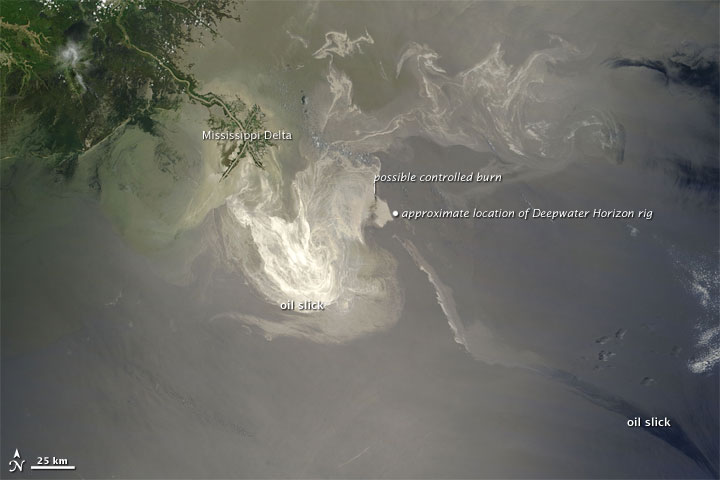
EPA is making noise about BP’s choice of Corexit. Seems to me that butyl cellosolve has been in the market for quite some time. There should be some information on its fate in the watershed. Judging from the map, the oil spill is near the dead zone around the mouth of the Mississippi River. So, until somebody gets some survey data, it’ll be hard to estimate the magnitude of the environmental insult of this event to the open ocean.

I do not understand what government officials were trying to do by saying that they might take over control of this spill. What is the government going to do to a petroleum discharge a mile below the surface? Call the Navy? Or Boots & Coots? As good as these guys may be, they’re land lubbers. 

Let the folks at BP finish the job.

NASA Earth Observatory Photo, May 24, 2010.

Rand, Ron, and Ludwig

Disclaimer: I’m neither an expert on or an enthusiast of orthodox libertarianism. I think it is yet one more narrow utopian social philosophy that a band of economic puritans want to impose on society. To their credit, it is a scholarly economic theory. But it seeks to validate and legitimize the most selfish and materialistic impulses of our primate sensibilities.

I have a comment on the recent public flare up on comments by candidate Rand Paul of Kentucky.

Randal Paul, son of Ron Paul, seems to be very much influenced in his thinking by his father and by Ludwig von Mises. I would characterize father and son as ultra-orthodox libertarians (if only by virtue of their scholarship) along the lines of the Austrian school but lacking the John Birch Society fascist and theocratic elements. I sincerely acknowledge their understanding of economics and history. However, I must differ in regard to their understanding of the non-mathematical aspects of civilization. 

Rand Paul’s recent expression of his views on the civil rights act comes straight from the Austrian view on statism. It is right out of the textbook. The man is not a racist. He just does not approve of the intervention of the state into the affairs of a property owner. I think he would prefer to see market forces solve the problem in the domain of private property.

The problem is that market forces have a substantial element of greed. And greed is what greed does. Social justice is orthogonal to greed forces. American slavery did not end because the market found a way out of it. The slave states were deeply dependent on the economic advantages in labor overhead that slavery provided. The nonmarket forces- government- that are inevitable in civilization intervened and put an end to it.

The impulse to accumulate power is expressed in the market and in government. Power is the ability to allocate resources. The domains of both government and business need to be watched closely because both are subject to the corruption of greed. Both socialism and libertarianism are utopian in their conception. Both tend to fail because adherents must rely on the adoption of their tenets by diverse groups. Both require a kind of homogeneity in thinking that is inherently unstable over large populations. Neither seems willing to accomodate a bell curve of views and behaviors. 

Just read history. You can’t even get large populations to agree on how to enable or even what is meant by the meaning of life, liberty, and the pursuit of happiness.

I fail to understand how people who do not trust big government can somehow trust a business system which can fund methods to override the checks and balances of a natural market. The notion that consumers actually have power through the allocation of their dispersed resources is perhaps partially valid in a village market. It fails in contemporary society because businesses are focused and populations tend to be defocused. 

Advertising works. Consumers are subject to suggestion by advertising influence. Consumers are not perfect, rational economic units. In some ways, we are fish in a barrel.  Businesses can obtain patents or assemble local monopoly and dominate a market in a way that consumers are powerless to respond. Look at how big box stores can move into a local market and dominate. They do provide lower prices, but they also offer a channel for foreign suppliers to cross the border and invade a market for the profit of corporate owners who live elsewhere. They apply instant globalization to local markets that are ill equipped to compete. Economic purists would say that local businesses are unfit in this circumstance.

The proclivity to trend into big-brother influence seems just as certain with business as with government. The purpose of civilization is to buffer the Darwinian forces of nature and make life less brutal and short. Government provides a way to accumulate resources and focus effort on large scale infrastructure and allow access to all. Access to infrastructure facilitates innovation and economic growth and diversity. If you don’t like infrastructure, move to Haiti or Somalia where you’ll be blissfully free of it.

Government can grow to the detriment of all. And, arguably, it is in such a position now. But to abandon this important element of our culture in favor of a more Darwinian approach to everything is a utopian dream that will not come to pass. Libertarians need to develop some pragmatism.

Cripple Creek and Victor Gold Mine Tour

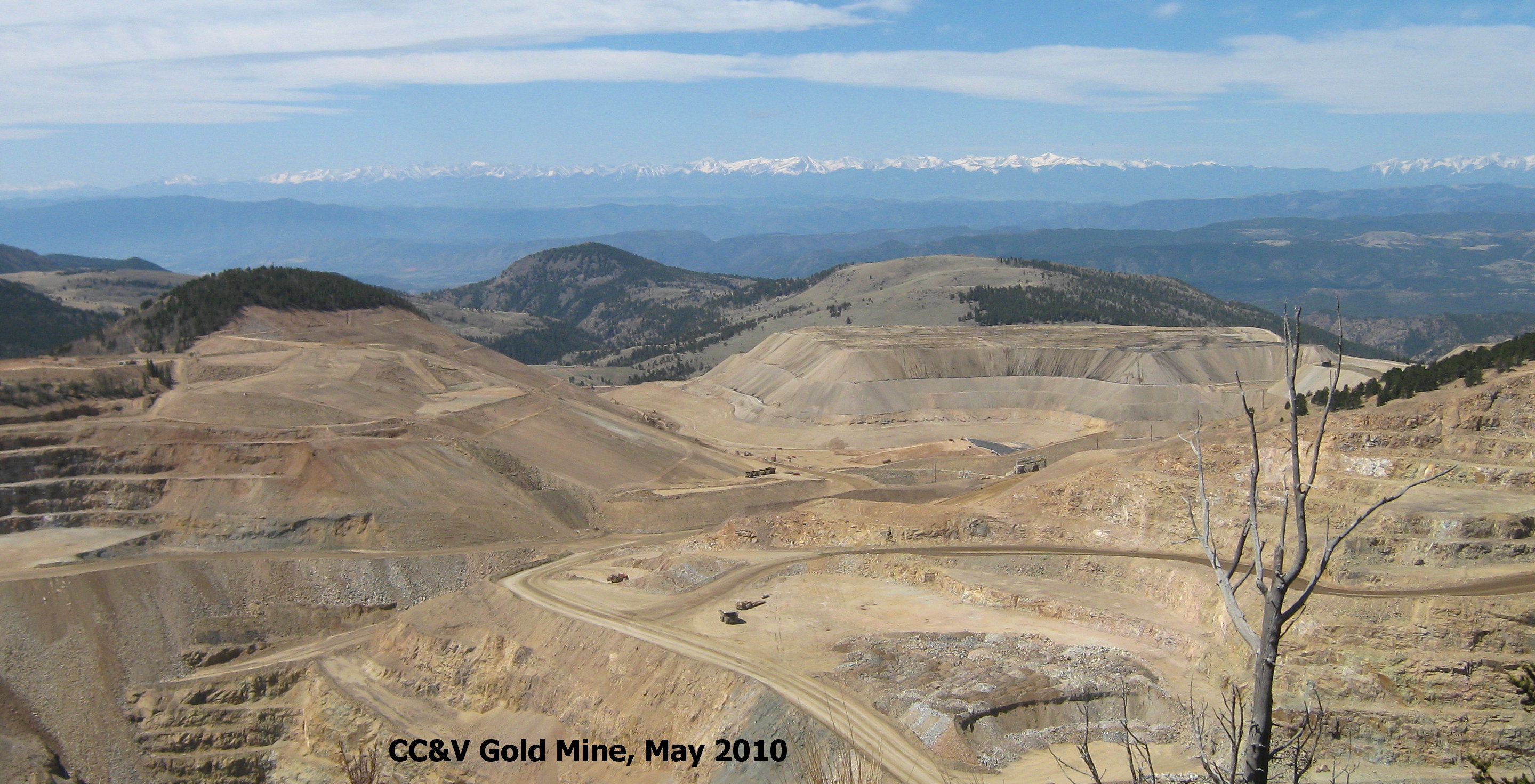
A vanload of members of the ACS, Colorado Section, were treated to an extensive tour of the Cripple Creek and Victor (CC&V) mine last Friday. The photo below shows a view of the mine from the abandoned American Eagle Mine above the CC&V pit operations. The mountains in the background are the Sangre de Cristo range.

View of Cripple Creek & Victor Mining Operations from the American Eagle Mine, May 2010.

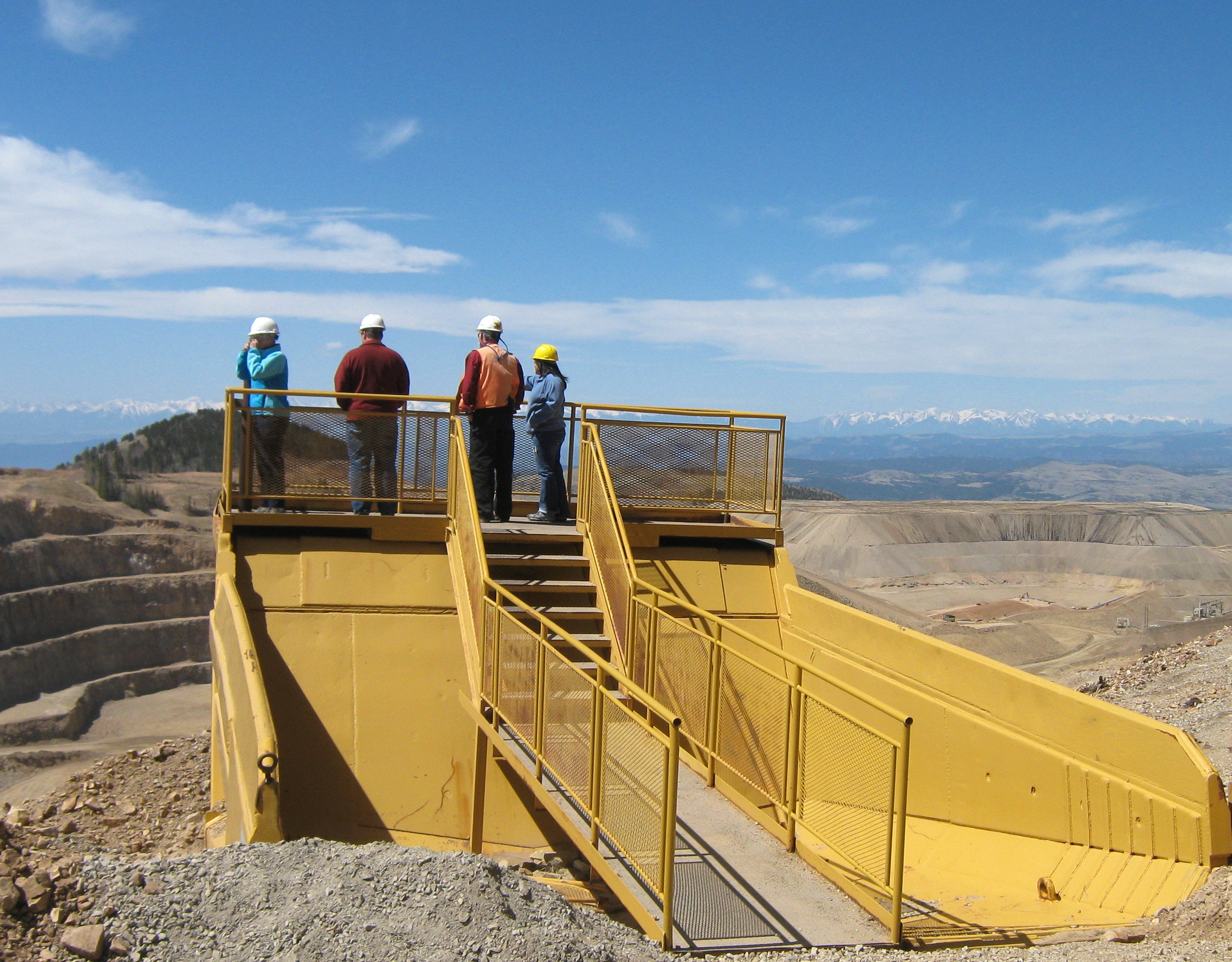
A haul truck bed was converted to a scenic overlook platform (below).  A few section members take in the view.

CC&V Scenic overlook platform

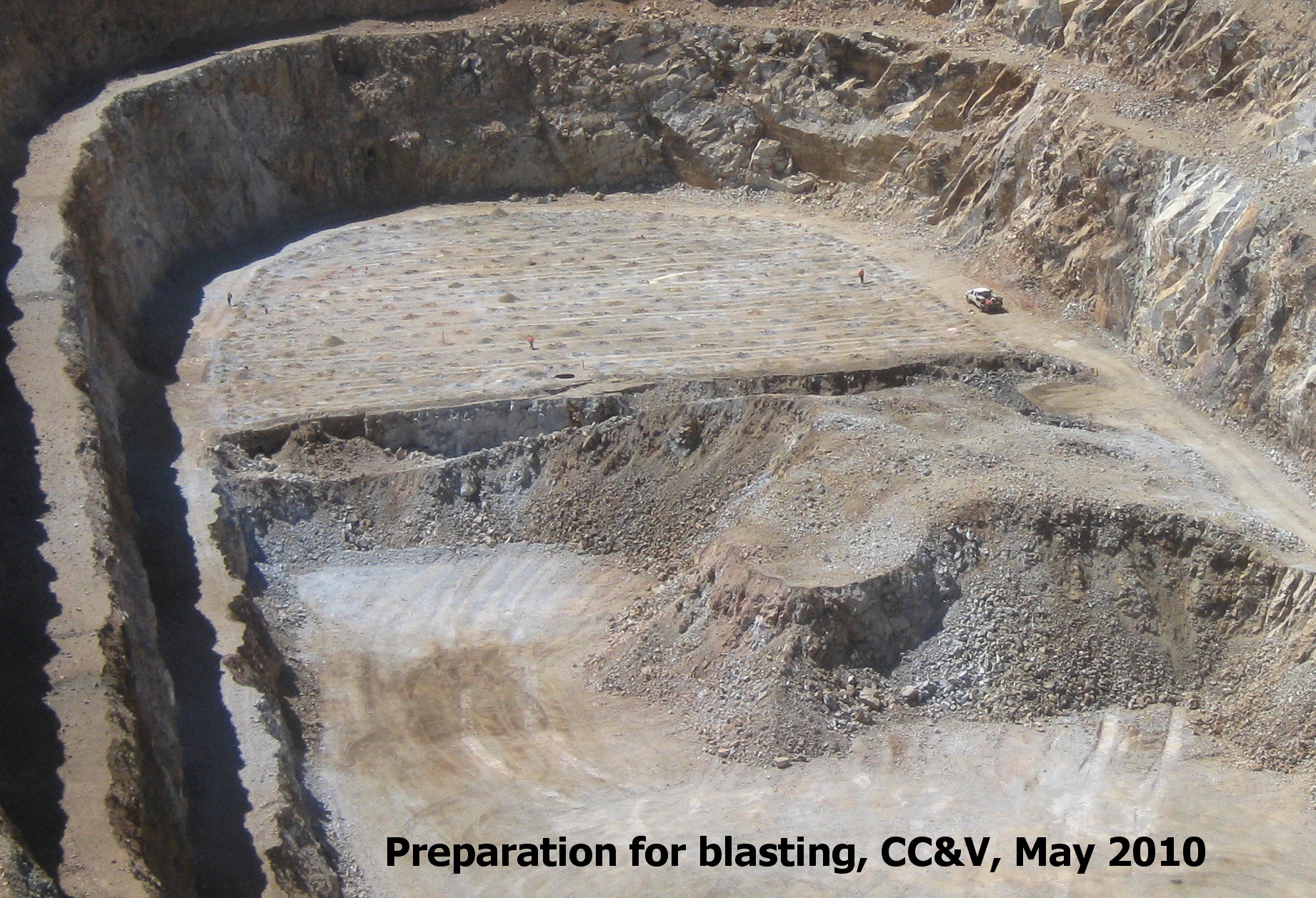
From this high vantage point we could see blasting operations at work. Multiple sites may be prepared simultaneously. Blasting typically occurs at 1:00 pm. Holes are drilled on 20 ft centers for optimum coverage. Every blasting hole is sampled and analyzed by ICP to measure the gold value for that zone.  Zones with low value are hauled to the waste heap and the high value rock is taken to the crusher.

Preparation for blasting, CC&V, May 2010.

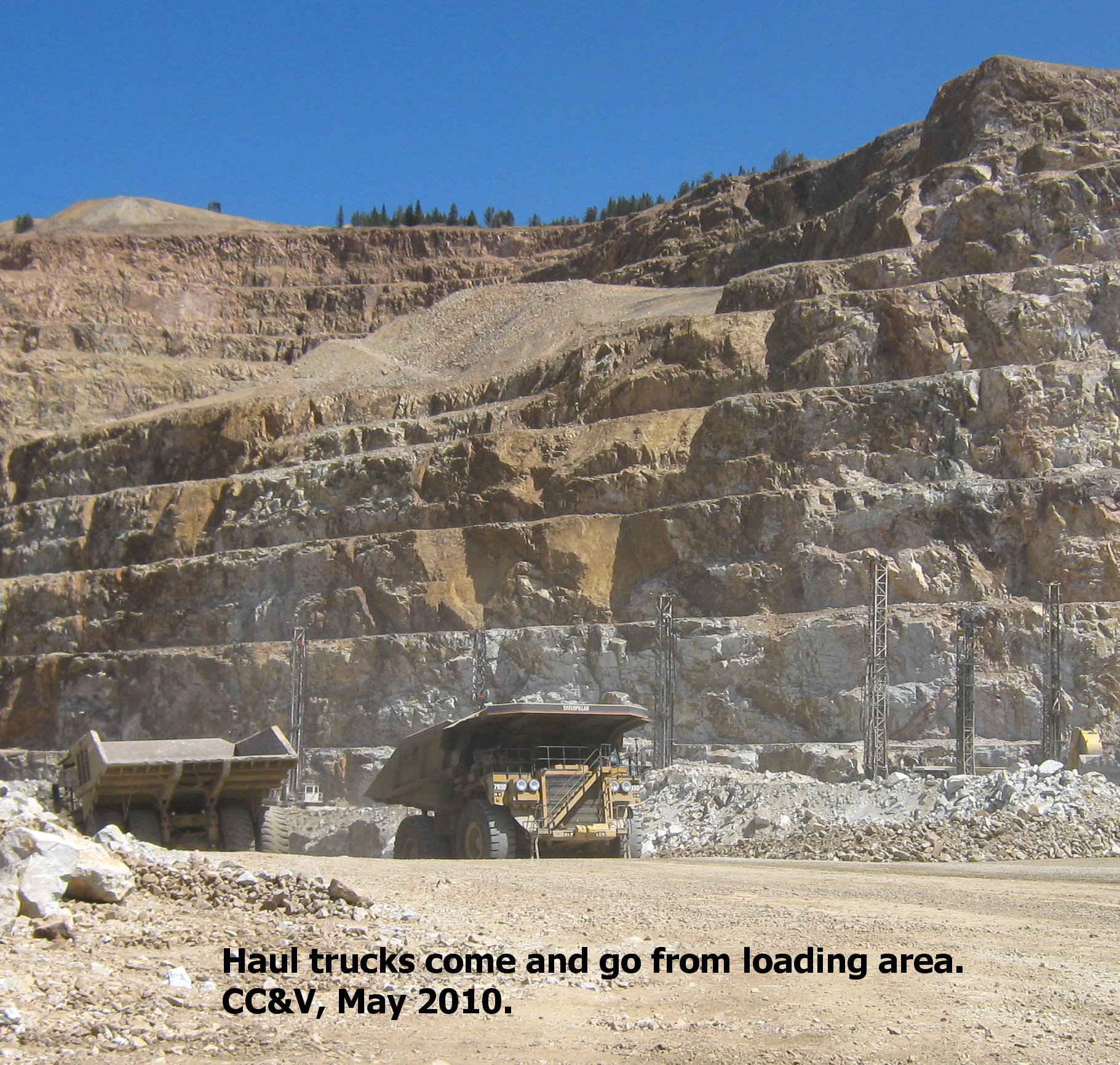
We visited the pit and watched haul trucks get loaded by a gigantic loader. For every one truckload of ore there are two truckloads of unproductive rock that have to be hauled to a separate location on site. The definition of unproductive rock depends entirely on the market price of gold.  In the photo below, drilling rigs for the blasting charges are in operation for the next round of blasting.

Loading area, CC&V Mine.

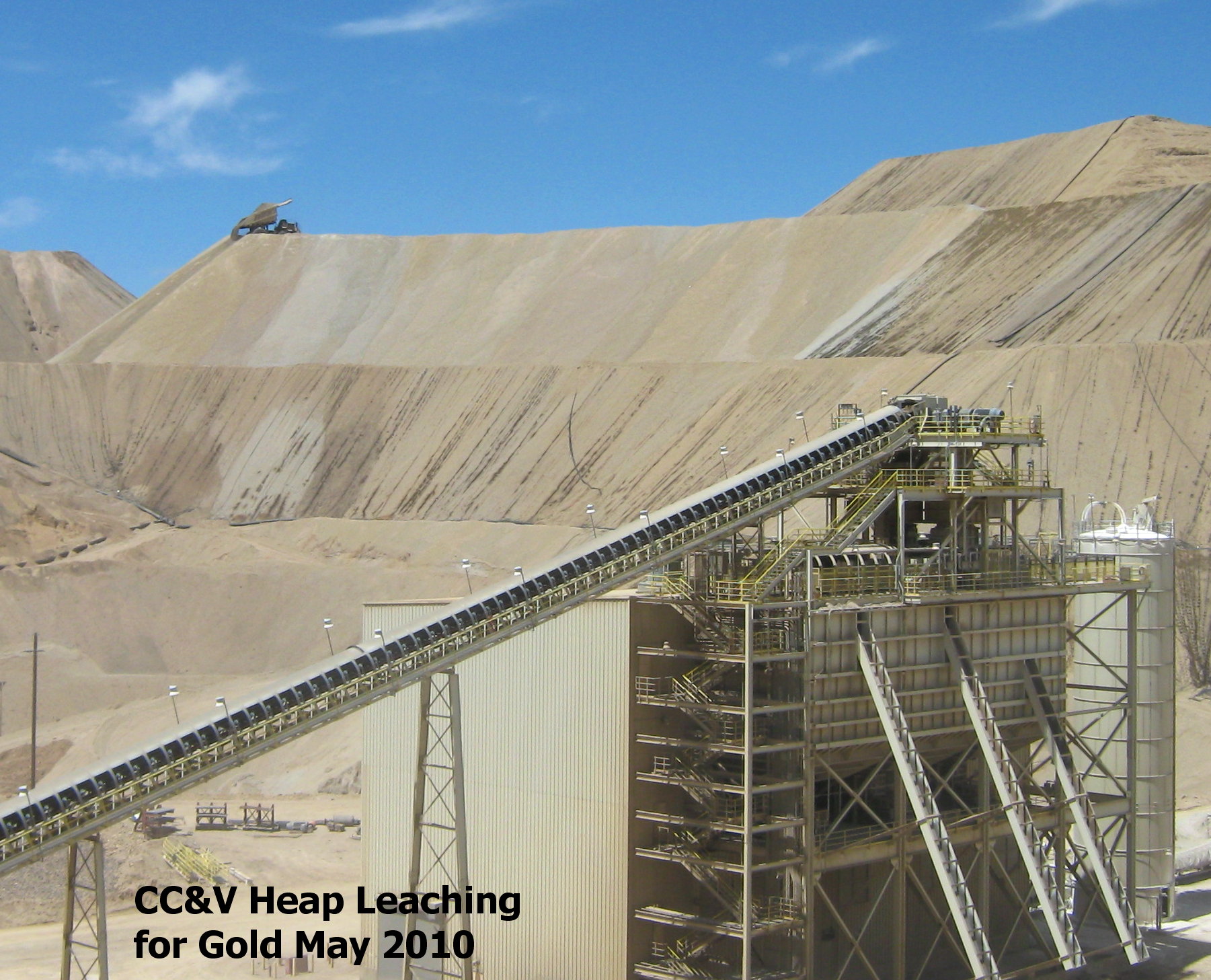
Later we watched the trucks unload into a crusher with a gyrating element that crushed the rock into football sized chunks. The resulting rock is conveyed to a screener and another crusher in order to further reduce the size to 0.75 inches. Every truckload of rock is treated with lime to help maintain a high pH for the aqueous cyanide leaching operation.  In the photo below, the white tank on the lower right contains the lime.

Heap leaching operations, CC&V May 2010.

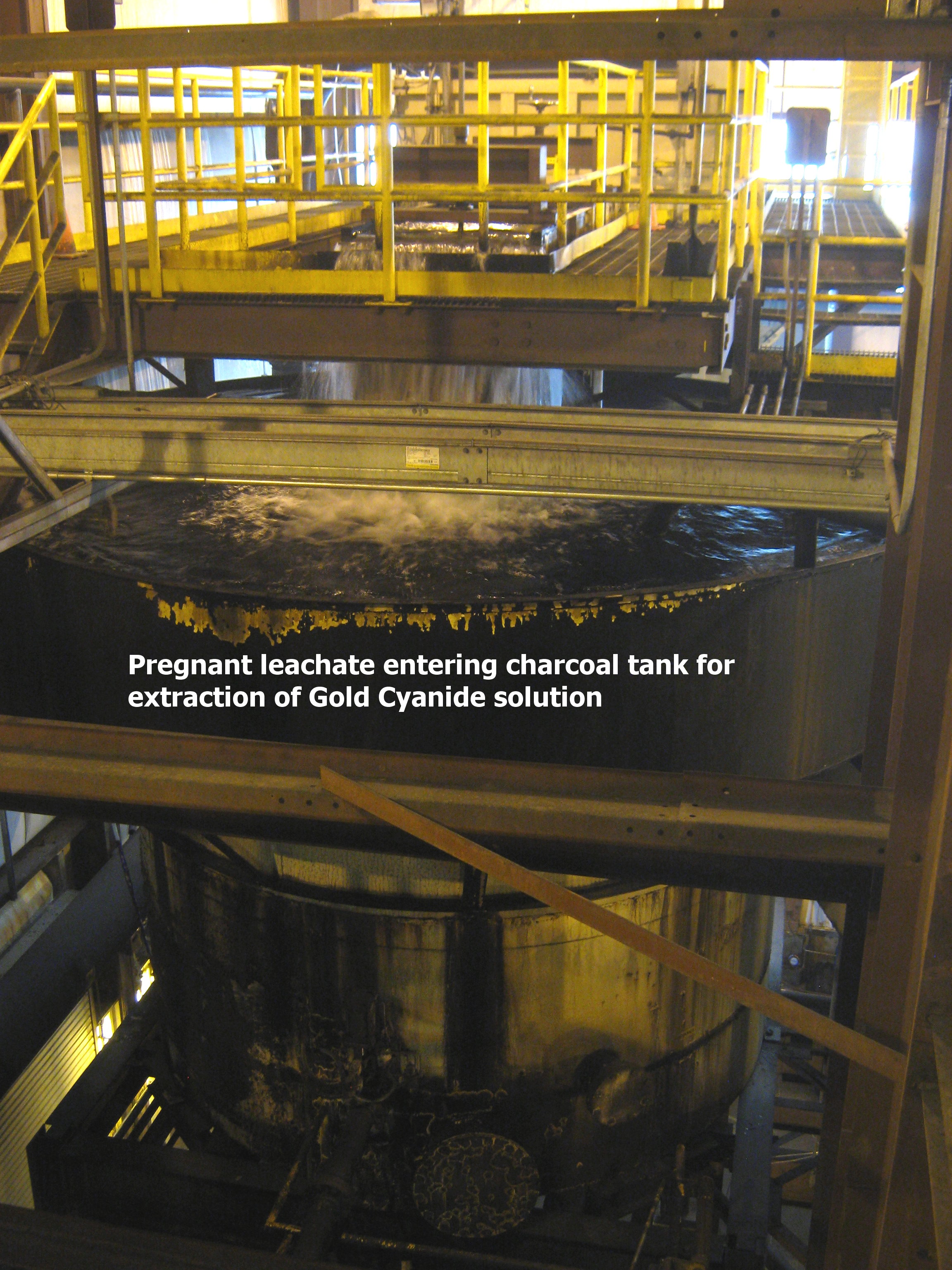
The gold bearing rock is irrigated with a very dilute sodium cyanide solution which percolates to the bottom of the heap and is captured in a basin feature at the bottom of the heap. The “pregnant” solution of gold cyanide extract is pumped out from under the heap at 14,500 gal/min into a cascading series of charcoal filtration tanks in the extraction building (see photo).

Pregnant solution passing over charcoal filter bed. CC&V May 2010.

Once a specified loading of Au is sorbed onto the charcoal, the sorbent is treated with hot concentrated cyanide. This concentrate is then passed over steel wool where the gold precipitates. The precipitated gold is then smelted to produce bulk crude metal which is shipped off-site for further refinement.

Chemistry Field Trip!

So I decided to kick up my interest in the local metalliferous deposits and get more folks involved. As a member of the executive cmte of the ACS local section I’ve organized a seminar at a local university and arranged to have the lead exploration geologist from CC&V come to talk about the their gold mine in Cripple Creek.

The seminar is thursday night. Friday morning a few of us will board a van and drive the 5 h round trip to visit the open pit operation. We’ll stop at the nearby Molly Kathleen mine as well. I’m hoping we’ll be 1000 ft down the hole when the mine next door begins blasting. That’s an unforgettable experience.

Enthusiasm is contagious.  Especially with regard to gold colored precious metals. Unfortunately, bench chemists have few opportunities to take field trips. So the thinking here is that we’ll find a way to get members out and about to look at heavy industry. And gold mining is definitely a chemically related industry. Email blast notifications to rouse attendance are surprisingly ineffective- 1 or 2 % response at most. It is hard to get folks to participate in local section activities because everyone has a life.

The next day I’ll be on a field trip with geologists to visit various sites showing ductile and brittle deformation as well as hydrothermal alteration of formations in the central front range. I’ll be a chemical science interloper, as usual. The key to many of the metalliferous features in the world is hydrothermal transport. Shallow magma intrusions energize a kind of heat engine that pumps water through metal-bearing rock and transports hot, pressurized mineral laden fluids through a large and cooler network of fissures and faults where minerals precipitate according to their solubility.  Hydrothermal alteration is an important feature to look for when prospecting for metals.

Federal regulations. Death by 1000 cuts.

Tea baggers whose lily white faces flare deep red when discussing government regulations should put down their Hitler signs, unstrap their firearms in the garage, and tune into C-Span. What they will witness is a real time picture of how the Code of Federal Regulations (CFR) got so thick.

The House of Representatives has been calling witnesses from the firms involved with the Deepwater Horizon accident to give testimony before congress.  What is presently occuring is the fact finding phase of what will no doubt turn into a series of bills and enforcement actions. Representatives are interested in whether or not regulations were ignored and what kinds of gaps there may be in the regs.

The BP-Transocean oil spill just off the mouth of the Mississippi River has fouled public fisheries and threatened to leave a splash of hydrocarbon “heavies” on vast stretches of beach and estuaries along the Gulf coast. The economic harm to the public and the material insult to the environment is still evolving.

In all likelihood, statutes relating to oil production at sea will be modified as a result of this incident. Good men perished horribly in the fire and sinking of a drilling vessel which was registered in the Marshall Islands and operated by an “American” company based in Switzerland. Changes in safety requirements, if not implemented by the industry, will certainly be mandated by federal law.

This is how most government regulation seems to accumulate. It is by stimulus and response. A bad event happens or somebody games the system for their own gain and people are harmed. Elected representatives respond by writing statutes that cover the circumstance and anticipate related problems.  Eventually, the new regs will be published in the Federal Review and some agency will be required to promulgate the changes.

Federal law accumulates like rime ice on the leading edge of an airplane wing in a storm.  Eventually the accumulation becomes so onerous that the airplane can no longer fly. It’s like death by a thousand cuts.  Unfortunately, the constitution does not mandate a sunset feature or the periodic review and streamlining of regulations. 

I suppose it is more titillating for teabaggers to imagine a cabal of preening liberals sipping Pinot Grigio and pulling the strings of their liberal agenda. You know, manditory spanish language and gay studies in the elementary schools. But for now, everyone is working on this oil problem.

Force Majeure

If you are in the business of buying or selling chemicals under contract, you probably understand the merit of a force majeure clause in the contract. Literally meaning “greater force”, force majeure is essentially a declaration that a term, usually delivery, is not going to be met in an agreement owing to an “act of god” or other influence that is well beyond control or prediction. It’s not unheard of for a force majeure clause to be omitted in a supply contract. Both buyer and seller can benefit from this escape hatch when the sky falls.

Companies declaring force majeure in 2010 include Chevron Phillips on US olefins (ethylene cracker outage), Ineos on certain polyolefins (outage due to agglomeration in the reactor), Shell Chemicals on is Moerdijk styrene (ethylene supply problems), AkzoNobel on its Perkadox 14 line in Belgium (explosion & fire), Dow on phenol in the Americas (broken heat exchanger), Domo on its nylon 6 (feedstock supply shortage), Sasol on chemicals out of its Germiston, SA, plant (fire), Olin Corp. on its McIntosh, Alabama, Chlor-Alkalai plant (equipment failure), Cristal Global on its Stallingborough, UK, TiO2 operations (unspecified malfunction), BASF on acrilonitrile-butadiene-styrene (ABS) at its Tamaulipas, Mexico, site (butadiene shortage). Diethyl ether is also in short supply, but I am aware of no specific reason.

A few of these force majeure interruptions have been lifted already. Point is, it is always good to have multiple suppliers on line to provide supply of feedstocks. In regard to the olefin/polyolefin force majeure declarations, I wouldn’t be surprised if there wasn’t a bit of foot dragging that lead to a shortfall in capacity. Why keep all of your crackers in operation during the Great Recession?

Deepdoodoo Horizon

It has transpired that Transocean, Ltd., owner of the Deepwater Horizon semisubmersible drilling rig that recently sank off the coast of Lousiana, has petitioned  in federal court to limit the damages relating to the incident to $27 MM in total damages.

According to an interview on NPR today, the company is interested in limiting the payout with the stated goal of maintaining a more orderly court action.  I’m sure they really are interested in a slow and orderly litigation.  They protest that they were required by their insurer to file this petition. Probably true as well.

Only a team of oil industry lawyers under the enchantment of serious groupthink could have come up with this kind of a ploy. Of course, their insurers are keen to limit the payout. Gotta stretch the action out over as long a period as possible and issue as many office actions as possible to try to make the other side bleed out. Gettin’ lawyered up is expensive.

Insurance companies are a major employer of lawyers. Many people are unaware that no small amount of the litigation that consumes our courts is on behalf of insurance companies acting against any deep pocket within reach to recoup their losses.  Had to pay a claim on an industrial accident? Well, surely somebody or their equipment is at fault.

The conservatives would have you believe that the courts are choked with liberals litigatin’ against god fearin’ lumbermen and McDonalds coffee makers. There may well be some truth there. But there is a constant buzz of legal action happening against manufacturers of nearly everything by insurance underwriters anxious to recoup their losses. The insurers do a simple calculation. Is it likely that the award from a suit will exceed the litigation costs? If you have a stable of lawyers on staff, you might be able to keep the costs down.

If I were an equipment maker of anything relating to the drilling string on the Deepwater Horizon, I’d be plenty worried.

The people most outraged are the lawyers who represent the families and those injured by the explosion and fire. If the dollar pool for all settlements is limited, then the fees for the law firms is likewise limited. Sorta takes the fun out of it for all of the litigators.

Depth of knowledge

It’s funny how you can deceive yourself into thinking that you understand a reaction. Then you do that last experiment and get a result that shows unexpected sensitivity to one thing or other.  Depth of knowledge comes from doing a lot of experiments, not hand waving. It is important to try to learn something from every experiment. If the rxn went south, what happened?  Can you do a mass balance?  What happens to the mass that doesn’t convert to product?  Consider every “poor” result as an opportunity to extend your understanding of the reaction.

If you want to claim true expertise in a process, you have to know what the reaction system is broadly sensitive to and what it may be insensitive to. In short, you need to know what affects the velocity of the reaction or what steers it to side product formation. Exactly what are the boundaries of “normal”? 

Running the same reaction a hundred times successfully by carefully following the directions confers proficiency, not expertise.  It is fine for most workers to have proficiency. But someone should take the trouble to acquire broad expertise for the inevitable off-normal event somewhere down the timeline.

An upset condition can stem from an off-normal engineering input or from some reactivity issue. How many watts per liter will your reaction generate?  How will your reaction mass behave if there is a solvent boil-off? Does the solvent boiling point fall below the maximum temperature of the reaction in an off-normal condition? In other words, can the reaction mass self-heat in a manner leading to a runaway condition?  If so, what layers of protection are in place to prevent this kind of event?

The ability to push electrons in a mechanism or facility with named reactions is not enough skill for process scale-up. A chemist has to walk over the entire acreage to thoroughly map out the hills and valleys of the process. The people who operate the big pots and pans, and their families, are depending on your thorough knowledge to keep them safe.

Acquiring expertise is going to annoy people. It necessarily slows things down. It will make you a colossal boor at parties. But never confuse motion for progress or data for knowledge. Over time, people will come to you for advice on things. Be patient.

Adolescent Phillies fan receives Joules from constable

Have you seen the footage of the police officer who tasered some 17 year old  kid who ran onto the ball field at a Phillies game the other day? What kind of world do we live in when cops feel they’re required to electrically stun a kid who stupidly ran onto the field? Why is this a stunnable offense? Welcome to the city of brotherly shove.

It wasn’t a meeting of the United Nations or a drunken brawl at a biker party. It was just a ball game- entertainment for the idle- where a fun lovin’ kid was trying to outrun the baseball authorities. We have become so intolerant of unstructured behavior that we allow our police to partially electrocute citizens.

This is only the latest incident where a law officer seems to use his stun gun when he’s merely inconvenienced. Maybe if Philadelphia had skinnier cops, they could catch more of their suspects rather than having to zap them like livestock.

Naturally, the police chief stated that it appeared that the officer was within department guidelines.  This kind of answer from a chief of police is really disturbing. The fool didn’t have the wits to say it was under study or some other delay tactic.  Yeah, the kid was a bonehead for running onto the field. But when the state feels justified in using this kind of force on some goofy kid, it has gone too far.

A story of continuous processing

Most of my industrial life has been spent in what can be called a semi-batch processing world where products tend to be high value, low volume. Fine chemical products sold at the scale of 1 ton/yr or less can be produced in a campaign of less than a dozen runs in 200 gal to 1000 gallon reactors in a batch or semi-batch mode. Depending on the space yield, of course.

In my polylactic acid (PLA) days many years ago, we found ourselves necessarily in the monomer business. If you hope to introduce a new polymer to the market- a very difficult proposition by the way- you must be firmly in control of monomer supply and costs. Especially if the new polymer uses new monomers. New to the market in bulk, that is.

Our task in the scale up of polylactic acid was to come up with a dirt cheap supply of lactide, the cyclodimer of lactic acid. The monomer world is one of high volume, low unit cost.  By the time I had my tour of duty with PLA, a short tour in fact, much of the lactide art was tied up in patents. Luckily, my company had purchased a technology package that allowed us to practice.

Our method for producing lactide was a continuous process called continuous reactive distillation. Basically, a stream of lactic acid and strong acid catalyst was injected onto a middle plate of a 25 plate distillation column which stood outdoors. The column was atop a small bottoms reservoir containing heated xylenes.

The solvent xylene was heated in a reboiler which was located 20 ft away from the column assembly. Hot solvent was circulated in a loop between the bottoms reservoir and the reboiler. After startup the solvent built up an equilibrium concentration of lactide and a dogs lunch of oligomers.

At the injection point in the column, 85 % lactic acid and catalyst entered the middle of a multiple plate column that was charged with refluxing xylene vapor and condensate. While in the column the lactic acid esterified first as L2, the open chain dimer, then some fraction of it cyclodimerized to lactide.

 The water that was extruded by the esterification process was vaporized by the hot xylene and equilibrated up the column to the overhead stream and out of the column to a condenser.  When condensed it phase separated in a receiver called a “boot” that had a cylindrical bottom protuberance that collected the water. The  upper xylene phase was returned to the process.

Meanwhile, the xylene loop accumulated lactide and oligomers. The loop had a draw-off point where some predetermined percentage of the bottoms loop was tapped for continuous lactide isolation. This is where the fun began.

When cooled even just a little, the xylene phase emulsified. Badly. So, the trick was to induce a phase separation by forcing the emulsion through a ceramic filter. Here, the water phase and most of the oligomeric species were partitioned into a separate mass flow while the xylene phase was sent to a sieve bed for drying.

After passing through the sieve bed, the xylene phase was sent to the continuous crystallizer where it was chilled a bit to precipitate the lactide. A slurry of lactide solids called magma was then sent to a continuous centrifuge where the solids were isolated and the supernatant was returned to the bottoms loop.

The Achilles heel of the process was residual acid. Since the monomer and the oligomers are all acidic species, and the catalyst is nearly as strong as sulfuric acid, pulling the neutral lactide cleanly and cheaply from this acidic hell broth was a problem. So big in fact, that it eventually was the straw that broke the camels back. This shut our fledgling company down.

Residual acid in the monomer has a disastrous effect on the quality of PLA. It gives low MW product that is amber in color. The winning technology was the back-biting process for lactide production. It was applied by our competitors who won the battle and they (Dow-Cargill) went to market.