Reuters has reported that Russian ships have been observed in the area of North Sea energy resources of The Netherlands. MIVD head General Jan Swillens stated that “Russia is mapping how our wind parks in the North Sea function. They are very interested in how they could sabotage the energy infrastructure.”
The Reuters article went on to say “Dutch intelligence agencies MIVD and AIVD, in a joint report published on Monday, said critical offshore infrastructure such as internet cables, gas pipes and windmill farms had become the target of Russian sabotage activities.”
Norway is in a state of heightened alert because of recent appearances of unidentified drones buzzing over North Sea oil platforms, airfields and other sensitive sites. Norway has replaced Russia as a major supplier of natural gas. Norwegians believe that espionage, sabotage and false messaging are a means of intimidation. Though not a member of the EU, Norway mirrors the EU in many ways.
According to AP, seven Russian citizens have been arrested recently for flying drones or taking photographs of sensitive areas. In Norway it is illegal for Russian citizens or companies to takeoff, fly over or land on Norwegian Territory.
The clear intent of Russia Putin is to map out North Sea infrastructure for purposes of sabotage. Doing it in the open gives them the added benefit of intimidation. The UK and EU have considerable dependence on oil and gas from the North Sea. Plenty of communication cables lie there as well. Obviously, interruption of these resources will cause great economic and political disruption in affected countries. It is hard to believe, however, that Russia doesn’t already have data on the North Sea infrastructure.
Russia is sending a message that they consider North Sea Infrastructure a critical target for attack at some point. They know that winning a war is about removing your opponent’s will to fight. Collapsing your opponent’s economy and industrial base by shutting down the flow of energy is probably most likely very early in hostilities with the West. This should be nothing new to Western war planners. But to politicians and business leaders it might be a wakeup call.
Putin’s criminal invasion of Ukraine has given the West motivation to assess its defensive resources and move to beef them up. Putin has also given the West a picture of how the future world order could look. The West has ignored or underestimated the threat that Russia poses at its own peril. We’ve already begun Cold War II.
Putin’s Russia excels at brinksmanship and psychological operations. The Putin/Ukraine war is stalled for the Russian land forces at present, but he still has assets for conventional air and sea operations. Building on his lies that the “western Nazi’s” pose an existential threat to Russia, he can deflect attention elsewhere at least for internal consumption.
It is my sense that Putin and others like the NPRK would like nothing more than to be sure the continental US takes battle damage in the next big war. Just like our nuclear submarines, Russia’s large fleet of nuclear submarines can navigate around the world quietly in stealth. They can park off the US coasts and deliver whatever they want.
The West must absolutely stand firm on resisting Putin’s threats and holding back the conquest of his neighbors. I believe that Putin will remain a serious threat to the West as long as he is alive. His crimes are so extensive now that he can never safely retire from office and live in a dacha somewhere. It seems doubtful that his successor will be much different.
An open question is, why would Russia think that the West would preemptively attack them? Because we yearn for their vast stretches of taiga? Maybe they fear for their hydrocarbon reserves? Let ’em have their oil and gas. It is theirs. An attack on the Russian homeland would go nuclear early in a conflict. There is no future for anyone in nuclear war. Once that genie gets out of the bottle, there is no stuffing him back in like we did post-WWII. Like anyone else, the Russian people are nice folks. Except for their government. Rancid leadership is something their people will have to overcome.
The Chinese leader Xi Jinping has arrived in Russia to meet with Putin. Ostensibly, this is part of a Chinese effort to lend support to Putin and urge a peaceful settlement with Ukraine. Putin and his propaganda machine have painted themselves into a corner with his dirty little war. Putin either needs to make some decisive victories or find an “honorable” off-ramp to declare victory.
Here is the obligatory quote from the Art of War by Sun Tzu: “When you surround an army, leave an outlet free”. In this case, Putin should be allowed to retreat to save face and lives. The Soviets got bogged down in Afghanistan and eventually left, but only after 10 difficult years. It is hard to imagine Putin backing out after only a year or two in Ukraine. To be fair, Putin has offered to withdraw his troops if certain conditions are met. Zelenski has declined Putin’s offer of what amounts to a sh*t sandwich.
The combination of the Russian military’s well documented and poor performance, Putin’s strategic blunder and subsequent economic hardships brought upon Russia would be difficult, but not impossible, to cover up. And, it contrasts strongly with his caricature as a hyper-masculine tough guy. However, the Russian propaganda machine is talented, well-oiled and enthusiastic.
China is obviously seeking to replace US hegemony with their own hegemony across the world. China has been grooming Africa using economic and infrastructure aid. This provides access to minerals and sites to occupy in a conflict. China is able to plan over the long term and a role as peacemaker in the Putin-Ukraine war can only help the cause of international influence. Contrast that with our (the US) role as international policeman. We’ve left a good deal of devastation around the world since WWII in the name of freedom, but we’ve done much good as well. Unfortunately, bad news seems to have a longer shelf life than good.
For China, part of the calculation in determining Russian military aid is the economic effect of entering into a proxy war against one of its main customers, the US. Supplying arms to Russia will be noticed rapidly on the battlefield. This could have an escalating effect on the level of aid supplied by the NATO states. I suspect that China already sees itself in an existential struggle with the US so maybe the decision to supply military aid will be easier. Military aid could be in the form of munitions, armored vehicles, guns of all sorts or just aid in intelligence gathering.
The shooting wars in Korea and Viet Nam as well as the NATO/USSR Cold War were waged by the US side because of something known as the “Domino Theory“. In short, western nations observed expansionism by the two principle communist states- the USSR and China. This expansionism was in the form of client states adopting communist governance shaped like China or the USSR. Western distrust of the USSR after WWII festered into serious paranoia within the US, giving way to a policy of intervention to prevent the expansion of the communist sphere.
All of this coincided with the development of efficient nuclear weapons and delivery vehicles like land-based intercontinental ballistic missiles, submarine-launched ballistic missiles and long-range bombers- our Nuclear Triad. Both Russia and China have their nuclear triads. It turns out that inventing a nuclear weapon was much more difficult and expensive than reverse engineering them. Also, the abundance of uranium deposits around the world is greater than many considered.
Either China sees Russia as a like-minded strategic partner or it is worried about what it might become if Putin is overthrown. Maybe both.
I’m about to say some things that may seem (or are) hopelessly naive. But sometimes we should stop and reexamine our basic assumptions.
So, I have to ask the question. Why would anyone in their right mind contemplate an unprovoked attack on Russia? The present-day Russian and former Soviet leadership has always made a show of holding back what they call “western aggression”. They justify their military buildup by claiming that NATO is an immediate and existential threat to their security. But seriously, who the hell would want to control Russia? They fear the push back on their own behavior which is to threaten the west. It would be a total disaster for everyone.
Yes, NATO is a threat insofar as they hold the line against Russian expansionism. Should states succumb to Russian control just because the leadership of Russia says so? Obviously not. Russian control seems to come with the loss of freedoms, stultified economic progress and political oppression. Putin’s war was initially justified, at least by what is available in the western press, as a strike on incipient Nazism in Ukraine which Putin declared as a direct threat to the security of the Russian state.
Everyone outside of Russia realizes that this is a bald-faced lie cynically devised to justify Putin’s dream of empire.
For arguments sake let’s say NATO attacks Russia for whatever reason and let’s say NATO wins. What have they won? A giant collapsed country full of permafrost and mosquitos populated with angry citizens living in economic collapse. The US and coalition forces couldn’t even control Afghanistan with its population of neolithic religious maniacs and their opium poppy fields. And we left the poppy fields intact too!!What chance would there be for western forces controlling a defeated Russia? It would be like the dog who caught the car. What next?
The same question applies to Putin. If he conquers and occupies Ukraine and then the other former Warsaw Pact countries, what will he have gained? Apparently, Putin guessed that they would roll over and comply. That was the state of affairs during the days of the Soviet Union. The USSR had a powerful and penetrating police apparatus with a network of remote prison labor camps and little presumption of innocence.
Unfortunately for Putin, Ukraine didn’t just roll over and concede. They are fighting back against certain authoritarian control and loss of their Ukrainian heritage. In doing so, it is revealed to the world that Putin’s conventional military is a paper tiger. Military planners the world over are taking notes on the modern conduct of war. Resources that might have modernized the Russian military have been funneled elsewhere for a long time.
Russia’s nuclear forces, however, are something to worry about. However, Putin and his cronies know about Mutual Assured Destruction. This principle has prevented nuclear war since Russia got the bomb. Putin knows that if he releases nuclear war shots, the resulting nuclear exchange will not only devastate all participants, but will bounce the rubble a few times as well. Even if land-based missiles are destroyed, the respective submarine fleets can continue to unleash nuclear hellfire at leisure. The meaning of victory becomes very hazy here.
As always, the Russian model of conquest seems to impose brutal authoritarian control to suppress opposition. Not because there is something wrong with the Russian people. But Russian leadership has been so oppressive for so long that there is no institutional template for alternative leadership.
This is very simplistic, but does Russia know that nobody wants control of their country? Imagine the folly of it. Since the days of Stalin they have worked themselves into a lather about the west. The cold war was a game of weapon/countermeasure cycles that has quietly developed into Cold War II. It is all so unnecessary.
I think it is fair to say that everyone wants a peaceful Russia that can participate in world trade, tourism, science and cultural affairs. A reclusive and paranoid Russia that is angrily stamping its feet and issuing threats to its neighbors is a Russia that will remain unhappy and dangerous. Decent people and rich culture are abundant in Russia. Their leadership doesn’t let that shine through.
Yes, we understand that Russia was viciously invaded by the Nazis some years back but they prevailed. At some point everyone has to look to a prosperous future. Yes Russia, this includes you. There is no similar threat to Russia in the world today. Just because the west responds to Russian provocations doesn’t mean that there is an intent to attack. Just because the economic engines of the west outperform them at present doesn’t imply imminent attack either.
I would love to visit Russia as a tourist. Russian hospitality is first rate and the countryside is beautiful. Many people around the world would love to visit. But until the people can break free of oppressive leadership, it will remain a hermit kingdom in the manner of NPRK.
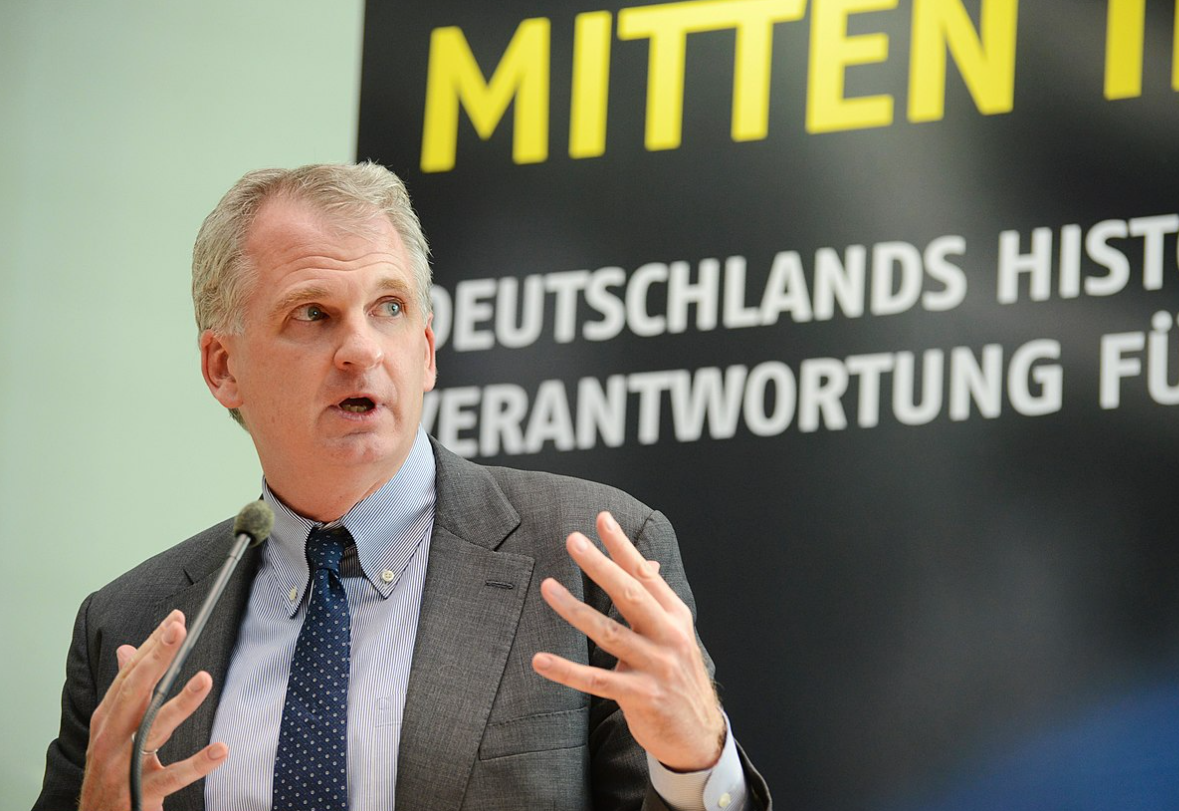
An interview with the historian Timothy Snyder has appeared in the March 9th, 2023, internet issue of Der Spiegel International. The interview was conducted By Ann-Dorit Boy und Eva-Maria Schnurr. Snyder has very strong Euorpean history credentials with a Ph.D. in History from the University of Oxford. He is presently the Richard C. Levin Professor of History at Yale University and a permanent fellow at the Institute for Human Sciences in Vienna.
The interview starts with an important question for Germany-
“As Germans accept the debate on Putin’s terms, they can miss the obvious point: If we care about the comparison, we have to note right away that it is Putin’s Russia that is behaving more like Germany in 1941: Moscow, like Berlin then, claims that a neighboring people and state do not exist; Moscow, like Berlin then, is fighting a war of aggression; Moscow, like Berlin then, is carrying out eugenic, deportation, and mass killing policies. If Russia is behaving as the Germans did in 1941, then the Germans now have a second chance to respond to fascism. Will they take that second chance?“
Snyder makes the point that German reticence to aid Ukraine in the war is what Putin wants.
“In Russia, his [Putin’s] intention is to build a cult of innocence: No matter what we do, it must be justified, because we are always the righteous victim. Of course, this contradicts the actual history of the Second World War, in which Stalin chose to ally with Hitler, and in which Ukrainians actually suffered more than Russians, by any measure. Putin is also seeking to exploit the historical memory of Germans. He wants to trigger the German reflex that Russians must be victims and Germans must be aggressors.“
I will end here because the article needs no explanation from me. It’s worth the read.
Here we are, it’s 2023 and the US has an old opponent run by a strongman dictator with nuclear weapons who is fond of reminding us about his nuclear arsenal. There is nothing like the Central Committee of the USSR that Putin has to contend with. Putin is not only angry with the US about aiding Ukraine, but he clearly wants to punish the US because of our continuing hegemony and a series of historical slights. He very much wants the US to experience suffering on our own territory like Russia did in WWII. Putin has always been unhappy with the collapse of the USSR and with what happened in the country thereafter. Putin’s theory of the world places Russia at the top of the great empires in history. His would be an authoritarian empire.
There has been a lot of knowledgeable commentary on what Putin may have concluded about western countries leading up to the invasion. I’ll defer to my betters in this.
Much propaganda has been issued by Russian state organs over the Putin years heralding the moral corruption and a disintegrating political structure within the US. He sees a US that is an aging empire in decay. Despite his large intelligence apparatus, he overestimated the capacity of his conventional forces and underestimated the resolve of Ukrainians. He apparently guessed that his invasion would be met with an indecisive NATO dithering away and only able to muster small support for Ukraine. His mistakes have proved to the world that the Russians are not 10 feet tall after all.
My feeling is that the US and NATO must be extremely watchful through this period of history. Putin’s government is unlike any adversary we’ve had before. They have already put effort into sowing confusion in US media and continue to try to influence our elections. They are likely to have SLBM submarines lurking off our coasts in readiness. Even worse, there are many within the current US GOP that seem to be willing to support or tolerate authoritarian regimes.
For as much as Putin is making veiled threats of nuclear conflict, he surely knows that if there are nuclear missiles headed for the US, we will not allow our missile fleet to be destroyed sitting in their silos. Only the first nuclear weapon unleashed with be a difficult decision.
The world has much to lose if it allows a man like Putin to invade his neighbors. Such a Russian empire so established will exert its authoritarian influence around the world much like China is attempting to do presently. The democratic nations of the world must work together to keep a world order that encourages free trade, travel, cultural exchange, open communication and a devotion to the betterment of all mankind.
The US has long been practicing liberal democracy. It has been very successful in raising the standard of living for all Americans, very often in ways that are not fully appreciated. So there is no confusion, liberal democracy doesn’t mean “Democrat democracy”. It is a system of representative democracy operating as defined bv the US Constitution with a separation of powers and many checks and balances. The engine of the nation is a market economy with private property and respect for individual and civil rights.
Our democracy and economic engine has given the US and the world a great many benefits in science, engineering, consumer goods, and medicine. The US has had the most productive economic and scientific engines the world has ever seen. We also built and maintained the most powerful military in history based on discipline, rules and strong moral leadership. The US continues to lead the world in the critical area of aerospace.
Our Government-Industrial-University R&D complex has been the envy of the world since after WWII. Scientific and industrial R&D is a powerful combination for sustaining prosperity. It is this that I most worry about when government comes under the current brand of GOP leaders. This is the goose that layed the golden egg.
The internet magazine Spiegel International, January 5, 2023, has an enlightening interview piece with the independent Russian opinion pollster and sociologist Lev Gudkov. His organization is the Levada Center which is described as the only independently operating opinion research institute in Russia.
Let’s cut to the chase. The tone of the interview is quite depressing in a near term if peaceful resolution of the Putin war is your hope. In case you were harboring the view that a groundswell of popular Russian sentiment against their country’s hostilities in Ukraine might lead to a change in policy in the Kremlin anytime soon, you will be disappointed because that is not what the polling suggests.
The polling also suggests that public sympathy for the plight of the Ukrainians is near zero. The idea of Ukraine as a sovereign state is not popular among the public.
When asked about public skepticism of the war effort-
DER SPIEGEL: What reasons do people give for their skepticism?
Gudkov: They say the operation is taking too long, that no progress has been made. People worry almost exclusively about their own country’s military defeat, the chaos in the army, the incompetence of the leadership. For years, they were told that the Russian army was the strongest and had miracle weapons, but that myth has evaporated.
DER SPIEGEL: The war itself isn’t being questioned.
Gudkov: No, the attacks on Ukraine and the massacres play no role. The Russians have little compassion for the Ukrainians. Almost no one here talks about the fact that people are being killed in Ukraine.
When asked about popular response to the war-
DER SPIEGEL: So they avoid it.
Gudkov: The war has exposed mechanisms in society that have existed since Soviet times. Out of habit, people identify with the state and adopt its rhetoric about their fatherland’s struggle against fascism and Nazism, just like they did in Soviet times, to justify the situation. It’s all been present in people’s minds for quite some time, and propaganda has activated these patterns. They block out any compassion and empathy for what is happening in Ukraine. Those feelings only apply their own dead and wounded soldiers, “our men.”
Other points made by Gudkov-
The potential for substantial public civil unrest was low in Soviet times and it remains so today.
Sanctions mostly affect the 20 % urban middle class.
Mobilization lead to decreased support for the war.
Mobilization was seen as a sign of defeat.
People are unwilling to protest because of the police and repression.
Fear of nuclear war has built up since the annexation of Crimea. “Soviet stereotypes were serviced, such as the complex of Russians supposedly living in a besieged fortress, being victims and not being liked by anyone.”
Gudkov says “In my opinion, the “Putinian” person is a continuation of the Soviet person, but the former is deeply cynical, confused and disoriented. The Soviet person knew that life was not rich, that there was a constant lack of something, be it goods or variety. But they believed that things would get better with time“
Russian trust in Ukraine collapsed with the loss of President Viktor Yanukovych who was loyal to the Kremlin.
Television broadcaster Margarita Simonyan famously said that if Russia loses “we will all end up in court in The Hague, from the janitor right up to the leaders.” It sounds laughable but who knows how much hyperbole people will absorb?
Russian state control of the media has been very successful in controlling the views of the population as has isolation from outside media. The challenge a belligerent Kremlin poses to the west and to democracy will be with us for a long time. Capitulating to Putin’s Kremlin would be a very regrettable mistake.
I believe that we in the US must understand that Russia has a history and perspectives that are very different from our own. We have very different languages, alphabets, traditions, folklore and lessons from history. Russia’s land was invaded in WWII by a very capable and violent enemy. Russians suffered and died in great numbers under the dictatorship of Joseph Stalin. Russian civilian and military losses during WWII have been estimated to be as high as 40 million dead. Russians continued to suffer in the suffocating grip of Soviet socialism until the collapse of the USSR. These dreadful experiences are layered over a long history that has never been exposed to the liberal democracy or free market capitalism that Americans have benefitted from immensely and take for granted.
It has been my habit to be circumspect about Russia. I studied a bit of Russian language in college, have a handful of Russian colleagues and have been to Russia on business. I enjoy 18th and 19th century Russian literature. I’m certainly no Russia scholar but I am sympathetic towards ordinary Russians who suffer under government repression and subsistence living, especially outside of Moscow or Saint Petersburg. Repression and poverty have been with Russia throughout history. Russia was an absolute monarchy up to the Bolshevik revolution in 1905-1917. It was a feudal society operating under a manorial system. Serfdom was common in Tsarist Russia from as early as the 12th century until 1861 when it was abolished. The Bolshevik revolution put an end to Tsarist rule with the abdication of Tsar Nicholas II in 1917 and murder of the Tsar and his family in 1918.
Today, President Vladimir Putin and his political machine have fabricated reasons to justify a violent military invasion in order to fulfill his dream of the unification of a greater Russian empire. Putin knows he won’t be stopped by a political uprising in his country. He seems quite confident that he can unleash brutal violence on the Ukrainian people without worry of a significant backlash at home. The people who fled Russia during the recent conscription are not present to protest against the war effort.
It is easy to believe that if anyone is the first to release a nuclear weapon, it is likely to be Putin or a successor. Release of a nuclear weapon will only be a difficult decision the first time. Once unleashed somewhere, reluctance for use will drop across the world.
The mountain of sanctions on Russia has had the side effect of bolstering Putin’s case that Russia is suffering from oppression from its western enemies. Putin’s response has only been to ratchet up the shelling of Ukraine. He will weaponize everything within his grasp and bring his hammer down as powerfully as he can.
My point today is that the EU, USA, and NATO must be extremely cautious with Russia in the present period of conflict yet maintain vigorous support for Ukraine and other border countries. Ukraine must be supplied with as much firepower as possible without direct conflict between NATO and Russia. Fortunately, that seems to be what is happening so far. While there are two opposing uniformed armies, Putin is using civilian collateral damage in Ukraine as a strategy to terrorize the population into submission.
My concern is the uncertainty of long-term political stability in US policy towards Russia, Ukraine and support for NATO. The US must maintain a firm opposition to Putin’s expansionism. Putin (and Xi for that matter) is clearly aiming to topple US hegemony in the world and would like nothing more than to see the US recede in influence. If you are not from the US, maybe this doesn’t sound so bad. But someone will aim for global hegemony and get it. Who is the least unfortunate choice?
Unfortunately, the disastrous presidency of Trump in the US gave the world in general, and Russia and China in particular, the impression that the US was in cultural decline due to moral corruption. We were perceived as a tired superpower rotting from within. A power vacuum will always be filled by some nation either abruptly or a centimeter at a time.
The political situation for Lukashenko in Belarus seems very precarious. It is hard to believe that he is a complete patsy for Putin. Knuckling under to Russia has to chafe at least a little bit. Russia has amassed firepower along the border joining Belarus and Ukraine and seems poised for action. Putin is also threatening Moldova over the safety of Russian troops in Transnistria. Any European state sharing a border with Russia has much cause for alarm. I’m guessing that Poland is worried about Russia capturing land to join the Kaliningrad Oblast to the rest of the country.
Putin will stop his aggression only when he is dead. Even then, a successor like Medvedev would likely continue the autocratic trend begun by Putin. Autocracies are notably difficult to take down. This war can play out in any number of ways.
Vlad Putin has been ominously reminding us that he will not rule out the use of nuclear weapons if the Russian state is under existential threat, whatever that means. Maybe now is a good time to review just a few basics of nuclear weapons and what they do.
There are a large number of internet sites that go into great detail about the dark art and history of nuclear weapons. No need to duplicate that here. I’ll just give my take on a few points.
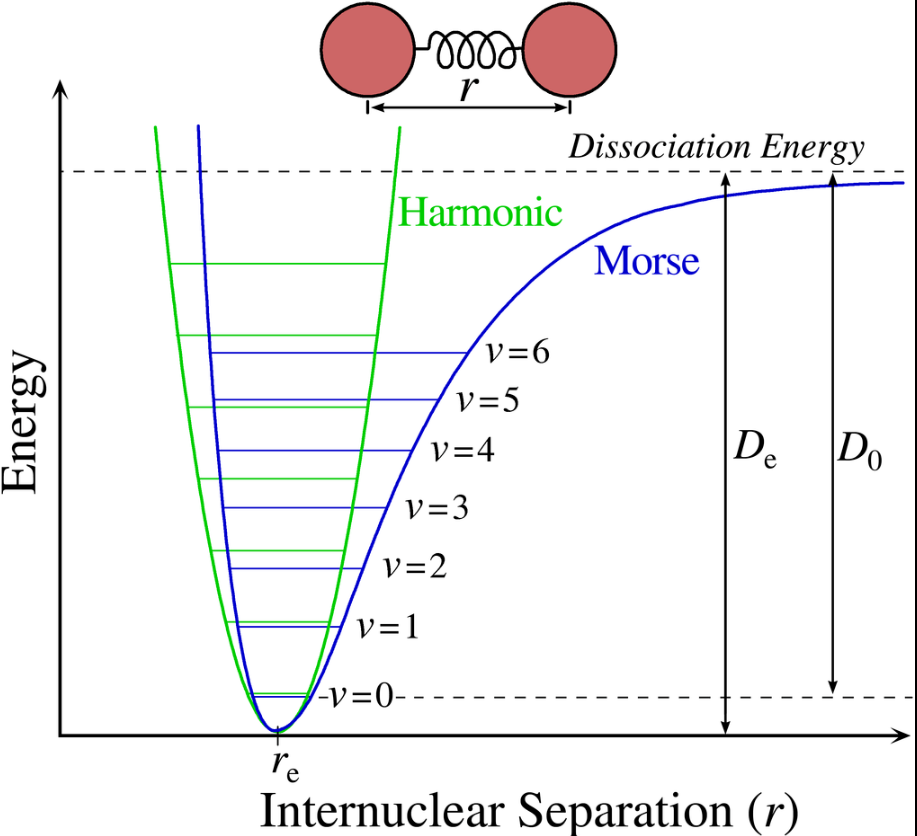
Remember the Morse curve from freshman chemistry? It describes the potential energy versus distance of two atoms at the scale of chemical bonds. The left side of the blue curve shows how steeply the repulsive energy potential rises (exponentially) with diminishing internuclear distance. By contrast, the attractive potential on the right of the blue curve flattens out with increasing interatomic distances. Keep this in mind.
When a fissile uranium-235 nucleus absorbs a neutron, the nucleus momentarily becomes unstable uranium-236. A stable nucleus has repulsive Coulomb forces between nucleons that are balanced at close proximity by the attractive strong nuclear force. The liquid drop model is useful for visualizing a nucleus as it fissions. On absorption of a neutron the uranium nucleus will distort to an elongated dumbbell shape leading to an imbalance of attractive and repulsive forces between nucleons. This can take the nucleus past the distance where the strong nuclear force attraction can hold it together. The strong nuclear force holding together nuclear particles (nucleons) falls off much faster with distance than does the Coulombic repulsion of protons. At the instant the nucleus separates into adjacent fragments, the two highly positively charged nuclei find themselves in very close proximity and are now only subject to net repulsive force. From the left side of the Morse Curve we can see that the repulsive force is exceedingly high in this moment. The highly repulsive potential energy is converted to kinetic energy at the moment the nucleus splits. The nuclear fragments fly apart at high velocity along with neutrons and dump thermal energy into the surrounding bulk material. But the kinetic energy of the fragments is not the only source of energy output.
Nuclear fission fragments are released in a highly excited state. Apart from their kinetic energy, nuclei have different energy levels with differing stabilities. A nucleus can undergo energy transitions from one state to another. These higher energy levels are called nuclear isomers and their stability can be expressed in terms of half-life. As fission fragments are formed they shed energy in the form of alpha, beta, gamma, and neutron emissions. Neutrinos are left out of this discussion for simplicity. As nuclei decay, they get closer to a stable ground state. Unstable nuclear fission products will decay in their characteristic ways, contributing to the overall energy release.
One challenge to weapons designers is to cause as many nuclei as possible to fission before the weapon undergoes “hydrodynamic disassembly” over the first 1 microsecond or less. After ignition the rapidly expanding plasma of the bomb core increases in volume and the probability of neutron collisions with nuclei diminishes rapidly. When a uranium or plutonium nucleus fissions, 2 or 3 neutrons are emitted which go on to strike other nuclei and induce fission in them. The cascading generations result in an avalanche of fissions. One of the ways to ensure that enough generations of fissions occur with enough neutrons flying about inside the supercritical assembly is to surround the core with neutron reflecting material. Ways of doing this can be found elsewhere.
One more thing about the strong nuclear force. This quote is from the Wikipedia entry for the strong interaction–
“The residual strong force is thus a minor residuum of the strong force that binds quarks together into protons and neutrons. This same force is much weaker between neutrons and protons, because it is mostly neutralized within them, in the same way that electromagnetic forces between neutral atoms (van der Waals forces) are much weaker than the electromagnetic forces that hold electrons in association with the nucleus, forming the atoms.“
A nuclear weapon produces a near instantaneous point source of energy release. These bombs can be detonated at or below ground or water level, or they can be set off in the atmosphere or space. The choice of where to do it depends on the intended effects. Subsurface bursts consume much of the explosive energy in moving soil or water which provides some radiation shielding to the surrounding area. Furthermore, bursts in contact with soil or water, especially when the fireball contacts the soil, tend to produce more fallout than air bursts. Air bursts deliver EMP, radiation and blast effects to a wider area, where “radiation” refers to neutrons, gamma and longer wavelengths of electromagnetic radiation. Thermal and blast effects produce considerable prompt destruction in the area surrounding the blast. As an approximate point source of energy, the intensity of the radiant energy falls off as some inverse square law. On an encouraging note, this means that radiation exposure falls off rapidly with distance. Distance is your friend.
There are numerous variations on the nuclear weapons theme. In the early cold war days, so called A-Bombs and H-Bombs were in the news. H-Bombs are also referred to as “hydrogen bombs or thermonuclear weapons.” An A-bomb, A for Atomic, was a basic implosion-type fission explosive and it was the typically the least powerful of the two. The H-Bomb was a nuclear fusion explosive that was triggered by a fission “primary.” That is, a fission trigger would be used to generate x-rays that would be “focused” onto fusion fuel, the “secondary,” which would initiate a runaway nuclear fusion explosion. The explosive yield of these bombs is much higher and can deliver a devastating blast to a larger area. Over time, the efficiency and compactness of these bombs has been greatly optimized.
The fusion explosive element was lithium-6 deuteride. The lithium atom would absorb a neutron, become unstable and decay into a helium-4 nucleus and a tritium (helium-3) nucleus. On a side note, in grad school I attended a seminar by Dieter Seebach from ETH, Zurich, who was talking about mechanistic work they’d done with lithium enolate complexes. He mentioned in passing that at that time, the mid-80’s, they had to be careful with stoichiometry because the commercial lithium that was available was often depleted of lithium-6 which was accumulated by the government for diversion to weapons. It was an unexpected brush with the cold war.
The main deleterious effect of radiation on human tissue lies in the formation of ions and radical pairs along the path of the penetrating radiation. The molecules of life are dissociated into ion pairs or radicals which may or may not collapse back to the original molecules. Given the amount of energy transferred into molecular dissociation along with random diffusion, the molecular destruction cannot be reversed. Heavy radiation particles like alpha particles produce a great many ions per centimeter of tissue penetrated. Penetrating, energetic photons like gamma rays produce relatively few.
There are 6 forms of hazardous radiation commonly considered- alpha, beta, gamma, x-ray, ultraviolet and neutrons. Of these 6, alpha, beta, gamma and neutrons are of nuclear origin. X-ray and ultraviolet are “electronic” in origin, that is they arise from electron transitions outside of the nucleus. The matter of the origin of x-rays is often confused in the literature with some authors implying that x-rays are from the nucleus. I prefer to define x-rays as resulting from electron transitions at the atomic level.
Of the 4 nuclear radiation types mentioned above, alpha, beta, and neutrons are particles. Gamma rays are photons. The atomic nucleus is comprised of so-called nucleons which are protons and neutrons. Nucleons are composite particles comprised of quarks and can bind by the strong nuclear force. Alpha particles are helium-4 nuclei and neutrons are neutral particles with approximately the same mass as a proton or about 1 atomic mass unit. Neutrons are not stable outside of the nucleus and have a half-life of about 15 minutes. Free neutrons will undergo radioactive decay into a proton, an electron, and an electron antineutrino.
Like gamma rays, neutrons are neutral in charge and have great penetrating ability. However, neutrons are effectively scattered by collisions with the hydrogen atoms of biomolecules and water. As a result neutrons can be very destructive to living tissue. As a side note, paraffin wax and water are effective shielding materials for neutrons due to the high concentration of hydrogen atoms. The collisions with hydrogen atoms in living tissues is a means of dumping neutron kinetic energy into the bulk matter, resulting in dissociation of biomolecules.
The so-called “neutron bomb” was an explosive that was designed to produce an abundance of neutrons at the expense of explosive yield. During the early Reagan years in the US there was much public handwringing about these bombs and their ability to kill people but leave buildings standing. People seemed indignant that somehow this reduced the value of human life below that of material things in the grand calculation of destruction.
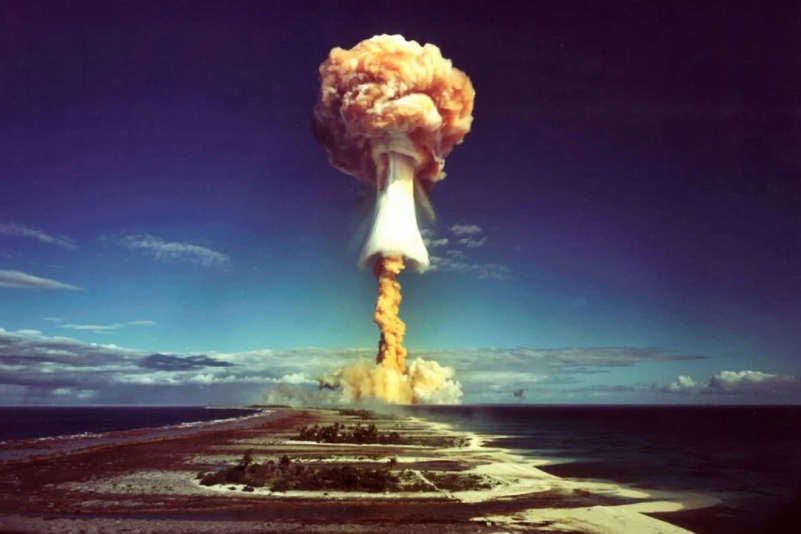
The characteristic mushroom shape rising to the sky after a nuclear air burst is just the result of a rapid release of energy and bomb debris in the air, but close enough to the ground to suck up soil. The “cap” of the mushroom results from the convectively rising point-source expansion of incandescent, debris-filled air from the point of energy release. The “stem” of the mushroom is a column of air that has rushed in to replace the rapidly rising fireball, picking up soil as it does so. There is nothing intrinsically nuclear about a mushroom cloud. Chemical explosives can do this as well.
Initially the fireball produces a strong pulse of thermal radiation. As this fireball develops, there is a momentary drop in radiant thermal energy due to the increasing opacity of the fireball. With further expansion the opacity of the fireball decreases and the thermal output increases. The shock wave and out-rush of air is obviously destructive, but the radiant thermal effects are not to be underestimated.
Another major effect of a nuclear blast is nuclear fallout. A nuclear blast unavoidably produces radioactive substances from the fission process and from neutron activation. A low altitude air burst is particularly troublesome because ground debris is sucked up into the air and contaminated with radionuclides. This material does what all suspended solids do, namely it is carried by the wind and falls back to earth gradually, contaminating a wide swath of ground. The finest particles remain suspended and are transported long distances, eventually falling out with rain or snow.
Finally, there are psychological effects associated with “the bomb.” It inevitably produces dread fear in people. This fear buttresses the idea of Mutually Assured Destruction or MAD.
Now that we are in a nuclear state of mind, let’s turn to what Putin intends to do with his nuclear arsenal. The Russians are not suicidal. Putin is neither crazy nor stupid. Russians have long understood where a nuclear confrontation with the West can go. They know escalation of nuclear war to full-scale would lead to mutual destruction of Russia and the West. The Russians know that the West has a policy of no first use with nuclear weapons and that we are extremely reluctant to use them. For the West, there is a firebreak between conventional and nuclear weapons. For the Russians, it is more of a continuum. They know that sabre rattling with their nuclear arsenal creates a good deal of anxiety in the rest of the world and Putin has been pushing this threat envelope to new levels and will keep doing so. Once a KGB guy, always a KGB guy. Putin obviously understands the pragmatics of coercion and the influential value of torture.
What nobody knows for sure is what happens when a Russian nuclear war shot is released. What does the West do? Respond in kind quickly or play the long game and see what happens next. How much planning has gone into nuclear conflict between two states outside of NATO? When would NATO step in? NATO is presently taking the side of Ukraine in terms of supplying money and arms but is studiously avoiding direct conflict with Russia. On the positive side, at least right now we aren’t bogged down with an endless middle east whack-a-mole exercise.
The best use of nuclear arms has always been and remains the threat of their use. Russia has been using this threat aggressively, even going so far as to blame Ukraine for planning a false flag operation with a “dirty bomb.”
Putin wants to see the alliance of the US and Europe disintegrate. He wants to see the American hegemony in place since WW II collapse. He wants to see the dominance of US culture, military reach, the influential dollar and prevalence of the default English language peel away. He wants to see Novorossiya rise from the ashes of the fallen USSR. But his vision requires the conquest of territory and cultural domination. The armed extinction project for Ukraine in process now will be followed by rebuilding the captured land with Russian infrastructure, political leaders and culture.
Russia, in its constant state of paranoia, wrings its hands about the “threat” of NATO at its border. The cruel irony is that it is hard to imagine that the West would find the conquest Russia possible or even desirable. The US-lead coalition was unable to get the medieval opium poppy kingdom of Afganistan under control with conventional weapons. How is it possible that we could even consider a preemptive invasion of Russia? Russia’s historical paranoia seems entirely self-serving for its authoritarian leaders.
One way to tear apart western alliances is to help them along with the demise of liberal democracy. Quietly support the internal cultural rot of individual nations by encouraging radical nationalism, white supremacy and political disharmony. It is happening all around us and especially here in the US. As badly as I’d love to entirely blame #45, I have to admit that he has only prodded a sleeping dragon. The MAGA and QAnon crowds were already out there. #45 has rallied them and validated their seething anger and indignation.
Today we have many people of great influence like Tucker Carlson, Alex Jones, Sean Hannity, nationalistic religious broadcasters, a stable of fringe political figures, and a mass of MAGA foot soldiers winning down-ticket elections moving their nationalistic and religious conservative agenda forward. Post-war baby boomers are being replaced with crowds and leaders who reject America’s present liberal democratic culture and leadership role in the world. There is growing open admiration for strongman authoritarian leadership. America’s experiment with fascism has already begun. Surprisingly, many Americans have expressed support for Putin.
Putin’s vicious attack on Ukraine, the rise of Trumpism with American fascism and a viral pandemic have overlapped within a narrow window of time- any one of which is a big problem by itself. It seems doubtful that MAGA right-wing crowds will have a change of heart in their vision for America. They will live out their lives within the same closed ideological space they are in presently. A political depolarization of America seems unlikely in the near term.
In this depressing global political climate it is more important than ever for the US to maintain its role as a thriving democratic culture and defender of those seeking democracy. Our leadership role in NATO must not waver against Russian aggression and expansionism. Russian expansionism will not end with Ukraine.
What will Putin do if he sees his internal political power structure collapsing? Will he ramp up the war to distract his opponents and rally the country? The present situation in Russia seems to suggest that rallying the population is more difficult than he anticipated.
It is hard to believe that Putin and his inner circle will change their ways in their lifetimes. They’ve painted themselves into a corner with their aggression and, like a trapped animal, will fight to the death. The cruel and murderous Joseph Stalin died in power. There is no reason to believe that Putin will be any different.
An interesting question and answer piece has come out signed by Mykhailo Zahorodnii, Ukrainska Pravda. Zhyttia, titled (by Yahoo) “The atrocities committed by the Russians are their reaction to the fact they are nobody in their own country“. It is not a dispassionate bit of analysis by a senior historian, but rather by an experienced reporter from Ukraine. Yes, it is anti-Russian. It does not attempt to convey sympathy or fairness towards the Russian people. But, as one-sided as it is, I think that many valuable insights are made into the consequences of Russian history and also its politics over the last 30 years.
“And it [the Russian army] is doing the same thing to Ukraine as to Syria. That is, it is technically possible to turn every Ukrainian city into Aleppo. There are orders, there is no honour, there is no dignity, there are no human values.”
If Ukraine is to lose the war, then Russia should be made to pay dearly for it. However, Putin has stated Russian nuclear doctrine- they will only use nuclear weapons if the survival of the state is threatened. This is widely held to be true. The big question is, who decides what the existential threat to the state looks like? Putin decides, of course. This is why the US and Europe must avoid a ham-fisted foreign policy with Russia. The Russian president is a belligerent madman in charge of a nuclear state and whose fantasies about Russian manifest destiny are his guide. Tensions with Russia are here to stay for many years. Putin supported Trump for a reason. Trump “respected” Putin for unknown reasons. We need to keep American madman and rogue narcissist Trump and his ilk far away from foreign policy.
Below is a translation of a speech given by Russian political scientist and human rights activist Ekaterina Schulmann, cut and pasted in its entirety from an essay by Alexey Vlasenko who is the translator and a contributor to The Daily Kos. Schulmann has an interesting take on Putin’s motivation for the Ukraine invasion.
“Many people will ponder this question and come up with many different answers, all of which will seem logical. Naturally, I have my own hypothesis, which I don’t claim is the one truth. Nevertheless, since we are having such a remarkable discussion, I will share it.
He did this to halt time. I’ll try to explain what this implies.
I think that these processes which we [political scientists] were observing, including the transformation of values, of worldviews, of public opinion [specifically in Russia], were real. I do not think that we were all in thrall of illusions when we noted that violence in society is decreasing; that crime rates are falling; that new generations have a new value system; that video games actually reduce violence, rather than increase it; that, in general, the younger the social stratum, the more pronounced the decline in violent crime and in consumption of hard liquor; that imperial nostalgia is fading into the past.
Now, turn this picture around, and imagine yourself on the other side. There you sit and watch as the sands of time slip through your fingers. You will inevitably be succeeded by — let’s use his language — traitors. Your children are traitors. They do not share your view of life, they do not share your view of the world, they do not see that which you see with such clarity. You are the last defender of the fortress. They will surrender it to the enemy, because they do not even consider him an enemy, and no matter how much you try to convince them, they still won’t consider.
A sizable, cultured and educated segment of the public sits around you at a safe distance, looks on and says: “Go on, we’ll wait. When you die, it will be our turn. The sympathies of the future are on our side. The youth idolizes us, not you. But do go on, sit there for now, why not. We will not storm the Kremlin, we only need to wait.”
A year passes, and another, then a third. Everything continues in the same vein. At the same time, your head is full of geopolitics, and the neighboring country is causing you unease. It had somehow made progress, which is very disturbing. And you realize that a little more, just a tiny bit longer, and that’s it, your historical time will end. Your window will shut. They will tell you: “Well, that’s enough, get down from there. The next ones are coming.” And these next ones are unacceptable to you. From your point of view, they are worse than useless, they will doom everything, they will ruin everything.
“He’ll smash to bits the sacred vessels, he’ll feed the dirt with royal oil, he’ll squander everything – and by what right?” [from The Covetous Knight, by Alexander Pushkin]. Read that again, and realize that this is not about money. You will be seized with horror, at this hatred for one’s heirs, hatred for the living simply because they shall go on living. “It’s time for me to rot, and you to blossom.” A reasonable person can accept this, can caress a baby, understanding that “yes, I will turn to dust, but you will live on and prosper.”
But if you happen to be constituted a little bit differently, and you also happen to hold a great deal of power in your hands, then you can do this trick: onto the heads of all these future generations, you will overturn a heavy concrete slab, which will crush them forever, or least in any foreseeable perspective. That future that they wanted, they won’t get. Instead, they will get the future your way, even after you are no longer among the living, because you will do such a thing, oh my…
You are inside, you understand? Yes, inside this fortress that you’re guarding, you will figuratively detonate an atomic bomb. True, there will be no life left in the fortress, but it will be radioactive and therefore unapproachable, and so it will forever remain “unconquered”, so to speak.
Not to speak of the specific culprit, with all due respect for him and his functions, but of a whole social and demographic stratum. Have you seen our average age figures? But it’s not just age per se. It’s a certain social affiliation, a certain kind of experience, a certain world view that is formed by this experience. Anyone who can’t accept the flow of time and come to terms with it, yet possesses power, could do this kind of thing.
This is my explanation. It’s only a working hypothesis, but that’s how it is. I do see confirmation from many sources, as well as in very public official pronouncements about how “we need to do this right now, tomorrow would be too late”, just another moment and everything will turn to irrevocable regret and musings of “we should have…”
This sentiment of “time flowing away” is something that I have been hearing for a long time, I think. I speak about this whenever I discuss generational change. The feeling that somehow history is not headed “in our direction”, this hatred and disgust for tomorrow, because “it is not what I need”, is clearly audible [in Putin’s speeches]. What was hard to grasp is that someone would go to such ends in an attempt to drown out these apparently unbearable feelings.
The trouble is, of course, that this terrible work of isolation is being done from both sides. The wall is being built from both outside and inside. We cannot blame the outside world for wanting to protect itself from, let’s say it out loud, an aggressive regime that is attacking and killing people. Still, the labor of isolation is being worked by four hands. It’s horrible. [To repair the damage] will take a lot of work over a very long time. Simply returning to a level that, until now, we took for granted, will require an unimaginable expenditure of effort and resources.
It’s remarkable and tragic how humanity can squander its strength like this.”

 Lamentations on Chemistry