
We had the opportunity to visit the Karl G. Jansky Very Large Array, VLA, near Magdalena, NM, last week. They hosted an open house for visitors on the 11th of October, 2025. After we visited the two famous big holes in Arizona, Barringer Meteor Crater and the Grand Canyon, we turned east to the VLA. Recently we toured the summit of Mauna Kea in Hawai’i and saw the optical observatories and NRAO radio astronomy dishes up there.
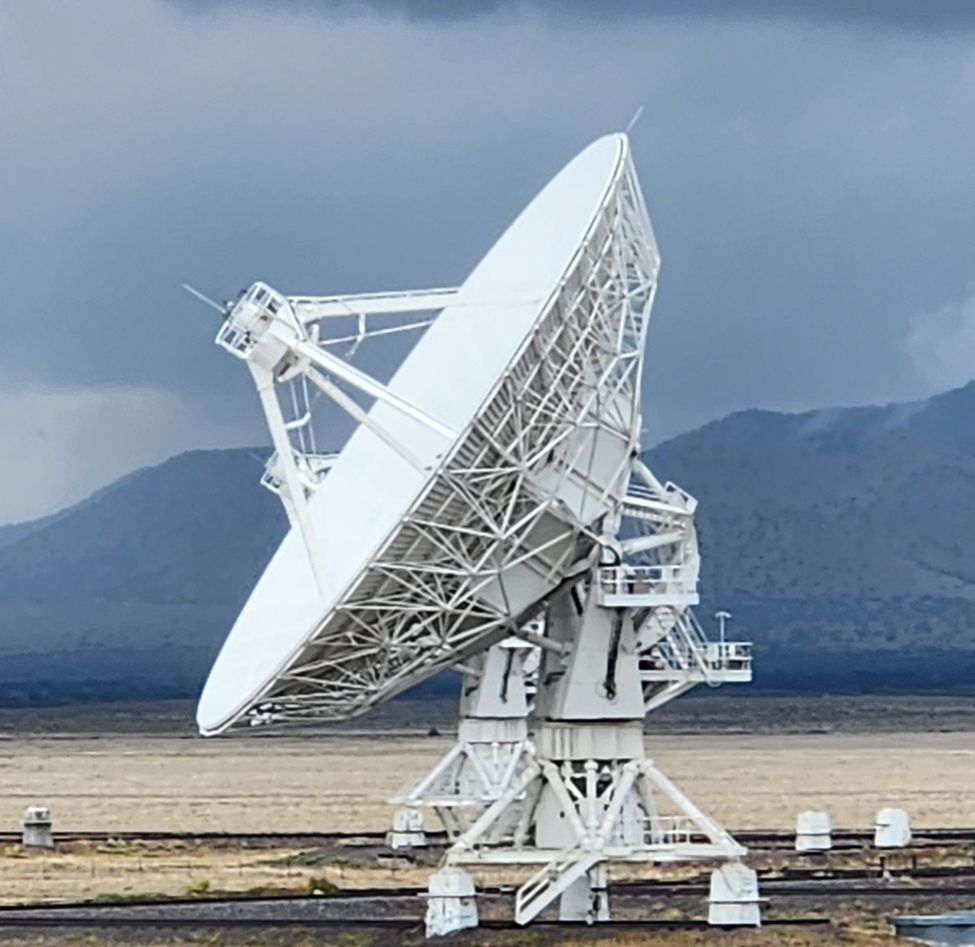
Each dish has 8 antenna receiving elements clustered around the center of the dish, each detecting a different frequency. The continuous receiving range is 1 – 50 GHz. The dish antennas have 4 receiving configurations that they cycle through approximately every 16 months. Looking the secondary reflecting element of the dish in the upper left of the image, you’ll notice that there is a curved reflector. This reflector has a rounded surface that is designed to rotate, steering the focal point to the desired detector.
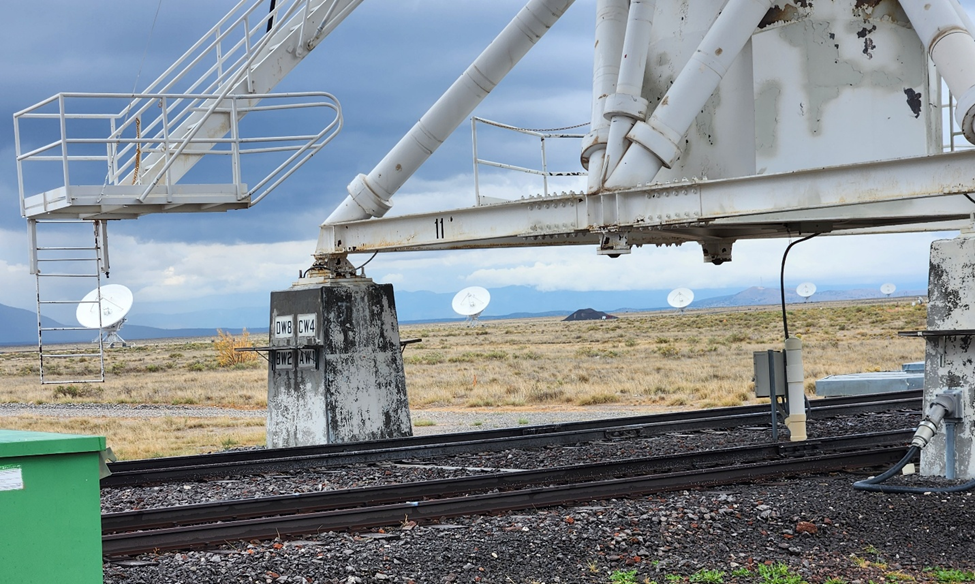
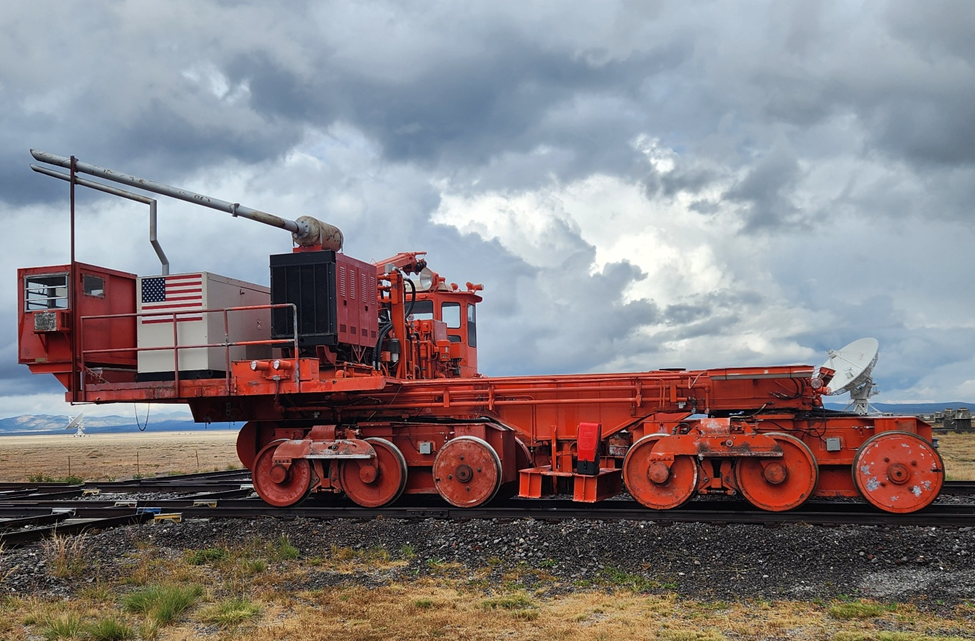
The rails on which the dishes move are of a “high speed rail” quality. The machine that moves the dishes is shown below. We were told by our astronomer tour guide that it takes 2 weeks to re-adjust the entire array of dishes. The “crawler” carrying a dish moves at 2 miles per hour.
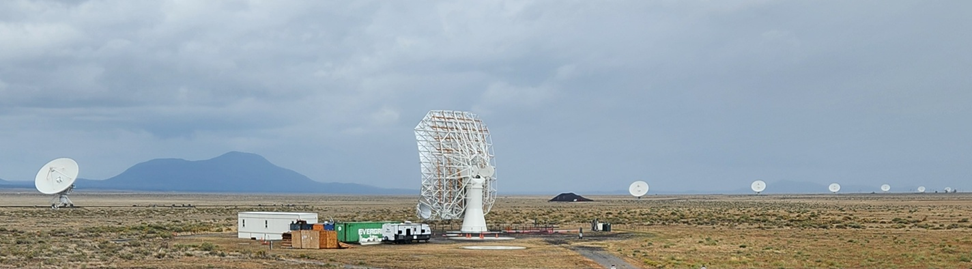
Below is a shot of the proposed next generation of radio telescopes.
NRAO has an image gallery at this link. The Astronomer’s link at the VLA website has a wealth of information available. A link to the next generation VLA is found here.
 Lamentations on Chemistry