
Question: What’s the deal with the government of Texas?
Reply: We don’t have enough time for that.
Governor Greg Abbott, aka by some as “Wheelie”, has ordered all flags be raised to full staff in honor of Inauguration Day, pursuant to federal statute.
At first this doesn’t seem to be much of an event, but it is plainly and uniquely a petty act of defiance against the nation’s honoring of the life and death of 39th US President Jimmie Carter, a Democrat btw, taking less priority than the Trump’s inauguration. It is so … Texas.
As a coworker from South Carolina used to say, “You can always tell a Texan, but you can’t tell ’em much”. I repeat this saying only out of love. I have great respect for the citizens and land of Texas. I made many life-long friends and colleagues there. But the GOP government is regressing the state and softening the populace for increasing theocracy.
Texas state politics has a very strong Republican and evangelical protestant conservative bent to it. That is no secret. The state also has a very strong independent streak and many brag that they can choose to become independent again at any time. I don’t care enough to dedicate heartbeats to validate this, but I heard it many times. MAGA Texas Governor Abbott is a true populist to conservative voters and Democrats can go suck eggs. The state government is ultraconservative and will likely remain that way for decades.
Happier Texas Anecdotes
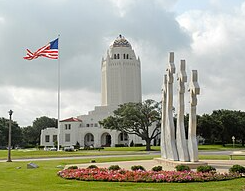
I did time in Texas- 22 months to be exact. I was a post-doctoral fellow there for that stretch of time in the early 1990s. It was in San Antonio. I’ve always said that if you absolutely must live in Texas, San Antone is a good place to do it. When I was there, SA was very much a military town with Army and Air Force bases and a lot of military retirees. Today the 4 bases are part of what is called Joint Base San Antonio comprised of Randolph Air Force Base, Fort Sam Houston, Lackland Air Force Base and Camp Bullis. A building at Randolph was called the Taj Mahal. It stood out.
A friend who was retired from USAF as a bird colonel flew the delta-wing Corvair B-58 Hustler supersonic nuclear bomber for the Strategic Air Command (SAC) early in his service. As a military retiree he worked as a “Mr. Fixit” for the chemistry and physics departments at our university. One day, he took me to a Lackland AFB hangar to see a B-58 under restoration. My photos are lost to the sands of time, but they had made a good bit of progress by then. Pictures do not really convey the size of this beast.
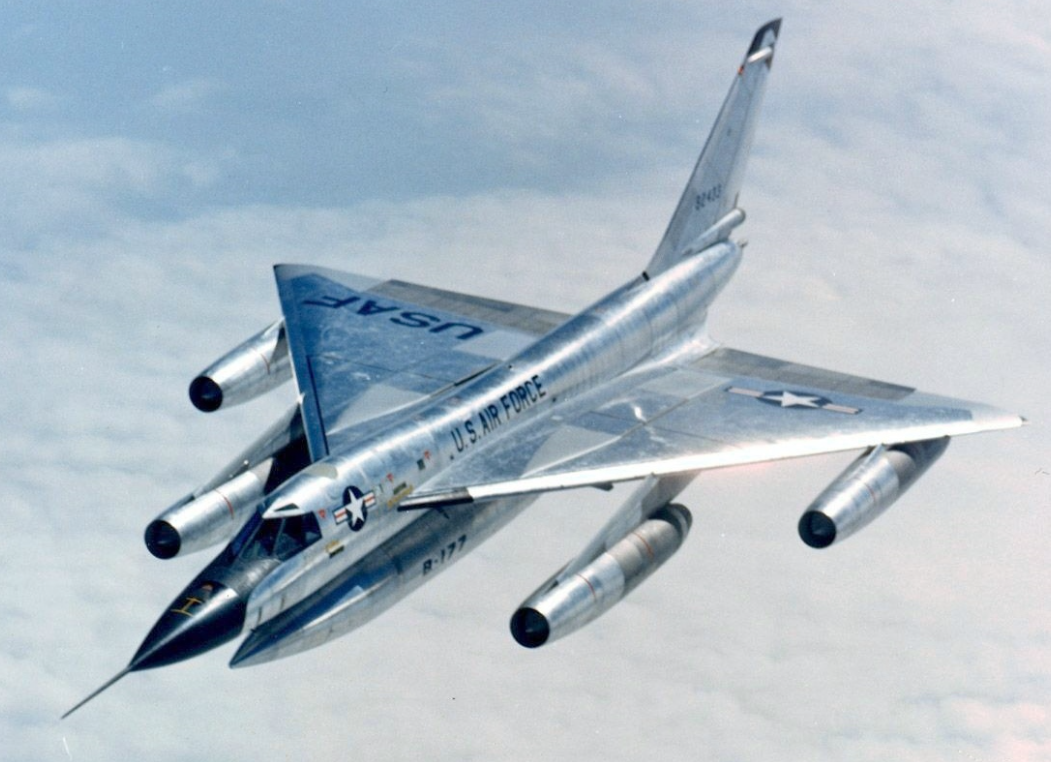
The B-58 had no internal bomb bay so the early version had an external pod partitioned to carry both fuel and a nuclear weapon. Later versions had 4 hardpoints under the wing enabling it to carry up to 5 weapons. The Mach 2 aircraft could sustain supersonic flight and altitudes up to 50,000 to 70,000 feet with a crew of 3. The delta wing offered more storage volume for internal systems and fuel.
The downsides of the aircraft were serious. Reportedly it was difficult to fly and imposed a high workload on the crew. To sustain supersonic flight, high fuel consumption required frequent midair refueling. The aircraft was designed for high altitude, supersonic penetration of enemy airspace. But when the Soviets came up with high altitude surface-to-air missiles, the mission altitude had to be lowered, resulting in lower range. It was also expensive, costing more than the B-52 Stratofortress. Due to cost and obsolescence the aircraft was retired in 1970 after a short 10-year service and was replaced by the F-111.
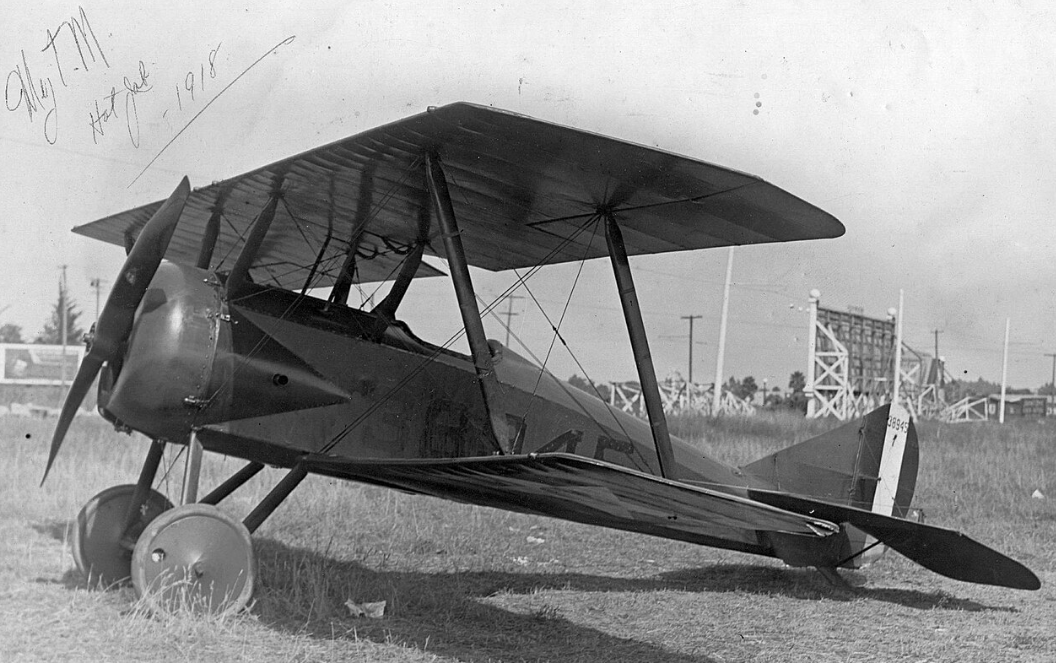
We left that hangar at Lackland and went into another that had a WWI vintage Thomas-Morse biplane stored there. The engine was of the fixed crankshaft, rotating engine block rotary engine variety. It had no throttle in the modern sense by feeding a fuel/air mixture with a single adjustment. Power was regulated by cutting the ignition with the “blip switch” occasionally, especially on approach to landing, or by adjusting the fuel valve back to a preset position, then adjusting the air flow. Using the blip switch was faster but resulted in fuel and engine oil building up in the cylinders. Somehow this leads to gas and oil leakage and serious engine fires. Because the larger piston block was spinning rather than the crankshaft, engineering a normally carbureted fuel/air mixture was not possible at the time. To adjust the power, a predetermined fuel flow was chosen and then the air was adjusted through a flap valve to vary the power. It wasn’t a beginner’s aircraft.
 Lamentations on Chemistry