[Edited and Rewritten post.]
Many Western observers often imagine a future in which, after Putin’s departure, Russia evolves into a more open and cooperative nation. Wouldn’t it be appealing if Russia joined the global community of states that embrace free trade and safe tourism? This vision reflects our own ideals, making it easy to assume that Russia might share them—but history suggests the reality may be far more complex.
A review of Russian history from Tsar Nicholas II to the present reveals a persistent pattern of authoritarian governance. Although Tsar Alexander II abolished serfdom in 1861 and introduced several liberal reforms, these changes faced strong resistance. Many reforms were ultimately reversed, as they diminished the power of the nobility, provoking significant opposition despite their positive perception in the West.
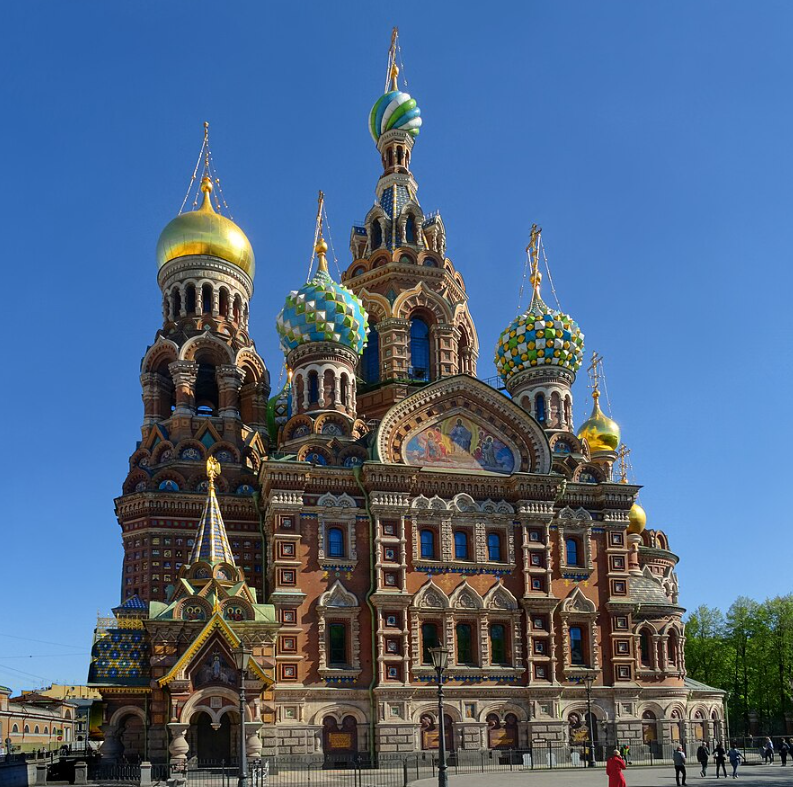
On March 31, 1881, Tsar Alexander II was assassinated in St Petersburg, Russia. His habit was to ride his carriage to a military roll call that day of the week. The route was along the Catherine Canal. An assassin threw a bomb under the horses and it exploded as the carriage rolled over it. The emperor’s carriage was bullet proof, a gift from Napolean III. Alexander exited the damaged carriage uninjured and paused to survey the scene. As he was doing this, a second assassin tossed another bomb at his feet which exploded, later killing him and killing and injuring many others in the vicinity. Afterwards a beautiful cathedral was built on this site called the Cathedral of the Savior on Blood.
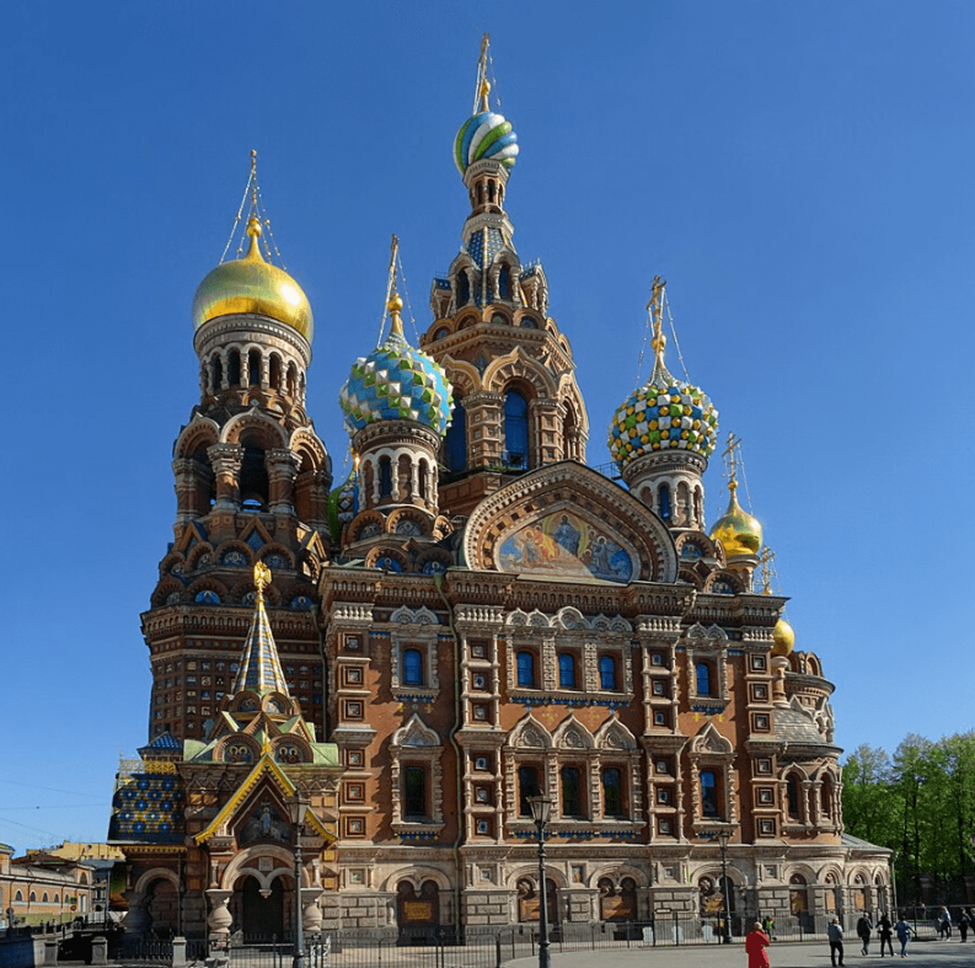
Cathedral of the Savior on Blood. Included here only because it is a beautiful image. Image from Wikipedia. I was awestruck when I visited.
If you end up in Saint Petersburg, which I whole heartedly recommend, this cathedral is well worth a visit. It’s newer and, in my opinion, perhaps even more beautiful than the famous Saint Basil’s Cathedral in Moscow along Red Square,
Following Tsar Nicholas II’s abdication in 1917, a provisional government briefly assumed power before being overthrown by the Bolsheviks during the October Revolution. The ensuing civil war ended with Bolshevik victory, elevating leaders such as Lenin, Trotsky, and Molotov. In November 1917, the Russian Socialist Federative Soviet Republic (RSFSR), the Russian Soviet State declared itself a sovereign state.
The revolution triggered widespread unrest, with numerous factions pursuing divergent objectives. The Bolsheviks relied on the Red Army, while the White Army comprised former imperial officers and Ukrainian anarchists opposed Bolshevik control as well. Additionally, thirteen foreign powers—including Austria-Hungary, Germany, and the Ottoman Empire—intervened against the Bolsheviks.
In 1922, the Russian Socialist Federative Soviet Republic ratified a constitution and formally established the Union of Soviet Socialist Republics (USSR), written in Cyrillic as CCCP.
Amid the turmoil of the Bolshevik Revolution, Russia ceded territories previously seized by Germany during World War I. The collapse of the Russian Empire sparked a protracted struggle among various ethnic groups and factions to reclaim land and assert authority. By 1923, the Russian Civil War had concluded.
Let me say that although the western block vigorously opposed the Soviet communism later in the Cold War, the break from monarchy by popular uprising to form the Federative Soviet Republic and later the Union of Soviet Socialist Republics was a remarkable achievement for that part of the world. To transition from a monarchy with serfdom to the USSR in ~60 years was a world-class achievement. The sad part was the rise of Stalinism and cementing in state authoritarianism as well as revolutionary expansion to global communism. Global socialism was an early goal of the Bolshevik leadership. Socialism was interpreted as a precursor to true communism.
So, why can’t they be like us? Because their history and cultural development never included exposure to free markets, private ownership, foreign travel and individual freedoms we in the west are accustomed to today. No Magna Carta setting limits on the power of the monarch and no parliament sharing power with the monarch. Russia did not participate in global travel as western European nations did which led to colonization and the extraction of wealth from their colonies producing gold, silver, spices, salt peter, slaves, etc. The wealth accumulation and theft of colonial resources set the pace for producing vibrant and wealthy countries in Europe, but not in many of the colonies. The American colonies are a famous exception.
Summary-
This summary only scratches the surface of the October Revolution and the subsequent civil war. For further detail, readers are encouraged to consult additional sources. The period was marked by extreme complexity and violence, resulting in an estimated 7–12 million deaths.
All of this Russian/Soviet history is meant to highlight that from the very beginning the Soviet state was born from the fire of violent conflict. The Soviet State prevailed in the end and many Soviet revolutionaries migrated into positions of power in the new USSR. It is difficult to believe that the leadership of the Bolshevik revolution and civil war were left unaffected by this conflict as they moved down the timeline building the USSR. It had to affect how they thought of power and how to keep it. Did this experience set the ball rolling for an centrally controlled authoritarian state? Was the tight control over the state emphasized by the early war experience? It is not just authoritarianism as offices and red tape, but it includes institutionalized paranoia and a lack of reluctance to use imprisonment and execution as tools of the state. The gulag system was built under Stalin. This brutal leader sent millions of people to the gulag system to labor. They weren’t executed outright because the state needed laborers to build the camps and to work on public works projects and build and operate factories. Starting in the 1930s, Stalin began to push for extensive industrialization all over the USSR. Agriculture in particular was industrialized, especially in Ukraine. This was behind the Ukrainian Holodomor of 1932-1933.
Given this history of conflict, authoritarianism, and systemic repression, it is unsurprising that Russia continues to exhibit traits of a closed and deeply security-conscious state,
 Lamentations on Chemistry