
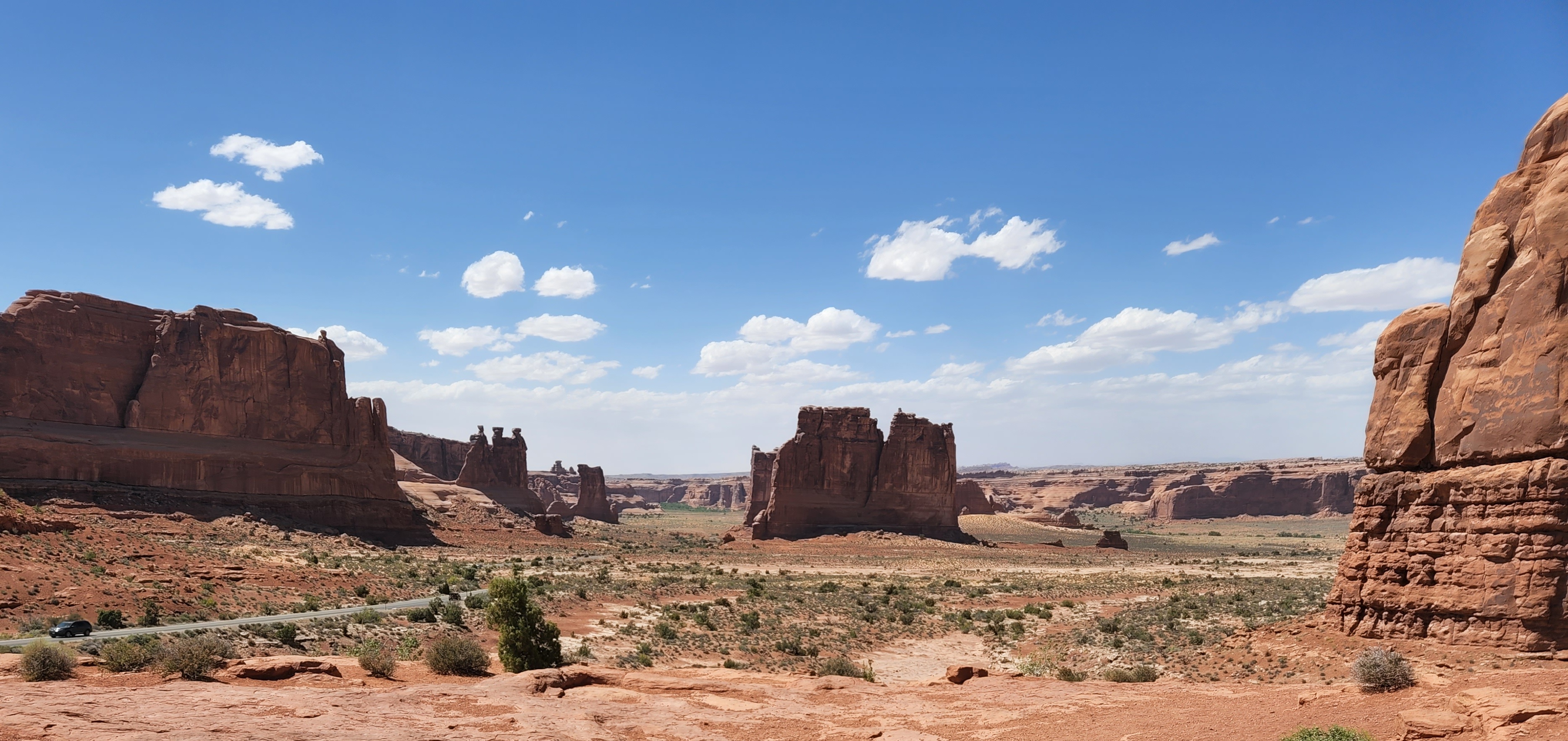
(Updated 7/31/22) We took a little trip to Moab, Utah, recently. As expected it is a charming but very touristy little town. It is a good starting point for exploring what erosion has done to the Colorado Plateau. Moab has the frenetic energy of a ski town where everyone is planning a good time or will die trying. A few miles to the north are the red sandstone fins of Arches National Park. The tall fins result from fracturing of the local sandstone formation from uplifting. The vertical fins are what’s left when the cracks in the formation erode away and widen over the eons, leaving narrow vertical slabs of sandstone. Over time some of these fins were hollowed out by erosion, producing arch formations.
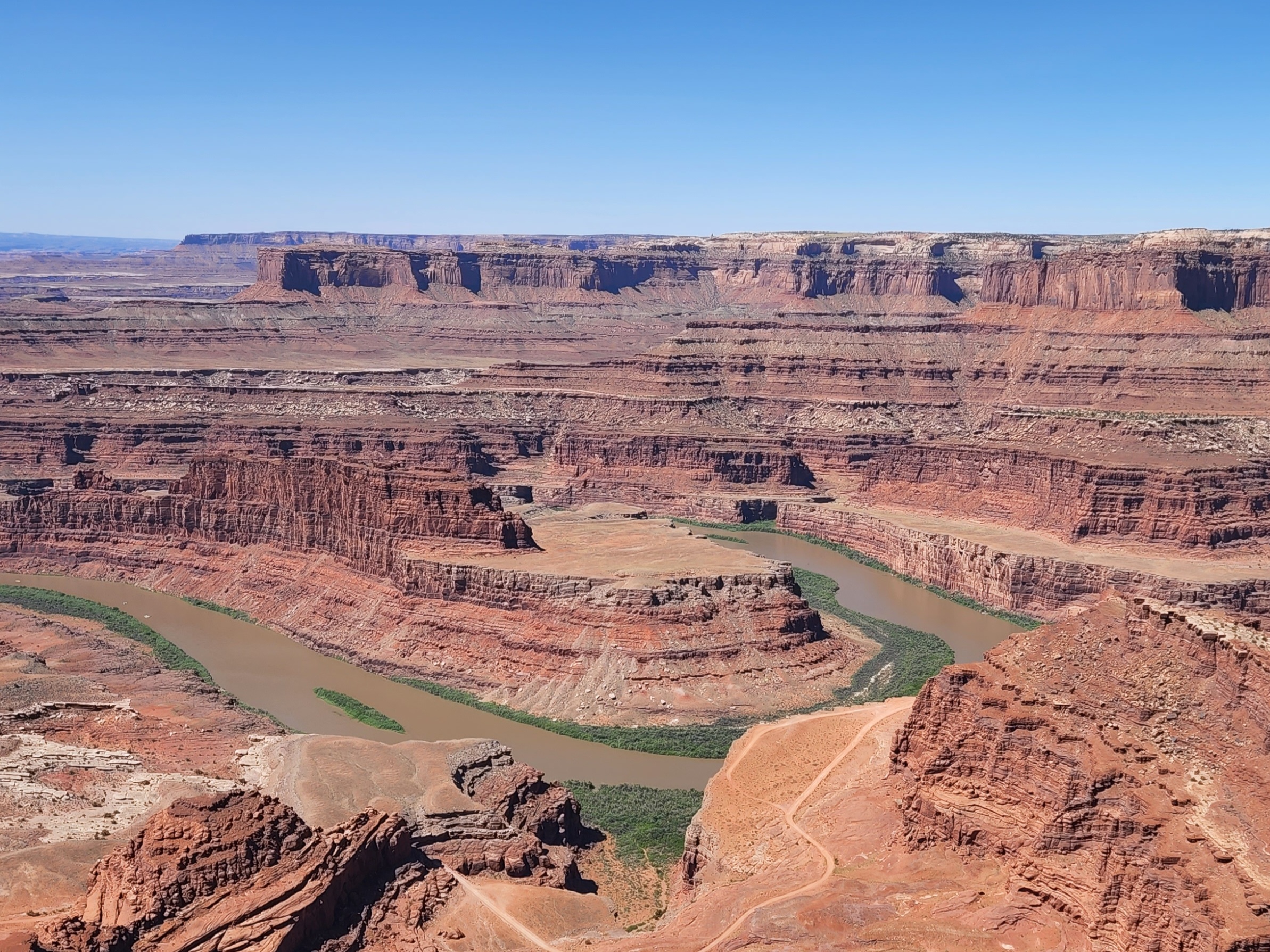
To the southwest a few miles is Dead Horse Point State Park. It has one main attraction which is a stunning overlook of the Colorado River and the northeast end of Canyonlands National Park. If you are in Moab it is worth a visit.
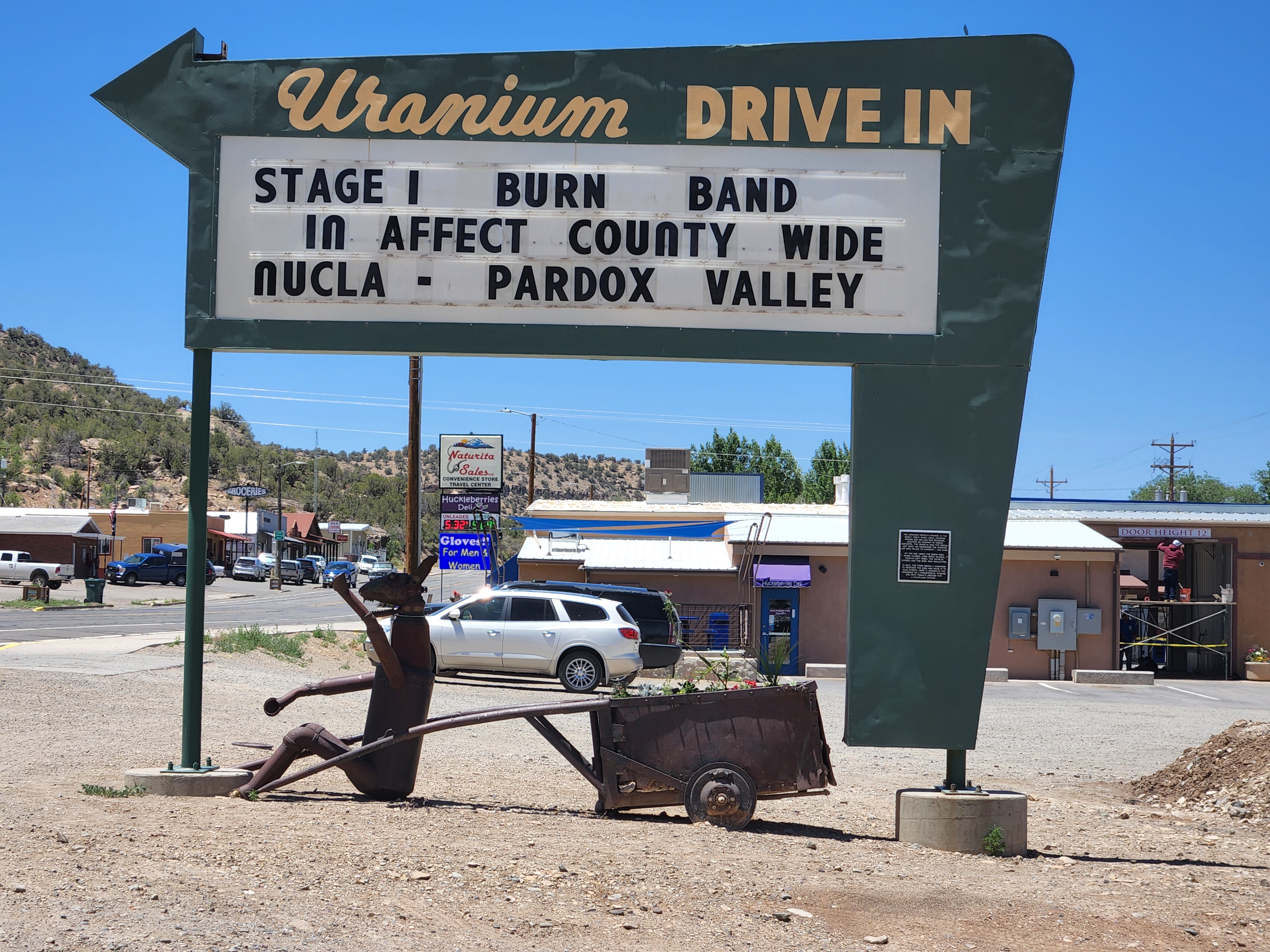
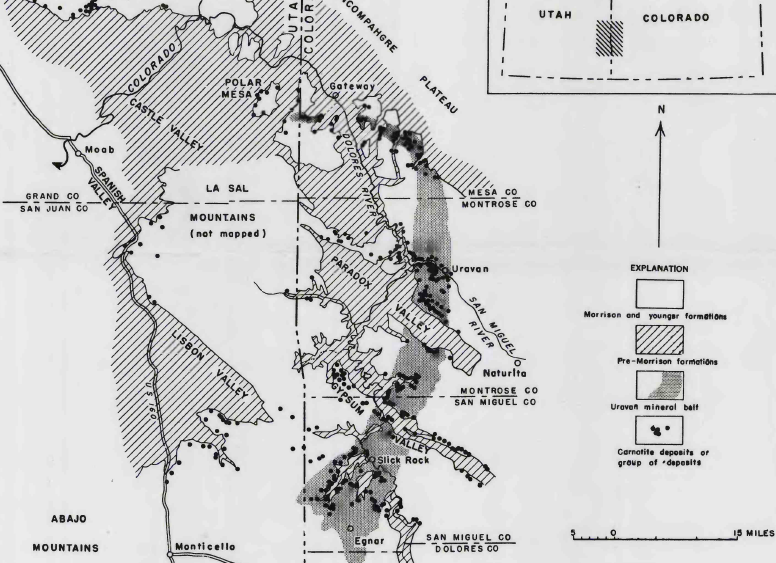
From Moab we traveled south and east across the La Sal Mountains and through the Paradox Valley in west central Colorado to visit Naturita and Uravan. Both are former uranium mill towns but Uravan is probably better known for it. The name comes from URAnium-VANadium ore found in the region. Moab also had a uranium boom and has a radioactive mill tailings legacy.
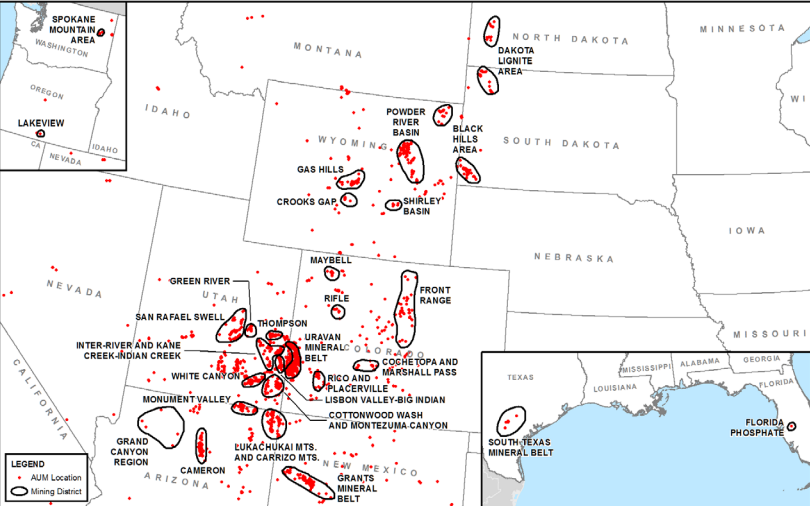
The settlement of what would later be called Uravan, the namesake of the Uravan Mineral Belt, began as a mill site for the production of radium. The Standard Chemical Corporation built the Joe Jr. Mill in 1912 next to where the town of Uravan would eventually be built. The market for the radioactive alkaline earth metal was very lucrative and it spawned a short-lived radium mining industry on the Colorado Plateau. Where there are rich occurrences of uranium you will find it’s decay product radium. At the beginning of the radium boom, starting in 1912, there were no known uses of uranium other than for making colored ceramic glaze or glass. The radium mill tailings would later be valuable for the uranium and vanadium content. As of 2011 radium is extracted from spent nuclear fuel.
The demand for American radium slumped in about 1921 due to cheaper imports from the Belgian Congo, now the Democratic Republic of the Congo (DRC). There was little activity until 1935 when the US Vanadium Corporation bought the milling operations for the production of vanadium. Earlier it had been discovered that a small amount of vanadium alloyed with steel produced a valuable steel alloy. A few years later, as part of the Manhattan Project the US government started a uranium boom with attractive prices for yellowcake, the uranium oxide precursor to uranium hexafluoride. While US Vanadium produced vanadium, it had a secret contract with the War Department to provide uranium yellowcake as well. Vanadium production was a good cover for the production of uranium.
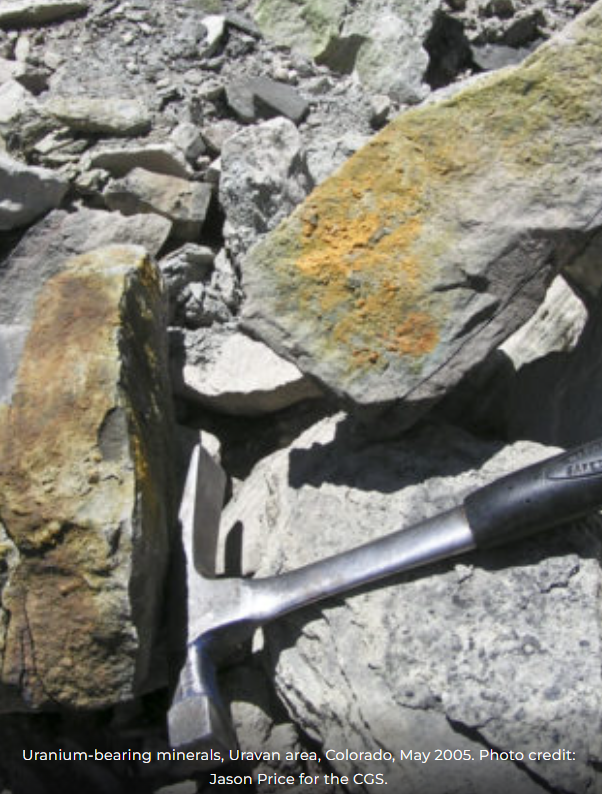
The mineral that was mined in the area was the bright yellow colored carnotite which was dispersed in sandstone. Carnotite is potassium uranyl vanadate hydrate, K2(UO2)2(VO4)2·3H2O. It is found in a 2 to 4 ft thick layer of the Morrison Formation, upper Jurassic, with an average concentration of 0.25 % U3O8 and 2 % V2O5. The deposits are usually found in clusters that have spotty distribution according to USGS surveys.
Notice that the U and V of the carnotite formula above is different from the U3O8 and V2O5 figures cited? A common way of expressing the composition of metals in an ore is to convert the various metal species into the metal oxide equivalents. This allows the direct comparison of different mineral compositions in terms of a common metal oxide equivalent.
Many towns thrived in the uranium belt during the boom time but began to collapse in the 1970’s and 80’s when the government quit buying yellowcake, U3O8. Naturita (pronounced ‘natta Reeta’) is such a town. While the town didn’t collapse, it did suffer when the uranium boom fizzled and employment disappeared with it. The town has an organization called the Rimrocker Historical Society with a decent museum that is worth a visit.
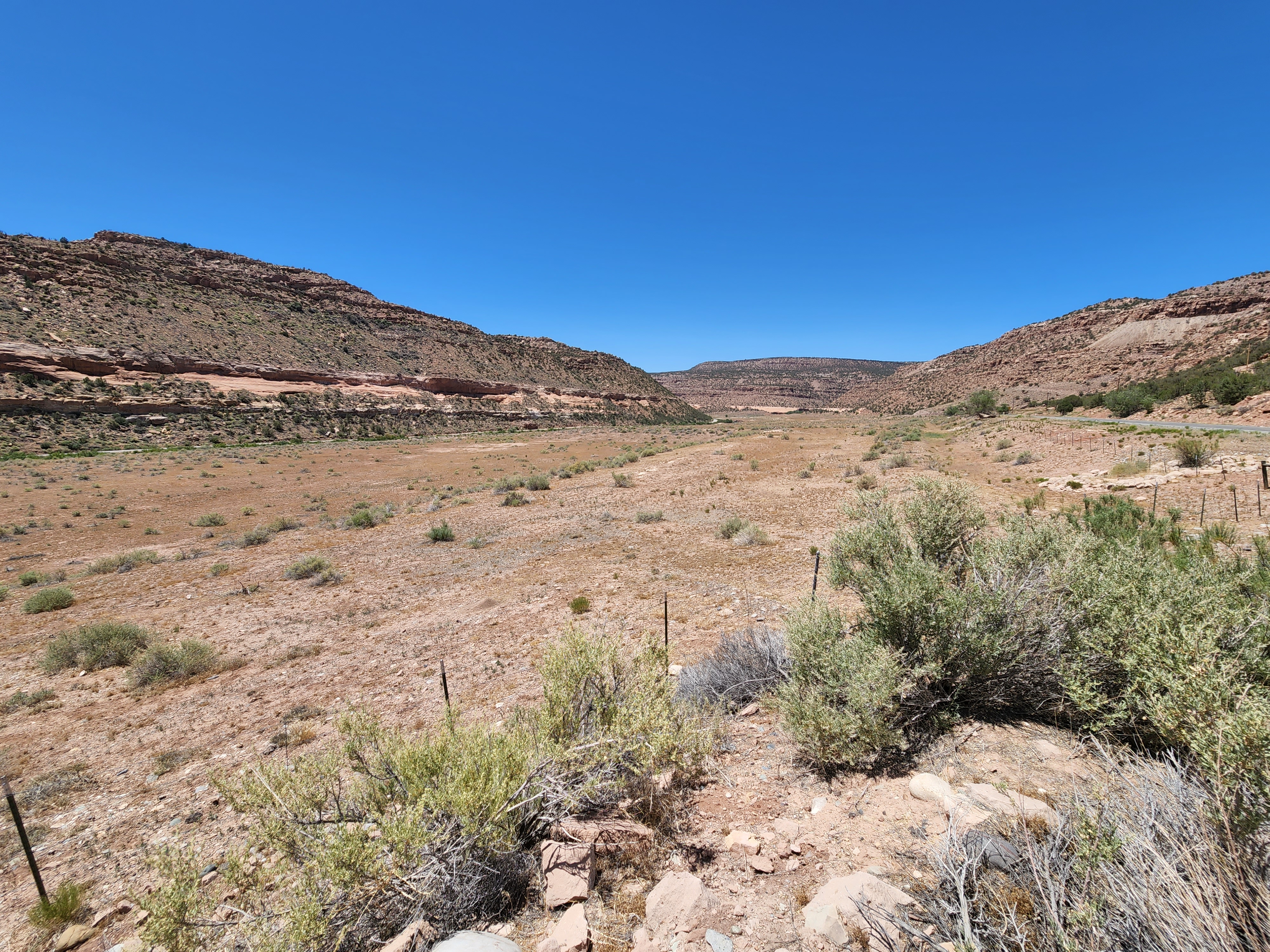
There is nothing left of the company mill town of Uravan. It has been bulldozed flat and completely buried. It is now a Superfund site ghost town. Radium contamination is a continuing legacy of the boom times in uranium country.

 Lamentations on Chemistry
_(32485416376).jpg)