Author Archives: gaussling

About gaussling

Gaussling is a senior scientist in the chemical business. He occasionally breaks glassware, spreads confusion and has been known to generate new forms of hazardous waste. Gaussling also digs aerospace, geology, and community theatre.

100-year concrete aging experiment ends in 2023

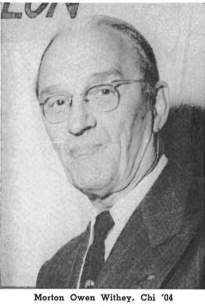
Somebody was thinking ahead at the University of Wisconsin-Madison in 1910. Civil engineering professor and later Dean of the College of Engineering, Morton O. Withey (1882-1961), began an experiment on the effect of age and environment on what was then a relatively new building material- concrete. Now, in 2023, a second 100-year batch of experimental castings are coming to completion.

Source: The Chi Phi Chakett, 1955

Withey, a 1904 Dartmouth graduate, began casting samples of various compositions of cement, sand and stone in 1910 when he initially cast 450 of the 6 x 12-inch cylinders. He cast other sets of samples in 1923 and 1937 for a total of over 2500 cylindrical castings.

According to the Wisconsin State Journal the 1910 samples were tested at the 100 year mark and the 1937 samples were tested at the 50 year mark. A comparison of the 1910 samples revealed that both the samples stored in the air and in water strengthened in similar increments for a time and thereafter the samples stored in water continued to strengthen. Exposure of the dry samples to carbon dioxide lead to chipping. The dry 1910 samples yielded to 75 tons of pressure whereas the wet samples yielded at up to 100 tons of pressure. This disparity is thought to arise from continuous hydration of the water-wet samples.

Since the time when the samples were cast, the chemistry of cement and concrete has changed to where the engineering data is no longer of interest for ongoing work. However, the experiment has broadened the envelop of known properties of various concrete compositions.

A wealth of interesting information on the properties of concrete can be found at the Wikipedia website.

Pluvicto (TM) PSMA-targeted radiotherapy

March 22, 2022. Swiss drugmaker Novartis has released Pluvicto, “the first FDA-approved targeted radioligand therapy (RLT) for eligible patients with mCRPC that combines a targeting compound (ligand) with a therapeutic radioisotope (a radioactive particle). Pluvicto is expected to be available to physicians and patients within weeks.

Pluvicto features a chelated Lutetium-177 ion (half-life 6.7 days) which is the source of the molecule’s radioactivity. Lutetium is the heaviest of the lanthanide elements and the name comes from the Latin Lutetia Parisiorum which was the predecessor to the city of Paris, France.

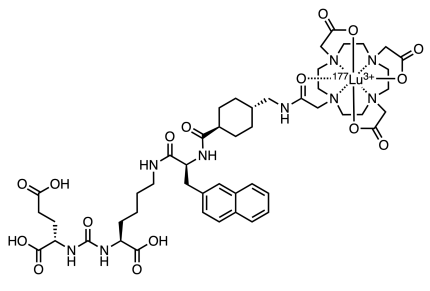
The drug has been approved in the US for the treatment of metastatic prostate cancer. Several things are notable about the Pluvicto molecule. The molecule contains a PSMA-specific peptidomimetic feature with an attached therapeutic radionuclide, where PSMA stands for Prostate Specific Membrane Antigen. Peptidomimetic refers to a small chain that resembles a stretch of protein forming amino acids. This peptidomimetic fragment, which interestingly contains a urea linker, is designed as the tumor targeting piece of the drug. Connected to it is a radioactive Lutetium-177 cation (below, upper right). The tumor targeting fragment binds to the cancer cell. While bound to the cell, the short-lived radioisotope undergoes two modes of decay. The Lu-177 emits a medium energy beta particle (Eβmax = 0.497 MeV) which is limited to a maximum of 2 millimeters of travel. This is the kill shot that will damage the attached target cell. The short path length of the beta ray in vivo limits the extent of surrounding damage by any given decay.

The other mode of decay is gamma emission by Lu-177. Gamma rays are much more penetrating than beta particles. They can be detected from the exterior allowing monitoring of dose and location of the drug. Even though gamma rays are more penetrating than beta rays, they produce many fewer ion pairs per centimeter as they traverse the tissue making them less effective in tissue destruction compared to alpha and beta particles. For instance alpha particles from therapeutic radionuclides like Radium-223 use to treat prostate cancer are much more destructive because they produce many ion pairs per centimeter. This is why getting alpha emitters like radon inside you is not a good thing.

A Google search of Pluvicto or Lutetium-177 will produce many good links of a technical and non-technical nature.

Pluvicto, PSMA-targeted radiotherapy
(lutetium 177Lu vipivotide tetraxetan)
for PSMA-positive prostate cancer
7.4 GBq (200 mCi) IV Q6W up to 6 doses

Novartis PluvictoTM (lutetium Lu 177 vipivotide tetraxetan)

Glutamine Antagonist Prodrug with Diazo Group

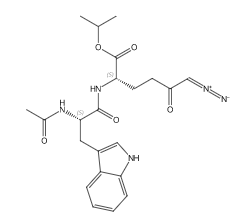
An anti-cancer prodrug called Sirpiglenastat (DRP-104) is in the news. The mode of action is in part the antagonism of glutamine metabolism. In a paper published in Molecular Cancer Therapeutics (DOI:10.1158/1535-7163.mct-22-0282), the authors describe the broader actions of the prodrug-

DRP-104 demonstrated significant antitumor activity as a monotherapy, which was further enhanced in combination with checkpoint blockade therapies, leading to improved survival and long-term durable cures. In summary, DRP-104 broadly remodels the tumor microenvironment by inducing extensive tumor metabolism effects and enhancing the infiltration and function of multiple immune cells distinct from those obtained by checkpoint inhibitor therapy.”

I’m an organikker but not a medicinal chemist. What struck me as interesting is the presence of a diazocarbonyl group on the molecule. This functional group isn’t often found on drug molecules. In the larger scheme of things, there is nothing extraordinary about synthetic chemistry with diazocarbonyl compounds as intermediates for drug molecules, but diazo groups on drugs or natural products is quite a bit less common.

Sirpiglenastat (DRP-104)

Another paper in the Journal of Clinical Investigation (open access, 10.1172/JCI148550) wrote-

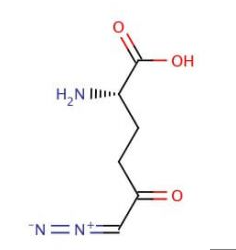
Broad glutamine antagonism with sirpiglenastat (DRP-104). Sirpiglenastat (DRP-104) is a tumor-targeted prodrug of the glutamine antagonist 6-diazo-5-oxo-l-norleucine (DON), which was identified in the 1950s as a potent anticancer agent (79). DON is a mechanism-based, irreversible inhibitor of all glutamine-utilizing enzymes (80), and thus broadly inhibits metabolic pathways that require glutamine as a nutrient source. The main impediment in the clinical development of DON has been its dose-limiting toxicities to normal tissues (81), especially the gastrointestinal tract, which is highly glutamine dependent (82). By utilizing promoieties that are preferentially cleaved by tumor-enriched enzymes (83), sirpiglenastat is able to deliver DON preferentially to the tumor, increasing its therapeutic index.”

6-diazo-5-oxo-l-norleucine (DON)

The glutamine antagonist 6-diazo-5-oxo-l-norleucine (DON) mentioned above was isolated from a streptomyces culture found in Peruvian soil. The Wikipedia article mentioned that DON works by alkylation at the active site of the glutamine utilizing enzyme (I’m not happy with this source, but a Google search for a primary reference was not successful). Due to systemic toxicity, DON is not currently in development.

Santos Awarded Chair at Prestigious University

The Department of Symbolism at Poltroon University in Guapo, Arizona, is proud to announce that Representative George Santos (R, NY) has been awarded the Arthur E. and Katherine T. Slush Foundation Chair in Mendacity Studies. University Distinguished Professor Santos will deliver a seminar on Friday, April 7, in the John Wilkes Booth Auditorium at 4:30 pm on the “History of American Mendacity”. Coffee and cookies will be served at 4:00.

Wyoming state senator back pedals on EV ban

An article in the Washington Post today reveals that state senator Jim Anderson who introduced the resolution to ban EV sales by 2035 in Wyoming is now saying that he doesn’t “actually” want EV sales phased out. He said that he has no problem with EVs at all. Instead, he and other legislators have a problem with California’s plan to ban gas-powered vehicles. Anderson said, his bill was “just a resolution saying, ‘We don’t like your bill that you did.’”

It is no secret that regulations made in California often spread to the rest of the country and this seems to be part of the issue for the tit-for-tat in the Wyoming statehouse. Plainly this is a real worry for some. But to fire up the legislative machinery and produce a resolution grumbling about another state’s switch to EVs seems to be a bit of impotent GOP grandstanding. I’m sure it plays well in the Cowboy State. No worries about this tempest in a teapot. EVs will share the road with gas and diesel pickup trucks in Wyoming and the US for a long time to come.

Wyoming wants to ban sales of new EVs by 2035

The Wyoming legislature has produced SJ0004 – Supporting the phasing out new electric vehicle sales by 2035. Below is a copy of the proposed bill. It’s just a joint resolution. Am I surprised that the square state sitting just north of my square state has produced this? Not in the least.

SENATE JOINT RESOLUTION NO. SJ0004

Phasing out new electric vehicle sales by 2035.

Sponsored by: Senator(s) Anderson, Boner, Cooper and Dockstader and Representative(s) Burkhart and Henderson

A JOINT RESOLUTION

for

A JOINT RESOLUTION expressing support for phasing out the sale of new electric vehicles in Wyoming by 2035.

WHEREAS, oil and gas production has long been one of Wyoming’s proud and valued industries; and

WHEREAS, the oil and gas industry in Wyoming has created countless jobs and has contributed revenues to the state of Wyoming throughout the state’s history; and

WHEREAS, since its invention, the gas-powered vehicle has enabled the state’s industries and businesses to engage in commerce and transport goods and resources more efficiently throughout the country; and

WHEREAS, Wyoming’s vast stretches of highway, coupled with a lack of electric vehicle charging infrastructure, make the widespread use of electric vehicles impracticable for the state; and

WHEREAS, the batteries used in electric vehicles contain critical minerals whose domestic supply is limited and at risk for disruption; and

WHEREAS, the critical minerals used in electric batteries are not easily recyclable or disposable, meaning that municipal landfills in Wyoming and elsewhere will be required to develop practices to dispose of these minerals in a safe and responsible manner; and

WHEREAS, the expansion of electric vehicle charging stations in Wyoming and throughout the country necessary to support more electric vehicles will require massive amounts of new power generation in order to sustain the misadventure of electric vehicles; and

WHEREAS, the United States has consistently invested in the oil and gas industry to sustain gas-powered vehicles, and that investment has resulted in the continued employment of thousands of people in the oil and gas industry in Wyoming and throughout the country; and

WHEREAS, fossil fuels, including oil and petroleum products, will continue to be vital for transporting goods and people across Wyoming and the United States for years to come; and

WHEREAS, the proliferation of electric vehicles at the expense of gas-powered vehicles will have deleterious impacts on Wyoming’s communities and will be detrimental to Wyoming’s economy and the ability for the country to efficiently engage in commerce; and

WHEREAS, phasing out the sale of new electric vehicles in Wyoming by 2035 will ensure the stability of Wyoming’s oil and gas industry and will help preserve the country’s critical minerals for vital purposes.

NOW, THEREFORE, BE IT RESOLVED BY THE MEMBERS OF THE LEGISLATURE OF THE STATE OF WYOMING:

Section 1.  That the legislature encourages and expresses as a goal that the sale of new electric vehicles in the state of Wyoming be phased out by 2035.

Section 2.  That the legislature encourages Wyoming’s industries and citizens to limit the sale and purchase of new electric vehicles in Wyoming with a goal of phasing out the sale of new electric vehicles in Wyoming by 2035.

Section 3.  That the Secretary of State of Wyoming transmit copies of this resolution to the President of the United States, each member of Wyoming’s congressional delegation, the President of the United States Senate, the Speaker of the United States House of Representatives, the governor of Wyoming and the governor of California.

Euphemisms This Morning

A collection of euphemisms from a single 30 minute meeting.

Cold eyes review– outside review

Get engaged– bring into the group

Out of pocket– gone

Dot eyes and cross Ts– tidy up details

Just to jump in– I’m interrupting

The old pot makes the best stew– try an old method

Reach out– contact someone

Get on the radar– pay attention to

Just a bit of corporate-speak here. Nothing out of the ordinary.

I have a collection of salty and scatological euphemisms from my days on the farm and while working in construction, but I keep them close to my chest. I think others are grateful for that.

FOOF – Dioxygen Difluoride and ClF3 Chlorine Trifluoride

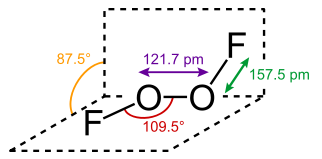
Just today, as the open door to my golden years stands gaping before me, I learned of a substance called dioxygen difluoride, FOOF. It’s also known as perfluoroperoxide at the NIST Chemistry WebBook site. Seems like I’m always the last one to the oxidizer party. This rather unhappy substance can be prepared as shown below. The word is that the orange-yellow solid is only stable below −160 °C.

O2 + F2 → O2F2 (electric discharge, 183 °C) Wikipedia.

2 O3F2 → O2 + 2 O2F2

Another synthesis can be found in a 1991 paper in the Journal of Fluorine Chemistry.


Image from Wikipedia. https://en.wikipedia.org/wiki/Dioxygen_difluoride. A mixture of fluorine and oxygen gas were heated to 700° C then, according to the abstract “rapidly cooled on the outer surface of stainless steel tubes. The tubes were refrigerated by a liquid oxygen bath pressurized to >7600 torr with helium. Six grams of O2F2 were produced in less than an hour.”

Derek Lowe mentioned in one post in his Blog In the Pipeline that FOOF was in the list of materials he won’t work with. Derek also mentioned chlorine trifluoride. A method of preparing this substance is shown below. This substance is a powerful fluorinating agent and reacts in hypergolic fashion with asbestos and sand according to chemist John Drury Clark. Clark wrote a book called Ignition! An Informal History of Liquid Rocket Propellants based on his experiences with rocket propellant research. Clark said that the great toxicity of ClF3 was the “least of its problems”. It’s ability to react in a hypergolic manner with nearly everything was a barrier to its use. It could be stored in metal containers that were first passivated with fluorine gas.

3 F2 + Cl2 → 2 ClF3

Uranium hexafluoride is produced with chloride trifluoride-

U + 3 ClF3 → UF6 + 3 ClF

According to Wikipedia, ClF3 is used to clean Chemical Vapor Deposition (CVD) chambers. Not surprisingly, prior to WWII the Nazis had experimented with ClF3 as a chemical warfare agent called N-Stoff. Production halted when the Red Army overran the facility in 1945. The substance was never used in war.

The “Effects of Nuclear Weapons”

About 45 years ago I picked up a copy of a book titled The Effects of Nuclear Weapons, 1977, edited by Samuel Glasstone and Philip J. Dolan and prepared by the US Department of Defense. As a plus the book came with a plastic circular slide rule that calculates weapons effects as a function of explosive yield and altitude. Being interested in nuclear energy and being a slide rule collector, this was a thrilling moment. I found it at the local Goodwill store. Still have it.

The book goes into all of the phenomenology of a nuclear detonation as well as the effects on the surrounding environment. It describes the blast effects, thermal radiation effects, crater dimensions, nuclear radiation and fallout, electromagnetic pulse and biological effects. Apparently, there was a lot of curve fitting of data over the years of weapons research that produced mathematical approximations allowing a calculating device to be made.

To be blunt, being overenthusiastic about weaponry has never struck me as, well, healthy. But I have always been fascinated by scientific extrema. Biggest, fastest, smallest, heaviest, hottest … you get the picture. What happens near the boundaries? Nuclear explosives and explosions certainly produce extreme effects.

I lived during the cold war up to the point where I finished my postdoc the same time as when Gorbachev dissolved the Soviet Union. The international dynamics of Soviet Cold War politics was interesting to follow at the time. Having some familiarity with nuclear weapons effects helped to accrue a bit of perspective on the nuclear threat element of the whole unfortunate time.

The NOTAM Issue

Recently, the FAA had a fiasco with its NOTAM service. Departures were halted system-wide and there was general fear and loathing in the air transport industry. According to Flying magazine, in a preliminary statement the FAA is claiming the cause of the shutdown was related to a damaged database file. The purpose of the NOTAM is to provide important and current information to pilots. There have been facile comparisons to the previous fiasco with Southwest Airlines. Easy does it there folks.

NOTAM used to stand for Notice To Airmen. It was changed to Notice To Air Missions. I guess this is now gender neutral.

Meg Godlewski at Flying magazine writes-

NOTAMs provide essential information to pilots about the abnormal status of a component of the national airspace system, such as ground-based navigational system failures at airports, GPS outages, and facility closures. Pilots are required to check for NOTAMs pertinent to for their departure airport, route, and destination as part of preflight planning.

The content of a NOTAM is written in a highly abbreviated manner. This continues from the days of the teletype machine where brevity was important due to the limitations of communication technology. An example of a NOTAM from an FAA website is shown below-

e. Changes to usable runway length and declared distances

EXAMPLES-

…RWY 19 THR DISPLACED 300FT MARKING NOT STD. DECLARED DIST: TORA 6827FT TODA 6827FT ASDA 6827FT LDA 6527FT. ….
…RWY 01 DECLARED DIST: TORA 6827FT TODA 6827FT ASDA 6527FT LDA 6527FT. …

NOTE-

Runway 19 threshold is displaced 300 feet, therefore the Runway 19 landing LDA is shortened by 300 feet. The LDA and ASDA for Runway 1 are also shortened by 300 feet.

EXAMPLE-

…RWY 05/23 NE 500FT CLSD. DECLARED DIST: RWY 05 TORA 7002FT TODA 7002FT ASDA 7002FT LDA 7002FT. RWY 23 TORA 7002FT TODA 7002FT ASDA 7002FT LDA 7002FT. …

NOTE-

Construction on Runway 05 requires 500 feet to be closed to protect a construction area thus changing declared distances to Runways 05 and 23.

EXAMPLE-

…RWY 08/26 CHANGED TO 10000FT X 150FT. DECLARED DIST: RWY 08 TORA 9000FT TODA 9500FT ADSA 9000FT LDA 9000FT. RWY 26 TORA 9000FT TODA 9000FT ASDA 9400FT LDA 10000FT….

Notice that each example has a “translation” in plain English. It seems like there is no longer a technology-related need for this kind of abbreviated and cryptic text.

In government there is a general hesitancy to fund upgrades to infrastructure, unless maybe it relates to defense. An upgrade of the NOTAM system isn’t like executing a moon landing or splitting the atom. It is plainly needed IT work and when the congress gets through parading their indignity in front of the cameras, they should be able to get started on funding and mandating a fix in the system.