Gaussling is a senior scientist in the chemical business. He occasionally breaks glassware, spreads confusion and has been known to generate new forms of hazardous waste. Gaussling also digs aerospace, geology, and community theatre.
After viewing an alarming report on YouTube concerning the shady situation with Microsoft’s business strategy in general and Microsoft Windows 11 in particular, I’ve decided to cross the Rubicon to Linux Ubuntu. It’s not just about what I’ve learned about Microsoft’s intrusion into my personal computer’s files. My latest update of MS Outlook ab.so.lute.ly stinks. My relearning and expectations of Windows 11 Outlook is contaminated by my prior familiarity with the previous rev. The blurred familiarity of the new version is twisted with years of habit and expectations. I’ve had enough.
I’ve been using Microsoft products since the Jurassic age of home computing, ca 1986. I refer to both “IBM” machines of that age and Apple’s McIntosh. As a result, both my entire professional and personal computer lives are deeply invested in Microsoft products, MS Word especially. I’ve heard that transfer compatibility going from Word documents to whatever Linux app is problematic, except for pdf files.
My plan is to experiment with an inexpensive laptop from Amazon with Linux Ubuntu already installed. The goal is to make a parallel assessment of Ubuntu with my personal and consulting work on MS Windows.
Remember the scene from Saving Private Ryan where a German soldier is killing an American soldier by struggling to push his bayonet into his chest on the upper floor of a building? While the German soldier is pushing the blade closer and closer, all the while he is attempting to quell the American’s panic with soft words, shushing and a pleading for him to stop resisting. It’s very disturbing and reminds me of the banality of evil.
Many companies, including Microsoft, are constructing business models that remind me of this disturbing scene. They are encouraging customers to switch from Windows 10 to Windows 11 by aging out Windows 10 updates. In doing so, Windows has become a subscription service rather than your personal property in the privacy of your hard drive. Instead of buying MS windows once, you are now paying for a subscription and allowing MS to examine your files. What do they do with what they may find? Overall, they want to turn your proclivities and interests into cash through selective advertising and sales of marketing data to third parties.
They are trying to force users to use their cloud storage where they will have access to all of our data. Worse yet, their AI “helper” encourages users to ask for help that reveals what the user is thinking. That help can be in the form of rewriting your text or actually producing content for the user. The AI system resides in one of their data centers and who knows what kind of analysis and business planning that results in.
Why is it that many people seem to believe that government is inherently bad and businesses are inherently good, or at least preferable? Why distrust government yet throw your faith into free market capitalism? At the very least, the US government as it has been operated up to now is often regulated to afford at least some transparency and accountability. Does business have such transparency? Politicians can, in theory, be voted out for corruption and malfeasance. But what about the shitheads who control a great many large corporations? Other than the limp-d**k approach of refusing to buy their products and services, what other leverage is there? For example, recent history is full of examples of corporations badly polluting the environment, but even with proof in hand, citizens must fight for years at high personal cost to force accountability on the polluters. Or, recall the trouble with Purdue Pharmaceuticals and their potent and addictive OxyContin. They knowingly profited from their product for years fully knowing it’s addictive potential. Even widespread addiction and death weren’t trouble enough to cause a prompt regulatory response from the gov’t. Here both Purdue and government officials were painfully reluctant to respond. Finally, there was the battle between Erin Brockovich and Pacific Gas & Electric (PG&E) over hexavalent chromium groundwater contamination in Hinkley, CA. Detection of hexavalent chromium isn’t difficult, but nailing down accountability is, especially when it is a citizen vs a large corporation.
This approach is really about shooting fish in a barrel and is increasingly appearing on social media with advertisers pushing subscriptions rather than outright purchases. Amazon does it as well with certain food stuffs. I understand the business motivation to exchange a single larger sale for monthly payments of smaller dollar amounts over time. This works best when charges are hidden in your credit card statements disguised as lengthy character strings rather than intelligible names. Also, that particular human frailty of losing track of what you are paying for by credit card is a real issue for people. Do we actually think that the C-Suite knobs who oversee their sales operations haven’t thought of this? They know exactly what they are doing.
Ostensibly, the “genius” of the free market is to maximize the efficient use of capital. Obviously, history bears (or bares?) out that there is much evidence for this assertion. The downside of this is that decisions contrary to your personal choice are made by others who decide what efficiencies that you will pay for while they retain their margins.
Economics isn’t a type of physics resting on the space-time continuum. It is a social science that uses some math for persuasion.
Do you want to produce a product that results in a few single-item sales of a dollar each or a product that produces a larger number of nickels over time? Obviously, it depends on the product.
Like hundreds of millions of others, I have helped to keep Microsoft afloat and remain a great investment for their stockholders. We’ve done our part. But now it is time to say “so long and thanks for all of the fish.”
America’s president has applied for a trademark on “Trump” in Feb. 2025. Everywhere he plasters his name, it will serve as a name marker and a brand name. Selling his name and brand or possibly leasing it has been an important business activity for Trump for quite a while.
According to the US Patent and Trademark Office (USPTO), personal names may be trademarked only if-
“Individuals have a right to privacy and a right to control how their name, likeness, and identity is used. If your trademark appears to include the name, signature, or portrait of a particular living individual, your trademark can only be registered with the written consent of that individual. “
There is no doubt that a trademark will be issued since Trump has oversight of the Department of Commerce. So, atop the highest hill in the land, the President’s brand name will stand majestically like old Glory in front of God, the flag and Florida. Any reference to him by name will also serve as brand advertising.
Navy Secretary John Phelan announced that “The future Trump-class battleship – the USS Defiant – will be the largest, deadliest and most versatile and best-looking warship anywhere on the world’s oceans…” So, is the Trump name here his family or brand name? The tell-tale could be a (TM) symbol on the battleship.
Apparently, the recent failure of the Zumwalt Class of destroyers doesn’t dissuade anyone, especially the shipyards. The three Zumwalt-Class ships produced cost $8 billion each. Mike Fredenburg, writing for the National Review said-
The Zumwalt is an unmitigated disaster. Clearly it is not a good fit as a frontline warship. With its guns neutered, its role as a primary anti-submarine-warfare asset in question, its anti-air-warfare capabilities inferior to those of our current workhorse, the Arleigh Burke-class destroyers, and its stealth not nearly as advantageous as advertised, the Zumwalt seems to be a ship without a mission.
The readers can see for themselves what Trump said in his public disclosure of the Trump-Class of “battleships”. He made a point of assuring the public that he will be monitoring the aesthetics of the ship’s design.
Given all of the recent developments in anti-ship missiles and the successful use of drone boats by Ukraine, is commissioning larger targets surface ships such a smart idea? Does anyone think China has been sitting in its hands while drone warfare blossoms in the Putin-Ukraine war? They know full well the capabilities of the US Navy and are arming themselves to sink any ship that interferes with their annexing of Taiwan, the Taiwan strait and the South China Seas. America’s technological edge over China must be paper-thin if it exists at all. Do you remember all of those Chinese students and postdocs educating themselves in the USA during the last 40 years? Guess what they have been busy doing since they returned home with their degrees.
China recently revealed a new type of hypersonic antiship missile called the YJ-21 missile at the Zhuhai Air Show 2024. These missiles are designed to attack carrier groups. This high-speed, 2 stage, solid fuel missile is said to exceed Mach 6 with a ballistic trajectory (!!) and velocity that will challenge US antimissile systems. Its warhead system is said to be tailored for attacking large surface ships with a variety of warhead packages.
By “large ships” they mean aircraft carriers specifically and carrier strike groups generally. I assume that “ballistic trajectory” means near-vertical trajectory to the target. Given that the US Navy relies on the overwhelming threat of its carrier groups, this missile system is obviously designed to be maximally effective against the US Navy. Reportedly the missile can be air, littoral or blue water launched.
The upcoming Trump-Class of “battleships” will reflect Trump’s selection of glamorous naval architecture tastefully appointed with abundant gold leaf. If we’re lucky, Melania will design the uniforms with her dark, minimalist couture. Imagine the Mandarin AI guiding the hypersonic Chinese missiles straight down, penetrating the flight decks of our carriers. Will they document in the remaining milliseconds the tastefully appointed ship and note the shame of it all that such elegance is now nothing but burning and drowning sailors, shredded and twisted metal as well as still-functioning nuclear reactors gliding down to the dark and silent abyss below. Will there be unused nuclear warheads resting on the ocean floor? Possibly.
As with the Hollywood and it’s 80 years of WWII war movies, perhaps China’s film industry will portray the WWIII conflict with their own versions of the Hero’s Journey.
To all the readers of Lamentations on Chemistry, Happy Holidays, Merry Christmas, С Рождеством, 圣诞快乐, عيد ميلاد مجيد, Feliz Navidad, חג מולד שמח, Wesołych Świąt, Krismasi Njema, (کریسمس مبارک), मेरी क्रिसमस, Happy Hanukkah, Gleðileg Jól, Maligayang Pasko, Vrolijk Kerstfeest, and 메리 크리스마스, Wadda Din Mubarak, Happy Kwanzaa, Feliz Natal, Happy New Year, Peace, Love and (fill in the blank).
Be of good cheer! Beneath all of the chaos, turmoil and ill will rests a beautiful world of natural wonder and fascination. Stop occasionally and take in the views of our gorgeous planet, ponder our amazing human consciousness and let your good will wrap around the web of life.
The Fearless Overlord of the American Oligarchy, DJT, has resurfaced the Greenland question again. Louisiana’s Republican governor Jeff Landry has been anointed by Trump to a volunteer position as Special Envoy to Greenland. This move was promptly condemned by both the EU President and Denmark, unsurprisingly.
Resembling the many tragic leaders in history, Trump keeps nattering on about the need to annex Greenland for national security. The claim of national security is a kind of universal excuse that is solemnly expressed but rarely explained. We understand that an explanation might reveal the poker hand we are playing- We get it. But like a when a hammer looks around and sees only nails, what does a property developer see when he pans his orange face across a large, underdeveloped island? Bingo!!
We shouldn’t forget that Trump has been in the business of selling his name as a brand for a long time. He knows the value of an attractive brand and is not the least bit shy about plastering his family name as far and wide as possible. Look at the recently renamed “Trump Kennedy” Center in DC where he is the CEO. His coterie of sycophants are constantly trying to outdo each other with ever increasing levels of ass-kissing. Whatever shame there might have been in self-promotion is long gone.
The thing is that when a businessman who was in the business of promoting his brand begins to label government property with that brand, isn’t that a conflict of interest? His escape must be that others are slapping the brand on buildings, not him. There isn’t a single milligram of shame in him that would request that such naming happen only after he passes.
An interesting thing is that while the Trump administration is officially contemptuous of global climate change, a particular result of climate change must come about. In order to extract mineral wealth from below the ice –whatever that might be– global warming will be needed to melt the Greenland ice cap to expose that mineral wealth.
However, the motivation goes far beyond minerals. Access to the Arctic Ocean and whatever crude oil that may be pumped out from below the ocean floor is up for grabs. A US shoreline on the Arctic Ocean supports arctic military access as well as access to the new Northwest Passage that is opening up to commerce.
A surprise to precisely no one, annexing Greenland is about a new phase of American hegemony and extending the reach of military power. Perhaps Greenland is the new Manifest Destiny in the eyes of the rancid White House clique running American government just now.
I previously mentioned American hegemony. The USA has been a leading world power since the conclusion of WWII. There are presently two other powers who desire this status and are happy to help the USA to topple over as hegemon. The post WWII track record of the American hegemon is spotty at best and since the election of Trump, has begun an abrupt nosedive.
Trump’s slogan “America First” is catchy and patriotic-sounding and appeals to us as citizens of an isolated country bounded by two expansive oceans. Unlike a great many other countries, the USA has a temperate climate, warm deepwater ports, and abundant fertile farmland, minerals and lumber. Importantly, the USA had a capitalistic economic establishment favoring industrialization as a mostly democratic republic. In combination, all of this allowed the USA to rapidly tool-up after Pearl Harbor and back its fighting forces with massive quantities of war materiel and enter WWII cocked and loaded for bear. Fascism was defeated in Europe and the Pacific, and we even helped our defeated enemies get back on their feet.
In my lifetime, I’ve heard many fellow citizens try to explain our victories in WWII as the result of some unique attribute of American clean living and superior moral fiber. Never mentioned are the countries who also had clean living and high moral fiber but were unable to summon the resources to assemble a powerful war machine. American successes in WWII greatly relied on abundant natural resources, an existing industrial base and oceans that prevented tanks and troops from marching across our borders.
Today, the tell-tale voices of fascism are surfacing around the USA. People who had previously voted republican and strutted around claiming to be patriotic citizens are now saying that maybe democracy doesn’t work and an authoritarian government is needed. Let Trump be Trump!
WWII veterans and their offspring have come, passed away or retired by now in 2025. They brought a kind of optimism and energy to the growth of the USA. Technological modernism was the answer to all the ills of society. What was needed was an electrified, push button life of convenience.
If you look deep enough into virtually any peacetime period of American history, you’ll find reports of conflict, malfeasance, criminality and a myriad of dirty political dealings for the time. This represents the true baseline, ground state of America. This is bumpy ground but normal. My point is that before we indulge in self-flagellation and unrealistic expectations of our society, we should have a good think about what “normal” is actually comprised of. The inability to deal with exponential growth, uncertainty and a bit of disorder only cripples us.
Putin has said on numerous occasions that the West wants what Russia has. Seriously? You mean permafrost? -61 oF winters. A border with China? A multiethnic and antagonistic population? A shortage of warm, deepwater ports? A long history of brutal authoritarianism?? Its gleaming history with nuclear energy and vast stretches of land contaminated with radioactive soil. Yes, we in the West stare longingly at Russia for this from time to time … NOT!
Oh yes, Pootie-Poot (nickname by George W. Bush) must mean natural resources like petroleum, platinum group metals, gold, titanium, uranium, diamonds, etc. These are valuable natural resources but at what cost for a conquering power. Too high by half would be the conclusion by rational people. Recall the problems Hitler had with Operation Barbarossa. Or the disaster Napolean fell upon with his ill-conceived invasion of Russia. Like any modern state, Russia has much in the way of weapons to bear upon its enemies. But what Russia has in great abundance are brutal winters and a muddy spring season to immobilize invaders.
Like any authoritarian worth his salt, Putin continues to make the case for tightening personal liberty in exchange for layers of “state security”. Citizens have been conditioned to avoid politics in exchange for politics avoiding citizens. It seems to work.
Like nearly everywhere else, Russia is populated by good and decent folks. I’ve been there and have experienced generous hospitality from ordinary citizens in their cramped apartments. How we could be mortal enemies is beyond me.
The people we now call Russians are descended from tough people who survived conquest and occupation by many hostile invaders over the many centuries. Somehow, they even chased out the Mongols and later overcame the mechanized invasion of Nazis. As the Red Army chased the Nazis westward in WWII, they burned down their own villages and even executed Russian citizens who failed to fight and die. My Russian language professor was a Ukrainian kid whose family evacuated Ukraine for Europe in WWII to flee the advancing Red Army.
The title of this post asks, “Who on God’s Green Earth Wants to Invade Russia?” I’d offer that to try would be at best to invite a nuclear exchange, terrible hardships and losses for any invasion force. It would be a supremely bad decision. And even if an invader prevails, what have they gained? A population dedicated to guerrilla warfare and civil disobedience. Sounds like a nightmare.
The consequences of invasion and occupation of any large region would produce guerrilla warfare and civil disobedience by the surviving conquered population.
The West could benefit by making it known out loud to the Russian people and the Kremlin that we understand that an invasion or occupation of Russia by a foreign power would be a suicidal calamity for any invader. The usual rancid Kremlin propaganda must be countered with words of strength, peace and prosperity for all people. We invite Russia to be a member in the community of peaceful states who participate in open commerce and tourism.
Yes, it’s bloody obvious and is itself a kind of propaganda we should be repeating loudly and endlessly. Effective propaganda must be repeated and drummed into people’s thought processes. The US and Europe should be repeating the message of friendship and peace in order to knock down Kremlin doors, grab the bastards by the throat and give them a big wet kiss. It would be a peace and love offensive. It is the one thing we haven’t tried yet.
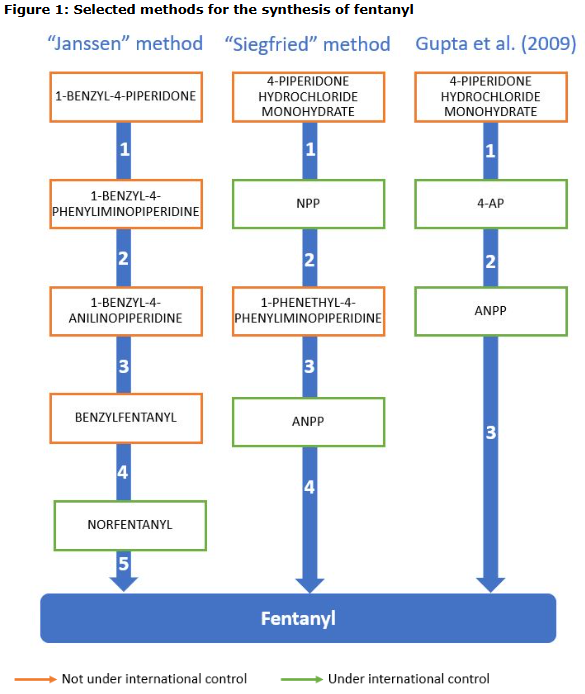
US President Donald J, Trump has declared that the illicit synthetic opioid Fentanyl has been declared a weapon of mass destruction, WMD. Fentanyl precursors have been added to the Convention against Illicit Traffic in Narcotic Drugs and Psychotropic Substances of 1988. This WMD status is from casting about for justifications to be at war with Venezuela or other countries.
When you are in control of the world’s most powerful military, there must be tremendous temptation to use it to clobber someone. When you’re a hammer, everything looks like a nail.
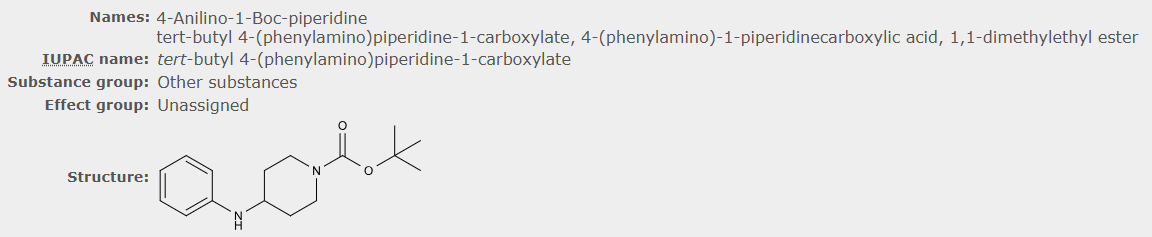
Intermediates added to the Convention against Illicit Traffic in Narcotic Drugs and Psychotropic Substances of 1988:
“In 2017, two main precursors namely N-Phenethyl-4-piperidone (NPP) and 4-anilino-N-phenethylpiperidine (ANPP) were placed under international control. Since that time, traffickers have adapted their approach to use alternative precursor chemicals for fentanyl manufacture. Three of these precursor chemicals, norfentanyl, 4-AP and 1-boc-4-AP, have now been placed under international control.
The WMD designation is clearly about legally mobilizing the military to interdict transport of fentanyl into the USA. The choice of fentanyl as a drug to manufacture by the cartels comes down to the extremely high potency and the relative ease of manufacture. The high potency, 2 milligrams for a lethal dose, means that it can be highly diluted with another drug and add to the overall potency. The high potency also means that a great many doses can be transported in small containers that may be easier to disguise and transport.
The obvious downside to fentanyl distribution is for the user. How careful are the people who spike intermediate quantities of substances, e.g., heroin or coke, so as not to provide a toxic product when repackaged for individual doses? Fentanyl should be redesignated as a highly potent toxic substance outside of the health care industry. As a drug distributor you probably don’t want your customers falling over dead from your product. That’s bad for repeat business. Regardless, user safety is unlikely to be a major concern to the distribution chain.
Sodium borohydride (NaBH4) can be used in the synthesis of fentanyl, so it is on the DEA Special Surveillance List. Sodium borohydride is a very useful and relatively safe hydride reducing agent that I and hundreds of thousands of others have used over the years in chemical synthesis. Sorry to see possible restrictions on its use.
The problem with this “designation of fentanyl and precursors” is that making a designer drug not cited in some list based the structure of fentanyl is that potent analogs can be dreamt up and produced if the right raw materials are available. Any organic or medicinal chemist should be able to come up with a list of candidates. Using existing drugs as a rough guide, producing obscure analogs is a skill set used by pharma companies frequently: Methyl, ethyl, butyl, futile … as the saying goes.
Wouldn’t it be nice to make some headway on the demand side too?
Fentanyl anecdote-
A few months ago I had surgery that involved my being anesthetized with fentanyl. I’ve been dosed with fentanyl several times and can report that it works well. What I didn’t note until the last instance was that it caused my face to itch badly for about 1 hour after surgery. Turns out this is a normal side effect and is not harmful. I had to wonder if addicts whose heroin was spiked with fentanyl had to suffer from both opioid-caused constipation and an itchy face. They have my sympathies there.
Being a dopamine addict with a persistent Fear of Missing Out (FOMO), I spend far too much time scrolling on social media. Today I ran into a thread about the shelf-life of American distilled liquors in Canada. It seems that the Canucks find themselves heavy with American distilled spirits after the decision to stop their sales in Canada.
The question was about the shelf life of distilled spirits, particularly Kentucky Whiskeys, etc. There is much hand wringing by Canadian liquor store owners in the frozen north. What are they to do with expired liquors which they have or will have in abundance?
Whiskey (or equivalently “Whisky”) is substantially comprised of ethanol and water. Flavor components include esters, aldehydes, ketones, phenols, and other organic molecules. Distilled and concentrated ethanol, such as Everclear, is diluted to the desired proof and then stored in wooded barrels. The much-praised aging process is really about extracting flavor chemicals from the charred wood of the barrel.
Of copper and sulfur
The aggrandized folksy-woodsy wisdom of the distillers of whiskey is a trifle exaggerated. The use of copper stills is often trotted out to convince the public there is closely guarded secret knowledge in the production of whiskey. According to this link, the use of copper in distillation equipment early was largely due to the availability and ease of shaping and forming copper in the fabrication of distillation equipment. Additionally, copper has truly excellent heat conductivity which aids in both heating and cooling. Our friend, Mr Google, says that copper absorbs the sulfur fermentation components from the fermented mash. Well, copper and sulfur do have mutual attraction as evidenced in copper minerals and ores. It is reasonable to expect some amount of contamination of copper surfaces by sulfur containing components. On basic principles, with exposure to heat, air and sulfur, the copper surfaces can also be expected to be passivated eventually, reducing effectiveness in sulfur removal. To date I’ve heard nothing about this.
Back to regularly scheduled programming
The industry I spent most of my career was specialty chemicals. We used organic solvents exclusively. The word “organic” just means carbon-based. The question of shelf-life was rarely a riddle we needed to noodle through because of rapid turnover. We did take storage precautions with ethereal solvents because of the well-known peroxide hazard.
Some bacteria are aerobic, requiring oxygen to survive. Others may be strict anaerobes, growing only in the absence of oxygen. Others may be facultative meaning that they can grow with or without oxygen. Bacteria can be in a vegetative state meaning that they ae actively growing and reproducing cells. Some bacteria are spore forming meaning that they can enter a dormant state, reactivating when environmental conditions are right. In general, vegetative bacteria are active and spores are inactive. Vegetative bacteria can be killed with heat, chemicals or radiation. Spores are partially dehydrated and resistant to heat, chemicals or radiation.
Both the vegetative and spore forms of bacteria can reside in liquids, surfaces, on biological tissues or in suspended droplets in the air. Freshly pasteurized milk can be contaminated with bacteria only to start the growth cycle again. Such contamination can come from packaging equipment, empty packaging containers, or by sloppy handling by workers. In our plant, milk packaging was sanitized with a quick spray of hydrogen peroxide prior to filling. But hydrogen peroxide isn’t a universally potent sterilization food grade chemical. We once had bacterial contamination getting into our fluid milk after packaging. It puzzled everyone but me. At the time I was enrolled in undergraduate microbiology and was familiar with Pseudomonas aeruginosa. This organism forms blue colored colonies and released a fruity, not unpleasant odor.
In the dairy lab, we routinely plated all products in agar petri dishes at 15 process minute intervals and incubated them. Suddenly that day we were finding green colored plates, but with the sweet P. aeruginosa odor. Then I realized that blue bacteria mixed in with yellow agar would appear green. I borrowed some specialized growth media from the university for clinching the identity and we nailed it: P. aeruginosa was only weakly pathogenic, limited to the sick and the elderly. We disposed of the contaminated stretch of the production run and sanitized very aggressively. This solved the problem. Better living through science. However, I quickly received a vigorous tongue lashing from the plant manager for using advice and specific growth media from my micro professor. Still, we solved the problem, haha.
Shelf-life or product expiration depends entirely on the particulars of any given substance. For instance, ethers in general may have a shorter shelf-life than hydrocarbons due to organic peroxide formation. This is especially true if the container has been opened and air exposure has occurred. Remember that peroxide quenching additives like BHT are stoichiometric in their function and may be consumed to exhaustion over time by air infiltration.
There is expiration due to microbial growth including bacteria, yeasts and mold, as well as chemical degradation of substances. Then there is expiration due to liability containment where a producer won’t guarantee quality indefinitely. Instead, the producer may use a tried-and-true in-house approach or SOP defining some arbitrarily chosen, rounded number period like 3 or 6 months, 1 year or longer. The food industry settles on freshness dates based on knowledge of their product aging data. Over time a food item may naturally become inedible or unattractive in appearance for several reasons. This is easier to measure.
Dairy product expiration
For instance, in the dairy processing plant all products had a labeled expiration date. Milk should be safe to drink up to 1-week past code date, but only if it hasn’t been allowed to warm to room temp (rt) by sitting out. The shelf-life dropped to about 1 day if it did warm to rt. Regular homogenized milk (homo) requiring refrigeration is not sterile. The ordinary short time, high temperature pasteurization process does not aim for zero viable bacteria. Milk labeled Ultra Pasteurized is sterile. Our rule of thumb at the time was that once the bacteria loading went past 2000 bacteria per milliliter of milk, an off flavor can be detected and the milk should be discarded, at least for matters of flavor. Bacterial infection and illness from milk is scarce today since pasteurization came into use.
Off flavored milk due to fermentation isn’t necessarily unsafe to consume. After all, look at yogurt and cheese. Both are accepted microbial fermentation products. Next time you see a picture of a dairy cow, have a close look at the location of the udders. They are hanging between the hind legs and close to the soil, next to the “glide path and splat” of falling manure. Cows kept in a barn or pen are forever walking in their own manure. This simple fact alone should justify pasteurization. But today, there is some movement to consuming non-pasteurized milk product. History has proven this to be unwise.
What I learned in the dairy lab analyzing milk products for quality control of products like skim, 1, 2, and 4 % homogenized fluid milk, sour cream, cottage cheese, juices, and novelty dairy-fat items was that making cheese is no great mystery. Cheese is inevitable. Let milk sit around at room temp and it will eventually turn into cheese and whey from naturally occurring microorganisms in the neighborhood. However, it is unlikely to taste good.
Chemical-based expiration
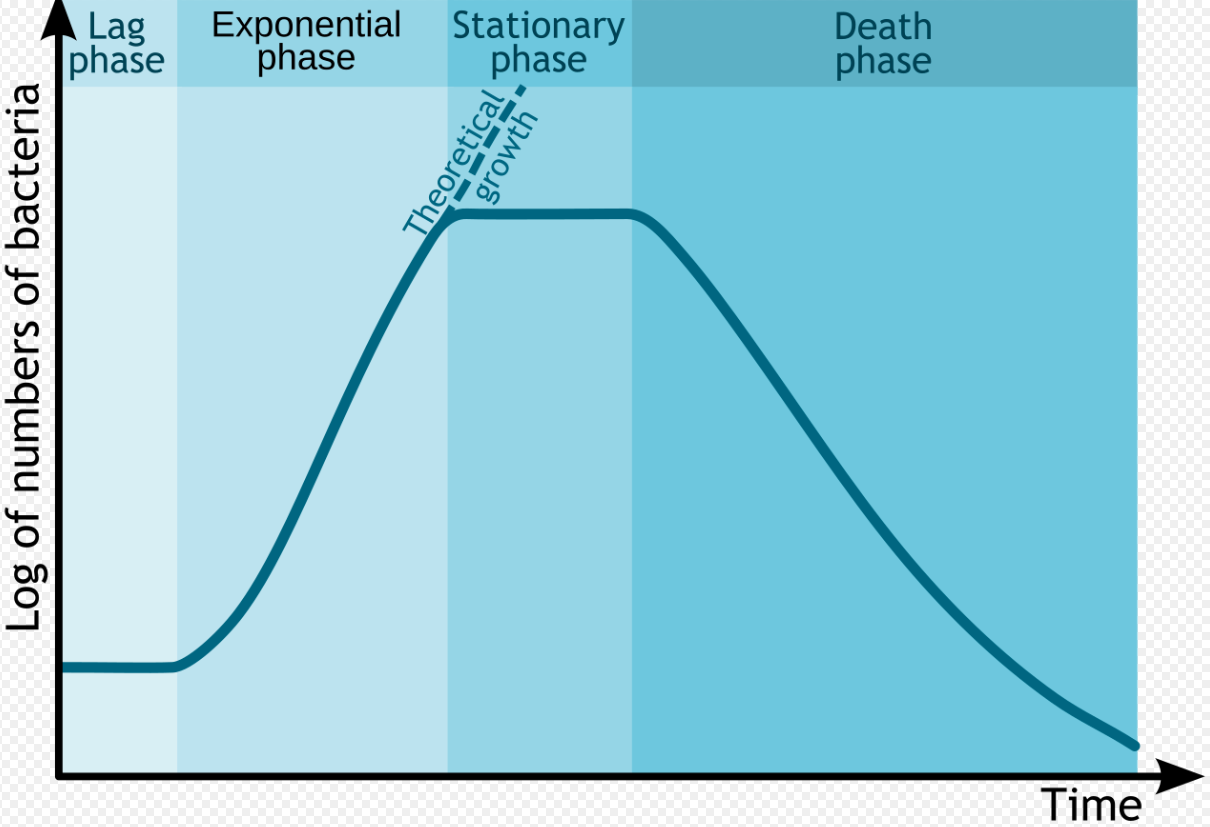
The aging of products by purely chemical transformations is quite different from microbial aging. Microbial aging involves uncontrolled, but self-limiting, growth rates of the microorganisms which follow an s-curve. The s-curve shows that microbial aging begins slowly but soon enters the “log phase” characterized by exponential population growth. The log phase doesn’t last forever, though. Soon population growth levels off as nutrients are consumed and general growth conditions deteriorate. The loss of further nutrients leads to eventual death of the colony.
Chemical aging is a kinetic phenomenon depending on initial concentrations, temperature, time, and a rate constant This means in principle that the chemical composition of the material can be predicted, extrapolated or interpolated mathematically. Microbial growth is a population change following a logarithmic growth curve leading to a population plateau. Here, the growth rate and the death rate become equivalent. Theoretical growth might approach an asymptote, given sufficient nutrients, removal of deleterious waste products and room to grow.
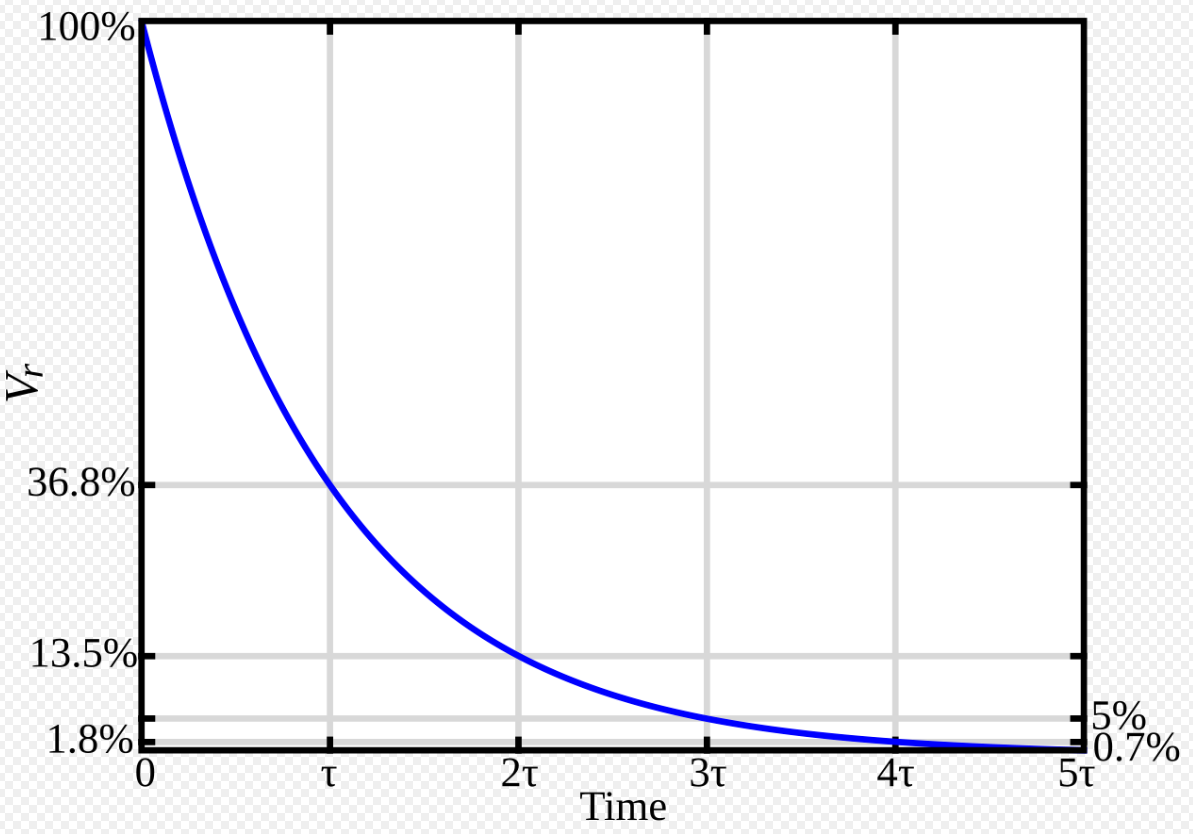
An asymptotic decay or growth curve means that the slope of the curve over time never flattens exactly to zero– only closer and closer –approaching some limit. It only approaches a maximum or minimum depending on the data being observed. Sometimes the loss of the product is followed by either the product concentration itself or by following the appearance of its decay product. Here, the sensitivity of the measuring equipment may come into play with detection limits. To deal with asymptotic decay or growth, a time constant (tau) is determined. Tau is useful in several contexts including radioactive decay and chemical change or decomposition.
In generalized chemical product decay, decomposition rates will depend on the decay mechanism. Is the decomposition dependent only on the initial concentration and the decay rate of a single component. This is first-order decay with dependence on the concentration of a single component, In regard to the shelf-life of a product, a single component product decays without interaction with other components. This kind of product quality loss would produce an asymptotic decay curve, approaching but never reaching some limit.
Whereas first-order decay depends on external factors like temperature and other product components, the zeroth-order decay of a radioactive source is independent of influences external to the nucleus. Radioactive decay produces beautiful decay curves.
Time constants.
When a substance or product (like a capacitor) produces an exponential decay curve, the line between acceptable quality and unacceptable must be drawn according to the business externality of specifications. In determining the shelf-life by chemical (or biochemical) decay/decomposition, because of the exponential nature of the decay process, the time constant of the property causing decay can be used to decide how long it takes to decompose down to some minimum acceptable level.
The short answer about time constants is the time it takes the quality indicator measurement to fall by 37%. I say quality indicator because the first-order decay of something may not actually be measurable easily and cheaply. The decaying component may have a large influence in some bulk property that determines the overall quality and marketability of the product. Good quality control requires the use of measurable and reliable indicators.
Source: Wikipedia. A decay curve showing time constant numbers vs decaying quantity.
For example, if the time constant of a material is 100 days, the remaining ~63 % after 100 days will decay by 37% in another 100 days and so on until you’ve gotten to some acceptable % levels, where acceptable in the business sense means above the level needed to drop out of specifications.
The decay of an isolated electrostatic charge follows an exponential curve according to a time constant. How many time constant periods must one wait for the static charge to decay to a safe level or near zero? The answer I’ve read for electrostatic charge is 5-time constants, tau τ. As can be seen below, 5τ time periods takes you down to within 0.7 % of the theoretical result.
A Google search of a safe number of tau periods gave the numbers below.
1τ: Reaches ~63.2% of final value (or drops to ~37%).
2τ: Reaches ~86.5% of final value (or drops to ~13.5%).
3τ: Reaches ~95% of final value (or drops to ~5%).
4τ: Reaches ~98% of final value (or drops to ~2%).
5τ: Reaches ~99.3% of final value (or drops to ~1%).
General Use: 5τ (99% settled) is a common benchmark for “good enough”.
High Precision (ADCs, etc.): 8τ or more ensures minimal error.
Specific Events: If you just need a quick response, 1-2τ might suffice.
A Google or other search on the topic of “time constants” will provide a proper mathematical justification of this value.
Determining shelf life with time constants
Following the percentages, barring other factors, a product shelf life of xτ where x is the number taking you to minimum acceptable decay/decomposition. Added on top of this may be company policy or requirements of the customers. If only a single τ takes the product below specs, then a producer may have to rethink the value of x or make better product.
In two-dimensional Euclidian geometry the shortest path between two points in a plane is a straight line. In a right triangle, one of the three internal angles, has an angle of 90o. The longest side is the hypotenuse connecting the ends of the other two legs. The square of the hypotenuse is equal to the sum of the squares of the other two sides. It’s the Pythagorean Theorem.
We know from high school geometry that the hypotenuse is the shortest distance between two points in a plane. This is exploited all the time on college campuses in a practical way. That would be walking across the grass in a direct line to class or lunch. The grounds keepers aren’t happy about it, but this was accepted long ago as an inevitability.
Stretching this axiom to the multidimensional realm of consciousness, the gap from the beginning of a thought to a conclusion could also be a kind of straight-line hypotenuse. But like walking on a hypotenuse across the grass, there are occasional fact and thought-obstacles that require a detour. Obstacles can be in the realm of physical reality or cultural norms and legality. Our consciousness must estimate the relative risk of one or more pathways. Align this with concessions to social norms and the law, we have the beginnings of a hairball.
My primate brain immediately searches for a conceptual hypotenuse when presented with a dilemma. What is the shortest and most efficient path to the best solution? First, one must define the current state and the desired end state. This is just old-fashioned gap analysis. What’s different is that thought processes are often clouded by mental illness and thoughts including conditioned response, preconceived notions, false or inaccurate information and personal animosity.
Any brainstorming session is really a hunt for a hypotenuse.
Last week, this blog saw an unusual spike in traffic—roughly 350 visits higher than normal. Each visit appeared to be for a single post, with no clear theme among them. My best guess? An AI platform was scraping my content for something specific.
Suddenly, I feel a renewed sense of accountability for what I’ve written. What if—gasp—a sentence was inaccurate, or a sarcastic remark too obscure for most readers? The responsibility could be enormous! Think of the children!
The content choices lie somewhere between the bookends of accurate and complete fabrication. I’d rather be accused of being boring than being found in an untruth.
How does this mesh with my anonymity? Well, a handful of people know my identity and their respect is important to me. Eventually I will reveal my identity and suddenly the truth and accuracy (and spelling) of my 1700 posts will be forever connected to my real name. Skin in the game.
Howard!! Whatever shall I do??
Disclosure-
Very occasionally I will write some fictional content, and it should be apparent as fiction from both the content itself, and the key words attached to the post. The example would be my posts on the fictional Poltroon University in Guapo, Arizona. I do enjoy the occasional jab at the culture of higher education and the institution of science.
However, as a scientist in matters of physical reality, I am dedicated and eager to describe content as truthfully, accurately and mellifluously as possible. When I’m on one of my political jags, I’ll admit to some amount of enhanced emphasis where others have tread more carefully with the source material.
The reason I write and blog is to help me think ideas through. Somehow the act of scribbling down sentences followed by multiple passes in editing is helpful. At any given time I have 20 to 30 unfinished posts languishing in draft space. The open-air aspect of blogging is to assure that I have done my best lest public humiliation, scorn and derision should come my way. Not just in the present, but more so in the future. Writing is thinking. To put it bluntly, there is a fear of publishing something I would regret forever. Absolutely the worst thing I could do as a blogger and as a scientist would be to post indefensible or phony science. Posts with linked references are direct connections to what I view as credible content on the internet. The reader only has to click a link to verify a factual statement thing I made.
Many Western observers often imagine a future in which, after Putin’s departure, Russia evolves into a more open and cooperative nation. Wouldn’t it be appealing if Russia joined the global community of states that embrace free trade and safe tourism? This vision reflects our own ideals, making it easy to assume that Russia might share them—but history suggests the reality may be far more complex.
A review of Russian history from Tsar Nicholas II to the present reveals a persistent pattern of authoritarian governance. Although Tsar Alexander II abolished serfdom in 1861 and introduced several liberal reforms, these changes faced strong resistance. Many reforms were ultimately reversed, as they diminished the power of the nobility, provoking significant opposition despite their positive perception in the West.
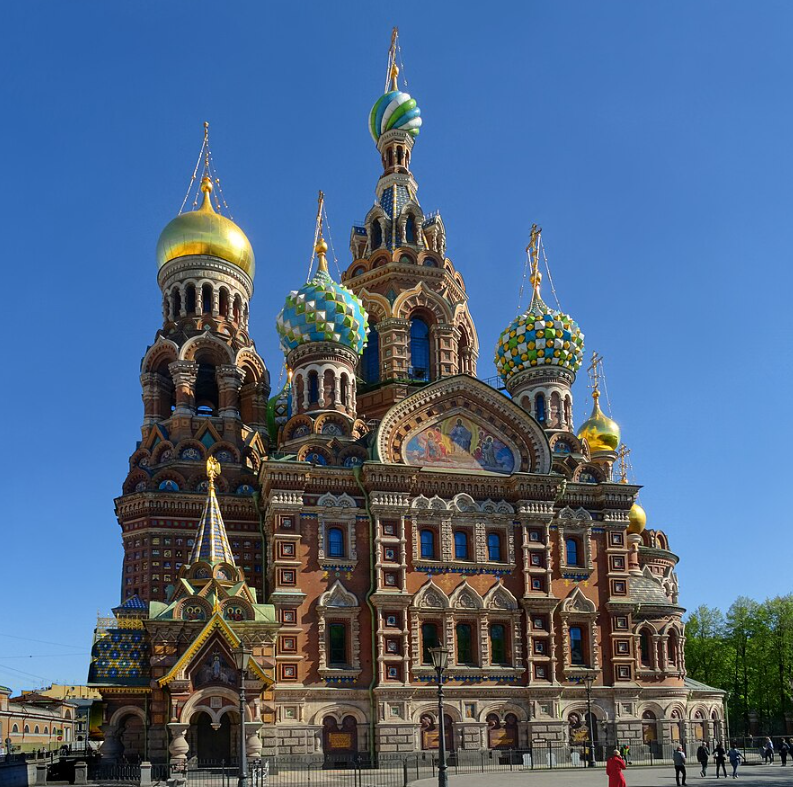
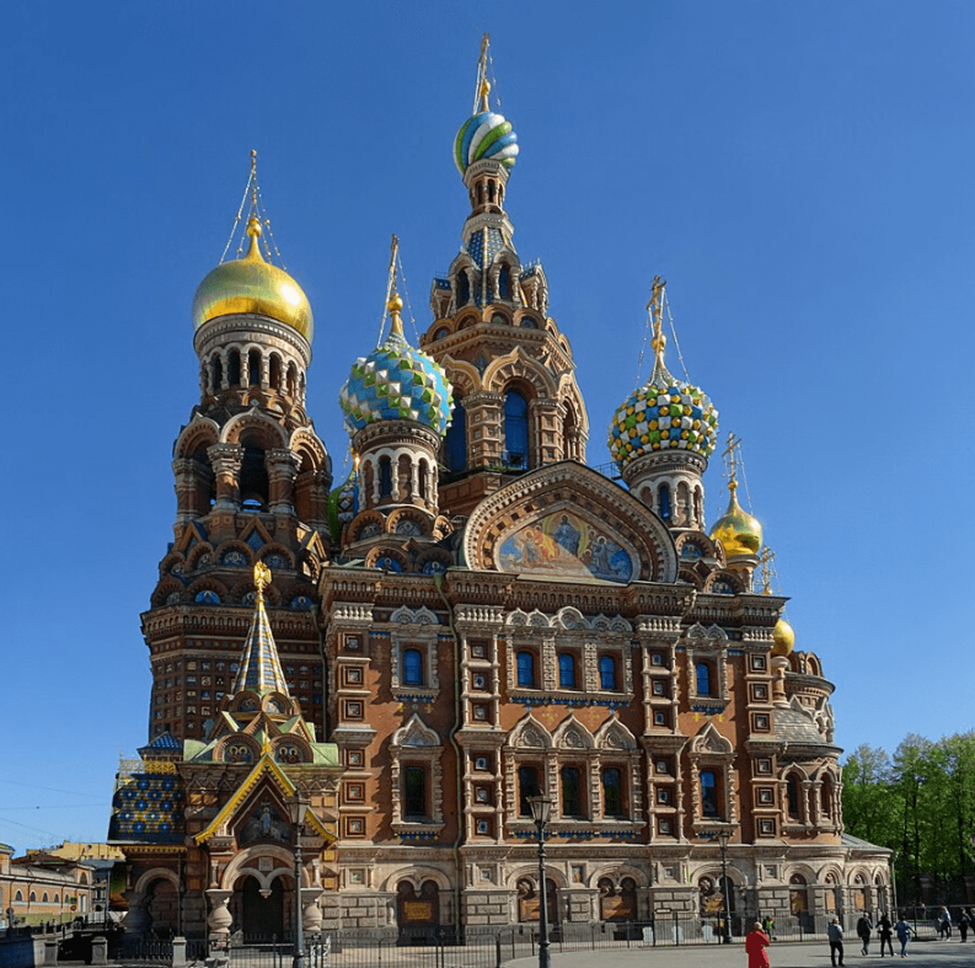
On March 31, 1881, Tsar Alexander II was assassinated in St Petersburg, Russia. His habit was to ride his carriage to a military roll call that day of the week. The route was along the Catherine Canal. An assassin threw a bomb under the horses and it exploded as the carriage rolled over it. The emperor’s carriage was bullet proof, a gift from Napolean III. Alexander exited the damaged carriage uninjured and paused to survey the scene. As he was doing this, a second assassin tossed another bomb at his feet which exploded, later killing him and killing and injuring many others in the vicinity. Afterwards a beautiful cathedral was built on this site called the Cathedral of the Savior on Blood.
Cathedral of the Savior on Blood. Included here only because it is a beautiful image. Image from Wikipedia.
Cathedral of the Savior on Blood. Included here only because it is a beautiful image. Image from Wikipedia. I was awestruck when I visited.
If you end up in Saint Petersburg, which I whole heartedly recommend, this cathedral is well worth a visit. It’s newer and, in my opinion, perhaps even more beautiful than the famous Saint Basil’s Cathedral in Moscow along Red Square,
Following Tsar Nicholas II’s abdication in 1917, a provisional government briefly assumed power before being overthrown by the Bolsheviks during the October Revolution. The ensuing civil war ended with Bolshevik victory, elevating leaders such as Lenin, Trotsky, and Molotov. In November 1917, the Russian Socialist Federative Soviet Republic (RSFSR), the Russian Soviet State declared itself a sovereign state.
The revolution triggered widespread unrest, with numerous factions pursuing divergent objectives. The Bolsheviks relied on the Red Army, while the White Army comprised former imperial officers and Ukrainian anarchists opposed Bolshevik control as well. Additionally, thirteen foreign powers—including Austria-Hungary, Germany, and the Ottoman Empire—intervened against the Bolsheviks.
In 1922, the Russian Socialist Federative Soviet Republic ratified a constitution and formally established the Union of Soviet Socialist Republics (USSR), written in Cyrillic as CCCP.
Amid the turmoil of the Bolshevik Revolution, Russia ceded territories previously seized by Germany during World War I. The collapse of the Russian Empire sparked a protracted struggle among various ethnic groups and factions to reclaim land and assert authority. By 1923, the Russian Civil War had concluded.
Let me say that although the western block vigorously opposed the Soviet communism later in the Cold War, the break from monarchy by popular uprising to form the Federative Soviet Republic and later the Union of Soviet Socialist Republics was a remarkable achievement for that part of the world. To transition from a monarchy with serfdom to the USSR in ~60 years was a world-class achievement. The sad part was the rise of Stalinism and cementing in state authoritarianism as well as revolutionary expansion to global communism. Global socialism was an early goal of the Bolshevik leadership. Socialism was interpreted as a precursor to true communism.
So, why can’t they be like us? Because their history and cultural development never included exposure to free markets, private ownership, foreign travel and individual freedoms we in the west are accustomed to today. No Magna Carta setting limits on the power of the monarch and no parliament sharing power with the monarch. Russia did not participate in global travel as western European nations did which led to colonization and the extraction of wealth from their colonies producing gold, silver, spices, salt peter, slaves, etc. The wealth accumulation and theft of colonial resources set the pace for producing vibrant and wealthy countries in Europe, but not in many of the colonies. The American colonies are a famous exception.
Summary-
This summary only scratches the surface of the October Revolution and the subsequent civil war. For further detail, readers are encouraged to consult additional sources. The period was marked by extreme complexity and violence, resulting in an estimated 7–12 million deaths.
All of this Russian/Soviet history is meant to highlight that from the very beginning the Soviet state was born from the fire of violent conflict. The Soviet State prevailed in the end and many Soviet revolutionaries migrated into positions of power in the new USSR. It is difficult to believe that the leadership of the Bolshevik revolution and civil war were left unaffected by this conflict as they moved down the timeline building the USSR. It had to affect how they thought of power and how to keep it. Did this experience set the ball rolling for an centrally controlled authoritarian state? Was the tight control over the state emphasized by the early war experience? It is not just authoritarianism as offices and red tape, but it includes institutionalized paranoia and a lack of reluctance to use imprisonment and execution as tools of the state. The gulag system was built under Stalin. This brutal leader sent millions of people to the gulag system to labor. They weren’t executed outright because the state needed laborers to build the camps and to work on public works projects and build and operate factories. Starting in the 1930s, Stalin began to push for extensive industrialization all over the USSR. Agriculture in particular was industrialized, especially in Ukraine. This was behind the Ukrainian Holodomor of 1932-1933.
Given this history of conflict, authoritarianism, and systemic repression, it is unsurprising that Russia continues to exhibit traits of a closed and deeply security-conscious state,



 Lamentations on Chemistry