Category Archives: Chemical Industry

In praise of polyolefins

Being a person nestled in the dark and humid recesses of industry, I find myself boggling at certain things out in the bright and sunny world.  Truly, it boggles my mind how little appreciation people have for polyolefin resins. That is to say, polyethylene, polypropylene and all the myriad copolymers and formulations found thereto.  Ok, let’s throw PVC and polystyrene in the mix as well.

Why do I boggle at this? What makes my head spin in puzzlement? I’m so glad someone asked.  Polyolefin films look innocent enough to be ignored. In their uncompounded state they are clear and colorless or they may be white.  Polyolefin films and extruded components are ubiquitous in packaging and thus are not normally an object of desire. They serve the object of desire. They occupy a lesser state interest in nearly all contexts.   They are made inexpensively enough to be torn asunder from the desired object and tossed wantonly to the side for later clean up.

But if the uneducated user of polyolefins only knew the extent to which modern science and engineering had been carefully applied to the lowly stretch wrap or the roll of 1 mil PE film. If they only knew the scientists and engineers who carefully devised the ethylene crackers to produce high purity ethylene, or if they knew the highly educated people who devise the polymerization process, they might have heard an account of the long march to produce water white films with properties matched to the end use.

Puncture resistance, elongation, fish-eyes, haze, modulus, crystallinity, glass transition temperatures, melt points, low volatiles, melt viscosity and strength- all attributes carefully tended to so that the film appears invisible to the consumer. High gloss, low haze films to make the product look even better.  Low volatiles and residues for food contact use.  Polyolefins engineered for specific densities for the global market.

All of the attributes above to attend to with a continuous polymerization loop that spews 50,000 to 80,000 lbs per hour of pellets into silos and rail cars. Pellets that will eventually go to converters who will blow films and extrude widgets all day long.  All so the consumer product can arrive at its destination wrapped unscuffed and free of dust.

Polyolefin materials are incredibly useful and amazing in their own right. We should have more appreciation for these materials and how they serve our needs.

Seeking simplicity in process scale-up

My graduate school mentor use to say that you could synthesize anything if you had the right precursors. With enough clever reagent artistry, most small molecules can be assembled, though if only enough for an NMR spectrum.  With chromatography and small glassware, it is not unreasonable to do a few reactions on 1 mg of material and recover enough mass to get a proton and carbon NMR.  Yes, I know that with microfluidics and labs on a chip, much lower quantities can be handled. But I refer to getting your hands on enough material to see.

What most of us who came through graduate chemistry have learned is that there are enough acids, bases, protecting groups, oxidants, reducers, latent functionalities, and catalysts out there to choose from so that some combination should get you to an endpoint in your synthesis.  If not, then  NMR, mass spec, IR, and imagination (with ample hand waving) should at least give an idea of why something won’t work.

Reaction chemistry (not including biochemical transformations!!) can be thought to occupy two broad domains- 1) low temperature, ambient pressure transformations with highly reactive species (preferably named after dead chemists), and 2) high pressure, high temperature transformations with lower reactive species. Most chemists fresh out of school know the former better than the latter. And that drives our problem solving strategies: Finding reactive intermediates that will react between -30 C and 150 C with a 5 lb nitrogen sweep in a kettle reactor.

Sometimes, the dumber brute force approach is worth considering.  What can be done under pressure and at elevated temperature?  Or, what can be done at high temperature and short contact time?  That dusty Parr reactor sitting in the corner may be capable of a goodly bit of magic.  Behind a shield. It is good to visit the high temperature, high pressure world now and then. Of course, our engineering friends already know this.

As far as the search for simplicity goes, consider what merits there may be in thermally driven transformations. Every once in a while it may be a viable avenue for something useful. Try thinking of heat as a kind of reagent. Chemical plants are good at producing heat.


Play it forward. Science as an extended subsidy.

I search chemical abstracts nearly every day. What occurs to me is that this vast treasure of knowledge is substantially the result of tax revenue channeled into scientific research by numerous technologically advanced societies. While at the time of any given publication, the value might seem minimal. But over time people like me, people in applied industrial science, consume this treasure for the purpose of generating new goods and services. Rather than reinvent the wheel, we consult the subsidized results of other workers in the field. Subsidies of the past play forward to subsidies of the future. If we can’t lift an exact procedure from the scientific literature, then often we can apply new substrates to known transformation. 

In a very real sense, a resource like Chemical Abstracts is an engine of ingenuity. It’s content provides the means to innovation by outright disclosure or by sparking the imagination.  This work is enabled by government organizations funding people and institutions for the purpose of placing technology into the public domain.

While industrial or private organizations have the ability to generate a knowledge base as substantial and as in-depth, the fact is that the imperatives of private business are not in the direction of public disclosure. The imperative of the private sector is to channel wealth to the ownership. The free exchange of knowledge, in the context of business, is discouraged in that it amounts to the free distribution of cash. 

I hear people saying or implying that all things government are bad and that the private sector is inherently “more efficient” and therefore more meritorious.  What we have gotten from government subsidized science is an everlasting fountain of knowledge available to all to put into practice for whatever lawful purpose they can envision. 

An efficient life seems like a puritanical and regimented life.  And the application of efficiency will always fall under the control of the dominant social order. Is this really so desirable?  

Intellectual property has two sides. On one side, the generators of intellectual property can have the right to a timed monopoly on their art via patents. On the opposite side, the public treasury releases national treasure in order to educate the citizens who then generate proprietary art that is withheld from public use.  This amounts to a subsidy of the private sector.  It is a subsidy that sees little acknowledgement in the politics of today.  But such a thing has actually worked well for generations.  

What we are seeing in contemporary politics is the attempt to vilify and deconstruct government. But government has been central to the technological and consequently the economic expansion in the post WWII era.  The mechanism of collecting resources and focusing them on the solution of certain kinds of problems cannot be matched by the private sector. How would you operate the Centers for Disease Control on a greed based system like capitalism? 

Libertarians are always acknowledging the fundamental nature of greed and how it can be channeled into the efficient use of goods and services. I don’t disagree. What I take issue with is that greed must then be acknowledged as the dominant and true influencing force in society. We cannot allow this to be true. We must make provisions for tight control of greed. It is a useful but savage animal. 

In my view, the generation of knowledge and expertise is time and resource consuming. In order to have a particular amount of practical expertise on any given thing, you have to turn over a great many stones and learn an amount of art that is in large excess of the problem of the day. This actually applies to a definition of expertise- the ability to deal with problems that at first seem to be bigger than you can get your arms around. Expertise brings knowledge in the form of facts and problem solving skills. In order to attain expertise you have to absorb to information that at the moment seems superfluous.  In the end, the expert has a grasp of the length and breadth of a topic in excess to any given problem.

Our national system of scientific discovery and information abstracting serves to provide the reservoir of information that serves users into the future.  This information forms the basis of economic growth well into the future. As we go forward with the seemingly inevitable deconstruction of government, let us not forget what government has given us.

The Quicksilver Monopoly

Hydrargyrum, also known as mercury (Hg) or more colloquially as quicksilver, was in the 19th century the object of monopolistic desire by a large banking concern. In 1835 the Rothschilds acquired the rights from the Spanish monarchy to manage the production of quicksilver in the village of Almaden, located approximately halfway between Seville and Madrid.

The Rothschilds, being ever more interested in controlling their bullion trade, understood that the key to the control of the silver market lay in the disposition of quicksilver. The liquid metal was crucial in the extraction and refining of silver. Silver was purified by amalgamation with quicksilver. Control over the distribution and price of quicksilver in America would put the market in their pocket. They were monopolists- it’s what they do.

Quicksilver has been known for more than 2000 years.  Since Roman times it has been known that everything but gold will float on a pool of quicksilver.  Artisans in Idria, an important old-world reserve of cinnabar in what is now Slovenia, observed quicksilver in its native form in1497.  Quicksilver was mined in earnest in Almaden, Spain, since perhaps the 4th century BC or earlier, according to Pliny. 

Alternating conquests transferred control of Almaden from the Romans to the Visigoths to the Moors and to the crown of Spain, among others.  Having been the seat of mercurial desire for two thousand years, the Almaden cinnabar mines have only recently shut down in the name of public health. Spain’s epic quest for silver and gold in the new world was made feasible through it’s own natural abundance of quicksilver.

Quicksilver was discovered in California in 1845. The New Almaden and subsequently the New Idria mines were quickly pressed into production. The smelting of cinnabar (HgS) into fluid quicksilver is simple in concept and relatively uncomplicated in practice.  A stream of hot flue gases are played over a bed of crushed cinnabar. Oxidation of the sulfide to oxide and subsequent thermal decomposition produces mercury vapor which flows to a condenser surface (brick) where it is knocked down into the liquid state and collected.  Simple technology to perform in undeveloped territory.  Quicksilver was sold in 76 pound lots called a flask. This is thought by some to represent what a laborer (or slave) could reasonably carry.

Within a short time the Californian supply of quicksilver robbed the Rothschilds of their monopoly, resulting in strong price pressure on the European suppliers.  For a few decades, the American quicksilver dominated the Pacific rim. Chinese demand for quicksilver or cinnabar for vermilion was strong.  Silver mining in Mexico and the Andean districts to the south was dependent on quicksilver, most of which was controlled by Spain and later Mexico after its independence. Eventually, the Rothschilds regained control of the market, but at a time when cyanidation and chlorination were playing a larger role in gold extraction. The Rothschilds relenquished their hold on Almaden in 1921.

It is interesting to note that quicksilver, so crucial to the isolation and refinement of gold and silver, was discovered a few years before the discovery of placer gold at Sutters Mill. This happy circumstance surely facilitated the prompt extraction of wealth from the gold and silver mining districts that opened up in the west.

Ways to be a chemical entrepreneur

I had a discussion with some professor friends recently about the subject of entrepreneurialism among chemists.  I made my usual points about how people become captains of industry. Be more like an engineer. Preferably one with an MBA.  Naturally, my professorly friends were unmoved. Having spent their entire careers in academia, they just didn’t know about this. I didn’t expect them to.

After I made a gross generalization about the lack of entrepreneurialism among chemists, one prof pointed out that in her field of research, there were indeed people who were starting ventures.  I do not doubt this. But it made me think.  People, perhaps especially those in higher education or just advanced technology, naturally conclude that an entrepreneurial venture has to be based on new technology.  Yes, we need people to start businesses in nanotechnology or what ever you call the latest iteration of biochemistry. We need to have a constant churn of people trying to put new products and capabilities on the table.

But we also need businesses who are able to make polysubstituted phenols, anilines, pyridines, alcohols, ketones, aldehydes, halides, and all of the other “ordinary” raw materials and intermediates that are now largely made in Asia. We need companies who will make 100 kg or 1 MT of some obscure organic material.  Entrepreneurialism isn’t just about the bleeding edge. It is about having a dream and seizing opportunity.  It can be cookies or chemicals.

For the most part, intermediates have moved to Asia because of the economics of batch processing fine chemicals. And a moribund approach to chemical manufacturing in the USA. Chemical manufacturing in the USA is complicated. There are environmental permits, TSCA, high waste disposal costs, high labor costs, expensive processing equipment, and layers of business structure to manufacture safely and with high quality. A chemist faced with navigating the maze of regulations, engineering details, and business operations is a busy person indeed.  Few people can do all of it alone.

There are two fundamental approaches to starting a technology company- Market pull and technology push.  Market pull is an activity where one builds manufacturing capacity with the intent of filling it by making exsting items of commerce. Technology push is where one intends to construct a new kind of technology in the form of a service or widget. Market pull is an approach wherein customers buy known technology. Technology push is the activity where the customer is asked to buy into a new product or service. In this case, you’re necessarily asking customers to be first adopters or to find new forms of value.

I’ve seen startups fail because their one-act pony didn’t work. Instead of trying to make a go of it with a one-act pony, a whole circus of acts should be going at once.  A batch reactor is capable of making many things. A plant built around one product is entirely dependent on that one product.  Batch reactors occupied with products from many market segments are batch reactors that will remain busy over a variety of market conditions.

Pharmaceutical intermediate manufacturing is a business weighed down with substantial overhead and structural immobility.  It is not automatically a great place to start. The GMP world is very complex and peppered with many operational land mines. Many early intermediates are not covered under GMP. That is a good place to start. 

ISO certification is another area where I take issue. While ISO certification brings good business practices, it also brings layers of administrative structure. It is possible to mimic this structure without formally adopting it. The ISO label on you advertising will impress some buyers, but a surprising niumber will be indifferent. If you want to be in pharma intermediates, this will be necessary.  What an ISO certification says is that you will do what you say you are going to do. That is a good idea regardless.

What has to change is the economics of manufacturing in the USA. One way to do this is automated synthesis.  A good example of a problem:  How would one automate the synthesis of an OLED chemical like 1 MT of 8-hydroxyquinoline? This is an existing item of commerce, so entry into the market means taking share from someone else. You’ll probably have to best the market price by 10 % at minimum to induce someone to switch vendors. 

The chemistry isn’t cutting edge, but the processing economics may be. This is an example of how entrepreneurialism can and should  tackle manufacturing problems and gain a competitive edge. Since labor cost is a huge driver, find a way to shave off labor. An entrepreneur’s competitive edge may be process cost savings alone. You don’t have to wait for a scientific paradigm shift.

Part of success is just showing up. Just having capacity and a knack for a particular transformation can attract buyers. If you are handy with borylation and are flexible, somebody will call and want a quote. And maybe a sample. Pretty soon you have a PO and a deadline.

It is good to consider that an advance may be in the form of processing economics, not just the science.

Thoughts on Process Development. Outsourcing.

I have not put pen to paper (Okay. Fingers to keys) on process development lately. I can’t discuss much in the way of specifics. But there are some generalizations that can be put on the table for discussion.

When should you outsource a raw material? Depends. Does the process for the raw material match your skill set? Namely, does it require, say, bromination of an olefin or an aromatic ring? This can be deceptively troublesome. It is easy to scribble down a reaction mechanism for a bromination. It can seem like a no-brainer to say “yeah, we can do that”. Same is true for a Sandmeyer or a Friedel-Crafts reaction or some oxidation reaction for instance.

You may not do much of a particular kind of transformation or handle certain reagents enough to have an institutional expertise to safely handle some materials. You may have safety kingpins who will nix some reagents because they don’t like the looks of the MSDS.  Or, your pots and pans may be booked well into the future and you have no opportunity to make the raw material.

The trouble with outsourcing a raw material is that the supplier’s price is your cost which must be passed along to your customer. You may or may not have the margin to play with to do much outsourcing.  If you suddenly need to outsource a raw material, you will have to find a shop that will make the stuff.  Preliminaries include doing a secrecy agreement, a disclosure of the desired material, and possibly disclosing a technology package.  After the disclosures it might transpire that the vendor isn’t interested, they can’t do the job in the desired time frame, or they want too high of a price. Lots of things can go wrong.  Meanwhile, you’re relentlessly screaming down the timeline towards you’re own delivery date. You should be planning your outsourcing 6 to 12 months in advance. Or even 18 months.  Outsourcing always involves the discovery of new failure modes.

Let’s say that they agree to work up a quote. There is the matter of specifications. They’ll need to know some specifications even before they quote a price.  What kind of purity are you needing? Be reasonable now. There is what you want and what you can get by with. OK, you can live with “97 % purity”. What does that mean? Does it include solvent residuals? What about color and haze or mesh size and appearance? If it comes in at 96.8 %, are you sure you want to reject it?  If it can be easily reworked, and you have the time to spare, rejecting the material might be the best choice. But if they are late and you are late, you may have to take the material on waiver.

Apart from the mere chemistry is the matter of TSCA regulations and/or import restrictions. Will your vendor have to file for an LVE (low volume exemption) or is the material already on TSCA?  An LVE will take time even if everything goes well. Need to put these regulatory filings into the timeline.  Want to import bulk Hazardous When Wet materials? Plan on a boat ride across the ocean.

Asking a company to develop a new product for you requires good communication, person to person relationships, and lots of patience.  Your custom vendor may be smaller than you are and may have considerable resources tied up in your order. They’re taking some risks as well. Shoot for win-win.

Visit to the Argo Mill

After years of driving by the Argo mill in Idaho Springs, Colorado, we decided to turn off of I-70 and take the tour.  Admittedly my interest in the mining history of the west had something to do with it.  

This is a very unusual historical site and is worth a stop for those with an interest in history and mining. The facility consists of a red mill building built along the slope of the mountainside and, separately, access to the entrance of the Argo tunnel.  Adult tickets cost $15 and in exchange for the fee, you get a movie and a talk on the history of the mill by a staffer, and a pack of sand for your gold panning lesson.  The sample of sand is salted with gold flakes so that everyone has a decent chance of recovering some flakes.

Staff member demonstrating the use of a gold pan.

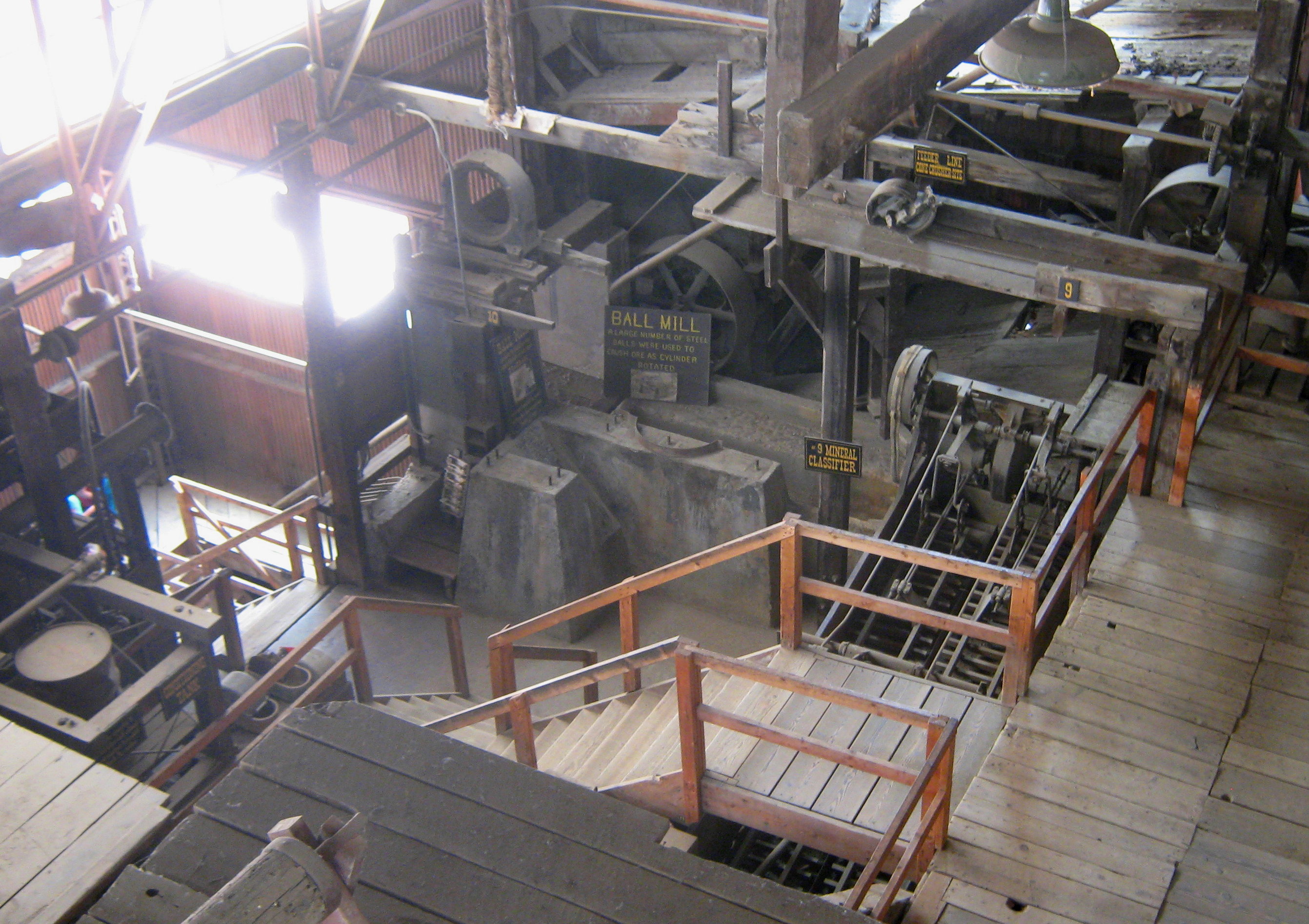
What makes the Argo mill unusual?  Several things. Most obviously, it is a gold mill that is quite well preserved. Most gold-rush era mill sites were in various stages of ruin in the early 2oth century. That this mill has been so well preserved alone makes it worth a visit. Add to that the machinery that is on display and you will get a fairly good idea of what it must have been like to work in such a place.

Interior Spaces of Argo Mill. (Copyright 2011 Th' Gaussling)

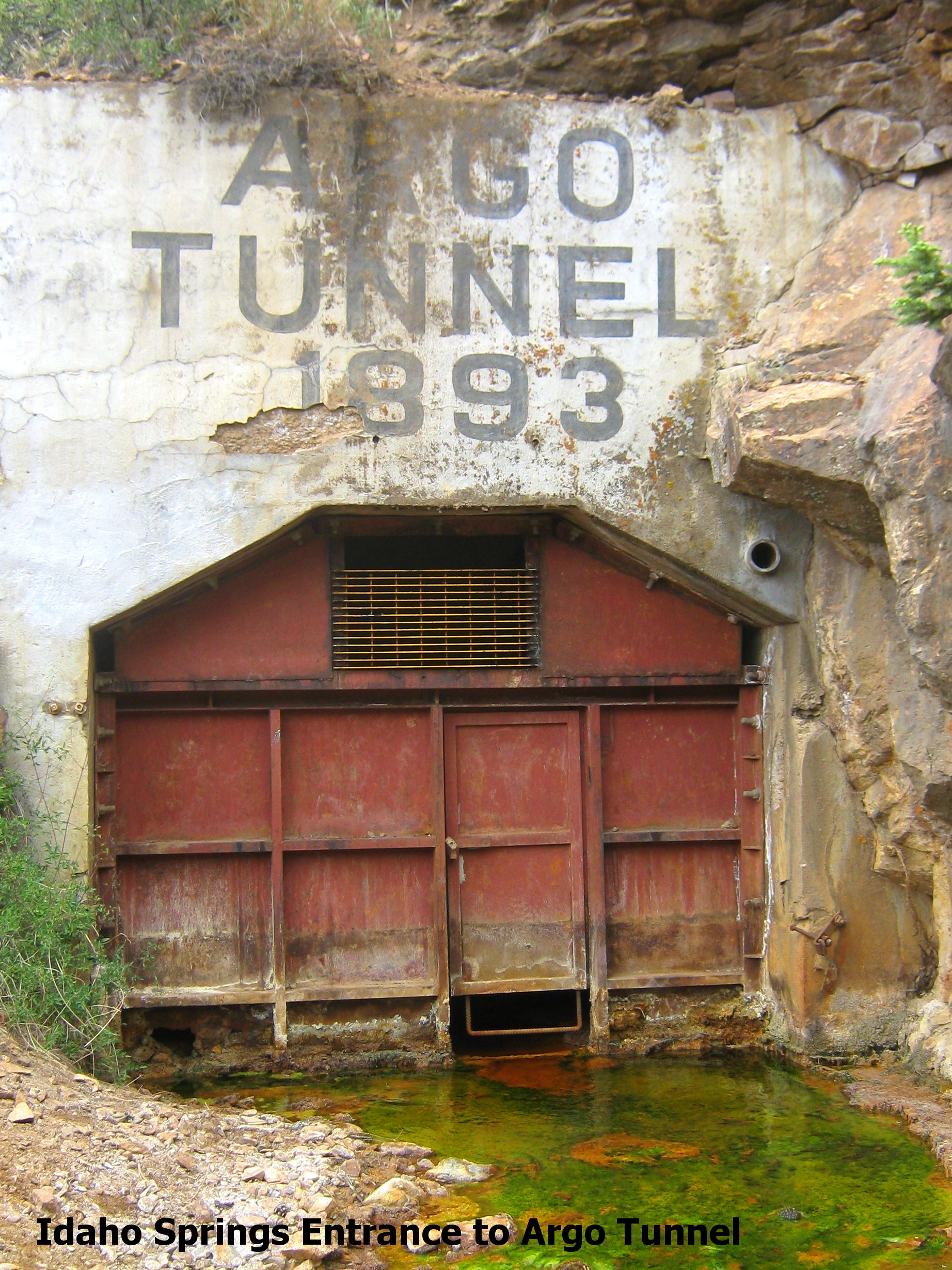
The other major reason for the unique quality of the Argo is it’s association and proximity to the Argo Tunnel.  The 4.16 mile long tunnel was begun in 1893 and completed in 1910. The idea behind the tunnel was both simple and ambitious. In order to provide milling services to the mining districts to the north, a tunnel was constructed below the mines to provide both drainage and easy transportation to a mill.

Entrance to the Argo Tunnel (Copyright 2011 Th' Gaussling)

Idaho Springs sits about 2000 ft below nearby Central City and is well situated for such a tunnel. The Central City gold district was a natural phenomenon at it’s peak. This section of the Colorado mineral belt was fabulously rich in gold and beginning with the 1859 discovery of gold, quickly became densely covered with mining claims from Idaho Springs northward to Central city and beyond. Hauling ore from the north to Idaho Springs was problematic owing to the topography.  A major road was the Virginia Canyon road, also called the Oh-My-God road, and was unsuitable for hauling ore. Ideally, a mill should be below the entrance to the mine in order to make maximum use of gravity in the milling operations.

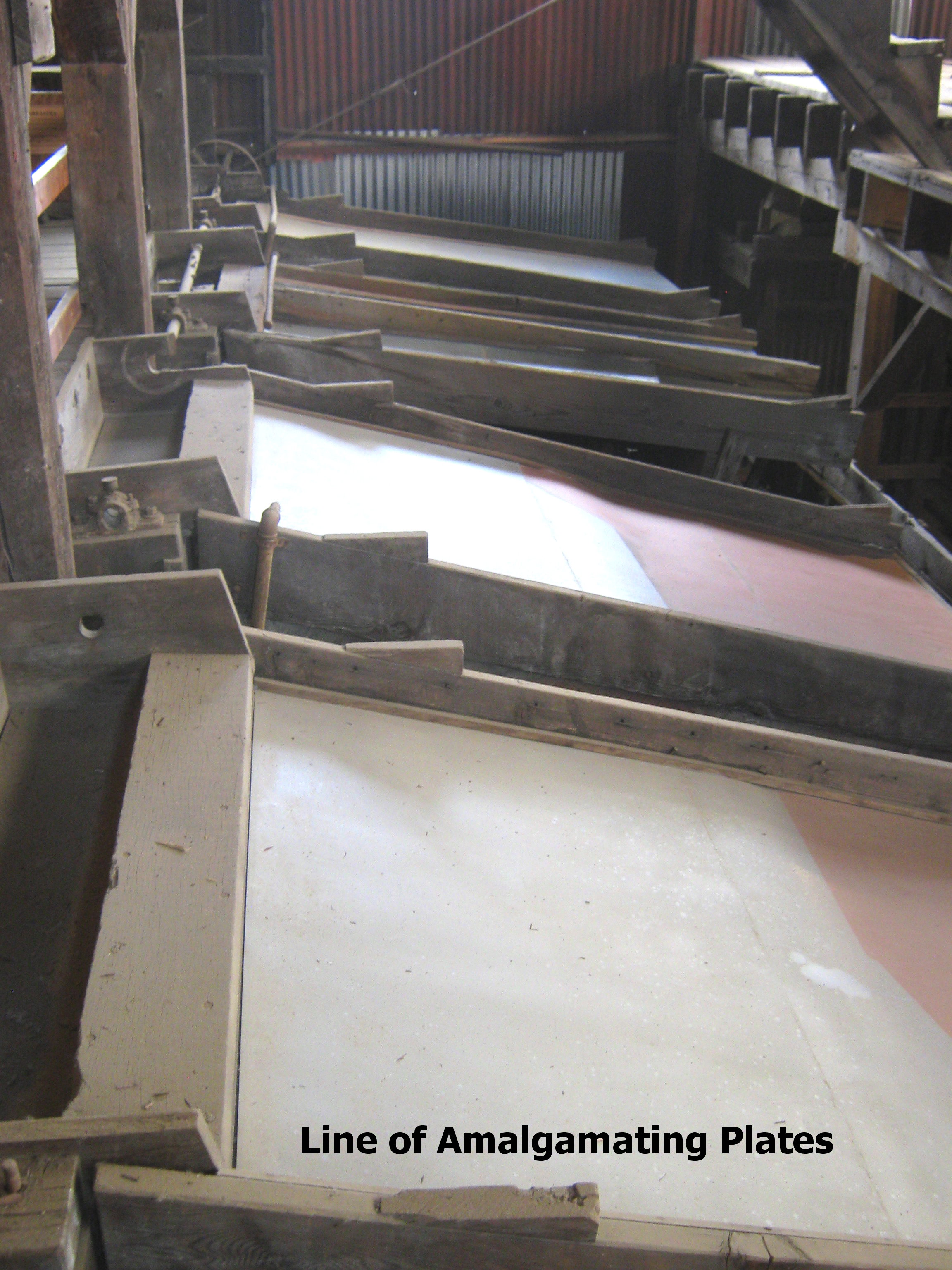
Amalgamation plates. (Copyright 2011 Th' Gaussling)

When completed, ore was moved through the tunnel by ore cart from mines to the north and received at the mill in the tipple house.  The ore delivery was recorded and assayed for gold content.  The business model of the mill was this- ore was purchased from the mines on the basis of assay and extractable gold was recovered.  This model of operation was common. Mills and smelters were customers for the mine operators. Ore was produced at the mine and sold on the basis of assay.

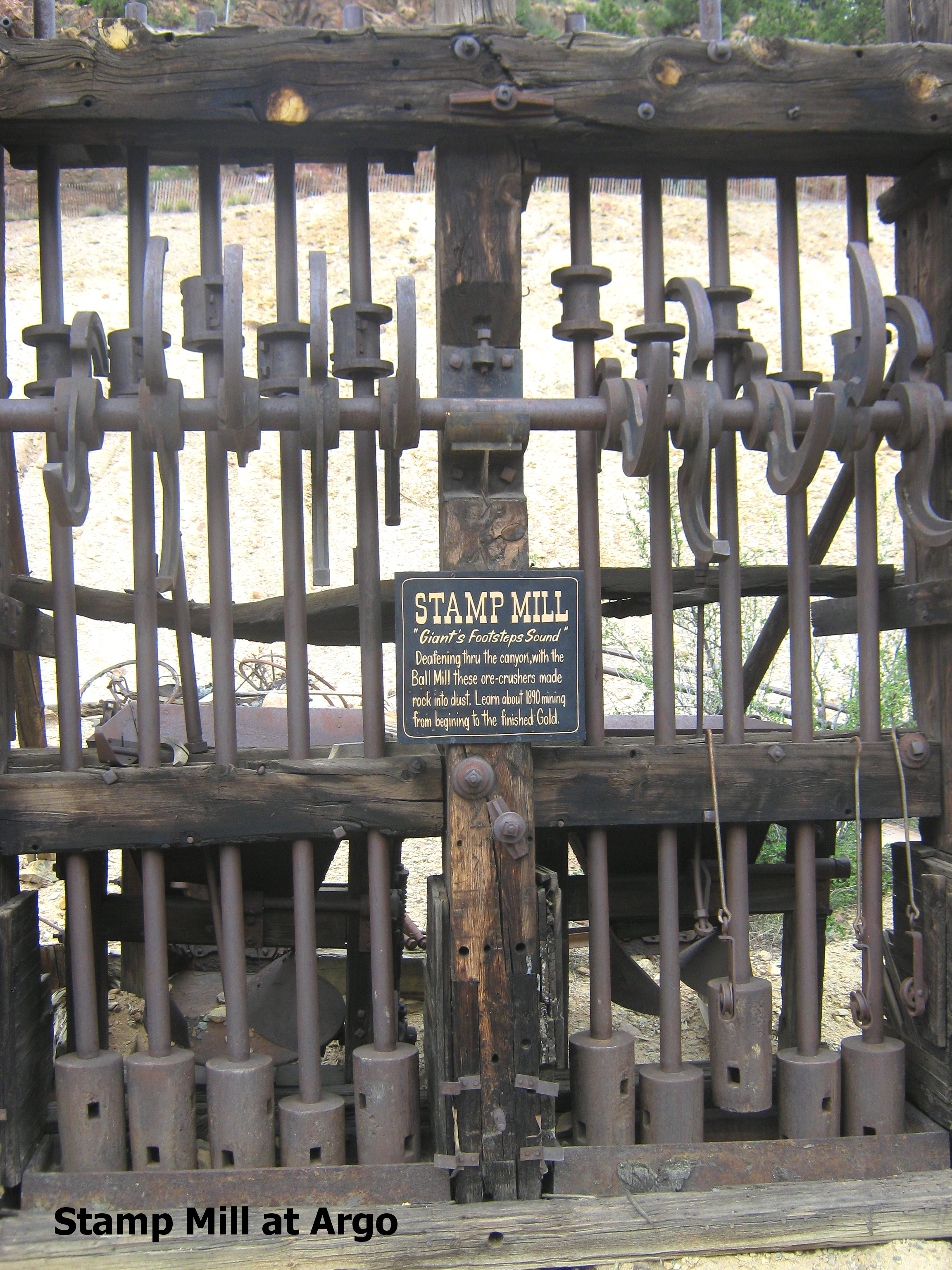
Stamp Mill on display at the Argo. (Copyright 2011 Th' Gaussling)

According to the guide at the mill, amalgamation operations were halted in the 1930’s, allegedly due to health and safety concerns.  The ore was comminuted with a ball mill and subjected to separation of the gold by shaker tables. Maybe the reason cited for ceasing Hg operations is accurate, but I’ll need to see independent verification of that.

Cyanadation was practiced at the mill as well. Not much was disclosed about this process. The guide disclosed that the mill tailings were contaminated with cyanide and mercury. As it happens, cinnabar occurs naturally in the Central City mining district, according to the guide, and can be found in spoils piles. Today this contributes to total package of contaminated leachates which may find their way into the watershed.

All in all, the Argo mill is worth a visit. Like all tourist attractions, however, you have to expect that there will be some dumbing down of the scientific and engineering details. Commonly, the emphasis in a visit to a tourist mine is on the craven details of gold mania and this tour is no different.  However, I am a purist. My interest relates more to the natural history of the chemical elements than the details of blasting and mucking.  So, if you can turn a blind eye to lackluster docent work, such tours are interesting and useful.

US Chemical Business Innovation. Policy or Culture?

The May 23rd, 2011, issue of C&EN, pp 30-31, printed an article titled “Innovation Policy Urged for U.S.”.  The article addresses more than a few considerations regarding the matter of innovation aspirations in the US. You can read the article for yourself. It details some silliness about government programs meant to stimulate startup’s. 

Startups are always in need of money. Like the salmon’s struggle to swim past the grizzlies to the upstream breeding waters, the struggle for resources is part of the Darwinistic screening process.  The struggle for operating funds is a way of screening out weak management. The trouble is, entrepreneurs are often awful managers so good products and services may die for the wrong reason.  Investor money is always loaded with conditions, as any startup operator knows.

The article quotes Richard Bendis, president and CEO of the consulting firm Innovation America. To quote Bendis, “Major research universities are the primary drivers of the future economy and job growth, mostly through science and technology. Global economic competitiveness requires the confluence of scientific discovery and the enabling resources of government and industry.” 

Well, Ok. It’s hard to take him to task here. But the last sentence is gobbledygook. What government cannot provide is the motivation or gumption on the part of chemists to start a company. Chemists need to be exposed to entrepreneuralism well before the day they set out to hatch a startup.  The current course of study in the bachelors program at virtually any US college or university is proctored by faculty who almost without exception come from a purely academic background. They know nothing about “industry” other than the salaries are probably better.

As Bendis rightly states, “Major research universities are the primary drivers of the future economy and job growth, mostly through science and technology.”  But major research universities, with a few exceptions, are poorly equipped to find and train chemists to be the future captains of of industry. It is a culture problem. The structure of the university chemistry department is not constructed to groom anything but scholarship. The American Chemical Society certification is part of the problem. The ACS recognizes and endorses a particular kind of curriculum. Most all chemistry departments have secured this endorsement long ago.  While the curriculum defines the minimum standards for a degree in chemistry, it also has the effect of freezing out much real innovation or adaptability in the field.

Faculty with business or industrial backgrounds are largely deselected from joining the club, if for no other reason than publication rates. Industrial chemists rarely have the opportunity to publish their work in the normal spread of journals owing to IP restrictions.  I’ve been a part of  a few search committees and I know how it can go.

The main exception to my generalization is MIT. Whatever it is that MIT is doing to stimulate startups, it’s does it very well. They are practically a force of nature by themselves. I would argue that the Mojo that MIT plainly possesses has more to do with culture than policy.

And it’s not just chemistry faculty that have to adapt to a new endgame in the program. The matter of turning a program to applied science must necessarily involve deans and university presidents.  They will all want to have their say. In the end, to most presidents, getting in the top 25 of whatever group of schools they aspire to be in is what matters. And that involves keeping the enrollment numbers and the endowment figures up. That is how they are measured and that is what they will look after.

Putting out applied science oriented majors will involve considerable cultural change in the academy. I’ve seen nothing to indicate that the academy is ready to embrace a real step towards the kind of entrepreneurial spirit in the aspirations expressed in the article in C&EN.  It is very difficult to be heard over the clucking in the academic henhouse.

Albemarle enters lithium market

Here is one I didn’t see coming.  Albemarle has announced that it will be entering the lithium carbonate market.  In case you didn’t know, Albemarle has been a leader in bromine and brominated flame retardants for some time.  Economically speaking, if you want to be a bromine specialist or brominator at the commodity scale you should probably be basic in bromine. That is, you get your bromine feedstocks from underground or the Dead Sea.

Everybody likes the benefits of flame retardants but nobody likes to pay much for it, so manufacturing has to be large scale to keep the retardant prices down. The way you do that is to pull bromide from the ground, often as a brine, and oxidize the bromide to bromine and isolate it from your process stream. Albemarle has recent US patent applications for the nth iteration of their technology: see US 2010/0047155 A1.

A quick perusal of Albemarle patents failed to turn up any US patents or published applications indicating that they had been working on this. This press release must have been given special consideration in view of anticipated demand for their lithium. 

Since Albemarle is already tooled up for brine work it is not such a stretch to see that they are piloting lithium extraction from their process streams. According to Specialty Chemicals, a chemical trade publication, the Albemarle brines contain 100-300 ppm of Li and sources say that they are using an exchange resin for the isolation. While the brines at it’s Magnolia, Arkansas, facility are a little on the lean side in lithium, the fact is that they are already set up for brine processing. A large chunk of capital costs for recovery have already been put in place for the bromine operation. So, it’s a matter of setting up a Li extraction train to intercept the brine stream somewhere in the Br process.

Setting up ancillary process trains like this to recover other values is not at all uncommon. According to the Specialty Chemicals article, Albemarle expects to be producing lithium carbonate in 2013.

The USGS publishes annual reviews on the global stockpile situation with economically important minerals, lithium included.  A prominent source of lithium in the US is the Tin-Spodumene belt at King’s Mountain District, NC. Spodumene, LiAlSi2O6, is the principal mineral variety at Kings MountainChemetall Foote, a subsidiary of Rockwood Holdings, now operates at Kings Mountain, NC, in Nevada, and  Salar de Atacama in Chile.

According to Virginia Heffernan at the website Mining Markets, the cost of spodumene processing to afford lithium carbonate is quite high, $5500 per tonne of Li2CO3. Acid roasting is used to process the ore to liberate the lithium.

According to the article at Mining Markets the three major players in global lithium are Chile’s Sociedad Quimica y Minera de Chile (30 %), Chemetall (28 %), and FMC (19%).

Memo to Aldrich, or ahem, SAFC

[Note: The rest of you can go about your business. This memo is to whomever at SAFC will listen. If you’re not SAFC, click here or here.]

Dear Aldrich, or shall I say SAFC?

I have a bone to pick wth you. I’ve noticed that the bottles of reagents I have received from you in the last year have been labeled with a newly formatted design. The Aldrich bottles do indeed stand out on the shelf in resplendent red and white as designed. Well done. The bottles function in the manner in which they are intended. Again, well done. All of that is as expected.

What I’m unhappy with is the fact that the labels all seem to lack the molecular weight of the contents. Having grown accustomed to finding the MW on the bottle, I now have to set the bottle down in the lab and reach for the calculator to do it myself.  After decades of using Aldrich products with the MW printed on the bottle, my addled brain now has to unlearn this and do the calculation myself.

So, what caused this? It was not an accident, was it? Were there complaints about printing errors that twittered your legal people?  Were there a series of meetings in which serious senior managers furrowed their brows and intervened over the possibility of liability? Nothing like the mention of liability to get a VP agitated.  Perhaps ink has gotten expensive.  I just don’t understand.

Was it one of us who complained? Was it some white-coated laboratory fussbudget? Did some crabby pisswink from “out there” write a letter and frighten someone in St Louis or Milwaukee? That would be sad.

One more thing. Why does the font size have to be so small on large labels? 

Th’ Gaussling