BNN Bloomberg published an article by David Wethe about a crisis building up in the Permian Basin shale-oilfield in west Texas. Drilling is facing the possibility of shutting down unless the new wastewater disposal wells are found. Wastewater is generated at a rate of 16 million barrels per day in the area and is pumped into disposal wells. The water can be up to 10 times saltier than seawater. These wells are seeing increasing backpressure indicating they are nearing capacity. Without disposal well space, oil drilling cannot continue to move forward. Associated with the disposal wells are earthquakes in the region.
From the article-
The Texas Railroad Commission, which regulates drilling in the largest US oil state, in December announced cuts to water disposal in certain areas after a 5.4-magnitude quake rocked the region.
“We are one earthquake away from having a whole different dynamic” in the shale sector, Railroad Commissioner Jim Wright told the Oilfield Water Markets Conference in Fort Worth this week. Drilling will “come to a screeching halt” unless the industry develops “seismic-resilient” disposal techniques or alternative uses for the 16 million barrels (672 million gallons) of wastewater injected underground in the Permian region on a daily basis.
The water-recycling sector only has the capacity to process about 30% of the waste flows for reuse in fracking, Amanda Brock, CEO of Aris Water Solutions, told the conference.
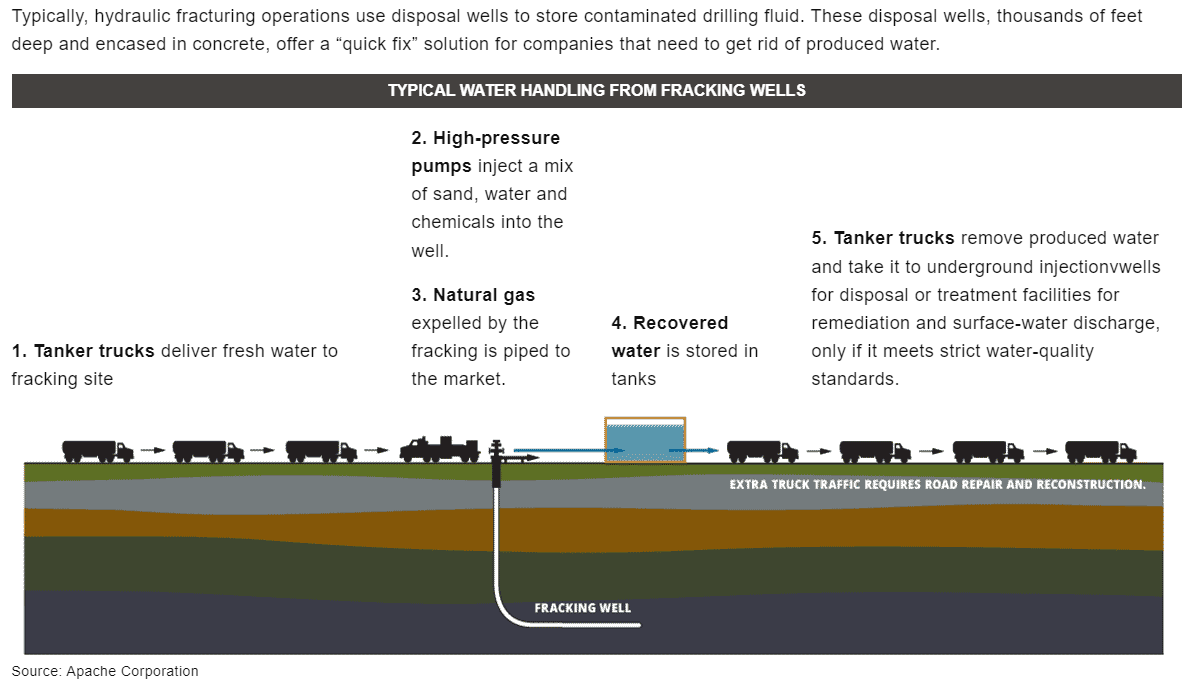
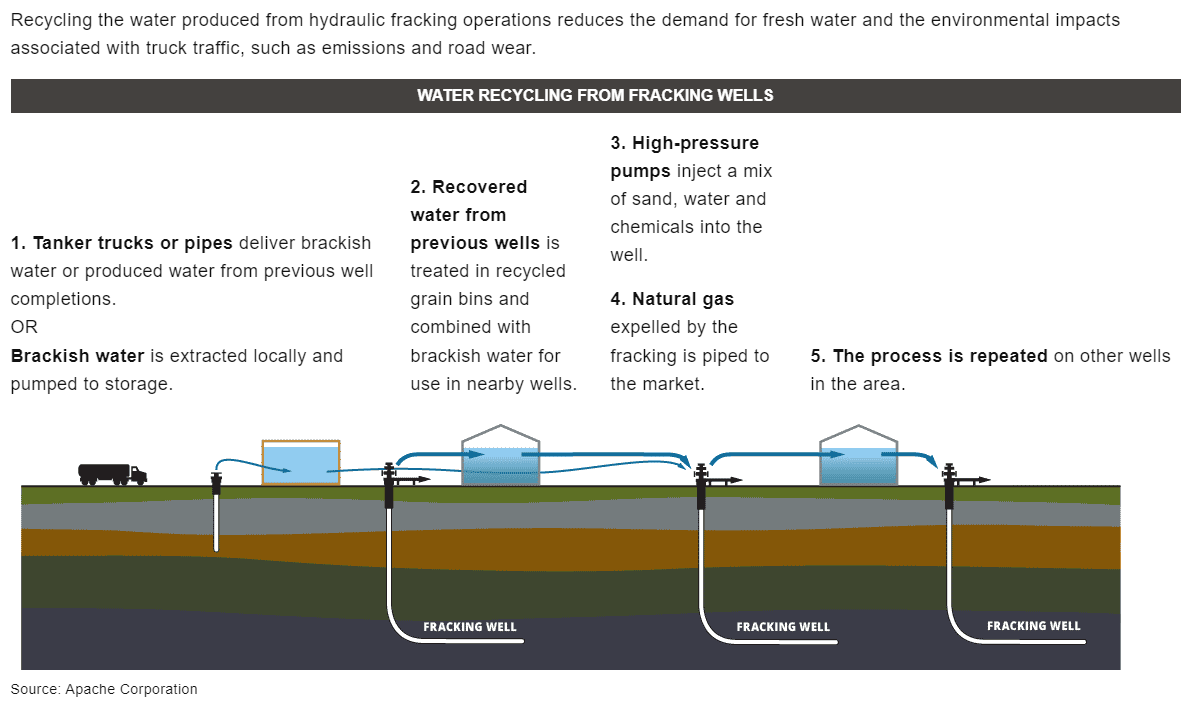
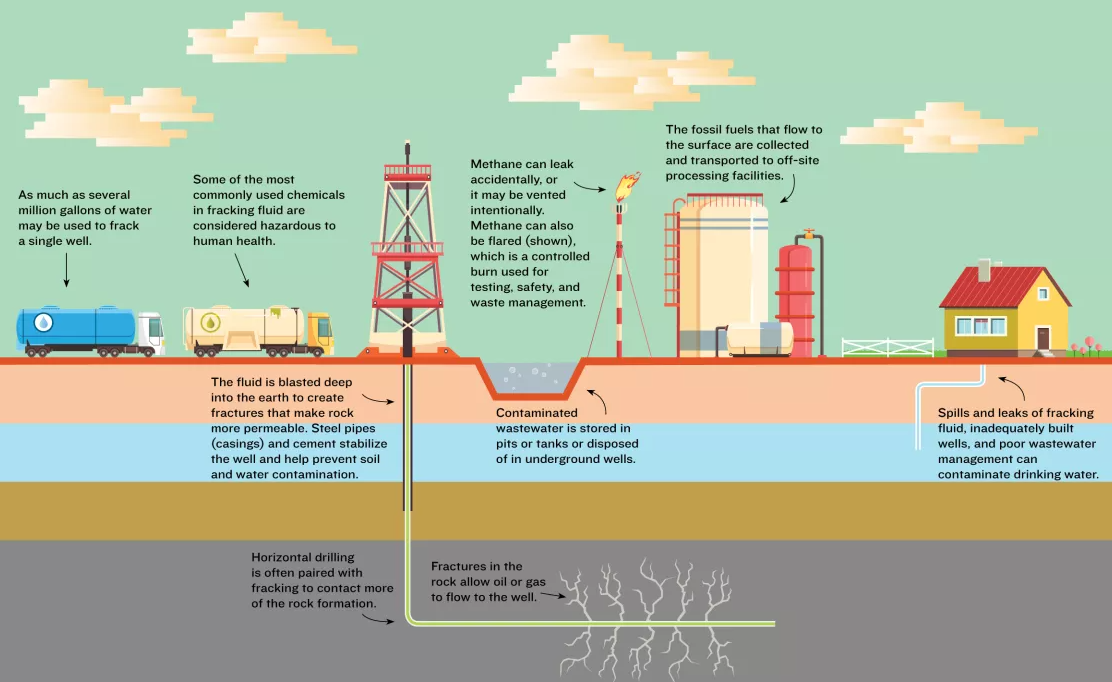
According to Apache, hydraulic fracturing, or fracking, can use 340,000 barrels of water per well. In order to conserve water, they treat and reuse water recovered from previous well completions. They also use brackish water from the local Santa Rosa aquifer which they collect in lined containment basins which can be transferred by pipes to other drill sites.
Say what you will about oil & gas companies, but this seems pretty progressive to me. The financial pressures on exploration and drilling people is immense. Compounding it is the highly volatile oil & gas market adding to the risk. It is no wonder that opening a new oil field is called a “play.”
Somehow Apache found the motivation and the funds to conserve water in an industry not known for progressive actions like this. The scheme does not seem technically difficult at first blush. It does, however, require up-from money to be allocated to the recycling infrastructure. Should the day come when recycling of water becomes mandatory, Apache will be in a good spot.
Hydraulic fracturing is a very contentious subject. Proponents cite the urgent need for oil & gas energy in the economy. This is meant to justify what environmental damage may come from it with their chosen practices. Opponents cite the adverse effects of leakage of both fracking fluid and produced water to potable groundwater. A pathway for drilling fluid migration also opens a pathway for oil & gas seepage as well. One EPA draft-document from 2011 is available for scrutiny. It is in regard to fracking activity in the Marcellus Shale area of Pennsylvania.
It is interesting to note that Radium-226 was identified in the water samples. Ra-226 is the most stable decay of the radium isotopes (alpha decay, half-life 1600 years) and derives from the uranium-238 decay chain. Ra-226 alpha decays to radon-222 (alpha, half life 3.8 days) followed by numerous alpha and beta decays to Lead-206 which is stable.
Drilling muds are highly engineered fluids that have very specific properties. They must have closely controlled density and rheology in order to perform properly. Returning drilling mud is stripped of drilling chips and sent back down the hole for recycling. Managing your drilling mud is an important part of the art and science of drilling for oil. I am unaware of the significance of ground contamination by drilling mud.
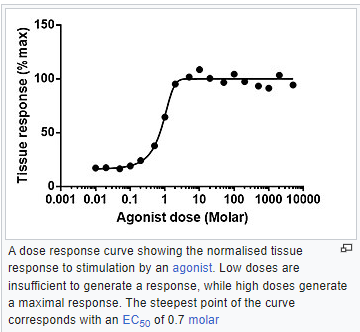
Online you can find a long list of substances used in hydraulic fracturing. There is a large variety of formulated commercial products, possibly containing multiple chemicals, that are used in fracking fluids in the US. Determining the actual chemical hazards at any given fracking site will require knowledge of what they are using. Safety Data Sheets may or may not be helpful in uncovering the chemical composition of a fluid. The hazards associated with fracking fluids naturally depends on the identities of the chemicals present, the amount of chemical and the way it is presented in the environment. Dose makes the poison as Paracelsus said in 1538.
Note to the wise: If you plan on raising a stink about “chemicals” in the local fracking activities, try to find out what chemicals are being used. Chemicals can vary widely in their toxic potency and health effects. Be armed with specific information to the extent possible. If you stand there angrily gibbering on about “chemicals” it will be seen as loudmouthed histrionics. Hand waving arguments can be brushed off with handwaving dismissal. If you can talk about specific chemicals, then you can bring the issue into a sharper focus and demand facts.
Dislaimer: I am not a food science guy and I have no formal training in dairy science. However, I worked in a dairy processing plant as a lab tech for three years and picked up a few things. This is my perspective from the manufacturing side.
Having worked in a dairy processing plant, I learned that there is no mystery to how cheese was invented/discovered. Just let milk sit unrefrigerated for a few days and it will clabber up. Stray bacteria, yeasts and mold spores are in the air and breath everywhere and many, if not most, are capable of feeding on the milk. In doing so, acids may be produced which will denature and unravel the proteins and bring them out of solution as a solid. Many microorganisms can ferment milk, but that is not to say that the cheese will be desirable or even edible. Before refrigeration, cheese was inevitable. Even with refrigeration cheese will happen, only a bit slower. Be one with the cheese.
As an undergraduate, lo these many years ago, I spent a few years working in the QC lab of a diary processing plant. My job was to perform certain analytical and microbial quality control procedures on the many products the plant manufactured. We produced fluid milk, cottage cheese, sour cream, whipping cream, half-and-half, single serving dairy creamers, a flavored shake product, orange juice, and flavored novelty beverages for kids. We packaged under our brand as well as for other brands.
People are very particular about their milk. Chunky milk sets off alarm bells for most of us. Many people dump their milk at the expiration date. Unless the milk has been allowed to warm up to room temperature or it has been contaminated, it should be good for another week. The expiration date is when the producer’s guarantee of freshness expires, not when it will go bad. Encountering pathogens in milk is comparatively rare these days.
The input of milk to the plant was in the form of raw milk straight from the farms by way of shiny stainless steel tanker trucks. We would receive 2-3 6000 gallon tankers per day. If we rejected a tanker, there always seemed to be another plant nearby that would take it. Rejections, which were few, were usually due to off-flavors picked up from the farm or it was high in coliforms.
Before the milk was unloaded it had to be tested. First, the receiving operator would insert an agitator into the tanker manway and stir the raw milk to mix the cream back into the milk. He would then use a stainless steel dipper and pull out a sample for the first tests. The temperature of the tank load would be taken, then the sample would be thermostatted to a specified temperature. At this point he would take a mouth full and approve it for taste and odor. This is called an organoleptic, or taste, test. He claimed to be able to detect the odor or taste of the cow (cowy), the barn (barny), grass (grassy), and certain weeds (weedy) in the cows diet. I have never been an enthusiastic milk drinker and having an aversion to tasting raw milk, I never took the opportunity to verify these flavors.
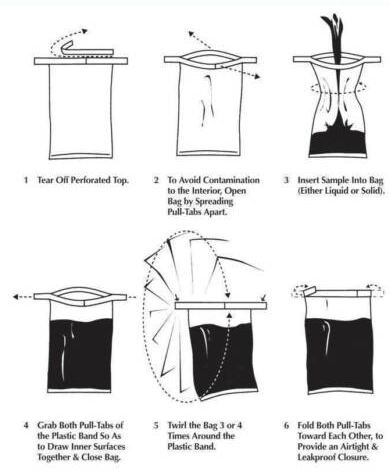
A twirl pack. Image from the interwebs.
He would then place a sample in a twirl pack, label it and send it to the lab for approval. There were several tests it had to pass before approval could be made. The % solids had to be above a particular value. To do this test, we would pipette a specified volume of raw milk onto an absorbent fiberglass pad and cover it with another. Then into the microwave it goes. The microwave had a built-in electronic balance so it would readout the % solids directly after drying. This is done to detect shipments that had been diluted with water. Milk was bought and sold by the pound or hundred weight and it was not unknown for farmers in the past to “extend” the weight of their milk production with water.
The pH of the milk was taken as a cross check to be sure that fermentation wasn’t underway. When milk ferments, it gradually becomes more acidic and will keep going until the acid inhibits further growth. In days past it was not unknown for farmers to neutralize fermenting milk with NaOH or some other base. While this could put the pH back where it should be, it would affect the % solids and the flavor. It was a trick of last resort.
The raw milk sample was also tested for beta-lactam antibiotics by two methods before approving the tanker. Cows were prone to getting mastitis from an aggressive milking schedule. Excessive dosing of dairy cattle with antibiotics to get them back into production could lead to antibiotics showing up in the milk. The state regulators watched this closely.
We used a standard disk assay method looking for inhibition in the growth of bacillus stearothermophilus spores suspended in agar growth media (it has been renamed Geobacillus). A small disk of filter paper wetted with a milk sample was placed on a petri dish of B. stearothermophilus spores in agar was warmed for 3-4 hours at 50 to 60 C. A positive result would appear as an inhibition ring around the disk indicating suppressed microbial growth. This was always compared with a disk spiked with a standard. A positive result would be recorded if the inhibition ring around the sample was larger than the ring around the standard. This test took a bit of time so it was used mainly as a cross check for the “Charm” test.
A faster test for beta-lactam antibiotics was the Charm test. This test used a radiolabeled reagent that would indicate the presence of beta-lactam antibiotics in a test sample. The sample was placed on a planchet which was heated to dryness and then put in a radiation counter for a set period of time. The turnaround time was ~15-20 minutes. This allowed for faster approval. From a Google search, it doesn’t appear that this version of a Charm test is now in service. It appears that a test strip can be used instead.
In the dairy business the fat content of milk is very important. It is a milk component that can be isolated and used to produce high margin products like ice cream, novelties, whipping cream, coffee cream and half-and-half. Every day there is a milk fat budget that you must work within. Regular drinking milk, sometimes called fluid milk, is graded into fat content categories. There is 0.5 %, 1 %, 2 %, and what we referred to as “homo”, referring to homogenized, regular 4 %. All of the fluid milk is homogenized.
Once the raw milk is approved, it must be altered in a few ways to make it shelf stable and presentable. The more equipment milk passes through, the more chance there is to give it an off-flavor. It is homogenized to produce a uniform, stable dispersion. This prevents the milk from separating on storage to form a cream layer on top. Many people like having the cream separate from the milk, however.
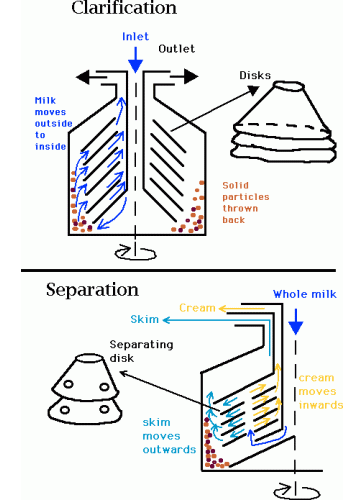
Early in the processing is the centrifugation step. Our plant had a centrifuge (“separator”) that would separate any solids present in the raw milk The centrifuge consisted of a stack of spinning conical plates that separated the cream as well as any solids present. The solids included cow hair, cellular matter, and dirt- stuff that you don’t want to dwell on. The fat content of milk skimmed in this way could be precisely controlled and operated on a continuous basis.
From the manufacturing point of view, processing and packaging an inhomogeneous mixture is a quality control problem. First, a continuous flow process works better if the composition of the material is uniform. Making sure that every customer gets their fair share of quality, creamy milk is important for making happy customers. Second, if the fluid milk composition is variable over time, it is hard to guarantee that you will recover enough of the valuable cream you want to divert for other products yet produce consistent fluid milk. In milk processing, consistency is everything.
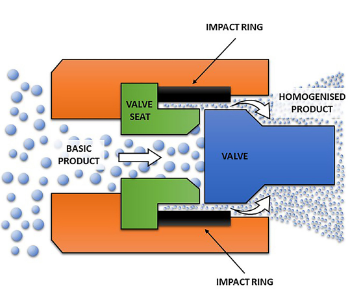
Homogenization of milk can be done in a couple of ways, but they all share the process of shearing a 2-phase liquid. A jet of milk can be aimed at a stationary plate. The shear in the fluid at impact can break up the fat globules into a smaller size to give a stable suspension. The more popular method is to apply shear by forcing the milk through very small openings at high pressure. Shearing a liquid is a stretching action on a parcel of the fat leading to dispersal of the fat globules into smaller droplets and better dispersion.
At some point milk producers discovered that there was a market for low fat milk. Producers were happy to expand into this market because it would bring diet-conscious customers back into consuming fluid milk. Milk was commoditized long ago so there are many competitors out there grasping for your dairy dollars. For producers, low fat milk is an opportunity to direct excess dairy fat into more profitable products while keeping the volume in fluid milk sales up. A steady flow of commodity product is always a good thing for a business.
In production, milk fat content is something that has to be carefully managed. X pounds of dairy fat come into the plant every day and X (minus losses) pounds go out as product. You want to produce as much high margin, high-fat product as possible but you must also stay competitive in the fluid milk business. Commodity fluid milk keeps stable cash flow and your valuable shelf space in the supermarkets.
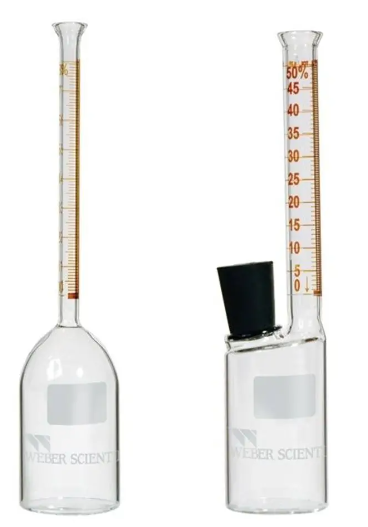
When the tankers come in at 4:00 am you want to get a fat content for the accountants and the plant managers. We paid for raw milk on the basis of fat content and weight. The standard fat test method we used was a volumetric test called the Gerber method. We would combine a standard volume of milk with butanol and fairly concentrated sulfuric acid in a Babcock bottle and heat it. We would then spin it in a centrifuge to separate the fat layer from the acidic layer. The fat would rise into the calibrated neck of the flask where we would directly read off the value using a caliper. The butanol helped to clarify the fat layer.
On occasion the plant’s fat budget would get misaligned and milk fat (cream) would have to be tanked in from elsewhere.
The plant produced about 1 million small dairy creamer cups per month that are for a single portion of coffee. The creamer fat % was determined for the batch, not individually. Samples were, however, individually tested for bacteria and taste and taken every 15 minutes.
We produced sour cream using active cultures for fermentation. We packaged sour cream as well as several flavors of potato chip dip. Chip dip is just sour cream flavored with solid spices. It is interesting to note that active bacterial cultures can become infected and die from a virus called a bacteriophage or just “phage“. Having a phage rampaging through your fermentation and packaging operation is a serious problem. You must shut everything down, maybe dispose of your raw materials and the latest product lots, and then hit everything with bleach and scrubbing and then restart with close attention.
We produced whipping cream and half-and-half. The whipping cream was produced as a heavy whip with about 36 % fat. Half-and-half was around 12 % fat. These two products were sold as sterile products meaning that they were, unlike fluid milk, completely free of bacteria. More on that in a bit.
Pasteurization of milk was an important improvement that dramatically improved the shelf-life of dairy products as well as reducing the incidence of milk-borne infection. In times past, milk-born illness was a serious problem. Today it is only greatly attenuated, not eliminated. Milk is an excellent growth medium for microorganisms like bacteria, yeasts and molds. There is water, fats, proteins and sugars. The udders of a cow are low to the ground and back where the manure comes from. Contamination of the udders is a given. Good sanitation from the udders to the consumer must be in place at all times.
Back then, the word was that it took about 2000 bacteria per milliliter to cause an off-flavor. However I cannot verify this.
The trick to milk processing is to avoid contaminating it during manufacture and packaging. Bacteria, yeasts and mold spores are in the air and everywhere else. We assayed for general microbial contamination and specifically for E. coli. The general assay was for the general hygiene of the plant and raw milk. The E. coli testing was used to gauge the microbial contamination from the operators. Humans harbor coliforms naturally in the gut. We live with them in harmony. They crowd out pathogenic bacteria for us and in turn we feed them. However, if our personal hygiene habits are poor, coliforms will show up in the product. The hands are the usual source of contamination. It must be understood that not all coliforms are pathogenic. Occasionally a pathogenic strain shows up and spreads around, making people very sick or worse. Unfortunately, these bad strains are only discovered after people start getting sick. So, as a kind of canary in the coal mine, coliform tests are used to measure the processing hygiene of the process.
The state health department was always very interested in coliform contamination. They would collect dairy products from the supermarket and test them for coliforms. A bad result would immediately cause the heat to be turned up on the plant managers. It was infrequent but taken very seriously. It usually pertained to cottage cheese. Cutting and collecting the curds was a manual operation, though the operators always wore gloves. The health department could embargo a plant’s output from the market for repeat offenses.
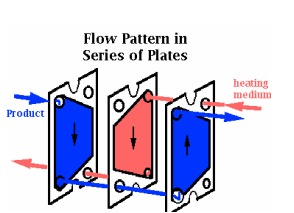
In common use is the HTST, High Temperature Short Time, method of pasteurization. HTST involves a short contact time of fluid milk with a moderately “high” temperature surface. This was done in a “press” which was a horizontal stack of alternating plates through which a heat transfer liquid and fluid milk would pass. The plates were compressed with a screw device holding them together under pressure- a press.
Be sure to understand that pasteurization does not equal sterilization. There is pasteurization and there is ultra-pasteurization. The first is an attenuation of the microbial load. The second refers to sterilization from ultra-high temperature, UHT, processing. In the case of American fluid milk, the kind that requires refrigeration, it is attenuated only. It is not sterile. This milk is usually good for 1 week past the expiration date if it has been constantly refrigerated. If it has been warmed to room temperature, then it is good for about 1 day, give or take. When a bacteria culture grows, the population rises slowly for a short time and then ramps into what is called the log phase (logarithmic growth). The population of bacteria grows via binary fission which is exponential growth. This situation leads to spoilage.
Milk and other dairy products that do not require refrigeration have been ultra-pasteurized by UHT. This is a bit delicate because too much contact time could lead to caramelization of the milk. These products should be sterile and an unopened container should have a long shelf-life at room temperature. Once the container is open and exposed to anything external it is subject to microbial growth.
The automated packaging equipment would spray in a small shot of concentrated hydrogen peroxide (~35 %) into the empty packages in an effort to cut down on microbial contamination just prior to the filling stage. Hydrogen peroxide is unstable in milk and decomposes quickly. Unfortunately, some bacteria have catalase which rapidly decomposes hydrogen peroxide into oxygen and water, thereby making them resistant to the sanitizing effect of the peroxide. Some bacteria, like Pseudomonas aeruginosa, are resistant to hydrogen peroxide.
On one occasion we encountered agar plates from a fluid milk sample that became green after the normal incubation. We had never seen this before. I opened a dish and took a whiff. It was fruity smelling. Since I had taken microbiology as an elective as an undergrad (chem major) I was aware that Pseudomonas aeruginosa was famous for its fruity smell, but cultures of it were blue. I performed a catalase test by pouring some hydrogen peroxide on the plate and the peroxide immediately began to fizz- positive result. This was consistent with P. aeruginosa. But why was the plate green? Well, when you have a bacterium that produces blue colonies in a yellow agar medium, you get green. Presto, we identified it. We dumped the lot and cleaned the equipment and never saw it again.
Our ultra-pasteurized products were sampled by taking packaged milk off the packaging line every 20 minutes and putting it into a 90 F hotbox for 48 hours. After the time was up we opened each container and put a sterilized loop into it and inoculated an agar plate. Then the containers were each tasted by the lab tech (me) for any off flavors. Most samples passed both the microbial and the taste testing. Usually there were several in the 4 or 5 milk crates that were bad. I’ve never been a big fan of milk when even it is cold, so this warm milk at the end of its shelf life was no picnic. We would open a carton, take a swig and hold it long enough to pick up the taste, then spit it into the sink, holding back the gag reflex all the while. We tended to do this rapidly to get it over with, but in doing so we would occasionally get a mouthful of sour milk with chunks or just whey. Both would be carbonated and tangy from fermentation and sometimes show stormy fermentation. It was gross and disgusting. Heavy whip that was clean would sometimes be surreptitiously churned into butter by a certain lab tech who was eventually caught and fired. He was handing it out to folks in his church. Management said it was a case of a dairy product of unknown quality leaving the plant. Yeah, Ok.
UHT fluid milk stored at room temperature is popular in Europe and a few other countries but not so much in the US. I guess we’re just squeamish about milk here. I know I am.
Our plant also produced cottage cheese. No big mystery here. We filled a rectangular vat with warmed skim milk and added a mixture of weak acids to it. I recall that the curdling acids was a mix of phosphoric and lactic acids. This method was known as “direct set.” After a short time the milk curdled with the white curd floating as a solid mass in the yellowish whey. The operators would use a multibladed knife the cut the curds into cube shaped chunks. Then the whey was discarded into the sanitary sewer and the curds were washed and loaded into a machine for packaging. Most cottage cheese was blended with a salted cream to give it a creamy texture. Some of the curds were packaged as “dry curds”.
For a long time the plant would send the whey from the cottage cheese process down the sanitary sewer. Then one day we were given a very large sewer bill. It had jumped from $2,000 to about $26,000 per month. You could hear a clattering noise from all of the bricks the accountants were shi**ing. The giant invoice was for all of the biological oxygen demand (BOD) that our whey was actually consuming at the sewage treatment plant. The folks at the treatment plant had been noticing that the BOD of the sewage going into the plant had been swinging around but couldn’t figure it out. Then one day they noticed that the problem popped up when they saw cheese curds floating in with the waste. They connected the curds and presented us with a hefty bill for the plant capacity we were consuming by dumping whey down the drain. Soon thereafter we sold the whey to hog farmers. Whey has a few percent of protein content. The farmers were happy but we never heard what the pigs thought.
Finally, we had a juice packaging operation. We produced orange juice and a small portioned flavored beverage that went by some childish name. We bought orange juice concentrate in 55 gallon drums and would just dump it into a mixing vat and dilute it to spec. Easy peasy. It would then go to packaging in the isolated juice room. Same with the other beverage. I think we had more contamination issues with the juice than anything else. The juice was especially prone to going off from yeasts and molds. There was usually gas generated that would bulge the containers. This became a serious shelf-life issue when it happened. Instead of bleach they cleaned the juice room with quaternary ammonium based cleaning agents (“quats”). I think we mistakenly thought that the contamination came from us. It could have been spores riding along with the concentrate. We never tested for that.
We had a large, chilled warehouse held at 38 F for storing product. We also had a cold box at -40 F for warehousing ice cream from another plant. The plant was also a distribution center. The chiller plant used ammonia. When it needed maintenance, it was critical to get a reefer guy who would work on ammonia systems. Not everyone will do this.
I learned a bunch and grew from doing this work. I don’t think I’ll go back though.
While cockeyed optimists are working toward a new age of electric vehicles in the glare of an admiring public, I find myself standing off to the side mired in skepticism. What are the long-term consequences of large-scale electrification of transportation?
The industrial revolution as we in the west see it began as early as 1760 and continues through today. Outwardly it bears some resemblance to an expanding foam. A foam consists of a large number of conjoined bubbles, each representing some economic activity in the form of a product or service. A business or product hits the market and commonly grows along a sigmoidal curve. Over time across the world the mass of growing bubbles expand collectively as the population grows and technology advances. Bubbles initiate, grow and sometimes collapse or merge as consolidation and new generations of technology come along and obsolescence takes its toll.
The generation of great wealth often builds from the initiation of a bubble. The invention of the steam engine, the Bessemer process for the production of steel, the introduction of kerosene replacing whale oil, the Haber process for the production of ammonia and explosives, and thousands of other fundamental innovations to the industrial economy played part in the growing the present mass of economic bubbles worldwide.
After years of simmering on the back burner, electric automobile demand has finally taken off with help from Tesla’s electric cars. Today, electric vehicles are part of a bubble that is still in the early days of growth. The early speculators in the field stand the best chance of winning big market share. A major contribution to this development is the recent availability of cheap, energy dense lithium-ion batteries.
Of all of the metals in the periodic table, lithium is the lightest and has the greatest standard Li+/Li reduction potential at -3.045 volts. The large electrode potential and the high specific energy capacity of Lithium (3.86 Ah/gram) makes lithium an ideal anode material. Recall from basic high school electricity that DC power = volts x amps. Higher voltage and/or higher amperage gives higher power (energy per second). Of all the metals, lithium has the highest reduction potential (volts).
Rechargeable lithium batteries have high mass and volume energy density which is a distinct advantage for powering portable devices including vehicles. Progress in the development of lithium-ion batteries was worth a Nobel Prize in 2019 for John B. Goodenough, M. Stanley Whittingham and Akira Yoshino.
All of this happy talk of a lithium-powered rechargeable future should be cause for celebration, right? New deposits of lithium are being discovered and exploited worldwide. But cobalt? Not so much. Alternatives to LiCoO2 batteries are being explored enthusiastically with some emphasis on alternatives to cobalt. But, the clock is ticking. The more infrastructure and sales being built around cobalt-containing batteries, the harder it will become for alternatives to come into use.
One of the consequences of increasing demand for lithium in the energy marketplace is the effect on the price and availability of industrial lithium chemicals. In particular, organolithium products. The chemical industry is already seeing sharp price increases for these materials. For those in the organic chemicals domain like pharmaceuticals and organic specialty chemicals, common alkyllithium products like methyllithium and butyllithium are driven by lithium prices and are already seeing steep price increases.
Is it just background inflation or is burgeoning lithium demand driving it? Both I’d say. Potentially worse is the effect on manufacturers of organolithium products. Will they stay in the organolithium business, at least in the US, or switch to energy-related products? It is my guess that there will always be suppliers for organolithium demand in chemical processing.
A concern with increasing lithium demand has to do with recycling of lithium and perhaps cobalt. Hopefully there are people working on this with an eye to scale up soon. A rechargeable battery contains a dog’s lunch of chemical substances, not all of which may be economically recoverable to specification for reuse. In general, chemical processes can be devised to recover and purify components. But, the costs of achieving the desired specification may price it out of the market. With lithium recovery, in general the lithium in a recovery process must be taken to the point where it is an actual raw material for battery use and meets the specifications. Mines often produce lithium carbonate or lithium hydroxide as their output. Li2CO3 is convenient because it precipitates from aqueous mixtures. It must also be price competitive with “virgin” lithium raw materials as well.
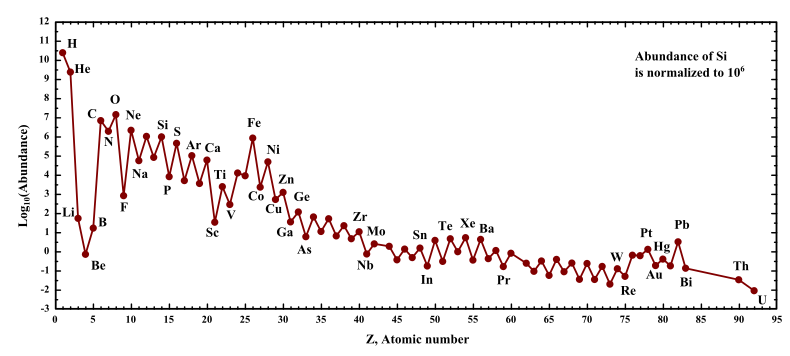
Lithium ranks 33rd in terrestrial abundance and less than that in cosmic abundance. Unlike some other elements like iron, lithium nuclei formed are rapidly destroyed in stars throughout their life cycle. Lithium nuclei are just too delicate to survive stellar interiors. The big bang is thought to have produced a small amount of primordial lithium-7. Most lithium seems to form during spallation reactions when galactic cosmic rays collide with interstellar carbon, nitrogen and oxygen (CNO) nuclei and are split apart from high energy collisions yielding lithium, beryllium and boron- LiBeB. All three elements of LiBeB are cosmically scarce as shown on the chart below.
Lithium is found chiefly in two forms geologically. One is in granite pegmatite formations such as the pyroxene mineral spodumene, or lithium aluminum inosilicate, LiAl(SiO3)2. This lithium mineral is obtained through hard rock mining in a few locations globally, chiefly Australia.
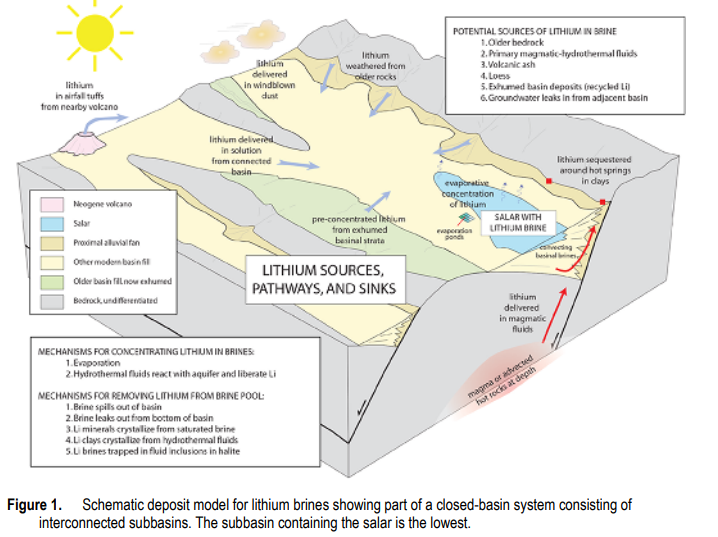
Source: “A Preliminary Deposit Model for Lithium Brines,” Dwight Bradley, LeeAnn Munk, Hillary Jochens, Scott Hynek, and Keith Labay, US Geological Survey, Open-File Report 2013–1006, https://pubs.usgs.gov/of/2013/1006/OF13-1006.pdf
Chemical Definition: Salt; an ionic compound; A salt consists of the positive ion (cation) of a base and the negative ion (anion) of an acid. The word “salt” is a large category of substances, but for maximum confusion it also refers to a specific compound, NaCl or common table salt. In this post the word refers to the category of ionic compounds.
The other source category is lithium-enriched brines. The US Geological Survey has proposed a geological model for brine or salt deposition. According to Bradley, et al.,
“All producing lithium brine deposits share a number of first-order characteristics: (1) arid climate; (2) closed basin containing a laya or salar; (3) tectonically driven subsidence; (4) associated igneous or geothermal activity; (5) suitable lithium source-rocks; 6) one or more adequate aquifers; and (7) sufficient time to concentrate a brine.”
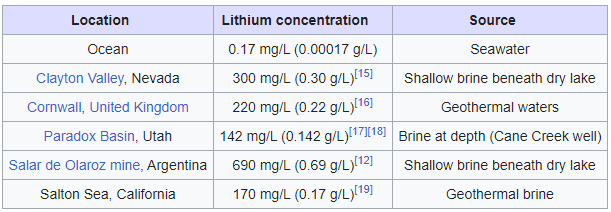
Lithium and other soluble metal species are extracted from underground source rock by hot, high pressure hydrothermal fluids and eventually end up in subsurface, in underwater brine pools or on the surface as a salt lake or a salt flat or salar. These deposits commonly accumulate in isolated locations that have prevented drainage. An excellent summary of salt deposits can be found here.
Critical to any kind of mineral mining is the definition of an economic deposit. The size of an economic deposit varies with the market value of the mineral, meaning that as the value per ton of ore increases, the extent of the economic deposit may increase to include less concentrated ore. If you want to invest in a mine, it is good to understand this. A good opportunity may vanish if the market price of the mineral or metal drops below the profit objectives. Hopefully this happens before investment dollars are spent digging dirt.
Lithium mining seems to be a reasonably safe investment given the anticipated demand growth unless страшный товарищ путины invasion of Ukraine lets the nuclear genie out of the bottle.
Just for fun, there is an old joke about the definition of a mine-
Mine; noun, a hole in the ground with a liar standing at the top.
According to an article in The Hill, the organization Physicians for Social Responsibility published a detailed report on the state of PFAS usage in oil and gas drilling operations including fracking. Note that many if not most states allow drillers to claim that the components of their drilling fluids are a trade secret and exempt from public disclosure. The quantities mentioned in the report are astoundingly large in magnitude. They report that “between 2013 and 2022, drilling operations have injected at least 261 New Mexico wells with 9,000 pounds of per- and polyfluoroalkyl substances (PFAS) for use in fracking,” Further, the article states that “During the same period, oil and gas companies injected more than 8,200 wells with a total of 243 million pounds of fracking chemicals — likely including PFAS — kept undisclosed due to “trade secret shields,” per the report.“
[Note: A reader rightly pointed out that 9000 lbs divided by 261 wells works out to only 34 lbs/well in New Mexico. My thinking was that adding PFAS release to an untenable situation where oil & gas operate under loose environmental constraints already was a step too far. The aforementioned 243 million lbs of fracking chemicals gives no indication of how much, if any, PFAS is included. I understand why additives are blended in with drilling fluids and there are many strong technical and economic reasons for it. There must be boundaries on how much pollution we produce- even with oil & gas production.]
Fracking involves the injection of water, sand and certain chemicals at high pressure to fracture and prop open fissures produced in the formation for increased recovery of oil and gas. This is not a new technique. However, the oil and gas industry has seen to it that they can enjoy trade secrecy and immunity from much regulatory oversight while engaging in their operations. Their injection of chemicals into the ground has been subject to precious little oversight in terms of what and how much they can/should pump into the ground. Underground there is no air oxidation, weathering or photodegradation to break down the substances they pump into the ground. The immediate threat may be nil, but over the upcoming centuries, our descendants may drill into groundwater formations that have been contaminated by earlier petroleum operations. We should tread easily being mindful of our future civilization.
This blatant side-stepping of transparency by oil & gas is made possible through lobbying the local, state and federal government. If they get any push back, they drag out the old saw about jobs, jobs, jobs. No official, elected or appointed, wants to be seen acting against jobs. So, all manner of dubious ideas go forward with the blessing of our officials. We citizens fail to vote in sensible regulation because jobs, jobs, jobs. It doesn’t matter that jobs in oil & gas are famously in the feast or famine category, oil & gas companies always get their way.
Everyday I drive by unmanned oil tank batteries silently doing their automated jobs. The work force is reduced to truck drivers or supervisors visiting only periodically. The roughnecks and the crew who laid the pipes are long gone. At work I frequently train new employees who have left oil & gas because it was too unsteady.
Recently a few states have signed legislation to ban products containing forever chemicals within their state. No mention of well injection chemicals, but at least this is a start.
Good gravy. What a freakin’ mess. It seems like everywhere investigators look, they find perfluorinated alkyl residues- drinking water, fish, people, etc. These fluorinated substances are known as PFAS, PFOS, PFOA, PFHxS or perfluorohexane sulfonic acid, and PFNA or perfluorononanoic acid. The “per” in front of perfluorinated just means that the molecule has as many fluorine atoms connected as possible.
According to the National Association for Surface Finishing, PFAS “properties are useful to the performance of hundreds of industrial applications and consumer products such as carpeting, apparels, upholstery, food paper wrappings, wire and cable coatings and in the manufacturing of semiconductors.“
I will use the term “PFAS” to represent any and all of variations in this small molecule category of perfluorinated substances.
The EPA has kicked into overdrive and is ginning up new regulations, including drinking water standards. “EPA’s proposal, if finalized, would regulate PFOA and PFOS as individual contaminants, and will regulate four other PFAS – PFNA, PFHxS, PFBS, and GenX Chemicals – as a mixture … PFOA and PFOS: EPA is proposing to regulate PFOA and PFOS at a level they can be reliably measured at 4 parts per trillion.” This is around the detection limit for these compounds.
PFAS can be present in our water, soil, air, and food as well as in materials found in our homes or workplaces, including:
Drinking water – in public drinking water systems and private drinking water wells.
Soil and water at or near waste sites – at landfills, disposal sites, and hazardous waste sites such as those that fall under the federal Superfund and Resource Conservation and Recovery Act programs.
Fire extinguishing foam – in aqueous film-forming foams (or AFFFs) used to extinguish flammable liquid-based fires. Such foams are used in training and emergency response events at airports, shipyards, military bases, firefighting training facilities, chemical plants, and refineries.
Manufacturing or chemical production facilities that produce or use PFAS – for example at chrome plating, electronics, and certain textile and paper manufacturers.
Food – for example in fish caught from water contaminated by PFAS and dairy products from livestock exposed to PFAS.
Food packaging – for example in grease-resistant paper, fast food containers/wrappers, microwave popcorn bags, pizza boxes, and candy wrappers.
Household products and dust – for example in stain and water-repellent used on carpets, upholstery, clothing, and other fabrics; cleaning products; non-stick cookware; paints, varnishes, and sealants.
Personal care products – for example in certain shampoo, dental floss, and cosmetics.
Biosolids – for example fertilizer from wastewater treatment plants that is used on agricultural lands can affect ground and surface water and animals that graze on the land.
Details on specific molecular pharmacology mechanisms are a bit thin. The perfluorinated part of PFAS is chemically quite inert and very hydrophobic, but often the perfluorinated group is connected to something polar like a carboxylic acid as with PFOA which can give surfactant properties. Most of the utility of PFAS comes from the fluorinated part. About the only way to get a chemical reaction with perfluorinated organic hydrocarbons is to contact them with alkali metals like sodium or potassium, or even with magnesium or aluminum. The last two are probably less reactive than the alkali metals. The good news is, precious few have alkali metals lying around to blunder into contact with TeflonTM.
All of this toxicity talk seems to be at the “increased this” or “decreased that” correlation stage presently. Another table from the EPA website-
Current peer-reviewed scientific studies have shown that exposure to certain levels of PFAS may lead to:
Reproductive effects such as decreased fertility or increased high blood pressure in pregnant women.
Developmental effects or delays in children, including low birth weight, accelerated puberty, bone variations, or behavioral changes.
Increased risk of some cancers, including prostate, kidney, and testicular cancers.
Reduced ability of the body’s immune system to fight infections, including reduced vaccine response.
Interference with the body’s natural hormones.
Increased cholesterol levels and/or risk of obesity.
Along the way to the consumer are the PFAS chemical manufacturers and their customers that formulate the PFAS into their products. Then there are the retailers who sell PFAS-loaded products to the consumer. The benefits of perfluorinated materials are often revealed as claims for non-stick, repellency or fire retardancy. At some point the whole chain will have to back off on their repellency marketing.
Just for fun, the only substance that a gecko’s foot cannot stick to is PTFE.
So, should all use of PFAS substances be abolished? I think that applications can be prioritized according to relative importance. Fire retardancy is a health and safety related use and is a very important attribute in certain circumstances like fire extinguishing agents. Liquid fuel fires are special because spraying water on burning fuel will result in the fuel floating on top of water and continuing to burn. Foam is used because it can float on top of the fuel and smother it. A thoughtful evaluation of retaining PFAS agents for a select few applications like fire suppression should be made.
Using PFAS to prevent grease stains from soaking through fast food wrappers, water repellency or stain resistance on carpets is likely a basket of applications that we can live without.
In doing background reading for this I found something very interesting. There is such a thing as “Teflon Flu”, also known as polymer fume fever. When a perfluorinated non-stick coating, say, on a pan is subjected to temperatures of around 450 C, the coating begins to decompose and will generate vapors that are hazardous.
We should all remember that TeflonTM is a Chemours trademark and refers to a polytetrafluoroethylene polymer (PTFE). PTFE is a macromolecule unlike PFAS substances. PTFE is in the same persistence class as a “forever substance,” but as an insoluble solid polymer it is not mobilized at the level of molecules so migration into the cellular architecture isn’t viable path as with PFAS. The PTFE polymer is extraordinarily useful in the world and has many, many uses as a polymeric, chemically inert material and should not be cast into the dumpster with its cousins, the PFAS compounds.
Found some YouTube videos on liquid chlorine releases by the Chlorine Institute. The first video is from the Dugway Proving Grounds and shows how a liquid chlorine release will proceed depending on the direction of the release. I won’t spoil it by yammering on about it.
>>> A smattering of thoughts each too small for a post. <<<
I’ve been thinking about quantum chemistry lately, or more to the point, my graduate-level single semester experience with it. First let me say that prior to taking the qualifying exams on arrival to the graduate chemistry program, I made sure to bone up on the particle in a one-dimensional box model. And sure enough, it was on the entry p-chem exam. Whew! Dodged that bullet. However, of all 5 exams we took, I didn’t pass the statistical mechanics exam. I would have to repeat the exam and pass it by the end of the year. Instead of taking the undergrad p-chem course I decided to risk it and study on my own and as luck would have it, I managed to pass it. Another monkey off my back.
Back to the quantum chemistry course. Initially I was hoping to gain a bit of qualitative insight into the subject. As it turned out, it was really just a high level math class where the prof spent the whole term deriving all of the key equations. I think this is pretty common for this subject. There were zero interesting applications mentioned. He was either unable or unwilling to render any of it into sentences for context. The guy was a rock star in his area of solid state nuclear magnetic resonance. Once I went in for help during office hours and he told me he was busy and to come back in 2 weeks (!). I was finally convinced that putting scientists on a pedestal was a serious error and that a**holes were truly everywhere. Anyway, I made it through the experience and moved on. Haven’t had to think about Hamiltonians since.
==========
I was chatting with a toxicologist colleague recently about the big derailment and fire disaster in East Palestine, OH. I had suggested that the decision of the responders to vent and burn the remaining vinyl chloride was probably a good idea. There was some fear that there may be a runaway polymerization of the vinyl chloride. This would likely lead to an explosive rupture of the tank car and a possible BLEVE. This is from the report–
“On February 5, responders mitigated the fire, but five derailed DOT-105 specification tank cars (railcars 28–31 and 55) carrying 115,580 gallons of vinyl chloride continued to concern authorities because the temperature inside one tank car was still rising. This increase in temperature suggested that the vinyl chloride was undergoing a polymerization reaction, which could pose an explosion hazard. Responders scheduled a controlled venting of the five vinyl chloride tank cars to release and burn the vinyl chloride, expanded the evacuation zone to a 1-mile by 2- mile area, and dug ditches to contain released vinyl chloride liquid while it vaporized and burned. The controlled venting began about 4:40 p.m. on February 6 and continued for several hours.”
My colleague said that a fire releases aerosols that are likely to be especially deleterious to the lungs. Burning organic chlorides leads to hydrochloric acid formation with all of the joy that it brings to the dance. The smoke plume, elevated by convection, and probably carrying some amount of unburned chemicals will spread with the aerosols far and wide. This would contaminate a larger patch of environment and expose a more distant population than a simple spill at the crash site would. He wondered to what extent the chemicals shouldn’t have been removed at the site, spill or not, and the land be designated as a Brownfield.
==========
Elon Musk has been running off at the mouth again, this time seeming to take sides with the Dilbert cartoonist Scott Adams who was recently given the death penalty of abandonment by his publishers. Adams used his cartoon to go off on the Black population saying that Whites “should get the hell away from Black people” referring to them as a racist hate group.
Set aside the merits/demerits and morality of Adams’ racial views for a minute. As an adult and businessman he should have known the boundaries of acceptable content in his cartoon strips in the current social environment. He published content that appeared to have alignment with white supremacist ideas. In publishing this content, he made himself radioactive and he was dropped by his publishers who happen to have better business sense. What a dunce. He was playing with a loaded gun and it went off in his face.
So, His Excellency, Elon Musk, has stepped into the fray and condemned the excommunication of Adams from the comic strip pages. Musk said that while Adams’ comments weren’t good, there was an element of truth in them. He accused the media of providing a “false narrative” by giving more attention to Black victims of police violence than to White victims of police violence. This is on top of his general loosening on hate speech on Twitter and the reinstatement of banned accounts such as with #45. Musk is broadcasting that hate speech is as valid as any other speech on his platform. Businesses like Twitter are free to edit content or not as they please. Musk believes in a rough-and-tumble environment where most anything goes. As an owner, he is certainly free to do that. But as owner, he is also responsible for content that drives away business.
Irrespective of your beliefs in this matter or the obvious morality issues, it should be apparent that neither Adams or Musk seem to care about the effect on business of draping yourself in the flag of racism, or even just of allowing the perception of it. Savvy is a kind of vector- it has magnitude and direction. Musk has strong vectors in the technology direction, but not so much in the public relations direction. He doesn’t seem to have full control of his mouth just yet.
The Norfolk Southern train derailment and fire in East Palestine, OH, has spread into the political dumpster. By not appearing near the crash site promptly, both Biden and Buttigieg are feeling the heat of the GOP panic machine. The single plank on the GOP platform is to knock down Democrats at every opportunity. While the news organs of the GOP are busy trying to blame the Biden administration for the accident, fire and contamination, citizens are expressing dismay over not knowing what to do going forward. They aren’t receiving much advice or direction from EPA about how much they should be worried about contamination and exposure to the released chemicals. In fact, on the ground it has been hard to see the hand of government anywhere. Their frustration is normal and understandable. I would be frustrated too.
Let’s step back a minute and examine the situation from 50,000 ft. The last thing we want in government is for a proper response to an emergency of this scale to require the president to personally lead the emergency response. The same is true for the Secretary of Transportation. Good leaders delegate responsibility to specialists for situations like this. Good leaders are watchful but stay out of the way of the experts. Good leaders make sure that the people on the ground have the resources they need to do their jobs. Ok, Biden didn’t respond publicly to the situation early enough, but that is not to say that things weren’t happening. But, he has 330,000,000 American back-seat drivers to make happy. That’s his job.
Let’s remind ourselves that Biden and NATO are also busy trying to prevent the start of WWIII.
As with an emergency of any scale, it takes responders some time to understand the situation and then to bring resources to bear. In the mean time, the NTSB was promptly dispatched and has already published preliminary report RRD23MR005 on the event. It is very interesting to see that many of the safety systems worked. The overheated wheel was detected and an emergency braking procedure was put into action just before the derailment occurred.
Ok, Biden and Buttigieg could have been quicker to publicly extend sympathy and the promise of relief. Complaining about this is like accusing grandma of not giving you a kiss while she was trying to put out a fire in the kitchen. But contrast this PR error of omission with the antics of #45 in Puerto Rico after the recent hurricane. Remember how he tossed rolls of paper towels as mock support during an interview down there? MAGA people have no leg to stand on with presidential expressions of sympathy.
As far as what kind of toxic threat there is to humans and what potential environmental insult there will be, the situation has not fully played out yet. This will need to be studied for years. There is acute toxicity and there is chronic toxicity. With most chemicals there will be a clear dose-response relationship with chemical dosing if you choose the right experiment to do. However, that relationship can become quite uncertain with low dosing. The health effects of exposures from the East Palestine derailment cannot be measured with high precision over the long haul. Genuine toxic effects are over-printed on a background of natural disease. Diseased tissues do not have little signs that say “I was caused by vinyl chloride dosing”. Histology can characterize cell types and correlate them with known chemical insult, but only a jury can say if any particular conclusion will hold up in court. With toxicity effects, certainty is not always what you get.
Paracelsus said in 1538 that “All things are poison, and nothing is without poison; the dosage alone makes it so a thing is not a poison“. That observation is still true today.
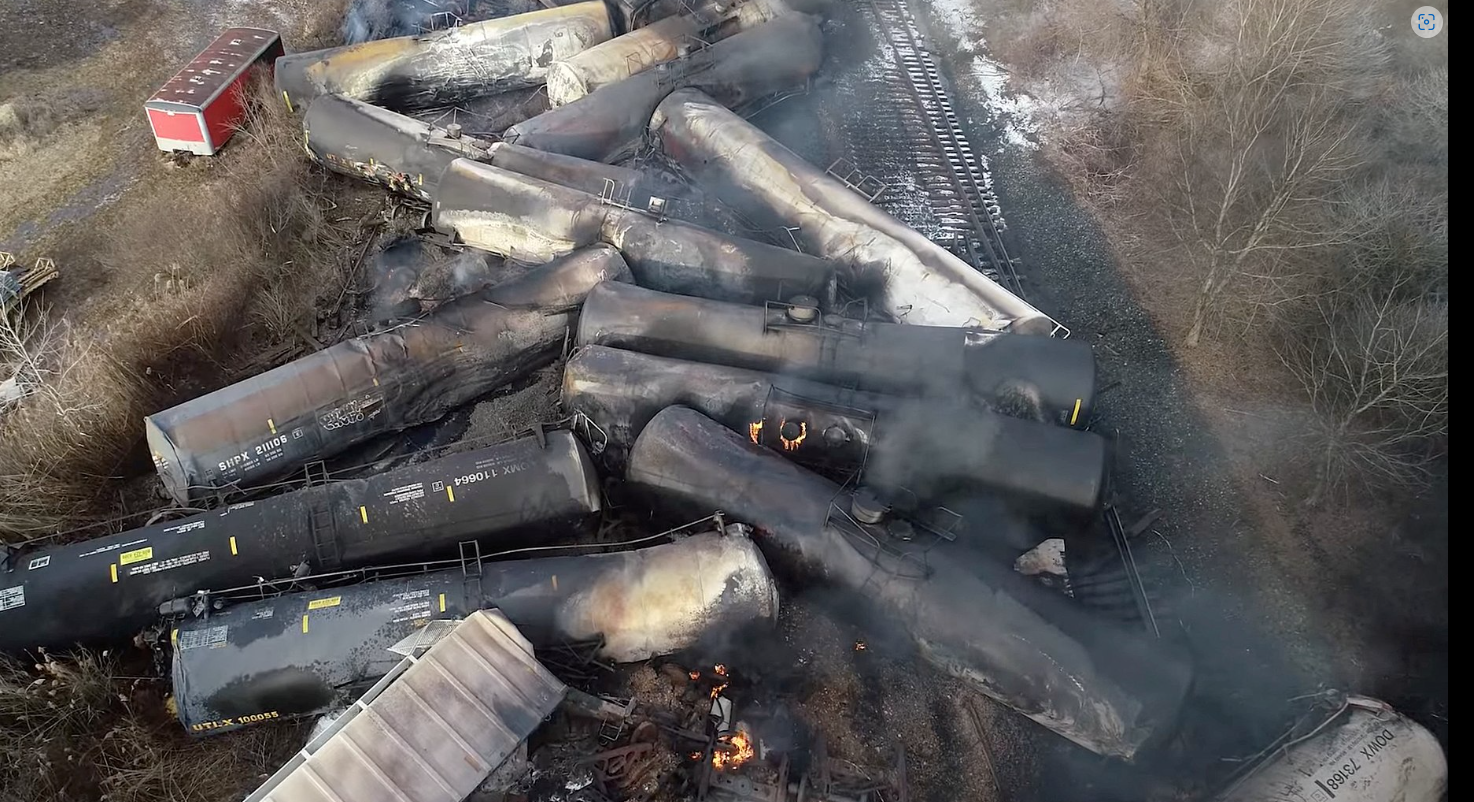
When I think “train wreck” I usually think of #45’s presidency. But here I refer to the actual Feb 3, 2023, Norfolk Southern train wreck in East Palestine, OH. A very long train carrying, among other things, tankers of hazardous chemicals had a derailment and fire near the small town of East Palestine, OH, along the southwest Pennsylvania border. It was a true calamity releasing hazardous chemicals, some of which caught fire and burned for days. It isn’t clear as yet as to what burned and what didn’t. The extent of pollution will eventually be released by authorities and monitored for years to come.
Early reports have claimed that the accident started with an overheated wheel bearing. It would be interesting learn how this could lead to a derailment. The root cause analysis will be interesting.
NTSB chair Jennifer Homendy explained that the train in this accident would not have been required to utilize the ECP braking system even if the FAST Act was not repealed, because the term high-hazard flammable train means a single train transporting 20 or more tank cars loaded with a Class 3 flammable liquid. As it had only three such placarded train cars, the derailed train did not meet the qualifications of a “high-hazard flammable” train.
ECP stands for Electronically Controlled Pneumatic brakes. The Wikipedia page describes the pathetic political kerfuffle over these brakes and how certain groups fought the requirements for them.
The Washington Post released a piece, dated Feb 18, 2023, about it showing some interesting pictures. One aerial shot captures the wreckage along with what the cars were carrying. A security camera caught the train moving along with a large fire blazing under one car minutes before entering town. The video has since been removed.
The burning vinyl chloride (and … ?) produced a toxic plume that by some accounts was also corrosive. I assume this to be due to the burning of an organic chloride releasing hydrochloric acid vapors. According to Wikipedia, of the 150 cars in the train some 38 train cars were derailed.
Substances in cars that were derailed according to the Washington Post-
Vinyl chloride
Polyethylene
Dipropylene and propylene alcohol
Semolina (a wheat flour)
Polyvinyl chloride (PVC)
Ethylhexyl acrylate
Petroleum lubricating oil
Diethylene glycol
Isobutylene
Butyl acrylate
Benzene
Much was made in the news about burning vinyl chloride and noxious fumes, but I haven’t heard an accounting of what actually burned. Any release of acrylate monomers is especially unfortunate since as a group, they can be nasty lachrymators. This will take years to get through the courts.
INEOS in planning to put a new ethane cracker in the ground in Antwerp, Belgium, called Project One. INEOS has reportedly raised 3.5 billion Euros for the construction. The new plant will have a carbon footprint 3 times lower than the average European steam cracker. The process will use so-called “low carbon hydrogen” to power the cracker. A cursory search of Google didn’t produce a clear definition of low carbon hydrogen. Maybe the reader has an idea. The hydrogen literature has gotten quite complicated with the large variety of hydrogen sources and technologies.
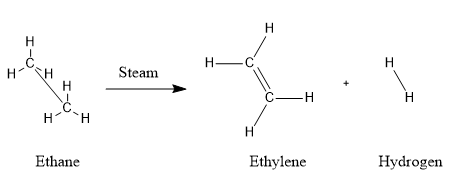
An ethane cracker removes one molecule of hydrogen from each molecule of ethane to produce one molecule of ethylene product. Of course, ethylene is the primary monomer for all of the various grades of polyethylene (a polyolefin). This uptick in capacity is likely driven by optimistic projections for increasing demand for polyolefins. Alternatively, it could be in anticipation of retiring capacity.
Other feedstocks like LPG or naphtha can be cracked to produce a different spread of unsaturated and aromatic products. Olefins produced feed into a variety of large-scale manufacturing streams.
In a cracker the ethane is diluted with steam and briefly heated to ca 850 C for a few milliseconds and then quickly quenched. Steam crackers are constructed to capture waste heat from the process to power refrigeration compressors. Production of ethylene is very energy and carbon intensive. According to Wikipedia, for every 1 tonne (1000 kg) of ethylene there are 1 to 1.6 tonnes of carbon dioxide produced, depending on the feedstock. This plant is designed to reduce carbon output.
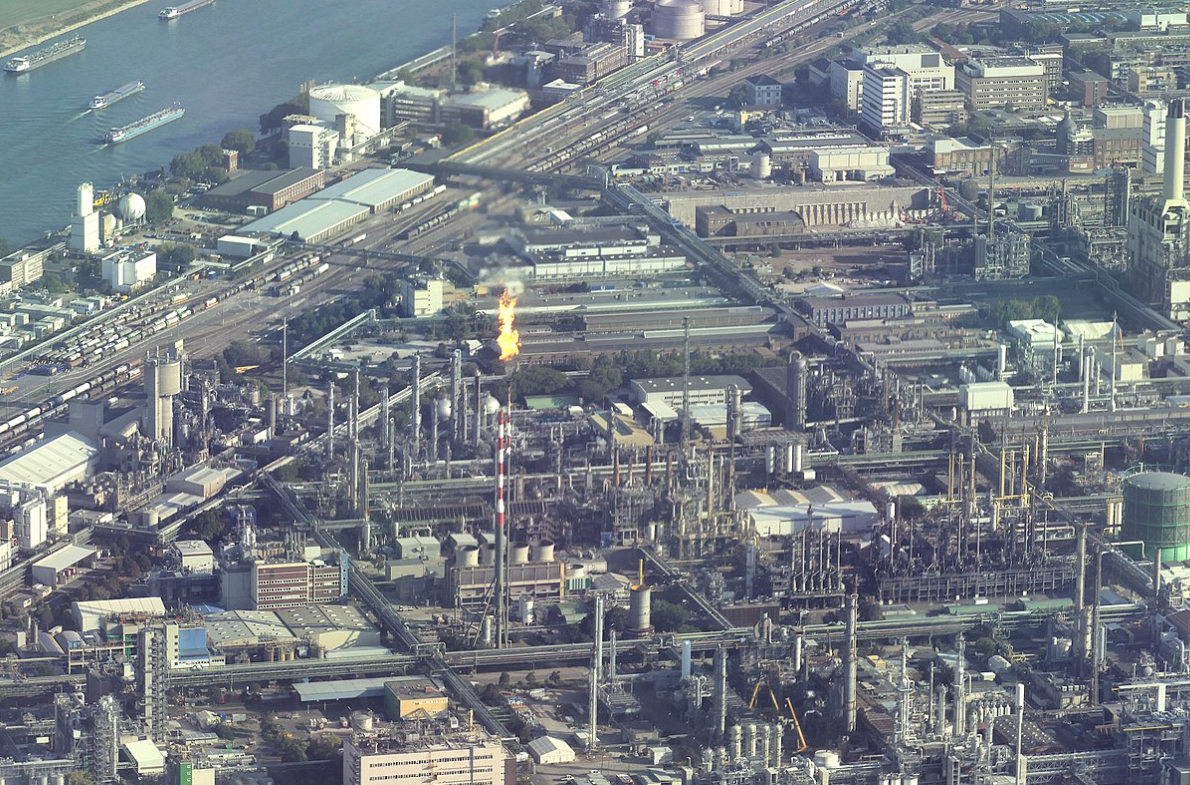
Steamcracker II at the BASF site in Ludwigshafen/Germany, Wikipedia.