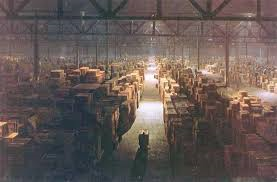
Yet another reprint of posts from the past, this time from April 11, 2008.
As usual, Th’ Gaussling’s most interesting observations of the ACS meeting are of a proprietary nature and will have to go with me to the grave. Our student and academician friends can expound openly on what lights their fires. The lusty satisfaction of compelling oratory in the darkened halls of convention centers is part of the reward for the cardinals of the academy. Members of the merchant class have to be satisfied with better dining.
People who are involved in personnel issues often speak of an employees “deliverables” as their work product. For those lucky enough to be in the academy, the work product includes teaching young minds, conducting research, and participating in the dissemination of the results in the form of papers and conferences.
For we chemists who did the deal with the devil in exchange for filthy lucre, our performance is rated somewhat differently. Like academics, our performance metric only starts with some understanding of science. Once it is possible to begin understanding a thing, the task of transforming a process or material property into an item of commerce begins. In the chemical industry we do the most important reaction of all- the transformation of chemicals into money.
The part of the brain that sees a stick on the forest floor that resembles a tool is the same part of the brain that scans a molecule and sees latent functionality or value. The extraction of value from a composition or a process is a complex anthropological activity. Product development is anthropological because it involves the use of tools and organizational structure to provide products or services that are exchanged between groups.
An industrial science group has to isolate value in some material property and contrive to bring some product or service into being. But to get it to market, the science tribe has to cooperate with those with other skills. Organizations often resemble a confederation of tribes who cooperate with complex rituals and methods of exchange.
According to BloombergNEF, the United States is on course to double its natural gas liquefaction (LNG) capacity by 2027. US export capacity is expected to rise to 169 million metric tons per year with the opening of 3 new projects slated for funding approval this year. They are- Venture Global’s Plaquemines LNG, Sempra’s Port Arthur LNG, and NextDecade’s Rio Grande LNG. This new capacity will place the US well ahead of Qatar in annual production.
Appendix–
LNG should not be confused with LPG, Liquified Petroleum Gas. LPG is a mixture of the somewhat heavier hydrocarbons propane, propylene, butylene, isobutane and n-butane. LPG is a fuel gas and can be used as an aerosol propellant and refrigerant.
LNG is composed mainly of methane (CH4) with a smaller amount of ethane (C2H6). Lesser amounts of propane and butane are isolated and sent to a separate stream. Natural gas is “sweetened” prior to cooling to remove corrosive hydrogen sulfide (H2S), carbon dioxide (CO2) gases as well as helium, mud, water, oil and mercury. Once the impurities are removed, the remaining methane/ethane mixture is cooled to −162 °C for bulk transport. On arrival at its destination, it must undergo a regasification process. In some locations seawater can be used to vaporize the LNG for injection into pipelines.
As an alternative to sea water heat transfer for regasification, LNG can be utilized for its “cold energy” potential. One application uses low temperature LNG as a refrigeration coolant for producing liquid oxygen and liquid nitrogen. Another use of the cold energy is to cool the exhaust of a gas turbine in a closed joule cycle with argon as the fluid.
Since we are talking about gaseous hydrocarbons, there is also a category of liquid hydrocarbons called condensates that accompany the production of natural gas and must be channeled into a separate processing stream because, well, they are liquid. Raw natural gas straight out of the ground may have varying amounts of condensates-
Crude oil wells can produce natural gas called associated gas and condensates may be entrained in the gas flow.
Dry gas wells produce gas that have no associated liquids.
Condensate wells produce natural gas with associate natural gas liquid.
Wikipedia explains the condensate situation in greater detail.
This post is an update of a post I wrote on Mole-Day of 2011. It is a brain dump that summarizes much of what I’ve learned about dealing with potentially explosive chemicals in the manufacturing environment. Very few chemists actually have to deal with explosive chemicals in their work activities. It is actually quite uncommon. No doubt some important considerations have been left out and for that I apologize.
The Prime Directive: If you choose to bring in or make a chemical substance in your facility, you must develop in-house expertise in the safe handling and use of that substance. Do not expect to rely on outside expertise for it’s safe use. Always strive to build in-house expertise in regard to chemical properties and safety- never farm this out to consultants. This includes proper engineering and broad knowledge of reactive chemical hazards.
Safety has a substantial psychological component. You can build into a chemical manufacturing process extensive engineering and administrative controls for safe operation. These layers of control are concrete and definable. What is fuzzy, however, is the matter of how people behave. In particular, I’m thinking of getting people to behave in a particular way over the long haul. Keeping people operating safely over long periods of time where no adverse events happen poses special problems. Especially in regard to low frequency, high consequence events. Cutting corners and improper use of PPE is not uncommon and should be expected. Something expected can be watched for continuously.
In safety training I mention that handling a hazardous material is like handling a rattle snake. You have to exercise the due caution every single time you pick up that snake. You do not accumulate and bank safety credits for previous safe handling. Everybody understands this already at some level. But the possibility of drift in safety practice over time needs to be emphasized.
The best strategy I know of besides complete process automation is recurrent safety training along with vigilant management. Successful safety management requires proper supervision by alert supervisors. Management by walking around helps with this. Well written process instructions that anticipate practical problems are essential. Holding people accountable for following Standard Operating Procedures is critical. Working conditions conducive to focus are always good. Operational rotation with may be helpful.
In chemical safety, the biggest worry is typically the potential for an explosion. What should you do if a raw material or product in a process may be explosive or has explosive features on the molecule? Good question. First, someone in the R&D chain of command should have knowledge of the list of known explosophores. It’s not a big list. PhD chemists in R&D should know this anyway. Explosive molecules have certain chemical bonds that are weakest and are known as “trigger bonds“. It is thought that the rupture of these trigger bonds initiates explosive decomposition of the substance.
Just because a material has explosive properties does not automatically disqualify it for use. Azides and nitro compounds are used safely every day. But, to use a chemical safely you must accumulate some knowledge on the type and magnitude of stimulus that is required to give a hazardous release of energy.
For any given hazard, it is my personal policy to learn as much about the nature of the hazard at the chemical and bulk level as I can. I believe that it is important to know more about something than what is immediately called for. That is the difference between education and training. This is how you build expertise.
Some comments on the release of hazardous energy. Hazardous energy is that energy which, if released in an uncontrolled way, can result in harm to people or equipment. This energy may be stored in a compressed spring, a tank of compressed gas, the stable chemical bonds of a flammable material, the unstable chemical bonds of an explosive material, or as an explosive mixture of air and fuel. A good old fashioned pool fire is a release of hazardous energy as well. Radiant energy heating from a pool fire can easily and rapidly accelerate nearby materials past the ignition point. Good housekeeping goes a long way towards preventing the spread of fires.
Applying and accumulating energy in large quantities is common and actually necessary in many process activities. In chemical processing, heat energy may be applied to chemical reactions. Commonly, heat is released from chemical reactions at some level ranging from minimal to large. The rate of heat evolution in common chemical reactions can be simply and reliably managed by controlling the temperature or rate of addition of reactants where two reactants are necessary. However, reactions do not always evolve significant power output immediately on mixing of the reactants.
Induction periods are potentially dangerous and must be identified prior to scale up. The appearance of an exotherm very early in a feed operation is a good indication that the reaction has begun. However, a thermogram from a reaction calorimeter showing the temperature and power output (watts) versus the feed mass will indicate if the reaction is slow and accumulation of reagent (energy) is occurring. This can be teased out early by adding a small shot of reactant feed (a few %) and watching the power profile. The ideal profile is where the power output starts promptly, peaks and then promptly decays to baseline. This is a good indicator of the absence of accumulation. Generally, the kinetics are most favorable at the beginning of the reagent feed and taper off to zero as reactants are consumed. Some accumulation is usually tolerable from the heat load perspective. This is a good thing because a thermogram showing some accumulation could lead to an unnecessarily long feed time. A reaction calorimeter can give the peak wattage per kilogram of reaction mass. An engineer should be able to estimate the maximum controllable heat flux for a given reactor. Without being too specific, it is in the range of several tens of watts per kg of reaction mass according to one reference I know.
There are explosive materials and there are explosive conditions. If one places the components of the fire triangle into a confined space, what may have been simple flammability in open air is now the makings of an explosion. Explosive materials have two legs of the fire triangle built into the molecule- the oxidizer and the fuel separated by only nanometers. However, the composition of the explosive itself may not produce a balanced reduction/oxidation reaction. The oxygen balance is a easily calculated number that will indicate whether or not there is an excess or deficit of oxygen in an explosive substance. For example, ammonium nitrate has a 20 % excess of oxygen. Fuel oil can be added to bring the fuel/oxidizer ratio into redox balance. This mixture is referred to as ANFO.
In a chemical explosion, heat and increasing pressure can do PV work on the contents and containment. Minimally, the outcome will be an overpressure with perhaps the blowing of a rupture disk on a reactor. In another situation, the equipment may blow apart and send fragments flying away at high speed with an expanding fireball.
There is a particular type of explosive behavior called detonation. Detonation is a variety of explosive behavior that is characterized by the generation and propagation of a high velocity shock through a material. A shock is a high velocity compression wave which begins at the point of initiation and propagates throughout the bulk mass of explosive material. Interestingly, because it is a wave, it can be manipulated somewhat by reflection and refraction. This is the basis for explosive lensing and shaped charges. It is characteristic of detonations to produce shredded metal components. Detonations have a very large rate of pressure rise, dP/dt. The magnitude of dust explosions is commonly performed by a few commercial test labs out there. One of the important test results is the Kst value showing the magnitude of the explosive force.
Detonable materials may be subject to geometry constraints that limit the propagation of the shock. A cylinder of explosive material may or may not propagate a detonation wave depending on the diameter. Some materials are relatively insensitive to the shape and thickness. A film of nitroglycerin will easily propagate as will a slender filling of PETN in detonation cord. But these compounds are for munitions makers, not custom or fine chemical manufacturers. The point is that explosability and detonability is rather more complex than one might realize. Therefore, it is important to do a variety of tests on a material suspected of explosability. The type and magnitude of stimulus necessary to produce an explosion must be understood for safe handling and shipping.
A characteristic of detonable explosives is the ability to propagate a shock through the bulk of the explosive material. However, this ability may depend upon the geometry of the material, the shock velocity, and the purity of the explosive itself. There are other parameters as well. Marginally detonable materials may lose critical energy if the shape of the charge provides enough surface area for loss of energy.
Explosive substances have functional groups that are the locus of their explosibility. A functional group related to the initiation of explosive behavior, called an explosophore, is needed to give a molecule explosability. Obvious explosophores include azide, nitro, nitroesters, nitrate salts, perchlorates, fulminates, diazo compounds, peroxides, picrates and styphnates, and certain hydrazine moieties. Other explosophores include the hydroxylamino group. HOBt, a triazole analog of hydroxyamine, hydroxybenzotriazole, has injured people, destroyed reactors and caused serious damage to facilities. Anhydrous hydroxylamine has been the source of a few plant explosions as well. It is possible to run a process for years and never cross the line to runaway as was the case for these substances.
Let’s go back to the original question of this essay. What do you do if you find that a raw material or a product is explosive? The first thing to do is collect all available information on the properties of the substance. In a business organization, upper management must be engaged immediately since the handling of such materials involves the assumption of risk profiles beyond that expected.
At this point, an evaluation must be made in relation to the value of the product in your business model vs the magnitude of the risk. Dow’s Fire and Explosion Index is one place to start. This methodology attempts to quantify and weight the risks of a particular scenario. A range of numbers are possible and a ranking of risk magnitude can be obtained therein. It is then possible to compare the risk ranking to a risk policy schedule generated beforehand by management. The intent is to quantify the risk against a scale already settled upon for easier decision making. A problem with this approach is that it requires numerical values for risk which might be difficult to come by.
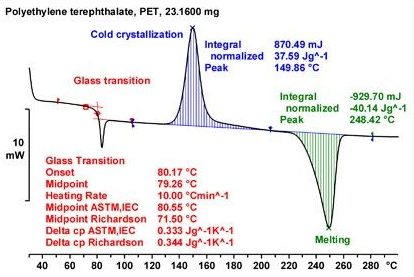
But even before such a risk ranking can be made, it is necessary to understand the type and magnitude of stimulus needed to elicit a release of hazardous energy. A good place to start is with a DSC thermogram and a TGA profile. These are easy and relatively inexpensive. A DSC thermogram will indicate onset temperature at a given temperature ramp rate and energy release data as a first pass. Low onset temperature and high energy release is least desirable. High onset temperature and/or low exothermicity is most desirable.
What is more difficult to come to a decision point on is the scenario where there is relatively high temperature onset and high exothermicity. Inevitably, the argument will be made that operating temperatures will be far below the onset temp and that a hazardous condition may be avoided by simply putting controls on processing temperatures. While there is some value to this, here is where we find that simple DSC data alone may be inadequate for validating safe operating conditions.
Onset temperatures are not inherent physical properties. Onset temperatures are kinetic epiphenomena that are dependent on the sensitivity of the instrument, sample quality, the Cp of both the sample and the crucible, and the rate of temperature rise. What may be needed once an indication of high energy release is indicated by the DSC is a determination of time to maximum rate (TMS). While this can be done with special techniques in the DSC (i.e., AKTS), TMR data may be calculated from 4 DSC scans at different rates, or it may be determined from Accelerated Rate Calorimetry, or ARC testing. Arc testing gives time, temp, and pressure profiles that DSC cannot give. ARC also gives an indication of non-classical liquid/vapour behavior that is useful. ARC testing can indicate the generation of non-condensable gases in the decomposition profile which is good to know.
Time to maximum rate is measured in time at a specified temperature. Many people consider that a TMR of 24 hours at the process temperature is a minimum threshold for operational safety. Others might advise 24 hours 50 or 100 C above the maximum operational temperature. If you contemplate using this parameter, it is critical to get testing from a professional lab for a time at a particular temperature. This kind of test will produce a formula that you can calculate TMR values at a given temperature. Bear in mind, however, that no outside safety consultant will tell you what you must do for liability reasons. You must develop enough in-house expertise to make this decision for yourself.
The standard tiered test protocol for DOT classification is a good place to start for acquiring data on explosive properties. Several companies do this testing and give ratings. There are levels of testing applied based on the result of what the lower series tests show. Series 1 and 2 are minimally what can be done to flesh out the effects of basic stimuli. What you get from the results of Series 1, 2, and 3 are a general indication of explosibilty and detonability, as well as sensitivity to impact and friction. In addition, tests for sensitivity to electric discharge and dust explosion parameters should be performed as well.
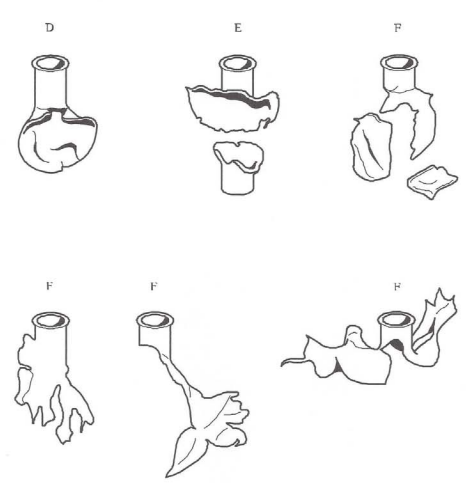
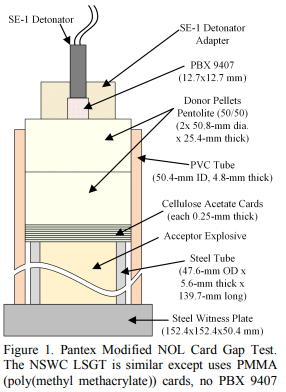
The card gap test, Konen test, and time-pressure test will give a good picture of explosive behavior. The Konen test indicates whether or not extreme heating can cause an explosion sufficient to fragment a container with a small hole in it.
BOM or BAM impact testing will indicate sensitivity to impact stimulus. Friction testing gives threshold data for friction sensitivity.
ESD sensitivity testing gives threshold data for visible effects of static discharge on the test material. Positive results include discoloration, smoking, flame, explosive report, etc.
Once the data is in hand, it is necessary to sift through it and make some business decisions. There is rarely a clear line on the ground to indicate what to do unless there is already a policy on decision making here. What testing results will indicate is what kind of stimulus is necessary to give a positive result with a particular test. It is up to your in-house experts and management to decide the likelihood of exposing the material to a particular stimulus. Will it be possible to engineer away the risk or diminish it to an acceptable level? The real question for the company is whether or not the risk of processing with the material is worth the reward. Everyone will have an opinion.
The key activity is to consider where in the process an unsafe stimulus may be applied to the material. If it is thermally sensitive in the range of heating utilities, then layers of protection guarding against overheating must be put in place. Layers of protection should include multiple engineering and administrative layers. Every layer is like a piece of Swiss cheese. The idea is to prevent the holes in the cheese from aligning.
If the material is impact or friction sensitive, then measures to guard against these stimuli must be put in place. For solids handling, this can be problematic. It might be that preparing the material as a solution is needed for minimum solids handling.
If the material is detonable, then all forms of stimulus must be guarded against unless you have specific knowledge that indicates otherwise. Furthermore, a safety study on storage should be performed. Segregation of explosable or detonable materials in storage will work towards decoupling of energy transfer during an incident. By segregating such materials, it is possible to minimize the adverse effects of fire and explosion to the rest of the facility.
With explosive materials, electrostatic safety is very important. All handling of explosable solids should involve provisions for the suppression of electrostatic charge generation and accumulation. A discharge of static energy in bulk solid material is a good way to initiate runaway decomposition of an energetic material. Unfortunately, some explosive substances may not require the oxygen leg of the fire triangle so, in this case, inerting with nitrogen won’t be preventative.
Safe practices involving energetic materials require an understanding the cause and effect of stimulus on the materials themselves. This is of necessity a data and knowledge driven activity. Handwaving arguments should also be suppressed in favor of data-driven analysis.
The Energy Information Administration (EIA) is a primary source of data relating to global petroleum and distillate use. It follows production, transport and prices. In addition to supplying data, they provide some interpretation of the global picture. There is so much BS circulating about fuel costs that a credible source of information is welcome.
Oil tankers come in two varieties- clean and dirty. A clean tanker hauls low-sulfur distillates. A dirty tanker hauls crude oil. Since the invasion of Ukraine, tanker shipments from Russia to the west have fallen off and longer voyage shipments have increased. This has increased the cost of transport and floating storage of petroleum and distillates. In the time between February 2022 and November 2022, Very Large Crude Carrier (VLCC) rates from the Middle East to the US Gulf Coast (USGC) have more than tripled. The rates from USGC to Rotterdam have increased from $8.00 to more than $27.00 per metric ton. Rates of shipments on Suezmax ships have also tripled. Dirty tanker rates from Russian ports in the Baltic and Black Sea have gone up due to increased insurance rates. Also, add to all of this the increased cost of bunker fuel for longer voyages.
Shipments of LPG (propane) have been delayed by long waiting times for passage through the Panama Canal. Congestion at the Neopanamax locks has led to increased scarcity of Very Large Gas Carriers (VLGC). Propane is both a fuel and an industrial feedstock. Propane is dehydrogenated to propylene and used for the production of polypropylene. Propane is also a fuel whose demand is highly seasonal with greatest demand in the winter months. VLGCs in the Middle East are drawn out of the area by better rates in the US, creating scarcity there.
This article amounts to a plea to analytical chemists, supervisors, and organizations who use perchloric acid to make the effort to understand its reaction chemistry, as an acid or salt, and the peculiarities of the numerous mixtures used in analytical sample digestion. If your organization uses standard methods of digestion via one of the many acid mixtures and temperatures, it behooves your organization to have at least one individual on site who understands a bit more than just the procedure. If there is an incident of some kind involving perchloric acid, be it a spill, splash, or worse, having a grasp of the real hazard presented before you is useful. It is possible to underreact or overreact to any given incident scenario.
I am not an analyst. My interest is to understand reactive chemical hazards and devise means for preventing the transition from hazard to danger. Whether someone uses perchloric acid or not makes no difference to me. I have no investment in perchloric acid. However, I’m greatly interested in users being informed.
Comments on Safety Training
Safety training is commonly executed as a result of company policy where documentation of satisfactory completion is collected and filed. For lab chemists this includes training sessions on chemical storage, fire safety, fire extinguisher training, hazardous waste practices and regulations, storm water regulations, company safety and health SOP training, building evacuation, general lab safety, and perhaps basic first aid.
Often safety training sessions are canned professional video presentations or a corporate home brew of PowerPoint slide shows followed by some Q&A and a quiz. It is what I refer to as infotainment. Attendees may watch a video with dramatized incidents while the voiceover describes what should have happened. This approach is not without merit or some success, but this passive approach may not be of lasting value. Furthermore, it is a very sketchy assumption that such passive training will result in proper decision making in an off-normal circumstance where hazard may transition to danger.
The military has solved this problem long ago by mastering the art of the drill. They realize that if you need people to respond in a particular way rapidly, they have to be trained and drilled. In times of peace, the military has the opportunity to train and drill to maintain operational readiness. This is one way to address the difficult problem of low probability, high consequence scenarios. Industry as a whole, however, may not inclined to offer a lot of free time to dedicate to training. Man-hours in drills subtract from productivity. In my opinion, much of industrial management suffers from a lack of imagination in this matter. Safety training and drills are cost overhead. But, what you lack in training hours may be made up for by effective mentoring.
We live in the age of OSHA regulations. Of importance to the process industry is Process Safety Management or PSM. The mission of OSHA is copied and pasted below.
The Wikipedia link below gives an excellent summary of OSHA regulations relating to the chemical process industry. PSM in 29 CFR §1910.119 titled Process safety management of highly hazardous chemicals, is a regulatory framework covering all aspects of safety management and threshold quantities (Appendix A) of highly hazardous materials. Whether your facility is operating at the PSM scale of operation or not, employers have a duty to assure a safe operating environment for their employees. In my view, PSM regulations frame a safety mindset and diligence that is useful outside of PSM reach. Given that a debilitating injury, fatality, explosion or major fire will bring the unblinking eye of regulators and possible litigation, sensible practices found in 29 CFR §1910.119 that are woven into your chemical safety SOPs are in the direction of goodness. Again, this is my view and should not be construed as legal advice. Your chemical safety plan is your responsibility alone.
Finally, a word to lab managers and supervisors. I cannot point to a ancient stone or a law of nature that commands that leaders be effective instructors and mentors. But I can throw an idea on the table which is that as a senior employee in a supervisory role, you have a moral obligation to your charges to make sure that they practice their art with diligence and in a safe manner. The best way I know of is to train staff thoroughly in lab operations and have high expectations of your staff. Management by wandering around can be very effective in maintaining discipline and keeping tabs on your shop. Besides, you should be walking around and asking questions anyway.
HClO4 – The Meat and Potatoes
There is much to know about the chemistry of perchloric acid digestion beyond it’s renowned acidity and explosive potential. Appreciating the corrosivity and close adherence to standard laboratory techniques are necessary but not always enough. One such circumstance begging for informed action is method development. In researching this topic I was a little surprised to find that many important details are buried in the primary literature. Worse, a few key references are downright difficult to obtain. By important details, I mean whatever information might help define the safe operating window for a given digestion, or, better put, under what circumstances might a digestion procedure transition from hazardous to dangerous.
The major supplier of perchloric acid and perchlorate salts in the USA is GFS Chemicals in Powell, OH. The founder of this company, G. Frederick Smith was, and remains posthumously through his writings, a top authority on the properties of this acid and numerous perchlorate salts as the result of his many decades of research. Laboratory quantities of perchloric acid can be had from GFS and the usual group of research chemical suppliers.
It is easy to find MSDS data and exemplar laboratory safety guides on your browser detailing sensible storage and use policy. Several found in google-space stand out in my opinion as comprehensive perchloric acid safety documents and SOP’s; UC Berkeley; Boston University; MIT; Harvard; British Columbia Code for Mines to name a few. Again, this is my opinion- form your own. If your perchloric acid “policy” is limited to an MSDS document and perhaps a few safety statements found in a procedure, then I would urge someone in your organization to take it upon themselves to dig in a little deeper. Generate SOPs for all aspects of the perchloric acid life cycle in your facility.
There are many accounts of incidents with perchloric acid that should convince even the most refractory skeptic of the potential for a violent release of energy. There is a perchloric acid incident that stands out as an example of the dangers of a chemical ignorance. It happened February 20, 1947, when a large and violent explosion killed 17 people and led the city of Los Angeles to specifically bar the use of perchloric acid (1) through numerous sections of it’s zoning code.
The most common laboratory use of perchloric acid is in the analytical digestion of samples containing a matrix of organic matter, sludge, tissue, biomass or organic chemicals. There are a great many lab procedures to be found by an internet search including Chemical Abstracts (CAS), the AOAC Official Methods of Analysis manual, and ASTM relating to HClO4. Numerous policy and prudent practices documents can be downloaded from well established institutions that outline some very sensible policies regarding the storage, use, and disposal of HClO4. One particularly good source for sample digestion methods across the periodic table is from Inorganic Ventures. Kudos to Dr. Paul Gaines and this company for the quality of their products and their willingness to share their expertise in trace element analysis.
A search of Chemical Abstracts will turn up many research papers giving digestion procedures in the experimental section. However, it is not often made clear how the workers came upon their particular digestion conditions other than from a reference in an earlier procedure. This is because these papers are about the use and not about the chemistry of digestion. Most of the procedure writers will have done their diligence and provide warning about hazards. What may be omitted within papers that use the HClO4 procedure are the boundaries of safe operation and how the reactivity may vary with concentration and temperature.
For greater detail one must look elsewhere and well back into the 20th century. Much useful information on HClO4 and its salts is to be found in papers from the 1930’s thru the 1970’s. Because of their energetic properties, the propellant and explosives folks usually expand on energetic materials including perchlorates, and yes, they go into some great and admirable detail (2). However these sources tend to be thermochemical in nature and perhaps not a lot of immediate help to a bench chemist.
Unlike many other reagents in the laboratory, perchloric acid can have a downside with immediate negative safety consequences. In particular, if one is aiming to develop a digestion procedure for a new type of sample, say, something with a mixed organic/inorganic matrix or certain heteroatoms compounds with nitrogen or sulfur, it behooves the chemist to take a serious interest in rooting out information about the safe operating boundaries of perchloric acid and what kinds of materials may be problematic. A perchloric acid MSDS will inform you of potential safety hazards, hazard classifications, etc., but a well researched and validated procedure can go far towards keeping you out of trouble. I would recommend that at least one person at your organization be more thoroughly educated in the chemistry of perchloric acid digestion, or wet ashing as it is called. Unlike some other strong acids, contact with organics may have immediate explosive consequences. And by explosive I mean violent, deafening, shrapnel-blasting detonations. Hazardous contact can include contact of hot concentrated acid on paper, on sample material, or even contact of perchloric acid vapor on a gloved hand passing through fumes.
There are some particularly comprehensive and broadly informative publications covering perchloric acid chemistry. A more recent work by John Long (3) of GFS is particularly insightful in regard to drawing a line between perchlorate salts and perchloric acid. The 1960 publication Perchlorates: Their properties, manufacture, and uses by J.C. Schumacher (4) contains an informative chapter (Ch 11) on perchloric acid safety. Perhaps the most useful reference is a book available from GFS (5) or Amazon titled Perchloric Acid and Perchlorates, by A.A. Schilt. The 2nd edition in particular contains a great many useful references.
On heating at ambient pressure, aqueous perchloric acid will concentrate by distillation to a constant boiling azeotrope of 72.5 % HClO4 and water. At this composition its number of waters of hydration is slightly greater than two. In the climb from ca 160 °C to a bp of 203 °C at 1 atm, the 72.5 % acid will transition from being “just” a hot super acid to a super acid and a potent oxidizer.
In the gas phase, this acid can decompose via a radical pathway leading to the evolution of Cl2, O2, H2O either abruptly or after an time interval (6). Note that when something quite hot abruptly decomposes to a greater number of moles of gaseous products, there can be plenty of potential for destructive pressure effects.
For the uninitiated, HClO4 is a “super” mineral acid capable of complete dissociation in aqueous concentrations up to about 4 molar (7). The dissociated form in water is H3O+ ClO4-, or oxonium perchlorate. This is normal Brønsted acid behavior in water, but three things set this acid apart from others, even nitric acid: i) due to the extremely weak coordinating ability of the perchlorate anion, the acid proton is extraordinarily mobile and reactive; ii) at room temperature the anhydrous acid will at some point spontaneously explode; and iii) in concentrated aqueous form at elevated temperatures, say > 160 ºC, the acid becomes an increasingly potent oxidizer with temperature.
The perchlorate anion has a central chlorine atom, formally +7, that sits in a tetrahedral array of four O2- anions to make it anionic. On average the negative charge is spread over the surface of the symmetric anion making the negative charge diffuse with the enthalpy of formation unfavorable to close ion pairing. The perchlorate anion is only weakly attracted to a given cation like H3O+ or oligomers and as such, allows the H3O+ (or larger clusters) to reside in a solvent shell unencumbered by tight ion pairing, depending on the nature of the solvent. Perchlorate salts can have very high water solubility and, in the case of magnesium perchlorate, serve as an excellent desiccant. One exception to the high solubility of perchlorates is potassium perchlorate at only 1.5 g per 100 mL H2O at 25 °C.
Perchlorates: A review of their thermal decomposition and combustion, with an appendix on perchloric acid, G.S. Pearson; Rocket Propulsion Establishment; October 1968. http://www.dtic.mil/dtic/tr/fulltext/u2/857556.pdf
This is a guest post written by a good friend and colleague who retired as an executive from the specialty chemical industry. He is an author and editor of a respected book on Grignard chemistry. It is an honor for me to post his recollections on this site with his permission.
========================================
The TOXCO Story – Part I
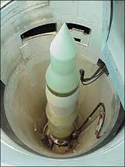
I suppose this story begins during the Cold War. The US had developed a triad of defense capabilities to deter Soviet aggression. We had the Air Force B-52 bombers armed with atomic weapons, the submarine based Trident missiles, and the land based ICBMs–first the liquid fuel Atlas rockets and later the solid fuel Minuteman missiles hidden is silos in North Dakota and elsewhere.
Then came 1989, the destruction of the Berlin Wall, the subsequent collapse of the Soviet Union and, suddenly, the Russians were no longer the dreaded foes whom we once feared. Maybe it was time to “stand down” our hair-trigger defense posture.
Those solid fuel Minuteman rockets were designed to be launched on short notice. Firing them required a significant amount of electricity. This was to come from the electric power grid. But our military, recognizing that this source of power could be compromised in the tense times leading up to a nuclear confrontation, needed a backup. As a result, each missile silo was equipped with a diesel powered electric generator, just in case.
But things could go wrong. The diesel fuel might be contaminated, or sabotaged by Russian saboteurs, or any of a number of other problems. So, in an overabundance of precaution, the military insisted on a “backup to the backup”. And what could be better or more reliable as a source of electricity, than a battery. To be sure, these would have to be BIG batteries, bigger and more powerful than any produced thus far, but they would be certain.
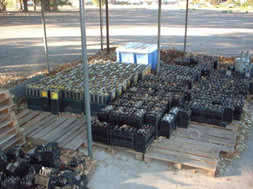
And so, the Defense Department commissioned the production of the world’s largest and most powerful batteries. These were based on lithium-thionyl chloride chemistry[1]. Each primary cell contained sheets of elemental lithium, surrounded by gallons of thionyl chloride, a reactive liquid which on contact with water produces a mixture of sulfuric acid and hydrochloric acid—really nasty stuff. These primary cells were each about the size of a coffin and it took three, ganged together to generate the power needed to initiate a missile launch. The government contracted for thousands of them and Union Carbide supplied them.
Apparently, at some point, there was a fatal incident involving a 10,000 amp Minuteman battery being drained and replaced[2] and this contributed to a decision in the early-mid 1990s to dispose of these hazardous items. The DOD issued a Request for Proposals (RFP) which caught the attention of a group of businessmen and entrepreneurs in southern California.
Operating in Orange County, California, headquartered in Anaheim, near Disneyland, were three affiliated companies. Adams Steel was in the ferrous metal recycling business-old washing machines, refrigerators, scrapped cars. Before you scrap a car, you remove the lead-acid battery and the catalytic converter. The battery, containing lead metal, lead salts and sulfuric acid is a hazardous waste and its disposal is regulated by the EPA. The catalytic converter contains precious metals such as platinum, rhodium and iridium. These two items (batteries and catalytic converters) were handled by Kinsbursky Brothers. Non-ferrous metals (common ones such as copper and aluminum and non-common ones like tantalum and gallium from electronic devices) were processed by Alpert & Alpert. The companies had worked together for a number of years.
Principals at Adams Steel and Kinsbursky decided to form a joint venture to bid on the lithium battery disposal opportunity. They created TOXCO for this purpose. It was headed by Terry Adams (the youngest sibling in the Adams family) and Steve Kinsbursky. And they won the bid. The government would pay TOXCO millions of dollars to dispose of these batteries that the government had paid millions of dollars to manufacture some years earlier. Your tax dollars at work.
So, how do you dispose of a lithium-thionyl chloride cell weighing hundreds of pound and filled with dangerous and explosive ingredients? Well, if you are a mechanical engineer, trained at USC (as Terry Adams was), you take a mechanical engineering approach the problem. You have to neutralize the thionyl chloride and the lithium by reaction with water. And reactions take place more slowly (and more safely) at lower temperatures. So, the answer is to chill the cell in liquid nitrogen down to 77°K, put it in a large container filled with water and chop it apart with big mechanical knives (like you chop an automobile into small pieces for scrap). This actually works. Provided you’re certain that the cells have been fully discharged first. But don’t take the military’s word for it. If you do, there may be an embarrassing incident, as there was in 2000, during the disposal process.[3]
Next question. Where do you do this disposal? The TOXCO team discovered that there was an underused industrial site in Trail, British Columbia, on the Canadian side of the Idaho border. It had been part of the Cominco Smelter operations and was one of the most heavily polluted sites in North America[4]. What better place to site a hazardous battery disposal plant? If something went wrong, who would notice?
And so, TOXCO went into business, disposing of lithium batteries, successfully (except for a few incidents like the one incident alluded to above).
One of the by-products of this process was a stream of aqueous lithium salts. These had value and could be recovered and that put TOXCO into the lithium chemicals business. But that’s part II of this story.
The TOXCO Story – Part II (the Lithchem Story)
This story also begins in the Cold War. Even as the atomic bomb (the uranium and the plutonium fission bomb) was being engineered into reality at Los Alamos in the mid 1940s, plans were being made for the next generation weapon—a fusion bomb.
The first H-bomb, based on the concept of fusing light nuclei, was tested at Eniwetok in the South Pacific in 1953. Improvements in the initial “clunky” design quickly followed. One way to boost the power of the explosion was to surround the core of the bomb with a layer of lithium deuteride, LiD. Lithium is, well, the element lithium, atomic number 3 in the Periodic Chart. And deuterium is the name for “heavy hydrogen”, an atom of hydrogen, atomic number 1, but also containing an uncharged neutron[5]. Provided that the lithium used was of atomic weight 6, the fusion of the lithium(6) and the deuterium(2) would produce two nuclei of helium(4), plus lots of energy.
This would only work if you used lithium-6. Unfortunately, the lithium available to us on this planet in mineral form, deposited around the globe, is a mixture of lithium-6 and lithium-7 (the same element, but with one extra neutron). And God, in His infinite wisdom, chose to endow the earth with mostly lithium-7. Of the naturally occurring deposits of lithium, 93% is lithium-7.
So, if you need to use just Li-6, you have to separate it out from the more abundant, naturally occurring Li-7. And the US government proceeded to do just that. Starting in the 1950s, they processed millions of pounds of lithium containing minerals to extract the less abundant isotope that was required for its military purpose. For every hundred pounds of lithium salt they processed, they got, at most, 6 pounds of lithium-6 salt[6].
And what do you do with the “leftover” 94+ pounds. Well, you can’t just turn it back into the lithium chemicals marketplace. For one thing, it’s “depleted” lithium (missing its naturally occurring share of Li-6.) This would be easily noticed by someone using the lithium for routine chemical purposes. The extent of “depletion”, that is, of extraction of the Li-6 would be measureable, and that information was a secret[7]. Moreover, if the quantity of depleted Li were ever realized, that number could be used to infer the number of LiD containing bombs, and that too was a secret.
So, for more than five decades, for more than half a century, the US government simply stockpiled the “by-product” depleted lithium in a warehouse, in the form of the simple salt, lithium hydroxide monohydrate, LiOH•H2O. Millions of pounds of it. Packaged in poly lined, 55 gallon fiber drums.
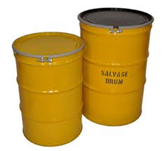
In later years, the cardboard drums began to deteriorate. Some of them were damaged during handling and relocation. Sometime in the 1980s the decision was made to repack the inventory in bright yellow steel “overpack” drums.
Now comes the early 1990s. The Cold War is over. Our nuclear secrets, at least those from the 1950s, are far less precious. And the Clinton administration is looking through Fibber McGee’s closet[8] to see what can be disposed of, and maybe generate a revenue stream for the government in the process.
What they discover is 100,000,000 pounds of “depleted” lithium hydroxide monohydrate, with a potential market value approaching $1 per pound. And so, it goes out for bids.
The terms of the sealed bid auction were that the final sale would be split 70-30 between the highest bidder (who would get 70% of the inventory) and the second highest bidder (who would get 30%, but at the high bid price).
This was a perfect set up. At that time there were only two lithium companies operating in the US who could handle this quantity of inventory—Lithium Corporation of America[9] and Foote Mineral Company[10]. And both of them knew that there was no incentive for overbidding since even the loser would get 30% of the supply.
And that’s where Lithchem appeared on the scene. The TOXCO team was already in the “recovered lithium” business. All they had to do was bid one penny more per pound than the other two majors and they would be awarded the lion’s share of the inventory. They incorporated Lithchem for that purpose. I’m told that LCA and Foote each bid the same number, somewhere in the 20+ cents per pound range, and Lithchem bid one cent more. As a result, Lithchem became the proud owner of 70,000,000 pounds of depleted lithium hydroxide monohydrate.
Now what? The principal use of LiOH is in the manufacture of high performance lithium greases, used in heavy industrial applications-heavy trucks, railroads, etc. Much of the market for lithium greases is in the third world and quality is less of a concern than price.
Still, to be sold on the open market, the LiOH from the government stockpile had to meet certain specifications. Some of the yellow drums contained beautiful white crystalline powder. Others contained dead cats and cigarette butts. It was “government quality” inventory.
One condition of the bid was that the winning bidder had to remove the inventory from its location in a government warehouse (in southeast Ohio[11]) within 12 months of the successful bid. I had the occasion to visit that warehouse, before the stock was removed and it was a memorable sight.
If you recall the final scene in the movie “Raiders of the Lost Ark”, the Ark of the Covenant is being stored in a gigantic government warehouse, filled floor to ceiling with identical gray boxes. A warehouse stretching far into the next county. Now replace those gray boxes with yellow overpack drums, stacked 6 or 8 high, stretching far into the next county. That’s what it was like. That’s what 70,000,000 pounds of LiOH hydrate looked like.
[1] The lithium – thionyl chloride primary cell has a high voltage (3.5 V) and a high current density.
[2]Battery Hazards and Accident Prevention, By S.C. Levy, P. Bro
[3] In November 2009 a fire broke out at the Trail BC facility in a storage shed containing lithium batteries slated for disposal. It was their sixth fire in fifteen years. Prior to that, a major fire in 1995 destroyed 40,000 kg of batteries at the facility. Three fires occurred in 2000, including one caused by some lithium batteries. This was during the summer when negotiations were underway between Toxco and Atochem for the acquisition of the Ozark business. http://www.cbc.ca/news/canada/british-columbia/trail-battery-recycling-fire-leaves-questions-1.805780
[5] Elements with the same atomic number but different weights are called isotopes. Heavy hydrogen (with an atomic weight 2) is an isotope of hydrogen (atomic number 1). Another example is carbon-14, useful for radiocarbon dating. It’s a heavier version of the more common version of carbon, C-12.
[6] Actually less than 6 pounds. The extraction process was less than perfectly efficient. The actual yield of Li-6 was a closely guarded national secret.
[7] In depleted lithium (with the Li-6 removed), the relative abundance of lithium-6 can be reduced to as little as 20 percent of its normal value, giving the measured atomic mass ranging from 6.94 Da to 7.00 Da.
Today we hear about lithium batteries ad nauseum. Everyone is anxious to achieve a bright battery-powered electric future for happy motoring. Mineral exploration has revealed a few new sources of lithium and mines are increasing production. Battery factories are ramping up and R&D keeps turning out tweaks in battery technology. Many are betting on or prophesying the eventual phase-out of hydrocarbon fueled motor vehicles.
Lithium is quite scarce and is the 25th most abundant element on earth with about the same crustal abundance as chlorine although this may vary with the source. For the most part, lithium is fairly widely dispersed in the earth’s crust but it is subject to concentration by hydrothermal transport, forming evaporite deposits or briny ground water. Lithium is also a component of the mineral spodumene which can be found in pegmatites within some host formation. An uncommonly rich site was at the Foote Company Mine in the Kings Mountain Mining District of North Carolina. This operation produced lithium carbonate, Li2CO3. This is a common finished product because it can be removed from a solution of lithium chloride by treatment with sodium carbonate to precipitate the poorly soluble lithium carbonate.
This light metal has many chemical uses apart from batteries. For instance, organolithium reagents are a vital part of the chemical industry clocking in at about $1 billion per year in sales. Organolithium reagents are an indispensable part of organic synthesis. Switching to a reagent with a different metal usually does not work well, giving poor results or the wrong reactivity.
Today we’re seeing organolithium prices rise dramatically with little expectation that it will ever come back and no clue of how it plays out in the future. If a few select lithium reagents, e.g., LiAlH4 or n-butyllithium, go off the market, it will be a bad day for the organic synthetic industry as well as for chemical R&D in general. It is an unexpected consequence of the switch to reduced carbon EVs.
The colossal Baden Aniline and Soda Factory (BASF) verbund facility in Ludwigshafen, Germany, may have to make due with diminished energy supplies if the German state rations gas this fall. This facility is one of six BASF verbund sites and is the largest integrated chemical complex in the world. The site consists of 125 interconnected production plants on 10 square kilometers that share waste heat and generates it’s own electricity and steam. Forbes has described verbund as “… the intelligent interlinking of production plants, energy flows and infrastructure.”
There are many fascinating facts about BASF and the Ludwigshafen verbund site which can be found on the interwebs, so there in no point in duplicating it here. The point of this essay is that the global chemical industry is highly interconnected. Interruption of just one chemical complex like the BASF verbund in Ludwigshafen can lead to disruption in many supply chains in diverse markets. The chemical industry is a web of supply chains where the product of one plant is the raw material for another. Interruptions in energy or materials for one link in the chain will have knock-on effects in others all the way to the final consumer. Nothing unusual about this.
We’ve come to rely on a highly interconnected, interdependent world market that is susceptible to the consequences of political adventures from certain nations. Uncompromising nationalism, ethnic conflict, political turbulence and the current trend of fascist and violent ideology overrunning democratic freedom is threatening this house of cards we’ve built.
Technology can be quite delicate. The success of any given technology constantly depends on people practicing it, improving it and training for it. Whole technologies can be lost if interruptions in continuity from war or deep economic calamity last long enough.
There was an interesting article cited from the Houston Chronicle in today’s news letter from the American Petroleum Institute. Here is the link. Unfortunately there is a pay wall.
From the API news letter- “Low levels of adult literacy and limited access to higher education in the Permian Basin are compounding the skilled labor shortage already facing oil and natural gas companies as the industry’s digital transformation creates a growing need for workers with specialized skills. Ray Perryman, founder of consulting firm The Perryman Group, estimates that Permian Basin residents could lose almost $425 million in potential earnings and $292 million in economic output unless literacy skills improve, a challenge that’s being addressed by initiatives such as the Permian Strategic Partnership.”
Even in the rough and tumble world of the oil patch, folks need to be a little more educated to keep it going forward.
I could crack wise about education in the Republican Evangelical Republic of Tejas, but I’ll leave it alone this time. This problem speaks for itself.
An article titled Low-temperature mineralization of perfluorocarboxylic acids, Dichtel and Houk, et al., Science, 18 August 2022, Vol 377, Issue 6608, pp. 839-845, DOI: 10.1126/science.abm8868, came out yesterday with a method for defluorination and chain scission of per- and polyfluoroalkyl substances (PFAS). Blessedly, the article is available without charge.
The article describes the mineralization of reactive perfluorocarboxylic anions with NaOH in water and dimethylsulfoxide, DMSO, at 80 to 120 C and ambient pressure.
Ok. If the prefixes “per” and “poly” are unknown to you, read below, otherwise skip ahead.
==================
First, some clarification of the name “PFAS” for you non-chemists out there. The “P” in PFAS stands for either prefix “poly” or “per”. Both prefixes appear in common use. The prefix “per” is used to abbreviate the name when some atom or fragment is attached at every possible alkyl (see below) carbon connection point in a molecule or specified fragment of the molecule. The much lengthier proper name would have a number of the position of each separate fluorine atom on the molecule. “Per” and “poly” saves everyone from having to trip over a great many tongue-twisting syllables.
Hydrocarbons consist of only hydrogen atoms on a carbon skeleton. Hydrocarbon carbon atoms can have 0 to 3 hydrogen atoms attached to each skeleton atom. The exception would be methane, CH4, which has 4 hydrogen atoms attached. “Alkyl” refers to a subclass of hydrocarbon fragments or molecules that are absent multiple bonds between atoms of a carbon skeleton. A molecule with a carbon skeleton having no multiple bonds between carbon atoms and linked to hydrogen atoms only is called an “alkane”. An alkane fragment that is connected to something else is called an “alkyl” group.
Gasp! So, a perfluoroalkyl molecule or fragment would have 2 or more of its hydrogen atoms replaced with 2 or more fluorine atoms on a given carbon atom (see definition below).
From Wikipedia “According to the Organisation for Economic Co-operation and Development (OECD): “PFASs are defined as fluorinated substances that contain at least one fully fluorinated methyl or methylene carbon atom (without any H/Cl/Br/I atom attached to it), i.e. with a few noted exceptions, any chemical with at least a perfluorinated methyl group (–CF3) or a perfluorinated methylene group (–CF2–) is a PFAS.“
The prefix “poly” is much simpler. It is meant to indicate that the word it is attached to has many units of something, as in polyfluoroalkyl, which means many fluorine atoms attached to alkyl carbon atoms. Or it could refer to a string of repeating units as in a polymer.
Outside of the narrow PFAS world, the prefix per in “perfluoroalkyl” would indicate in common usage that the alkyl fragment is completely saturated with fluorine atoms.
==================
If we were at the bar during happy hour slamming well drinks after a long day of shaking separatory funnels, washing glassware and trying to vacuum distill something useful out of tar, someone might have groused that the PFAS destruction process is simply a process where you heat the piss out of a DMSO/water mixture of NaOH and PFAS to destruction. Ok, the word they used is “mineralization” rather than the more chaotic sounding words “destruction” or “digestion”. Everyone has thermally decomposed a reaction mixture in the past. We would pause for a moment, shrug our shoulders and say “well, of course that works”. DMSO is a highly polar, high-boiling solvent which supports the formation of ionic decomposition products at elevated temperature. Kendall Houk even did some snazzy DFT calculations on decomposition mechanisms. Now, that is how to develop a new approach to decomposition! Get out the big stick of quantum mechanical computing power and swing it around! The rascals Dichtel and Houk worked it out first so we’d raise our glasses and drink in their honor. Here’s to you, boys and girls!
As we stagger out to the Uber for the ride home, somebody mutters “I wonder how far along the patent application is and who will be the assignee?”