Category Archives: CounterCurrent

Retorting the Auriferous Spud

Gold miners of the 19th and early 20th century had a processing advantage over todays gold miners despite all of their modern diesel powered trommels, pumps, and sluices. Some early placer miners had access to mercury or quicksilver. Auriferous fines could be concentrated in a small container with water and a few ounces of mercury would be added to extract the gold as an amalgam. Or, the concentrates could be contacted with mercury-coated copper for the same effect. Mercury coated copper pans or flat plates were often used to scavenge gold and isolate it as the amalgam.

Today, the use of mercury is strictly forbidden in mining operations around the world. But there was a time when mercury was a key part of the miners toolkit.  Many extraction schemes were developed to concentrate gold into a small package.  Panning or the use of a shaker table would provide nuggets and dust as concentrate. But often there was heavy black sand comingled with the gold dust.  Isolation by amalgamation followed by distilling off the mercury (retorting) would provide moderately pure gold.

For example, a simple retort may be made from a pipe nipple with a cap on the bottom and a top connector attached to a long condenser tube that could be cooled with stream water. The retort vessel was set into a campfire and perhaps a cloth was wrapped around the condenser tube and wetted to knock down the mercury vapors so that they could be collected in a receiver.

Curiously, there is lore about the potato retort.  My source is Eldred D. Wilson, Gold Placers and Placering in Arizona, Bulletin 168 (1961), State of Arizona, Bureau of Geology and Mineral Technology, Geological Survey Branch. In the potato retort method, a potato is cut in half and one half is hollowed out enough to accomodate an ounce or so of amalgam. The auriferous spud is wired back together and placed in the ashes of the campfire for 30-60 minutes until done. The potato is then opened to reveal a gold button in the middle. Or, so the story goes.

There were variations. Analogous to the preparation of hoe cake, digging implements were put to use in retorting duty. A potato amalgam package could be placed in a frying pan or in a shovel which would then sit in the campfire.

It’s hard to say just how effective potato retorting was compared to other methods. Admittedly, I have trouble believing that the internal temperature of the potato was high enough to do the job. It’s conceivable, perhaps, that enough Hg was cooked away to leave behind a metallic mass with some gold color.  It would be interesting to try this and then get an assay.

Wilson offers this advice- don’t eat the potato.

South Pole

A friend and colleague is currently wintering over at the Amundson-Scott station on the south pole.  She is sending us periodic email updates on life at the station.  As they come along I’ll share bits of them.  A colleague of hers posts his observations on his blog. They recently celebrated their once-per-year sunset at the equinox.

There are all sorts of station closing activities I volunteered for early on. I trained for what is called “Flight Following” to man the Comms Center in the winter whenever any flights are flying farther South than 60 degrees. South Pole’s unique position on top of the plateau makes radio reception unusually clear while closer to the coast it is often obscured. So our job is to relay messages if we hear the pilot unable to reach his coast air traffic control. I also periodically do checks in the Power Plant so those people can occasionally get a day off.

It’s almost like a commune down here. Or at least what I assume communal living would have been like in the ’60s, Kind of a fun existence for a few months. But it is damn COLD! I took my glove off to operate my camera to film sunset up on the roof of the station – our daily temps are about -80 F, with windchill well below -100 F. A gust of wind kicked up after I had been filming for less than 2 minutes and I almost couldn’t make my hand work well enough to climb back down the steps. Today there is still a blister on my pinkie finger from frostnip. Human flesh freezes within a minute when exposed to that sort of cold. –South Pole Susan

I guess I won’t be complaining about the cold anymore.

XRF Magic

We’ve been looking at hand held XRF spectrometers.  If you have not been introduced to this, you may be in for a real treat. A variety of companies make them- Bruker, Thermo, and Innov-X to name a few. These things are in the low-end Lexus price category, but are they ever amazing.  It’s straight out of Star Trek.

Clarke’s Third Law states that any sufficiently advanced technology is indistinguishable with magic. I gotta tell ya that these hand held XRF’s are just amazing.  You point at a sample and it gives a tally of the elements present, or most of them at least.  Some even have a built-in GPS you can punch to take a waypoint of the location of the sample you just analyzed out in the field.  It is a great tool for mineral prospecting.  

What is embarrassing is that this is the first I’ve heard of it. Our geologist friends have been using these things for a while now. 

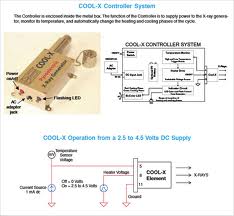
The whole thing depends on a miniature X-ray source.  I’ve been looking into this.  For the curious folks out there, lithium niobate- LiNbO3- is a very interesting material.  Crystals of LiNbO3 have the property of pyroelectric potential. A pyroelectric crystal is one that is able to generate a polarization across the crystal faces in proportion to the temperature.  A pyroelectric xtal placed on a heating/cooling block in a vacuum is able to generate a stream of electrons energetic enough that, when stopped by a copper electrode, will generate x-rays. 

One manufacturer, AmpTek, produces a miniature x-ray unit called the Cool-X that has a photon output equivalent to two milliCuries, with 75 % of the flux less than 10 KeV.  Elsewhere in the product literature, the output is described as 5 milliSieverts per hour.  So, the user has to be a little careful with this thing. But rad safety issues aside, this is quite an amazing source. The product literature doesn’t come out and say what kind of crystals are used, but they may be a tantalate salt.

AmpTek Cool-X

The unit does not operate continuously. It can only generate x-rays durig a thermal cycling period, The xtal starts out cool and as it’s heated, generates the electron flux that is de-accelerated by impacting the copper to produce the x-rays. The lit gives a cycling interval of 2-5 minutes.  It is referred to as a Kharkov X-ray generator.

It’s magic.

Materials of Construction

One of the things you have to consider when scaling up a chemical process is the composition of the wetted or exposed surfaces in the reaction vessel, associated feed piping, gaskets, and overhead vapor  spaces.  Common materials of construction subject to wetting are steel (various types), glass, Hastelloy(s), tantalum, titanium, PTFE, Viton, and various polymers found in hoses.

Metal batch reactors are subject to erosion over time. Vessel walls can be tested for thickness periodically. Glass coated reactors are very useful for their broad applicability to many kinds of reactions, but have drawbacks of their own.  Glassed vessels are sensitive to very high and very low temperatures as well as thermal gradients across the vessel wall. It is possible to crack the glass coating and have it flake away, exposing the underlying metal to corrosion.

We are all trained to do chemistry in glass reactors, but it should be pointed out that much chemistry can be performed in steel vessels. While you want to give some thought to the use of hydrogen, for the most part metal pots are well suited for reaction under neutral or reducing conditions. That is, metal hydrides, Na, carbanionic species BuLi and RMgX, alkoxides, etc., are well tolerated in wetted-metal pots.

Oxidizing or acid halide producing reaction systems are problematic for metal pots, however.  Acidic corrosive reaction mixtures can attack the wetted metal parts of the reactor system. Acidic chlorides in particular are quite corrosive to various grades of steel. It is especially problematic when you’re talking about shell and tube condensers. The tubes are often very thin for good heat transfer, leading to the possibility of the introduction of chiller fluids into the reactor if corrosion chews through the tubes.  If the chiller fluids are protic and the pot is full of MeLi, then the batch may be lost or an unplanned reactive hazard event may take place.

Condenser surfaces can be subject to more corrosion that you realize. This is the location where hot concentrated corrosive gases will condense, after all. To extend the life of the condenser, special materials of construction may be used. Tantalum and PTFE can be used when the cost is justified. With exotic materials of construction come exotic prices.

There is more to consider than corrosion.  Polymer transfer lines will generate static electric hazards via the isolation of charge on nonconductive surfaces. Tranferring hydrocarbon solvents from a drum or cylinder to a reactor through nonconductive plumbing can generate significant hazardous energy and certainly enough to be incendive. Grounded metal piping can prevent part of this problem.  However, discharging a flammable liquid into an air filled space may lead to an incendive discharge as well. It is important that all atmospheres over flammable liquids be inerted. While you may not be able to stop static discharges, you can certainly keep the fire triangle for being formed.

Operators are often alarmed by the sight of a glassed reactor with stirring toluene in it generating sparks by discharge through the glass coating.  While this may be hard on the glassing by forming pinholes, unless there is an explosive material in solution, the lack of a complete fire triangle means that the sparks cannot lead to ignition of the toluene.

Remember not to take your material to high viscosity or dryness in a large reactor. You might end up rolling your solid material into a giant bowling ball and bending your agitator shaft.  Maybe even slamming it into the reactor wall. A very expensive mistake.

Of Limited Brain Bandwidth

At some point a person has to decide that he/she is involved in enough activitites in life. This uncomfortable world of overcommitment is where I have been for a while. I’ve come to the realization that my consciousness has limited bandwidth and that intellectual stimulus can overload it in ways that are hard to recognize. 

Having been born with lots of curiosity, I find myself piqued by a great variety of things in the universe.  The sciency stuff is obvious. But there are other things that can consume much of my capacity for attention.  It is much like an addiction to a drug. One soon becomes accustomed to a high baseline level of stimulus.  As boredom sets in,  the brain seeks greater stimulus. I can’t bear to wait 5 minutes without something to read. Cable television and the internet takes full advantage of this.

Last weekend I found myself totally immersed in the Free Electron Gas theory of metals. As I was wrestling with the math my family was out shopping and having fun. I was having fun as well, but it was of a more cloistered form. Was I being selfish? I think the answer is yes.

So, this life of intellectual pursuit can spin into a solitary life.  I like to joke that some days I’m misanthropic and other days I’m very misanthropic. That’s not exactly true, but I will say that my patience for unstimulating conversation is limited.  It comes down to the fuzzy boundary between ambition and obsession.  It is very easy to slip into a condition that is referred to as eccentric.  I can see how it happens. Maybe it is too late.

Things to notice about the disasters in Japan

Everyone is rightfully concerned about Japan and what is to become of the region around the Fukushima Dai’ichi generating station. The quality of information by the various broadcast outlets is improving somewhat in my estimation. What the rest of the world should take note of is the stoic and highly admirable manner in which the Japanese have responded to the earthquake*tsunami*nuclear-disaster trifecta that has fallen upon them. In a US city there’d be looting and widespread felonious mischief as local criminal entrepreneurs rose to the occasion.

Another thing that I hope is noticed is the manner in which the failures initiated and propagated at the power station.  The unfortunate low elevation of the emergency generators is the obvious one.  But there is something else that is dramatically affecting how the incident propagates.  If you look at the cutaway diagrams of the plant you will see the highly compact nature of the facility.  The footprint of the buildings are quite small given the amount of equipment and processing that occurs there. In particular, the location of the cooling pools for the spent fuel assemblies is at the upper level of the structure, above the reactor spaces. 

The upper level with the cooling pools has an overhead crane that can move along the length of the facility. The fuel elements can be pulled up and out of the reactor and moved laterally into the pool.   The General Electric design is quite efficient in the use of acreage. But in the event of a major upset with fire, explosions, major radioactive material release, and structural damage, the compactness of the facility and the elevation of the spent fuel cooling pools works for prolonged incident propagation and against termination. 

The very altitude of the cooling pool spaces presents a major hurdle to taking control of the situation.  Having this problem at ground level where you could directly apply resources to the event would be bad enough. But to have it many stories above ground places huge constraints on the responders.  Designers of power plants should be thinking about where hazardous energy can be released and how responders will deal with it. Problem- all facilities design projects are constrained by severe cost considerations. Designers prefer to think about the most efficient designs, not how their brain child is going to fail.

Credible Information on Fukushima

It is difficult to find truly informed opinion on the Fukushima reactor disaster in Japan.  The Daily Kos Community site by Richard Blair seems very credible from what I can discern.  The writer claims to be a Nuclear Power Operations-certified systems engineer in GE Boiling Water Reactors (BWRs). I have no reason to disbelieve it.

Actually, Rachel Maddow (and writers) did a very even handed presentation this evening of the basics of reactors, radiation, and nuclear power generation on her show. 

Blair (writing under the pseudonym Richard Cranium) shares some interesting insights on the Fukushima boiling water reactors. It’s worth a look.  It is part of a larger effort at information aggregation called the Japan Nuclear Disaster: Mothership.

Bug Hunt: Los Angeles

Big, angry, armored termite soldiers from the Planet “O” land off the coast of SoCal and make an amphibious assault. Luckily for humanity they land near Camp Pendelton. Thus begins Battle: Los Angeles

Filmed in a documentary style, this movie follows the travails of a platoon of Marines on a mission to pick up civilians at a police station in Malibu and take them to a forward operating base (FOB) before heavy bombardment of the coast begins. The aliens take and keep the initiative early in the invasion.

The invaders aren’t misunderstood ET’s with big blue cow eyes.  These bipedal and possibly cyborgish critters are loaded with high velocity rounds and are fiendishly single-minded in their attempt to secure the planet. Aaron Eckhart plays the lead character, Staff Sergeant Michael Nantz.  Along the way the platoon picks up USAF staff sergeant Elena Santos played by Michelle Rodriguez. The casting of Rodriguez was particularly smart from the marketing perspective. Hotties with automatic weapons are irresistable to the male moviegoer. I’m thinking of Ripley making her escape from the Nostromo.

OK, guys, this is not a chick flick. It’s not especially bloody, but it is filled to the brim with male bravado and long satisfying bursts of full automatic gun fire. Wives and girl friends may be unmoved by the machinegun aesthetic. Just thought I’d mention it.

It’s not Academy Award stuff, but it is worth seeing on the big screen.

On a separate topic, for the fans of Dune, there is this link.

China Syndrome in Japan

The China Syndrome is a fanciful “theory” that postulates that when a nuclear reactor undergoes a meltdown, the hot core material melts through the pressure vessel and through the concrete containment flooring below into the ground. All the way to China. 

Well, this really can”t happen because the core, hot as it is and dense as it is, could only go to whatever depth matches it’s density. I don’t think many people really understand what happens to core material when it breaches the containment and encounters the subsurface. Further, it’s hard to say if the core material will remain intact as a single unit long enough to retain a critical condition as it spills outside of the reactor vessel assembly. 

The fuel elements are, I believe, ceramic in nature, making them refractory. Refractory materials have quite high melting points. A reaction mass that has some fluidity might well split off isolated blebs which could then take the whole mass away from a critical condition.  This would tend to dampen the reaction rate and allow the reaction mass to cool below the melting point of the mass.  

Quite apart from the dispersion of the core material is the loss of moderator around the reaction mass.  This would occur as the primary coolant water flashes to steam as the pressure vessel is breached. Loss of moderator reduces the number of neutrons in the resonant range and the power should drop accordingly.  The decay heat from the fission products should be fierce.

As a molten parcel of reactor core heats up the surface material below it, the molten flooring, soil, or bedrock must be fluid enough to allow the core to displace it downward. It could be that the blob gets elongated and increases the surface to volume ratio enough to allow the loss of neutron flux to cause the blob to cool below the melting point of the ground.   How a self-heating blob of core material behaves under the pull of gravity in a variable and possibly refractory rocky matrix is not an easy problem.

Ground water would be problematic for the neighborhood because eruptions of contaminated steam would be expected to issue from the crater.

I hope these poor fellows are able to get their reactors under control before the area gets too hot.  If the reactor spaces and control rooms get too hot it is going to complicate the remediation.

It is worth reading the updates from NISA.

Some Comments on Public Schools

I know public school teachers very well. There is much talk about the kind of job public school teachers are doing these days. Much of the discussion is very negative.  A lot of people seem to think that American public school education is in some kind of decline.  Conservatives in particular seem to have a good deal of criticism to direct at public school teachers.

While I suspect that this grumbling on the right has more to do with vengeful, angry little boys who have grown to be vengeful, angry men, I’ll set this hypothesis on the shelf for some more aging.

In Coloado we have an annual test battery for public school students called the CSAP’s.  It was an initiative set forth by conservative legislators who have a very negative view of public education in general and of teachers unions in particular.  The CSAP’s start tomorrow in fact.  My 9th grade kid will spend the next week taking them. 

It is funny. No matter how tight the legislation is, people will always find a way to game the system.  I know of one principal who was selected to open a brand new elementary school nearby.  While at his previous elementary school in a poor neighborhood, he had access to the students CSAP scores. Prior to his departure he contacted the parents of the top 70 or so students and invited them to come to his new school in a more affluent neighborhood. Nearly all of them did, leaving the previous school in the lurch.  Test scores plummeted at his previous school last year because of this. The parents of the recruited students had a good many volunteers among them. The level of volunteerism dropped substantially as well, adding to the workload in a school already depleted of hourly teachers aids.

Yes, the aforementioned principal seems guilty of some kind of malfeasance or corruption. He’s gaming the system. But he fell out of the sky into a system begging for gamesmanship.  He did it to pave his way into a superintendant slot someday and I’ve no doubt that he’ll get it.

The great fallacy of this issue in the public forum is that it is up to teachers alone to keep kids on track.  Having been married to a special education teacher I can say that there are a great many parents producing kids that are improperly wired, emotionally disturbed, sociopathic, and/or neglected or abused.  Many kids go to school hungry and go home to high stress environments where there is rampant drug abuse, alcohol, and family violence. 

It is not uncommon for some elementary students to be the only family members who can speak English.  Parents in such homes are not able to help with home work. They are not able to communicate with the schools owing to cultural aversion to such contact or because they are undocumented.

I believe that our culture has changed considerably since my age cohort was in public school.  College was a distant aspiration for many of us.  College was not needed to work in the trades. We could get on-the-job training or attend some kind of trade school.  Or, join the military.  These were the options. We had been to the moon, tamed the atom, and built massive industrial capacity for manufacturing an ever growing array of widgets and medicines.  Arguably, something was working well if industrial output is the measure.

But over time, with greater affluence in the US and abroad, the technology gap between the US and other nations began to shrink. Other cultures were developing their own magic dust and secret sauce.  The advantages of the US system began to diminish relative to other cultures. But the one thing that didn’t change is the bell curve.  As a population we still produce offspring who populate the bell curve of abilities and interests. 

I suspect that we have begun to intepret the “below 50th percentile” population in the various bell curves in a most disturbing way. Could it be that we are interpreting the very existance of the low academic achieving population as some sort of educational or societal failure?  Are we expecting modern education to skew the curve toward the high end against the natural spread of abilities and aptitudes in our culture?   Is the notion of excellence skewed towards academic achievement rather than the myriad other activities that make a productive life? Is high academic achievement the only acceptable result of education of our population? 

Not everyone needs to be a scientist or an engineer or astronaut.  We need to continue to identify youth who have such interests and aptitudes and carefully cultivate them toward such opportunities.  But we also must pay attention to those who have more ground based aspirations and abilities and value them just as highly.  It is like a food web.

The notion that we should engineer our schools to produce more super achievers is faulty and unfair to the 99 % who won’t become scientists or astronauts.   Even if we could multiply the population of scientists, engineers, and astronauts, the economy cannot accomodate them. Such professions are near the apex of the career pyramid.

I have come to believe that US culture has failed a large number of its youth.  Just look at the rates of incarceration in the USA.  A culture truly concerned about the wellbeing of its individuals wouldn’t have a few million of them in jail.  Could it be that the conditions in which we imprison citizens reflects what we truly think about individuals?  I think the current malaise in public school education manifested as high dropout rates and low achievement  and the epidemic of convicted felons may be connected as part of a larger failing of our society.