Category Archives: CounterCurrent

Calamity, Interrupted

JOC will no longer appear in my mailbox. I decided to let go of this icon of my earlier years. Organic Process Research & Development will “arrive”, but this time I have taken a web subscription for $40/year. In the interest of domestic harmony, the rate of paper accumulation will drop somewhat.   The trouble with this form of access to the literature is that I can’t take a journal to the local taco joint where I lunch on occasion.

The recent subscription, the Journal of Loss Prevention, is quite interesting. Lots of articles on the dynamics of explosions and fires as well as studies on calamaties, disasters, and general industrial mayhem. I can dig it.

Both imagination and knowledge are an important part of chemical process safety. A process safety person should have a solid chemistry background to grasp what is happening in a reactor or piece of equipment. Imagination comes in to play when trying to anticipate failure modes leading to initiation and propagation of incidents.

It isn’t possible to anticipate all possible failure modes in a chemical process. And not every failure leads to an incident or casualty. What is possible is to collect as much information as you can for a group to do a process hazards analysis.

A properly facilitated group can unearth many possible failure modes and root causes. Once identified, an effort to remove initiation sources or uncouple possible propagation pathways can be made. The first and best goal is to eliminate a hazardous condition. Management and engineering controls should always be secondary to elimination of a hazardous condition. 

AIChE is a great source of information for process safety.

Update:  The web subscription is quite agreeable to use.

Dark Spot

Darkness as Metaphor

Darkness as Metaphor

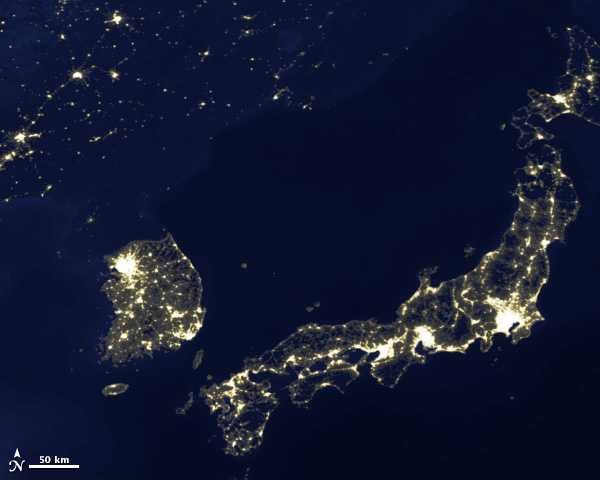
The photo credit goes to Marc Imhoff, Project Scientist for NASA’s Terra satellite, NASA Goddard Space Flight Center.  Shown at night are Japan and the Korean Penninsula.

Golly, I wonder what yawning chasm of darkness cries out for light? Hint: It is run by a shrimpy Latter Day Stalinist.

Gold Refining with Borax

According to the GEUS, the Geological Survey Office of Denmark and Greenland, it is possible to concentrate and isolate gold from the ore using borax and charcoal. This method has the immediate benefit of making mercury “redundant” in gold isolation.

Extraction of gold by amalgamation with mercury is a simple means of producing metallic gold in the field.  After contact with gold enriched ore, mercury is evaporated into the air by direct application of a torch flame to the puddle of metal leaving purified gold metal.

It is thought that there are millions of miners who scratch out a subsistance living working a small patch of ground for gold. It’s called small scale mining. In the course of this activity, environmental contamination can accrue to the immediate area as well as the watershed at large. Sadly, the toxicological insult to the miners from exposure to mercury vapor can be severe.

This method is an inexpensive and simple alternative to the mercury process. Perhaps the chemistry community has something to contribute by way of education or improved methods of extraction.

8/25/10  Update.  I have revisited this post and am compelled to comment further.  While I am unable to offer a good chemical explanation for the effect of borax on gold ore, I can say that the use of borax as a flux  for smelting goes back to the 19th century during the American gold rush period.  The process described in the link appears to be a smelting process for enriched ore containing elemental gold, as opposed to sulfide, or sulphuretted ore. The function of a flux is to modify the flow and phase separation properties of host rock so as to partition away from the gold phase or layer.  In other words, a flux modifieds the slag to help the gold to separate cleanly from the rock.

Reactivity and Risk. Gaussling’s 10th Epistle to the Bohemians.

A chemical plant performing synthesis is a place where the materials in use are purposely selected for certain attributes of instability. Chemical stability refers to the tendancy of a substance to remain unchanged when exposed to some kind of stimulus. That stimulus may be exposure to heat energy, mechanical shock, or a more precise chemical attack on particular functional groups. Unstable substances have a low threshold to change. Stable substances require more stimulus to cause a change in composition.

Substances that are extremely stable are often not very useful in near-ambient temperature chemical synthesis, i.e., saturated hydrocarbons, metal sulfates, silica, etc.  The lack of lower temperature reactivity (say, up to 200 C) can be compensated for by application of high temperatures. Petroleum refineries take full advantage of high temperature reaction chemistry to alter the composition of otherwise stable hydrocarbons.

We choose stable substances for duty as solvents, diluents, carriers, etc., precisely because of their non-changeability or stability. “Inert” solvents allow chemists to bring molecules into solution for selective transformations. Of course, we all know that most solvents have some influence on the course of a transformation, the point is that we can transform solute materials without the fuss of altering the solvent too.

Chemical synthesis requires the manipulation of reactivity (and therefore stability) to perform useful transformations. Without well placed instability on a molecule, there cannot be efficient, directed synthesis. It is the job of the synthesis chemist to apply the knowledge of reactivity.

Because of the inherent instability of reactive and flammable materials, chemical plants must require that certain behaviors, procedures, and knowledge be set into a formal structure. Actions and conditions must give predictable consequences. This structure is comprised of a set of standard- operating procedures, equipment, test methods, and safety requirements.

It seems silly to go to the trouble of detailing the merits of running a safe plant, but it is worth pointing out the layers of requirements on an operating plant. 

  1. Preservation of life, health, and the environment
  2. Compliance with federal, state, and local regulations
  3. To provide for the uninterrupted flow of goods and services in the conduct of business
  4. To qualify for affordable business insurance
  5. To be a good neighbor and stable source of gainful employment for all concerned

A company in the business of manufacture is exposed to many kinds of liability. A chemical manufacturing plant is subject to modes of failure and liability that set it apart somewhat. 

One result of chemical manufacture that sets it apart from other forms of industry is the combination of unknown risk and dread fear. For communities in the vicinity of chemical operations, fear comes from the combination of the unknown as new risks, unknown effects, or delayed effects with the dreaded possibility of catastrophic or fatal consequences, inequitable consequences, involuntary effects, and high risk to future generations (see: Perilous Progress: Managing the Hazards of Technology, Edited by Kates, Hohenemser, and Kasperson, 1985, Westview Press, Boulder, Colorado, p 108. ISBN 0-8133-7025-6).

While the neighbors of a furniture factory may be annoyed by the presence of a nearby woodworking shop, it is unlikely that the neighbors will be stirred into existential dread by its presence. The hazards of a woodworking plant are easy to imagine and therefore, easier to rank into the grand list of life’s dangers.

Chemical and nuclear risk perception score at the extreme ranges of risk perception. Both domains involve an agent of potential harm that is poorly understood by most people. Ionizing radiation is inherently destructive to tissues, but the exact relationship between quality and dose to risk is fuzzy at low level exposure. And because it cannot be sensed directly, fear of it’s presence can induce disturbing excursions of imagination and dread.

Fear of chemicals is widespread in the industrialized world. The downside to chemical operations has been immortalized by numerous well known industrial calamities like Love Canal (Hooker Chemical), Bhopal, numerous dioxin fiascos, PCB’s, or occupational exposure to asbestos or chromium (VI). There are a great many chemical items of commerce that are unavoidably hazardous to health.

Because of the risks associated with toxicity or exposure to hazardous energy from machines, chemicals, radiation, heat, noise, gravity, sharp implements, etc., the many layers of government have established agencies and a regulatory structure to diminish risk exposure to workers specifically and citizens generally.

The purpose of the chemical industry is to produce goods and services for people who want or need the value of it’s output. Like the ad says- “We don’t make the surfboard, we make it better”. Well, making the surfboard better inevitably requires that certain kinds of hazards be unleashed and managed. The expectation that hazardous materials can be eliminated in manufacturing is a fantasy. The manipulation of instability is inherent to chemical transformation. Zeroing out hazards has to come from the demand side of the market.

Martian Swamp Gas

According to recent reports, space scientists using infrared spectrometers at observatories in Hawaii and Chile have detected low levels of methane in the Martian atmosphere. This finding is consistent with results from as far back as 2003 when several studies reported methane at approximately 45 ppb.  Observers performing the latest work conclude that the observed methane must be of recent origin, given the short half-life of atmospheric methane due to photodegradation. 

The connection of these findings with the possibility of past or present life on Mars has proven irresistable. I’m sure there are group leaders beavering away at mission proposals this very moment based upon these findings.

An explanation that is much less exciting and much more challenging in regard to grant proposals is the abiotic explanation. Here on earth there we have a lesser known and widely overlooked abiotic theory of hydrocarbon origin. Abiotic hydrocarbons are often referred to as primordial and are known to exist in planetary atmospheres elsewhere.

According to John S. Lewis, Physics and Chemistry of the Solar System, 2nd edition, 2004, Elsevier, Inc.,  p. 159, the mole fraction of methane in the atmosphere of Jupiter is 0.001 and for Saturn it is 0.002.  The mole fractions of water are 0.001 and 0.002 respectively. Among heavy atom species, only ammonia, hydrogen sulfide, neon, and argon approach these levels within a factor of 0.5 to 0.1.

Oxygen and carbon are two of the most highly abundant heavy atoms and to see them richly represented as their respective hydrogen compounds isn’t so surprising.

At some point in the formation of the solar system, atomic carbon and atomic hydrogen were cool enough to collide and form molecular methane.  Hydrogen with its larger mole fraction would be expected to dominate bond forming interactions with carbon atoms, forming H-saturated methane.

Given the abundance of methane in the gas giants (and don’t forget the methane atmosphere of Titan)  it is hard to discount that Mars has trapped methane in the vast interstitial spaces of the interior of the planet. Methane is known to form clathrate structures with water, so perhaps the proposed underground reservoir of Martian water is comingled with methane.

I believe we should be exploring Mars. But I am increasingly uncomfortable with this stream of “Entertainment Tonight” titillation coming from NASA in regard to the possibility of life on Mars.  Perhaps our culture isn’t as advanced as we assume. Space exploration has always had a large political prestige component to it. Contractors need new contracts and politicians are always keen to bring funding to their districts.  If it takes our lesser angels to make it work, then so be it.

A Constitution in Need of a Few Revisions

An article in the Alantic Monthly by Garrett Epps entitled “The Founders Great Mistake” offers some observations on weaknesses in the US constitution regarding the Presidency.  In particular –

The most dangerous presidential malfunction might be called the “runaway presidency.” The Framers were fearful of making the president too dependent on Congress; short of impeachment—the atomic bomb of domestic politics—there are no means by which a president can be reined in politically during his term. Taking advantage of this deficiency, runaway presidents have at times committed the country to courses of action that the voters never approved—or ones they even rejected.

Epps offers several examples of runaway presidency. The example of Andrew Johnson is particularly good-

Andrew Johnson was the next unelected runaway. Politically, he had been an afterthought. But after Lincoln’s assassination, Johnson adopted a pro-Southern Reconstruction policy. He treated the party that had nominated him with such scorn that many contemporaries came to believe he was preparing to use the Army to break up Congress by force. After Johnson rebuffed any attempt at compromise, the Republican House impeached him, but the Senate, by one vote, refused to remove him from office. His obduracy crippled Reconstruction; in fact, we still haven’t fully recovered from that crisis.

Epps, a law professor at the University of Baltimore, points out the origin of the mysterious electoral college-

The system that the Framers developed for electing the president was, unfortunately, as flawed as their design of the office itself. When Madison opened discussion on presidential election in Philadelphia, he opined that “the people at large” were the “fittest” electorate. But he immediately conceded that popular election would hurt the South, which had many slaves and few voters relative to the North. To get around this “difficulty,” he proposed using state electors. Electoral-vote strength was based on a state’s total population, not on its number of voters—and the South received representation for three-fifths of its slaves both in the House of Representatives and in the Electoral College.

The electoral college was merely a scheme to manipulate the weighting of ballots in states with a low fraction of voters among the population. In other words, it was a “duct tape and baling wire fix” to accomodate the slave states embarrassingly low fraction of voting adults. This antebellum artifact should be abandoned in favor of simple vote counting.

The citizens of the USA need to have a better mechanism with which to fire a President who is crooked or incompetent. The provision for impeachment carries a high threshold for activation. A president must engage in some kind of serious malfeasance to provoke the congress to vote for impeachment. But the application of this provision has been very nonlinear. Clinton was impeached for lying about consensual sex. Bush arguably lied or at least tolerated falsehoods leading to the invasion of Iraq and the resulting civil war with tens of thousands of deaths. Depending on the congress for an even application of its powers is a sketchy proposition.

The framers of the constitution did not anticipate the situation where an incompetent president might be elected by “low-information voters”.  A government that has usurped the consensus of the electorate and is allowed to remain in play because of a fixed period of tenure is a government that serves only itself.  This is wrong and we should not stand for it.

Russian Nuclear Lighthouse

Here is an obscure topic- the Nuclear Lighthouse. Seems the Russians set up lighthouses in remote coastal locations in the north. These stations would beam light generated by a power source utilizing decay heat from a radioactive source.  As you can see from the photographs, the facility has seen better days. There was no mention by the writer of any measures taken to monitor their exposure during the visit to this nuclear hellhole.  Crimony.

PbNN- Plumbum News Network

Some folks get more than 15 minutes of fame. Case in point- Joe the Plumber.  The career arc of Joe “The Plumber” Wurzelbacher continues to cover new terrain, this time landing him a gig with Fox News as a correspondent specializing in media bias. Joe’s impeccable credentials as just plain folks and his compelling profile has caught the attention of the News Department at Fox. His brush with the McCain-Palin juggernaut was possibly helpful as well.

Joe has been sent abroad to investigate disturbing reports of liberal American media bias. News organizations covering the freedom crusade being waged in the middle east by George II have been less than forthcoming about our inherent righteousness.

This regular Joe has been imbedded in the field to faithfully report the unvarnished truth in a manner recognizable to the sensibilities of the Everyman. And since Fox News has a special knack for speaking truth, Joe was anointed by these Sons of Murdoch to follow the star of freedom eastward and bring back the truth to quench the thirst of a nation parched for hopeful news.

Alright. I’ve finished my lampoon. Joe has become a cartoon character but doesn’t seem to be aware of it yet. There must be some kind of PT Barnum character in Joe’s life who is milking the media’s tongue-in-cheek fascination with him.

I sincerely hope that something good might come from Joe’s expedition to Israel. But there seems to be little original analysis possible for the sad and tragic situation between Israeli Jews and the nascent Muslim caliphate. Each party claims a special relationship with the Diety and, accordingly, each has no option but to prevail.

There Be Dragons!

There is a theory brewing that the ignorant wielding of statistics-based risk management is deep at the heart of the current financial panic. Nassim Nicholas Taleb is quite outspoken in this matter. He goes on at length about the inadequacies of statistical methods for financial risk management.

NY Times writer Joe Nocera [link may require free subscription] echoes this sentiment- but in greater breadth- in a recent article in the NYT. Nocera focuses on Value at Risk- VaR.  Since my statistics training is limited, the reader will have to draw their own conclusions on the merits of this methodology.

Taleb warned about “Black Swans” a while back in a book by that title.  A man not overly burdened with modesty, Taleb has transcended to the status of an Illuminati due to his prescience on the blindness of statistics-based financial risk management in predicting low frequency catastrophic events, or Black Swans.

Perhaps the old cartographic flourish “There Be Dragons!” should be updated to “There Be Black Swans!”