Category Archives: Geology

Encounter with the K-T Boundary

Th’ Gaussling drove to the southern border of Colorado to have an up close and personal view of an exposure of the K-T boundary. The coordinates are N 37º 7.335′, W 104° 36.248′. This exposure is perhaps 150 meters in length and is no more than a quarter mile hike from the parking area. The exposure is within Trinidad Lake State Park, so a $7 one day park pass is required for entry.

The term “K-T boundary” refers to both a layer of sediment and to a step change transition in paleoecology. The sediment layer was laid down at a time coincident with an extensive plant and animal extinction event. This period and the sediments put down then make up the boundary between the Cretaceous and Tertiary periods. Nomenclature alert:  According to some sources, the use of Tertiary time or rock is discouraged in favor of Paleogene and Neogene. Under this terminology, it is referred to as the K-Pg boundary.

It is widely accepted that a large impactor collided with the earth forming the Chicxulub Crater approximately 65.5 MA.  The Chicxulub  (CHEEK sheh loob) crater was first observed from gravity mapping by Robert Baltosser in the 1960’s and later rediscovered by geophysicists Camargo and Penfield while doing geomagnetic work for Pemex in 1978.  Pemex would not allow the disclosure of the data supporting the presence of the crater for several years. Eventually, Penfield was allowed to disclose their work at a conference.

The Chicxulub crater is found below the surface along the northern coast of the Yucatan Peninsula in Mexico.  Gravity maps show evidence of a circular feature consistent with an impact crater. Sediment associated with the impact contains tektites, shocked quartz, vitrification and elevated levels of iridium. A common mistake propagated in the popular literature is that the layer consists of iridium. In fact the layer contains variously ppt or ppb levels of this platinum group element.

The theory of asteroid impact arose from the anomalous Ir content of the thin sediment layer found to have been deposited at the time of the K-T extinction. Geologist Walter Alvarez, son of non-other than Manhattan Project physicist Louis Alvarez, determined that significant iridium was found only in the K-T boundary layer and not in the layers above and below.  The determination was had via neutron activation analysis and was carried out at Lawrence Berkeley Laboratories.  After a variety of postulates were considered, the theory of asteroid impact ending the age of dinosaurs was born.  The theory was disclosed in 1980, but was met mostly with derision. However, with the disclosure of the Chicxulub crater in the late 1980’s, the theory has since met with widespread acceptance.

Across the earth in what is now India and roughly contemporaneous (68 to 60 MA) with the Chicxulub event was a prolonged period of extensive vulcanism. The formation from that period that remains today is the Deccan Traps.  According to one source, the word “trap” is a geological term from the Swedish word for “stairs”. This period of vulcanism is thought to have produced enough atmospheric pollutants to have raised the average atmospheric temperature by 2º C and enough lava to have covered half of present day India.

Whether or not the fullness of the transition from Cretaceous to Paleogene is due to the Chicxulub event or in combination with the Deccan vulcanism is unclear. What is clear is that the Chicxulub impactor delivered an estimated 4.0 E17 MJ jolt of energy to the planet, resulting in mega-tsunamis throughout what is now the Caribbean basin and the injection of vast amounts of dust and aerosols into the atmosphere.

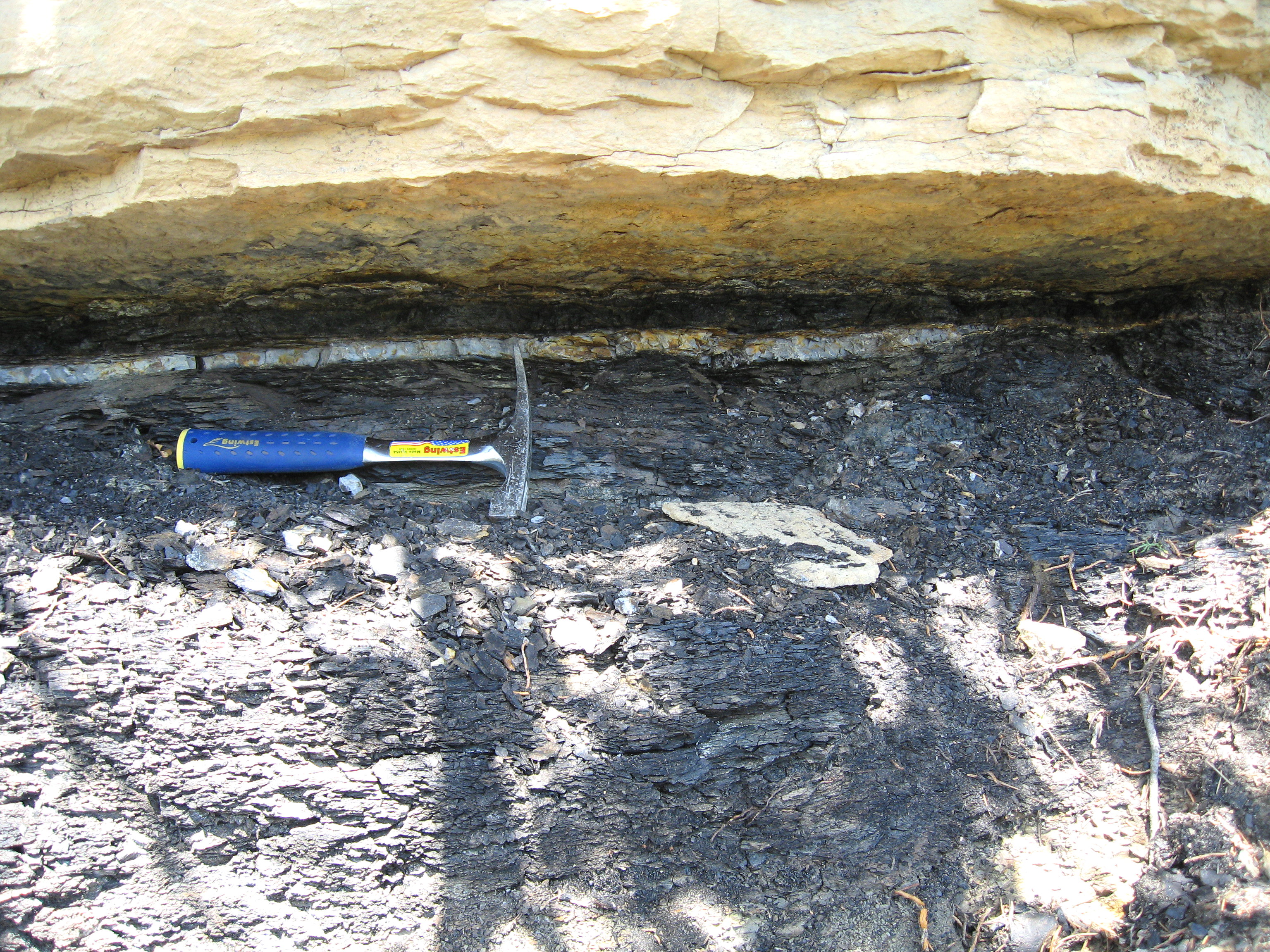
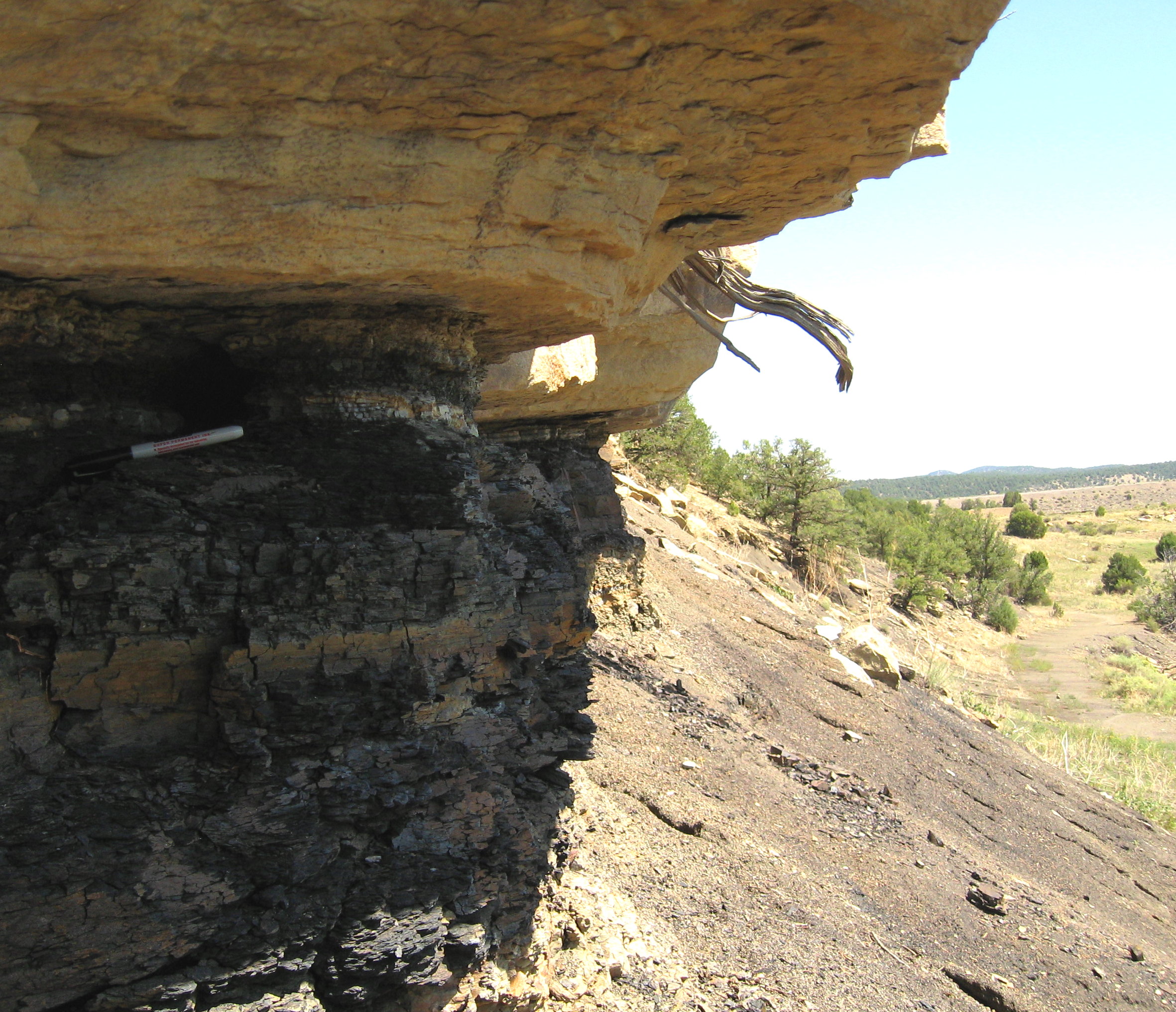
An exposure of the K-T boundary can be found in an outcrop just west of Trinidad Lake in southern Colorado. The thin, off white layer lies within a seam of coal and under a cap of sandstone at this location. Note the rock hammer for scale.

Exposure of the K-T Boundary, Trinidad, Colorado.

View of the K-T Boundary sitting under a cap of sandstone. Note Sharpie marker just below layer.

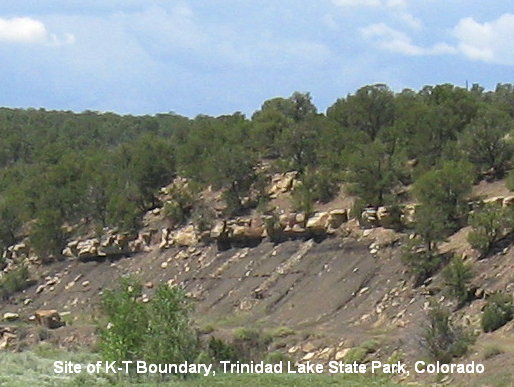
K-T layer in context.

The K-T layer at the Trinidad site is comprised of claystone which is weathered and crumbles easily. If the material contains parts per trillion quantities of iridium, then sending a sample out for GDMS is likely to be futile.

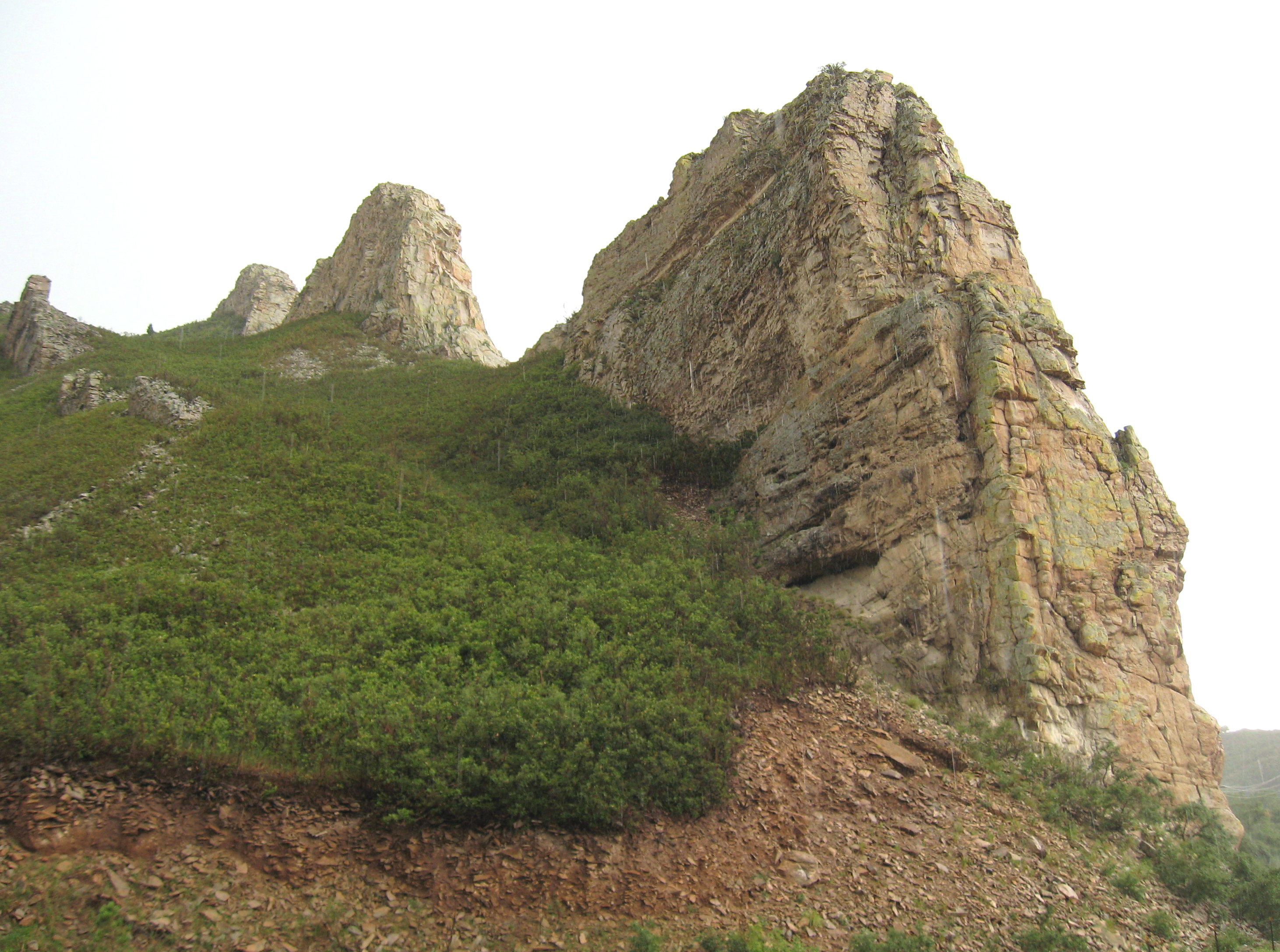
North of Trinidad are the Spanish Peaks. These peaks are of volcanic origin and are associated with a substantial array of dikes, a great many of them visible from the road. The photo below was snapped from a roadcut during a recent rainstorm. To the west is the Sangre de Cristo Mountain range. This range is what is called a horst, which is an uplifted block of crust. Just west of this range is the San Luis Valley containing the Rio Grande rift formation.

Dike formation south of La Veta, Colorado

Dike formation south of La Veta, Colorado.

Recently on an airplane I sat next to a 1948 chemistry graduate of UC Berkeley. We were enroute to John Wayne airport from Denver.  As we both marveled at the majestic topography of the Grand Canyon below she told me of her experience of having both Luis Alvarez and Glenn Seaborg as professors. Alvarez, she said, gave an exam with 7 % as the high score. She shook her head, laughed, and asked, “can you imagine”?

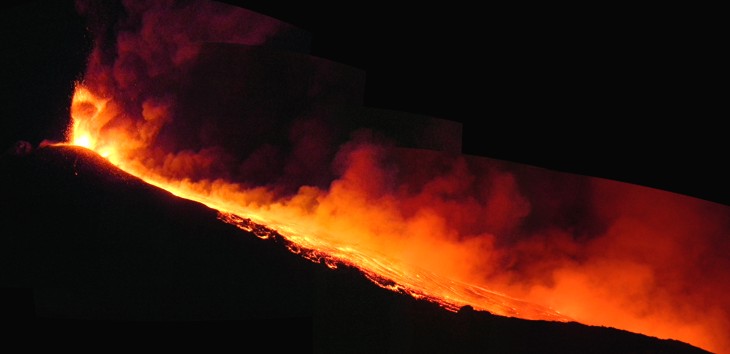
Eruption on Mount Etna

Mount Etna in Italy has been in an eruptive phase since July 30 of this year. A good video clip taken from near the site of the eruption can be found at this link. Sadly, I was unable to plant the video clip into this post, \;-(.  An excellent blog to keep up to date on global volcanism is Eruptions.

Etna Mosaic 7/31/11. Photo credit- Etna Observatory.

I have to wonder how much combustion of reduced magmatic components is occuring as the magma enters contact with the atmosphere.  Certainly the sulfide components must combust at the surface. 

Carbonates are prone to thermal decomposition as well, though from disproportionation to metal oxides and CO2.  At some depth from the surface, the formation of CO2 must begin to produce at least some amount of PV work on the magma column.

Visit to the Argo Mill

After years of driving by the Argo mill in Idaho Springs, Colorado, we decided to turn off of I-70 and take the tour.  Admittedly my interest in the mining history of the west had something to do with it.  

This is a very unusual historical site and is worth a stop for those with an interest in history and mining. The facility consists of a red mill building built along the slope of the mountainside and, separately, access to the entrance of the Argo tunnel.  Adult tickets cost $15 and in exchange for the fee, you get a movie and a talk on the history of the mill by a staffer, and a pack of sand for your gold panning lesson.  The sample of sand is salted with gold flakes so that everyone has a decent chance of recovering some flakes.

Staff member demonstrating the use of a gold pan.

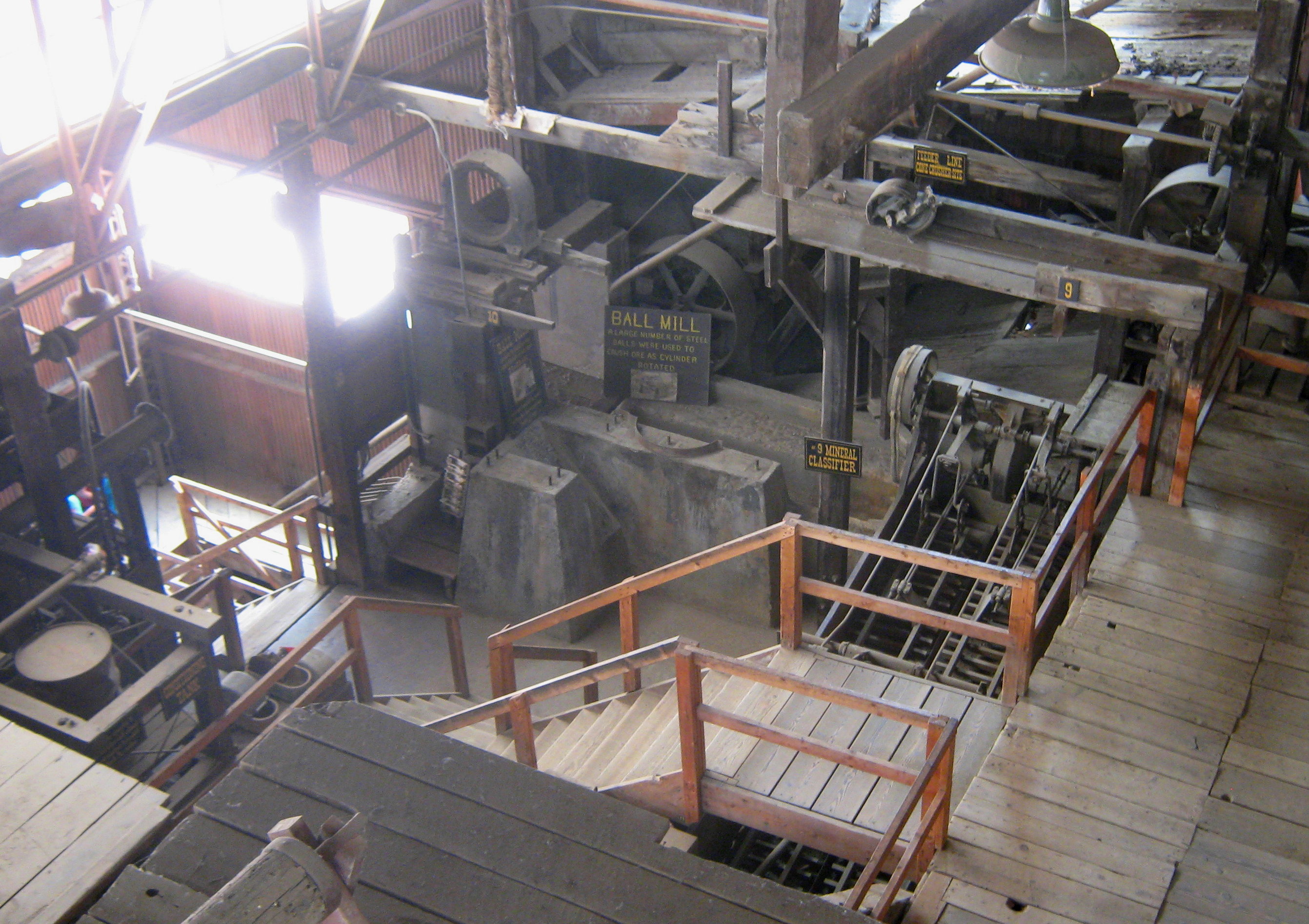
What makes the Argo mill unusual?  Several things. Most obviously, it is a gold mill that is quite well preserved. Most gold-rush era mill sites were in various stages of ruin in the early 2oth century. That this mill has been so well preserved alone makes it worth a visit. Add to that the machinery that is on display and you will get a fairly good idea of what it must have been like to work in such a place.

Interior Spaces of Argo Mill. (Copyright 2011 Th' Gaussling)

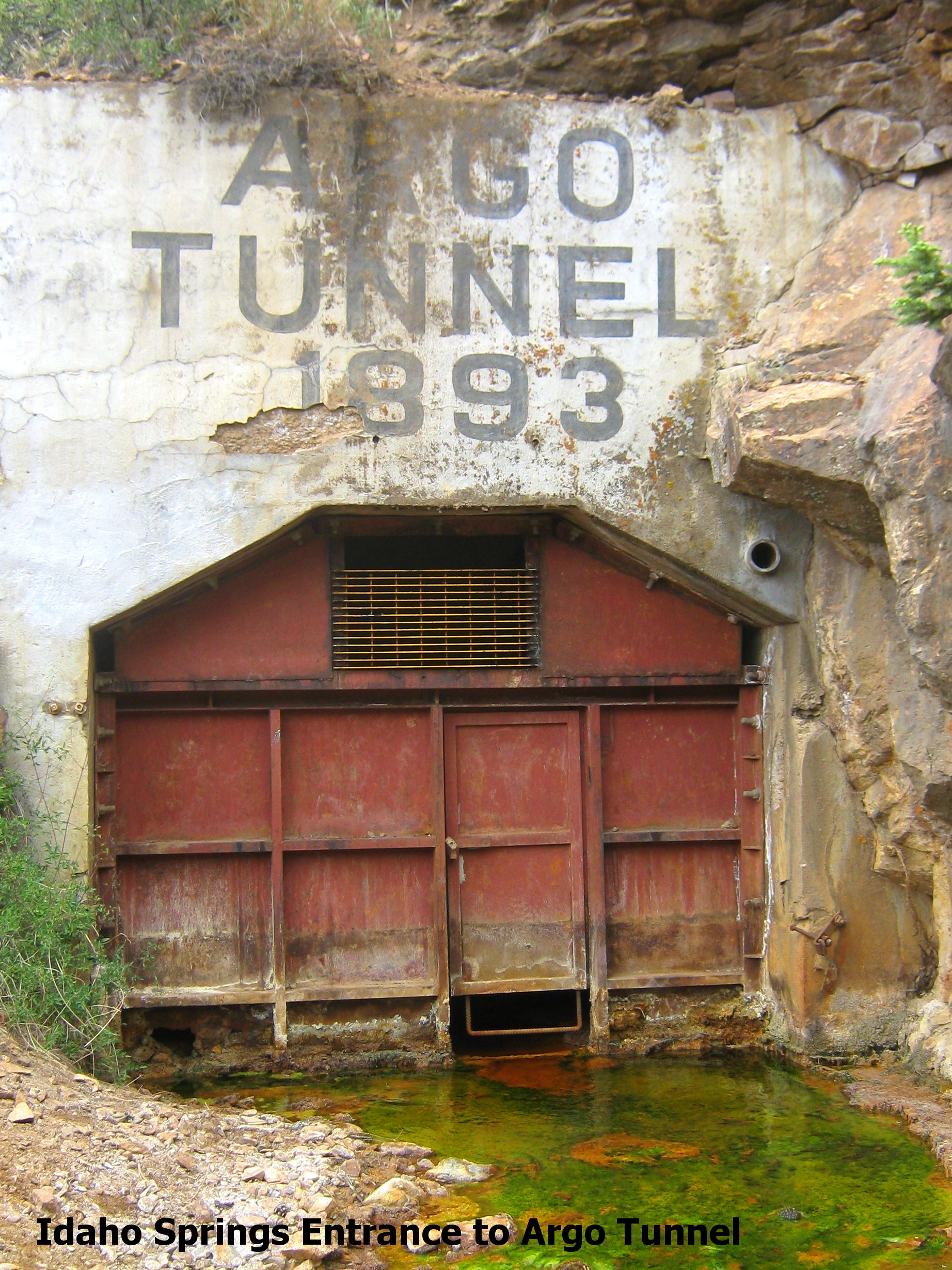
The other major reason for the unique quality of the Argo is it’s association and proximity to the Argo Tunnel.  The 4.16 mile long tunnel was begun in 1893 and completed in 1910. The idea behind the tunnel was both simple and ambitious. In order to provide milling services to the mining districts to the north, a tunnel was constructed below the mines to provide both drainage and easy transportation to a mill.

Entrance to the Argo Tunnel (Copyright 2011 Th' Gaussling)

Idaho Springs sits about 2000 ft below nearby Central City and is well situated for such a tunnel. The Central City gold district was a natural phenomenon at it’s peak. This section of the Colorado mineral belt was fabulously rich in gold and beginning with the 1859 discovery of gold, quickly became densely covered with mining claims from Idaho Springs northward to Central city and beyond. Hauling ore from the north to Idaho Springs was problematic owing to the topography.  A major road was the Virginia Canyon road, also called the Oh-My-God road, and was unsuitable for hauling ore. Ideally, a mill should be below the entrance to the mine in order to make maximum use of gravity in the milling operations.

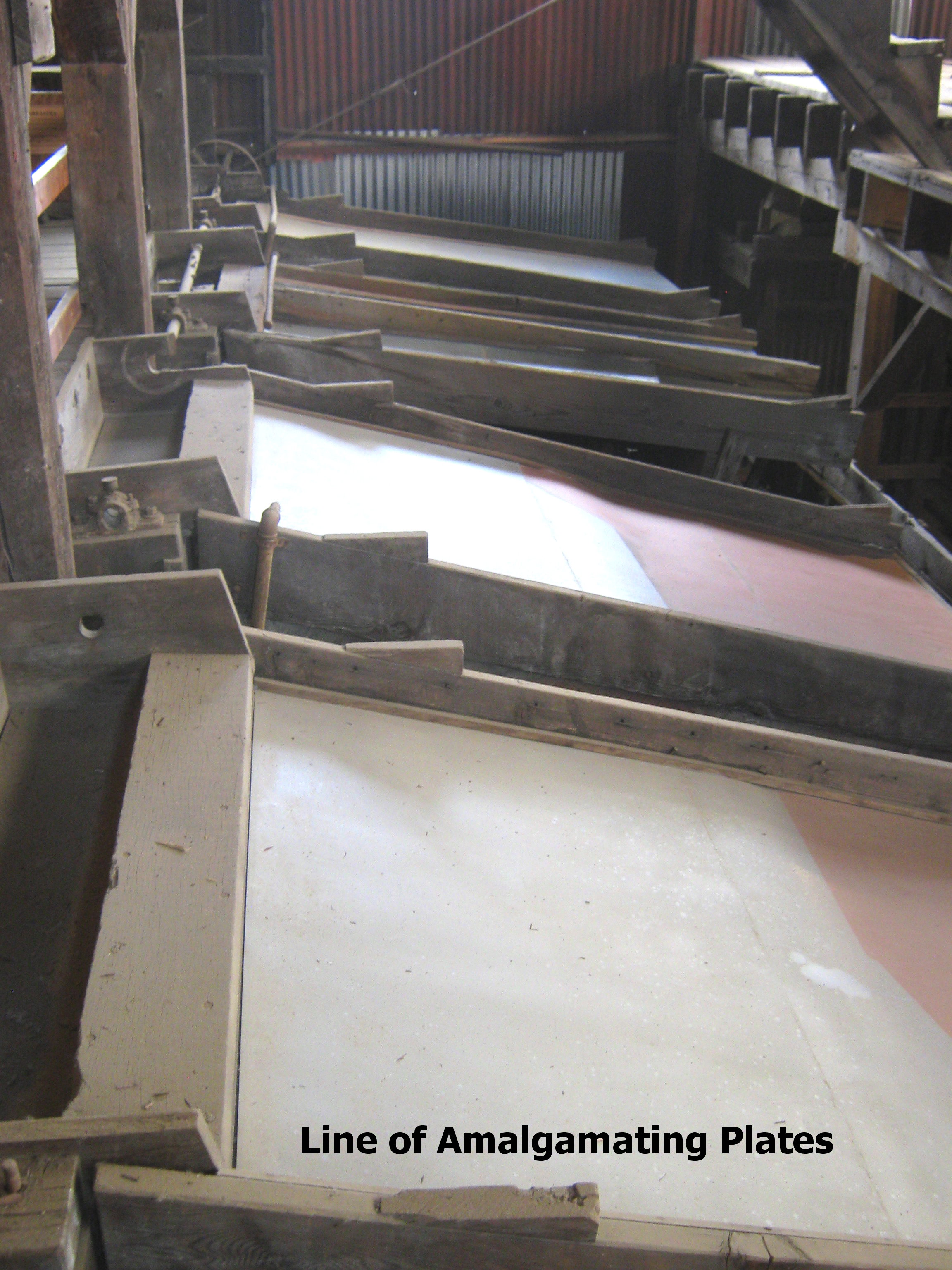
Amalgamation plates. (Copyright 2011 Th' Gaussling)

When completed, ore was moved through the tunnel by ore cart from mines to the north and received at the mill in the tipple house.  The ore delivery was recorded and assayed for gold content.  The business model of the mill was this- ore was purchased from the mines on the basis of assay and extractable gold was recovered.  This model of operation was common. Mills and smelters were customers for the mine operators. Ore was produced at the mine and sold on the basis of assay.

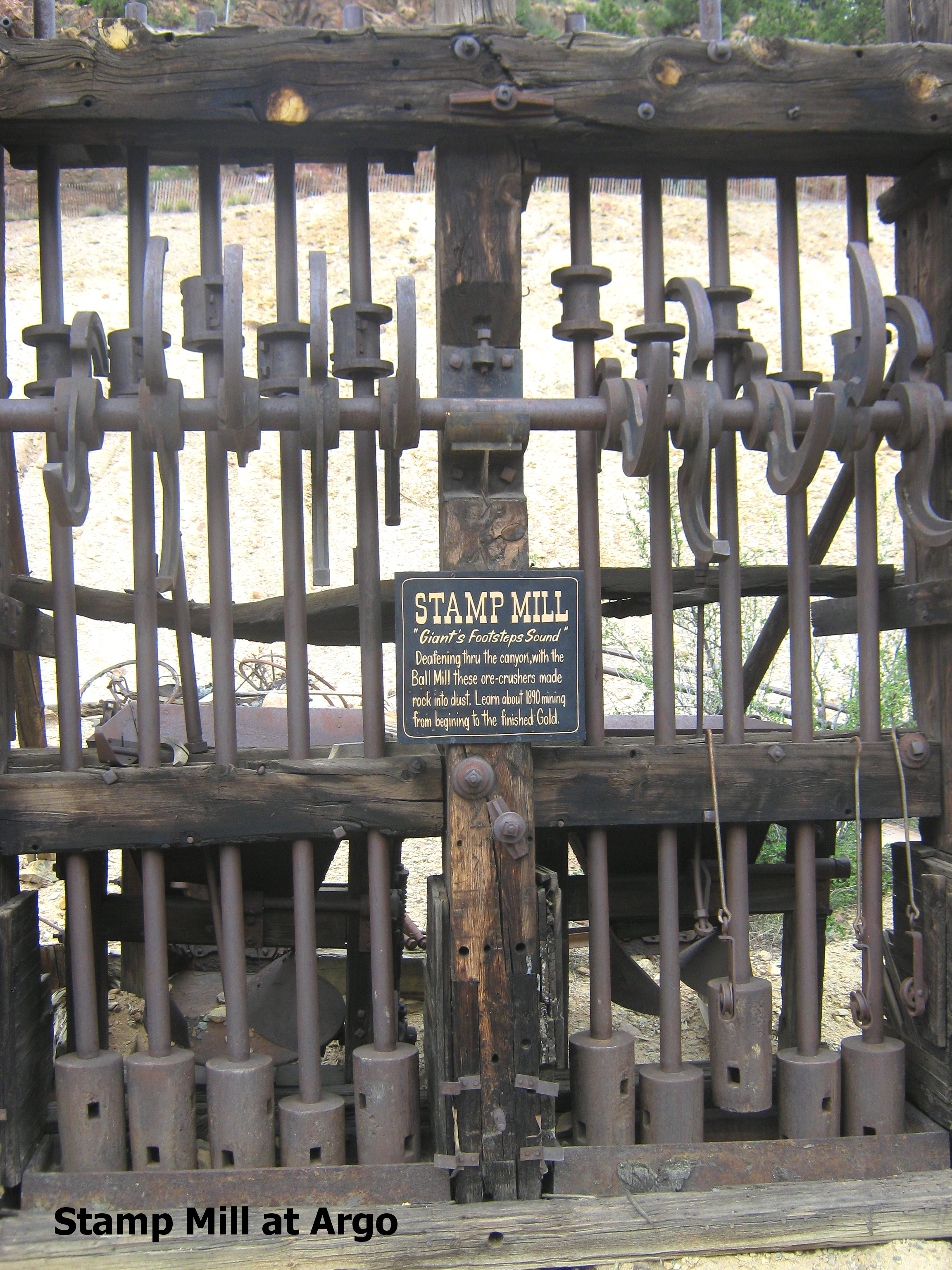
Stamp Mill on display at the Argo. (Copyright 2011 Th' Gaussling)

According to the guide at the mill, amalgamation operations were halted in the 1930’s, allegedly due to health and safety concerns.  The ore was comminuted with a ball mill and subjected to separation of the gold by shaker tables. Maybe the reason cited for ceasing Hg operations is accurate, but I’ll need to see independent verification of that.

Cyanadation was practiced at the mill as well. Not much was disclosed about this process. The guide disclosed that the mill tailings were contaminated with cyanide and mercury. As it happens, cinnabar occurs naturally in the Central City mining district, according to the guide, and can be found in spoils piles. Today this contributes to total package of contaminated leachates which may find their way into the watershed.

All in all, the Argo mill is worth a visit. Like all tourist attractions, however, you have to expect that there will be some dumbing down of the scientific and engineering details. Commonly, the emphasis in a visit to a tourist mine is on the craven details of gold mania and this tour is no different.  However, I am a purist. My interest relates more to the natural history of the chemical elements than the details of blasting and mucking.  So, if you can turn a blind eye to lackluster docent work, such tours are interesting and useful.

The Puyehue Volcano

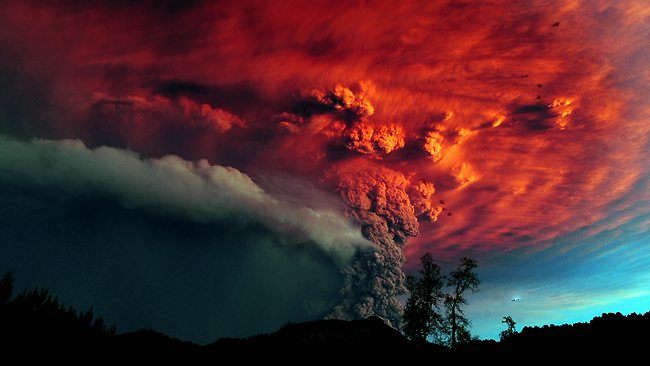
The Puyehue (poo-YAY-way) volcano in Chile is presently in an eruptive phase. This stratovolcano is part of the Puyehue-Cordón Caulle Volcanic Complex (PCCVC). The Andean Cordillera is zoned with isolated volcanic belts along the length of the continent.  As is the case along the rest of the Ring of Fire around the Pacific rim, the vulcanism is due to subduction, in this case of the Nazca and Antarctic plates.
 
Eruption of Puyehue Volcano in Chile (photo AFP)

It was suggested (tongue in cheek) that the volcano be renamed Mount Doom from the Lord of the Rings.

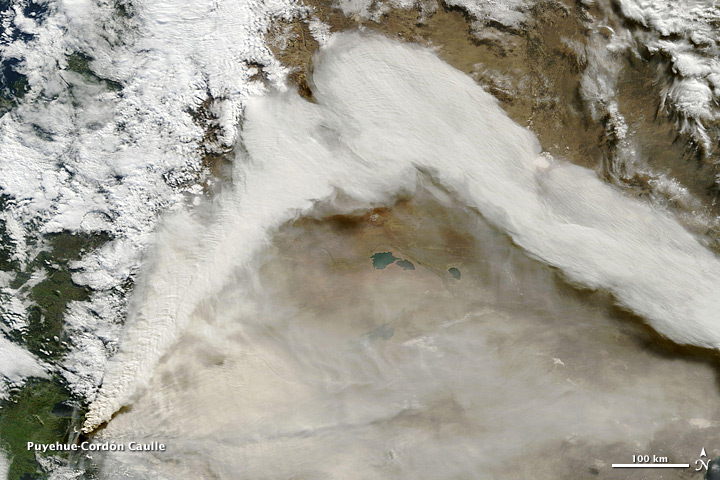
Puyehue Eruption, June 2011. (Earth Observatory)Puyehue Eruption (June 14, 2011, Earth Observatroy)

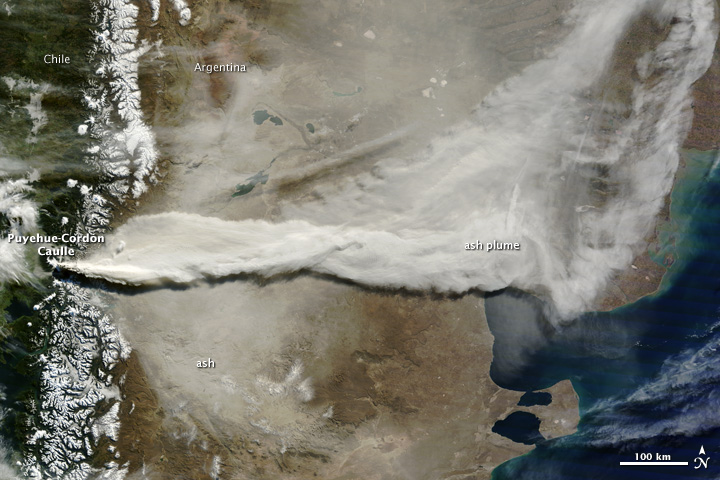
 Today’s image (below) from the Earth Observatory is telling of the scale of the ash cloud. It has traversed the width of the continent due east- from the Andea’s on the Pacific to the Atlantic and beyond.

Puyehue Eruption 6/14/11 (Earth Observatory photo)

Grimsvötn Eruption

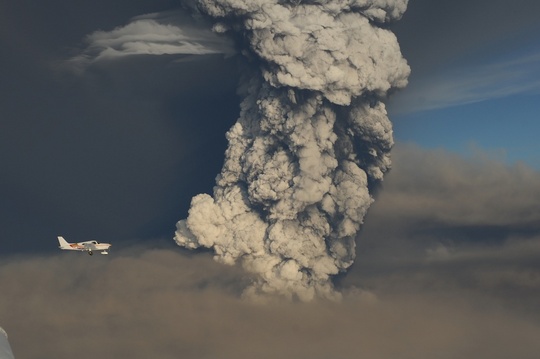
The Grimsvötn eruption in Iceland began its eruption on May 21, 2011 with the injection of considerable ash into the navigable airspace to the east. Excellent photographs can be found at the Icelandic Met Office.  Grimsvötn is a very prolific basaltic volcano located on the southeast part of Iceland. Grimsvötn is the most frequently erupting volcano in Iceland, with the most recent eruption in 2004.

Grimsvötn Eruption in Iceland. (Photo credit- Sigurjónsson, Icelandic Met Office)

According to one source in Iceland, the eruptions have presently subsided to steam venting, though no one is prepared to say that the eruption is over. The safe distance for viewing is said to be 2 km.

Retorting the Auriferous Spud

Gold miners of the 19th and early 20th century had a processing advantage over todays gold miners despite all of their modern diesel powered trommels, pumps, and sluices. Some early placer miners had access to mercury or quicksilver. Auriferous fines could be concentrated in a small container with water and a few ounces of mercury would be added to extract the gold as an amalgam. Or, the concentrates could be contacted with mercury-coated copper for the same effect. Mercury coated copper pans or flat plates were often used to scavenge gold and isolate it as the amalgam.

Today, the use of mercury is strictly forbidden in mining operations around the world. But there was a time when mercury was a key part of the miners toolkit.  Many extraction schemes were developed to concentrate gold into a small package.  Panning or the use of a shaker table would provide nuggets and dust as concentrate. But often there was heavy black sand comingled with the gold dust.  Isolation by amalgamation followed by distilling off the mercury (retorting) would provide moderately pure gold.

For example, a simple retort may be made from a pipe nipple with a cap on the bottom and a top connector attached to a long condenser tube that could be cooled with stream water. The retort vessel was set into a campfire and perhaps a cloth was wrapped around the condenser tube and wetted to knock down the mercury vapors so that they could be collected in a receiver.

Curiously, there is lore about the potato retort.  My source is Eldred D. Wilson, Gold Placers and Placering in Arizona, Bulletin 168 (1961), State of Arizona, Bureau of Geology and Mineral Technology, Geological Survey Branch. In the potato retort method, a potato is cut in half and one half is hollowed out enough to accomodate an ounce or so of amalgam. The auriferous spud is wired back together and placed in the ashes of the campfire for 30-60 minutes until done. The potato is then opened to reveal a gold button in the middle. Or, so the story goes.

There were variations. Analogous to the preparation of hoe cake, digging implements were put to use in retorting duty. A potato amalgam package could be placed in a frying pan or in a shovel which would then sit in the campfire.

It’s hard to say just how effective potato retorting was compared to other methods. Admittedly, I have trouble believing that the internal temperature of the potato was high enough to do the job. It’s conceivable, perhaps, that enough Hg was cooked away to leave behind a metallic mass with some gold color.  It would be interesting to try this and then get an assay.

Wilson offers this advice- don’t eat the potato.

XRF Magic

We’ve been looking at hand held XRF spectrometers.  If you have not been introduced to this, you may be in for a real treat. A variety of companies make them- Bruker, Thermo, and Innov-X to name a few. These things are in the low-end Lexus price category, but are they ever amazing.  It’s straight out of Star Trek.

Clarke’s Third Law states that any sufficiently advanced technology is indistinguishable with magic. I gotta tell ya that these hand held XRF’s are just amazing.  You point at a sample and it gives a tally of the elements present, or most of them at least.  Some even have a built-in GPS you can punch to take a waypoint of the location of the sample you just analyzed out in the field.  It is a great tool for mineral prospecting.  

What is embarrassing is that this is the first I’ve heard of it. Our geologist friends have been using these things for a while now. 

The whole thing depends on a miniature X-ray source.  I’ve been looking into this.  For the curious folks out there, lithium niobate- LiNbO3- is a very interesting material.  Crystals of LiNbO3 have the property of pyroelectric potential. A pyroelectric crystal is one that is able to generate a polarization across the crystal faces in proportion to the temperature.  A pyroelectric xtal placed on a heating/cooling block in a vacuum is able to generate a stream of electrons energetic enough that, when stopped by a copper electrode, will generate x-rays. 

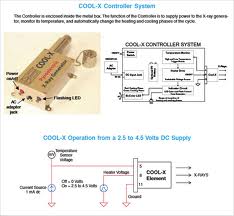
One manufacturer, AmpTek, produces a miniature x-ray unit called the Cool-X that has a photon output equivalent to two milliCuries, with 75 % of the flux less than 10 KeV.  Elsewhere in the product literature, the output is described as 5 milliSieverts per hour.  So, the user has to be a little careful with this thing. But rad safety issues aside, this is quite an amazing source. The product literature doesn’t come out and say what kind of crystals are used, but they may be a tantalate salt.

AmpTek Cool-X

The unit does not operate continuously. It can only generate x-rays durig a thermal cycling period, The xtal starts out cool and as it’s heated, generates the electron flux that is de-accelerated by impacting the copper to produce the x-rays. The lit gives a cycling interval of 2-5 minutes.  It is referred to as a Kharkov X-ray generator.

It’s magic.

On the Digestion of Rock

A rock consists of one or more minerals that may be held together by a cementitious binder. Or a rock may be a continuous mass of interlocking crystalline domains.

Igneous and metamorphic rocks are comprised of crystalline phases compacted into an inhomogeneous mass. Amorphous phases may be found as well.  Sedimentary rocks are often made of distinct mineral grains or pebbles held into position by cementitious matrix. There is a great deal of variety to be found.

The point is that rocks may have quite complex compositions. If the goal is to use rock for construction, then the composition may not be that important as long as some minimum structural attribute exists.  

But if the goal is to extract specific components from a rock, then the details of composition become very important.  Rock may be made of simple inorganic compounds.  Good examples would be calcium carbonate, sodium chloride, or calcium fluoride.  These substances are often found in crystalline form where the crystal consists of cations and anions which are free to solvate in the right solvent system and dissolve. These kind of minerals may be very weak structurally and subject to easy fracture.  The geological fate of such minerals is often aqueous transport and deposition to some location where a new mineral may precipitate from component ions in solution.

Some rocks may have appreciable fractions of monomers like silicate and aluminate. Monomeric components are able to form polymer networks which have a large effect on many properties of the mineral.  Glass and quartz are silicate network polymers that form rigid matrices. Silicate has 4 attachment points in a tetrahedral array that can form a variety of  linkages.  These matrices have properties like elevated melting point and rigidity that add or detract from the value of a given material. 

Quartz is a pure SiO2 network whereas soda glass contains network terminating additives that alter the connectivity and lower the glass transition temperature and melting point of the material. The additives lend workability to the glass. Chain and network termination no doubt has a major influence on the physical properties of rock.

Most metals are found in nature as an ionic compound in various oxidation states and charge balanced by simple anions like oxide, sulfide, or a halide.  Metal cations may also be associated with complex, polyatomic anions like sulfate, molybdate, tungstate, silicate, aluminate, and a few other oxidized species.  A few of these polyatomic anions, especially silicate, are held together with substantially covalent bonds. So their network polymer compositions may be very high melting and difficult to mill.

Extraction of desired metals from a rock will follow a path depending on the the type of mineral present. Rocks made of an ionic compound and not subject to network connectivity maybe susceptible to chemical attack and dissolution.  Treatment with strong acids or various fluxing agents may cause the digestion of a rock under less than drastic conditions. Such rocks maybe susceptible to weathering as well.

Rocks with substantial polysilicate or polyaluminate compositions are rather more difficult to digest. For the same reason glass resists most chemical attack, so too do silicate and aluminate minerals.  But substances that attack glass and alumina may also be useful in digesting rocks high in silicate and aluminate. In particular, hydrogen fluoride stands out. This acid is well known to attack glass by breaking the Si-O bond and making an Si-F bond due to silicons affinity for fluorine.  Digestion of silicate minerals with HF or ammonium bifluoride (NH4FHF) has been known for a long time.  The use of disulfur dichloride (S2Cl2) has been reported as well.

Silicates and aluminates are also susceptible to attack by hydroxide or carbonate.  This is often taken advantage of in the lab through the use of a muffle furnace and crucible. Digestion of a rock sample is affected at high temperature and the resulting digested material is then treated in a manner as to allow the separation of the metal as, for instance a hydroxide or carbonate that can then be ignited in the muffle furnace. This time a purified metal oxide is formed and weighed to give a yield or wt %. Metal oxides can usually be dissolved in aqueous acid and subjected to a variety of tests thereafter.

Antimony Funnel Formation at Stibnite, Idaho

In the Pnictogen Hall of Fame there is at least one p-block compound with a town named after it. The ghost town of Stibnite, Idaho, sits silently in the Yellow Pine mining district 40 or so miles NW of Cascade, Idaho.  The town of Stibnite is named after the sulfide of antimony- Sb2S3.  The chemical symbol, Sb, is related to this mineral name.

Idaho sits in the great North American cordillera.  A cordillera is a grouping of mountain ranges at the continental scale. In the case of the North American cordillera, it begins ca 103 west longitude and extends to the Pacific ocean. The Black Hills are found somewhat east of 103 degrees, but I’m generalizing again. In the US, the Rockies, Wasatch, Cascades, and the Sierra Nevada ranges are part of the cordillera formation.
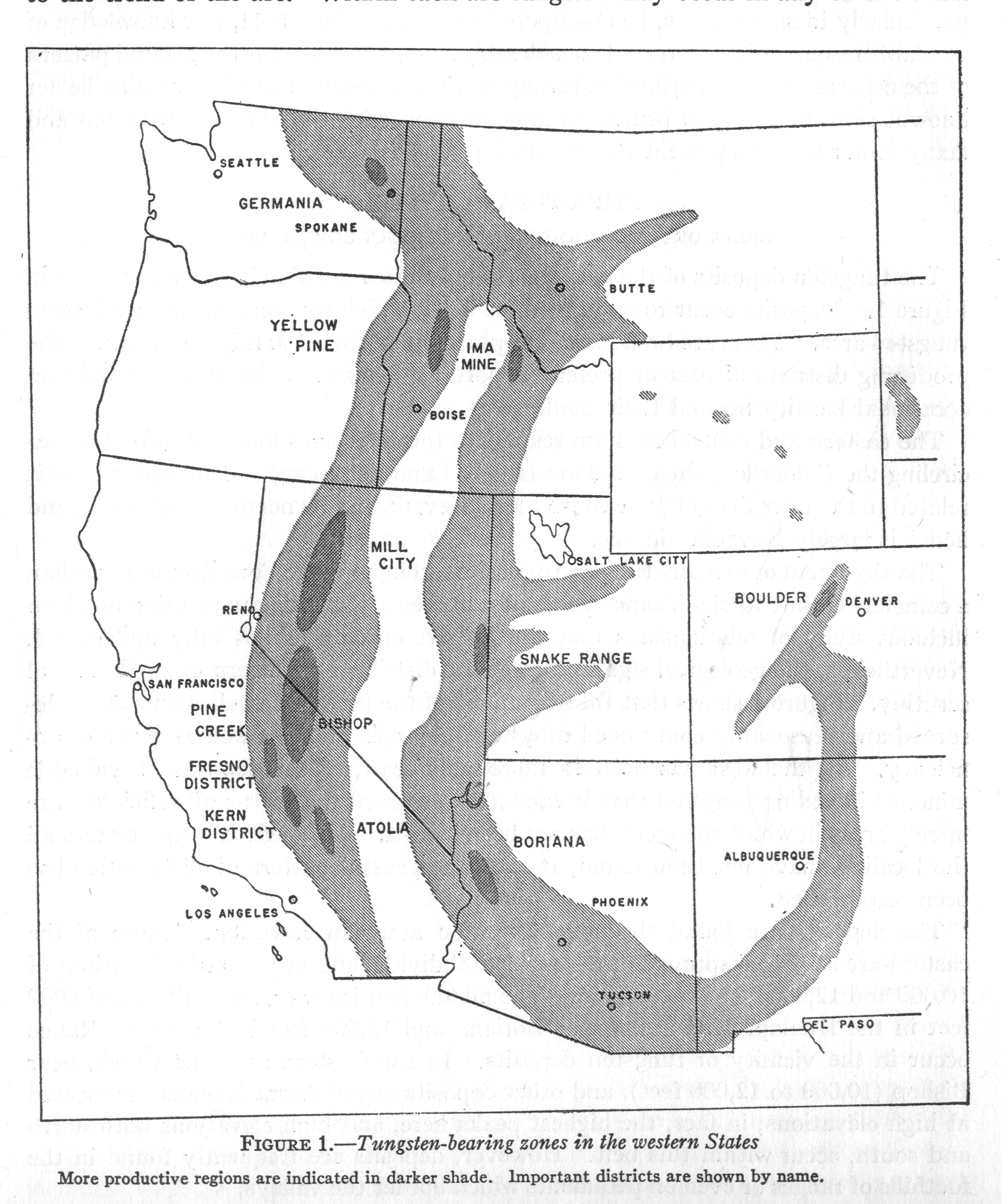
North American Tungsten Belt. From Paul F. Kerr, Tungsten Mineralization in the United States, 1946, Waverly Press.

One characteristic of the cordillera is the broad occurrence of economically important metal deposits. In the illustration above, the occurrence of tungsten is associated with the mountainous regions of the west. An important feature found in economic metal bearing districts within the cordillera are vein deposits. Metals can be disseminated in rock or concentrated in veins. 

In Colorado, the Cripple Creek & Victor mine is situated in the throat of an ancient volcano. This ore body is an example of highly disseminated gold ore which is interlaced with vein structures containing higher concentrations of gold.

Rather than perform underground mining, the economics allow the large  scale removal and crushing of rock to pebble size followed by extraction with cyanide to isolate the value.  This mining technique was not possible until the advent of large scale mechanization. In the early days, the Cripple Creek district was limited to underground mining of vein formations that were more highly enriched in gold.

What is crucial to the placement of a metal ore body is some process that leads to concentration of valuable metals. Recall that the definition of an ore is based on economic considerations.  At some level of dilution all ore becomes just gangue or country rock. Concentration of value in the ore body near the surface can arise from several mechanisms.

A common process that concentrates desirable minerals is hydrothermal deposition. This is found widely in the cordillera. A natural consequence of mountain building is the generation of stresses within the upthrusting  rock. At some point stress gets relieved by fracturing which results in the formation of void spaces within the rock.

Underground water, which at depth is at high temperature and pressure, will dissolve components of rock in contact with the water. This water will naturally convect and flow towards the surface, carrying whatever solutes that were favored by higher solubility.

Deposition occurs as the water flows to the surface within whatever fracture network the waters find themselves in and may continue to deposit until the vein seals itself shut. Over the fullness of time the formations are thrust upwards and erosion wears down the rock to expose outcroppings of the desired mineral at the surface. 

Such processes have put vein lodes in place all over the world, including the American west. Deposits of gold, silver, antimony, iron, mercury, and tungsten are examples of metals that are concentrated in this manner. Ostensibly, this is happening in geothermal hotspots like Yellowstone or Iceland today.

These exposed outcroppings weather and oxidize, generating new mineral compositions. In the case of gold, its relative inertness leads it to form the native metal in these weathered formations and, under the influence of gravity and the hydraulic forces of snowmelt, gold will work its way downhill and into the alluvium.

Other elements besides gold are also mobilized, particularly the sulfides. In the deep crust, well below the depth to which oxygenated meteoric water can flow, is an environment rich in the anionic subunits oxide, sulfide, silicate, and aluminate. Metals and metalloids like Cu, Sb, Ag, As, Pb, Hg, etc., form complexes with the various anions and correspondingly, 3 dimensional networks of inorganic polymeric species. To the extent that a 3-D network of shared atoms, edges, and faces of tetrahedral crystalline subunits can be formed, the resulting bulk material may have a high melting point and high strength.

However, when connectivity is lowered by chain or network terminating constituents, the melting temperature and hardness of the material may be lowered.  An example is soda glass. When silica is diluted with chain or network terminating components like soda or lime, the high strength and high melting point of quartz, which is just pure polysilicate, is lost. The same thing can happen naturally in mineral formation processes.

Other kinds of ore are put in place by fractional melt crystallization and layer deposition by density within a magma chamber. The major ocurrences of platinum group metal (PGM) deposits are an example of such a process. Eventually, tectonic processes raise the frozen and extinct magma chambers to the surface where erosion exposes a narrow banded horizons referred to as a reef.  The Bushveld Igneous Complex in South Africa and the Stillwater Complex in Montana are examples of this mechanism.

The deposits found near Stibnite, Idaho, are comprised of antimony and tungsten as well as lesser amounts of gold and silver. In about 1900 gold, silver, and antimony were discovered in the area, leading to a gold boom at Thunder Mountain.  During the years from 1938 to 1944, the Yellow Pine (W, Sb) and Meadow Creek (Au, Ag, Sb) mines in this part of Idaho were the largest producers of tungsten and antimony in the United States.

The details of this mining district can be found in:

John R. Cooper,  Geology of the Tungsten, Antimony, and Gold Deposits Near Stibnite, Idaho; 1951, Geological Survey Bulletin 969-F.  Stibnite Idaho USGS

In the abstract, Cooper describes the W, Sb, Au, Ag deposits as being confined to an area about 1 mile by 3.5 miles in scope (as of 1951). The principal rock of the area is quartz monzonite which is extensively fractured and has been penetrated by dikes of basalt, quartz latite porphyry, trachyte, and rhyolite.

Cooper describes a deposit whose metallization has taken place in three stages with intervening episodes of fracturing. The first stage is described as extensive replacements by gold-bearing pyrite and arsenopyrite.  The second phase of deposition or replacement is less extensive and is by scheelite (CaWO4) within the gold ore bodies.

The third stage of growth or deposition is of stibnite and silver, largely within the same fracture systems as the scheelite. The ore bodies occur with the Meadow Creek fault and associated subsidiary faults in the quartz monzonite. The tungsten-antimony ore body within the formation took the shape of a

“flat upright funnel flaring to its widest diameter at the surface and tapering to a narrow neck, which extends below the bottom of the minable tungsten ore. The underside of the ore body is very irregular in detail.  The highest grade of tungsten ore was concentrated toward the center of the mass and was surrounded by an envelope of antimony ore containing only a little tungsten.”    – John R. Cooper

The Meadow Creek ore contained 0.23 oz gold per ton and 1.6 percent of antimony.  The Yellow Pine ore contained little gold but 4 percent of antimony and 2 percent of WO3. The Yellow Pine deposit was exhausted of tungsten in 1945, producing 831,829 units of WO3 equivalents in the concentrate. One unit of WO3 is 20 lbs of tungsten trioxide.

Much of the scheelite was found disseminated in brecciated gold ore.  Some scheelite was found in branching stringers and veinlets within the groundmass.

The stibnite occured as “disseminations, microveinlets, stockworks, massive lenses, small fssure-filling quartz stibnite veins, and euhedral crystals coating late fractures. ”  Oxidized antimony minerals such as kermesite (Sb2S2O) were reported as being very scarce.

Extractive metallurgy of the 19th century

The first gold lode discovered in Colorado was found where the town of Gold Hill, Colorado, now sits. Gold Hill is presently at the locus of the Four-Mile Canyon fire west of Boulder. As of  today, more than 170 structures have burned, including a few outhouses.

Today, a single gold mining operation remains active at Gold Hill. The kid and I recently visited the area and I wrote a post about Wall Street, south of Gold Hill.

In the last few years I have been fascinated by what started as a simple question-  How did they get the gold out of the ore in the 19th century?  What has become apparent to me as a chemist is the extent to which reasonably sophisticated multistep extraction schemes were employed by 19th century mills and smelters. Their methods of processing would not be unfamiliar to alchemists who practiced similar arts over 400 years earlier.

The alchemists had techniques of calcination, comminution, lixiviation, and distillation available to them. In using these processes, they were inadvertantly performing reduction and oxidation reactions so as to alter the composition of substances with the hope of improving the prospects for isolation of desirable metals.  The 19th century gold and silver mill operators inherited these techniques and mechanized them. One of the key improvements over their medieval predecessors was that they had reasonably sensitive analytical methods as well as some scientific knowledge of the chemical behavior of materials- we call it chemistry today. As the 19th century American gold rush went forward, there became available new methods of gold and silver extraction involving mercury, chlorine, cyanide, and sodium or potassium sulfide and thiosufate.

Any 21st century chemist will recognize most of the inorganic chemistry of 19th century milling and smelting of metals.  But in those days it was not referred to as chemistry- it was known then as it is today as Extractive Metallurgy.

Much of the technology for extractive metallurgy traces back through European mining engineers who had come to the American gold and silver districts.  Two mining engineers in particular stand out in 19th century Au/Ag metallurgy- Guido Kustel and Philip Argall. More about these fellows at a later date. Suffice it to say that they were prolific problem solvers in a time when mine and mill operators typically had more investor’s money than sense.

Some Milling and Smelting Business Models

Prospectors working alone or with investors backing them would prospect a promising area of ground for gold or silver, looking especially for vein outcroppings. If they has cause for optimism they would file one or more claims for the right to have access to the minerals therein. A patented claim was a claim issued by the federal government as a deed that could be bought or old like a a parcel of land. Most of the land of interest was state or territorial land. Many times a claim was filed based on speculation, and a nearby claim with a vein that might go in the right direction would potentially be valuable.

The miners would begin to develop the claim by digging an adit and drifting horizontally following a vein system, or they might dig a shaft in a promising spot in hopes of intercepting a vein rich in value.  Since they were focused on veins which were visible to the miners, the miners were able to dig along the direction of the vein. In doing so, they could hand sort unproductive rock into a waste pile and collect concentrated ore separately.  But then what?

Some mine operators were wealthy enough to have their own mill or smelter to extract the value. However, the majority of mines would sell their ore to a mill, which might be many miles away. A price based on an assay could be negotiated, and the ore sold outright to the mill. The mill would make its profits by selling the gold or silver it extracted. Sometimes a mine would pay the mill a tolling charge and keep ownership of the gold or silver.

Milling and smelting could be a lucrative business or it could result in a total loss. Mills and smelters were run by companies who had plowed a significant financial investment into+ the operation. They relied on the productivity of the gold or silver district. Not infrequently multiple mills or smelters would appear in a district affording lots of competition for ore.   Milling and smelting was labor and energy intensive. Old photographs often show the mills sitting in a mountainous area clear-cut of trees. Wood was needed for buildings and firewood. Refining operations required many cords of wood to run the furnaces or to generate steam for the stamp mills.  If a mill ran out of fuel, their operations were threatened.

Many mines produced ore that was sold to the mill. Mine operators might be paid for the assayed value per ton of ore delivered, or they might be paid a fraction of what was extracted by the mill. The mill could be just down the hill from the adit or shaft, or it might be many miles away.  As a rule, transportation costs were quite high.  Some districts like Caribou had teamsters who would haul ore by horse drawn wagons to mills some distance away. Other districts had rail transportation.

Naturally, ore samples could be tampered with by miners interested in increasing the apparent value of their ore. Sampling methods were developed to produce representative samples for assay. Mills had assay offices to test for the value in the ore and to measure the fineness of their bullion.  Cuppelation was a standard method of providing a gravimetric determination of the gold content of ore.  More on cuppelation in a later post.