Category Archives: Geology

Metals Odyssey

My efforts in finding a particular actinide mine today failed miserably. Apparently, gentrification and McMansion horse operations have restricted the only access road for rabble like myself. Looks like I’ll have to get actual permission to visit the site. I’ll be more forthcoming with the identity of the mine when I can get a first hand account and pictures.

I did find some interesting pegmatite veins elsewhere. Pegmatite intrusions (or zones) may be enriched in interesting metals like rare earths. My samples could just be feldspar, but the xtal habit seems different.

This is the problem with being an “independent scholar” in this field. If I want an ICPMS or GDMS to get a sub-ppm level elemental assay, I have to fork over ca $400 a pop to get some numbers. An XRD is only good down to ~1 % phase purity. I could find a real geologist to pester, but that wears out fast. Gotta find a way to get some analysis done economically.

I spent some time panning for placer gold in a creek downstream of Ward. It was a complete bust. I drove away with a backache and wet feet. There are no lode mines visible in that area, so perhaps the absence of gold was determined by others long ago.

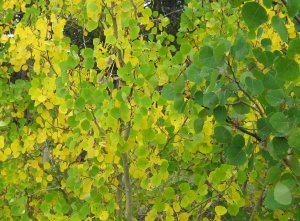
Aspen Starting to Turn COlor September 2009

Aspen Starting to Turn Color September 2009

The Joy of Bentonite

As I write this post I hear and feel the wump, wump, wump of the contractors sledge hammer coming down on our concrete front porch. We could put it off no longer. Subsiding soil in the front of the house has dropped the soil from below the concrete stoop to the point where it was hanging on to the foundation by friction rather than by concretion. The stoop was beginning to succumb to the pull of gravity and it had to be torn out.

The eastern plains of Colorado right up to the foothills are covered by expansive soil. Bentonite and other clays swell, contract, and generally heave with moisture cycling. When you combine this with ignorant and shabby construction practices, you set into motion future remediation.

Measure it with a micrometer, mark it with chalk, cut it with a torch, beat to fit, paint to match, inspect it with a microscope.

There are scattered reports of amelioration of this expansive property by amending the soil with several % of lime.  Excessive additon of lime has the effect of enhancing the swelling, so care must be taken. I am unaware of anyone practicing this kind of art. Addition of lime (CaO and/or the hydrate)will make the soil alkaline, so some planning will have to go into the decision to amend soil for expansive properties.

Day Trip to the Central City Mining District

The Central City mining district had its origin with the Pikes Peak gold rush. Placer gold deposits found in Denver area streams were quickly played out. Miners followed streams like Clear Creek up the canyon to their source, staking claims on the placer deposits in the streams along the way.  Eventually, the placer deposits played out causing miners to search for the lode deposits along the hillsides. Underground hardrock mining was the inevitable outcome of placer depletion.

The Pikes Peak gold rush began in 1859 and is named after the high  mountain peak that is visible from 100 miles into the eastern plains. While the immediate area of Pikes Peak produced little or no gold, it was a useful point of reference for arriving miners and settlers.

In many ways, the various gold rushes in American history are simply examples of economic bubbles 19th century style. The discovery of a resource that can generate substantial streams of cash will attract large numbers of wealth seekers. Not surprisingly, chance favored the early arrivals in the bubble. Many a weary participant gave up, hoping only to break even. Others realize that there is more stability in providing supplies and services to the miners.

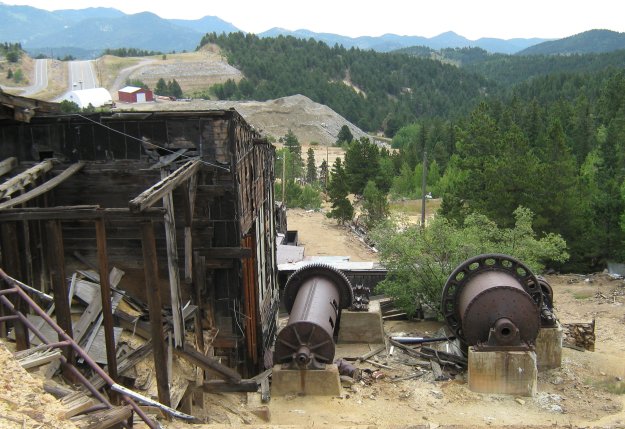
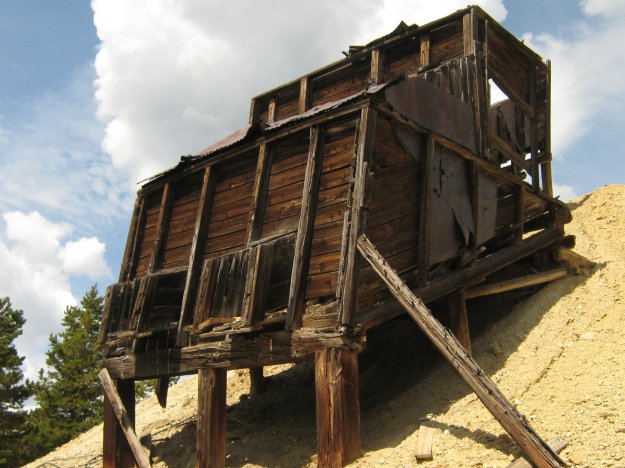
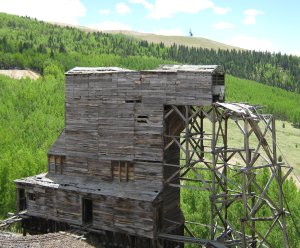
Abandoned Mill Near Central City, CO (Copyright 2009, all rights reserved)

Abandoned Mill Workings Along Russell Gulch Road (Copyright 2009, all rights reserved)

While mineshafts, adits, and tailings piles still mark the landscape in most mining districts, what has been lost for the most part are the mills. The photo above shows the remains of a mill operation between Central City and Russell Gulch. Mills were a crucial link in the generation of wealth from mining activity.

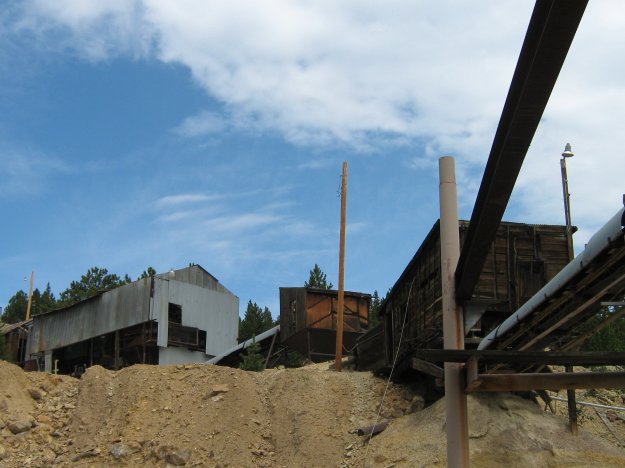
Mill Along Russell Gulch Road

Mill Along Russell Gulch Road

Mills were constructed near the richer lodes and were configured in various ways. Some processing buildings were built along the hillside and early mills had chutes with which to convey material  within the facility. Later mills had conveyors to transport materials.

Remnant of Surface Workings, Central City, CO (Copyright 2009, all rights reserved)

Remnant of Surface Workings, Central City, CO (Copyright 2009, all rights reserved)

Cominution was a key operation of the mill. Large rocks had to be reduced in size to expose greater surface area for value extraction. Stamp mills were very common and consisted of a powered camshaft that lifted and dropped a train of heavy cylindrical hammers on the ore. The output of the stamp mill was treated in various ways depending on the nature of the gold bearing ore.

Gold ore near the surface might be of a more highly oxidized nature from exposure to oxygen entrained in meteoric water. In that case, sulfur would have already leached from the formation leaving a higher level of metallic gold. Such ore was more amenable to extraction by amalgamation. Stamp mills could be constructed with mercury covered copper plates on the output side of the stamps. The mercury would amalgamate the gold particles from the mill feed, selectively trapping them on the plate. The amalgam would then be scraped off the plates and the mercury removed by the application of heat to evaporate the mercury. 

Gold ore from deeper deposits resisted direct amalgamation, however, and roasting was used to free the sulfur (and tellurium) from the value. Highly sulfurized ores would be roasted to liberate the gold from the sulfur in the matrix. The resulting calcined ore might be milled or just subject to mechanical agitation to dislodge the gold particles in a sluice or by amalgamation (source- discussions with mining museum people. I would like to find better documentation, however).

The extent to which amalgamation was used in gold recovery is largely forgotten or left unmentioned. The USGS has excellent documentation on this topic.  Chlorination by the application of Cl2 and cyanide extraction were introduced by the end of the 19th century as well, but that will be the topic of another post.

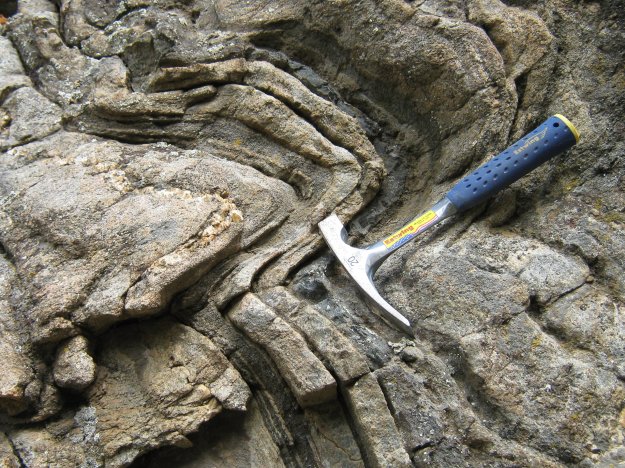
The folded rock in the photo below is shown only because it is visually interesting. Note how the various layers show signs of differential erosion. Nothing astonishing, just a reminder that seemingly ordinary things can be very interesting if one stops to have a look.

I’m going to get hit by a car one of these days from stopping at roadcuts. I can only hope it is over fast.

Folded Rock Formation , Roadcut on CO 119 near Blackhawk

Folded Rock Formation, Roadcut on CO 119 near Blackhawk

Manganese on my mind

I spent much of the weekend reading up on, of all things, manganese chemistry. It turns out that there is a tourist mine in Salida, Colorado, that offers a glimpse of a manganese mine. It is rather dramatically called the Lost Mine and the tour includes a 4WD ride to the site. This tour is on the master list of future visits – my teenage kid groaned when I let this news slip out. Pretty funny.

What piqued my interest is a rock I picked up at a rockshop in Leadville recently. It is a low grade sample of dispersed rhodochrosite with a bit of pyrite grown into it. Rhodochrosite is a light pink to rose colored semi-precious crystalline mineral and also happens to be the state mineral of Colorado. It is fairly scarce and increasingly sought after for collection and for jewelry.

The light pinkish color of rhodochrosite stems from the oxidation state of Mn- Rhodochrosite is MnCO3. Depending on the ligand, the Mn (II) will have a high spin d5 electron configuration. The high spin d5 configuration requires a forbidden electron transition consisting of a jump between d orbitals and a spin flip on absorption of hv. Since this is a low probablility occurance, the molar extinction is low and accordingly, the color of the xtal is faint.

A fellow at the CC&V mine lamented that the ore body they process for heap extraction is loaded with manganese. He said that once they move the rock from the pit, the Mn levels cause it to become a pollutant (or some other term) as defined by the EPA. Manganese seems to be relatively abundant in parts of the Rockies.

Mollie Kathleen Mine, Part 2.

Underground Air Locomotive

Underground Air Locomotive

In Part 1 of my post on the Mollie Kathleen Mine in Cripple Creek, Colorado, I described the ride down to the 1000 ft level.  Having been in mines considerably less developed, I was impressed with the quality of the skip lift equipment and the general state of the mine workings above and below ground. The mine make heavy use of pneumatic equipment to minimize ignition sources.  The air locomotive above features a pressure tank which energizes an air motor to drive the contraption. It works quite well.

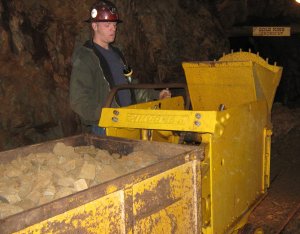
Mechanized Mucking with Pneumatic  Equipment

Mechanized Mucking with Pneumatic Equipment

Once at the bottom of the shaft, the mine appears to be little more than a hallway with steel tracks on the floor. In fact, it is a series of hallways, or drifts, and shafts. The goldbearing formation that the Mollie Kathleen mine has penetrated is a volcanic formation called a diatreme and it is composed of highly disturbed rock from ancient volcanic activity. The district contains gold in varying abundances. Certain features of the formation are more enriched than others.

In general, one does underground hardrock mining to exploit a network of veins enriched in value, in this case, gold.  By definition, an ore is a body of rock or mineral that contains commercially exploitable value such as gold. 

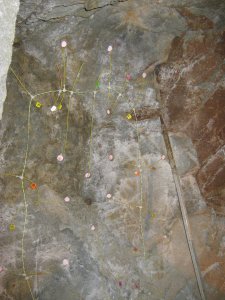
Blasting pattern prior to a shot

Blasting pattern prior to a shot

Solid rock is fragmented with explosives and loaded into ore carts. The rubble accumulated from blasting activity is called “muck”. Muckers were very important workers in a mine and the mines productivity hinged on their ability to load the ore carts as fast as possible. Until carbide lamps arrived, miners toiled in very low light levels in candle or kerosene lamplight.

With the advent of better technology came more effective and safer blasting agents, fuse cord capable of adjusting the timing of a blast sequence, and more efficient ejection of fragmented rock.  Near the center of the photo above is a pattern of holes filled with blasting agent. Well, except for one hole in the center of the pattern. This empty hole is placed specifically to provide for space for expansion relief.  A shot is timed to trigger the charges around the empty hole first, followed by concentric detonation of the blast pattern. Finally, a set of charges low in the pattern lift the muck out of the hole and onto the floor.

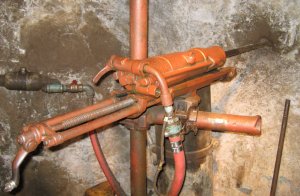
Pneumatic hammer for pounding a drilling steel into the rock wall.

Pneumatic hammer for pounding a drilling steel into the rock wall.

According to the tour guide, the Mollie Kathleen mine is fairly rich in gold but lacks access to a milling facility. Without milling and refinement, there is no point in pulling the ore out of the ground. So, until a scheme for beneficiation of the ore comes along, the gold will have to sit in the formation and make money for its owners as a tourist attraction.

As is common in mine tours, the staff is well versed in the history and mechanics of getting ore out of the formation. What seems to be glossed over or wholly ignored is the process of getting purified gold out of the ore. Being a chemist, I was naturally interested in the isolation process. The refining process I was able to “extract” from the mine tour operators was a simple but inefficient method.

Gold ore was pulverized and heated to high temperature in a way that resembles calcination. Diffuse wisps and pieces of elemental gold in the ore would melt and agglomerate so as to produce larger pieces of gold. The roasted ore could then be exposed to a mechanical/slurry agitation process that would dislodge the now larger pieces of gold and classify them by density much like the gold panning process.

The roasting process apparently oxidized the tellurium in the ore, resulting in a purification. The question is, did the roasting process just oxidize the free tellurium or did it free the gold from the gold telluride (Calaverite)?

Another process can be used to extract gold from the ore. It grossly resembles the mercury amalgamation method. Metallic lead is combined with gold ore and heated to some high temperature in a special container. A lead-gold alloy is formed which can be poured away from the gangue. The molten alloy is then exposed to air oxidation, forming litharge (PbO) and metallic gold which phase separate and can be separated mechanically. Assayers use a process called fire assay or cuppelation to extract refined gold for an assay.

Chlorine extraction was used to oxidize metallic gold to the soluble NaAuCl4 salt which could reduced by contact with carbon or by electrolysis. Chlorine water was used prior to the cyanide extraction methodology now in common practice.

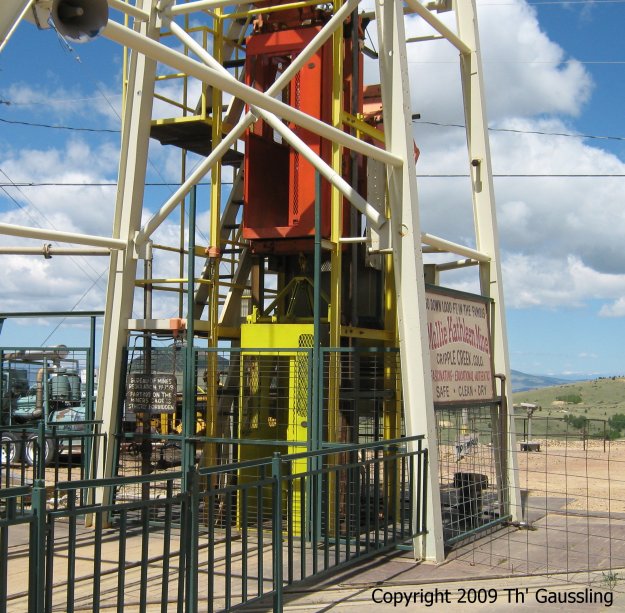
Old Headworks by the Mollie Kathleen Mine

Old Headworks by the Mollie Kathleen Mine

Touring the Mollie Kathleen Mine, Part 1.

By way of a prelude to this post let me say that, as a child, I was plagued with nightmares about elevator shafts. A tallish building in a nearby city had an elevator that, in the style of WWI-era buildings, was comprised of an open cage controlled by a matronly operator. On each floor the entrance to the elevator shaft was guarded by a collapsible metal gate that allowed the visitor to see, hear, and smell the greasy workings of the elevator in all its cabled creepyness.

I would stand next to the gate as the elevator went about its single-minded business and peer down into the dark shaft with its writhing black cables, fascinated yet deeply in tune with the prospects of what a fall down this hole would mean.  Like most young boys, I had bitter experience with the unblinking and impersonal side of gravity.

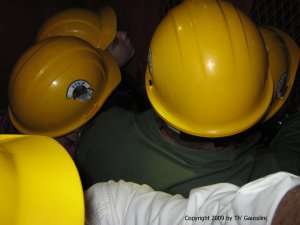
It was this memory that flashed into my mind yesterday as I stood in a manlift the size of a large domestic refrigerator, crammed tightly into the cramped cage with 6 other people. We looked like a can of vienna sausages.  The lift was a double-decker, with an identical cage of sausages below.

Crammed in Manlift

Crammed in Manlift

There we stood- a squashed parcel of humanity and hard hats in the orange lift, dangling above a 1000 ft column of air. Outside I could see the town of Cripple Creek, Colorado, sitting in the valley 400 ft below us. In two minutes, we would be 600 ft below the level of the town. As we began the descent and as daylight fell to darkness, I felt a my autonomic system select “Panic Mode”. But it was too late, we were committed. After 30 seconds, a graveyard calm replaced my momentary panic and all was well.

Double Decker Manlift at Mollie Kathleen Mine

Double Decker Manlift at Mollie Kathleen Mine

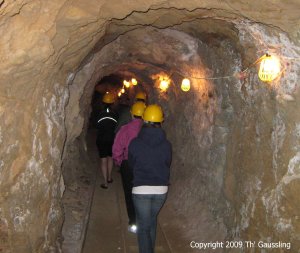
This was my first entry into the Mollie Kathleen Mine outside of Cripple Creek, CO. The tour begins in a drift 1000 ft below surface level. A “drift” is just a horizontal tunnel in an underground mine. I have toured a number of mines and caves and the common attribute to all of them is the absolute silence that is found underground. Today’s tour would be different.

The Mollie Kathleen Mine sits on the side of a mountain adjacent to the mammoth Cripple Creek and Victor (CC&V) open pit gold mine. The operators of both mines have independent claims to different parts of the same confined geological formation. The Mollie Kathleen is one of a great many underground mines in the area, of which only a very few are in operation today. It is presently open only for tours.  The CC&V mine is the only large gold mining operation in the area.

The CC&V mine is an open pit operation. Large hauling trucks carry 300 ton loads of ore rubble from the pit to nearby crushers which reduce the rock to 3/4 inch pebbles in preparation for the cyanide extraction process on the heap.  The rubble is the result of large scale bench blasting with ANFO blasting agent.

The CC&V does blasting on a regular basis. That day, while we were underground about 1-3 miles distant (my estimate), they set off a blast. We were down in the mine when the underground rumble hit. There was no ramp-up to maximum force- it began as a loud, strong rumble seemingly from every direction. We stopped in our tracks and instinctively looked at the ceiling trying to decide if this was a normal or off-normal event and, oh golly, will the the tunnel collapse? After 30 to 40 seconds the rumble subsided and the mine was silent again except for a few heartfelt expressions of relief. Clearly there was no danger for anyone, but the abruptness and the magnitude of the explosion only serves to remind one of the compromises made and the options lost while working underground.

1000 Ft down into the Mollie Kathleen Mine

1000 Ft down into the Mollie Kathleen Mine

The tour guide was a young ex-miner from Montana who explained mining practices and demonstrated the numerous pneumatic tools used by hard rock miners.  In part 2, we will look at some of the mine workings and other features of the Mollie Kathleen Mine.

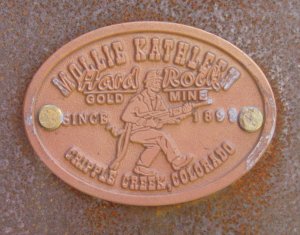
Hard Rock Placard. Photo Copyright 2009 Th' Gaussling.

Hard Rock Placard. Photo Copyright 2009 Th' Gaussling.

Proterozoic Contact

My search continued today for an exposed contact between the upthrusted proterozoic igneous rock of the Rock Mountains and the Fountain sandstone formation. I returned to an obscure roadcut site I had examined a few months ago. Three (male) cyclists outfitted in expensive cycling couture (Spandex) were standing there nibbling on dainty little energy snacks next to the spot I needed to be as I pulled up and exited my vehicle with a rock hammer in hand. One seemed taken aback momentarily as I walked towards them with the chisled masonry hammer. It didn’t dawn on me until after they left why they were acting strangely- I startled them. Sorry fellas!  \;-)

With rock hammer in hand I scrambled up a steep and unstable scree slope adjacent to what appeared to be disturbed layer next to a gneiss formation. Down below, along the roadcut, a contact was visible between the gneiss and what appeared to be schist.  This dark material has a preponderance of mica with little gross evidence of stratification. I wrongly concluded that I was not near the proterozoic contact.

But as I followed this discontinuity further up the mountain I found clear evidence of a stratified sedimentary formation adjacent to the igneous rock. On a ledge high above the road I found an actual contact between what appears to be modified sandstone and gneiss. I found a sample that has the gneiss fused onto the layered rock that fractures into thin sheets much like sandstone or shale. Regrettably, I left the camera in the Jeep.

What appears to have happened is that the sandstone layer has been thermally modified along the interface due to the intimate contact with the upthrusted igneous rock. I had half-expected to see a simple interface between sandstone and an igneous rock. Instead, what I seem to be seeing at this site is a modified sedimentary layer that shows evidence of some localized metamorphic modification.

A nearby thin layer of rock in the interface zone appears to be glassy or vitrified, as though it has been partially melted. I do not interpret this to be a result of weathering. A rapidly approaching lightning storm forced me to cut my exploration short and run for cover.

So, I have some hypotheses beginning to take shape. Now the question is, how do I falsify my interpretations? I certainly have much to learn about petrology.

Mineral deposits on other worlds

As one begins to understand the manner in which mineralization and elemental concentration occurs as a result of terrestrial geology, it is only natural to wonder how this would occur on other worlds. On earth, the concentration of the elements in the form of mineral deposits is a partitioning phenomenon that benefits greatly from fractional crystallization, metamorphic modifications, and from a variety of transport mechanisms.

Fractional crystallization of magmas provides a condition whereby a mixture of simple and complex ions may associate to form mineral compositions that partition from the molten phase by virtue of high solidification temperature. In this way, solid, higher melting compositions precipitate from a melt sequentially, leading to the selective partition of certain combinations of elements into a new solid phase. The molten phase may be enriched in certain combinations of other elements by default- many of which may be relatively volatile.

The composition and cooling rate of the magma will determine the nature of the solid rock that is formed after cooling.  Over time, rock may be lifted toward the surface and subjected to modification by hydrothermal action or by erosion and redeposition by gravity. Cooled igneous rock may be subjected to crystalline modification by exposure to heat further down the timeline.

Hydrothermal water, superheated under high pressure, is a major force in the formation of mineral deposits. The sulfides (and hydrosulfides) of transition metals (i.e., Au) are thought to be transported from source rock through cracks, faults, and porous formations to be deposited in locations where transport can no longer be sustained. The accumulation of economic quantities of uranium are thought to be the result of hydrothermal or aqueous transport as well.

So here is the point of this essay–  If preconcentration of elements to viable deposits is critical for the success of value extraction on earth, what about mining on the moon or Mars? To what extent are we dependent on these mechanisms to make viable the mining and extraction of useful materials?  If lunar geology has not been quietly concentrating minerals in the manner to which we earthlings have been accustomed, how will we come to grips with using native materials on the moon for self-sustaining habitation?

It is one thing to find x ppm of oxygen or y ppm of titanium in the lunar regolith. It is quite another to enable extraction of critical elements from low-value (dilute) material. The chemical energy inputs for processing will be severely limited owing to the scarcity of reducing materials on the moon or Mars. Reducing materials are really just reservoirs of inexpensive and useful electrons. Reducing materials would include carbon or electropositive metals for the reductive winning of other metals. 

In the absence of an inexpensive supply of electrons, all phases of extraterrestrial mining and processing will be subject to large cost multipliers. Cheap electrons are required to energize machinery, move materials, or conduct refining. All of these familiar activities are energy intensive on earth and there is no reason to think it will be different on another world. On earth, cheap electrons come in the form of diesel and coal. On the moon and Mars, it seems likely that solar and nuclear will energize most work for those who try to set up camp there.

Beryllium Mining

The aerial view above shows the location of the Brush Wellman beryllium mine near Spor Mountain, Utah. It is reportedly the only major beryllium mining operation in the USA and one of the very few economic beryllium ore locations in the world. The host materal is called “tuff”- a compacted and cemented volcanic ash composition. Coincident with this Be deposit is low grade uranium and fluorspar. Occurances of Cu, Au, and other base metals can be found in the area.

The concentration of Be in the ore body is thought to be due to the mineralization action of meteoric and hydrothermal fluids. The region is marked by the presence of 3 Oligocene-era calderas, with the Spor mountain Be mineralization found along the ring structure of the Thomas caldera.

The action of hot, saturated aqueous flows transporting solublized components from distant host bodies is one of the chief mechanisms for the appearance of “ore bodies” near the surface of the earth. Very often, such deposits are found in regions of faults and fractures of various kinds of rock formations. Mineral laden water follows the fracture system and, as it moves toward the surface, begins to cool and deposits the burden of now insoluble compounds. Deposition can occur due to simple solubility properties, redox from exposure to atmospheric oxygen, or via ion exchange with available chemical species to form high Ksp compositions.

This is nothing new to geologists who have been aware of these mechanisms for generations. But for a non-geochemical chemist like myself, the matter of how elements like beryllium come to be concentrated is less than familiar. Indeed, the question of how any element comes to be concentrated in rock formations is a question of increasing interest to Th’ Gaussling. I hope to spend a lot of time in the future exploring this matter.

The Cresson Vug

The history of the Territory and State of Colorado is inextricably tied to base metals and precious metals. Gold and silver strikes were a big draw for the migration of population to Colorado from the 1859 Pikes Peak Gold Rush onward.  A map of the ore geology of Colorado reveals a few key districts or zones of enhanced mineral abundance. The Colorado Mineral Belt (CMB) is a band of ore deposits that are positioned diagonally across the middle of the mountainous part of the state, SW to NE, roughly from Durango to Boulder.

Other districts containing economically viable ore bodies exist outside of the CMB, notably the Thirtynine Mile Volcanic Field west of Colorado Springs. While rich deposits of gold were found near Central City and many other locations in the CMB, the relatively rare  gold/tellurium ore found near Cripple Creek and Victor on the periphery of the Thirtynine Mile Volcanic Field have provided approximately half of all the gold mined in Colorado. Gold has an affinity for tellurium and may be found combined with it in the form of the mineral calaverite.

In particular, the Cresson mine near Cripple Creek has been an especially rich producer of gold. In November of 1914, a 4 m x 8 m x 13 m cavity or “vug” at the 1200 ‘ level was found to be lined with gold telluride and other minerals.  Depending on which source you believe, it is reported that from 20,000 to 60,000 ounces of gold were removed from this small space.

The Cripple Creek volcanic complex is a highly altered, highly brecciated formation that has been described in detail elsewhere. The link provides a more detailed description and a bibliography.

Links updated 7/2/19.