Category Archives: Safety

The Tylenol Debacle

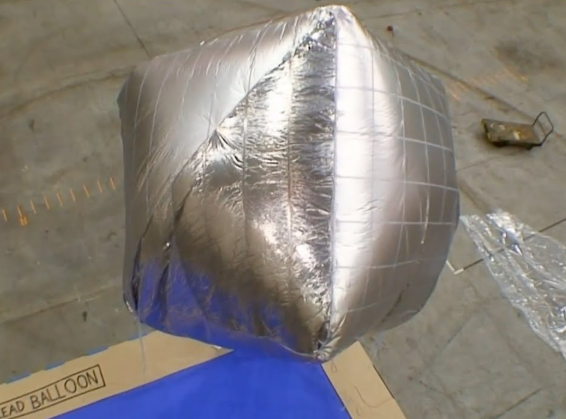
RFK, Jr., and his overlord, the Orange Jesus, have announced a possible link between acetaminophen and ADHD and autism. When they announced it, the trade name Tylenol was used. We can be certain that it went over like a lead balloon in the acetaminophen manufacturer’s world. But, first things first: Myth Busters were able to get a balloon made of lead sheets to actually float.

Lead balloon from Myth Busters episode. Source: Adam Sandler, YouTube.

It was announced that the FDA will be adding language to acetaminophen packaging warning. of the risk of ADHD and autism. To be sure, acetaminophen is capable of causing injury to the liver when an overdose is taken. Snakes in particular are very sensitive to acetaminophen poisoning. The island of Guam embarked on a program to rid the island of the invasive brown tree snake. A total of 2000 mice laced with acetaminophen were air-dropped over Guam in 2013 in an attempt to knock down the population on the island. The linked article did not mention the success rate. In addition to hepatotoxicity, apparently acetaminophen also converts hemoglobin to methemoglobin in just a few hours. Scientific details were behind a paywall which I generously leave to the reader to scale.

Our hospitals and medical staff prescribe acetaminophen because it does not interfere with blood clotting like the NSAIDS do. The makers of acetaminophen would like us to believe that their product is a superior pain reliever or anti-inflammatory to aspirin or ibuprofen. Decide for yourself.

How long will Kennedy continue to make faulty assertions, generally? As long as King Louie continues to keep him in the cabinet.

Disney’s King Louie. Source: Wikipedia.

Also, don’t forget. In Ohio they’re eating the cats … they’re eating the dogs.

Machismo and Violence

The present situation is one whereby a large swath of the population, including K-12 students, are being exposed to an increased risk of bloody, violent death sustained by those who fetishize firearms. Whatever you may think of the 2nd Amendment to the US Constitution, the fact is that we are prioritizing an originalist interpretation over the lives of school children. We are allowing children to be sacrificed on the alter of the 2nd Amendment in order to satisfy people who idolize the idea of boundless access to metal tubes that discharge high energy bits of metal. We are not officially at war defending our borders in the US nor are we on the verge of a civil war. By far, most guns are not used to hunt. Most Americans lead peaceful lives in their neighborhoods without the need to shoot at people.

The very notion that the US government is going to wrench guns away from citizens in one of the most heavily armed democratic countries in the world is the fever dream of a fool. Any full-scale attempt to do this would lead to armed rebellion and the collapse of the USA as a democratic republic. Widespread gun confiscation is not politically feasible today or in the foreseeable future.

We must tone down and be less tolerant of the image of inflated machismo that guns confer to their users. Both in real life and in entertainment, gunplay is used to resolve conflict. By far, most gun owners do not commit violent acts with their guns. While they should not be penalized for the crimes committed by others, accepted mechanisms like driver’s and pilot’s licenses are a form of limitation and standardization that could be applied to access to firearms. But this reliably produces hysteria among the armed public. Like everything else in society, a few people have to ruin it for the rest of us.

The basic utility of a gun is to deliver crippling or fatal kinetic energy, or the threat of it, from a safe distance. The need for guns for peacekeeping use will last as long as there is dangerous criminality. What the US is presently suffering from is the use of rapid-fire, high-energy projectiles from guns designed to hit as many targets as possible in the shortest time. Man killers.

Sidebar

I took the hunter’s safety course sponsored by the NRA at the age of 9. The truth is that firing a gun is both fun and stimulating. I recall stealthily walking along a muddy creek in the Iowa countryside with a bolt action 0.22 caliber rifle desperately looking for some reason the fire the gun. I spotted fish, turtles and birds but something held me back from shooting at them except for once a few years later. With a BB gun I shot a sparrow perched on a small twig of an elm tree. The bird rotated backwards, still gripping the twig, and hung upside down for a minute or two. Then it released and dropped into an irrigation ditch with a small splash.

I was immediately gripped with regret and sorrow for what I had just done. I had just killed a random sparrow for utterly no reason than to see what happens. Even as a teenager I could see that this was a senseless action. I am sorry for killing the sparrow to this very day and, except for a few mice and bugs, I have never killed wildlife since.

Back to the essay

The point of the story above is that, for me, being in possession of a firearm could sometimes produce a strong urge to fire it. I’m confident that there are others who have felt the same way. The healthy release is to do target practice. Some people enjoy hunting. I do not indulge in this because I prefer the flavor of beef, pork and fish which, conveniently, are already butchered.

Male characteristics can have both good and bad attributes. A measure of focused male aggressiveness, ambition and territoriality can be beneficial for the wellbeing of loved ones and the community. Brute strength can be quite useful in providing for a family. Male rage, however, can be very destructive wherever it is directed, as we all know. A firearm or other weapon is a force multiplier for a raging male. Recent mass killings prove the point. Firearms provide the ability to kill or wound from a safe distance and the value of this is lost on no one.

It is hard to imagine that some restraint in the use of firearms without addressing the cultural and natural phenomenon of male aggression can be successful. We are saturated with violence in entertainment, on the streets and in the news. As long as we seek entertainment violence, show business will anxiously provide it.

I’m neither a Quaker nor a pacifist but I do admire their sincere dedication to non-violence. We need many early adopters of non-violence with considerable social standing and a non-violence vibe across the whole country. Destructive male behavior can be tamed to a great extent, but it has to start early and be immersed in non-violent surroundings. Where is the sign that Americans can summon the discipline to do it. I’m not seeing it.

EPA Suspends all US Registrations of Dacthal Herbicide

The Environmental Protection Agency announced on August 6th, 2024 there would be an emergency suspension on all registrations of the preemergent herbicide chlorthal-dimethyl, or dimethyl tetrachloroterephthalate (DCPA or Dacthal). It has been 40 years since the US EPA has issued such an emergency suspension of registrations. This order has immediate effect.

US patent US2923634A was granted to Diamond Shamrock 1960-02-02 with a single claim-

1. THE METHOD OF CONTROLLING UNDESIRABLE PLANT GROWTH WHICH COMPRISES CONTACTING SAID PLANT GROWTH WITH AN ACTIVE AMOUNT OF DIMETHYL 2,3,5,6-TETRAHALOTEREPHTHALATE.

An early patent claiming the use of DCPA, but not the composition.

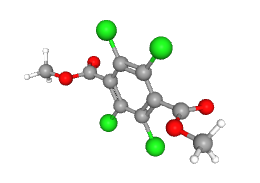
Graphic and physicochemical data. PubChem. DCPA structure tilted just a bit for clarity. Octanol/water partition coefficient: log KOW = 4.40 @ 25 °C, water solubility = 0.5 mg/l @ 25 °C, Vapor pressure: 2.5 x 10⁻⁶ mm Hg at 25 °C

The octanol/water partition coefficient, log KOW, sometimes called Log P, is a measure of how a substance will partition itself between 2 phases, a hydrophilic phase and lipophilic phase. This logarithm is used to give some insight into the type of living tissues a substance will tend to accumulate in on exposure or dosing. A log KOH of 4.40 represents a ratio (antilog) of 25,119 to 1 favoring the octanol. This indicates considerable lipophilicity.

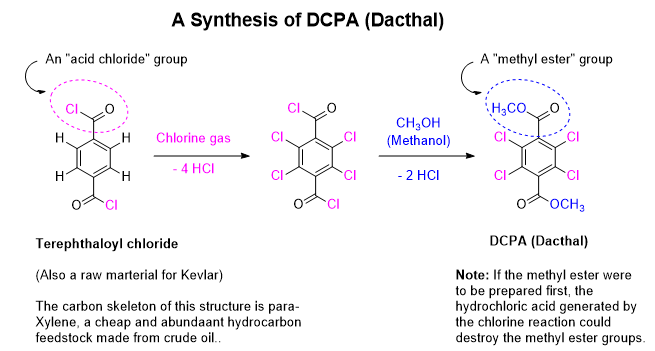
The industrial manufacture of DCPA is neither complicated nor difficult. The terephthaloyl chloride (pronounced: terra THAL oh ill chloride, soft TH as in “thing”) raw material is used in the manufacture of Kevlar and is readily made in several ways. Whether or not the DCPA manufacturer makes their own or outsources it is not available information. In either case, the terephthaloyl chloride is chlorinated to exhaustion (fully chlorinated) and then the methyl ester is prepared by contacting the chloride with methanol to form the diester (pronounced: DYE ester).

Why does DCPA have 4 chlorine atoms on it? Hard to say exactly what the thinking was, but from the process chemistry perspective forcing 4 chlorine atoms on the ring rather than just 1, 2, or 3 solves the problem of ending up with a dog’s lunch of mono-, di-, tri- and tetrachlorinated compounds in the product mix. Individually, each may have differing potency, selectivity, biochemical mechanisms, and human or environmental toxicological properties. Subsequent environmental and tox studies would be complicated by the potential of 4 analogs each possibly requiring individual testing at some point. Another thing to consider is that single component solids are much more easily purified by crystallization than a solution of solid components. A solution of mixed components can be quickly precipitated by cooling or concentrating, but pulling out one pure solid among many solid close analogs can be difficult and low yielding. Single component products are almost always better for ease of processing.

Graphics by John Jacob Jungleheimer Schmidt. The “oyl” fragment of the name indicates the presence of the acid chloride group.

DCPA is a selective non-systemic, or contact, herbicide used for pre-emergence control of annual grasses and some annual broad-leaved weeds. Coverage rates of 6-14 kg/hectare are common.

From PubChem: “/IT IS/ PRESENTLY APPROVED FOR USE ON TURF, ORNAMENTALS, STRAWBERRIES, AND AGRONOMIC CROPS INCLUDING COTTON, SOYBEANS, AND FIELD BEANS. /IT IS/ EFFECTIVE AGAINST SMOOTH & HAIRY CRABGRASS, WITCHGRASS, GREEN & YELLOW FOXTAILS, FALL PANICUM & OTHER ANNUAL GRASSES. /IT IS/ ALSO USEFUL AGAINST CERTAIN BROAD-LEAVED WEEDS SUCH AS CARPET WEED…PURSLANE & COMMON CHICKWEED. /IT IS/ TOLERATED BY MANY CROP PLANTS.”

DCPA is a relatively simple small molecule that is made from cheap and abundant early feedstocks like para-Xylene, Chlorine and Methanol. It has good potency and desirable selectivity in its ability to kill crabgrass in the presence of turf grass. The chemical process steps are well understood, each with a long history of successful use. It can be sold in solid form or in liquid form and may be applied by a large variety of methods. It can be applied for pre-emergence or folial use.

According to EPADCPA is a chlorinated benzoic acid herbicide which inhibits cell division of root tips in target plants. It controls many annual grasses and broadleaf weeds in a variety of agricultural crops and ornamental varieties (e.g., broccoli, onions, tomatoes, cabbage, cauliflower, dogwood, azalea). Annual agricultural use from 1998 through 2008 averaged approximately 500,000 pounds over 100,000 acres with broccoli and onions accounting for 79 percent of that use (Ratnayake, 2011). Information also suggests that on average 50 percent of broccoli is treated and 15 percent of onions (SLUA).

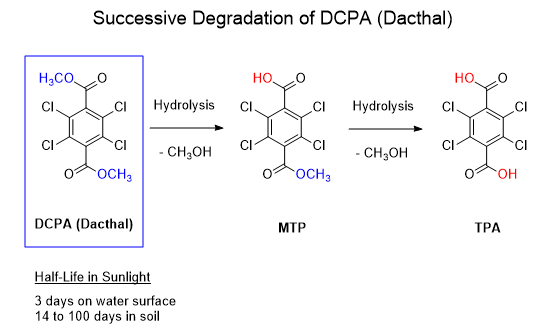
As useful of an herbicide as it may be, it has a dark side that spooked the US EPA into issuing an unusual emergency suspension on August 6, 2024. In particular is the potential toxicity to the unborn and the risk to “post-application workers involved in tasks such as transplanting, weeding and harvesting.” Female farmworkers are at high risk since DCPA has been shown to be toxic to the fetus producing lifelong health problems. The reader is invited to read the link for details in the toxicology. The successive degradation of DCPA is shown below. In addition to hydrolysis, it is also subject to photodegradation in sunlight.

Graphics by John Jacob Jingleheimer Schmidt.

Why wasn’t this discovered earlier? I’m not an EPA pesticide guy, but discovering the specific toxicity of herbicides registered many years previously requires some kind of trigger to get an investigation started. Today, other than an overt incidence of toxic effects making the news, that trigger can be the Registration Review Overview conducted by EPA every 15 years for each registered pesticide.

Having interacted with a certain division of the USEPA for the last 3 years, I can say that there are many intelligent and knowledgeable scientists, engineers and other professionals who try to get things done in a very constricted space bounded by layers upon layers of federal laws converted into regulations. They are about as loved as the Internal Revenue Service and, like IRS, are forced to work wildly understaffed and with an IT system that is decades out of date. A doff of the hat to EPA.

A Bit of Fentanyl Chemistry

A recent raid on a clandestine drug lab in the Hatzic Valley east of Vancouver, BC, netted 25 kg of “pure” fentanyl and 3 kg which had already been cut for street use. Precursor chemicals used to manufacture the fentanyl were also seized. Along with the drug, the raid also seized 2,000 liters of chemicals and 6,000 liters (about 30 drums) of hazardous chemical waste, according to an RCMP news release 2 November, 2023.

The police said that the seizure represented 2,500,000 street doses.

In August of 2023 the police in Hamilton, Ontario, announced the results of Project Odeon. This was a large-scale sweep of illicit drug production in the Hamilton and Toronto area. From January 1, to July 30, 2023 there were 606 incidents related to suspected opioid overdoses and 89 suspected drug related deaths in the Hamilton area. Twelve people were charged for a total of 48 criminal charges. The police disclosed the following items that they seized-

  • An operational fentanyl drug lab at 6800 Sixteen Road, Smithville.
  • A dismantled fentanyl drug lab at 4057 Bethesda Road, Stouffville.
  • Approximately 3.5 tons of chemical byproduct from fentanyl production.
  • 800 gallons of chemicals commonly used in the production of fentanyl
  • Lab equipment commonly used in the production of fentanyl
  • 64.1 kg of illicit drugs, including 25.6 kg of fentanyl, 18 kg methamphetamine, 6 kg of ketamine
  • A loaded, Glock firearm and ammunition and four extended magazines
  • Over $350,000 of seized proceeds, including cars, jewelry, furniture and cash

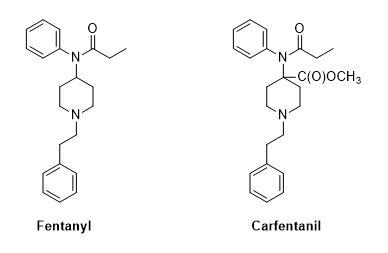
Fentanyl is a synthetic drug first prepared in 1959 in Belgium by Paul Janssen (1926-2003). Janssen was the founder of Janssen Pharmaceuticals, now a subsidiary of Johnson & Johnson. In addition to fentanyl, the Jenssen team developed haloperidol, the ultrapotent carfentanil, and other piperidine based congeners. Piperidine itself is a DEA List 1 substance in the US.

Carfentanil is just modified fentanyl. Graphics: Will O. de Wisp

The elephant in the room with fentanyl is its extraordinary potency as an opioid. In pharmacology, potency is a quantitative measure of the amount of dose needed to elicit a specific effect on an animal or human in terms of dose weight per kilogram of body mass. Potency is subject to variability across a population and rises to an asymptote which can be difficult to pin down. For these reasons potency is reported at 50 %. For highly potent drugs like fentanyl, the measure is expressed as milligrams or micrograms of dose per kilogram body weight (mg/kg or mcg/kg body weight). One milligram per kilogram is one part per million (ppm).

When matters of toxicity arise, it is important to remember the maxim that “the dose makes the poison”. This observation traces back to Paracelsus in the mid-sixteenth century.

Fentanyl acts much like morphine in regard to its affinity for one particular opioid receptor. Morphine is commonly the “standard” with which other opioids are compared. For instance, fentanyl is said to be 50-100 times more potent than morphine. Only 0.1 mg of fentanyl is equivalent to 10 mg of morphine. Carfentanil is more potent still at 10,000 times the potency of morphine.

Morphine is an agonist which activates the μ-opioid receptor. Activation of this receptor with morphine produces analgesia, sedation, euphoria, decreased respiration and decreased bowel motility leading to the earthly delights of constipation. Fentanyl is thought to interact with this receptor as well.

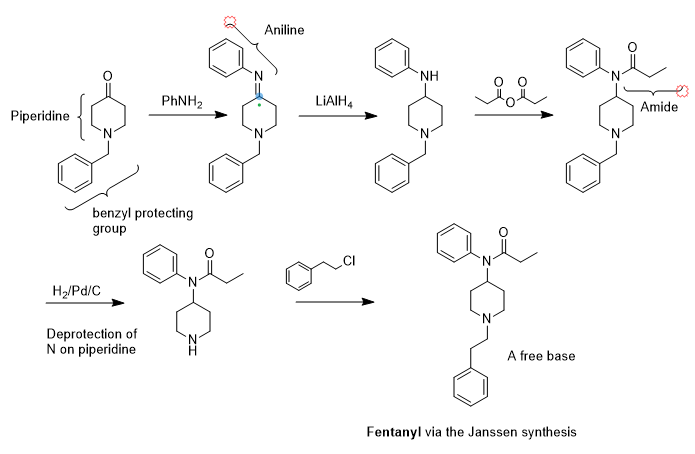
Original fentanyl synthesis by Janssen. Graphics: Will O. de Wisp

So, how is fentanyl synthesized? See the synthetic scheme above. I’ll just comment on the Janssen synthesis and some issues. I have no idea of how it is made out in there by the Mexican cartels and in ramshackle American trailer parks. The synthesis above has some steps that may be undesirable for backwoods or jungle operations like hydrogenation. In the first step, aniline will be needed to make the phenyl imine. It’s pretty toxic and stinks to high heaven. Next, lithium aluminum hydride is needed to reduce the imine double bond to an amine. This innocent looking grey powder is very hazardous and should only be used by an experienced chemist. It is also available as a solution in tetrahydrofuran. The next step is the formation of the amide with propionic anhydride. While the reaction entails a simple reflux, you still have to isolate the product. Once you have recovered the amide, the benzyl protecting group on the piperidine nitrogen must be removed. It allowed amide formation exclusively on the upper aniline nitrogen and has served its purpose. Finally, the piperidine nitrogen must be festooned with a phenylethyl group and phenylethyl chloride was used to afford the fentanyl product. 

An excellent review of the pharmacology and drug design of this family of opioids, see Future Med Chem. 2014 Mar; 6(4): 385–412.

In chemical synthesis generally, substances are prepared in a stepwise manner and with as few high yielding steps as possible. To begin, one must devise a synthesis beginning with commercially available raw materials as close to the target as possible. If the product has many fragments hanging off the core structure, it’s best to solve that problem early. Synthetic chemistry is almost always performed in a non-interfering solvent that will dissolve the reactants and allow the necessary reaction to occur. A low boiling point is preferable for ease of distillation. An important side benefit from a solvent is that it will absorb much of the heat of reaction which can be considerable. Left on its own, a reaction might take its solvent to the boiling point by self-heating, generating pressure and vapor. The benefit from evaporation or reflux boiling is that as a solvent transitions from liquid to vapor there is a strong cooling effect which helps to control the temperature. An overhead condenser will return cooled solvent to prevent solvent loss.

You can do any chemical synthesis in one step with the right starting materials. Unfortunately, this option is rarely available. The next best option is to take commercially available starting materials through a known synthetic scheme. People who run illicit drug labs are never interested in R&D. They want (and need) simple chemistry that can be done by non-chemists in buckets or coke bottles at remote locations. Chemical glassware can be purchased but sometimes the authorities will be notified of a suspicious order. This is especially true with 12 liter round bottom flasks.

The most difficult and risky trick to illicit drug synthesis is obtaining starting materials like piperidine compounds in the case of fentanyl and its congeners. In the case of heroin, acetic anhydride shipments have been investigated for a long time because it is used to convert morphine to heroin- an unusually simple one-step conversion. Solvent diethyl ether is similarly difficult to get outside of established companies or universities. Many other common drug starting materials are difficult to obtain legally in the US or EU by the criminal element. However, China is thought to be a major supplier of starting materials outside the US and EU. Countries with remote coastlines, loose borders, lackadaisical or corrupt law enforcement reduce the barriers for entry of drug precursors. China in particular has a large number of chemical plants that make diverse precursors for legitimate drugs. Unfortunately, some of these precursors can also be used for illicit drugs or existing technology adapted for this use. Precursors can be sold to resellers who can do as they please with them. Agents may represent many manufacturers and can mask the manufacturer’s identity and take charge of the distribution abroad. Shady transactions become difficult for authorities to detect and trace. The identity of illicit precursor chemicals are easily altered in the paperwork to grease the skids through customs. Resellers can repackage chemicals to suitable scale, change the paperwork and jack up the price for export. It has been my experience that many if not most Chinese or Japanese chemical manufacturers conduct business through independent export agents. However, behind the curtains there often a byzantine web of connections between companies and agents, so you may never know who will manufacture your chemical. As an aside, this complicates getting technical information from the manufacturer since the agent will not disclose a contact at that manufacturer.

Highly potent drugs like fentanyl must be taken in very small dosages which means that kilo-scale batch quantities of drug result in many individual sales per kilo. Small quantities of highly potent drugs are more easily smuggled than bulky drugs like weed with its strong odor.

There is a down-side to the illicit manufacture of drugs like fentanyl. It is quite toxic at very low dosages and must be handled with the greatest of care lest the “cook” and other handlers get inadvertently and mortally poisoned. Good housekeeping helps, but I have yet to see a photo of a tidy drug lab.

Fentanyl can be sold as a single drug but perhaps is cut with a solid diluent that some random yayhoo decided was Ok to use. Other drugs of abuse like heroin may be surreptitiously spiked with fentanyl to kick up the potency. In either case, a given dosage may or may not be safe even for a single use. There is no way for a user to know. Also, the concentration or homogeneity of mixed solids may be subject to wide variation. For more than a few people, their first fentanyl dose will be their last.

Chemical Emergencies and Safety Data Sheets in Education

Note: Below is a quick safety brain-dump from a career in academic chemistry labs and chemical manufacturing facilities. It is not meant to be an unabridged guide to lab safety. Look elsewhere for that. it is easy to overlook Safety Data Sheets that come with chemical purchases.

At some time in their chemistry education the student should have had a good look at the chemical Safety Data Sheet or SDS for the chemicals and solvents they are using. While not necessarily very informative in terms of reaction chemistry, these documents are taken very seriously by many groups who can/will have an impact on your chemistry career and safety. Regardless of your walking-around-knowledge about a chemical substance, you should understand that the people who respond to emergency calls for a chemical incident will place a high reliance on what is disclosed on an SDS. A student who is connected with an incident won’t be the first point of contact when the fire department or ambulance arrives and wants information. In fact, it is highly unlikely that a student will ever have direct contact with a responder unless it is with an EMT.

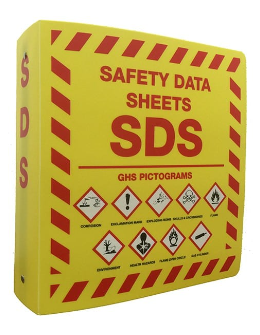
Know where the SDS folder is. It may be in print or online.

When emergency responders arrive at the scene of your chemical incident, they will have protocols built into a strict chain of command. All information will pass through the responder’s single point of contact. The fire fighter with the fire hose is not the person you should try to communicate with. Information regarding the incident must be communicated up the chain of command from your site incident commander. The person responsible for the lab should know who that is. The staff at the incident site (your college) will also have protocols built onto a chain of command. Again, “ideally” the incident commander at the incident site will ask for information from others on the site regarding details on the event including the headcount (!) and communicate it to the incident commander of the responders. This is done to avoid confusing the responders with contradictory or useless information. Do not flood the responders with extraneous information. Don’t speak in jargon. If there are important points like “it’s a potassium fire”, pass it along. If there are special hazards like compressed hydrogen cylinders present, they’d like to know that too. Answer their questions then step back and let them do their job.

When responders arrive at the scene of a chemical incident, the first question they will ask is if everyone is accounted for. If everyone is accounted for, they will not risk their lives in the emergency response. However, if there are people unaccounted for or known to be trapped in a dangerous place or incapacitated, the responders will take greater chances with their own safety to rescue the victims. They will act to minimize property damage only if it can be done without risk to life and limb. Nobody wants to die saving property.

College chemistry departments that I have been involved with have had a flat policy of evacuating everyone from the building and congregating them at a defined location in response to an alarm. That way there is at least some reasonable chance that an accurate head count can be made. If technical advice is needed, faculty connected with the incident site should be consulted. The college will have an Environmental Health and Safety (EH&S) group or person who presumably will take charge of the incident on the incident side. The leader of EH&S should be informed of any hazards unique to the substance of concern if there is no SDS. Let them communicate with the responders. Generally, we chemists help most when we keep out of the way.

College chemistry departments are famous for housing one-of-a-kind chemical substances in poorly labeled bottles in faculty labs. These substances almost never have any kind of safety information other than perhaps cautionary advice like “don’t get it in your eye.” Luckily, university research typically uses small quantities of most substances except perhaps for solvents. Solvents can easily be present at multiples of 20 liters. These large cans are properly kept in a flammables cabinet. While research quantities may not represent a large fire hazard initially, there could easily be enough to poison someone. When you get to the hospital, the ER folks will have to figure out what to do with your sorry ass lying there poisoned by your own one-of-a-kind hazardous material.

In principle, the professor in charge of a chemistry research lab should be responsible for keeping an inventory of all chemicals including research substances sitting on the shelf. Purchased chemicals always have an SDS shipped with them. These documents should be filed in a well-known location and available to EH&S and responders.

The chemistry stockroom is a special location. Chemicals are commonly present at what an academic might call “bulk” scale, namely 100 to 1000 grams for solids and numerous 20 L solvent cans. The number of kg of combustibles and flammables per square meter of floor space is higher here. The stockroom manager should have a collection of SDS documents on file available to responders.

Right or wrong, people positively correlate the degree of hazard to the nastiness of an odor. Emergency responders are no different. This is another reason why it is critical for them to have an SDS. People need to adjust their risk exposure to the hazard present as defined by an SDS. We all know that some substances that are bad actors actually have an odor that is not unpleasant for a short time, like phosgene. Regardless of this imperfect correlation, if you can smell it, you are getting it in you and this is to be avoided. Inhalation is an important route of exposure.

In grad school we had an incident where a grad student dropped a bottle in a stairwell (!) with a few grams of a transition group metal complex having a cyclooctadiene (COD) ligand on it. Enough COD was released into the stairwell to badly stink it up. They didn’t know if it was an actual chemical hazard or not, so they pulled the fire alarm handle. The Hazardous Material wagon showed up right next to 50-60 chemistry professors, postdocs, and grad students. The responders were told what happened and with what, so they dutifully tried to find information on the hazards in their many manuals. They did not find anything.

They had 50-60 chemists within spitting distance but didn’t ask us any questions. This is because they are trained to respond as they did. This was a one-off research sample of a few grams but it had an obnoxious smell with unknown hazards. Finally they sent in some guys in SCBA gear and swept up the several grams of substance and set up a fan for ventilation. Don’t be surprised if the responders don’t have special tricks up their sleeves for your chemical event. They can’t anticipate every kind of chemical incident.

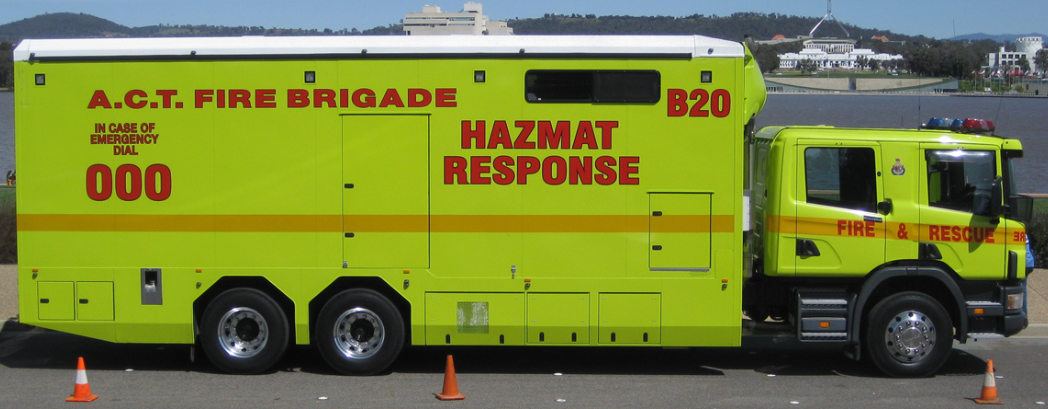
HazMat Team. Credit: https://en.wikipedia.org/wiki/Hazardous_materials_apparatus

Long story short, both the responders and the chemists didn’t have any special techniques tailor made for this substance. There was not evident pyrophoricity or gas generation. It was a dry sample so no flammable liquids to contend with. The responders used maximum PPE and practiced good chemical hygiene in the small clean up. Case closed.

An SDS is required for shippers as well. It shows them how to placard their vehicles according to the hazards. Emergency responders need to see the SDS in order to safely respond to an overturned 18-wheeler in the road or to a spill on a loading dock. It could also be that the captain of container ship wants to know precisely what kind of hazardous materials are visiting his/her ship.

Finally, an SDS should be written by a professional trained to do it properly. By properly I mean by someone who understands enough about regulatory toxicology, emergency response, relevant physicochemical properties, hazard and precautionary statements and shipping regulations to provide responders with enough information to respond to an incident. Here, incident means an unexpected release with possible exposure to people, a release into the environment or a fire or possible explosion.

In my world, the word “accident” isn’t used so much anymore. With the advent process hazard analysis (PHA) required by OSHA under Process Safety Management prior to the startup of a process, potential hazards and dangers are anticipated by a group of experienced experts and adjusted for. So, it is getting harder to have an unexpected event. “Accident” is being replaced with the word “incident.”

Toxicology is a specialty concerned with poisons. Regulatory toxicology refers to the field where measurements and models are used to define where a substances belongs in the many layers of applicable regulations. Toxicity is manifested in many ways with many consequences and each way is categorized into levels of severity. There is acute toxicity and there is chronic toxicity. Know the difference. That said, dose and exposure are two different things. Exposure relates to the presence of external toxicants, i.e., ppm in water or micrograms per cubic meter of air. Dose relates to the amount of toxicant entering the body based on the exposure time in the presence of a toxicant and the route of entry.

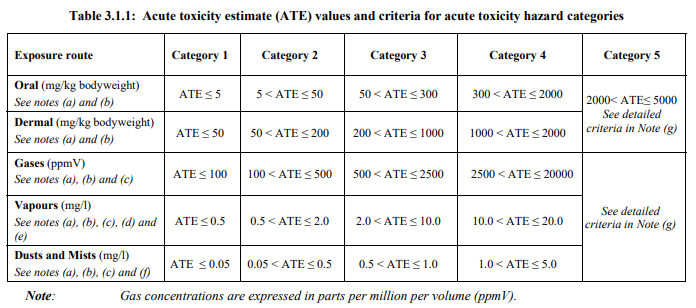
An SDS uses signal words like “Caution”, Warning”, or “Danger”. A particular standard test is needed to narrow down the type and magnitude of the toxicity. The figure below from the GHS shows the thresholds for categorization of Acute Toxicity.

Credit: Globally Harmonized System of Classification and Labeling of Chemicals.

Hazard and precautionary statements are important for an SDS. Rather than having everybody dreaming up their own hazard descriptions and precautions, this has been standardized into agreed upon language. Among other sources, Sigma-Aldrich has a handy list of Hazard Statements and Precautionary Statements available online.

Regulatory toxicology is very much a quantitative science enmeshed with a web of regulations. The EPA for instance does modeling of human health and environmental risks based on quantitative exposure or release inputs. Without toxicological and industrial hygiene testing data, they may fall back on model substances and default, worst case inputs to their models. In reality the certain hazard warnings you see on an SDS may or may not be based on actual measurement. The EPA can require that certain hazard statements be put on a given SDS based on their assessment of risk using models or actual data.

To be clear, hazard information reported on an SDS are considered gospel to emergency responders. Chemists of all stripes should be conversant with Safety Data Sheets and have a look at them the next time a chemical arrives. Your lab or facility should have a central location for SDS documents, paper or electronic.

In the handling and storage of chemicals, some thought should be given as to how a non-chemist would deal with a chemical spill. Is the container labeled with a CAS number or a proper name rather than just a structure? A proper name or CAS # could lead someone to an SDS. Is there an HMIS or other hazard warning label? There are many tens of thousands of substances that are either a clear, colorless or amber liquid or a colorless solid. If not for the sake of emergency responders then for the poor sods in EH&S who will likely have to dispose of the stuff when you are long gone. Storing chemicals, liquids especially, with some kind of secondary containment is always a plus. Keep the number of kilograms of combustibles and flammables in the lab to a minimum. A localized fire is better than a fire that quickly spreads to the clutter on the benchtop or the floor.

The burnin’ ring of fire

The Norfolk Southern train derailment and fire in East Palestine, OH, has spread into the political dumpster. By not appearing near the crash site promptly, both Biden and Buttigieg are feeling the heat of the GOP panic machine. The single plank on the GOP platform is to knock down Democrats at every opportunity. While the news organs of the GOP are busy trying to blame the Biden administration for the accident, fire and contamination, citizens are expressing dismay over not knowing what to do going forward. They aren’t receiving much advice or direction from EPA about how much they should be worried about contamination and exposure to the released chemicals. In fact, on the ground it has been hard to see the hand of government anywhere. Their frustration is normal and understandable. I would be frustrated too.

Let’s step back a minute and examine the situation from 50,000 ft. The last thing we want in government is for a proper response to an emergency of this scale to require the president to personally lead the emergency response. The same is true for the Secretary of Transportation. Good leaders delegate responsibility to specialists for situations like this. Good leaders are watchful but stay out of the way of the experts. Good leaders make sure that the people on the ground have the resources they need to do their jobs. Ok, Biden didn’t respond publicly to the situation early enough, but that is not to say that things weren’t happening. But, he has 330,000,000 American back-seat drivers to make happy. That’s his job.

Let’s remind ourselves that Biden and NATO are also busy trying to prevent the start of WWIII.

As with an emergency of any scale, it takes responders some time to understand the situation and then to bring resources to bear. In the mean time, the NTSB was promptly dispatched and has already published preliminary report RRD23MR005 on the event. It is very interesting to see that many of the safety systems worked. The overheated wheel was detected and an emergency braking procedure was put into action just before the derailment occurred.

Ok, Biden and Buttigieg could have been quicker to publicly extend sympathy and the promise of relief. Complaining about this is like accusing grandma of not giving you a kiss while she was trying to put out a fire in the kitchen. But contrast this PR error of omission with the antics of #45 in Puerto Rico after the recent hurricane. Remember how he tossed rolls of paper towels as mock support during an interview down there? MAGA people have no leg to stand on with presidential expressions of sympathy.

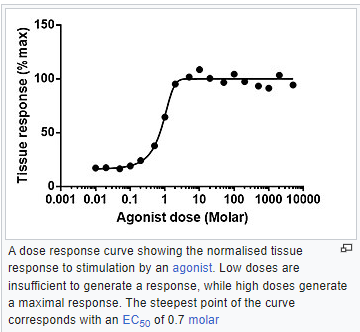
From Wikipedia, https://en.wikipedia.org/wiki/Dose%E2%80%93response_relationship

As far as what kind of toxic threat there is to humans and what potential environmental insult there will be, the situation has not fully played out yet. This will need to be studied for years. There is acute toxicity and there is chronic toxicity. With most chemicals there will be a clear dose-response relationship with chemical dosing if you choose the right experiment to do. However, that relationship can become quite uncertain with low dosing. The health effects of exposures from the East Palestine derailment cannot be measured with high precision over the long haul. Genuine toxic effects are over-printed on a background of natural disease. Diseased tissues do not have little signs that say “I was caused by vinyl chloride dosing”. Histology can characterize cell types and correlate them with known chemical insult, but only a jury can say if any particular conclusion will hold up in court. With toxicity effects, certainty is not always what you get.

Paracelsus said in 1538 that “All things are poison, and nothing is without poison; the dosage alone makes it so a thing is not a poison“. That observation is still true today.

Hazardous Metaphor On Fire in Ohio

When I think “train wreck” I usually think of #45’s presidency. But here I refer to the actual Feb 3, 2023, Norfolk Southern train wreck in East Palestine, OH. A very long train carrying, among other things, tankers of hazardous chemicals had a derailment and fire near the small town of East Palestine, OH, along the southwest Pennsylvania border. It was a true calamity releasing hazardous chemicals, some of which caught fire and burned for days. It isn’t clear as yet as to what burned and what didn’t. The extent of pollution will eventually be released by authorities and monitored for years to come.

Early reports have claimed that the accident started with an overheated wheel bearing. It would be interesting learn how this could lead to a derailment. The root cause analysis will be interesting.

According to Wikipedia

NTSB chair Jennifer Homendy explained that the train in this accident would not have been required to utilize the ECP braking system even if the FAST Act was not repealed, because the term high-hazard flammable train means a single train transporting 20 or more tank cars loaded with a Class 3 flammable liquid. As it had only three such placarded train cars, the derailed train did not meet the qualifications of a “high-hazard flammable” train.

ECP stands for Electronically Controlled Pneumatic brakes. The Wikipedia page describes the pathetic political kerfuffle over these brakes and how certain groups fought the requirements for them.

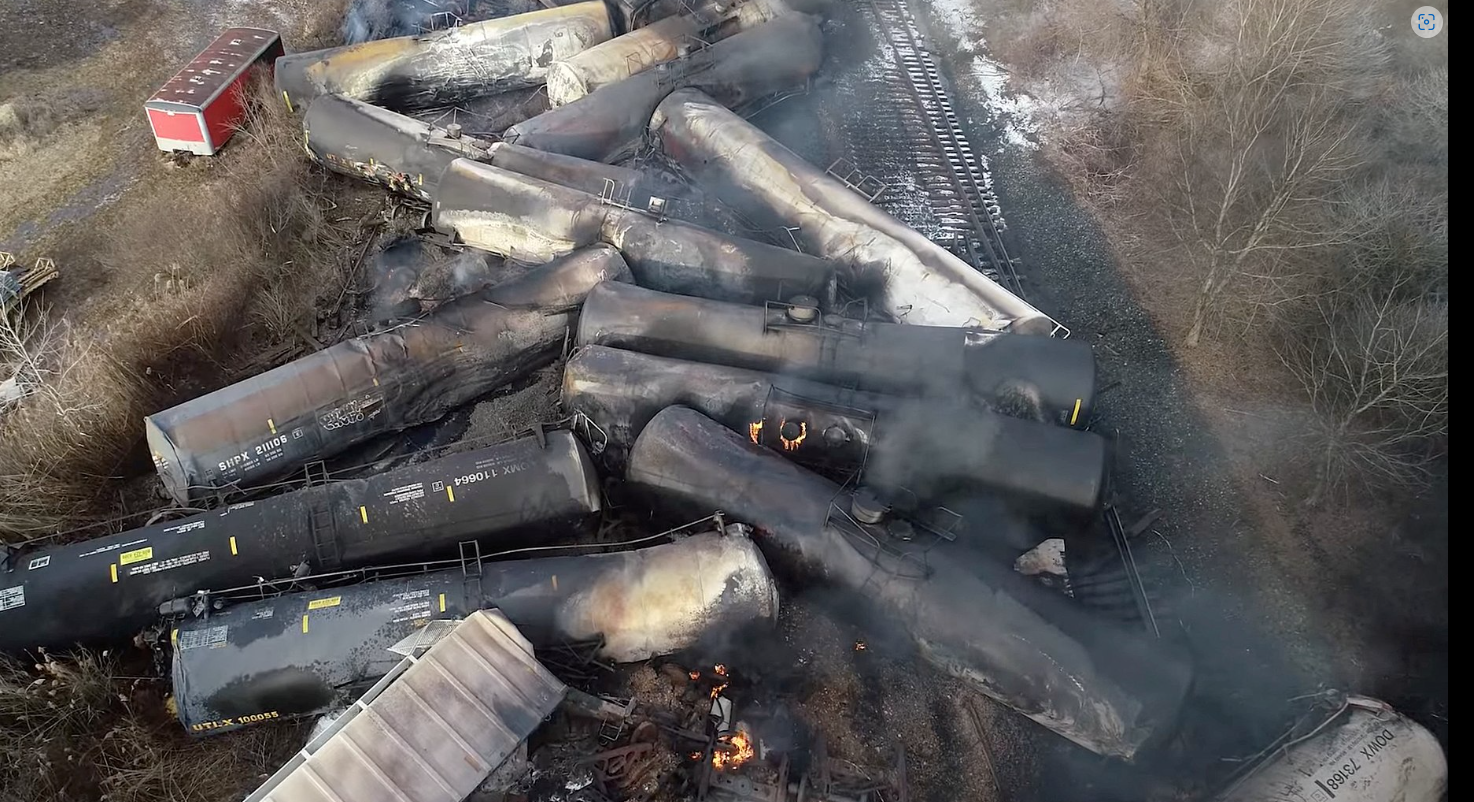
Photo from Wikipedia, https://en.wikipedia.org/wiki/2023_Ohio_train_derailment

The Washington Post released a piece, dated Feb 18, 2023, about it showing some interesting pictures. One aerial shot captures the wreckage along with what the cars were carrying. A security camera caught the train moving along with a large fire blazing under one car minutes before entering town. The video has since been removed.

The burning vinyl chloride (and … ?) produced a toxic plume that by some accounts was also corrosive. I assume this to be due to the burning of an organic chloride releasing hydrochloric acid vapors. According to Wikipedia, of the 150 cars in the train some 38 train cars were derailed.

Substances in cars that were derailed according to the Washington Post-

  • Vinyl chloride
  • Polyethylene
  • Dipropylene and propylene alcohol
  • Semolina (a wheat flour)
  • Polyvinyl chloride (PVC)
  • Ethylhexyl acrylate
  • Petroleum lubricating oil
  • Diethylene glycol
  • Isobutylene
  • Butyl acrylate
  • Benzene

Much was made in the news about burning vinyl chloride and noxious fumes, but I haven’t heard an accounting of what actually burned. Any release of acrylate monomers is especially unfortunate since as a group, they can be nasty lachrymators. This will take years to get through the courts.

Lost Capsule of Cs-137 Recovered in Western Australia

According to Reuters, a 6 mm diameter by 8 mm long capsule of radioactive Cesium-137 was lost along the 1400 km road between a storage facility in suburban Perth and Rio Tinto’s Gudai-Darri iron mine in the Kimberley region of western Australia. The source was lost sometime between January 12 and the 25th, 2023. The capsule had been attached to a piece of equipment in a crate but evidently vibrated loose in transport from a road train– a multi-trailer vehicle- and fell off. While the activity was not disclosed the source was described as one that “emits radiation equal to 10 X-rays per hour”.

On February 1, 2023, the source was reportedly located after a week-long search along the 1400 km road. It was discovered by a vehicle moving at 70 kph with special detection equipment.

On the Release of Hazardous Energy for Chemists

This post is an update of a post I wrote on Mole-Day of 2011. It is a brain dump that summarizes much of what I’ve learned about dealing with potentially explosive chemicals in the manufacturing environment. Very few chemists actually have to deal with explosive chemicals in their work activities. It is actually quite uncommon. No doubt some important considerations have been left out and for that I apologize.

The Prime Directive: If you choose to bring in or make a chemical substance in your facility, you must develop in-house expertise in the safe handling and use of that substance. Do not expect to rely on outside expertise for it’s safe use. Always strive to build in-house expertise in regard to chemical properties and safety- never farm this out to consultants. This includes proper engineering and broad knowledge of reactive chemical hazards.

Safety has a substantial psychological component. You can build into a chemical manufacturing process extensive engineering and administrative controls for safe operation. These layers of control are concrete and definable. What is fuzzy, however, is the matter of how people behave. In particular, I’m thinking of getting people to behave in a particular way over the long haul. Keeping people operating safely over long periods of time where no adverse events happen poses special problems. Especially in regard to low frequency, high consequence events. Cutting corners and improper use of PPE is not uncommon and should be expected. Something expected can be watched for continuously.

In safety training I mention that handling a hazardous material is like handling a rattle snake. You have to exercise the due caution every single time you pick up that snake. You do not accumulate and bank safety credits for previous safe handling. Everybody understands this already at some level. But the possibility of drift in safety practice over time needs to be emphasized.

The best strategy I know of besides complete process automation is recurrent safety training along with vigilant management. Successful safety management requires proper supervision by alert supervisors. Management by walking around helps with this. Well written process instructions that anticipate practical problems are essential. Holding people accountable for following Standard Operating Procedures is critical. Working conditions conducive to focus are always good. Operational rotation with may be helpful.

In chemical safety, the biggest worry is typically the potential for an explosion. What should you do if a raw material or product in a process may be explosive or has explosive features on the molecule? Good question. First, someone in the R&D chain of command should have knowledge of the list of known explosophores. It’s not a big list. PhD chemists in R&D should know this anyway. Explosive molecules have certain chemical bonds that are weakest and are known as “trigger bonds“. It is thought that the rupture of these trigger bonds initiates explosive decomposition of the substance.

Just because a material has explosive properties does not automatically disqualify it for use. Azides and nitro compounds are used safely every day. But, to use a chemical safely you must accumulate some knowledge on the type and magnitude of stimulus that is required to give a hazardous release of energy.

For any given hazard, it is my personal policy to learn as much about the nature of the hazard at the chemical and bulk level as I can. I believe that it is important to know more about something than what is immediately called for. That is the difference between education and training. This is how you build expertise.

Some comments on the release of hazardous energy. Hazardous energy is that energy which, if released in an uncontrolled way, can result in harm to people or equipment.  This energy may be stored in a compressed spring, a tank of compressed gas, the stable chemical bonds of a flammable material, the unstable chemical bonds of an explosive material, or as an explosive mixture of air and fuel. A good old fashioned pool fire is a release of hazardous energy as well. Radiant energy heating from a pool fire can easily and rapidly accelerate nearby materials past the ignition point. Good housekeeping goes a long way towards preventing the spread of fires.

Applying and accumulating energy in large quantities is common and actually necessary in many process activities. In chemical processing, heat energy may be applied to chemical reactions. Commonly, heat is released from chemical reactions at some level ranging from minimal to large. The rate of heat evolution in common chemical reactions can be simply and reliably managed by controlling the temperature or rate of addition of reactants where two reactants are necessary. However, reactions do not always evolve significant power output immediately on mixing of the reactants.

Induction periods are potentially dangerous and must be identified prior to scale up. The appearance of an exotherm very early in a feed operation is a good indication that the reaction has begun. However, a thermogram from a reaction calorimeter showing the temperature and power output (watts) versus the feed mass will indicate if the reaction is slow and accumulation of reagent (energy) is occurring. This can be teased out early by adding a small shot of reactant feed (a few %) and watching the power profile. The ideal profile is where the power output starts promptly, peaks and then promptly decays to baseline. This is a good indicator of the absence of accumulation. Generally, the kinetics are most favorable at the beginning of the reagent feed and taper off to zero as reactants are consumed. Some accumulation is usually tolerable from the heat load perspective. This is a good thing because a thermogram showing some accumulation could lead to an unnecessarily long feed time. A reaction calorimeter can give the peak wattage per kilogram of reaction mass. An engineer should be able to estimate the maximum controllable heat flux for a given reactor. Without being too specific, it is in the range of several tens of watts per kg of reaction mass according to one reference I know.

There are explosive materials and there are explosive conditions. If one places the components of the fire triangle into a confined space, what may have been simple flammability in open air is now the makings of an explosion. Explosive materials have two legs of the fire triangle built into the molecule- the oxidizer and the fuel separated by only nanometers. However, the composition of the explosive itself may not produce a balanced reduction/oxidation reaction. The oxygen balance is a easily calculated number that will indicate whether or not there is an excess or deficit of oxygen in an explosive substance. For example, ammonium nitrate has a 20 % excess of oxygen. Fuel oil can be added to bring the fuel/oxidizer ratio into redox balance. This mixture is referred to as ANFO.

In a chemical explosion, heat and increasing pressure can do PV work on the contents and containment. Minimally, the outcome will be an overpressure with perhaps the blowing of a rupture disk on a reactor. In another situation, the equipment may blow apart and send fragments flying away at high speed with an expanding fireball.

There is a particular type of explosive behavior called detonation. Detonation is a variety of explosive behavior that is characterized by the generation and propagation of a high velocity shock through a material. A shock is a high velocity compression wave which begins at the point of initiation and propagates throughout the bulk mass of explosive material.  Interestingly, because it is a wave, it can be manipulated somewhat by reflection and refraction. This is the basis for explosive lensing and shaped charges. It is characteristic of detonations to produce shredded metal components. Detonations have a very large rate of pressure rise, dP/dt. The magnitude of dust explosions is commonly performed by a few commercial test labs out there. One of the important test results is the Kst value showing the magnitude of the explosive force.

Detonable materials may be subject to geometry constraints that limit the propagation of the shock. A cylinder of explosive material may or may not propagate a detonation wave depending on the diameter. Some materials are relatively insensitive to the shape and thickness. A film of nitroglycerin will easily propagate as will a slender filling of PETN in detonation cord. But these compounds are for munitions makers, not custom or fine chemical manufacturers. The point is that explosability and detonability is rather more complex than one might realize. Therefore, it is important to do a variety of tests on a material suspected of explosability. The type and magnitude of stimulus necessary to produce an explosion must be understood for safe handling and shipping.

A characteristic of detonable explosives is the ability to propagate a shock through the bulk of the explosive material.  However, this ability may depend upon the geometry of the material, the shock velocity, and the purity of the explosive itself. There are other parameters as well. Marginally detonable materials may lose critical energy if the shape of the charge provides enough surface area for loss of energy.  

Explosive substances have functional groups that are the locus of their explosibility. A functional group related to the initiation of explosive behavior, called an explosophore, is needed to give a molecule explosability. Obvious explosophores include azide, nitro, nitroesters, nitrate salts, perchlorates, fulminates, diazo compounds, peroxides, picrates and styphnates, and certain hydrazine moieties. Other explosophores include the hydroxylamino group. HOBt, a triazole analog of hydroxyamine,  hydroxybenzotriazole, has injured people, destroyed reactors and caused serious damage to facilities. Anhydrous hydroxylamine has been the source of a few plant explosions as well. It is possible to run a process for years and never cross the line to runaway as was the case for these substances.

Let’s go back to the original question of this essay. What do you do if you find that a raw material or a product is explosive? The first thing to do is collect all available information on the properties of the substance. In a business organization, upper management must be engaged immediately since the handling of such materials involves the assumption of risk profiles beyond that expected.

At this point, an evaluation must be made in relation to the value of the product in your business model vs the magnitude of the risk. Dow’s Fire and Explosion Index is one place to start. This methodology attempts to quantify and weight the risks of a particular scenario. A range of numbers are possible and a ranking of risk magnitude can be obtained therein. It is then possible to compare the risk ranking to a risk policy schedule generated beforehand by management. The intent is to quantify the risk against a scale already settled upon for easier decision making. A problem with this approach is that it requires numerical values for risk which might be difficult to come by.

But even before such a risk ranking can be made, it is necessary to understand the type and magnitude of stimulus needed to elicit a release of hazardous energy. A good place to start is with a DSC thermogram and a TGA profile. These are easy and relatively inexpensive. A DSC thermogram will indicate onset temperature at a given temperature ramp rate and energy release data as a first pass. Low onset temperature and high energy release is least desirable. High onset temperature and/or low exothermicity is most desirable.

A DSC thermogram copied from Mettler-Toledo. MT makes great equipment. Exotherm is positive deflection of the curve and the endotherm is negative. https://www.mt.com/us/en/home/library/on-demand-webinars/lab-analytical-instruments/DSC_TA.html

What is more difficult to come to a decision point on is the scenario where there is relatively high temperature onset and high exothermicity.  Inevitably, the argument will be made that operating temperatures will be far below the onset temp and that a hazardous condition may be avoided by simply putting controls on processing temperatures. While there is some value to this, here is where we find that simple DSC data alone may be inadequate for validating safe operating conditions.

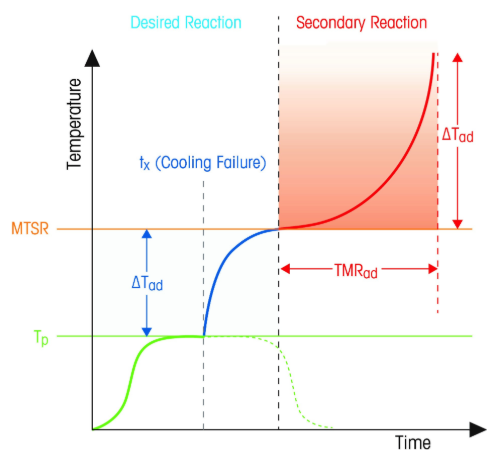
Onset temperatures are not inherent physical properties. Onset temperatures are kinetic epiphenomena that are dependent on the sensitivity of the instrument, sample quality, the Cp of both the sample and the crucible, and the rate of temperature rise. What may be needed once an indication of high energy release is indicated by the DSC is a determination of time to maximum rate (TMS). While this can be done with special techniques in the DSC (i.e., AKTS), TMR data may be calculated from 4 DSC scans at different rates, or it may be determined from Accelerated Rate Calorimetry, or ARC testing. Arc testing gives time, temp, and pressure profiles that DSC cannot give. ARC also gives an indication of non-classical liquid/vapour behavior that is useful. ARC testing can indicate the generation of non-condensable gases in the decomposition profile which is good to know.

Time to maximum rate is measured in time at a specified temperature. Many people consider that a TMR of 24 hours at the process temperature is a minimum threshold for operational safety. Others might advise 24 hours 50 or 100 C above the maximum operational temperature. If you contemplate using this parameter, it is critical to get testing from a professional lab for a time at a particular temperature. This kind of test will produce a formula that you can calculate TMR values at a given temperature. Bear in mind, however, that no outside safety consultant will tell you what you must do for liability reasons. You must develop enough in-house expertise to make this decision for yourself.

The standard tiered test protocol for DOT classification is a good place to start for acquiring data on explosive properties.  Several companies do this testing and give ratings. There are levels of testing applied based on the result of what the lower series tests show. Series 1 and 2 are minimally what can be done to flesh out the effects of basic stimuli.  What you get from the results of Series 1, 2, and 3 are a general indication of explosibilty and detonability, as well as sensitivity to impact and friction. In addition, tests for sensitivity to electric discharge and dust explosion parameters should be performed as well. 

Effect types on a sample container from a Koenen test of explosive material. https://www.osti.gov/servlets/purl/1505408

The card gap test, Konen test, and time-pressure test will give a good picture of explosive behavior. The Konen test indicates whether or not extreme heating can cause an explosion sufficient to fragment a container with a small hole in it.

Figure from https://www.osti.gov/servlets/purl/1465274

BOM or BAM impact testing will indicate sensitivity to impact stimulus. Friction testing gives threshold data for friction sensitivity.

ESD sensitivity testing gives threshold data for visible effects of static discharge on the test material. Positive results include discoloration, smoking, flame, explosive report, etc.

Once the data is in hand, it is necessary to sift through it and make some business decisions. There is rarely a clear line on the ground to indicate what to do unless there is already a policy on decision making here. What testing results will indicate is what kind of stimulus is necessary to give a positive result with a particular test. It is up to your in-house experts and management to decide the likelihood of exposing the material to a particular stimulus. Will it be possible to engineer away the risk or diminish it to an acceptable level? The real question for the company is whether or not the risk of processing with the material is worth the reward. Everyone will have an opinion.

The key activity is to consider where in the process an unsafe stimulus may be applied to the material. If it is thermally sensitive in the range of heating utilities, then layers of protection guarding against overheating must be put in place. Layers of protection should include multiple engineering and administrative layers.  Every layer is like a piece of Swiss cheese. The idea is to prevent the holes in the cheese from aligning. 

If the material is impact or friction sensitive, then measures to guard against these stimuli must be put in place. For solids handling, this can be problematic. It might be that preparing the material as a solution is needed for minimum solids handling.

If the material is detonable, then all forms of stimulus must be guarded against unless you have specific knowledge that indicates otherwise. Furthermore, a safety study on storage should be performed. Segregation of explosable or detonable materials in storage will work towards decoupling of energy transfer during an incident.  By segregating such materials, it is possible to minimize the adverse effects of fire and explosion to the rest of the facility.

With explosive materials, electrostatic safety is very important. All handling of explosable solids should involve provisions for the suppression of electrostatic charge generation and accumulation. A discharge of static energy in bulk solid material is a good way to initiate runaway decomposition of an energetic material. Unfortunately, some explosive substances may not require the oxygen leg of the fire triangle so, in this case, inerting with nitrogen won’t be preventative.

Safe practices involving energetic materials require an understanding the cause and effect of stimulus on the materials themselves. This is of necessity a data and knowledge driven activity. Handwaving arguments should also be suppressed in favor of data-driven analysis.