Category Archives: Science

Keeping up with the data stream

After many years of immersion in technical work I still marvel at how an organization can become mired in raw data. Smart people can easily succumb to the notion that data equals knowledge. Especially in circumstances where data is accumulated faster than it can be assimilated.

It is relatively easy to collect data in a chemical lab. You take a set of samples and prep them for testing, load the sample vials into the sample tray, and let the automated sampling widget move through its paces. In a few minutes or hours the software has accumulated files bulging with data points.  It is even possible to construct graphs with all sorts of statistical manipulations on the data, but still not morph the data into usable knowledge. I’ve been to meetings where graphs are presented but were not backed up with interpretation. What was the presenters point in showing the graph?

Computerized chromatography stations will spew data all day long onto hard drives based on selections from a cafeteria-style menu. With hyphenated instrumentation, an innocent looking 2-dimensional chromatogram is actually just a part of a higher dimensional data set with corresponding mass spectra or UV/Vis spectra.

The task for the technical manager is to get control of this stream of data and render some of it into higher level knowledge that will help people run the organization and get product or research out the door. This is the true work product of the experimental scientist: knowledge woven from a data cross-fire and supported by accepted theory.

I do not know what others do when confronted by a data tsunami. I can only speak for myself on this. When the data flow gets ahead of me, it usually means that I am spread too thin. It indicates that I am not taking enough time to properly devise experiments for maximum impact and am skimping on the analysis in favor of other duties.

Another issue relating to managing diverse data output is the matter of storing accumulated data and knowledge for easy retrieval. It is easy to throw things into folders and file away. But in a few months, the taxonomy used for filing a given bundle of data becomes murky. Soon, one is forced to rummage through many files to find data because you’ve forgotten details on how you organized the filing system.

There are ways around this problem. Laboratory Information Systems (LIMS) are offered by numerous vendors. A good LIMS package goes a long way towards managing data and distributing knowledge. We have a homebrew LIMS system (built in MS Access) that seems to work rather well for analytcial data. However, it was not constructed with process safety information in mind.

What I have constructed for my process safety work is an Access-based application that structures various kinds of information graphically into regions on a form. Within each region is a set of data fields that are subordinate to a given heading or context. The form is devised to prompt the user to consider many types of thermokinetic experiments and provides fields that are links to specific documents. The form provides both actual data and links to source documents. It can be used to enter data or to retrieve it.

This is what Access is designed to do, so I have described absolutely nothing conceptually new. Access allows me to aggregate related kinds of experimental results, reports (the knowledge part), and source documents in one field of view so as to allow the users visual processing capability the chance to browse more efficiently.

An example of “related kinds of experimental data” would be DSC, TGA, ARC, and RC1 reports. What connects these fields is the domain of thermal sensitivity of a compound or reaction mixture.

Another aggregation of fields would be the conditions related to an incident. I like to select key descriptors to an incident so as to aid in incident type studies at a  later date. It is useful to be able to sort incidents resulting from a blown rupture disk or a spill, fire, triangulated drum, etc.

A database is rather like a garden. In order to be useful it must be planted and then cultivated. Ignore it and it will lose its comprehensiveness, casting into doubt its continued use.

Next up is the development of an in-house Wikipedia style browser application for aggregating product, process, and safety information. This offers the best opportunity yet for making information and diverse data available to employees. It can be written in narrative form so as to impart knowledge and history. Why was a particular vendor chosen or how did we decide on that specification? What was the rationale for the process change in step 4.2?  The ability to explain and link to in-house source documents from a familiar and single point of access is key to potential success.

Phase Change for Chemistry?

Disclaimer: Combichem or HTE is definitely not my area of expertise. It is, therefore, inevitable that I’ll say something blindingly ignorant about it. Despite my admitted ignorance, is appears to me that there is something happening, some kind of phase shift, in the small molecule discovery marketplace that is of general interest to the chemical R&D community. In fact, it may just be part of an overall change in how we do chemistry in general.

I’ve been hearing no small amount of buzz from chemists in the job market about the flattening or even downturn of US pharma R&D in general and of combichem or High Throughput Experimentation (HTE) in particular.  It is not that HTE is in any particular danger of extinction, but rather certain companies who offer the equipment platforms and tech packages seem to be evolving away from supplying equipment as a core business activity. Many of the big customers who could afford the initial cash outlay for HTE technology are doing their work in-house, dampening the demand for discovery services by HTE players at their aggressive prices.

One company I know has evidently shifted emphasis into the drug discovery field rather than try to continue marketing HTE equipment.  Near as I can tell, they are betting that having their own drug candidates in the pipeline is a better strategy than being strictly a technology or R&D services supplier. Time will tell the tale.

What the honchos in the board rooms of America’s big corporations forget is that the art they export so profitably was in all likelihood developed by people educated in US taxpayer subsidized institutions with US government grants. American citizens subsidize the university research complex in this country and by extension, supply a brain subsidy to industry. To export chemical R&D is to subsidize the establishment of a similar R&D capacity in other nations.  I think if you poll most US citizens, they’ll say that this is not the outcome they expected.

Software for HTE has become a derivative product that, for at least one HTE player, is proving to be rather successful. It isn’t enough to have the wet chemical equipment to make hundreds and thousands of compounds. You must be able to deal with the data storm that follows.

The business of HTE technology is evolving to a mature stage as the market comes to understand how to make and lose money with it.  There is always a tension between “technology push” and “market pull”.  It is often easier to respond to concrete demand with existing tools that to get new adopters to invest in leading edge tools to discover risky drug or catalyst candidates.

The extent to which the US chemical industry (all areas, including pharma and specialties) is outsourcing its R&D or simply moving it offshore is distressing. R&D is our magic. And promoting its execution offshore is to accelerate the de-industrialization of the USA.  It is folly to train the workers of authoritarian nations like China to execute your high art. American companies must learn to perform R&D in an economically accessible way and keep the art in-house. 

What makes R&D so expensive in the USA? Well, labor for one thing. In the end, our dependence on expensive PhD’s to do synthesis lab work may be a big part of our undoing. But there is much more to it than that. Look at the kinds of facilities that are built for chemical R&D. In the US and EU they are usually very expensive to build and maintain. Regulations and litigation avoidance are trending industry in the direction of ever more complex and high-overhead facilities in which to handle chemicals and conduct research. 

Then there is the cost of every widget and substance associated with chemistry. Look at the pricing in the Aldrich catalog or get a quote from Agilent. Have a look at the actual invoice from your latest Aldrich order and look at the shipping cost. High isn’t it? We’ve accelerated our demand for ready-made raw materials and hyphenated instrumentation. To what extent are we gladly buying excess capacity? Who doesn’t have an instrument with functions and capabilities that have never been understood or used?

It is possible to conduct R&D under lean conditions. But it can’t be done cheaply in existing industrial R&D campuses. Cost effective R&D will require a recalibration for most chemists in terms of the kinds of working conditions and administrative services they expect. But business leaders will have to recalibrate as well. Prestige can be manifested in product quality and a sense of adventure and conviviality rather than in an edifice. There are companies all over the world doing this every day. They set up shop in a commercial condo or old industrial building with used office furniture and grubby floors. What matters in chemistry is what is happening (safely) in the reactor. Everything else is secondary.

Mole Day Thoughts on Lab Life

I have come to the realization that, after a career of avoiding it, I really dig physical organic chemistry. While I do have the synthetikkers love for developing a synthesis, I really enjoy taking the rare opportunity to do a focused study on a single transformation or compound.  It is a stylized form of play that any developmental psychologist would recognize. Discovery is about learning, just like play, and many of the exploratory behaviors observed in play apply just as well to discovery (well, except for hitting and crying).

One way a scientist learns is by doing a search for boundary conditions. Where or how in parameter space does a thing change? What is the best solvent for the desired outcome? What effect does stoichiometry have? Does dry, inert atmosphere really make a difference? What are the best leaving groups? Yes, it’s just research. But there is more.

In order to claim that you have expertise with a substance or process, you must have an understanding of how a process or substance behaves under a variety of conditions. If faced with a product that is off spec and the prospect of having to rework or remake, it is very helpful to understand what conditions lead to the off-normal outcome. Either the chemist sleuths each upset for a cause, or the chemist goes in the lab and purposely exposes the process to off-normal parameters and analyzes the outcome, or both. After a while, patterns begin to arise and trends become apparent. This is play.

Seems bloody obvious. But in a production environment the opportunity to explore  parameter space is often not possible. Favor almost always finds the more practical, though short term, fixes. Production managers are not always chosen for their focus on the long term. They are short term oriented- a necessary predilection for timely delivery of product on a tight timeline.

Part of a good process development program is a study of how the process behaves in various upset conditions. This is important for understanding the thermal safety issues, but it also is a good time to take snapshots of how the composition of the process system behaves when it is out of whack.  A reaction profile under conditions of reagent mischarges or off-temperature can give many clues as to the operating window of the process. It can also tell you something about the best way to do an in-process check and define flags for particular types of upsets.

Many companies do this, but a good many find a way to gloss over such work.

2009 Nobel Prize in Chemistry. The Winner is …

I don’t have a clue who is in serious contention for the 2009 Nobel prize in Chemistry. Yeah, there are a bunch of old guys out there who deserve it. But who are the contenders this year? I have all but stopped reading C&EN and JACS, so I am unaware of who this years darlings of chemistry really are.

I’d really like to see Harry Gray share it. I’d like to see Whitesides and Bergman get a trip to Sweden as well. But I’ll admit that I’m well out of the loop. Any thoughts out there? I’m sure that I’ve slept through the discovery, development, and implementation of  several new disciplines, each with it’s own journal and series of conferences. It’s inevitable.

10/4/09.   OK, I’ll guess Craig Venter for Chemistry and Stephen Hawking for Physics.

10/7/09.  Wrong Again!!!! See later post for update.

California is on fire (again)

The western wildfires currently in progress are having a huge effect on the clarity of the atmosphere here in the greater Denver area. The California wildfire in particular is discharging vast quantities of smoke into the atmosphere. Here, one thousand miles downwind, we are enjoying hazy days and spectacular sunrises and sunsets owing to the smoke in the air. Last night as the moon reached the meridian, it resembled a moon in partial eclipse in terms of the reddish aspect of its appearance. The long carbon footprint of California is casting a shadow upon us.

The Gangues of Leadville

The mining history of Leadville, Colorado, is well documented and the details are left to the reader to pry out of the internet. As a process chemist, my interest in mining is more directed to the geochemistry and milling of the ore. How did they get the pay out of the paydirt?

How does it come about that we can get our hands on particular elements like molybdenum, gold, silver, uranium, tungsten, vanadium, etc? How do the elements manage to concentrate into ore bodies that are worth the effort and expense to refine?

When you take the various mine tours around the country, the spiel offered by the guide is usually geared toward the lowest common denominator- our fascination with fabulous wealth. The miners were certainly taken with the possibility of wealth. Gold and silver mines are an easy sell because everybody has greed and everybody yearns to pluck a fat nugget of gold from a pan of gravel.  Other types of mines are a tougher sell entertainment-wise and require a bit more explanation of the relevance of the obscure element that is being extracted.

Mining is an activity with good and bad effects. To sustain modern civilization, if you can’t grow what you need, you have to mine it. Mining is inherently extractive in nature and requires that large volumes of earth be disturbed. Open pit mining requires that overburden be removed and the mineral value be moved to a processing site. Material sidestreams are generated and must be dealt with. 

Underground mines also generate large volumes of material that must be piled somewhere. To ensure responsibility for reclamation costs mining companies are required to put up a surety bond to cover the costs of future reclamation under 43 CFR section 3809.

The inevitable trade-off that a society must make is one of environmental insult for material goods. The balance point is always hard to find, and in fact is usually a moving target on account of politics, employment, and environmentalism.

Mining can have substantial effects on the landscape, the watershed, real estate, and the future tax base. Land that is not available for habitation or sustainable commercial use is fundamentally limited in potential value. An area covered with mine tailings, mine shafts, the occasional blasting cap, and acidic runoff is an area that requires cash infusion on a long timescale.

But if we enjoy the benefits of lead batteries in our cars, or silver jewelry, tungsten elements in our light bulbs, zinc plated wire fences, or the ten thousand other metal products in our lives, we must come to grips with the consequences for having such material goods. At some stretch point, everybody becomes a Luddite. Question: How much technological triumphalism can we take? Answer: Whatever the market says we can take.  

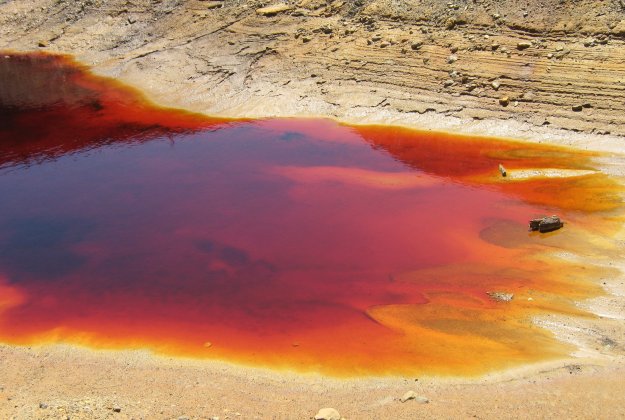
Runoff Collection Pond from Mine Tailings in Leadville Mining District.

Runoff Collection Pond from Mine Tailings in Leadville Mining District.

Our society has benefitted greatly from metallurgy. The compulsion to recover metals from the ground is one of the great economic forces in civilization. No amount of highminded pontification will stop it. Metals enable industry and war which are forever entangled in politics and greed. The goal is to be smart about how we mine elements from the ground so that maximum value of the surrounding land may be enjoyed. The enthusiasms of the time come and go. But metals are forever.

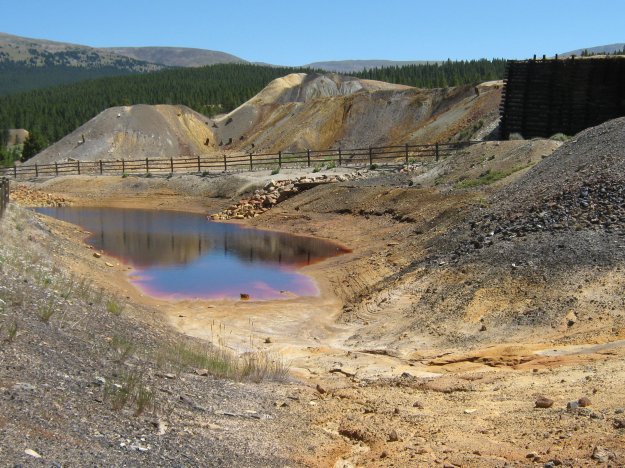
Mine Waste, Leadville Mining District August 2009

Mine Waste, Leadville Mining District August 2009

MRI MRI on the Wall

What the world needs is a good $1000 MRI scan. Why can’t we talk about how to bring down the cost of MRI scanners so that one can be parked in a non-magnetic quonset at Wal-Mart?  After all, the next wave of clinical business innovation has to crack the problem of how to provide lower octane health care.   To be sustainable, the system requires a selection of non-premium services that are modern and sensitive, but are robust and inexpensive enough to operate at $1000 a pop.

Health care organizations need to stop sending the message to Siemens, Fujitsu, GE or whomever else makes MRI scanners that they need to offer more premium scanners with expensive features because others are paying for it.  This is an amped up case of creeping featurism. What about moderate resolution with a basic package of options?   Perhaps this is already happening?

Someone needs to offer the “Kia” of MRI scanners- a moderately priced system with enough features to be useful to 80 % of patients. If the 1 kilobuck scan turns up nothing, then the Doc ratchets up the horsepower another notch.  This is the kind of thinking that is needed to keep the cost of treatment in line with inflation.

Mantle of Insanity

Recently I went to a local outfitter of camping gear to look for Coleman Lantern Mantles. As I was scanning the shelves a cherubic faced clerk came up to me and asked if I needed help. I said I was looking for lantern mantles.

When we arrived to the endcap where they were hanging, I asked him if they were still making radioactive mantles. He looked at me as though I were a bit of a loon. When I pressed the question, he balked and summoned his manager.

The manager, another youngster who was much more of an alpha male, scoffed at my question and tried to assure me that such a thing was absurd. Why in the world would mantles be radioactive? I tried to assure the youngster that, yes indeed, mantles were radioactive at one time because they contained thorium. At this point the manager was becoming visibly annoyed at his time lost addressing the questions of an obvious crackpot.

I recognized the patronizing tone he took and turned and left the store. As a child of cold war science, I have witnessed mantles sitting in a cloud chamber with ionized cloud streamers zipping every whichway from the innocent looking woven bag. Today, schools are terrified of chemicals and radiation science. Mr Manager missed out on a real experience by being born into the post-cold war world of bland science education.

So, my GM counter sits in my office clicking from the occasional background radiation piercing the GM tube. Eventually I’ll find a source to give it something more interesting to detect.

Gaussling’s 12th Epistle to the Bohemians. Elements Rock.

Some acquaintances have asked about my new interest in geology. What’s the deal with rocks and mining? 

What interests me is not so much the economic value and extravagant production of certain minerals and precious metals. What is of interest is the question of how it came about that there is such a thing as an ore body.  An ore body is a geological formation which is defined by a localized concentration of certain substances. How does it happen that chemical elements can become concentrated from a more distributed condition?

Celebrity astronomers are often seen on cable channels pedantically nattering on about “Star Stuff”.  OK, Dr. Skippy, what is star stuff and what does it do? What are the particulars about the local star stuff, ie., the earth? This is the realm of cosmochemistry and geochemistry- elective classes the TV glamour boys apparently skipped.

The nucleosynthesis of the heavy elements (C to U) and their subsequent ejection from exploding stars is an inherently dispersive process. Eventually, here and there, some heavy matter will aggregate to form a protoplanetary cloud which can then produce planetary bodies. Inevitably, some of the heavy matter is pulled into massive bodies dominated by the presence of thermonuclear fuels- that is, hydrogen and helium. Sufficiently large accumulations of these two highly abundant elements will compress and initiate a self-sustaining fusion reaction of hydrogen to form the (n+1)th generation of stars. All told, some heavy matter accumulates to form of planetary bodies while some of it siphons into the next generation of stars.

It is within the ability of gravity to concentrate matter into smaller volumes of space as a dense, bulk phase. The geometric shape that allows all of the mass to be as near the center of mass as possible is the sphere.  This is why we don’t see planets shaped like cubes, pyramids, or ponies. 

Once cooled well below incandescence, the matter in a sufficiently constituted and situated planet may begin to self-organize into chemical phases. Along the lines of the Three Bears allegory, Earth is parked in an orbit that is just right for the presence of liquid water. Irrespective of the needs of life, liquid water is critical for the eventual concentration of some elements into ore bodies.

Earth has a gas phase blanketing a liquid phase which wets much of the bulk rocky phase of the planet. A generous portion of water circulates in the maze of fractured recesses of the planetary crust. In the case of Earth, we know that our planet has a fluid core within a solid shell. This molten phase in the core energizes a kind of convective heat engine that will drive the shuffling motion of tectonic plates and episodic volcanic mass transfer on the surface. 

Matter has gravitationally self-organized at the planetary scale on the basis of density. But what is perhaps most interesting to a chemist is the phase composition of the planetary solid matter. On cooling, a body of magma will sequentially produce precipitates representing different chemical substances. Over geological time this igneous rock may experience modification by the hydrothermal action of hot water under high pressure. Depending on its circumstances, parts of the formation may be depleted of soluble constituents or it may receive a deposit of new mineral species.

On the scale of planets, the earth has self-organized into bulk phases of matter- Solid, liquid, and gas. But at a much smaller scale, the earth self-organizes into domains of chemical substances. This is evident by simple inspection of a piece of granite. A piece of pink granite shows macroscopic chemical domains of potassium feldspar, quartz, and mica. While these three mineral components of granite are compounds and not pure elements, they nonetheless represent self-organization of species based on chemical properties.

The forces that drive chemical differentiation in mineral formation are ultimately thermochemical in nature. Large differences in Ksp lead to partitioning and phase separation of distinct substances. Subsurface formations may be approximately adiabatic on a short time scale, but over deep time they can slowly cool and equilibrate to yield a sequence of fractional crystallizations of metal carbonates, oxides, silicates, and aluminates giving rise to a complex bulk composition.

Speaking only for myself, coming to an understanding of how mineral deposits form is a kind of hobby.  If I wanted immediate answers to specific questions, I suppose the most expedient thing would be to consult a geochemist. But where is the adventure in that? The answers are not the fun part. The real adventure is in the struggle to find the best questions. As it often happens, once you can frame the problem sufficiently, the answer falls out in front of you. Whoever dies with the greatest insight wins.