Category Archives: Science

Encounter with Roswell, NM

No trip to Roswell is complete without a visit to the UFO Museum. While this may be one of the most amateurish exhibitions apart from the county fair, it does put a face on the UFO phenomenon in the USA.

Which One is From Outer Space?

Which One is From Outer Space?

Most of us have heard of the supposed crash of an alien spacecraft near Roswell (or Corona), New Mexico in 1947. The whole fantastic tale seems to be based on a few slender threads of testimony. A trip to the museum clinches the notion that the whole phenomenon is based on innuendo and 2nd or 3rd party stories.

It’s another example of people hustling to conclusions based upon low signal-to-noise observtions. Faint indications of phenomena against a noisy background. Like cold fusion in the 1980’s, a whisper of signal appears now and then.

I recall from freshman psychology that the human brain is especially vulnerable to such glimmers of off-normal stimulus. Gamblers are attracted to the very irregularity of positive feedback that is provided by random events. Perhaps there is a similar neurochemical origin in the obsession with spaceships and alien abductions. It seems to be more than simple curiosity.

It is apparent by casual observation that the city of Roswell has not lovingly embraced the UFO phenomenon with an enthusiastic plunge into full scale commercial exploitation. The Wal-Mart on the north end of town is decorated with a few fanciful alien festoons, but the extent of it amounts to a “museum” and a few worn looking establishments along the main drag.

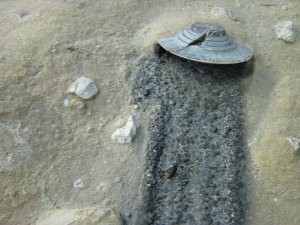
Saucer Crash

The saucer shape we have come to associate with alien spaceships is based on early sightings of unidentified flying objects. Latter day sightings (LDS? wink wink) comprise a range of shapes and designs.  What I would like to know is this- does the saucer shape make any sense in the context of interstellar travel? What are the aerodynamics of the saucer shape through the full range of velocity regimes? A saucer must eventually transition from operation in a vacuum to hypersonic entry into an atmosphere. Also, the ratio of surface to volume is relatively high, so how do you pack enough luggage & provisions for a lengthy trip?

Take me to your cola!

Take me to your cola!

Pi Day 3-14

Another magic day is before us- Pi Day on Saturday, March 14 (that’s 3-14). Lets hope that the celebration does not lead to jail time or excessive brain damage. Pi to a million decimal places, a partial listing of which is below-

3.
1415926535897932384626433832795028841971693993751058209 7494459230781640628620899862803482534211706798214808651 3282306647093844609550582231725359408128481117450284102 7019385211055596446229489549303819644288109756659334461 2847564823378678316527120190914564856692346034861045432 6648213393607260249141273724587006606315588174881520920 9628292540917153643678925903600113305305488204665213841…

In the interest of preserving bandwidth, I’ve deleted most of the first 50 thousand or so numbers.

…5115448491268584126869589917414913382057849280069825519 5740201818105641297250836070356851055331787840829000041 5525118657794539633175385320921497205266078312602819611 6485809868458752512999740409279768317663991465538610893

The ARC, the CHETAH, and the Organikker

Just received a copy of CHETAH 8.0.  This is a program for thermochemical and energy release evaluation and is distributed by ASTM. It will calculate enthalpy of combustion and thermochemical properties of compounds and reactions including- LFL, LOC, MIE, lower limit flame temperatures, maximum flame temperature, fundamental burning velocity, and quenching distance.

I have only had it installed for 2 days, so it’s way too early to give an appraisal. It came highly recommended by several colleagues in the process safety field.  The only snag so far is a balky SMILES input module. This feature was very appealing because it allows one to copy a ChemDraw structure in SMILES format and paste it into the CHETAH GUI. The rep at ASTM gave me a link which ended up offering very cryptic instructions. Naturally, the problem is some obscure setting in Windows.

Until I get this fixed, I’ll have to enter Benson groups by hand. As it happens, I began studying guitar in my spare time, so there are all kinds of new things for my addled brain to stumble over assimilate. So when I’m not picking at strings, I’m picking at Benson groups.

Update 3/5/09:  After a service pack download, the SMILES module is functioning. This is a very powerful tool.

We’ve recently caught up with the times and have been pressing Accelerating Rate Calorimetry (ARC) into service. Or more accurately, paying to have the data collected.  ARC is really quite informative in that it can offer a Time to Maximum Rate (TMR) equation from which a TMR can be determined for any desired temperature. You can calculate an adiabatic delta T as well. I do not know how reliable this number is, but it certainly reminds one of the importance of considering the effect of phi factor in process scale up.

The ARC data I get includes an Antoine curve which can indicate that the accelerated rate behavior is or is not characteristic of classical liquid/vapour equilibrium behavior. What this says to the wary is that other volatiles (besides the subject material) may be generated which are not condensable. This is helpful in considering what kind of controllability is available to the process engineers.

Djerassi-v-Trost. Clash of the Titans.

The January 26, 2009 C&EN has an interesting letter to the editor. Carl Djerassi sent a letter critical of the manner in which Professor Trost cites authors in his references. According to Djerassi, Trost didn’t cite the discoverer of a natural product for which the Trost group had just reported a total synthesis. He took Trost to task in diluting the accomplishment of the workers who had isolated, characterized, and tested the compounds for biological activity by not citing the original work.

Trost’s treatment of Pettit is particularly egregious given the well-known fact in the chemical community that the spectacularly laborious decade-long efforts of one of the heroes of marine natural products chemistry—the person who personally collected the bryozoan, isolated the bryostatins, established their constitution, and pursued their anticancer activity against all odds—were terminated through a draconian closure of his laboratory by the new administrators of Arizona State University. [C&EN, Jan. 26, 2009]

Trost and Djerassi are two of the rock stars of organic chemistry. When such people “go nuclear” in their open personal criticism, it is so compelling that you can’t help but take notice. Far from being unseemly, I think this kind of thing is healthy for the field. Neglecting key early workers while trotting your own references up to the front of the line is a kind of misdemeanor racketeering of scholarship. If true, Djerassi has a good point.

But, I can sympathize with Trost to some extent. Eventually, past progress becomes part of the background. Do we have to cite Henry Gilman everytime we use BuLi to remove a proton? There must be some juicy backstory that has Djerassi riled.

Siccus Silicis. Oh yonder dessicated moon! Why dust thou taunt me?

Big discovery. A few doors down at The Universe Today there is a report of findings showing that the moon is quite dry. This result is from an interpretation of radar soundings taken by the Japanese lunar probe SELENE.

Given the near proximity of the sun, and lack of any atmosphere, it would be astonishing that any water would be found on the moon, at least in the top few meters. Perhaps there are mineral hydrates in the regolith, but discrete surface water as ice or liquid in the shadows seems a bit of a stretch. Supposedly a trace of water was found by others near the polar regions where the sun angle is always low. 

Comets famously de-gas when they come near the sun. Maybe the moon was blowing a vapor trail too- 3 or 4 billion years ago.

The SELENE radar soundings were used to infer the presence of aqueous reservoirs well below the surface. The results failed to give any evidence of such bodies of water. Given the tumultuous history of the moon, as evidenced by the lava plains and impact activity it has experienced, there has been lots of opportunity for water to sublimate or cook off through fractures in the regolith in the past.

I like and appreciate the Universe Today site. But if I could offer some constructive criticism, they could do with more links to primary references rather than just recursive links to previous Universe Today articles. Actually, more than a few news sites do this.

On a side note, it is worth browsing the Japanese Space Agency (JAXA) website to get a feel for the depth of their program.

Transformative Research in Many Ways

A friend who is presently on sabbatical has started a blog about his academic experiences in primarily undergraduate institutions (PUI). It is called Sabbatical Epistles. He mentions a key phrase that is being batted around; it is Transformative Research. According to the NSF, transformative research is-

research that has the capacity to revolutionize existing fields, create new subfields, cause paradigm shifts, support discovery, and lead to radically new technologies.

The context of the use of this phrase was that research funding at PUI’s will increasingly be put to the merit test of transformative research. As such, research into chemical synthesis at PUI’s is especially at risk of not qualifying for funding. I suppose the concern is that multistep synthesis projects for undergrads requires lots of time and skills that undergrads do not have.

Who is against transformative research? It is like motherhood and apple pie. Everybody wants to fund or be part of this kind of effort. We should always ask that research funds be put towards this end. But there is more to it than just an affirmation of meritocracy.

What I sense is that the golden age of undergraduate research programs may be fading into some darker period of scant interest.  The scientific establishment continues to grow larger with each passing year. And in parallel, major research universities continue to add programs, courses, grad students, faculty, bricks and mortar, and administration based on the allocation of grant money. Big institutions depend on grant money to a large extent. 

As grant money gets tighter, program requirements will increasingly filter the small fish from the big fish. Large institutions have many alumni in influential positions and in the end, the programmatic mind-set of large research institutions in conjunction with the definition of success as understood by administrators of first tier schools will win the day. 

There is a pecking order to this. A kind of snobismus. And undergraduate research is not too high in the pecking order.  In relation to undergraduate research in the area of synthesis, in most schools this is the only opportunity for an undergrad to get some advanced experience in the synthetic arts. If you have tried to hire a synthetic savvy BA/BS, you know they are hard to find. In my experience, most synthetikkers want to go to grad school. They want more.

Just in case anybody is listening, I want to make a pitch for continued and stronger funding of undergraduate research. As a student, it changed the course of my life in terms of growth and development. As a former mentor of undergraduate researchers as a post doc and prof, I can say that nearly all of my students are now either PhD’s or MD’s. They are all contibuting greatly to the benefit of our society in industry, teaching hospitals, and academia. I am proud of them and I’d do it over in a heartbeat.  The pedagogy isn’t in dispute, I suppose. But the method of funding is.

Calamity, Interrupted

JOC will no longer appear in my mailbox. I decided to let go of this icon of my earlier years. Organic Process Research & Development will “arrive”, but this time I have taken a web subscription for $40/year. In the interest of domestic harmony, the rate of paper accumulation will drop somewhat.   The trouble with this form of access to the literature is that I can’t take a journal to the local taco joint where I lunch on occasion.

The recent subscription, the Journal of Loss Prevention, is quite interesting. Lots of articles on the dynamics of explosions and fires as well as studies on calamaties, disasters, and general industrial mayhem. I can dig it.

Both imagination and knowledge are an important part of chemical process safety. A process safety person should have a solid chemistry background to grasp what is happening in a reactor or piece of equipment. Imagination comes in to play when trying to anticipate failure modes leading to initiation and propagation of incidents.

It isn’t possible to anticipate all possible failure modes in a chemical process. And not every failure leads to an incident or casualty. What is possible is to collect as much information as you can for a group to do a process hazards analysis.

A properly facilitated group can unearth many possible failure modes and root causes. Once identified, an effort to remove initiation sources or uncouple possible propagation pathways can be made. The first and best goal is to eliminate a hazardous condition. Management and engineering controls should always be secondary to elimination of a hazardous condition. 

AIChE is a great source of information for process safety.

Update:  The web subscription is quite agreeable to use.

Lipid Rafts

This morning I found out what a “lipid raft” is. All of these years I’ve been in the dark about order and disorder in cell membranes. I didn’t learn about this through any sort of noble quest; I was merely curious about a movie.

Molecular Movies is a website containing links to a marvelous set of animations about cells and molecules. I enthusiastically recommend that the reader visit this site. The movie mentioning lipid rafts is in “The Inner Life of the Cell“.

Bye Bye JOC

I’ve decided that I’m going to let my subscription to Journal of Organic Chemistry lapse. It’s getting too expensive and they’re accumulating in my house at an alarming rate. The spouse unit is beginning to dig in her heels. My kid thinks it’s normal to have chemistry journals and molecular models all over the house.

Instead, I’ve subscribed to Journal of Loss Prevention in the Process Industries. Much of my time is taken up with process safety and reactive hazards these days, so I may as well accept the transition. I’ll probably subscribe to OPR&D as well. It feels strange, though. I’ve had a JOC subscription since  my junior year in college in ’82/’83.  Carrying around stacks of journals is like carrying around blocks of wood. And, after a while the collection gets a little … odd.