In researching a newspaper article on the expansive clay bentonite, I’m reminded of the rich geochemistry and mineralogy of silicates and aluminates. A visit to the Wikipedia page for silicates reveals a taste of the variety of silicate structures. The clays under discussion here are of the sheet silicates also characterized as phyllosilicates. When the word ‘bentonite’ is used, it is understood to mean a clay with at least 70 % montmorillonite.
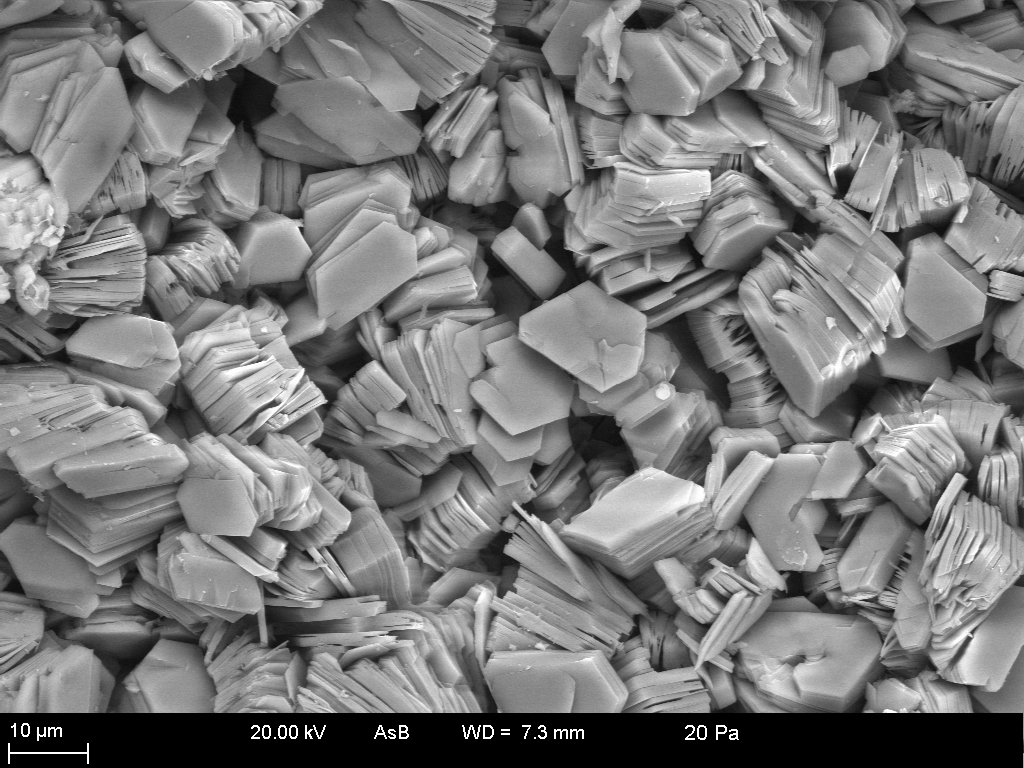
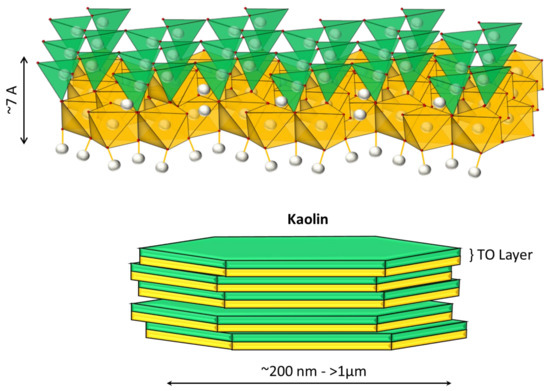
The two clays mentioned here are layered structures comprised of silicate tetrahedra (T) and aluminate octahedra (O). Kaolinite would then be classed as a TO bi-layered structure and montmorillonite is classed as a TOT tri-layered structure. The figure above shows the platy, stacked nature of the phyllosilicates.
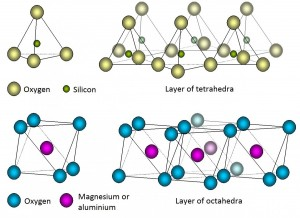
Silicate minerals with a single, isolated SiO44- groups are called orthosilicates. These SiO44- units can be joined at the vertices to form single and double chains, rings, sheets and 3-D networks as in quartz. In the case of chains, etc., the silicon atoms are bridged with oxygen atoms.
Presently I am writing a piece about the sciency aspects of bentonite, a clay responsible for expansive soil. A local McBurger restaurant has closed temporarily due to structural problems caused by expansive soil which is symptomatic in the region. For geographical context we are in north central Colorado between Cheyenne, Wyoming, and Denver, Colorado. The presence of troublesome bentonite-containing expansive soils in the area is well known. In fact, there are many bentonite mines in Wyoming, one with milling operations in Casper, WY.
According to the Wyoming Mining Association, Wyoming has 70 % of the world’s and 93 % of the USA’s known bentonite deposits.
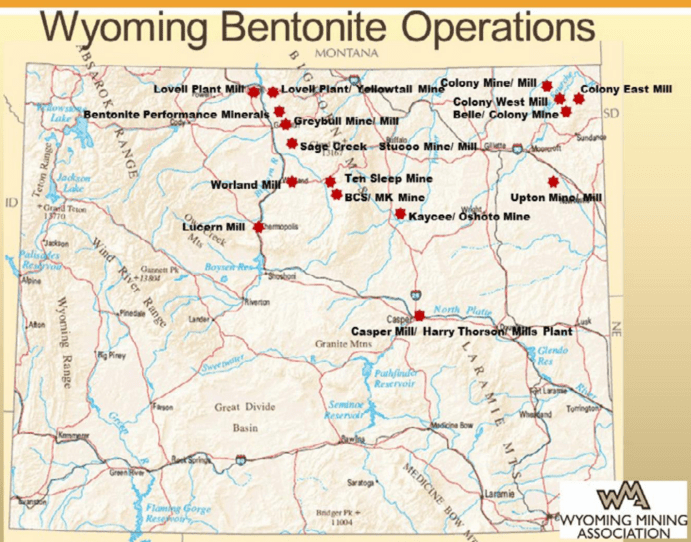
Graphic from the Wyoming Mining Association.
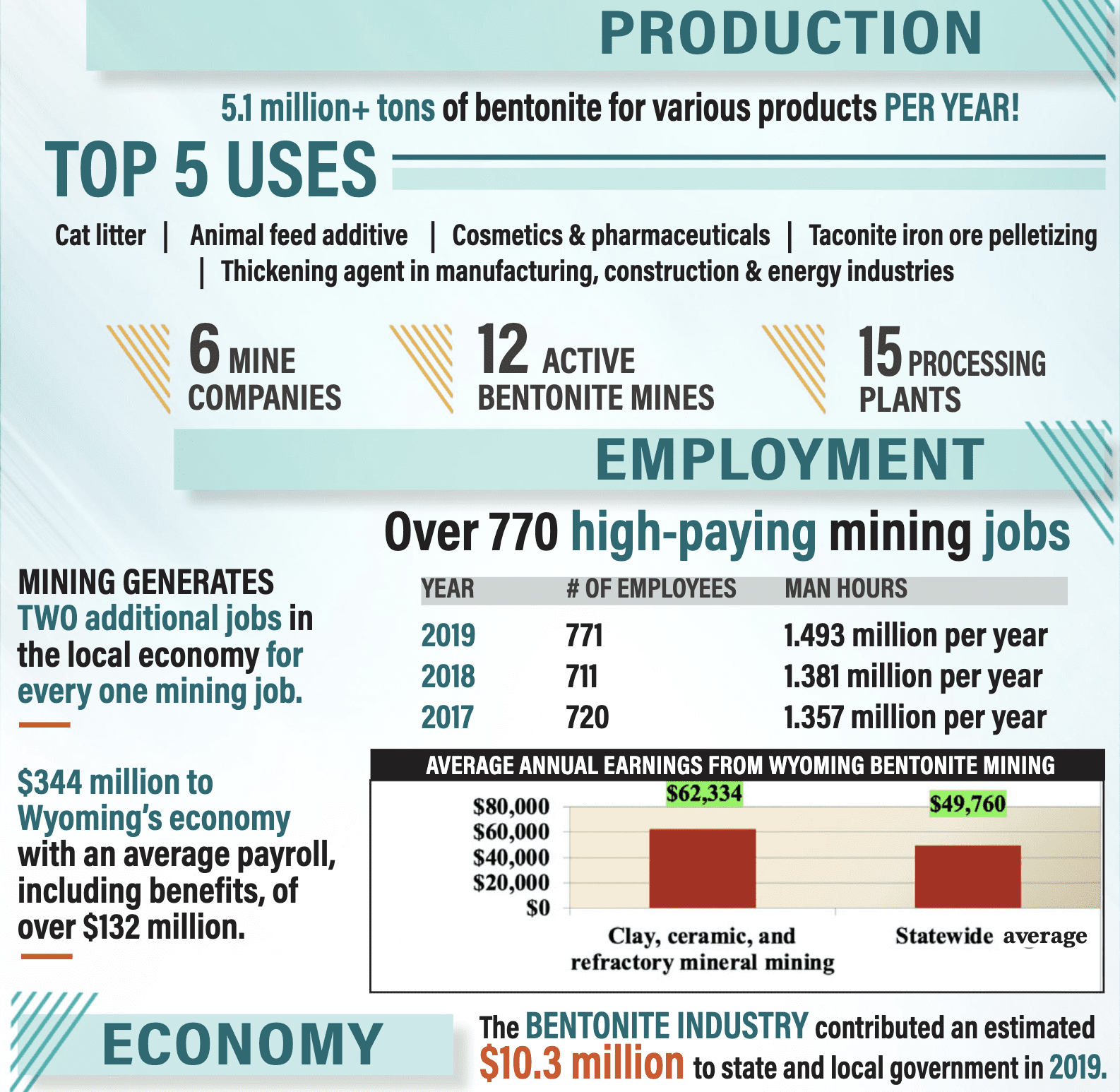
Bentonite can be harmful to roads and building foundations but also serves as an important raw material. It is used primarily in drilling muds, cat litter, cosmetics, pharmaceuticals, animal feeds and other applications.
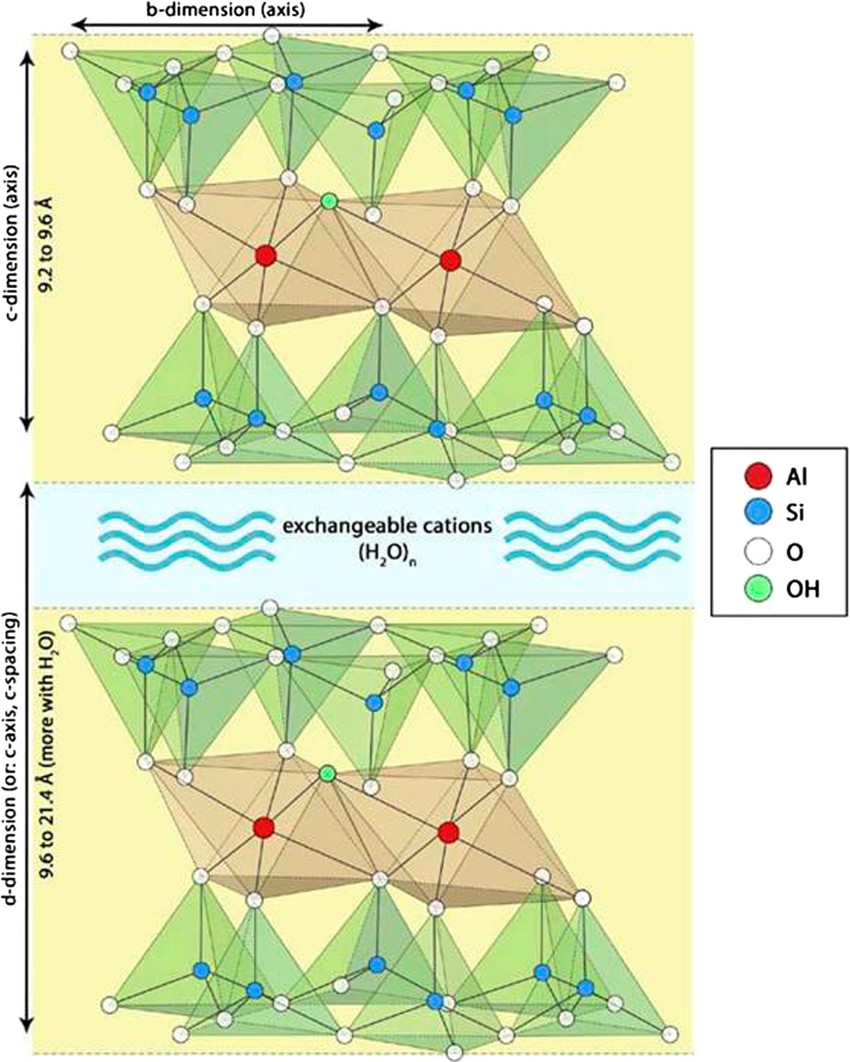
DO – 10.1186/1476-511X-13-153
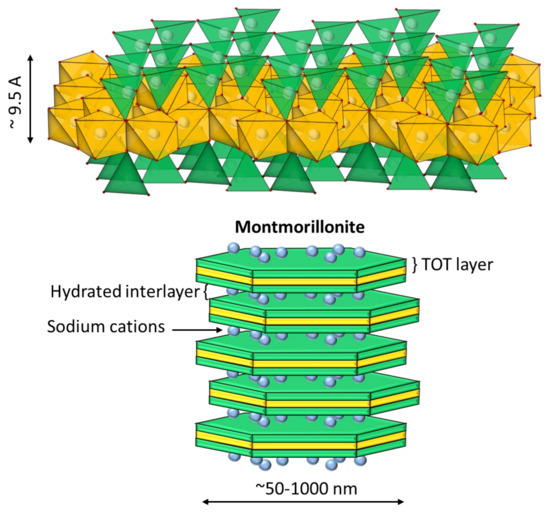
The class of expansive clays relevant here are the smectites. Bentonite is a smectite and has mineral composition rich in the montmorillonite member of the smectite group. In short, montmorillonite can attract waters of hydration to a great extent depending on the cation sub-type of the montmorillonite. The sub-types include Na+, K+, Ca++, Mg++, Fe++ counter-ions. A common cation in montmorillonite is sodium cation. The high water solubility of sodium salts in general allows for it’s replacement by other cations.
The montmorillonite unit structure consists of 3 layers similar to the stacking of an Oreo cookie. The inside cream layer consists of a sheet of aluminate octahedra. The two sandwiching cookie layers are sheets of silicate tetrahedra. The net effect is that the internal surplus negative charge carries through to the exterior surface of the sandwich. This charge attracts water layers and cations that will coordinate to the cookie surface to balance the charge. This attraction to cations and water leads to expansion of the unit structure the mineral and therefore swelling of the bulk material.
Kaolinite is comprised of bi-layers of a tetrahedral silicate sheet intimately bound to an aluminate sheet with no intervening layer of hydrates. The direct stacking of the kaolinite plates absent the water layer physically prevents water from migrating between plates and leading to swelling. Kaolinite is not an expansive clay.
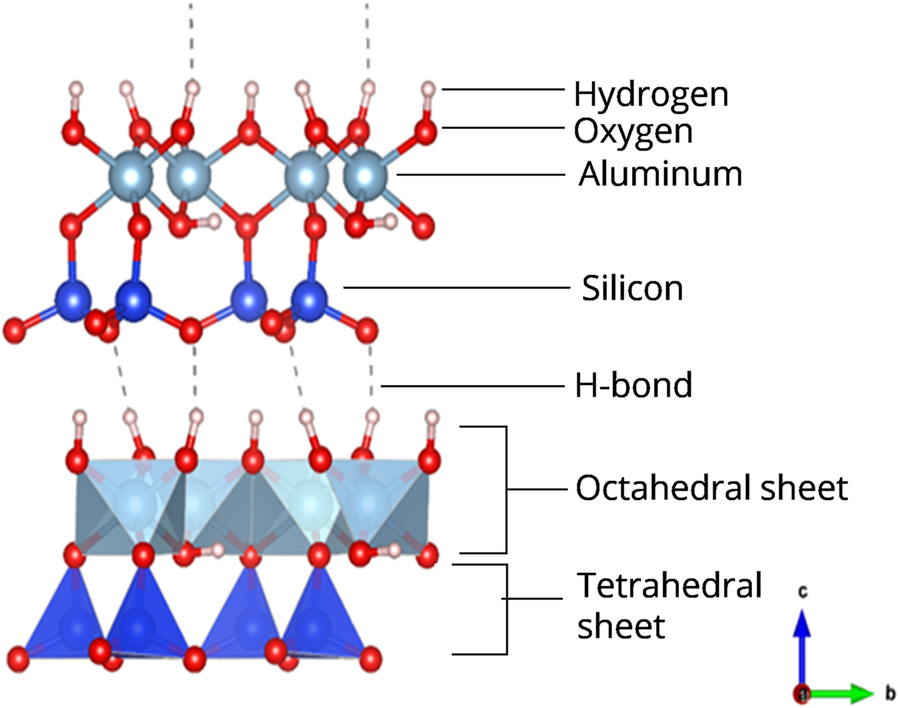
The pottery clay familiar to most of us is comprised mostly of kaolinite. While not a smectite, kaolinite (above) has just a single tetrahedral silicate layer connected to an octahedral aluminate layer to make a flat platy structure.