
In preparation for a dental implant I “took a ride” in a Cone Beam Computed Tomography, CBCT, x-ray scanner with my Geiger counter. I did the scan with a small Geiger counter hidden in my pants pocket. Why hidden you ask? Because I didn’t want to spook the dental assistant and dentist into paroxysms of fear and loathing over bad publicity. I was just curious about scattered radiation.
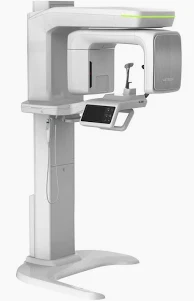
I’ve had three rounds of radiation, two PET scans and several dozen IMRT CT scans so no worries here about the brief x-radiation exposure as an old guy. Between cosmic rays, solar UV, uranium in the granite, radon with all of her daughters, blasting alphas, betas, gammas and finally muons from the sky, we’re constantly bathed in environmental radiation.
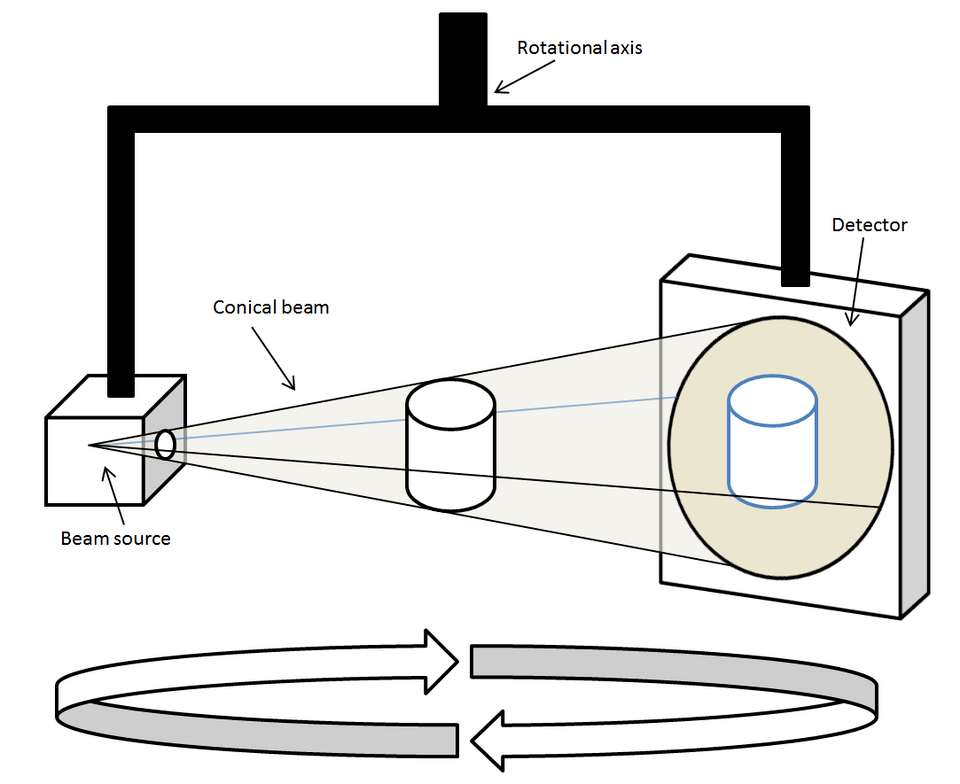
Looking how the cone beam spreads (above) from source to detector, perhaps it is no wonder that some of the x-rays exceed the cone in the diagram.
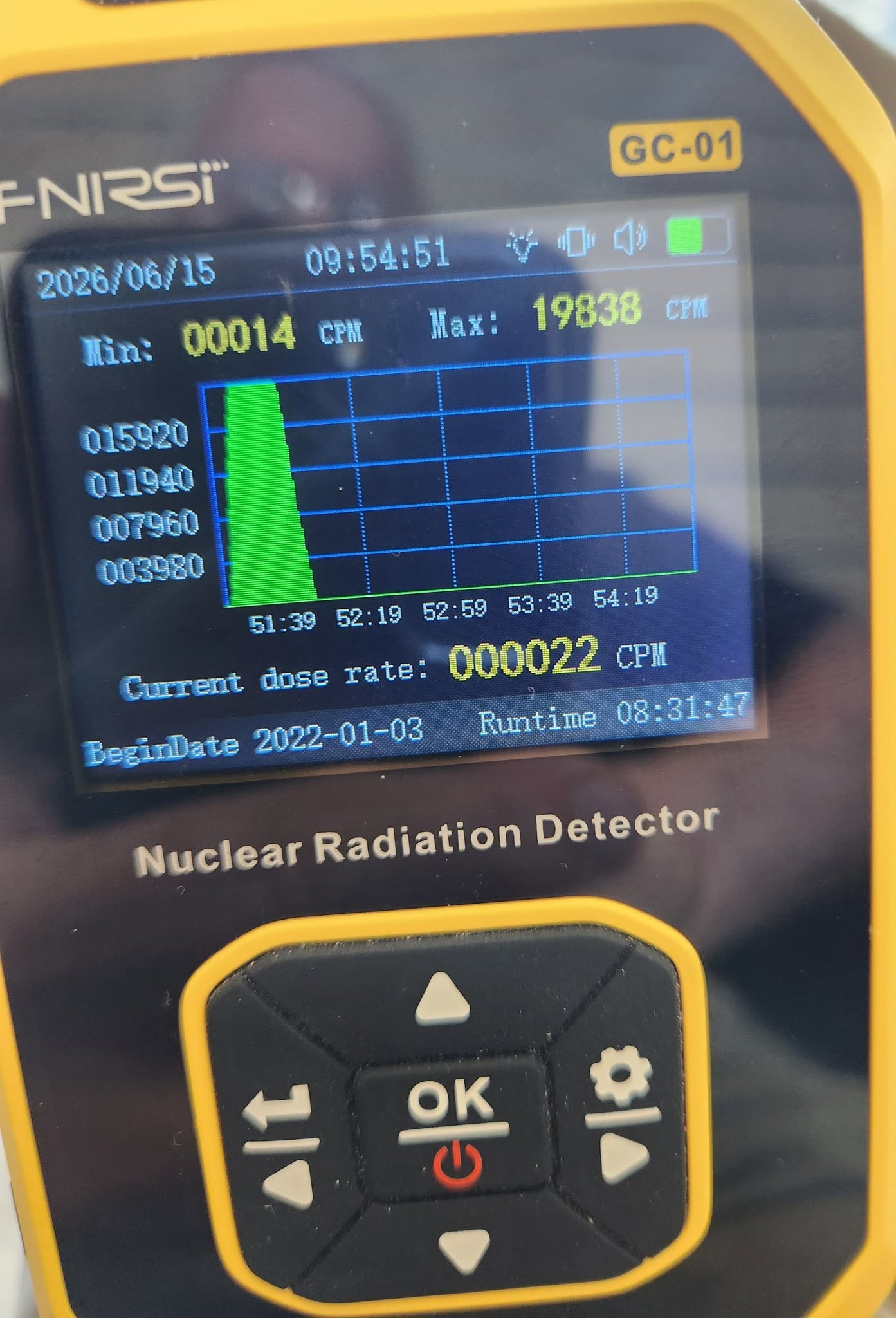
The background counts per minute following the x-ray was 22 cpm, average for around here. During the x-ray, the counts peaked at 19,838 cpm over ~30seconds for a 902 cpm times background.
I take radiation seriously, but the fact is that it is a stochastic hazard so correlating cancer with exposure is tricky.
According to Google AI with search query “is radiation hazard stochastic?” being stochastic means that-
“Probability: The likelihood of the effect happening increases as your radiation dose increases.
Severity: The actual severity of the effect (e.g., the aggressiveness of a resulting cancer) is independent of the size of the dose. It is an “all-or-nothing” event.
No Safe Threshold: Stochastic effects are assumed to have no minimum safe threshold. Even a very small dose carries a proportionally small, but non-zero, probability of causing damage.
Common Examples: Radiation-induced cancers and hereditary/genetic effects are the primary examples of stochastic hazard.”
 Lamentations on Chemistry