Depth of knowledge

It’s funny how you can deceive yourself into thinking that you understand a reaction. Then you do that last experiment and get a result that shows unexpected sensitivity to one thing or other.  Depth of knowledge comes from doing a lot of experiments, not hand waving. It is important to try to learn something from every experiment. If the rxn went south, what happened?  Can you do a mass balance?  What happens to the mass that doesn’t convert to product?  Consider every “poor” result as an opportunity to extend your understanding of the reaction.

If you want to claim true expertise in a process, you have to know what the reaction system is broadly sensitive to and what it may be insensitive to. In short, you need to know what affects the velocity of the reaction or what steers it to side product formation. Exactly what are the boundaries of “normal”? 

Running the same reaction a hundred times successfully by carefully following the directions confers proficiency, not expertise.  It is fine for most workers to have proficiency. But someone should take the trouble to acquire broad expertise for the inevitable off-normal event somewhere down the timeline.

An upset condition can stem from an off-normal engineering input or from some reactivity issue. How many watts per liter will your reaction generate?  How will your reaction mass behave if there is a solvent boil-off? Does the solvent boiling point fall below the maximum temperature of the reaction in an off-normal condition? In other words, can the reaction mass self-heat in a manner leading to a runaway condition?  If so, what layers of protection are in place to prevent this kind of event?

The ability to push electrons in a mechanism or facility with named reactions is not enough skill for process scale-up. A chemist has to walk over the entire acreage to thoroughly map out the hills and valleys of the process. The people who operate the big pots and pans, and their families, are depending on your thorough knowledge to keep them safe.

Acquiring expertise is going to annoy people. It necessarily slows things down. It will make you a colossal boor at parties. But never confuse motion for progress or data for knowledge. Over time, people will come to you for advice on things. Be patient.

Adolescent Phillies fan receives Joules from constable

Have you seen the footage of the police officer who tasered some 17 year old  kid who ran onto the ball field at a Phillies game the other day? What kind of world do we live in when cops feel they’re required to electrically stun a kid who stupidly ran onto the field? Why is this a stunnable offense? Welcome to the city of brotherly shove.

It wasn’t a meeting of the United Nations or a drunken brawl at a biker party. It was just a ball game- entertainment for the idle- where a fun lovin’ kid was trying to outrun the baseball authorities. We have become so intolerant of unstructured behavior that we allow our police to partially electrocute citizens.

This is only the latest incident where a law officer seems to use his stun gun when he’s merely inconvenienced. Maybe if Philadelphia had skinnier cops, they could catch more of their suspects rather than having to zap them like livestock.

Naturally, the police chief stated that it appeared that the officer was within department guidelines.  This kind of answer from a chief of police is really disturbing. The fool didn’t have the wits to say it was under study or some other delay tactic.  Yeah, the kid was a bonehead for running onto the field. But when the state feels justified in using this kind of force on some goofy kid, it has gone too far.

A story of continuous processing

Most of my industrial life has been spent in what can be called a semi-batch processing world where products tend to be high value, low volume. Fine chemical products sold at the scale of 1 ton/yr or less can be produced in a campaign of less than a dozen runs in 200 gal to 1000 gallon reactors in a batch or semi-batch mode. Depending on the space yield, of course.

In my polylactic acid (PLA) days many years ago, we found ourselves necessarily in the monomer business. If you hope to introduce a new polymer to the market- a very difficult proposition by the way- you must be firmly in control of monomer supply and costs. Especially if the new polymer uses new monomers. New to the market in bulk, that is.

Our task in the scale up of polylactic acid was to come up with a dirt cheap supply of lactide, the cyclodimer of lactic acid. The monomer world is one of high volume, low unit cost.  By the time I had my tour of duty with PLA, a short tour in fact, much of the lactide art was tied up in patents. Luckily, my company had purchased a technology package that allowed us to practice.

Our method for producing lactide was a continuous process called continuous reactive distillation. Basically, a stream of lactic acid and strong acid catalyst was injected onto a middle plate of a 25 plate distillation column which stood outdoors. The column was atop a small bottoms reservoir containing heated xylenes.

The solvent xylene was heated in a reboiler which was located 20 ft away from the column assembly. Hot solvent was circulated in a loop between the bottoms reservoir and the reboiler. After startup the solvent built up an equilibrium concentration of lactide and a dogs lunch of oligomers.

At the injection point in the column, 85 % lactic acid and catalyst entered the middle of a multiple plate column that was charged with refluxing xylene vapor and condensate. While in the column the lactic acid esterified first as L2, the open chain dimer, then some fraction of it cyclodimerized to lactide.

 The water that was extruded by the esterification process was vaporized by the hot xylene and equilibrated up the column to the overhead stream and out of the column to a condenser.  When condensed it phase separated in a receiver called a “boot” that had a cylindrical bottom protuberance that collected the water. The  upper xylene phase was returned to the process.

Meanwhile, the xylene loop accumulated lactide and oligomers. The loop had a draw-off point where some predetermined percentage of the bottoms loop was tapped for continuous lactide isolation. This is where the fun began.

When cooled even just a little, the xylene phase emulsified. Badly. So, the trick was to induce a phase separation by forcing the emulsion through a ceramic filter. Here, the water phase and most of the oligomeric species were partitioned into a separate mass flow while the xylene phase was sent to a sieve bed for drying.

After passing through the sieve bed, the xylene phase was sent to the continuous crystallizer where it was chilled a bit to precipitate the lactide. A slurry of lactide solids called magma was then sent to a continuous centrifuge where the solids were isolated and the supernatant was returned to the bottoms loop.

The Achilles heel of the process was residual acid. Since the monomer and the oligomers are all acidic species, and the catalyst is nearly as strong as sulfuric acid, pulling the neutral lactide cleanly and cheaply from this acidic hell broth was a problem. So big in fact, that it eventually was the straw that broke the camels back. This shut our fledgling company down.

Residual acid in the monomer has a disastrous effect on the quality of PLA. It gives low MW product that is amber in color. The winning technology was the back-biting process for lactide production. It was applied by our competitors who won the battle and they (Dow-Cargill) went to market.

It’s a hip hop hippity hop

I was standing in a light rain this afternoon watching a hip hop dancing exhibition. A lawyer friend standing next to me commented that it was so cold he had to keep his hands in his own pockets. I thought that was funny.

Since the kid has been studying hip hop dancing, I’ve been to one hip hop concert and a few dancing exhibitions. I have to say that I rather like it. 

I’ve noticed something over the years at school functions where parents gather to watch their kids. Strangely, the parents are almost universally uncomfortable around the parents of other kids. When they (we) walk into the school they automatically become shy. Their social skills seem to be left outside. Even the elementary quantum unit of civility, an introduction and a handshake, is offered only after awkward minutes elapse and it becomes apparent that anonymity cannot be maintained. The notion that the parents of your kids friends are also your friends is not an axiom.

In fact, this whole business of adult friendship is a puzzlement to me. I can’t tell you how many times a discussion with another adult escalates into “that’s bullshit, this is how ya do it …” or terminates as “well, we don’t do that…”.  Many adults I know are seemingly unable to enter into a discussion where ideas are tossed around and back and forth analysis ocurs with mutual curiosity and interest.

So many people I know will take any given comment as an invitation to render approval or disapproval. There is rarely any interest to build on a concept or flesh out possibilities. One coworker is unable to discuss any topic I bring up. The reply to my sentence is invariably to throw out onto the table the activity or thing they do in a superior way than implied by my comment. There is never any back and forth- their participation is just a series of reflections off a mirror back to themselves.  Some of these folks are very brittle emotionally and intellectually.

Then there are the people who only participate in a discussion when they can dominate it. If they cannot dominate the proceedings, they leave. I have taken to the bad habit of preempting them by leaving when they arrive to dominate the discussion. Who is the bigger fool? I am not sure.

Somebody (William James?) once said that for most people, thinking consists in the rearranging of their prejudices. There is a lot of truth in this.

Apple to Adopt Theremin Interface for iPad

Guapo, Arizona.  A spokesman for the Institute for Human-Aetherphone Interface Studies at Pultroon University has issued a press release announcing the signing of a non-exclusive licensing agreement between the University Intellectual Properties Office and Apple Computer, Inc. 

The office of Romeo MacGregor, director of new product development at Apple, declined to comment. However, sources at Pultroon University who wish to remain anonymous stated that Apple is planning a user interface based on certain aspects of Theremin technology developed at the university.

Project Claire de Lune, as it is called according to sources inside Apple, will revolutionize computer interfacing by allowing the user to gesticulate data entry bare handed within a small RF field surrounding the device and without the inconvenience of having to manipulate Wii-type control devices.

Sources inside Pultroon University claim that control appliances modulating the motion of the jaw, tongue, and eyelids can be affixed to the users head via eyeglass frames for an increased number of parallel input channels to devices like the iPad.

Microsoft has been rumored to be developing a user interface based on Theremin technology under the codename Krell.

Brother Joe

VP Joe Biden was in the building next door today. He handed a large stimulus check to a company that will make power trains for electric vehicles.  Secret Service guys in dark suits and dark glasses have been standing around all day. Local constables of all descriptions had a piece of the security action as well. The motorcade and attending security circus was interesting to watch. There were two identical armored limos, at least a dozen motorcycle coppers with flashing red/blue lights, and an ambulance. I think it would be more sporting if the motorcycle coppers each had a red fez with tassles. It would amuse the child in each of us.

Eyjafjallajökull Volcano

A few decent links-

It has been estimated that the magma source for the Eyjafjallajökull Volcano is greater than 20 km below the surface. 

A great source of information is the Icelandic Met Office. This organization issues daily reports on the status of the volcano.

A local Icelandic company providing  webcam coverage of the volcano is Miles Telecommunications.

Eyjafjallajökull Volcano (Nasa Photo)

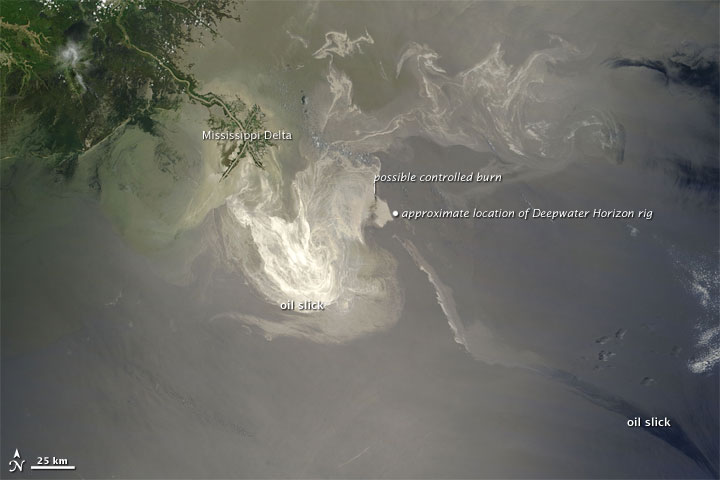
The worlds most unpronounceable volcano, Eyjafjallajökull, located under a glacier on the south central edge of Iceland, continues to erupt with fountains of lava and prodigous volumes of dispersed ash clouds.  The NASA image above shows the lava fountains and steam emanating from the volcano. Others have captured excellent photos as well. 

“The Geology and Geodynamics of Iceland” is the title of a paper by Professor Reidar G. Tronnes, presently at the Natural History Museum at the University of Oslo. The Tronnes paper gives an excellent overview of the tectonic circumstances of Iceland and outlines some of the latest thinking on the basis of Icelands seismic and volcanic activity. 

The Icelandic landmass is the result of some very productive vulcanism stemming from a buoyant plume of magma that drives the vulcanism of Iceland. Figure 1 of the Tronnes paper shows the extensive subsurface ridge system extending from Greenland to Scotland. Figure 3 shows how the line of divergence sits in place while spreading of the sea floor and the Iceland plateau occurs on either side of the rift system. The rifting produces swarms of fissures which are coincident with the siting of the volcanos. The Mid-Atlantic ridge cuts across Iceland and assures that this location is a center of seismic and volcanic actitity.

Eruption of Eyjafjallajökull Volcano, Iceland (Photo Credit: Nasa Earth Observatory)

 NASA Earth Observatory link.

Note to Larry King

Note:  The rest of you please go about your business. This is a private letter  to Larry King.

Hey old buddy,

I heard that you was getting ready for yer, what, eighth deevorce? Dude, you really need to think about puttin’ that horse out to pasture. I can understand one or two. Hell, I been deevorced myself. But eight? Sssshoot! It only takes two points to make a straight line. Ain’t it gettin’ a might pricey? Don’cha ever wanna retire from that damned station in Alanta?

Here is what ya do. Ya go into yer back yard and dig up some of that money ya got buried back there and ya git yerself a condo and a dog.  A fella like you prob’ly needs a mastiff or some other big dog. Whatever. The dog will love ya no matter who else you may be fooling around with that month. Catch my drift? Git my meanin’?

Okay then. ‘Nuff said.

Your pal,

Th’ Gaussling

Moving forward with the chemical process

The scale-up of a chemical process is an excercise in many subdisciplines. The bench chemist has to do his/her magic in finding a suitable reaction and purification scheme. Process R&D managers must exercise managerial art in shepherding people through a timely execution of the project. Purchasing managers must arrange for just-in-time arrival of raw materials and inventory managers must see to it that they are properly staged.

Technical writers must have a batch record written and signed off. Process hazards and EH&S folks must have procedures to evaluate for safety and regulatory compliance. Regulatory affairs people must have submitted forms for TSCA compliance. PSM processes must have all of the requirements in line for OSHA compliance. Air and water permits must be in place as well as provisions for capturing VOC’s and shipping of waste. Procedures for handling  liquid waste streams and filter cakes must be in place. Successful kilo lab and pilot plant validation of the process must be signed and passed along. The analytical department must have procedures for raw material validation, in-process checks, and final analysis for certification.

In order to go forward, a sales person must have already worked out acceptable price and shipping terms. The customer must issue a purchase order and the terms must be accepted by the manufacturer. Production management must then schedule a production run once the scale-up effort is complete. The QA/QC  folks must have acceptable specifications by which to issue a document certifying conformance to the specifications.

Once the PO has arrived, it’s show time.