Chemistry jobs, part (x + 1)

I received an email from a good friend and colleague who made some fine points relating to my comments on business experience for chemists.  Since he is shy about posting the comment to the blog, I’ll put it here. I’m sure he’ll forgive me.

The younger folks never heard that this has all happened before. My orgo prof talked about chemists driving trucks during the 70’s. During the Carter years things weren’t too pretty either.

Most of my colleagues seem to feel that you have to recruit to the field – since we already are a small fraction of the pre-med group and the success rate for chemists is low – but I am unsure of what an honest appraisal is. I don’t recruit, but I also don’t want to scare them away.

I agree that a few business courses are essential. But, I have a colleague who got an MBA after he started teaching here – I think that was not very useful. Unless he opens a business….

As I mentioned to my friend, I think that if a chemist wants to experience the business side of chemistry, then he/she must go to the business side with 100 % commitment. If you want to be on the business side of chemistry, then you must commit to competition with all of the cats & dogs on the other side of the science fence.  If you want to be a business person, then you have to BE A BUSINESS PERSON.  You cannot keep one foot in the lab and the other rubbing the customers ankle under the table. Ya gotta be all in or forget it.

A pure business person does not care if he is selling “As Seen on TV” widgets or pallets of triphenylphosphine. Someone with a chemistry background will almost certainly want to be in a familiar space, and so will gravitate to chemicals. But to get into chemical sales, you have to penetrate the veil of obscurity that covers most of this field. You have to find out who is manufacturing bulk chemicals and locate the name of the sales VP or manager. Entry through the scientific end is tighter than a fishes asshole and is the wrong approach.

To be a successful business person in chemistry (or anything) you must have a total commitment to better living through cash flow. Cash is both King and Life.  And cash comes from Selling!!!!!!  A successful business person wakes up thinking about sales and falls asleep that night thinking about sales for the next day.  Like with chemistry, it is a form of mania.

Frankly, if a person with a lengthy history of chemcial R&D approaches a VP of sales for a job, they’re likely to think there is something wrong with them. What the …? This is where the strength of your personality comes into play. You’re very first “deal” will be with the sales or business development manager who would hire you. And you better make it good. I would dial in 90 % substance and 10 % bullshit for full schmooze configuration.  Remember, you’re trying to impress professional schmoozers.  It is not uncommon for a schmoozer to be quite susceptable to it themselves.

Yes, I am aware that Dante Aligheri witnessed the ring of hell set aside for flatterers, but you’ll have to make amends later.

There is a key item to put on the table. It is called the value proposition and it is a crucial part of any sales pitch. You have to convince a potential employer that you bring things to the table that will benefit or increase sales. Before one can seriously go out and find a job in sales, ones personal value in the proposition must be sorted out and rehearsed for automatic release during conversation.

My friends colleague with the MBA will probably retire with an unused business degree if he does not get out there and mix it up.  But maybe sales is not his thing.

Perhaps he is more interested in procurement. This is the true dark side of business. Procurement managers are some of the most powerful people (mad dogs, actually) in business and everyone fears them. Procurement managers are the people who select vendors and authorize the release of vast streams of cash through an instrument called a purchase order (PO). A PO is a highly sought after item and represents the culmination of a courtship of sorts.

Chemists can be extremely useful in the procurement of chemicals.  A procurement manager with a chemistry degree is basically a necessity in much of the chemical industry.  Chemists speak the language and are able to keep an eye on specifications and make sure that the right R&D people or engineers connect with the vendor if there is a quality or timing upset.

There are jobs in the chemical industry that may be available to chemists who are willing to step away from research. But it does require putting on a different cap and assembling a different resume package.

In the Chair

As I lay reclined in the chair looking up at the blue sky and the palm tree,  I found myself wincing at the tugging at my head. Cool water splashed my face and ran past my ears and down my neck. A face came into view and peered intently at me.  Against the hushed conversation in the background a sound track played a vocal piece by Cher, no doubt the one in which she appeared in some black gauze and tape outfit while lip synching on a navy battleship.

For me this Cher video remains high on the list of most convincing bits of evidence that there is no God in heaven. Surely no master plan for the universe can include this performance.

Suddenly a shrill, piercing whine zinged into my consciousness and resonated in my skull. The sonic waves seemed to converge to a focus on my auditory apparatus. As bad as it was, it did  block the Cher sound track and for that I was grateful.

I looked away from the illuminated image of the palm tree in the ceiling light panel and focused on the looming snout of the dental hygienist. Sitting over two coal black nasal passages I could see twin distorted reflections in her glasses.  A gaping oral cavity ringed with teeth and filled with fingers and tools. The ultrasonic device that she was using conducted mind numbing vibrations into my head all the while irrigating my face.

Just another day.

Drill baby dr … what was the question?

I keep seeing video footage of citizens who have been asked to comment on the recent plan to open up offshore oil exploration. President Obama and his crew have read the tea leaves and have concluded that, in addition to advancing alternative fuel technologies and markets, it would be useful to open up offshore drilling, at least a bit. Invariably the people who appear on air seem to concur that we need to find and tap the petroleum resources under the sea floor.

Rarely one hears an interviewee who will openly say that we should reduce petroleum consumption, or at the very least, its growth rate.

Here is my question. Why are we so anxious to tap all of our resources as soon as possible?  Isn’t oil in the ground a little like money in the bank? Oh, I forgot. We are not a savings culture.

Obviously, the new exploration emphasis is to support a decent growth rate in consumption. A high throughput of fossil carbon and energy is needed to sustain the profitability of certain large public corporations.

As I see it, the problem with public corporations is that they are run on behalf of what are essentially absentee landlords. The stockholders demand a good return on their investment or they’ll bail. Can’t blame someone for that. So, management runs the corporation in a way that affords maximum profit rather than maximum sustainability. As a result, in the same manner as absentee landlords, management drifts into the mindset that they can justifiably milk the resource to depletion for fast cash. If cash is king, fast cash is divine.

The market is very much like a stomach. It cannot plan. It only knows that its hungry or not hungry. It seems to me that an organ with a bit more wiring should be in charge of energy resources.

Chemistry: The volatile profession.

One of my department manager duties is to review resumes sent to colleagues in other departments. HR gets them and records them and distributes them for review. Earlier in the 1st quarter we had to review a large stack of resumes from well qualified people. Perhaps 4/5 of them were from people in industry who had been let go. For the most part the applicants were chemists from the pharma field. Most had quite impressive backgrounds with lots of publications, patents, and responsibilities. More than a few could have been my boss. It was a sobering experience to see so many good professionals on the street.

I have been in such a position in the past. It is disorienting and deeply distressing to be let go. It is not unlike a death in the family. When you are a highly educated specialist, your ego is unavoidably tied into your career. Your career is who you are. No professional job, no value. No worth.  Even more maddening, it is difficult to stay connected with the profession when you are unemployed. You are off the train and standing there looking at it while it rolls into the distance. And chemistry is not a field of endeavor for the unaffiliated.

I still think of my lowest point between chemistry jobs.  I was working in construction and had spent the day in a  dirt crawl space pulling wire for a remodel job. It was up high in the mountains in the winter and it was very cold.  At the end of the day I drove down the canyon into Boulder and stopped at a pharmacy to pick up some cold medicine for my kid. I had to ask the pharmacist a question, so I stood there in dirty coveralls and muddy boots and asked about the dosing of the cold med for a 2 year old.

The pharmacist seemed exasperated for a moment, but then composed herself and spoke to me slowly while enunciating her words clearly. Her, the supermarket pharmacist, standing there on the raised platform in her white smock. Speaking slowly, so I’d understand. Simple words so I wouldn’t be confused. Me, standing there in Osh-Kosh coveralls and a filthy insulated work shirt draped over my aching body after a long day of labor in the dirt. I was a 40 year old apprentice electrician with a chemistry PhD who had hit the bottom of the ego pit. Or, so I thought.

I accepted her advice politely. I paid for the med and walked out to my pickup truck. What resonated so deeply was the realization of how it is that we judge people by their appearance. My grubby appearance had caused someone to presume that I was slow witted and in need of being patronized.

I had supposed that after this dose of humility there was no where else to go but up.  But I guessed wrong. There was much more to come.  When your ego has been roughed up, it can become inflamed and hypersensitive. Your sense of proportion can be lost.

Being discharged from your place of employment is one of lifes big shit sandwiches. While most people will learn and improve from it, it will always remain a sensitive spot in your psyche. You never forget the circumstances. Being called to a conference room only to find HR there with a table full of handouts and forms to sign. The metallic tang in your mouth as it dawns on you what is happening. The grim warning that your termination “package” is valid only if you agree not to sue or publically criticize your ex-employer.  But you sit there with tunnel vision and listening impairment. You’re nervous system is electrically charged with panic and the instant, crushing worry about how you’re going to keep your family fed and in shelter. As you take the last drive home you’re mind is numb.

Behind most every resume I read is a story of long term success and a recent setback. For those freshly out of work, the contrast between the emotional high and low is staggering.  I understand somewhat of the plight and angst they are feeling. But, like someone once said, the only way out is through. You have to be willing to start over down the pecking order to recover your career. Sometimes further down than you want. The cherished notion of seniority is one that will have to be reconsidered.

I am starting to believe that this chemical unemployment wave is different. I think that we are seeing a phase change in how the chemical industry does business. The acceptability of outsourcing R&D is the reason for my pessimistic view. It has become axiomatic in many organizations now that R&D must be outsourced to countries where the overhead rate is substantially lower. And the outsourcing of R&D can only be bad for US chemists.

Euphemisms gone bad. The carrot and stick.

Good lord. Do I have to explain everything??  It’s not “carrot or stick”. It’s “carrot AND stick”. The phrase “carrot and stick” is not meant to imply a choice between pain and pleasure. It is meant to suggest motivation by the placement of  a reward that is always just beyond reach. It’s motivation for donkeys, oxen, and the physics challenged. And the talking heads who read news in front of cameras.

This is what is meant by "carrot and stick"

Phosphate the Wonder Anion

I thought it would be good to start the week by highlighting a particularly praiseworthy anion. That anion is phosphate, sometimes called orthophosphate, (PO4)3-.

So, you ask, what is so bloody interesting about phosphate? Isn’t every atom, ion, and molecule special in some way?  Well, yes, but phosphate is uniquely constituted to provide services in the critical area of genetic information keeping and functional group transformation (without Pd and boronic acids).

Here is the curious thing: Biochemical systems use phosphorylation and hydrolysis as a means of executing molecular transformation. Remember oxidative phosphorylation?  So, how is it that a phosphate moiety that is so useful as a leaving group or activator is also able to hold together DNA with such high fidelity?

Phosphate Backbone on RNA and DNA

In his much-referenced 1987 paper entitled “Why Nature Chose Phosphates” (1), Frank Westheimer observed that phosphate diesters have a very useful property as a linking group for nucleic acids. The charged oxygen on (RO)2P(=O)O- serves several purposes.  The presence of a charged linker renders DNA and RNA compatible with the hydrophilic environment inside the cell. The charge prevents the nucleic acid polymers from migrating to more hydrophobic environments found inside of cell membranes. And equally important, the monobasic anion serves as a kinetic barrier protecting the millions of phosphate linkages in a DNA strand from cleavage under neutral or basic hydrolytic conditions over the lifetime of the organism.

The hydrolytic stability of phosphate diesters is not to be underestimated. Westheimer points out that dimethylphosphate anion has a half-life of 1 day at 110 C in 1 N base. He cites the rate constants at 35 C for the saponification of (CH3O)2PO2- is 2.0 E-9 (1/mol sec);  (CH3O)3P=O is 3.4 E-4 (1/mol sec); and for ethyl acetate 1.0 E-2 (1/mol sec).

However, the very simplicity and current prevalence of phosphate ion in the environment does not go far in explaining how phosphate might have found its way into metabolic and structural use.  In prebiotic times, the occurence of phosphate is in doubt (2).  But not just the occurrence of phosphate is in doubt. The relative abiotic inertness of phosphate towards esterification and the formation of other metabolically useful species raises the question of the original oxidation state of phosphorus during the onset of early life.

While phosphate is found in certain meteorites, Pasek suggests that a more ubiquitous meteoric phosphide mineral species such as schreibersite, (Fe, Ni)3P, found in iron meteorites may have provided the necessary reactive precursors for metabolic evolution (2). Pasek cites growing evidence of a late meteoric bombardment period at 3.8-3.9 GA.

Schreibersite hydrolyzes to a variety of oxidized species including phosphite. Phosphite has the advantage of being substantially more water soluble than phosphate, providing a larger molar concentration in seawater.  Schreibersite reacts with acetate to form acetylphosphonate. In fact, a variety of organophosphorus compounds may be formed on exposure of schreibersite and its hydrolysis products with organic materials.

Lowly phosphate isn’t sexy like the newer anions triflate and BArF. But its seemingly mundane properties are key to the function of metabolism and genetics.

(1)  F.H. Westheimer, Science, 1987, 235(4793), 1173-1178.  (2) Pasek, M.A. PNAS, January 22, 2008, vol 105, no. 3, 853-858.

The Disappointment Locker

Never have so many voted so overwhelmingly for so little as the members Academy of Motion Picture Arts and Sciences did for The Hurt Locker, this years Best Motion Picture.

Th’ Gaussling sat through a screening of The Hurt Locker last weekend. I must say that it was competently produced and directed. Without a doubt, the cast and crew did a fine bit of journeyman film making. However, an outstanding bit of film making it was not. It should have been titled Opportunities Lost.

What is so tragic about this movie is that all of the elements of an outstanding motion picture were there. An action packed setting, the threat of explosive death, flawed characters, intrigue, and comraderie. But somehow the director was unable to pull it together. Despite all of the raw materials available for a cliff hanger, director Kathryn Bigelow managed to patch together a picture that utterly lacks the fizz and crackle of a thriller. It’s as emotionally flat as a pancake.

Here is my primary beef with The Hurt Locker. It lacks application of the fundamentals of storytelling. While there is a lead character, the emotional hook that connects a viewer with the character is missing.  The viewers emotional connection to the lead character, Sergeant First Class William James, is lost through a series of missed opportunities. The director tries to paint this character as a man of steel or a “wildman”. But never convincingly. Even the attempt to hook you in with his half-hearted try to befriend a camp rat (an Iraqi kid) was botched.

The film makers tried to give this picture a documentary feel with the handheld photography. But it doesn’t catch. There are movies out there that use this method successfully- District 9, Cloverfield, and especially Saving Private Ryan.  But to do this successfully, in my opinion, the director must focus on a the characters.  One of the characters in The Hurt Locker was, by default, Iraq. But the development of even this “character” was poor.

To be compelling, the director must use some narrative trick to put the viewer on the spot with the characters. Either through a first person presence by a principle character as with Private Ryan, Cloverfield, District 9, or Apocalypse Now, or some other storytelling device like good character development on sympathetic characters. View the  Blackhawk Down and look at the difference.  In Blackhawk Down, there was better development of Somalia as a kind of character. It was not a sympathetic character, but it certainly had more depth.

OK. They did a few things right. They did not fall into the ridiculous cliche about the trick detonators. You know the scenario, there are many wires around the bomb and if the wrong one is cut, the detonator fires immediately. This is a regrettable dramatic device introduced foisted generations ago on ignorant audiences to raise the suspense level during the bomb defusing scene. Well guess what, audiences are still ignorant but at least the writer & film makers had some integrity this time. The EOD guy was portrayed doing the proper thing- looking for the initiator. That is where the drama is.

All in all, I would recommend viewing this movie if you have NetFlix so the financial investment is low. But I wouldn”t spend $19.95 on a DVD.

Zoning and Hard Times

Many have written about the essential fragility of the economic situation of most American workers. We save too little and accumulate too much high interest debt.  Our consumption in every context seems unsustainable. The fragility of the monetary system with its lack of dependence on gold and the cosmic-scale debt that our country has racked up has many people worked into an existential lather.

The hard reality is that a worker can lose his/her job and all of the forms of stability that comes with it. We have become absolutely dependent on the economic system of the “employment” by people and organizations. We exchange our labor for payment on an hourly or salary basis and hope to sustain a stable and predictable lifestyle therefrom.

When a person loses their job, the reality of maintaining shelter and keeping everyone fed and clothed pops straight up into view. Because we have structured our culture and economic system on sustenance by employment, our ability to improvise is weak. Our ability to get another cashflow stream going is limited and most people pursue solutions that consist of finding other employment.

What workers in America lack is something that is available in much poorer countries. When an American worker loses their job, either they must find another job or start a business to sustain a living income. But if an American worker wants to start a business making something or retailing, chances are that local zoning codes will bar them from operating out of their home.

There are certain kinds of business activity that people can do out of their residence. Many people do office type work like accounting, consulting, writing, and other information intensive services out of a home office. Baby sitting, daycare, sewing, and small scale construction contracting are commonly based in a residence.

But if you want to repair cars, retail specialty parts of all kinds, or manufacture widgets at the microscale, chances are that your activity will be banned either by municipal ordinance or by a home owners association.

If you visit a city in a poorer country- say, Thailand- what you will see are large sections of housing where people combine their occupation with their residence. I recall being lost on foot somewhere in Bangkok a few years ago, wandering through neighborhoods where families lived in small shops that had a metal overhead door for street access by potential customers. At sundown, the shop activity ceased and the stove came out and a pot of soup was put on the heat. Fans, televisions, and music would blare into the sweltering streets along with the aroma of food.

Poor as these folks might be, they have something that American city dwellers absolutely lack. They have the ability to consolidate their resources to provide shelter and an income. By day a family might sell parts for small gas engines or some particular range of plumbing fittings. By night they repair to the back room for supper and relaxation.

An American facing the prospects of no job and left with only industrial skills is in a bit of a pickle.  While they might have very valuable skills, chances are that these skills are not readily transferable to common home-based activities. Someone with retail experience, on the other hand, might be able to put together a small shop.

What would stop an American city dweller from starting a home retail business is the issue of zoning and code compliance.  If an unemplyed person wanted to sell articles of clothing in a converted garage shop, there would be a long list of problems with the town board and the neighborhood. There would be applications and appeals, neighborhood input, and public hearings for a variance to the code. Zoning, parking, fire codes, and handicap access are just the start.

Then there is the matter of neighbors and their firm theories on property value. US culture has long been aloft on an arc of gentrification. People invest heavily in their homes and view their shelter not just as something that keeps out the weather. We festoon them from a vast array of manufactured decorative goods. We slather them with paint and adorn them with “accessories”.  

We have come to rely on our homes as repositories of personal wealth. And this notion, evolved from countless proposals before countless town boards, has become a complex web of building codes and ordinances controlling seemingly every degree of freedom to act that you can imagine.

Go to a town board meeting anywhere and look for those who seek to influence the board. Much of the time they are people related to real estate and development. Much of the gentrification we see has its roots with developers seeking to provide a sense of exclusivity. 

The result is that wealth creation by the appreciation of residential property value has been given a privileged position over wealth creation by the productive use of that property.

Our ability to sustain ourselves through hard times is constrained by rules to meant to protect property value and provide a basis for notions of the residential ideal. Americans are poorly prepared to be poor. We have an infrastructure that is not well adapted to allowing the unfortunate unemployed the option to scratch out a living from their homes. So pervasive is the residential ideal that the options for shelter are few in gentrified areas of the country. We have zoned ourselves into a corner based on bourgeois notions of aesthetic tidiness.

Gravity Anomaly Along the Colorado Mineral Belt

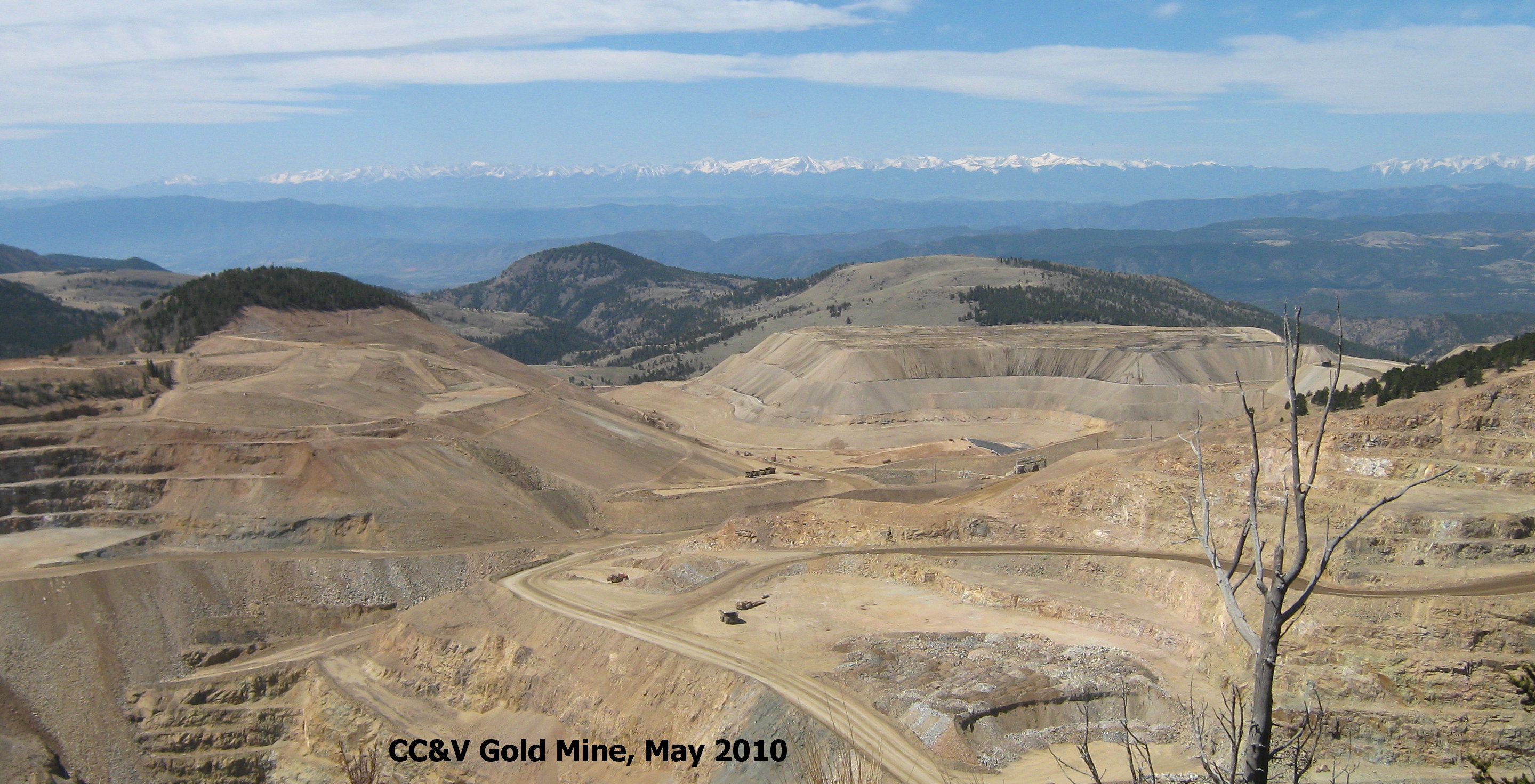
The Colorado mineral belt (CMB) is a swath of metalliferous mineral veins and faults spanning 15 to 30 miles in width and running ~250 miles in length between Dolores and Jamestown, Colorado. This NE trending zone encloses most, but not all, of the significant occurrences of gold and silver deposits found to date in Colorado.

Significant finds like the Cripple Creek district have been found outside the CMB, but these are exceptions to the trend. The large gold/silver/tellurium lode in the Cripple Creek diatreme is the result of a volcanic past that stands somewhat apart from the vein deposition processes that produced the CMB lodes.

What is especially intriguing about the CMB is that it is coincident with a significant gravity anomaly. It turns out that a particularly deep negative gravity anomaly exists in the Colorado Rocky Mountains. A few papers on this effect can be found on the web. In particular, a paper (ref 1) by Mousumi Roy at the University of New Mexico offers some details on the  extent of the gravity anomaly and some possible reasons for the effect.

At first blush it might seem odd that a negative gravity anomaly should coincide with a region known for heavy metal deposits. After all, dense matter has greater mass per unit volume, and if there is a lot of volume, then one might expect the acceleration of gravity to be a tiny bit greater than some reference value.

While this line of reasoning has merit, it turns out that despite the presence of thin metalliferous veins in the region, the overall density of rock below the CMB formation is somewhat low. A density contrast exists in the CMB formation and the surrounding rock. A large, low density formation in the crust and/or upper mantle would cause the local acceleration of gravity to be slightly below that of the reference geoid value.  The structure of the density contrast is the subject of some scrutiny and has been addressed by Roy and others.

A large low density mass below the surface is expected to have some buoyancy. A buoyant mass is one that would exert an upward distortion on the crust. The Colorado Rocky Mountains are part of a region characterized by numerous past episodes of mountain building. Whether mountain building was the result of large scale tectonic interactions or more localized effects of density contrasts, the fact remains that a gravity anomaly exists coincident with the CMB.

The mechanical effect of the upthrust of the lower members of the crust to form the Colorado Rocky Mountains has been that a series of faults and fractures have formed. These void spaces have provided networks for the flow of mineral rich hydrothermal fluids over geological time.

High pressure, high temperature aqueous fluids are prone to cooling and depressuriation as they work their way upwards into cooler and less constricted formations. At some point these fluids throw down their solutes and suspensions in the form of solids that occupy the void network. Eventually the flows become self-sealing and circulation halts leaving veins filled with chemical species that were selectively extracted and transported from other formations.

The earths hydrothermal fluid system is continuously extracting soluble components and transporting them to distant locations where solubility properties force their deposition. But this process does not always produce solid, compacted veins. Void spaces can be left behind at all scales, from microscopic size to large chambers. These spaces are called “vugs”. Rock with a large fraction of void spaces is referred to as “vuggy”. It is possible to walk up to a mine dump in the CMB and find hand samples of vuggy rock. It is not unusual to find crystals of pyrite or other minerals lining the internal spaces of the vugs.

1.  McCoy, A., Roy, M., L. Trevino and R. Keller, Gravity models of the Colorado Mineral Belt, in The Rocky Mountain Region – An Evolving Lithosphere: Tectonics, Geochemistry, and Geophysics: American Geophysical Union Geophysical Monograph 154 (eds. Karlstrom, K.E. and Keller, G.R.), 2005.

[Note to the reader: Th’ Gaussling is just a chemist, not a geophysicist. But like many others, I have the ability to read and learn. When I learn something new and interesting, I like to write about it. It reinforces the learning.]

SF ACS Meeting, Not

It has been 4 or 5 years since I have given a talk at a national ACS meeting. It was with great enthusiasm then that I registered and submitted my abstract last fall. There is not a lot we industrial guys can get up and talk about.  A few weeks ago I confidently decided to follow up on the disposition of my talk and was dismayed to learn that it was declined.

D’oh!!!

I am very disappointed. To my knowledge I followed all of the rules and chose a section that fit the topic.  While the ACS registration website does a good job of collecting your information, it is rather lacking in providing a means of feedback or status to speakers.

Since I have not yet been contacted by a human being, or an automated notification for that matter, I can only surmise that the theme of the section was a mismatch with my topic. Oh yes, I received a limp email “sorry” from somebody at the online help desk.

I wanted to talk about the unexpected energetic decomposition of a class of compounds and some DSC and TGA studies I have done.

Okay, I’m dismayed with certain organs of the Nat’l ACS and their inscrutable ways. But I am willing to admit that I missed some cue or other stagegate that kept me off the boat. But for cryin’ out loud! What was it?? Whose shoes do you have to shine to get an answer?

So, I’ll use the time to get more data and aim for the Boston meeting. A friend was helping with some Hartree-Fock calculations. I was able to correlate onset temperatures with certain periodic trends experimentally. Perhaps we’ll have a better theoretical understanding of the bonding issues by the next meeting.

Update.  Made contact with a person. The sections website is a bit lacking in detail, but with persistant surfing names and email addresses can be found elsewhere.